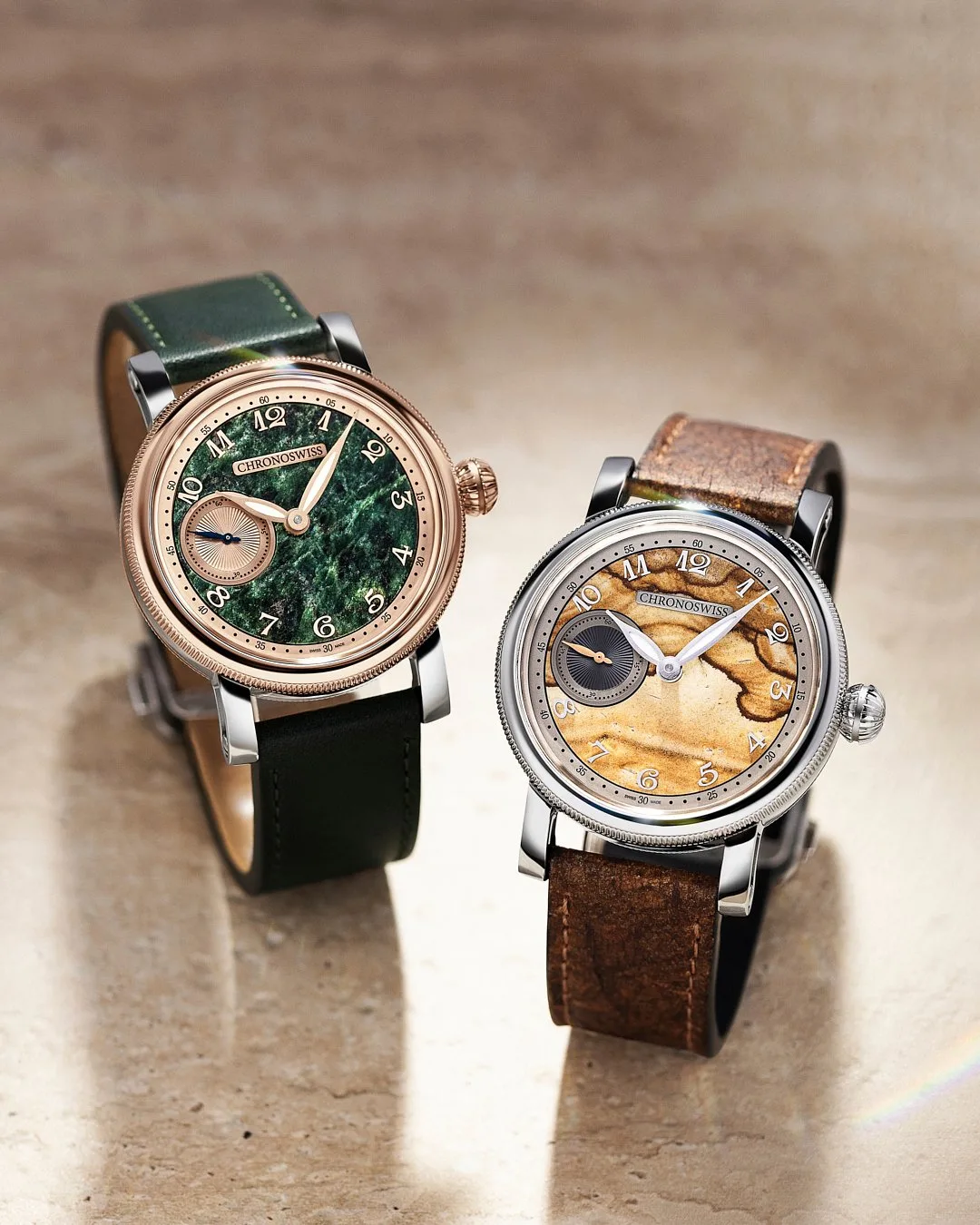
Chronoswiss has introduced two new models with natural stone dials in the Small Second collection - Small Second Jasper and Small Second Serpentine.
These watches are the first of the Modern Mechanical era to feature stone dials. Each limited series consists of 50 pieces and retains the classic case size of 40 × 50 × 11.5 mm, introduced in 2025.
The 17-part case includes the brand's signature fluted bezel and "onion" crown. One model features polished natural serpentine stone, while the other boasts matte natural jasper. Both versions are equipped with a sub-second dial with manual guilloché and a delicate sandblasted black galvanic finish inside the cut-out lugs. At first glance, the watches seem simple, but upon closer inspection, numerous elegant details are revealed. Let's delve deeper.
History and Modernity: The Evolution of Chronoswiss
Allow me to use Gen Z slang to describe Chronoswiss's work over the past two years - "they've really been cooking something special." The brand was founded in Munich in 1983 by Gerd-Rüdiger Lang in the post-quartz crisis era. Lang became known as a protector of the mechanical watchmaking art during the mass transition to quartz. Since 2012, the company has been based in Lucerne, Switzerland, under the leadership of Oliver Ebstein. This move is crucial for understanding the new models - please bear with me.
Following the Modern Mechanical philosophy, contemporary Chronoswiss focuses on current design and unique visual identity. The Small Second collection, technically limited to time display only, gains unique individuality and expressiveness thanks to the stone dials. Allow me to elaborate further.
Germany and Switzerland in Stone: Symbolism and Geology
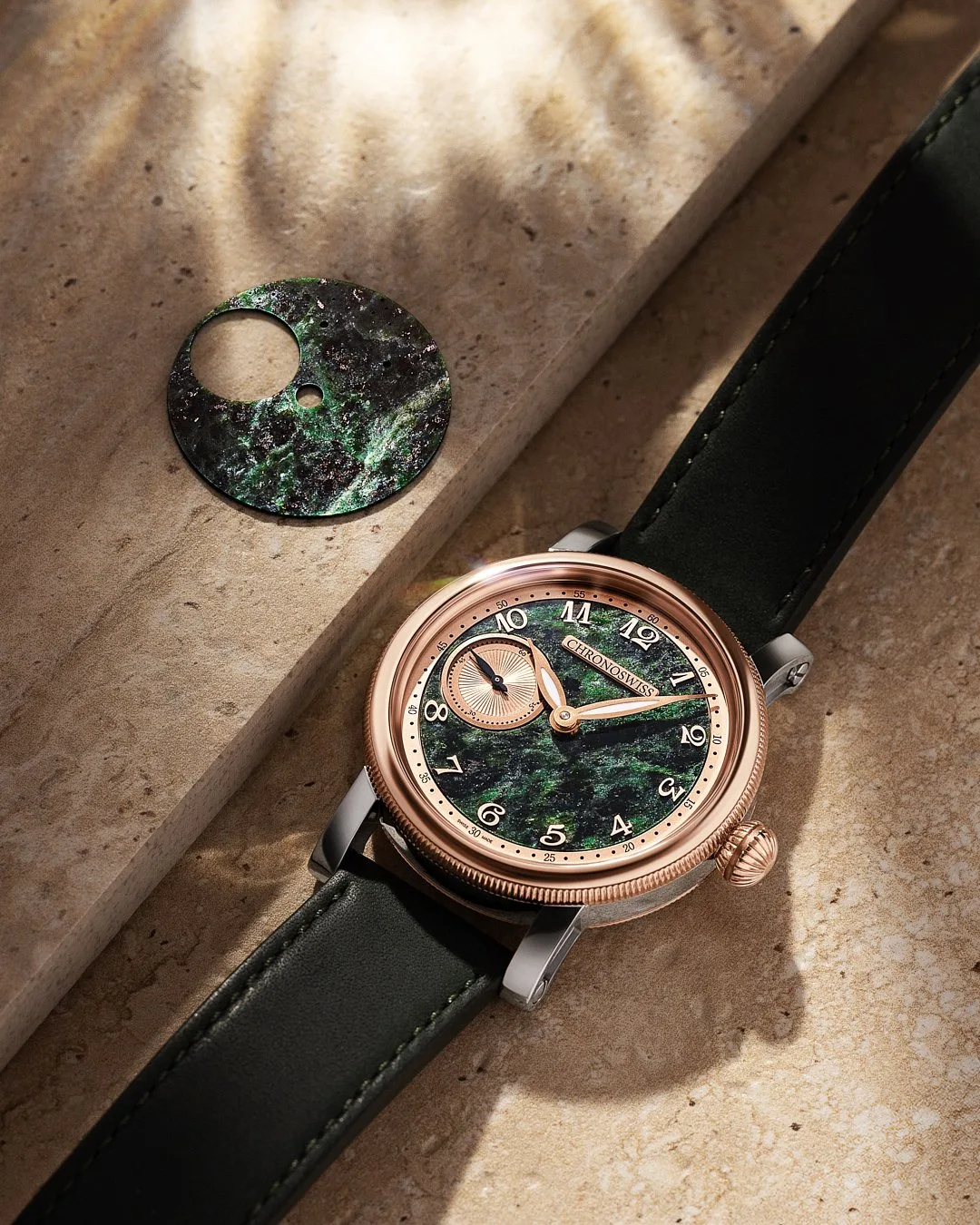
The new models are not just stone dials in a basic collection. Chronoswiss pays homage to its German and Swiss roots. As mentioned, the brand was founded in Munich and now operates in Lucerne. The new watches are a geological tribute spanning millions of years, reflecting four decades of independent Chronoswiss watchmaking.
The idea was to use materials formed not by human hands, but by time. The symbolism is quite specific. One version is made from jasper - the national stone of Germany, honoring the birthplace of the brand and its founder. The other model is adorned with Swiss serpentine - a tribute to the country where the manufacture thrives today. Together, they symbolize the past and present - roots and fruits.
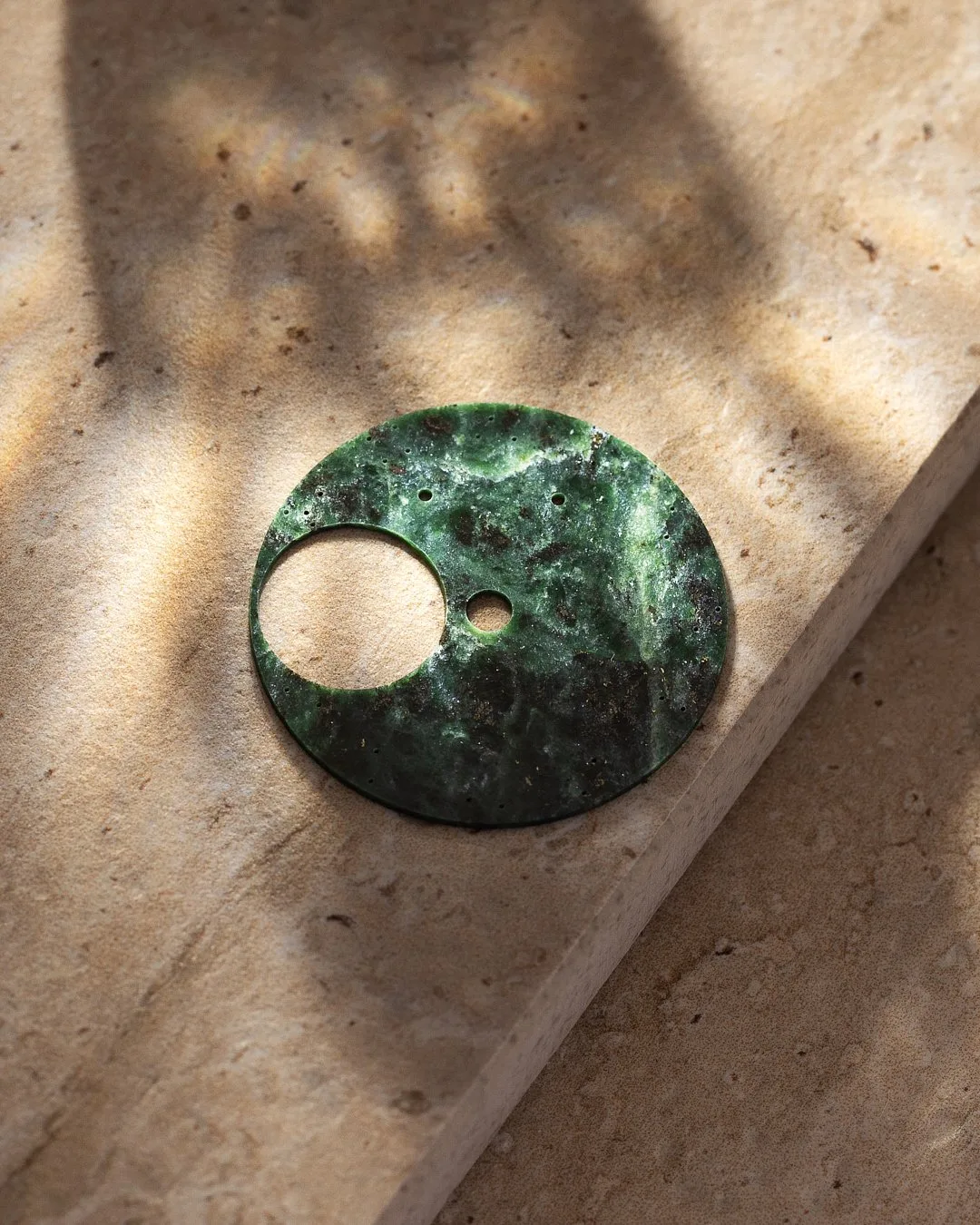
In recent years, natural stone dials have been experiencing a renaissance. Chronoswiss offers not just stone, but deep context and history. The geological story begins long before the brand's inception.
Serpentine is mined in the Zermatt and Matterhorn area, once part of an ancient ocean floor. The name comes from the Latin serpens - "snake," reflected in its texture resembling snake skin. Jasper, in turn, is known as the "painted stone of the earth" due to its variety of colors and patterns. This stone is traditionally associated with Idar-Oberstein - the European capital of gemstone cutting.
Unified Style Small Second: Design and Materials
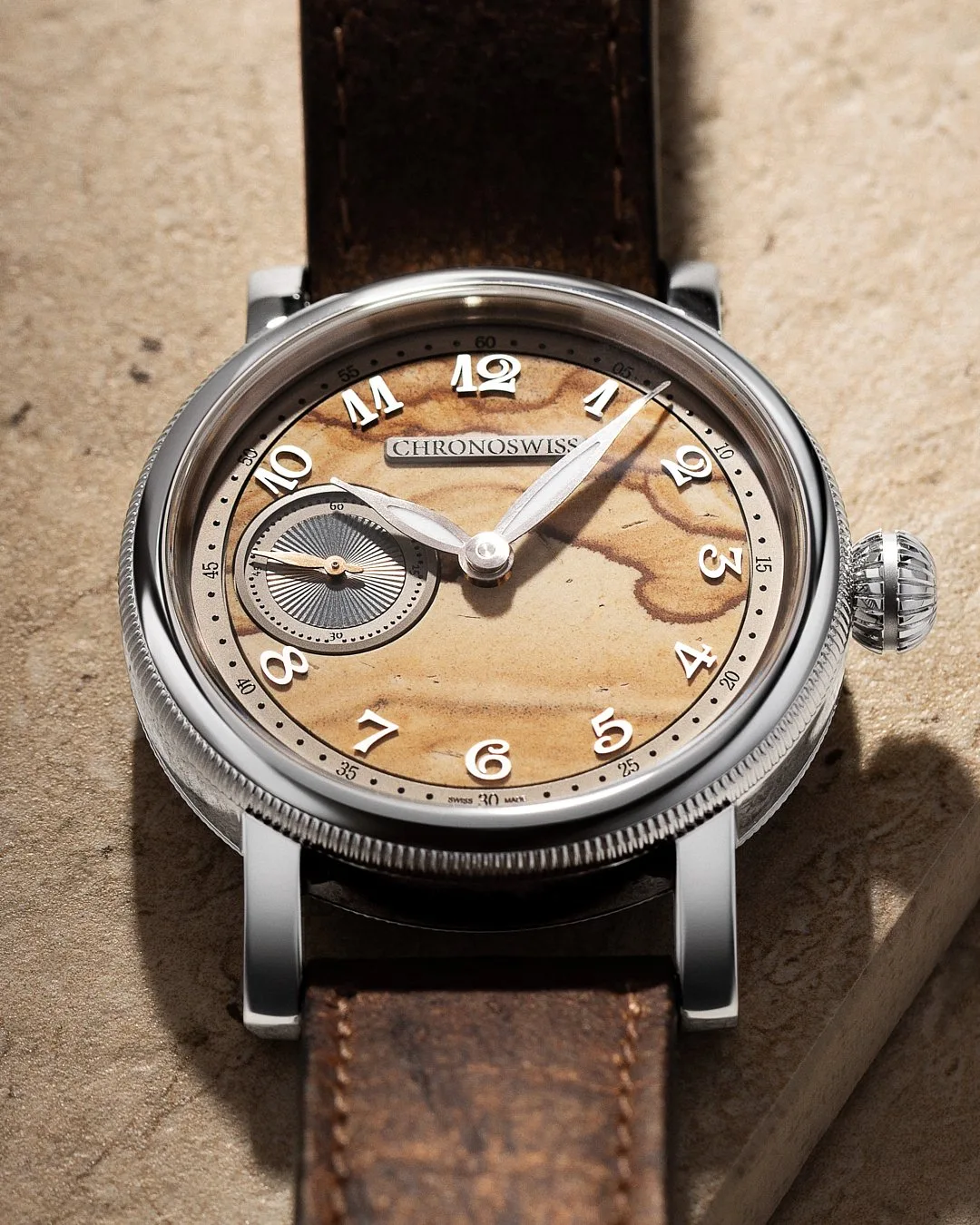
The story of Small Second Jasper and Serpentine is as beautiful as the watches themselves - objects of exceptional design. For watchmaking connoisseurs, it will be obvious that each Chronoswiss model is filled with stunning details. Examples from previous collections - Neo Digiteur Chronos, Pulse GMT Enamel Sky Gold, Opus Chronograph Dakar Sundown - demonstrate the brand's high standards. Similarly, these watches with stone dials are unique: each stone is one-of-a-kind, and its patterns and shades cannot be replicated. That's why "natural" stone is always exclusive.
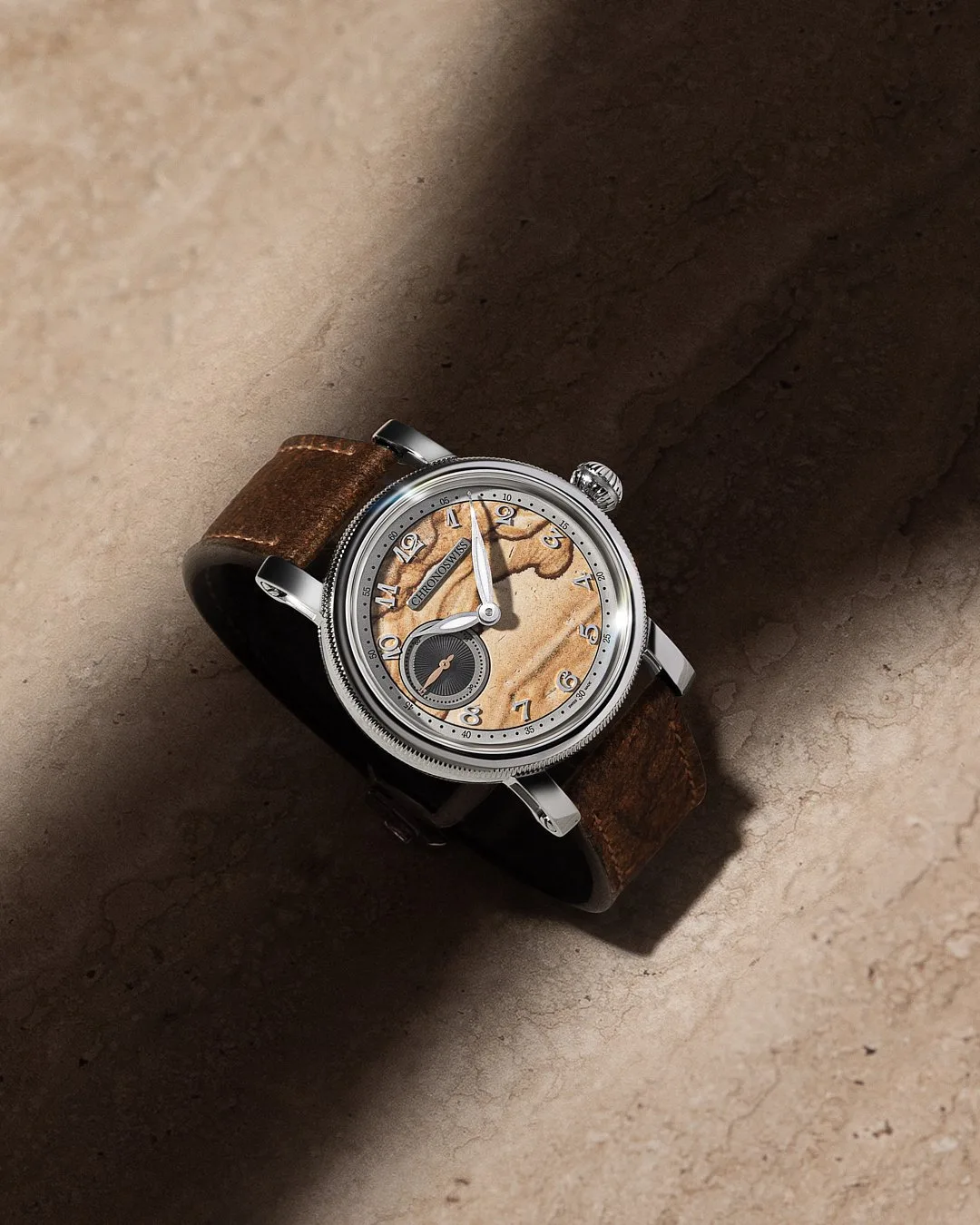
Small Second Jasper is presented in warm beige, brown, and ivory tones, creating a mesmerizing landscape reminiscent of ancient rock layers and the beauty of time required for geological depth to form and turn into art. The stainless steel case, 40 mm in diameter, serves as a neutral backdrop, allowing the stone to reveal its individuality.
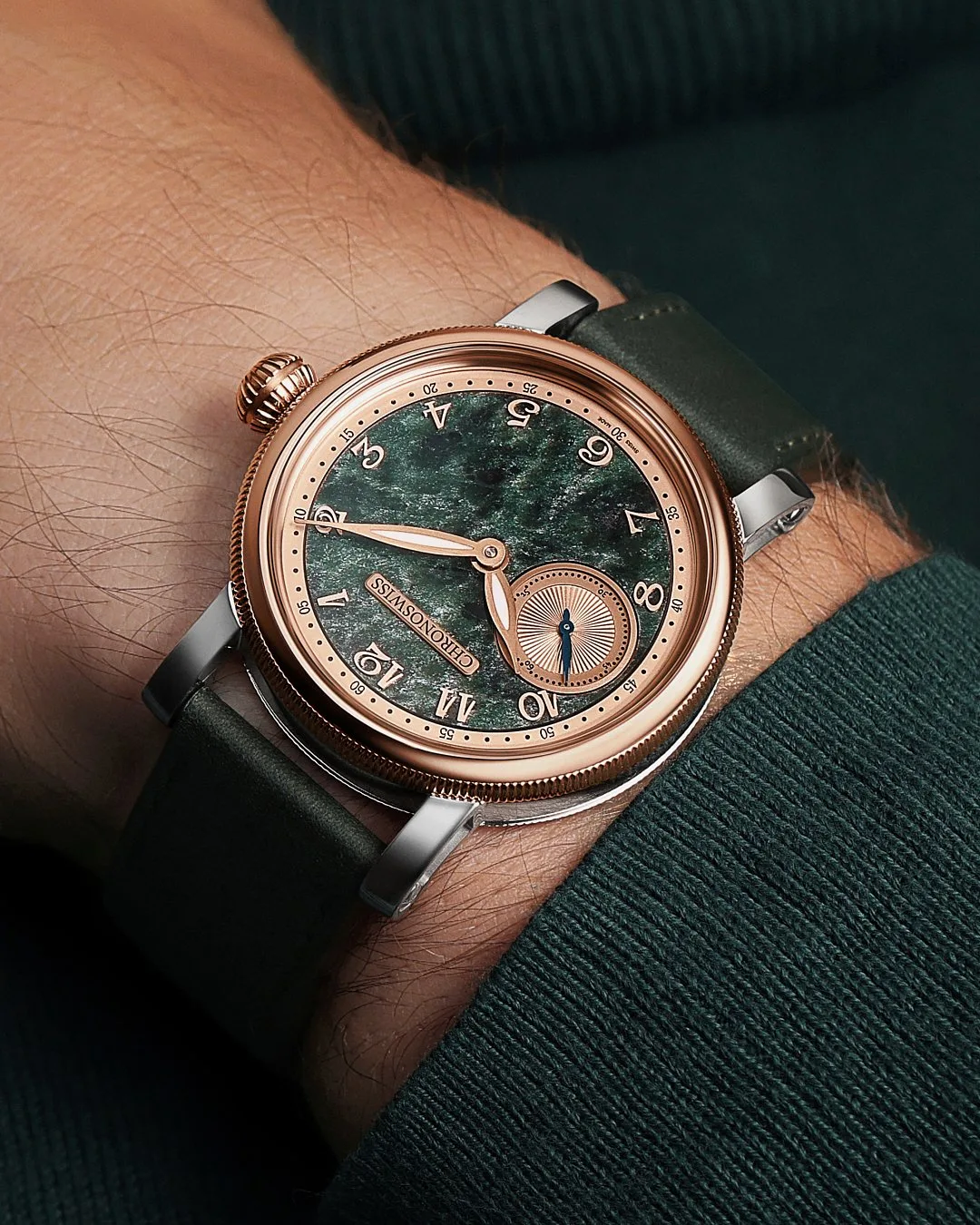
The Serpentine model offers a rich green dial with depth and character that changes depending on the lighting and angle of view. To emphasize the rich texture of the dial, Chronoswiss uses an elegant two-tone case of stainless steel and 18-carat red gold, creating a contrast between historical natural elements and modern craftsmanship.
Modern Mechanical Philosophy in Detail
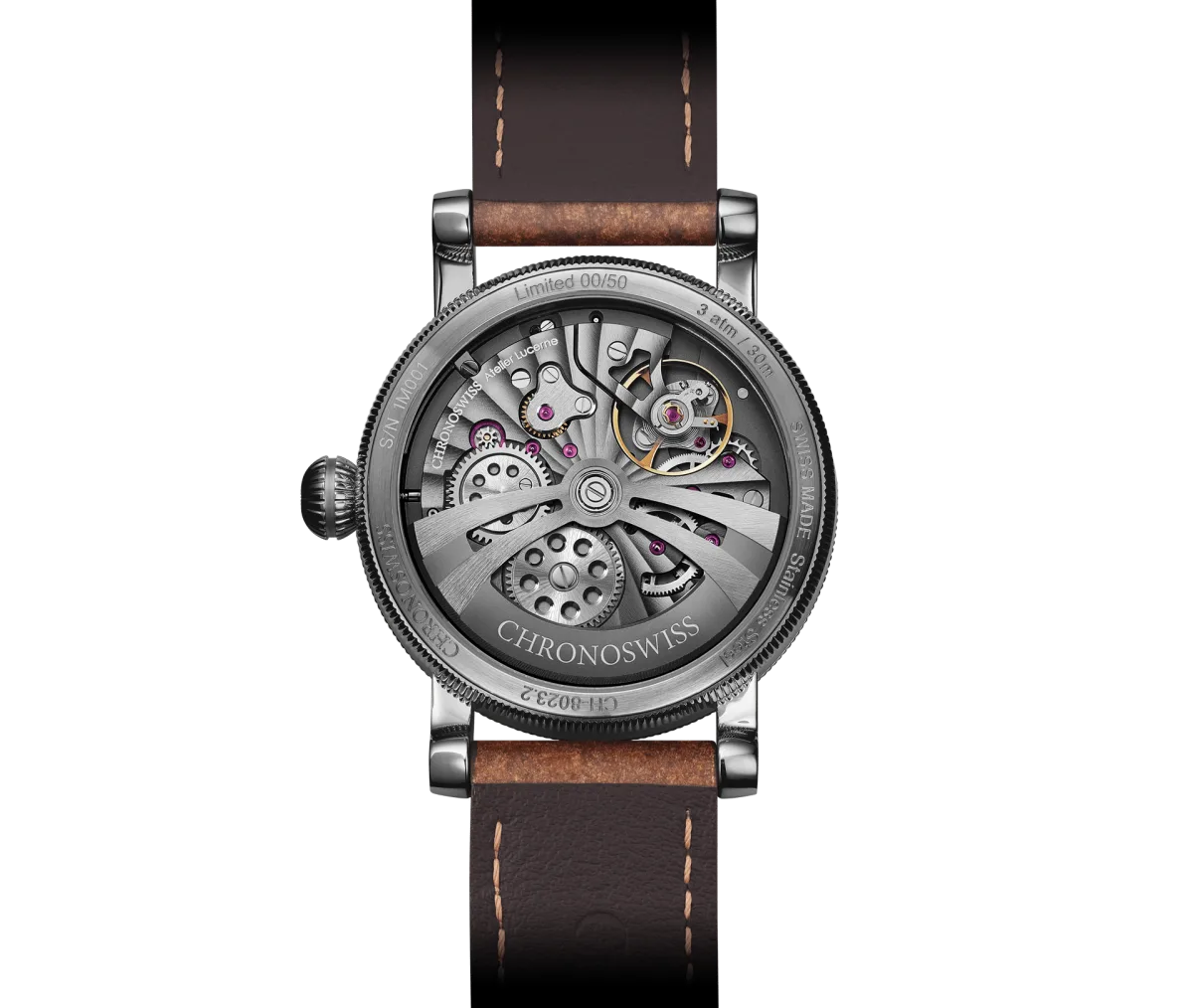
The Small Second collection is the perfect platform for visualizing Chronoswiss's identity, known as Modern Mechanical. The 17-part case, measuring 40 × 50 mm and 11.5 mm thick, incorporates all characteristic elements: polished fluted bezel, streamlined "onion" crown, thin sandblasted black galvanic finish inside cut-out lugs, and curved sapphire crystal - all creating a recognizable Chronoswiss image. Inside the case beats the Chronoswiss Manufacture caliber C.6000, developed in collaboration with La Joux-Perret.
The automatic movement with manual winding operates at a frequency of 28,800 vibrations per hour (4 Hz), has a power reserve of 55 hours, and is adorned with excellent finishes visible through the sapphire case back, including a skeletonized tungsten rotor and bridges with Geneva stripes. The movement controls the sub-second dial at the "9 o'clock" position, which is executed with traditional manual guilloché. All this serves the main star - the stone dial.
Conclusions and Expert Opinion
Let's assess the realities: Chronoswiss has done an impressive job with these two novelties, starting with the choice of stones. Tiger's eye, jade, onyx, and lapis lazuli are popular and beautiful, but serpentine and jasper are niche-level choices. Their natural beauty and aesthetics speak for themselves, and in this case, gain additional significance through references to the brand's German and Swiss roots. I feel that these two models are complete and harmonious, as the Small Second collection provides space for revealing such textures and forms.
Personally, I have a weakness for watches with excessive engineering and design limited only to time display - and Small Second is perfect for such experiments. At a price of €12,700 / $13,900 / £12,200 / CHF 11,500 for the Small Second Jasper and €18,500 / $21,300 / £17,900 / CHF 16,900 for the Small Second Serpentine, we get a multi-part case with various finishes and complex geometry, impossible for a regular monobloc case. Let's not forget the signature fluted bezel - one of Chronoswiss's strongest design elements, which, despite lacking functional load, has become a brand symbol, as well as the "onion" crown - a small nod to pocket and early pilot watches. There is something here for everyone.
What do you think of the new Small Second models with stone dials from Chronoswiss? Do you think the brand chose the stones correctly to honor its roots? Or would you prefer something more popular, like jade or lapis lazuli? Let's discuss!
Technical Specifications of the Watches
| Parameter | Small Second Jasper | Small Second Serpentine |
|---|---|---|
| Dial | Natural jasper with Arabic numerals, sandblasted minute and small second scales, sub-dial center from rhodium-plated metal with manual guilloché | Natural serpentine with Arabic numerals in rose gold, sandblasted rose gold minute and small second scales, sub-dial center in rose gold with manual guilloché |
| Case Material | Stainless steel 316L | Stainless steel 316L and 18K rose gold |
| Case Dimensions | 40 mm (diameter) × 50 mm (lug-to-lug) × 11.5 mm (thickness) | 40 mm (diameter) × 50 mm (lug-to-lug) × 11.5 mm (thickness) |
| Glass | Sapphire with anti-reflective coating | Sapphire with anti-reflective coating |
| Case Back | Stainless steel 316L and sapphire glass, screw-in fixation | 18K rose gold and sapphire glass, screw-in fixation |
| Movement | Chronoswiss Manufacture C.6000: automatic with manual winding, 28,800 vph (4 Hz), power reserve 55 hours, 25 jewels, rhodium-plated finish, skeletonized tungsten rotor, Geneva stripes on bridges | Same as Jasper |
| Water Resistance | 3 atm (30 meters) | 3 atm (30 meters) |
| Strap | Brown leather (20 mm width) with folding clasp with buttons | Green leather (20 mm width) with folding clasp with buttons |
| Functions | Time only (hours, minutes, small seconds) | Time only (hours, minutes, small seconds) |
| Price | €12,700 / $13,900 / £12,200 / CHF 11,500 | €18,500 / $21,300 / £17,900 / CHF 16,900 |
| Special Notes | Limited to 50 pieces | Limited to 50 pieces |