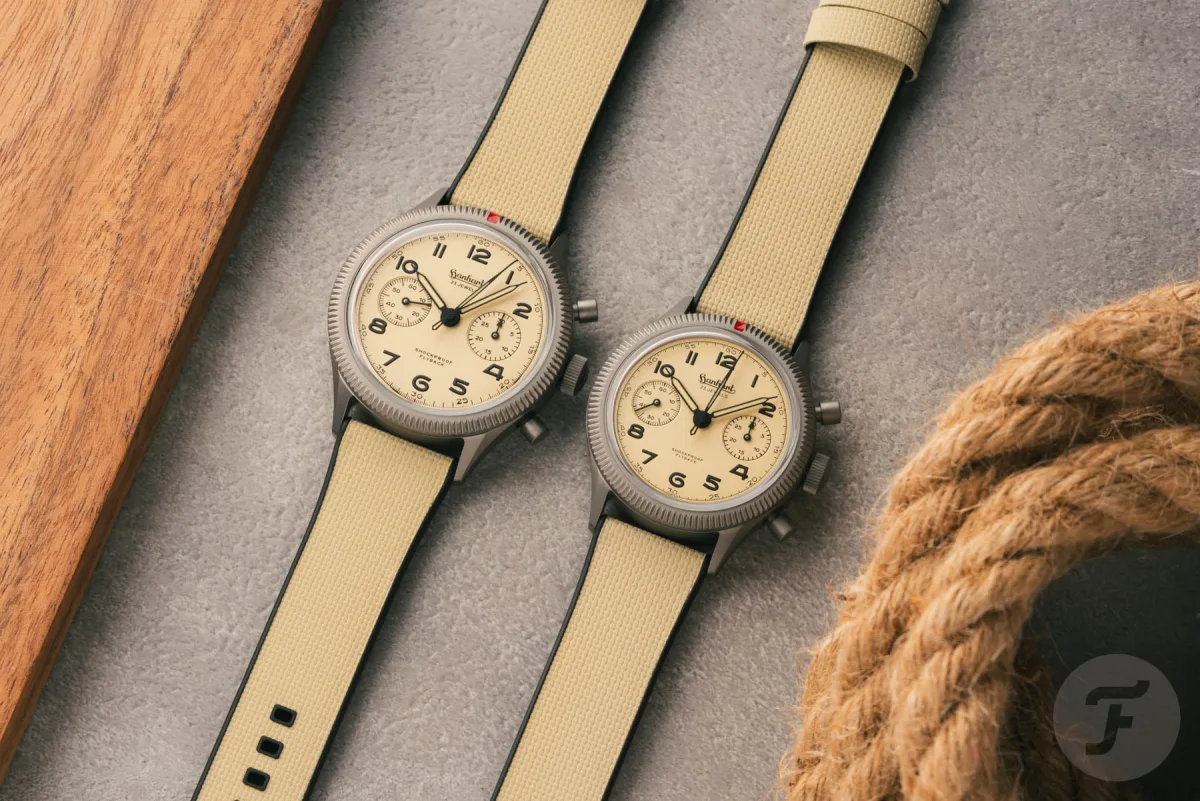
If you were to make a list of stylish chronographs, the Hanhart 417 ES model would certainly be on it.
Undoubtedly, the popularity of this model is largely due to Steve McQueen wearing it, which significantly boosts its 'cool' factor. However, even a single glance at the 417 ES convinces that they truly deserve attention, regardless of whether they graced McQueen's wrist. The round case, fluted bezel, pump-style pushers, and balanced dial design with large Arabic numerals and a bi-compax layout look excellent. But what if you alter the classic formula by adding a lightweight titanium case and a desert-style dial and strap? Would the model become even more appealing? I found the answer to this question when I got to know the Hanhart 417 TI Desert Pilot chronographs.
Distinctive Features of the Hanhart 417 TI Desert Pilot
From the very first moments, these two models stand out with their appearance, which is radically different from the standard versions of the Hanhart 417 ES. The latter usually come with a stainless steel case and have dials in classic colors: all black, all white, 'panda,' or 'reverse panda.' My personal favorites are the Hanhart 417 ES Heritage Flyback 39 and 42. These watches feature a classic black design with a flyback mechanism and a signature red pusher. The version with a titanium case and sand-colored dial and strap completely changes the visual perception of the model. As a fan of the 'desert' style, I welcomed this with enthusiasm and enjoyed testing both versions.
Hanhart 417 TI Desert Pilot in Two Sizes
Let's consider the technical specifications of both models. The smaller version has a 39 mm diameter case made of grade 5 titanium with a thickness of 13.6 mm and a lug length of 46 mm. The larger model is 42 mm in diameter, with the same thickness of 13.6 mm, but with a longer lug-to-lug distance of 49 mm.
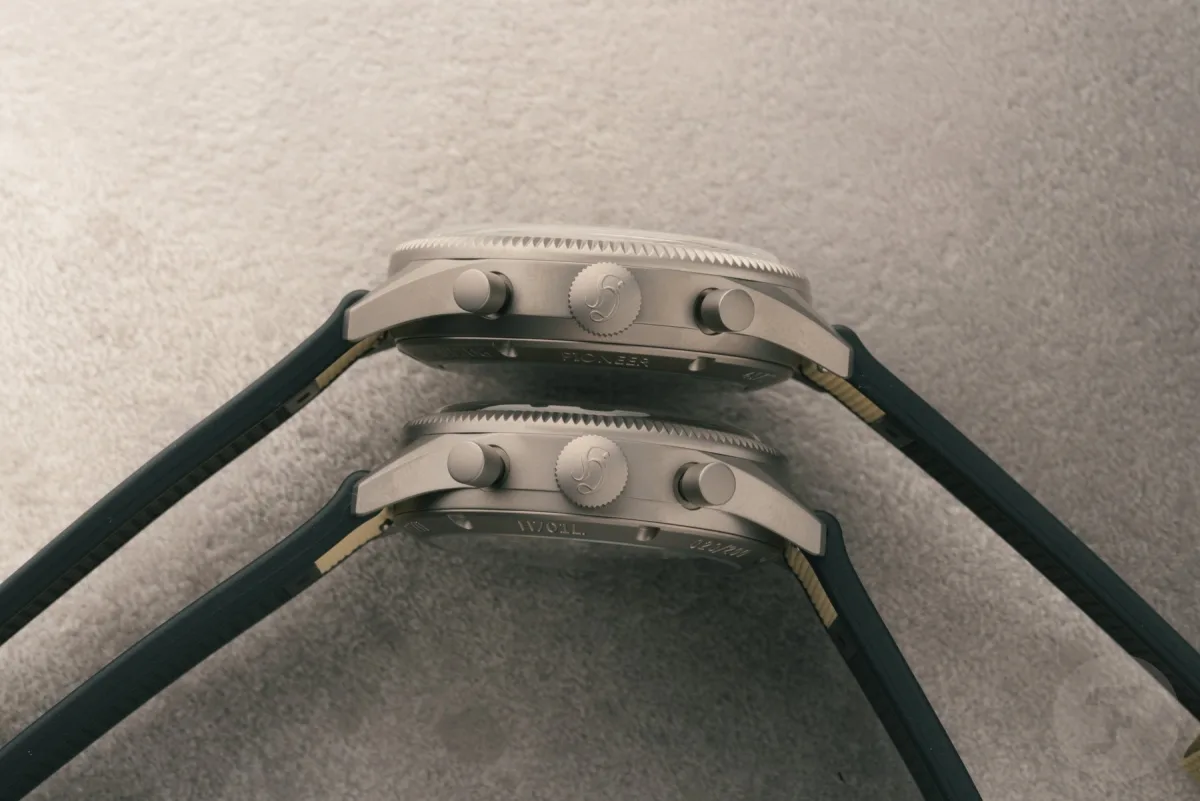
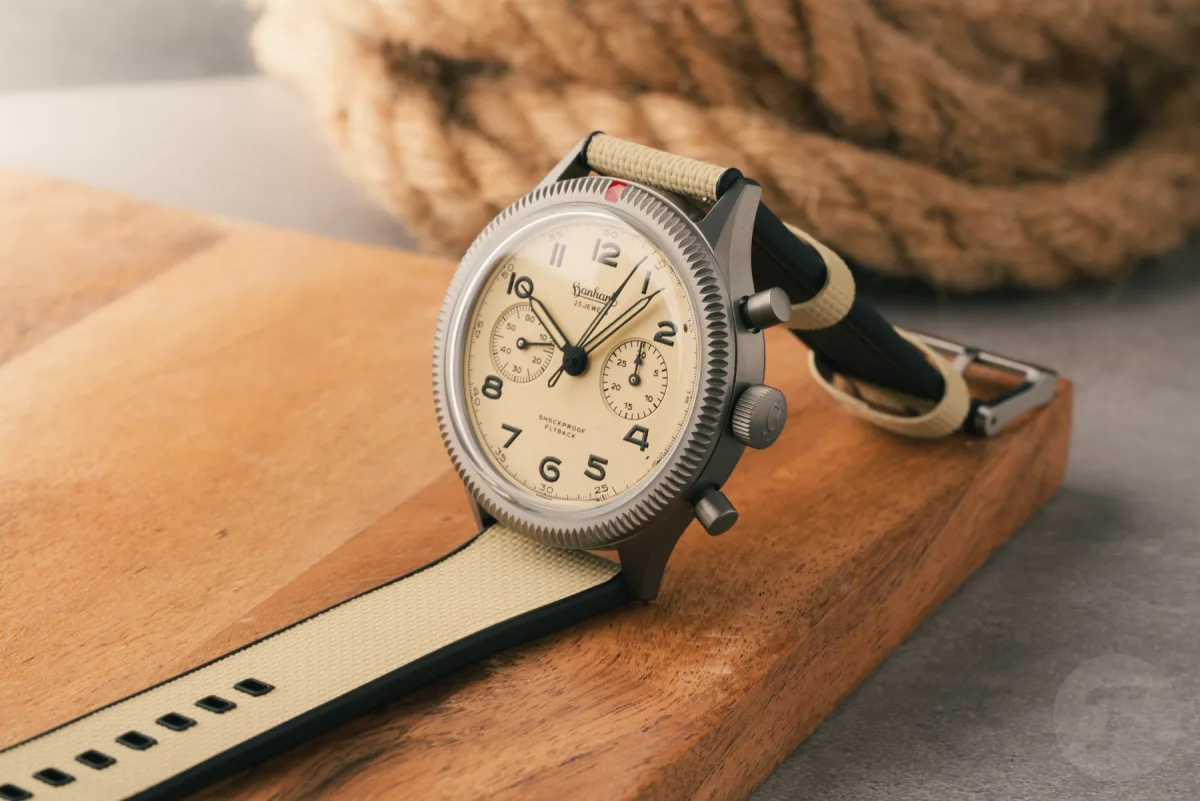
Both versions feature a matte finish that highlights the dark shade of titanium. The bezel is fluted, bidirectional with a large red marker, and the pump-style pushers are also made of titanium. The crown prominently displays a stylized letter 'h' - the hallmark of Hanhart.
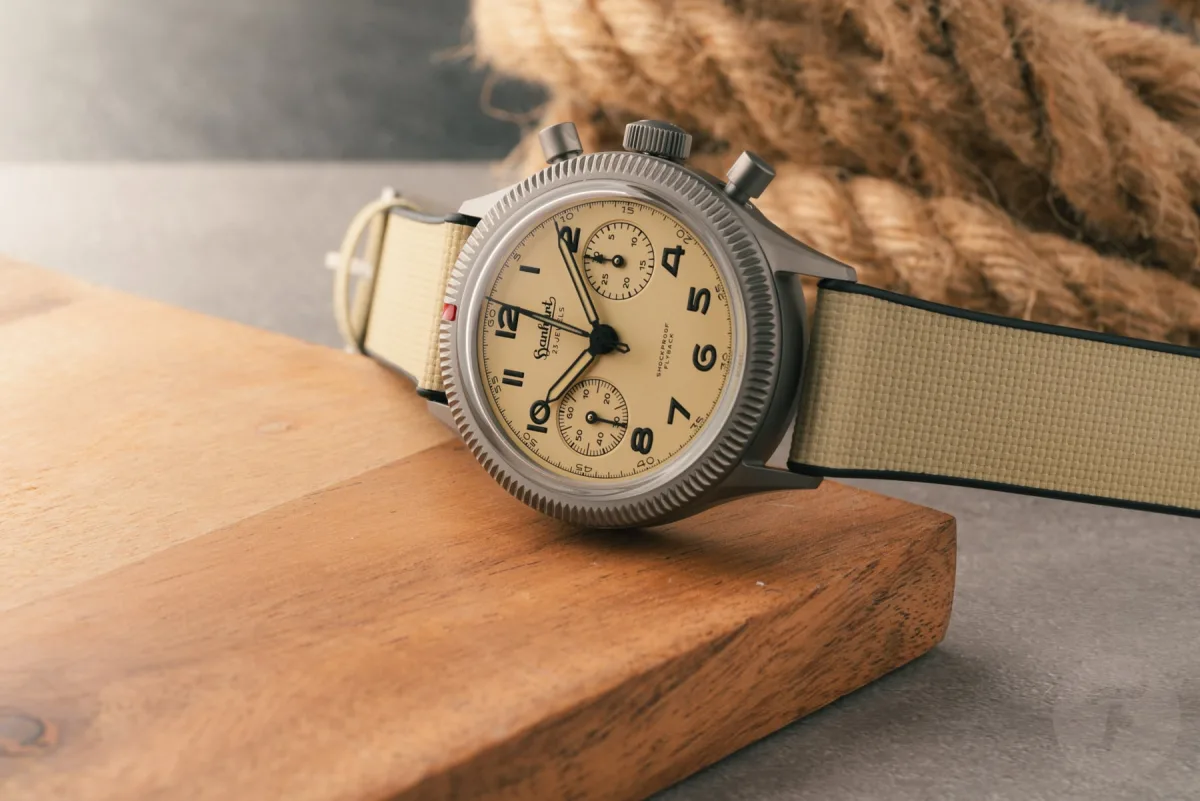
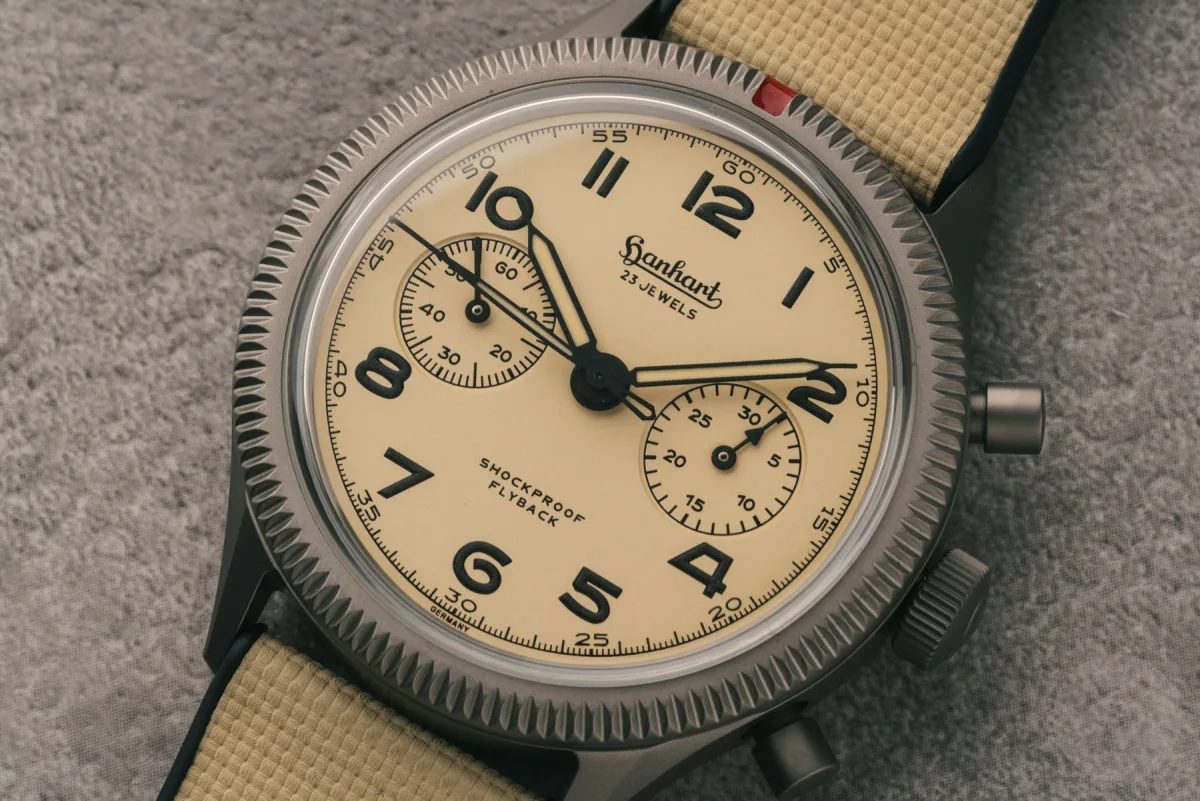
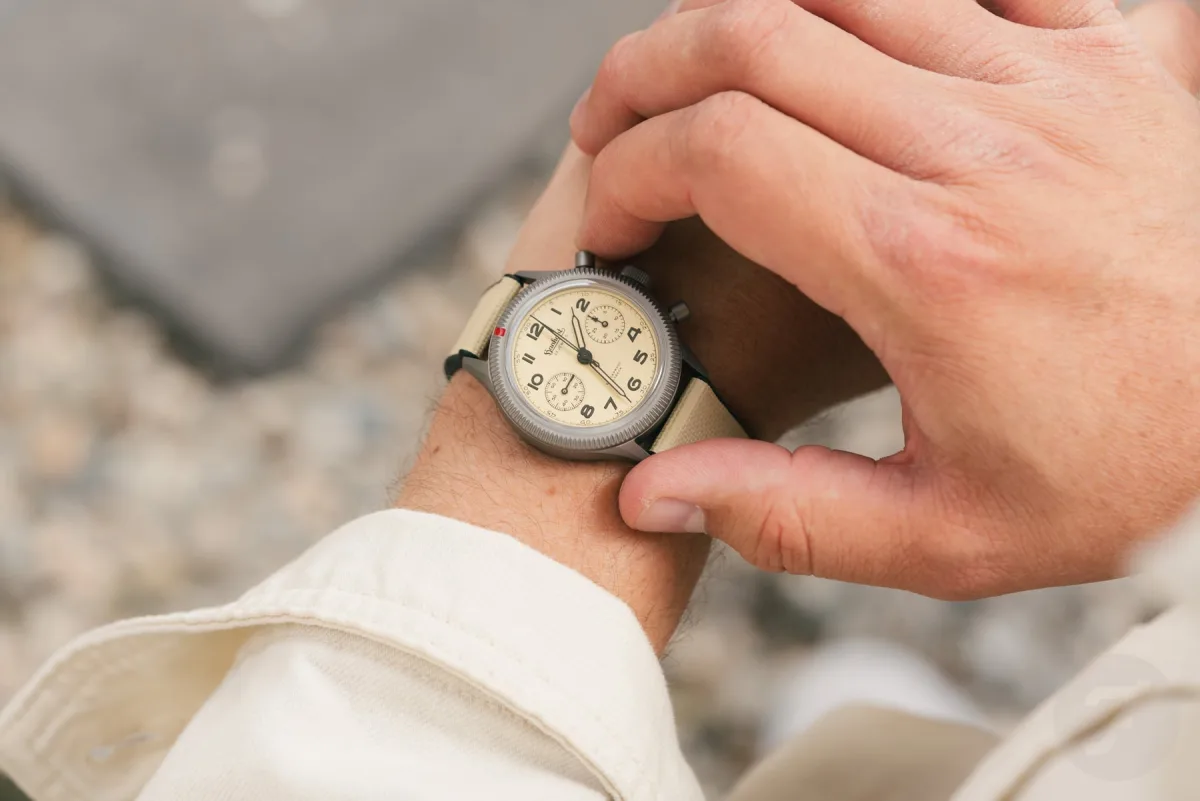
The sand-colored dial is adorned with large black Arabic numerals with Super-LumiNova coating. A semi-open track with small marks every five minutes or seconds surrounds the numerals. At the top of the dial is the historic brand logo, under which the number of jewels in the movement is indicated - an unusual decision considering that the lower part of the dial contains two lines with technical specifications, including 'shockproof' and 'flyback' labels.
Balanced Bi-Compax Dial Layout
The dial features two sub-dials: running seconds at the '9 o'clock' position and a 30-minute chronograph at the '3 o'clock' position. Despite the unusual placement of the text regarding the number of jewels, the overall design remains clean and harmonious, which is perfect for a classic chronograph. The syringe-shaped hands, characteristic of the 417 series, are filled with sand-colored lume, matching the dial, including the central chronograph hand with a thin stripe of lume.
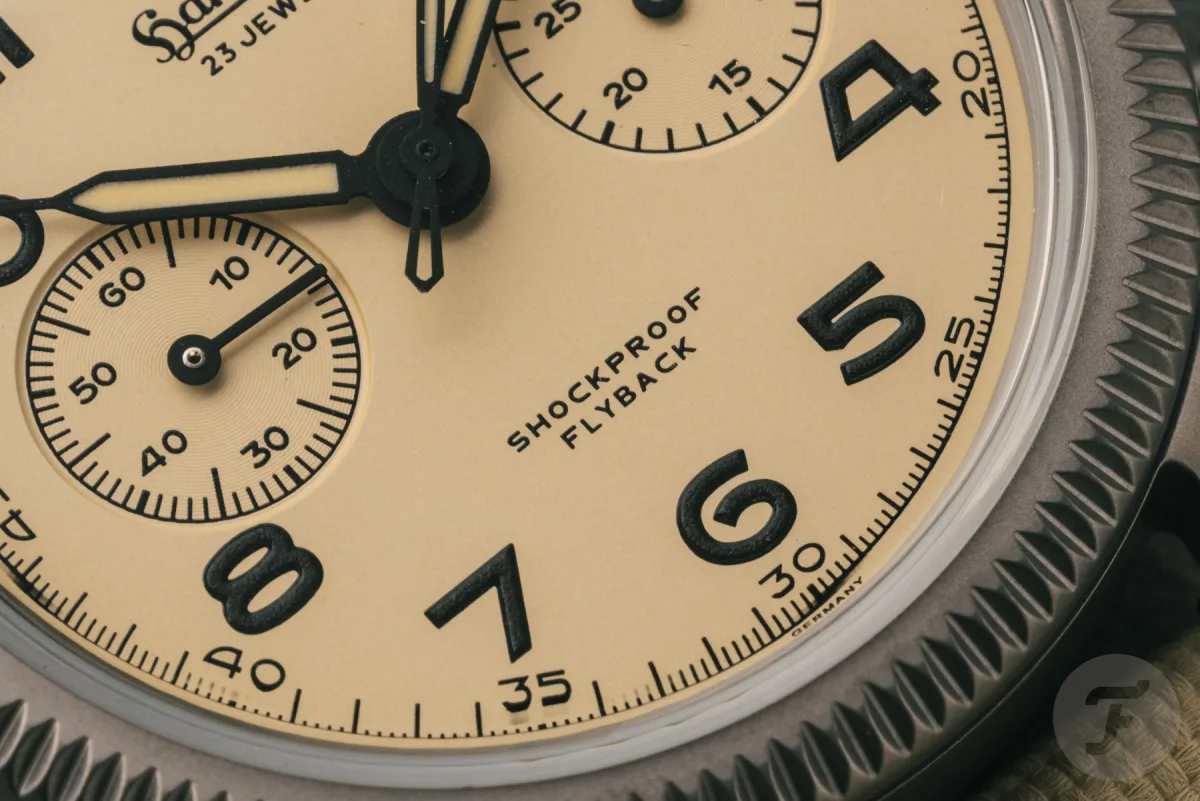
Hanhart candidly states on their website that the lume brightness is lower than usual due to the black lume on the numerals and the sand-colored lume on the hands. This transparency helps avoid disappointment among buyers.
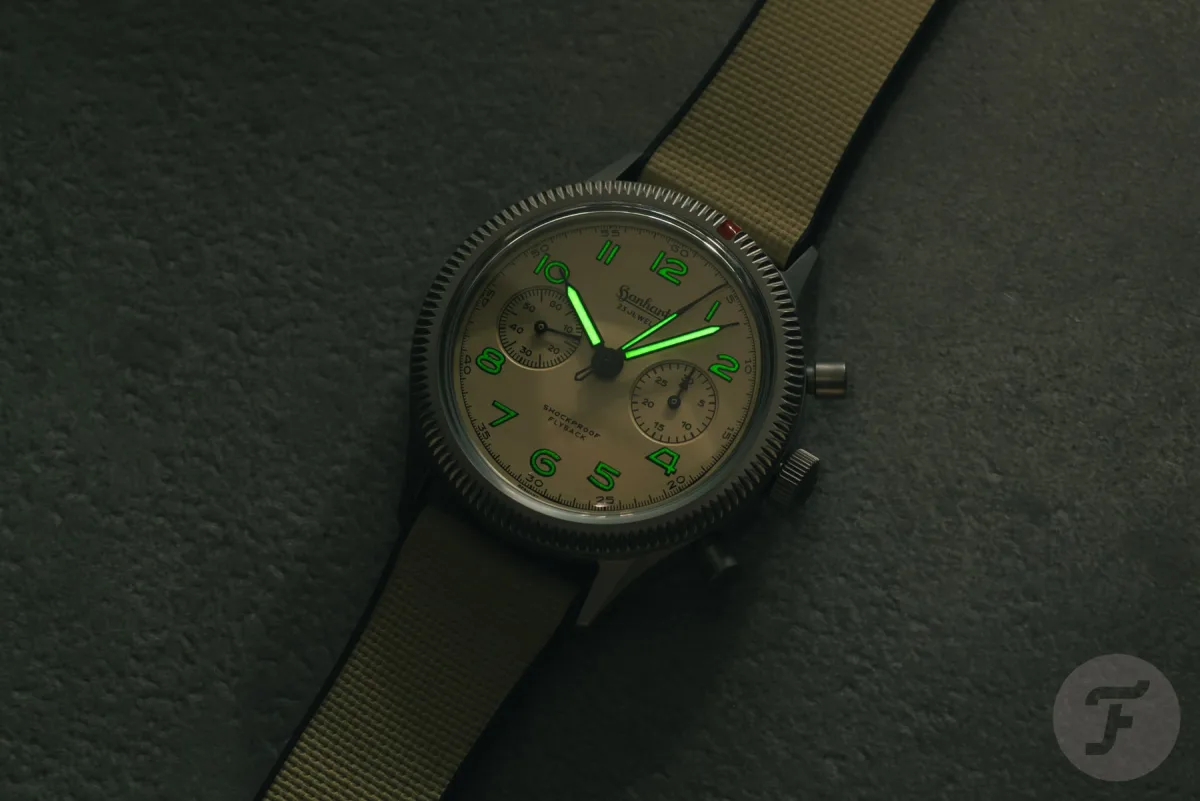
As this is a limited series of 200 pieces in each size, it is important to inform buyers in advance. We checked the luminosity: it indeed falls short of the brighter colors of Super-LumiNova on the dial, but the hands glow brightly enough to make time reading in the dark easier.
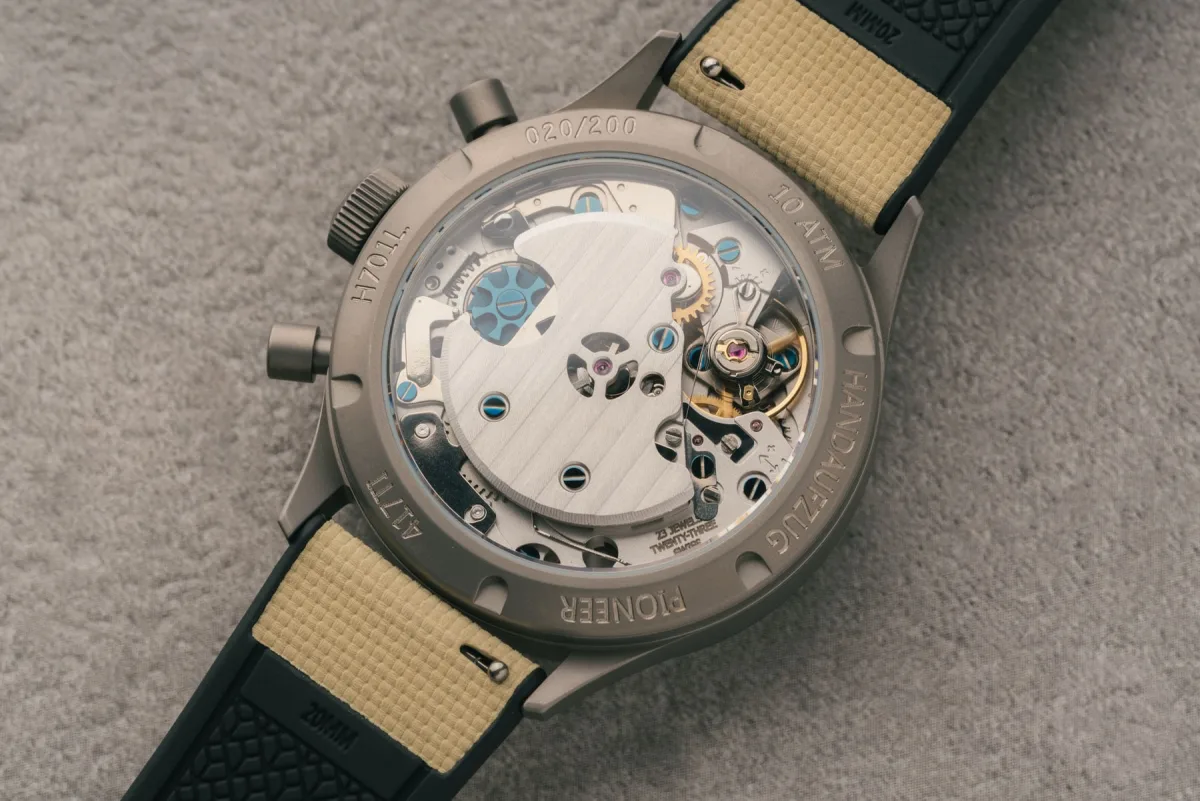
Sellita AMT5100 M Movement
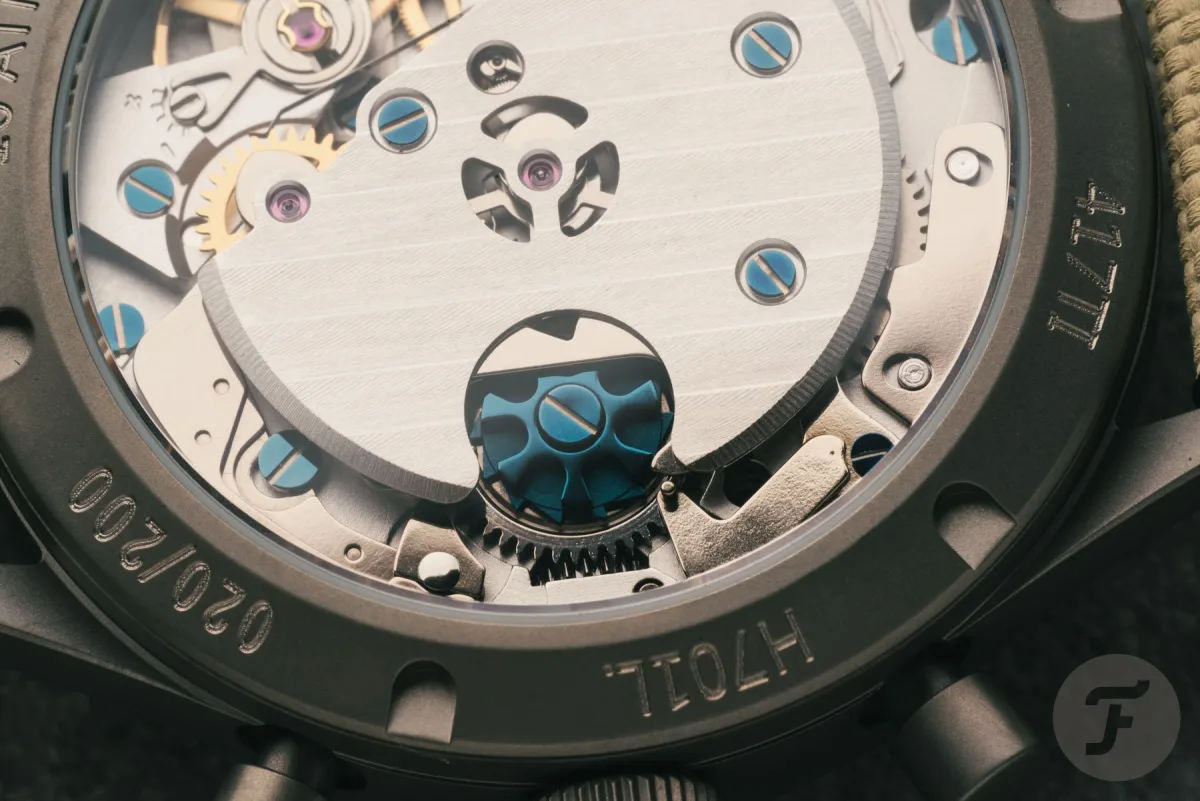
Both versions of the Desert Pilot are equipped with the Sellita AMT5100 M caliber. AMT is a specialized division of Sellita that produces high-quality movements. This hand-wound movement operates at a frequency of 28,800 vibrations per hour and offers a power reserve of 58 hours. The accuracy is between 0 and +8 seconds per day. In both versions of the 417 TI Desert Pilot, the movement is visible through the sapphire case back, featuring a blue column-wheel mechanism, blue screws, and a striped finish on the top plate. Overall, it's an attractive mechanical caliber that immediately draws attention when turning the watch over.
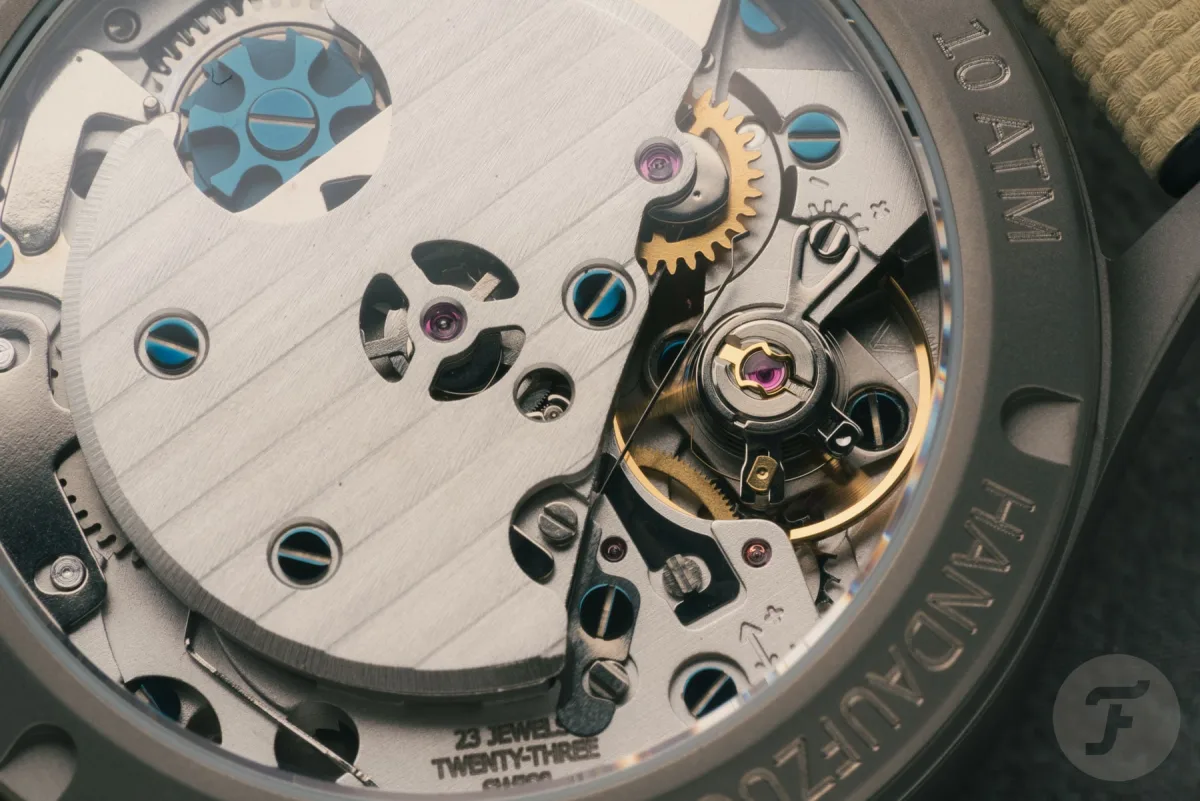
A hand-wound movement is always more interesting to observe than an automatic one, as you can examine all the elements in detail and immediately understand the mechanism's construction. Operating the AMT5100 M is a pleasure: the pushers work crisply with a satisfying tactile response. The crown impresses with no play and moderate resistance, creating a sense of reliability and high quality.
Wearing the Hanhart 417 TI Desert Pilot 39 and 42 mm
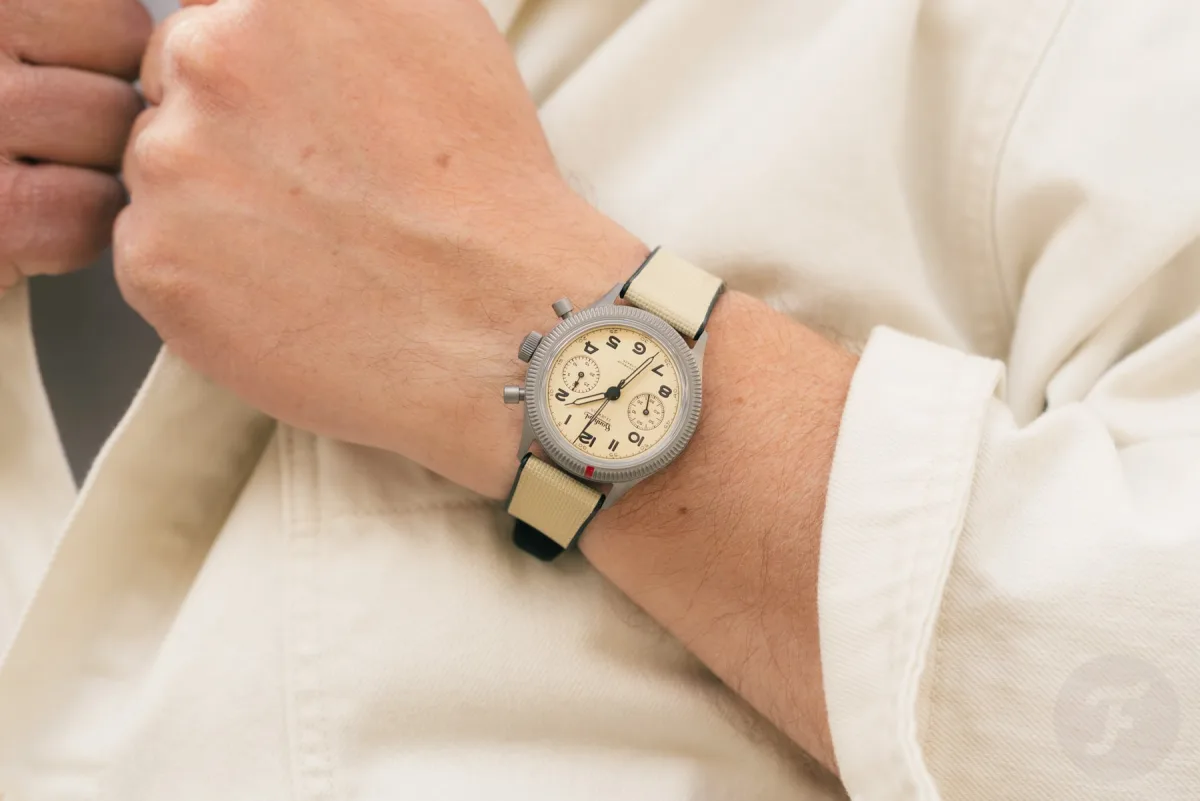
Both models come with a choice of black or sand-colored rubber straps with a black lining. Our test samples had sand-colored straps, perfectly matching the dials. The straps are flexible and comfortable, ensuring a good fit on the wrist. The lightweight titanium case prevents any feeling of heaviness or shifting on the wrist.
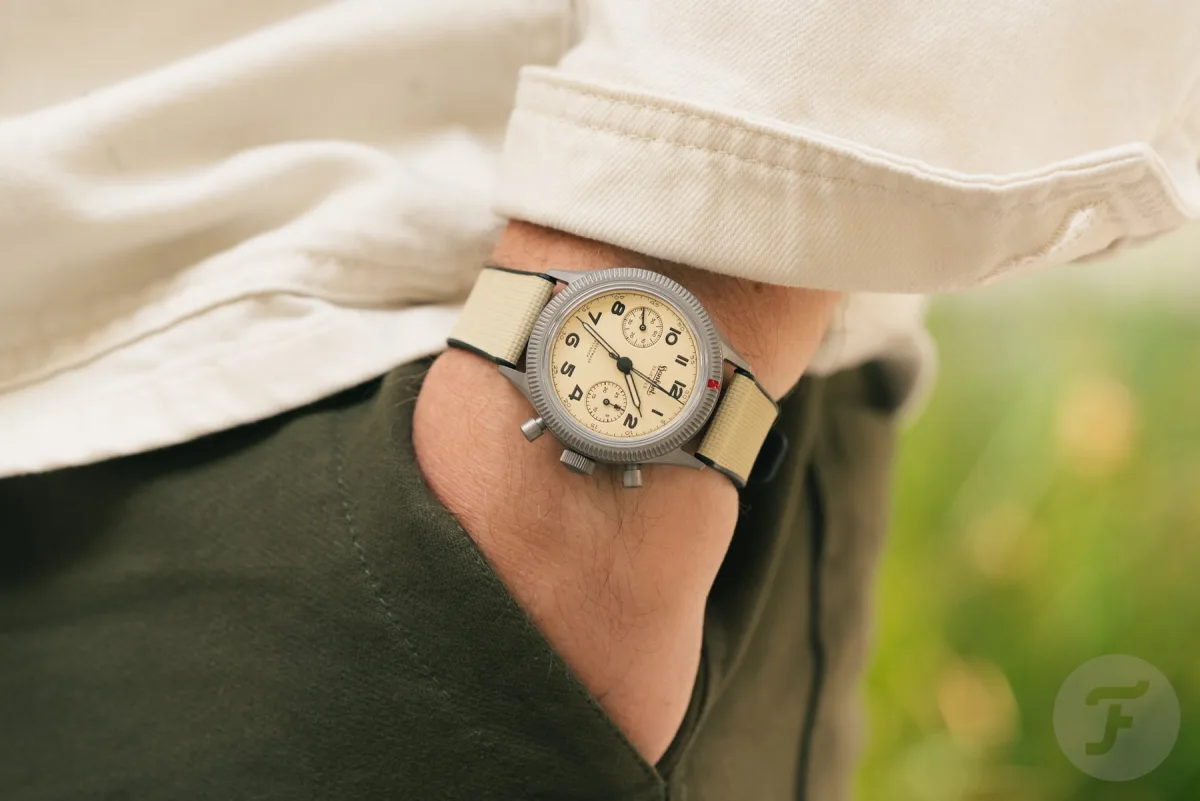
Before trying them on, I assumed I would prefer the 39 mm model, and visually it does seem more harmonious. I tend to lean towards watches sized 36–40 mm, but a 42 mm chronograph is not an issue for me.
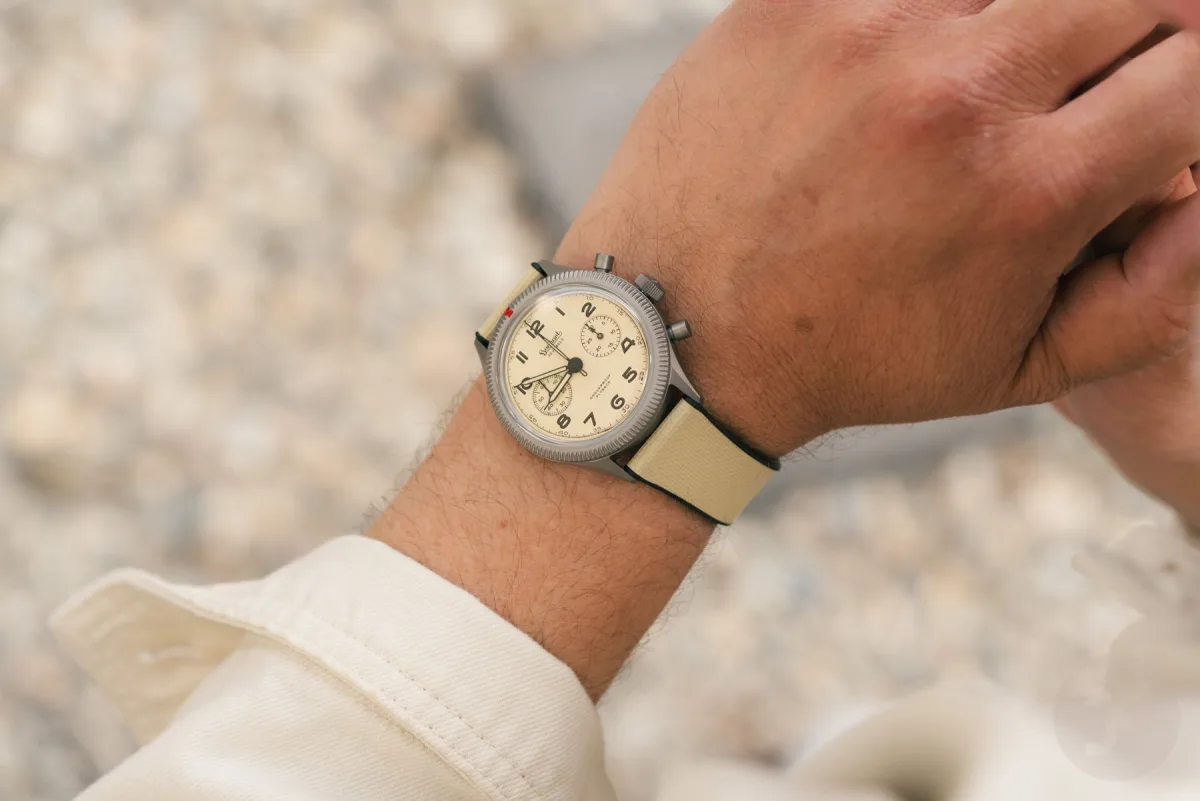
It is known that a chronograph with a light-colored dial appears larger than its dark-colored counterpart, and this rule applies to these models. Nevertheless, I did not see this as a drawback. The 39 mm model is more compact and visually balanced, but the idea of wearing a larger chronograph that emphasizes the 'desert' style appealed to me.
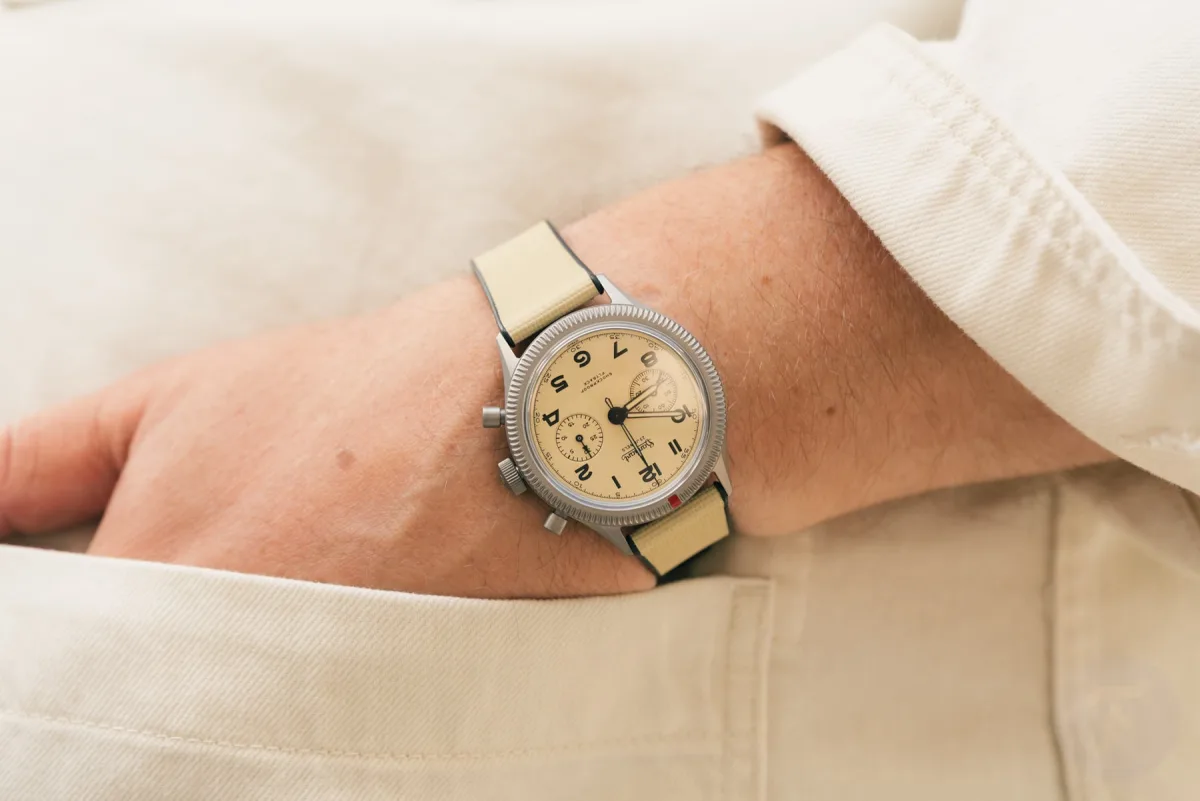
Thanks to the lightweight titanium case, the 417 TI is comfortable to wear. To be honest, I could barely notice the difference in sizes in the photos, which indicates that both versions fit well on an 18.5 cm wrist.
Final Impressions of the Hanhart 417 TI Desert Pilot
Regardless of size preference, which depends on wrist size and personal taste, both models look great. They give the impression of high-quality watches with an appealing hand-wound movement. The combination of grade 5 titanium with a sand-colored dial and strap stands out, creating a unique atmosphere for the 417 model. Although I usually opt for the classic version with a black dial and steel case, the 'desert' design seems very attractive. For those who do not prefer this style, the choice is clear.
Personally, I appreciate this design and see it as a preferred option, especially considering that few manufacturers release watches in safari or desert styles. It turned out that this theme is perfectly suited for the Hanhart 417. The cost of the models is €3,040 including VAT, making them quite tempting. It seems that all 200 pieces of the 39 mm version have already sold out.
At the time of writing, a small number of 42 mm models are still available. This version is also limited to 200 pieces. After wearing both models for several days, I understand why enthusiasts are so eager to acquire these watches. Hanhart offers two familiar options but with an unexpected and successful design solution. It is indeed a successful work, and I would gladly see more exotic versions of the 417 in the future.