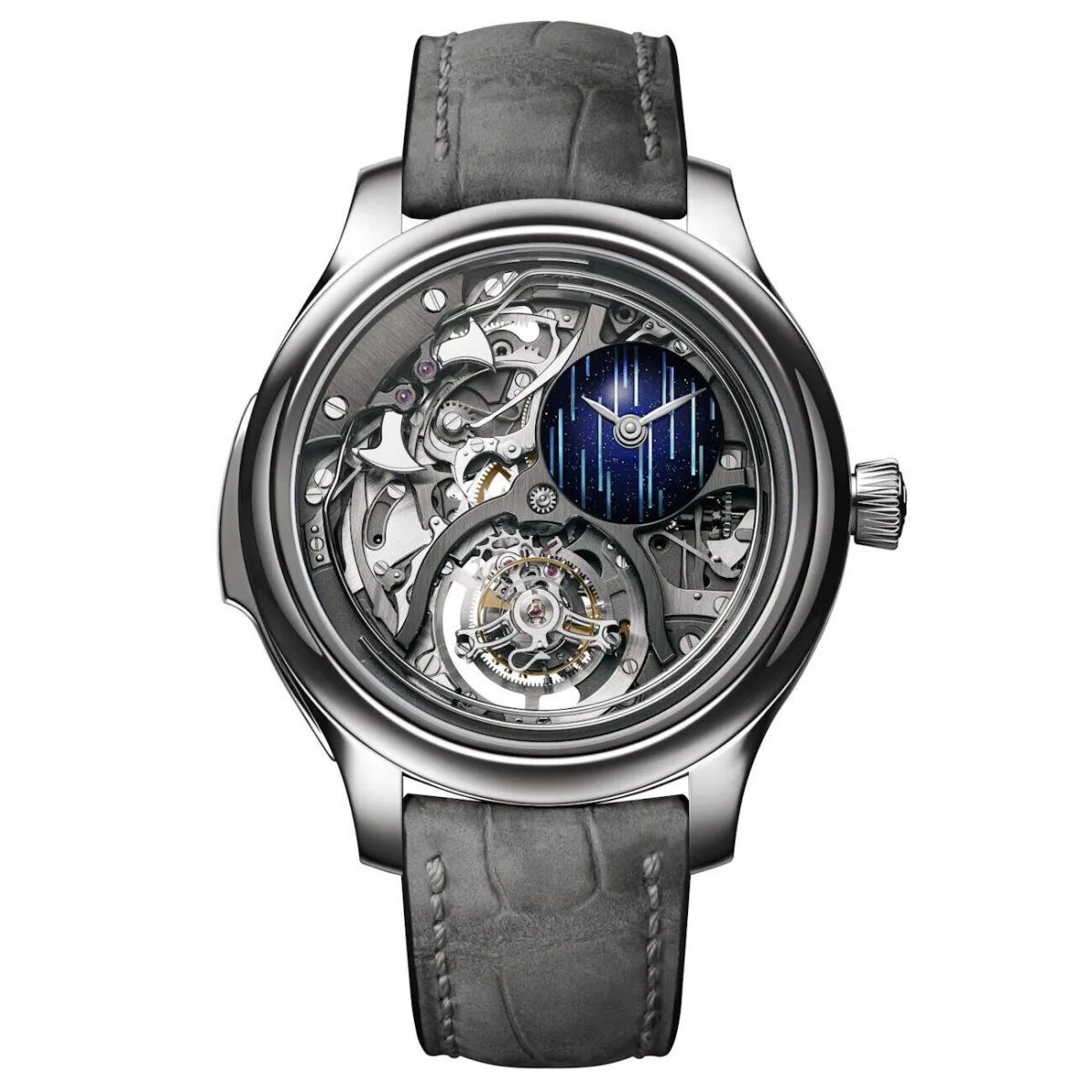
H. Moser & Cie. has introduced a limited edition series of 20 pieces of the Endeavour Minute Repeater Cylindrical Tourbillon Skeleton Cosmic Rain model.
This represents a significant artistic and technical breakthrough from the Swiss manufacturer based in Schaffhausen. Moser has reimagined one of its most complex developments in a 40 mm titanium case, combining a minute repeater located on the dial, a flying tourbillon with a cylindrical spring, and a fully skeletonized manual-winding movement. The art of the miniature aventurine starry dial, complemented by thin mother-of-pearl inserts, allows the watch not only to sound through the minute repeater gongs but also visually enhances the transparency of the skeletonization.
Endeavour Collection - Flagship of Elegant Complications
The Endeavour collection is Moser's flagship in the segment of elegant complications. Unlike the sporty Streamliner series and the bulkier Pioneer, it is in the Endeavour series that the brand showcases its boldest and most experimental developments. This series includes perpetual calendars, conceptual dials, flying tourbillons, minute repeaters, and now - the Endeavour Minute Repeater Cylindrical Tourbillon Skeleton Cosmic Rain model. Despite the complexity and unusual combinations of complications, the collection always maintains a restrained and harmonious image, avoiding overload. Perhaps Moser's task was to find a balance between artistic craftsmanship and precise mechanics.
Captivating Skeletonization of the Movement
Skeletonized watches are often perceived as complex because many of them look like mechanisms with missing parts. However, in a more advanced execution, skeletonization is not just a decorative element. In this model, H. Moser & Cie. specifically designed each bridge of the movement. Such a construction required a complete rethinking of the caliber's architecture to ensure impeccable sound quality and maximum visibility of the mechanism. This is because the minute repeater is located on the front side of the dial. As the brand notes, "open bridges, lightened volumes, transparent views" are applied here.
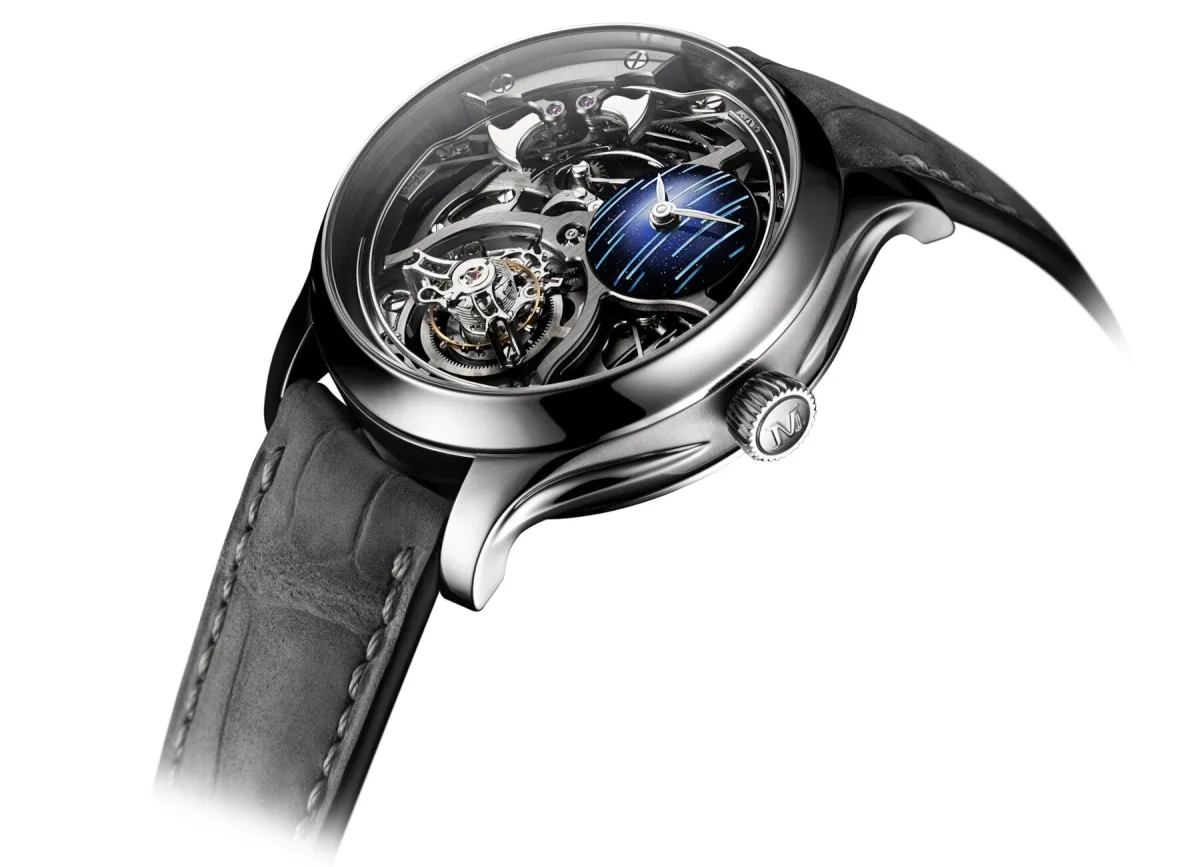
When a watch contains so many interesting functions, it's important to allow the owner to enjoy them. The mechanism's design allows light to pass through it, changing the watch's appearance from different angles. Meanwhile, skeletonization requires additional processing: each open edge must be carefully cut, hand finished, beveled, and polished. The fully skeletonized caliber is the manual winding HMC 909, consisting of 415 components, which we will discuss in detail.
For this model, Moser's engineers used a titanium case measuring 40 × 14.4 mm with a transparent case back, a sliding lever with a Teflon guide, and a crown with an "M" engraving. Titanium is a logical choice here: it makes the watch lighter to wear despite its complexity and provides excellent acoustic properties, allowing the minute repeater to resonate freely.
Impressive Mechanics and Captivating Art
The focus is on the HMC 909 caliber and its minute repeater. Traditionally, hammers and gongs are hidden on the back of the movement, but here the engineering solution was to transfer them to the side of the case. This required a reinforced structure and a complete rethinking of the caliber's architecture. Acoustics are a key element. Moser's goal is to show the mechanism's operation and movement, so skeletonization was necessary. It reduces volume, increases visibility, and creates aesthetic pleasure for both hearing and sight.

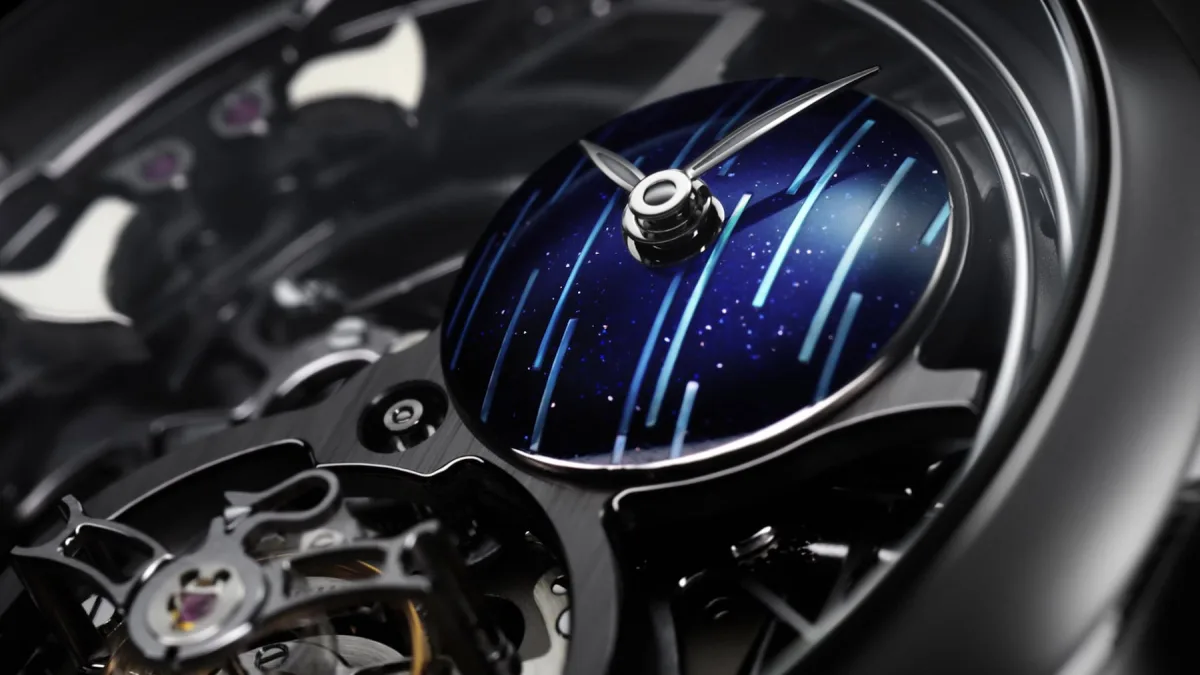
In addition to the technical details, it's worth noting the artistic component. Open bridges, lightened volumes, and transparent views are complemented by a small domed aventurine dial that immediately attracts the eye with depth and visual richness. To create the dial, fragments of aventurine glass in two colors are manually applied to the domed base, forming the signature fumé gradient. The dial is then subjected to multiple firings. After this, thin curved strips of mother-of-pearl are integrated into the engraved surface, repeating the dial's contours. They mimic a meteor shower in the night sky, which gave the model its name - "Cosmic Rain".
Additionally, the watch is equipped with a minute flying tourbillon with a cylindrical spring. This spring, inherited from 18th-century marine chronometers, is oriented perpendicular to the upper staff of the balance wheel. The concentric geometry enhances isochronism and demonstrates a rare level of craftsmanship. The cylindrical spring is produced by Precision Engineering AG, one of Moser's sister companies. Each spring is formed by hand in a complex process that requires significantly more time than a regular spring.

Conclusion: Why This Model Works
H. Moser & Cie. Endeavour Minute Repeater Cylindrical Tourbillon Skeleton Cosmic Rain is an example of perfect balance. Thanks to this, a watch with such a complex mechanism does not seem overloaded or difficult to perceive, but on the contrary - is easily perceived as a work of art with a unique acoustic accent. The minute repeater is one of the most complex complications in watchmaking, but in this model, it harmoniously complements the visual splendor.
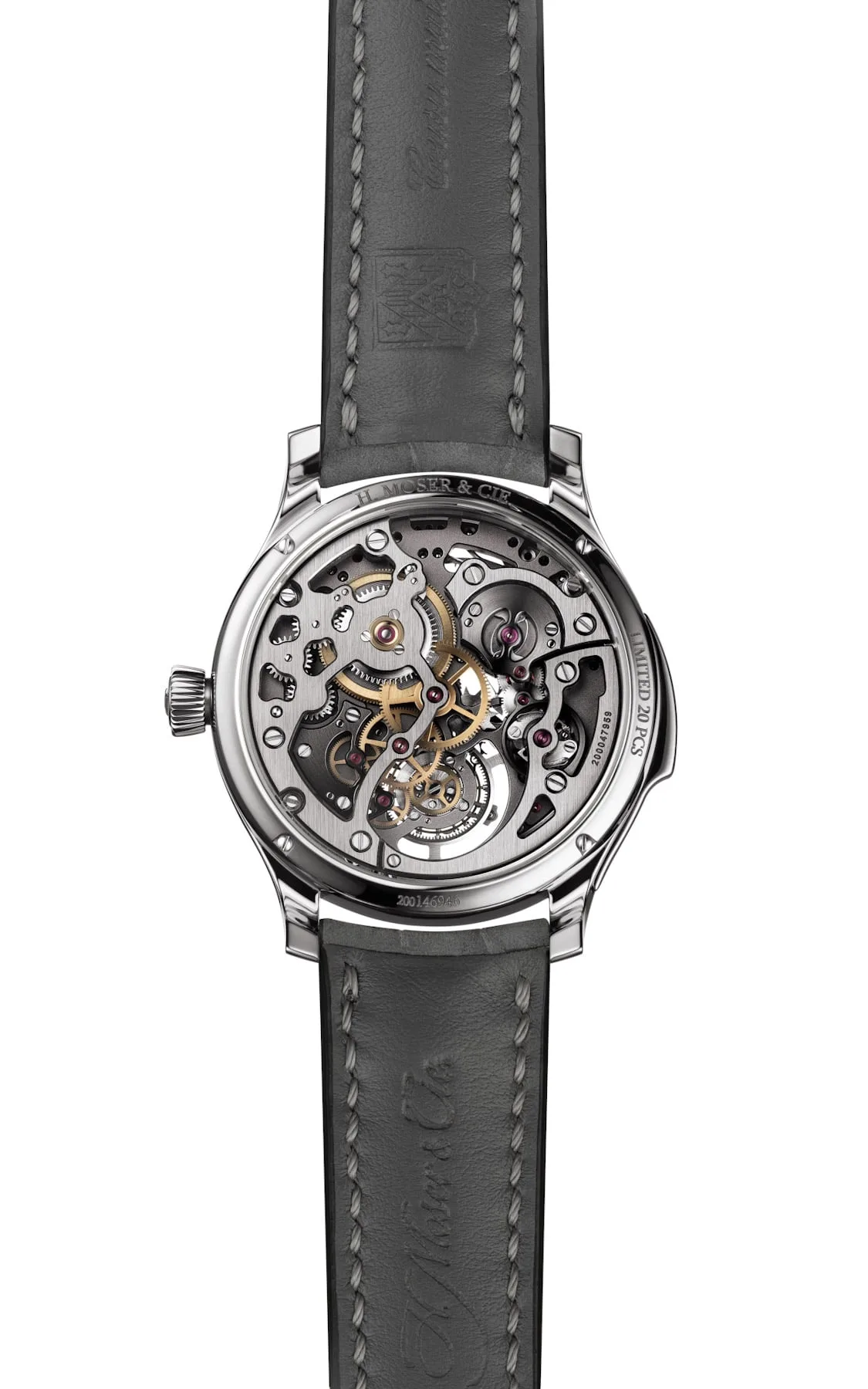
For the past decade, Moser has proven that restraint is not just a buzzword. It can be as expressive as embellishment. For a watch with such a number of details, designers could have gone overboard, but, as many masters have experienced, genius often lies in the ability to remove the unnecessary. When a minute repeater, flying tourbillon, and cylindrical spring are combined in one case, one might expect visual overload. However, in the Endeavour Cosmic Rain (priced at approximately 378,350 Swiss francs before taxes), Moser managed to find the golden mean, allowing the watch to speak both visually and audibly.
Dear readers, how do you assess this latest model from the Endeavour collection? Do you think the Cosmic Rain truly achieved a balance between technical mastery and artistic expression? How close do you feel to the brand's restraint? I invite you to discuss in the comments.