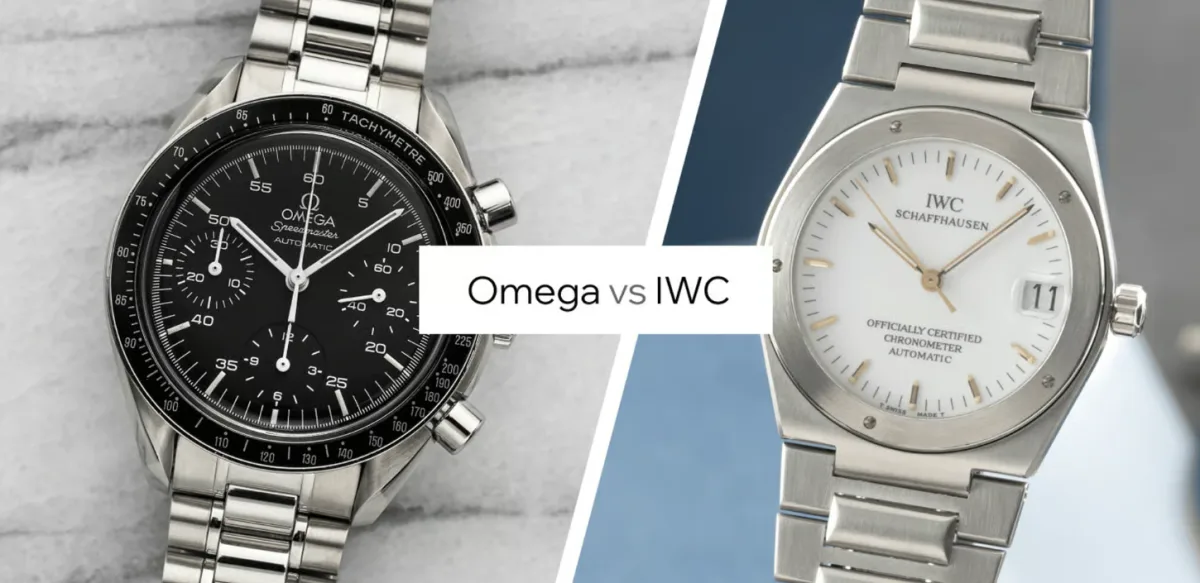
Omega and IWC are among the most influential brands in Swiss watchmaking.
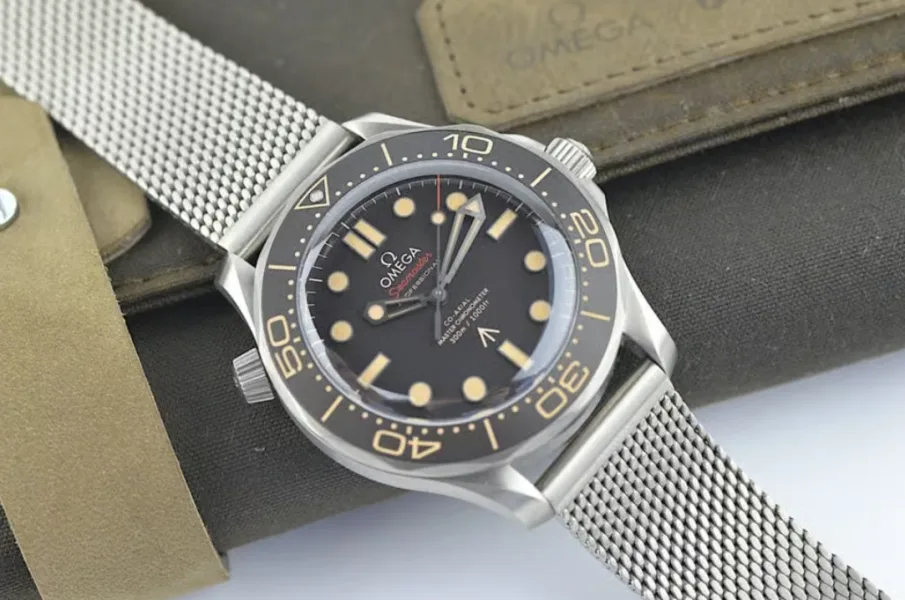
Each represents a unique tradition. Omega was founded in Le Locle in 1848 and is still associated with technical innovations and high recognition. The brand gained worldwide fame through its involvement in space exploration history: the Speedmaster watch became the first to land on the Moon in 1969. Moreover, the appearance of the Seamaster on James Bond's wrist made this model globally famous. Omega is renowned for its technological advancement, broad market position, and strong presence in the luxury watch segment.
IWC Schaffhausen was founded in 1868 and holds a unique place in the watch world. Created by an American engineer in the German-speaking part of Switzerland, the brand combines Swiss craftsmanship with a minimalist, almost instrumental design. IWC is especially known for its pilot's watches, which stand out for their clean lines, excellent craftsmanship, and restrained elegance. The brand debuted in the movie blockbuster "Top Gun." Unlike Omega, IWC focuses less on the mass market and more on enthusiasts of technical watchmaking artistry.
Let's explore the key differences between Omega and IWC in the main watch categories. Which brand better suits your style and needs?
Design and Style
These brands speak two different design languages. Omega offers a very diverse range - from sporty chronographs to elegant classic models, all of which are comfortable on the wrist. Collections like Seamaster and Speedmaster are notable for their expressive details, high recognition, and strong presence without appearing bulky or excessive.
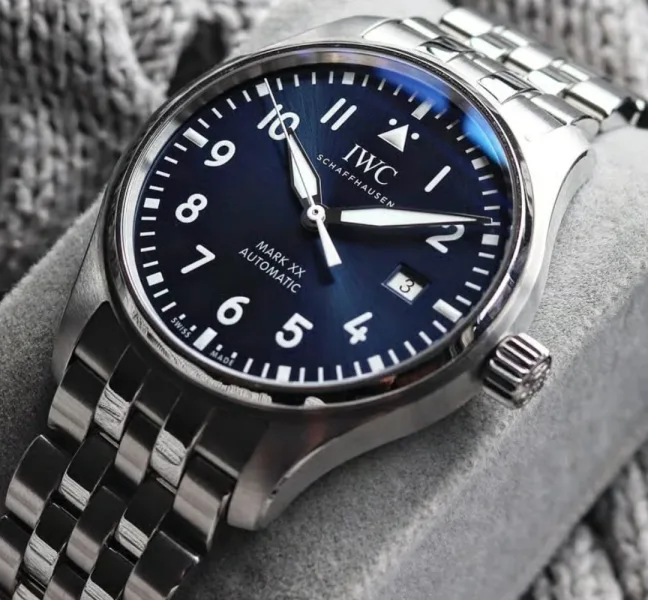
In contrast, IWC adheres to a functional approach. The focus is on readability, strict lines, and uncompromising design. This is especially evident in pilot's watches with large numbers, high contrast, and restrained, utilitarian aesthetics. Despite the elegance, models like Portugieser and Portofino remain true to the principles of clarity, proportion, and functionality. Overall, Omega embodies design diversity with wearable expressiveness, while IWC impresses with practicality, readability, and design discipline.
Quality and Craftsmanship
Both brands maintain the highest quality standards, although they emphasize different areas. Omega is associated with precise, technically optimized manufacturing. The Speedmaster watches clearly demonstrated their reliability under the extreme conditions of the Apollo 13 mission. The brand's main priorities are high precision, technical innovations, and durability.
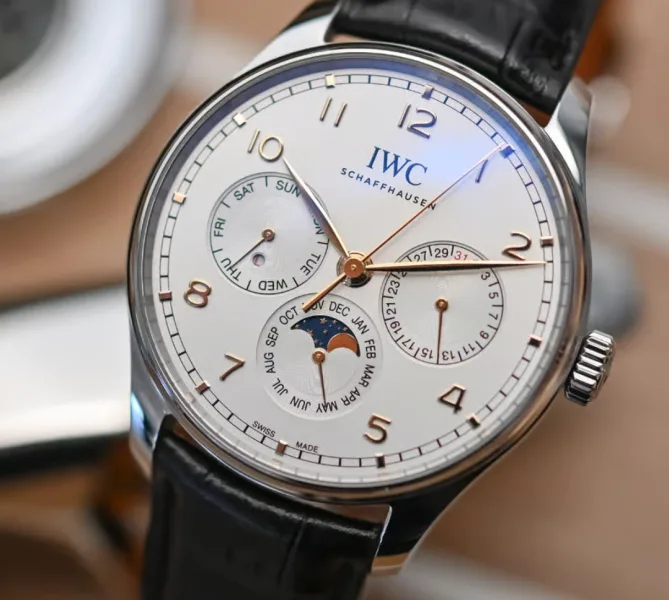
IWC takes a somewhat different approach. The foundation is a clearly structured design emphasizing technical clarity and reliability. Form and technique go hand in hand. At the same time, the brand masterfully handles complex complications, such as the perpetual calendar, impressively realized in the Portugieser collection. Despite different focuses, both brands are on par in terms of quality and craftsmanship.
Watch Collections and Models
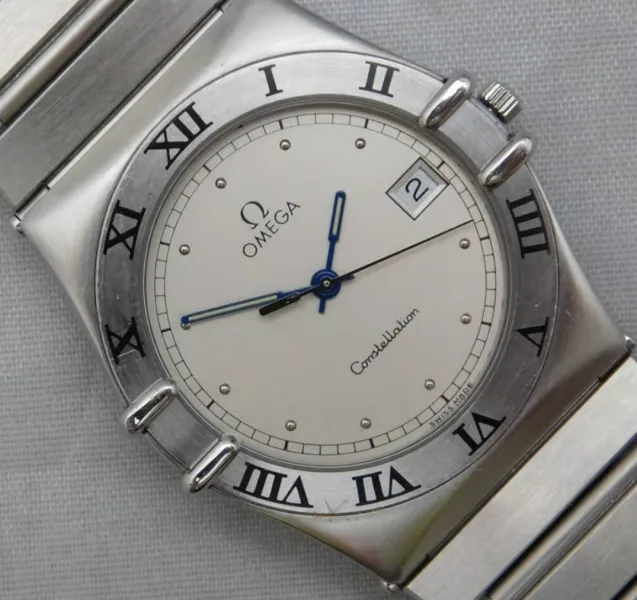
Omega offers a wide and clearly structured range - from sporty to classic models. The most famous lines include Seamaster - versatile diving watches; Speedmaster - the legendary chronograph; as well as Constellation and De Ville, aimed at fans of classic style. Special attention is paid to the women's segment with a variety of styles and models.
In contrast, IWC offers a narrower portfolio. The pilot's watches are executed in a functional instrumental style, the Portugieser design resembles classic pocket watches, and Portofino embodies classic elegance. The catalog also includes Ingenieur - luxury sports watches. A significant feature of IWC is the consistency of design codes within each collection. The women's segment is represented in a limited way - often as reduced versions of existing models with a focus on restrained elegance rather than separate women's collections.
Technology and Functionality
In the field of technology and functionality, Omega and IWC also demonstrate different approaches. Omega focuses on technical innovations such as the co-axial escapement, anti-magnetic properties, and METAS certification, which provide exceptional accuracy and reliability for everyday use. Chronographs, diving, and GMT models are developed with an emphasis on practical efficiency.
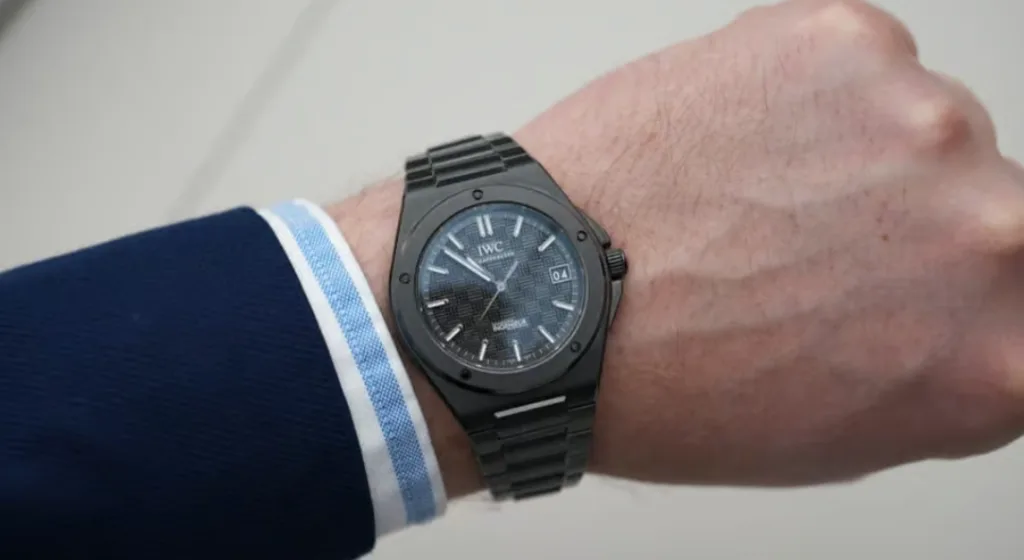
IWC is more focused on material technologies. Inspired by participation in Formula 1, the company uses modern materials - ceramics, titanium, and its own Ceratanium alloy. These materials combine lightness, strength, and technical character. While Omega is known for innovations in calibers, IWC defines functionality through material choice and design clarity.
Pricing and Value Retention
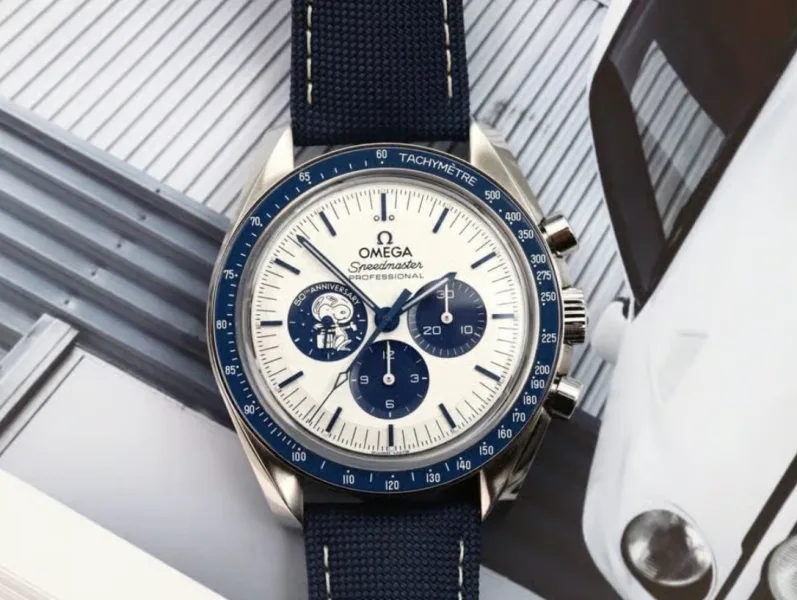
Both brands are positioned in the high-class luxury watch segment but target different audiences. Omega offers relatively affordable entry-level models with a high technical level, making the brand attractive to newcomers in the watch world. Thanks to a strong market position and iconic models like the Speedmaster, demand in the secondary market remains stable. Special editions, such as the Silver Snoopy Award, are in high demand and positively influence value retention.
IWC generally occupies a higher price niche, creating a more exclusive image. The brand is less oriented towards newcomers, making it an attractive choice for a first luxury watch purchase. Performance in the secondary market highly depends on the model; however, classic series like Portugieser and certain pilot's watches remain in demand. Overall, Omega is perceived as a more accessible brand, while IWC symbolizes exclusivity and individual character.
Conclusion
Omega and IWC hold leading positions, appealing to different tastes and preferences. Omega stands out with technical innovations, iconic models, and a broad range that is particularly attractive to newcomers. IWC impresses with design purity, outstanding material knowledge, and a brand image emphasizing restrained elegance. Those looking for dynamic and versatile luxury watches often choose Omega. Fans of minimalism, functionality, and technical clarity will find resonance in IWC.
Ultimately, the choice depends on personal preferences and what values the watch should reflect on the wrist. There is no definitive answer as to which brand is better. Both manufacturers are recognized leaders in Swiss watchmaking, offering models that often accompany their owners throughout their lives.