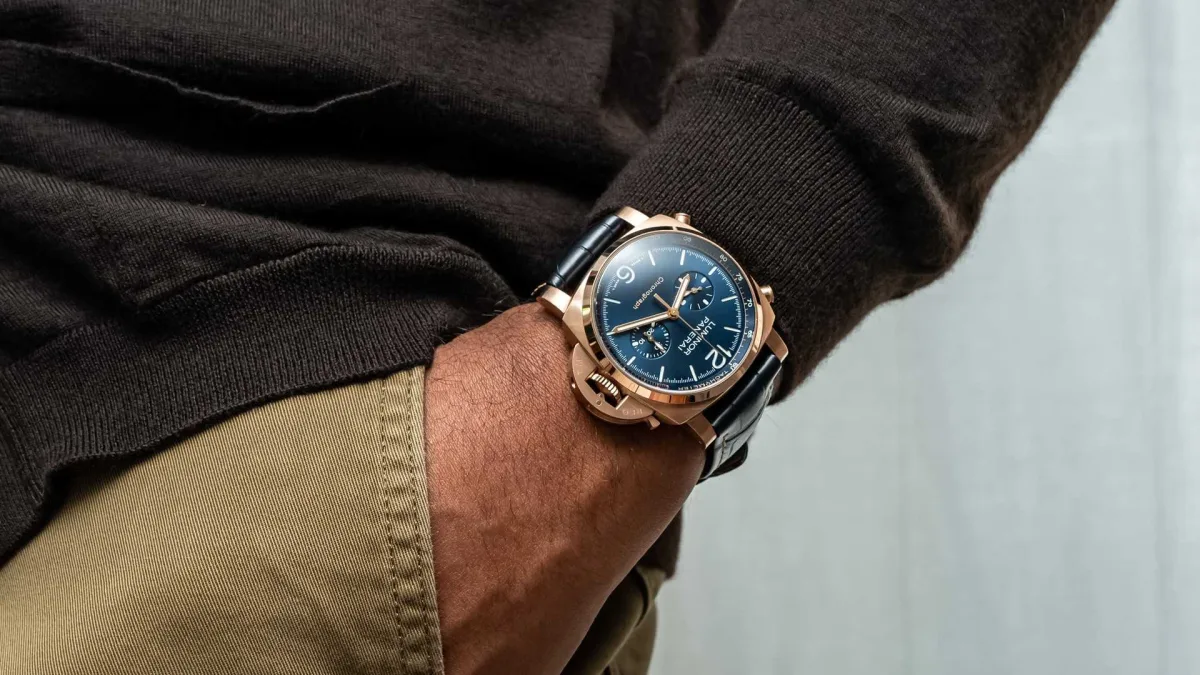
Several weeks ago at the Watches & Wonders 2021 exhibition, Panerai introduced a new collection of chronograph watches, as well as an entirely new in-house chronograph movement. For a brand whose history and design are so closely linked with diving, making such an investment in developing their chronographs is an intriguing and risky step. The new Panerai Luminor Chrono collection is priced just over $9,000, allowing it to directly compete with some luxury chronographs from companies like Breitling and IWC, as well as with models like the latest Chronomaster Sport from Zenith.
But do these Luminor Chronos have what it takes to convince existing Paneristi to diversify their tastes and attract new buyers who have no shortage of choices in the luxury chronograph segment?
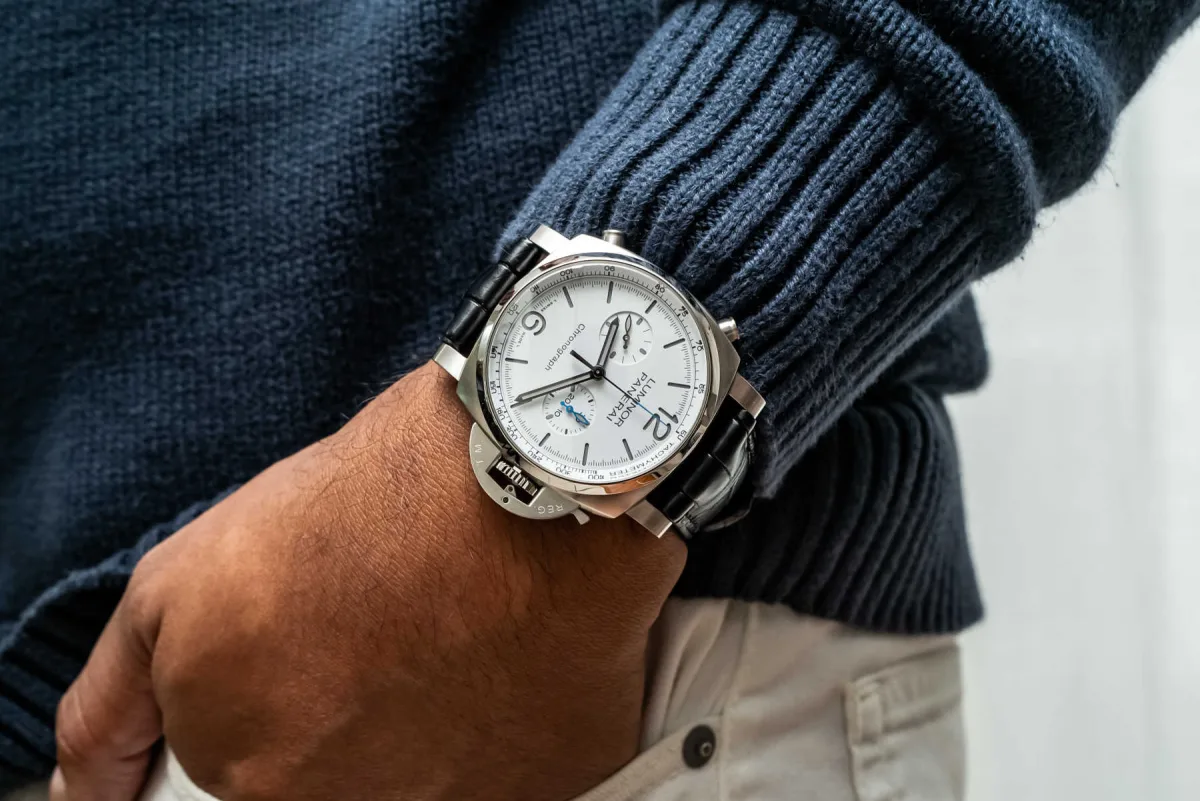
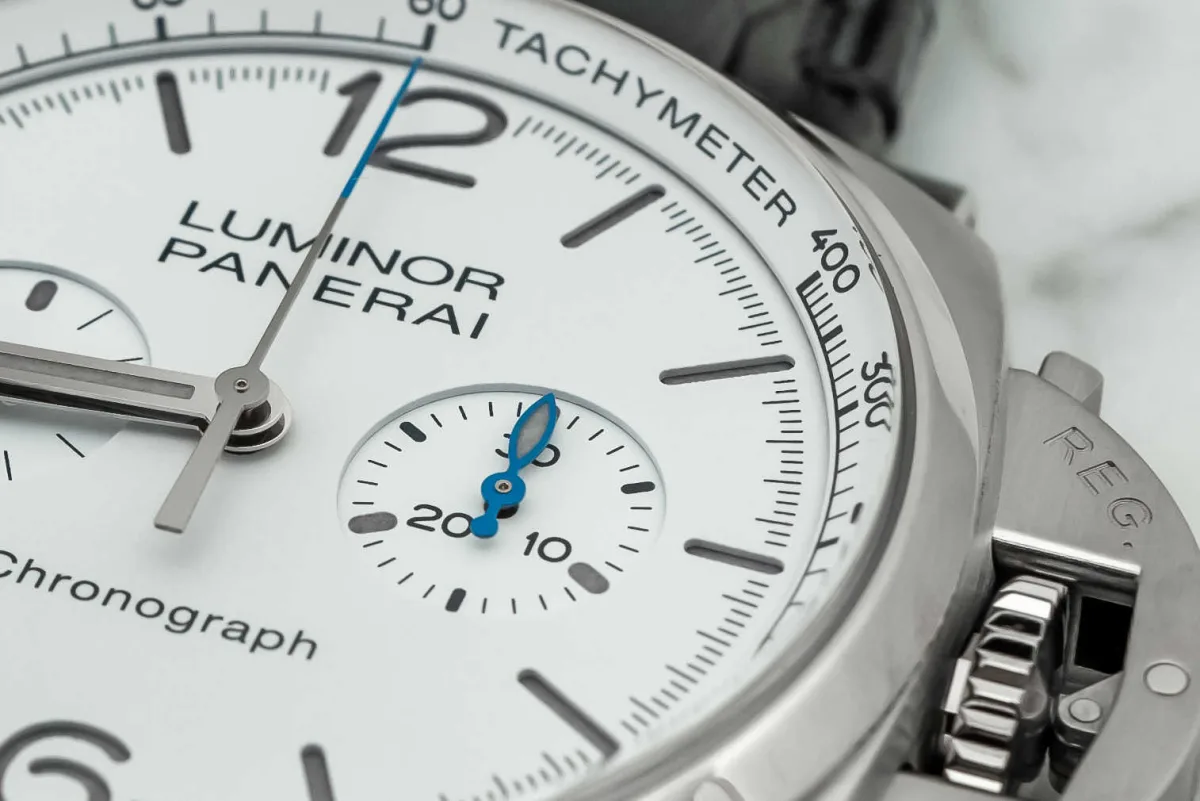
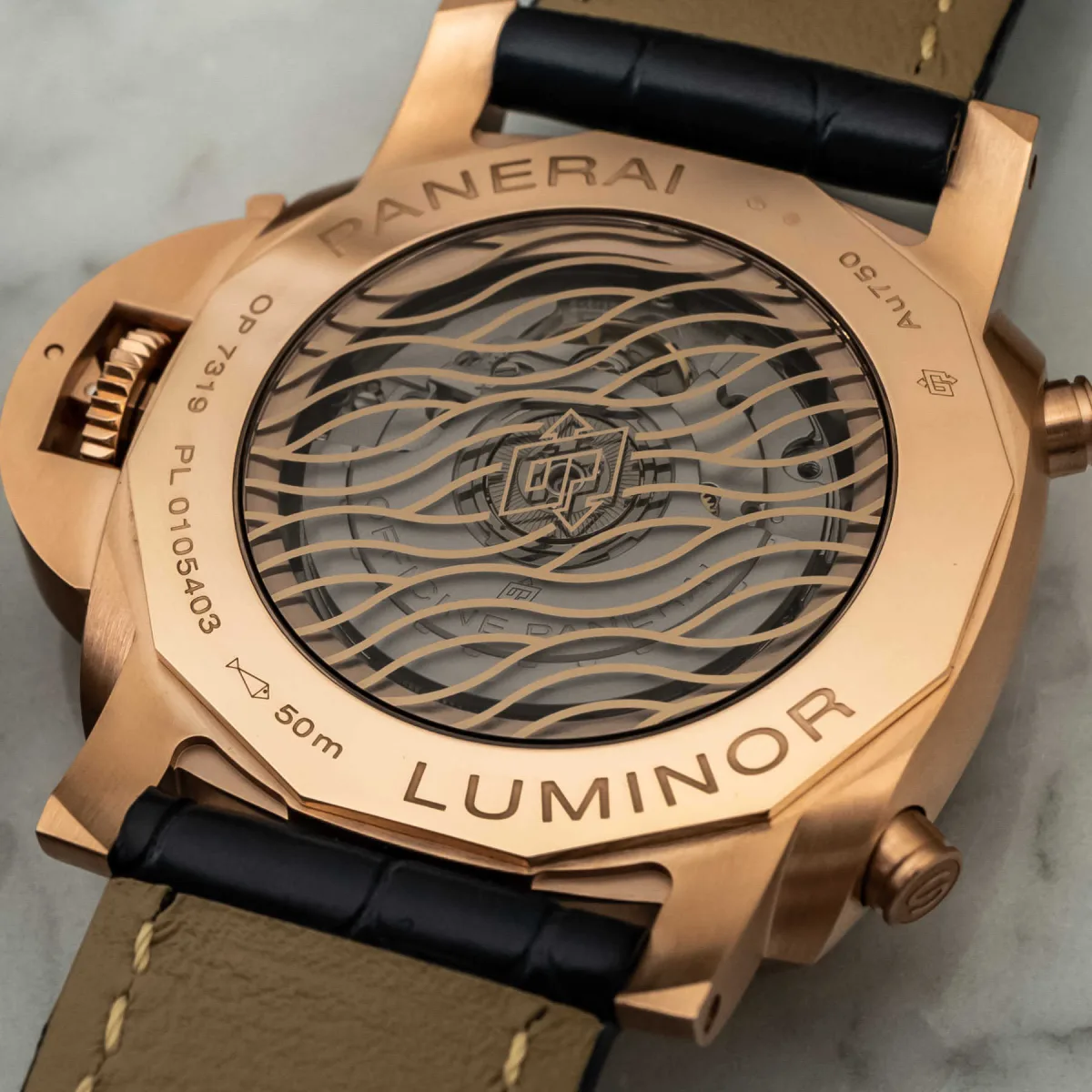
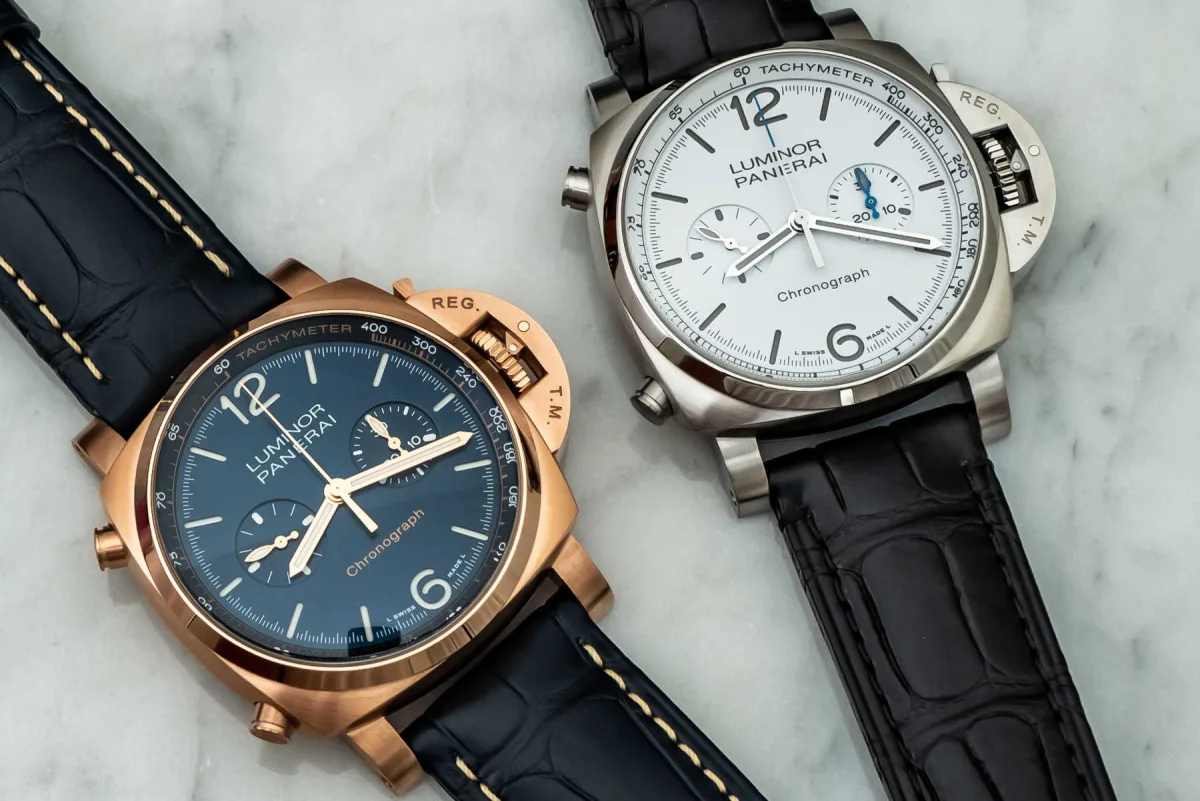
I spent some time with two iterations of the Luminor Chrono - the stainless steel model with a white dial PAM1218 and the Goldtech Blu Notte model PAM1111. While the stainless steel and Goldtech models are essentially the same, there are small differences. The Goldtech PAM1111 model has an exhibition case back, but the movement is not visible. Instead, there's a very beautiful embossed gold wave pattern on the sapphire. Ultimately, it's whimsical, but an alternative could have been a matching solid gold case back. Meanwhile, the water resistance of the PAM1111 is 50 M, while the steel models have 100 M.
I chuckled at the irony that the very serious-looking crown has a water resistance of 50M, but I have a feeling that the PAM1111 buyer likely has other pieces in their collection (probably other Panerai) that are more suitable for serious diving.
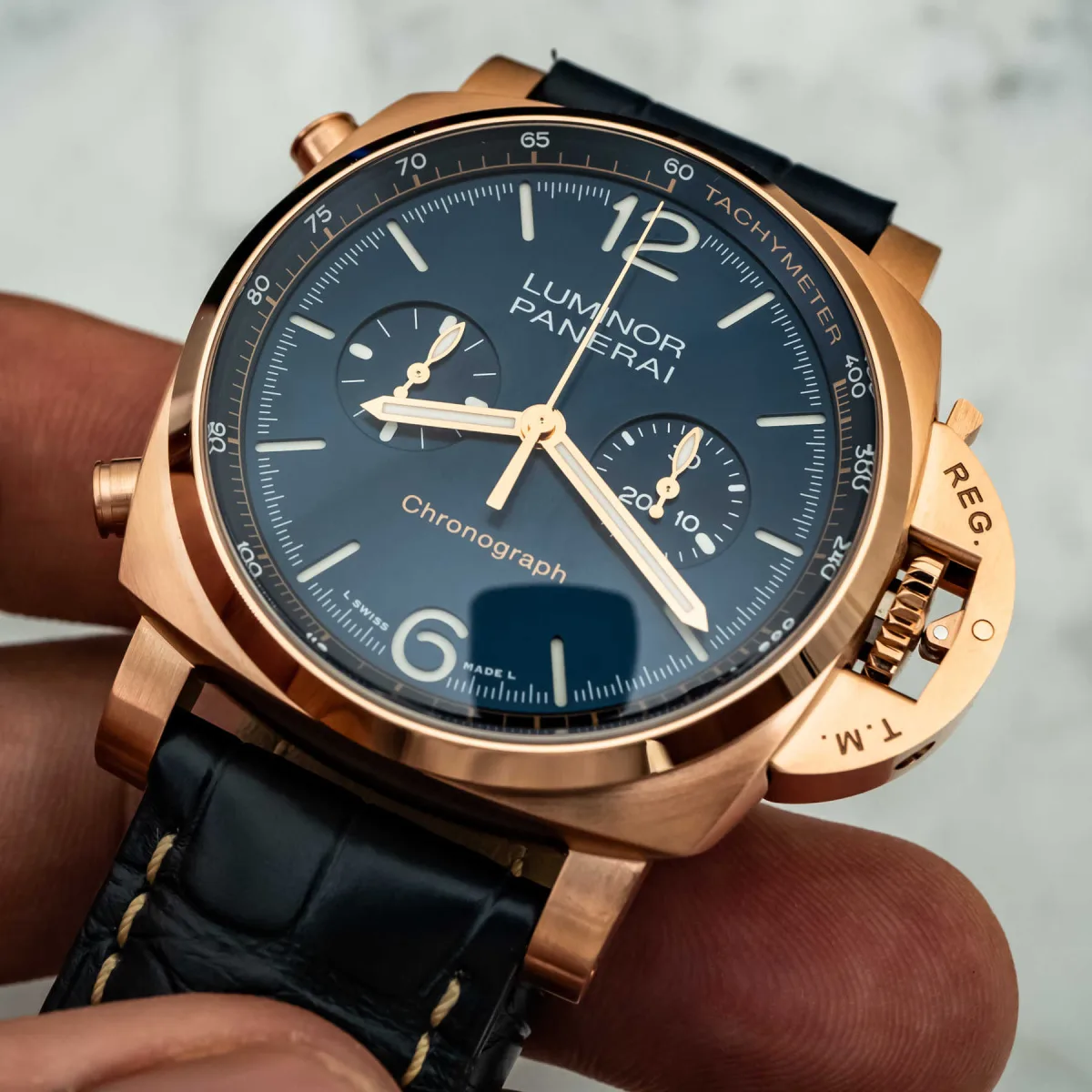
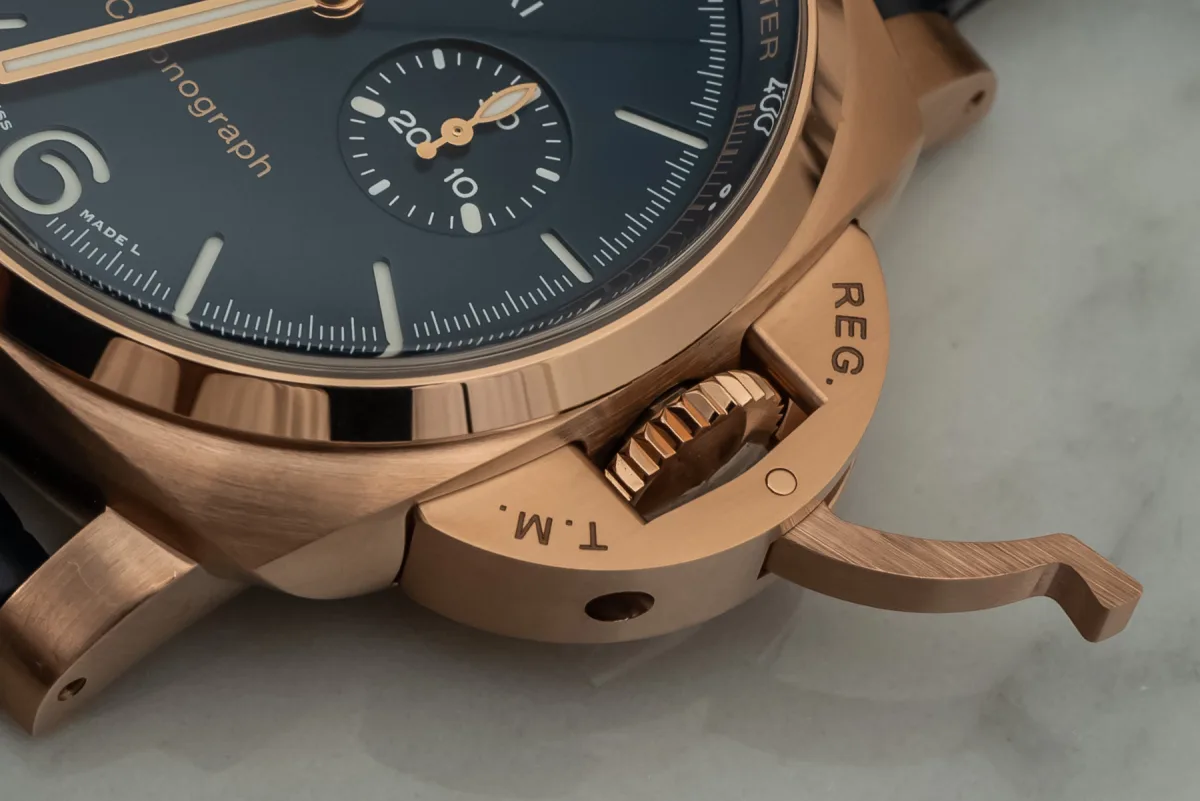
If you're not familiar with this material, Goldtech is Panerai's patented alloy with increased copper and platinum content, giving it a deeper color than regular rose gold, while also being highly resistant to fading.
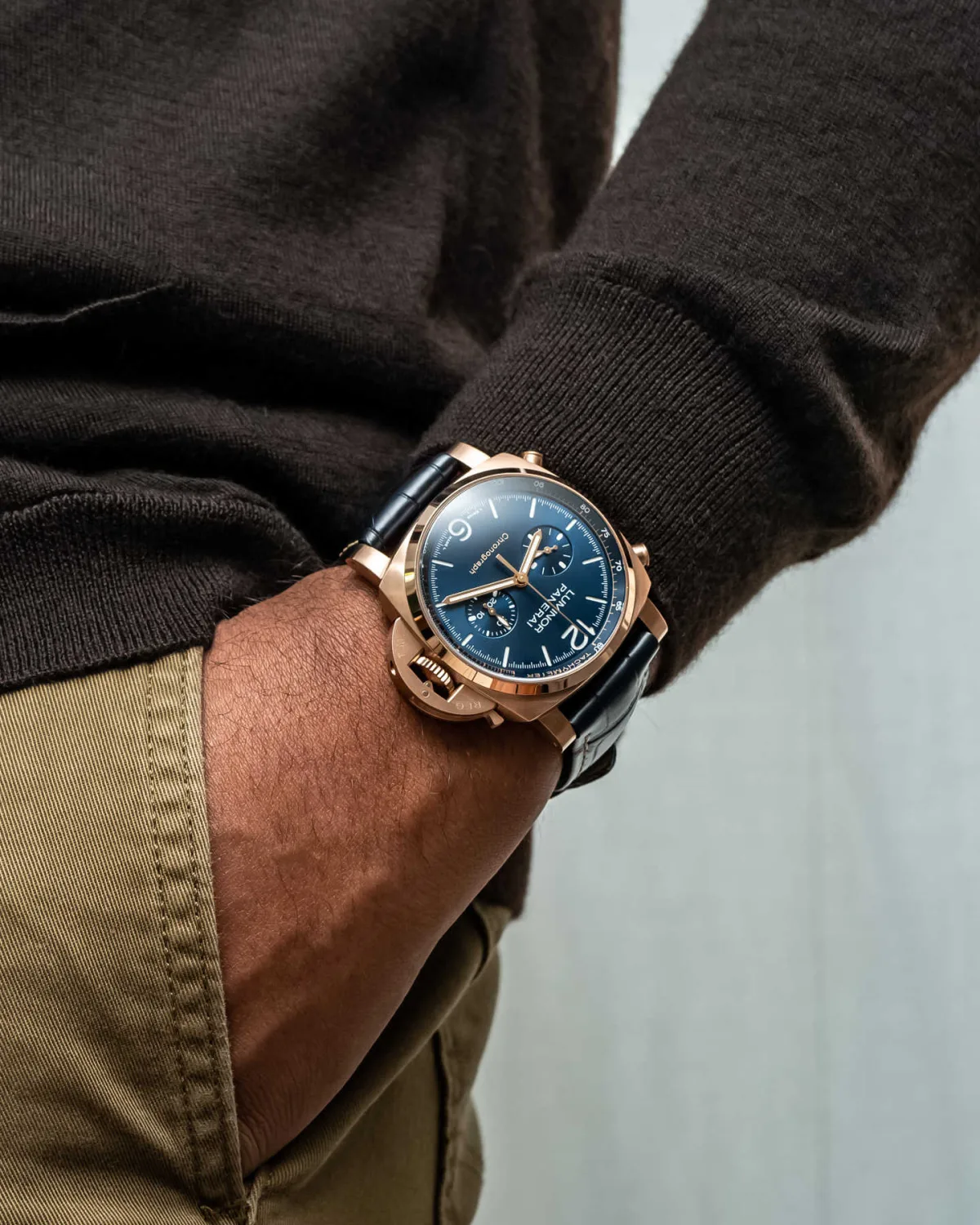
Essentially, Goldtech for Panerai is the same as Everose for Rolex and Sedna for Omega. The dial color of this model is Blu Notte, which translates to 'night blue', and it is absolutely stunning when paired with the Goldtech case. In my photos, the blue isn't as vibrant, but in direct light, it shimmers beautifully. Overall, it's just a remarkable combination of dial color and case material.
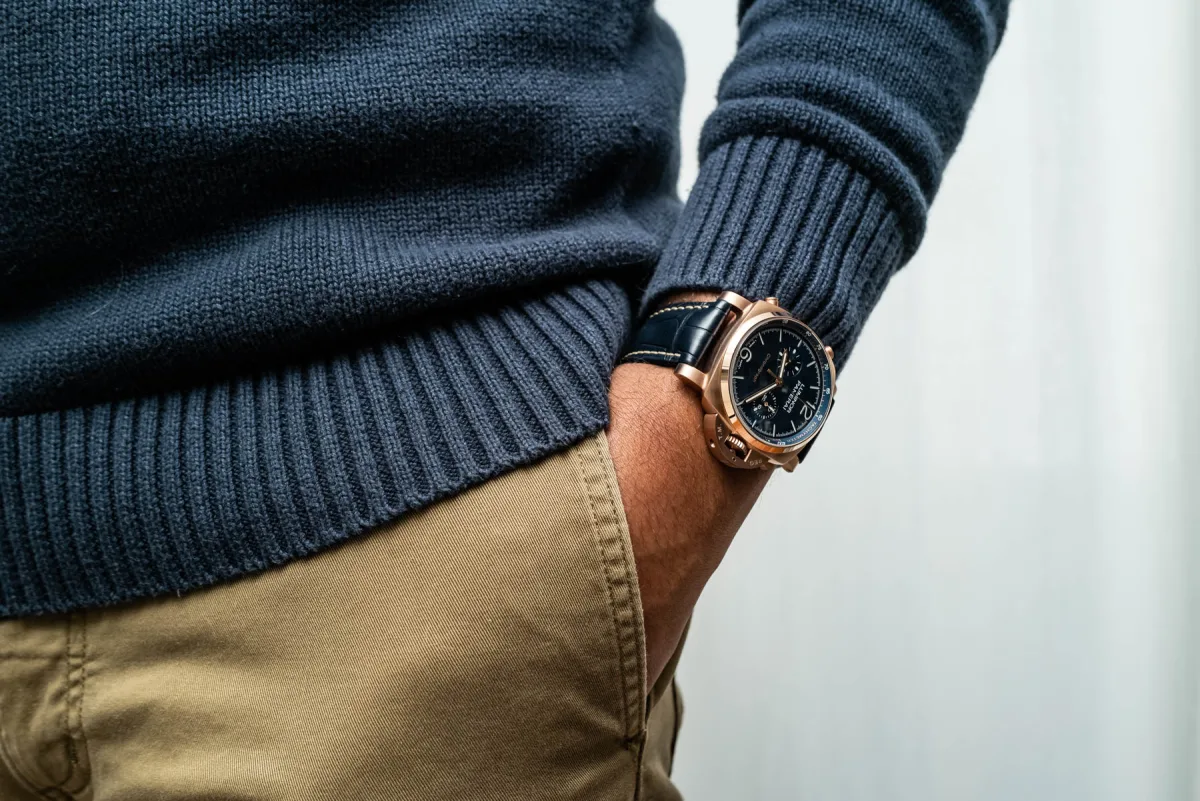
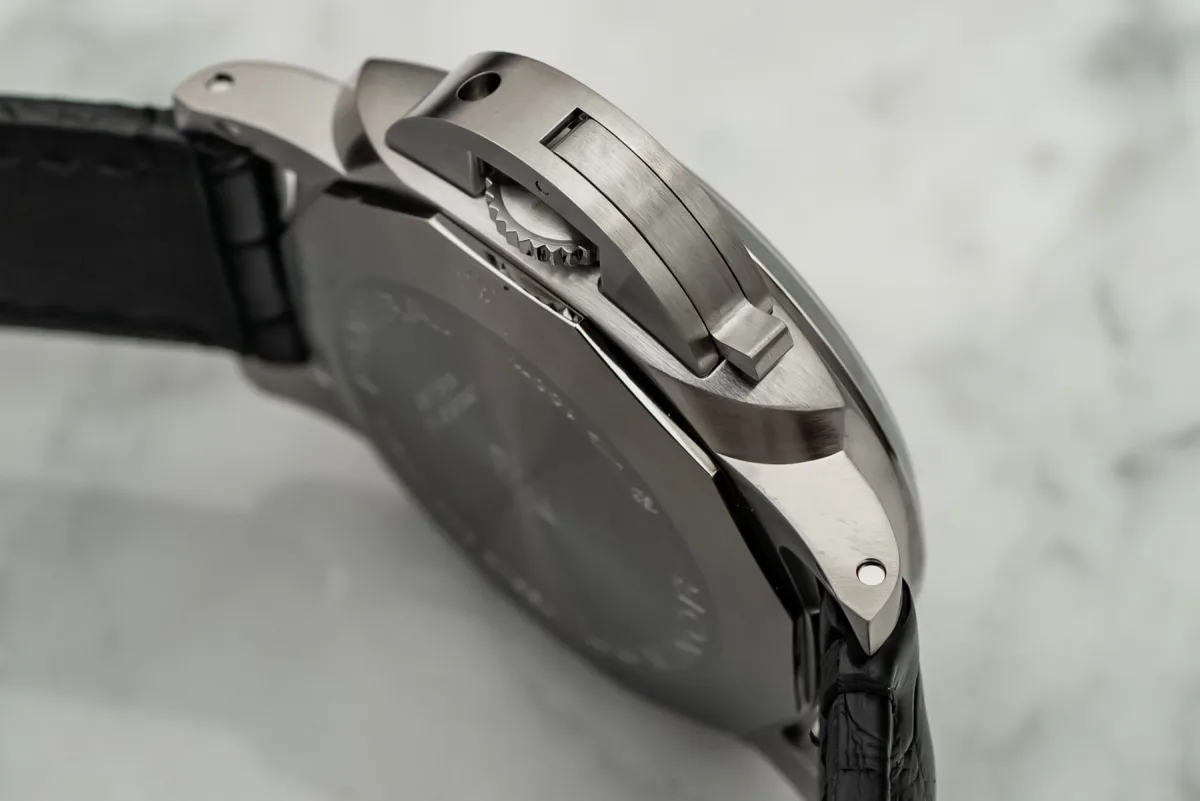
Size is always one of the first questions that arise when discussing new Panerai watches, so let's address that. The new Panerai Luminor Chronos have a width of 44 mm and a lug-to-lug height of 53.8 mm. The steel models with closed case backs have a thickness of 15.6 mm, while the Goldtech model is slightly thinner at 15.1 mm. While these watches certainly fall into the 'big watch' category, they are not excessively large or bulky.
For comparison, although the model is slightly thicker than the AP Royal Oak Offshore Chronograph, they both have nearly the same lug-to-lug dimensions. And compared to the Omega Seamaster Planet Ocean chronograph, which has a reasonable width of 45.5 mm but a thickness of 19 mm, despite having a water resistance of 600 m, it is just lean.
While I would, of course, prefer a 42 mm case (which seems quite feasible), the Luminor Chrono didn't seem excessively large to me either.
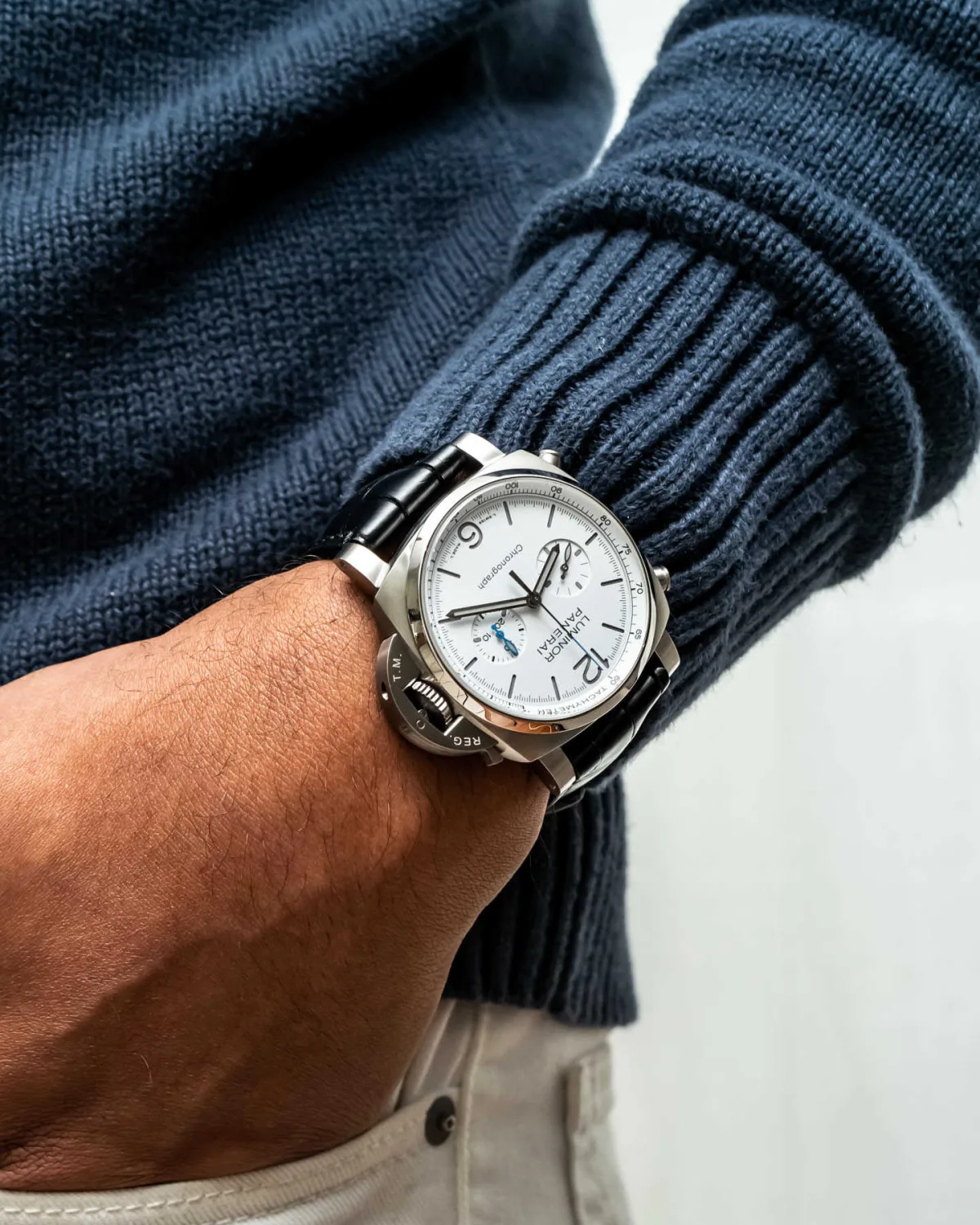
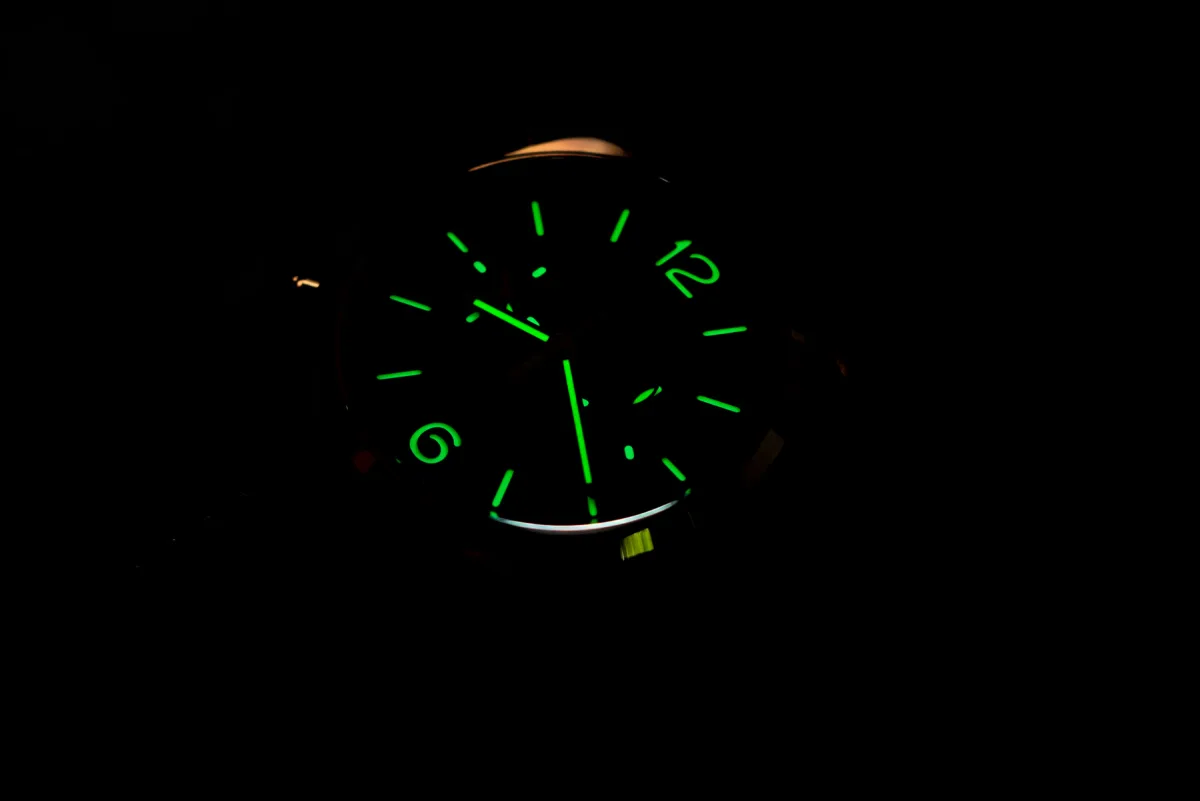
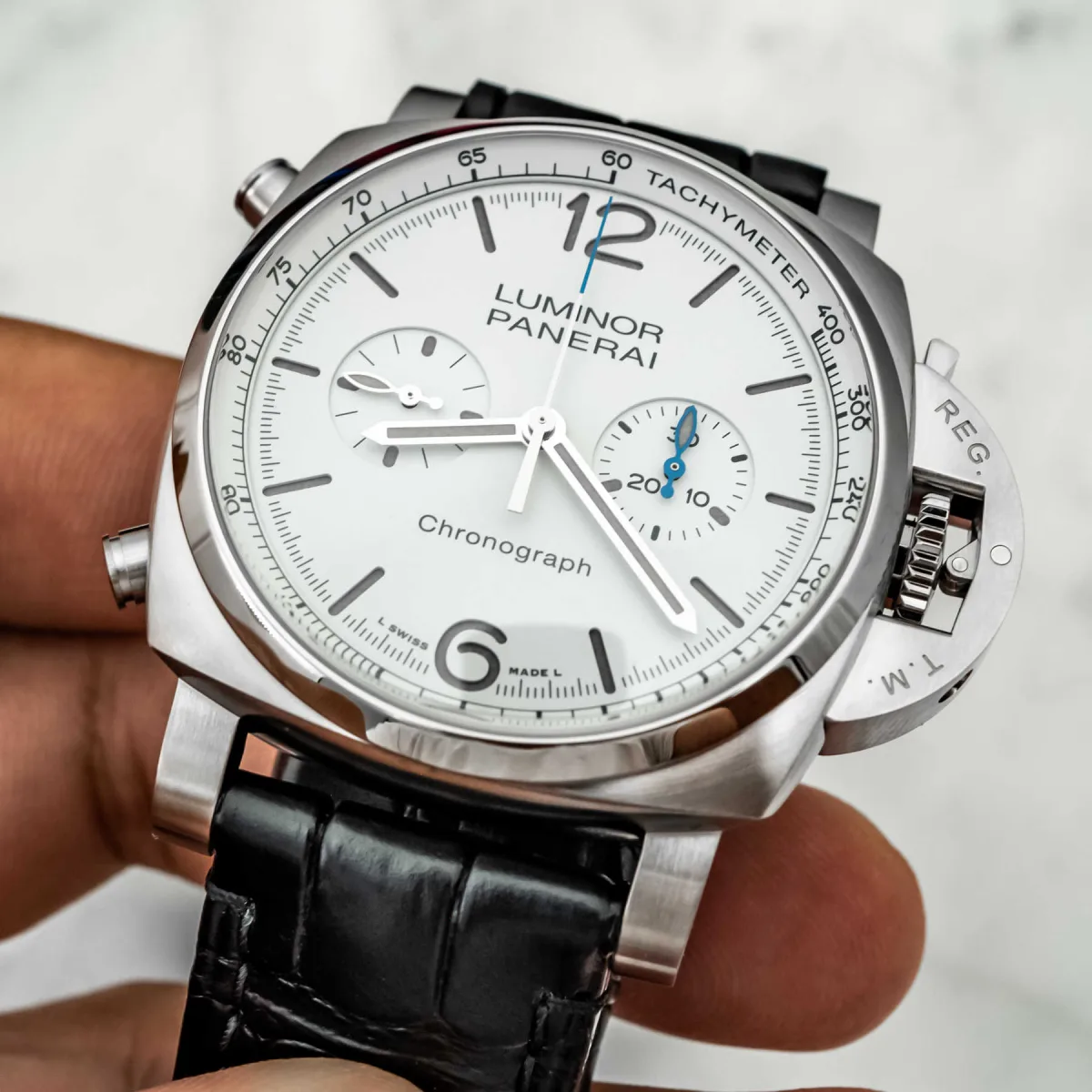
Given that the 44 mm PAM1312 model is Panerai's best-selling model, I don't think the brand is at risk of alienating existing customers. As for attracting new customers in the crowded luxury chronograph market, we have yet to see. Regarding the dial, it is well-readable in both versions I tried, and the luminescent hands and layered dial are well-crafted, as expected from any modern Panerai.
I suppose I wouldn't mention the 'chronograph' inscription at the 6 o'clock position, since the pushers on the side of the case and the subdials on the dial clearly indicate this already.
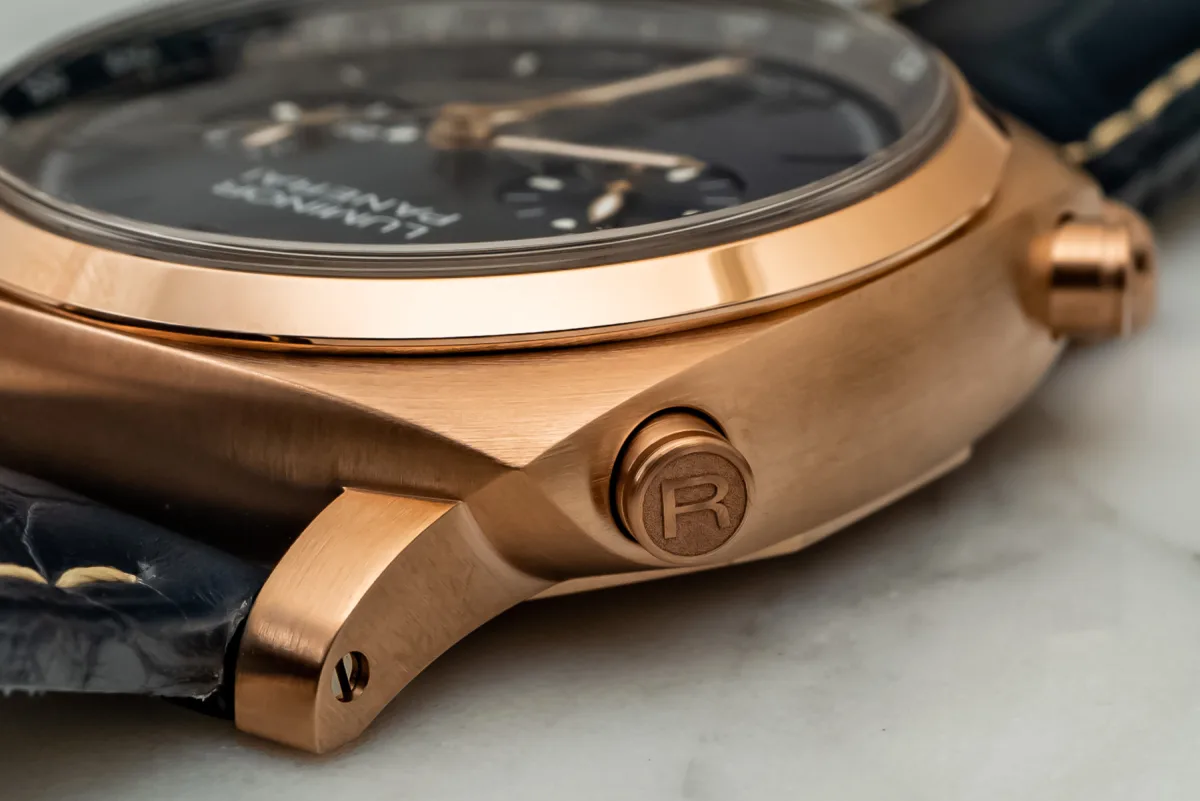
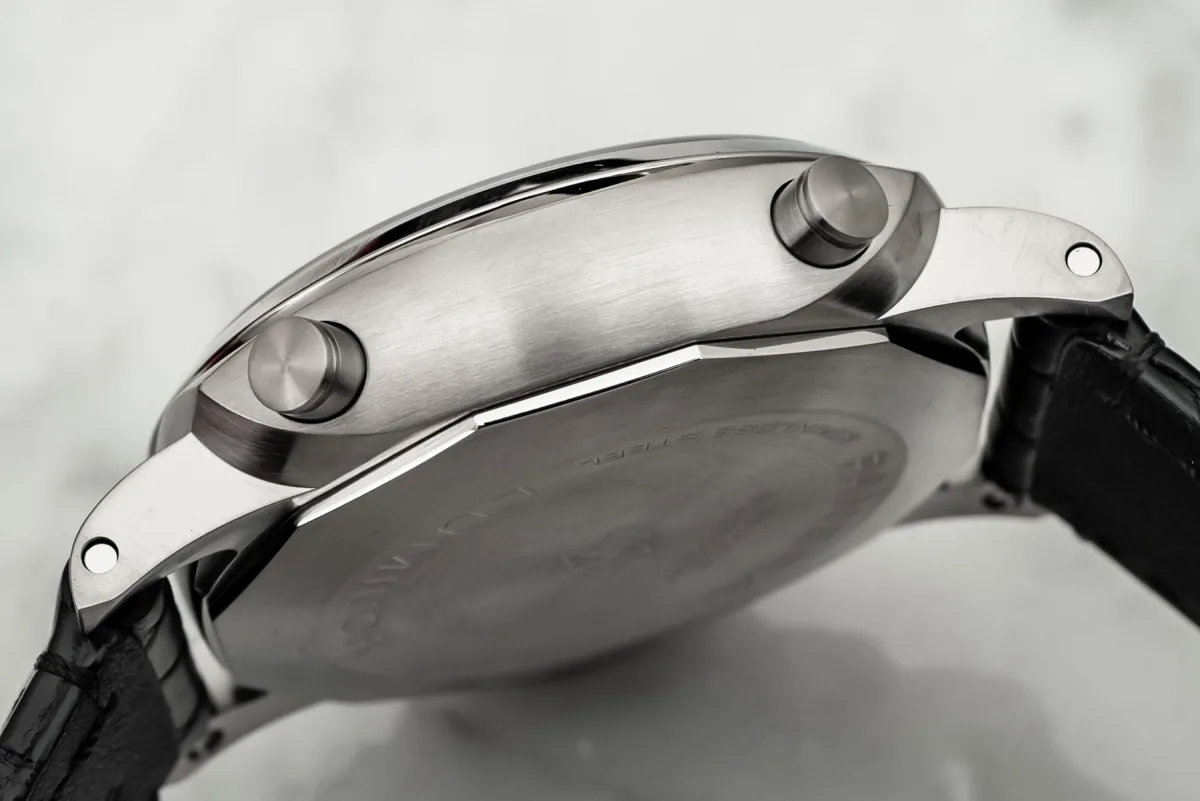
The case has many beautiful lines and curves that give real strength and sophistication to the whole case. In fact, I found that the alternation of straight and curved lines throughout the case helps distract from the bulkiness that would be more noticeable on a flatter case. The pushers on the left side of the case are well and sturdily made, providing a pleasant tactile feel when pressed. Fortunately, they also do not dig into the wrist. Honestly, meeting these standards is almost all I ask of a chronograph.
I know that in previous models, the chronograph pushers were located on the same side as the crown, which in theory sounds chaotic, but in my opinion, didn't look all that bad. Nonetheless, I think moving the pushers to the left side of the case offers an advantage in creating balance and symmetry.
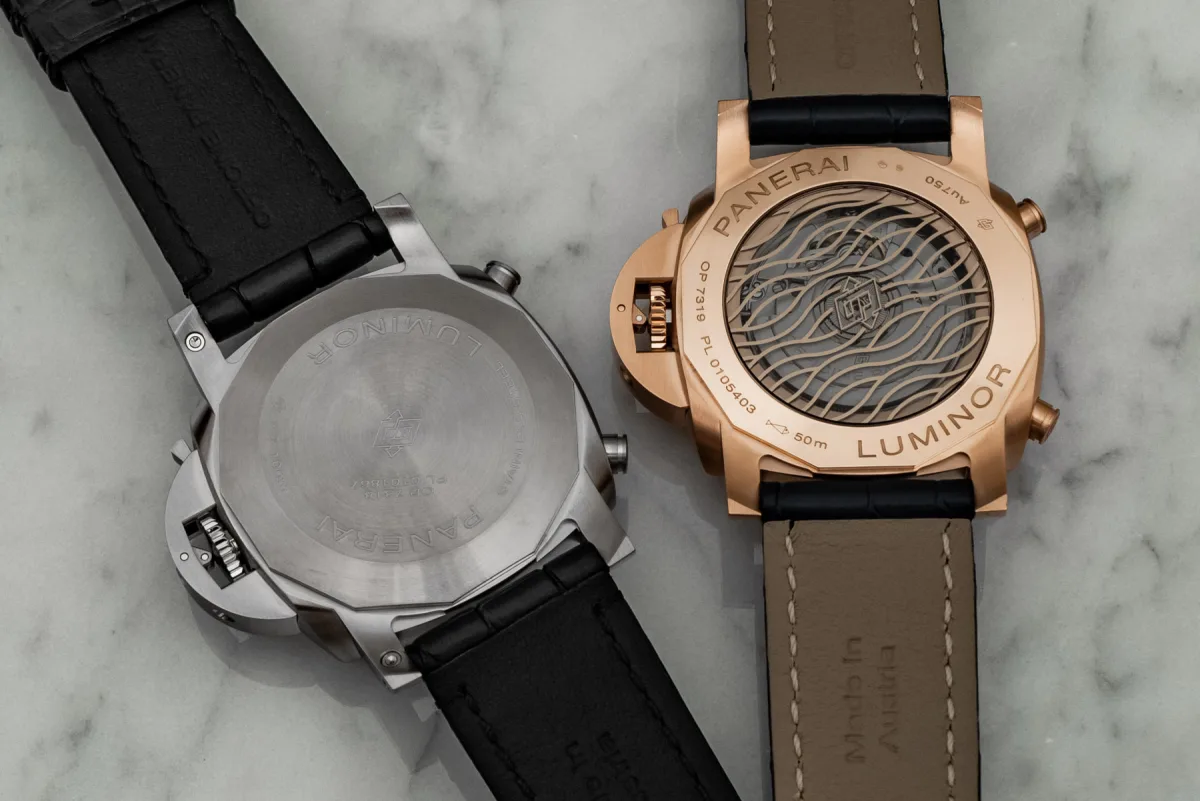
The new P.9200 movement debuts in these Luminor Chronos, and we are likely to see more of such models as Panerai continues its expansion into the chronograph market. In recent years, Panerai has primarily focused on flyback chronographs equipped with their first automatic caliber P.9100, although there have been some truly special manual-winding chronographs.
In particular, I am thinking of the limited edition Radiomir 1940 chronographs around 2014, equipped with the OP XXV caliber, which was based on the beautifully finished Minerva movement and cost from $60,000. These flyback chronographs, manual Minerva chronographs, and rare Rattrapante or Monopusher chronographs represent a heady mix of collectible and generally more expensive niche pieces.
The history of classic chronographs for modern Panerai is not something I'm an expert in (although I hope Paneristi will share their opinions in the comments), but I know they initially very briefly used the OP IV caliber based on Zenith El Primero for the PAM52. A common variant of old Panerai chronographs was the OP XII, which was a modified ETA/Valjoux 7753, like in the old 'Daylight' Luminor Chronos.
Now that Panerai has introduced the P.9200, I think we can expect more consistency in simpler entry-level chronograph options. While the P.9200 is not among Panerai's standout in-house movements (which usually start with P.2XXX), it will become a versatile main chronograph for Panerai, equipped with modern elements like a Glucydur balance wheel (an alloy resistant to magnetism, extreme temperatures, and corrosion) and an Incabloc shock protection system. The P.9200 has a frequency of 28,800 vph and a 42-hour power reserve. The power reserve is a deservedly light criticism, especially when compared to the Breitling B01 (70 hours and column wheel + vertical coupling), but much more compared to the new Speedy (50 hours), El Primero (50 hours), and IWC caliber 69385 (46 hours).
The Panerai Luminor Chrono watches enter a crowded and highly competitive luxury chronograph market, and only time will tell how they will perform. Nevertheless, the watches are very impressively finished when handled in metal, and my intuition suggests that Panerai will sell many of these watches once buyers get them in their hands in boutiques and retail stores. I found that the case and dial punch above their weight, although the power reserve and water resistance might deter some people. Regarding the former, I think a power reserve that is a day or so less than you prefer usually seems more significant in theory than in practice. But that's just my opinion. As for the latter, only the user knows how they plan to use their watch, so if 100 m (or 50 m for the Goldtech model) isn't adequate, then they probably aren't for you.
The price of the Panerai Luminor Chrono PAM1218 with a white dial in stainless steel on a leather strap is $9,200, and the price of the PAM 1111 Blu Notte in a Goldtech case on a leather strap is $26,700.