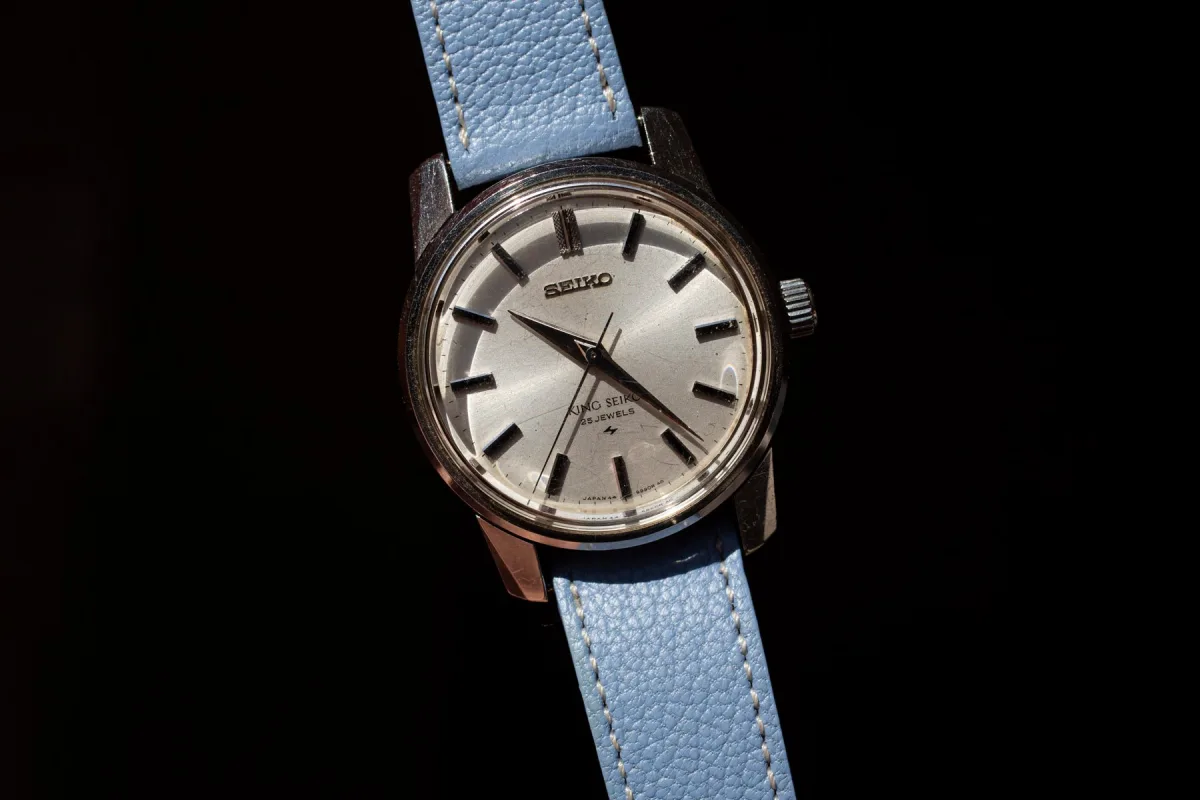
Every watch collector reaches a point where admiration turns into curiosity.
You stop just wearing the watches and start wondering what lies beneath the dial, behind the polished steel, and under the engraved case back. For me, that moment came with the vintage King Seiko 44-9990.
Historical Significance of King Seiko 44-9990
The King Seiko 44-9990 holds a special place in Seiko's history. Released in the 1960s, it symbolized the confident rise of Japanese watchmaking and showcased many design elements that later formed the basis of the famous Grammar of Design philosophy. The sharp lugs, mirror-polished facets, elegant dauphine-style hands, and restrained silver dial all create one of the finest vintage classic watches ever released by Seiko. However, behind the exterior beauty lies real magic - the movement encased inside.
Significance of the 44A Movement and Its Visualization
The manually wound 44A movement deserves attention. Unlike modern mass-produced calibers that sometimes appear faceless and industrial, the 44A has warmth and character. It's a mechanically simple yet reliable mechanism from an era when manual winding was a daily necessity, not a matter of nostalgia or luxury. Winding the watch each morning becomes a ritual, and observing the gears through a sapphire caseback makes this process even more enjoyable. This realization prompted me to purchase a tool kit and attempt a simple modification myself.
Starting with a Tool Kit
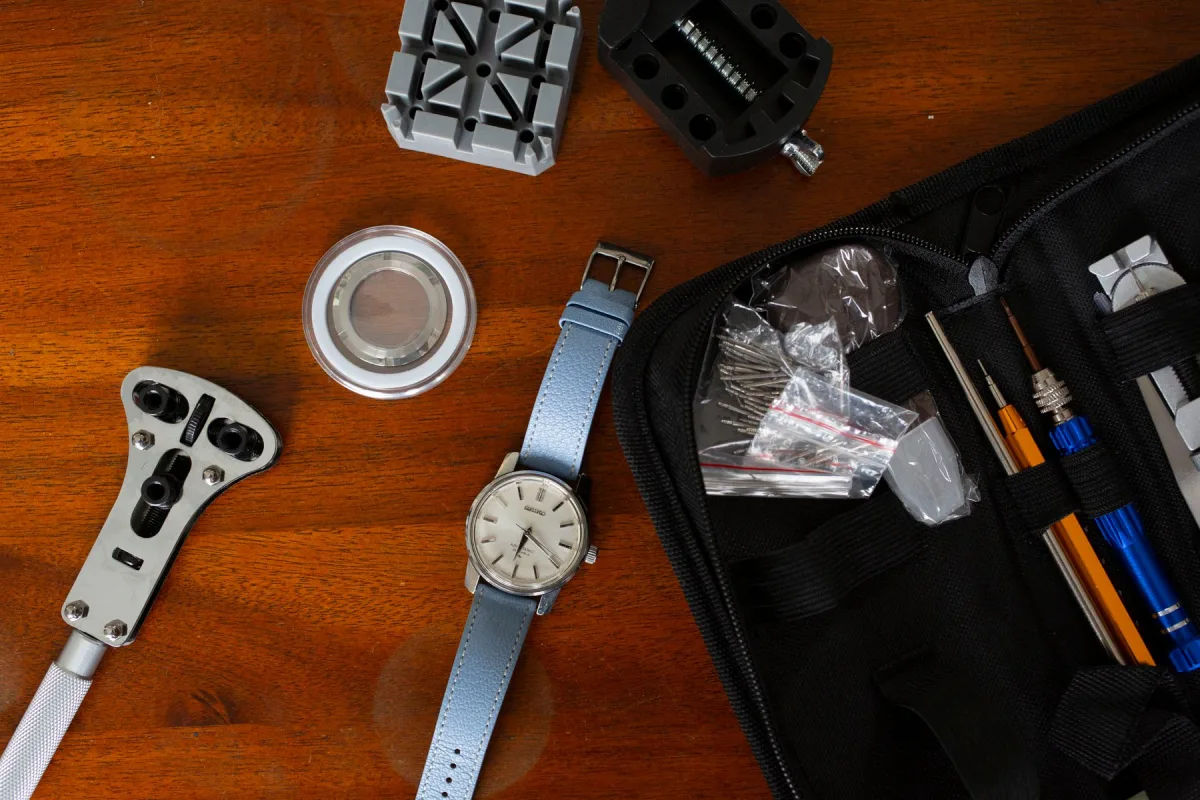
Watch tool kits occupy a special place in the hobby. At first glance, it's a practical purchase, but in reality, it's an entry into a world of obsession. Most beginners buy kits to adjust bracelet sizes or replace straps. However, curiosity quickly grows, and they begin to study tools for removing spring bars, case back openers, hand levers, movement cushions, and magnifying loupes with unusual seriousness.
The good news is you don't have to spend a lot to start. A reliable basic kit should include a spring bar tool, case holder, microfiber cloths, a case back opener, tweezers, finger cots, and a blower to remove dust. A soft movement cushion is also useful when working with an inverted case. Most kits available online contain far more tools than a novice needs, but that's part of the fun. My starter kit cost about $40.
Working with a Vintage King Seiko
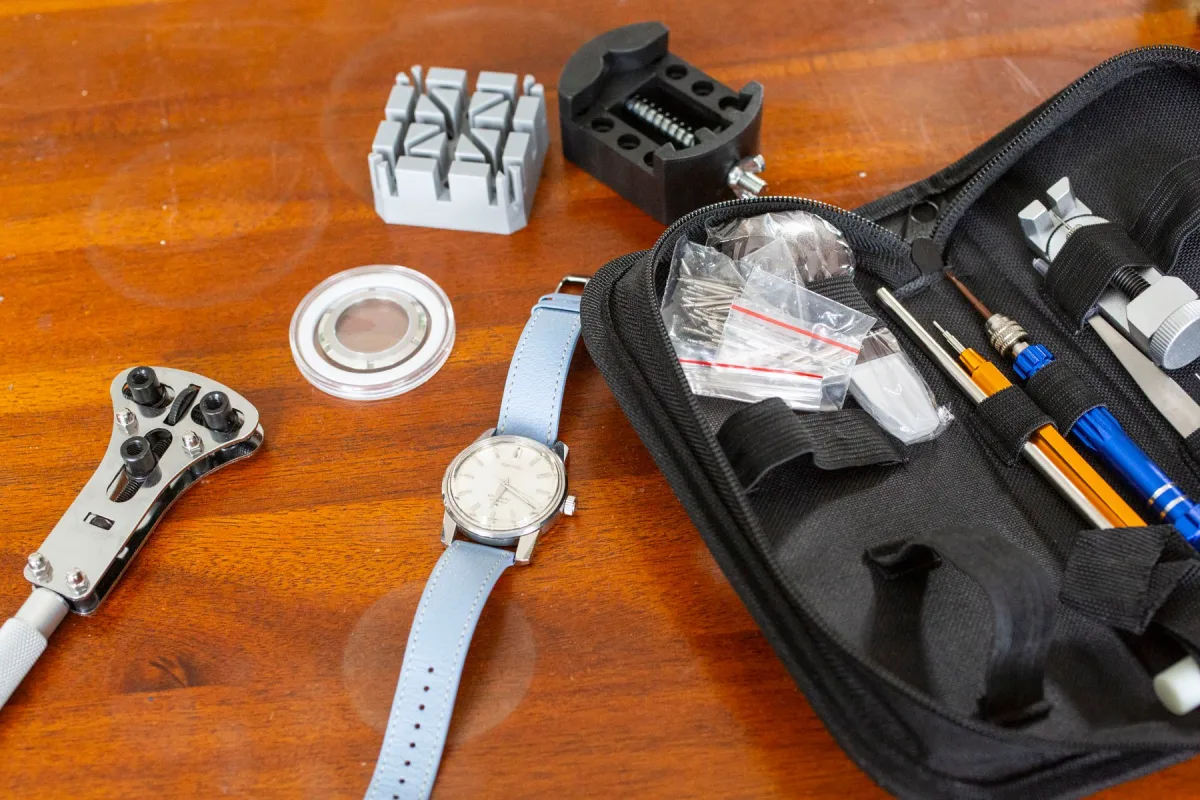
For a vintage King Seiko, the quality of tools is especially important. The 44-9990 model is not a disposable watch. The case with sharp facets can be easily damaged by sliding tools. Cheap openers with poor tolerances often do more harm than good. The best approach is to purchase a few quality specialized tools rather than the cheapest all-in-one set.
A proper Jaxa-style opener, reliable case holder, and quality screwdrivers will make the process less stressful. Psychologically, after receiving the tools, the watch stops feeling like a sealed mystery and becomes an object of mechanical interaction. This can be intimidating, especially with a vintage item with decades of history, but it also brings deep satisfaction.
Why Replace the Original Case Back?
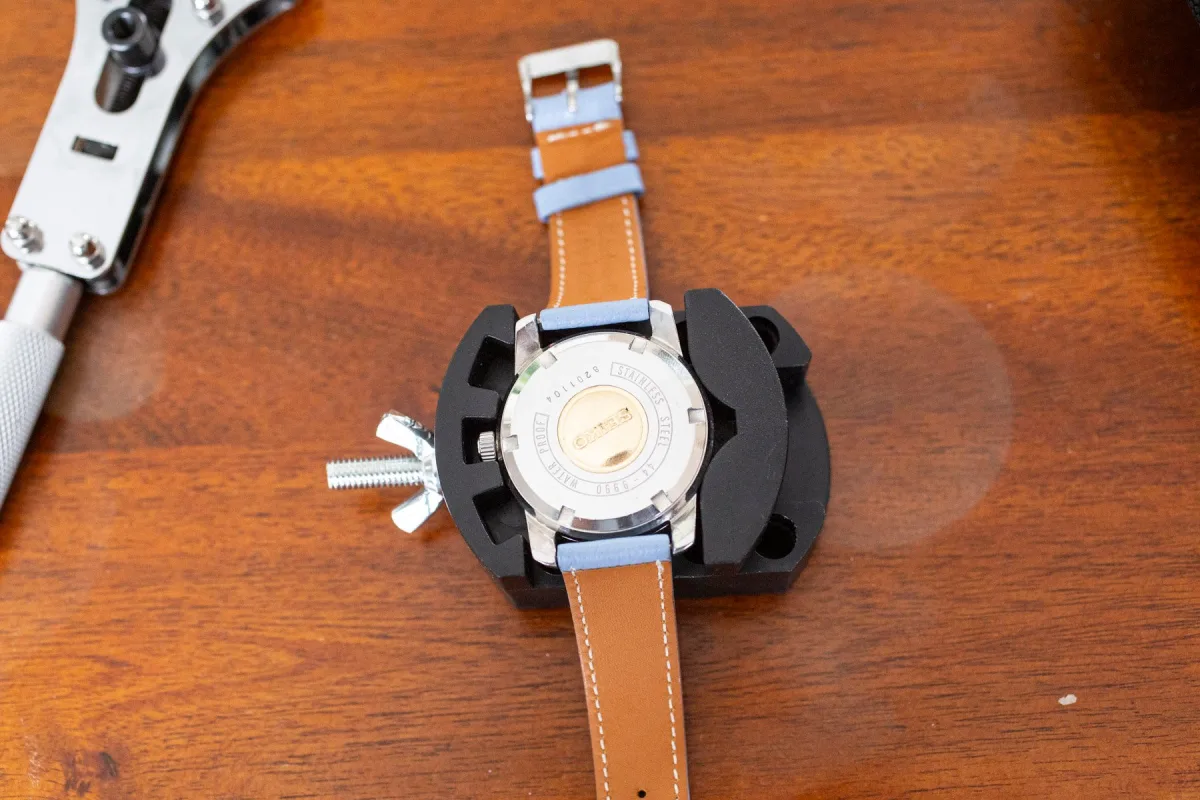
Pure collectors may be cautious about replacing the original case back of a King Seiko. And rightly so - the factory screw-down back of the 44KS is beautiful in its own right. Many models feature the famous gold medallion, and preserving original parts is always important for vintage collectors. Fortunately, installing a sapphire back doesn't require permanent changes - the original back can be carefully stored and reattached if needed. This reversibility is important.
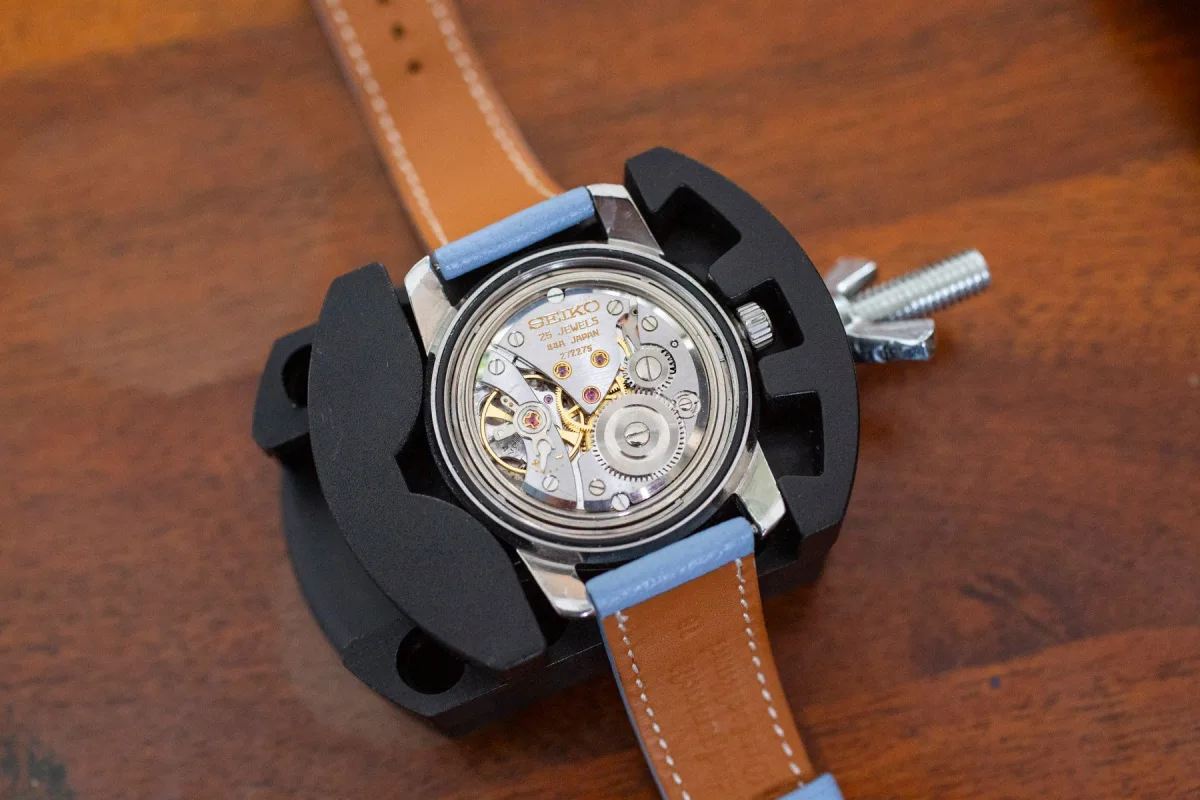
The motivation here is not modification for novelty's sake. The 44A movement deserves to be seen, as it is quite attractive. Vintage manual-winding Seiko calibers possess a restrained elegance that is rarely noticed because owners seldom see the movement. The bridges are neatly formed, the architecture is balanced, and the low balance frequency (18,000 vibrations per hour) creates a relaxed visual rhythm.
The sapphire back from The Time Collective maintains the character of the original watch while allowing the movement to "breathe." Most importantly, it changes the wearing experience. Vintage watches sometimes feel fragile and distant, like museum exhibits. Viewing the movement through sapphire creates a stronger emotional connection. You start to appreciate the mechanical life inside the watch every time you take it off your wrist.
Preparing the Workspace
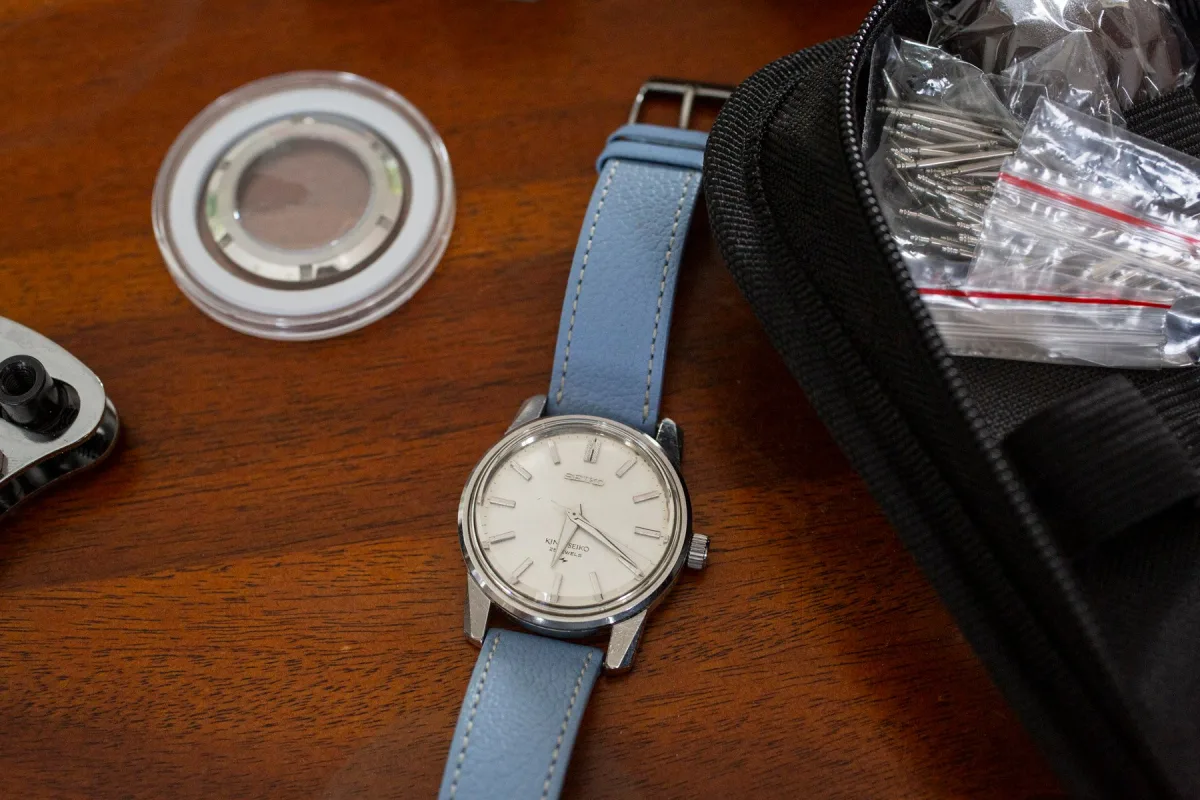
Preparation is important before starting. It's not surgery, but patience and cleanliness play key roles. Ideally, a clean table with soft lighting. A microfiber cloth is placed under the watch to avoid scratches. Finger cots or gloves help prevent fingerprints on the movement and inner glass surface.
The first step is to remove the strap. This eases access to the case back and prevents undue stress when securing the case in the holder. Once the King Seiko is secured, it demonstrates one of the virtues of vintage design: unlike modern watches that sometimes feel overly complicated and unfriendly for maintenance, the 44KS was created in an era when serviceability was a key design element.
Nevertheless, caution is necessary - it's important to apply even and firm pressure with the opener, keeping the watch stable. A sliding tool over the sharp lugs would be disastrous. After the initial resistance, the back begins to unscrew, and a moment occurs that every enthusiast remembers.
First Look at the 44A Caliber
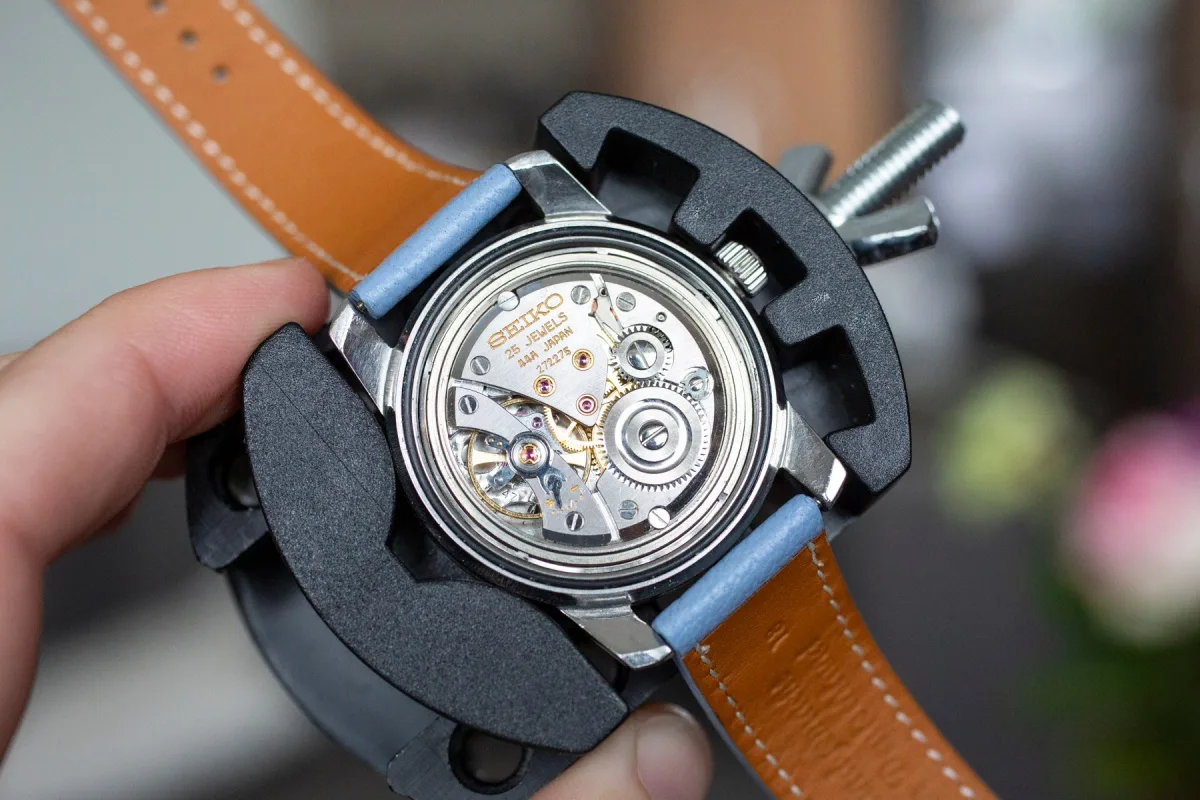
Opening a vintage watch for the first time is an extraordinarily intimate moment. Before you is a machine that has quietly kept time for half a century. In the case of the 44A, the movement immediately shows its purposefulness. There are no unnecessary embellishments or theatrical finishes, but it is clearly a well-made and attractive mechanism. The bridges look clean and industrial. Jewel settings catch the light, and the balance oscillates with confidence. Everything is designed for reliable operation, not for flashy photos.
This honesty is part of the timeless appeal of vintage Seiko. Swiss watchmaking often leaned towards romanticism and decorativeness. Seiko, during this period, focused on reliable engineering, practical accuracy, and restrained design.
Observing the movement at work during the smooth winding of the crown enhances respect for the craftsmen who assembled it decades ago. At this moment, it's important to exercise restraint. Opening the case may encourage further interference, but without experience, it's better not to touch the inner workings - dust, magnetic fields, and accidental touches can lead to problems. The goal is admiration, not amateur repairs.
Installing the Sapphire Case Back
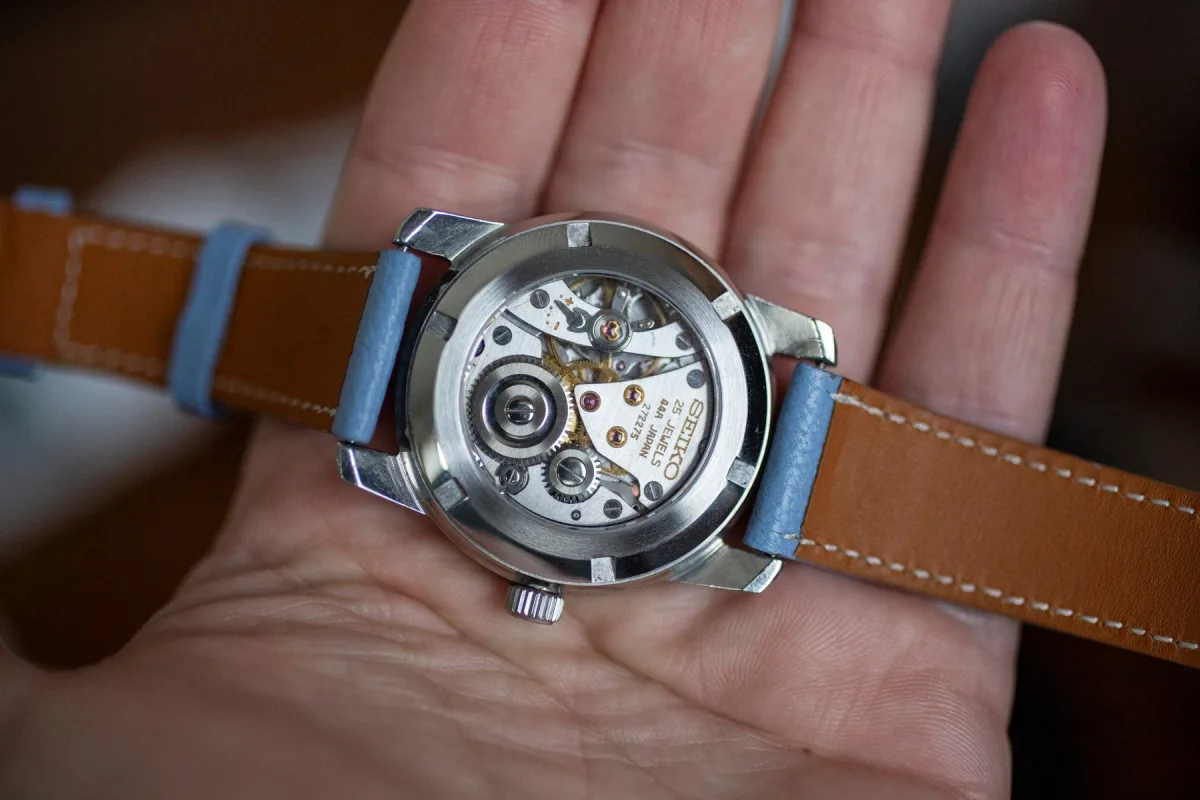
Installing the sapphire back from The Time Collective is surprisingly simple. It comes with the correct threading and gasket suitable for the 44KS case. Before installation, it's worth carefully inspecting the gasket and ensuring there's no dust on the sapphire glass. A blower is useful here. After proper alignment, the back easily screws into place. The key is to take your time to avoid stripping the threads. Vintage steel threads require patience.
As the back is tightened, the transformation becomes evident. Turn the watch over - and the previously closed King Seiko 44-9990 comes alive in a new way. The 44A caliber is now fully visible through the sapphire, turning the historically classic watch into an interactive object. This changes the emotional perception of ownership. You begin taking off the watch just to look at the movement. Morning winding becomes more engaging. Even the quiet tick feels different, accompanied by a visible mechanical heartbeat.
More Personal Vintage Watches?
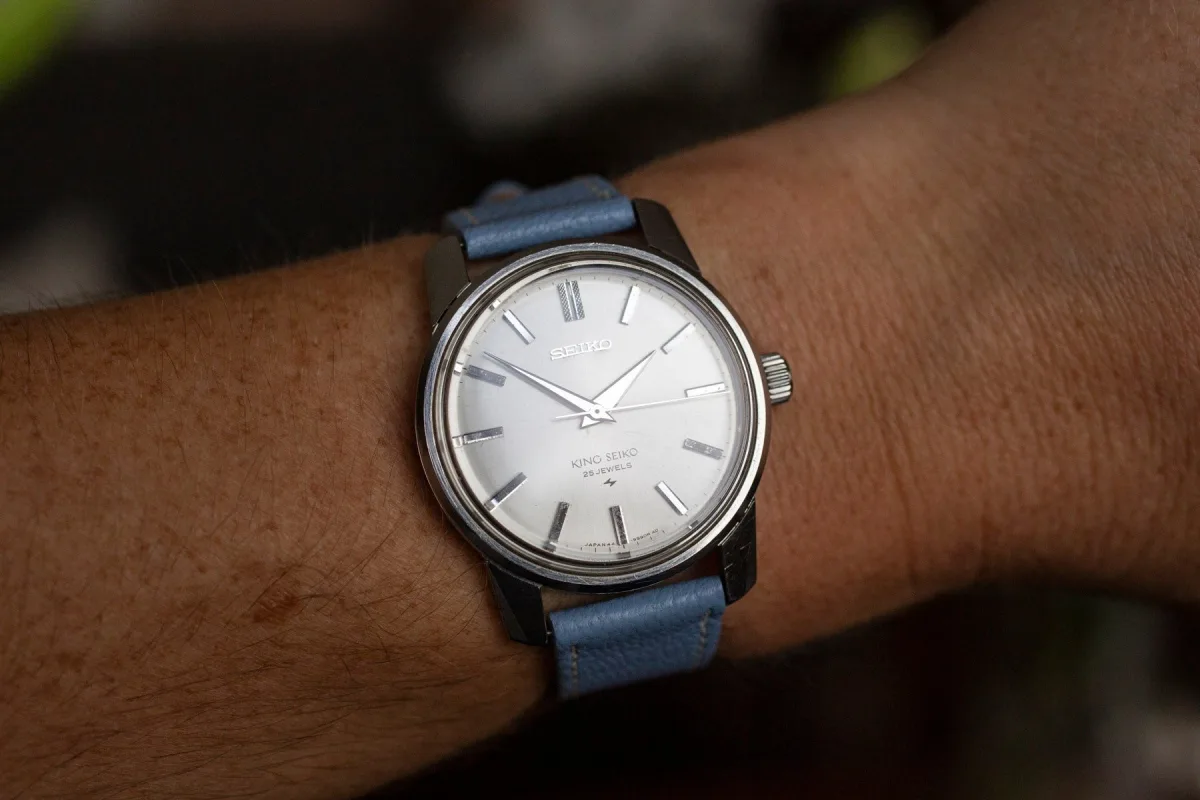
In vintage watch collecting, there's always a debate between preserving originality and personalization. These discussions are important as they reflect a passion for preservation. However, reversible modifications, like a sapphire back, occupy a relatively safe middle ground. The original back remains untouched in storage, and the watch becomes more convenient and enjoyable for everyday use. This is important.
Vintage watches shouldn't be just museum pieces. The best examples continue to live on wrists, creating new stories and preserving traces of the old. If a carefully chosen additional element enhances your love for the watch without permanent alteration, it's entirely justified. In many ways, buying a tool kit became as significant for me as installing the sapphire back.
Conclusion
The installation process creates a deeper connection with the object itself. You stop perceiving the watch as unattainable luxury and start understanding it as a mechanical system assembled by human hands. This perspective deepens respect not only for the King Seiko 44-9990 but for the art of watchmaking in general. And, as often happens with hobbies, the journey doesn't end here.
Today it's a sapphire back and a basic tool kit. Tomorrow - tools for regulation, vintage chronographs, or learning to fully service a manual winding movement. This is the "danger" of mechanical watches: the deeper you dive, the more interesting they become.