Meet a premium watch brand founded on a deep passion for the art of watchmaking and extensive experience that has brought the founders' original concept to life.
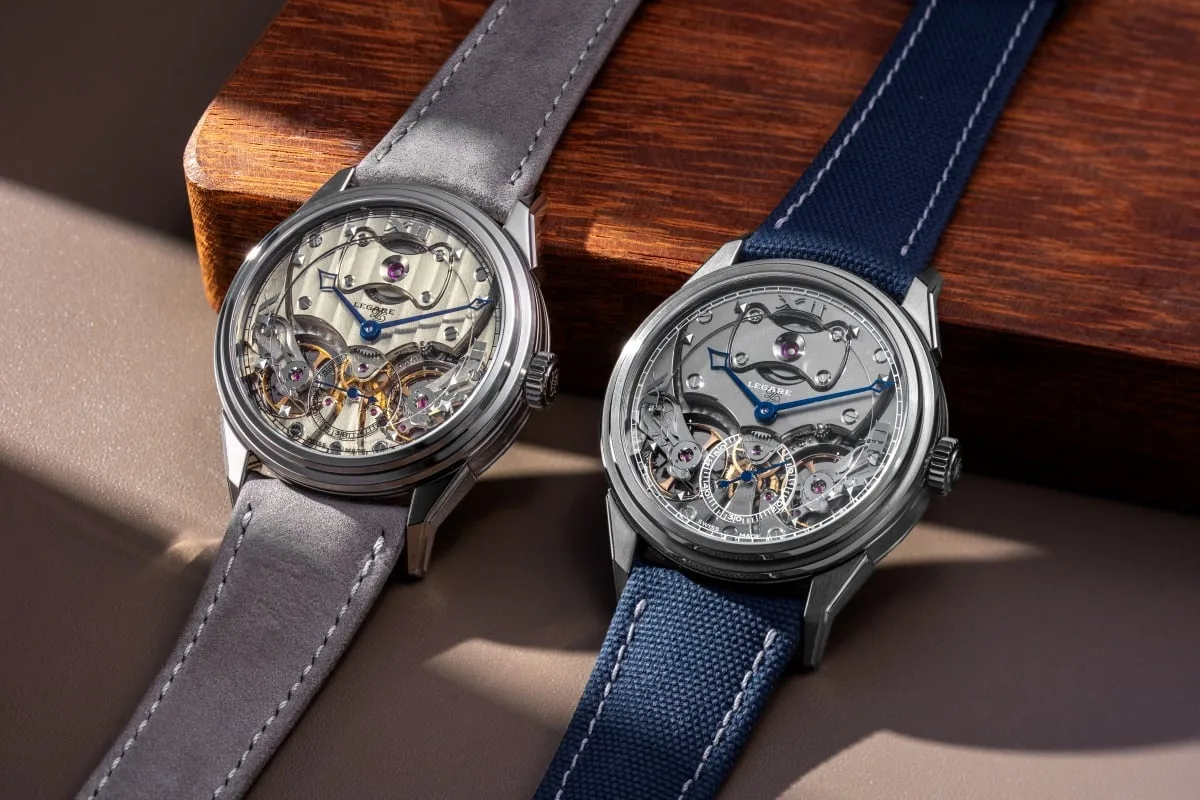
Wei Koh, founder of the magazines Revolution and The Rake, and watch industry veteran Guillaume Tetu, who worked at TAG Heuer, Hautlence, and Ralph Lauren, launched Legare to revive forgotten watch masterpieces and reinterpret them for today. The Legare Chapter 1 AGP Inverted model, presented with a classic untreated German silver movement or with a black rhodium-finished movement, became the first in the brand's collection from La Chaux-de-Fonds. A total of 25 pieces of each of the two versions of the watch will be released in a titanium case with a diameter of 37.5 mm.
If you are passionate enough about watchmaking to start a magazine on the subject, creating your own watch brand is a logical next step. Wei Koh, president of the GPHG jury this year and founder of Revolution, found a partner to launch the brand - Guillaume Tetu, co-founder of Hautlence and a specialist with experience at TAG Heuer and Ralph Lauren. Legare is the result of the collaboration of two enthusiasts united by a shared passion for history and forgotten ideas in watchmaking. The name "Legare" comes from Italian and means "to unite," "to bind," or "to build close relationships." This is exactly the brand's goal - to link historical watchmaking traditions with modern technology and design. The first model embodying this idea is the Chapter 1 AGP Inverted.
Introducing the New Brand Legare and Model Chapter 1 AGP Inverted
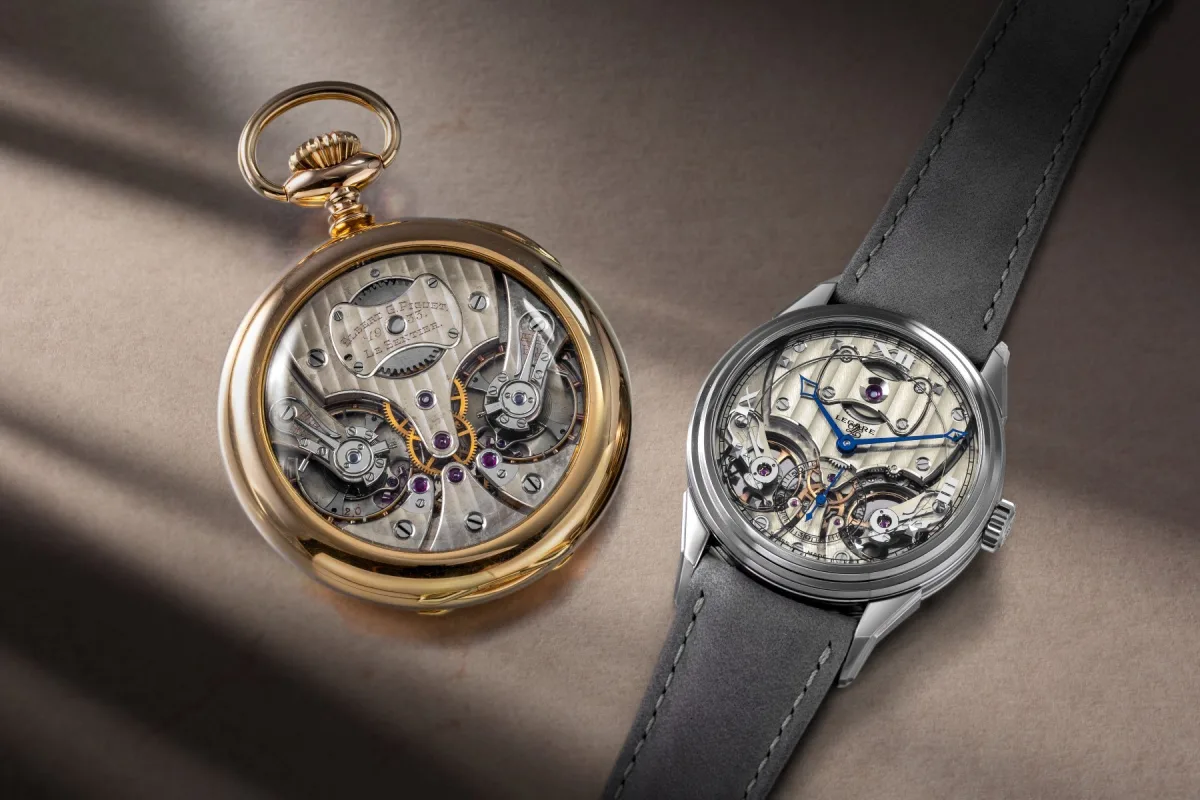
The Legare Chapter 1 AGP Inverted is available in two versions and is inspired by Albert-Gustave Piguet's 1932 pocket watch with dual balance and differential. The Piguet name is known, but who was this particular master? Let us tell you. Albert-Gustave Piguet (1914–2000) was a Swiss watchmaker and technical director at Lémania. Born in the village of Chez-Villars in the Vallée de Joux, he graduated from the Watchmaking School in Le Sentier in 1933. In 1934, he joined Lémania in L'Orient, where his talent quickly propelled him up the career ladder. Piguet became best known as the creator of the Lémania 2310 movement (originally CH 27) - a chronograph that formed the basis of the famous Omega 321 caliber, used by NASA in the Speedmaster watches for lunar missions.
Before working at Lémania, Piguet experimented with unconventional watch solutions. In 1932, he created a pocket watch with two large separate bimetallic balances. Their oscillations were averaged by a differential, creating a system that offered a different approach to precision. Only six pieces are known, produced in three sizes of movements from 1932 to 1934. This was an impressive achievement for a young apprentice, combining the traditions of the Vallée de Joux with a willingness to rethink the principles of mechanical regulation.
From 1932 to 2026
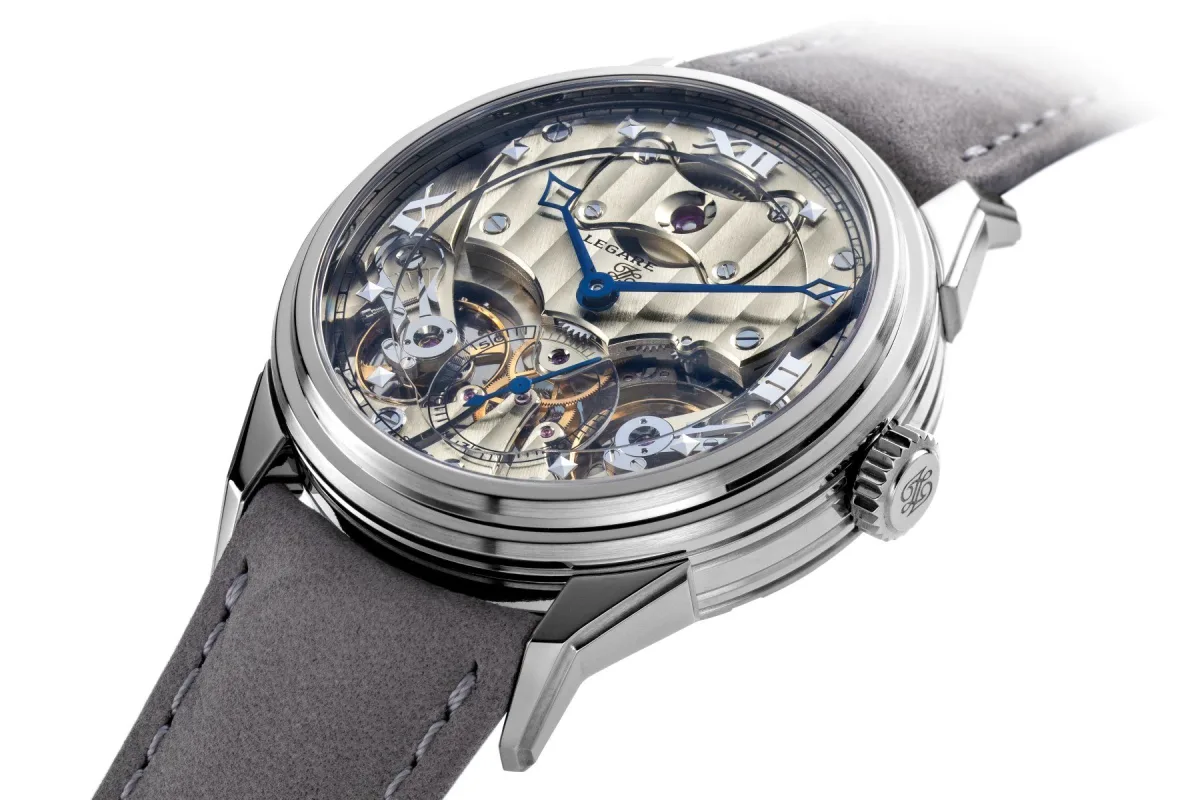
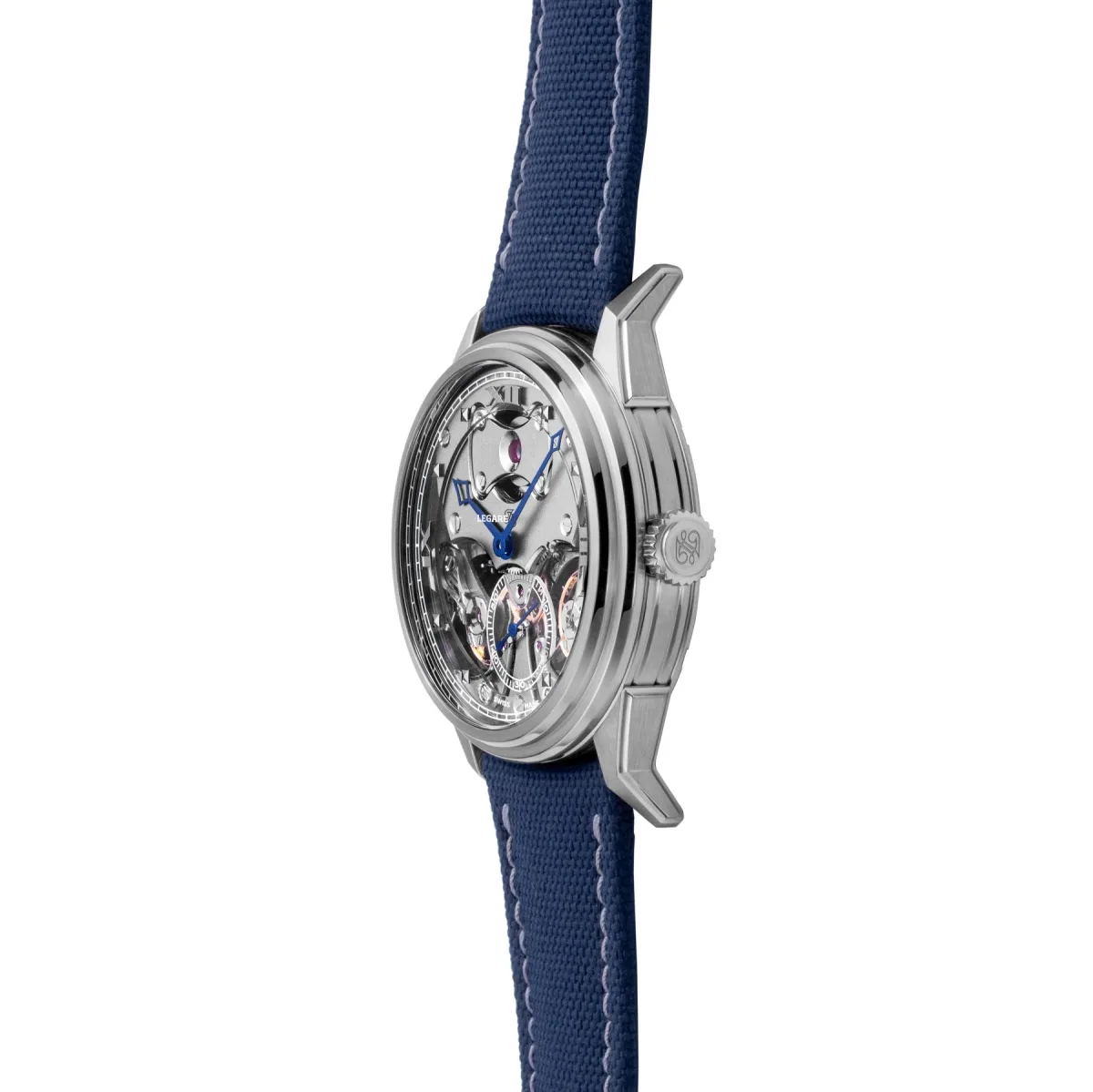
Piguet's experiment did not become a breakthrough and did not transition into mass production, so the system did not receive further development. But what if it had? This is where Legare comes in. The Chapter 1 AGP Inverted demonstrates what Piguet's dual balance concept might have become with further development. The watch takes the original idea and brings it to life in a modern way. The grade 5 titanium case has a diameter of 37.5 mm and a thickness of only 9.95 mm. The design harks back to the 1930s-40s era but does not attempt to copy vintage. The multi-step bezel, raised case sides, and sharply defined lugs form the basic architecture. Concave bevels add modern complexity and testify to a significant amount of hand finishing.
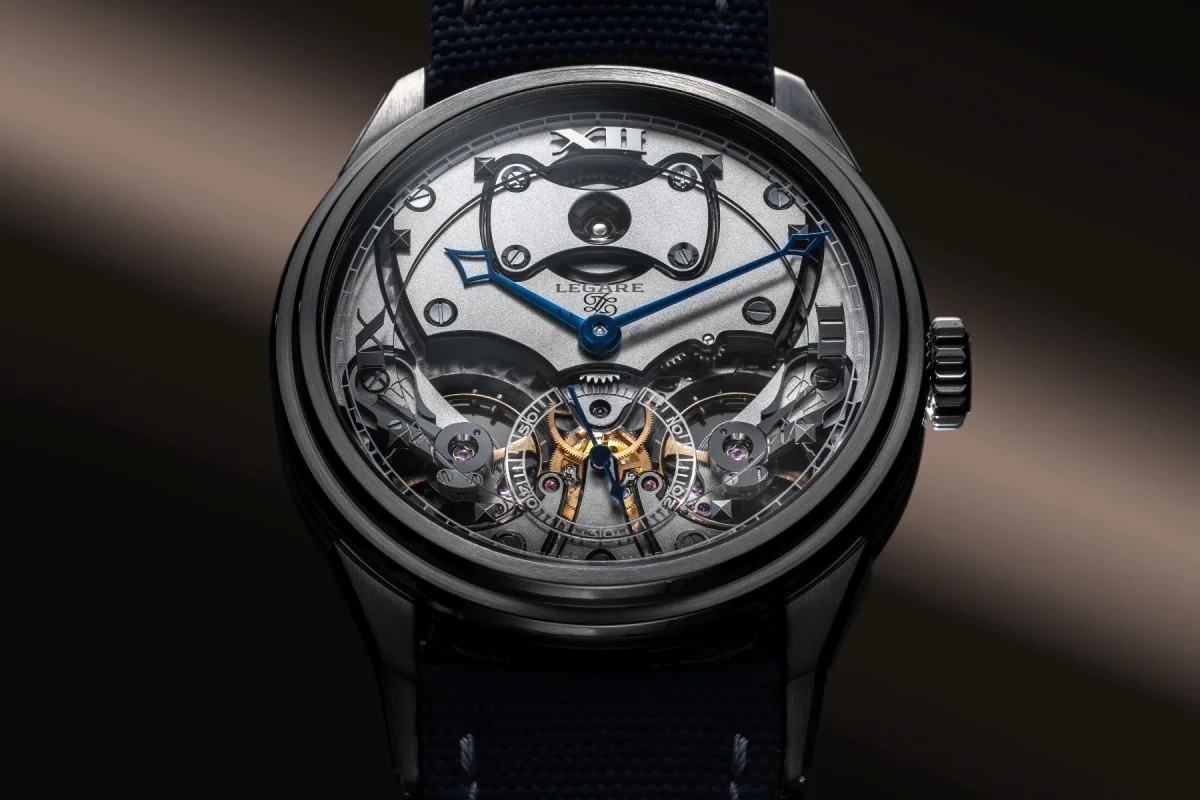
The main feature is the movement. Legare inverted the construction and placed two regulators on the dial's front side so they could be fully viewed. Both balances operate independently at a frequency of 21,600 semi-oscillations per hour, while the differential continuously averages their readings, transmitting a single result to the hands.
Not a Resonance System
One might think that the two visible oscillators are linked by resonance, but they are not. They do not directly affect each other, remaining independent, and the differential acts as a mechanical intermediary between them. This solution is unusual but fundamentally close to the experiment of the young Albert-Gustave Piguet almost a century ago.
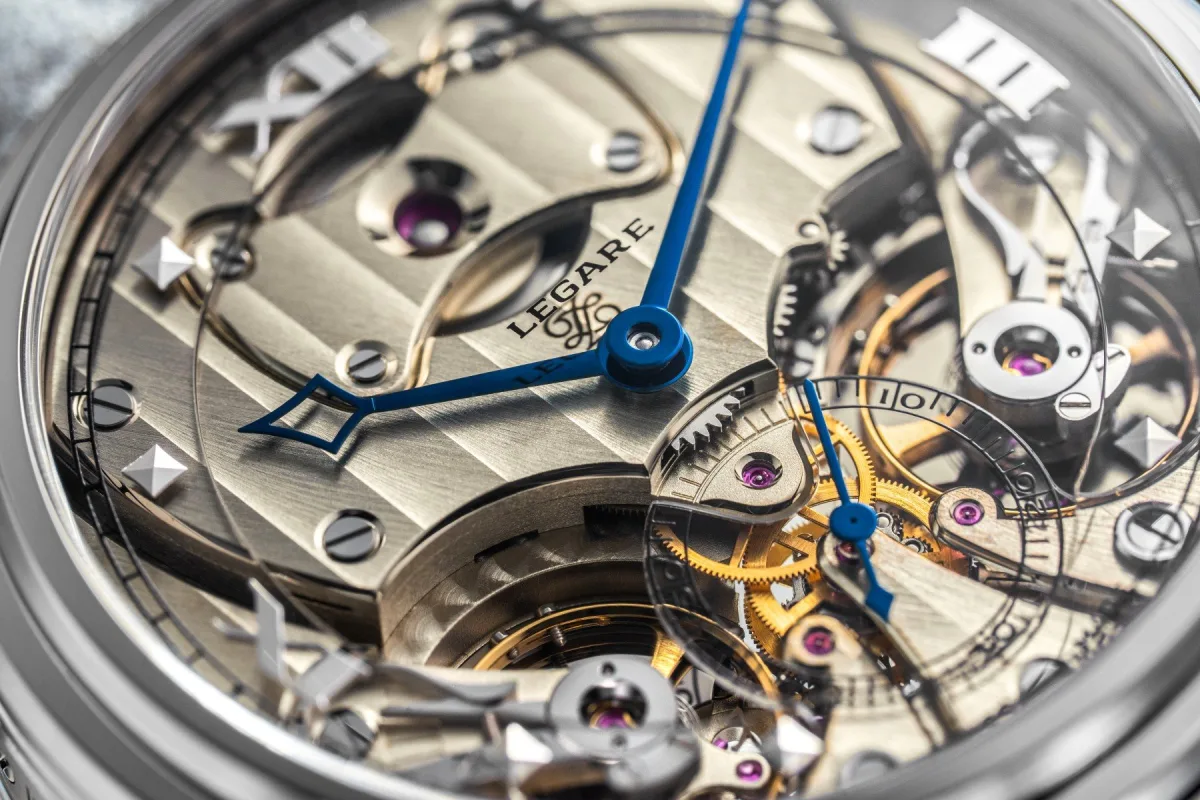
Packing all this complex construction into a relatively compact mechanism was not easy. Legare chose lateral lever escapements, usually found in tourbillons. The result is a mechanism that not only regulates the movement but is also an architectural watch marvel. Both versions of the Chapter 1 AGP Inverted bring an old experiment back to life, but in an evolved form. This is what the system might look like if it had been continuously refined for another 90 years.
Two Sides of the Chapter 1 AGP Inverted
The Chapter 1 AGP Inverted mechanism is not only interesting to study but also mesmerizing to view. It invites you to peer into its heart. The two balances take center stage, surrounded by mirror-polished plates, while the escapements and differential add dynamism to the miniature spectacle. If you have the opportunity to bring the watch to light - be sure to do so. Through the skeletonized openings, even more details are revealed under the open dial.
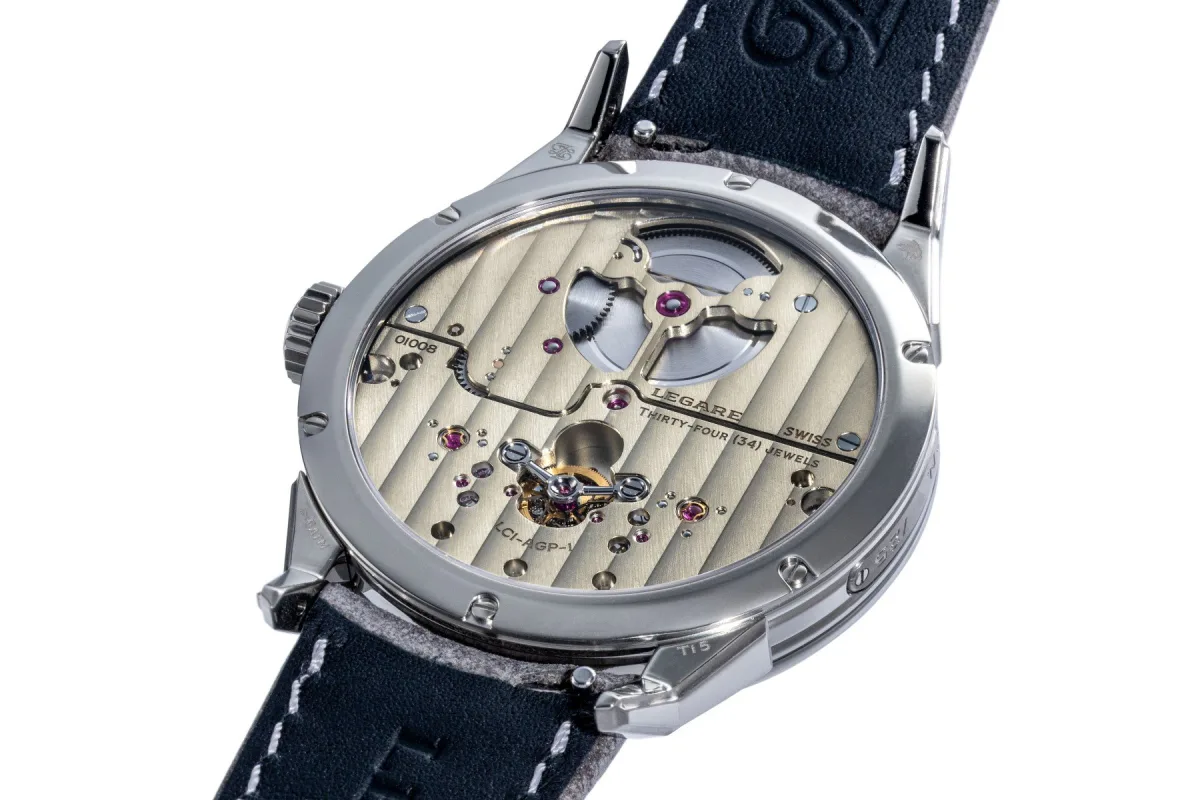
The watches are made in Switzerland, and the components are manufactured by a network of specialized suppliers within approximately 100 km of Neuchâtel. The movements are produced by Purtec, part of the TEC Group. The case and clasp are processed by UM2, and polishing is done by Polissage des Franches-Montagnes. The dials are made by Fabrika, sapphire elements are supplied by Sebal, and the hands are made by Waeber HMS. Product development, procurement, final assembly, and quality control are carried out by GLS2F in La Chaux-de-Fonds.
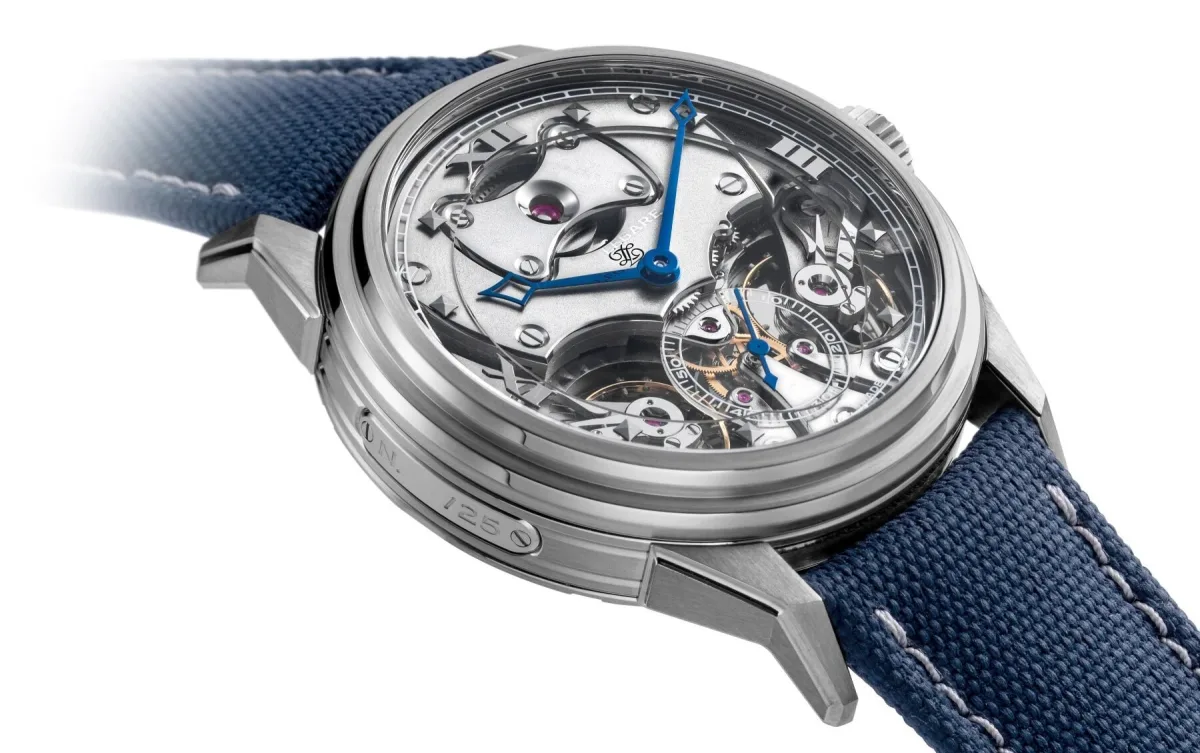
As mentioned, the AGP Inverted is released in two versions. Elegant features a movement made of untreated German silver and is the most classic. Darth has a movement with black rhodium plating and looks more modern. Both versions are limited to 25 numbered pieces.
Imagined Evolution
The price of the Legare Chapter 1 AGP Inverted is 81,944 Swiss francs (excluding taxes), which definitively places it in the category of high-end independent watchmaking. At the same time, the watch tells an interesting and unexpected story that will resonate with affluent collectors interested in historical watchmaking. The idea of taking a little-known experiment from the past and bringing it into the present, following an imagined evolution, is original and intriguing.
Both versions of the AGP Inverted make the 1932 experiment tangible and captivating. While we enjoy these two creations, they also spark curiosity - what other forgotten watch treasures will Wei Koh and Guillaume Tetu discover and reinterpret in the future?