Some collaborations are created to birth something new.
The more significant ones aim to preserve what might otherwise disappear. The Louis Vuitton × De Bethune LVDB-03 Louis Varius Project undoubtedly belongs to the latter category. It's not about novelty, market conquest, or even relevance. It's about a careful attitude towards ideas, mechanisms, and a special kind of imagination that no longer fits commercial logic. At the heart of the project lies the Sympathique - one of the boldest concepts in horology. Watches and table clocks in mechanical dialogue. Time, divided, corrected, synchronized. Not metaphorically, but physically. This invention could only appear when time measurement was still a frontier, not a commodity.
History and Personal Connection of the Creator
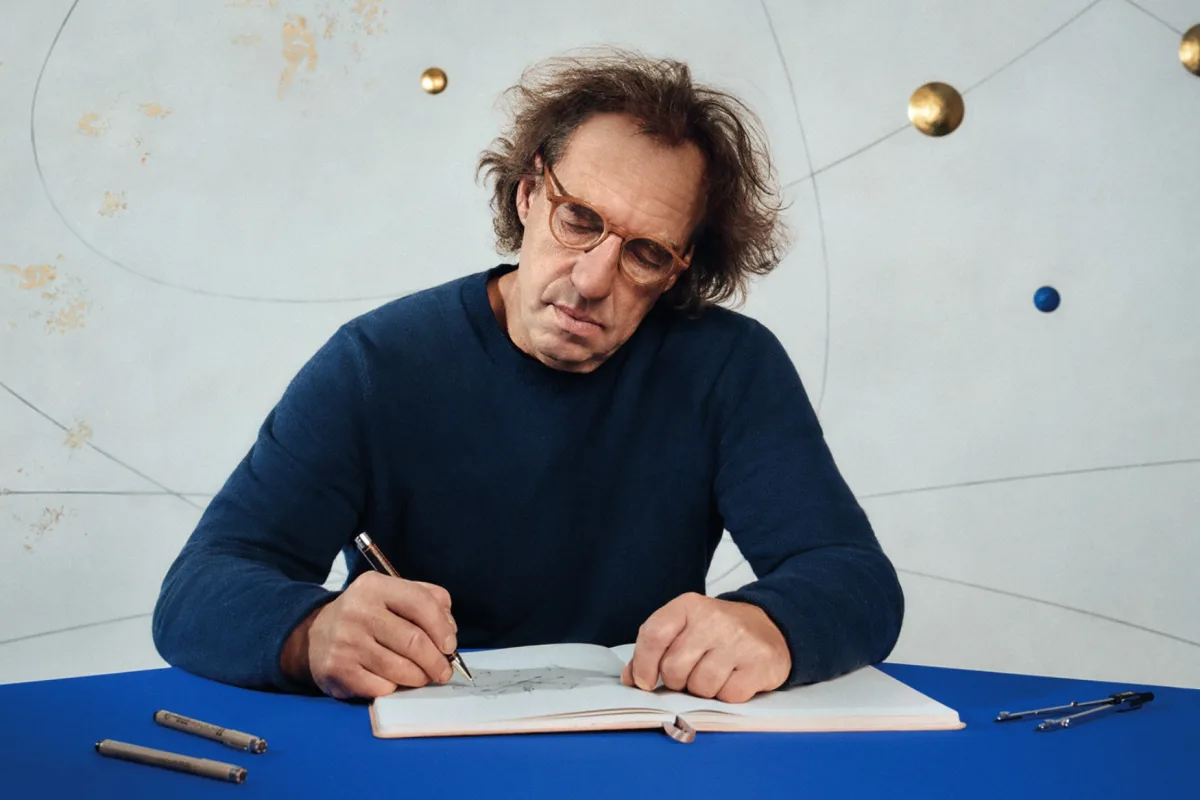
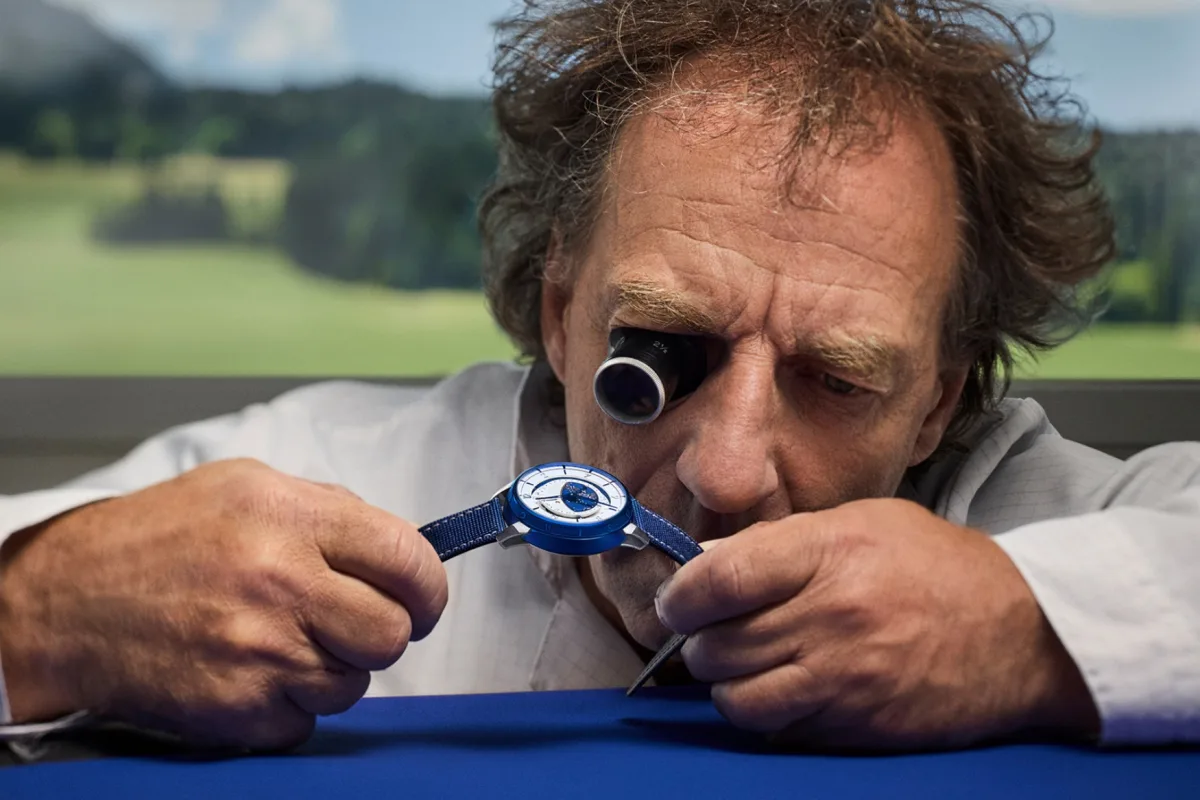
For De Bethune's founder and chief watchmaker Denis Flageollet, this project is not theoretical but personal. "Thirty-five years ago, I worked on the Sympathique project," he says. "I wanted to do more, to modernize it. Now the right time has come." The importance of the moment is clear: such projects do not arise in haste but only when there is patience.
Technical Features and Philosophy of the Project
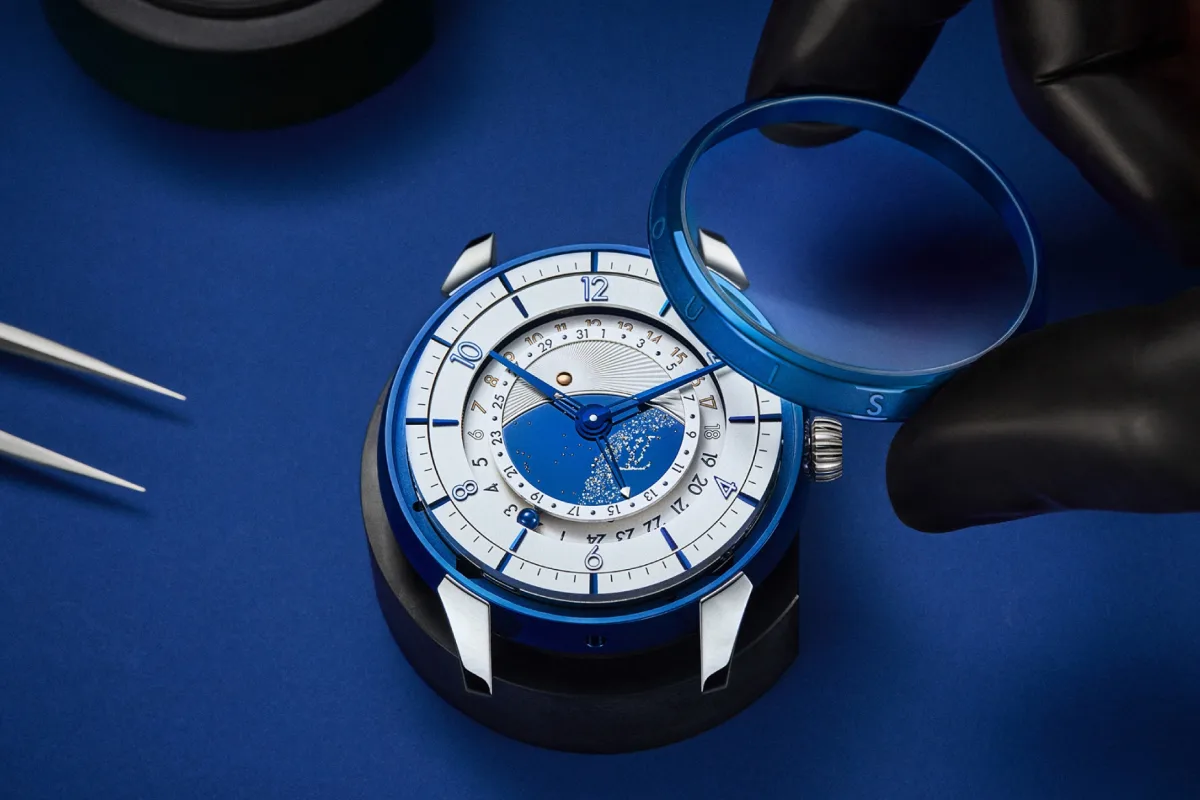
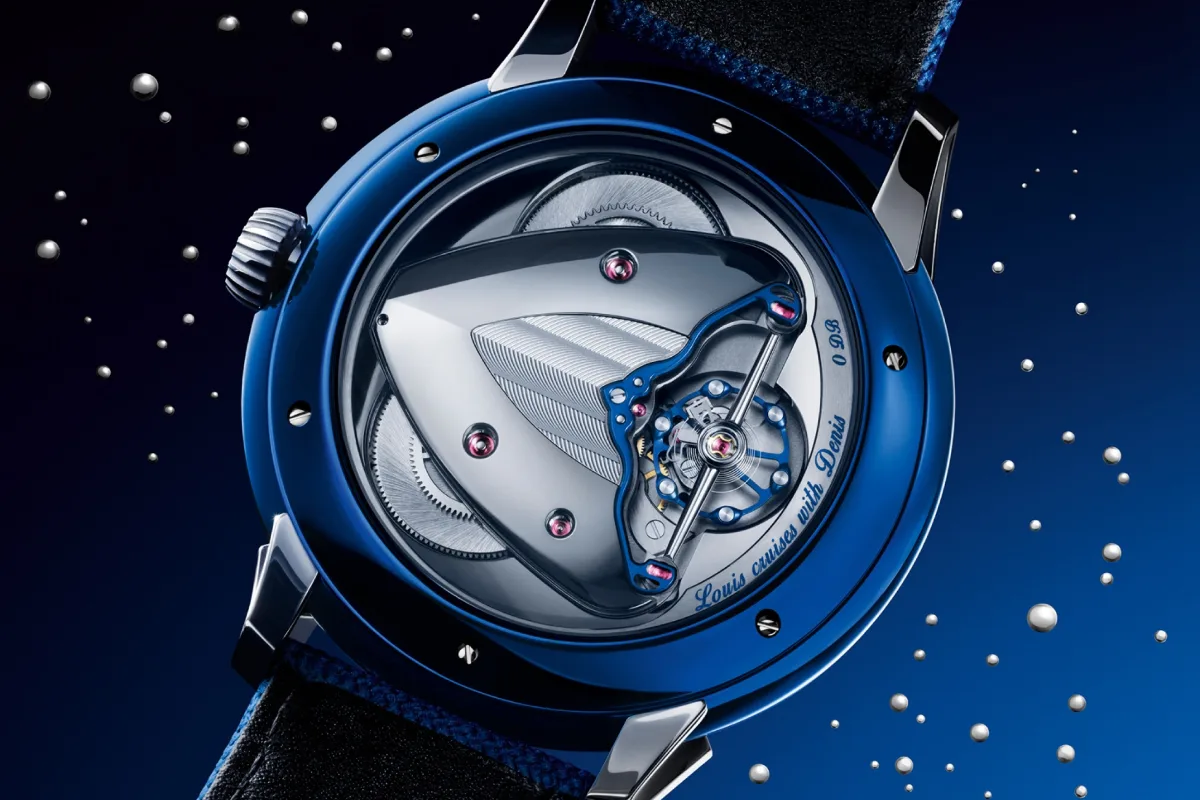
The main distinction of the Louis Vuitton × De Bethune Sympathique is not only its complexity but also the reversal of hierarchy. For the first time, the LVDB-03 GMT Louis Varius wristwatch is designed for an autonomous life, independent of the table clock - 120 hours of power reserve provide freedom in travel, which is especially important considering the GMT function. The table clock becomes a chronometric standard, not a "master." These are watches for movement, not obediently returning to the stand every night. This shift is not only technical but also philosophical: history is not preserved in stagnation here but adapts.
Modern Implementation of the Sympathique Function
The Sympathique function has ceased to be ceremonial: the watch docks without removing the strap, constantly wound and automatically adjusted. This is not a nostalgic revival of an 18th-century idea (developed by Abraham-Louis Breguet) but a modern reimagined concept where history adapts to contemporary behavior, and the connection between the watch and the table clock becomes a choice, not an obligation.
Comparison with Other Innovations in Horology
It is worth noting that the independent brand Urwerk has already explored the idea of Sympathique in a different way with the Atomic Master Clock - a combination of multi-day autonomous watches and an atomic time standard that winds, sets, and regulates watches with absolute precision. However, Urwerk's approach is chronometric absolutism, where the watch is subject to external authority. Meanwhile, De Bethune's Sympathique completely changes this paradigm.
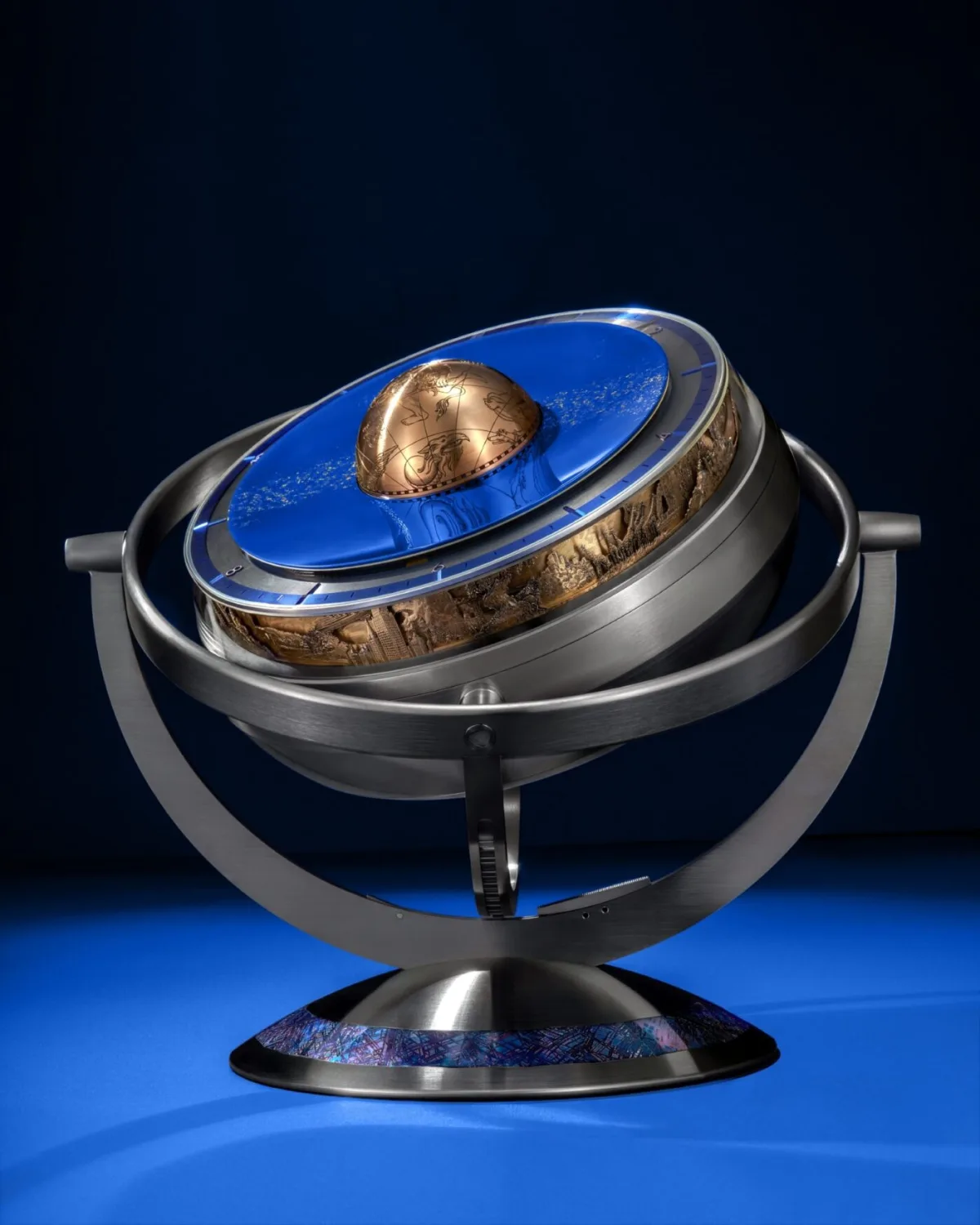
Here, the watches are self-sufficient and designed for free travel, while the table clock is a point of care to which they return at will. This is the difference between correction and trust, reflecting a subtle yet profound evolution of the Sympathique idea in the modern world.
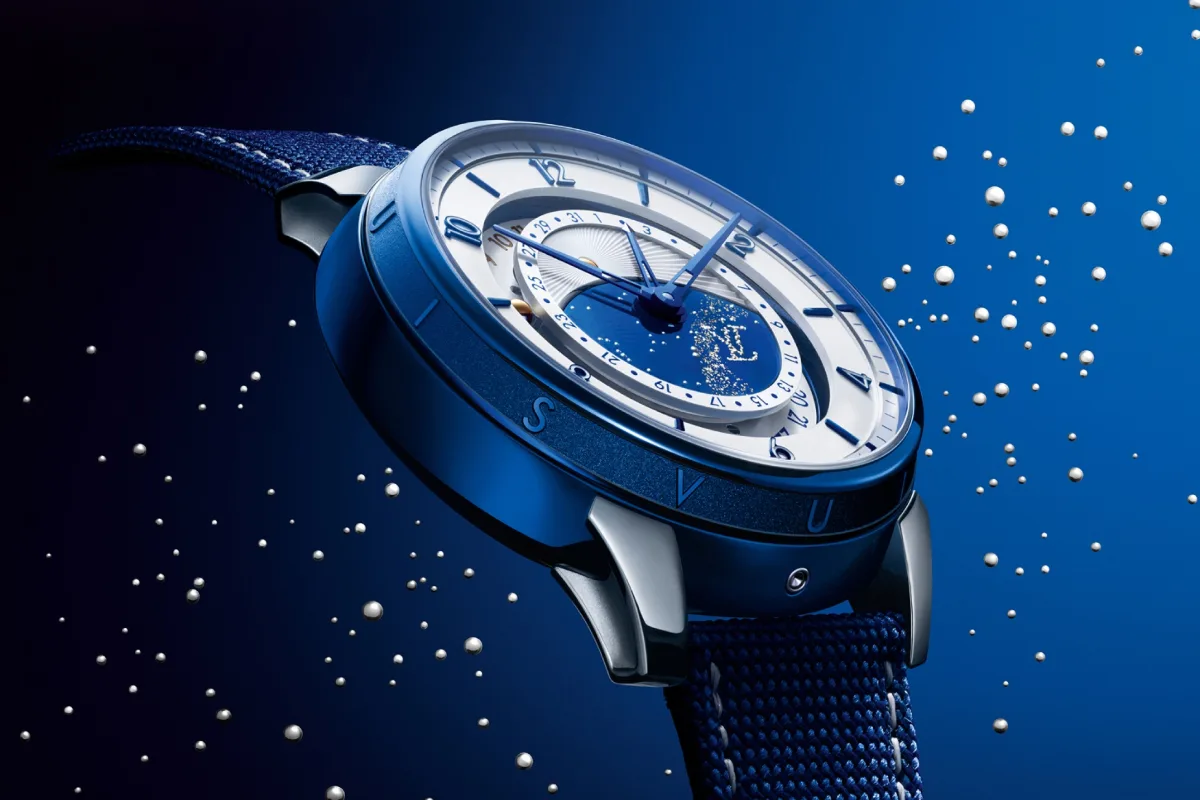
Aesthetics and Design
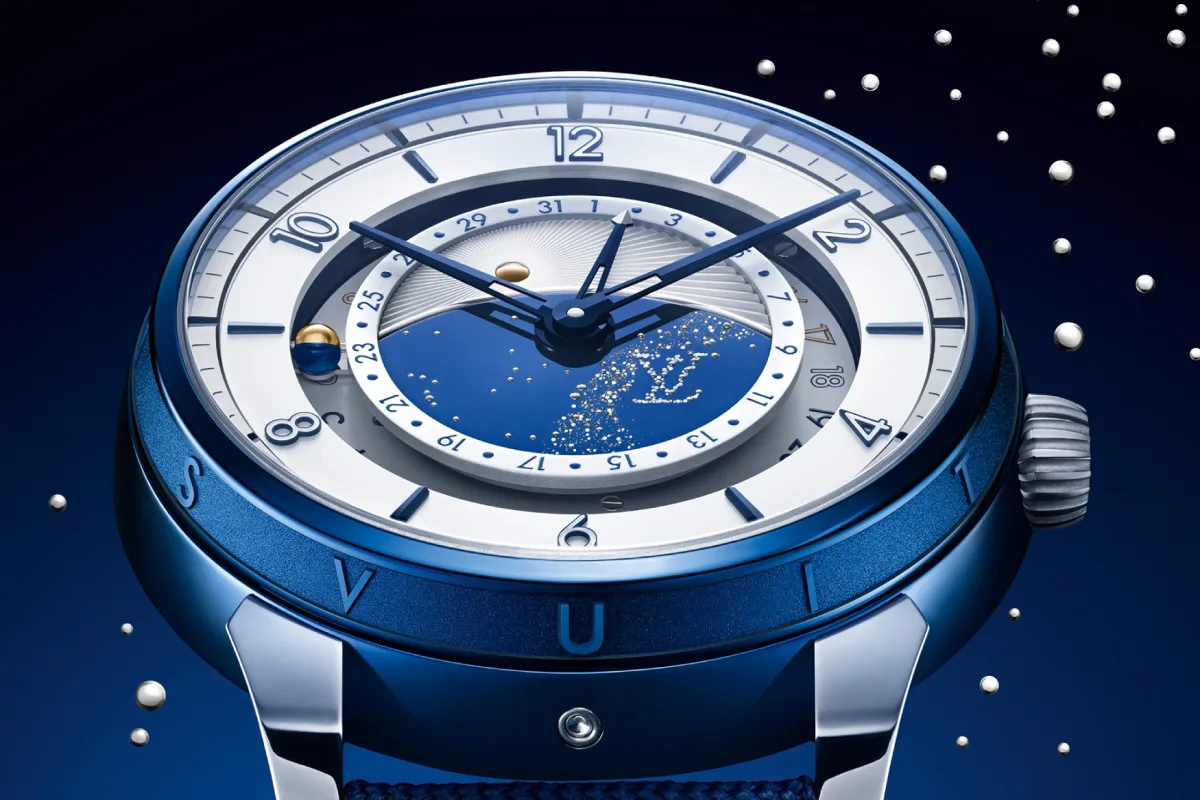
The visual language of De Bethune maintains its celestial theme: a dial depicting the Milky Way, blue titanium, depth perceived more as astronomical than decorative. Louis Vuitton's presence is discreet and architectural: the Tambour Taiko case, strict typography, the logic of travel embedded in the set of complications. Even the LV constellation on the dial does not declare itself immediately - it unfolds gradually upon closer inspection.
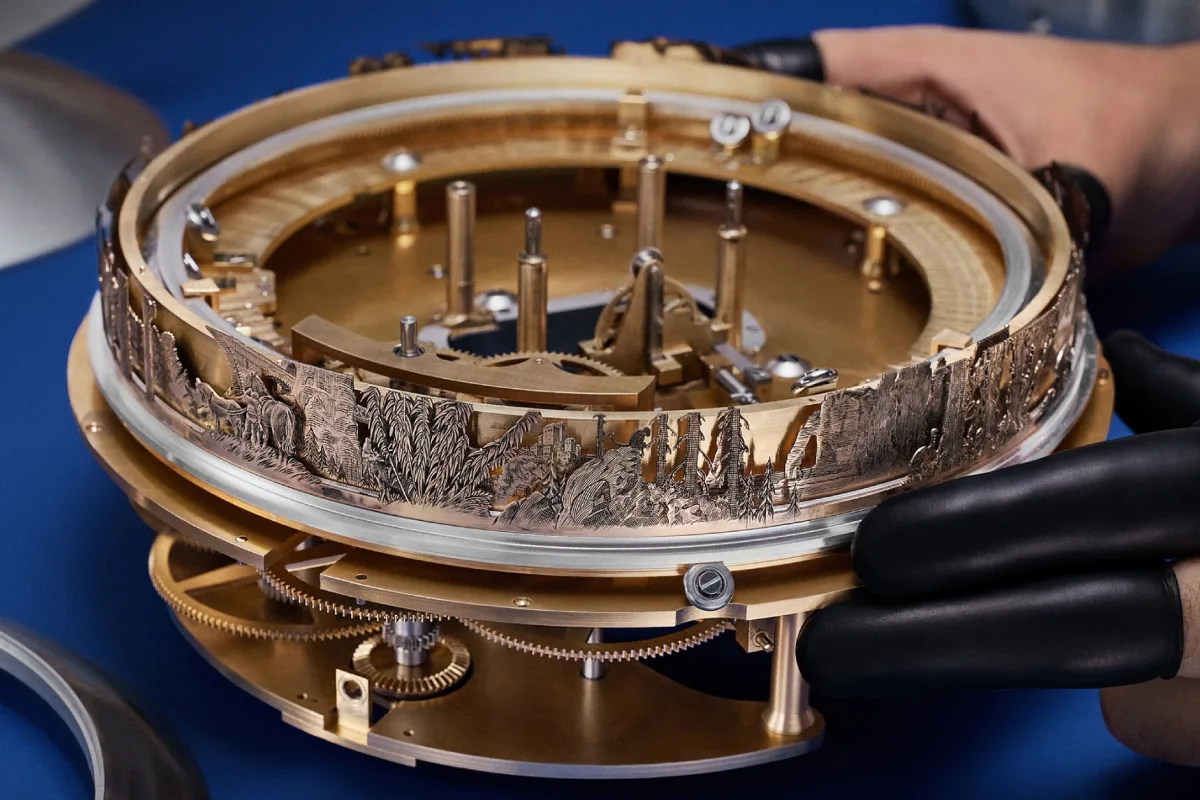
Table Clocks as a Symbol of Responsibility
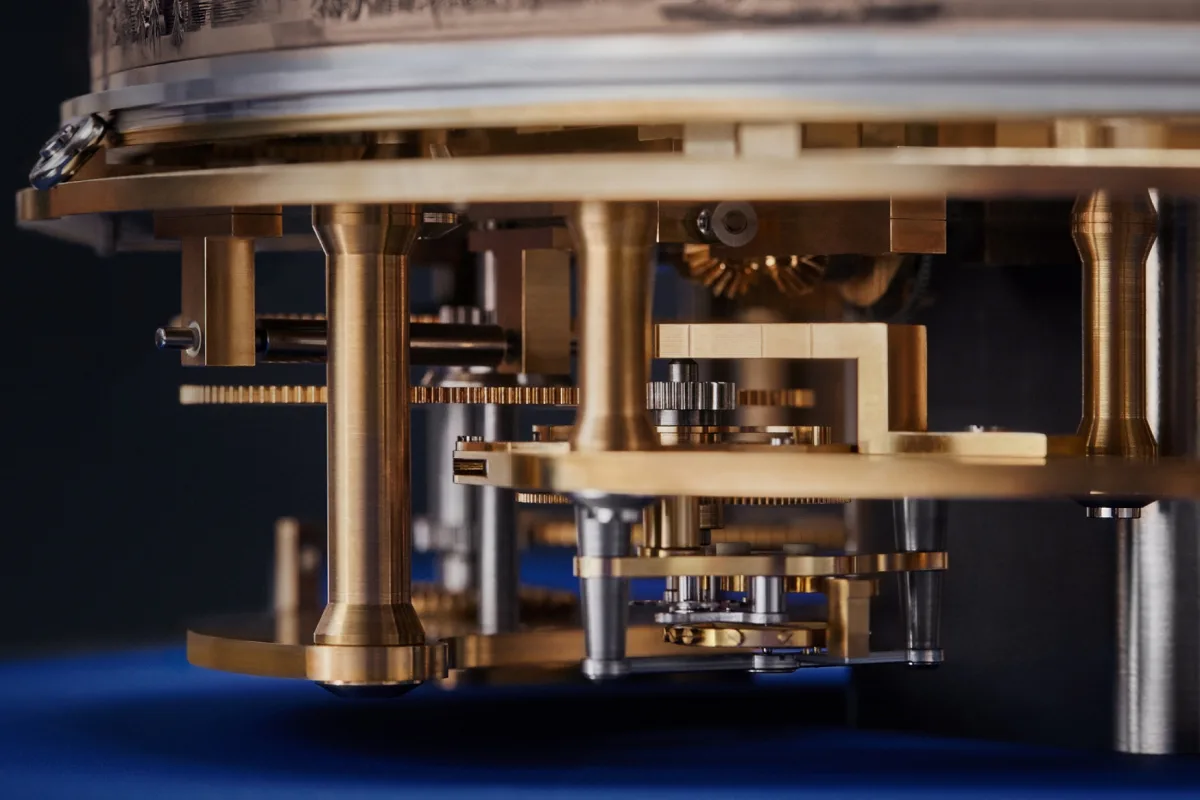
The LVDB-03 Sympathique Louis Varius table clocks are not a demonstration of status, but a serious responsibility. 763 components, 11 days of power reserve, an automatic winding and time-reset system - not for show, but for function. "The watches and table clocks feel each other," says Flageollet. "That's why it's called Sympathique - sympathetic." Only two of these table clocks were produced, not due to artificial scarcity, but because making more would be unreasonable. "Twelve such clocks is probably a lifetime's work," he admits. This is what leading houses of horological art should engage in.
Precedents and Legacy
An example is the 270th anniversary of Vacheron Constantin, where the brand did not limit itself to anniversary wristwatches (though there were many), but built La Quête du Temps - monumental astronomical clocks with more than 6000 components, rich celestial indicators, and automatons, and placed them in the Louvre. Not as a show, but as a contribution. A modern mechanical work consciously inscribed in the centuries-old history of watchmaking, perceived as a continuation of traditions, not as a product timed to an anniversary.
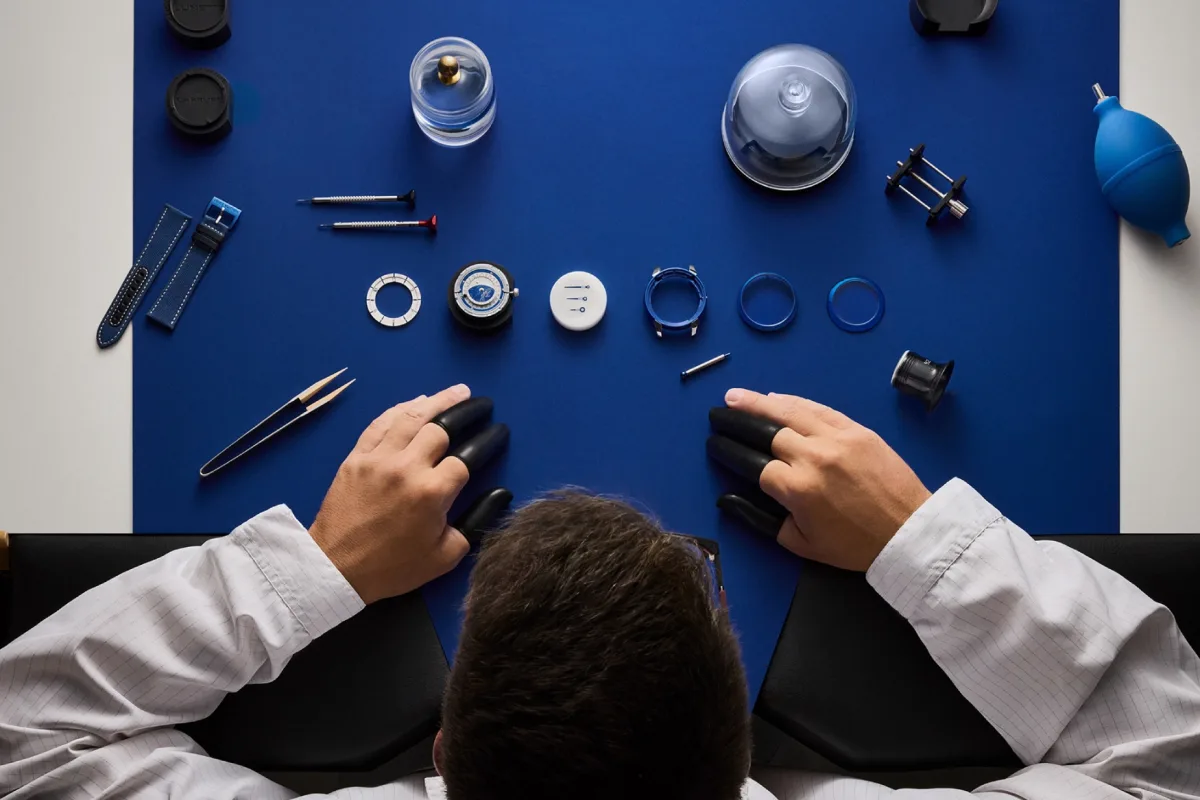
This gesture was not commercial, but custodial. The Louis Vuitton × De Bethune project follows the same line of thought. It considers one of the boldest ideas in horology not as an eccentric relic, but as a living concept worth developing, financing, and executing with quality - even if it doesn't justify itself in terms of balance.
Who Can Undertake Such Projects?
The question arises: if not Louis Vuitton, then who? Who else has the scale to support such works, the patience for their long development, and the restraint for delicate collaboration? Who will give the watchmaker full creative freedom and then allow something truly significant to emerge? Flageollet answers more clearly than any press release: "When I spoke with Jean, he said I would have complete freedom to do whatever I wanted."
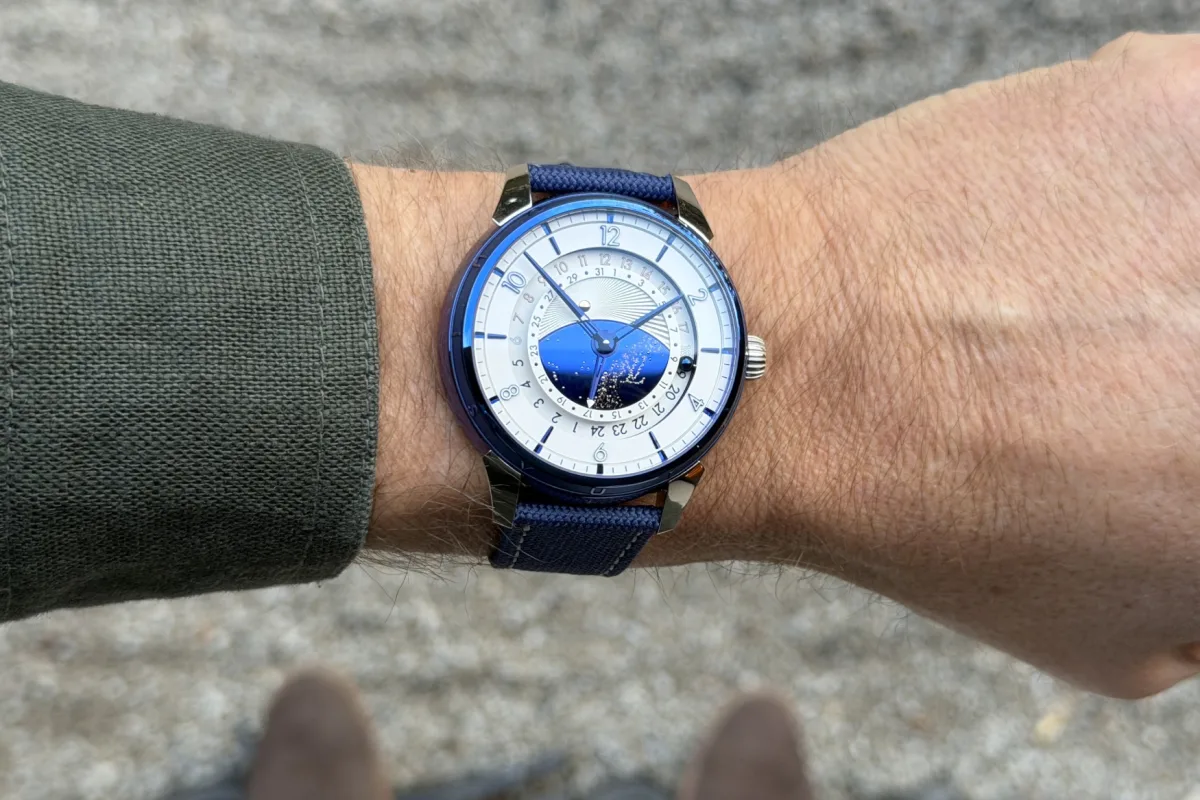
This phrase explains the project and the role of Louis Vuitton - not as a brand seeking legitimacy, but as a guardian of the most ambitious ideas in horology, ensuring their future.
Price and Availability of Louis Vuitton × De Bethune LVDB-03 Louis Varius Project
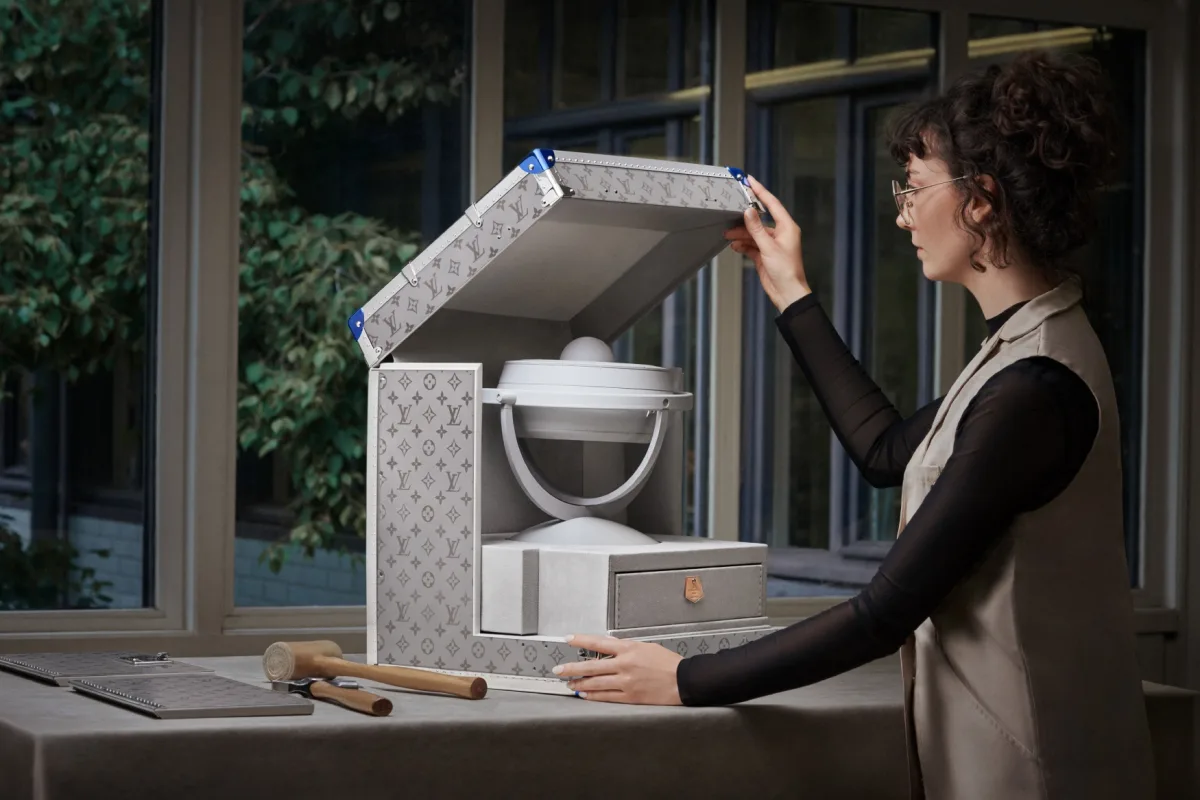
The Louis Vuitton × De Bethune LVDB-03 GMT Louis Varius watches are released in a limited series of 10 pieces, and the LVDB-03 Sympathique Louis Varius table clocks in only 2 pieces. Each of the two table clocks comes with one of the wristwatches, as well as an individual Louis Vuitton titanium trunk inspired by Maison's "trophy" trunks.
| Parameter | Value |
|---|---|
| Brand | Louis Vuitton × De Bethune |
| Model | LVDB-03 Louis Varius Project |
| Reference | WATI11 (LVDB-03 GMT Louis Varius, watch) |
| Q1TA10 (LVDB-03 Sympathique Louis Varius, table clock) | |
| Case Size | 45 mm (diameter) × 14.05 mm (thickness) (watch) |
| 310 mm (width) × 266 mm (depth) × 260 mm (height) (table clock) | |
| Case Material | Blue titanium, platinum, and titanium (watch) |
| Titanium case, meteorite marquetry (table clock) | |
| Water Resistance | 30 meters (watch) |
| None (table clock) | |
| Crystal | Sapphire front and back (watch) |
| None (table clock) | |
| Dial | Blue titanium with 18-carat gold elements (watch) |
| Glass with titanium elements (table clock) | |
| Lug Width | 21 mm (watch) |
| Strap | Two straps: blue fabric with grey trim and black leather lining + soft cognac alligator with alligator lining, tone-on-tone, with polished and blue titanium buckles dual-signed Louis Vuitton/De Bethune (watch) |
| Movement | DB2507LV, proprietary, manual winding (watch) |
| DB5006, proprietary, manual winding (table clock) | |
| Power Reserve | 5 days (watch) |
| 11 days (table clock) | |
| Functions | Hours, minutes, GMT, day/night indicator, jumping date, sympathique (watch) |
| Hours, minutes, rotating disc animation, sympathique (table clock) | |
| Availability | Watches - 10 pieces, table clocks - 2 pieces, set includes watch + trunk |
| Price | €375,000 (watch) |
| €4,000,000 (watch + table clock + trunk) |