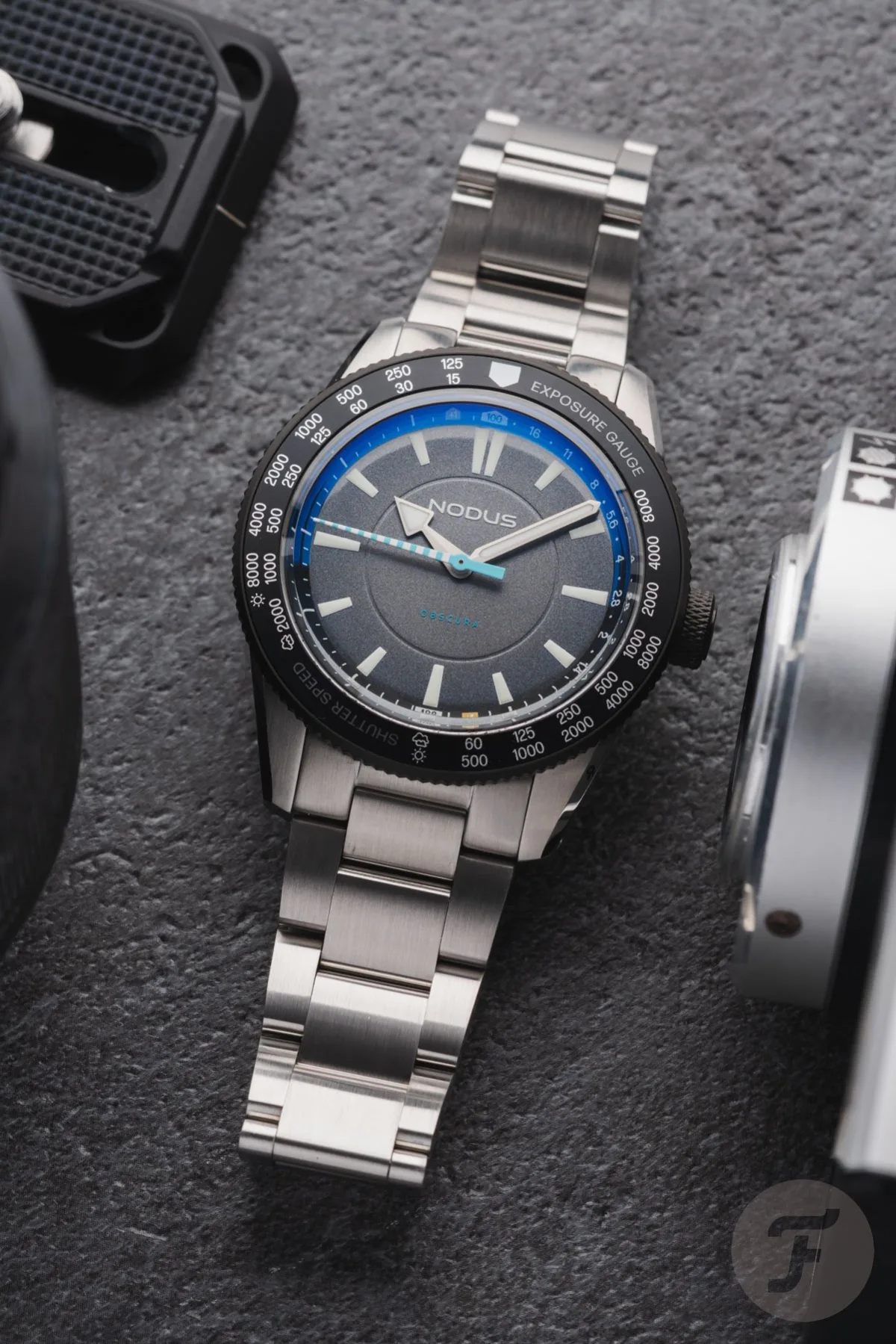
Nodus is one of the most intriguing young watch companies today.
In addition to its regular collection of great and affordable tool watches, the Los Angeles-based brand created Nodus Design Lab for its more experimental collaborative projects. A prime example is the magnificent Trailtrekker, which I tested in 2024. Another notable collaboration was the Nodus Obscura model, released last year in partnership with Beers & Cameras founder Juan Martinez, who designed and patented the unique bezel construction. In the Obscura II version, the overall design has been slightly tweaked for a cleaner look, and both the bezel and clasp have been improved. At first glance, the watch looks ordinary until you take a closer look at the bezel. I was fortunate to personally get acquainted with this niche model and learn more about it.
The Story of Nodus Obscura II
Let me start by saying I am not a professional photographer and lack the talent of some members of the WatchTested team. Perhaps that is why my review of these watches seems unusual. However, I have a deep interest in the classic approach to audio equipment and analog photography - largely thanks to my father's passion. I still remember him traveling across Europe with our family, carrying a camera bag on his shoulder. It always contained his trusty Minolta and a wide array of lenses, as well as numerous slides from our family trips.
For some reason, the passion for photography didn't transfer to me at birth. Although I have always loved photos and visual images, the technical side of photography was more to my brother's liking - he is the more technical of the two of us. But as I have aged, my interest in the technical aspects of audio, photography, and mechanical watches has grown, which is why the announcement of the Nodus Obscura II caught my attention.
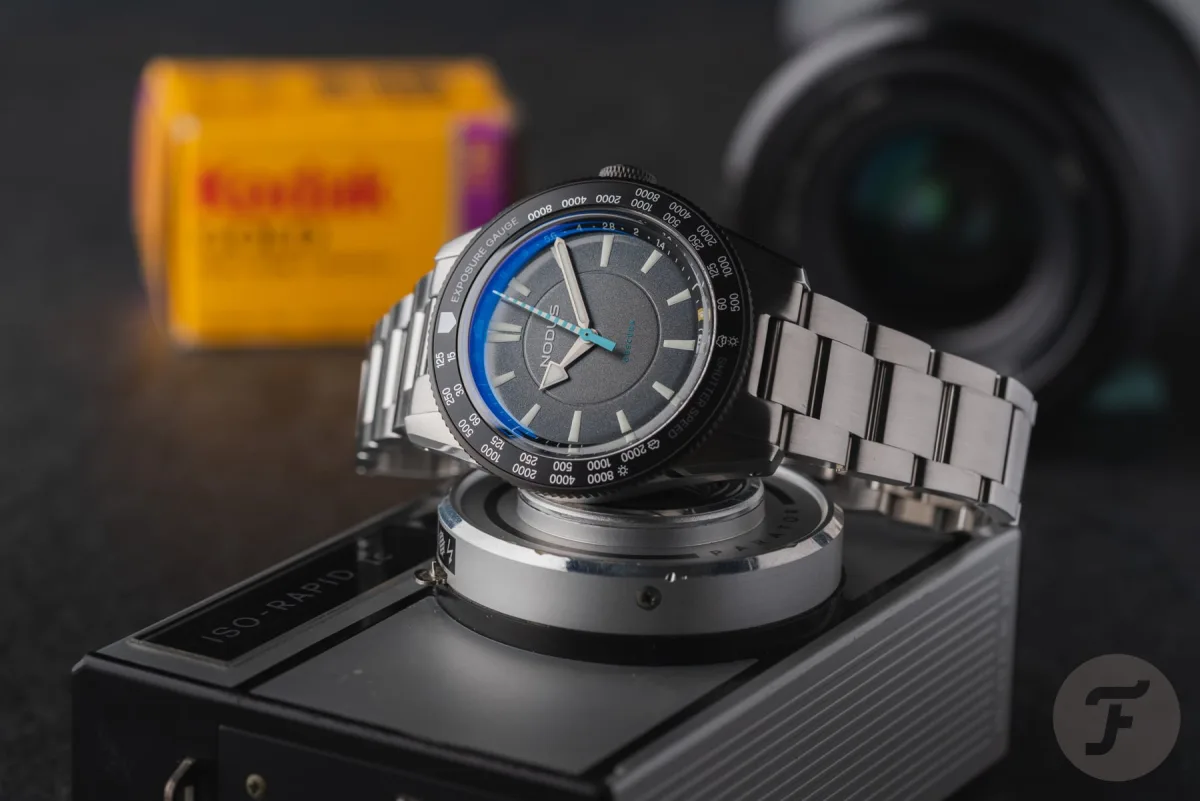
Briefly, I will tell you about the concept of the watch to help you understand what Juan Martinez meant in its development. Besides being the founder of the Beers and Cameras community, he is also a watch enthusiast, which explains his desire to create this model.
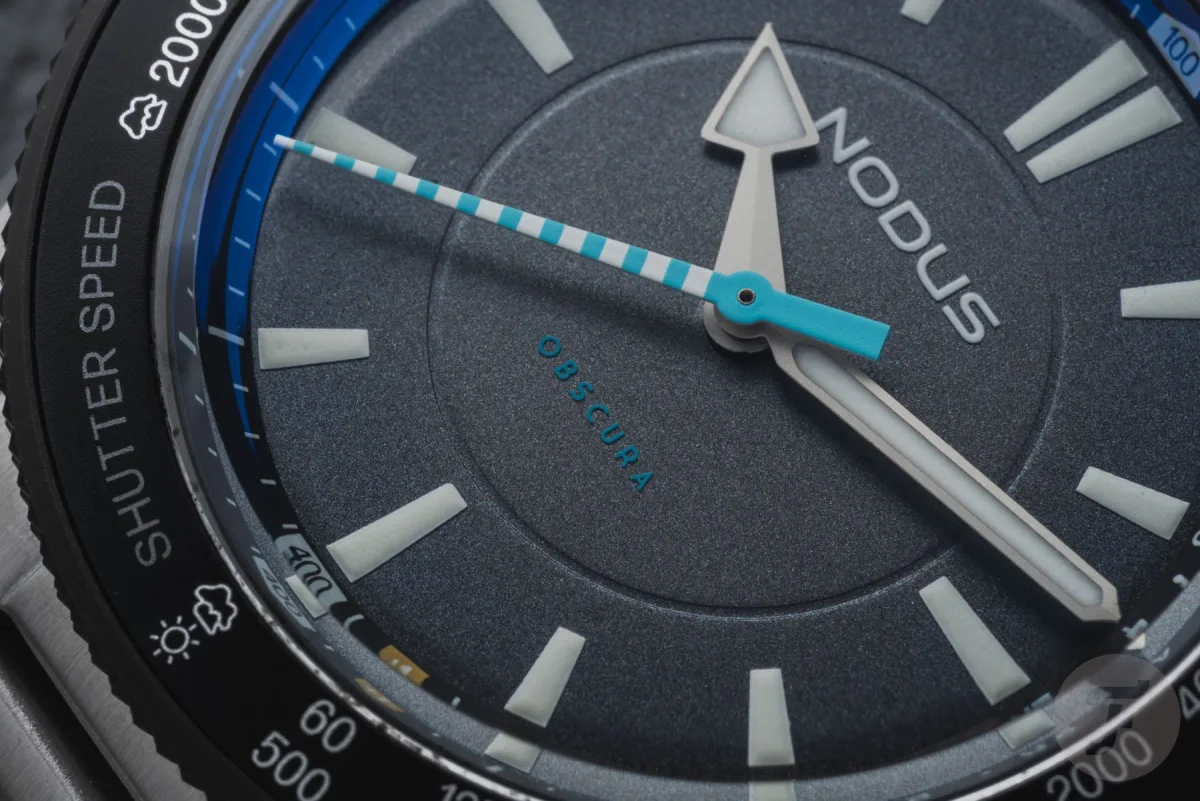
It took him five years to develop the concept and file a patent in the USA and China in 2024. A year later, the first Nodus Obscura was released - a limited edition of 100 pieces. The watch is equipped with a unique Exposure Gauge feature based on the Sunny 16 rule - a time-tested method for determining the correct exposure without using a light meter.
Technical Specifications of Nodus Obscura II
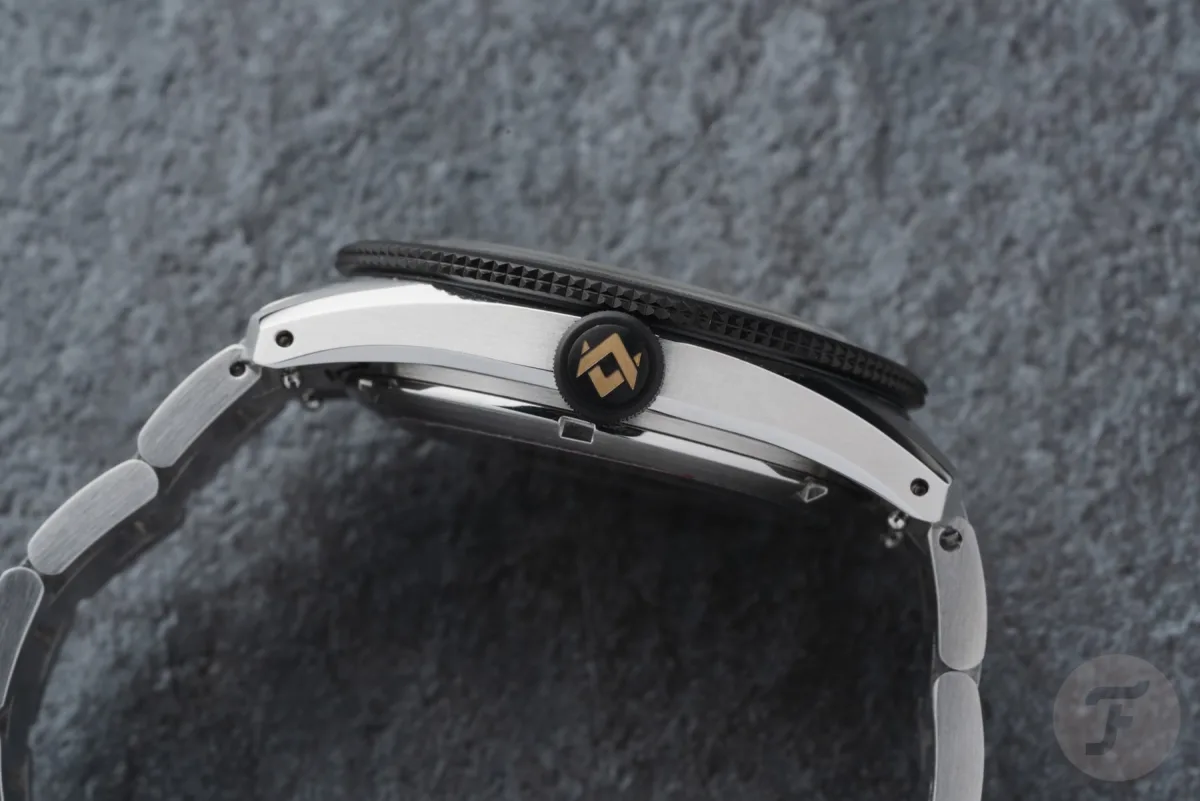
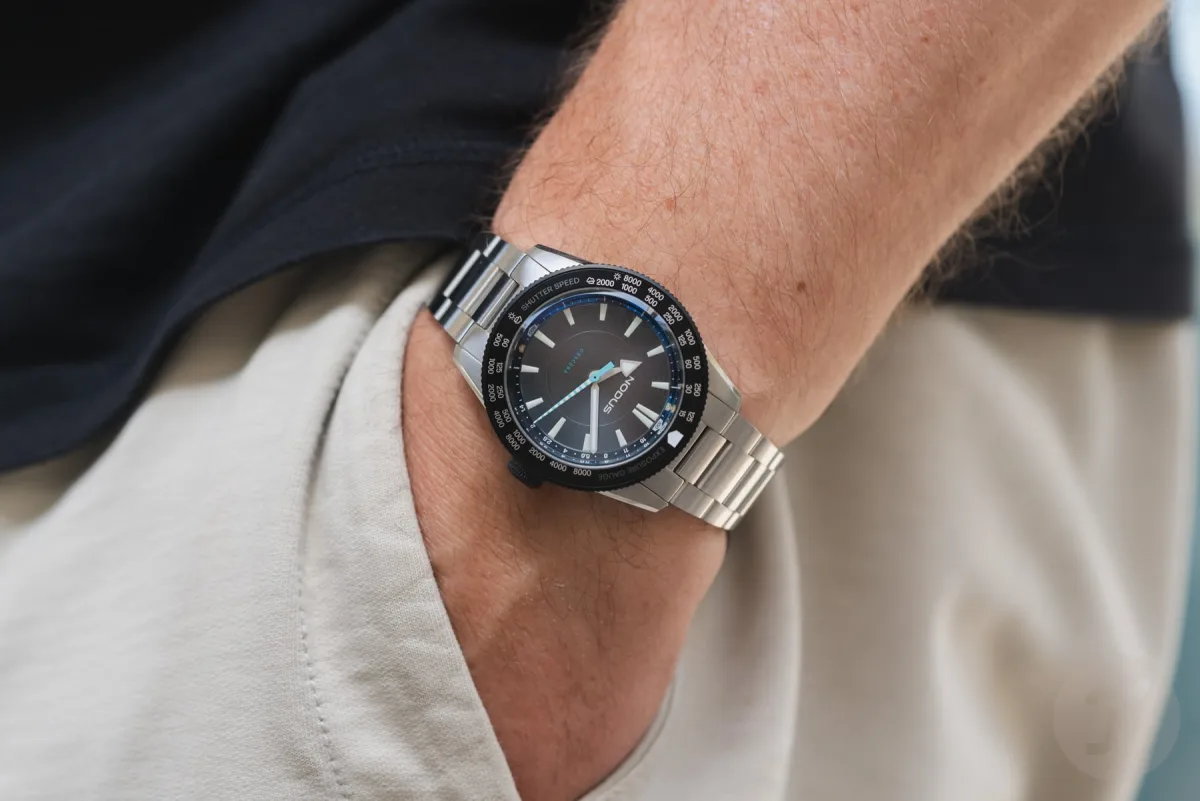
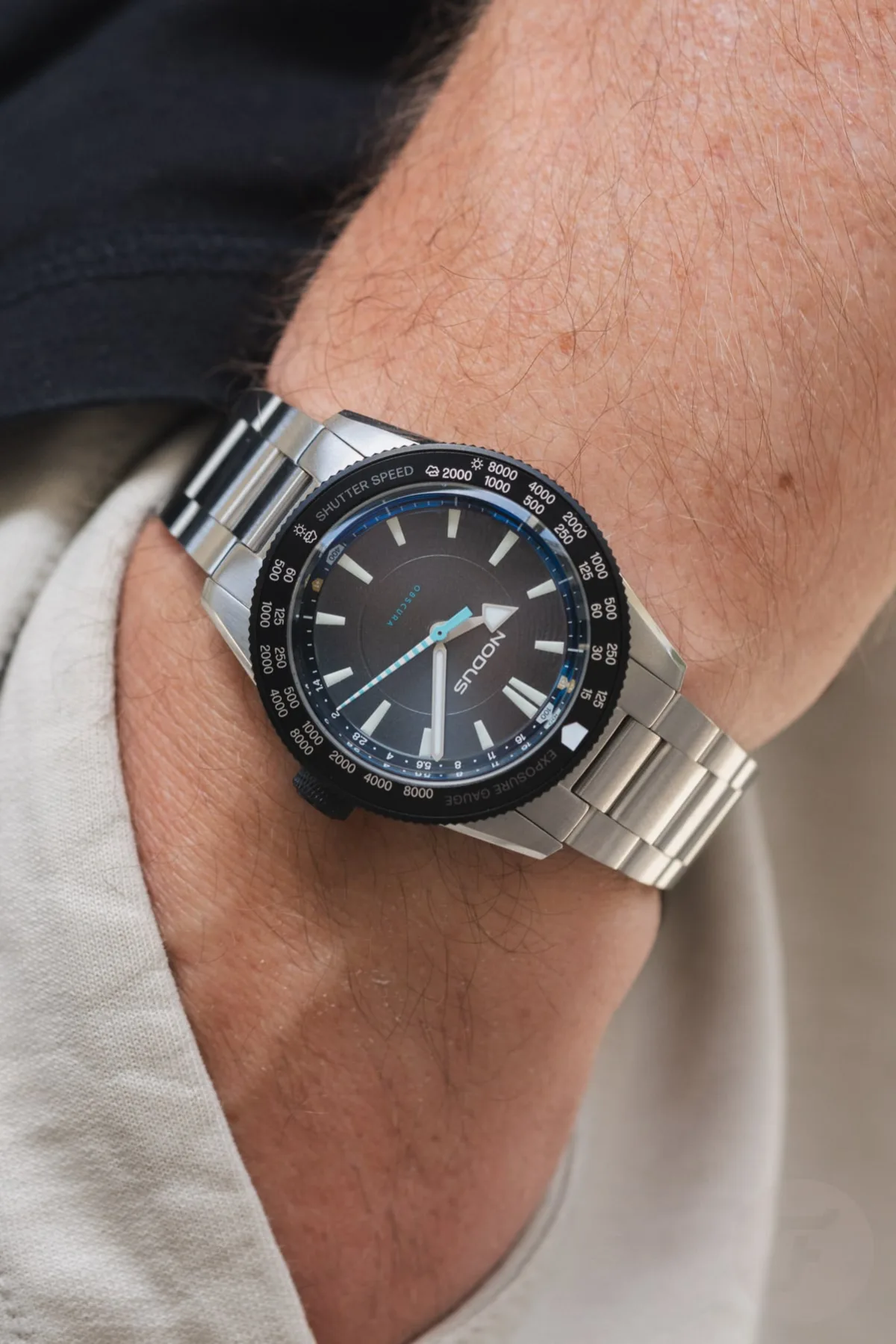
Let's first look at the main features of the Obscura II. The watch is available in two versions. The first is a classic stainless steel version, which we received for review. The second is an all-black version with DLC coating, which radically changes the appearance of the watch. In both cases, the case is made of stainless steel with a diameter of 38 mm, with a slightly wider bezel - 40 mm. The case thickness is 11.7 mm, the length is 47 mm, and the lug width is 20 mm. On the right is a bronze crown with black DLC coating, except for the Nodus logo.
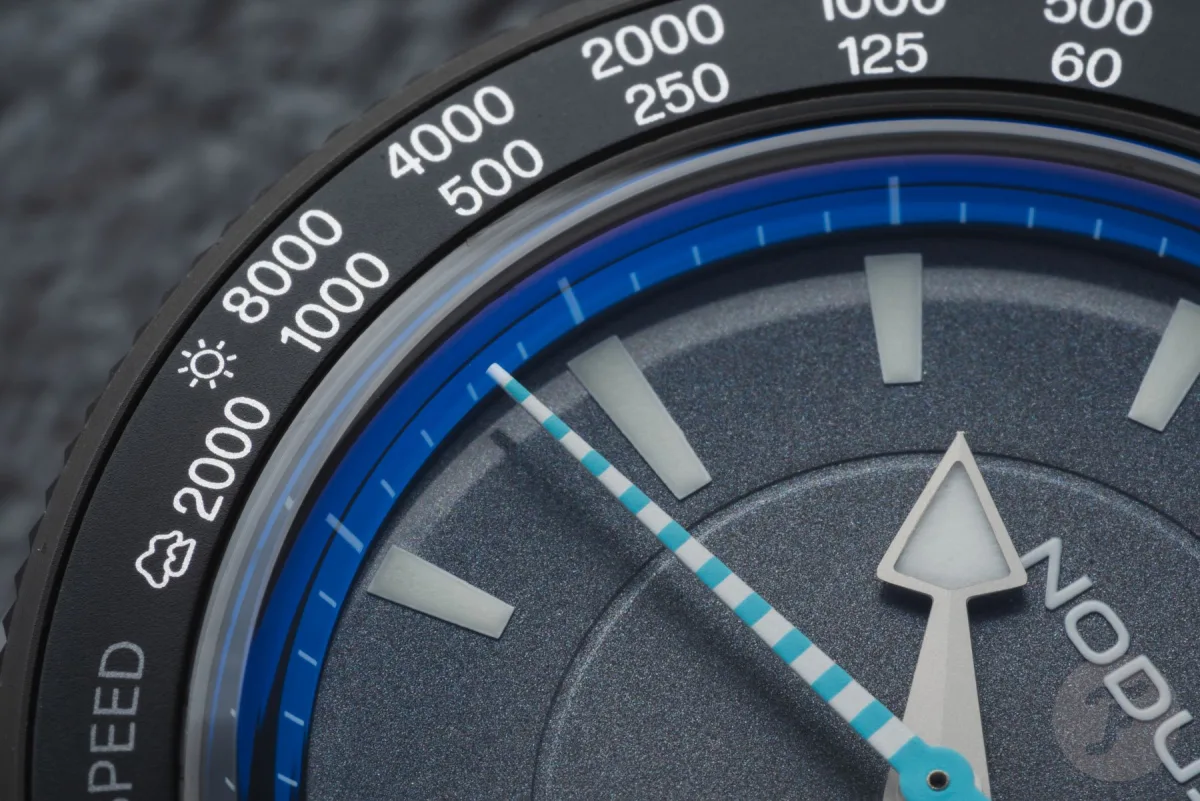
The first element that Nodus improved was the bezel. This special bezel with 16 fixed positions now rotates more easily, providing a smoother user experience. The bezel insert is made of aluminum, while the bezel itself is made of copper with black DLC coating. The markings are applied in white paint.
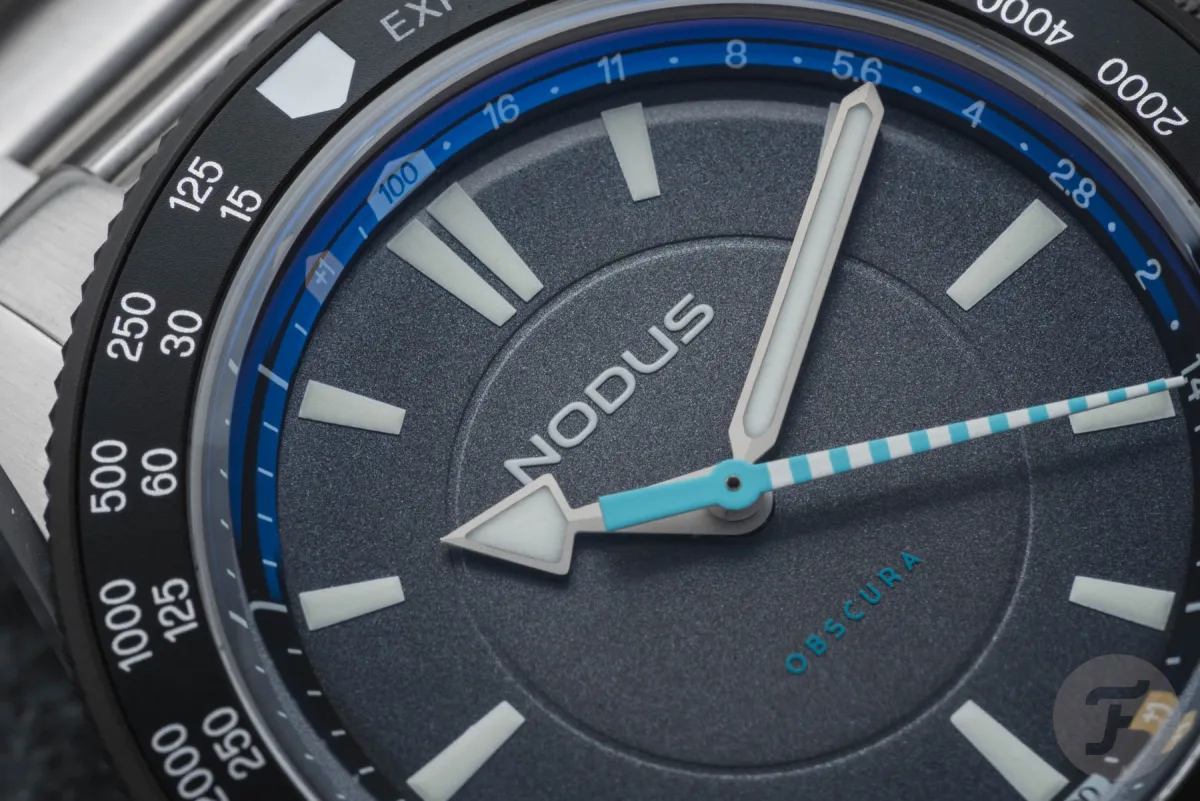
The case is paired with a black fumé dial inspired by classic film. It has a grainy texture, mimicking the silver halide crystals of film grain. Compared to the smooth black dial of last year's model, it adds depth and detail. The Beers & Cameras logo has disappeared, making the design cleaner. The dial features luminous indexes, a white Nodus logo, and the Obscura name in bright blue. The hands are designed as an arrow (hour), a sword (minute), and a blue-and-white striped second hand, adding a bright accent.
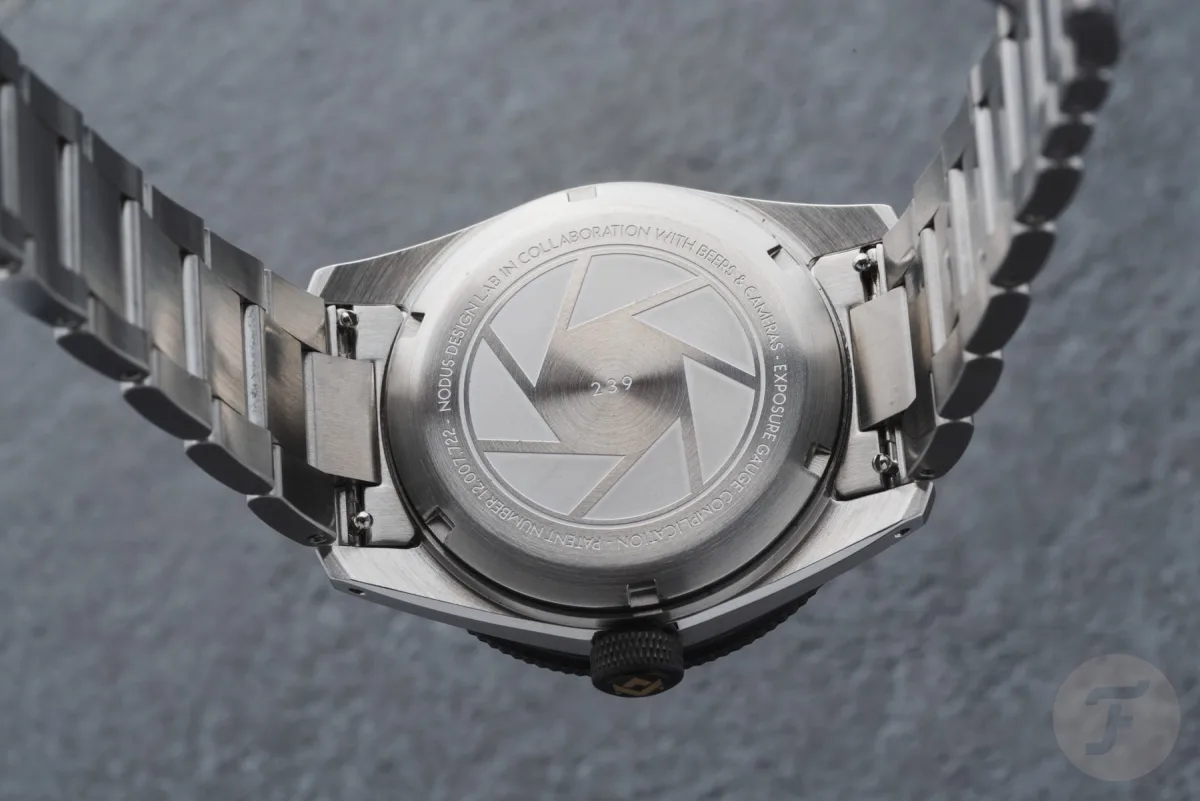
Watch Movement
At the heart of the watch is the automatic caliber TMI NH38, also known as Seiko NH38, since Time Module Inc. is a subsidiary of the Seiko Group. The movement operates at a frequency of 21,600 vibrations per hour, contains 24 jewels, and provides a power reserve of 41 hours. Nodus regulates the caliber with an accuracy of ±10 seconds per day. The NH series movements are known for their reliability and affordability, which is why they are often used in inexpensive watches.
The look is completed by a three-row stainless steel bracelet with a width of 20/16 mm and a Nodus Extension Module (NEM) clasp. This clasp features a tool-free micro-adjustment mechanism, as in other Nodus models, making it very convenient.
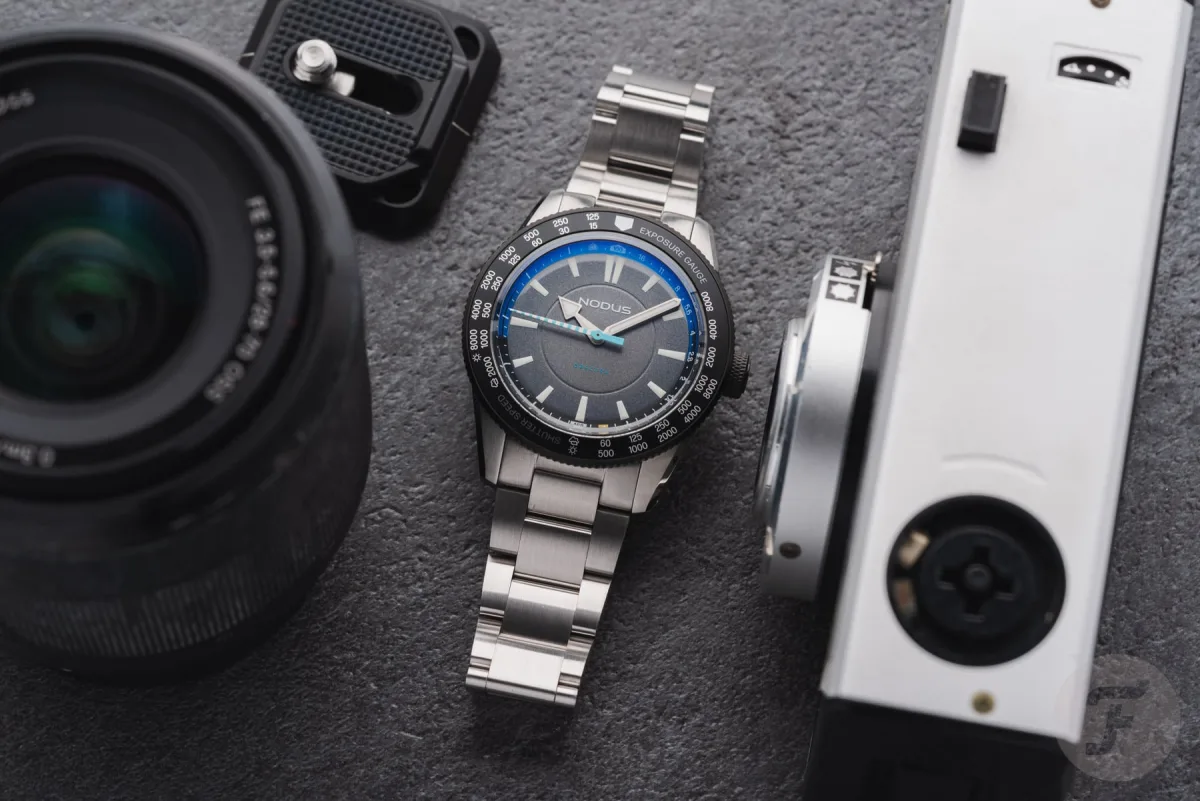
Explanation of the Exposure Gauge Function
Now let's move on to the unique Exposure Gauge feature. To the uninitiated, it may seem complicated, but it is actually quite simple if you understand the basics of photography. In the era of analog photography, many cameras did not have built-in light meters or automatic exposure modes.
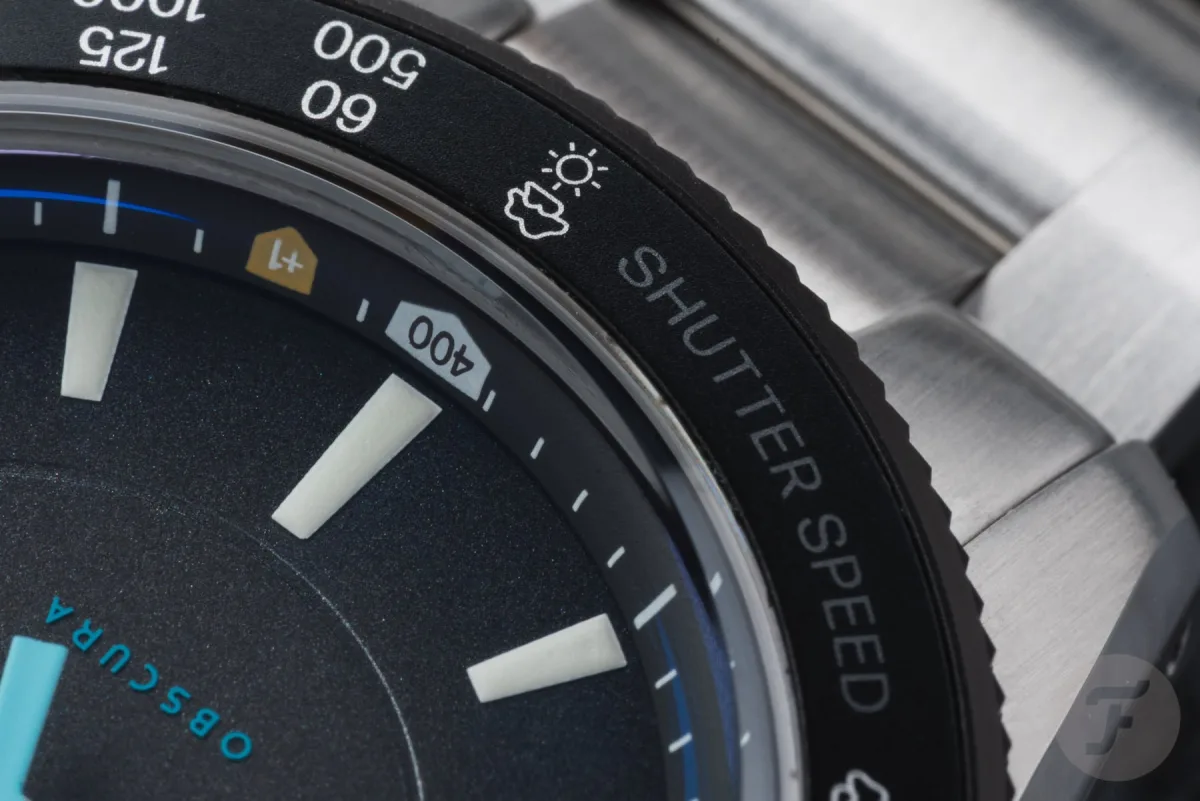
That's why my father always carried a light meter with him. It was a mystery to me as a child - I didn't understand why it was needed. Later, my father explained that the light meter helps set the correct exposure so that elements in the photo are not too bright or dark. If you don't have a light meter, the Obscura II will help using the Sunny 16 rule. The bezel works as a sliding scale, calibrating shutter speed and aperture (f-number) according to your film's ISO.
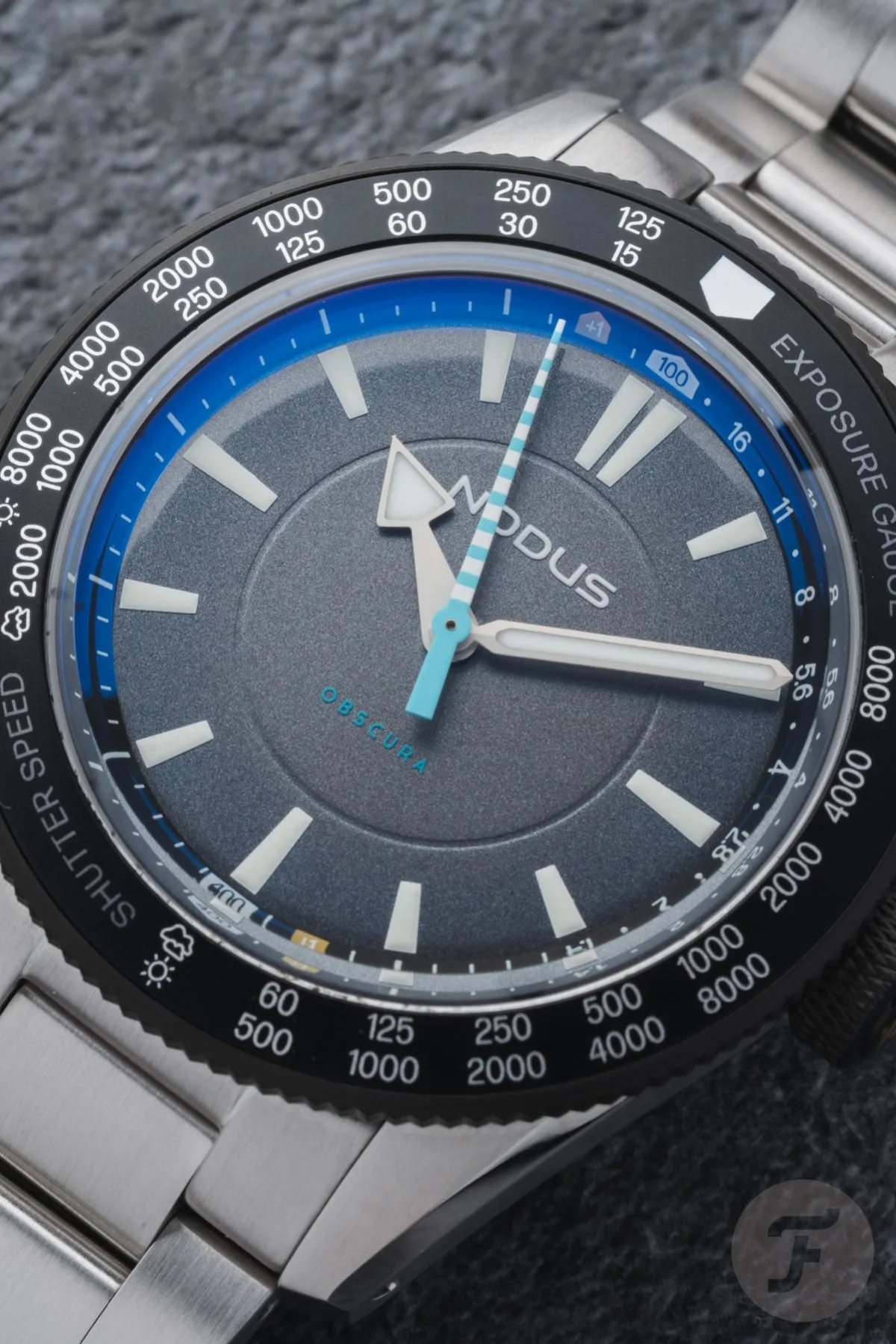
Elements of the Exposure Gauge Function
Today, in digital cameras, ISO can be changed. In film photography, ISO is fixed. Therefore, you need to adjust the aperture (the amount of light passing through the lens) and shutter speed (the time the shutter is open) depending on the lighting.
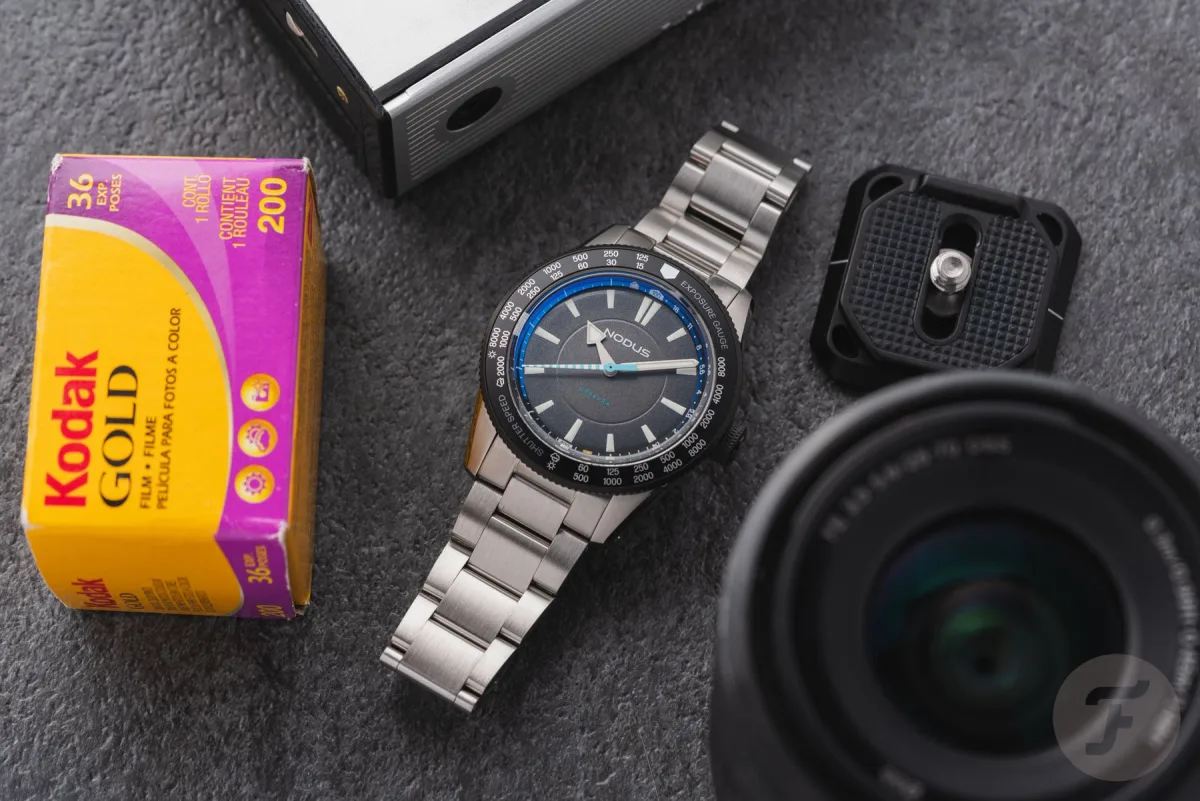
The Obscura II helps determine the optimal shutter speed by matching the selected aperture on the bezel with the corresponding ISO value on the inner ring (reo) at positions 12 and 6 o'clock. The reo also has aperture values applied - from F/16 (narrow aperture, letting in little light) to F/1.4 (wide aperture, letting in a lot of light).
The darker the surroundings, the wider the aperture and/or longer the shutter speed needs to be to ensure proper exposure. In street photography, the Sunny 16 rule simplifies exposure settings and eliminates the need for an external light meter.
Using the Exposure Gauge Function
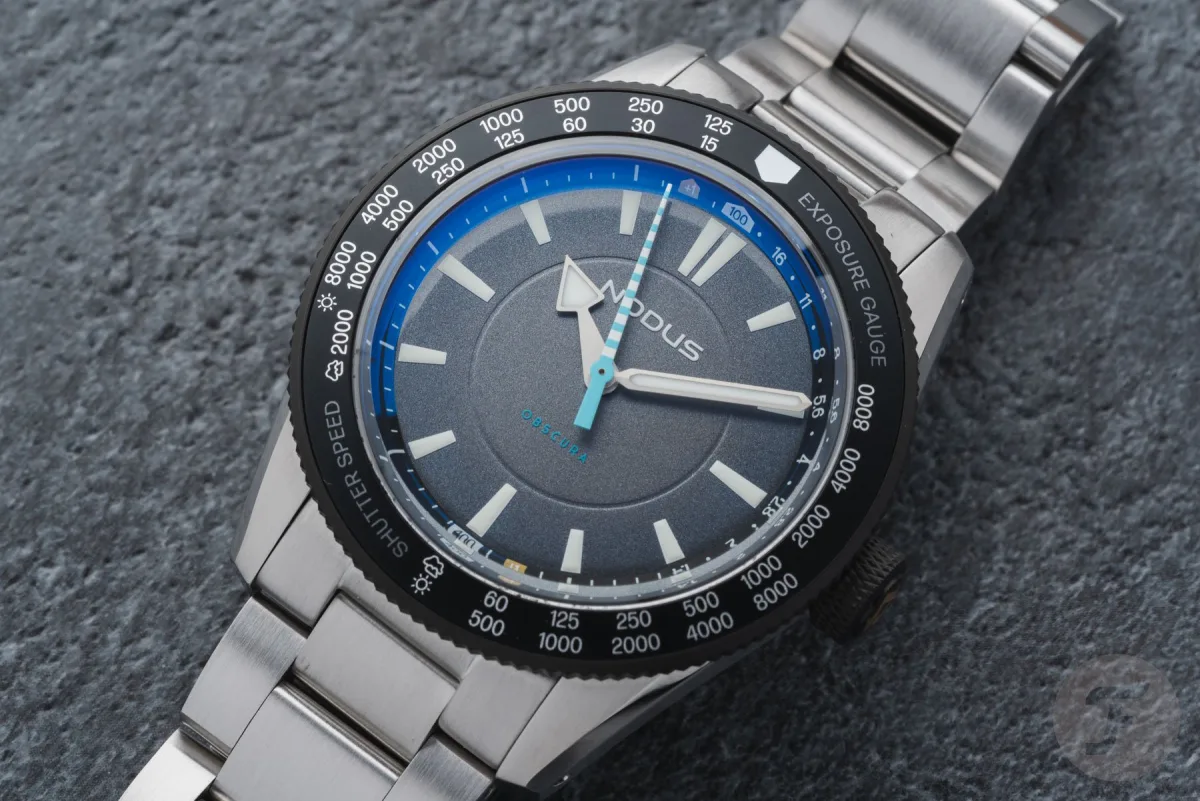
How do you use the watch to select the correct shutter speed? The bidirectional rotation of the bezel is limited to 16 positions between the 12:00 and 4:00 markers, so that the shutter speed matches the ISO on the reo. For example, ISO 100 is at the 12 o'clock position, ISO 400 at 6 o'clock. The "+1" marks correspond to ISO 200 and ISO 800.
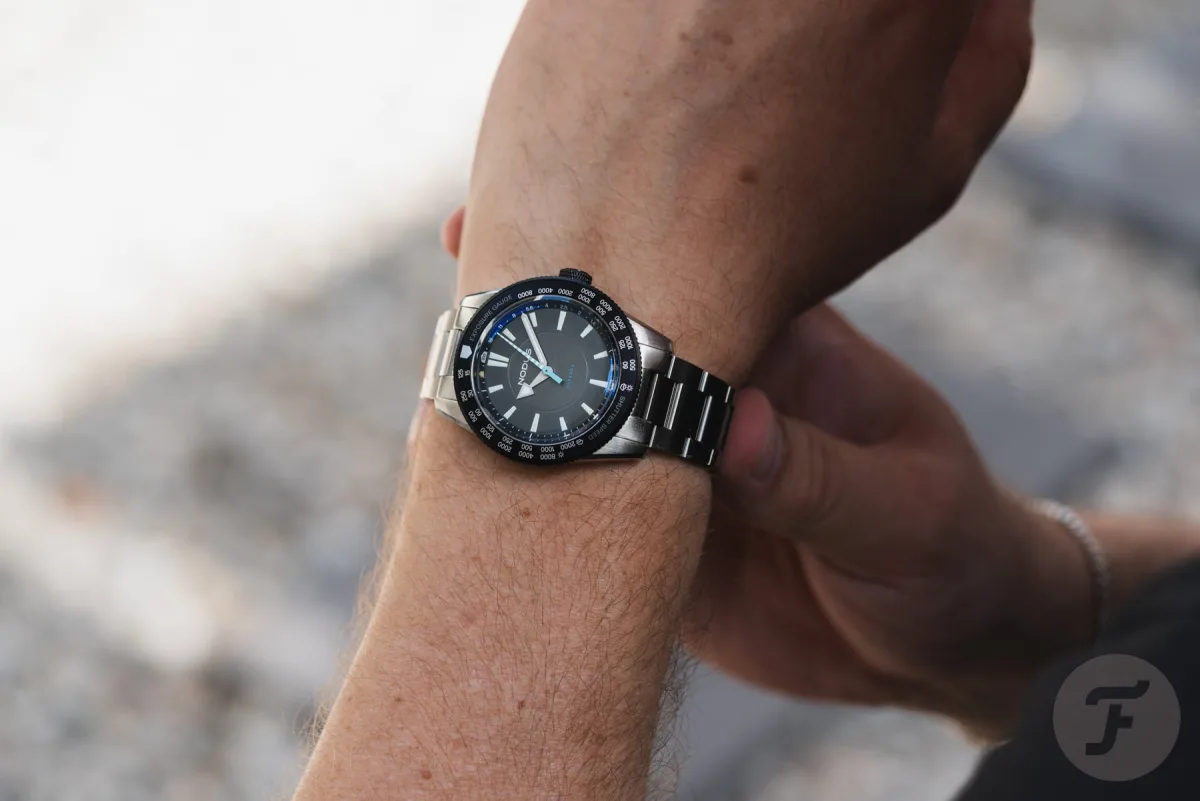
According to Nodus, to use the function you need to
"turn the bezel indicator clockwise to align the lens aperture with the corresponding value on the ring. Then find the correct ISO marker on the reo depending on the film speed: ISO 100 or +1 (ISO 200) / ISO 400 or +1 (ISO 800). The ISO marker indicates the corresponding shutter speed. Depending on lighting conditions (sunny or overcast, with minimal shadows), use the shutter speed on the bezel to set the camera and take the shot."
Wearing the Nodus Obscura II
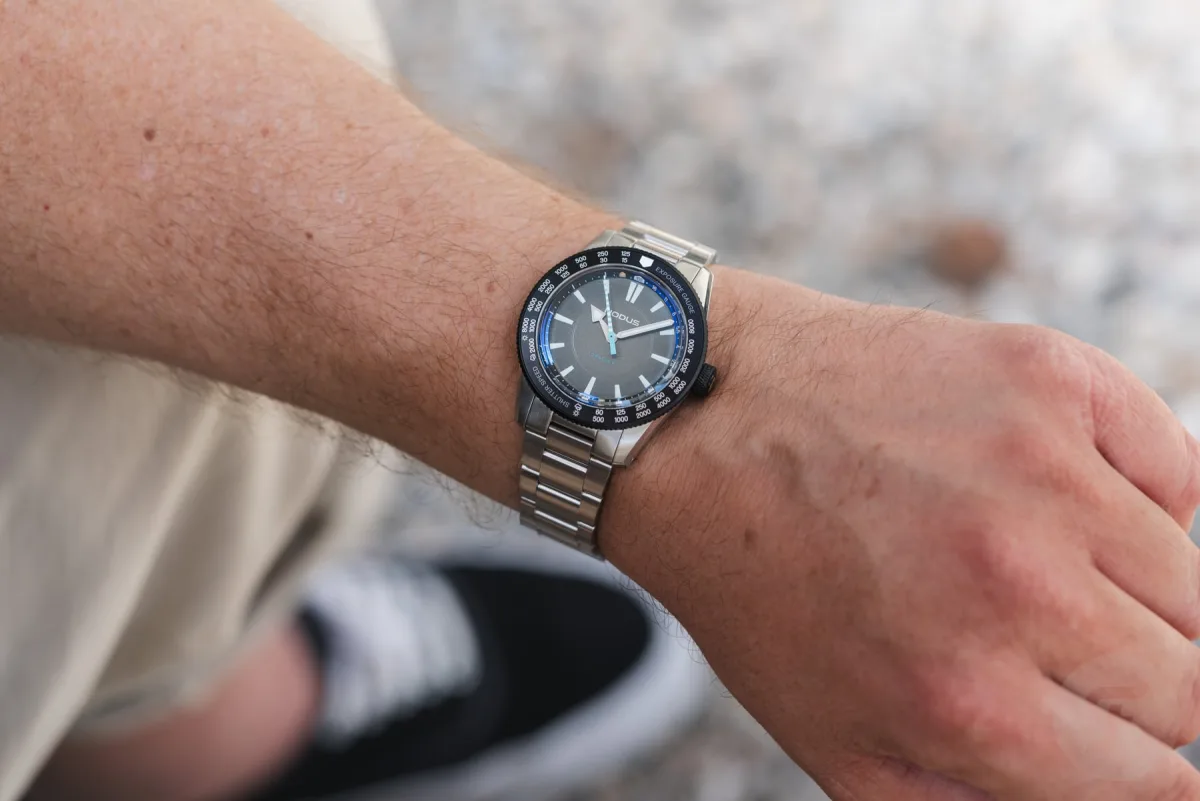
I hope the explanation is clear, as this is one of the main joys of using this watch. Additionally, the Nodus Obscura II is pleasant to wear: the size and proportions are perfect, and the build quality is high, as is typical of Nodus.
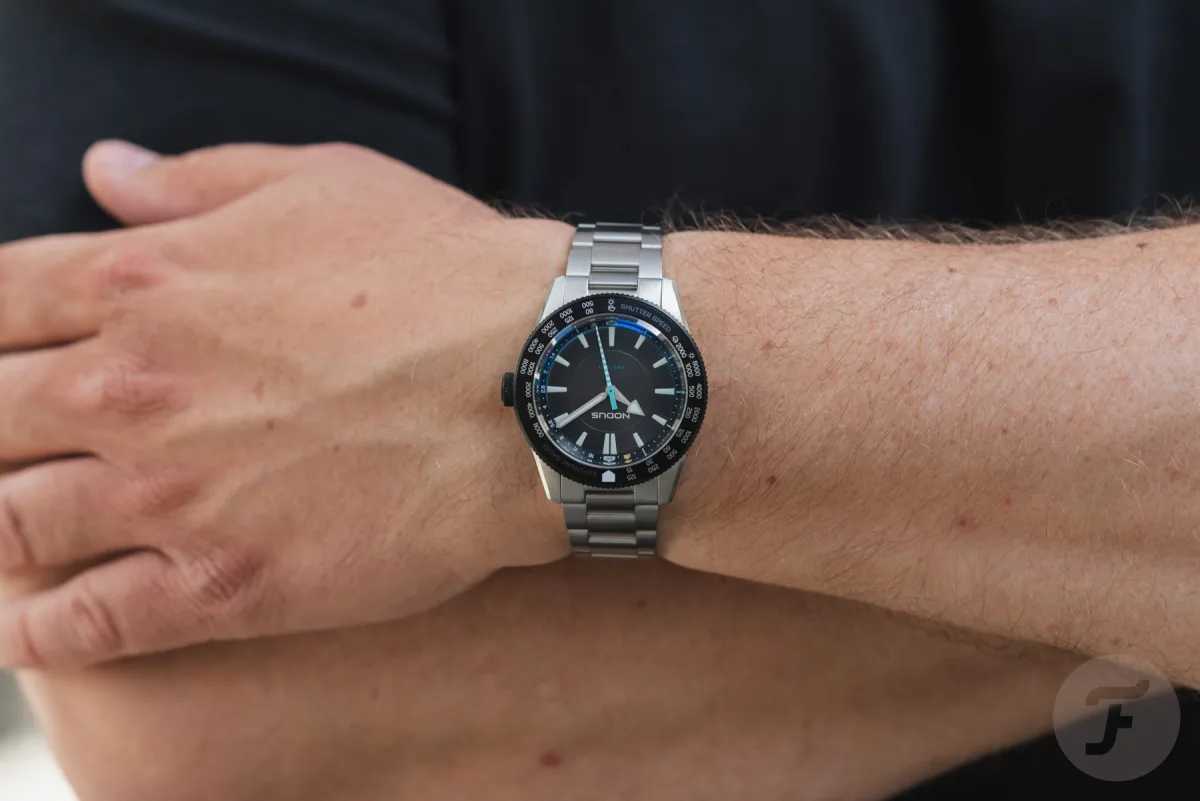
Add to this the attractive design, and you have a watch that is easy to love. Of course, to truly appreciate the Obscura II's functionality, you need to be a photography enthusiast or, even better, a photographer working with an analog camera. This makes the model niche. Nevertheless, the watch is popular with many photography enthusiasts.
Final Thoughts on the Nodus Obscura II
Last year, Nodus released 100 pieces of the first Obscura, and they all sold out. This is not surprising, as in addition to being real tool watches, the Obscura is also a storyteller. Many mechanical watch enthusiasts are also photography enthusiasts, and those who have shot on film or remember those times will find a special romance in this optimized version of the Obscura model.
I myself am one of those people, as these watches reminded me of family vacations and my father's passion for photography. This is a story that not many watches tell, which is why I appreciate the Nodus Obscura II. The stainless steel version costs $650 USD, and the black DLC model - $725 USD. Both are available on the official Nodus website.
The Nodus Obscura II is not just an interesting niche watch, but also affordable, which makes it even more appealing, like other Nodus Design Lab projects. I look forward to new developments from Nodus, and in the meantime, I plan to have a good talk with my father about his passion for photography.