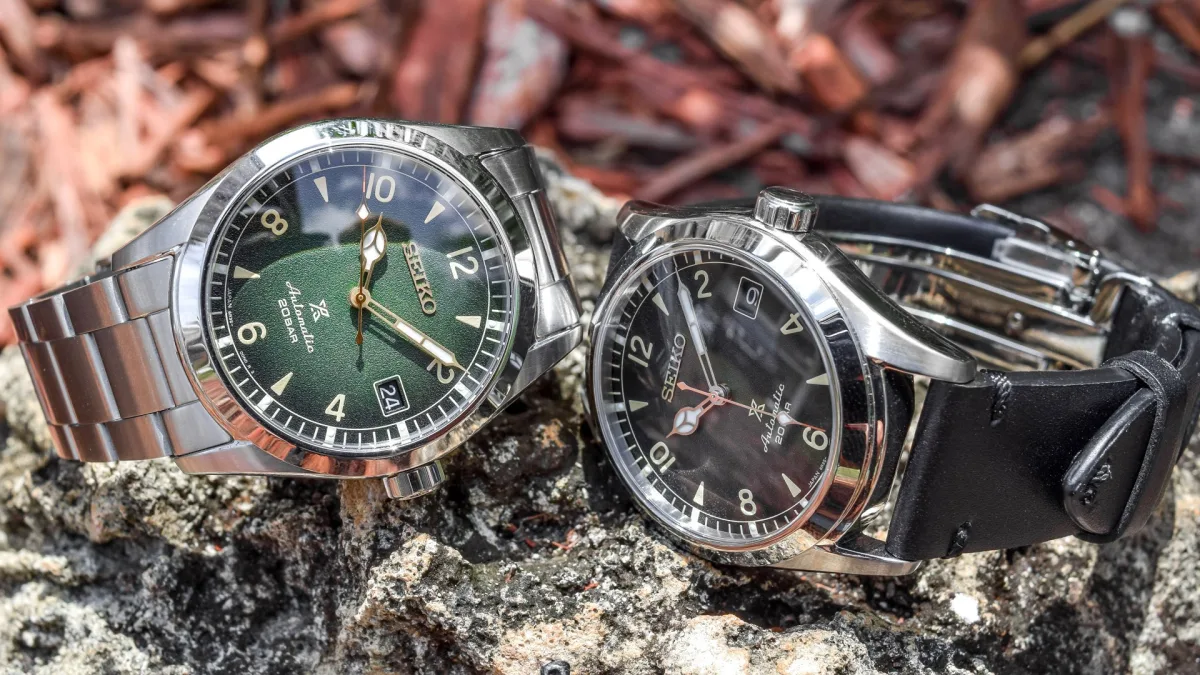
For most enthusiasts, Seiko will forever be associated with affordably priced dive watches with charming nicknames, including the "Turtle," "Tuna," and "Samurai," to name a few. However, the revered Japanese brand also has a long history of producing capable field watches under the Alpinist banner, starting in 1959, even before Seiko dove into the notorious and chilly waters of dive watches. For modern Alpinist fans, the SARB017 model and its successor, the SPB121, represent the purest expression of the design formula, featuring a green dial, an internal rotating compass bezel with an additional crown, and a polarizing cyclopean magnifier over the date.
However, in 2020, Seiko did something unexpected with the Alpinist family update by quietly adding a new model in a more streamlined 38mm case, without the cyclops and internal bezel, featuring the impressive Seiko 6R35 caliber with an extended 70-hour power reserve. For me and other Seiko "geeks," the natural question arose: Were these new Alpinists simply a downsized version of the classic SARB017 design or something more? Having spent considerable time with the SPB155 with a green dial and the SPB159 with a charcoal dial, and as a former owner of the SARB017, I find myself in a unique position to answer this sparkling question.
Grainy Dial
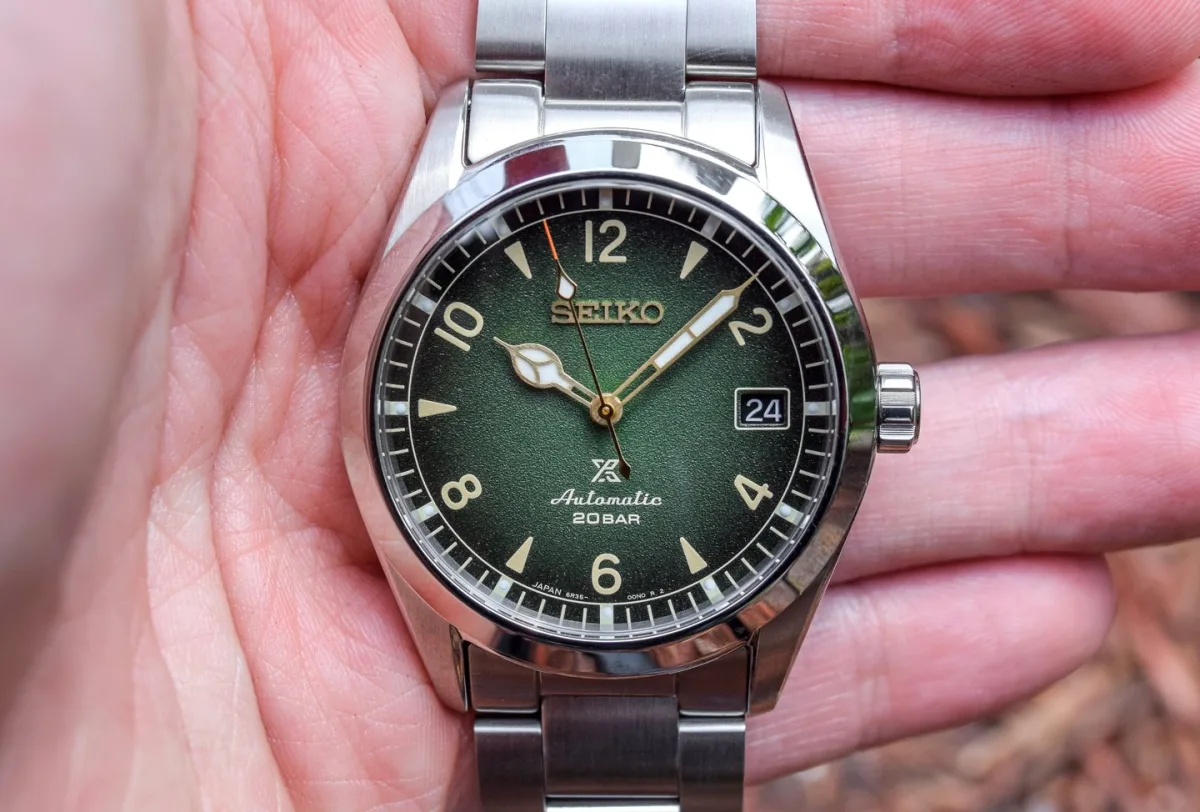
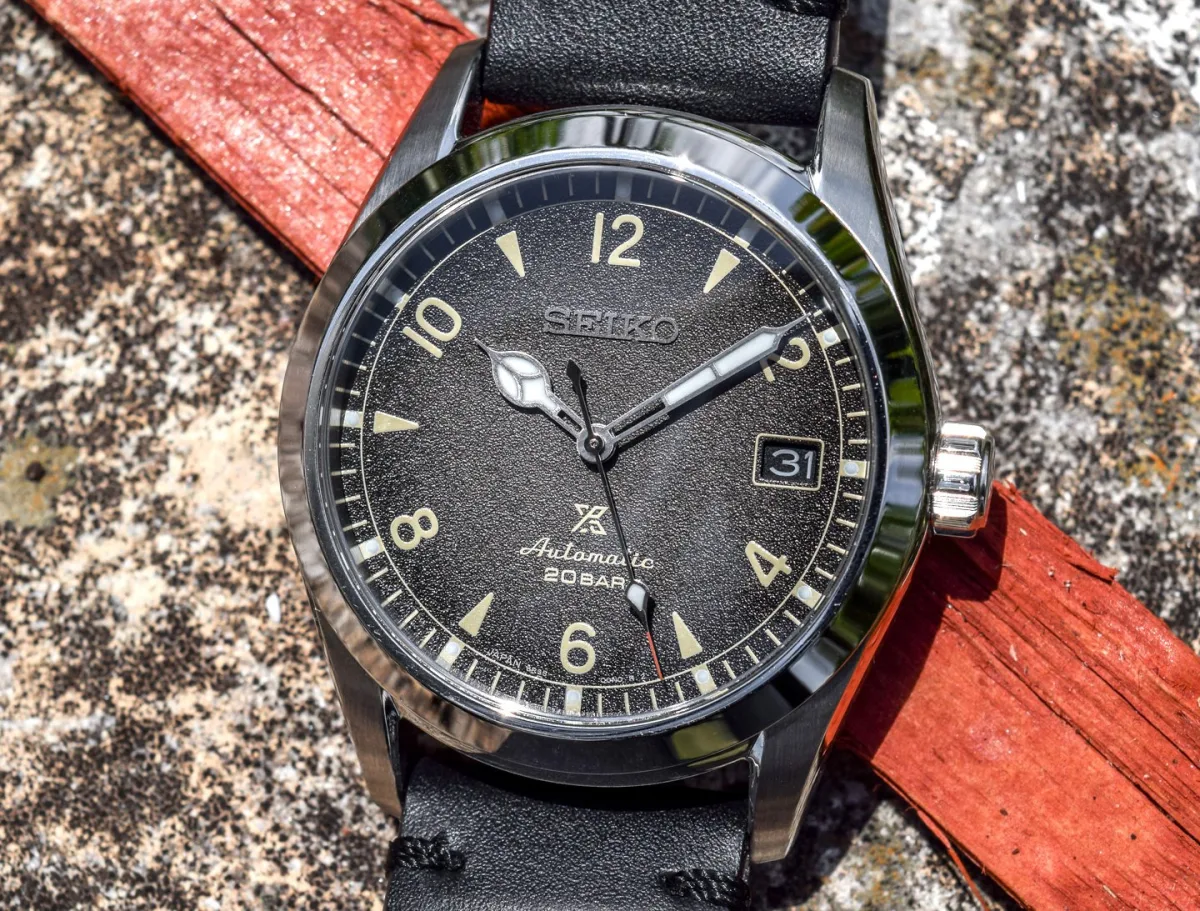
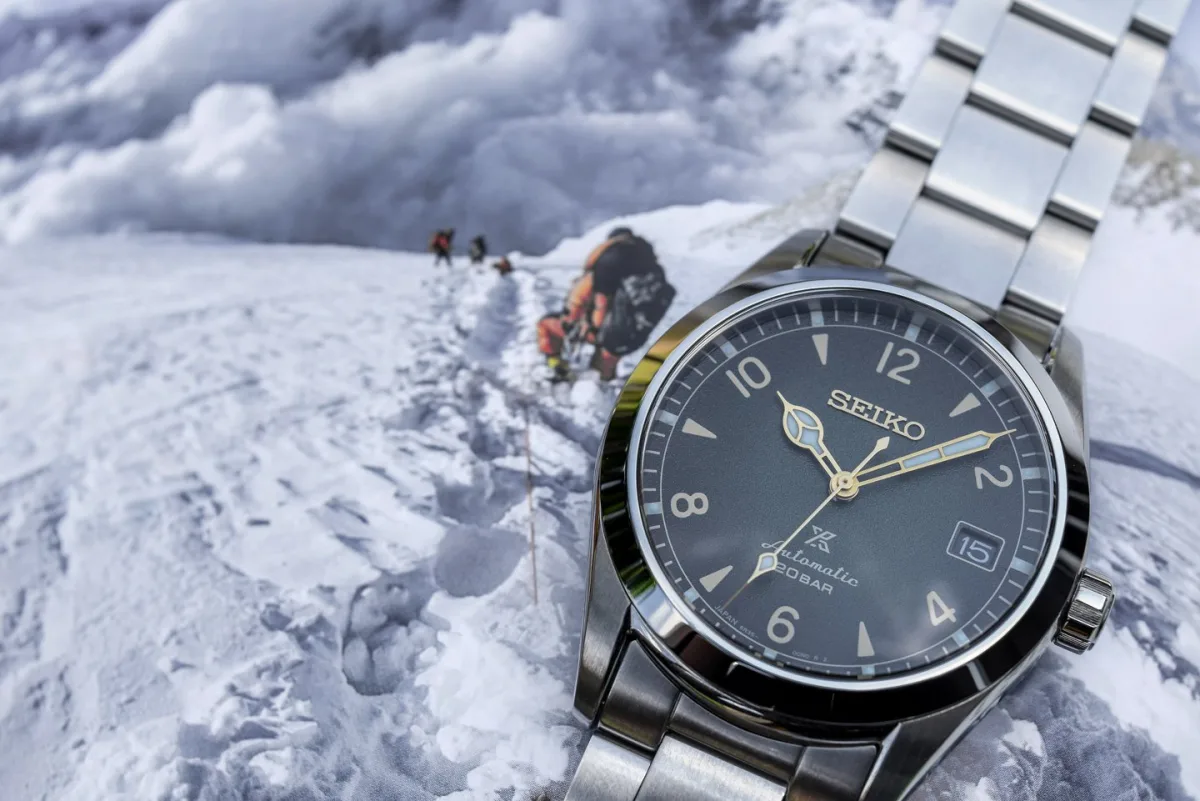
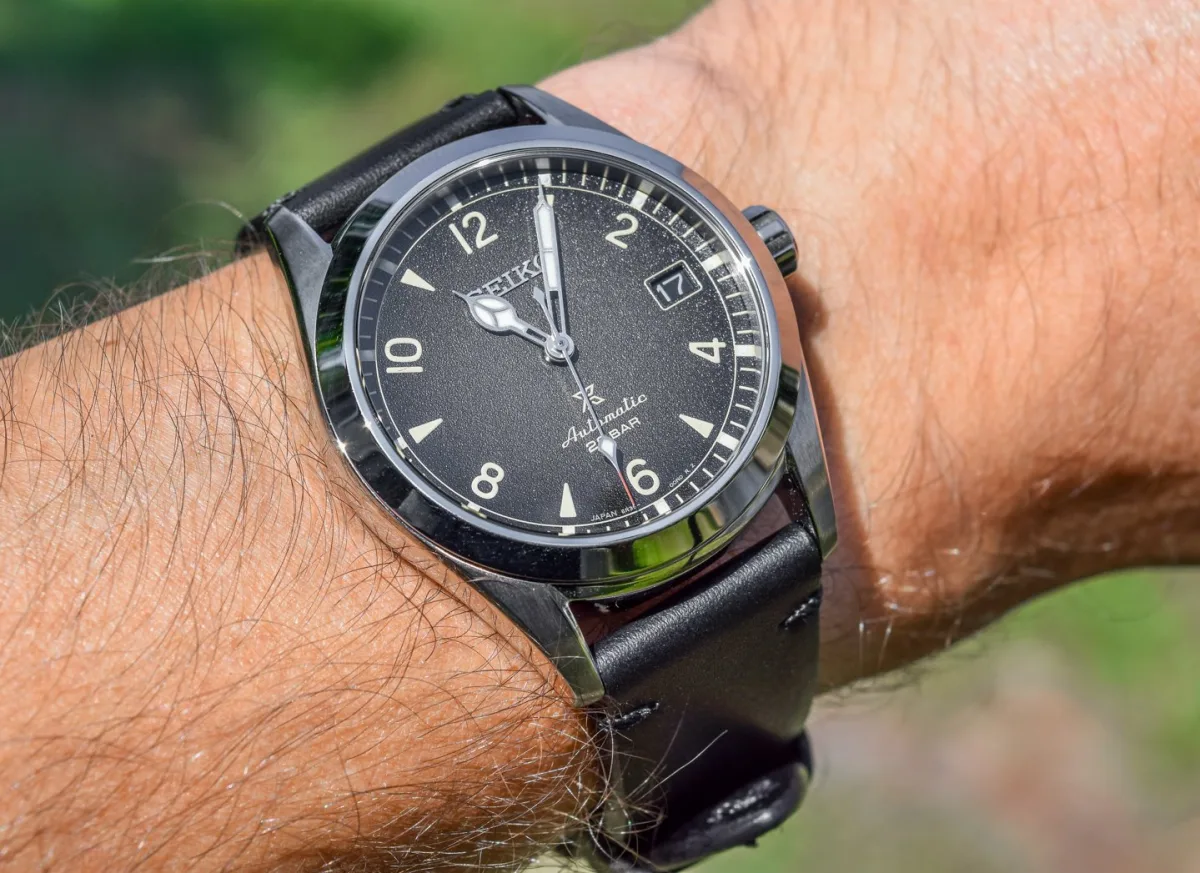
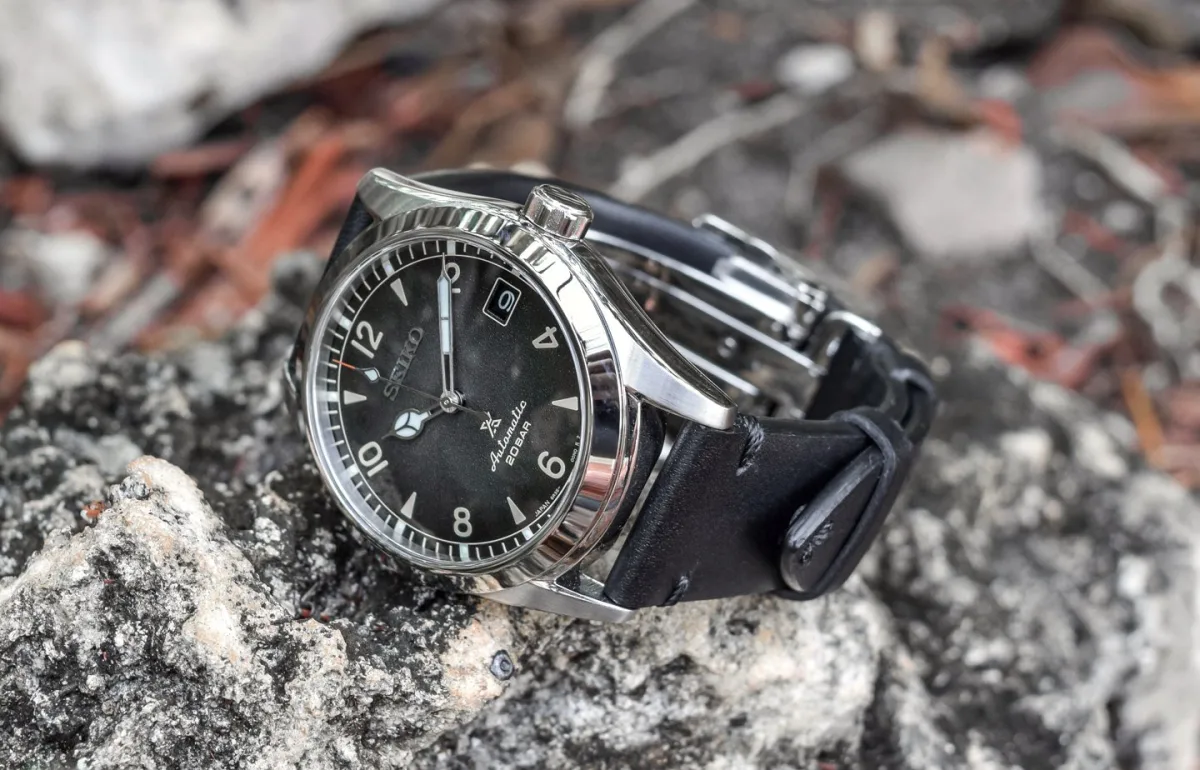
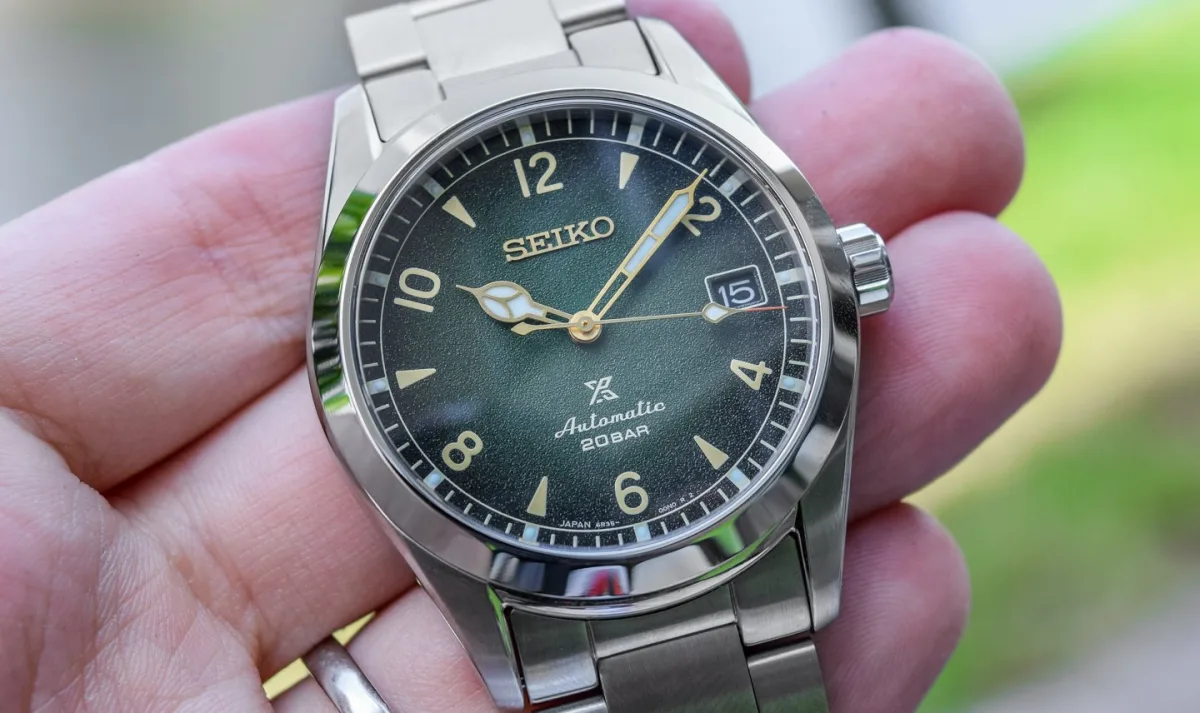
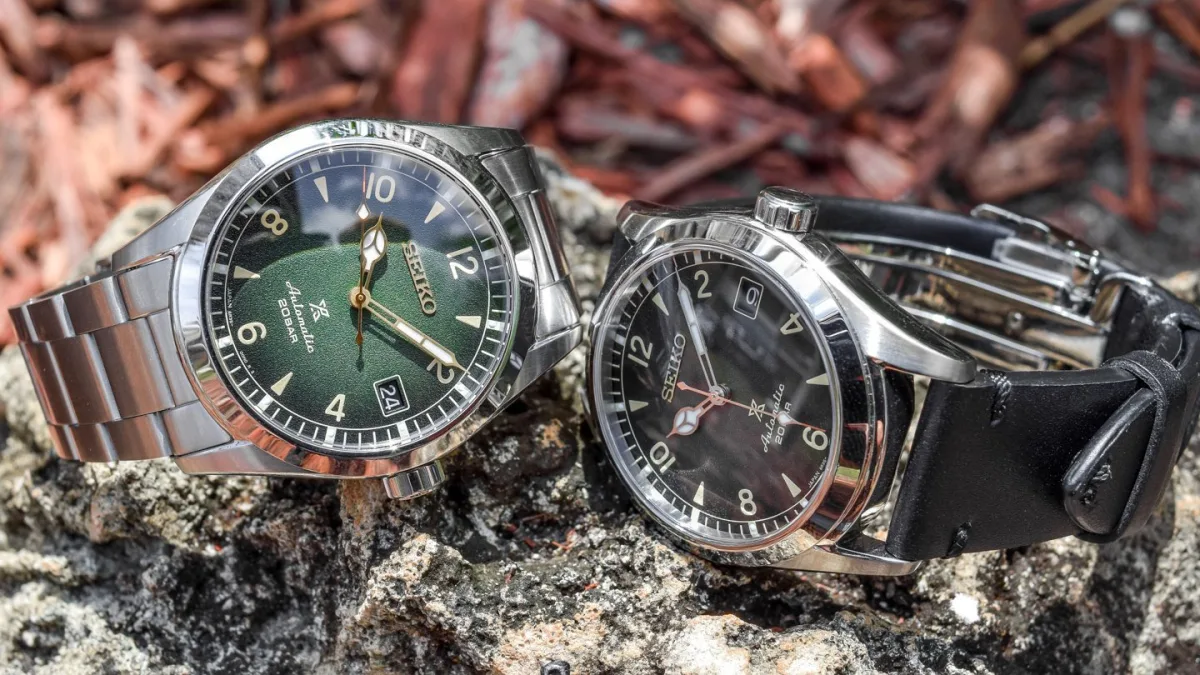
Speaking truth to power and ignoring the more than rare hiccups with quality control, Seiko absolutely excels at playing with dials at an affordable price, and this new Alpinist model is no exception. Overall, following the larger Alpinists, the SPB155 and 159 models repeat the theme of Arabic indices at even hour positions with triangular indices elsewhere, in this case printed in a white tone directly inside the railroad minute track. However, the new small "Alpinists" stand out with a fine grainy texture on the main dial surface, which also has a fumé effect, darkening as it approaches the dial's edge. In direct light, the effect of the new dial is striking and particularly impressive for this price category. Meanwhile, the proven dial layout and, of course, the signature "cathedral" luminous tube provide excellent readability.
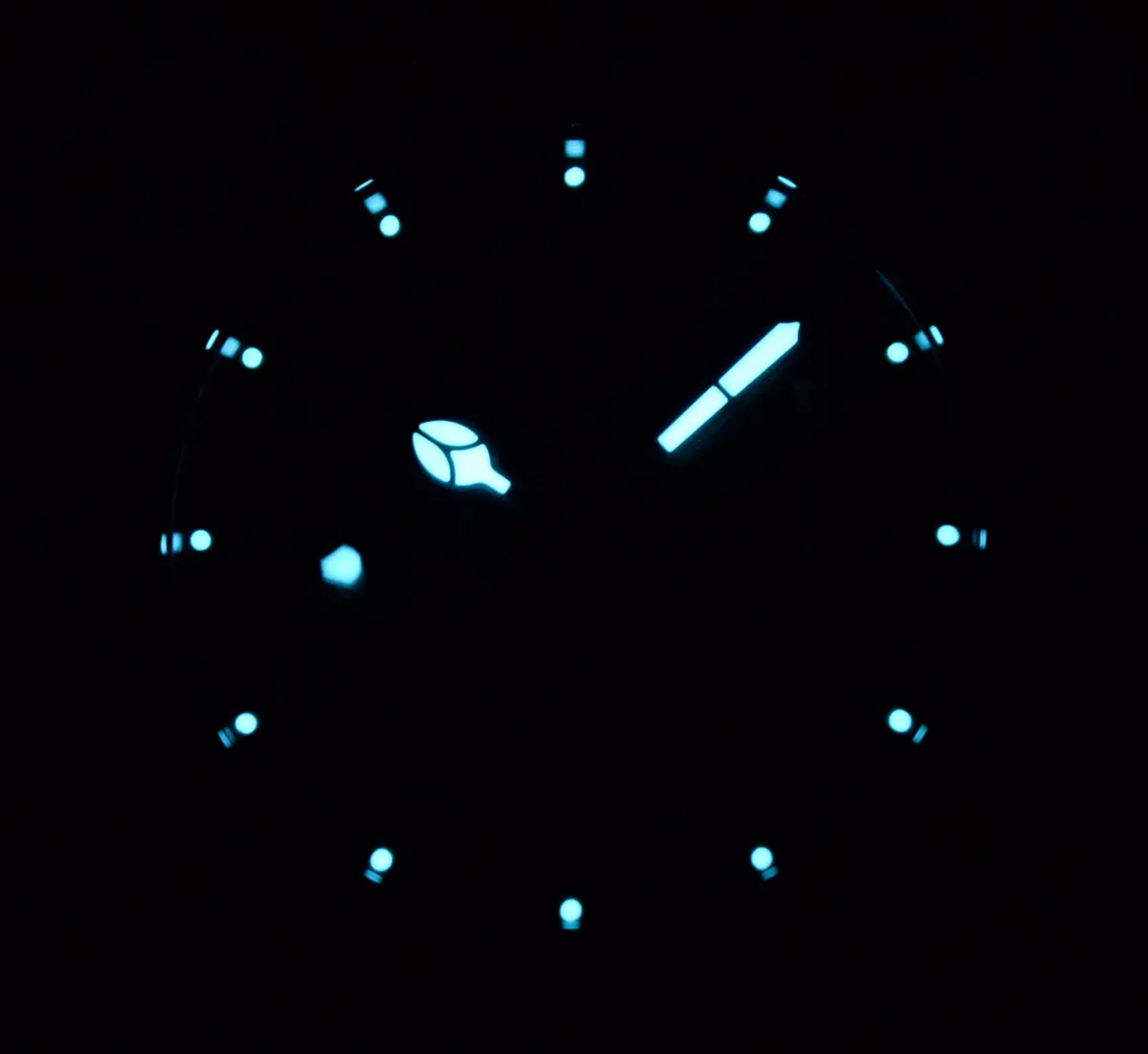
And as a note, since it is still Seiko, the hands, as well as small luminous markers located on the minute track, glow impressively well for this category, and probably better than you will ever need. As for the text on the dial, the standard applied Seiko logo is in its usual place at noon, along with the (much-maligned) Prospex logo, the "Automatic" inscription in script, and the significant water-resistance rating at the "6 o'clock" position. At "3 o'clock" is the standard date window with a black-on-white date wheel, which is much subtler compared to the magnified model on the traditional Alpinist. Overall, I find that this reduced Alpinist packs the best aspects of its larger sibling into a more concise case without any additional baggage. And honestly, I'm not sure anyone ever used the compass bezel. Listen to the keyboard of land explorers.
Streamlined Case
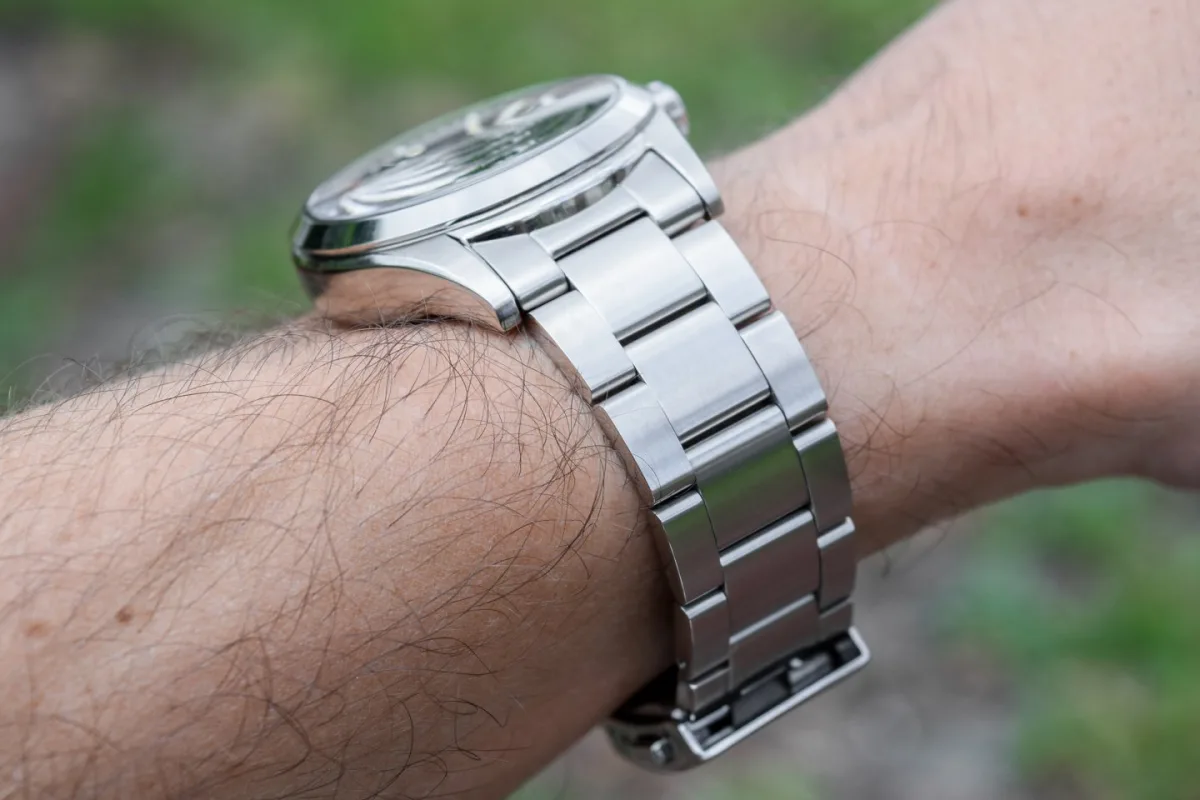
Comparing the SPB155 and 159 models to the larger SARB017 or SPB121, the difference in size and presence is actually negligible: the smaller Alpinist is only 1.5mm smaller in diameter - 38mm, as opposed to the 39.5mm case of the larger models. The lug-to-lug length is practically the same, around 46mm - a restrained indicator ensuring that all but the thinnest wrists can enjoy this watch collection. The SPB155 and 159 models are also relatively thin for watches of this style: their height is just under 13mm, even with the slightly domed sapphire crystal. At least on my 6.5-inch wrist, these dimensions are close to perfect, and the feel of wearing these watches quickly becomes the standard for this style of watch for me.
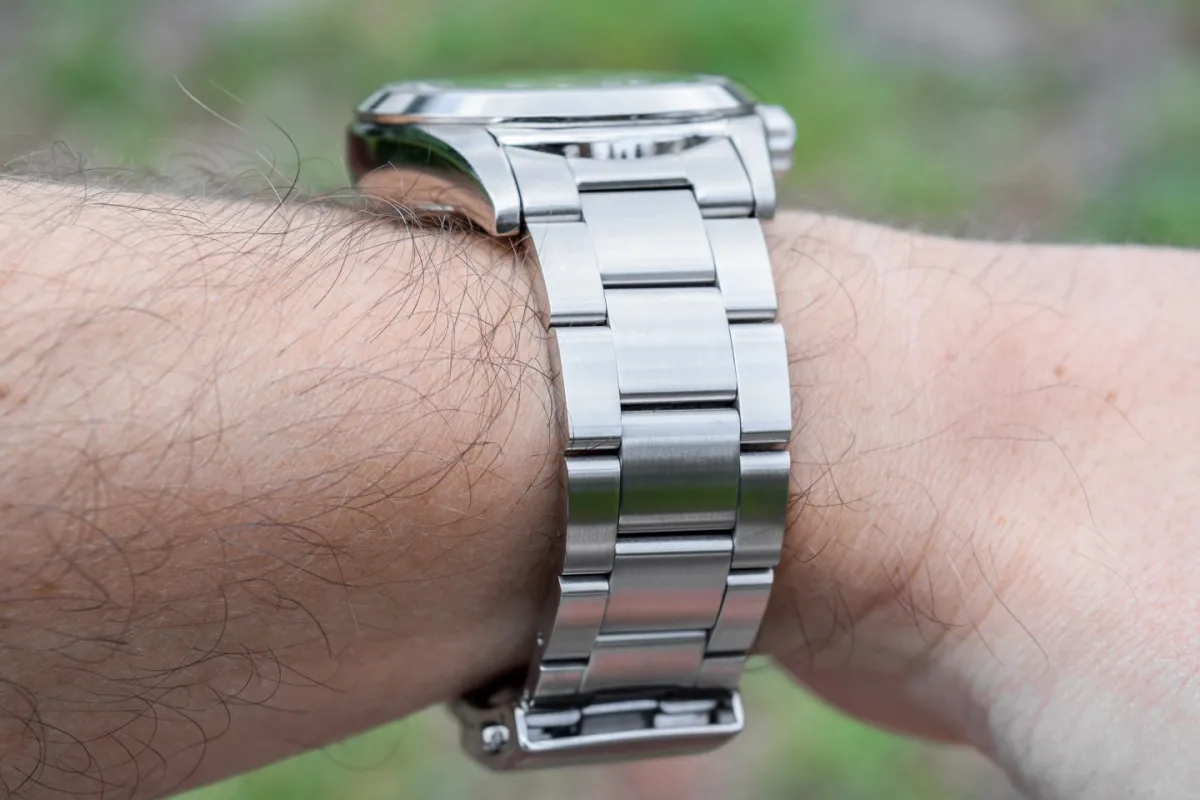
The actual case architecture is relatively simple and has a common design that reminds me - and this is the first of several times I'm going to say this - of the Rolex Explorer in both appearance and feel, with curved and polished case sides paired with a matte top surface and an eye-catching polished bezel. At three, the unsigned screw-down crown, along with the screw-down exhibition case back, provides a 200-meter water-resistance rating, truly impressive for this type of watch and a statistic that makes a strong case for this piece as a daily driver virtually anywhere. Considering the overall finish and appearance, it is a well-executed and charming case, which I would say is not necessarily smaller in size than the SARB017, with the Baby Alpinist dial occupying most of the case due to the lack of an internal compass bezel.
Between the 20mm lugs, we encounter an area of noticeable concern in many Seiko watches - the bracelet and strap tasked with keeping these watches in place.
Impressive Enhancements
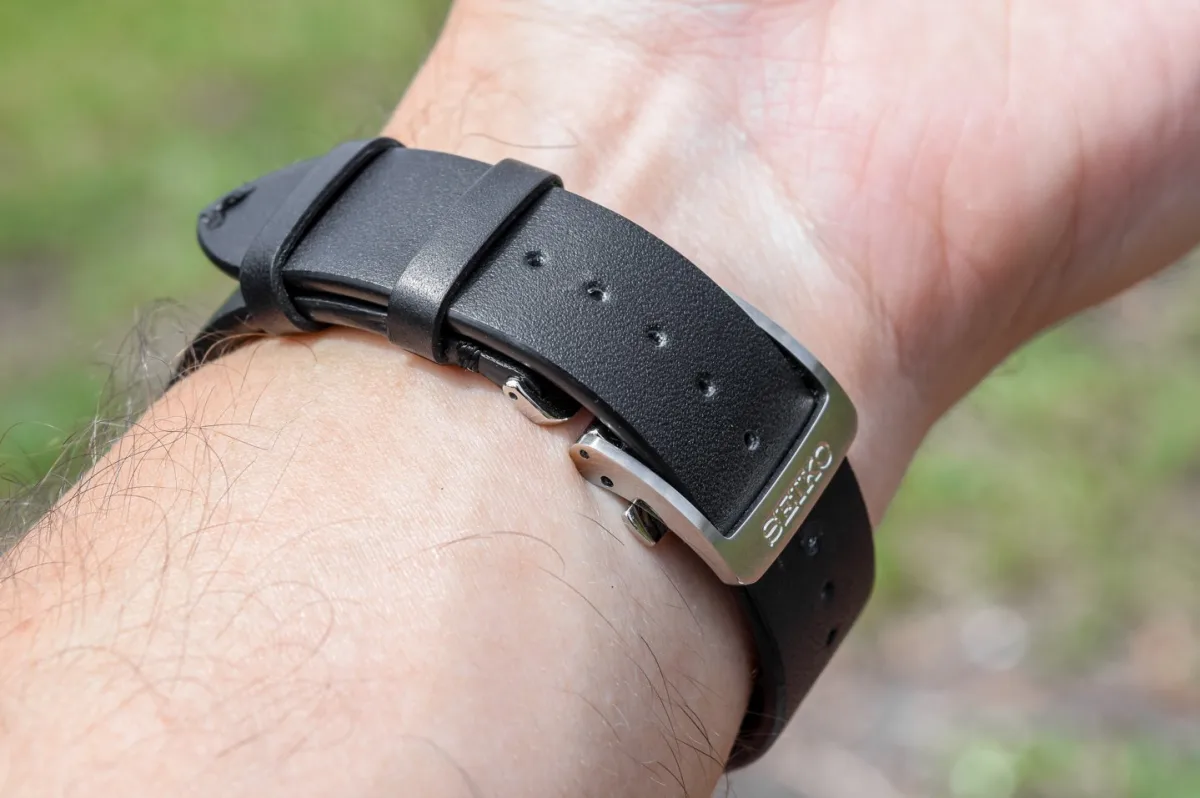
The SPB155 uses a three-link Oyster-style bracelet, which complements my arguments for the Seiko Explorer, but is actually quite sturdy by this brand's standards, with solid end links and a substantial signed clasp, albeit stamped. In any case, it is quite serviceable, and if you prefer straps, the 159 model has a lovely strap made of leather dyed to match the dial and closed with a particularly beautiful folding clasp. Another note: the strap is oriented on the Patek principle - the long end exits on the six o'clock side of the watch. The leather strap quickly settled in, was comfortable, and gave the watch a rougher and more casual look compared to the bracelet. Seiko did an excellent job with both, and you really can't go wrong with either option if you're considering these watches. And while these strap options are an improvement over many old Seiko models, the most valuable aspect here is the new caliber.
Weekend Proof
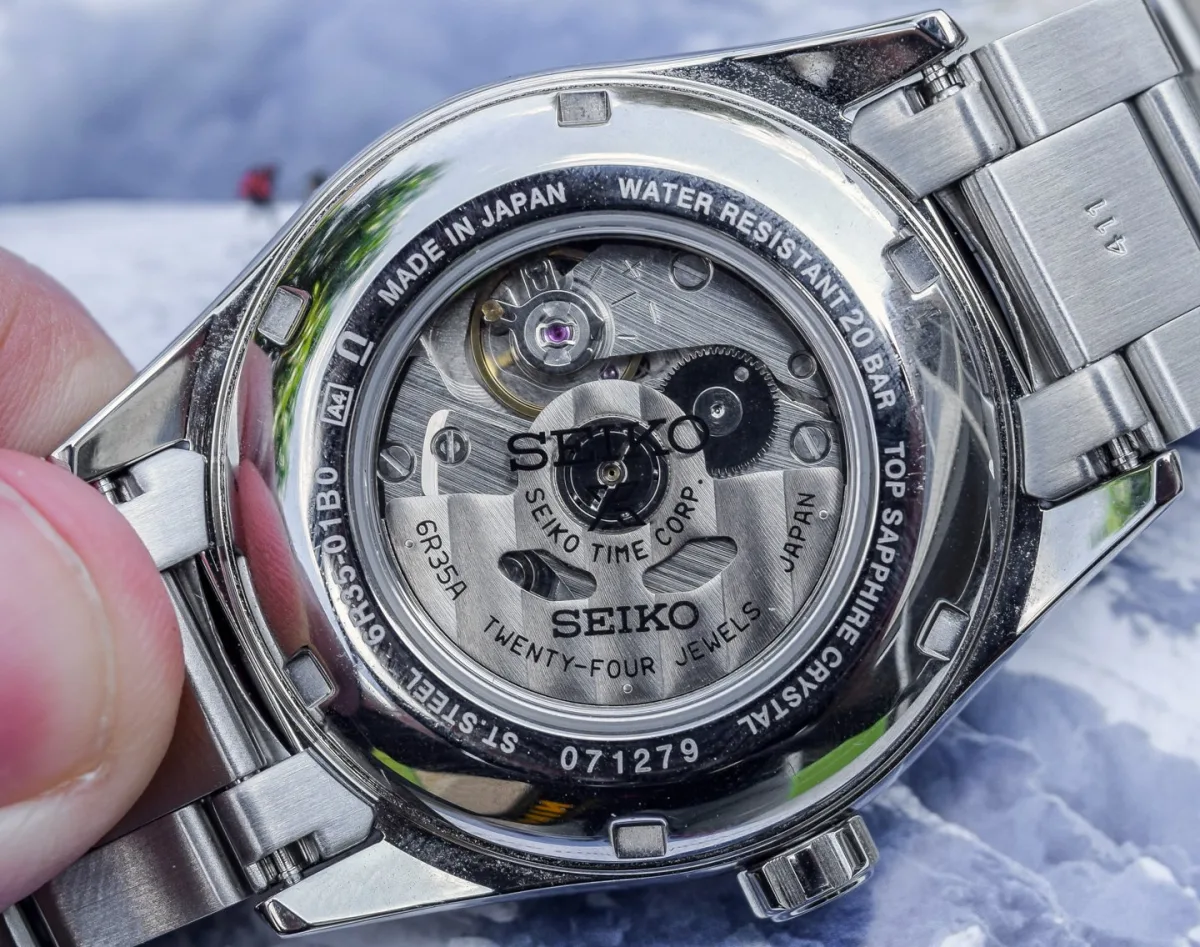
Compared to the 6R15 calibers associated with the SARB017 model, which are entirely remarkable mechanisms, the 6R35 caliber used by both these infantile Alpinists and the new SPB121 model is another step in a positive direction from Seiko. In terms of technical specifications, the 6R35 operates at the Seiko-standard frequency of 21,600 VPH or 3 Hz, has the mandatory hacking and hand-winding functions, and an impressive power reserve from Friday to Monday - 70 hours.
Looking at the 6R35 through the exhibition case back, the level of decoration is at best utilitarian, but frankly, not much can be expected in this regard from a $700 watch. For me, the biggest potential downside of this caliber, as well as many other Seiko movements, is the stated accuracy, in this case from -15 to +25 seconds per day. And while this is not very good, in fairness, both samples I reviewed kept time to single-digit accuracy per day, and my iPhone also keeps excellent time, so I'm not going to lose sleep over this, and neither should you.
Reduced Alpinist?
Making something of a final argument here, there's a lot to like in the new, so-called "baby" Alpinists: a well-proportioned smaller case, a beautiful grainy texture and dial color, some enhanced bracelet and strap options, and, of course, the new caliber. It's also another good point to mention the price of these watches at $700-$725, a range that doesn't give you a ton of other options for watches of this style, and even if it did, I think this collection would still stand out.
Let's say if you're a Seiko fanatic with a bunch of iconic Seiko dive watches wanting to scratch the aforementioned Explorer itch, then these Baby Alpinists fit perfectly into that niche while staying in the Seiko family (and saving you a significant amount of money). I might also be a bit unfair by conditionally calling these watches the Seiko Explorer, as in particular, such a dial execution allows these watches to belong to the Alpinist collection, which has almost as much history and a more appealing position in the "blue-collar" market compared to our friends from the Crown. I don't think these watches need that association. Let me summarize.
Looking for field watches with more refined features but still capable of accompanying you on any adventures you can think of? Would you like them to look great, have strong lume, as well as an impressive caliber and extended power reserve? And do you like the traditional Alpinist design but find it a bit too much? Look no further - your Seiko is already here. The Seiko SPB155 and SPB159 are available on seikousa.com for $725 and $700, respectively.
>Brand: Seiko
>Model: SPB155 and SPB159
>Price: Seiko SPB155: $725, SPB159: $700.
>Dimensions: Diameter: 46mm lug-to-lug; thickness 12.9mm; lug width: 20mm.
>When the reviewer would wear them personally: These watches have versatility and can even be decently dressed up, especially on the bracelet.
>Friends we'd recommend them to first: A Seiko enthusiast curious to experience what an Explorer is like in the world of field watches.
>Best characteristic of these watches: The dial texture combined with the "fumé" effect.
>Worst characteristic of these watches: I haven't quite expressed it, but it would be great to see the indices themselves luminescent, not just small round luminous areas, but the lume is still great.