There are watches that disguise themselves as tool models, and then there are those genuinely built with excess strength, not for marketing, but out of true necessity.
The Ollech & Wajs Astrochron definitely belongs to the latter. It's a watch seemingly created because someone in Zurich sincerely believed that a dive chronograph with 500m water resistance, a regatta timer, and a compass bezel is a reasonable choice for everyday wear.
This uncompromising passion for a niche product gives the Astrochron freshness and uniqueness. After several weeks of use, including a dive in the Pacific waters off the coast of Sydney, I am convinced: this is one of the most interesting modern tool chronographs on the market.
History and Model Ollech & Wajs C-1000 A
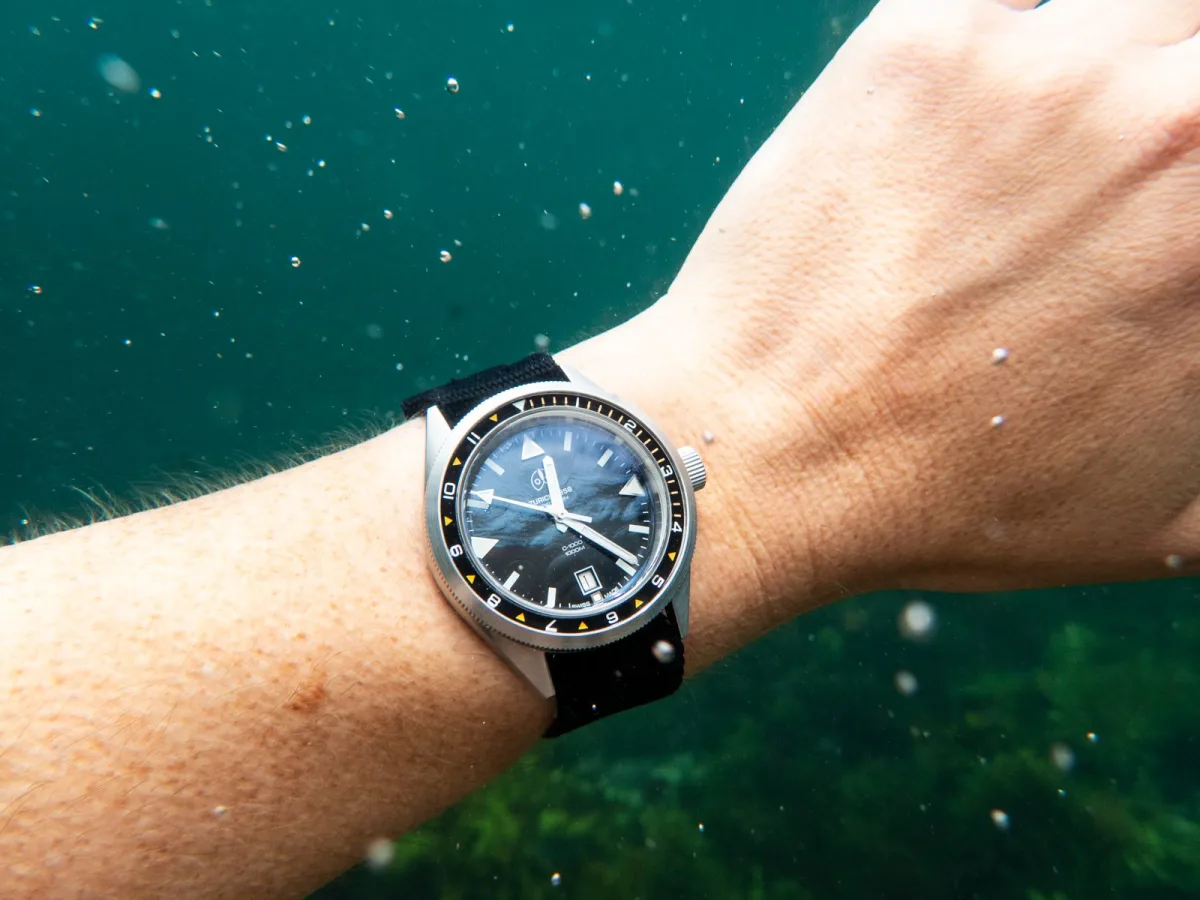
Having owned two modern Ollech & Wajs watches and studied the brand's history, I have a special interest in this Zurich company. I am attracted by OW's approach to tool watches - straightforward and quality-oriented, which becomes evident through direct interaction with the products. I have spent a lot of time with the brand's previous diver models, including the Ollech & Wajs C-1000 A, shown above.
Historical Significance of Astrochron
The original Astrochron appeared in 1967, an era when watch brands were still creating new categories in real-time. Dive chronographs were rare then because combining chronograph pushers with high water resistance presented technical challenges and commercial risks. Despite this, Ollech & Wajs released a watch with 200m water resistance and a Valjoux caliber.
This alone would have made the model iconic in the world of vintage watches, but Astrochron was also associated with NASA's scientific staff and the military PX culture during the Vietnam War era. Vintage examples are now difficult to find, especially in good condition.
Modern Interpretation of the Model
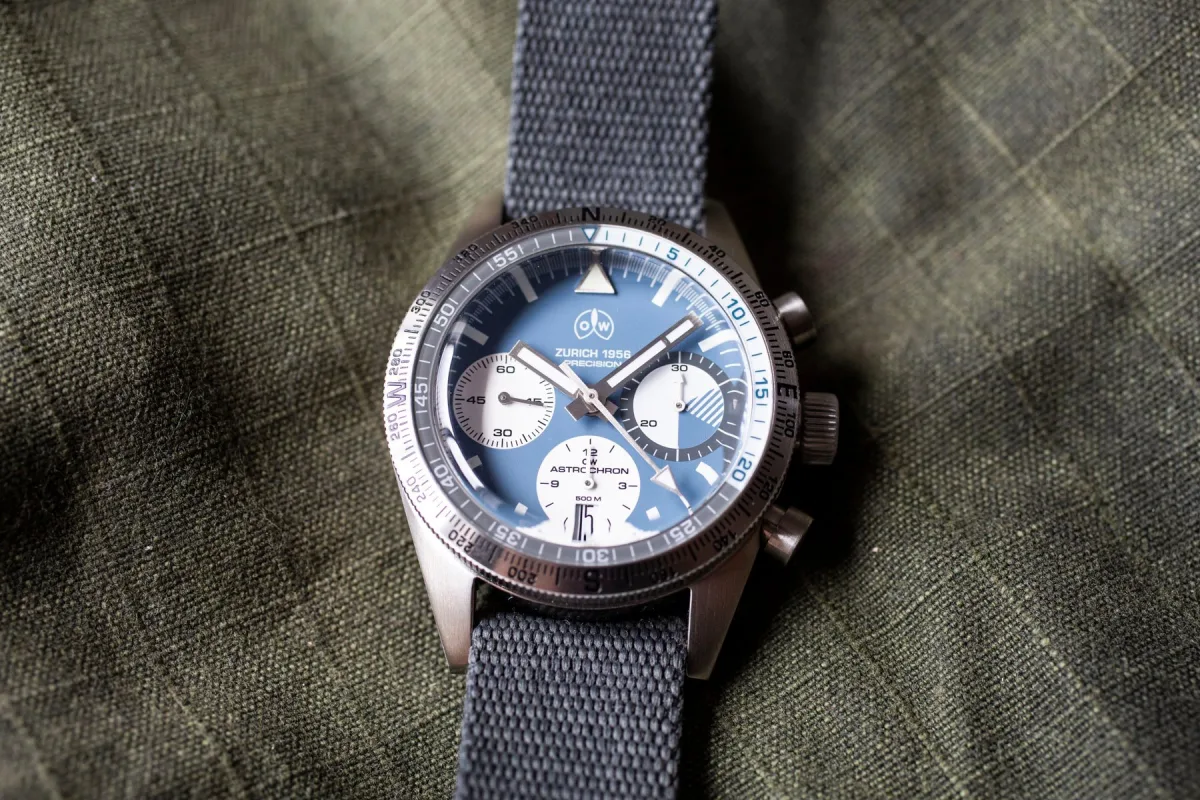
The new version of Astrochron is not an exact copy of the original. Rather, it is a continuation of the same philosophy - creating a serious tool. The 39.5mm diameter seems modest, but the watch feels substantial on the wrist. This is largely due to the case thickness of 16.8mm - dictated by the Valjoux 7753 movement and engineering solutions to ensure 500m water resistance.
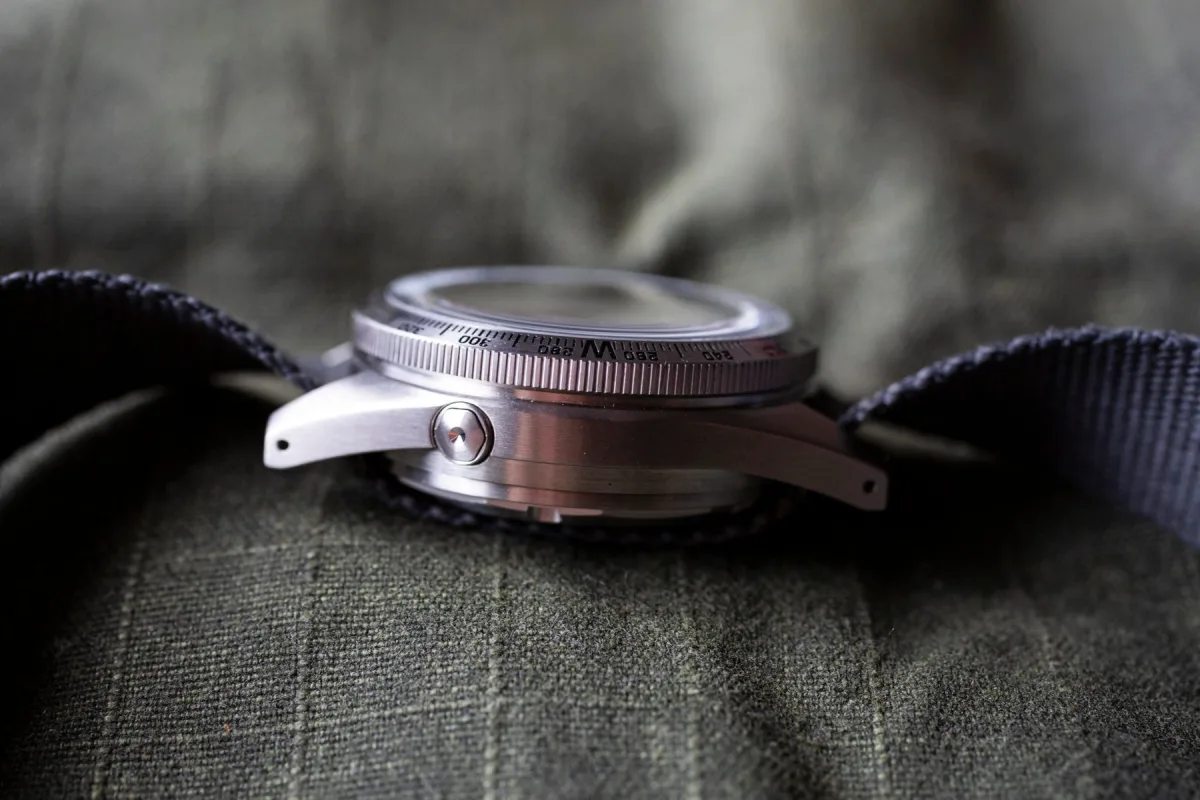
Usually, such thickness becomes a drawback, but here it works to the advantage. The matte steel case emphasizes the utilitarian and honest design. Nothing in these watches gives away a luxury item - it's a tool for active use: on a boat deck, during dives, and afterward - in the shower on the beach.
Bracelet - An Important Element of the Look
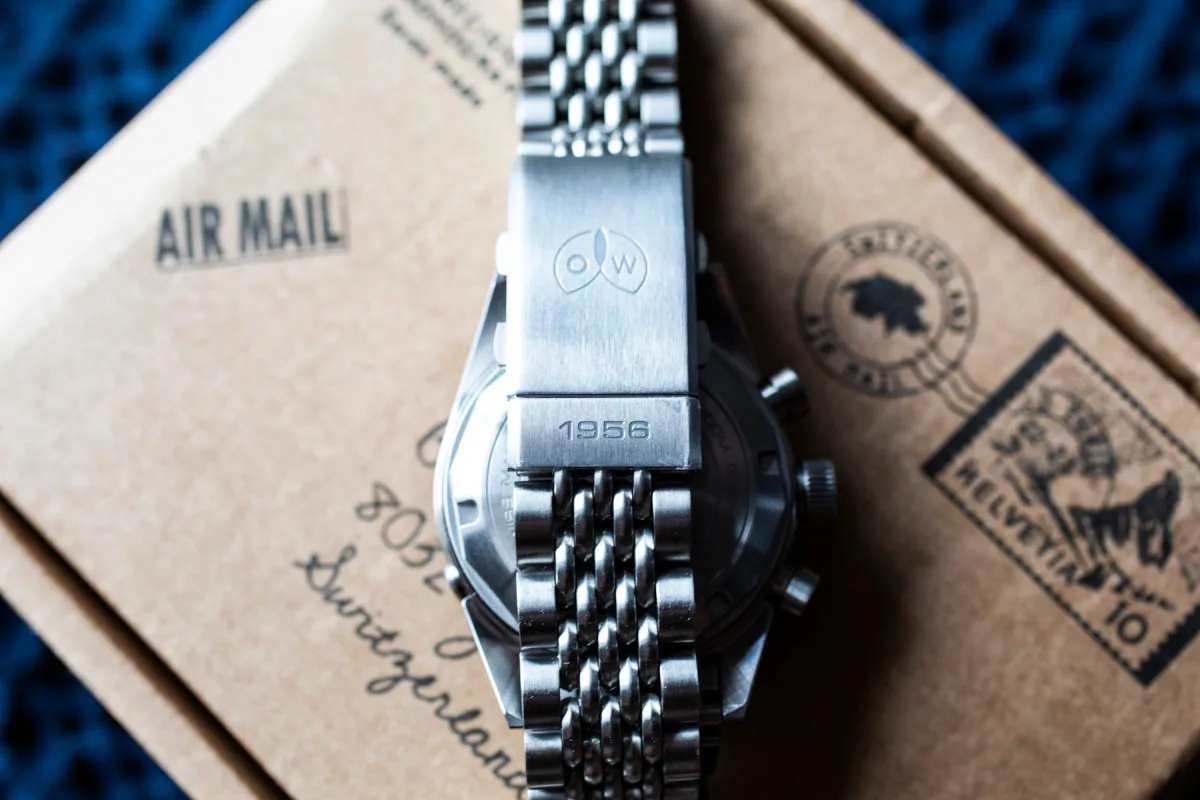
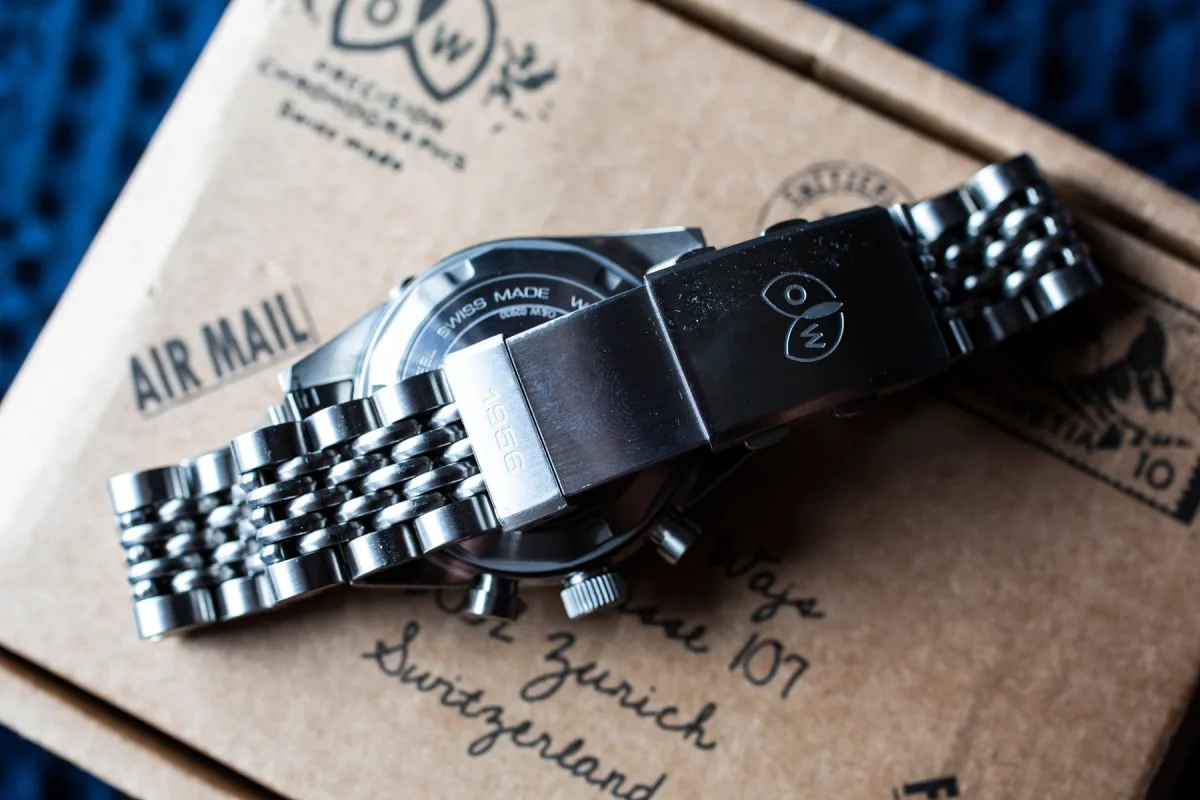
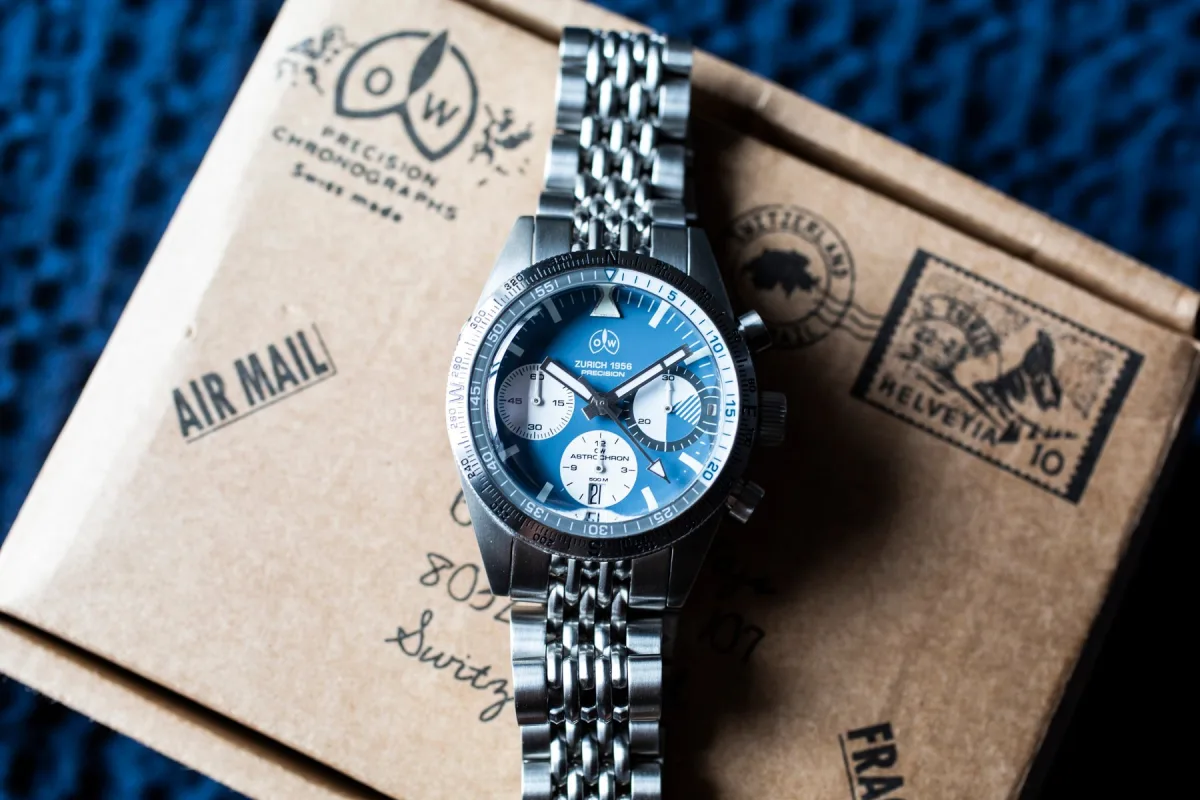
Fortunately, for the review, Ollech & Wajs provided the watch with the signature beads-of-rice bracelet. It deserves special attention as it significantly changes the perception of the model. On a standard perlon strap (not shown in the photo), the Astrochron seems somewhat unbalanced. However, on the bracelet, the watch becomes more cohesive and comfortable.
The bracelet is flexible enough to balance the heavy case, and its classic design perfectly matches the vintage tool aesthetic. It's an excellent accessory worth purchasing with the watch. It resembles Doxa bracelets but is made of matte steel and equipped with a slimmer yet practical clasp with a diver extension. The extension is activated by pressing two buttons under the OW logo. The bracelet is very comfortable and reliable for any adventure. Visually, the matte steel of the bracelet pairs beautifully with the blue dial.
Dial Packed with Functions
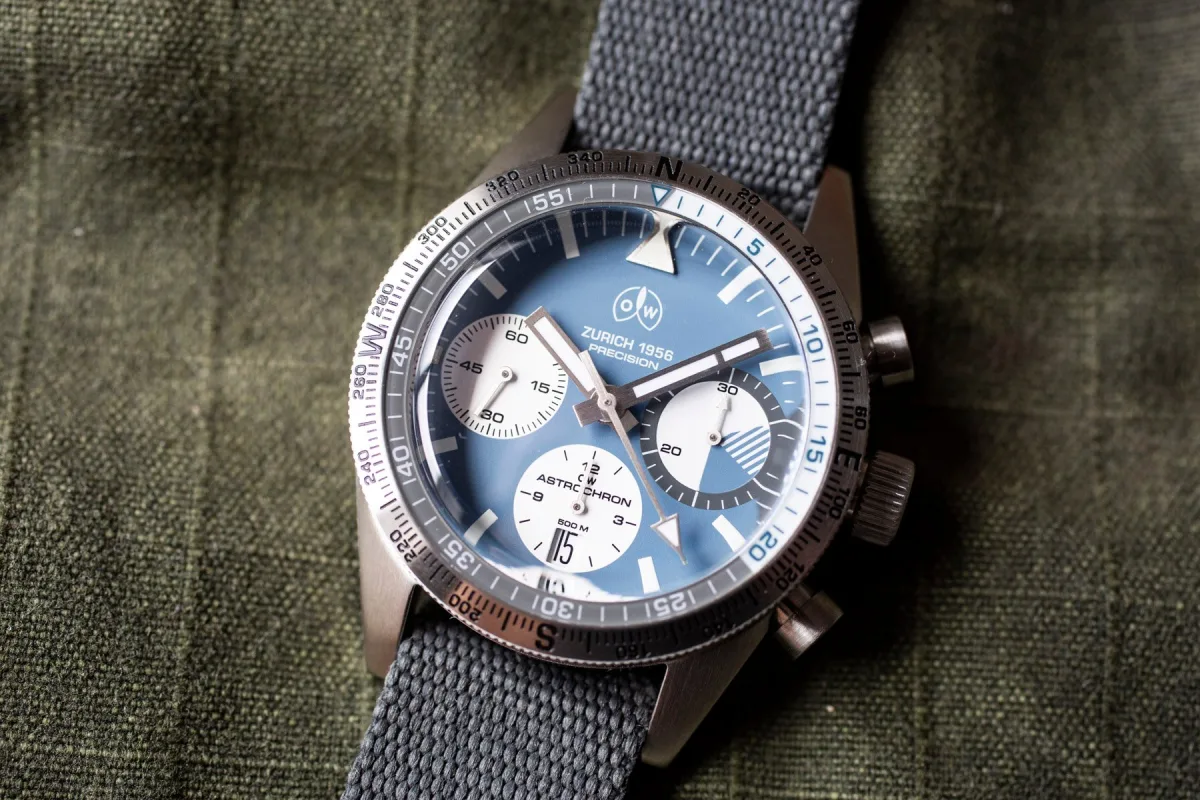
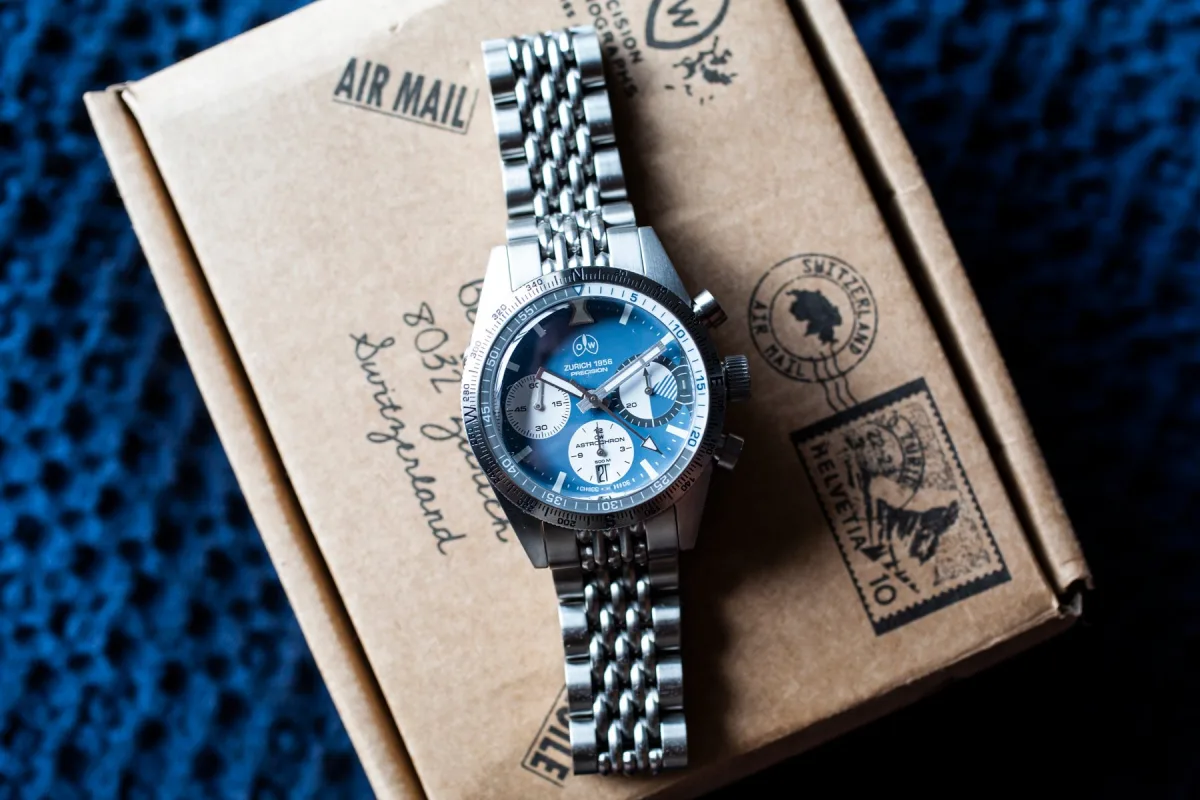
The Astrochron dial is rich in details, but all with a clear purpose. The matte North Atlantic-colored surface is adorned with contrasting white counters in a reverse panda style, highlighting the late 1960s style. The enlarged indicators are easier to read compared to vintage versions, and the neatly integrated date in the 12-hour counter does not disrupt symmetry.
The main difference from many heritage chronographs is the density of functionality. There's a regatta timer in the 30-minute counter, a rotating compass bezel with cardinal directions, and an internal scale for diving under the sapphire crystal. Any of these features could seem excessive in a less thought-out execution, but the Astrochron maintains a sense of completeness.
A Watch Without Excessive Explanations
The Astrochron doesn't try to over-explain its purpose. It simply demonstrates its features, expecting the user to figure them out over time. I particularly enjoyed the compass bezel during walks along the coastal trails of Sydney in the Watsons Bay area. Is this objectively more convenient than checking a phone? No. But using physical tools for orientation and timekeeping is part of the charm of such watches. Mechanical tool watches remain in demand because they require us to interact with the environment.
The Super-LumiNova coating is excellently done, especially on the rectangular hour markers. Readability underwater and at dusk remains high - an important indicator since these watches don't claim water resistance solely for marketing purposes.
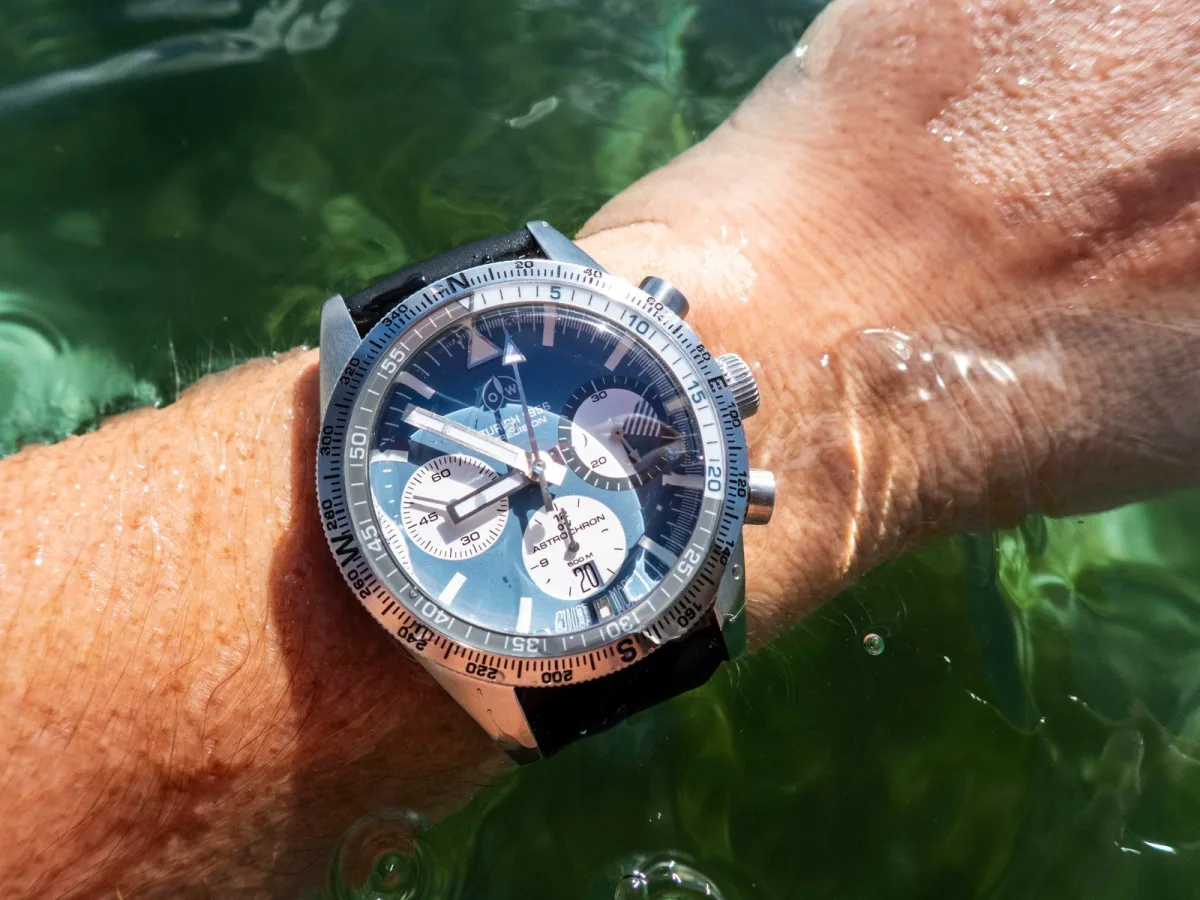
Testing in the Pacific Ocean
Reviews of tool watches too often are limited to metaphors about "office diving," so I decided to test the Astrochron in real ocean conditions. One clear autumn morning, I went with them into the Pacific waters off Sydney's eastern coast. The weather was typical for Sydney: fresh sea breeze, clear water, and waves, reminding that the Pacific Ocean is never completely calm.
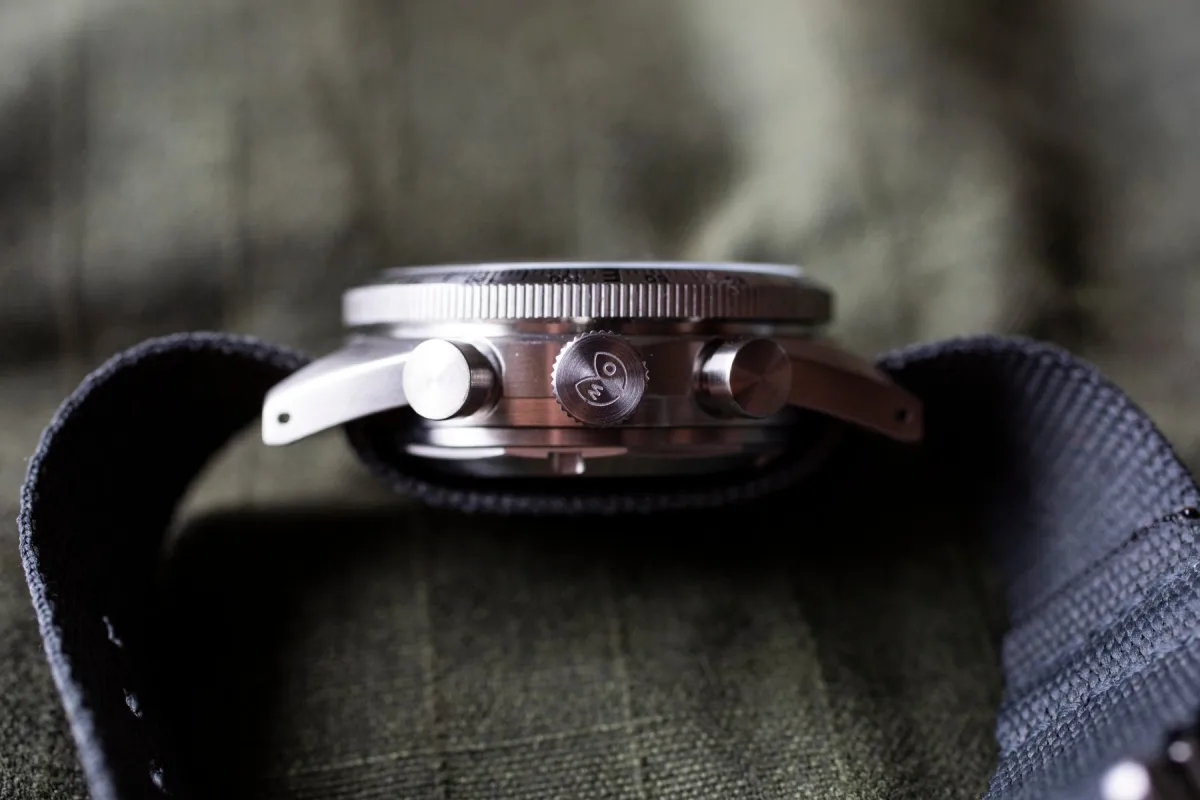
It was here that the Astrochron showed its best side. The large buttons are easily pressed with wet hands. The matte surfaces do not slip. The bezel grip remains reliable even after repeated contact with salty water. Most importantly, the watch demonstrates complete indifference to the sea elements.
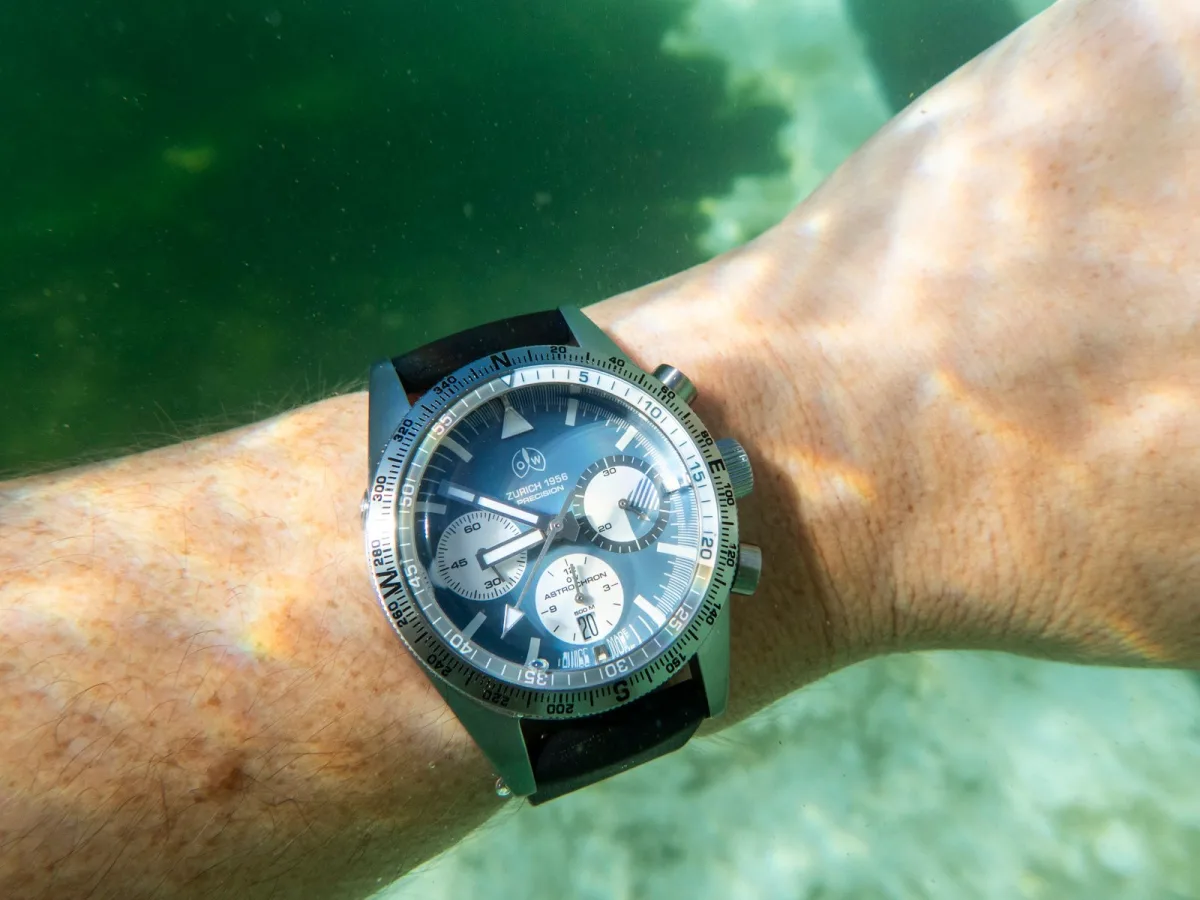
A Great Choice for Underwater Adventures
Some dive watches remind of their expensiveness in the water. The Astrochron does not. It behaves like a tool. The 500m water resistance is excessive for amateur dives, but it's precisely this reserve that gives the watch confidence. There is no fragility or doubt here.
After 40 minutes in the water, the sapphire crystal remained perfectly clear, the lume shone brightly, and the chronograph buttons maintained a clear mechanical press. When transitioning from cold sea water to warm Sydney sunlight, the watch did not fog up or lose clarity. I was particularly impressed with how naturally the Astrochron fit into the beach rhythm. In Sydney, watches are treated very practically: overly delicate items do not take root here. People swim before work, surf during lunch, and unceremoniously dunk expensive dive watches in saltwater. In such an environment, the Astrochron feels at home.
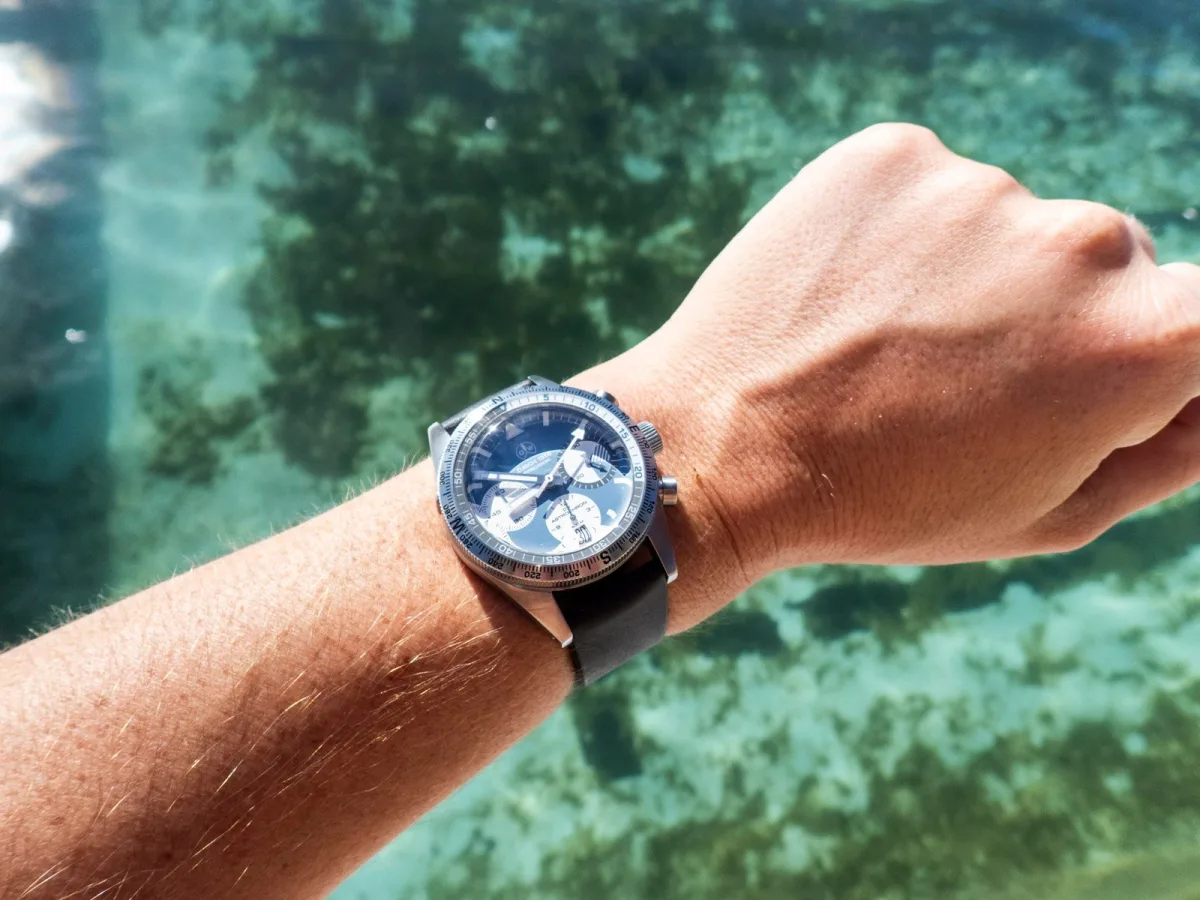
Valjoux Movement - The Heart of the Watch
Inside is the Valjoux 7753 movement, regulated by Ollech & Wajs's own masters to the OW Precision standard. The choice of movement is rational, not romantic. Purebred enthusiasts may lament the absence of a column wheel, but the cam-actuated 7753 perfectly suits the Astrochron's character. It's reliable, time-tested, easy to service, and capable of withstanding loads.
The chronograph operation feels mechanical in the best sense - slightly tight, tactily expressive, with a satisfying "agrarian" click. There's no silky smoothness, but there is confidence. During the review, accuracy remained stable - about +5 seconds per day. The 54-hour power reserve proved useful on weekends. The movement doesn't feel like a compromise. At this price point, many brands would have chosen a thinner but less characterful modular caliber or strived for exclusivity with an inexperienced in-house movement. Ollech & Wajs bet on reliability, which aligns with the brand's philosophy.
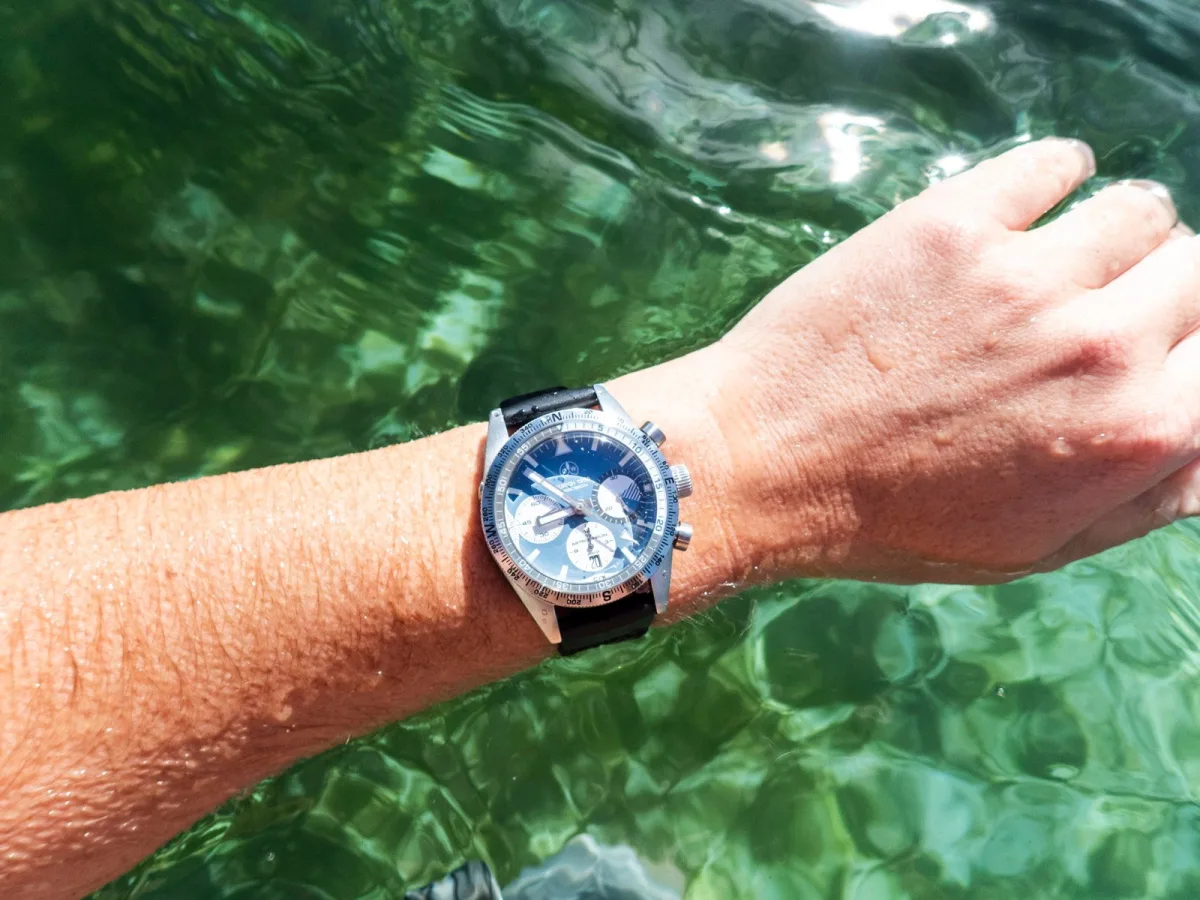
Unique Design for Special Enthusiasts
The Astrochron is not universal. It's thick, the dial is overloaded, and the functionality borders on obsession. The vintage style can seem austere depending on the strap. If you need elegant chronographs to wear under a cuff, there are dozens of better options. But none will be as interesting. The Astrochron succeeds because it doesn't compromise. It remains firmly committed to the role of a mechanical tool in an era increasingly dominated by lifestyle models.
There is also something worthy of respect in Ollech & Wajs itself. The brand occupies a unique position in the modern watch industry - significant enough to have a history, little-known enough to avoid noise, and independent enough to take risks. This independence is felt in the Astrochron. No focus group would demand a dive chronograph with a compass bezel, regatta counter, and 500m water resistance. But it exists.
Final Impressions
After wearing the Astrochron in the city, on coastal walks, and in the salty waters of the Pacific Ocean, I concluded: these watches feel authentic in a way many modern tool models no longer can. They don't try to create an illusion of adventure - they are made for it. The modern luxury watch market often values elegance over character, but the Astrochron unapologetically prioritizes individuality. It is worn like a mechanism designed by engineers who cared more about functionality than beauty. And that's exactly why I liked it so much.
The Astrochron is unlikely to become a mass hit - it's too eccentric, specialized, and uncompromising. But for collectors who value mechanical honesty and actually plan to use the watch in the ocean rather than just photographing it next to a cup of coffee, the Ollech & Wajs Astrochron (CHF 2760) offers a rare quality - genuine purpose. Emerging from the water with dried salt on the case and a working chronograph, I felt like I wasn't testing a luxury item, but using a great tool. And that matters.