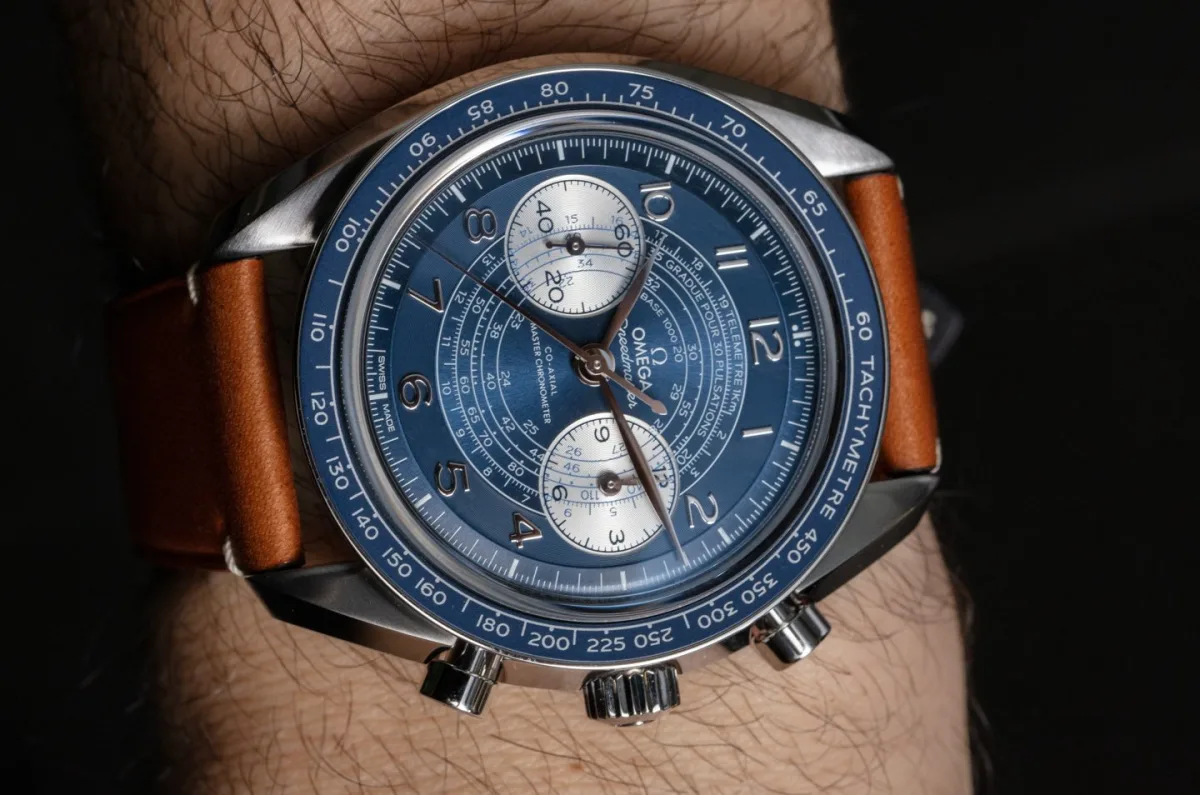
In September 2021, on the WatchTested website, Omega introduced the revival of the historic name Omega Speedmaster Co-Axial Master Chronometer Chronograph. The name "Chronoscope" is over 100 years old; as I understand, it was an early term used to describe wristwatches capable of "showing time" (which is exactly how "chronoscope" translates from Latin). The name, along with the dial of the sports chronograph, returns and is placed in a modern (albeit revised) Speedmaster-style case. The result is an interesting combination of new and traditional, as well as a new version of the prestigious Co-Axial Master Chronometer hand-wound chronograph movement from Omega.
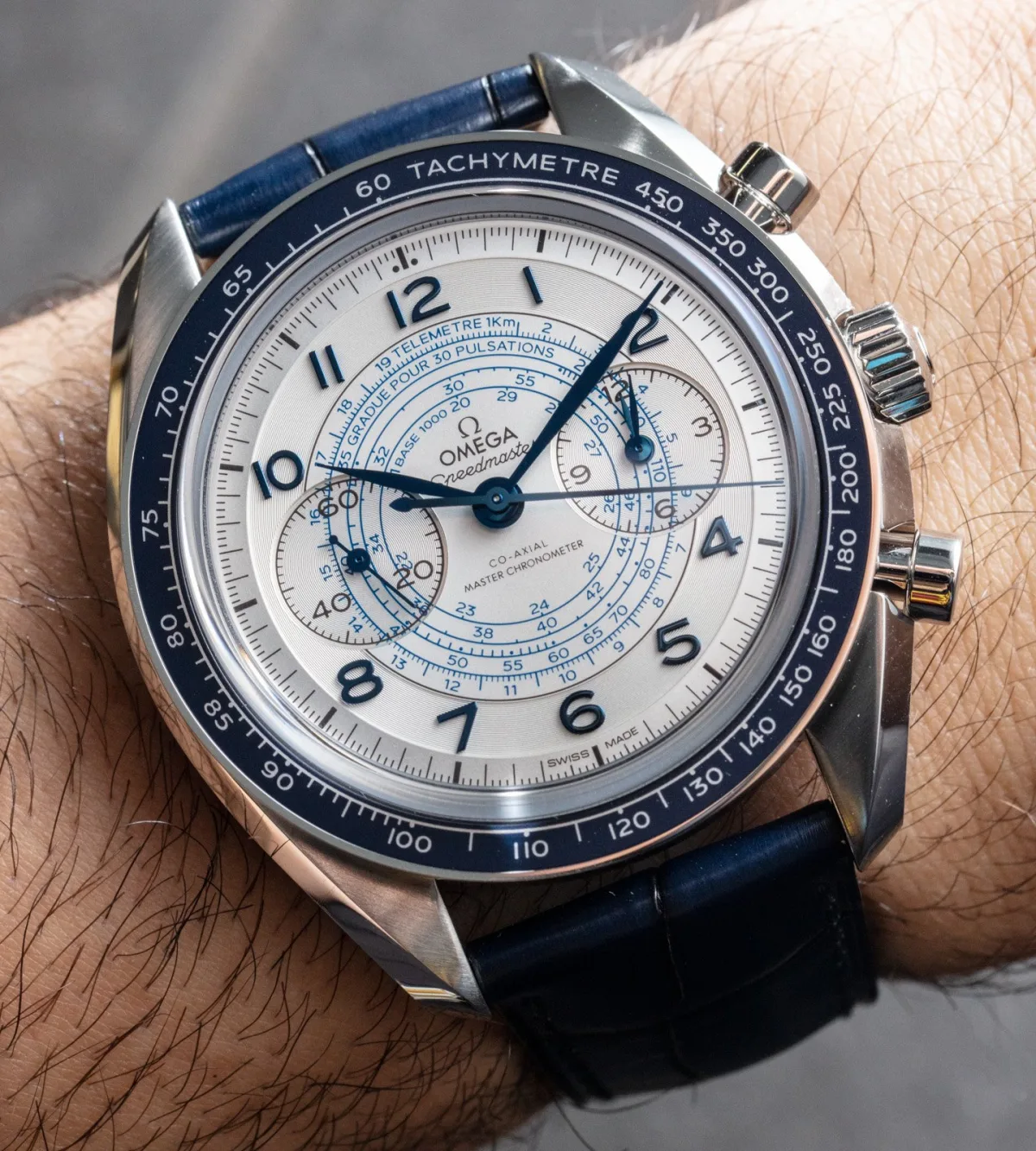
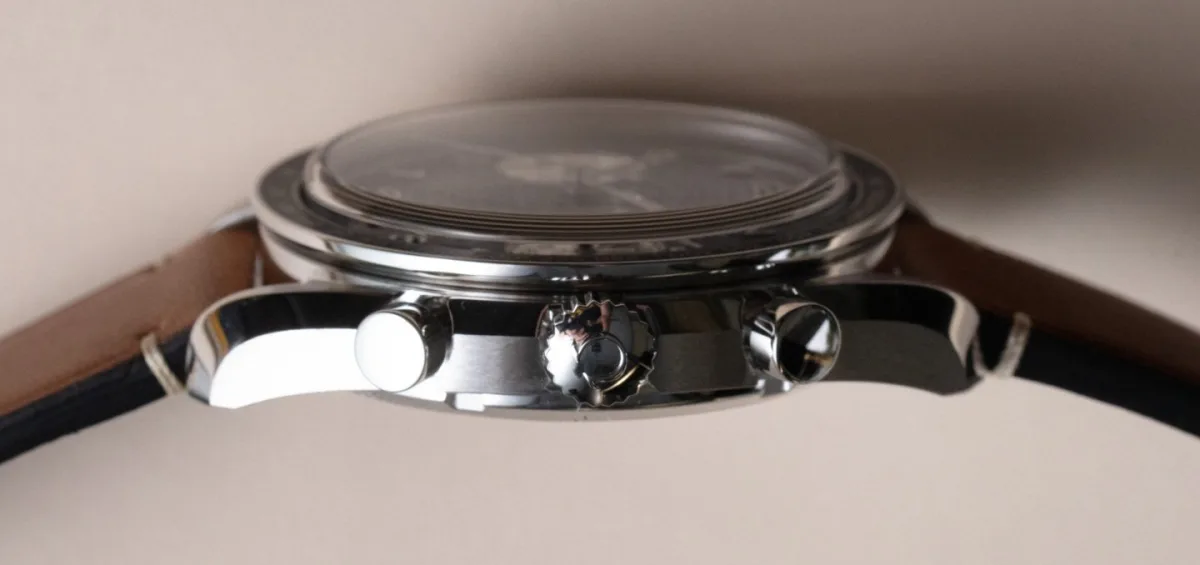
Although the Chronoscope case certainly belongs to the Speedmaster model, its dimensions differ from other existing Speedmaster models. The Speedmaster Chronoscope case is 43 mm wide, which is slightly narrower than other modern Speedmaster watches that are slightly over 44 mm wide. The case is also thinner because it houses a hand-wound movement (as opposed to an automatic one). Omega did not provide the actual case thickness, and I didn’t have a measuring instrument with me when working with the watch, but I can confidently say that the Omega Chronoscope visually appears thinner than most other current-generation Speedmaster cases.
Most versions of the Chronoscope watch are made of polished and brushed steel (a Speedmaster-style bracelet is also available), but Omega also offers a more luxurious version made of an alloy it calls "bronze gold." This alloy contains more than 40% gold and is designed to provide the warm colors of bronze with the color and oxidation resistance of gold. The bronze-gold version of the Speedmaster Chronoscope also features a brown ceramic bezel, unlike the anodized aluminum bezel used in the steel models. Why bronze gold instead of traditional 18-karat gold? That’s a good question. The short answer is the price. The bronze and gold alloy allows for a reduction in the watch's price compared to fully gold watches, resulting in a retail price of $14,000 for the bronze-gold version of the new Speedmaster Chronoscope, reference 329.92.43.51.10.001.
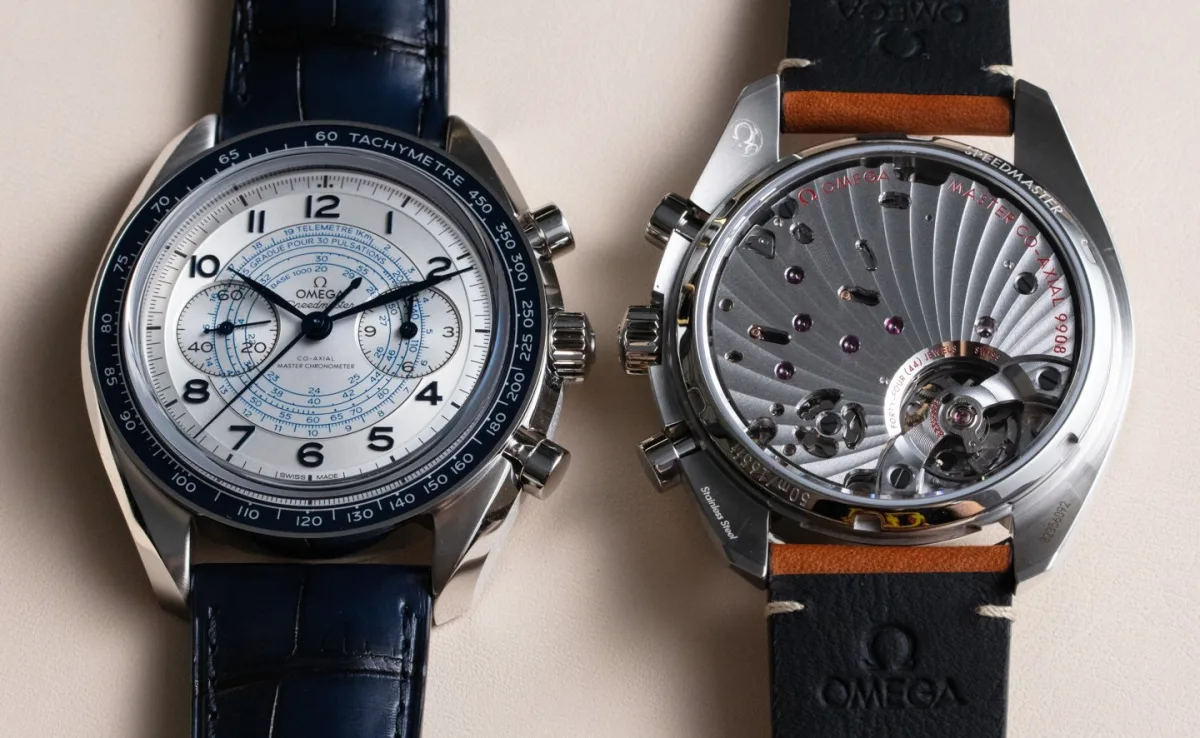
I want to spend more time discussing the dial design of these watches, but first, let's talk about the movement. Inside the Speedmaster Chronoscope is the Omega caliber 9908 Co-Axial chronograph movement with manual winding. Simply put, it is a minimized version of a similar automatic Omega chronograph movement, from which the self-winding system has been removed to save space and give the watch a more traditional look. Given the popularity of the hand-wound Speedmaster Professional Moonwatch, it is clear that there is a market for them. However, I would very much like Omega to find a way to incorporate a power reserve indicator into the watch movement to maximize the utility of these sporty-style watches.
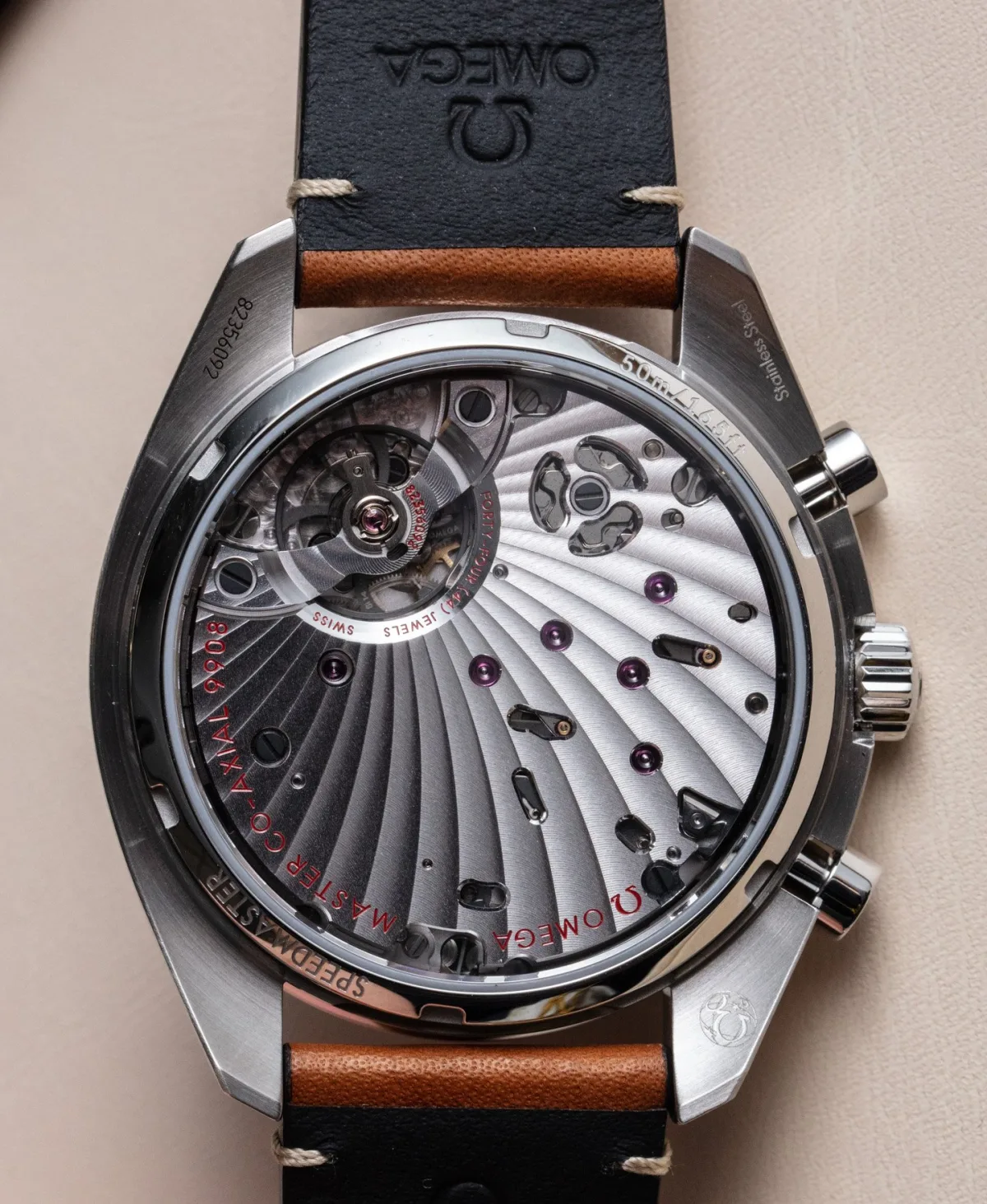
The caliber 9908 movement is a Co-Axial Master Chronometer, meaning it has passed METAS certification at the Omega factory. METAS certification, among other performance guarantees, also confirms the high degree of magnetic resistance of the watch. For this, Omega uses a movement that is primarily a-magnetic and therefore can have a full case back view of the attractively decorated movement surfaces. The 9908 operates at a frequency of 3.5 Hz, has a 60-hour power reserve, a co-axial escapement system, a silicon balance spring, and a full 12-hour chronograph equipped with a single sub-dial (on the right side of the dial), which includes both the minute and hour chronograph hands. As a Master Chronometer, the 9908 is also a very accurate and reliable mechanical timekeeping movement.
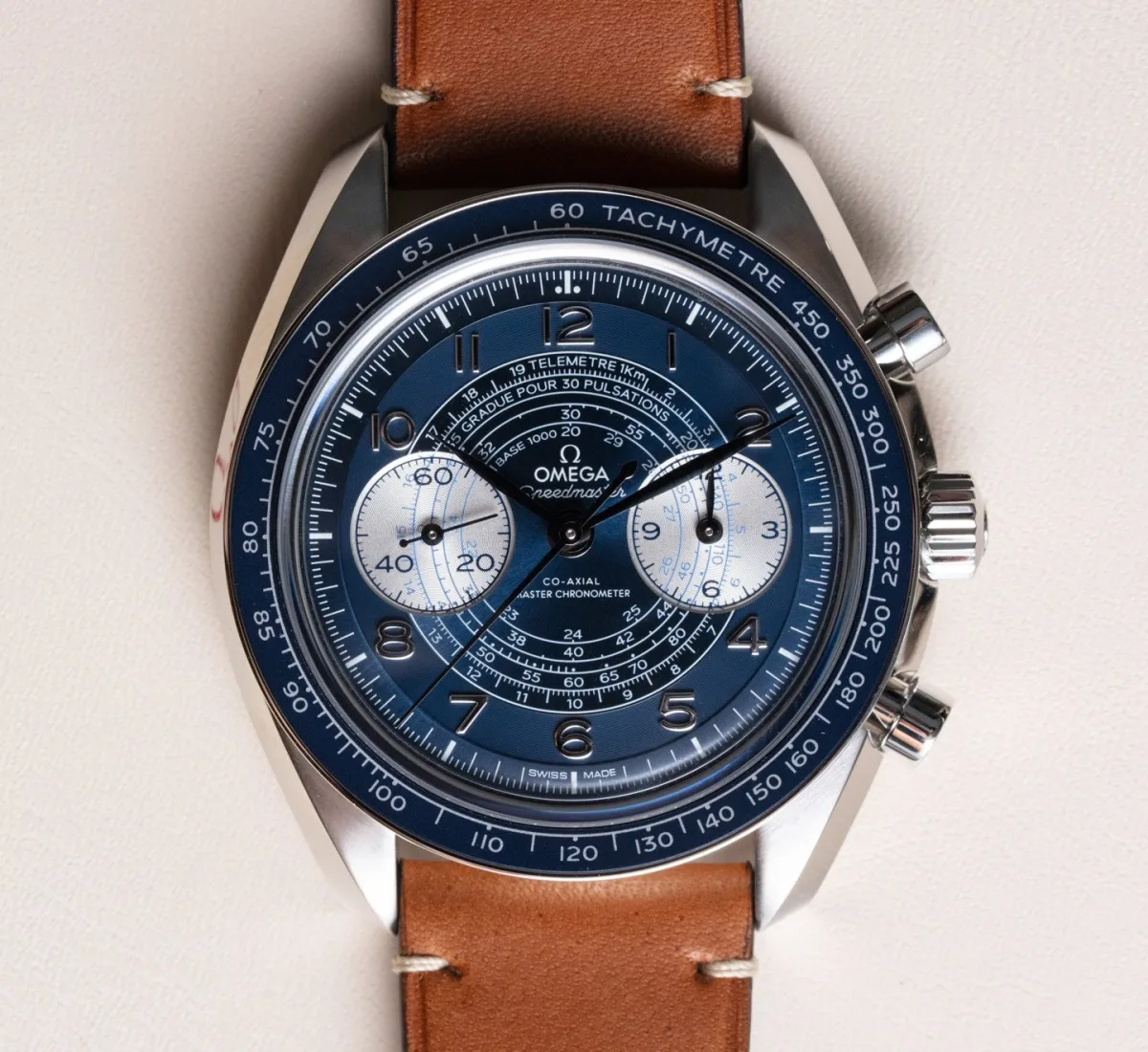
When developing the dial of the modern Chronoscope watch, Omega turned to its sports watches from the 1940s. At that time, Omega and other brands paid special attention to maximizing the use of the chronograph. Therefore, many watches of that era had three useful scales on the dial, many of which are still used decoratively on chronographs today. The name Chronoscope and this dial design concept predated the Speedmaster name by at least a decade. I mention this because the distinctive Speedmaster look is partly due to the bezel's tachymetric scale, designed for measuring speed. Tachymetric scales have long been present on watch dials, and you can see how they are used again here, on the Chronoscope's bezel.
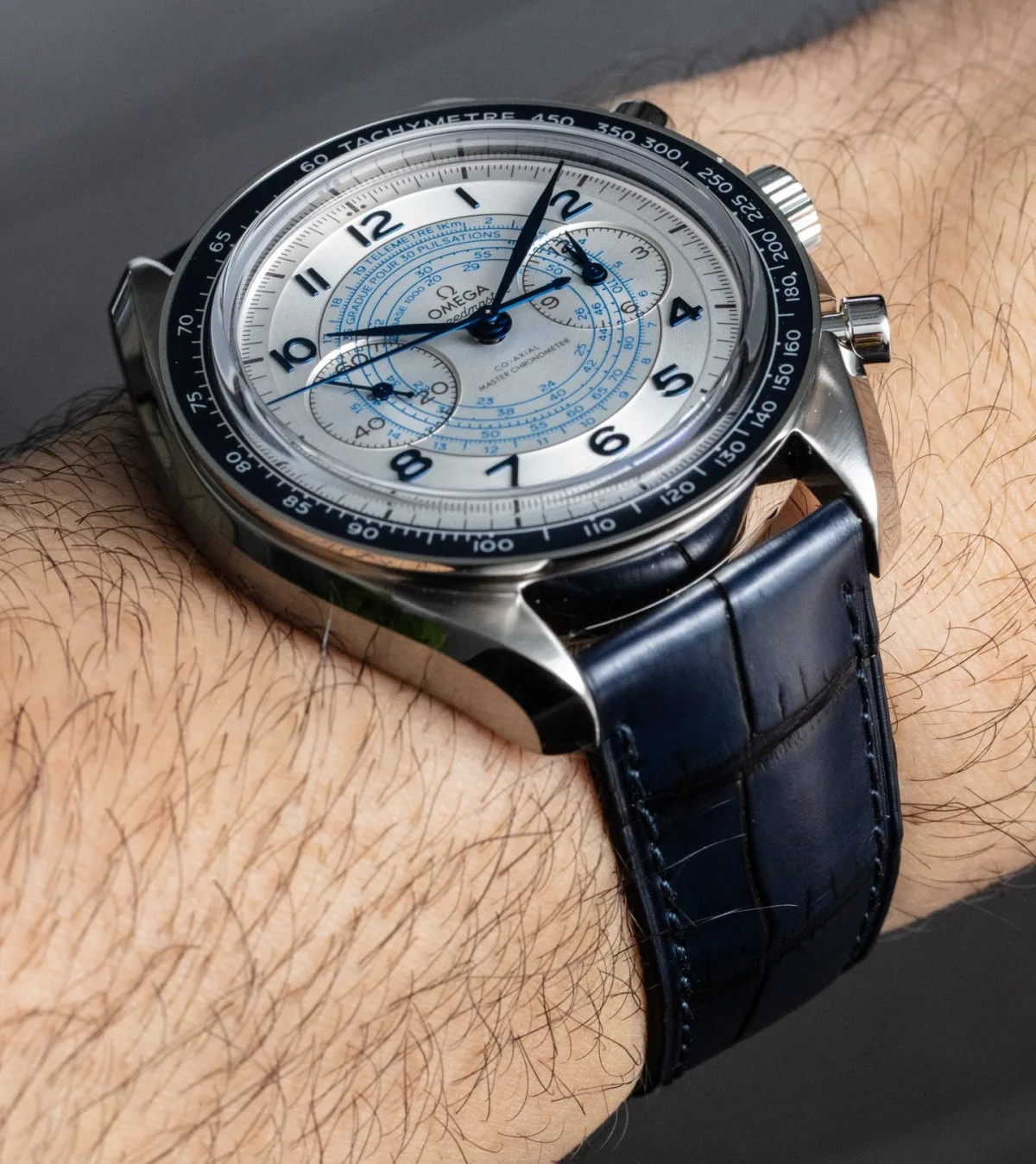
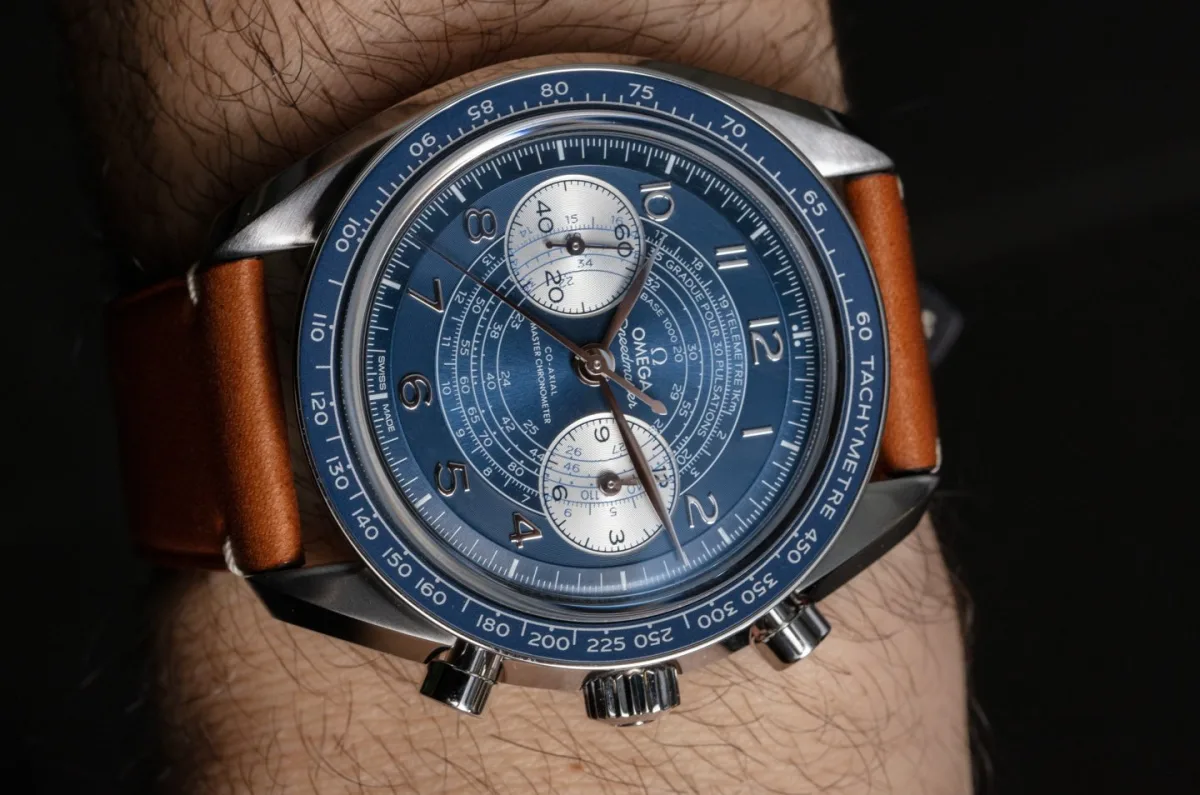
Other scales on the dial include a telemeter (for measuring the distance to objects) and a pulsometer (for measuring heart rate) provided the user has the correct reference points. Calculations are made by observing one reference point and then starting the chronograph. After observing the second reference point, the chronograph is manually stopped, and the correct measurement is counted at the stop point. Since the chronograph can be used for different purposes, it became popular at the time to place various scales on watch dials. The challenge for designers was to make watch dials with multiple scales look attractive.
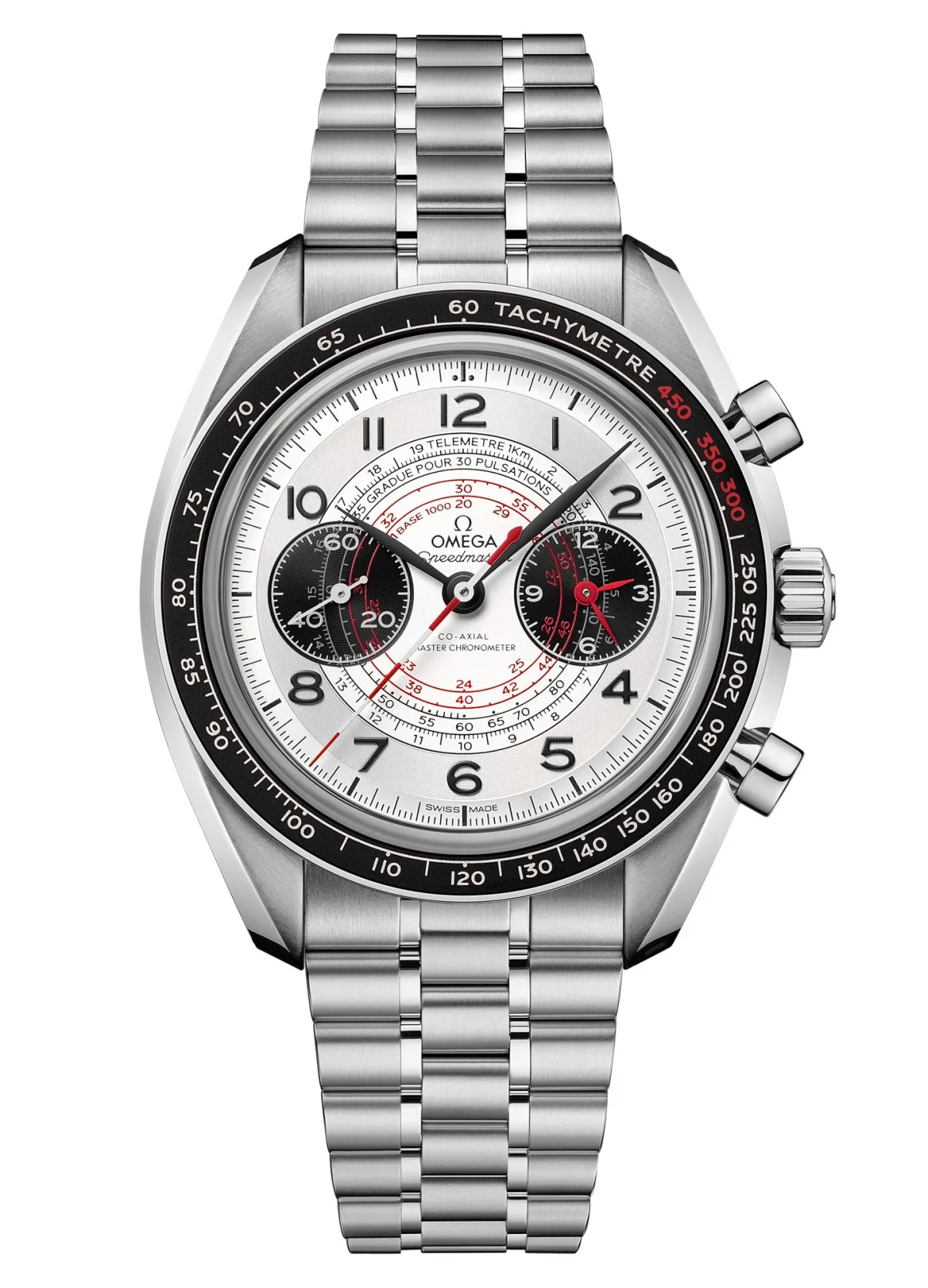
In some watch models with a tachymeter/telemeter/pulsometer, spiral scales in a "snail" style were placed on the dial. For the chronoscope, Omega chose a more symmetrical design that includes several concentric circles containing important scale information while not detracting from the dial’s primary readability. For most markers, Omega uses applied Arabic numerals, which, combined with traditional leaf-shaped hands, provide good readability for most models. Versions with blue and brown dials have polished markers and hands, which are not as easy to read as the blued or black markers and hands used in other versions of the chronoscope.
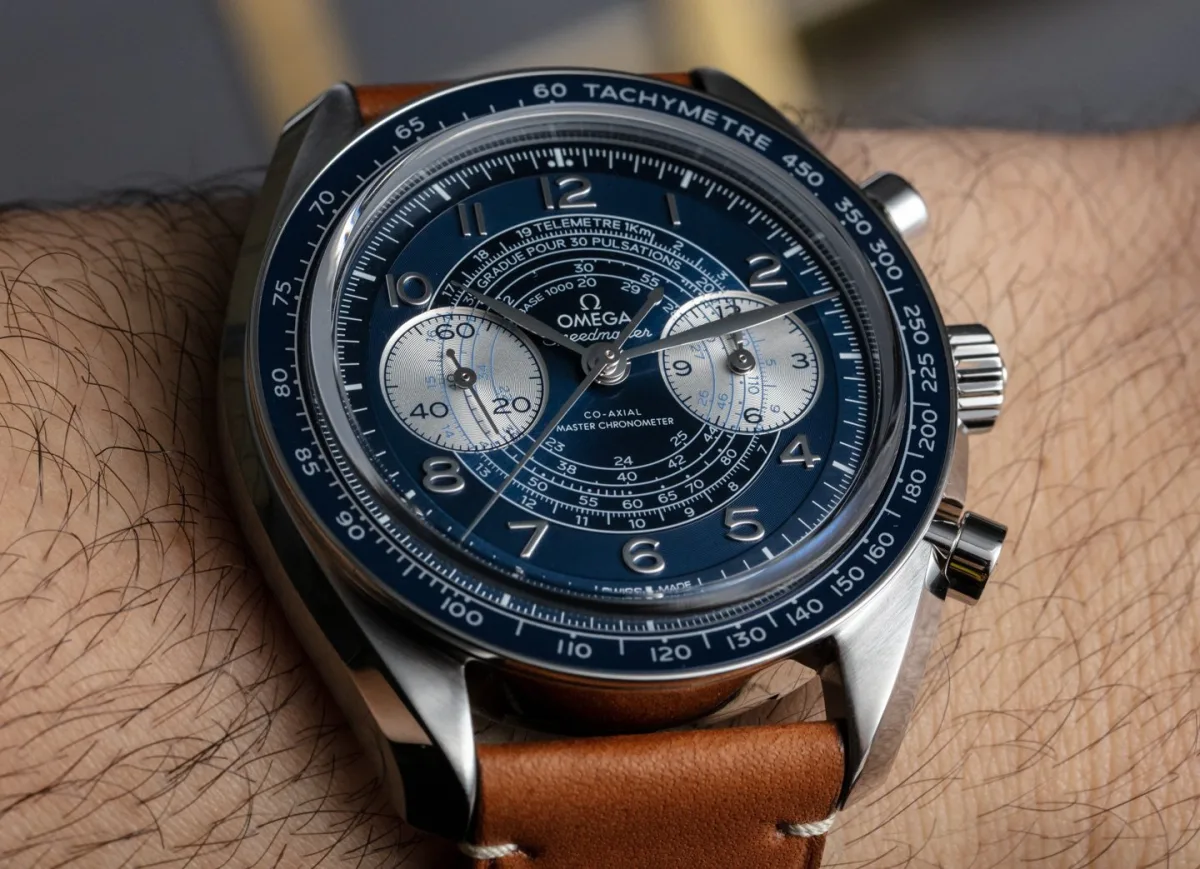
Although I have not yet had the opportunity to see them in person, the light silver with black and red version of the Speedmaster Chronoscope - reference329.30.43.51.02.002 (on a bracelet) - is probably the most sporty and modern, despite being executed in an elegant retro style. This is the overall appeal of these watches: the dials of old sports watches look stylish, timeless, masculine, and simultaneously elegant. I’m not sure anyone actually uses the measurement functions on the dial, but in any case, it is a very beautiful dial.
Thanks to the thinner case, sapphire crystal over the dial, vintage-style chronograph dial, and manual-wound movement, the Speedmaster Chronoscope Co-Axial Master Chronometer watches represent a unique value proposition, and not just another variant of existing watches with a new dial. In fact, Omega seems to implicitly understand that consumers do not really consider additional dials as a reason to call watches "new." Thus, we see the company using a lot of new details and sensibly mixing concepts when it comes to these and many other new Omega watches that we see.
I also want to emphasize that anyone interested in the Omega Speedmaster Chronoscope should definitely try them on. This is because the watch cases have a unique appeal (thin size, but not too narrow), and the appeal of the dials is very striking to appreciate in person. Besides the bronze-gold version of the Chronoscope, the other three currently available dial versions come either on a strap or on a matching steel bracelet.
The two photographed Chronoscope models are models 329.33.43.51.02.001 (silver dial) and 329.32.43.51.03.001 on leather straps. The price of the Omega Speedmaster Chronoscope Co-Axial Master Chronometer Chronograph with a 43 mm width is $8,300 in a steel case on a strap, $8,600 in a steel case on a steel bracelet, and $14,000 in a bronze-gold case. Learn more on the Omega watches website.