Rado holds a special place in my heart. It is the only watch brand I ever heard my mother talk about.
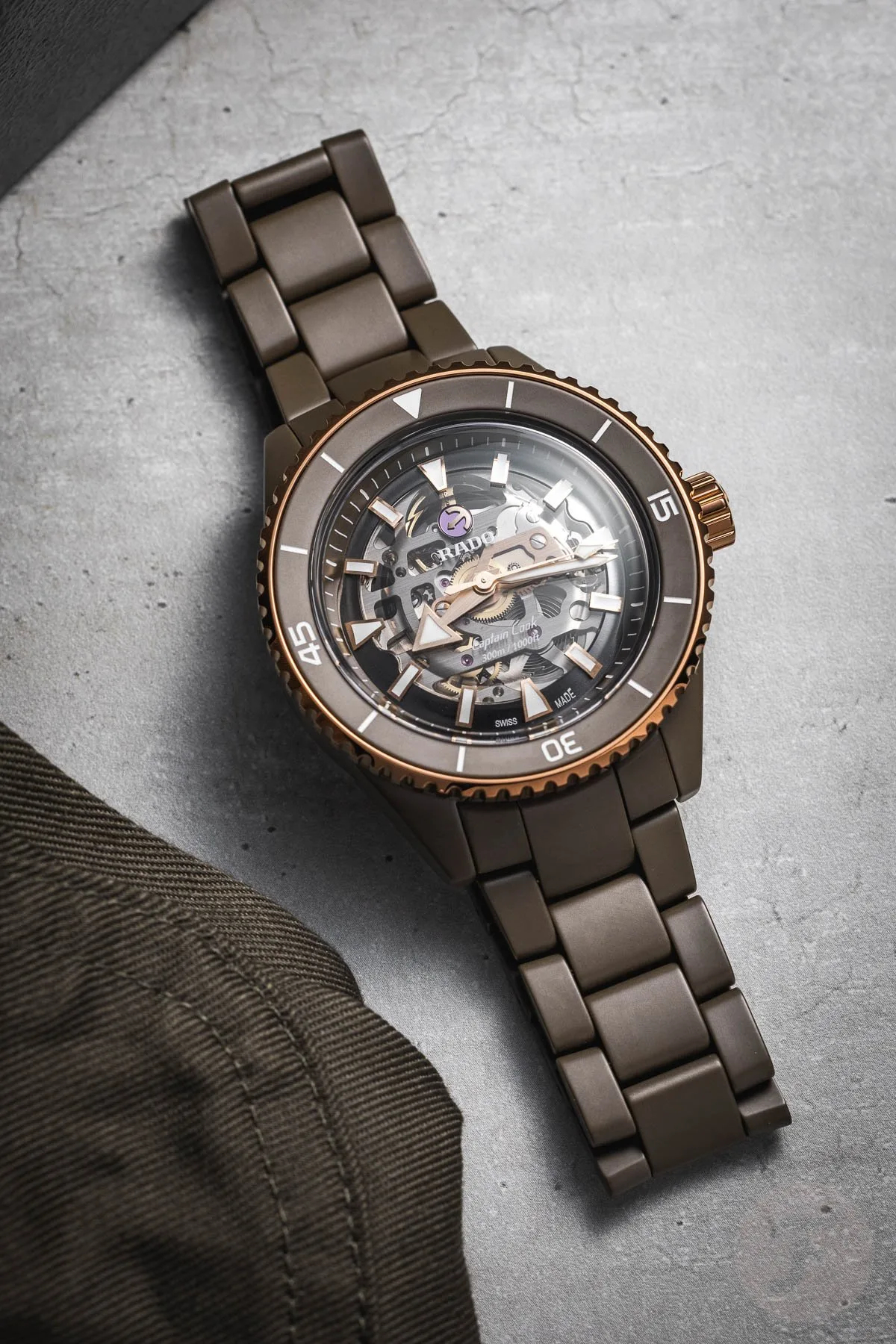
She was a big fan of the black ceramic Diastar watches that Rado produced in the 1980s and 90s. While this was a defining era for the brand, it did not end there. In its flagship Captain Cook series, Rado appeals to another part of its history, dating back to the 1960s, and the Captain Cook High-Tech Ceramic Skeleton model combines both eras in one watch. Rado also integrated a skeletonized mechanism. It's time to learn more.
Overall, I don't consider myself a purist when it comes to watches. However, I must admit that when it comes to watch design, I adhere to some basic principles dear to my heart. One of them is not forcing different design styles to merge. I understand that in theory, a blend can lead to great results. But in reality, it often results in odd design constructions that do not correspond to reality. You will understand that I had strong initial thoughts when I received the new version of the Rado Captain Cook High-Tech Ceramic Skeleton on my table. But I decided to give the watch a chance because it looks much more modern and technical than the classic Captain Cook. As I found out, it is indeed a completely different beast.
First Impressions of the Rado Captain Cook High-Tech Ceramic Skeleton
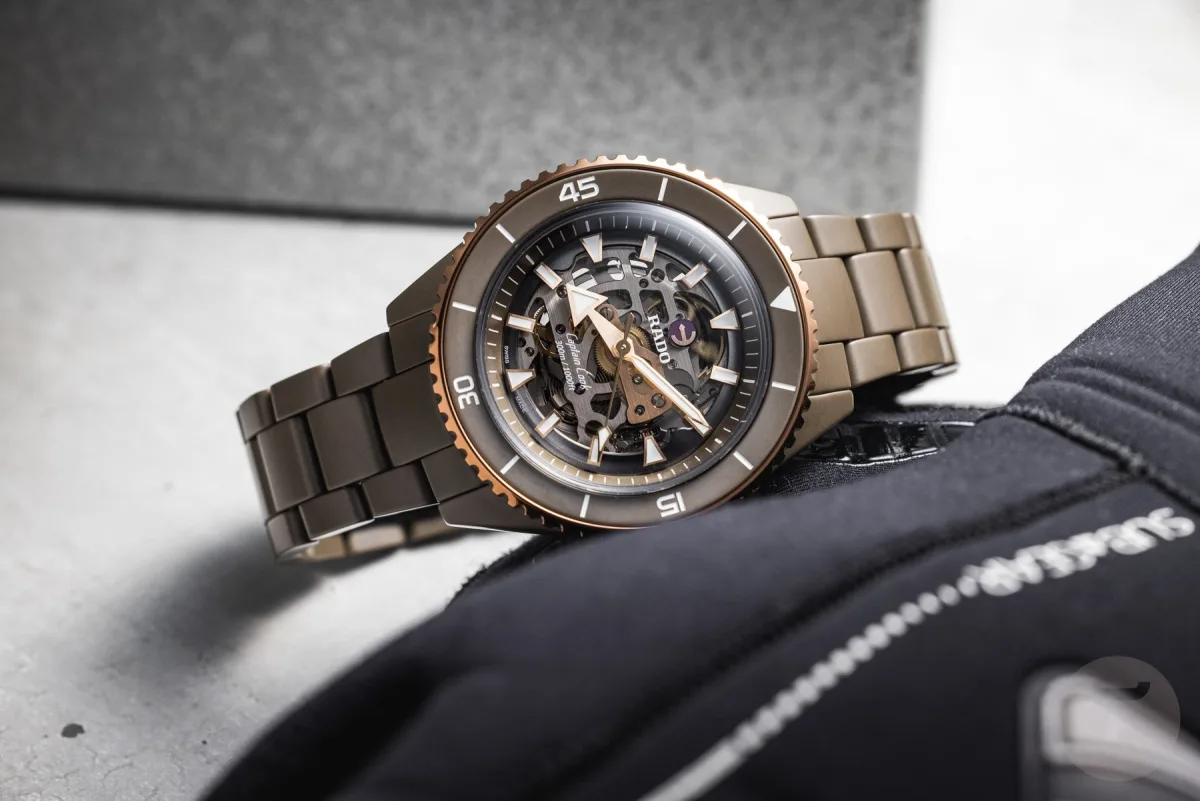
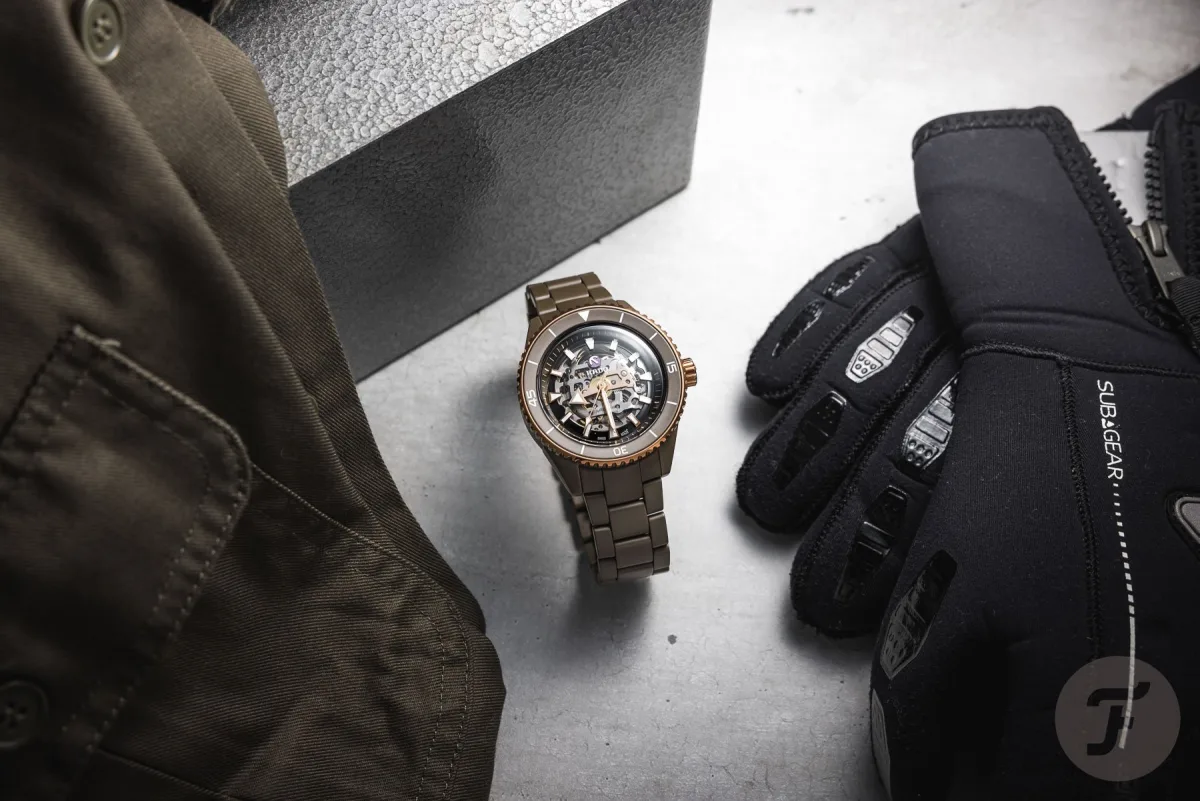
Right out of the box, the new version of the watch looks modern and technical. The light weight of the watch also contributes to this. The plasma high-tech ceramic case and bracelet give the watch a distinctive flair. But I was pleased that Rado chose a fully matte ceramic finish compared to the matte and polished bracelet of last year's gray version. This non-reflective olive-green ceramic gives the watch a rather restrained look. Additionally, the bezel is color-matched, whereas last year's model had a pink hue.
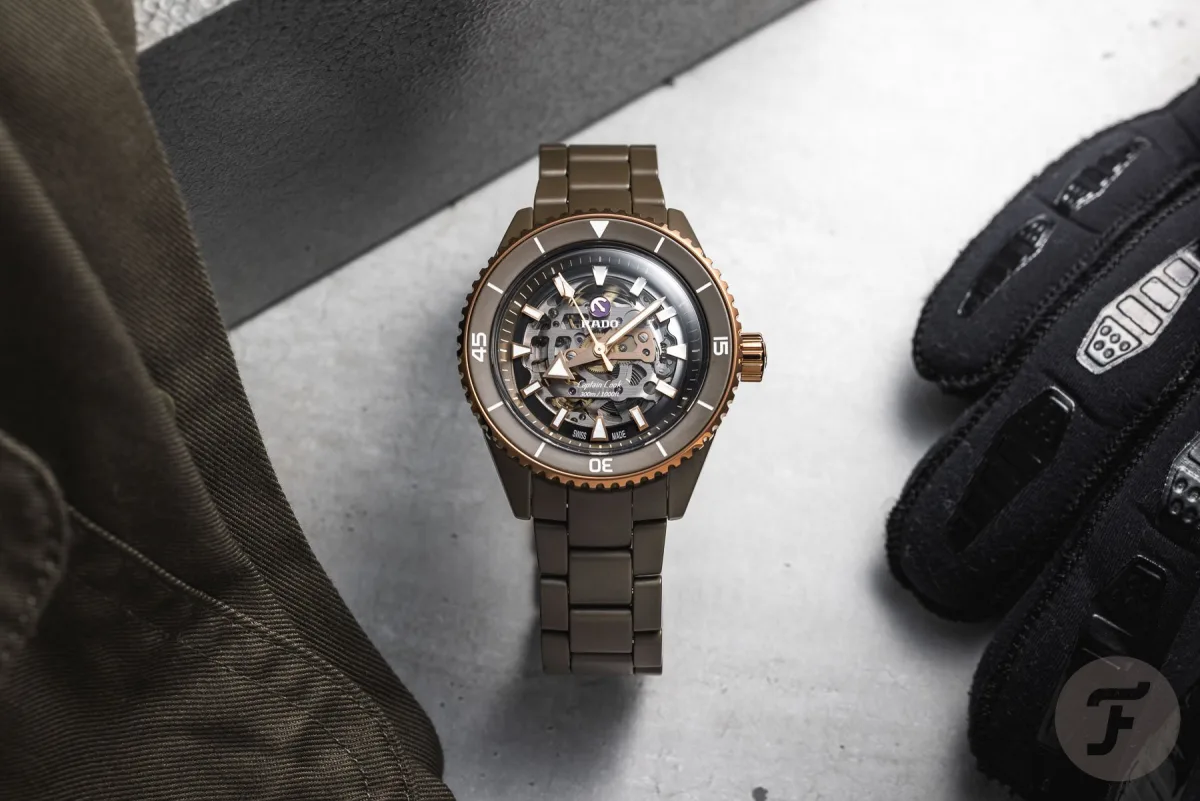
Despite the olive-green color, I wouldn't say these watches have a military vibe. The contrasting bezel and crown in pink gold with PVD coating add visual appeal so that they do not seem too inconspicuous and simple. Furthermore, the skeletonized mechanism is the main visual attraction that immediately draws you in. It defines the aesthetics of this watch and makes it completely different from the regular Captain Cook models in steel or bronze cases. Even though I don't usually opt for such watches, it was a good opportunity to wear something outside my comfort zone.
Technical Specifications of the Captain Cook High-Tech Ceramic Skeleton
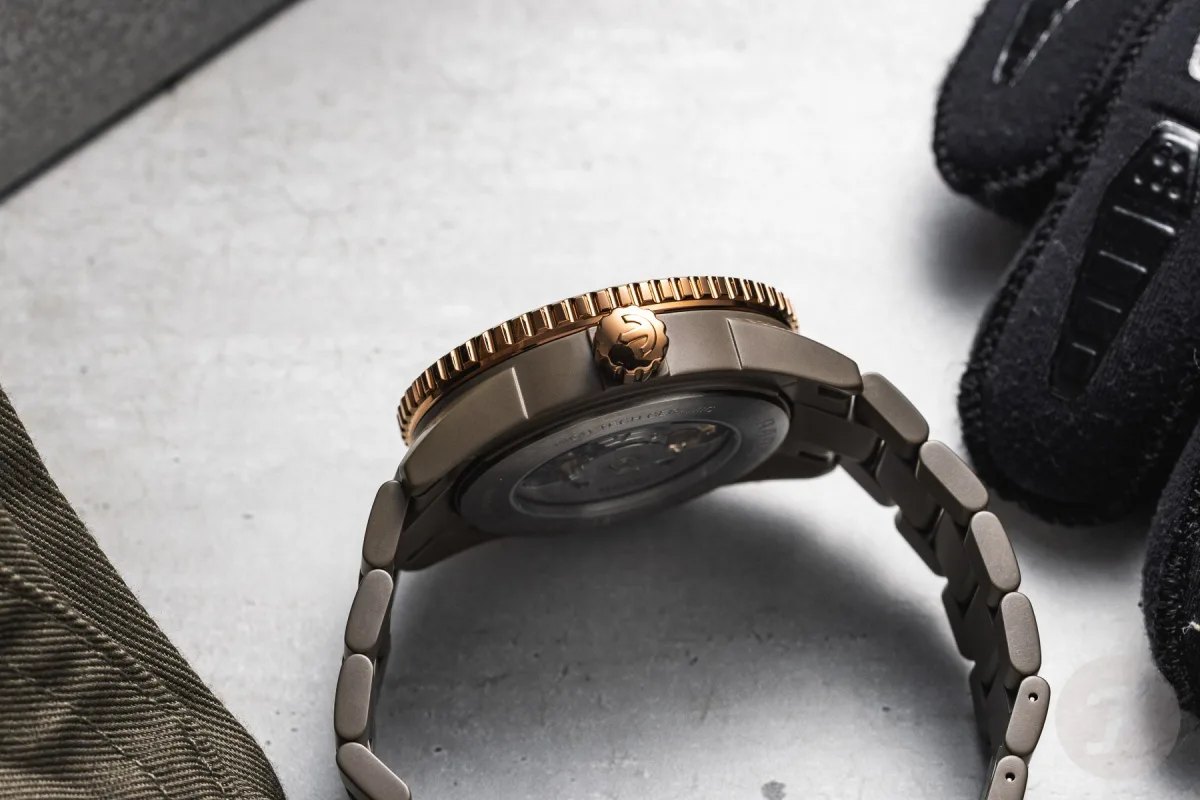
Before I delve into the details of wearing the watch, let's first talk about its specifications. I will focus on a brief description of the most important features. The watch has a 43-mm matte olive-green monobloc case with a thickness of 14.6 mm, a lug-to-lug length of 49.8 mm, and water resistance of 300 meters.
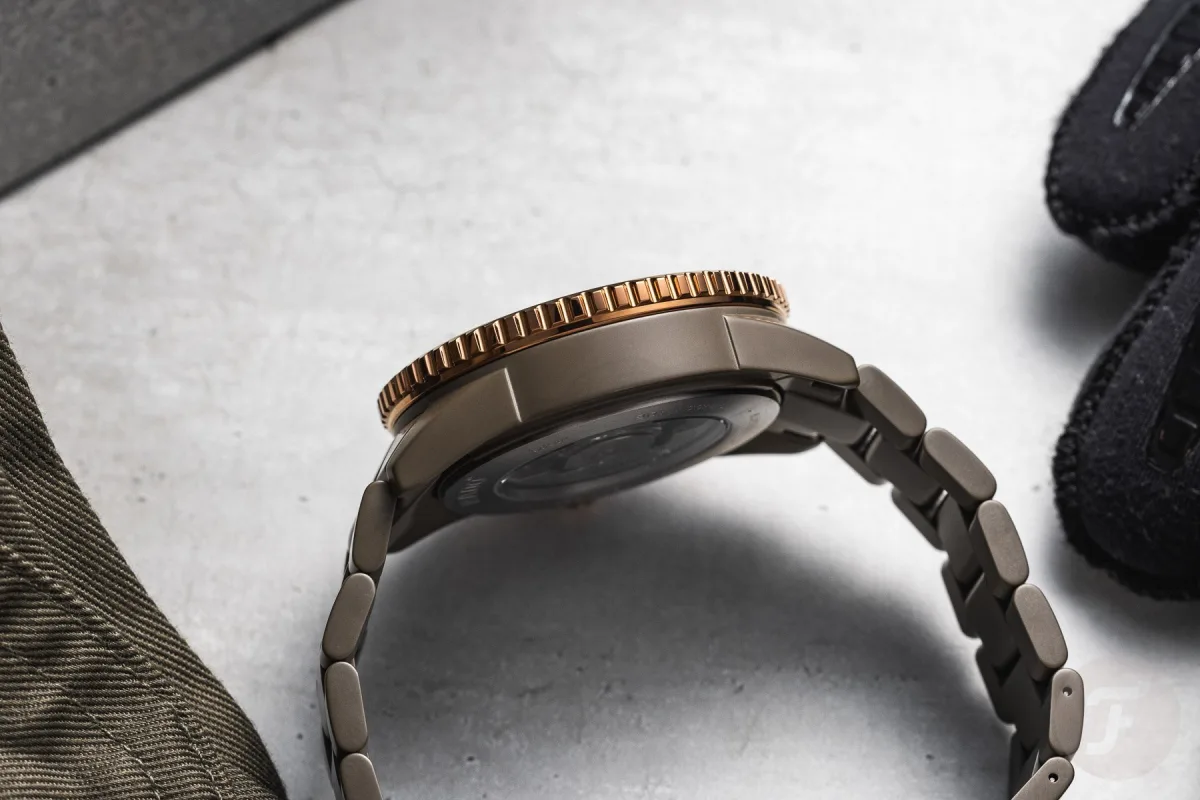
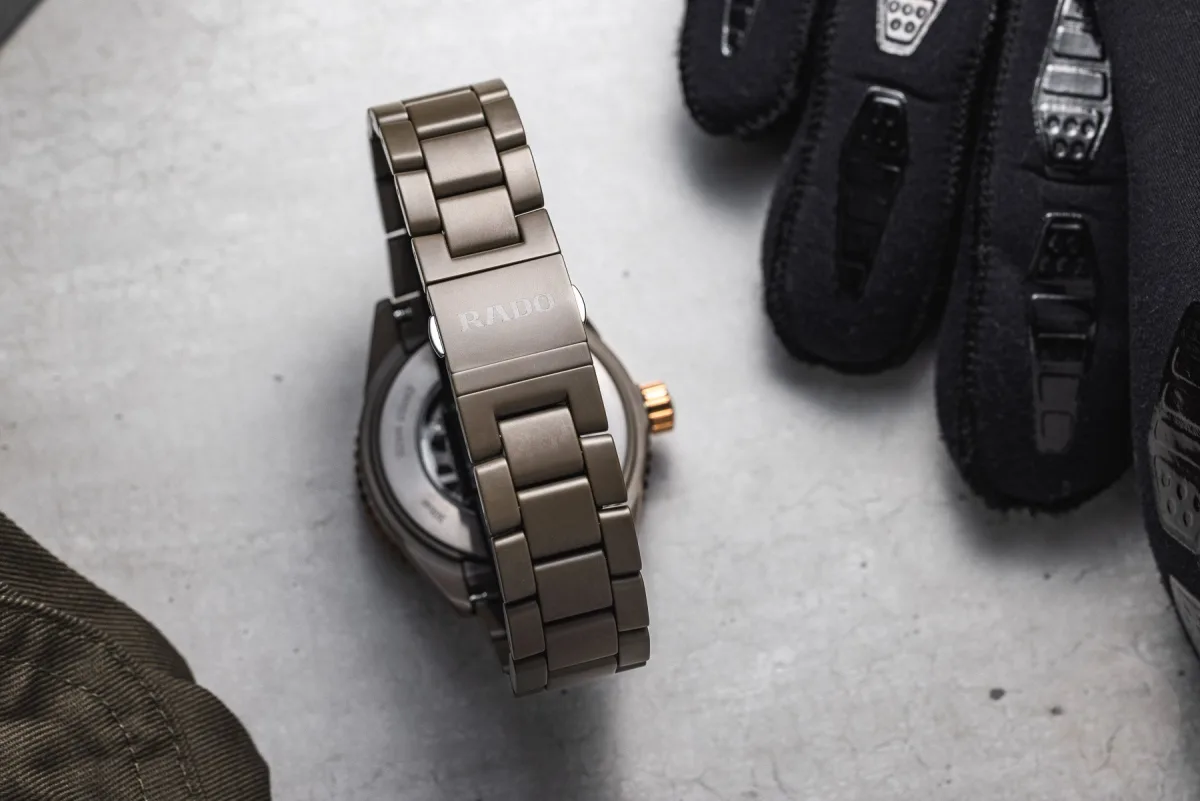
Thus, it remains a capable Captain Cook diving watch. The version we reviewed came on a ceramic bracelet with a titanium double-folding clasp. The other option would be the same watch on a color-coordinated rubber strap. I would happily try this option as well because ceramic bracelets, no matter how well they are made, can still rattle or feel plastic-like.
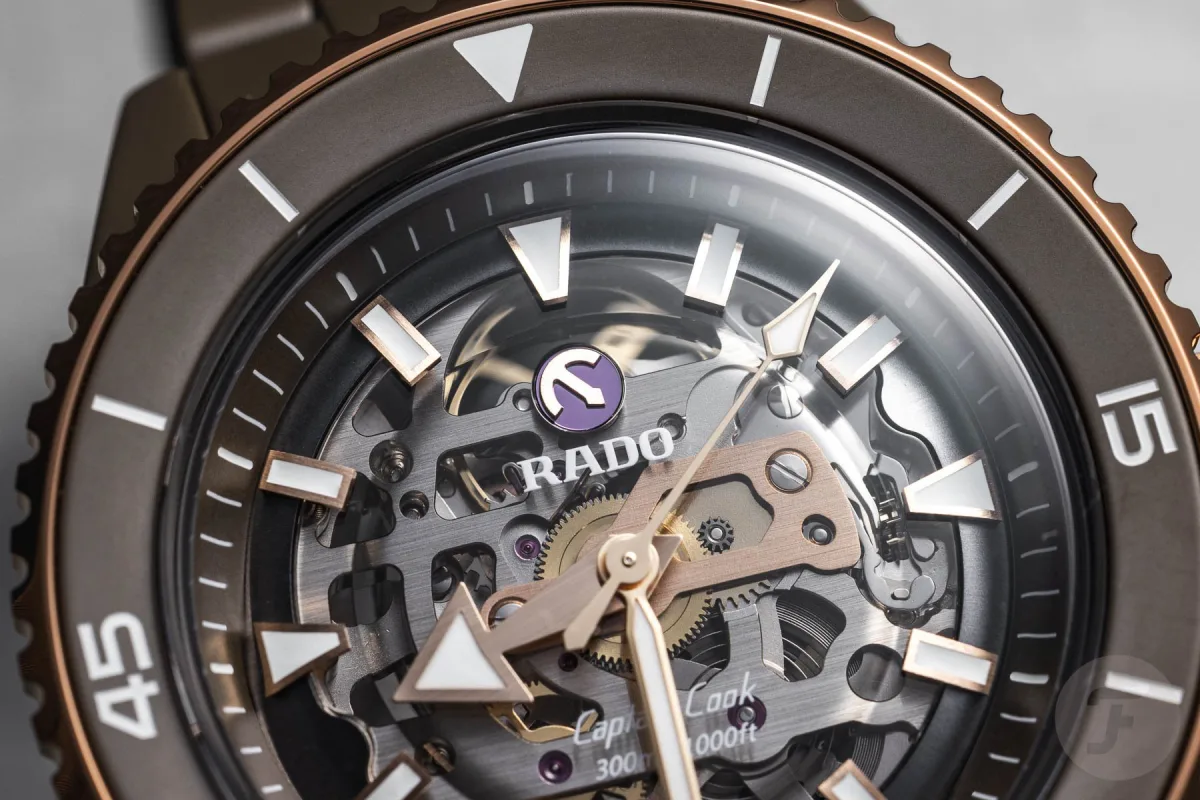
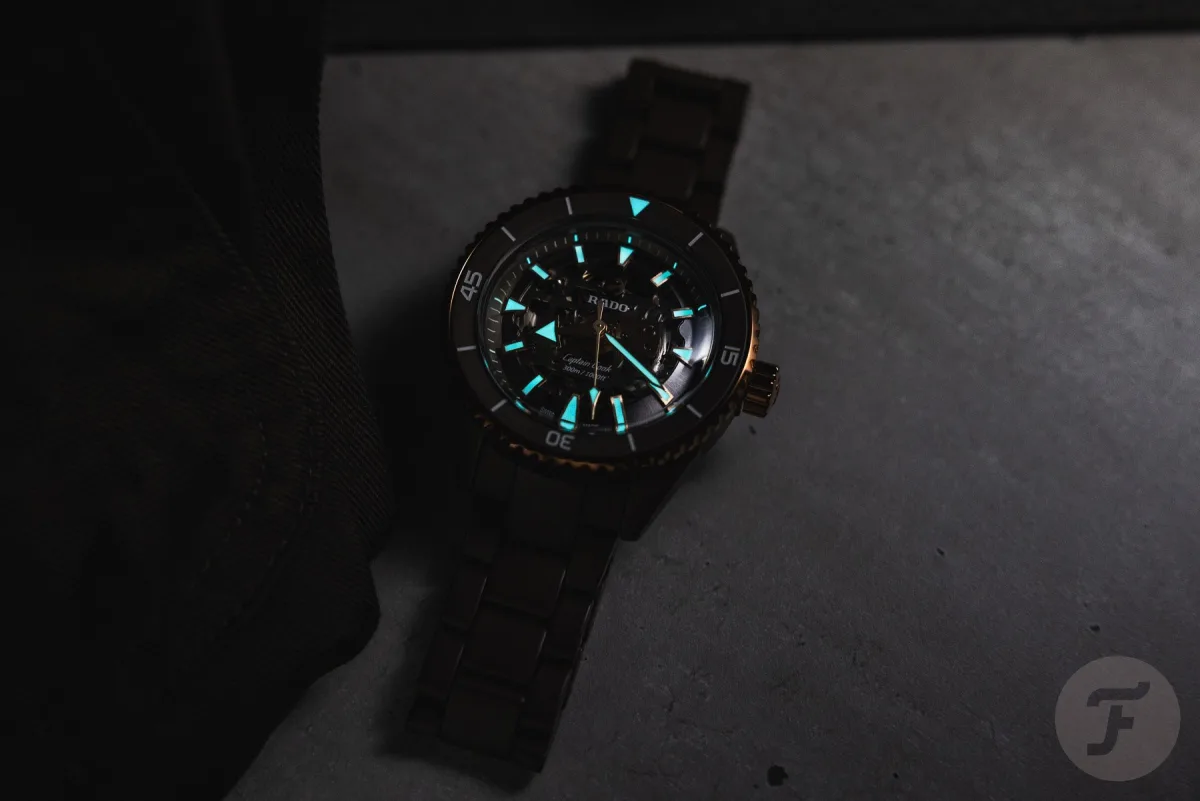
The case is complemented by a pink gold crown with PVD coating and a matching rotating bezel with serrated edges. The inward-turning bezel is one of the defining elements of the Captain Cook collection, and the combination of hands and indices, along with the font used for the 60-minute scale, visually aligns with the line. The hands and indices are coated with white Super-LumiNova to ensure clarity in low-light conditions. The olive-green index ring with a minute track is executed in white, creating a visual contrast. The result is a skeletonized dial that is relatively easy to navigate despite its technical nature.
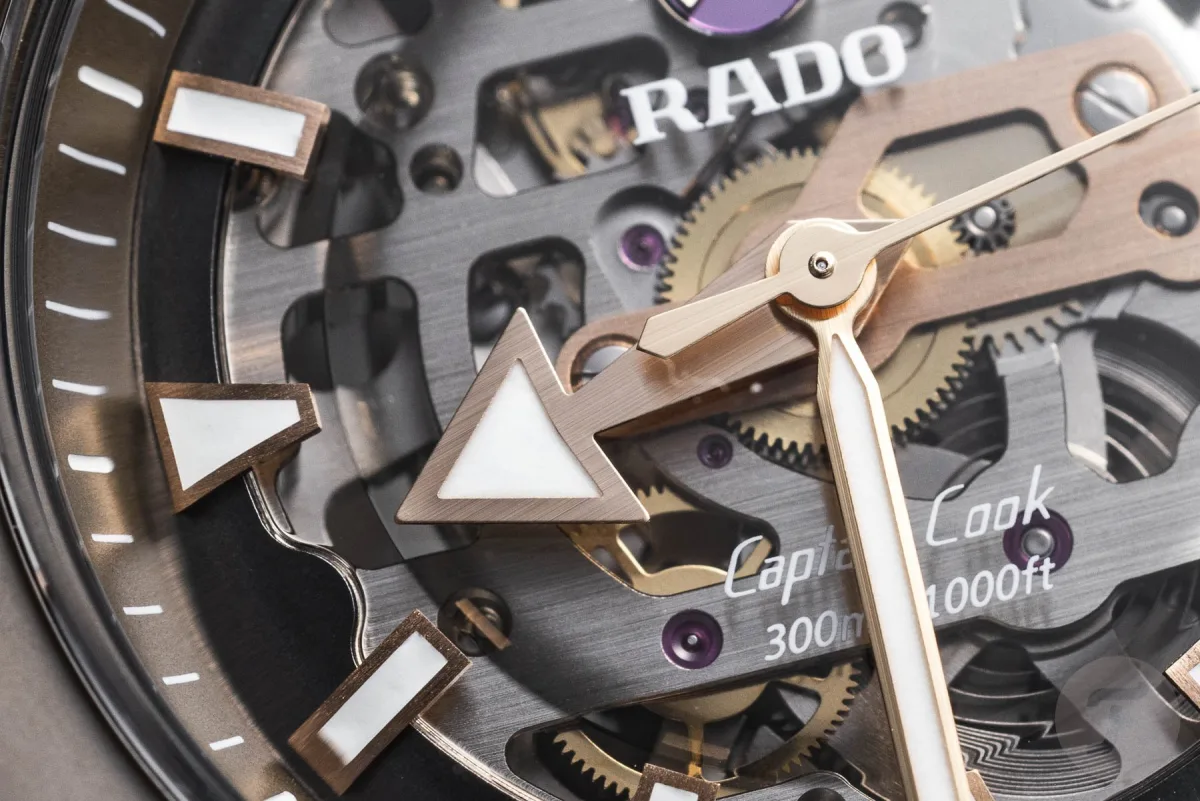
Skeletonized Rado R808 Movement
As some of you might know, Rado uses crystals with a smoky finish that shades the overwhelming appearance of all the different skeletonized parts. The R808 movement is visible behind the hands and indices. Watchmakers from ETA developed this automatic skeletonized caliber with 25 jewels and a power reserve of up to 80 hours. The movement features an anti-magnetic Nivachron spring and is tested in five positions.
In terms of color and finish, the movement has a matte nickel structure and a central bridge treated with pink gold. The color of the bridge harmoniously matches the hands and indices, ensuring a harmonious blend of various visual layers.
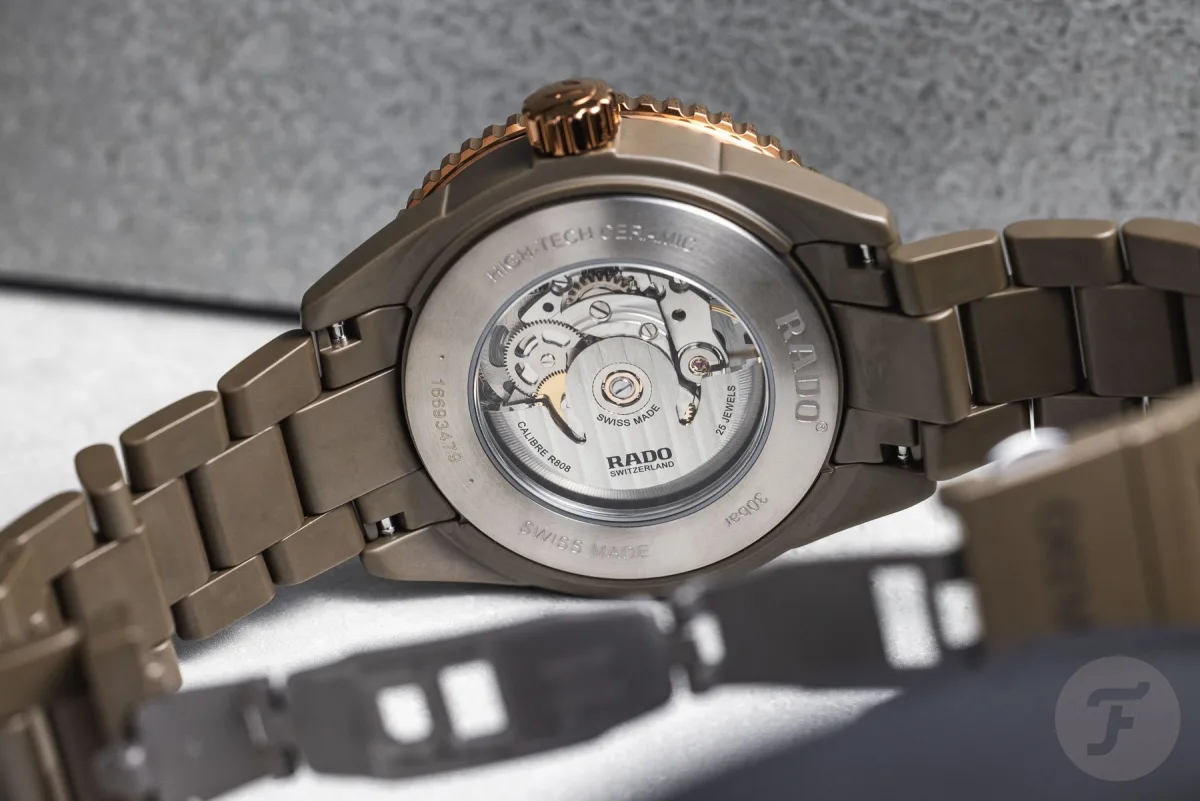
The text "Captain Cook" is applied in white on the sapphire dial, which also hosts the indices. Thus, these elements appear to float, creating an additional visual effect. Finally, the titanium and sapphire case back reveals the movement. Although I doubt you'll admire the movement through the case back, it fits perfectly into the overall skeletonized theme.

Wearing the Captain Cook High-Tech Ceramic Skeleton
I didn't know what to expect when I first put on the Captain Cook High-Tech Ceramic Skeleton watch. I'm generally not a big fan of skeletonized watches. Moreover, I tend to gravitate towards the classic Captain Cook models in bronze and steel, which are excellent modern embodiments of the 1960s model where it all began. But as soon as I put on the ceramic skeletonized version, I stopped preferring the vintage "Captain Cooks." These watches are on opposite ends of the Captain Cook spectrum, and I had to come to terms with that.
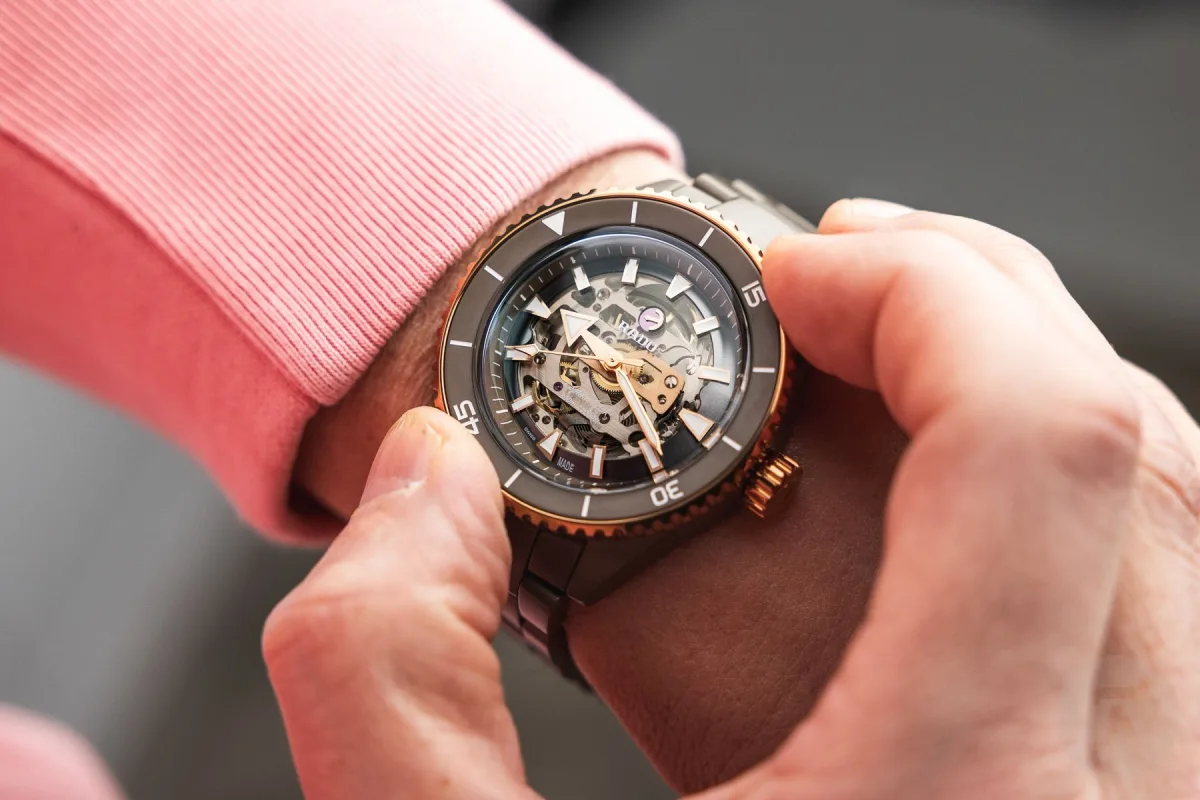
Once I did, I was able to enjoy the watch much more. At 43 mm in diameter, these Captain Cook watches are quite substantial on the wrist. Thanks to the materials and color, the watch doesn't feel overly large. The watch looks impressive but not overly so. Earlier, I mentioned that I would happily try them on a rubber strap. This is because ceramic bracelets have an unpleasant sound and sometimes feel plastic-like; I'm just not a big fan of them. But I must say that this bracelet wears very well. It wraps around the wrist and makes the watch very comfortable.
Final Thoughts
After wearing the Captain Cook High-Tech Ceramic Skeleton for about a week, I got used to its unusual look. That's when the intricate details started to stand out. One of the feelings that didn't leave me was that there's still a Captain Cook feel to it. Since all the practical elements are the same as in the classic models, the technical and modern design is not far removed from the familiar aesthetics of the series.
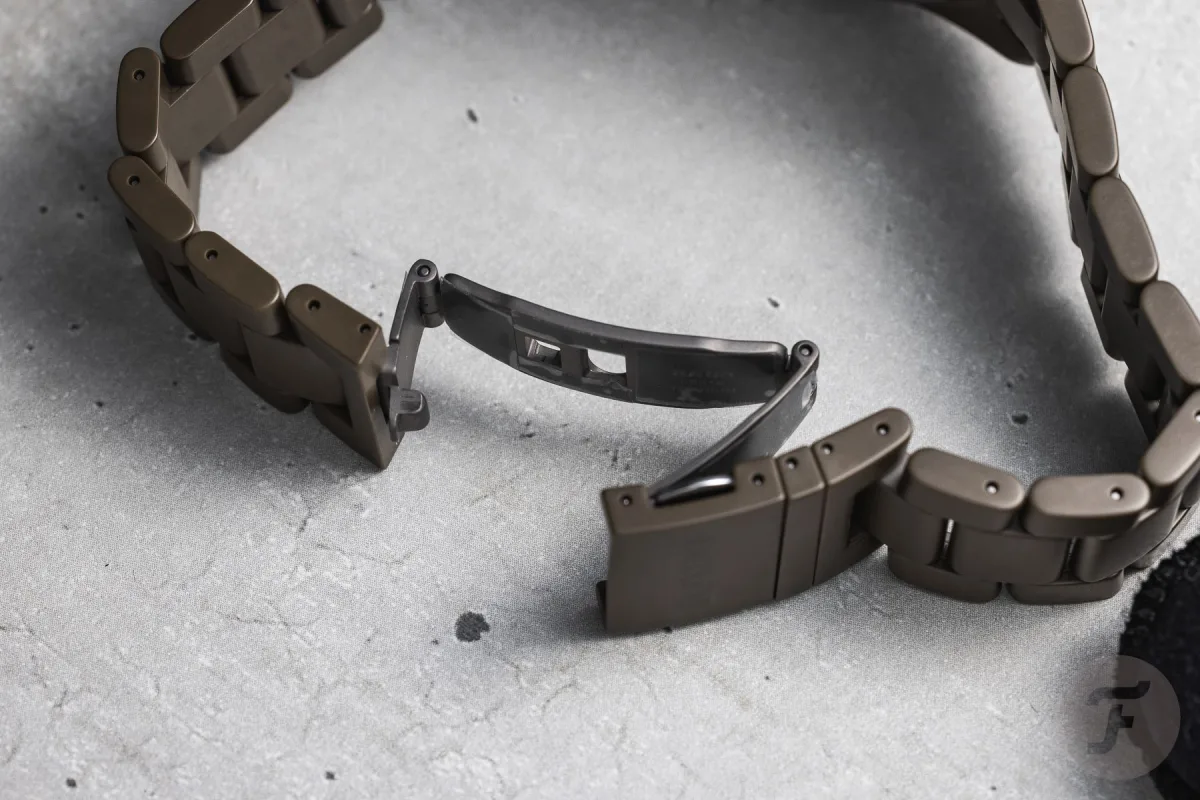
Speaking of practical details, the diving bezel is pleasant to hold and turn. The clicks are confident and create the sense of quality you expect from a brand like Rado. The same goes for the clasp. I liked the look of the clasp, and it was easy to use. It significantly enhances the overall wearing experience of the watch.

I also really like the combination of colors. The combination of pink-toned accents with matte olive-green gives the watch a distinct style. I prefer this model over last year's gray version with a combination of bracelet finishes and a gold bezel. This new version seems more cohesive and understated, which I greatly appreciate. If I ever buy a skeletonized watch, it will be something like this.
I enjoyed wearing this new model for a week. Although I wouldn't choose a watch from the Captain Cook line, I understand that they are unique and therefore attract fans. There aren't many watches like the Rado Captain Cook High-Tech Ceramic Skeleton. Priced at €4,950, this model is one of the brand's most expensive offerings. However, given what you get for the materials, movement, overall finish, and quality, it's still much more advantageous than most competitors.
Therefore, the Captain Cook High-Tech Ceramic Skeleton watch is a special offering from Rado. It not only combines two styles from the brand's past but also utilizes the best advanced technologies Rado has to offer. It's a modern version of the Rado series that we love at WatchTested, and it's nice to see it up close.
For more information, visit the official Rado website.