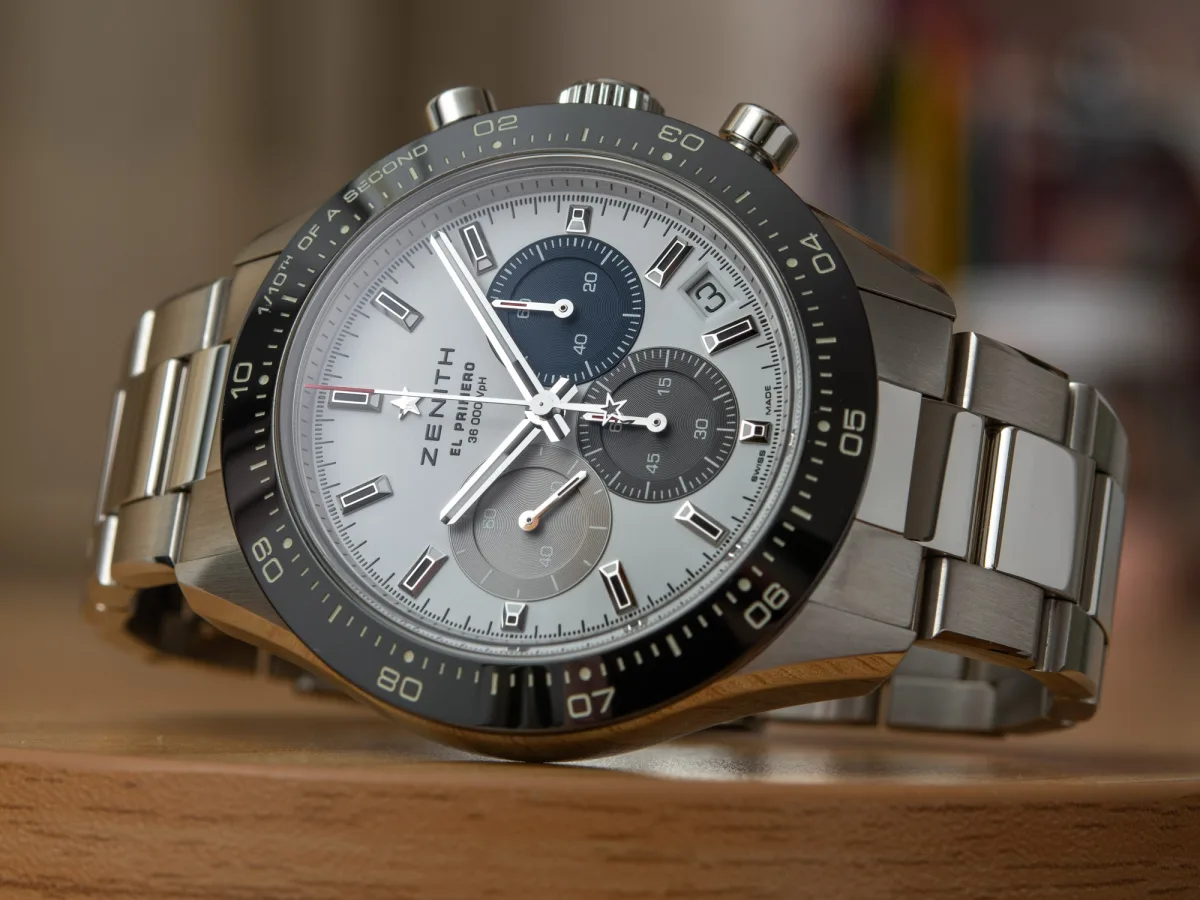
Ever since I first saw the Zenith Chronomaster Sport in 2021, with its undeniably similar look to the steel Rolex Daytona 116500, I've wanted to get it on my wrist for a review. Why?
To see how it performs as a Zenith chronograph, to evaluate it as an alternative to the steel Rolex Daytona, and to reflect on how I - and perhaps you - feel about Zenith's approach of paying homage with their luxury sports chronographs. There’s a lot to unpack, so let's dive in.
Let me know in the comments below what you think about what I'm going to say. I believe that Zenith is among the few luxury watchmakers with a solid reputation. Zenith isn't trendy to hate - unlike its sister brand Hublot - and it hasn't wandered miles off its own path, like Audemars Piguet in recent years. It hasn't lost its focus on developing worthy new watches like Jaeger-LeCoultre or upset millions worldwide with endless queues like Rolex.
Among major, historically significant, well-rounded, proper brands, Zenith is easy to love since its infamous Nataf era ended (read about it at your own risk). It's an established manufacture with a rich history, diverse presence, and 50 compelling reasons to love its El Primero - I enjoyed that video (below) back in the day and still find it impressive.
So, you can imagine my surprise - and perhaps share it - when this brand, full of originality, introduced the Chronomaster Sport with a ceramic bezel, steel case, 100m water resistance, a three-link bracelet, and an all-too-familiar clasp with a clear intent to be a real alternative for those craving a dose of Daytona goodness. I won't tell you what to think about these similarities - no one should - but I can tell you what I think now that these watches have been with me for a while, alongside the steel Rolex Daytona “Panda.” Ah, Rolex Daytona “Panda.” Never bred in captivity... until now, apparently.
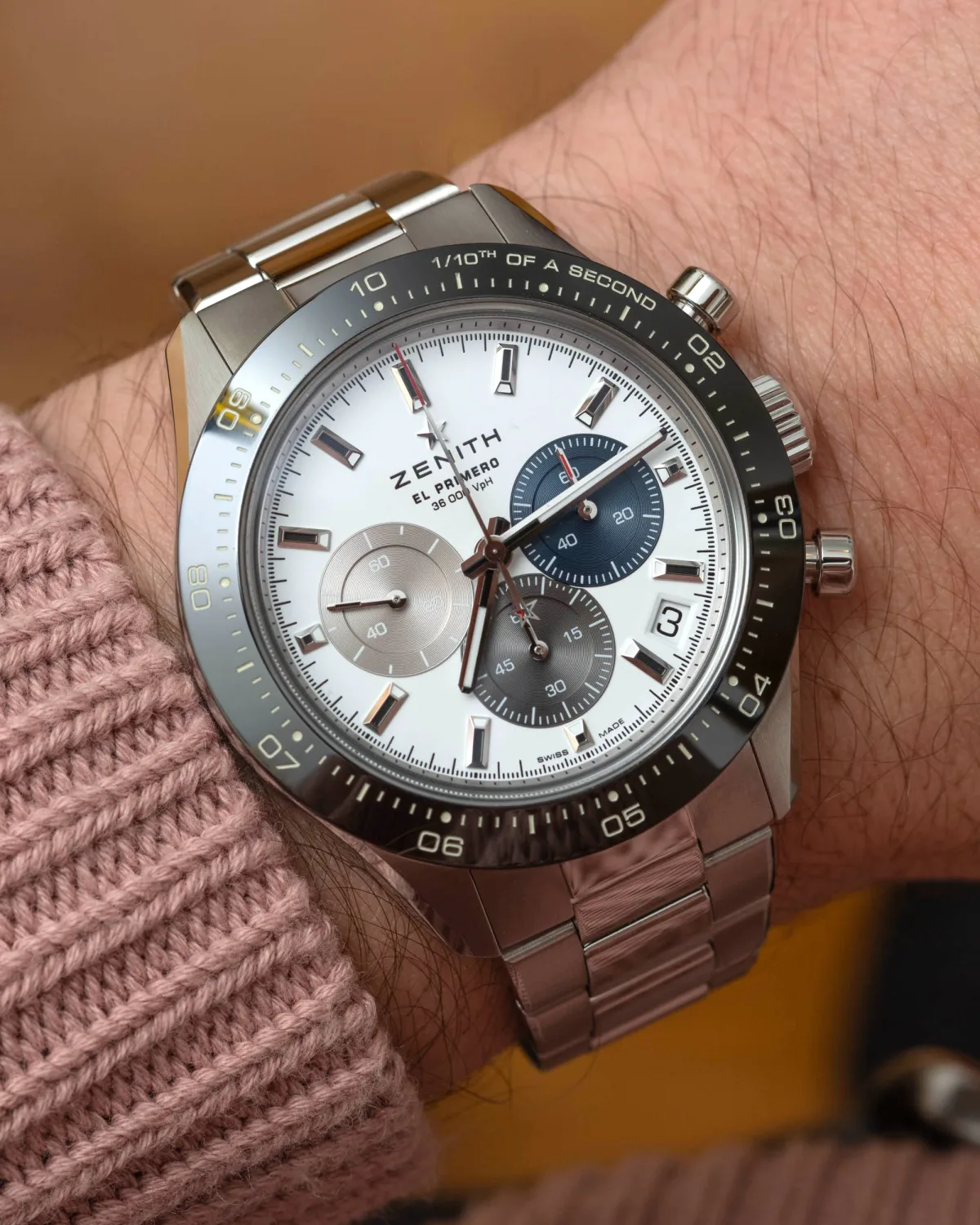
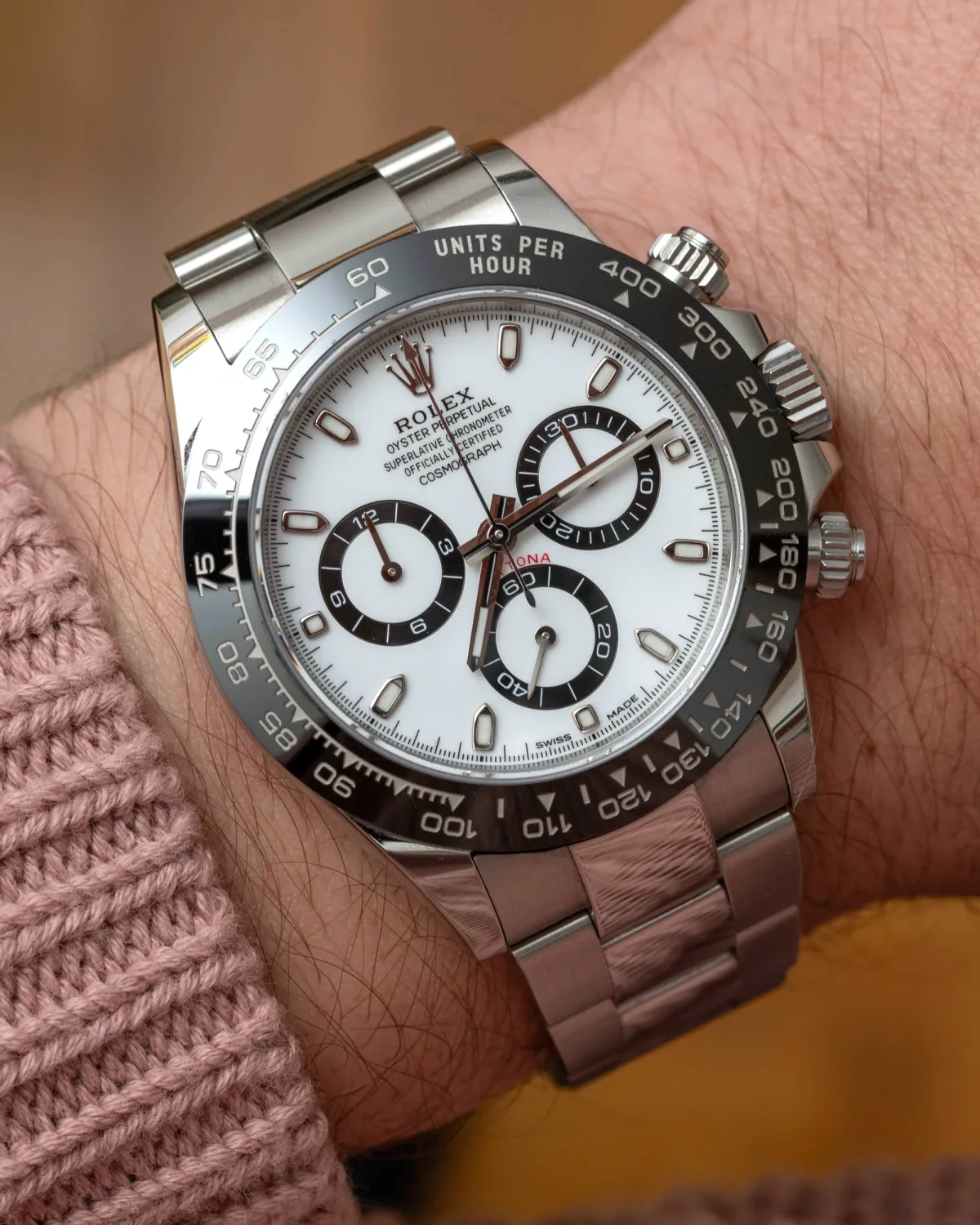
Coincidental similarities can occur, and it’s also true that we humans are programmed at a cellular level to seek patterns and similarities and therefore sometimes imagine seeing them where they don’t exist. But the Chronomaster Sport, in hand, looks and feels as close to a Daytona as any major historical watchmaker can allow themselves without stooping to the level of a copycat. I, for one, don't believe any single brand should exclusively own a single design, especially over half a century or more, and the Daytona has been around since 1963. I love different approaches to the same recipe, and it's up to us, the buyers, to decide if something is too close for comfort or exactly what we've been waiting for.
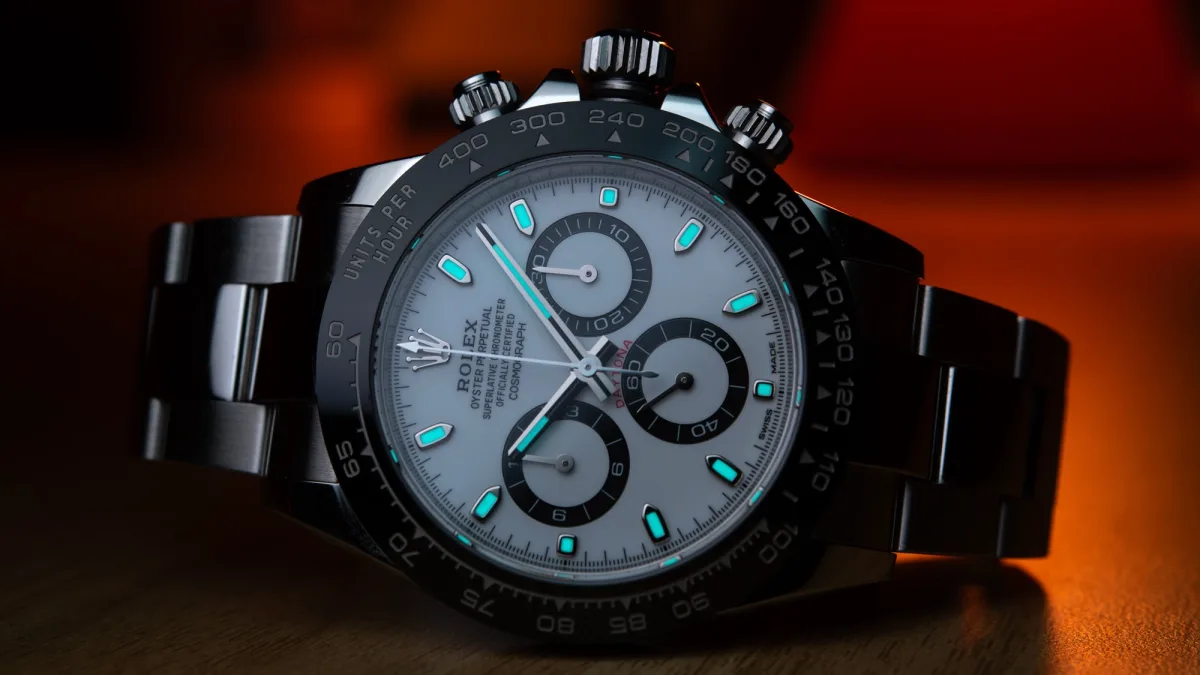
Isn't it strange that ever since the Daytona's popularity skyrocketed and the waiting list stretched to infinity, major brands like Longines (L3.835.4.72.6), TAG Heuer (Carrera 160 Years), Grand Seiko (Tentagraph), Seiko (SSC813), and others suddenly realized they too should release a sports chronograph with a ceramic bezel and three-link bracelet? Even Cartier joined in with a model Ariel and I jokingly called the Daytona de Cartier when we first saw it, despite its metal bezel and strong Pasha DNA.
All of this suggests that Zenith is not alone in its desire to lure people away from the Daytona waiting list, and there’s great commercial sense in that. If people are buying SUVs, then even the most stubborn companies like Ferrari, Rolls-Royce, and Lamborghini will start mixing their own versions of the bestseller recipe. I keep calling it a “recipe” because the ingredients are mostly the same, yet the extent to which the respective brands adhere to this recipe varies. And, as with food, the original is not always the best or the most popular.
Why the Zenith Chronomaster Sport is a Great Alternative to the Rolex Daytona
First of all, it’s arguably a very similar model to the Daytona. So, if you've ever wanted to enjoy what some consider the perfect presentation of a sports chronograph but couldn't pay double (and then some) or fight for the privilege of being “offered” (buy!) it at retail, the Zenith Chronomaster Sport takes you right to the edge of the Daytona universe. The Daytona recipe works, and the Chronomaster Sport has managed to adopt nearly all of its strengths.
At a stated width of 41 mm, the Zenith is slightly, but noticeably, wider. At 13.8 mm thick, it feels a bit thicker than the Daytona, although the presence of a date indicator, a larger and more complex automatic rotor, and an impressive movement architecture make up for the slightly less elegance and comfort compared to the slimmer Daytona case. Note that the Daytona pictured has a custom clear case back that is a bit thicker than the factory steel case back. Despite the Zenith’s heavier and wobblier crown, the weight and balance of the Chronomaster are close to the benchmark, which is good news as the Daytona is comfortable and balanced on the wrist (for extended wear), like steel bracelet chronograph watches are these days.
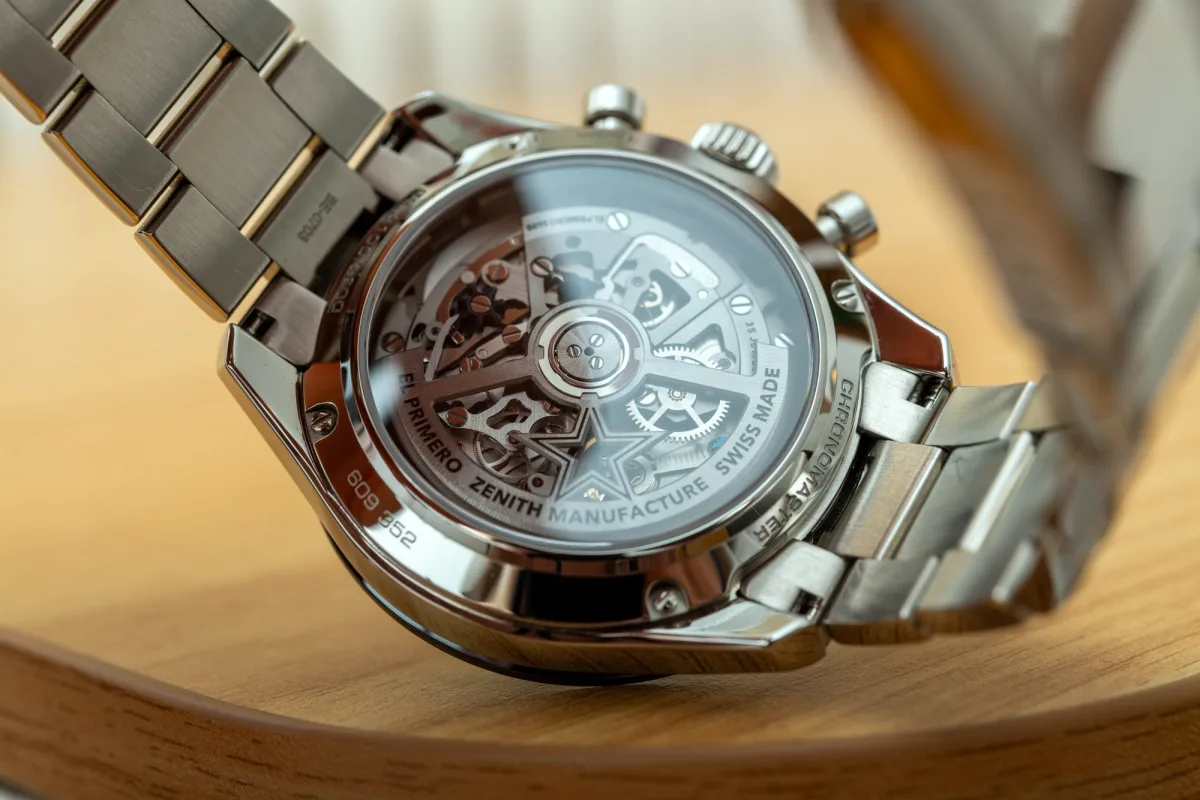
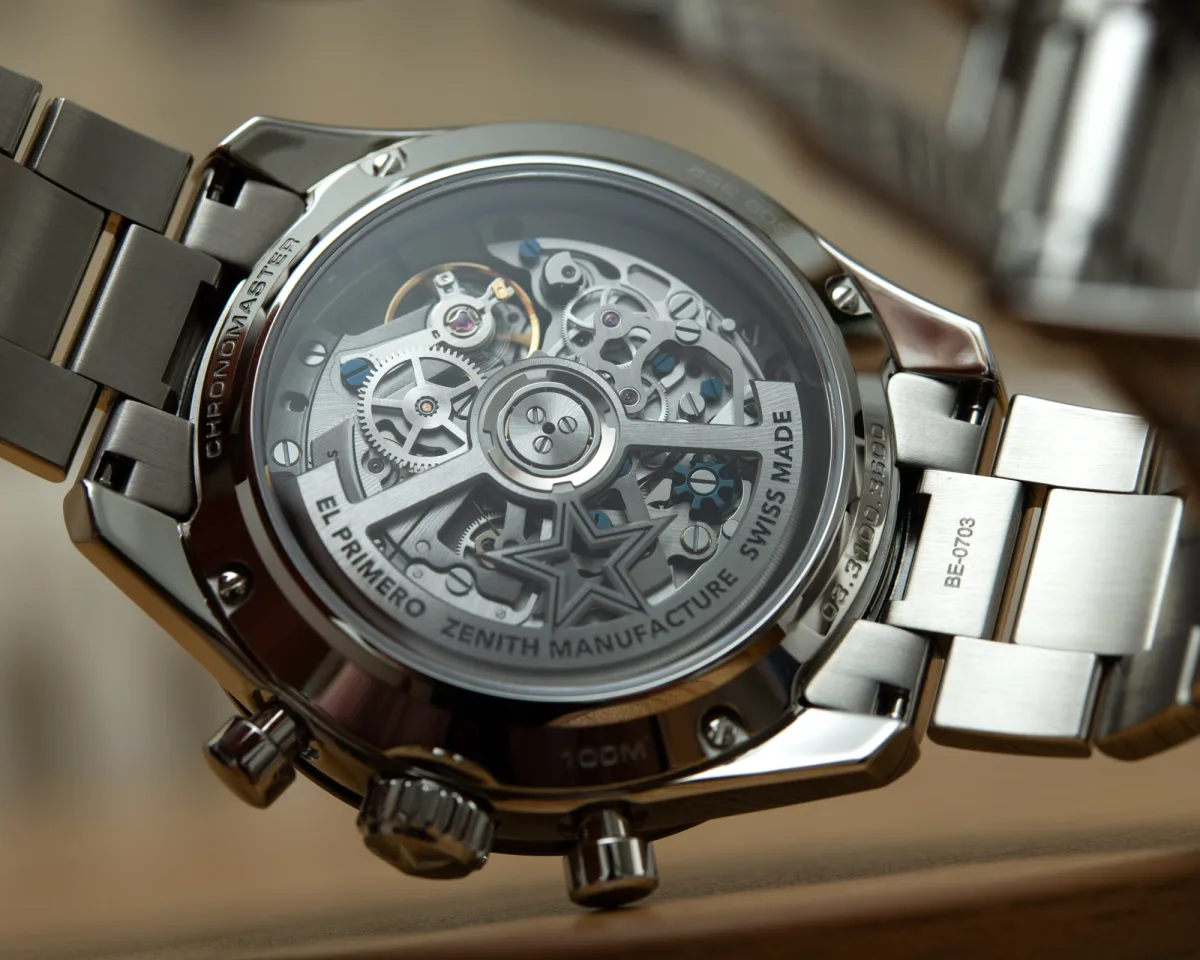
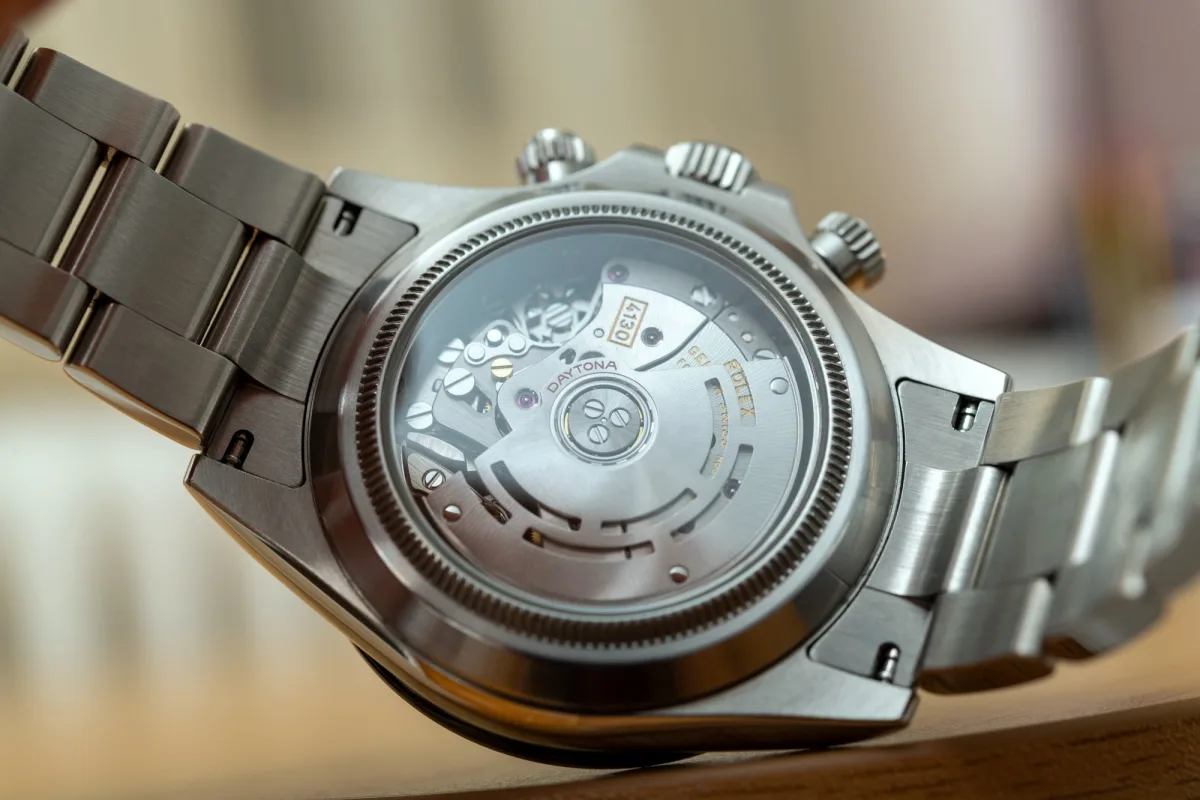
It's important to note that the Chronomaster Sport comes with a much more interesting movement than the Daytona. The El Primero 3600 is one of those rare movements that surpasses its rivals in some important respects. The case back reveals a movement so intricate it almost looks like a skeleton caliber rather than a regular chronograph. The chronograph movement layer is integrated into the main movement from the case back side (yes, it's an integrated movement, but this is where all the wheels, levers, and cams are presented). From an aesthetic standpoint, the El Primero 3600 is so intricate and neat that the 4130 sitting next to it will make you feel like Rolex has seriously shortchanged you.
“…which, in my opinion, is utter nonsense, questionably legal, and undoubtedly anti-consumer behavior.”
Putting appearances aside, it should be said that the Rolex 4130 is a brilliant piece of watchmaking, noted for its compactness, solidity, reliability, accuracy, long power reserve, and nearly silent operation (even with a clear case back). Unfortunately, Rolex hides one of its greatest achievements behind a thick steel case back (a clear case back appeared only in the exorbitantly expensive platinum variant of the recently updated Daytona), while Zenith showcases its El Primero 3600 movement with sapphire glass straight from the factory. The Daytona discussed here has a clear case back… In Rolex's eyes, this is nothing short of a dastardly act, one that voids the warranty and gives them the right to refuse service on the watch - which, in my opinion, is utter nonsense, questionably legal, and undoubtedly anti-consumer behavior.
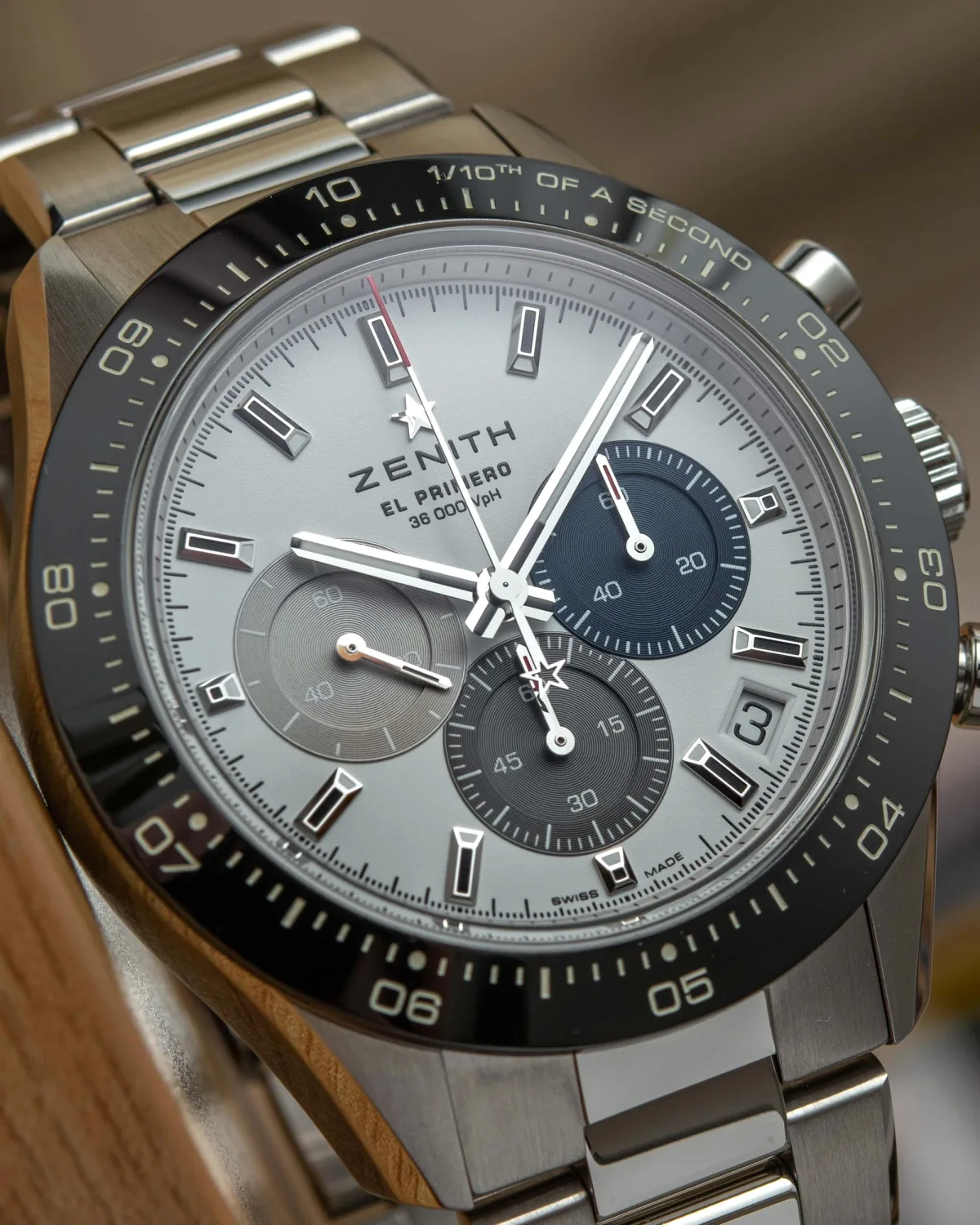
From the dial side, the Zenith Chronomaster Sport movement continues to impress, and one only needs to look at the ceramic bezel’s graduation to understand why. As blatantly as the overall impression of the watch and the monoblock ceramic bezel might have been copied, the latter does not feature the tachymetric “UNITS PER HOUR” scale but rather a “1/10th OF A SECOND” scale with a 0-10 scale and 1/10th markers between. This hints at the remarkable functionality made possible by the El Primero's increased operating frequency - 25% higher than the 28,800 semi-oscillations in the Daytona. The 5 Hz frequency in the El Primero provides tenth-of-a-second timing precision, which the watch technically had since 1969, but it became readable and usable only much later, in 2010, with the first Zenith Striking Tenth model.
The Chronomaster Sport uses the same trick as the 2010 Striking Tenth watch: using an accelerated central chronograph seconds hand that tracks the dial not in 60, but only in 10 seconds. This naturally enlarges the scale on which readings can be taken, making this precise timing easier to use. Since it’s impossible to keep track of the number of rotations this fast hand makes, the sub-dial at 3 o'clock is used as a 60-second totalizer, and at 6 o'clock as a 60-minute counter. This means the Chronomaster Sport is a 1-hour chronograph, foregoing the 12-hour totalizer of more conventional El Primero and Daytona watches.
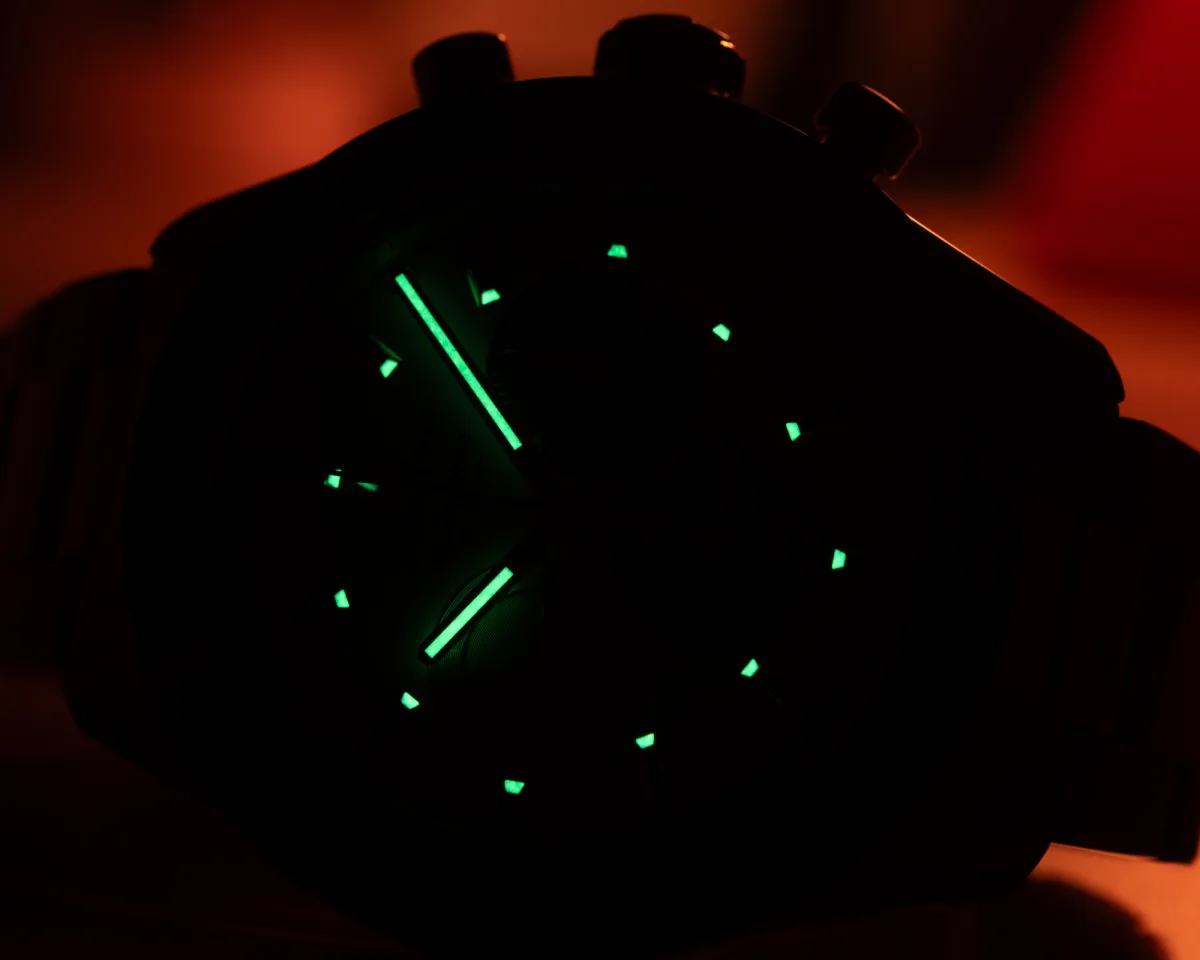
Honestly, this is a small price to pay unless you regularly time multi-hour trips to the second. In return, you get the enjoyment of watching the long and thin central hand (with a Zenith star counterweight) race across the beautifully executed dial in a manner you won’t see anywhere other than Zenith. It's a stunning spectacle that also implies a mechanical bonanza inside.
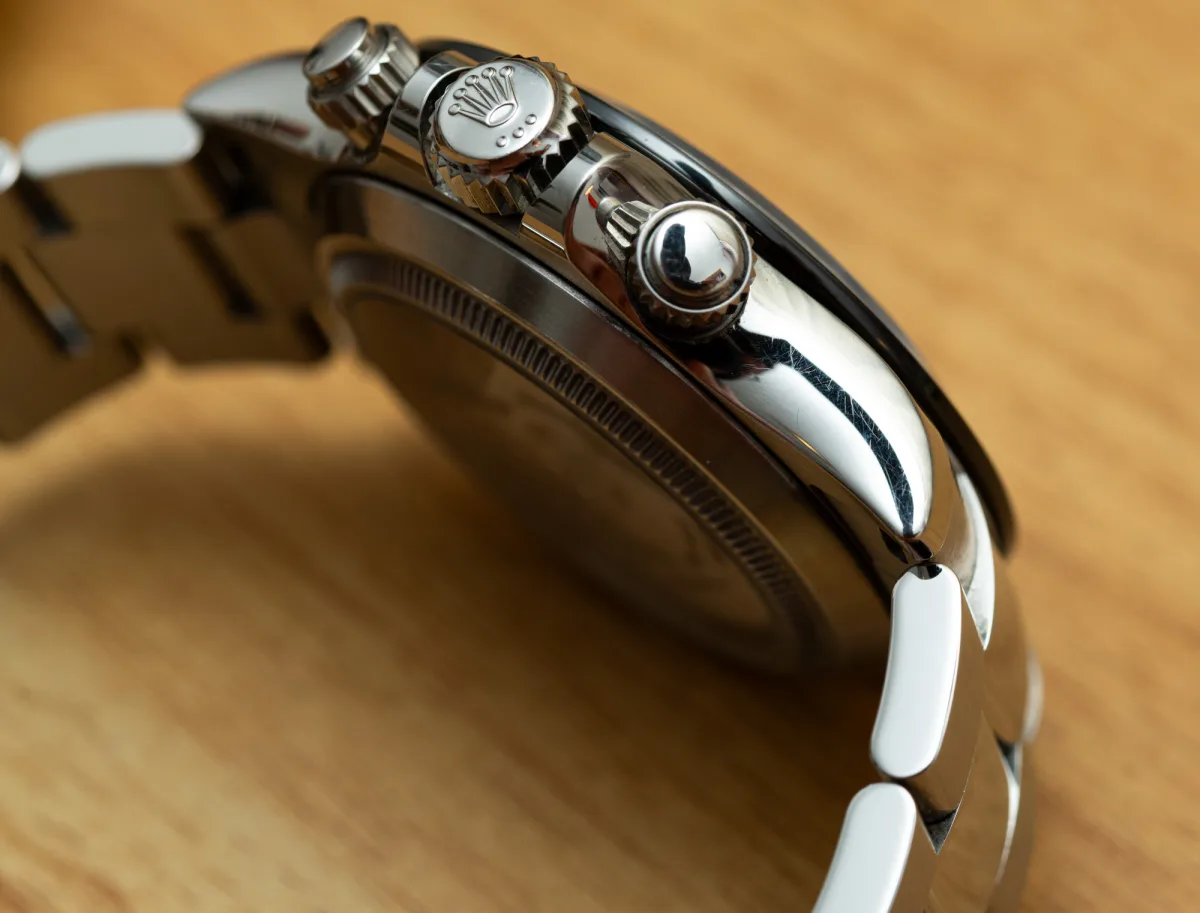
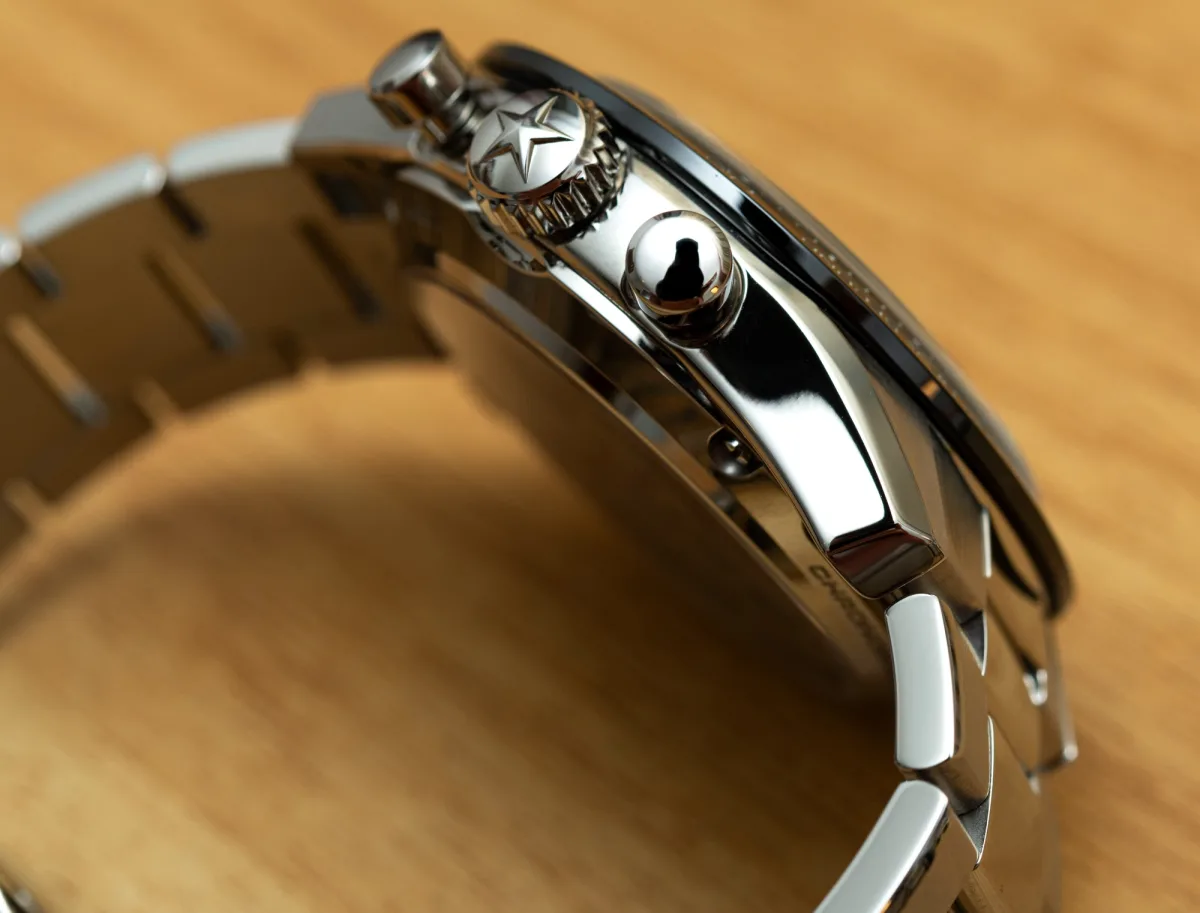
The screw-down pushers, which sparked much debate in the Daytona model (potentially those who haven't lived with it know it takes exactly one second to unscrew them), were not transferred to the Chronomaster Sport. Similarly, crown guards and the screw-down crown are absent. However, the 100-meter water resistance is still present, which is pleasing, even if watches without screw-down pushers and crown aren't everyone's preference for swimming.
I, for one, appreciate the Daytona's versatility, but I also understand why these pushers, at least from an aesthetic standpoint, seem a compromise compared to the more classically styled pump pushers of the Zenith. The latter’s crown is a bit more slippery and challenging to operate, but its domed design looks more refined and less industrial compared to the Rolex crown, which looks a bit rough and clunky.
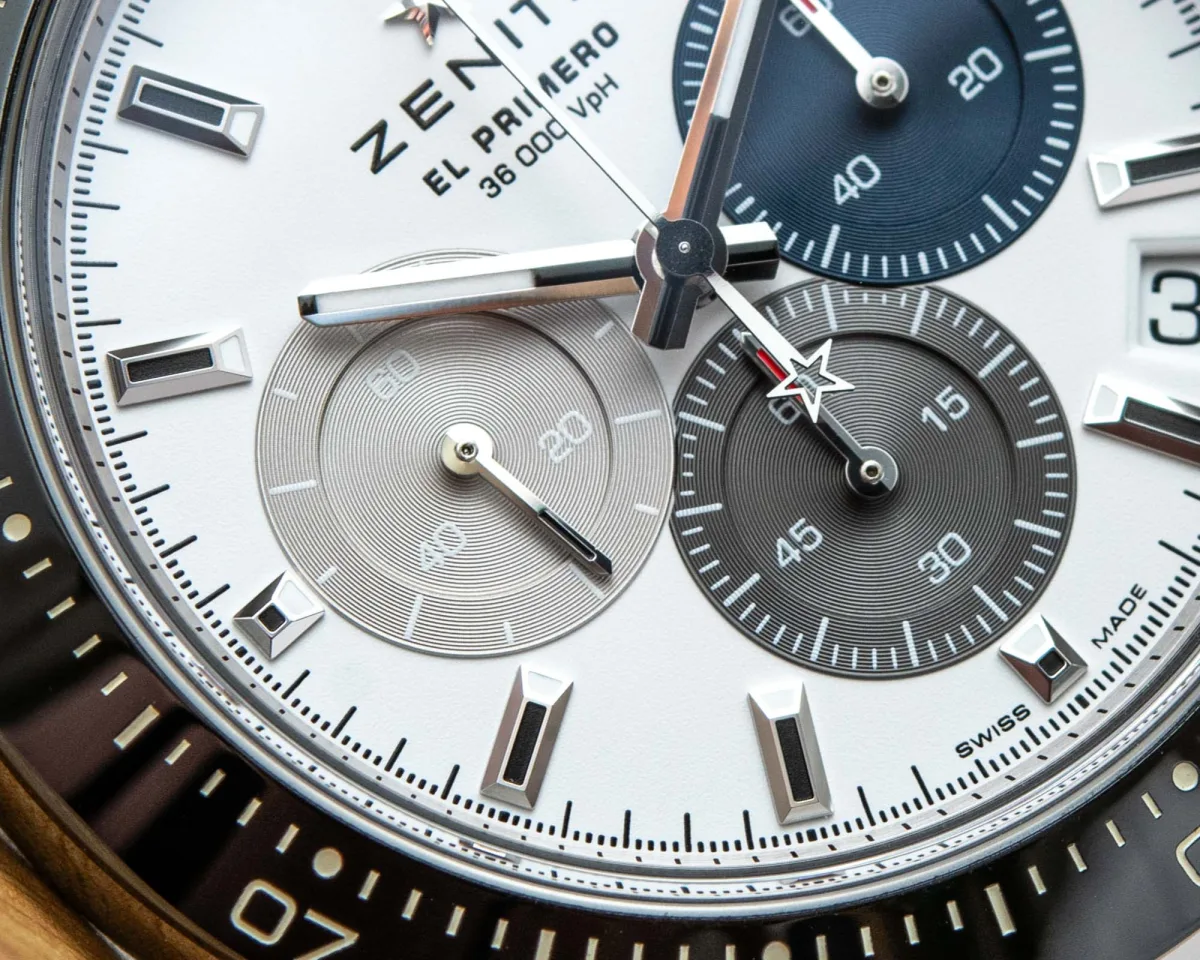
Lastly, in the long list of reasons why the Zenith Chronomaster Sport is a great alternative to the Rolex Daytona, the Chronomaster Sport dial is beautifully designed and executed. This effect is enhanced by the anti-reflective coated sapphire crystal. Upon close (very close) inspection, the Zenith’s sapphire crystal is slightly domed, complementing the curved profile of the case and the descending lug design, whereas the Daytona’s front is completely flat. Both crystals are slightly but noticeably raised above the practically scratch-resistant ceramic bezels.
The overlapping vintage-style sub-dials of the Chronomaster Sport are an acquired taste, as are the “hollow” sub-dials of the Daytona. Strangely enough, the Chronomaster Sport is large enough that such overlapping isn't necessary, but this element, along with their historic three-color execution, gives the watch dial a coveted distinction from the Daytona. The clarity of the white lacquer, the size, reflectivity, and uniformity of the applied hour markers, the depth of the dial, sub-dial, and date aperture all scream quality in the Chronomaster Sport. Unfortunately, the same cannot be said for all other elements of this venerable alternative.
What are the Drawbacks of the Zenith Chronomaster Sport
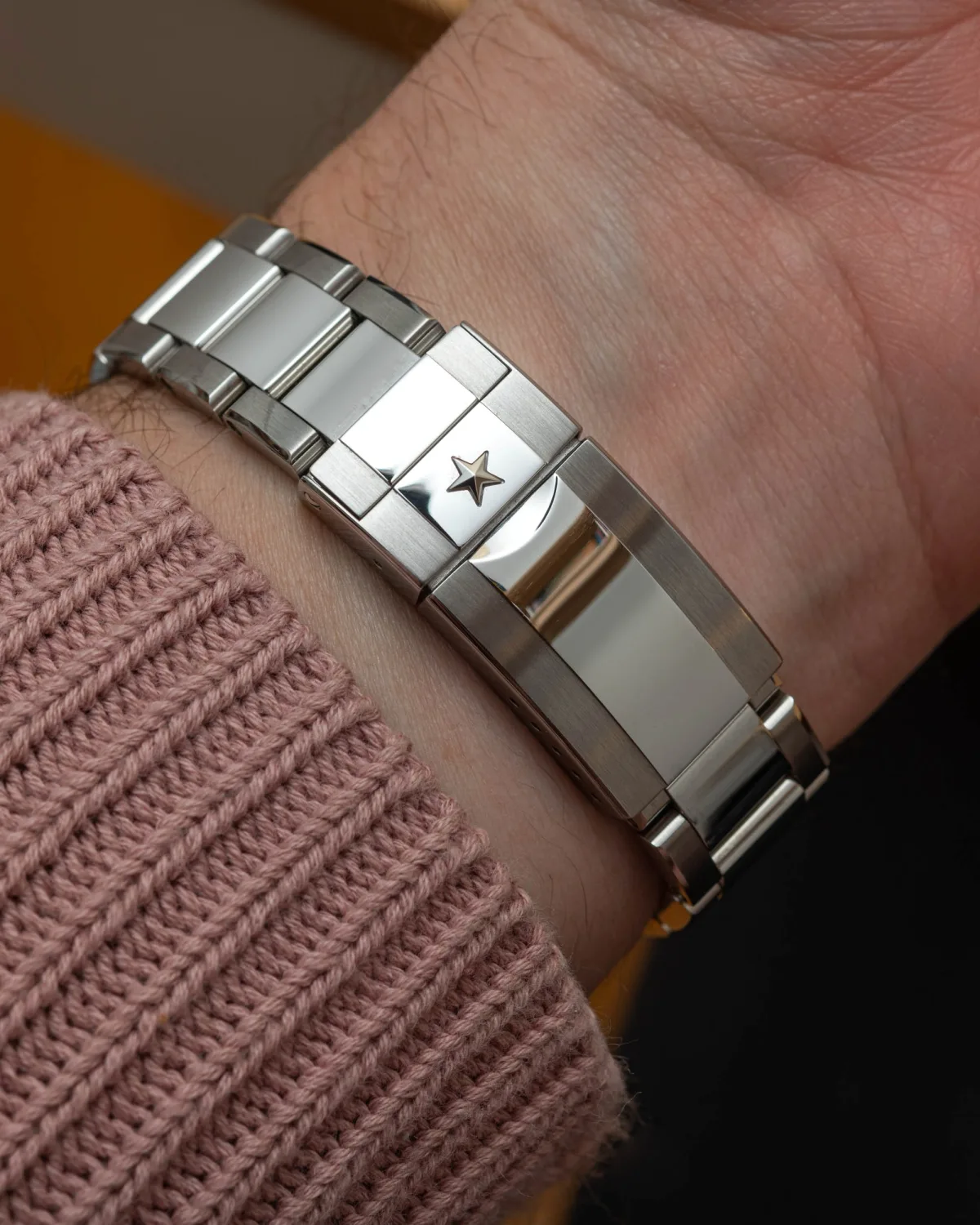
In short, the bracelet and especially the clasp of the Zenith Chronomaster Sport fell short of expectations. Not only compared to the Rolex Oysterlock, but also compared to what one would expect from a watch at this price point. Sure, you get an expensive and unique movement, a clear dial, and a beautiful case for your money, and that's enough to keep the bracelet and clasp from being a total deal breaker, but they do their best to be just that.
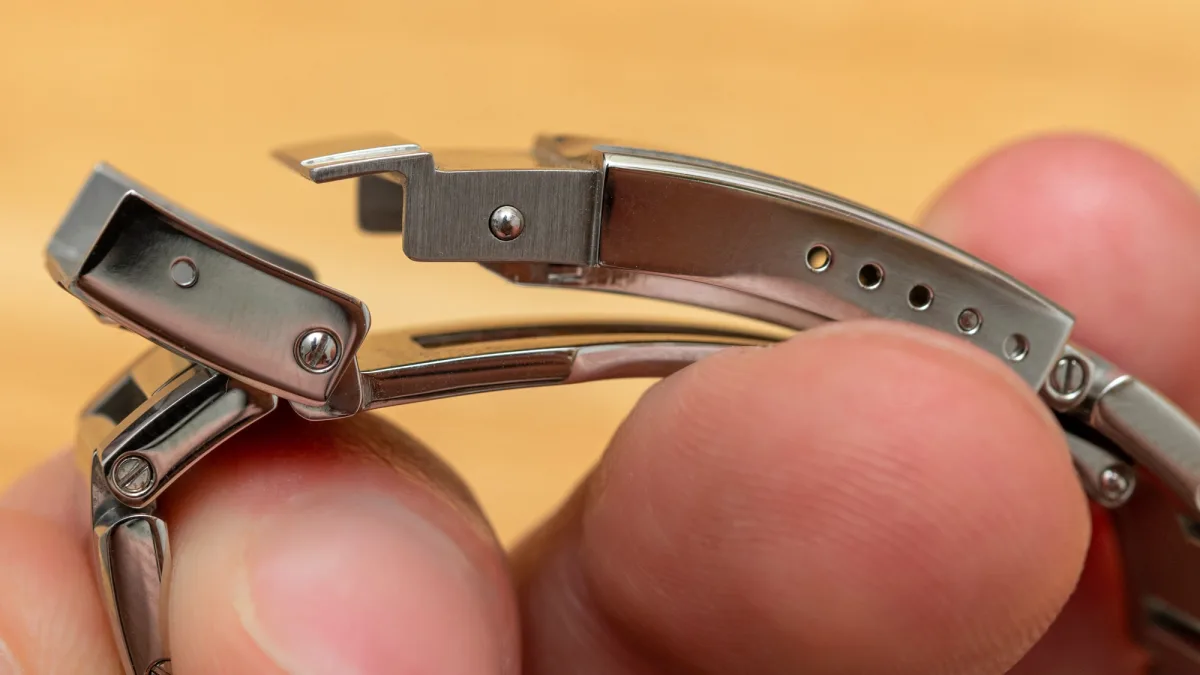
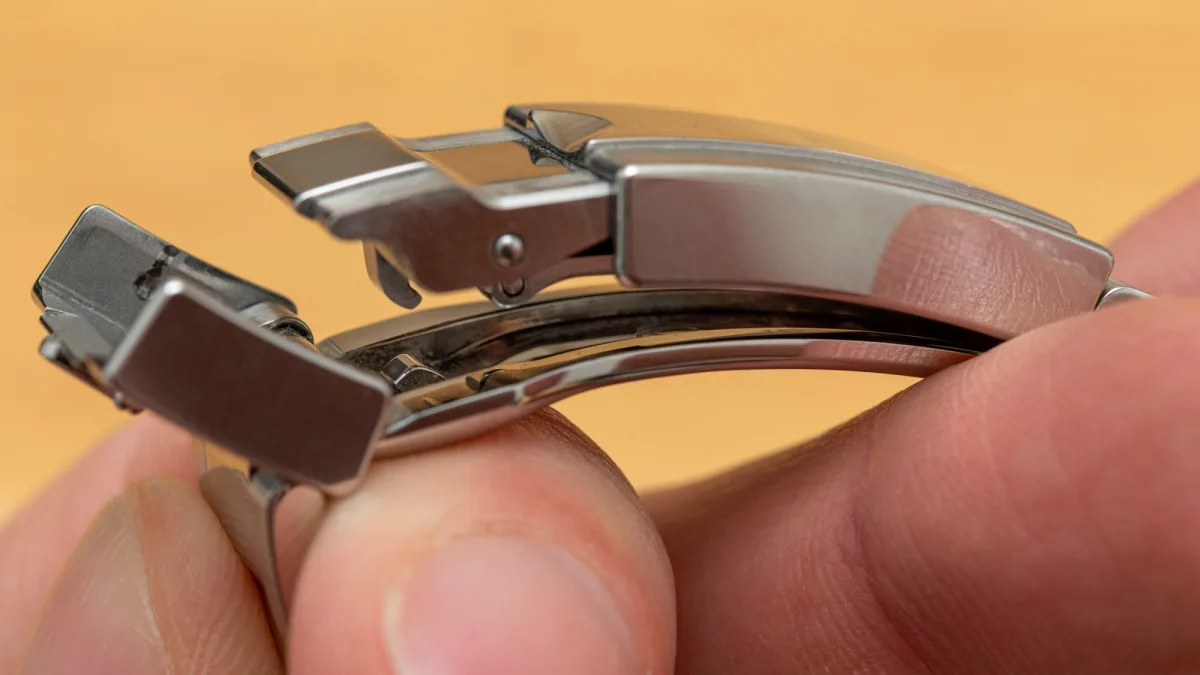
The clasp is so poor that I believe Zenith should offer an updated version free of charge to Chronomaster Sport owners when the watch goes in for its first regular service. It’s a piece of admittedly thick stamped metal that snaps shut with the help of a nail after a small clasp (which, conversely, has too much play) is first unlatched.
The internal lock of the Rolex Oysterlock clasp rotates, meaning you lift a small metal lip with a welded beak that holds onto a curved bar secured to the first blade of the folding clasp. Essentially, in Rolex, you lift a rotating part, whereas in Zenith, you pry off a friction-fitted part using the end of your nail. Overall, I'm not too fussy about such things, but the clasp on the Chronomaster Sport is bad Seiko level 5, complete with creaky sounds and rattling.
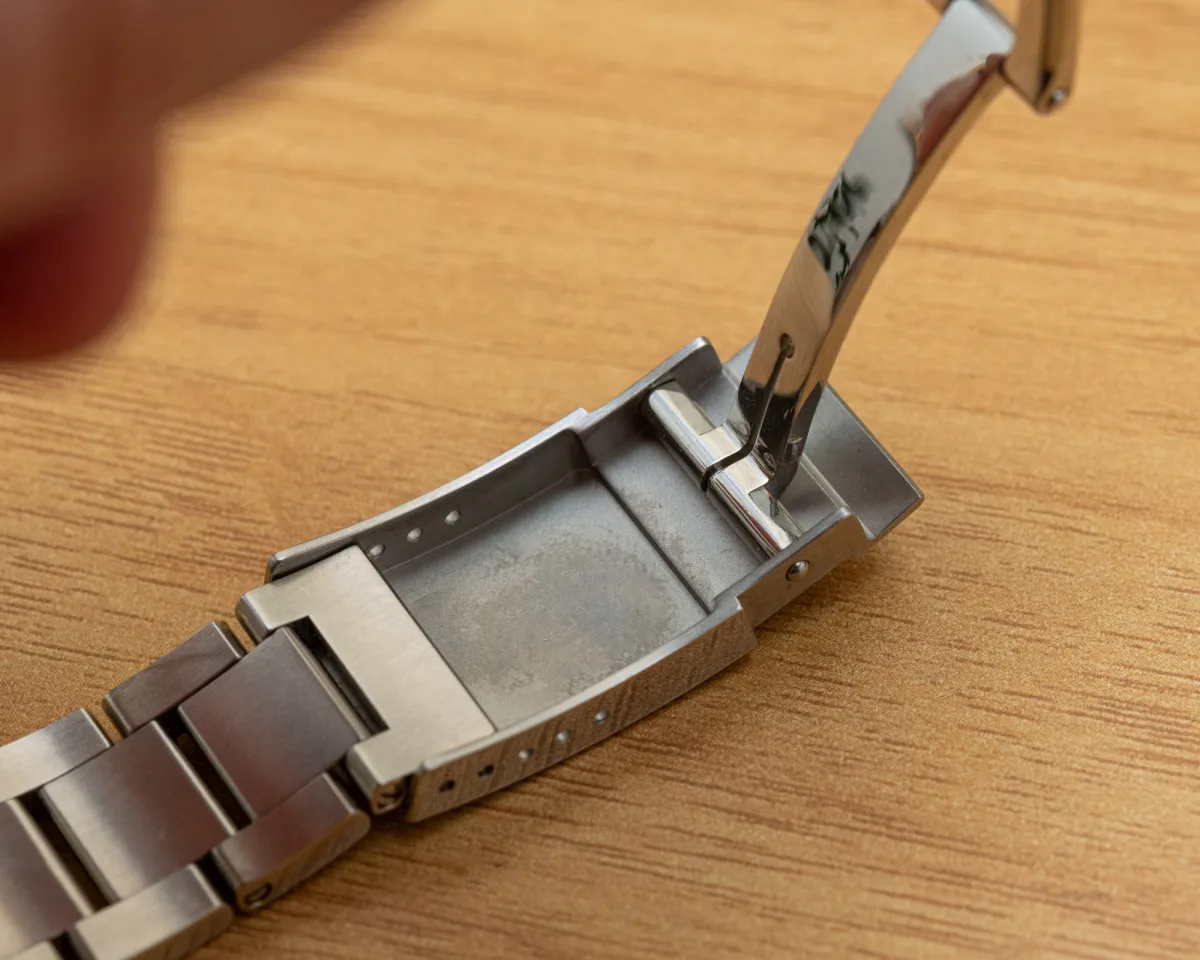
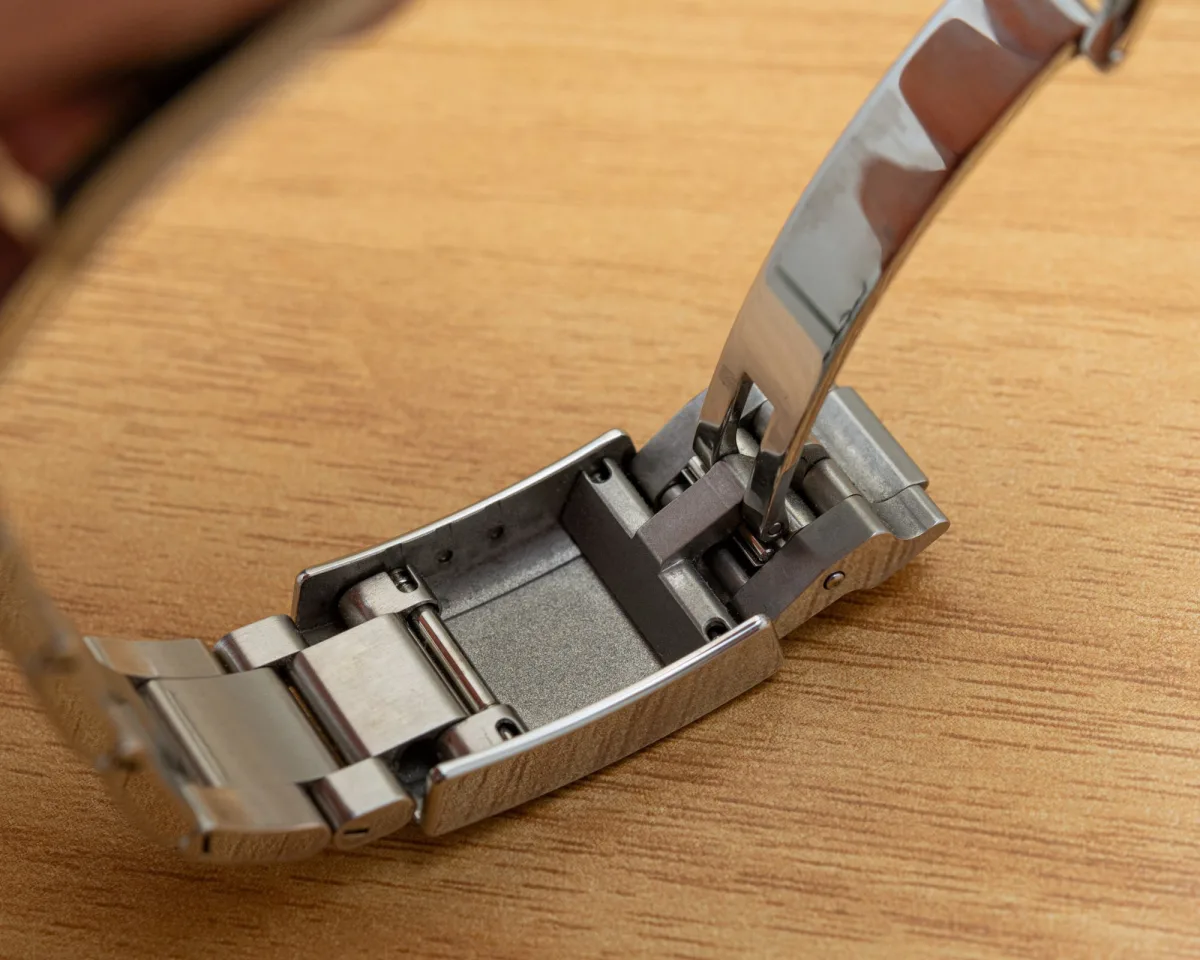
To top it off, the clasp design was borrowed from the Rolex Daytona’s Oysterlock clasp: two matte stripes flanking a raised and polished central section. Even the smaller latch you lift first has the exact same indentations and shape. Despite the external similarity, the Chronomaster Sport clasp lacks a tool-free adjustment system, which is strange given that the Easylink comfort extension system has been used on many non-Rolex watches (the first that comes to mind is the Jaeger-LeCoultre Master Compressor Navy SEALs, which I owned and reviewed many years ago). In other words, the Zenith clasp imported the looks but not the quality or usefulness of its muse.
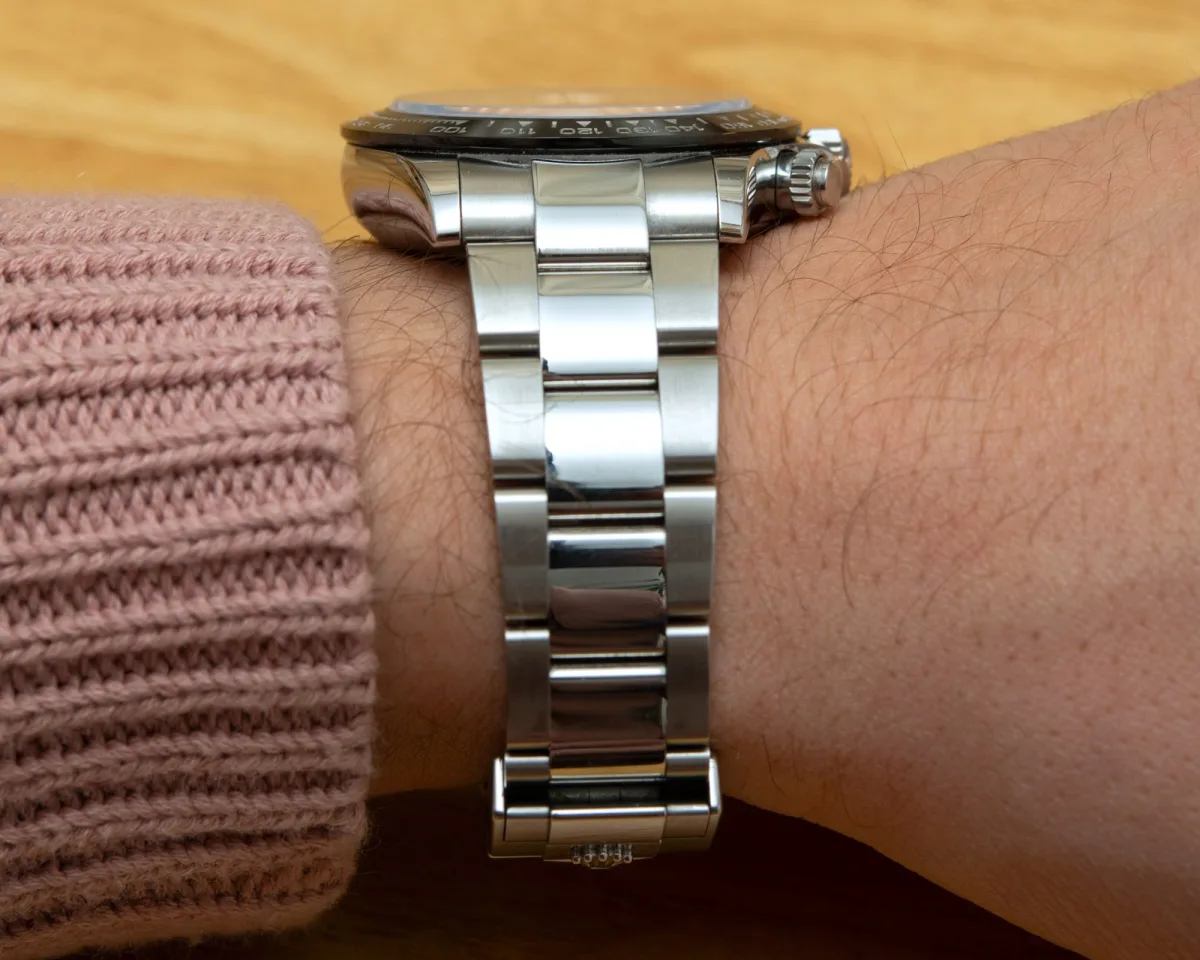
I asked the Zenith team at Watches & Wonders Geneva 2024 about the clasp and its issues, and they replied that they are actively working on the design. According to them, the problem largely lies in the patents for more complicated folding clasp mechanisms that they need to develop. The bracelet is a noticeably better attempt, with thicker and squarer links. They create a somewhat more unique style compared to the Oyster bracelet, despite its style remaining very close to what we find on the Rolex Daytona - and thousands of other watches, of course. Zenith impresses with polished bevels running along the outer edges of the links, whereas the Daytona’s Oyster bracelet uses straight angles that have been treated with a very fine polished veneer to remove the edges of freshly machined steel. This is the least Rolex could do.
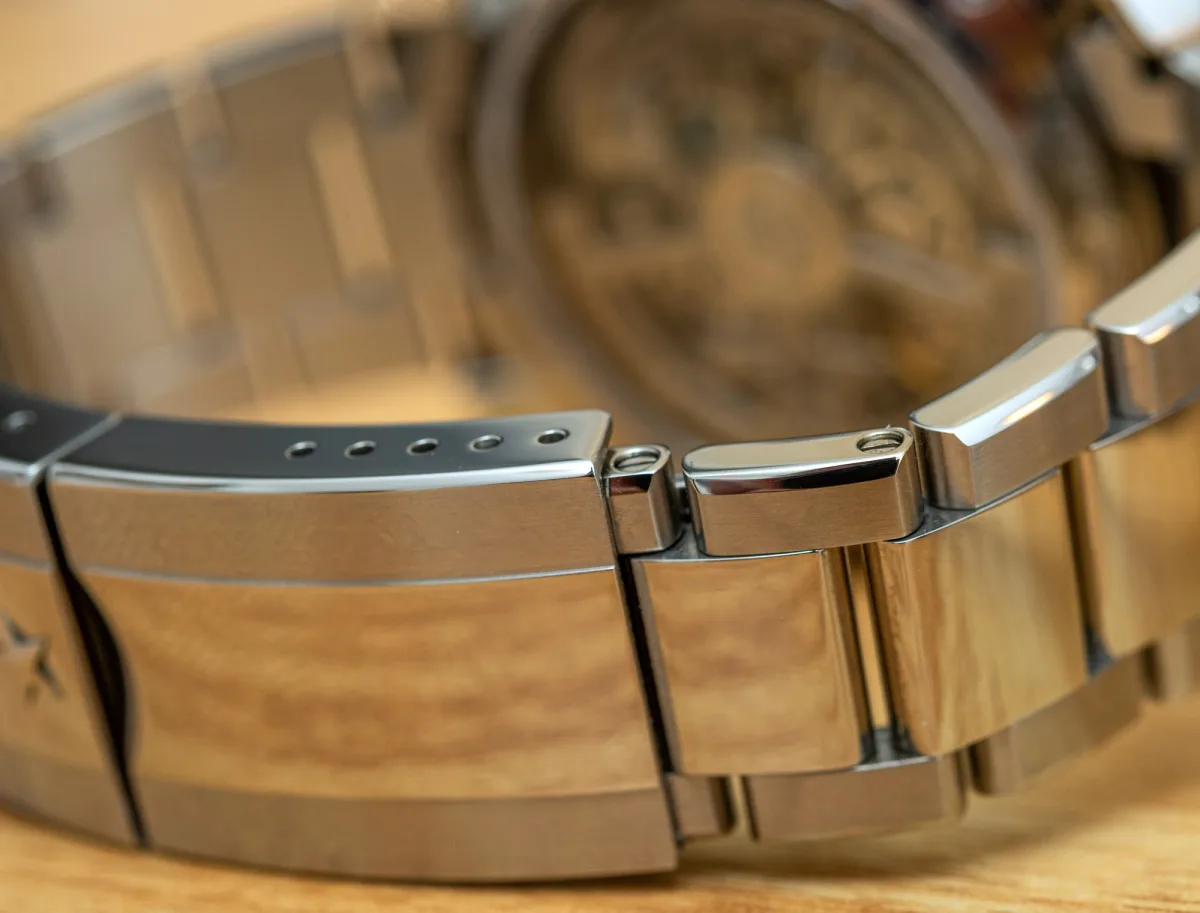
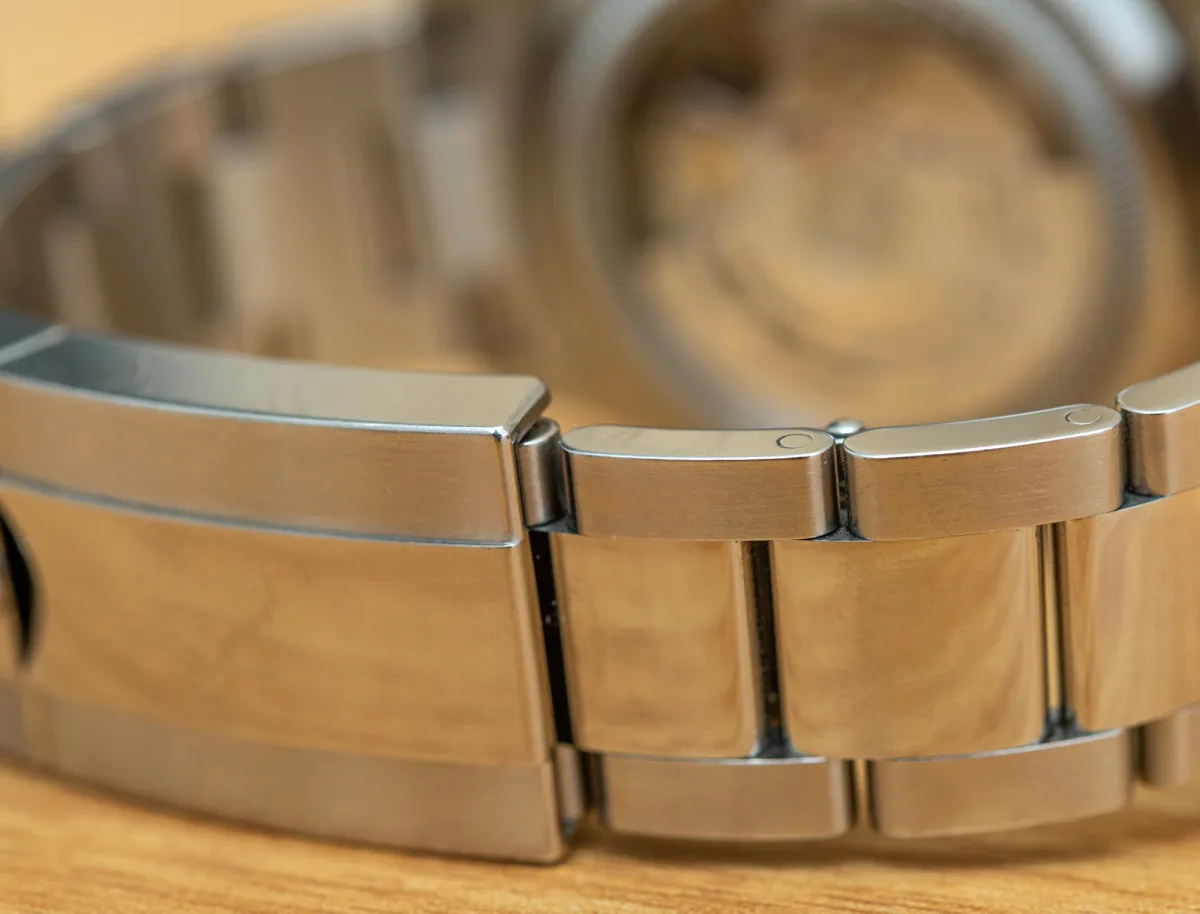
Unfortunately, for some reason, the Zenith bracelet is fitted with two screws and a tube holding the individual links, making resizing the bracelet almost impossible at home - worse yet, the factory tubes and screws were bonded with some adhesive so tenacious that it took an experienced watchmaker about half an hour to remove just four links for resizing with a heat gun. What happened to the short-lived trend where brands developed quick-release spring bars and not only those, but links that could be removed without tools? We’ve already crossed the $10,000 threshold, and watchmakers - all of them - should make owning and wearing all these luxury items as comfortable, impressive, and awesome as humanly possible. And then some.
Conclusions
If the Rolex Daytona Panda didn’t exist, the Zenith Chronomaster Sport would simply be a very beautiful watch with impressive functionality and wearability - with the aforementioned caveats. But the Daytona look is deeply ingrained in the public consciousness, and the intentional similarity is quite evident. The question is, what to make of it. Zenith, as we said in the introduction, is a surprisingly likable brand for a whole host of valid reasons, and it has a large selection of impressive watches that are quite similar to one another. One might even say it’s understandable that the brand joined many other esteemed watchmakers in their quest to offer an alternative to the Daytona. However, in some details, it may be too close to its inspiration - not only in overall impression but especially in the bracelet and clasp - and the more similar two things are, the easier they are to compare. Make no mistake, Rolex Daytona is far from perfect.
Thus, out of these two comparable chronograph watches, the Chronomaster Sport offers perhaps a more advanced movement at an undeniably more competitive price. Whether this is a thoughtfully crafted package designed to please eager buyers or a temporary lapse in judgment by a historic brand is up to you.
The price of the Zenith Chronomaster Sport is $11,000, reference 03.3100.3600/69.M3100, which is reviewed here. Pictured is the discontinued Daytona 116500LN - its successor, the Rolex Daytona 126500LN, is priced at $15,100, but on the grey market where it is available, it costs twice as much, and this should influence how good the Chronomaster Sport looks in comparison. More information can be found on the brand's website.