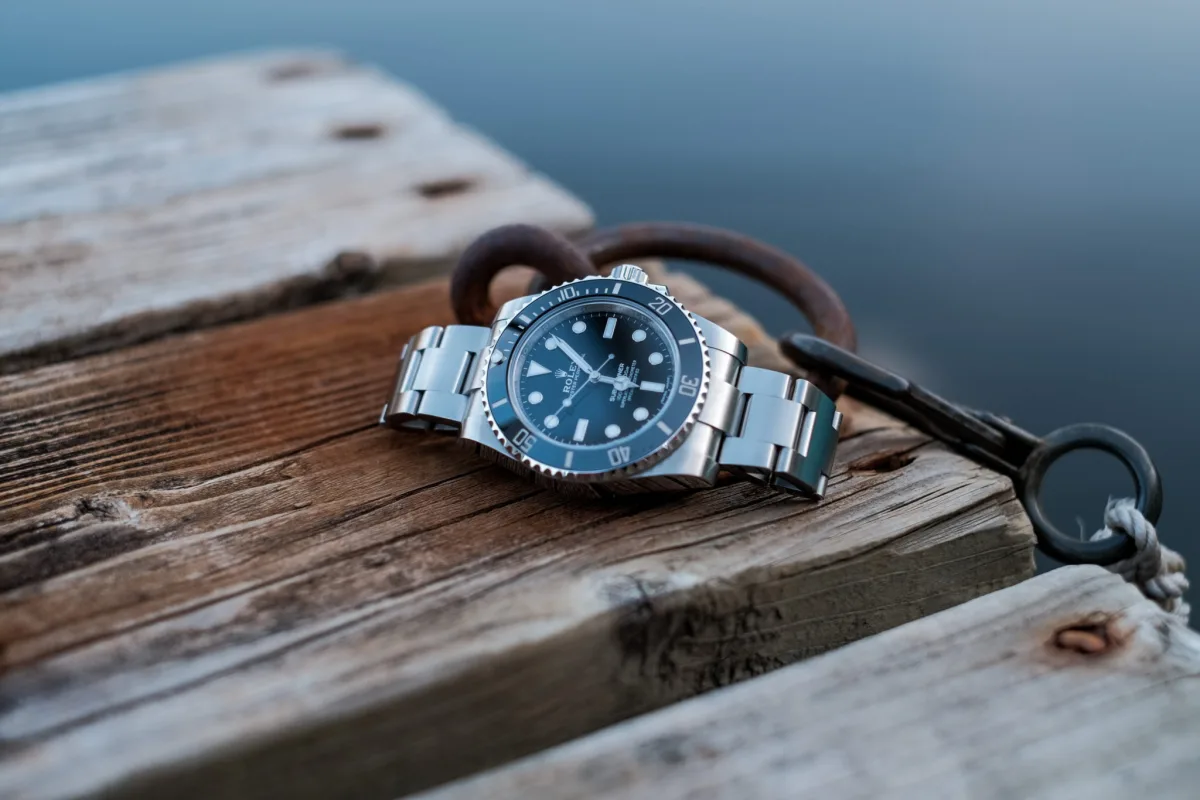
There are watches, and then there are watches. You know what I'm talking about. The first type of watch can be simply beautiful. They might even be excellent on their own. For instance, I've considered tons of limited edition racing and aviation watches that could be worth their weight in gold to the right collector. There's nothing wrong with these watches, and they retain their value beautifully. At the same time, these watches don't leave an indelible impression outside the relevant circle of watch enthusiasts. They come and go, forgotten by all but those of us who own them and treasure them.
Then there are other watches. The Rolex Submariner. The Omega Speedmaster. Designs that have influenced the watch industry for decades. These watches are icons, and generations of watchmakers have drawn inspiration from them. But which of them are truly the greatest icons? To some extent, it's a subjective question. Which design trends matter most to you? On the other hand, there are a few undisputed greats that have given us the landscape of automatic watches we have today. Here are my thoughts on the five most iconic watch designs of all time.
Rolex Submariner
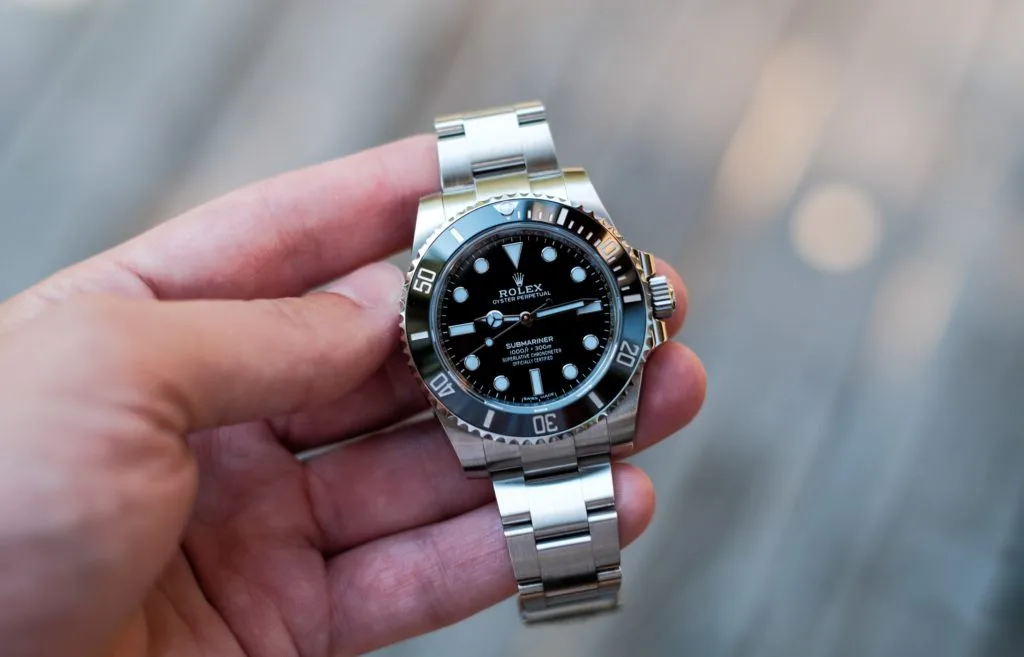
If I had to name the most iconic watch of all time, it would be the Rolex Submariner 114060. Ask most watch enthusiasts, and they'll say the same. The Submariner was the original dive watch. It was the first to use the GMT Master II bezel and features a robust screw-down crown for excellent performance at depth. If you look at contemporary dive watches - any modern dive watch - you'll see that they incorporate some of the features of the Submariner.
The current Submariner has ditched the two-tone bezel and dive calculator. Any properly equipped modern scuba diver already has digital equivalents anyway. Instead, Rolex focused on design, creating a watch with an elegant black color that extends from the center of the dial to the outer edge of the bezel. The high visibility of white hashes on the dial makes it easy to read in low light, and the bezel is marked with white numerals at traditional dive timer positions. The heavy, rugged design is the same as the original Submariner we know and love.
Needless to say, most buyers of the Rolex Submariner don't actually plan to take their watch to the depths of the ocean. But if you want to, nothing will stop you. The Submariner is rated for a depth of 300 meters.
Rolex Daytona

The official Rolex product description for the Cosmograph Daytona says: "The Daytona is a watch for winners." To some extent, this may be marketing, but it's also not just hyperbole; the Rolex Cosmograph Daytona has been awarded to the winner of the Le Mans and Daytona races every year since 1963. Now that's pedigree! Curiously, the Cosmograph Daytona wasn't always this iconic. In fact, it started as a "budget" Rolex watch, priced 20% lower than all other models. They weren't even waterproof! But thanks to its role in racing history, the Rolex Cosmograph Daytona has earned its place in watchmaking history.
The latest version of the Cosmograph Daytona is an improvement over the original 1963 model. It features an integrated chronograph for millisecond accuracy. The chronograph is operated by a pair of buttons with the same screw-down design as the crown. This is a big advantage, as you won't have to worry about the buttons being accidentally pressed. The rotating bezel makes it easy to use the chronograph for timing intervals, and even features a tachymeter for more complex calculations. Three color options are available: two black and gold, and one black and silver.
Patek Philippe Calatrava
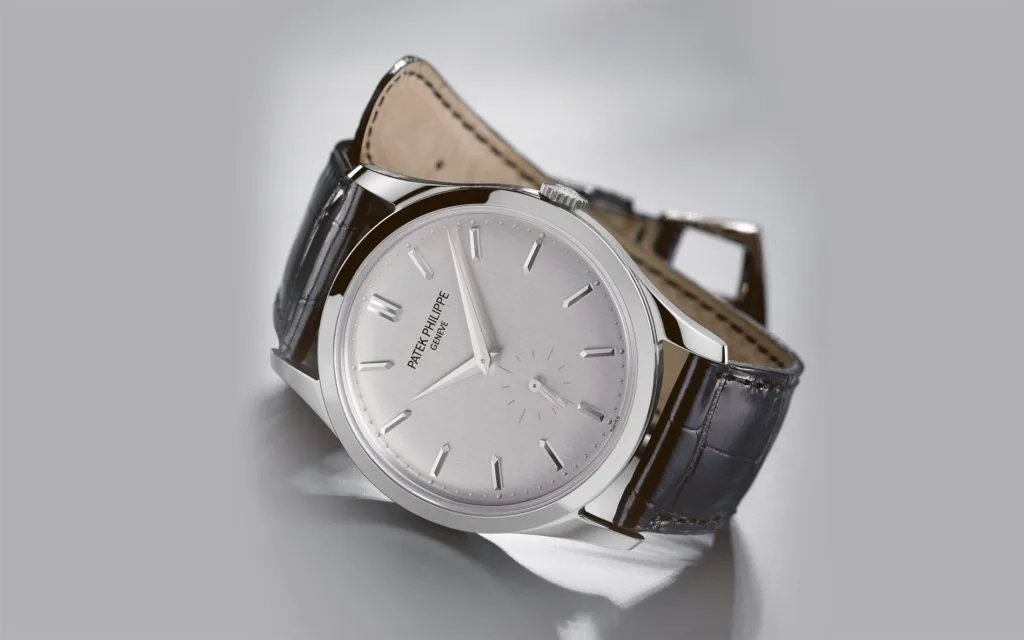
In 1932, Swiss watchmaker Patek Philippe found itself in a tough spot. Their existing base of enthusiast clients was shrinking, and business was starting to suffer. To turn things around, they needed a watch with broad appeal. The concept was fairly simple: create a universal dress watch that would fit Patek Philippe's design philosophy of "no complications." The answer was the Calatrava model. These were compact 31mm watches with a dial free of numerals. All of this was built on the Reference 96 movement, one of Patek Philippe's "workhorses."
Nearly a century later, there are now eighteen different versions of the Patek Philippe Calatrava. These aren't eighteen different versions over the decades. These are eighteen different versions currently in production. Over the years, there have been several dozen more. Now you can get a more modern movement. Patek Philippe even conceded to complications, and some variants have a 24-hour subdial at the six o'clock position. There are also several versions with date windows at the three o'clock position. Despite this, they are simple, minimalist watches that suit almost any occasion.
JLC Reverso

The JLC Reverso was created to solve a unique challenge: how to design a watch that could withstand the harsh conditions of a polo match. This was no joke. In the 1930s, British officers in India were obsessed with the game. To maintain military readiness, most preferred to wear a watch. After all, if you're suddenly called to arms, you don't want to be searching for your watch. Unfortunately, polo is a rather rough game. For those unaware, it involves riding a horse and swinging a mallet at a ball. As you can imagine, an environment where a bunch of military men are swinging wooden mallets in the same place is not the best place for a watch.
JLC's solution was innovative. They created the Reverso watch, which can be easily flipped to protect the glass without removing the watch from your wrist. This is easier thanks to the rectangular design, as the convex, curved side of the case does not get in the way during flipping. Like any other watch of this age, the Reverso has seen many improvements over the years. Additionally, they come in dozens of colors. But even though the days of British officers in India are long gone, the days of the Reverso are just beginning.
Omega Speedmaster

The Omega Speedmaster is not a single watch, but an entire series of watches, beginning with the first Omega chronometer released in 1957. Perhaps the most famous is the Moonwatch series. The original Moonwatch was hand-wound, and some of the modern Moonwatch models continue this tradition. This was necessary for lunar watches: they went with Neil Armstrong on the Apollo 11 mission, and a standard mechanical movement won't work in zero gravity.
All versions of the Speedmaster share two common features: a thick, muscular design and a chronometer-grade movement. Beyond that, cosmetics are up to you. There are over a dozen variations, including a tribute to the solar-powered aircraft HB-SIA. Case options range from black to stainless and rose gold. Strap options range from canvas, leather to steel. However, be careful. Speedmaster watches are in high demand, so getting the exact version you want might not be easy. Purchasing the perfect Speedmaster can sometimes require years of patience.