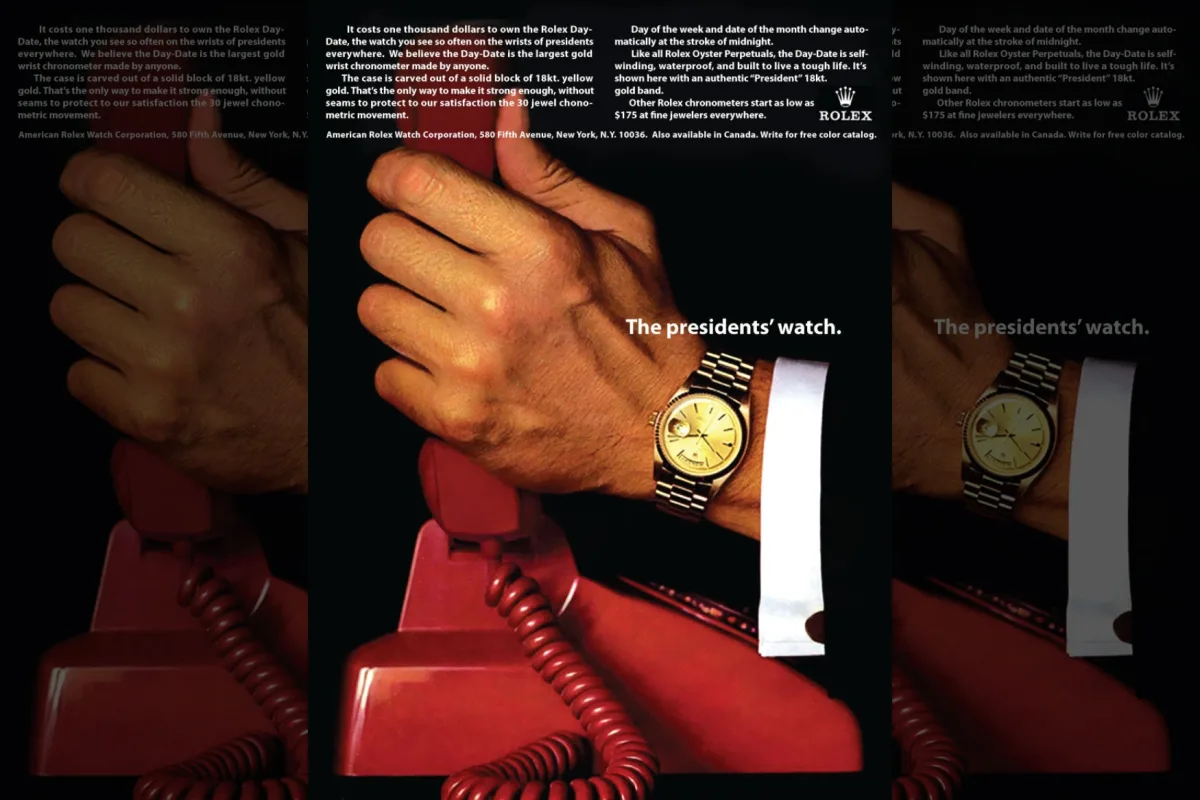
My first memories of touching luxury watches date back to my teenage years, long before I could properly describe what I was seeing.
These watches weren't mine, and I certainly didn't understand them in terms of references, calibers, or production eras. I just knew they were heavy, shiny, and important.
This impression was linked to my grandfather. His life, at least from a child's perspective, seemed mythical: he was the Foreign Minister of South Korea during the Park Chung-hee era, and later became CEO of Daewoo's architectural division during the conglomerate's heyday in the 1970s. He passed away when I was still in elementary school, which meant he was gone long before I became interested in watch collecting. I never got to ask him why he loved watches, what he bought, and what these models meant to him.
But I remember he wore a Rolex.
Impressive First Memory
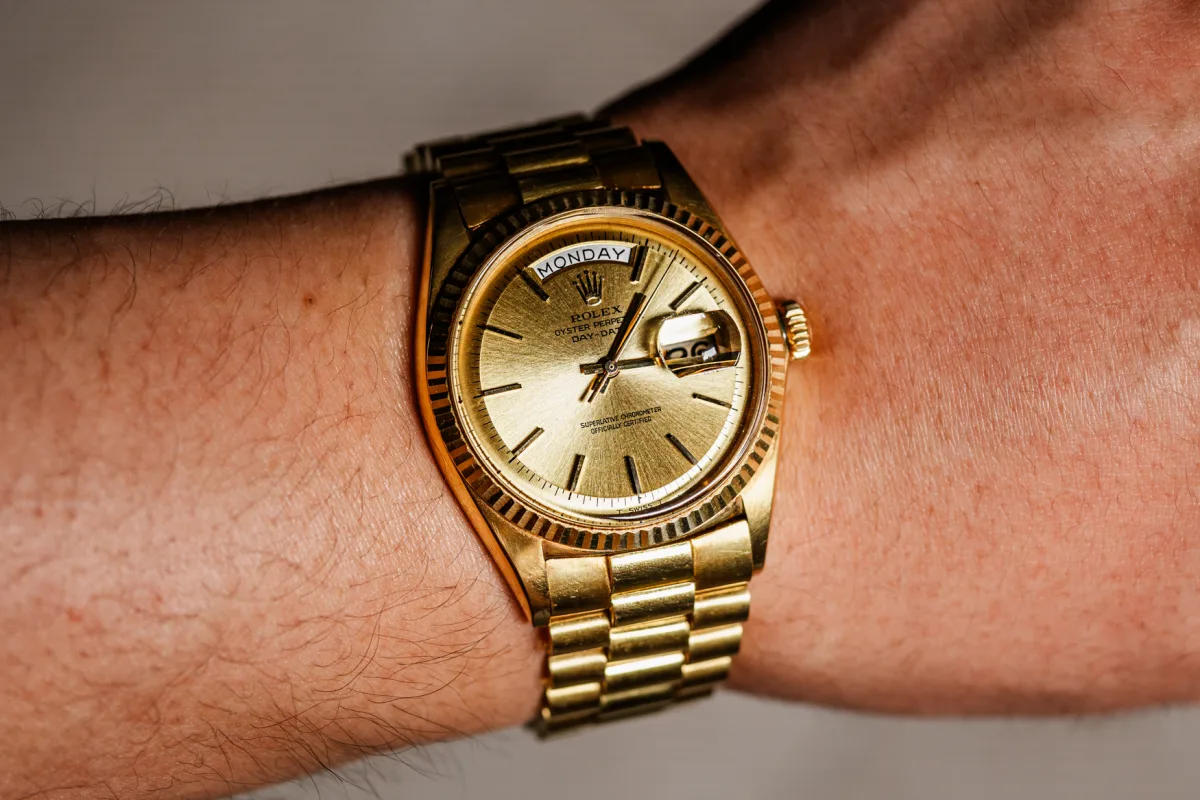
The earliest image in my memory is almost cinematic: my grandfather, lying on a large, comfortable leather sofa, completely relaxed, wearing a yellow gold Rolex Day-Date. A child's memories often compress into symbols, and for me, the Day-Date became synonymous with adulthood - not just age, but a certain kind of authority. The watch wasn't loud like modern luxury models but still radiated something undeniable.
In a previous article, I talked about inheriting a full yellow gold Datejust with a linen dial and a President-style bracelet, which came to me from my father, who got it from my grandfather. These watches helped me connect the dots - to realize that watches can be more than just objects; they can be keepers of family history that photos sometimes fail to convey. But even with this Datejust on my wrist, I constantly had one thought: someday, I wanted a Day-Date.
Desire for the Day-Date Isn't Always About Money
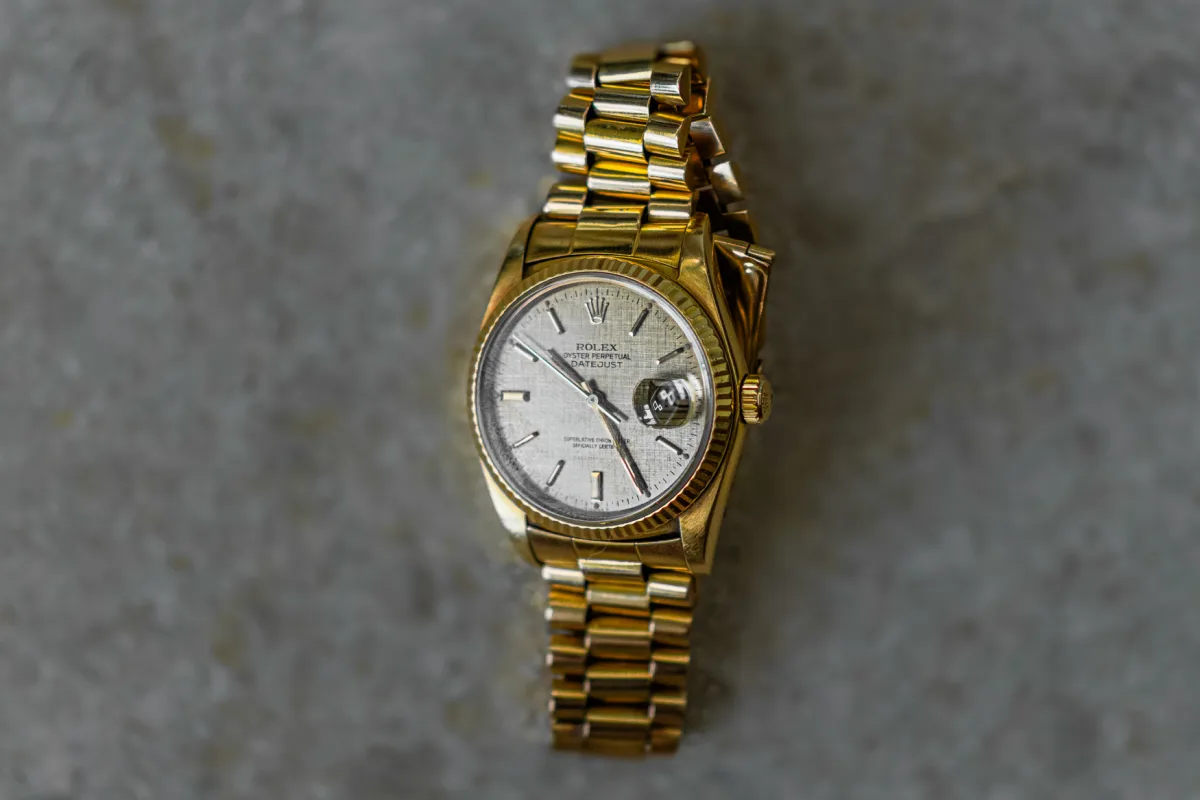
Here's what's interesting: I could have bought a vintage Day-Date years ago.
Compared to other watches in my collection, the price wasn't an issue. A clean vintage Day-Date, especially ref. 1803, is often in a price range more accessible than many think, especially compared to modern Rolex in precious metals. But for a long time, the idea of a full yellow gold Day-Date seemed... distant to me. Not because it was unattainable, but because of how such a watch would look on me.
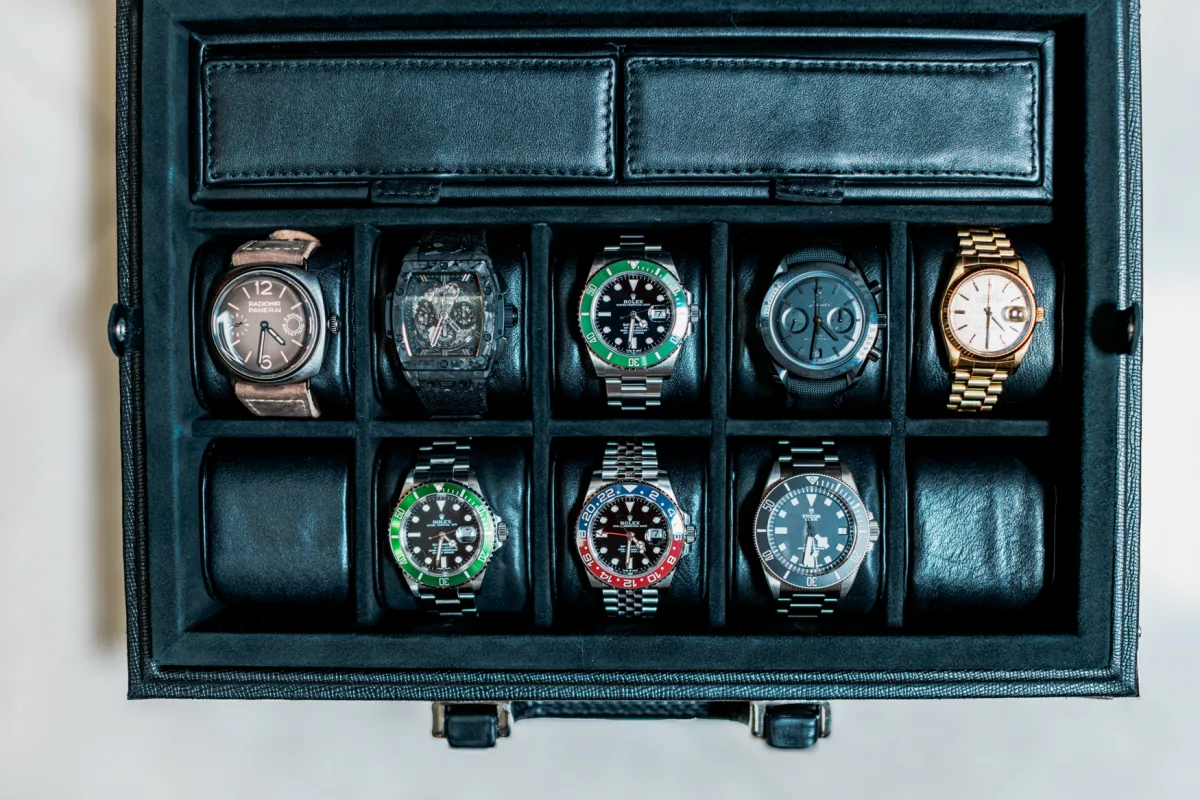
For most of my twenties, I felt that a yellow gold Day-Date would be perceived more like a costume than a conscious choice - as if I borrowed the watch from my father and was trying to play a role. If you've ever worn something objectively beautiful and immediately felt "out of place," you'll understand me. Day-Dates are filled with cultural meaning - power, politics, celebration, status - and if you're not ready to wear them, they can "wear" you. But something changes after thirty.
No one likes the idea of aging, especially when the calendar seems to accelerate. But I feel a strange optimism. This year, I will turn 31, and with that comes a kind of permission: to dress a bit differently, to wear watches that once seemed too serious, and to worry less about how something looks on someone my age. In other words, it's finally time for a Day-Date.
How the Vintage Community Nudged Me Towards Rolex
In early 2026, I joined a local vintage watch collectors' community called the Sigan Society. It's a group of collectors who have seen and owned far more significant watches than I, including well-known names in the world like @pleasegivemecashmere and @gobugiandco. Their discussions don't revolve around what's "trending" or "hot" - they focus on condition, history, originality, and the significance of certain references regardless of price.
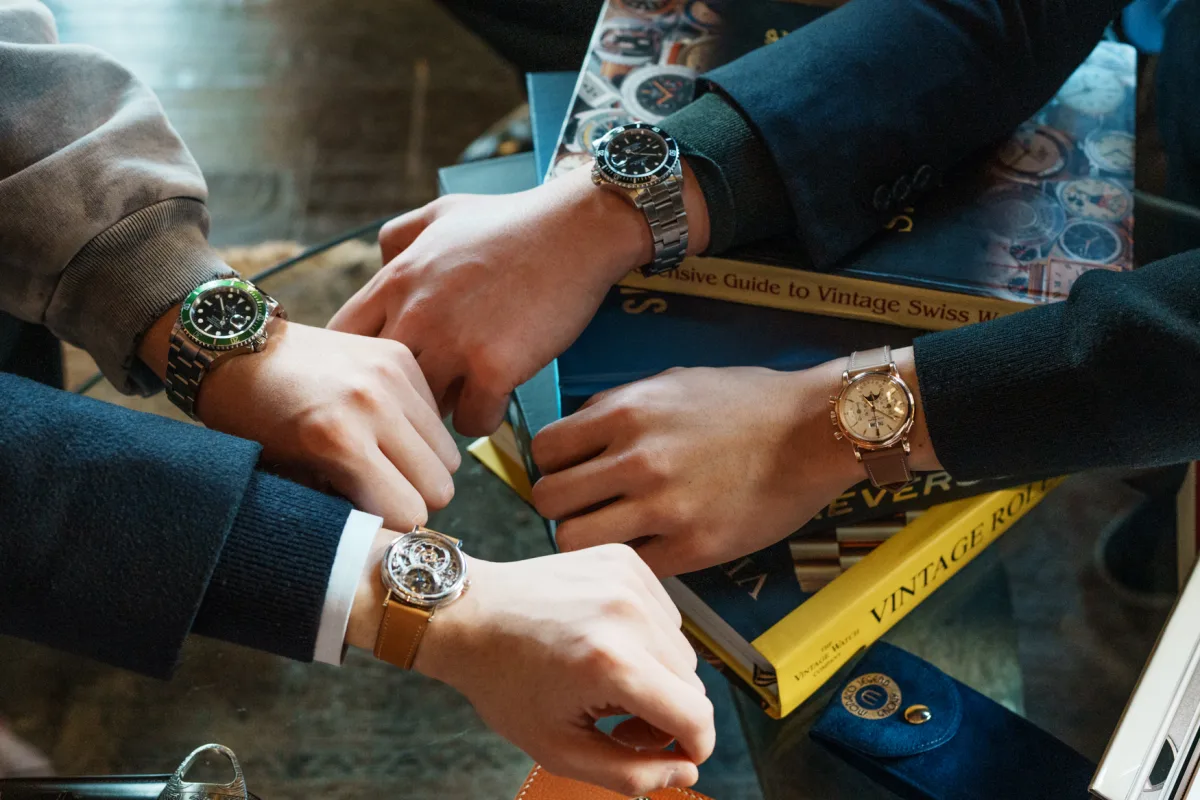
This moment is important because I had previously gone through a phase of selling off vintage Rolex. I parted with a Submariner ref. 1680 and a Zenith Daytona ref. 16520, mostly because I didn't enjoy handling them with care. Vintage watches can feel fragile - not in the sense that they'll fall apart, but in how they make you second-guess everyday life: rain, door frames, crowded transport, random bumps. I realized I didn't want watches that caused anxiety.
And yet I returned to vintage Rolex - because the Day-Date is different.
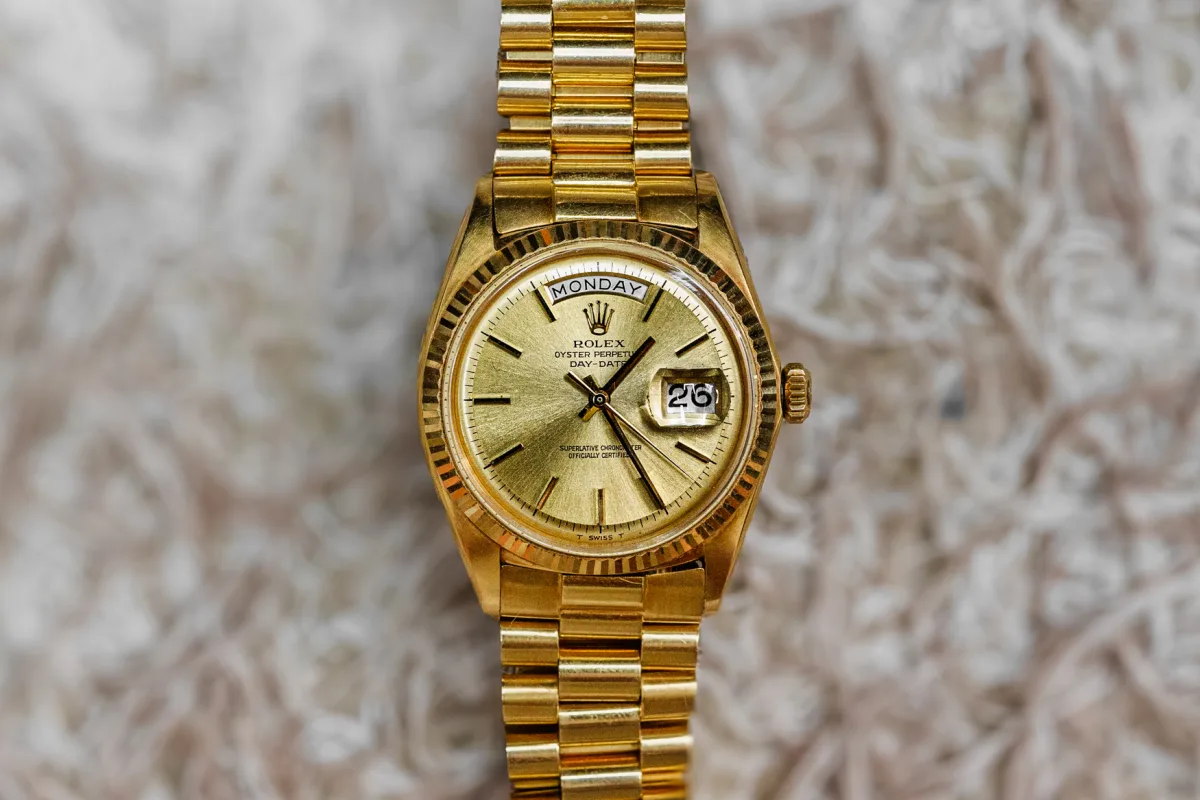
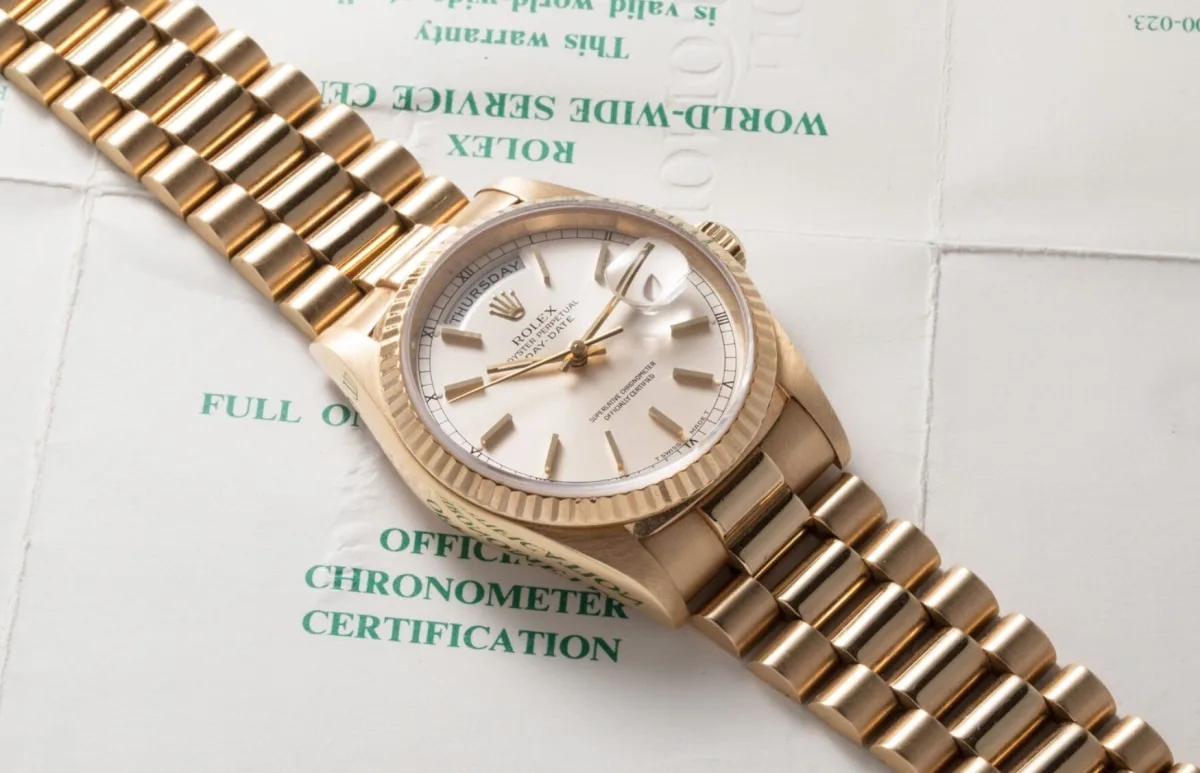
I bought the Rolex Day-Date ref. 1803 from @watchanalyst_david, a well-known figure on the South Korean vintage scene and one of the founders of the Sigan Society. This wasn't just a formal transaction. It was a considered decision within a community that values context and condition - an environment where you don't just buy a watch, you understand why your specific model looks the way it does.
Why the ref. 1803 is Worth Choosing
Rolex produced the Day-Date in countless variations, which complicates the choice. You can get lost in dials, bracelets, bezels, languages on the day disc, and the endless terminology of "correctness" surrounding vintage Rolex. The ref. 1803 stands out because it strikes a golden mean: old enough to be genuinely vintage but not so old as to become a museum piece. In my view, it's one of the purest examples of what a Day-Date should be.
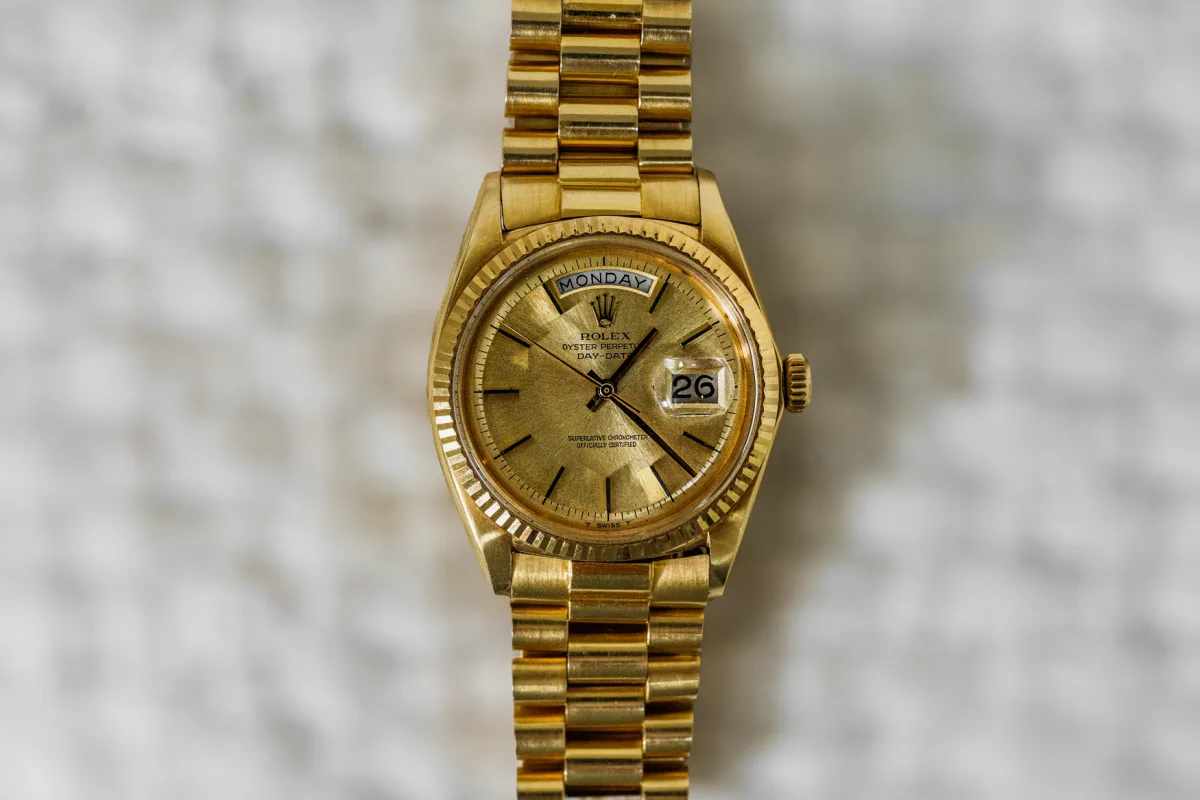
The example I acquired cost around $15,000 USD. This amount varies depending on the condition, type of dial, and bracelet, but the point is that it's a relatively accessible entry into the world of precious metal Rolex, especially considering that modern Day-Dates cost two to three times more - sometimes even more, depending on the configuration. But I didn't buy this watch just for the price. I chose it for the look.
The Dial: Where Vintage Magic Lives
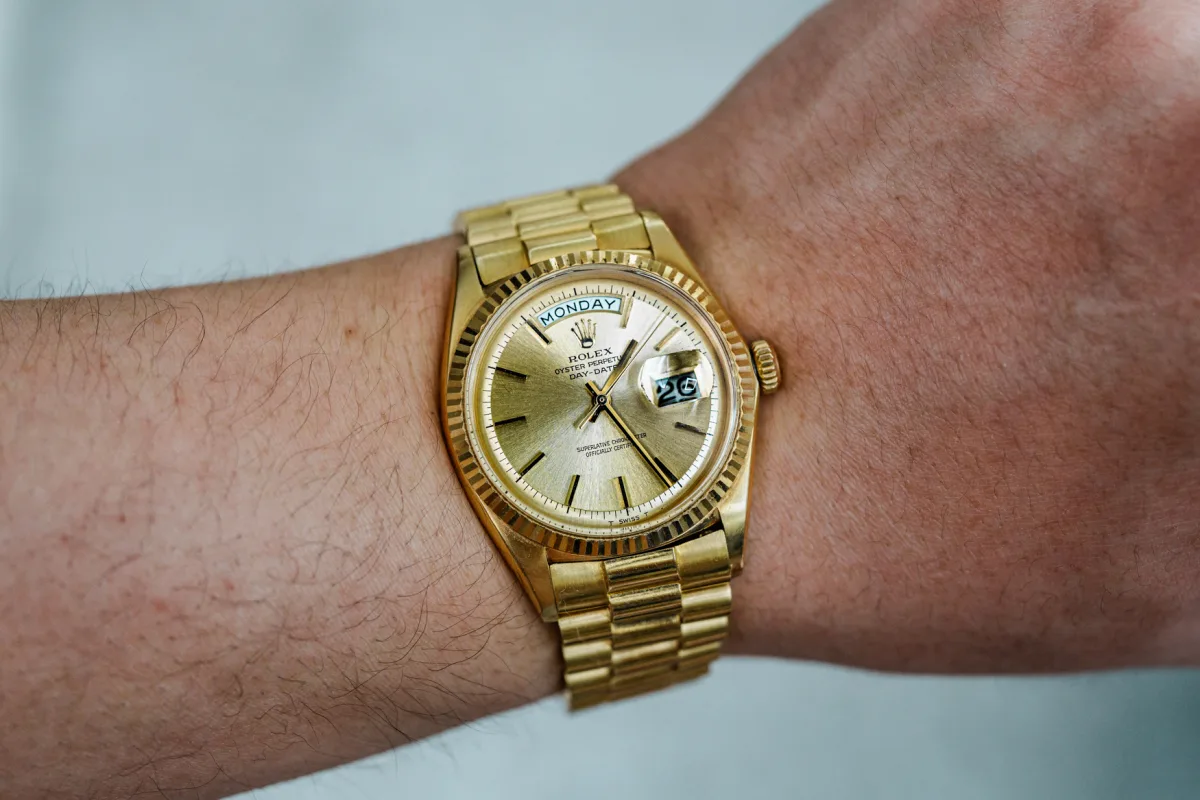
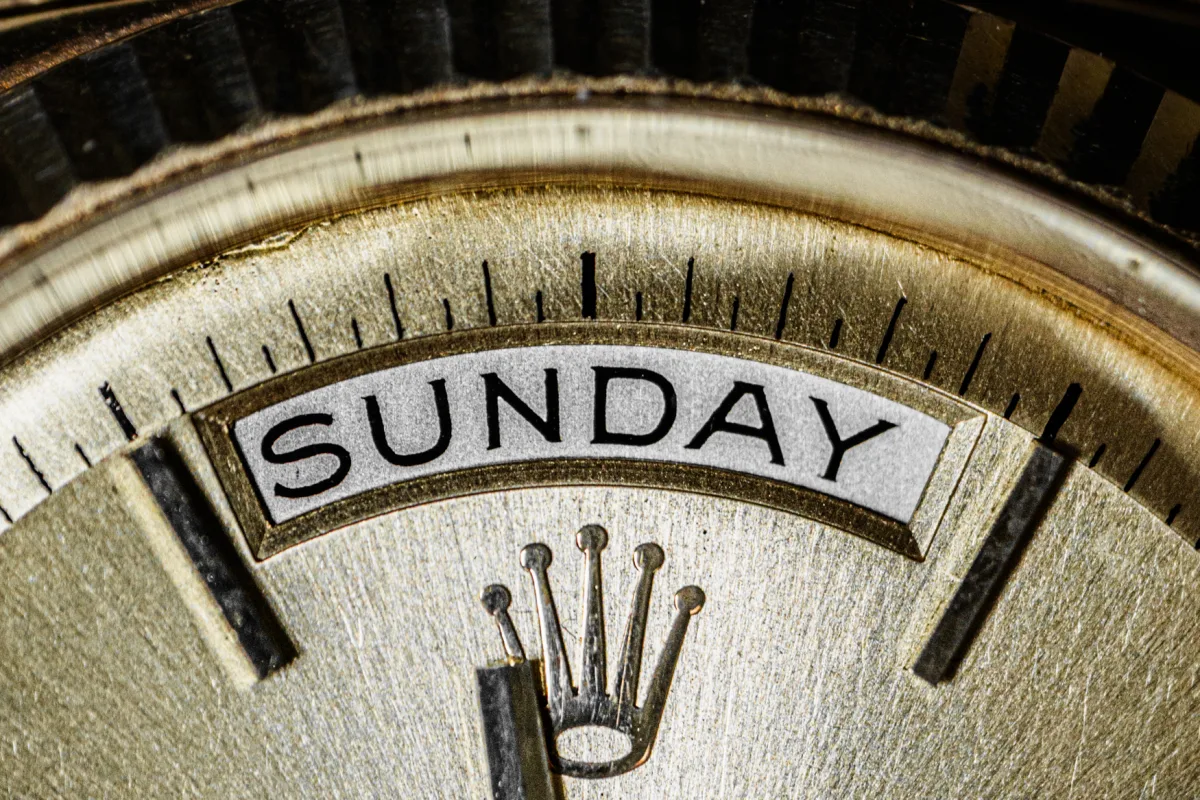
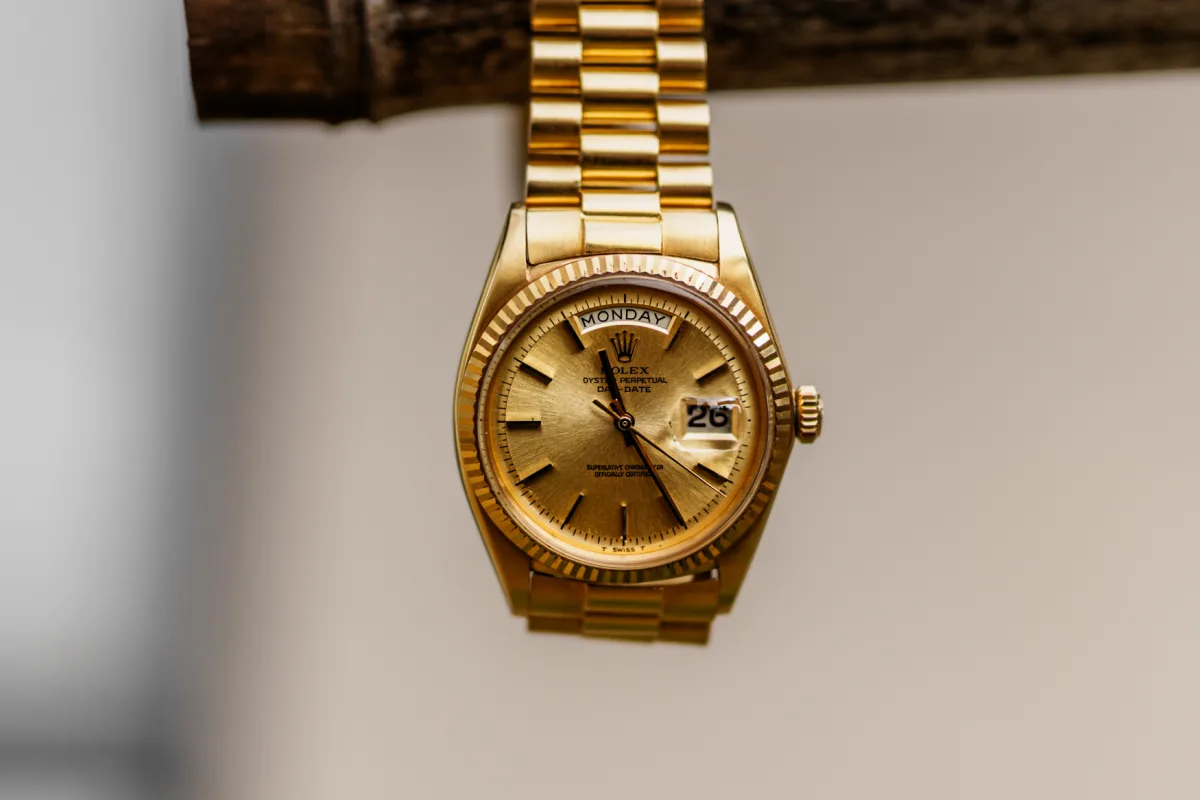
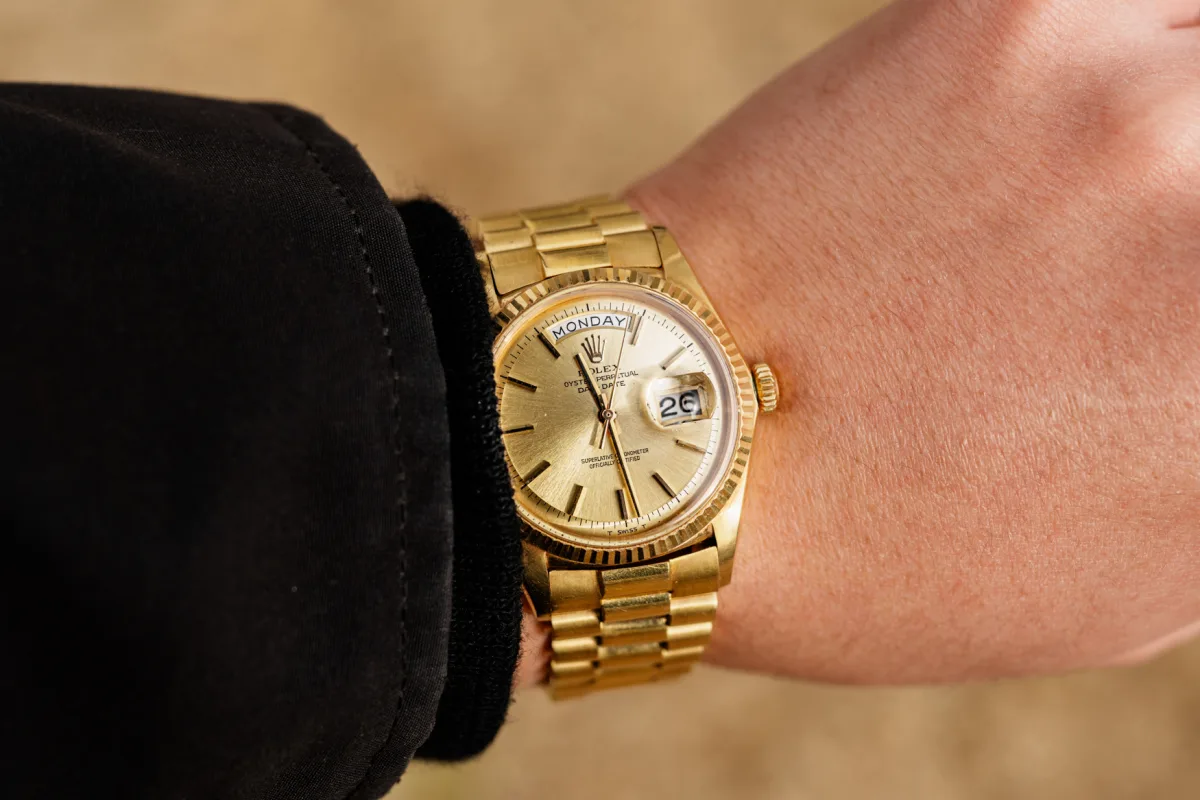
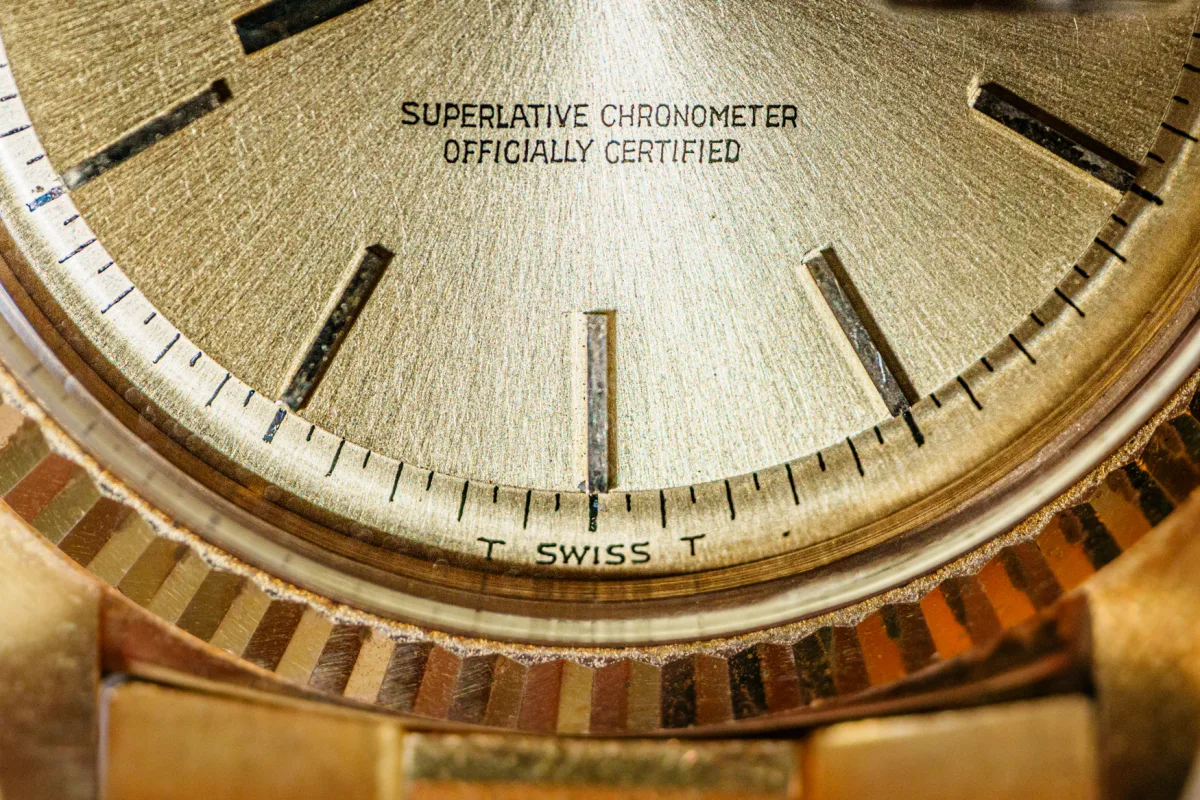
If you think "champagne is champagne," the ref. 1803 will change your mind. Many modern Day-Dates with champagne dials have an even sunburst pattern: attractive but uniform. The ref. 1803, especially with the right dial, offers more texture and depth. A key element is the stepped "pie-pan" sunburst dial: the outer part slopes down, catching light in a way that makes the dial appear architectural. In sunlight, it doesn't just shimmer - it changes, creating light and shadow effects absent in flat modern dials.
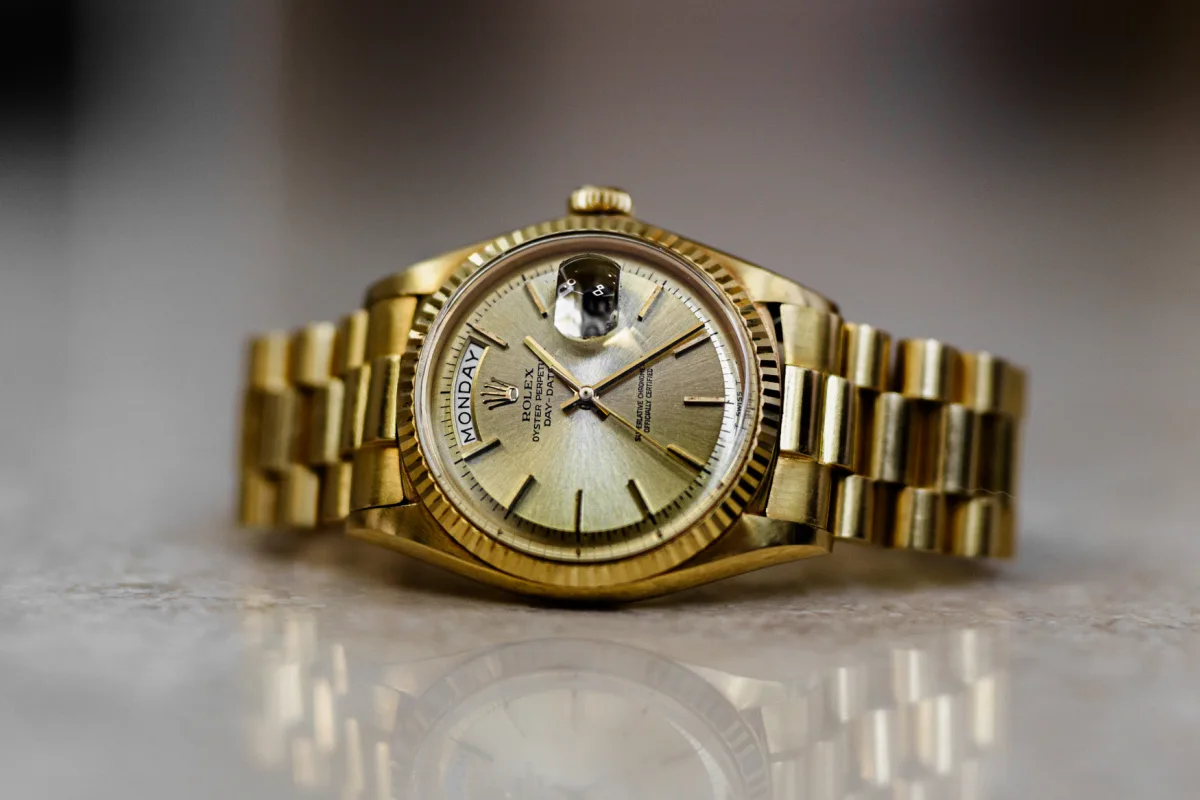
Proportions are also important. The day window at 12 o'clock and the date at 3 are signature Day-Date features, but on a vintage dial, they look softer - not perfectly clinical, but more human. This is not a criticism of modern Rolex watches, which are finished impeccably. It's just a different kind of beauty. The typography, applied markers, and warm gold-champagne palette create a feeling that the watch is a personal object, not just a luxury item.
On the Wrist: The President Bracelet Effect
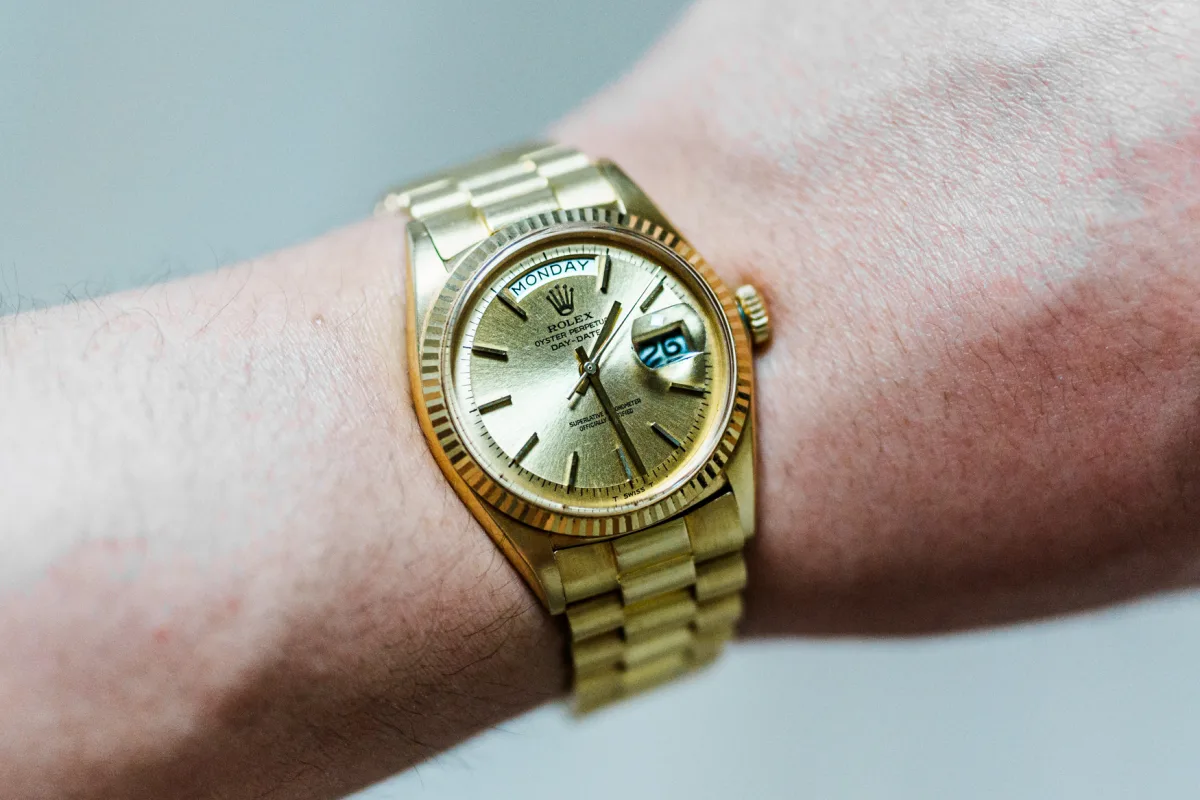
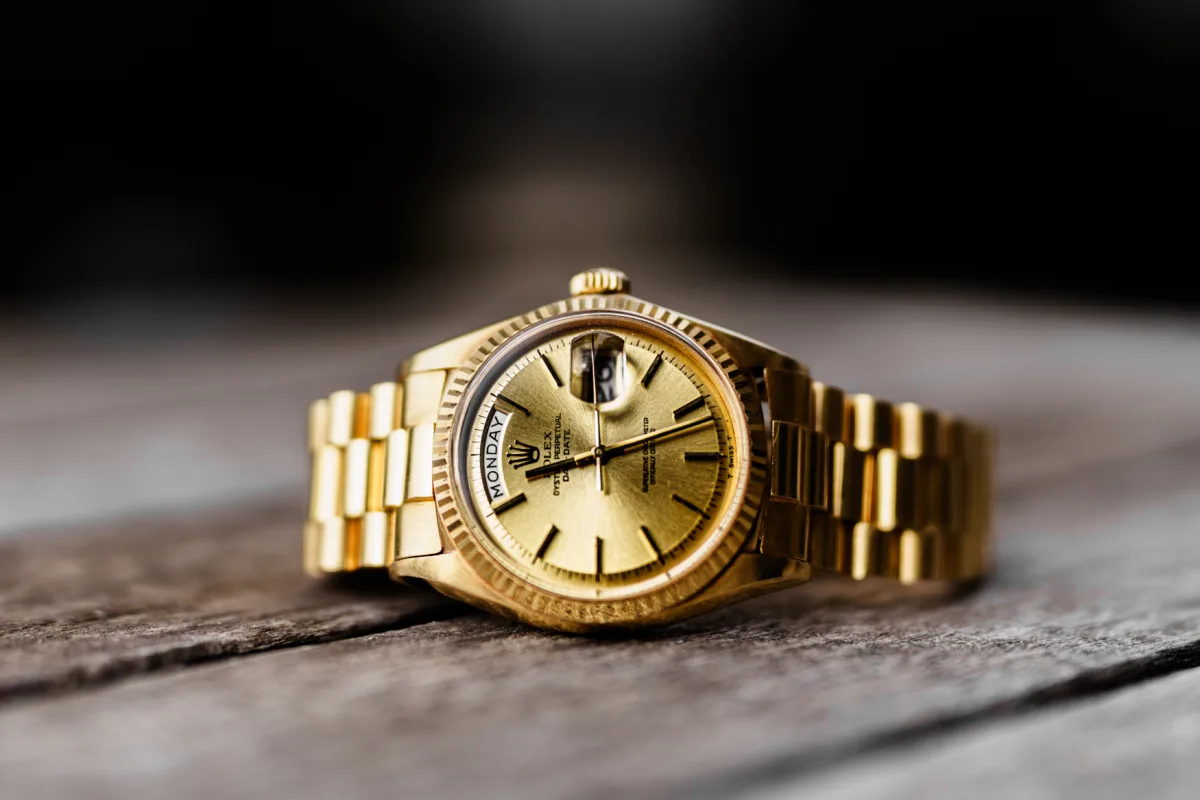
No discussion of the Day-Date is complete without mentioning the bracelet. The "President" bracelet is not just an accessory; it's part of the watch's identity. The semicircular links give it a drape similar to jewelry, and in yellow gold, it becomes an unmistakable statement - even if the case itself is only 36mm.
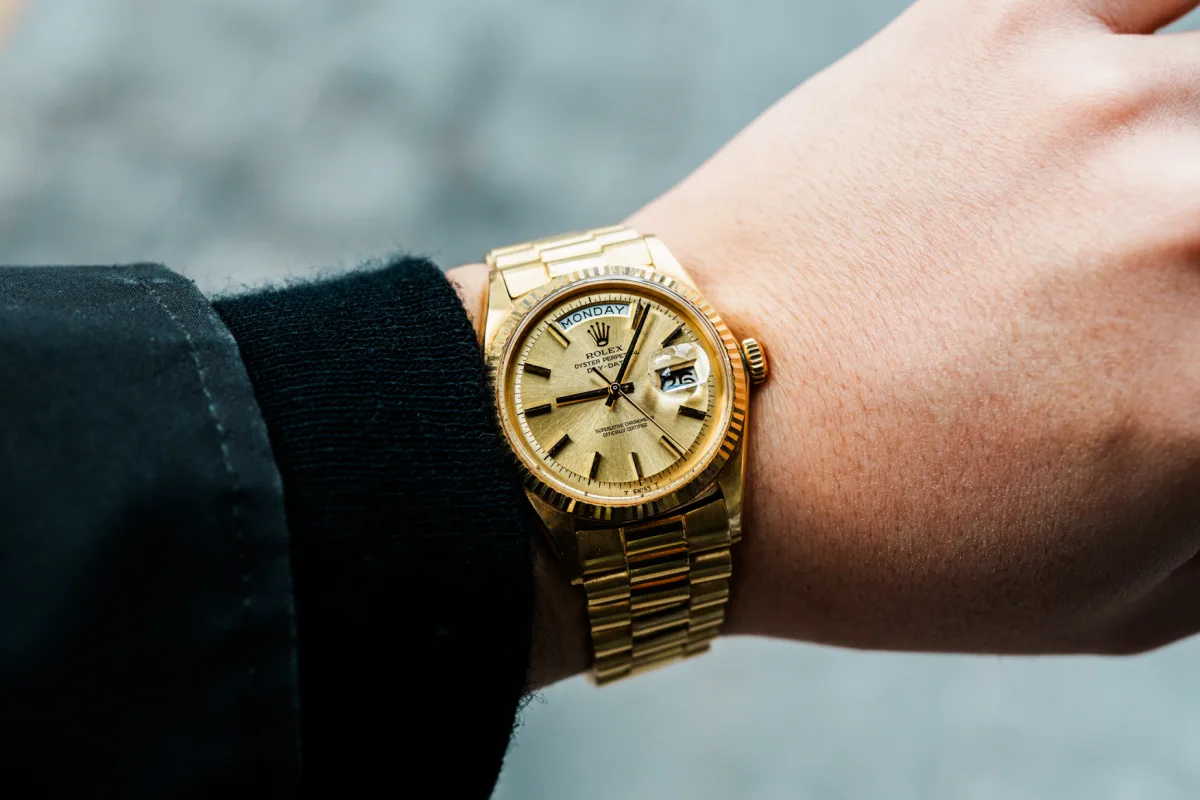
I was surprised by how cohesive the watch feels on the President bracelet. Many watches look great on leather and just okay on a bracelet, or vice versa. The Day-Date seems made for this combination: gold case, gold bracelet - it's all a single object. Yet the watch doesn't appear flashy like large modern gold sports Rolex. The old case profile and vintage finish soften the effect. It's a serious watch, but not aggressive.
Compromises: Setting and Water Resistance
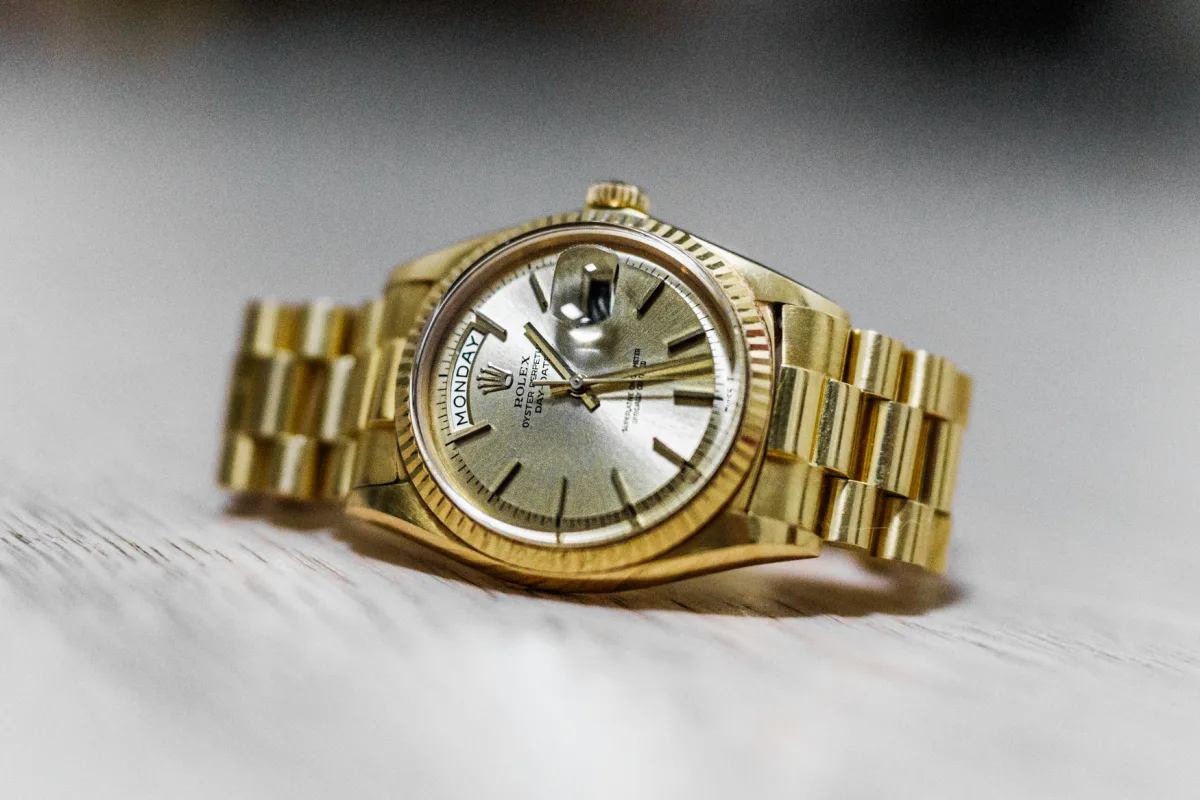
Living with a vintage ref. 1803 means accepting some shortcomings. The most obvious is the lack of a quick-set date and day feature. For those used to modern calendar watches, the process seems outdated or annoying. To set the date, you have to rotate the hands through 24-hour cycles until everything aligns. If the watch isn't worn for a week, you'll need to spend time resetting it.
Another point is water resistance, or rather its uncertainty. The Day-Date is a Rolex with an Oyster case, originally designed for reliability. But vintage watches are only as waterproof as their gaskets, service history, and case integrity allow. Even if the watch withstands more than it seems, it's not worth testing.
For me, this isn't critical. I don't swim with watches, don't use them as everyday "beaters," and accept that ownership is somewhat of a ritual.
Why the ref. 1803 is Undervalued
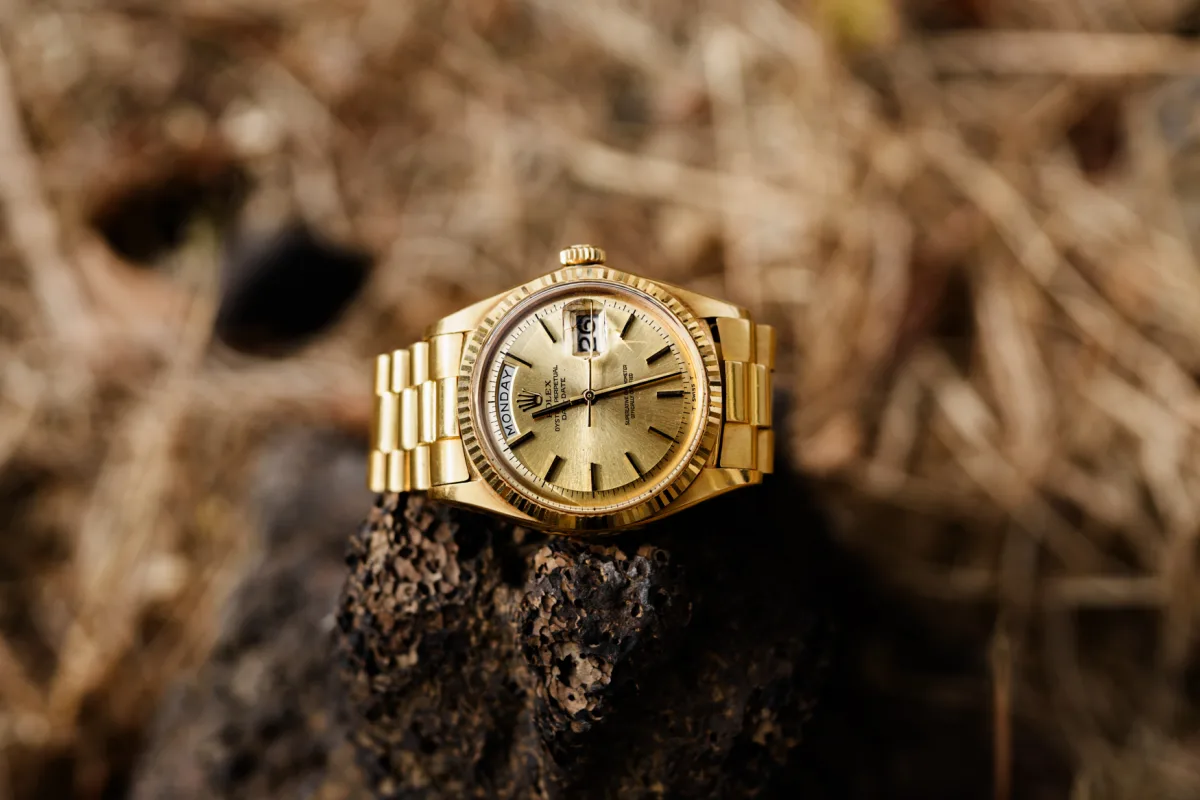
The vintage Day-Date ref. 1803 occupies an interesting place in the watch world. It's iconic, instantly recognizable, and associated with decades of cultural symbols, yet often remains in the shadow of more flashy sports models or new references in precious metals with modern calibers. That's why I consider it undervalued.
For the price I paid, it offers a unique experience: a full precious metal Rolex with a design language that modern models can't replicate. The pie-pan dial alone gives it a character missing in many contemporary watches, and the combination of the gold case and President bracelet creates a presence beyond price comparisons.
It's not perfect. Not the most practical. It's not a watch you buy for simple "value." But as a way to own the idea of the Day-Date - the history, the form, the feel - the ref. 1803 is a strong candidate.
Final Thoughts: Day-Date as a Time Marker
One cannot help but see the Day-Date as a watch about life stages. In childhood, it symbolized adulthood. In my twenties, it seemed like a watch I wasn't ready to wear. Now, stepping into my early thirties, it's the watch I can wear as myself, not as someone trying to look older, richer, or more important.
Buying a vintage ref. 1803 wasn't just ticking a box. It connected me to a memory - my grandfather, that leather sofa, that quiet confidence - and reimagined it in the present. It turns out the right time for a yellow gold Day-Date isn't always the moment you can afford it. Sometimes it's the moment you stop feeling like you're wearing someone else's watch.