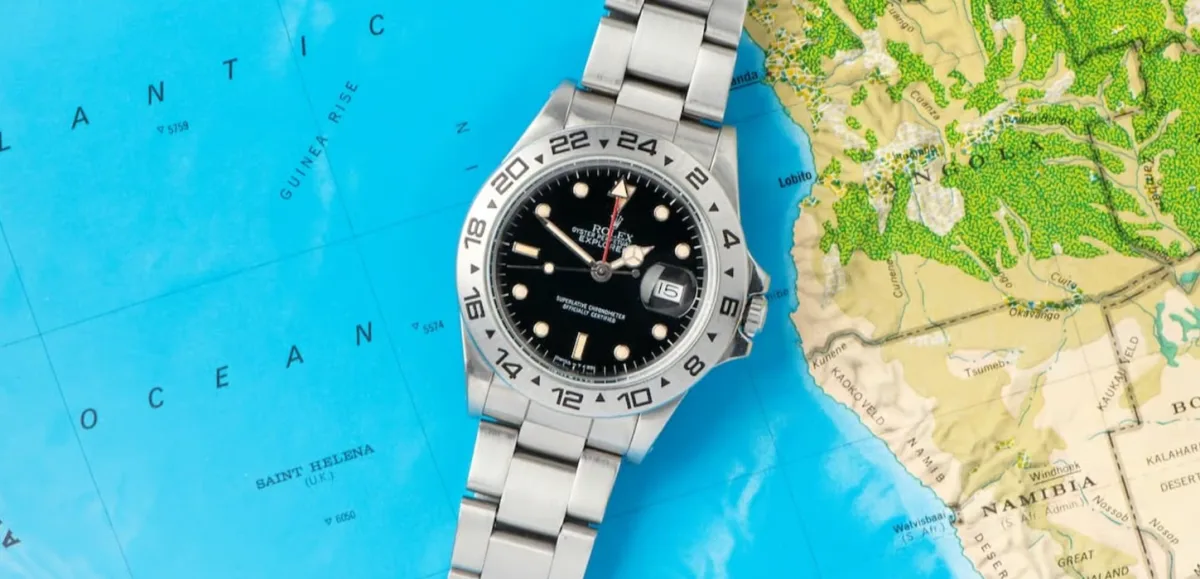
For frequent travelers, local time is just part of the story.
You live simultaneously in two time zones - the one you're in and the one where your home is - and regular three-hand watches can't show both times at once. This is where GMT and world timer watches come in: one additional hand, one extra city ring, and your timepiece performs the calculations you would do in your head.
Some might wonder why these watches are necessary if your phone can also show time in different time zones. The answer lies in the romance of travel and mechanical watches. Mechanical watches with time zone tracking tell the story of decades of journeys. If you appreciate the spirit of travel, a phone won't give you the same feeling as a watch on your wrist, showing time both where you are and at home. But which is better? Let's explore the features of GMT and world timer watches to understand.
What are GMT Watches?
Let's start with the concept of modern GMT watches, first introduced in 1953 with the Glycine Airman. As we've explained in our GMT article, these watches display two or more time zones simultaneously. GMT stands for Greenwich Mean Time, after which these watches are named. In such models, three hands show local time on a standard 12-hour dial.
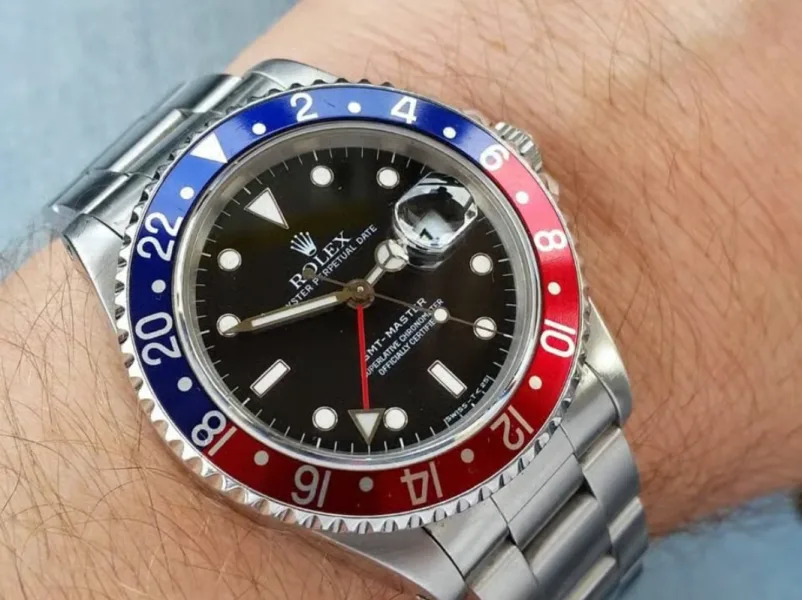
An additional GMT hand - often highlighted in color - indicates home time on a 24-hour scale, printed either on the dial or on the bezel. This hand completes a full rotation every 24 hours, eliminating AM and PM confusion. Many GMT watches feature a rotating bezel, allowing you to quickly orient the GMT hand and track a third time zone.
Examples of classic GMT watches include the legendary Rolex GMT-Master, which sets design standards in this segment. Another classic is the Rolex Explorer II with a fixed bezel, showing time in two time zones. Modern popular models are the Tudor Black Bay 58 GMT, Longines Spirit Zulu Time, and Vacheron Constantin Dual Time.
| Model | Features |
|---|---|
| Rolex GMT-Master | Rotating bezel, classic icon |
| Rolex Explorer II | Fixed bezel, two zones |
| Tudor Black Bay 58 GMT | Modern design, convenience |
| Longines Spirit Zulu Time | Easy adjustment, reliability |
| Vacheron Constantin Dual Time | Elegance, complex functions |
What are World Timer Watches?
World timer watches appeared before GMT. Pocket watches with a similar function were found in the 19th century. However, modern world timer watches appeared in 1931. They display time in all 24 major time zones simultaneously, allowing you to instantly know the time anywhere in the world.
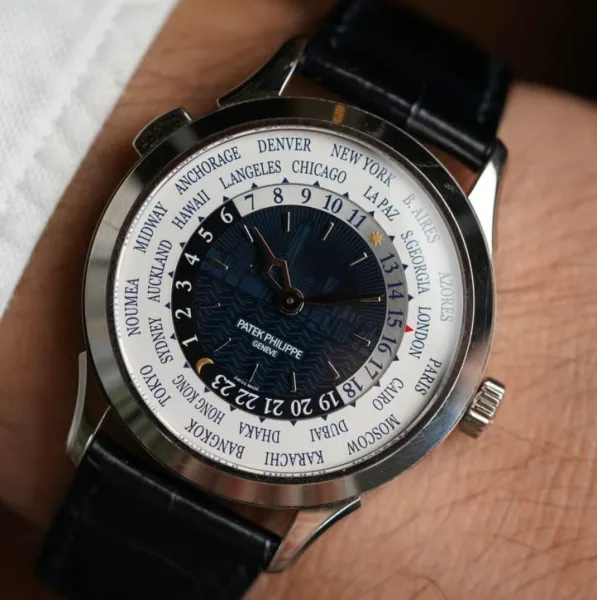
This is achieved through a fixed or rotating external ring with 24 cities, each corresponding to a specific time zone. An internal ring, rotating in sync with the mechanism, displays hours in a 24-hour format. Often, the 24-hour ring has a day and night indicator - divided into light and dark zones, showing whether it is day or night in the selected time zone.
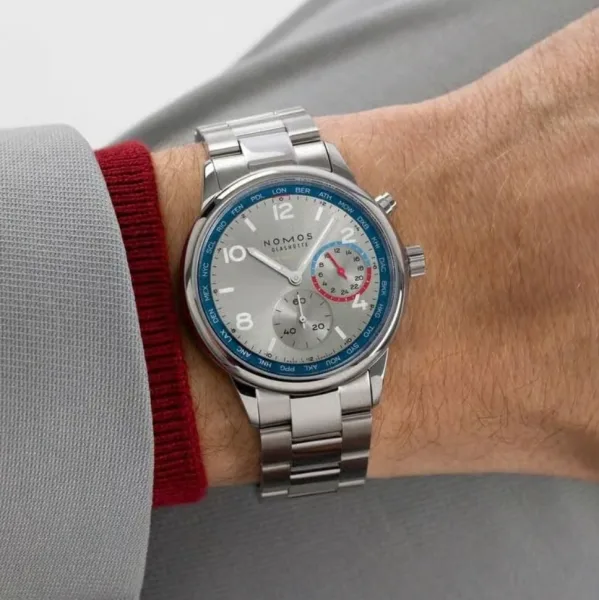
To use a world timer, you need to align the current local time with the 12 o'clock mark on the rotating disc. After setting, the 24-hour ring will show the time in all 24 time zones.
Notable world timer models include the Patek Philippe World Time ref. 5110, NOMOS Glashütte Club Sport Neomatik Worldtimer, Omega Seamaster Aqua Terra Worldtimer, and Frederique Constant Highlife Worldtimer Manufacture.
| Model | Features |
|---|---|
| Patek Philippe World Time ref. 5110 | Classic icon, historical value |
| NOMOS Club Sport Neomatik Worldtimer | Modern mechanism, convenience |
| Omega Seamaster Aqua Terra Worldtimer | Sporty style, accuracy |
| Frederique Constant Highlife Worldtimer | Elegance, affordability |
GMT and World Timer: What's the Difference?
After familiarizing with both types of watches, it's clear they differ conceptually. GMT is based on displaying home and local time. World timer, however, shows all 24 time zones simultaneously.
GMT is a more personal concept, as it displays time where you are and where your loved ones are. World timer, on the other hand, is aimed at a broader understanding of time worldwide, which is especially important for those doing business in different countries.
GMT or World Timer: What's More Convenient for Travel?
In terms of ease of use, the world timer wins - all information is visible at once. To set it up, simply pull the crown, align the current city with the 12 o'clock mark, and set the local time. The 24-hour ring will automatically show time in all time zones.
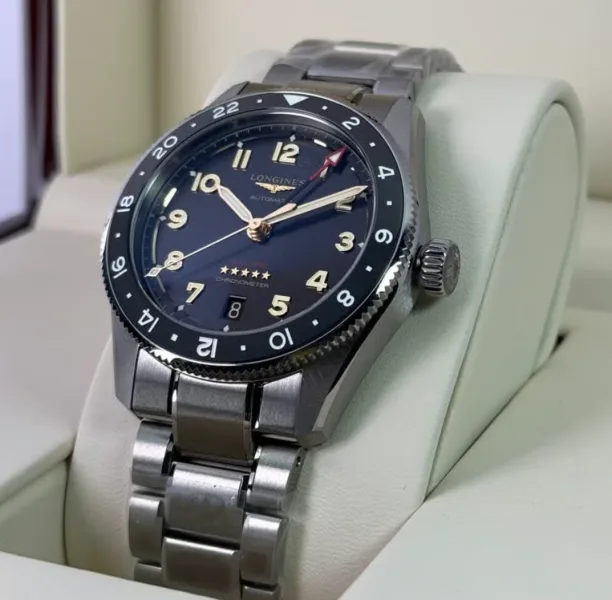
With GMT, you need to adjust both local time and the second time zone. Depending on the mechanism, this can be easier or harder. There are office GMTs where the 24-hour hand is set separately, but when changing time zones, you must first set local time, then adjust home time.
If you have a watch with a "flyer GMT" mechanism, the central hour hand can be adjusted forward and backward by the hour. Home time is set once, and only local time changes as you move between time zones. This is more convenient for travelers, which is why many enthusiasts prefer this GMT mechanism.
Design of GMT and World Timer Watches
In design, GMT watches look more modern and sleek. World timer often appears more "crowded" due to the display of 24 cities, the 24-hour ring, and local time. GMT adds only one hand and a 24-hour scale on the bezel or dial, simplifying reading.
However, it's impossible to definitively say one design is better than the other - it all depends on personal preference. The beauty of watches is a subjective matter.
Collectible Value of GMT and World Timer
Vintage world timers from Patek Philippe and Vacheron Constantin are considered among the most sought-after models by collectors. Their history begins in the 1930s, giving them special value. Many classic world timers from the 40s-50s were a symbol of the jet set, adding to their allure.
However, some GMT watches are also considered collectible rarities. Primarily, these are classic Rolex models - the legendary Rolex GMT-Master ref. 6542 and Rolex Explorer II ref. 1655. Additionally, collectors value some models from Tissot and Glycine. Overall, world timers are more popular among serious collectors.
How to Choose: GMT or World Timer?
The choice depends on your preferences and needs. If you travel frequently and want to quickly see local and home time, GMT is the optimal choice. If you value the classic romance of travel or need to track time in multiple cities for business, you should choose a world timer.
In terms of design, it all comes down to your taste: the classic world timer with a city ring or the more modern and minimalist GMT. Ultimately, there's no right or wrong choice here - both options are classics among travel watches.