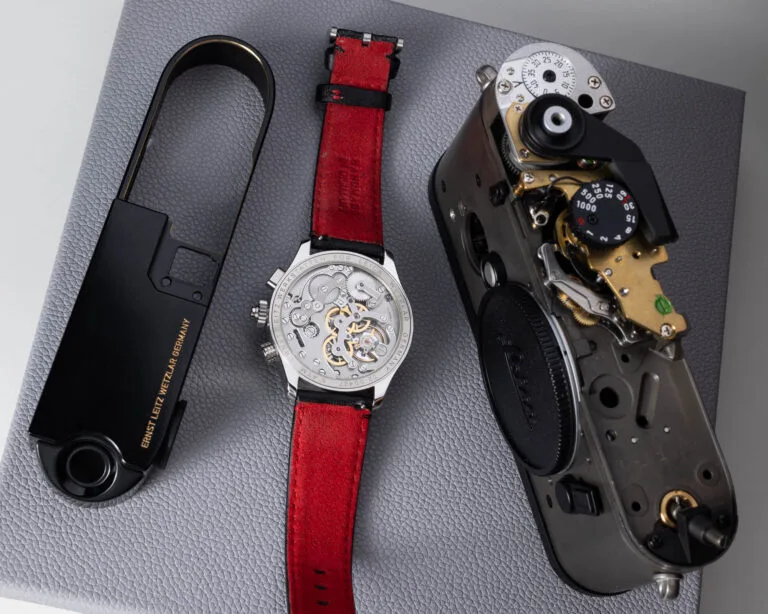
In 2025, the company known today as Leica celebrated the 100th anniversary of releasing its first production camera.
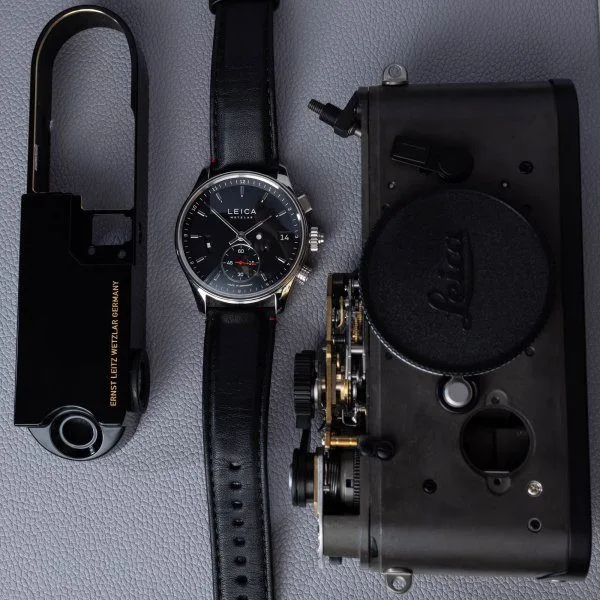
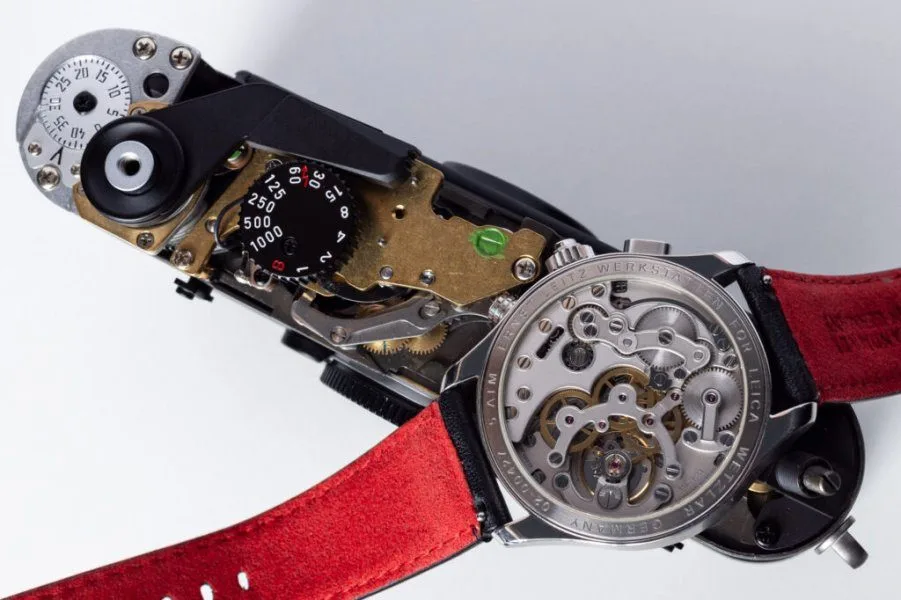
As early as 1914, the company founded by Ernst Leitz in Wetzlar, Germany, had a prototype for a device that would later revolutionize the world of optics and photography. Known as the "Kleinfilmkamera" ("small film camera"), Leica not only invented a compact way to shoot; it literally created the compact format and style of photography that dominated the world and spawned many copies and variations produced in East Asia. A key factor that allowed Leica to create a compact camera was the implementation of micro-engineering and miniaturization principles, often associated with the watch industry.
The Watchmaking DNA of Compact Photography
Ernst Leitz was actually a trained watchmaker, and the team in Wetzlar was deeply involved in the field of specialized precision optics and mechanics for devices such as microscopes. The first Leica cameras appeared in this context, skillfully combining local knowledge with true innovations, many of which are attributed to Oskar Barnack - the company's inventor who provided the key idea for the film and lens system.
The innovation was both clever and practical. Instead of using a full-size photo plate in a bulky camera, he decided to rethink the fast-exposing film by placing it in a cassette that could be loaded into a compact body. The film was created with a small negative image, which was then enlarged using a special device that printed the image on a large photo paper sheet.
Oskar Barnack and the Micro-Mechanical Revolution in Cameras
The Leitz camera (as the early Leica was called) revolutionized photography by applying watchmaking principles - miniaturization and precise mechanics - to the bulky and slow process of shooting. The Leica camera was portable and could be used without a tripod and flash, thanks to a fast enough shutter speed and film that allowed for sharp images. This opened up the world of street photography and set standards for photo equipment for many years. When companies like Eastman Kodak began mass-producing film, they oriented towards Leica standards, which remained unchanged.
From Shutter Speeds to Anchor Mechanisms: The Connection of Precise Timekeeping
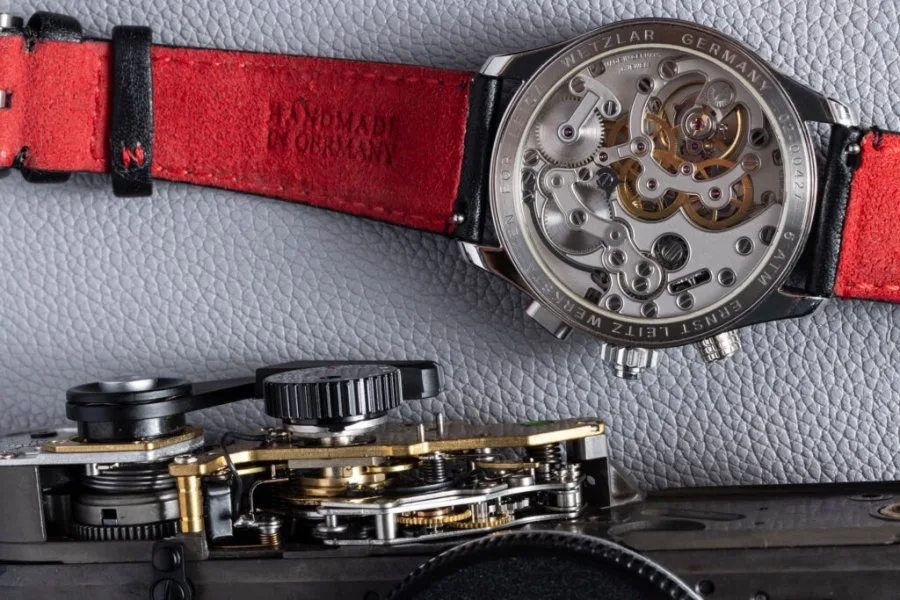
In the early 20th century, the connection between the world of timekeeping and photography was logical. The Swiss watch company Jaeger-LeCoultre even produced compact cameras for a while. Micro-engineering was not the only common element for watches and cameras. Despite their outward simplicity, film cameras contain over 1,000 parts inside. The key compartment is related to time - the shutter regulator. Early Leica cameras achieved a maximum shutter speed of 1/500 second. The camera mechanism had to quickly and accurately switch the shutter speed from one second to much shorter values. Similar to chronographs, which measure time with an accuracy of up to 1/10 second and rarely up to 1/100 second. Faster mechanical chronographs are rare even today. More than 100 years ago, German Leica cameras surpassed this in their complex shutter systems.
Modern Leica Production: From Analog Cameras to a Hybrid of Technologies
Today, Leica continues to produce analog film cameras, which have been manufactured for decades. The modern company is an interesting hybrid of tradition and innovation. In the early 20th century, Leica was a small boutique company with relatively low turnover. Since the 1970s, Japan and the East have been actively developing camera production, using the electronic revolution. Despite the quality of Leica cameras, the company lagged in volumes, prices, and innovation speed. Leica focused on development, assembly, and testing, attracting buyers looking for reliability and durability. However, the high price limited competition with more affordable products. In the 1990s, Leica was a small but beloved brand and one of the first developers of digital cameras (the first model in 1996). Nevertheless, the company lagged behind global competitors in digital technology.
Modern Leica Revival: Traditions and Private Investment
Help came in the form of external investments. Leica remains a private company, divided between the Kaufmann family (the controlling stake) and the investment firm BlackRock. The new owners decided not to follow the path of Kodak, which abandoned analog photography in favor of new technologies. Leica retained its status as a leader in compact mechanical cameras and analog lenses, while actively developing digital optics and shooting technologies.
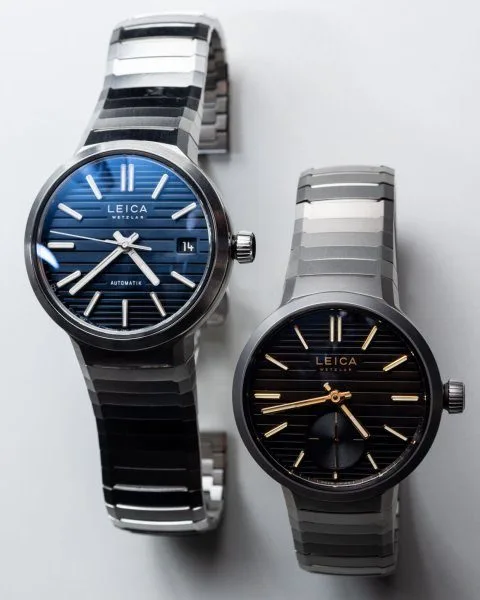
The dual focus on traditions and new ideas allowed Leica to become a versatile company. Some old divisions, like microscope production, were sold, although they continue to produce professional equipment. Today, Leica's portfolio includes cameras (film and digital), lenses, sports optics (scopes, binoculars), cinema lenses, software, accessories (leather goods) and, more recently, wristwatches.
Introduction of the Leica Zeitmesser (ZM) Watch Collection
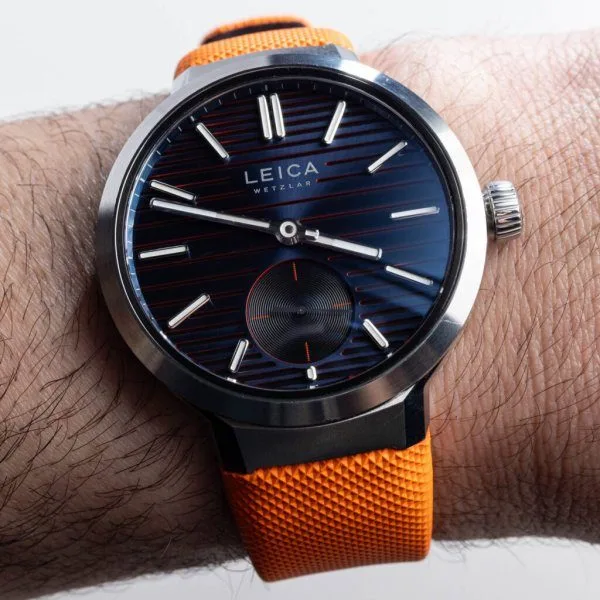
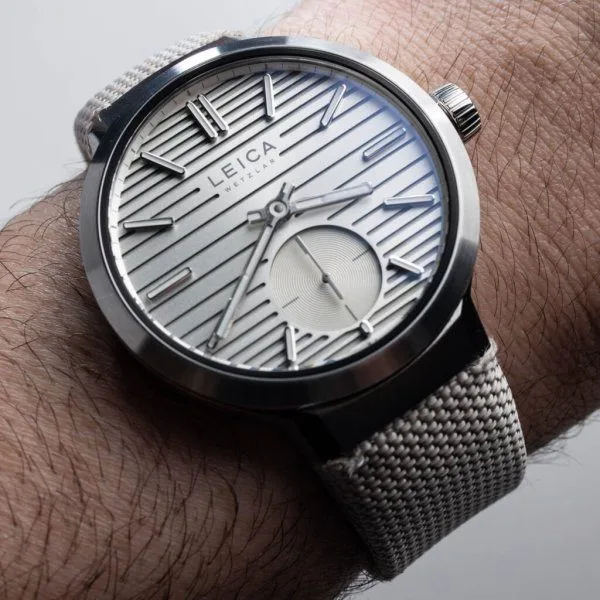
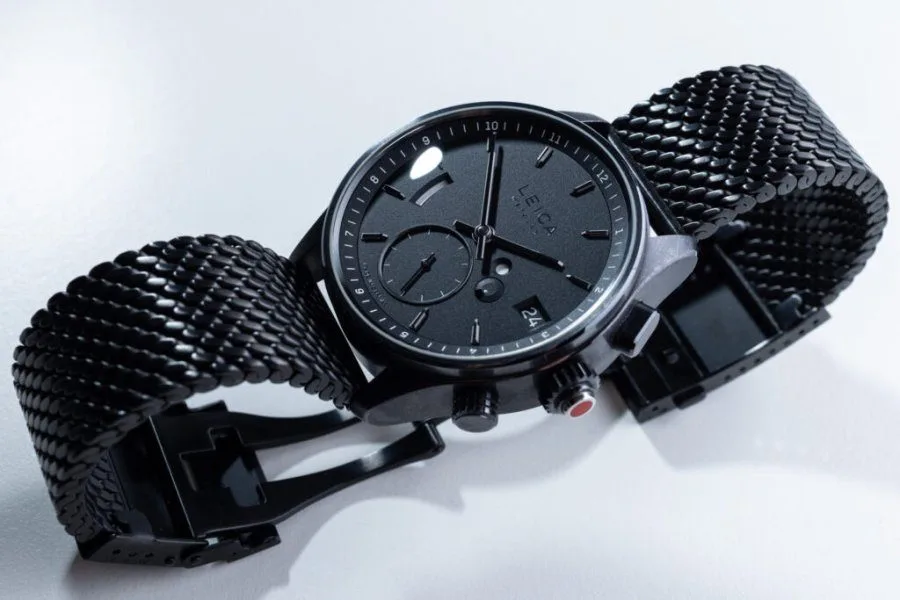
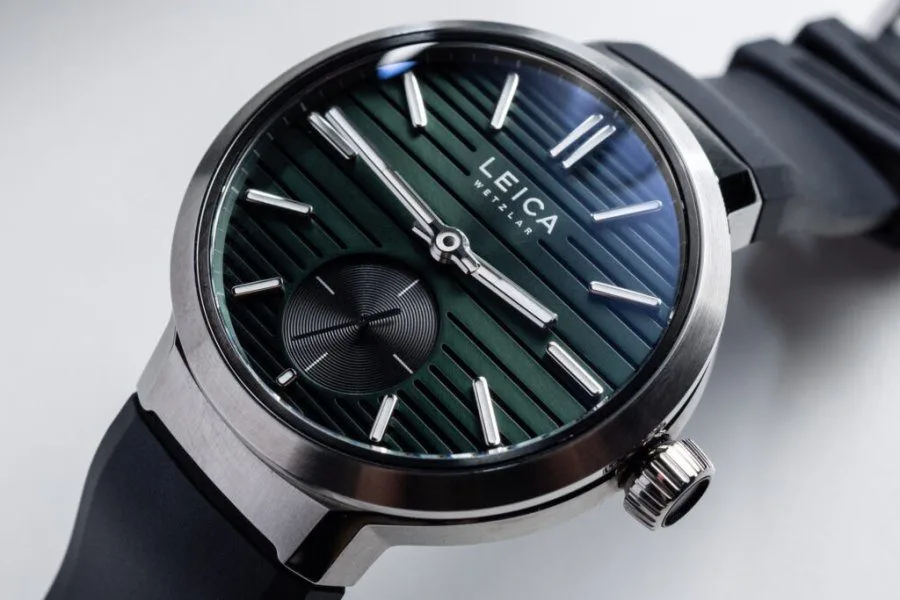
Leica previously experimented with watches, but not with the level of quality and prestige that the current lineup has. The first Leica watches were produced under license and did not have the company's creative leadership. The modern collections include models ZM1, ZM2, ZM11, and ZM12 - this is a new generation of products and a fresh perspective on what Leica watches should mean to the owner.
Upon investing in Leica, Dr. Andreas Kaufmann concluded that creating a watch collection was logical and important for the brand. For the uninitiated, it may seem strange that a well-known camera and lens company decided to engage in luxury watches. It is not merely market expansion for profit, but a challenge - creating watches that people genuinely want to buy. This is considered a serious mark of prestige, as well as a way to demonstrate engineering and manufacturing capabilities.
The Philosophy of Leica Watchmaking: Original Designs, German Engineering, and Swiss Partnership
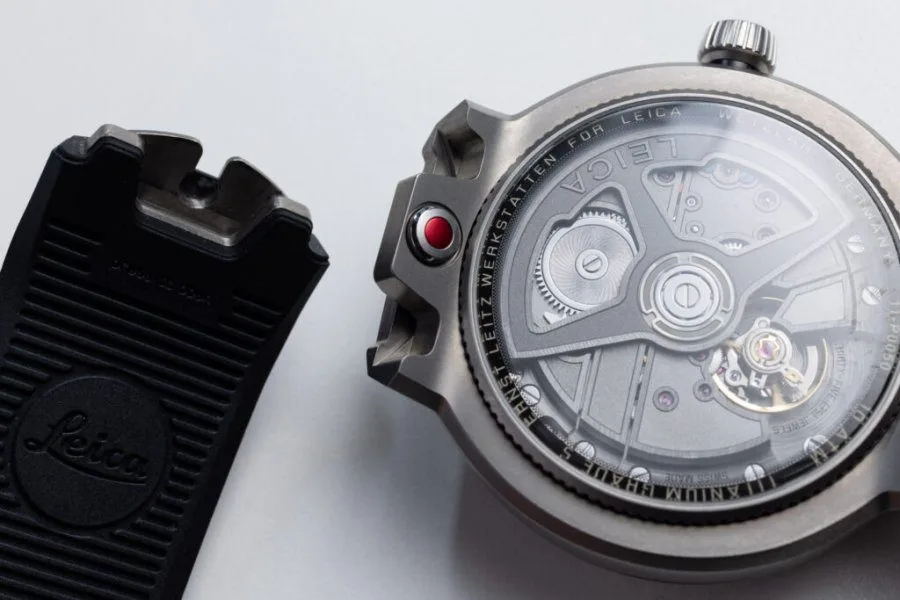
The luxury watch market is very competitive. Experienced players with many years in the field control distribution channels and production. Creating beautiful watches is one thing, but producing them at a reasonable price and selling them is quite another. Quality watches are a technological, logistical, aesthetic, and cultural achievement. Apple did this in 2014 with the Apple Watch, and Leica did it in 2022 with the ZM1 and ZM2 models (initially announced in 2018 as L1 and L2). Over nearly a decade of development, the company created an original exterior design and new mechanical calibers. Leica did not simply rename existing products but aimed to create noteworthy modern luxury watches. All watch details had to feel like Leica.
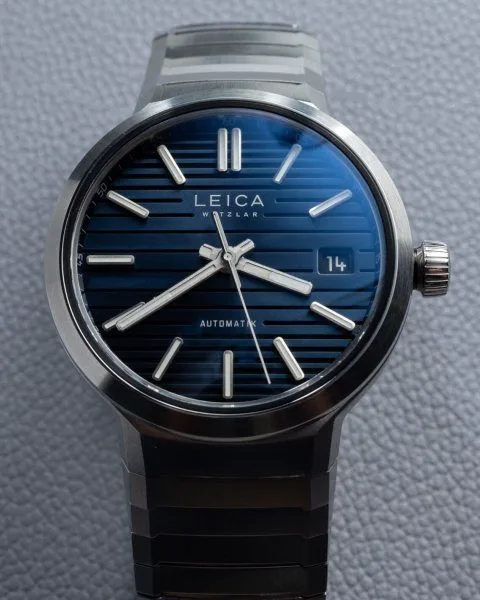
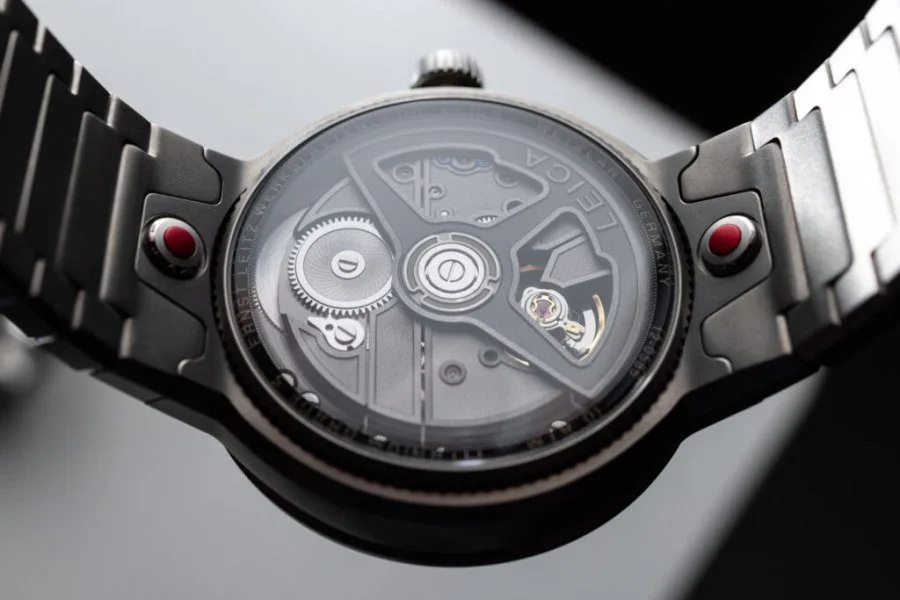
If you ask Leica fans what they envision the brand's watches to be, the answers will vary: some want watches that resemble a camera or lens, others - inspired by light, color, and art, and some - with a nod to Bauhaus. They are all right, and they all want a unique product. Leica watches are made from the finest materials and assembled with the utmost precision. Even at a high price, they do not feel overpriced, offering fair value, which is characteristic of many German brands. Germany is home to the famous watch city of Glashütte and the Schwarzwald region, where mechanisms for the ZM1 and ZM2 models are produced. The mechanisms are unique and contain Leica's trademark "Easter eggs" as well as complex innovations. Leica aims not just to release luxury watches but to leave a new mark in the industry, which has helped gain recognition among traditional manufacturers and discerning collectors.
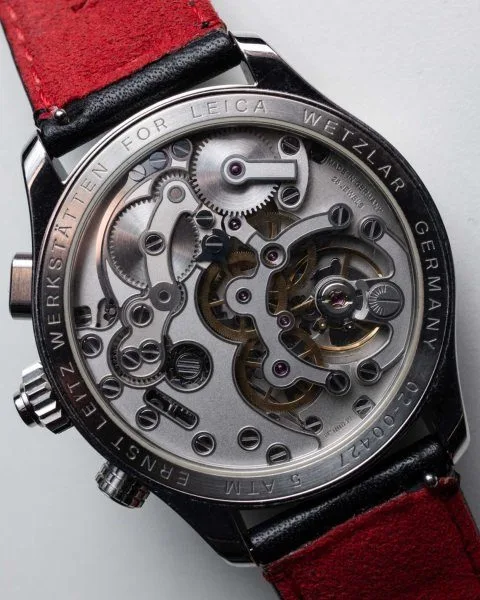
Diversity of Leica Collections: ZM11 and ZM12 - Swiss Quality
Understanding the disagreements among fans, Leica created the ZM11 and ZM12 collections, which differ in design and production. Unlike the German engineering of the ZM1 and ZM2, these models rely on the Swiss ecosystem. Leica collaborates with Jean-François Mojon's company Chronode, which developed a unique mechanism and handles supplies and assembly. The future of Leica watches is open, and fans eagerly await new models, not knowing what they will be.
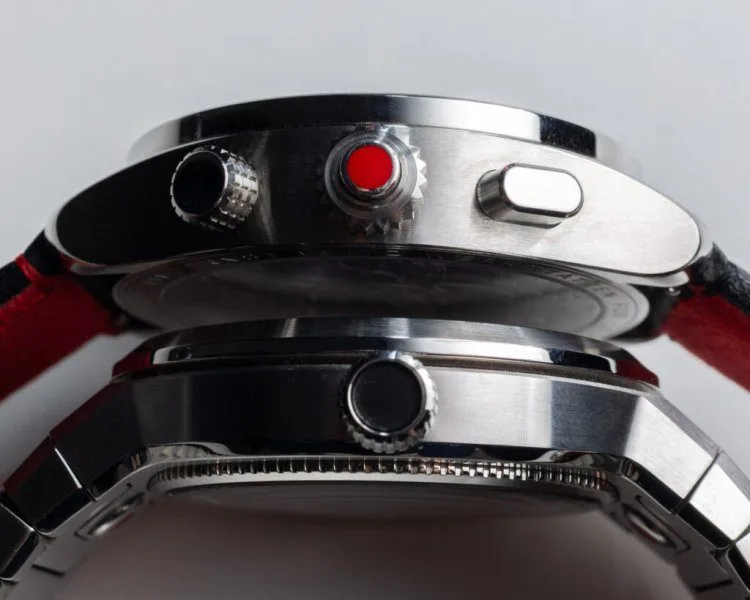
Marketing Challenges and Long-Term Strategy of Leica
While Leica has virtually no competitors in optics and cameras, the luxury watch market is extremely saturated with hundreds of brands. Despite quality watches, the company will require much time and effort to gain recognition in the watch community. Dr. Andreas Kaufmann realizes this and adheres to a realistic long-term strategy, considering the first ten years as a period of gradual market acquisition.
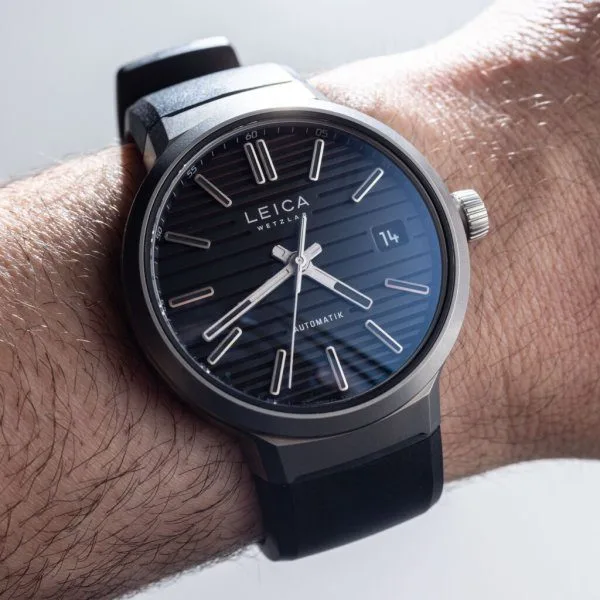
The Leica Community: More Than Just Camera Enthusiasts
Leica is not just a brand but a strong community of enthusiasts. Leica camera owners often recognize each other, discuss equipment and photography. Unlike Canon cameras, which do not attract such attention, Leica brings people together. Similarly, Leica watches can become a symbol of belonging to this community. The watch models are so recognizable that they are hard to confuse with other luxury brands.
Curiosity as a Key Trait of Leica and Its Users
Everyone associated with Leica is distinguished by curiosity. Photography and watches attract people who ask questions and seek understanding. The process of shooting is not only mechanics but also a search for an aesthetic response to the question "Is it beautiful?" Leica and its community constantly ask this question, which inspires the company to create impressive watches.
Availability and Prices of Leica Watches
Leica watches are available in select brand stores worldwide, where staff provide detailed information about the products. Despite the brand's renown, watch production remains exclusive - only a few thousand pieces per year. For comparison, Rolex produces over a million watches annually. Leica, however, assembles cameras by hand, using processes similar to watchmaking. Prices for the ZM1 models start at $10,370 USD, ZM2 at $14,425 USD, ZM11 and ZM12 at $6,690 USD.