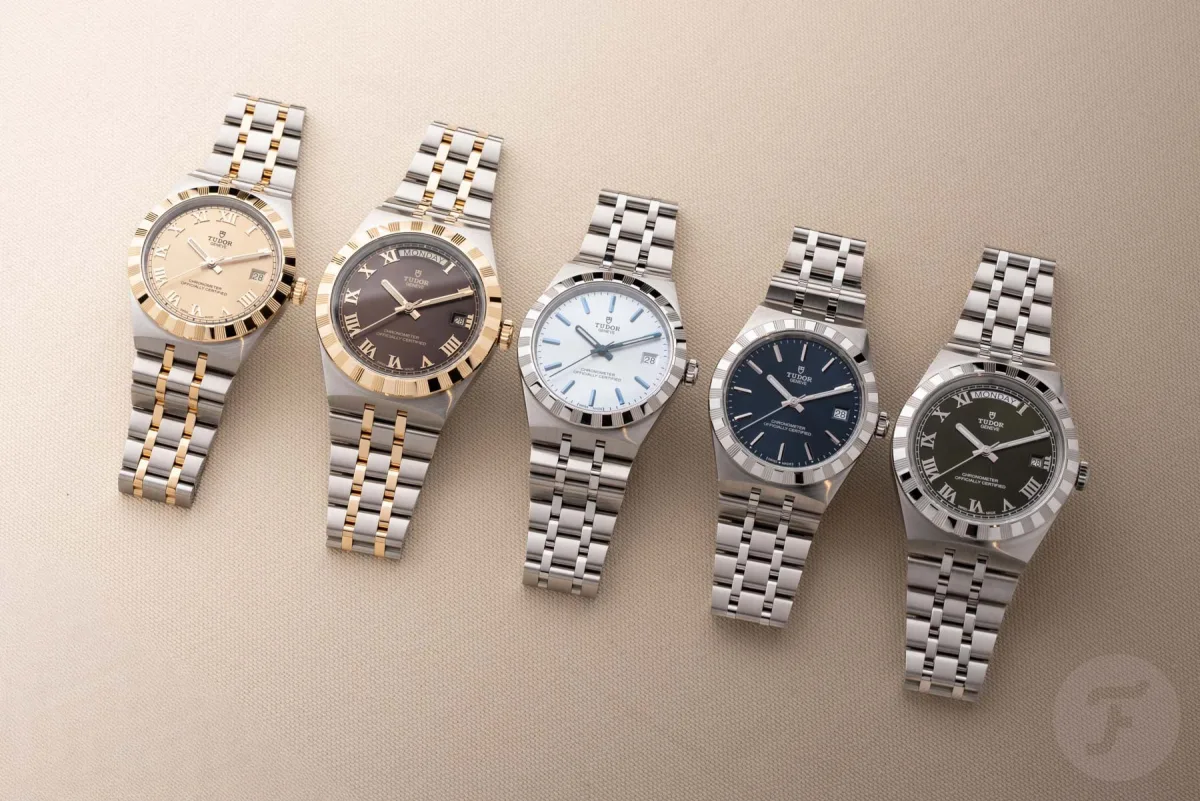
Most watch enthusiasts agree that Tudor's new releases at Watches and Wonders 2026 were not surprising, except for the Monarch model and possibly the black ceramic version of Black Bay.
Overall, the year was marked by updates, which are generally less exciting. I remind you that this year saw new dial colors for the Black Bay 54, a lighter version of the Black Bay 58, and a redesigned Royal series. At first glance, this may not seem too memorable. However, after writing an introductory article on the Tudor Royal, I became interested in examining the updated design in more detail. The new dial version with stick indices particularly caught my attention - it could become a real hit for Tudor.
Comparison of Tudor Royal with Contemporary Rolex Models
While discussing the Tudor Royal with watch enthusiasts, one often hears comparisons with two contemporary Rolex models. Some see a resemblance to the Land-Dweller due to the integrated bracelet, while others compare it to the Day-Date. The latter is related to the largest version of the Royal, equipped with a day of the week and date indicator, reminiscent of the flagship Rolex watches. With the release of the new Royal series, two more key comparisons can be added that may explain the model's success. Tudor introduced a new dial style with stick indices instead of the usual Roman numerals. New models with this dial resemble the classic Datejust or even the famous Oysterquartz more.
Details of the Updated Tudor Royal Collection
As I mentioned in the introductory article, the update of the Royal collection was carried out quite cleverly. It began with reducing the sizes to three options instead of the previous 28, 34, 38, and 41 mm. Now models with diameters of 30, 36, and 40 mm are available, allowing for a wide range of wrist sizes.
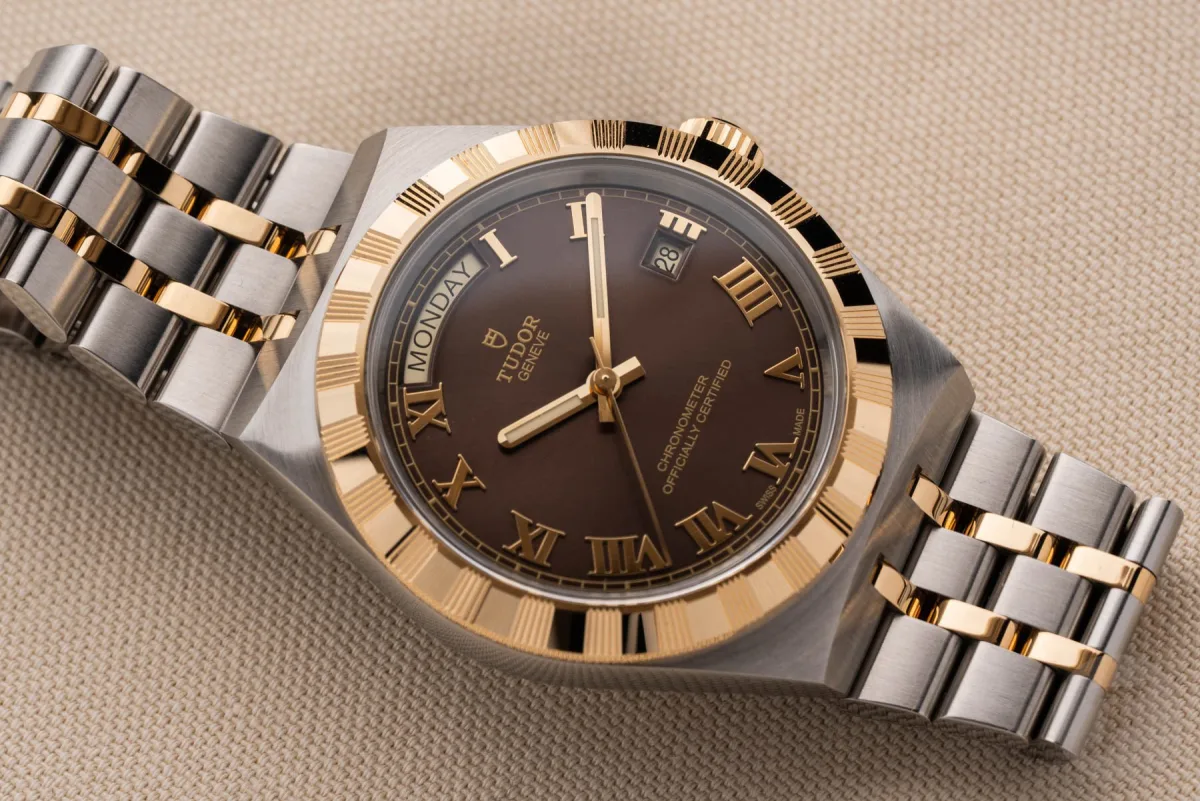
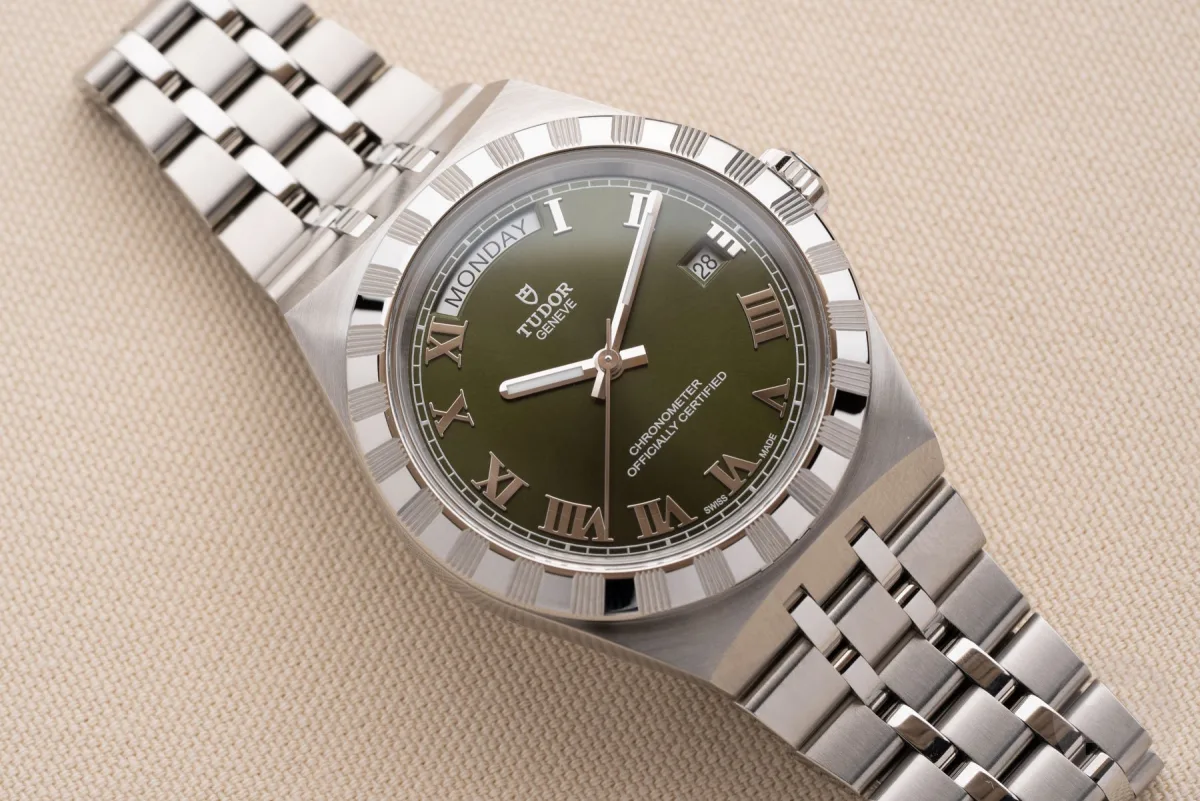
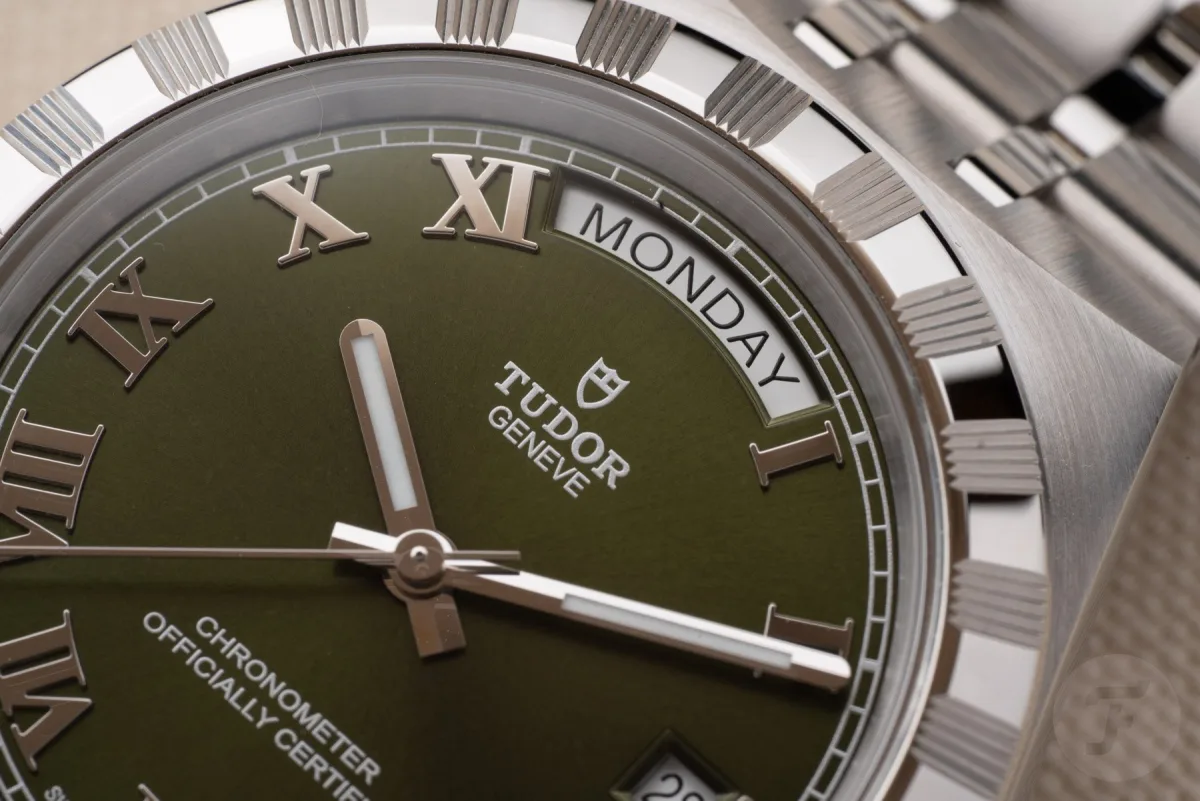
The two smaller models are equipped with a date window at the "3 o'clock" position, while the largest has an additional day of the week indicator at the "12 o'clock" position. Despite differences in case sizes, the layout remained the same: the 41-mm Royal had day and date display, while the others displayed only time and date.
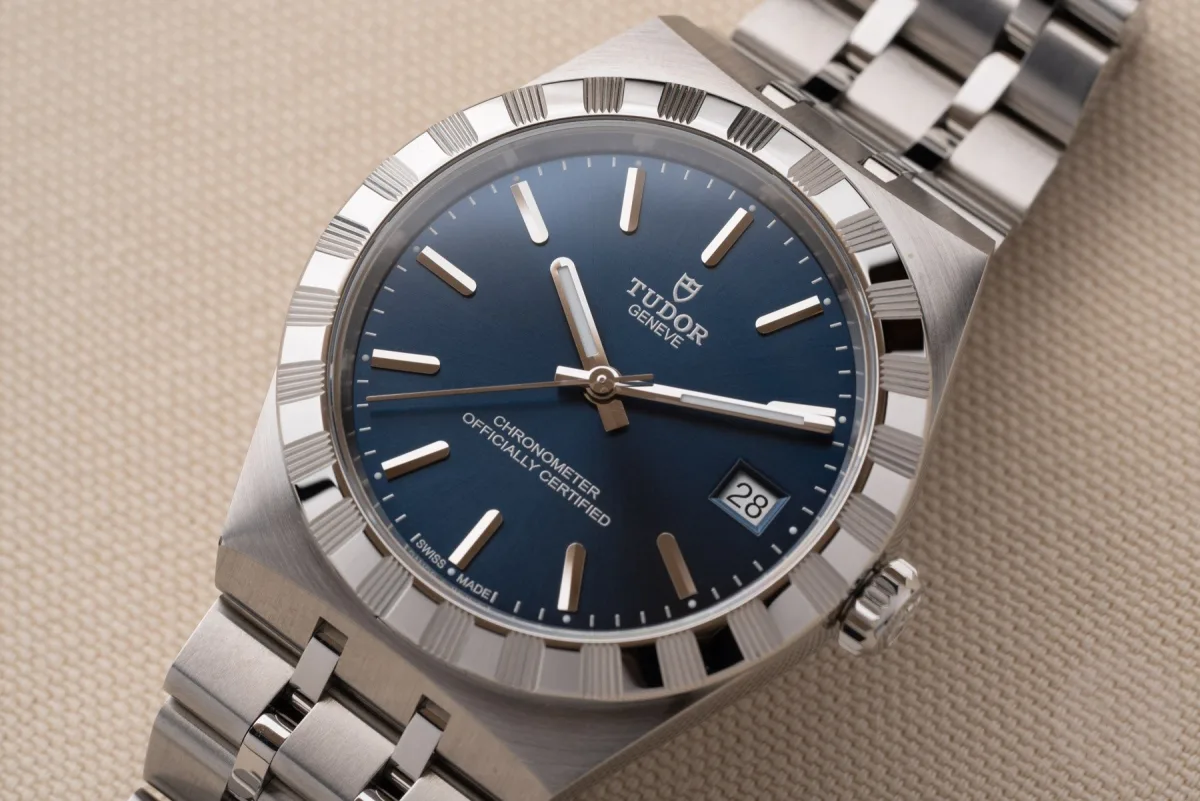
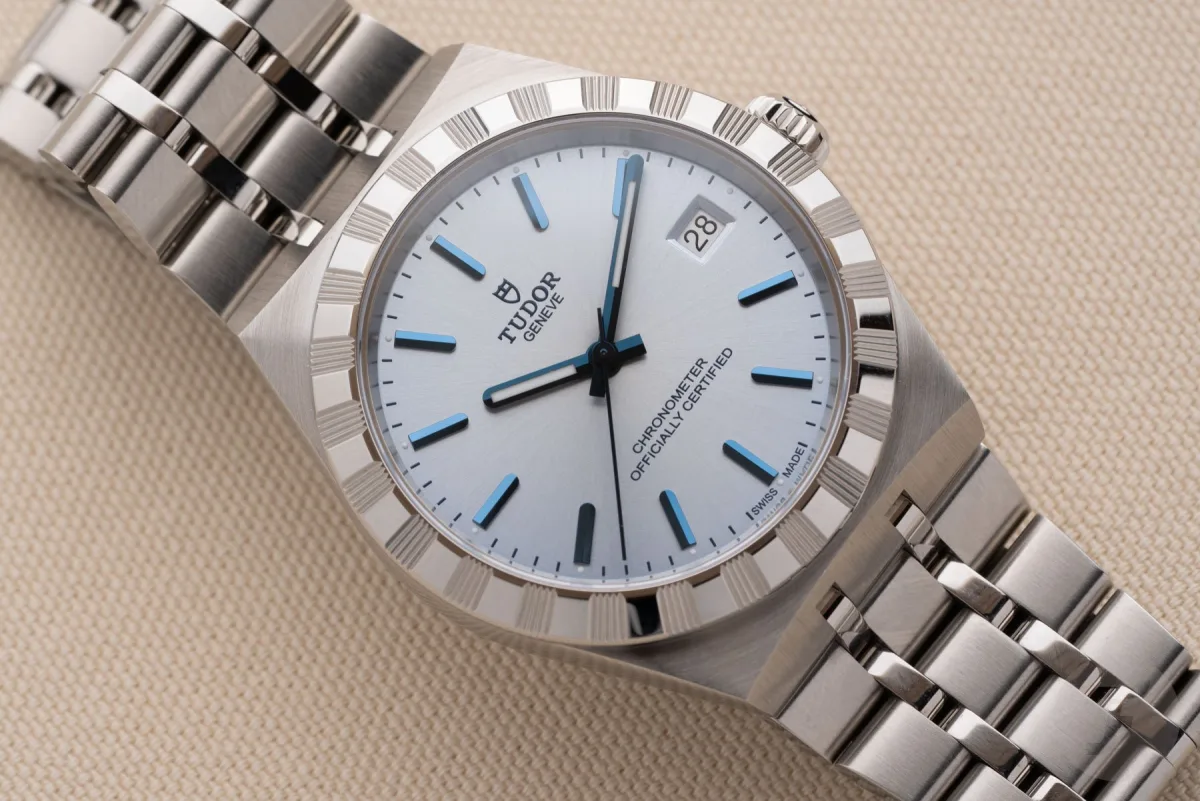
The main novelty is the appearance of the "new" dial design with stick indices. This option immediately caught my attention. Previously, Tudor offered only dials with Roman numerals, which, to be honest, require getting used to. For me, the comparison with Datejust well illustrates the differences between these two types of dials.
I like the Datejust dial with Roman numerals, but overall I prefer the version with stick indices. Therefore, the new Tudor Royal dial design appeals to me. Roman numerals look good on the salmon dial version, but I will always lean towards the simplified design with stick indices. I'm confident that this new dial will attract many new fans to the Royal series.
Updates in Movements and Technical Specifications
In addition to new dials and sizes, it's worth noting the update of calibers, all of which are COSC-certified as chronometers. The 36-mm models are equipped with the MT5412, and the 40-mm versions with the MT5633. Both movements provide an accuracy of -2/+4 seconds per day and a power reserve of up to 70 hours.
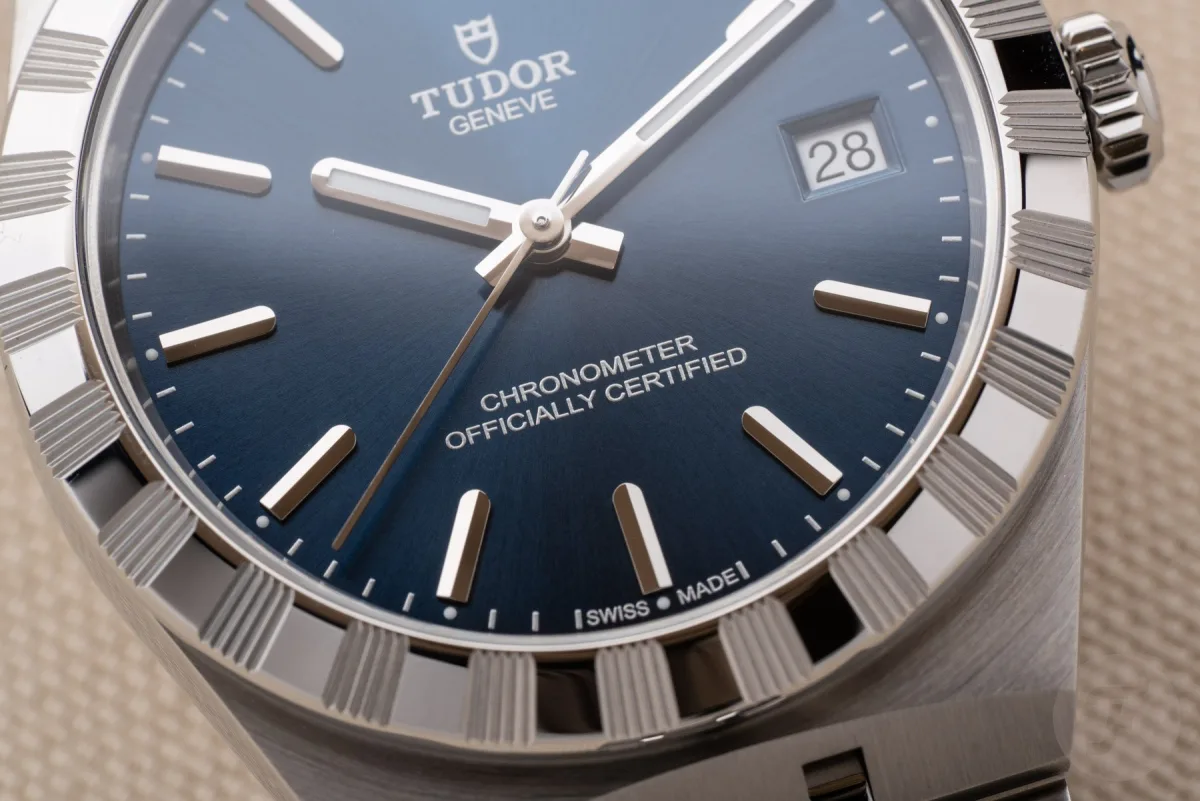
These updated movements are another important step forward for the Royal series. In honor of this, the dial features the "Chronometer Officially Certified" inscription in two lines at the bottom, adding visual balance. In previous versions, including the 41-mm and 34-mm models, the bottom of the dial was empty, creating a sense of incompleteness.
Also noteworthy are the attractive prices for the new models. For example: the 30-mm steel versions cost €2,990 / US$3,250 / CHF 2,650, the 36-mm - €3,160 / US$3,425 / CHF 2,800, and the 40-mm - €3,390 / US$3,675 / CHF 3,000. Two-tone models with gold start at €4,980 / US$5,400 / CHF 4,400 (30 mm) and go up to €5,830 / US$6,300 / CHF 5,150 (36 mm). Considering the equipment and quality, it's hard to find a better offer for everyday watches at this price.
Practical Impressions of the New Tudor Royal Models
Theoretical data is good, but the main thing is how the watches feel on the wrist. I was fortunate enough to test the new 36 and 40 mm models at Rolex offices a few weeks ago. This allowed me to get a full impression of the collection and compare sizes and dial options. I was particularly interested in the steel 36-mm versions with new dials. I also wanted to understand how they relate to the 40-mm models.
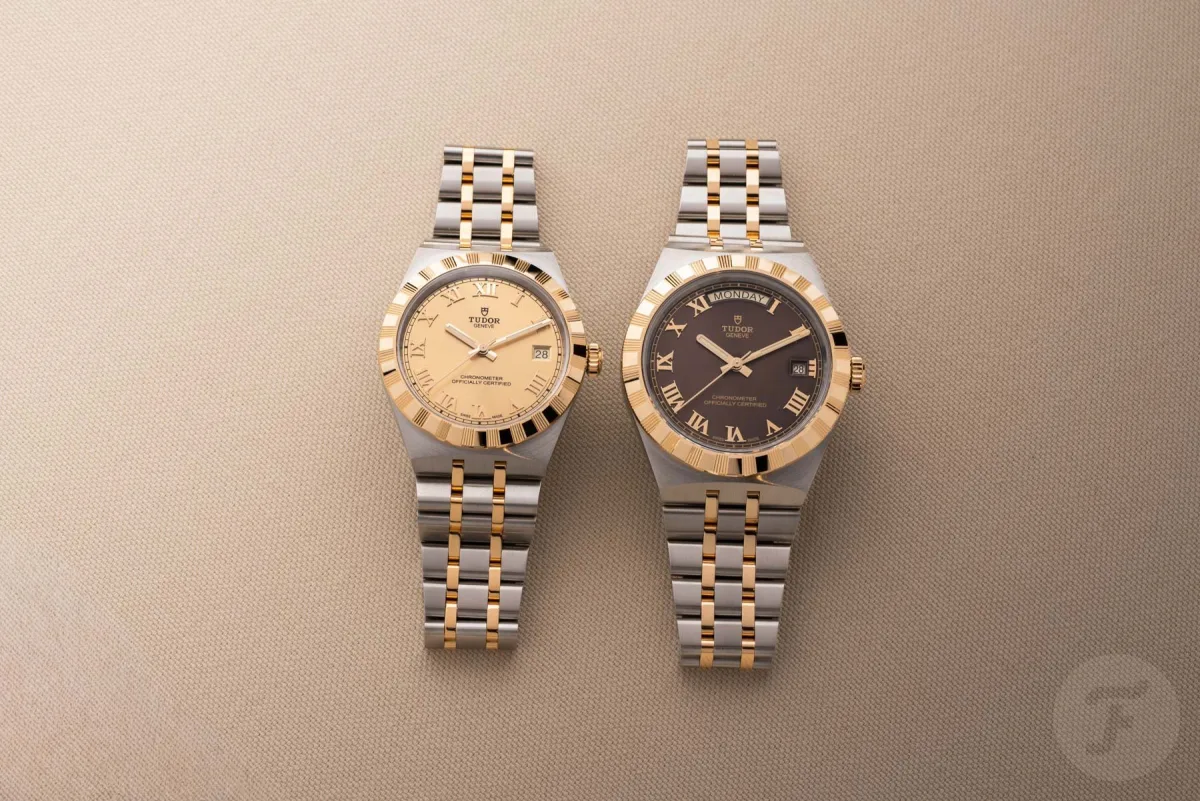
The smaller models have case dimensions of 36 × 42.2 × 9.7 mm, while the larger ones are 40 × 47 × 11.4 mm. However, dimensions are not everything.
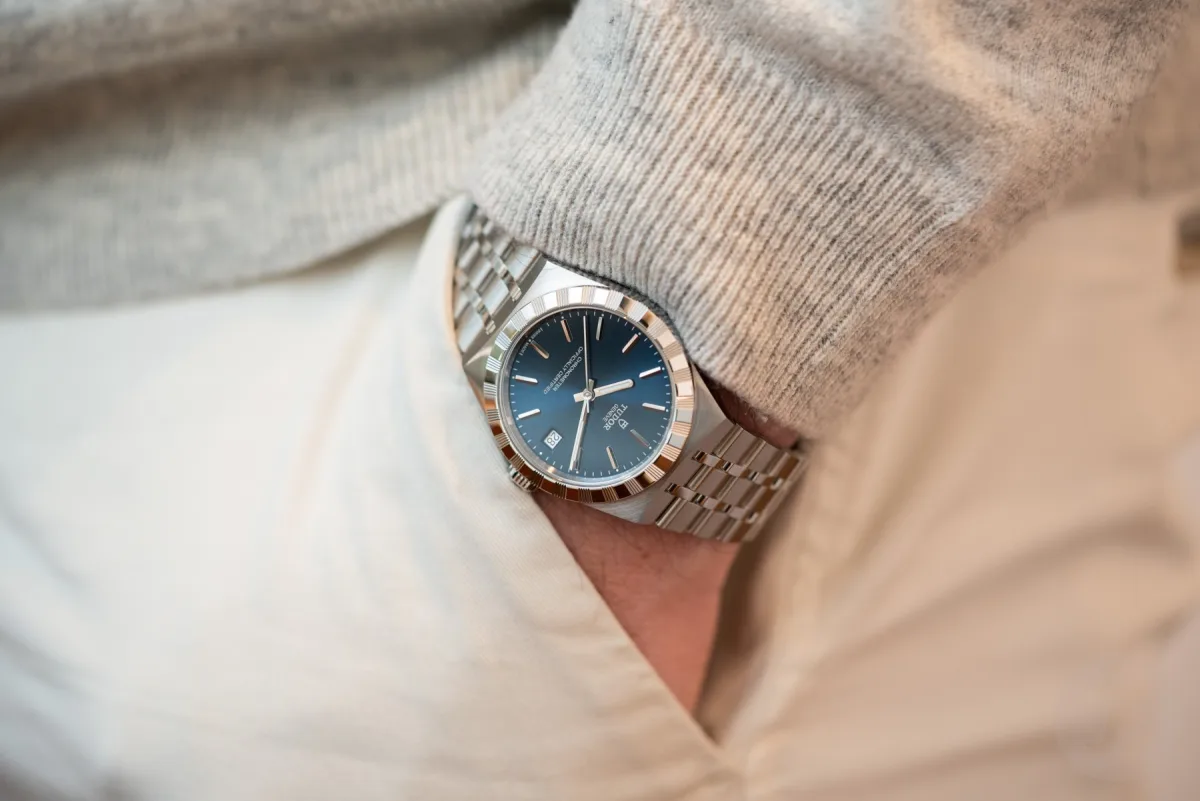
In the review of the new Datejust with green ombre, I noticed striking visual differences between the 36 and 41 mm versions, and preferred the classic 36 mm. With the new Royal, the situation is different: the 40-mm Royal looks and feels much better in terms of proportions than its Rolex counterparts. The larger model is perceived as a perfectly balanced enlargement of the 36-mm version.
New Variation of the Tudor Royal Dial
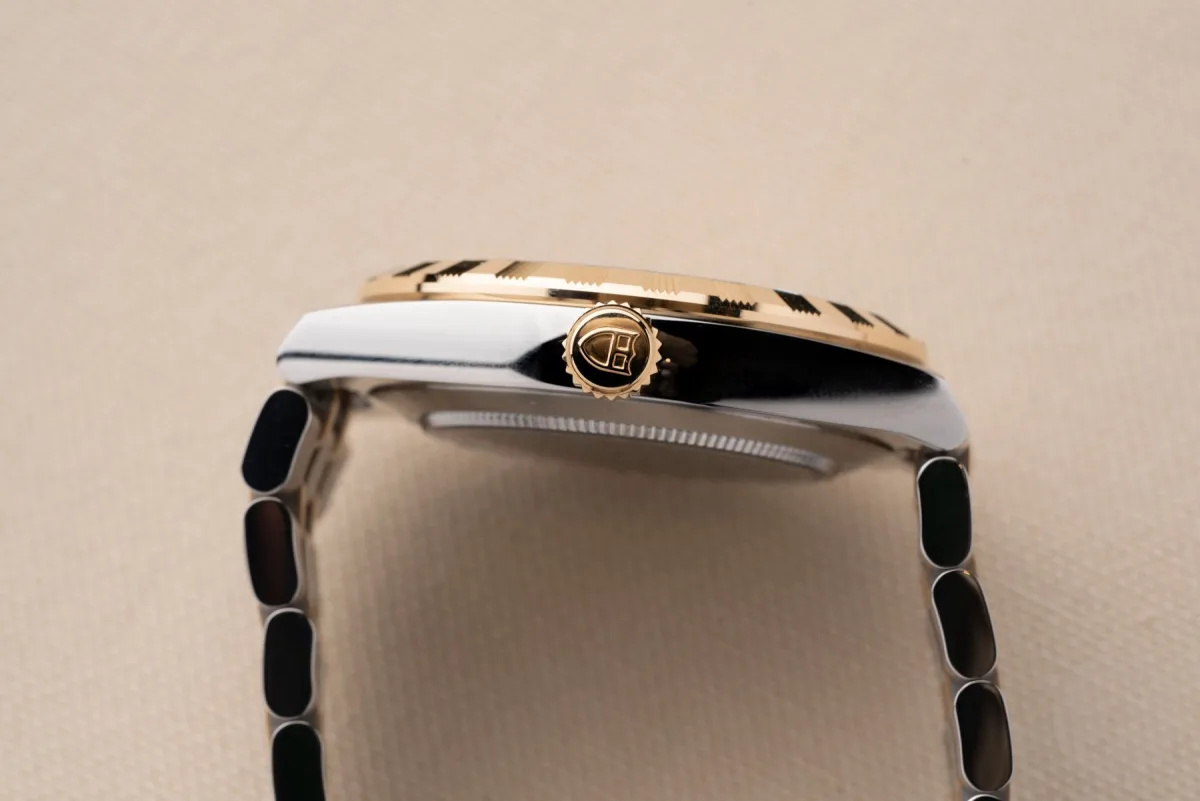
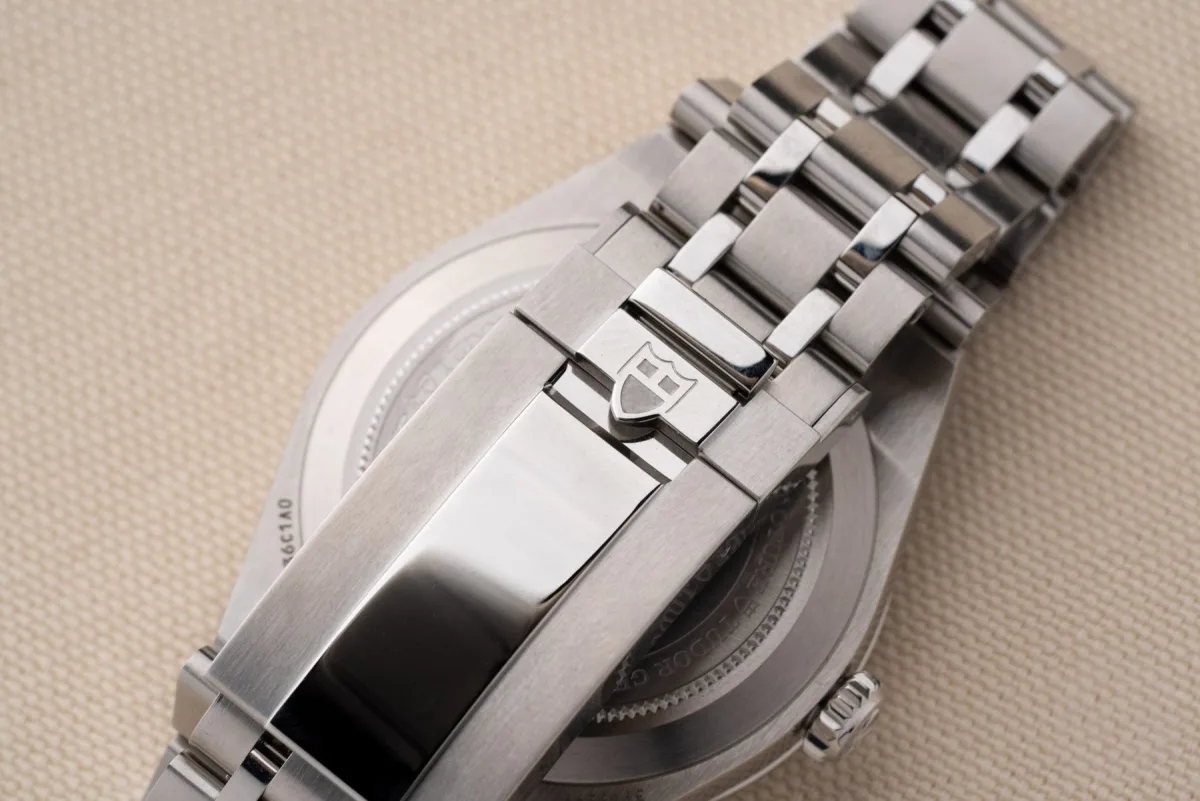
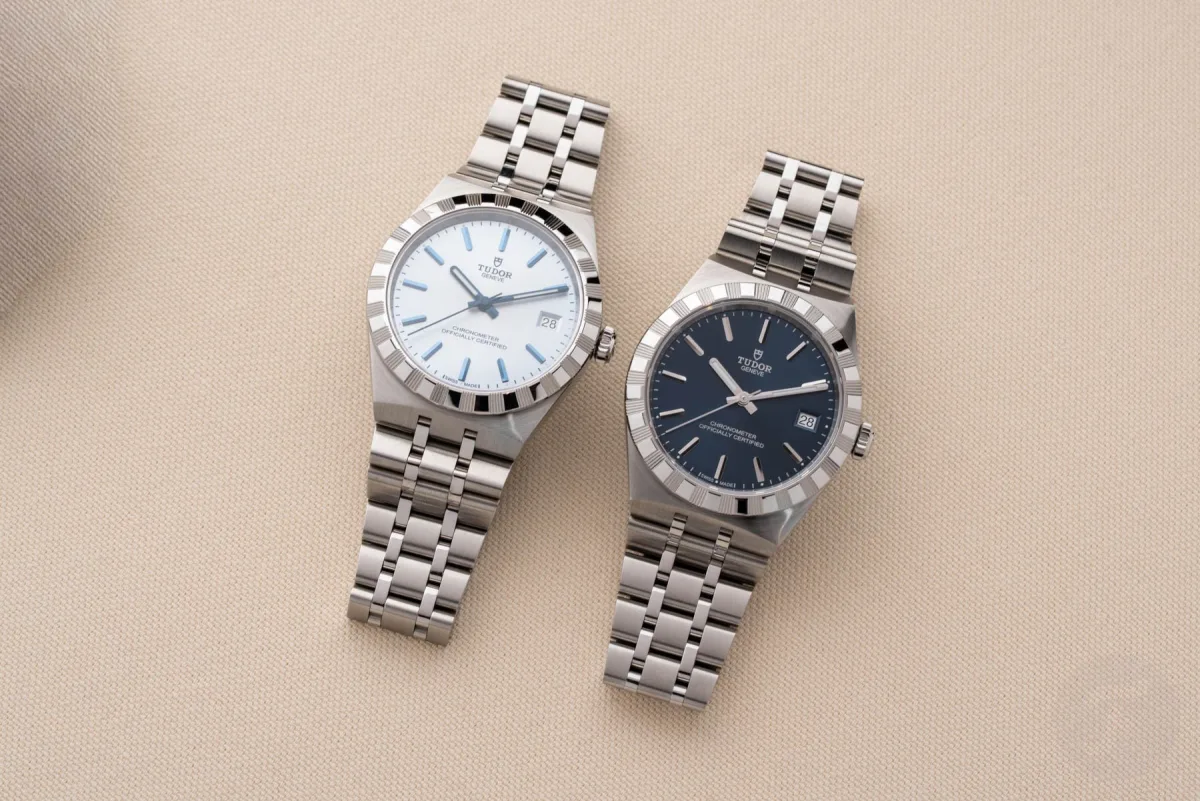
Before moving on to wearing, let's focus on the dials. It quickly became clear that my favorite is the new steel model with a blue dial. It perfectly conveys the spirit of the classic Rolex Oysterquartz and Datejust while adding a modern touch. Tudor designers also redesigned the case lugs and links of the integrated bracelet to eliminate unwanted contact. The result is an ultra-comfortable bracelet with a smooth taper to the signature T-fit clasp.

The new dials in light and dark blue shades were particularly impressive. They give the Royal series modern relevance, which I highly value. The Royal was often underrated in the Tudor collection. I used to prefer two-tone models with brown dials, but the new simplified dials changed my opinion. Tudor managed to make the Royal series much more interesting by offering a simplified version that appeals to fans of the classic Rolex style.
Charm of Two-Tone Models
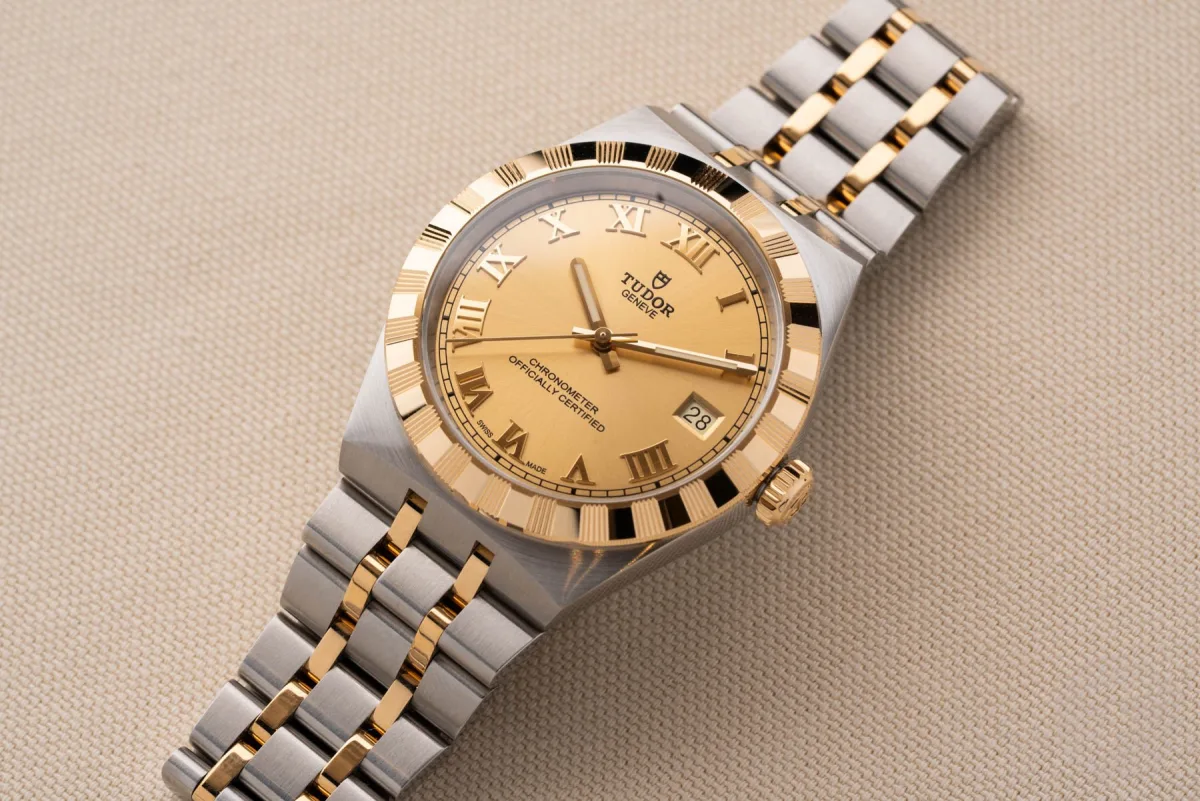
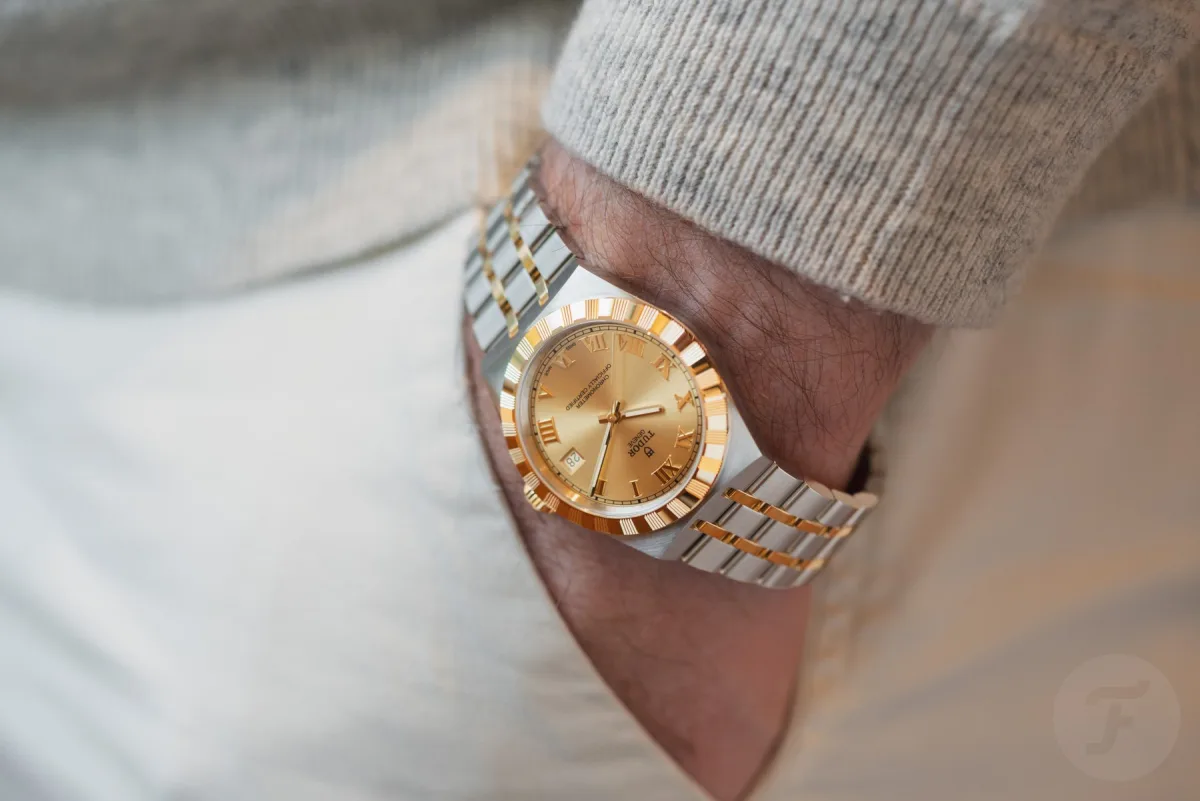
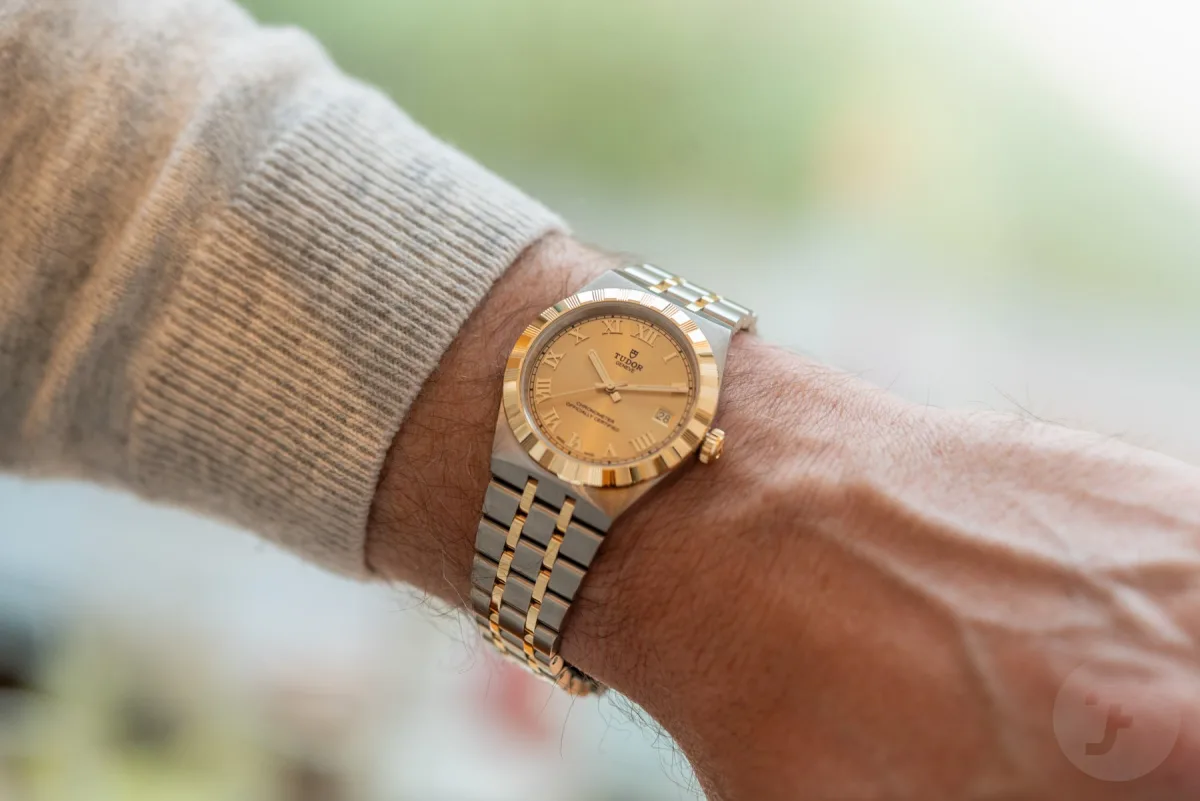
Although I prefer fully steel versions, I must note that the 36-mm two-tone Royal has a strong retro charm. It has become even better compared to previous versions. The gold dial with Roman numerals stands out in particular, perfectly conveying the atmosphere of the classic Oysterquartz. Although Rolex produced the Oysterquartz with gold dials or Roman numerals, it never combined these elements in two-tone models. Gold dials with Roman numerals were available only in full-gold Oysterquartz Day-Date.
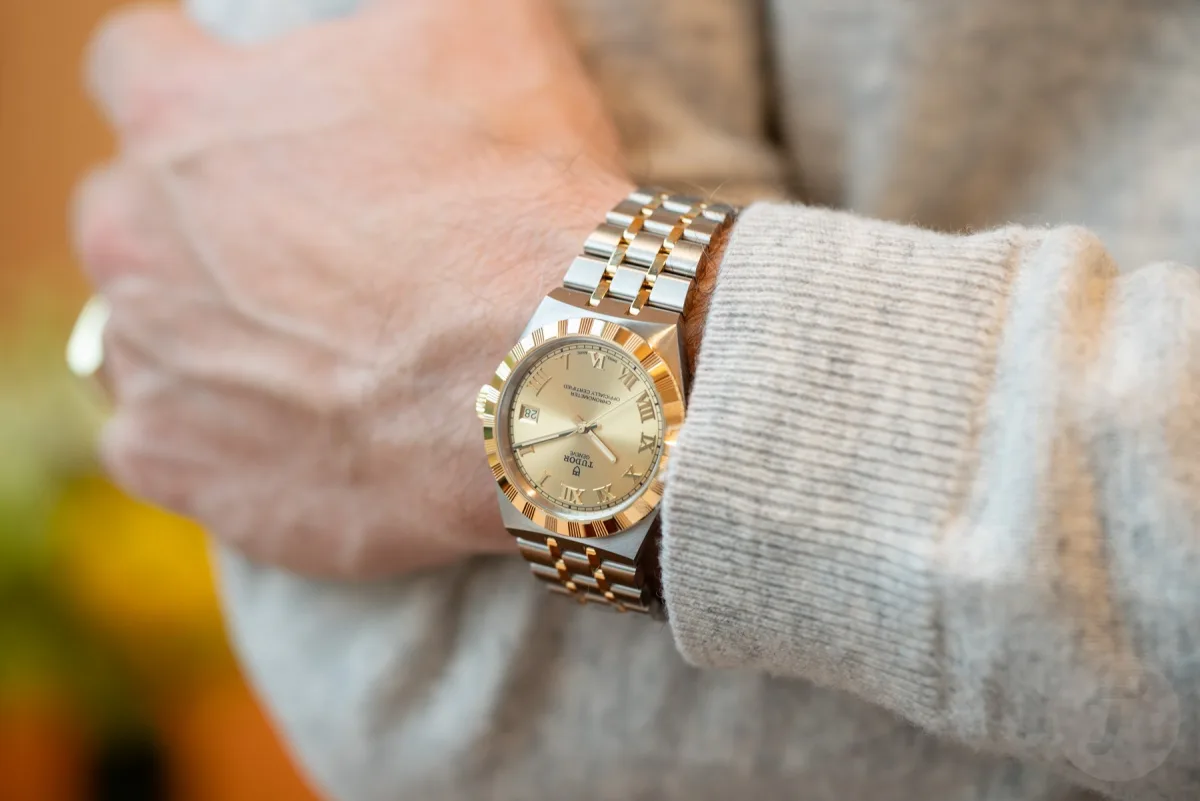
Nevertheless, this aesthetic is perfect for the new 36-mm Royal - this size best conveys the classic Rolex feel. At the same time, the 40-mm Royal will suit those who prefer larger watches. It is also closer in style to the classic Oysterquartz Day-Date with a day indicator at "12 o'clock".
Final Impressions of the New Tudor Royal Collection
Overall, testing the new Tudor Royal models left a very positive impression. The updated design and new dial format make the collection more interesting. For me, the ideal was the 36-mm Royal - it perfectly correlates with the classic Rolex of the past. Nevertheless, I also liked the 40-mm versions - unlike the Datejust, they do not seem disproportionate, but rather represent a successful enlargement of smaller models with the addition of a day indicator.
Preference for the 36-mm Royal is explained not only by the visual reference to classic Rolex Oysterquartz and Datejust. With a case thickness of 9.7 mm, it remains elegant. Meanwhile, the 40-mm version with a thickness of 11.4 mm feels more massive. At the same time, the integrated bracelet adds visual volume to the 36-mm model, so it does not seem small.
Significance of the New Dial Design for Tudor Royal
The most significant achievement for me is the new simplified dial design. It gives the Tudor Royal a relevance I did not expect. Like many Tudor fans, I usually focus on the Black Bay and Pelagos lines. But with the updated Royal series, the brand has released my favorite new product of 2026. It may sound strange in light of the Monarch, but honestly - I like the new Royal much more.
The new Tudor Royal perfectly conveys the classic spirit of Rolex. Although I remain a devoted fan of the Datejust and Oysterquartz, Tudor's updates brought a smile to my face that I did not expect to feel while wearing the Royal. Do not get me wrong: the modern Tudor Royal will never become a classic Rolex. If you want a Datejust or Oysterquartz - chase them. But if you are looking for a modern, affordable option from Tudor with a similar spirit, I recommend paying attention to the updated Royal collection. It is truly worth it.
Specifications of Tudor Royal Watches
| Parameter | Description |
|---|---|
| Reference | M2836 (36 mm) / M2840 (40 mm) |
| Dial | Wide selection of colors with applied indices, Roman numerals, or diamond markers |
| Case Material | Stainless steel / stainless steel and 18k yellow gold |
| Case Dimensions | 36 mm (diameter) × 42.2 mm (length) × 9.7 mm (thickness) / 40 mm × 47 mm × 11.4 mm |
| Case Back | Stainless steel, screw-down |
| Movement | Tudor (Kenissi) MT5412 (36 mm): automatic with manual winding and stop-seconds, 28,800 vph (4 Hz), 28 jewels, 70-hour power reserve, COSC, accuracy -2/+4 s per day Tudor (Kenissi) MT5633 (40 mm): automatic with manual winding and stop-seconds, 28,800 vph (4 Hz), 26 jewels, 70-hour power reserve, COSC, accuracy -2/+4 s per day |
| Water Resistance | 100 meters |
| Bracelet | Five-link integrated bracelet in stainless steel or steel with gold links, T-fit clasp |
| Functions | Time (hours, minutes, seconds), date (36 mm) Time (hours, minutes, seconds), day, date (40 mm) |
| Price | €3,160 / US$3,425 / CHF 2,800 (36 mm, steel) €5,430 / US$5,900 / CHF 4,800 (36 mm, steel and gold) €5,830 / US$6,300 / CHF 5,150 (36 mm, steel with diamond bezel) €3,390 / US$3,675 / CHF 3,000 (40 mm, steel) €5,820 / US$6,325 / CHF 5,150 (40 mm, steel and gold) |