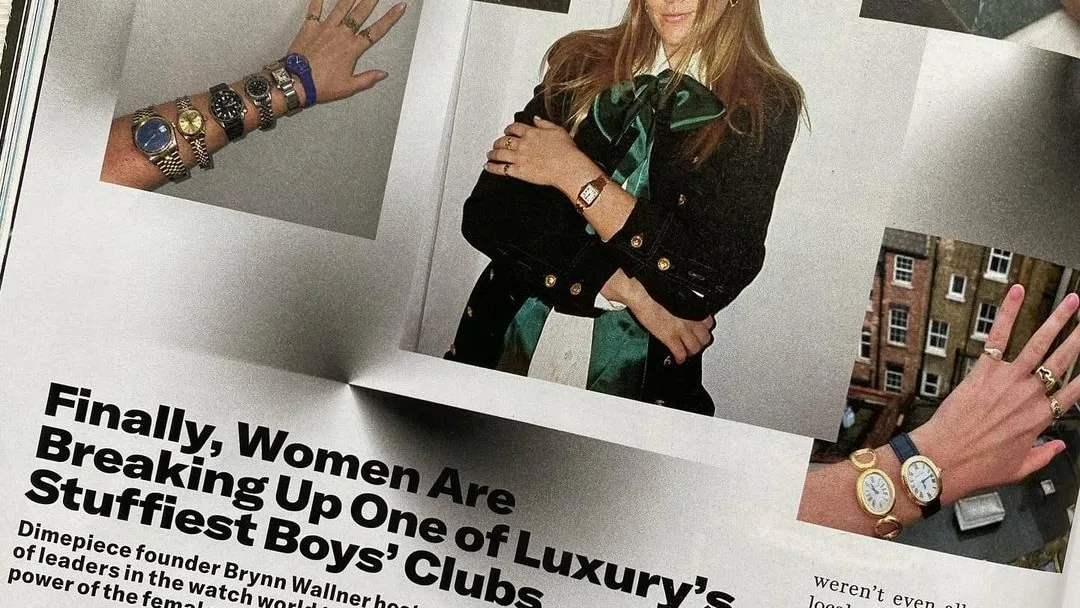
More and more women are taking the reins in the male-dominated watch industry. Let's find out who, what, and why.
Working in two major auction houses, I saw several brilliant women watch specialists. Yet, the modern watch industry is undoubtedly male-oriented. Men account for the lion's share of watch purchases. And it has been this way for decades.
In fact, I find this quite ironic. Let us not forget that wristwatches were originally intended for women. Most people perceived watches as akin to ladies' jewelry.
However, soldiers at war needed something more practical than pocket watches. Who has time to retrieve a chronometer from a pocket in the trenches?
Thus, many servicemen wore wristwatches with the dial on the inside of the wrist for protection. This orientation then became the proper way for ladies to wear watches. Bending elbows was considered too masculine.
Today, all women leaders in the watch industry can be called 'reclaimers.' Let's talk about why and how these female enthusiasts do what they do.
Did 2020 Change the Game?
According to GQ in an article by Dimepiece founder Brynn Wallner, Deloitte reported that by 2023, women will earn more money and buy more watches.
Perhaps 2020 had something to do with this.
I like how Wallner's article reminds us that the watch world loves old methods. Yes, we love innovation, but time-tested watches are true icons.
We are devoted to mechanics, despite quartz movements being more accurate. And if we're stating the obvious, most of us don't need watches to tell time.
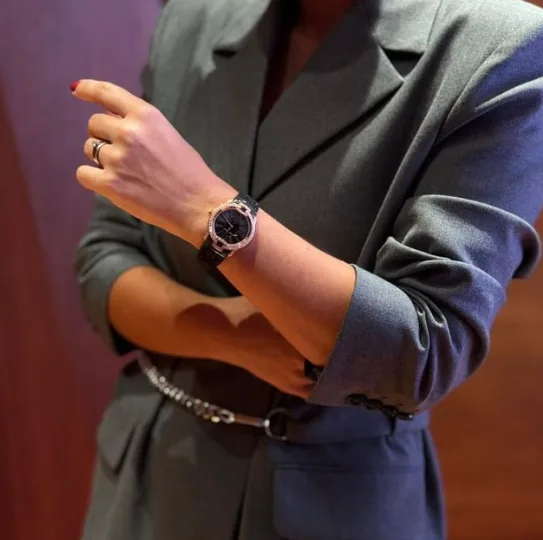
Moreover, Switzerland has been and remains the center of the watch industry. As Wallner reminds us, until 1991, women weren't even allowed to vote in local elections.
But in 2020, perhaps out of boredom from the 'work-from-home' revolution (yes, I did a rebranding), the watch market changed and expanded. Auctions and other secondary markets, as well as the industry's presence on social media, exploded.
Wallner even discusses how she launched Dimepiece in 2020 and how Ginny Wright became the CEO of Audemars Piguet that same year. Wright further confirms that in 2020, people who were bored at home changed the demographic of those interested in watches. Among them, of course, there were more women.
If more women are buying watches, shouldn't more women leaders help curate the market? Many women believe so.
Jewelry Overlap
Besides size and perhaps color, there aren't many characteristics distinguishing women's watches from men's.
Historically, the main factor was gemstones. When I worked in major auction houses, the jewelry and watch departments were always inextricably linked. Their major auctions occurred in the same seasons, and physical teams often shared the same floor or even the same office.
Meanwhile, many male public figures are embracing gender-fluid style, and this extends to accessories. Whether it's Bad Bunny with a heart pendant or Harry Styles with pearls.
This shift has led women to reimagine men's style. Instead of thinking, “This movie star is how I want my boyfriend or husband to look,” they view male style icons as inspiration for themselves.
And one thing male fashion icons love is watches.
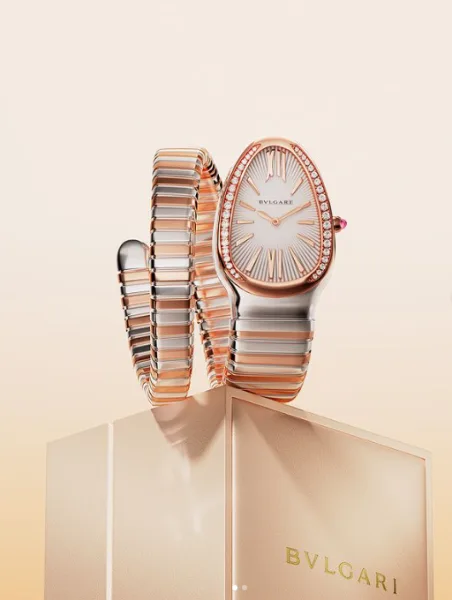
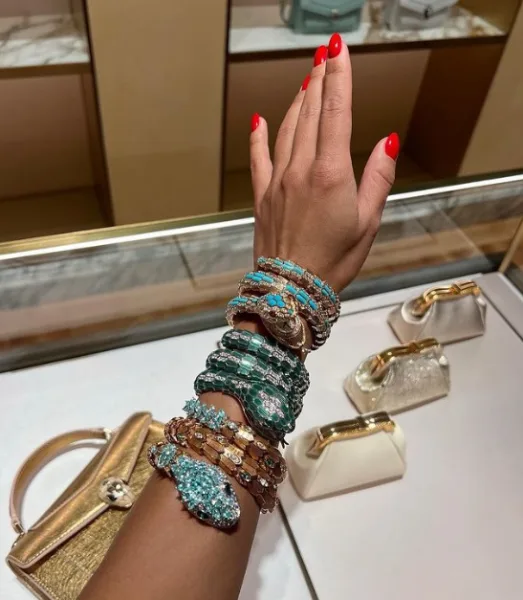
A collection like Bulgari's Serpenti blurs the line between jewelry and watches. A close friend working at Bulgari calls it 'functional jewelry.'
Overcoming the 'Boys' Club' Barrier
All this is breaking a long-standing barrier for women that has maintained the 'boys' club' status in the watch world. For decades, most brands did not release collectible women's watches. Thus, today's auction record holders are Paul Newman's 'Daytonas' from the past.
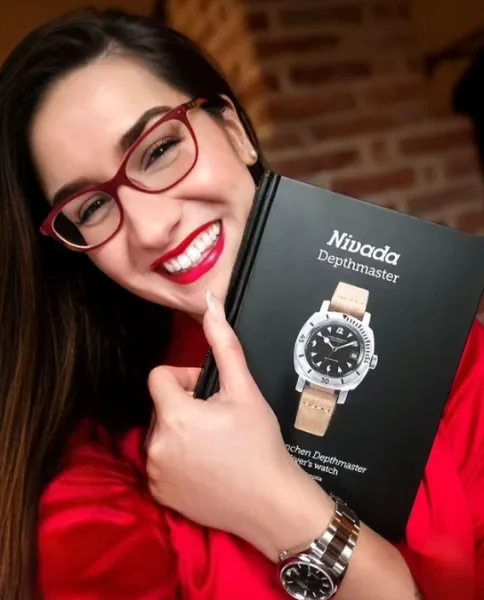
Okay, this doesn't break the barrier. At least not completely. The male-oriented foundation is deep and strong. But these phenomena are beginning to break the barrier in a more significant and enduring way than ever before.
According to the New York Times, Katie Reed, Vice President of Marketing for Swiss company Watches of Switzerland, mentions the concept of women's tea events. They were more common at Tiffany's and Cartier's - markets frequently visited by women.
Reed says they are trying to move away from such concepts and eliminate 'gender talk.' They have even shifted to tracking watch sales based on millimeter sizes rather than men's vs. women's watches.
Different Approaches from Different Leaders
Who is doing all this?
Brynn Wallner: Dimepiece
I've already mentioned Brynn Wallner, who founded Dimepiece in 2020. Dimepiece is a great resource for watch enthusiasts of all levels.
She offers wonderful stories and information aimed at women, though anyone can enjoy what she provides. Including a lovingly curated shopping section.
And we have women in power positions historically held by men.
Ilaria Resta and Ginny Wright: Audemars Piguet
In fact, the CEO of Audemars Piguet is a woman named Ilaria Resta, living in Switzerland. This is incredibly rare. At the same time, the CEO in North and South America, as mentioned earlier, is Ginny Wright.

Jacqueline Dimier: Audemars Piguet
In Wallner's article in GQ, Wright reminds us that Audemars Piguet was ahead of its time. They developed the first women's Royal Oak watch in 1976 and hired a female designer, Jacqueline Dimier.
Rebecca Ross: Christie's
Rebecca Ross is also mentioned in the article. She lives in New York and has worked at the auction house Christie's for nearly a decade. This true watch expert has risen from specialist to Vice President and Head of Sales.
When she started, most department employees were men.
Isabella Proia: Phillips Auction House
Incidentally, the head of sales at Phillips Auction House is international specialist Isabella Proia. This shows that gender diversity is occurring even in such hyper-traditional spaces.
H. Jane Chon: Horological Society of New York
Meanwhile, we have H. Jane Chon, who is an advisor to the Horological Society of New York. She herself has a decent watch collection.
Chon may be helping to break the mold, considering that the legal profession is also male-dominated.
Katie Reed and Kelly Yoh: Watches of Switzerland
Katie Reed is not only the Vice President of Marketing for Watches of Switzerland but also the stylish Kelly Yoh is the Client Director in the USA.
Thus, at Watches of Switzerland, Reed disregards gender (when it doesn't matter). And Yoh has appeared in several Analog: Shift videos on Instagram, talking about new cool models.
This adds a female face and voice to the abundance of young men in short content.
Irina Chiobanu: Ladies Watch Club
Then there's the Instagram account Ladies Watch Club. Irina Chiobanu started it, as expected, on International Women's Day in 2020.
Chiobanu knew and knows that among watch enthusiasts there are many women like herself. However, a platform to unite them was practically non-existent.
She became one of the pioneers who allowed women to see watches on women's wrists on social media.
Dana Lee: Tell the Time Watches
I also want to mention Dana Lee, who founded the site and community Tell the Time Watches. Lately, she hasn't been particularly active, but she was featured in the aforementioned New York Times article.
More importantly, her site's archives are full of interviews and stories about women in the watch world. Besides brand directors, buyers, and sellers, she also interviews photographers and creatives.
The Watch Market on the Horizon
Much has changed this year, perhaps related to more active participation by women, or perhaps not. Certainly, the interest in women's aesthetics has been revived among both genders.
Like Hodinkee, I predicted and have seen increasing interest in smaller, dressier watches. Think precious metals and other designs and styles associated with jewelry. That's why some classic watches are released in reduced versions.
As someone with small wrists, I welcome this. After all, I love wearing my women's 28mm Omega Seamaster.
And who knows, maybe the female influence is somehow connected to the fact that women's design is penetrating overall watch design. I just don't think it's a coincidence.
Changing Views and Big Numbers
In 2023, luxury watch sales will reach nearly $50 billion. Moreover, analysts expect this figure to grow by 2 to 5% by 2027 (depending on which study you look at).
The luxury watch market has always existed. However, at a time when women's involvement has significantly increased (and, of course, continues to grow), a noticeable shift has occurred.
Besides the massive influx of women entering the market in 2020, Generation Z is entering the market. And presumably, they are entering it at a younger age than millennials.
And why shouldn't there be more female buyers among this young generation? Generation Z women are more educated than Generation Z men and are closing the pay gap.
Some believe that millennials, Generation Z, and their successors will become the largest buyers of luxury watches.
I've noticed that young watch buyers are much more interested in buying watches of the opposite gender just for the sake of it.
Moreover, not all ladies prefer elegant accessories. Some like that men's watches make their wrist appear more delicate, just as a necklace accentuates their outfit.
Not every man needs a 50mm monster. And again, they are becoming fewer and fewer.
And here's an interesting statistic. Many brands, according to Avi & Co, have noticed that women's collections tend to have a higher value than men's. So, if men buy more watches, women buy more expensive ones.
Ladies are more inclined to invest in luxury watches.
Perhaps this is because they are more familiar with luxury shopping in general. Or maybe they just have a better understanding that quality is more important than quantity.
What do you think about these women leaders in the watch industry breaking barriers? Tell me about it! And don't forget to subscribe to the Telegram channel for watch content from our editors and experts!