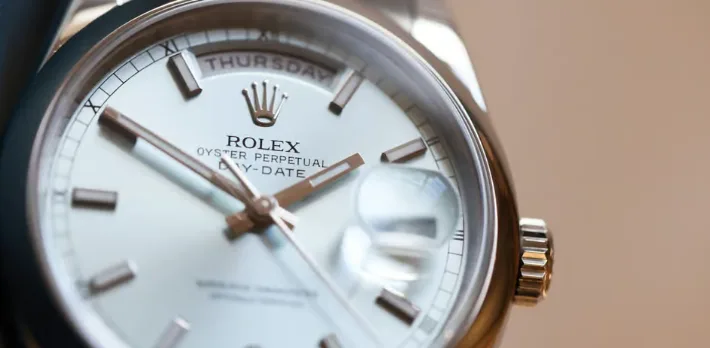
For decades, Rolex Day-Date has been considered the benchmark of luxury watches for the elite.
Presidents, actors, athletes, and renowned entrepreneurs have all worn the Rolex Day-Date on their wrists at different times. It's no wonder these watches are still called the "President" and are considered the holy grail for many collectors. However, such prestige comes at a price. Depending on the materials used, a new Rolex Day-Date 40 model can easily cost $50,000 or significantly more. The same goes for the smaller 36 mm version. Despite the unique design of the Rolex Day-Date, there are interesting watches that, although they don't bear the Rolex name on the dial, convey a very similar character. In this article, I will discuss my three personal alternatives to the Rolex Day-Date. You might agree that the brand with the crown is not the only one that can stylishly combine timeless watchmaking craftsmanship with prestige.
What Makes the Rolex Day-Date Special?
Before considering alternatives, it's worth understanding why the Rolex Day-Date stands out from other watches. More detailed information can be found in a recent article by my colleague Maximilian.
Why is the Rolex Day-Date Called the "President"?
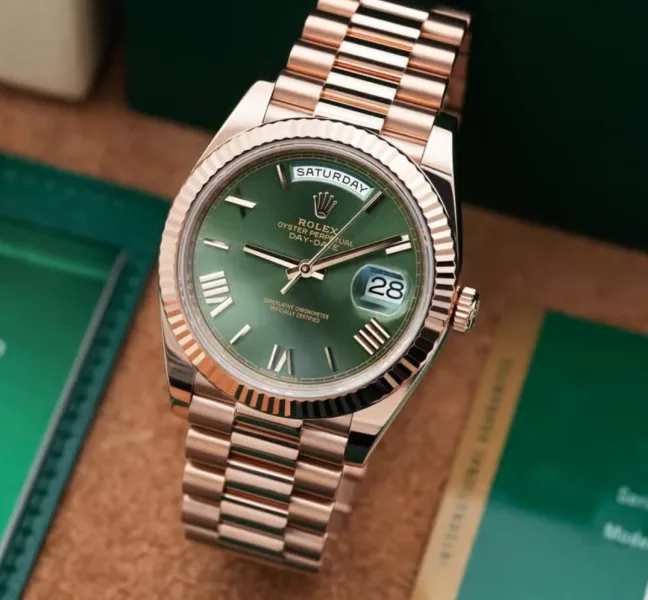
The nickname "President" is associated with the bracelet that Rolex introduced in 1956 along with the first Day-Date model. The three-link bracelet was designed exclusively for this model, combining elegance and comfort. Over time, it became legendary. Especially in the USA, the Rolex Day-Date gained the status of a watch for influential people. Many US presidents wore them. Although it's not entirely clear whether every American president had such a watch, the timepiece retained this nickname, which is better known today than the official model name.
Materials in the Rolex Day-Date 40
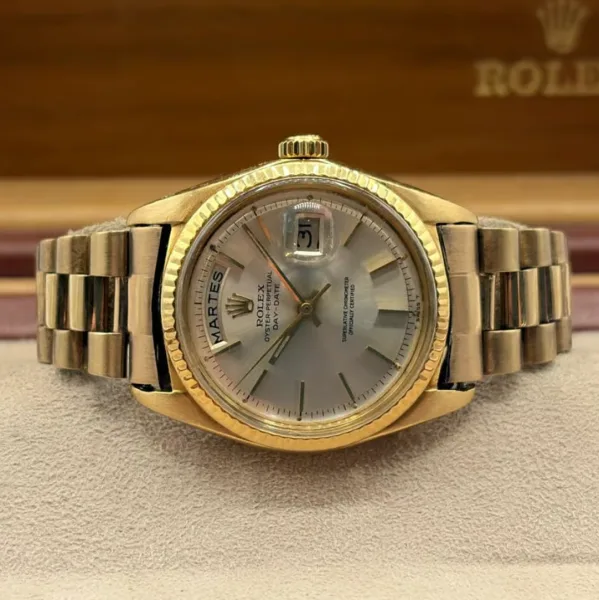
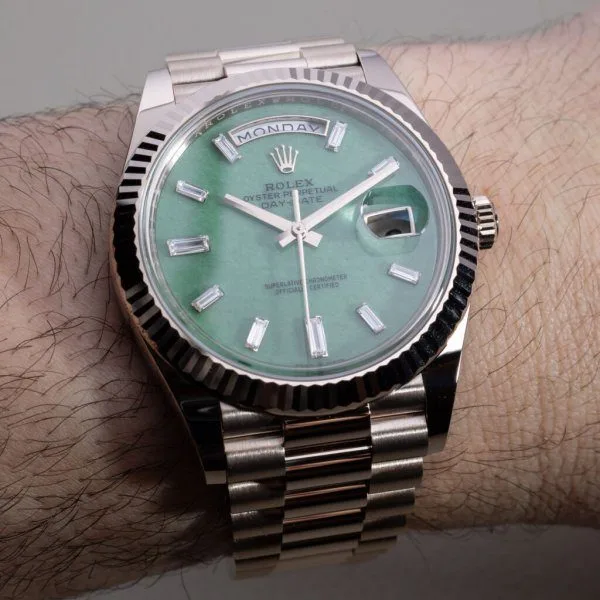
One of the distinctive features of the Rolex Day-Date is the exclusive use of precious metals. There are no stainless steel models in the lineup. Buyers can choose between yellow gold, white gold, Everose gold, and platinum. Additionally, there are various dial colors, diamond options, and different bezel styles, with the classic being fluted. This emphasis on luxury makes the Rolex Day-Date desirable for many. These are not sports watches but an elegant status symbol, and they are proud of it. Of course, I understand the popularity of steel watches, so below I will present alternatives using steel.
Rolex Day-Date 36 or Rolex Day-Date 40: Which is Better?
This is one of the most common questions regarding the legendary "President" watches. The answer is ambiguous and depends on personal preferences. The 36 mm model is the classic option, remaining true to the historical design until the early 2000s.
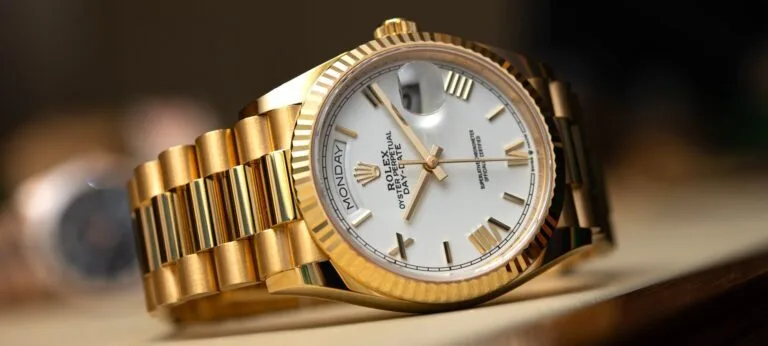
It looks elegant, more restrained, and is perfect for slender wrists. In contrast, the Rolex Day-Date 40 looks more modern and impressive: an enlarged case, wide bezel, and sporty style reflect current trends. Technically, both models are top-notch and practically flawless. Ultimately, it comes down to whether you prefer classic proportions or a more contemporary design.
How Much Does the Rolex Day-Date 40 Cost Today?
The new Rolex Day-Date 40 is one of the most expensive Rolex models. Depending on the materials, prices start at around $55,000 and can increase significantly due to special dials or diamond inlays. On the secondary market, the situation is similar: popular versions with green, blue, or ice dials often sell for significantly more than the recommended price.
A glance at the prices makes it clear: for many enthusiasts, the Rolex Day-Date remains a dream. Therefore, I present three affordable alternatives in different price categories.
My Three Best Alternatives to the Rolex Day-Date
Not every watch with day and date indicators can be considered a worthy replacement for the Rolex Day-Date. The goal is to maintain the unique character and spirit of this icon, not just copy it. A successful alternative should feature high-quality craftsmanship, an elegant appearance, and be suitable for both everyday wear and formal occasions. Some models are closer to the classic Rolex design, while others offer a unique take on the concept. This combination makes the following three models particularly interesting. They cover different price segments and prove that you can get the charm of the Day-Date without investing tens of thousands of dollars.
Not a Rolex Replica: Hamilton Jazzmaster Day-Date Auto
I'll start with a watch that at first glance looks little like a Rolex Day-Date. This is precisely what makes them attractive. The Hamilton Jazzmaster Day Date Auto doesn't try to copy Rolex but offers its own interpretation of the idea. The case is elegant with smooth lines, and the dial is minimalist and not cluttered with details. The day of the week indicator at 12 o'clock immediately reminds one of the Rolex Day-Date, but in other respects, Hamilton follows its own path. The automatic movement with a power reserve of up to 80 hours is based on the proven ETA caliber and is renowned for its reliability.
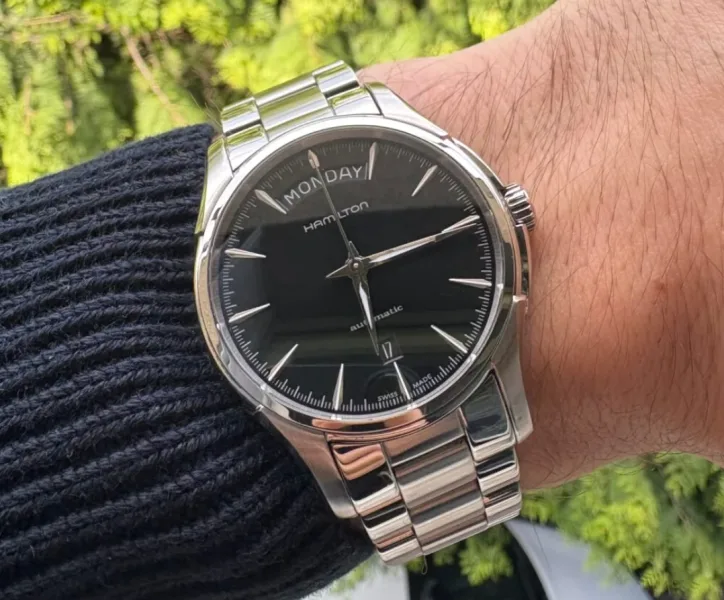
Particularly impressive is the price-to-quality ratio: for less than $1,000, you get a quality automatic watch with a real day and date indicator, sapphire crystal, and a level of craftsmanship that exceeds its cost. The Hamilton Jazzmaster Day Date Auto is an excellent choice for those who appreciate the charm of the Rolex Day-Date but don't want to wear a replica.
An Alternative from a Related Brand: Tudor Royal Day-Date
If there is a watch that is noticeably close to the Rolex Day-Date, it is the Tudor Royal. They also feature a fluted bezel reminiscent of the Datejust and Day-Date models from the 1960s. The day of the week indicator at 12 o'clock and date at 3 o'clock is a similarity that cannot be ignored, although Tudor lacks the characteristic date magnifier found in Rolex. This is not surprising, as Tudor and Rolex have been part of the same corporate group for decades. Particularly interesting is the latest generation of Tudor Royal, updated in the spring of 2026 with automatic movements certified by COSC.
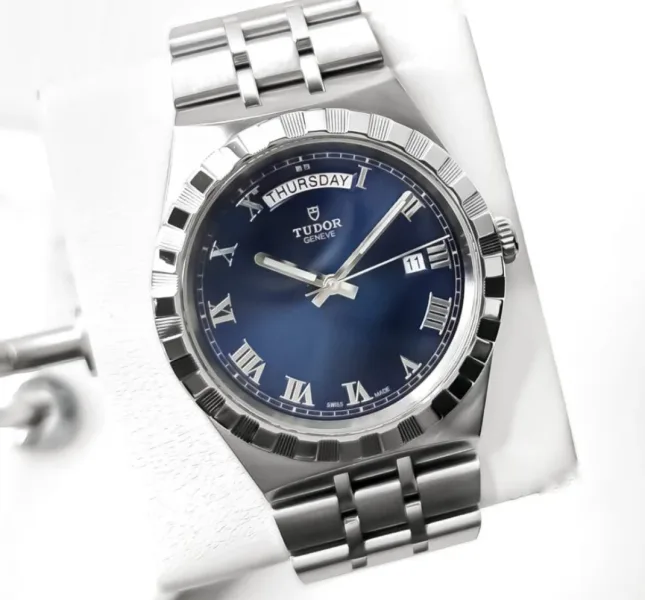
This ensures high accuracy and adds prestige. Visually, the watches stay true to themselves: the Tudor Royal is both elegant and sporty, making them versatile for everyday wear. Models are available with different dial colors, in steel, and two-tone versions. Blue dials are especially popular, fitting any style and occasion. Most importantly, while the Rolex Day-Date costs tens of thousands of dollars, the Tudor Royal can be purchased for around $3,000. For experienced collectors, older models like the Tudor Prince Date Day or Tudor Classic are also of interest, as they are even closer in appearance to Rolex.
Elegant Competitor: Omega Constellation Globemaster Annual Calendar
Probably the most interesting alternative today is Omega, although few talk about it. At first glance, the Omega Constellation Globemaster Annual Calendar looks like a modern interpretation of the Rolex Day-Date. The fluted bezel is reminiscent of Rolex, but the watch has its own character. The case is elegant, and the overall atmosphere of the watch exudes calmness. Technically, Omega surpasses Rolex: instead of a simple date indicator, there is an annual calendar with month indication around the edge of the dial. Adjustment is required only once a year - at the end of February.
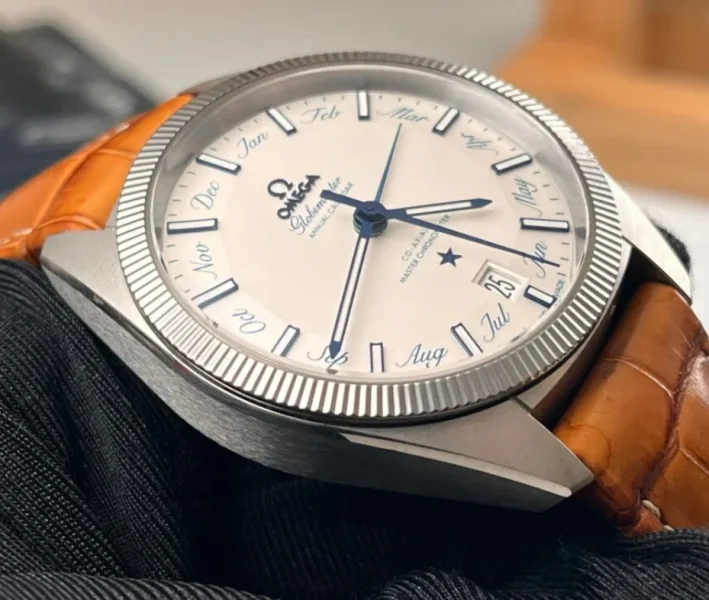
The automatic movement is certified as a Master Chronometer, resistant to magnetic fields up to 15,000 gauss, and is one of Omega's best. The unique fluted bezel is made of tungsten carbide and is highly resistant to scratches, maintaining a flawless appearance even after years. The model is available in both steel and gold, and like the Rolex Day-Date, it has its own individuality. Although the Omega Constellation Globemaster Annual Calendar is discontinued, they can be found on the secondary market for significantly less than $10,000.
Which Day-Date Alternative to Choose?
Undoubtedly, the Rolex Day-Date remains one of the most significant icons in the watch world. Their status, history, and craftsmanship make them exceptional luxury watches today. However, the market shows that you don't have to spend a fortune to achieve a similar style. Whether it's the affordable Hamilton Jazzmaster Day Date Auto, the close-to-Rolex Tudor Royal, or the technically advanced Omega Constellation Globemaster Annual Calendar - each of these watches reinterprets the Day-Date concept in its own way. Ultimately, what's more important is not which watch looks more like a Rolex, but which one better suits your taste and collection. This is what makes finding an alternative as exciting as the quest for the original.