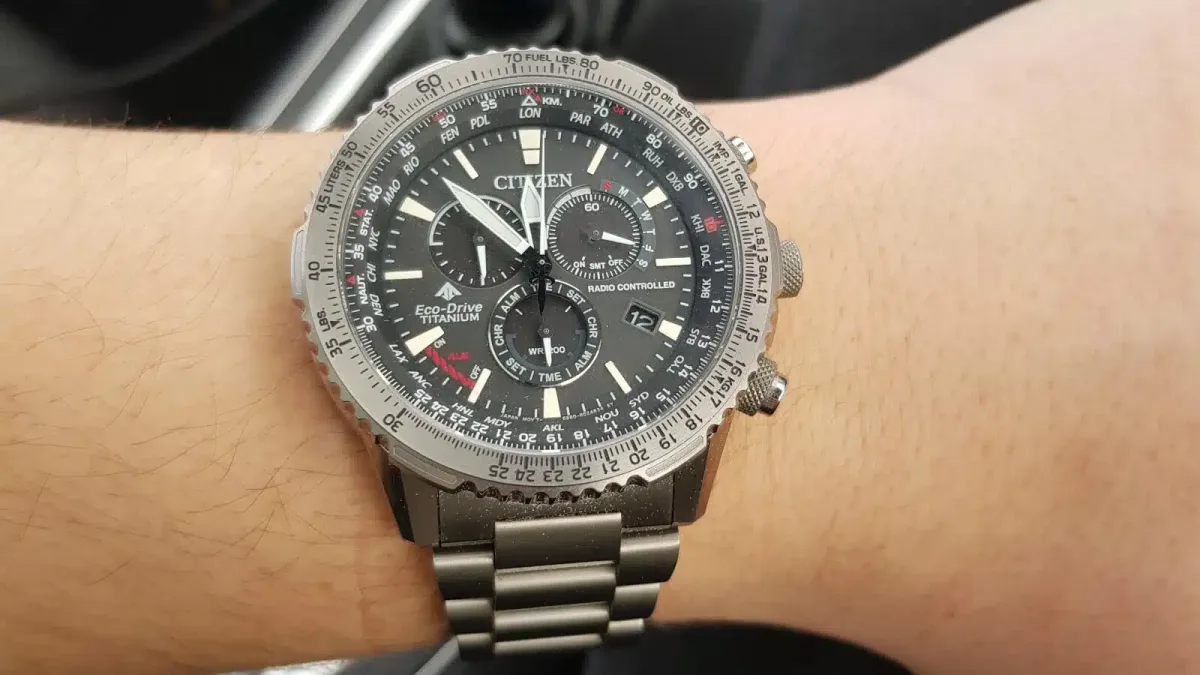
Atomic clocks have literally changed the world of timekeeping. However, the term "atomic clock" is somewhat of a misnomer. Interested in learning more? Read on!
What comes to mind when you hear the terms "atomic clocks" and "atomic timekeeping"? Personally, they always gave me sci-fi vibes.
They sound like something from comic books or James Bond films of the Pierce Brosnan era. Thus, the concept immediately scores high on the coolness scale in my book.
Make no mistake, atomic timekeeping is not a fiction. And it is incredibly impressive.
It's one of the most significant contributions to the watch industry. However, wristwatches utilizing this innovation often remain in the shadows. This happens because we no longer use watches solely for time-telling. We are more interested in the intricacies of mechanical watches.
Nevertheless, the functions and history of atomic clocks are truly fascinating. Whether you're interested in style, science, history, or just fun facts, you should learn more about them!
What Are Atomic Clocks?
To answer this question, we need to start with what atomic timekeeping is. Here, we might get a bit lost, but I promise to clarify everything.
First, atoms make up chemical elements. They are their most basic building blocks. Atomic clocks tell time by measuring the frequency of atoms.
Do you know how different elements behave differently? For instance, why radium and tritium glow and why oxygen does what it does? It's because they all have different numbers of atoms, and different atoms have different energy levels.
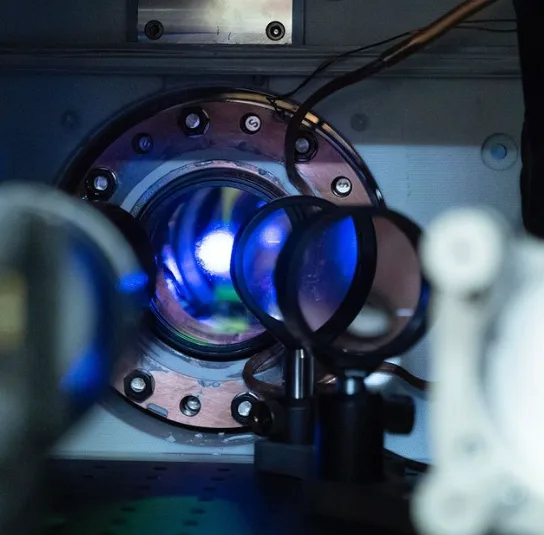
Moreover, one second is actually the duration of the transition between two states of a particular atom (cesium-133 for the science lovers). This, by the way, is a brief explanation.
So, you can use atoms to measure seconds. That's precisely what atomic clocks do. And that's why they are so darn accurate.
Alright, that's all very cool. But how do they work? How do they do it? And what does it mean in the real world?
All valid questions.
How Do Atomic Clocks Work?
Atomic clocks synchronize with atomic clocks. In atomic clocks, just like in all quartz watches, there's a quartz oscillator. The oscillations of quartz are transformed into a frequency that affects atoms. And remember, seconds can be measured using atoms.
However, the frequency might be "wrong," leading to inaccurate timekeeping. Therefore, a good quartz oscillator, as its name suggests, will oscillate to determine why it has drifted from the frequency. Then it will switch to the correct frequency.
In the best watches and chronometers, the oscillator will do this constantly. Even once every few seconds.
In fact, Coordinated Universal Time, or UTC, is based on atomic timekeeping.
International Atomic Time, or TAI (because in French it sounds like temp atomique international), is the most precise, most "correct" time in the world. That's why atomic timekeeping is so important.
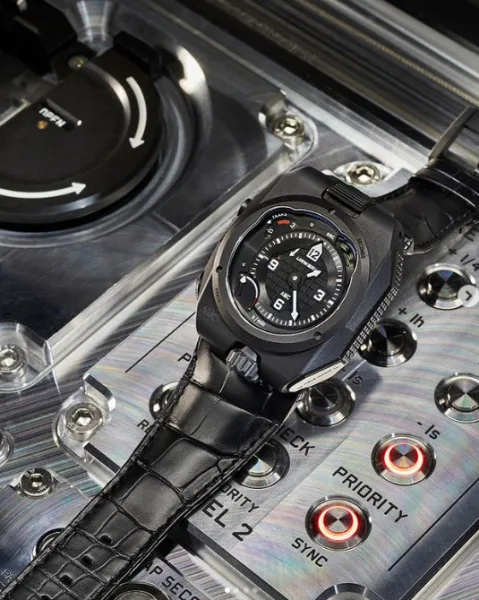
International Atomic Time is the average time kept by 80 national laboratories with more than 450 atomic clocks worldwide.
And, of course, time and navigation are inextricably linked. The good old GPS system in the United States uses atomic clocks, as does the Galileo system in the European Union.
By providing the most accurate time measurement, they also provide the most precise distance calculations.
Incidentally, time can be converted into distance by multiplying it by the speed of light. I thought this was very interesting information.
History of Atomic Clocks: Gradual Collaboration
The birth of atomic timekeeping began in 1873. James Clerk Maxwell, a physicist from Scotland, believed we should measure time by light oscillations rather than Earth's rotation. He argued that it would be more accurate.
Little came of this idea until the 1930s when American physicist Isidor Rabi created a very important piece of equipment. Invaders used this equipment to create clocks that used atomic beams and magnetism to tell time.
Then, in 1949, Maxwell, Isidor Rabi, and Lord Kelvin demonstrated ammonia-based clocks. This directly led to the creation of the first functioning atomic clocks as we know them today. In 1955, Louis Essen and Jack Parry built the first clocks at the National Physical Laboratory in the UK.
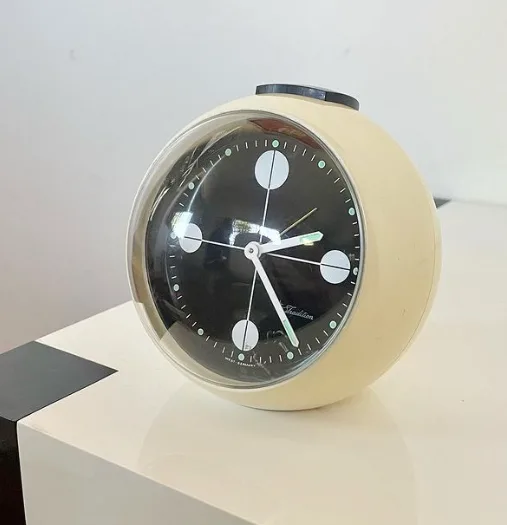
The first commercially sold atomic clock was the "Atomichron." It was manufactured and sold by the National Company Inc. from Malden, Massachusetts.
These were portable and standalone clocks, with as many as 50 units sold in the 1950s. It was an era of looking to the future, after all. Between atomic timekeeping and microwaves, the atom definitely had its moment in the spotlight.
Additionally, in 2019, NASA launched the Deep Space Atomic Clock into space. This ultra-precise atomic clock is designed to help spacecraft navigate deep space. Their accuracy is less than a nanosecond over ten days.
Are Atomic Clocks Safe?
Here's what I missed when explaining how atoms are related to seconds. You see, a second is defined by the duration of radiation periods. Hence, its measurement corresponds to the activity of an atom.
So, upon hearing the words "radiation" and "atom," one might wonder, "Are atomic clocks safe?"
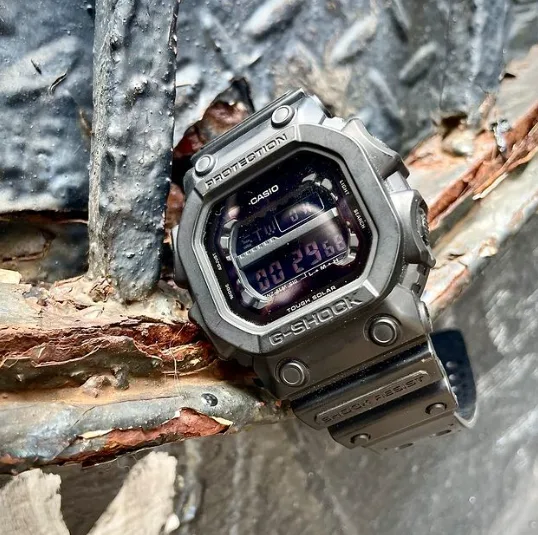
The answer is yes. Atomic chronometers are not radioactive at all - unlike old tritium watches. Atomic clocks are based on oscillations, not the decay of atoms, which causes radioactivity.
Moreover, there aren't many genuine atomic wristwatches on the market. There are those that use atomic timekeeping but are not atomic themselves. Here's what I mean.
Are Radio-Controlled Clocks and Atomic Clocks the Same?
Radio-controlled clocks are often referred to as atomic. Technically, this is not entirely accurate.
Radio-controlled clocks are a type of quartz chronometer designed to synchronize with an atomic chronometer. Radio signals connect with a time code, and this code is transmitted to your clock.
What you know as "atomic clocks" are actually radio-controlled clocks that relay the time from atomic clocks. These time signals, of course, lead to accurate timekeeping and, therefore, high precision.
However, the clocks are not necessarily as accurate as the atomic clocks they are connected to. For everyday purposes, though, this difference is negligible.
Many brands offering this technology, such as Citizen, for example, call their line of watches an atomic chronometer. This can be confusing, but technically it's a more accurate way to describe them than the term "atomic clocks."
The most accurate description would be "radio-controlled clocks synchronized with an atomic chronometer." But that's a mouthful.
Casio and Seiko are other brands releasing their radio-controlled wristwatches.
And yes, all this also applies to watches called atomic chronometers that use radio signals to synchronize with atomic clocks.
So yes, atomic chronometers and true atomic clocks are safe. Another common question, however, is whether these clocks are worth it. That's understandable too.
The technology is impressive and accordingly demands a price - often, but not always. However, let's break it down.
Are Atomic Clocks Worth It?
Aside from super-green brands created on Kickstarter, there are virtually no commercial atomic clocks available.
Atomic clocks do exist, but they are incredibly expensive. Some can cost you a few thousand bucks. I'd rather continue being five minutes late forever.
However, radio-controlled clocks with atomic chronometers, in my opinion, are worth it. They are offered at a wide range of prices.
For example, the Waveceptor WV200A-1AV from Casio costs less than $100, and on many online marketplaces like Amazon, less than $50!
The Citizen Promaster AT line is known for using atomic timekeeping and radio-controlled power. These well-made workhorses boast incredibly rich technical specifications. They even have a chronograph powered by Eco-Drive technology.
These watches not only have high precision but also run on light and don't require battery replacement.
So yes, atomic timekeeping, radio-controlled clocks, or "atomic" clocks are worth it. And you can certainly find such watches that fit your budget.
Questions and Answers
Here are some frequently asked questions about atomic timekeeping!
What Does the Atomic Label on Watches Mean?
Usually, it means they are radio-controlled wristwatches that synchronize with atomic clocks for more accurate timekeeping.
Are Atomic Clocks Expensive?
Yes, genuine atomic clocks can cost up to $3,000.
Do Atomic Clocks Need Batteries?
Yes, atomic chronometers are electronic quartz clocks that need batteries. Radio-controlled wristwatches, which again synchronize with atomic clocks, also require batteries.
Conclusion: A True Innovation
In the end, atomic clocks, or more specifically, radio-controlled atomic chronometers, remain an innovation.
Of course, they are not entirely atomic. At least not in the literal sense. But they are certainly accurate and reliable enough for 99% of us!
And when it comes to atomic clocks and timekeeping, there's no denying that it's truly remarkable.
Did you know that atomic timekeeping emerged so gradually? Do you own any atomic chronometers? Let's start a conversation! Share your thoughts with us on our Telegram channel.