It's hard to believe that it's only been four years since Baltic, headquartered in Paris, France, emerged on the microbrand scene with the Bicompax manual-wind watch and the automatic three-hand HMS 001. Both models quickly made an impression on enthusiasts with their clean, vintage design and affordable price. In 2018, Baltic released the equally impressive Aquascaphe diver's watch, establishing the brand as a significant player in the bustling and turbulent microbrand space.
Since then, Baltic's collection has been expanded several times with new versions of the aforementioned Bicompax and HMS, new Miyota-powered Aquascaphe models, and the Swiss Aquascaphe GMT with a Soprod C125 caliber, which left an indelible impression on me when I reviewed them earlier this year. However, the majority of the brand's models remained within these three formats: a simple three-hander, a two-register chronograph, and a skin diver - that is, until the recent introduction of the Aquascaphe Dual-Crown.
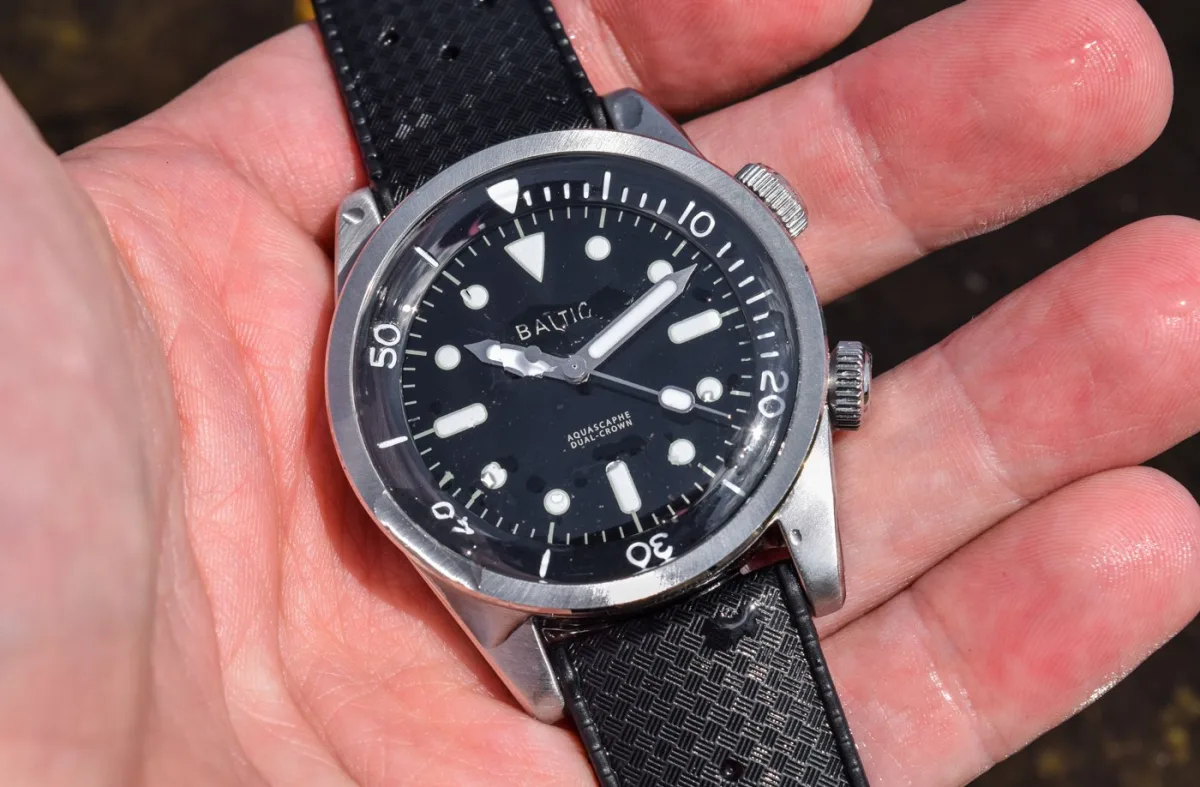
If the original Aquascaphe was essentially an updated version of the old Blancpain Fifty Fathoms format, the new Dual-Crown takes the general idea presented in the Super Compressor cases produced by the Swiss firm Ervin Piquerez S.A. (EPSA) for dozens of manufacturers in the 1960s and 70s, and meticulously modernizes the concept in both form and function. Given my own well-documented amphibious inclinations, I leapt at the opportunity to test the new Baltic diver, and this feeling was only strengthened after the release of an extraordinarily good short diving film that Baltic produced to advertise the new watch. I'm serious, and I usually don't promote marketing materials, but do check it out.
The question regarding the new Baltic Dual-Crown model is whether we have: a cute attempt by yet another microbrand to capitalize on iconic designs of the past, or something more special, carefully balanced between heritage inspiration and thoughtful modern execution? Let's take a closer look.
Infernal Inner Bezel
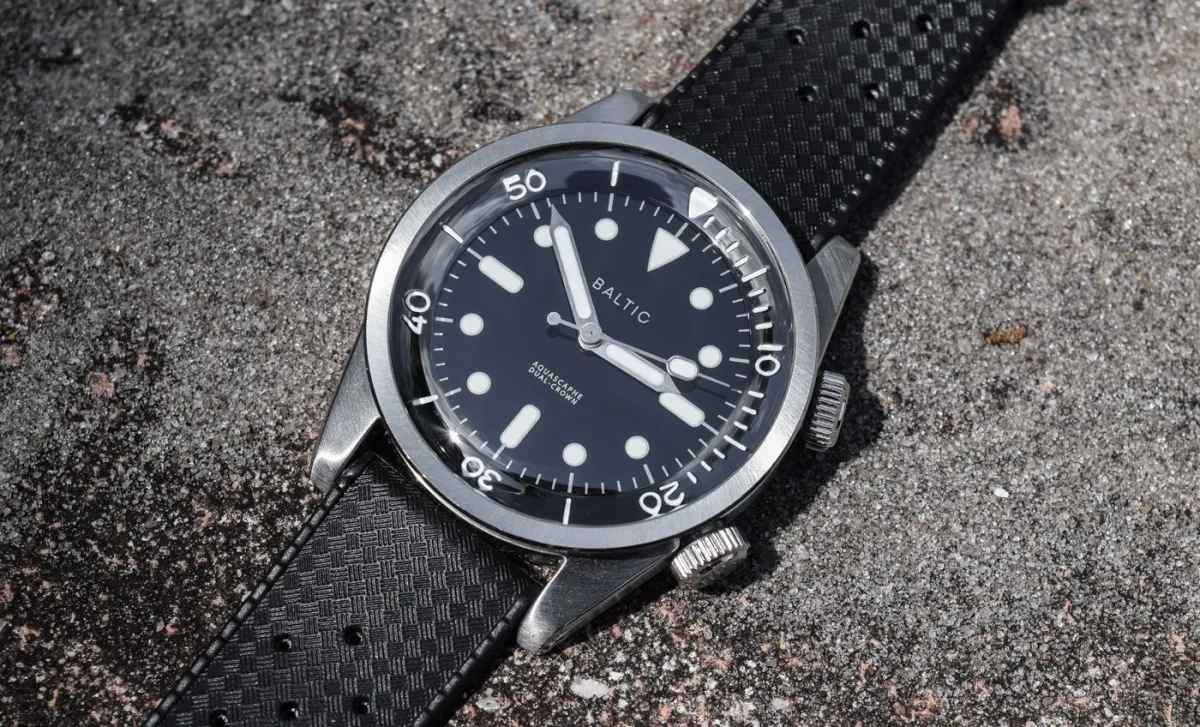
Honestly, I have been critical of the inner bezel concept before, which in most modern models is controlled using a screw-down crown at the “2 o’clock” position. While I intellectually understand that a screw-down crown helps prevent sneaky water ingress, it also means that the inner bezel is practically useless for its theoretically intended purpose - timing dives, since most divers are simply not going to unscrew the crown on their watch while in the water, which typically occurs when setting the bezel for dive timing, unless modern divers do this at all.
Thus, the Longines Legend and Bremont Argonaut, while excellent watches that I like for other reasons, as well as countless microbrand attempts at using this design so far, have no legitimate underwater utility, at least in my eyes. Given this, I initially grimaced when Baltic announced its dual-crown diver, assuming they took the same unsuccessful route in creating their new watch. I couldn't have been more wrong.
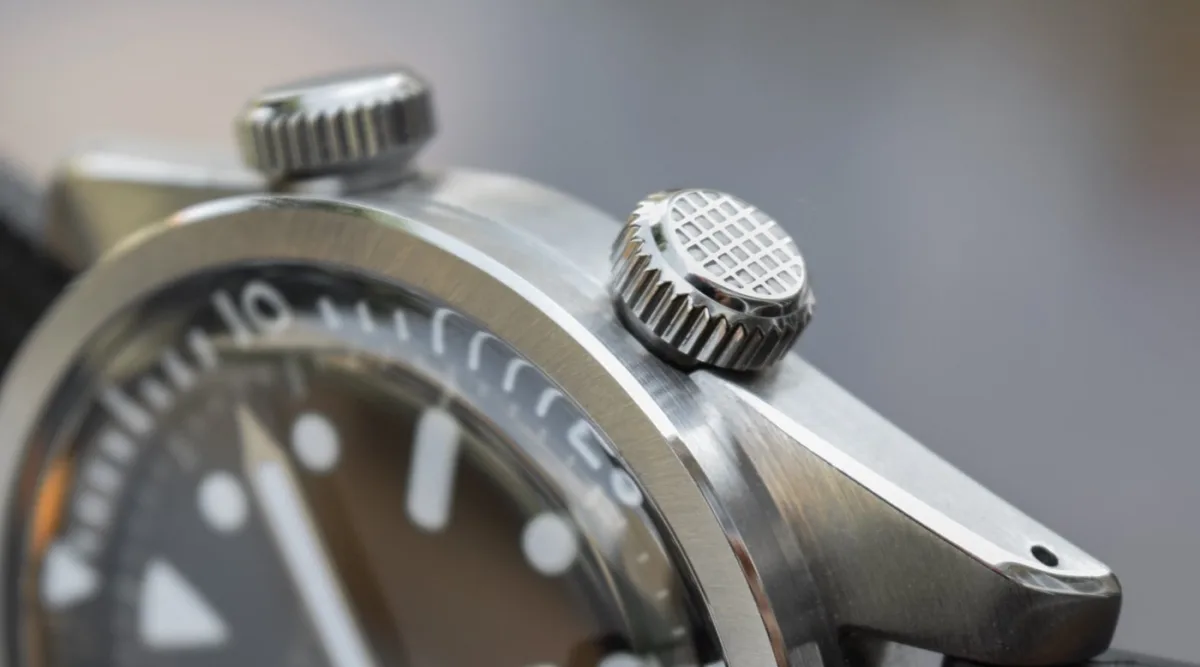
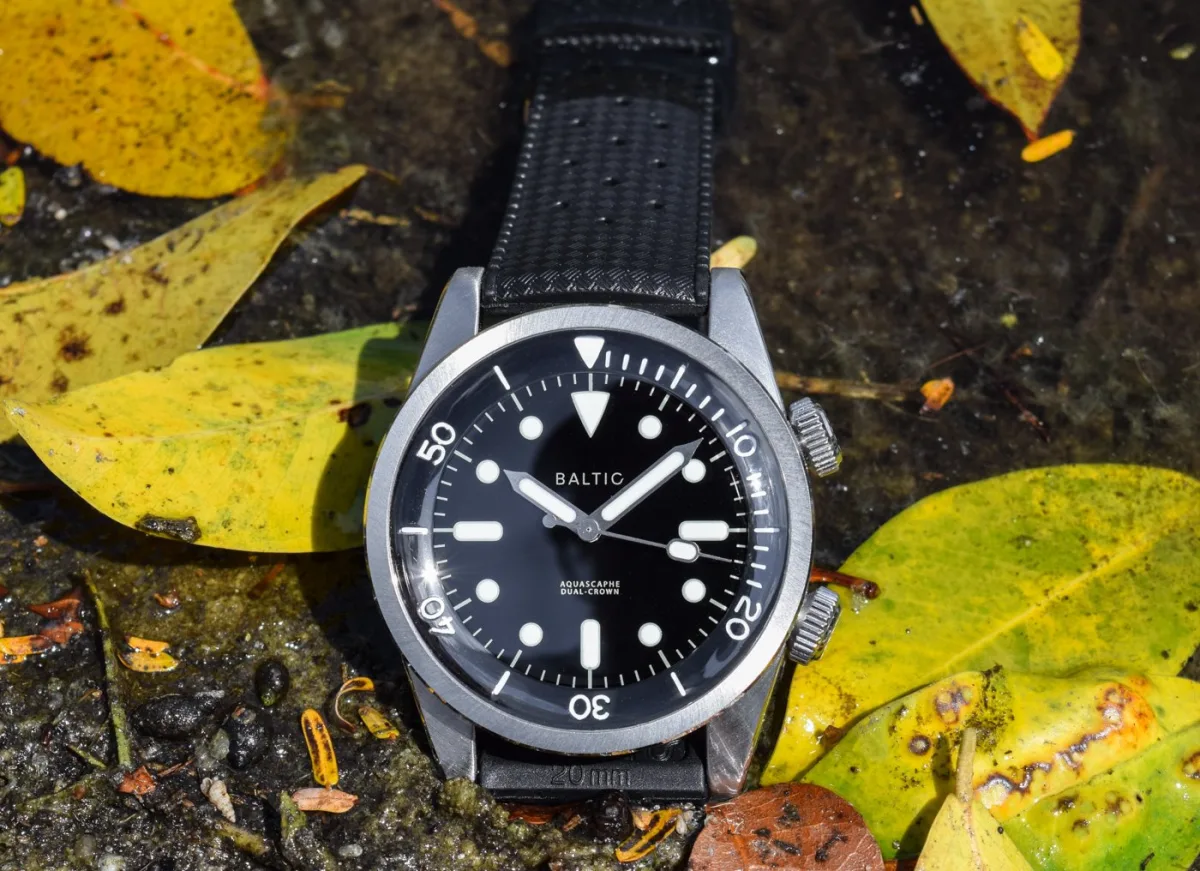
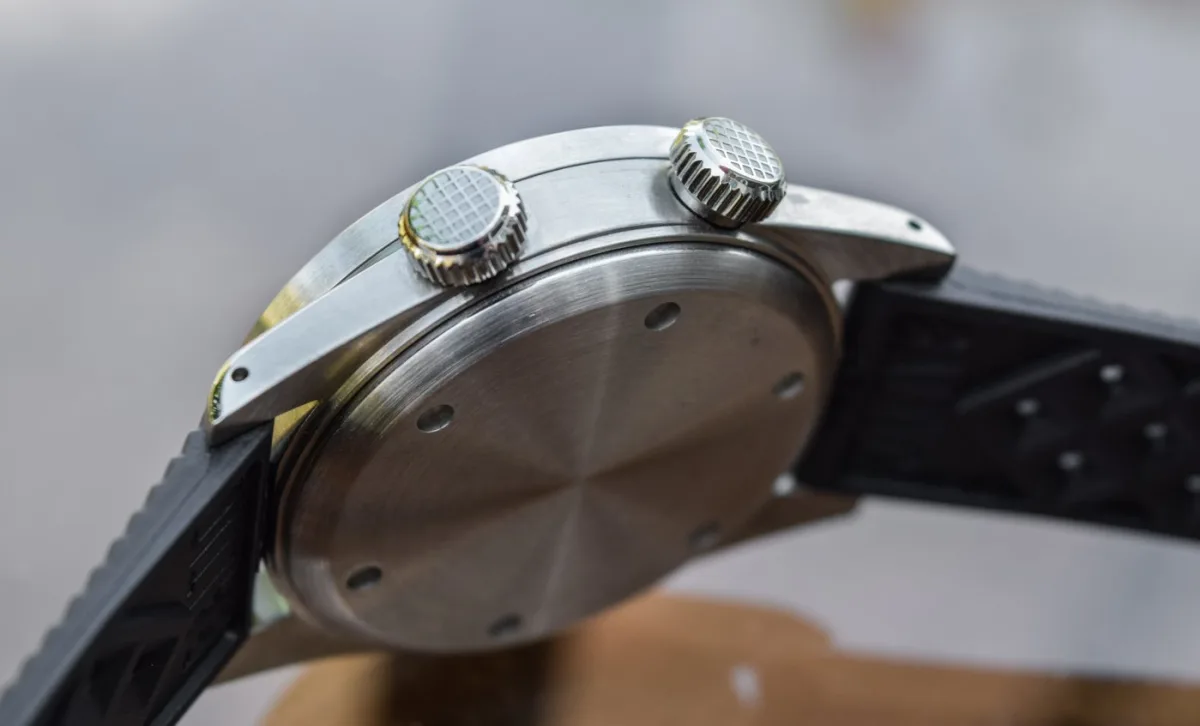
Like the original Super Compressor case, the crown controlling the inner bezel on the Baltic Dual-Crown is not screw-down and is intended for use in the water, ensuring the watch's utility as a dive timer, while the “4 o’clock” crown for setting the time is screw-down to ensure maximum security.
For those concerned, the watch is still water-resistant to 200 meters, which is likely deeper than you will dive, at least until Sandals resorts finish constructing new ultra-deep dives. Each crown on the new Baltic, which look identical despite their different functions, also features a cross-hatched pattern etched as a small nod to the original Super Compressor watches.
For me, Baltic could have left it at that, simplifying the rest of the plain watch case, and I would have been perfectly satisfied with the Dual-Crown case design, but the brand also developed an elevated case design that, despite some straightforwardness from a distance, presents some exciting elements upon closer inspection and from various angles.
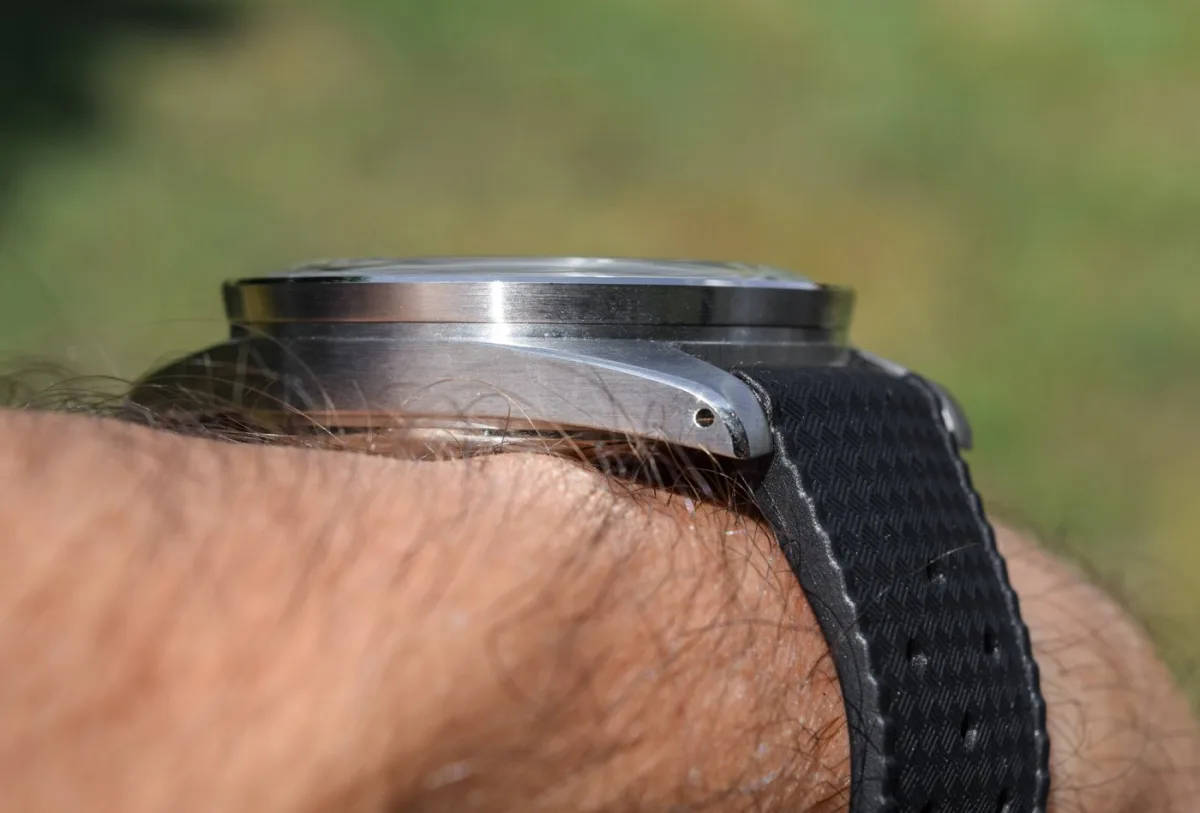
Importantly, these watches are also available with a PVD-coated case that reflects the same finishing techniques as here. Before we delve into the case finishing, it is essential to note that its wearability is also excellent, even on a smaller wrist like my own 6.25-inch example, with its restrained width of 39 mm, lug-to-lug distance of 47 mm, and surprisingly thin 11.9 mm.
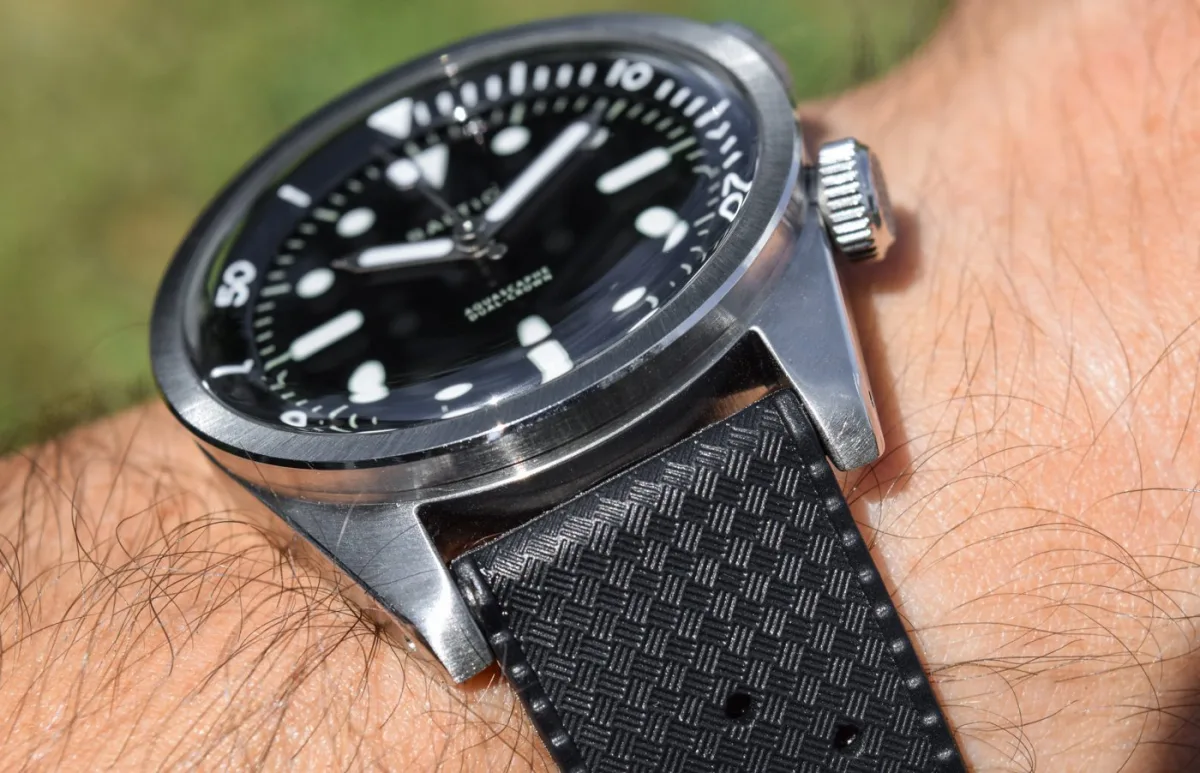
The fixed external bezel is conical, wider at the top than at the bottom, and features a narrow, highly polished bevel separating the brushed side from the top, which, as I hadn't seen before, is matte-finished in a spiral pattern, said to be inspired by some vintage Universal Geneve watches. Additionally, the overall lug shape is similar to other Aquascaphe watches, although here they are fitted with another narrow polished bevel along the edge, which, along with other polishing elements, works wonders by catching the eye and attracting light.
While the case back on this pre-production model is sterile, the final production models will feature an engraved limited number in the center. Finally, on the watch front is a sapphire crystal, which is domed, though not to the extent of comparing it with vintage acrylic crystals or the profile of other Aquascaphe watches.
The absence of a square section indeed helps with distortions on the outer edges of the dial surface, but I must say that overall this glass is a bit reflective, as you probably noticed in these images. The combination of the updated case and modern crystal profile confirms that this is something more modern, and this theme is most vividly expressed in the dial design.
Interesting Design
Until now, the overall dial design of the Aquascaphe remained more or less unchanged, even if the case or bezel material changed, or complications were added, as in the Aquascaphe GMT model. Along with the new case design, the Dual-Crown model also uses a new dial, which again looks more modern than many of the brand's other models.
The triangular index at the noon position, pill-shaped indices at other cardinal points, round markers in between, simple hash marks of the minute track, polished pencil-shaped hands, and a seconds hand with a corresponding pill-shaped tip - the dial design seems minimalist in a thoroughly executed and purposeful sense. The text on the dial is pleasantly minimal and printed in gray on a glossy black background, creating a sense that timekeeping is the main priority of the design, aside from, of course, the cool look.
Looking at the inner bezel, located almost in the same place as the chapter ring on traditional diving watches, we again see a triangular zero mark and simple printed numerals at the remaining 10-minute positions, with the first 15 minutes having minute markings for precise countdowns of shorter intervals, such as a decompression stop or, if we're being realistic, cooking pasta.
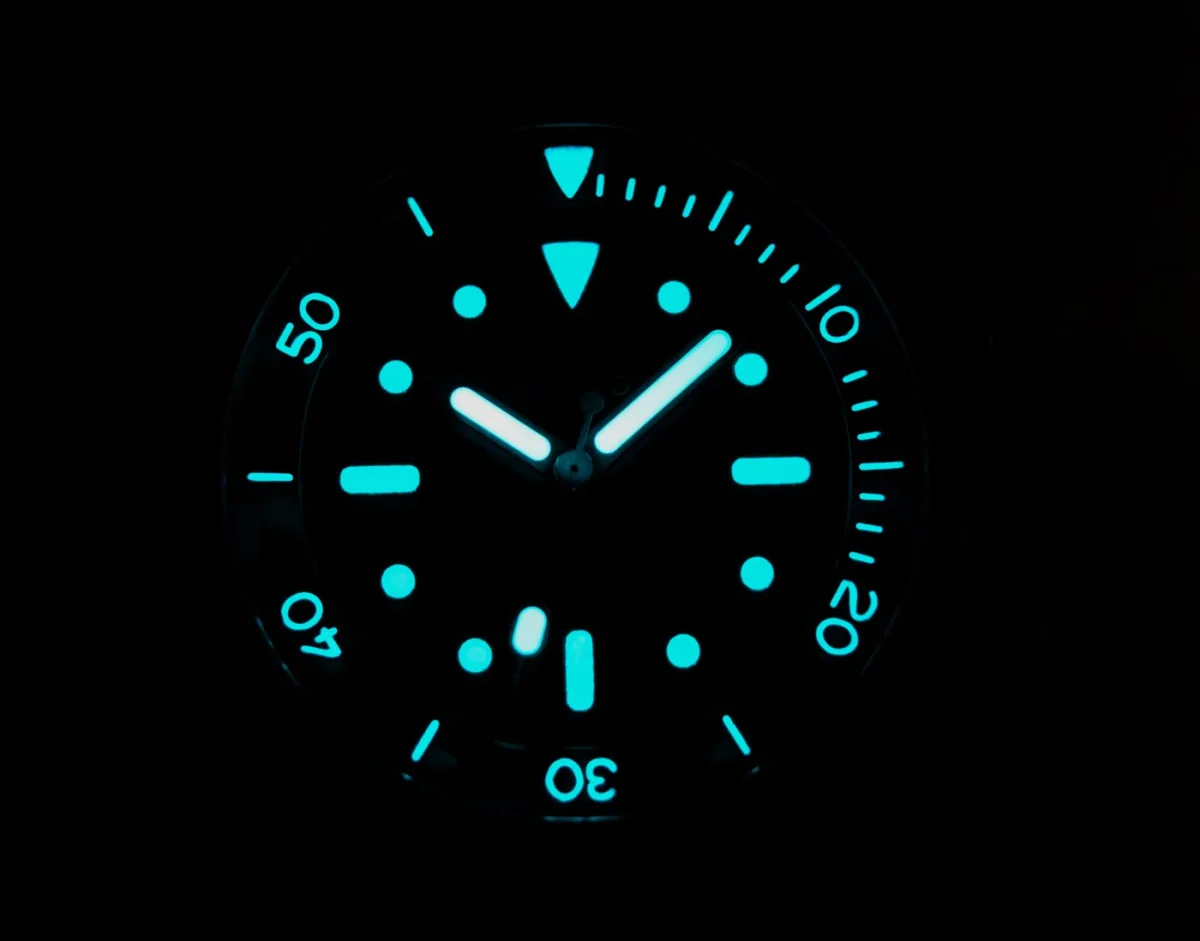
The indices, hands, and markings on the inner bezel are filled with BGW9 Super-LumiNova, which glows blue and, in my experience, works very well, although not on the level of Seiko or anything extreme, but solid lume is always a welcome feature in a dive watch.
Overall, this is one of my favorite dials from Baltic to date, even more sparse than in the brand's early models, yet presenting a unique design truly intended for diving rather than just tugging at the heartstrings of vintage enthusiasts. The inner bezel is seamlessly integrated, and dive time and time of day are easily readable at a glance in any lighting condition. Like most other Baltic watches (except for the GMT), the Dual-Crown lacks a date function, pleasingly complementing the Miyota movement.
Miyota 9039
Much of the value proposition embodied in Baltic watches is driven by the use of third-party Asian calibers, such as the Seagull ST1901 in the Bicompax model or the Miyota 9039 used in these watches, as well as earlier Aquascaphe models (except for the Swiss Soprod C125 in the GMT model). Despite its finish being perhaps somewhat unappealing, the 9000 series was conceived as a direct competitor to ETA calibers like the 2824-2 and 2892-A2, as well as their Sellita counterparts, and the movement has earned a solid reputation for its durability, accuracy, and low height.
The Miyota 9039, running at 28,800 VPH or 4 Hz, is a true no-date automatic caliber (even without a “phantom” date position when setting the crown), equipped with a hand winding function and a 42-hour power reserve. It is also important to note that Baltic watches are assembled in France after their various components are sourced from around the world.
Baltic is actually very transparent about supplier choices, and in its Besançon workshop, it regulates calibers that would otherwise be considered “non-standard” to an impressive degree. The model I reviewed kept time at about plus five seconds a day when worn, which is much better than I could have expected given the Dual-Crown's affordable price.
Tropical Style or Ocean Options
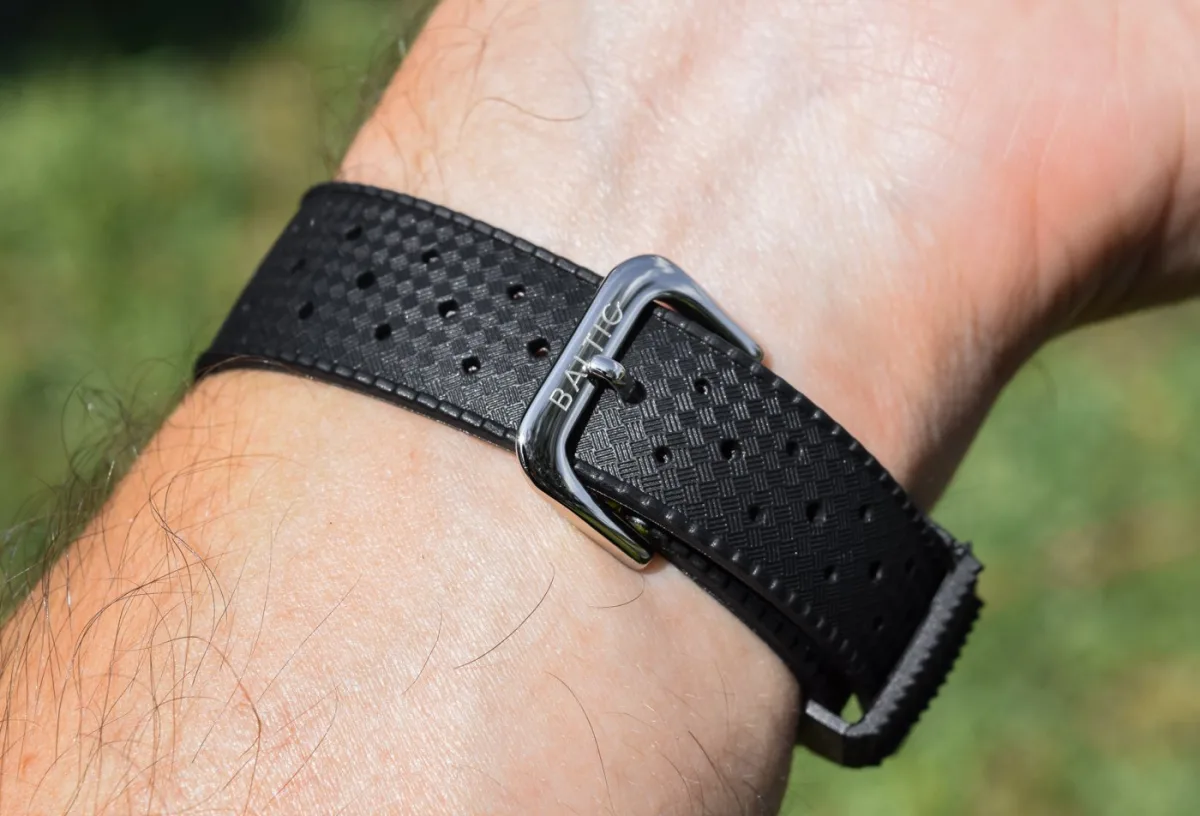
If the dial and even the watch case have more modern elements, the Dual-Crown, unlike Marty McFly, still pulls back to the past, thanks to the Tropic-style strap, which is of acceptable quality and is one of two options for this model from Baltic, along with a SEAQUAL fabric option made from ocean plastic waste - a cool concept I would like to check out.
The Baltic rice bead bracelet, which fits all of the brand's watches, also fits this one, which is a really nice element of versatility for collectors of multiple watches from this brand. For me, the choice of strap for these Dual-Crown matters greatly, as they can either create a mid-century feel with the included tropic strap or be more utilitarian with a more modern rubber strap or NATO strap. Either way, the new Aquascaphe looks truly business-like.
General Impressions
So far, the only way to fault Baltic would be to perhaps say that the brand has dipped into the original Aquascaphe too often, although personally, I disagree with such an opinion. But even if you think so, here is yet another entirely new watch, where the old design format is embodied in a truly modern case, and at a price that, like other offerings of the brand, leaves no room for debate compared to its analogs.
Overall, the Dual-Crown model is attractive, well thought out in terms of diving use, and even has several elements of enhanced finishing that contribute to the overall versatility of the watch. I would even call these Baltic watches “dress divers,” although the Dual-Crown retains 200-meter water resistance and withstands everything I threw at them in daily use, looking like new. If you're skeptical about the microbrand idea or unsure about watches that dip a toe into homage waters, Baltic, and especially this Dual-Crown, are excellent options to check out, standing alone as a new design while tipping a hat to one of the most tried and nostalgic dive watch formats.
Baltic Aquascaphe Dual-Crown watches are available for pre-order at Baltic-Watches.com for about $660 depending on current exchange rates.
Essential Data
>Brand: Baltic
>Model: Aquascaphe Dual-Crown
>Price: $660
>Dimensions: 39 mm in height, 47 mm lug-to-lug, and 11.9 mm in thickness.
>Who It's For: This piece can be worn in virtually any condition, given its versatile appearance and water resistance, making it a great summer watch.
>Friend We’d Recommend Them To First: The design-savvy aficionado who loves vintage and wants a capable diver with more refined vibes overall.
>Best Feature of the Watch: The non-screw-down crown for inner bezel control is a great example of the brand truly understanding the purpose behind the watch concept. Bravo.
>Worst Feature of the Watch: It's hard to fault these watches for the price, but if being picky, the lume could last a bit longer.