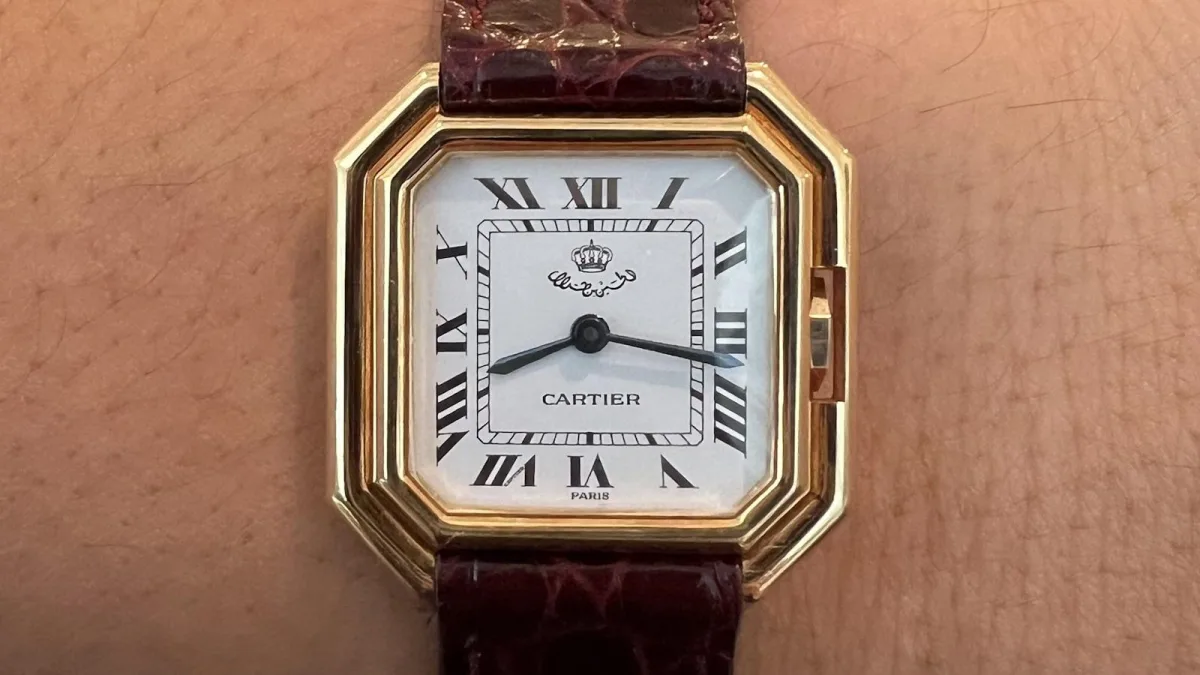
Double-signed watches hold special significance for collectors. Let's explore why they are so valued.
For me, part of the appeal of vintage watches is their history. However, not everyone shares this perspective. Some collectors focus on specific case designs or model numbers due to their investment value.
Others seek particular movements or the latest model in a series with a unique dial design. This could be the typography of the brand logo or a specific style of hands.
These small details are of great importance to enthusiasts. Once a brand ceases production of a certain model, it becomes collectible precisely because of such unique elements.
Yet, the story behind the watch truly constitutes half of its allure. If a watch has a double-signed dial, it's a unique detail and story combined in a single object.
A single line of text can mean a lot to a seasoned collector, especially if an interesting story lies behind it. For example, the Rolex Submariner “Red” with reference 1680 is widely valued for the red 'Submariner' inscription above the 6 o'clock mark.
This detail indicates the first watches with 'top hat' plexiglass and date.
Due to the rarity of the model and the difficulty of finding it on the secondary market, it is very expensive. Similarly, double-signed watches can fetch high prices at auctions.
What Are Double-Signed Watches?
Double-signed watches are models whose dials, in addition to the brand name, display the name of another entity.
Most watches display the manufacturer's name under the 12 o'clock mark on the dial. However, on double-signed watches, the retailer's name is placed alongside the brand name.
Such watches attract collectors due to an important element - history. The retailer's name on the dial reveals the watch's journey from its market debut.
Moreover, it testifies to a special relationship between the manufacturer and the retailer.
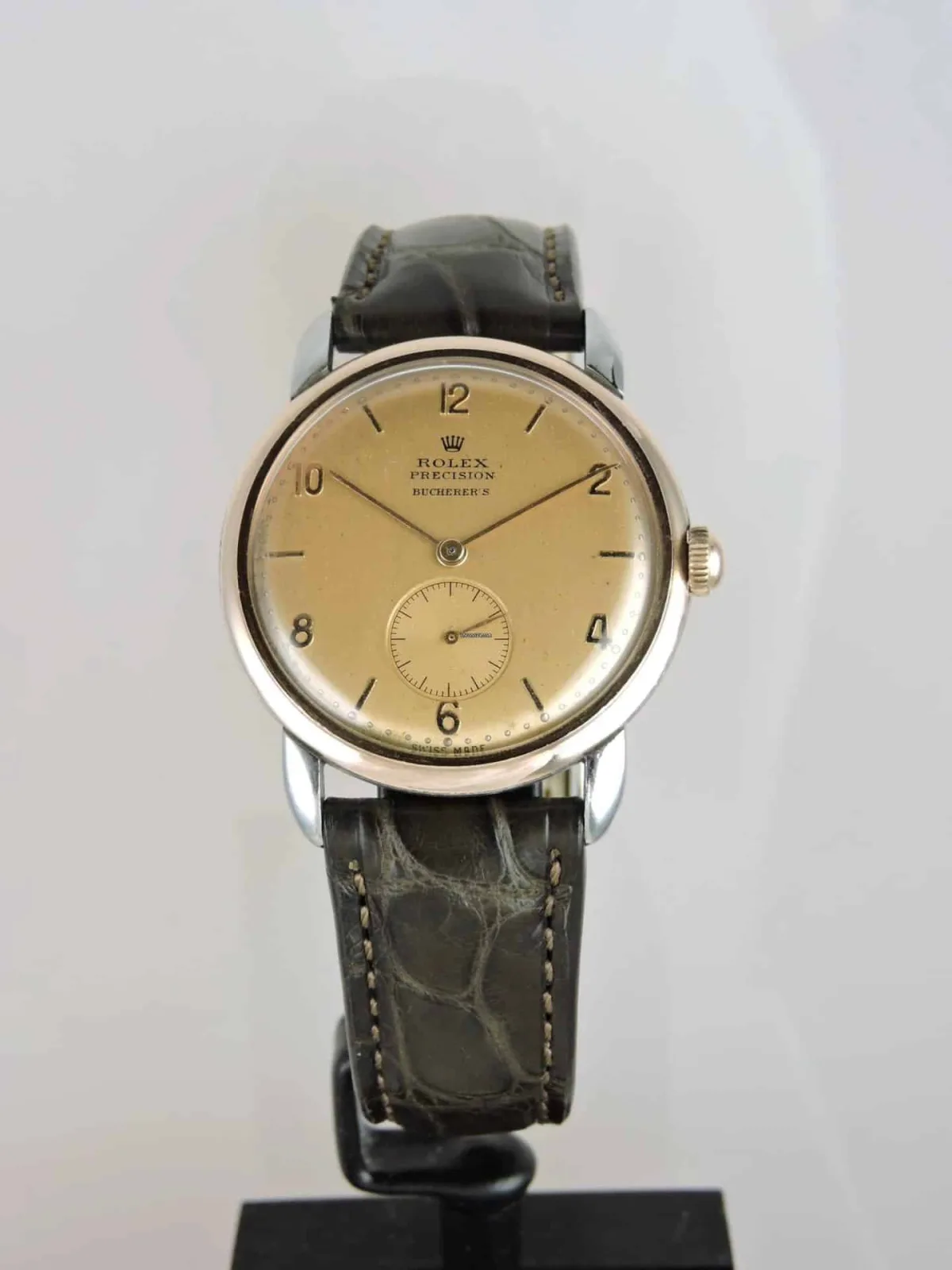
Rolex Precision Double Signed Bucherer watch.
For the uninitiated, a double signature might seem like an insignificant detail, but for a collector, it's one of the most intriguing features.
Why did this practice become widespread many years ago?
The Phenomenon of Double Signing
If the idea of double-signed watches appeals to you, you're not alone. This small inscription on the dial sometimes turns a watch into an object of true desire.
The practice of adding the retailer's name to luxury watch dials emerged in the 20th century.
To understand how double-signed watches came to be, one must look back to a time when European manufacturers did not have their own boutiques.
Manufacturers relied on a limited circle of trusted retailers to represent the brand and sell watches nationally and internationally.
These trusted retailers, whether in South Africa, the USA, or the Middle East, helped expand brand recognition. To earn buyers' trust, they were granted the right to place their name on the dial.
Typically, the retailer's name was placed at the 12 or 6 o'clock marks. Despite sometimes very subtle execution, it was of great significance to the buyer.
By the 1990s, double-signed watches had almost disappeared. Manufacturers began opening their own retail outlets, making double-signed watches even more desirable on the secondary market.
Today, collaborations in the luxury watch industry are gaining popularity again, and interest in them is growing. Collectors strive to own something unique.
The Appeal of Double-Signed Watches
Few features add such value and a sense of exclusivity to watches as a double-signed dial. For example, a Rolex Daytona or Patek Philippe Nautilus significantly increases in price if a prestigious retailer's name is next to the brand name.
Tiffany & Co., Beyer, and Bucherer are just a few examples of retailers who earned buyers' respect in the 20th century. The name of a respected retailer on the dial signified reliability and product quality.
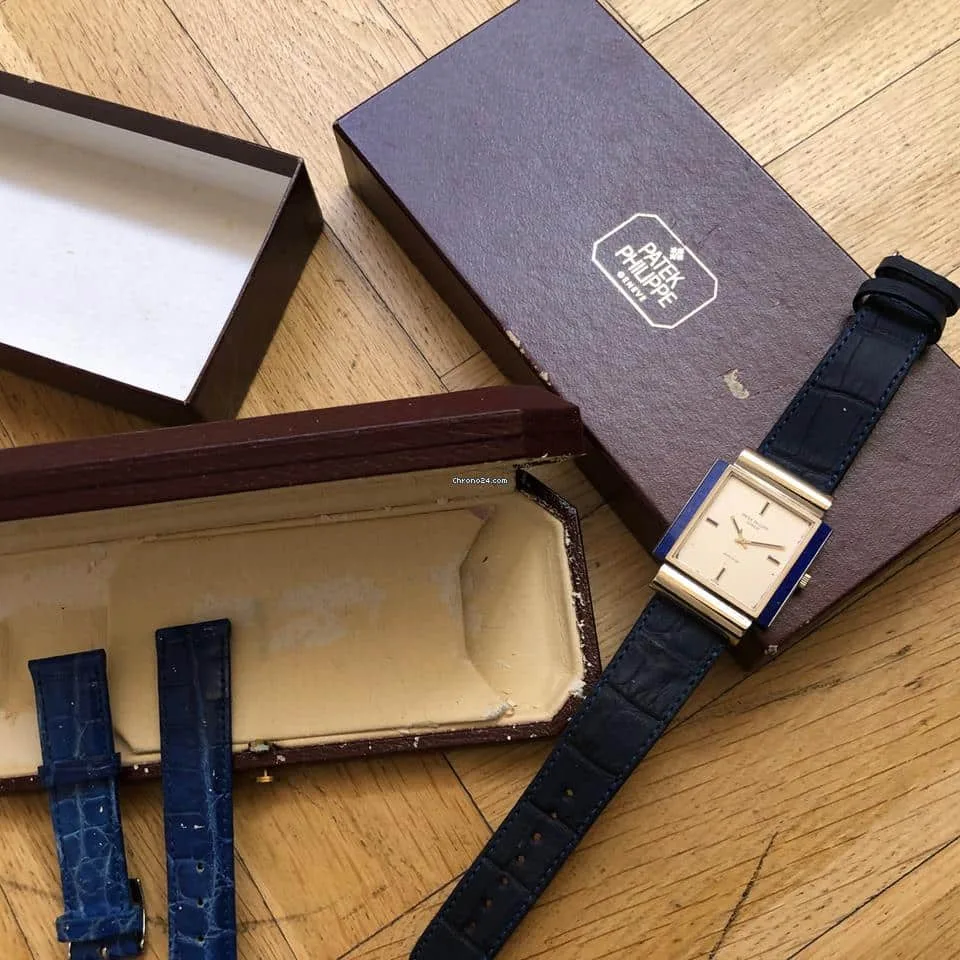
There are many examples of such practice. Asprey marked luxury watches and supplied them worldwide. Serpico Y Laino was associated with Rolex, and Gondolo & Labouriau supplied Patek Philippe watches to Rio de Janeiro.
One of the most famous retailers of that time was Tiffany & Co.
It remains the only official retailer to place its name on Patek Philippe watches. Some of these models are the most expensive, such as the Nautilus 5711/1A-018 with its iconic blue dial.
The popularity of double-signed watches is growing, which is not surprising. The joint efforts of brands increase interest in watchmaking, raising their value and demand.
Initially, this was a marketing strategy to strengthen reputation and expand reach. Today, vintage double-signed watches are valued for their exclusivity and high cost.
They create an emotional connection and are a reliable investment for a lifetime. Each such watch reflects an era, evoking nostalgic feelings.
Famous Partnerships in the World of Double-Signed Watches
To better understand the relationships between manufacturers and retailers, let's look at a few well-known examples.
Asprey
London is known for prestigious stores like Liberty, Selfridges, and Harrods. Among them was Asprey - one of the top retailers.
Asprey was a gift shop selling watches, including for the royal family. The company also attracted clients from Middle Eastern countries.
Asprey specialized in connecting the best watches with wealthy buyers. Among them were models from IWC, Rolex, and Patek Philippe.
Many dials featured the Khanjar symbol - the dagger of the Sultan of Oman, Asprey's wealthiest client. Some of Asprey's double-signed watches hold iconic status among collectors.
Asprey also placed its signature on dials of lesser-known brands, such as FP Journe, which are now valued for their exquisite design.
Tiffany & Co.
Tiffany & Co. double-signed watches are considered among the most collectible. The company was founded in 1838 and opened its first store on Broadway.
The store attracted fashion enthusiasts and collectors of jewelry and luxury watches.
Some of these watches included Patek Philippe with the Tiffany & Co. signature on the dial. The retailer helped the brand expand its audience, contributing to Patek Philippe's participation in prestigious events.
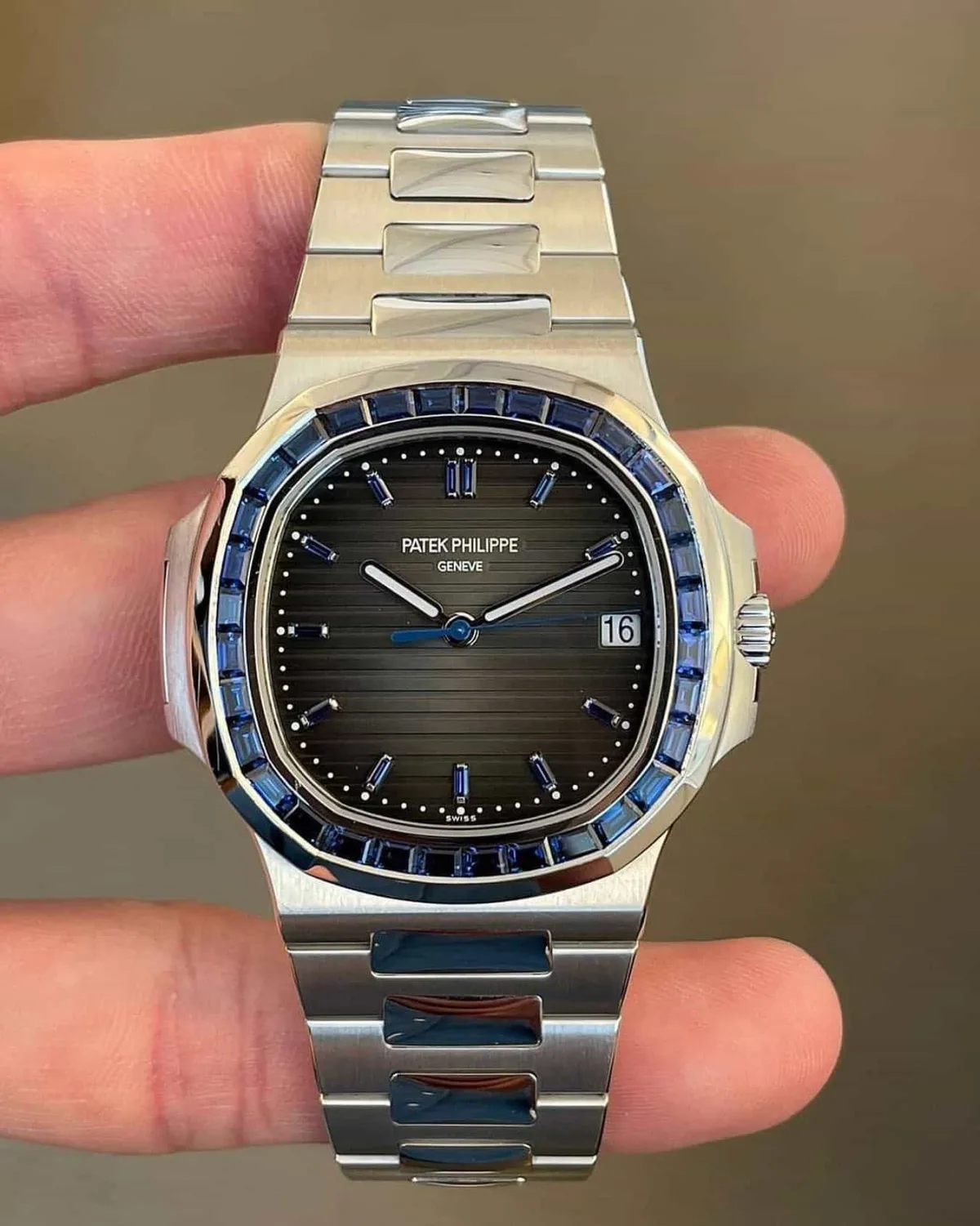
Over time, more modern sports watches with the Tiffany & Co. signature appeared, including Rolex models. Interestingly, Rolex altered letter placement to maintain balance on the dial.
Rumors suggest Rolex ended the partnership due to disagreements over signature placement conditions.
Gondolo & Labouriau
The partnership between Gondolo & Labouriau and Patek Philippe began in 1872. This retailer sold thousands of the manufacturer's watches, opening the brand to South America.
This is one of the most famous double-signature stories.
The appearance of the retailer's name on the dials marked Patek Philippe's move away from exclusivity to royal and aristocratic circles. Sales outside these circles expanded the brand's presence.
Together, the company and retailer supplied watches to clients outside traditional circles, creating social networks reminiscent of collector clubs. The watches had to meet specific technical requirements, such as having 'whiskers' in the Gondolo escapement and unique wheel bridges.
Serpico Y Laino
In the 1920s, two Italian immigrants founded Serpico Y Laino in Venezuela. The company initially specialized in jewelry, later focusing on luxury watches.
During a trip to Switzerland, they signed a contract with Rolex.
The retailer's reputation quickly grew, and the company began placing its name on various watch models, including the Rolex GMT Master and Submariner, as well as Patek Philippe chronographs.
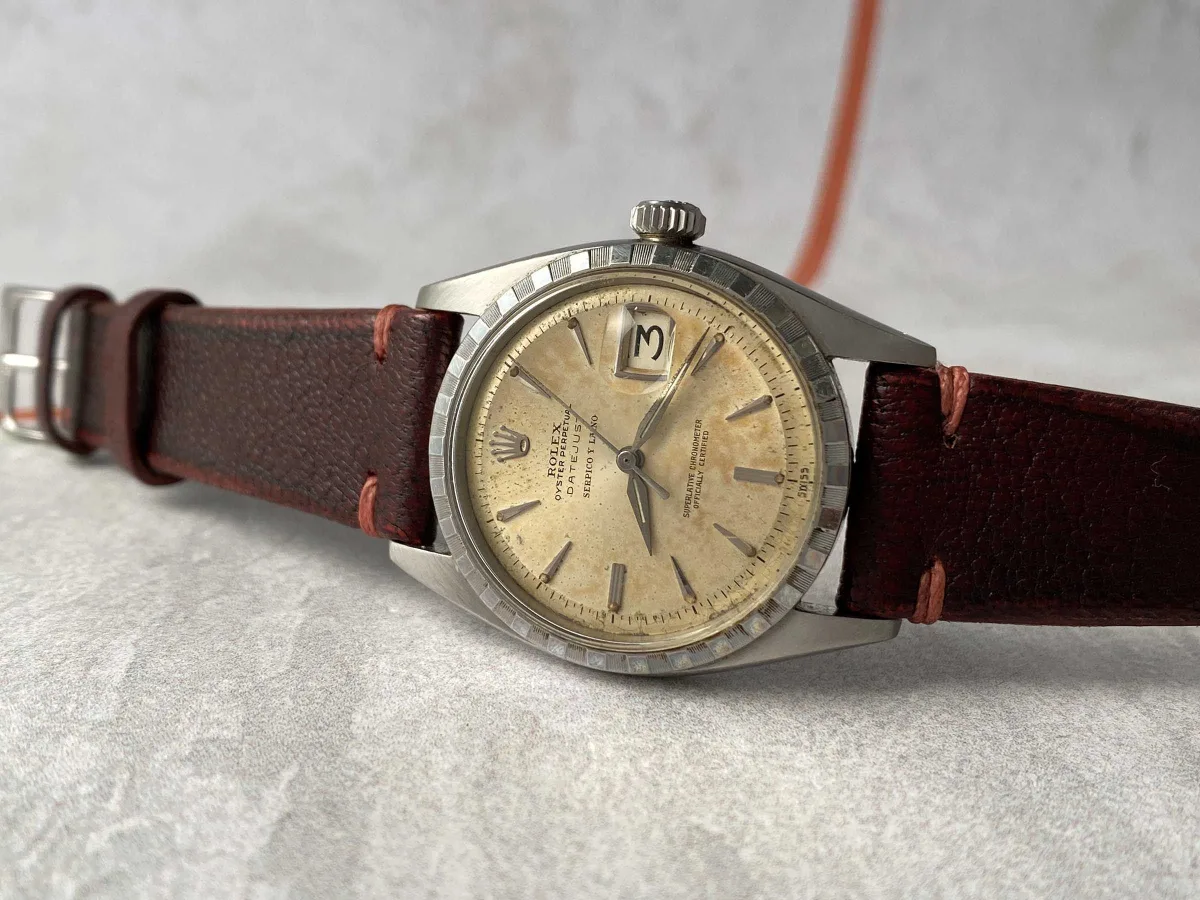
The signature on dials in Caracas increased the visibility of these prestigious brands. The S&L logo assured clients of the quality and reliability of these then-less-known brands.
Practical Aspects of Double Signing on Watches
When you think about it, applying a double signature on the dial could not have been a convenient process.
Some believe manufacturers inscribed the dial at their factories before sending the watches to retailers. This makes sense, but in reality, there were two methods of applying the double signature.
Retailers either disassembled the watches to apply the signature themselves or received the watches disassembled.
The signature was applied using the decal technique - printing that transfers an image to the dial from a metal engraved plate.
Ink filled the engravings' recesses (cliché technique), creating a clear and detailed image.
Rolex uses different cliché variants for different retailers. This tradition continues today, for example, Patek Philippe still produces dials signed with Tiffany & Co.
Conclusions
Collecting vintage watches is multifaceted. Despite scratches, wear, and vintage patina, which add character, double-signed watches offer much more.
They evoke nostalgia, are collectible, and are highly valued in the collector community.
Such watches reflect an era when manufacturers relied on the support of prestigious retailers.
The signature of a respected retailer on the dial inspired trust in collectors. This was important in an era when physical storefronts were few.
Over time, manufacturers began opening their own stores, but the demand for double-signed watches did not wane. Many are rare and highly desirable, and modern interpretations continue to emerge.
Adding a specific retailer's name to luxury watches gives them local significance, complements the manufacturer's history, and becomes part of the collector's story.
What was once a practical solution for expanding global reach has today turned into a niche and romanticized segment of watchmaking art.