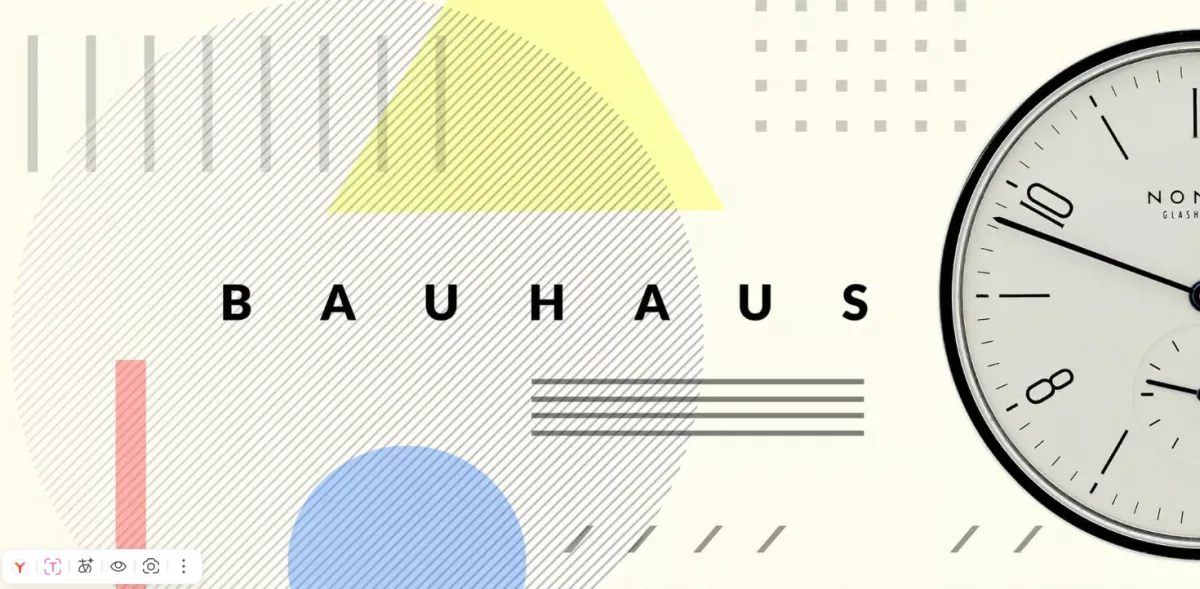
Nomos, Junghans, Patek Philippe - these three manufacturers and a few others have Bauhaus-style watches in their collections.
Nomos Tangente and Junghans Max Bill are among the most famous models in this direction. But what exactly makes a watch 'Bauhaus'?
Bauhaus: Form Follows Function
Bauhaus-style watches are undoubtedly among the most popular types of watches. Studying the history of Bauhaus helps to better understand the famous models created under its influence. It all began in 1919 when Walter Gropius founded the State Bauhaus School in Weimar, Germany. This modern art school aimed to unite art and craft. The school's manifesto included statements such as: 'The ultimate goal of all art is structure!' and 'Architects, sculptors, painters, we must return to craft!' Gropius shared the ideas of the Deutscher Werkbund (German Association of Craftsmen), founded in 1907, which became one of Bauhaus’s inspirations. Six years after its founding, the school moved to Dessau, largely for political reasons due to increasing nationalist attacks.
The term 'Bauhaus' is inspired by medieval building huts where craftsmen gathered to construct cathedrals. However, Bauhaus had nothing to do with sacred architecture - functionality was paramount. Gropius expressed it thus: 'Beauty can arise only from the perfect harmony of technical function and proportional form.' The famous motto 'form follows function' precisely reflects the school's philosophy.
In the early 1920s, the radical ideas of the Bauhaus were not widely accepted. After the National Socialists came to power in 1933, the school was quickly dissolved, but many artists fled to Western Europe and America, continuing to spread the ideas. Today, Bauhaus is considered one of the most influential art movements of the 20th century, having a significant impact on the watch industry.
Junghans Max Bill
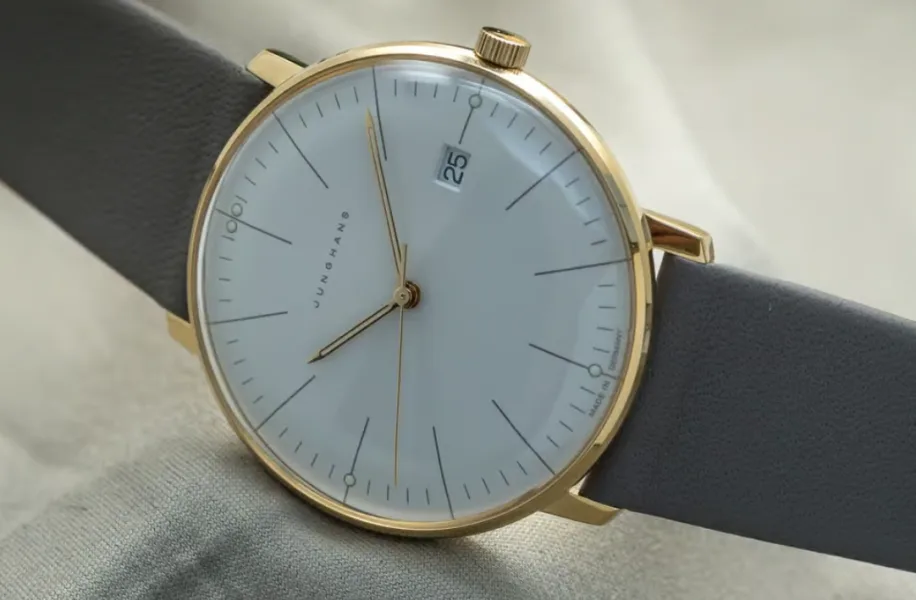
Junghans Max Bill is one of the most recognizable Bauhaus-style models.
What Are Bauhaus-Style Watches?
In the watch world, the term 'Bauhaus' is quite common, although rarely explained in detail. Those familiar with brands like NOMOS, Junghans, or Stowa have likely heard the word many times. However, almost any watch with a minimalist dial is now called Bauhaus. But it’s not that simple. The style has its roots in the Bauhaus School, founded in 1919. Walter Gropius promoted the idea that still shapes design today: design should be based not on decoration, but on the function of the object. Art, craft, and industry should unite to create items that are both practical and aesthetic. This rule applies to wristwatches as well. Bauhaus watches do not aim to impress with elaborate decorations or numerous functions.
They deliberately focus on the essentials: clear time display, balanced proportions, and a design that remains relevant without following fashion trends. It is important to note that the term 'Bauhaus watches' is not protected and does not denote a strictly defined product category. It is more of a design philosophy. Some models strictly adhere to historical principles, others interpret them more freely. Therefore, it is worth looking at the details more closely.
How to Identify Bauhaus-Style Watches?
If you place several Bauhaus watches side by side, the common features are immediately noticeable. However, there are no strict rules - the character of the watches is formed by a combination of characteristics. The most noticeable feature is the dial. It looks neat, minimalist, and clean. The hands, hour markers, and numbers do not compete for attention. The result is a sense of calm that does not tire even after prolonged viewing. Thin cases with harmonious proportions are also typical. Historically, many Bauhaus watches had diameters of 35–38 mm, modern interpretations may be slightly larger.
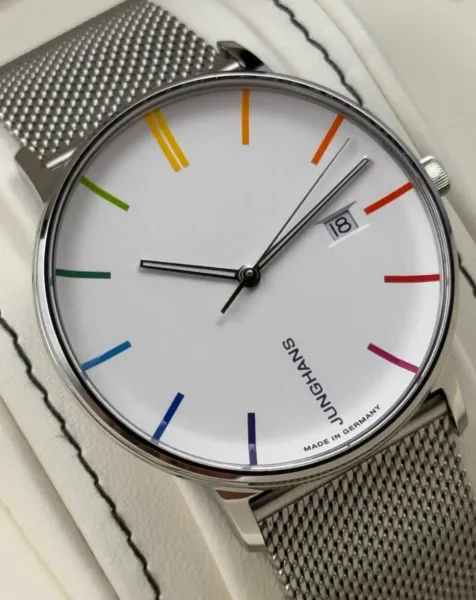
The main thing is the harmony of the case, dial, and lugs. Typography is also no accident: easily readable numbers, delicate hour markers, and restrained fonts, often developed specifically for the brand, provide an intuitive perception of time. Additional complications are rare - not due to undesirability, but to not disrupt the overall style. It is the restrained design that makes Bauhaus watches versatile. They are equally appropriate with a business suit, a casual sweater, or a t-shirt, never looking out of place.
Terminology and Definitions of Bauhaus Watches
Today, the term 'Bauhaus' is often used broadly to describe objects with a minimalist design, including watches. However, there is a difference between minimalist watches and watches whose design is truly inspired by Bauhaus ideas. Many manufacturers borrow individual style elements - a minimalist dial or simple typography. But this is not enough to call a watch Bauhaus. The overall design concept is important: every line, number, and hand should have a functional purpose. Decoration for decoration's sake contradicts this idea. Therefore, many brands prefer to speak of Bauhaus-inspired design, which is more accurate, as only a few models are directly connected to the historical movement.
Bauhaus and Minimalism - What's the Difference?
At first glance, these concepts seem close, as both Bauhaus and minimalism exclude unnecessary elements. However, there is an important difference. Minimalism is a general style focused on reducing elements to a minimum. Today, minimalism is found in furniture, architecture, electronics, and other areas. Bauhaus offers a more specific approach: design must come from function. In other words, Bauhaus watches are simple not because it is fashionable, but because their design serves a specific purpose. Minimalist watches can be decorative, while Bauhaus watches primarily question: is this element really necessary?
What Does 'Form Follows Function' Mean?
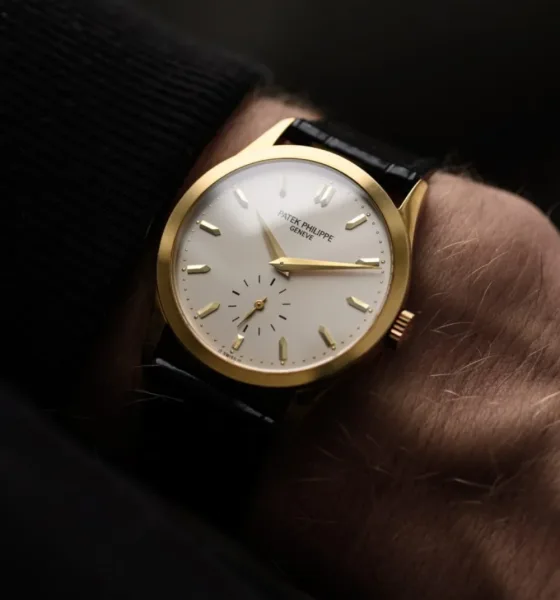
The phrase 'form follows function' is closely associated with Bauhaus. Although it was first said by American architect Louis Sullivan, it became one of the main principles of modern design. In watchmaking, this rule is easy to explain: hands should be readable, indices should clearly indicate the time, the case should be comfortable and durable, and the dial should be as understandable as possible. Everything that goes beyond these parameters should have a significant reason. This is why many Bauhaus models remain relevant for decades. They are not driven by fleeting trends and flashy forms, but by the unchanging function - to show time.
Three Bauhaus Watches That Best Embody This Idea
NOMOS Tangente
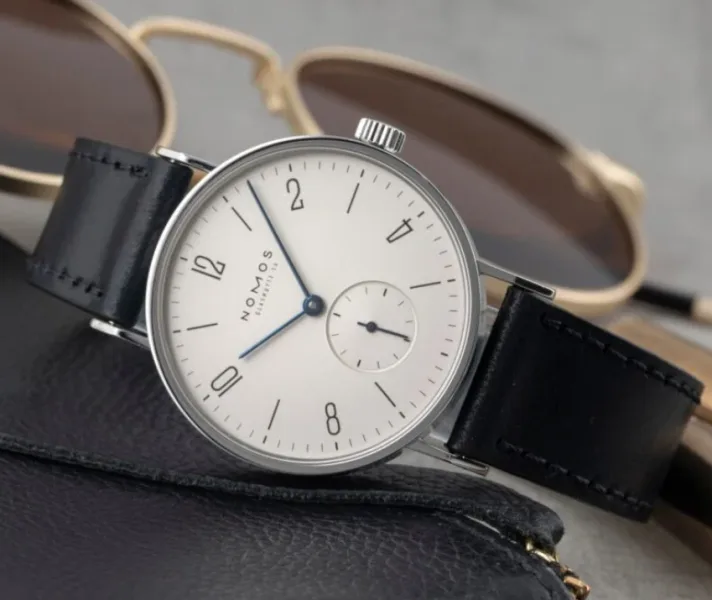
Probably no contemporary German watch is as frequently associated with Bauhaus as NOMOS Tangente. At first glance, they appear restrained: a round case, thin lugs, and a clean dial without frills. But upon closer inspection, balanced typography, a small seconds hand, and precise proportions of elements become visible. Interestingly, Tangente is not a copy of historical Bauhaus models. NOMOS combines Bauhaus ideas with influences from the Deutscher Werkbund and classic modernism. It is this independent interpretation that makes the model attractive.
Junghans Max Bill
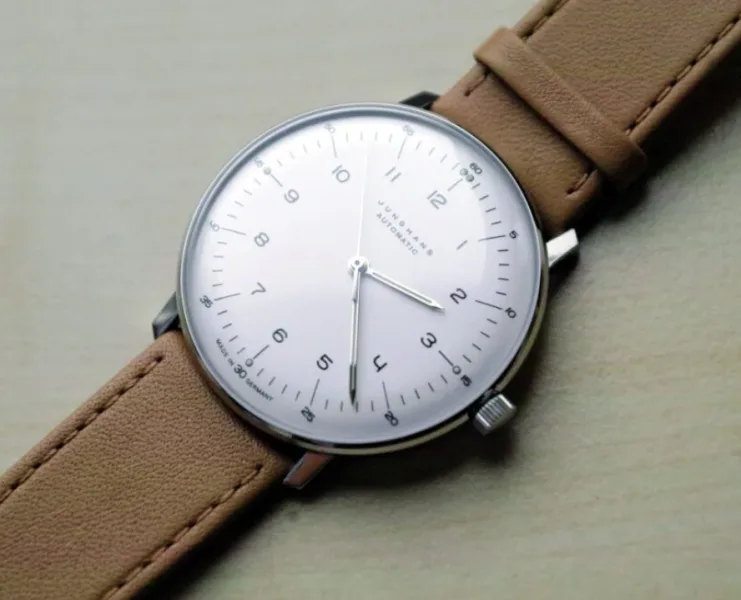
If we talk about watches that most authentically reflect the Bauhaus philosophy, it is probably Junghans Max Bill. Max Bill was a Bauhaus student in Dessau and later created furniture, architecture, and industrial products based on the same principles. His design for Junghans, developed in the late 1950s, still looks modern today. Characteristic features include thin Arabic numerals, balanced proportions, and slightly domed glass. Nothing excessive, yet the watch exudes lightness. It is this balance that makes them one of the most convincing interpretations of the Bauhaus philosophy.
Stowa Antea
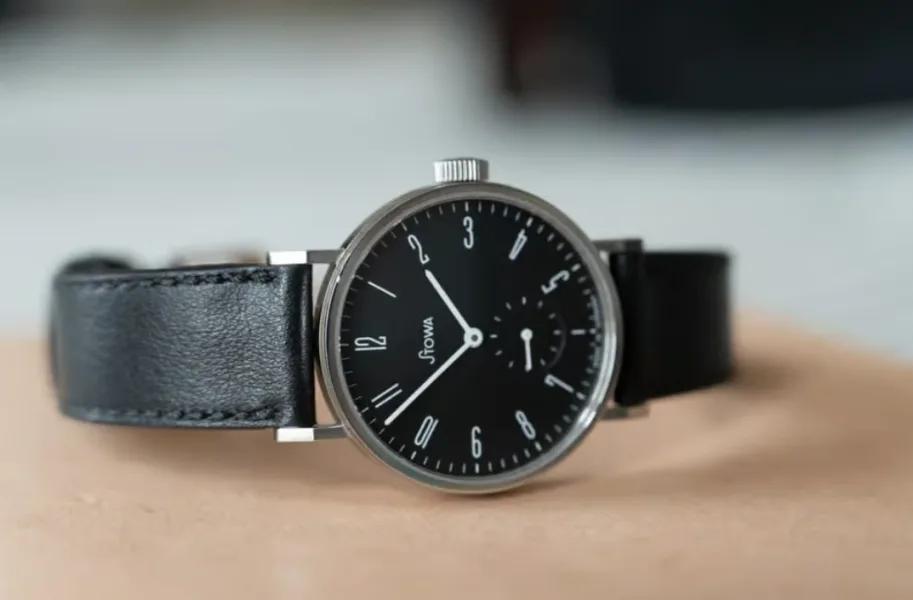
Stowa Antea has long been considered a classic of Bauhaus design in watchmaking. Its design is based on historical models from the 1930s. Thin hands, restrained typography, and an exceptionally clean dial give the watch an almost flawless clarity. This is especially noticeable when compared to other minimalist watches: the proportions appear perfectly balanced. Nothing seems accidental, yet the design does not feel cold or technical. Perhaps that is why Antea continues to attract many fans.
Why the Bauhaus Style Remains Relevant in Watch Design?
In the watch world, colors, materials, and case shapes change regularly. Sometimes integrated straps are in fashion, sometimes ultra-small diameters or bright dials. Bauhaus watches are remarkably resistant to these changes. Probably because their design does not depend on a specific zeitgeist. It is based on an idea that works outside of fashion: good design arises where function, proportion, and moderation combine. Perhaps that is why Bauhaus watches seem especially in demand today.
While many modern sports watches become larger, more technological, and more noticeable, these models offer a deliberately restrained alternative. They do not demand attention and often reveal their character only upon a second glance - in the spirit of modern quiet luxury. Watches like NOMOS Tangente, Junghans Max Bill, and Stowa Antea clearly demonstrate: good design does not need to be constantly reinvented. Sometimes, an idea that remains convincing for over a hundred years is sufficient.