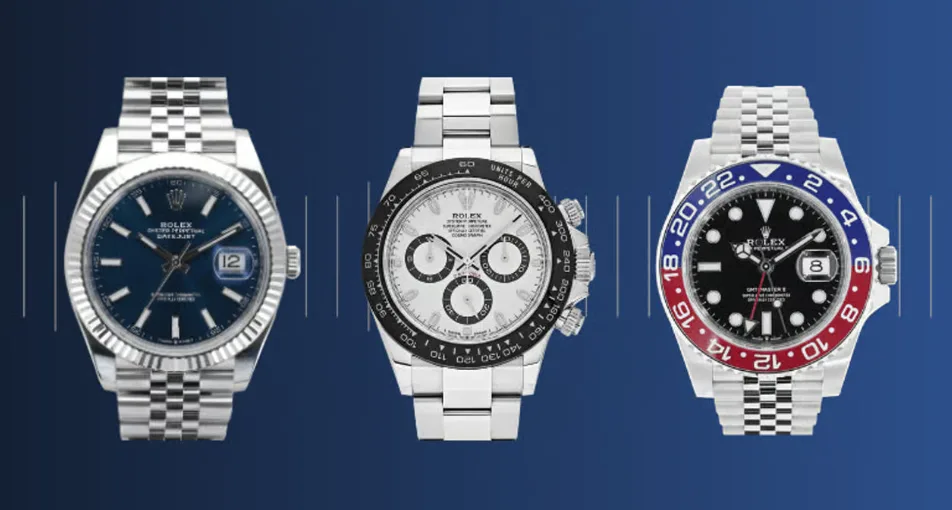
Rolex remains the undisputed leader in the secondary watch market.
However, upon closer inspection, interesting changes are noticeable: the Rolex market in 2026 is significantly different from what we observed at the height of the watch boom. The new WatchTested Rolex Report 2026, based on several million completed transactions on the platform from 2018 to the second quarter of 2026, shows that Rolex accounts for 30.5% of transaction volume. This is significantly higher than Omega at 11% and Patek Philippe at about 6%. Nevertheless, Rolex's share has decreased significantly from a peak of 44.1% in early 2022 and is now close to pre-COVID levels.
Prices reflect a similarly complex picture. The Rolex price index remains about 55% above the 2019 level and has actually risen by about 7% over the past 12 months. In other words, the pandemic frenzy has passed, but Rolex prices have not returned to 2019 levels. Even more intriguing is what exactly Rolex buyers are choosing.
Rolex remains a leader - but buyers have more choices
Rolex maintains a dominant position in the 10,000 to 20,000 euro segment, where it occupies an exceptional 61.4% of transaction volume. In the segment above 20,000 euros, its share is 38.6%. However, competitors are gradually gaining ground. Since 2023, Rolex's share has decreased by about 3-8 percentage points in major price categories. Cartier has strengthened in the 5,000-10,000 euro segment, while Patek Philippe and Vacheron Constantin have bolstered their positions in the over 20,000 euro segment.
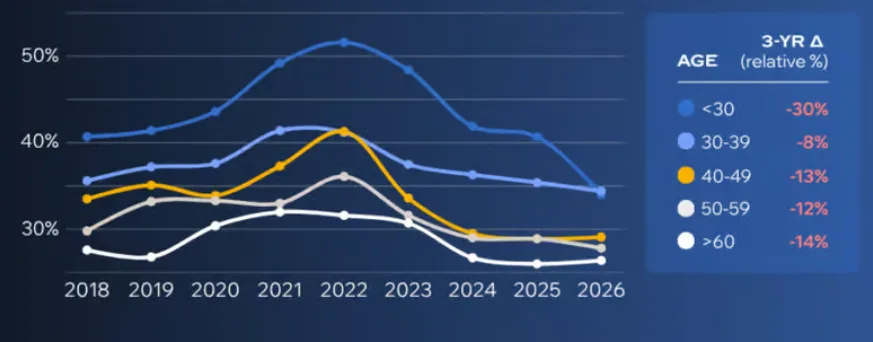
The profile of buyers is also changing. Buyers under 30 and aged 30-39 still spend about 34% of their funds on Rolex, while for buyers over 60, this figure is 27%. However, the youngest group of buyers has noticeably reduced their spending on Rolex compared to the peak of 2022. This change helps explain possibly the most interesting finding of the entire report.
Top 5 Rolex Collections
For many years, discussions about Rolex have centered on steel sports models such as the Submariner, Daytona, and GMT-Master II. These watches remain extremely important, but the largest Rolex collection by transaction volume today is something more classic.
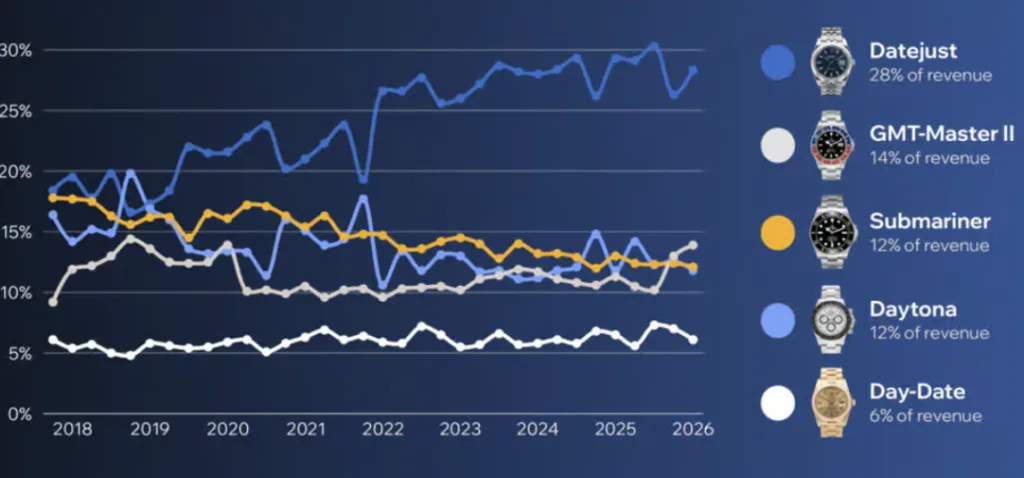
1. Rolex Datejust - 28%
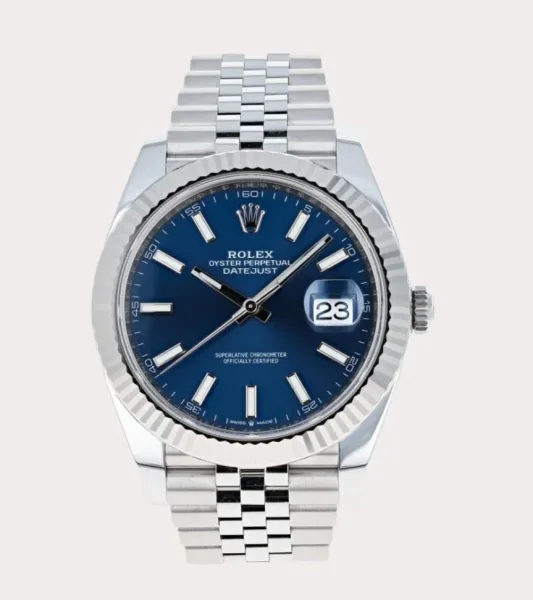
The Rolex Datejust collection accounts for approximately 28% of Rolex transaction value, making it the largest by a significant margin. The rise in popularity of the Datejust coincides with a trend towards more classic and versatile watches. Datejust has one advantage that few Rolex sports models can offer - vast diversity. Different generations, materials, dial options, bracelets, and case sizes make the collection appealing to a wide audience. It is especially popular among women, for whom Datejust accounts for 42.8% of spending on Rolex, while among men, this figure is 23.1%. Along with the Oyster Perpetual, this collection often serves as an entry point into the world of Rolex.
2. Rolex GMT-Master II - 14%
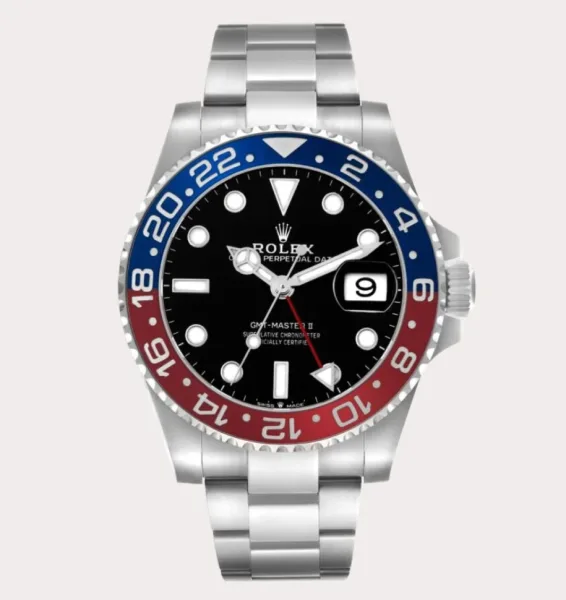
If Datejust shows the overall direction of the Rolex market, then the GMT-Master II collection proves that interest in steel sports watches is far from waning. It generates about 14% of Rolex transaction value, ranking second in the report. Three GMT models are among the top eight best-selling Rolex references by transaction volume in 2026. The leader is the GMT-Master II ref. 126710BLNR "Batman" with an estimated value of about 15,908 euros, followed by ref. 126710BLRO "Pepsi" - 23,052 euros and the new ref. 126710GRNR "Bruce Wayne" - 18,125 euros. The "Pepsi" model stands out in terms of price: after being discontinued, its value increased by about 24% over the year, demonstrating how quickly scarcity affects the value of a sought-after Rolex model.
3. Rolex Submariner - 12%
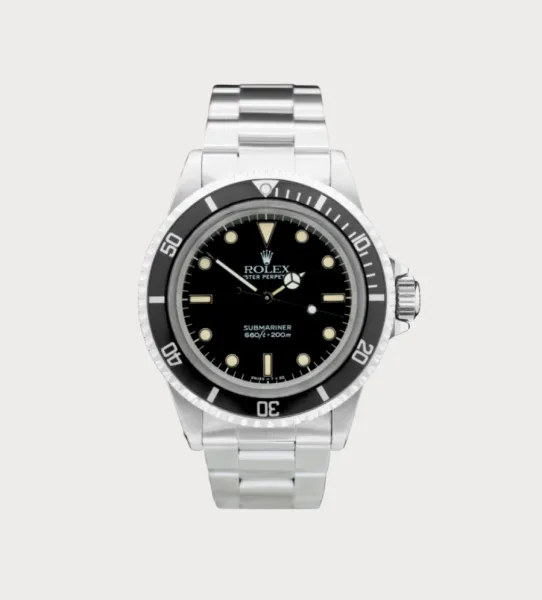
Few watches are as recognizable as the Rolex Submariner, and the data confirms its enduring popularity. The collection accounts for about 12% of Rolex transaction value. The two best-selling models are the modern steel versions: Submariner Date ref. 126610LN with an estimated value of about 12,513 euros and Submariner no-date ref. 124060 - approximately 11,446 euros. The green-bezel Submariner Date ref. 126610LV "Starbucks" with a price of about 13,358 euros is also among the top sellers. Quietly: more than seven decades after the Submariner's inception, the basic formula of Rolex steel diver watches remains virtually unmatched.
4. Rolex Daytona - 12%
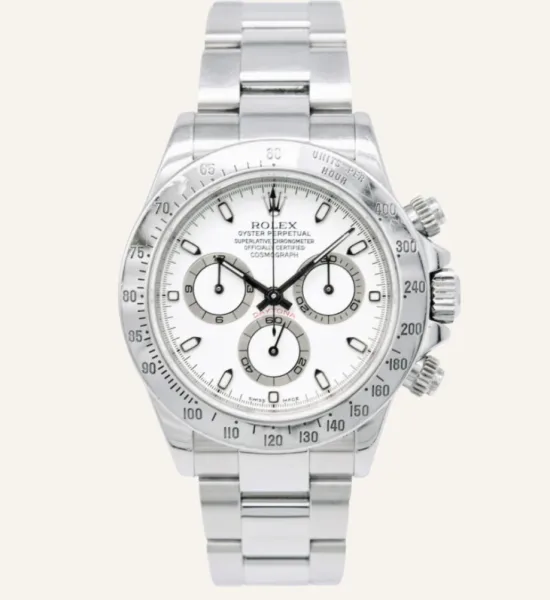
Another approximately 12% of transaction value is attributed to the Rolex Cosmograph Daytona. The report highlights the discontinued steel Daytona ref. 116500LN, which sells for about 27,505 euros - up 6.7% over the year. Daytona occupies an interesting position in the Rolex ecosystem. Data shows that accessible collections like Datejust and Oyster Perpetual often serve as entry points, while more experienced collectors aspire to models like Daytona. It is one of the striking examples of Rolex, which can simultaneously be a sports watch, a collectible item, and a status symbol.
5. Rolex Day-Date - 6%
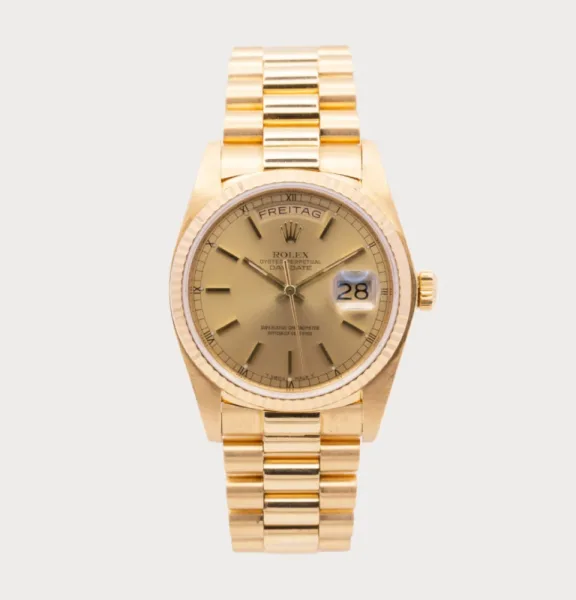
Closing the top five is the Rolex Day-Date, accounting for about 6% of Rolex transaction value. Although its share is noticeably smaller than Datejust, Day-Date occupies a unique place in the Rolex catalog. The precious metal case and iconic President bracelet set this collection apart from steel models. An interesting fact from the data: despite its status as a collectible watch, Day-Date attracts comparatively younger buyers compared to other luxury Rolex collections.
Best-selling Rolex references show a different picture
This is where the picture becomes especially interesting. Although Datejust is the largest collection, the ranking of individual references is topped by steel sports models. Among the top sellers by transaction volume:
- GMT-Master II 126710BLNR "Batman" - 15,908 euros, +6.3% year-on-year
- GMT-Master II 126710BLRO "Pepsi" - 23,052 euros, +24.0%
- Submariner Date 126610LN - 12,513 euros, +3.3%
- Submariner 124060 - 11,446 euros, +4.5%
- Daytona 116500LN - 27,505 euros, +6.7%
- GMT-Master II 126710GRNR "Bruce Wayne" - 18,125 euros, +2.9%
- Submariner Date 126610LV "Starbucks" - 13,358 euros, +0.7%
- GMT-Master II 16710 - 11,518 euros, +2.9%.
This apparent contradiction says a lot about the modern Rolex market. The vast number of Datejust configurations spreads demand across many individual models, while demand for sports watches is concentrated around a relatively small number of recognizable references.
A more mature Rolex market?
The Rolex Report 2026 does not indicate a decline in interest in the brand. On the contrary, Rolex remains the largest brand on WatchTested by a large margin, prices are significantly above 2019 levels, and the most famous models continue to be in high demand. The market around Rolex itself has changed: buyers have more choices, competitors have regained positions, and the younger generation is less interested in chasing a limited number of popular sports models at any cost. Meanwhile, the Datejust - perhaps the most typical everyday Rolex - has quietly become the largest contributor to overall sales. Perhaps this is the most important takeaway from the report: the Rolex market has not become less interesting after the 2022 frenzy, it has simply become more diverse.