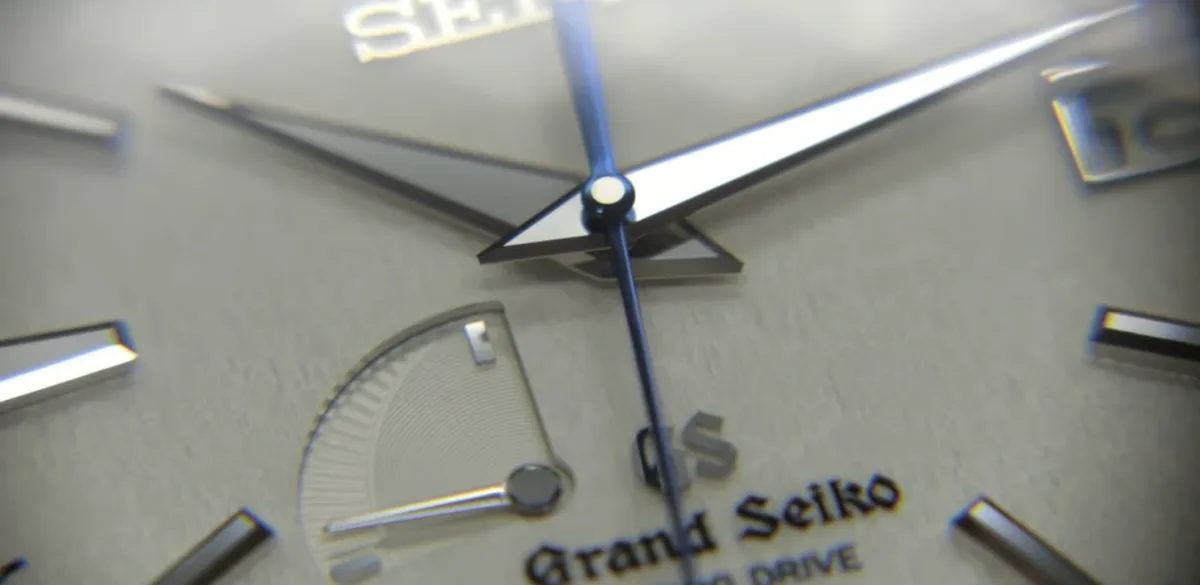
Grand Seiko is not known for a lack of references or creative dial designs.
An unofficial online database (which we checked due to the absence of an official catalog) lists 1,181 references, and this list covers only up to 1988. With such a number of models, keeping track of all the variety is simply impossible. The situation becomes even more complicated if you limit yourself to only the recent past. This is largely due to exclusive Grand Seiko models available only in certain markets. Many of them were sold exclusively in Japan, while others had minor design changes but completely different names.
When discussing the Grand Seiko watch collection, especially discontinued models, it is important to note that the brand is not a choice for investors. Since it is practically impossible to build a business case on Grand Seiko, this is good news for loyal fans who can purchase both modern and classic models at fair prices.
In this article, we highlight five discontinued references that we particularly like or have played a special role in the history of Grand Seiko.
Grand Seiko SBGA011 Snowflake
Since Grand Seiko entered the global market, the Snowflake model has become its hallmark. It combines the brand's key characteristics: nature-inspired dials, expressive case shapes with impeccable polishing, and, of course, the unique advantage of Spring Drive calibers. All these elements create an irresistible overall image.
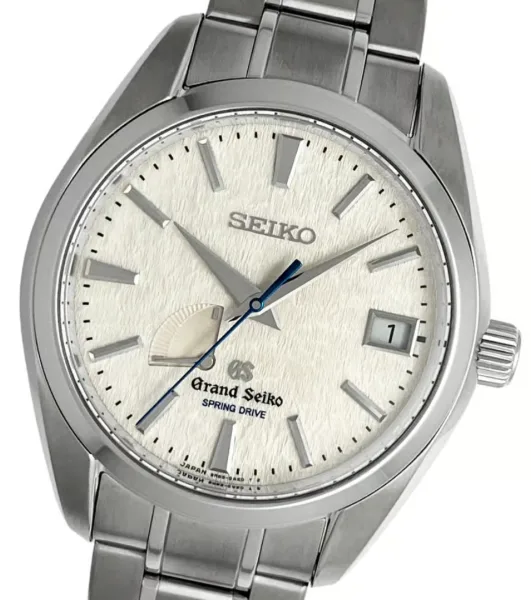
"Wait, isn't the Snowflake still in production?" you might argue. "It's listed as SBGA211 on the official website and available everywhere!" - and you would be right. SBGA211 is the latest version of the Snowflake, which differs only in one detail on the dial: the Grand Seiko logo is now located at the 12 o'clock mark. SBGA011 belongs to the era of "Seiko Grand Seiko," when the classic Seiko logo was still at the 12 o'clock position. After Grand Seiko separated from the parent company and became a more independent brand, the Seiko logo was removed from all Grand Seiko models starting in 2017. As a result, many references were discontinued or replaced with new ones with redesigned dials. The Spring Drive 9R65 caliber and titanium case remained unchanged.
From an aesthetic point of view, the SBGA011 may seem a bit cluttered. However, buying this model means acquiring a piece of Grand Seiko history from another era, without overpaying collectors.
First Grand Seiko Model - Reference J14070
During research, I was surprised to find that even the very first Grand Seiko model, released in 1960, is available at reasonable prices. By reasonable, I mean just under $5,000. This is a manually wound model from Suwa Seikosha - one of the two companies that were in a kind of competition within Seiko, later becoming Seiko Epson and Seiko Instruments, respectively.
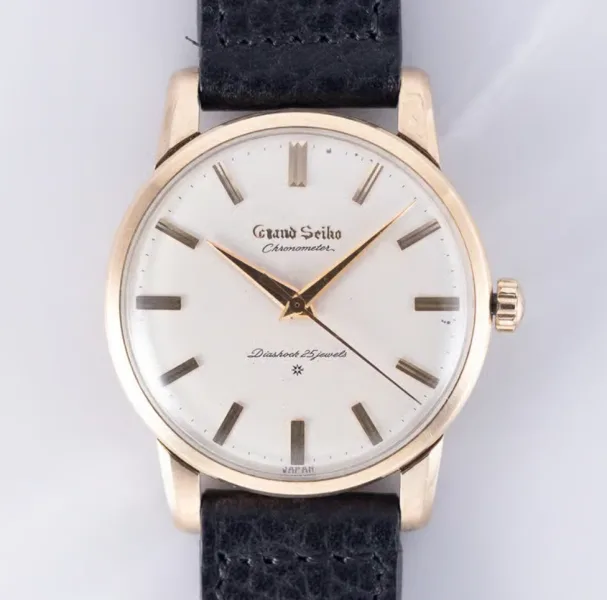
The main task was accuracy, and the chronometric characteristics of the caliber 3180 used in this model were ensured by numerous design solutions: an increased balance and precise adjustment mechanisms. Considering the sums collectors sometimes pay for the first models of other popular brands, prices for J14070 seem quite reasonable.
In return, the buyer receives a piece of watchmaking history in a 35 mm gold-plated case, with a plexiglass crystal and an opaque case back featuring the Grand Seiko lion.
SBGW033 - Modern Interpretation
Grand Seiko remains true to its design philosophies and continues to carefully develop them. At the same time, the brand often refers to its historical heritage, releasing reissues of iconic models with special significance for the collection.
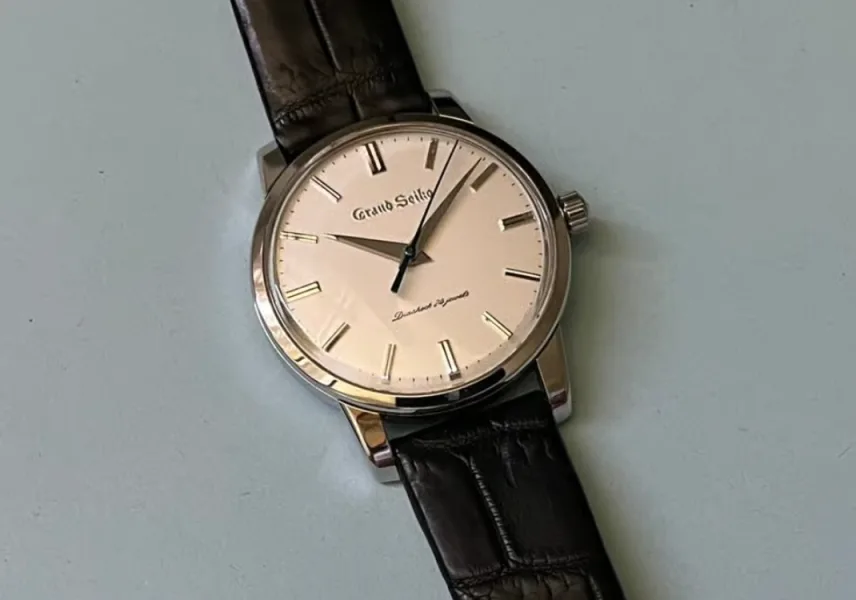
In 2011, J14070 was honored with such a tribute as part of a limited series of 1,300 pieces, making the model rare. Another interpretation - SBGW253 - was released in 2017 in a larger edition (1,960 pieces, in honor of the year the first Grand Seiko was released). The case diameter was increased to a more modern size - 38 mm.
At the same time, the model SBGW033 with a diameter of 36 mm remains close to the original. It is equipped with modern technologies: a domed sapphire crystal and a manual Grand Seiko 9S64 caliber with a 72-hour power reserve. This is an excellent choice for those who appreciate the design of the first Grand Seiko but want modern technical specifications.
The only downside - SBGW033 is not cheap. On the secondary market, its price exceeds $5,000.
Essential Quartz Model Grand Seiko: SBGN001
Although quartz movements often evoke skepticism in the luxury watch segment outside of Japan and are perceived (if at all) only in small jewelry models, high-precision quartz calibers are an integral part of Grand Seiko's identity.
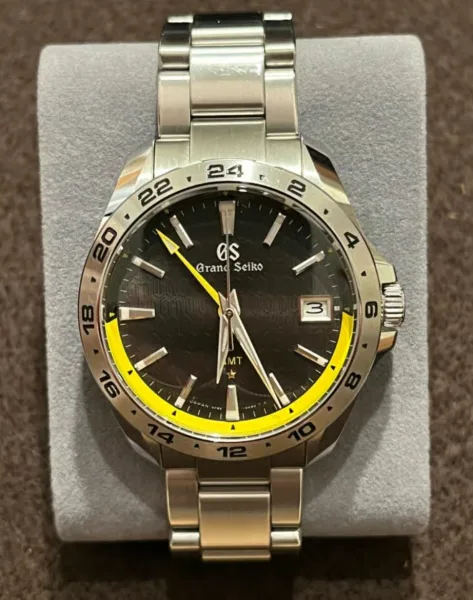
Thanks to temperature compensation technologies and strict quality control, including pre-aging of quartz oscillators, these movements achieve exceptional timekeeping accuracy. Additionally, they impress with well-thought-out technical details, such as an automatic backlash compensation mechanism, stabilizing even the slightest fluctuations of the second hand.
Among the discontinued models, Grand Seiko SBGN001 stands out especially. Released in 2018 to mark the 25th anniversary of the 9F quartz caliber generation, it was limited to 800 pieces. The 9F86 caliber is equipped with a GMT function, and the sporty design with yellow accents and a textured dial makes SBGN001 one of the most notable Grand Seiko models.
Spring Drive Chronograph SBGC017
In 2016, Grand Seiko once again introduced a strictly limited model - only 600 pieces. The watch is equipped with a Spring Drive chronograph, first introduced in 2007.
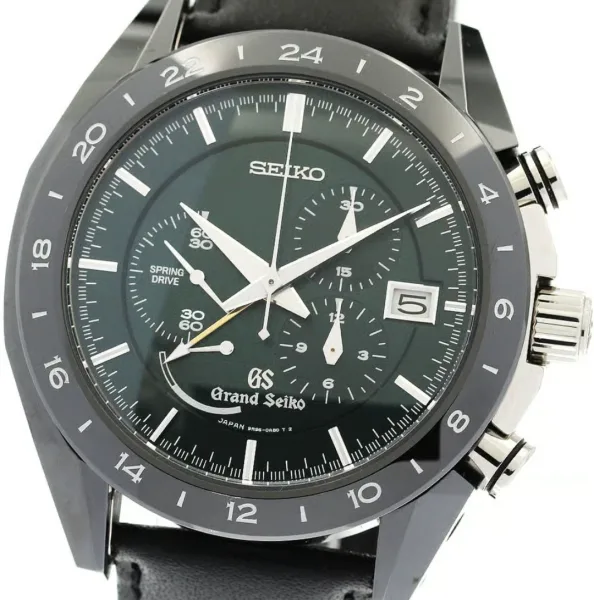
Previously released Grand Seiko chronographs had bulky control buttons. Despite the large case diameter of over 46 mm, the SBGC017 looks harmonious, elegant, and sporty. Its case is combined: the outer part is made of black polished ceramic, and the inner case is made of titanium.
Despite the limited edition, finding copies on the secondary market is relatively easy. And importantly - at fair prices for Grand Seiko.
Conclusion
Knowing the discontinued models of Grand Seiko helps to better understand the brand's evolution and its unique features. These watches represent important milestones in the history of watchmaking, maintaining a balance between tradition and innovation. For experts and collectors, they remain valuable objects for study and acquisition, offering high quality and authenticity without unjustified markups.