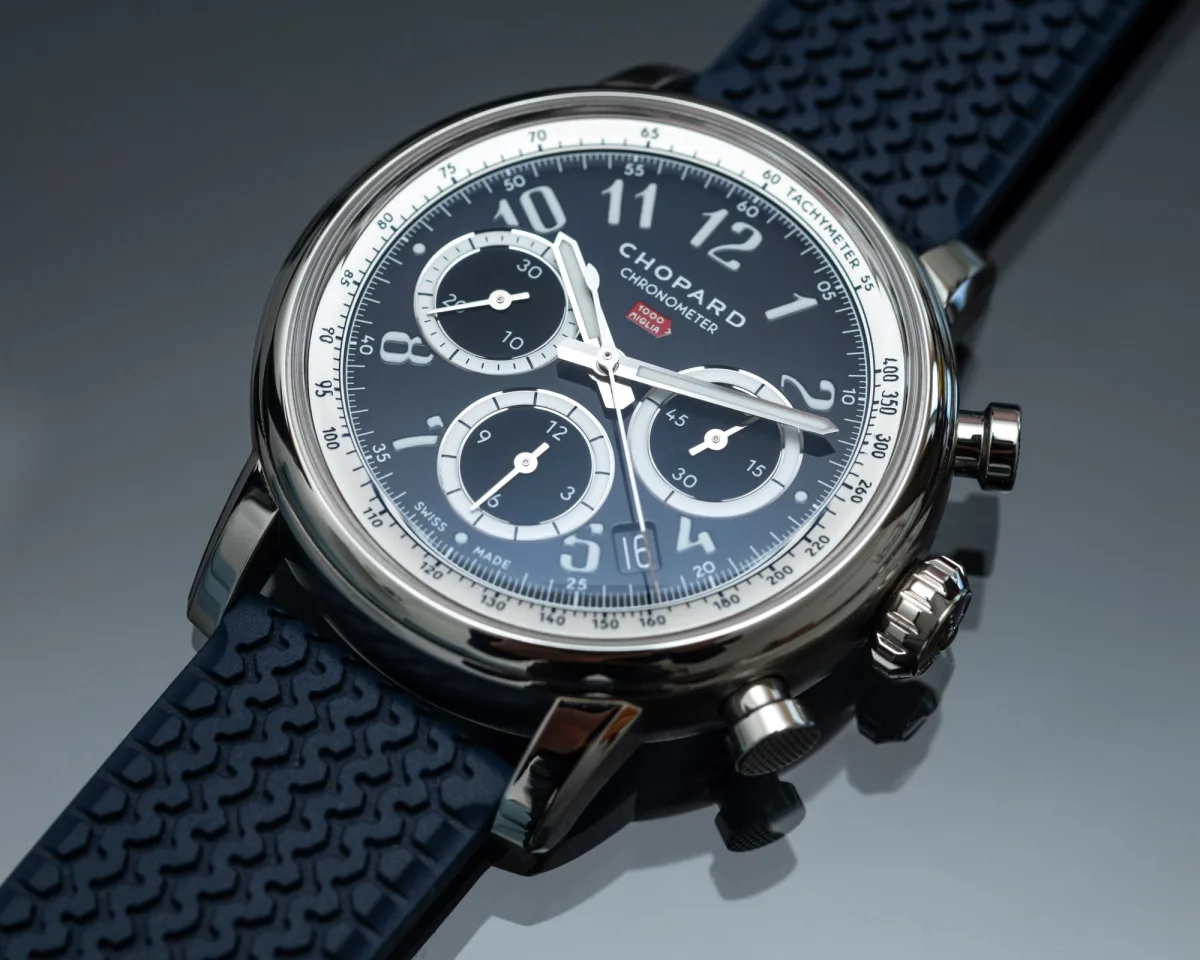
Interestingly, before acquainting myself with the Chopard Mille Miglia Classic Chronograph JX7, dedicated to Jackie Ickx, I believed that only watches with high five- and six-figure prices could be designed and sold without much regard to their cost and, consequently, their final price.
It turned out I was mistaken: these new Mille Miglia watches are among the most expensive with an ETA movement I've encountered in a long time, and significantly more expensive than previous similar models from Chopard's Mille Miglia collection. This left me needing to understand what these watches are about and who they are intended for.
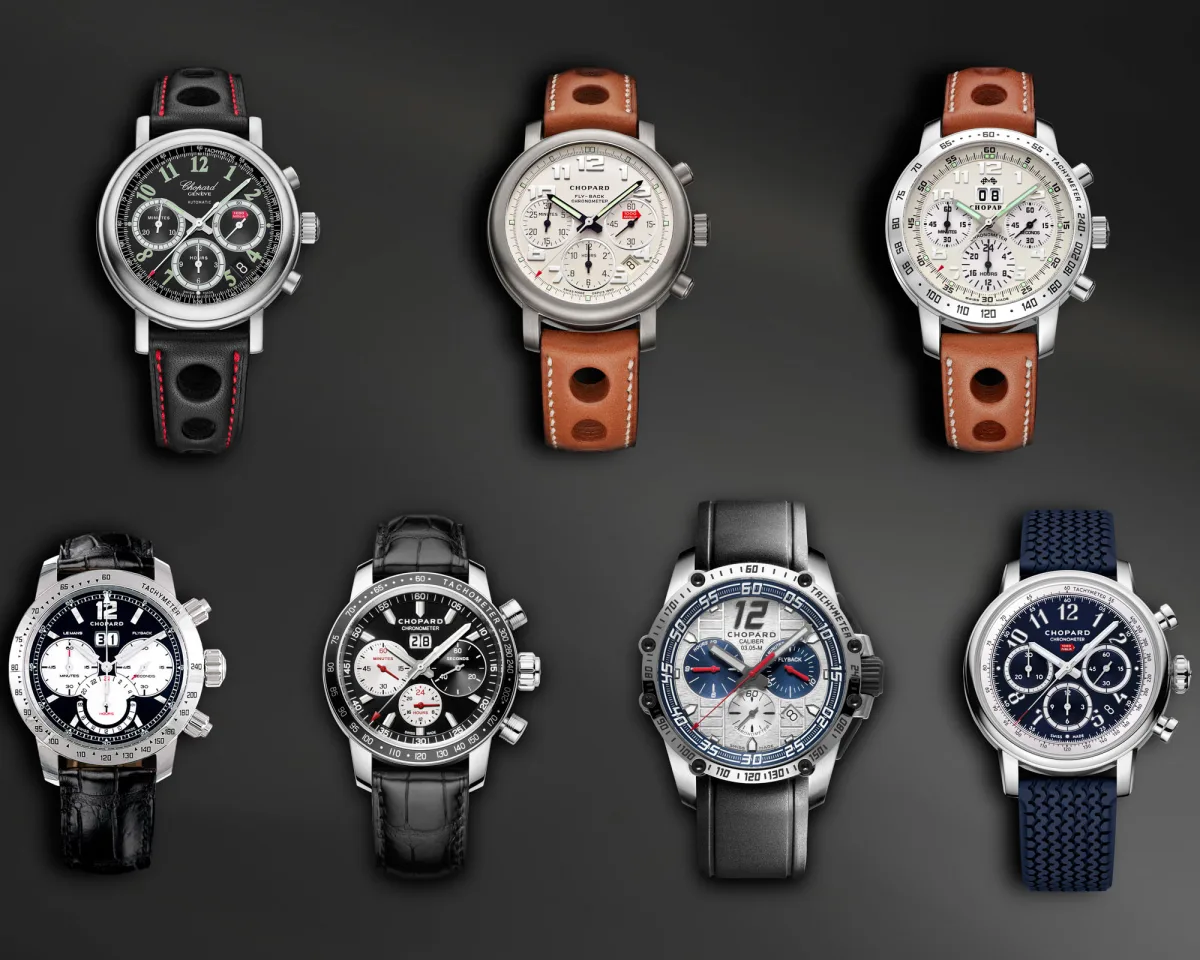
Let's turn the situation around and start with a discussion of the price: The Chopard Mille Miglia Classic Chronograph JX7 (reference 168619-3006) costs a daring $10,300 - they are clearly not going to be "just under $10,000," like many others. In Europe, they cost even more - 11,100 euros, or $12,070, due to exchange rates and VAT. This applies to all watches, not just this Chopard, although brands sometimes lower their MSRP in euros to counter some of these effects, to be more competitive and prevent customers from buying abroad. More importantly, less than three years ago, similar Chopard Mille Miglia watches cost $5,900.
How did this become possible? Chopard decided to upgrade the Mille Miglia Classic chronograph inside and out with a series of enhancements and investments. Whether they justify the price increase is up to you. Firstly, Chopard quietly acquired its own dial and case manufacturing company. Co-President Karl-Friedrich Scheufele preferred not to make a fuss about this significant event for his company, so as not to disrupt the sense of security of the supply chain for those brands that are known to rely on these specialized suppliers for essential components.
Considering how small and tricky the watch industry is, any brand's supplier purchase is never a secret to anyone, but the mood is greatly influenced by how the brand does it. If Chopard had not showcased its new acquisition, customers of these specialized suppliers - and, importantly, corresponding partners, distributors, and customers of these brands - would rightly feel uneasy, as they would quickly begin to anticipate unpleasant problems associated with finding new suppliers of cases and dials. A discreet acquisition is another way of saying: "We will continue to care for other industry representatives."

All this suggests that the recently updated Chopard Mille Miglia Classic Chronograph collection now relies on the extensive capabilities and readiness for product development that only in-house suppliers can offer. It's easy to see why: An independent supplier is pulled in different directions, often by some of the most powerful brands (and their even more powerful owners), leaving them with an almost trademarked aversion to trying new construction methods, surface treatments, and overall execution. Development timelines, prototyping, and making the necessary small changes can often take months or even years, making it impossible to create truly exciting new designs for cases, dials, or bracelets.
Engaging its own supplier, even if it continues to serve external clients, generally allows for prioritization and a more nuanced approach to prototyping, development, and ultimately mass production. The end result may not resemble any other, often due to a multitude of tiny modifications. Indeed, to notice and appreciate these small differences, one must either see hundreds and thousands of watches (as we do in our work), or possess an excellent eye. Or you might be one of those few brand executives focused on the product (as Mr. Scheufele is), and then these small improvements and differences start to register and matter.
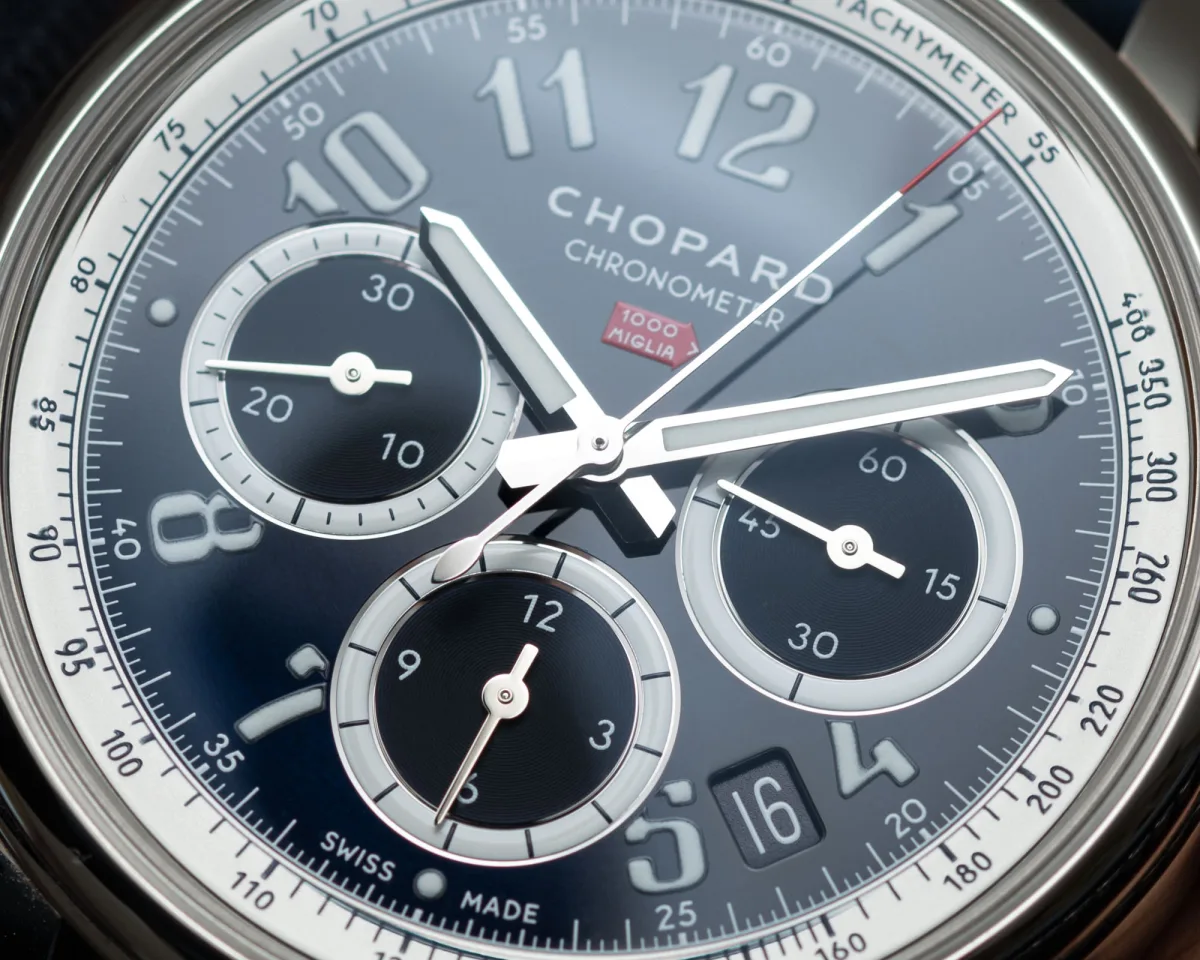
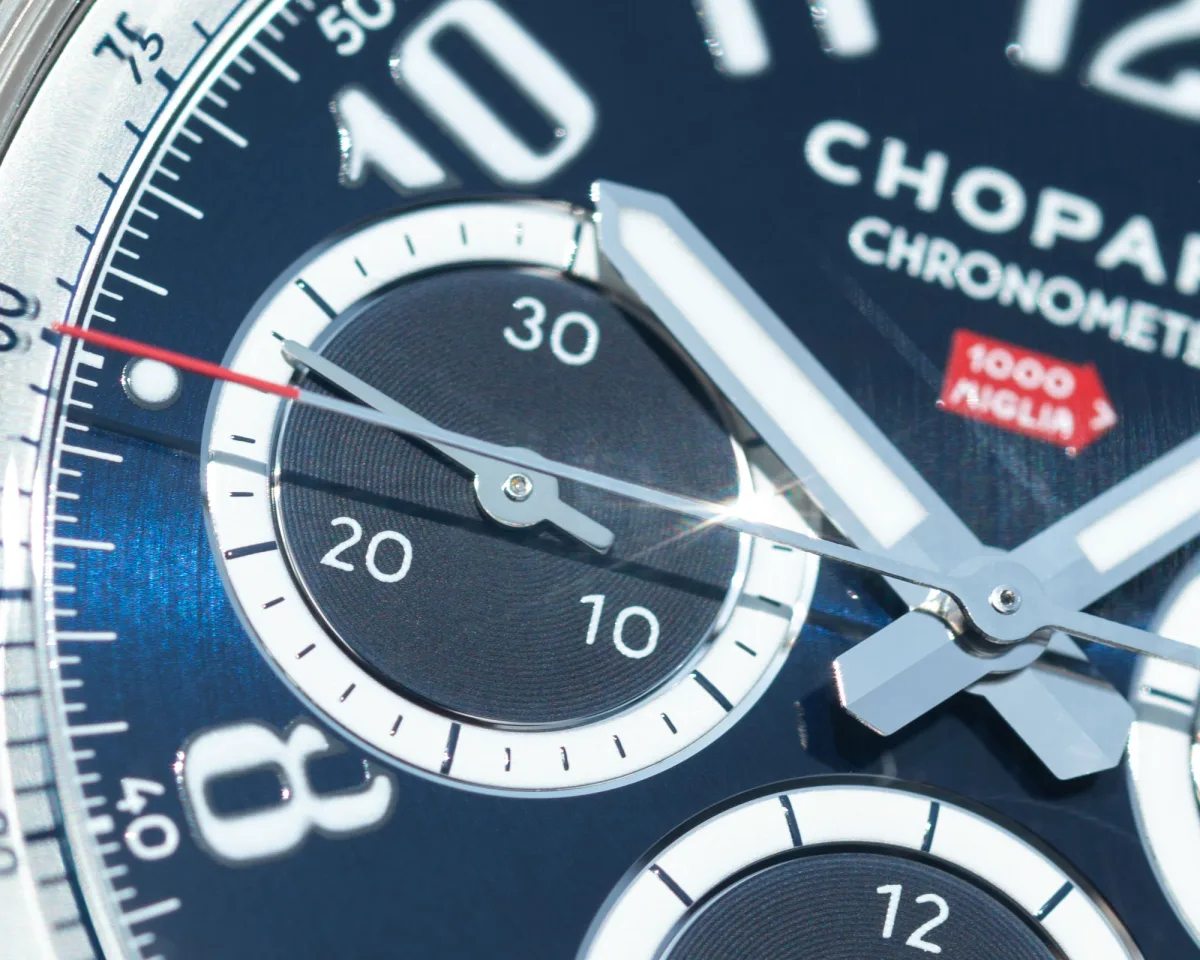
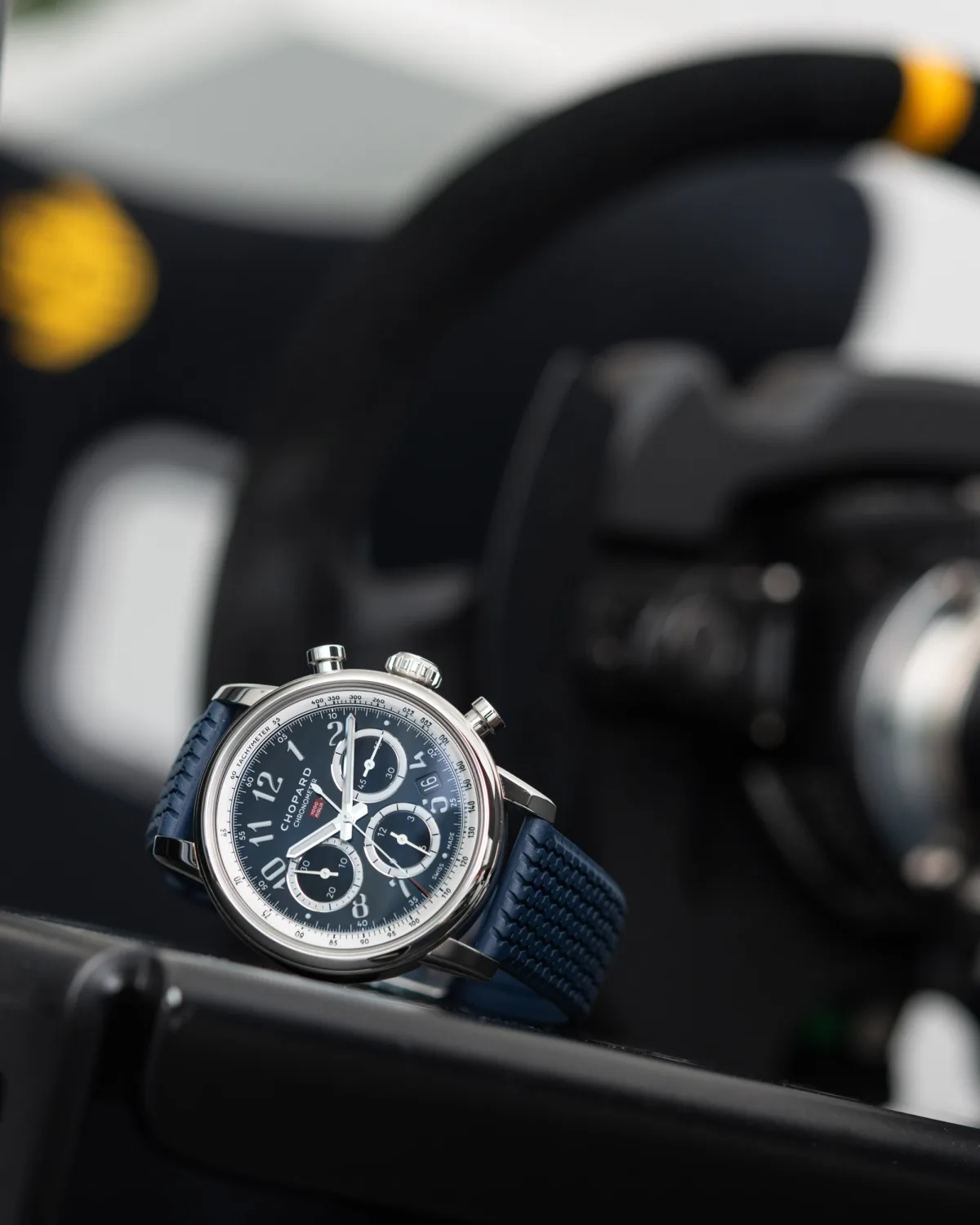
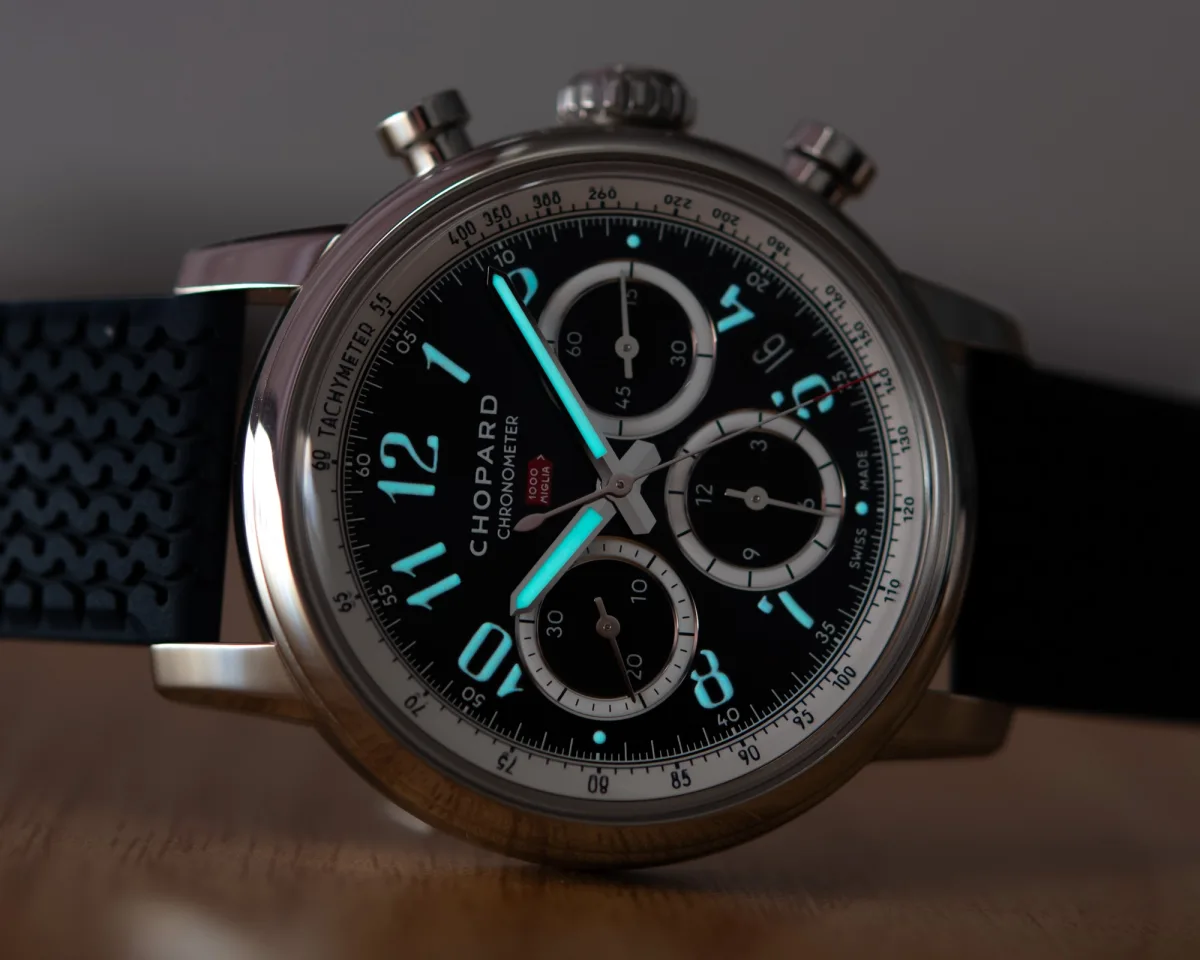
Perhaps the most noticeable example of these developments in the updated Mille Miglia Classic chronograph is its dial, which we hope is at least partially illustrated by the two images shown above. Only in very bright and direct light does the blue circular matte base of the dial reveal itself. The rest of the time, it looks roughly like in the photo above: A smooth, deep, lacquered surface, not unlike a calm night water body, which seems to almost completely conceal the aforementioned matte texture and color. Such a combination of surface treatment I do not recall in any watches, in any price category.
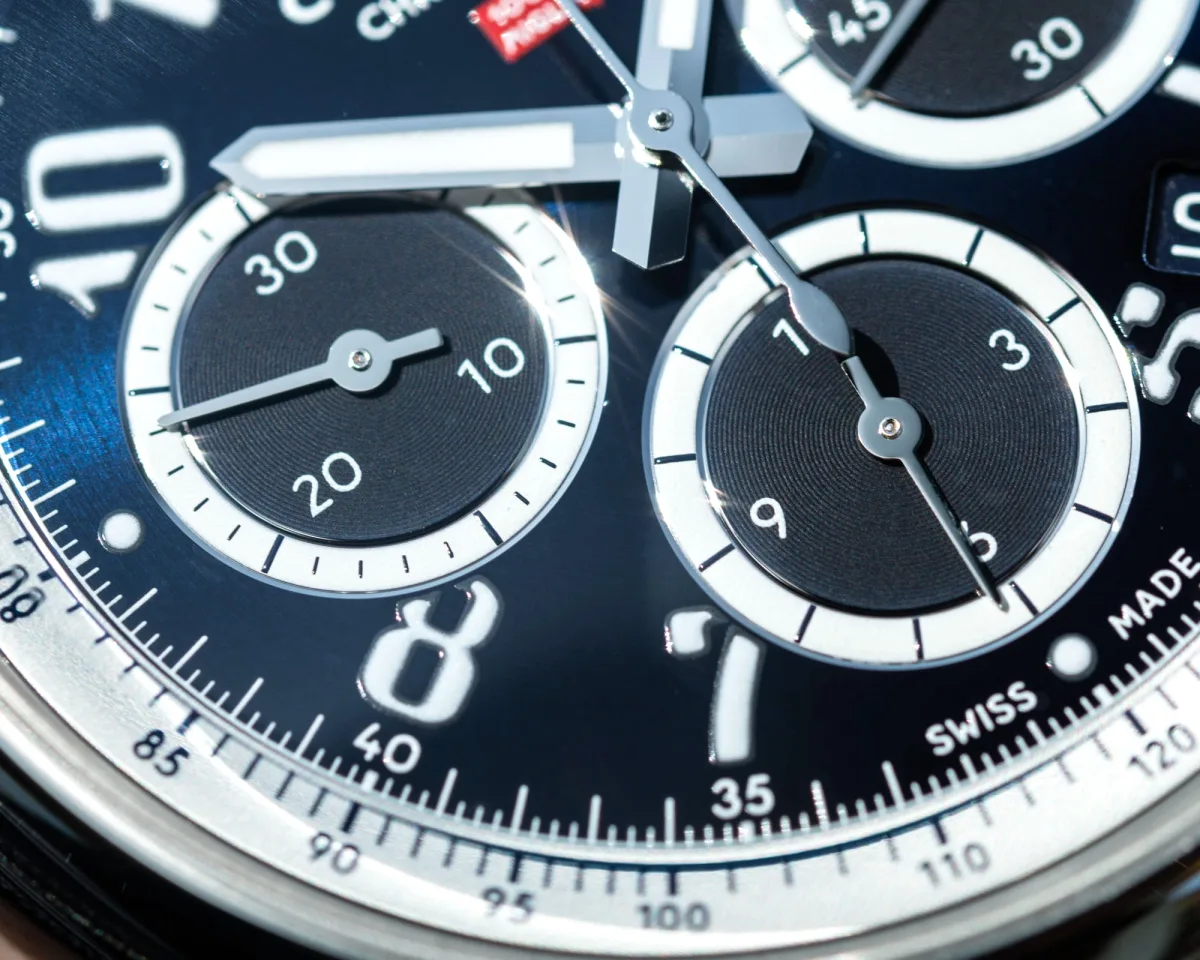
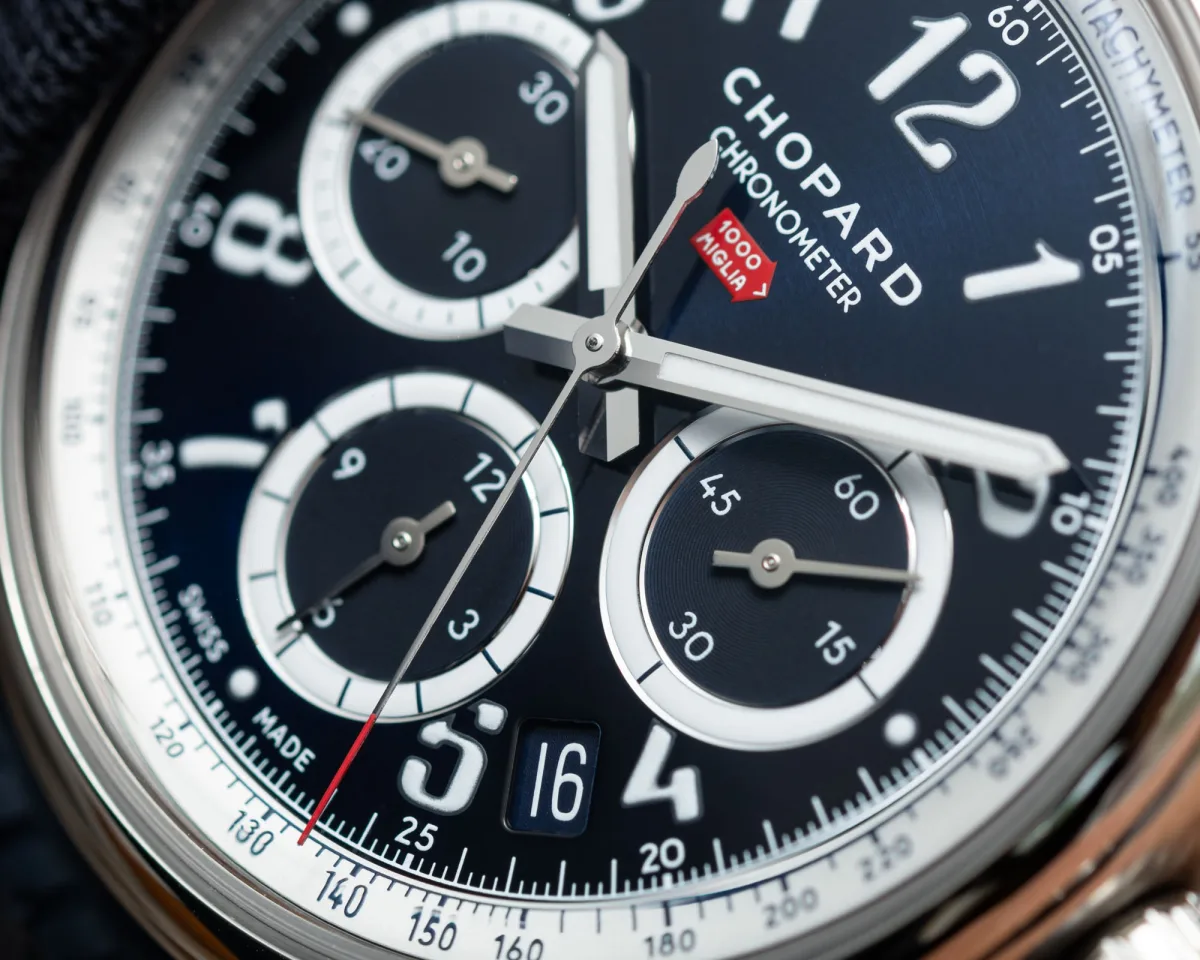
The next small feature of the Chopard Mille Miglia Classic Chronograph JX7 is the sub-dials, which also somehow blend with the rest of the dial. They seem to have the same black (or dark blue, in some cases) color and lacquered surface. However, upon closer inspection, it turns out that they are not lacquered at all and not even blue: The sub-dials are black and have a textured surface with concentric grooves. As simple as these details may sound, the sophistication, uniqueness, and complexity associated with their production are hard to overestimate.
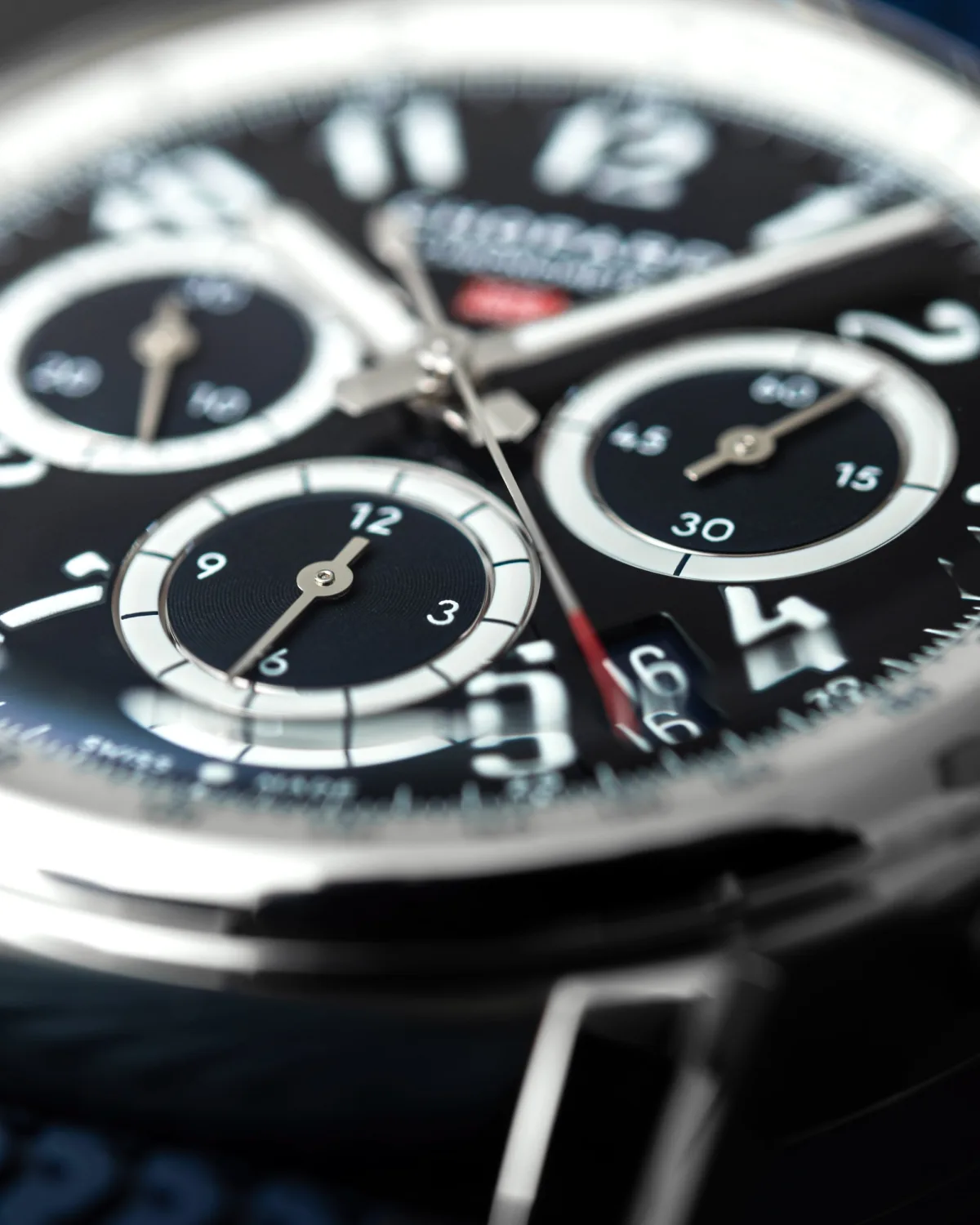
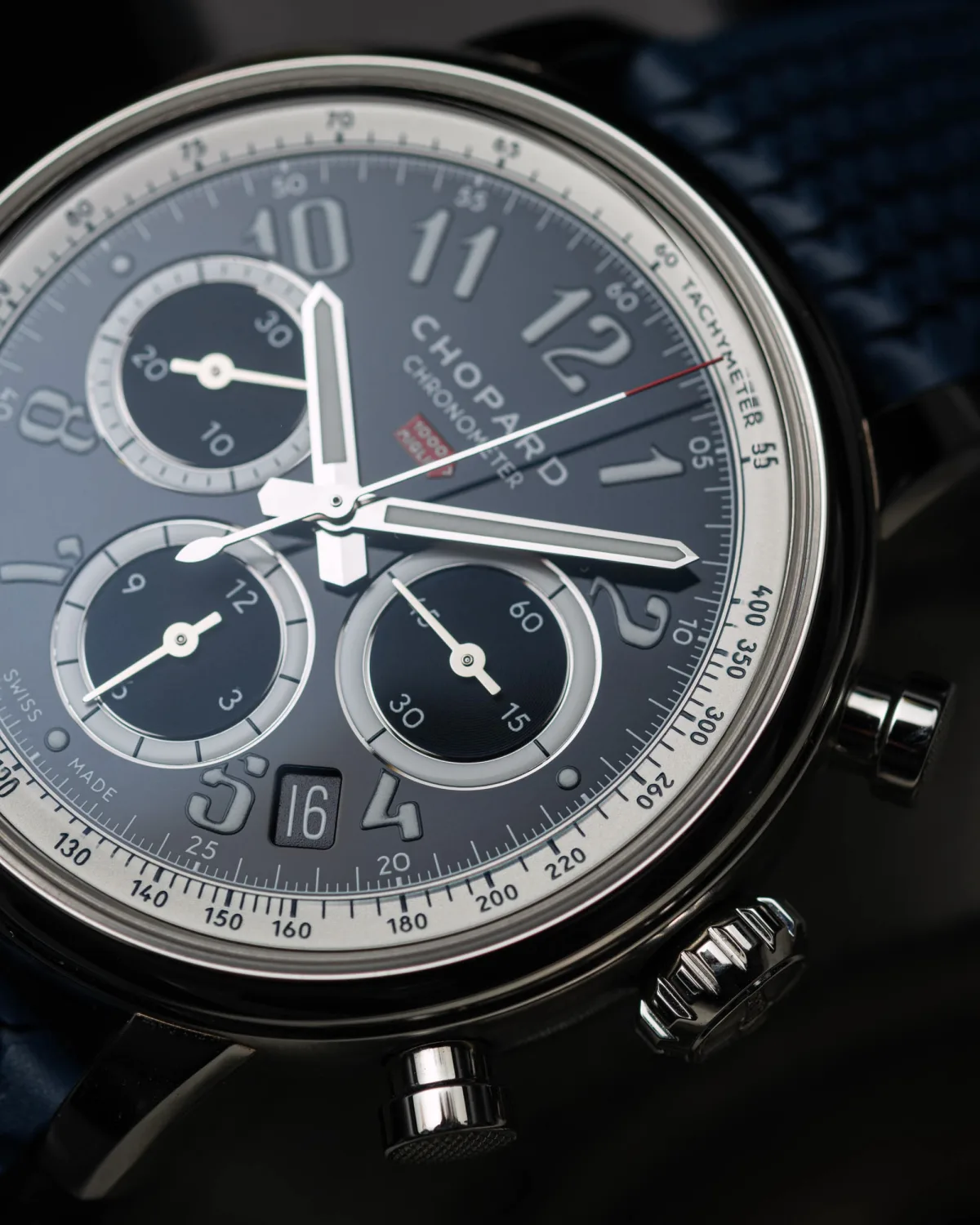
And finally, the silver frames surrounding the white domed lacquered ring around each sub-dial. Again, the quality of execution and complexity observed here is not often found even in watches at such a high price. Overall, the dial looks like a completed design, and something that someone (the brand's management) enjoyed making. The icing on the cake is the Chopard-designed typography used for the numerals and all texts ("Swiss Made" in a common font on an otherwise neat dial never ceases to irritate me).
The date is in close proximity to the dial thanks to the modular architecture of the movement, which we will discuss later. Overall, to date, this is one of the most intriguing, complex, and beautifully executed dials on luxury chronographs.
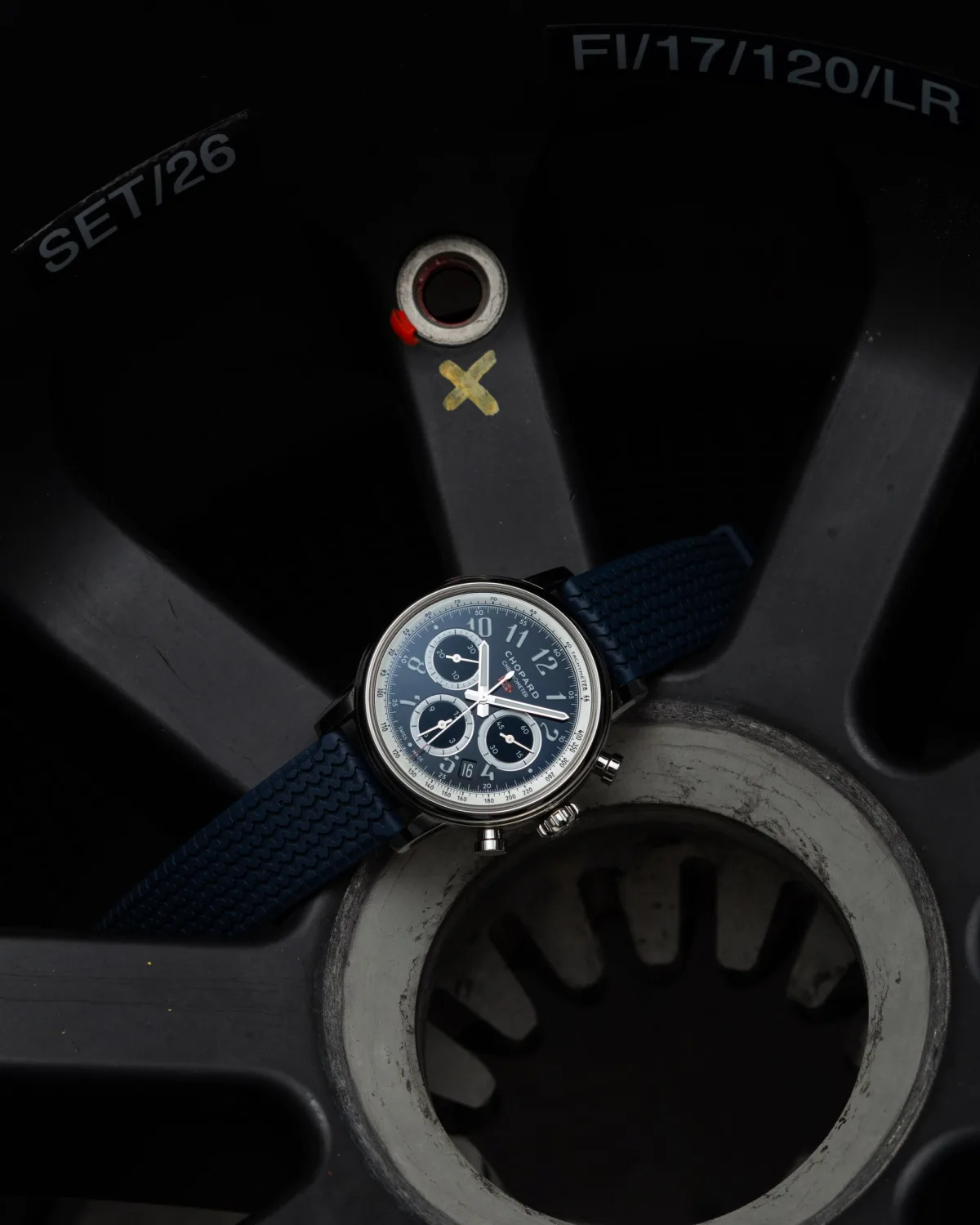
The case of the Chopard Mille Miglia Classic Chronograph JX7 is made of A223 Lucent Steel. This is a recent development for the collection, as this metal was primarily reserved for the Chopard Alpine Eagle, in which it debuted in 2019. Developed and produced in Austria by the historic metal supplier Voestalpine Böhler Edelstahl, Lucent Steel, in my experience, is the whitest, brightest, and possibly the most spectacular steel alloy used in watches today.
While countless forum threads and comment sections are dedicated to what people can or cannot distinguish between 904L (used mostly by Rolex and some other companies) and industry-standard steel 316L, I won't hasten and say that you will most likely be able to see and appreciate the difference between A223 and all other types of alloys.
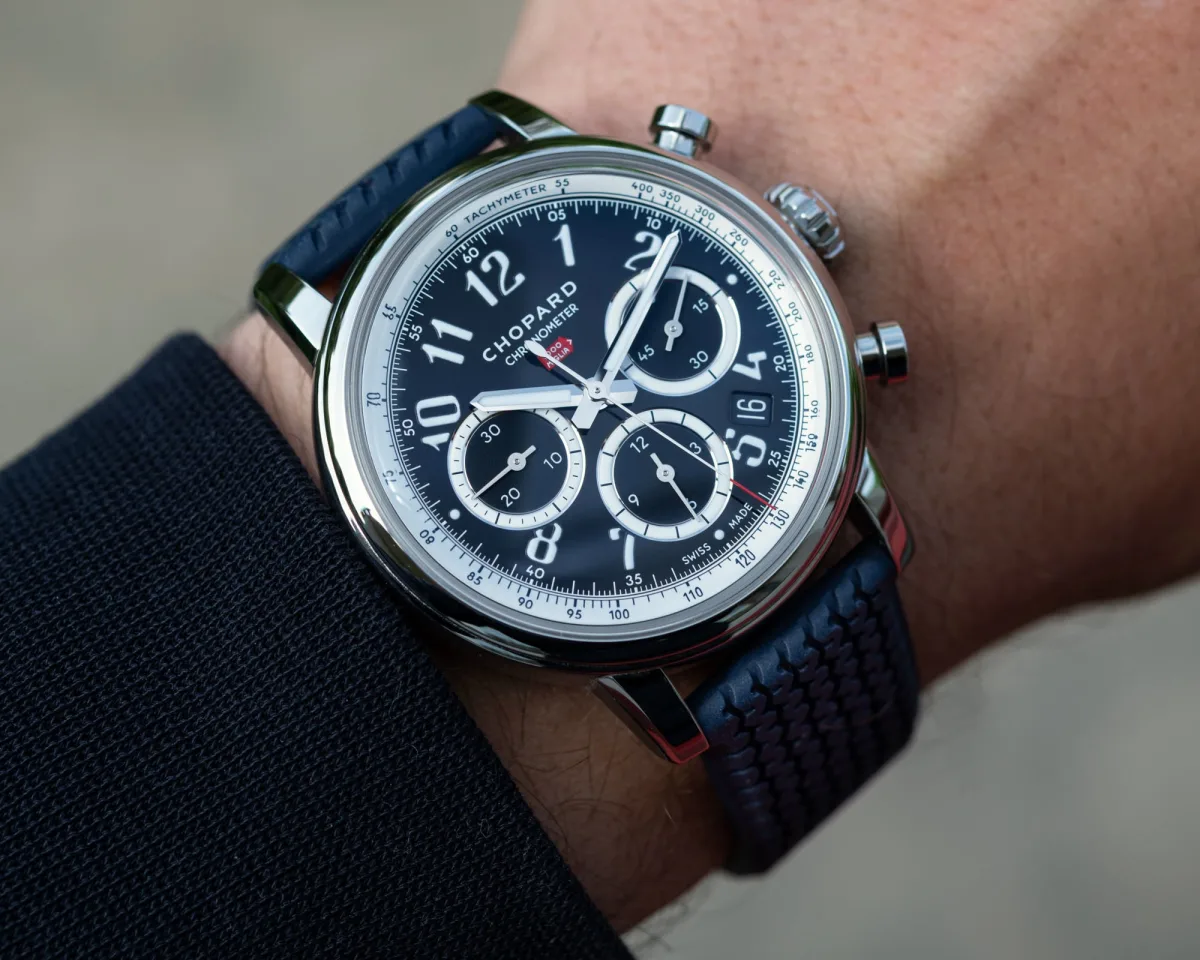
The new Lucent Steel case of the Mille Miglia chronograph is difficult to call white and bright - not that 316L looks dirty compared to it, rather, after seeing so many beautifully polished and finished luxury watch cases made of 316L, we simply did not expect another level to appear in steel production and finishing. Over the years, much has been said on WatchTested in previous articles about the Alpine Eagle, but briefly, the Lucent Steel composition (containing at least 80% recycled steel) and the remelting process were developed by Voestalpine over four years.
As a result, it is claimed that the molecular structure was altered and the microstructure optimized, mechanical strength increased by about 50%, and the number and size of inclusions reduced, leading to the aforementioned aesthetic improvements.
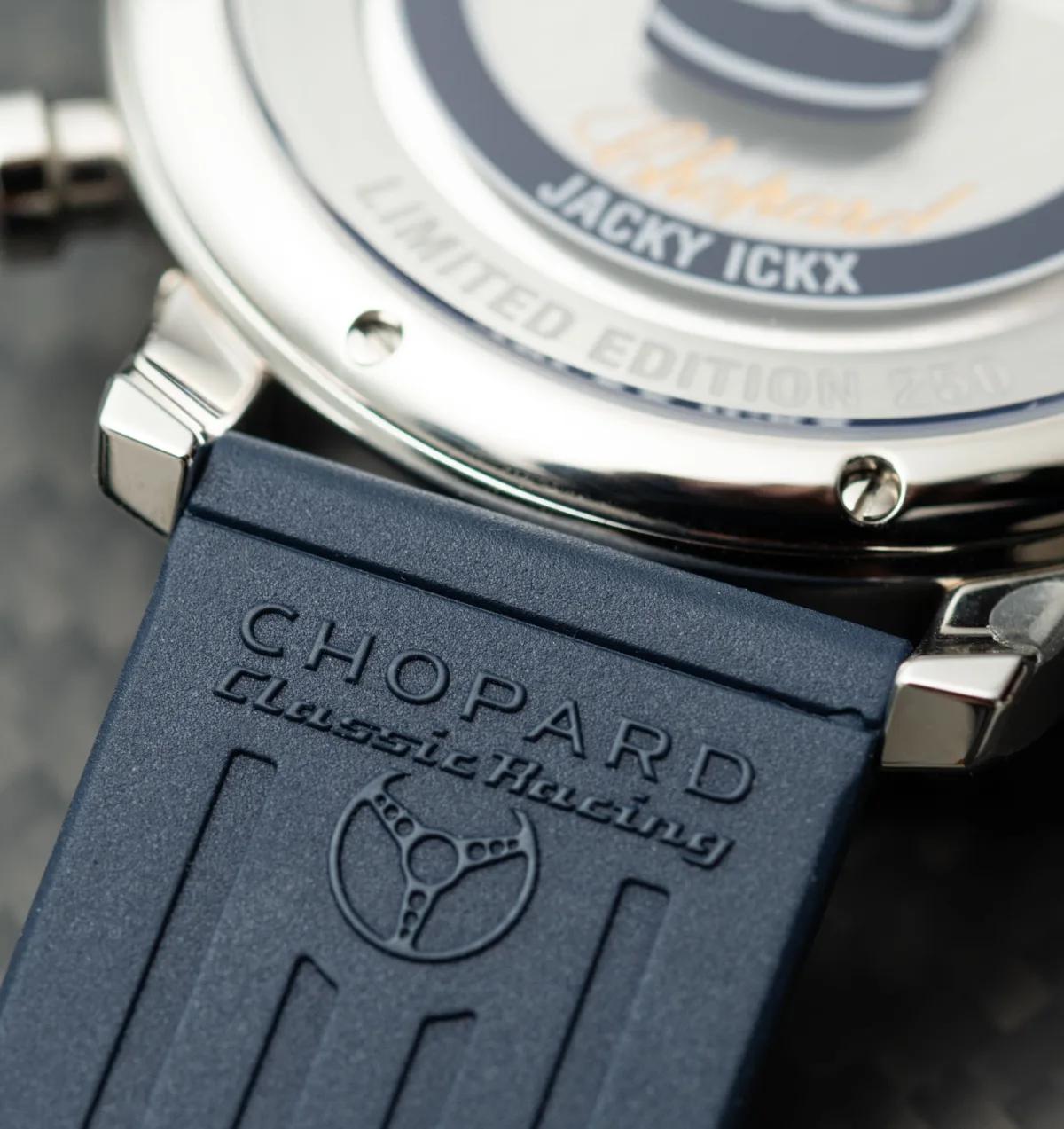
In the competitive and crowded field of luxury watches, a new alloy is a very rare offering, especially when it brings real, noticeable, and valuable improvements. Doing this with steel, as opposed to 9k or 18k gold, was a masterstroke by Chopard, as I can see this feature as a differentiator and indeed a deal-maker in the eyes of at least some potential buyers in this segment. The revival of luxury watches has been in full swing for about 30 years, and thus the market of people looking for more niche improvements and differences in wearing and owning their next watch is steadily growing.
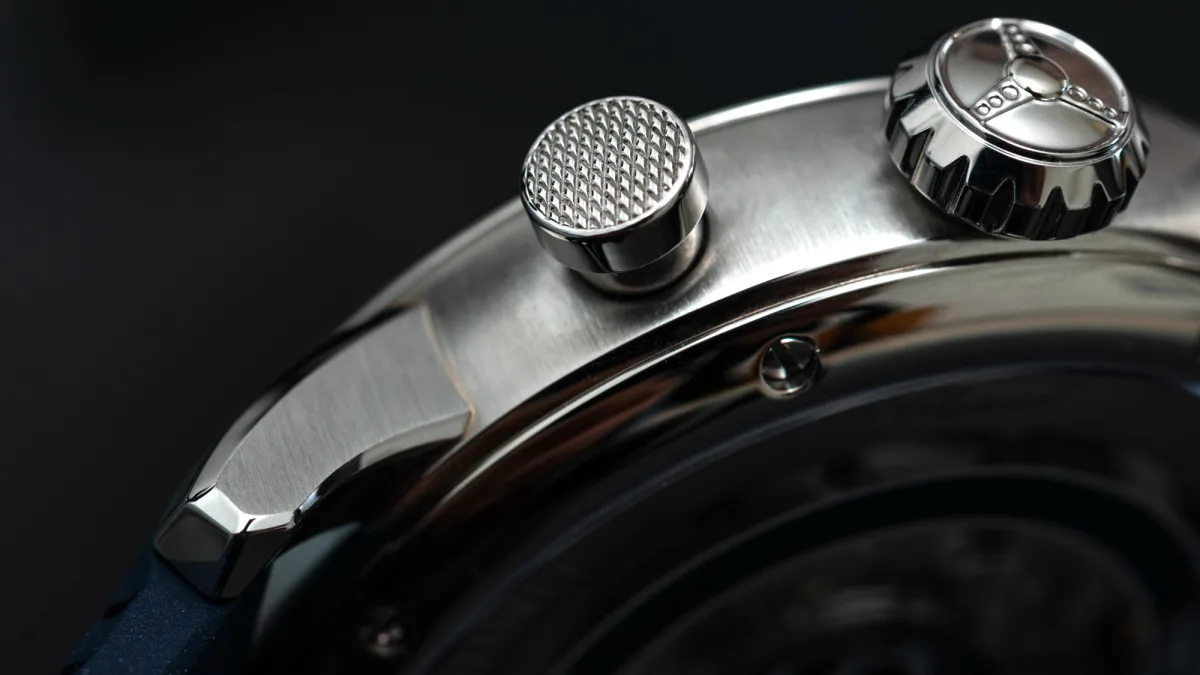
At least for some of them - including me - testing and evaluating a new alloy is an exciting prospect, which is also more tangible, tactile, and universal than the nuances of movement architecture and the like, which are difficult to see, experience, or feel in everyday wear. How the light plays on the case, how it holds up during prolonged wear, and how it functions alongside other more familiar components (hands, hour indices, straps, etc.) - this is what I, for example, love to study and explore.
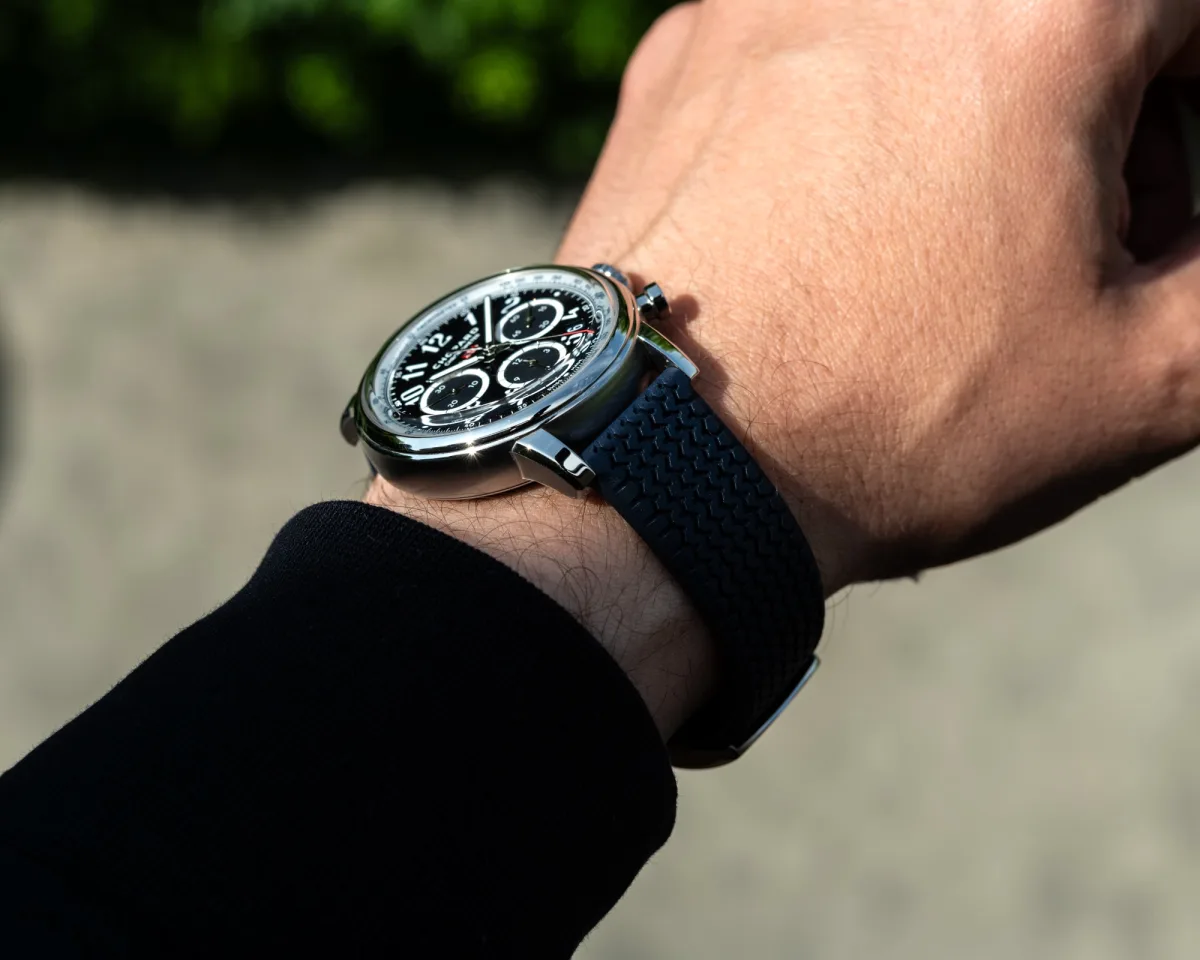
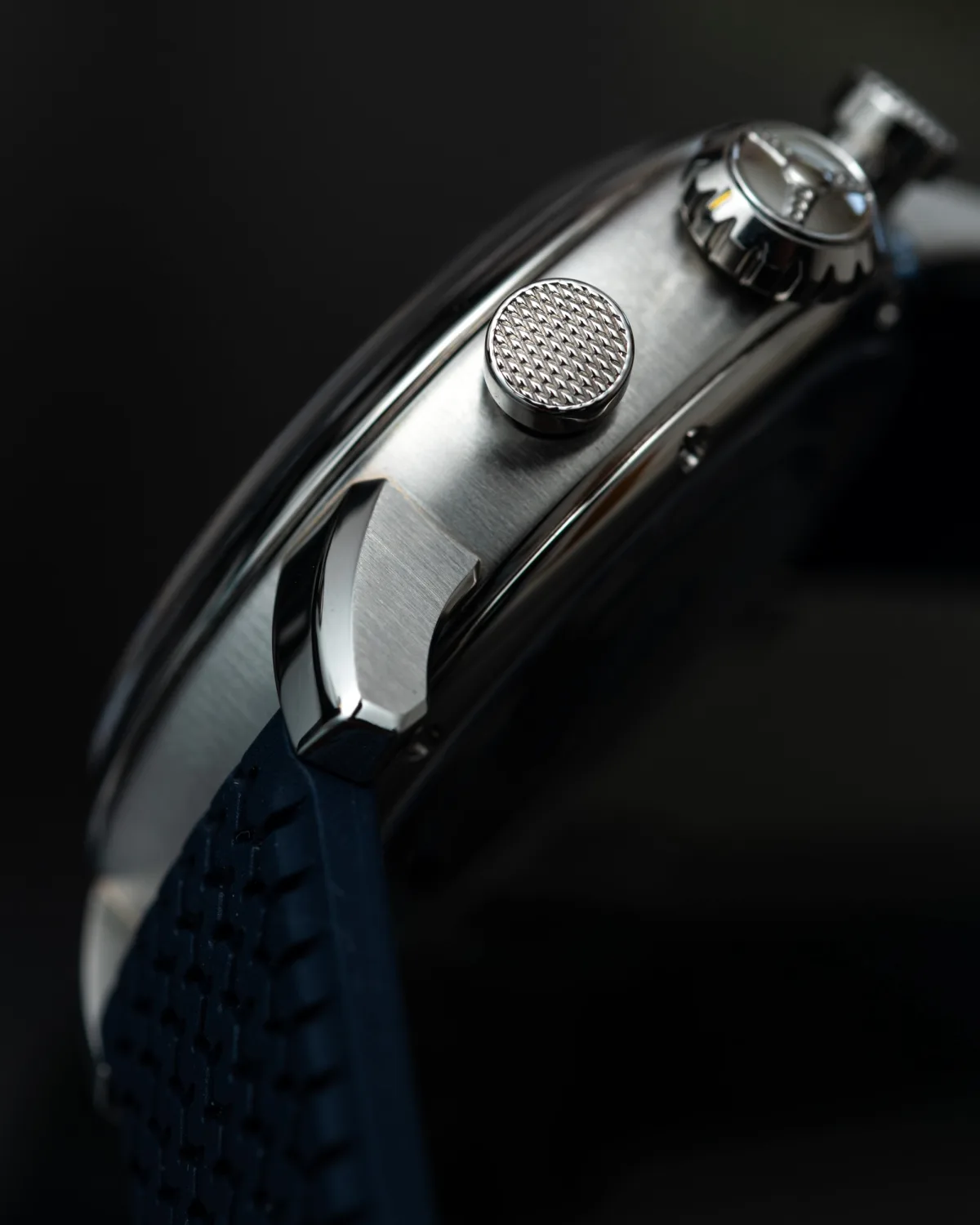
The result is a beautiful case that begs for a Lucent Steel bracelet - possibly at the price, too. At a width of 40.5 mm and a thickness of 12.88 mm, the Chopard Mille Miglia Classic Chronograph JX7 has reduced proportions that promise long-lasting appeal, even when the trend for large watches becomes a trend for small watches, and vice versa. Such a size, if it suits your wrist, will never go out of style. The lugs are beveled and polished around the perimeter, including on the case back side, as you can see in the photo above, which is a luxurious detail, yet lacking in many luxury watches. The profile of the lugs and case is vertically brushed, which is claimed to be more complex than horizontal brushing, and this may explain why the former variant is rarer.
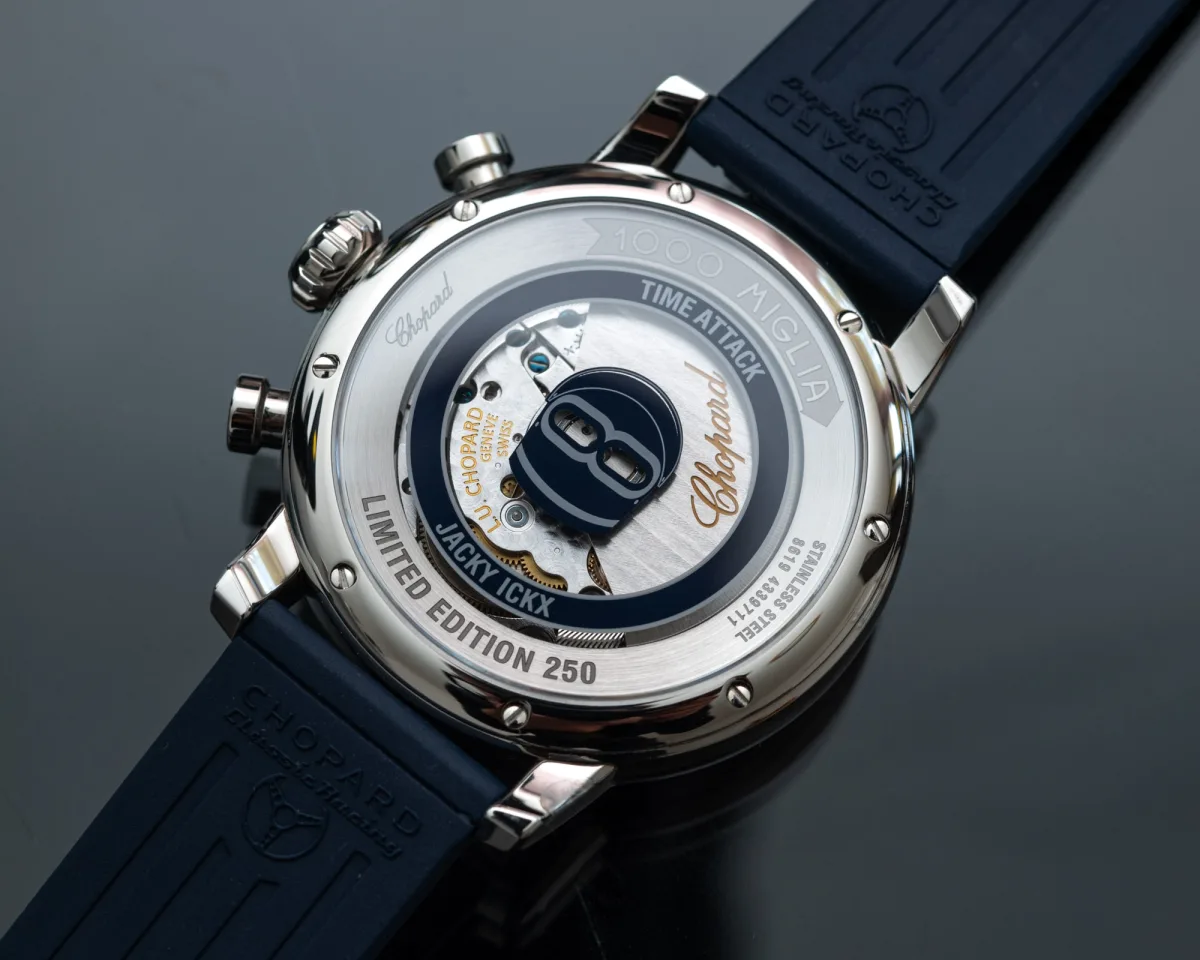
The case back reveals a movement very similar to the ETA 2894-2 until the "L.U. CHOPARD" text is discovered on a custom plate, which slightly mixes the situation. If you're a watch geek, you should know that the official caliber number on ETA and Sellita movements is engraved on the plate next to the balance wheel. Voila, there it is: A32211 and 2892 can be read there. A32211 is an exclusive Chopard movement based on 2894-2 with an important improvement - increased power reserve: from a measly 42 hours to 54 hours. Increasing the reserve to 60 hours over the weekend (from Friday evening to Monday morning) would be a desirable event, but a 12-hour increase is already a significant boost in comfort for those of us who hate when watches stop in less than two days.
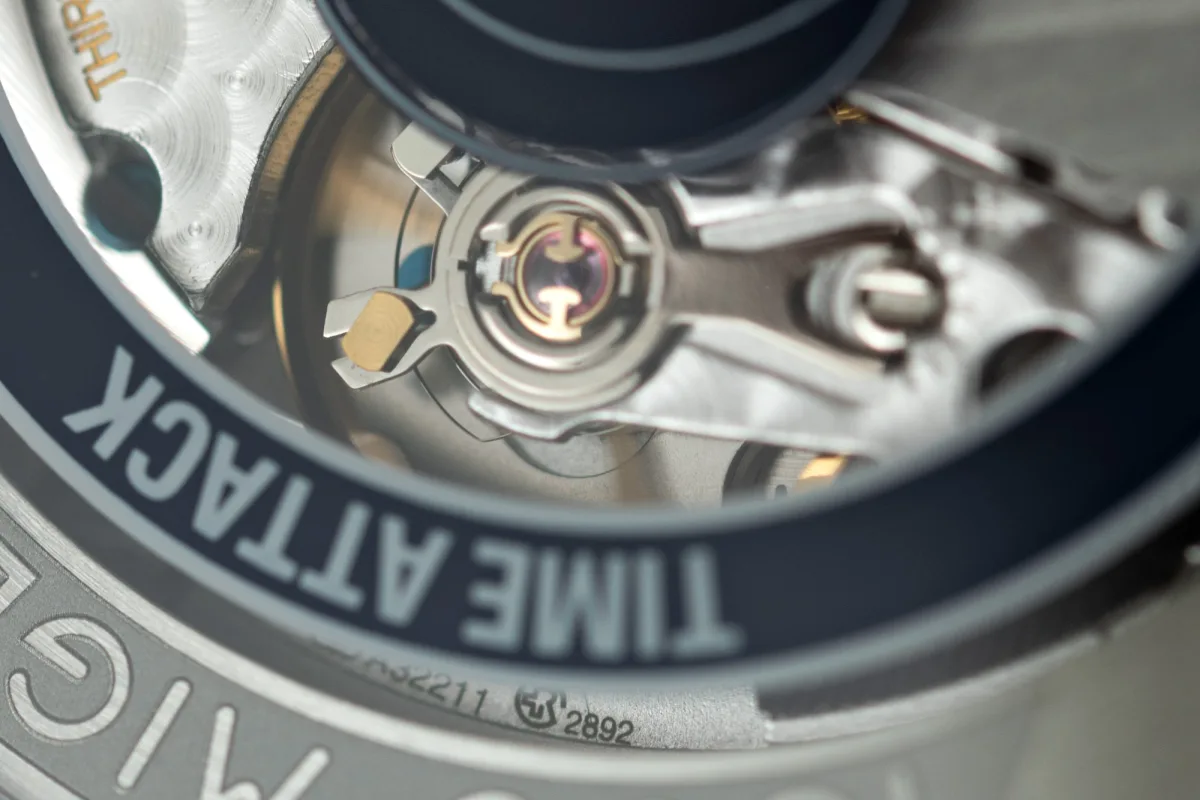
While I wish the L.U.Chopard name were reserved for elite, entirely in-house L.U.C. movements, the Chopard A32211 movement is a worthy choice for the Mille Miglia chronograph precisely because it is based on the 2894-2, one of the best-supplied (i.e., non-in-house) calibers. It offers bidirectional winding, is much thinner than the usual 7750, and its operation is nearly silent, as it lacks the dreadful noise produced by the 7750's winding system.
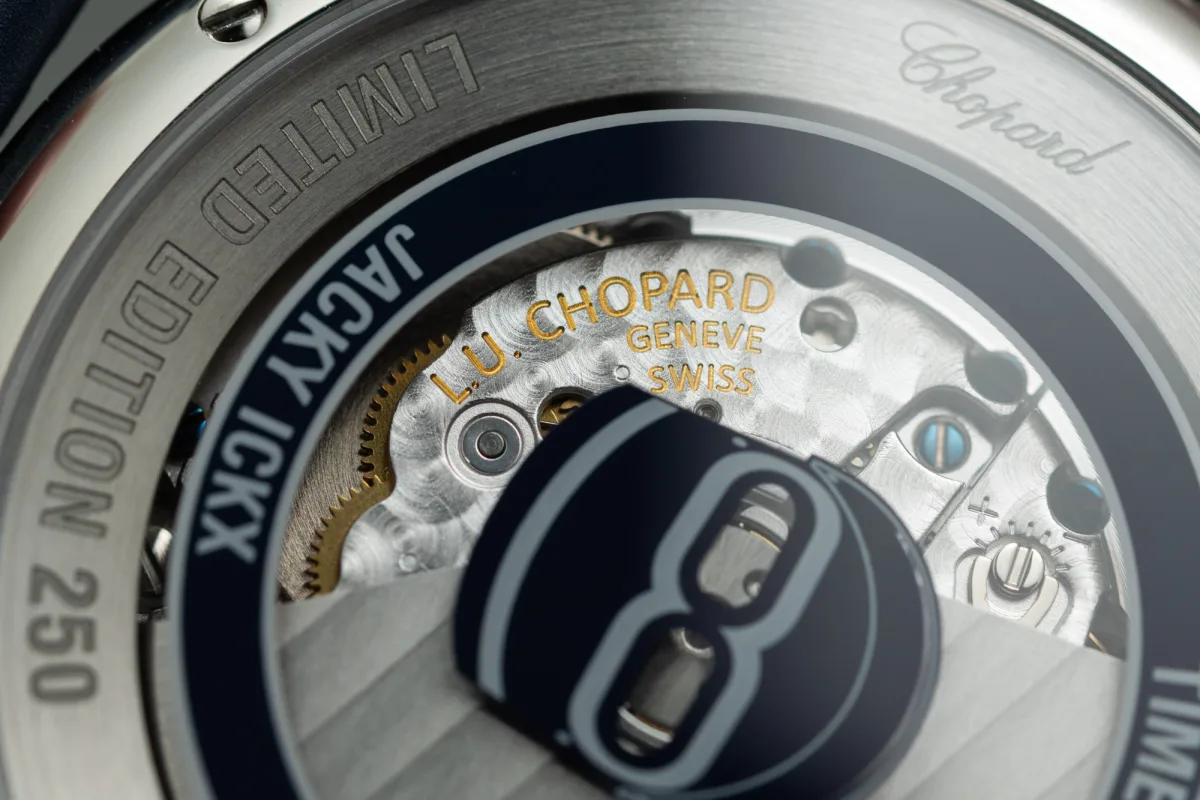
Chopard uses a top-grade movement with a more beautiful finish, some apparently custom-made plates, and COSC chronometer certification, as it should be, for such a price. Despite being a modular chronograph (the chronograph components created by Dubois-Depraz are mounted on the dial side of the movement), the date disc is still right on the dial, making it easy to read - while often it is several "floors" lower, mounted on the base movement, making it smaller and harder to read. Some Royal Oak chronographs with 3126/3840 calibers come to mind.
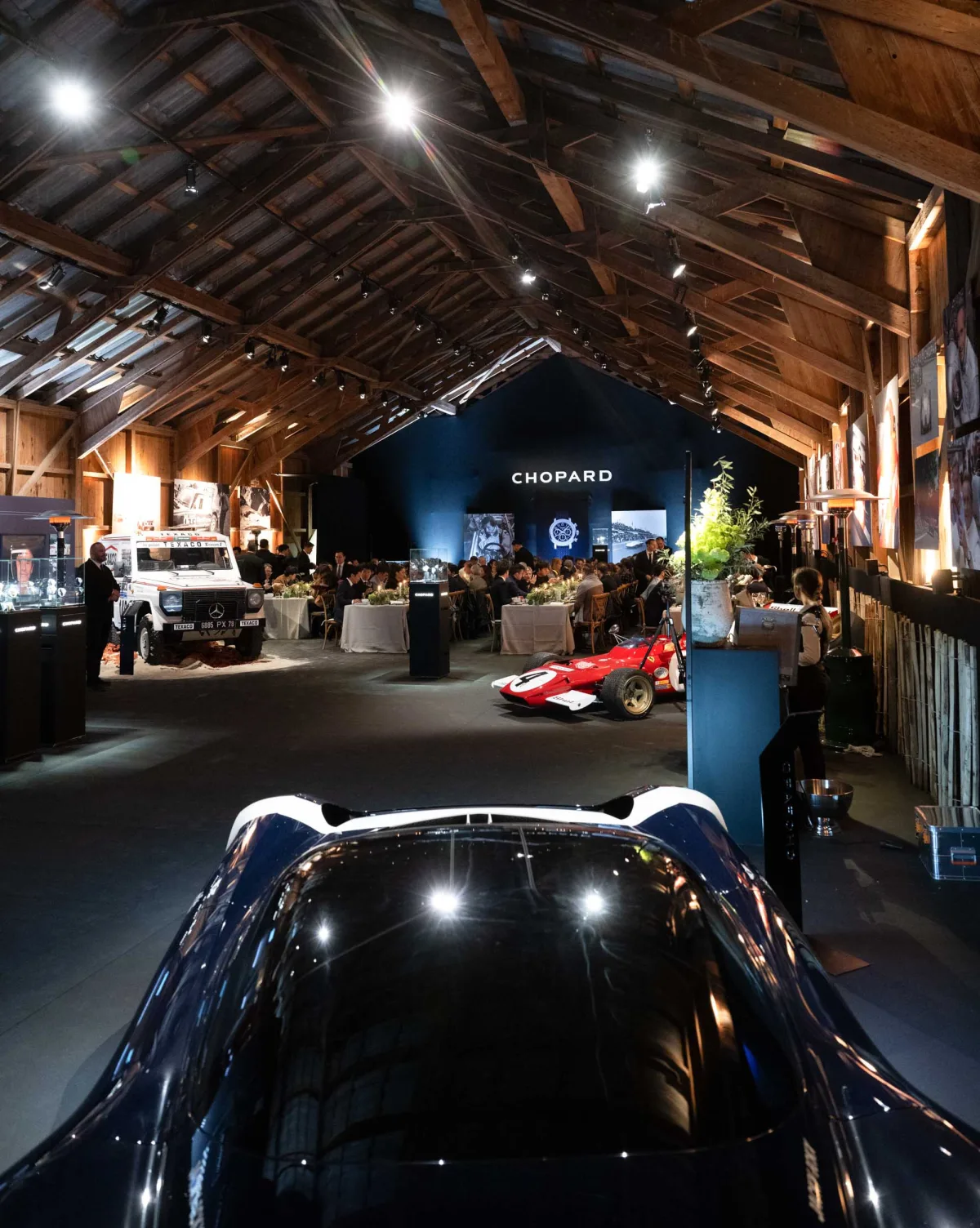

I hope Mr. Ickx won't be offended if I leave his introduction to the end of the article. A six-time Le Mans winner and the most successful endurance racer of the last century (perhaps the highest praise and most impressive title for any racer), he looks back on 14 years in Formula 1 and another 14 years in endurance racing.
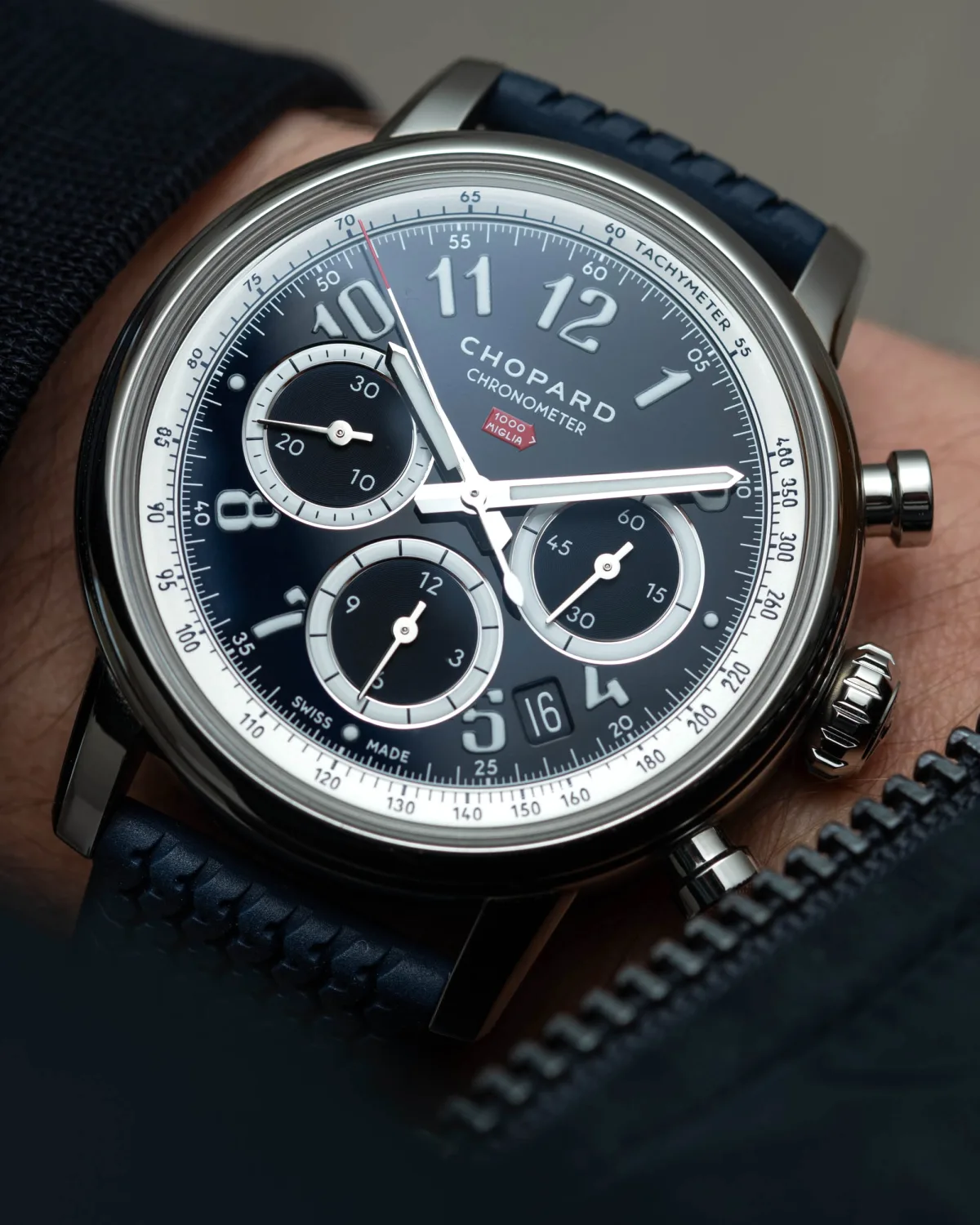
So, who are the updated and expensive Chopard Mille Miglia Classic Chronograph JX7 watches intended for? I think for those racing and car enthusiasts who can afford to surround themselves with beautifully made items in all areas of their lives. In the past decade, and especially in recent years, quite impressive efforts by Chopard to improve quality have become apparent in almost every collection of the brand, and not only in them, but also in its activities - acquiring its own production facilities for dials and cases.
As we have said before: The primary function of the Chopard Mille Miglia is to let it be known that you are primarily a car enthusiast and, perhaps, secondarily a watch enthusiast. Although these have always been well-made watches, with this updated Lucent Steel case and complex dial, it exudes a sense of quality that many non-watch people - with some powerful cars in their garage - can also easily distinguish and appreciate. Whether Chopard did the right thing by taking a course to a higher level not only in terms of quality but also price, time will tell... But it's not hard to imagine them being snapped up by wealthy car enthusiasts.
The Chopard Mille Miglia Classic Chronograph JX7 (reference 168619-3006) costs $10,300 and is limited to 250 pieces. Details can be found on the brand's website.