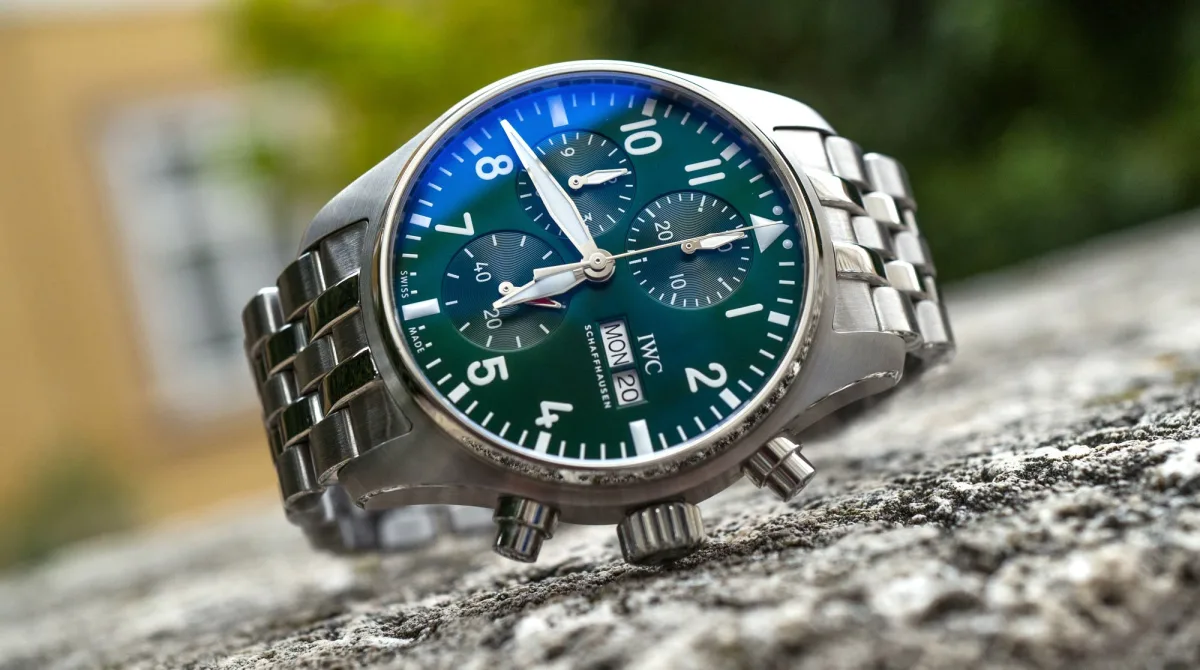
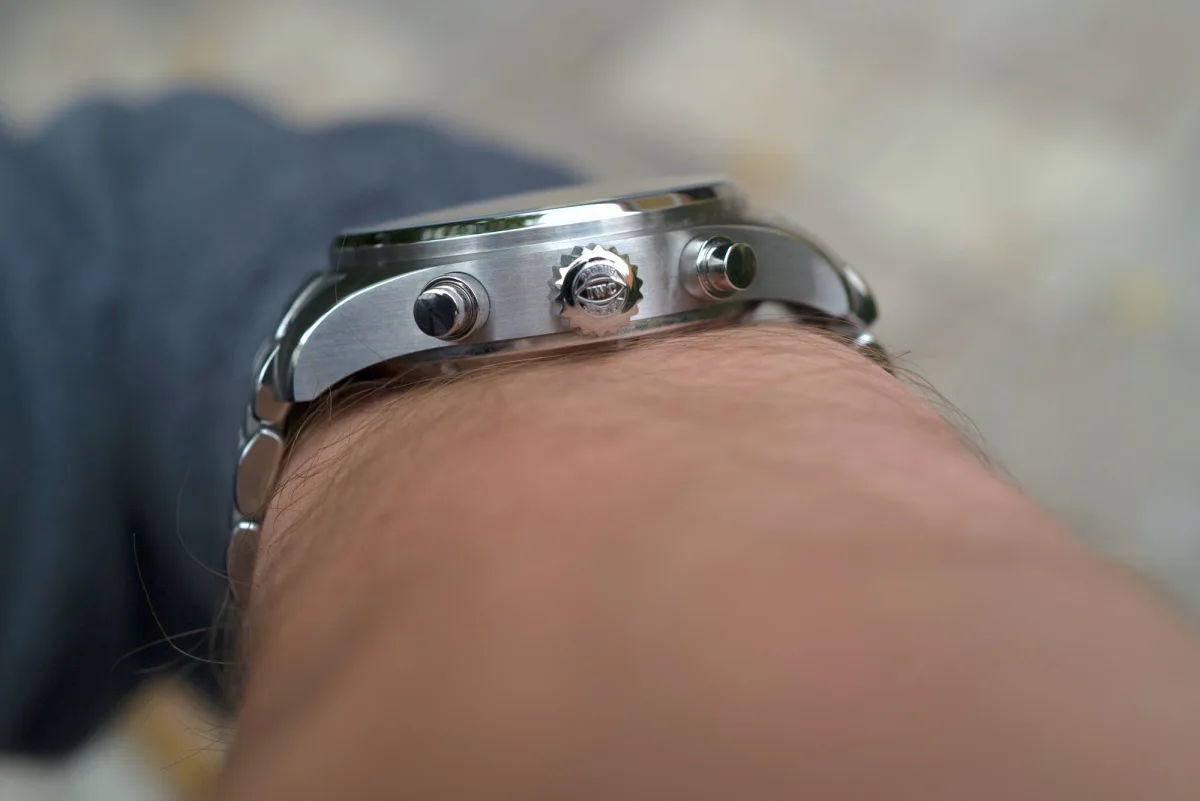
"A-class items from Schaffhausen." In loose translation, this is what Probus Scafusia, the motto of the watch company IWC Schaffhausen, means. It's hard to have any connection to IWC without a reminder of this motto - on the IWC Pilot’s Watch Chronograph 41 reviewed here, it is embossed on the winding crown. Considering this, let's now see how successfully this A-class mentality has transformed ideology into matter with the Pilot’s Watch Chronograph 41 model.
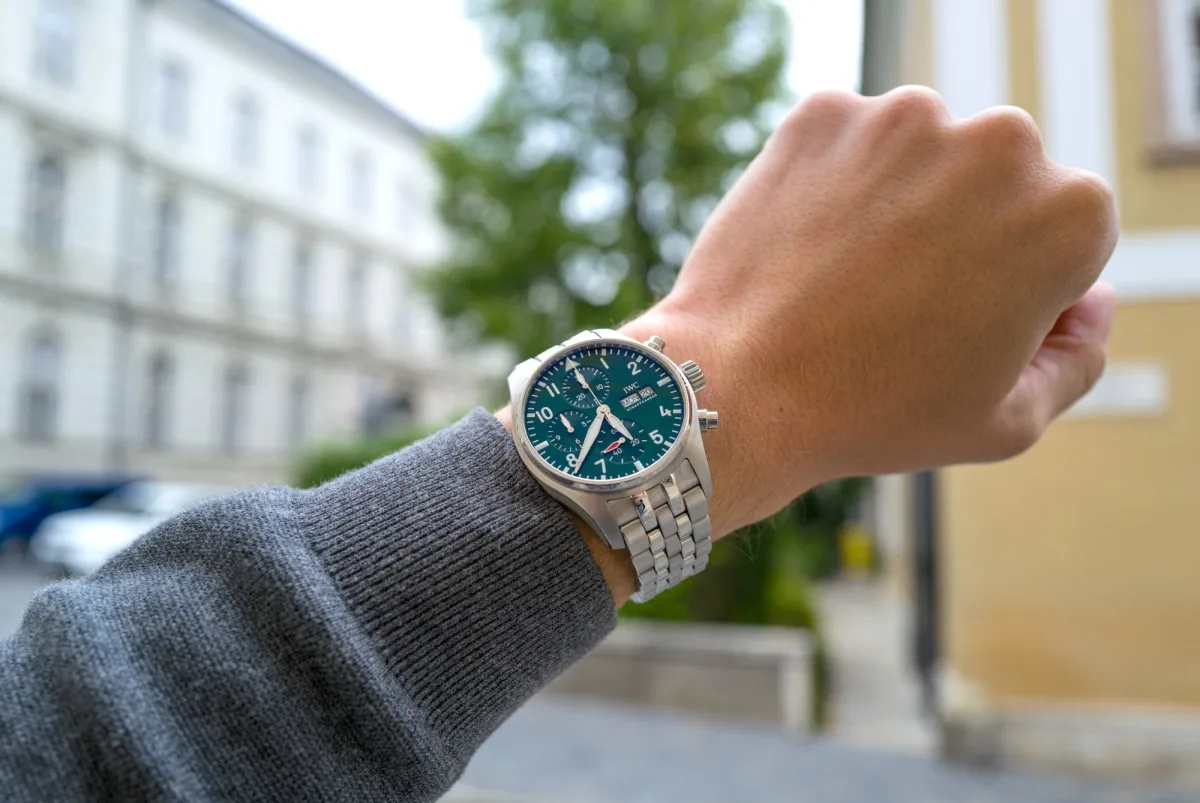
The number of elite watch brands currently offering more or less historically inspired pilot watches can be counted in dozens - but among the few who possess undeniable authenticity in this area is IWC. From fairly accurate interpretations of the early model 3705 to the almost parade-like Mark XVIII, to instantly recognizable perpetual calendars or chronographs like this one... IWC Pilot’s Watches seem to have always existed and are likely to continue to exist forever.
What goes into the recipe for such mass appeal? If I were to make an educated guess, I'd say the recipe certainly includes generous doses of high-contrast legibility, instant recognizability, and a playful approach to design and functionality. Whether this is good or bad is up to each person to decide, but the IWC Pilot’s Watch Chronograph 41 seems to have spiced it up a bit, deviating slightly from the original flavor. We will dwell on these more subjective elements in the conclusion, but first, let's conduct a proper review of the build quality, functionality, and value proposition.
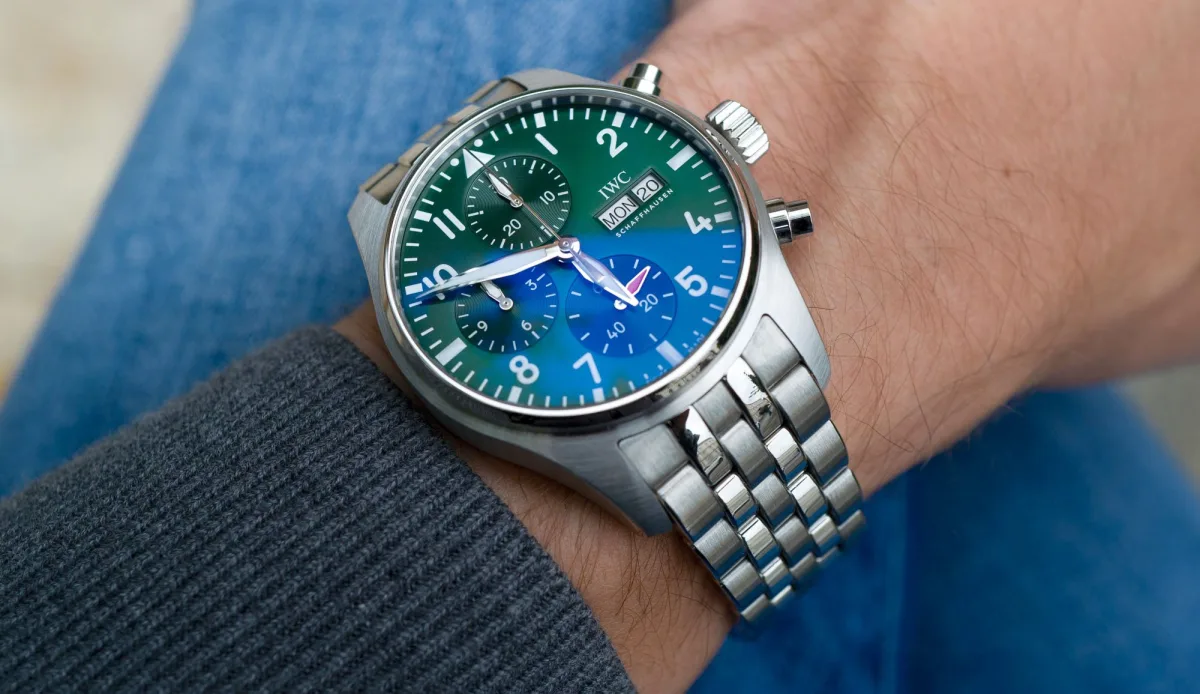
On paper, everything sounds as good as it gets: a 41mm case (right on trend), a full steel case, a five-link bracelet, a polished bezel, 100m WR, large pilot's watch hands, a green dial, and an in-house chronograph movement with a column wheel and a toggle. It's nice to see that IWC isn't waiting for everyone else to reinforce the ongoing trend of reducing case sizes. We've been saying for years that this would come - and it's happening faster than we expected. While the Big Pilot remains a 45mm beast of a watch instantly recognizable on celebrities, athletes, and actors from a mile away, the 41mm version will prove much more wearable for many of us with narrower wrists, looking for something to wear comfortably not only in the spotlight but on a daily basis, year after year.
Even better, when the watch is viewed up close, held in hand, individual components seem to have been designed and manufactured with "Probus Scafusia" in mind: everything feels solid as a rock, down to the hilariously named EasX-CHANGE tool-free strap changing system. More on this later. The full steel construction is complemented by a few limited options in bronze and black ceramic, but it's easy to imagine that steel versions will outshine other options.
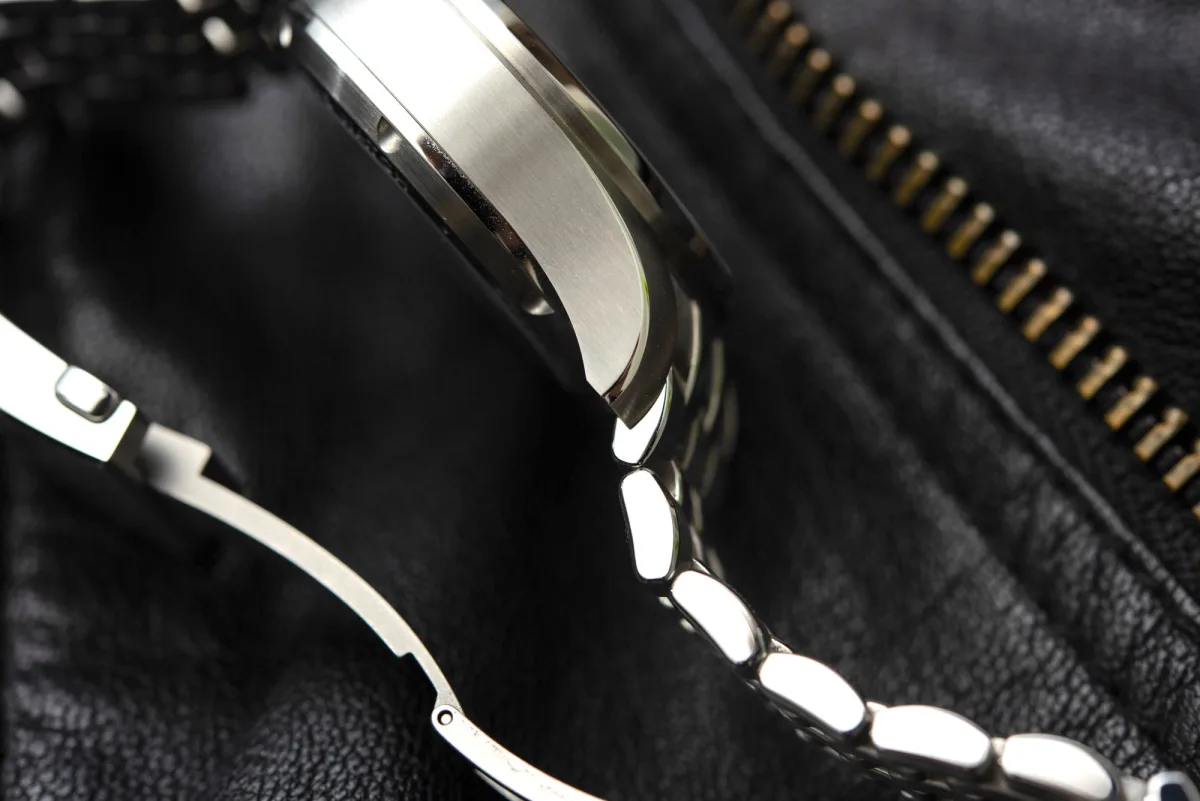
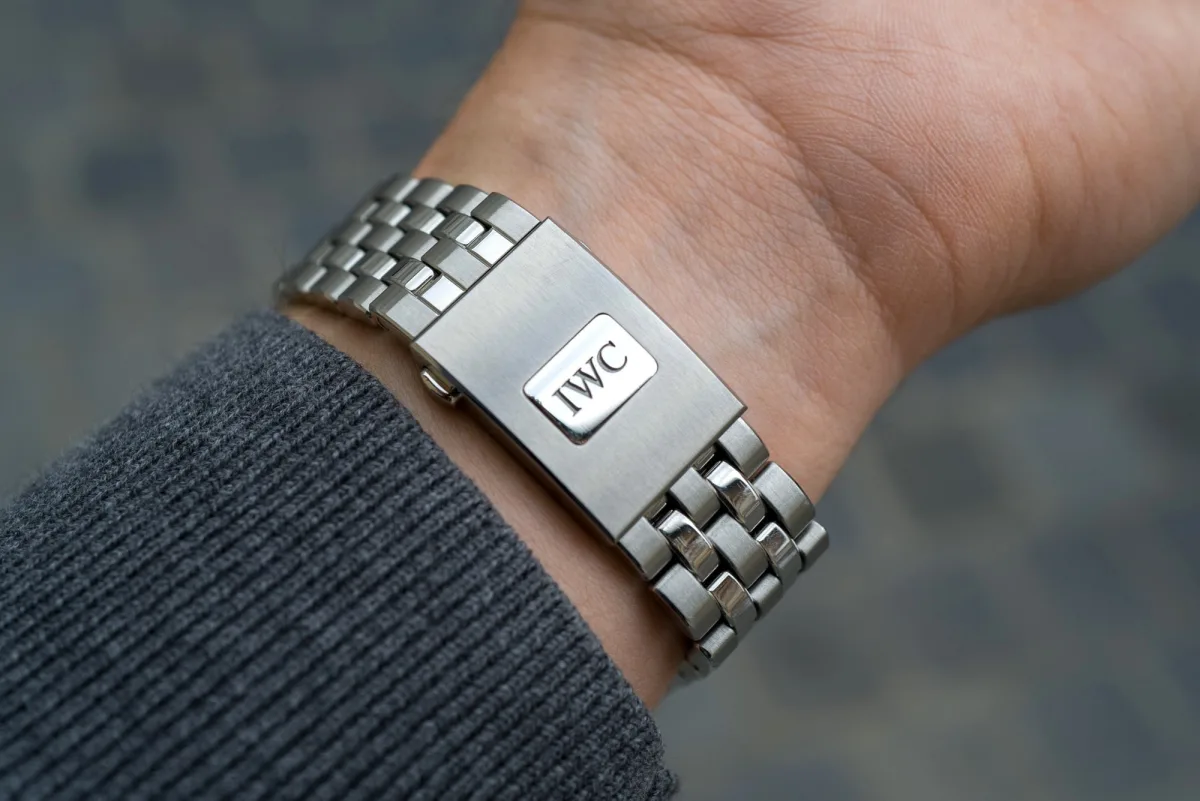
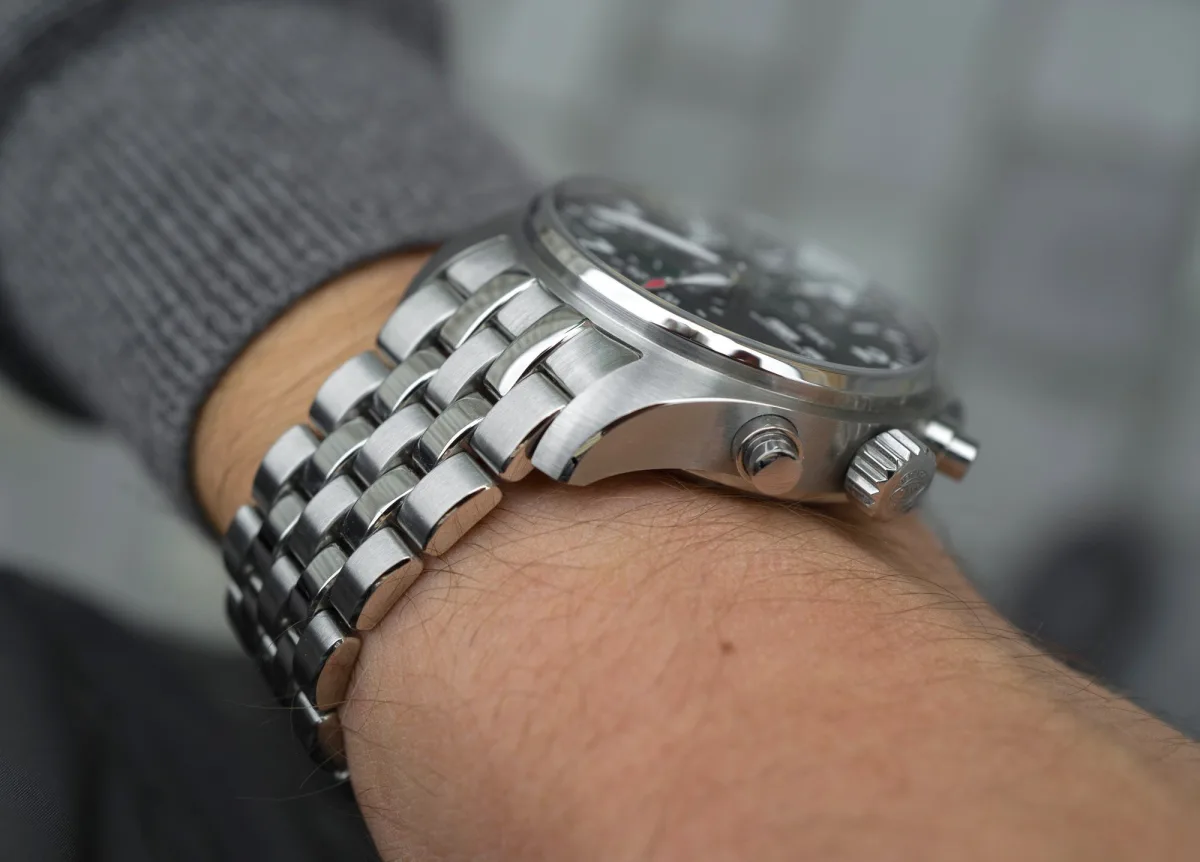
The five-link bracelet, although official IWC images don't illustrate this too well, is beautifully finished with alternating links: the narrower second and fourth rows of links have a high polish, while the odd-numbered links are matte, with top-level finishing on their outer sides, all beautifully polished by hand. The same can be said for the top of the lugs and the side profile of the case: all are matte, with a subtle polished bevel that widens towards the tip of the lugs - an amazingly intricate detail that stands out in the sea of depressingly bland steel cases of elite watches in the under $10,000 segment.
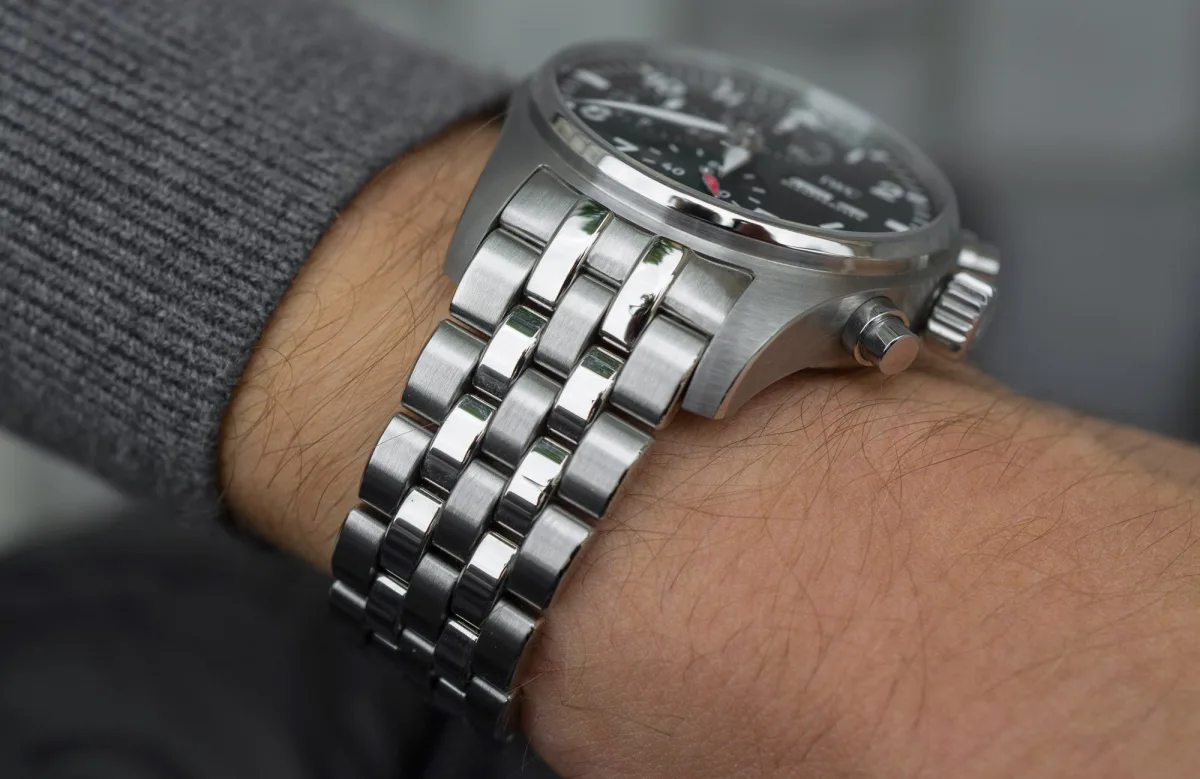
What is not so good - and this is putting it mildly (something that has bothered me since I first saw this model quite a while ago) - is the mismatch between the finish of the lugs and the end links. When looking at the watch, the top of the lugs has a circular matte finish that more or less repeats the curvature of the bezel. This in itself isn't too pleasant for the mind; it just doesn't look as elegant as vertical brushing on the lugs. However, the real aesthetic hindrance is that the first, third, and fifth bracelet links have a vertical finish, so the vertical lines merge with the circular finish on the top of the lugs.
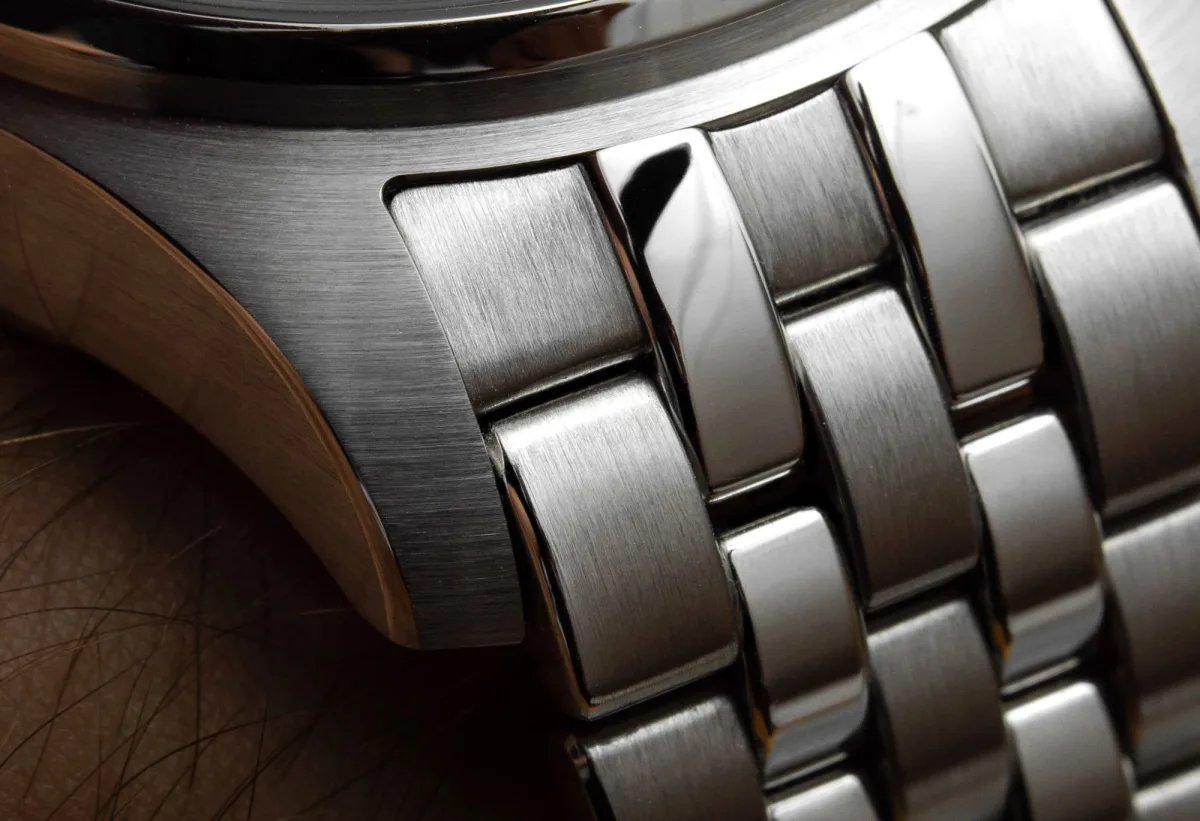
I imagine that for the overwhelming majority of watch enthusiasts, this is completely unimportant, but in my view, it either makes the bracelet a failure or the case finish too simplistic. It's still much better than the ultra-low-grade "satin" finish, a mishmash of nothing, which many luxury brands have widely applied to their luxury watches... But still, the mismatch of directions in surface treatment would be easier to accept if the price tag of $7,200 didn't have a zero at the end.
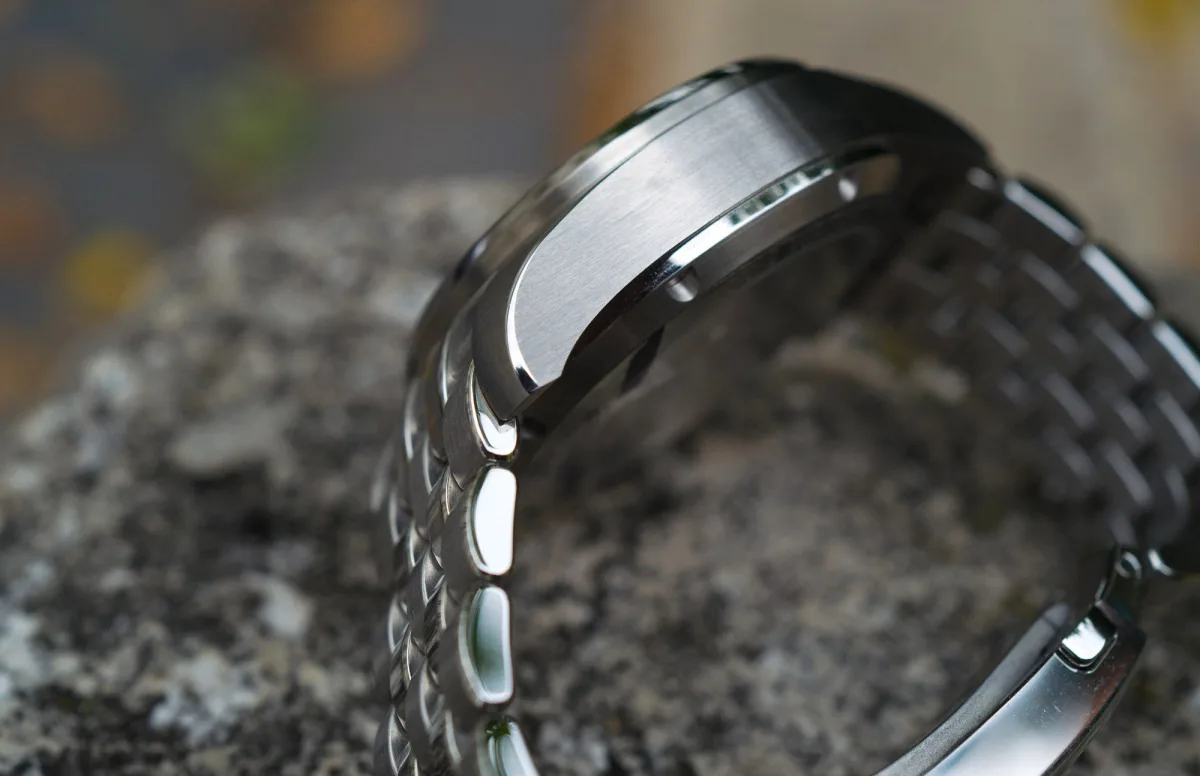
It's all the more frustrating because the bracelet itself is beautifully finished - one of the best in this segment in terms of intricacy - and comfortable. Generally speaking, bracelets with smaller links tend to be more comfortable as they more willingly conform to the shape of the wrist. I also experienced no hair pulling. The clasp follows their example and is neatly executed: the icing on the cake is really the integrated micro-adjuster, which is so elegantly disguised as the polished IWC logo. Press this rectangular button, and the ratchet system provides generous adjustment. What is not so convenient is pressing the bracelet back to the ratchet with one hand when the wrist contracts, but that's a very small price to pay for the superior comfort provided by this substantial on-the-go adjustment. Furthermore, there is the EasX-CHANGE quick strap change system, massive and beautifully made, integrated into the bottom of the end link.
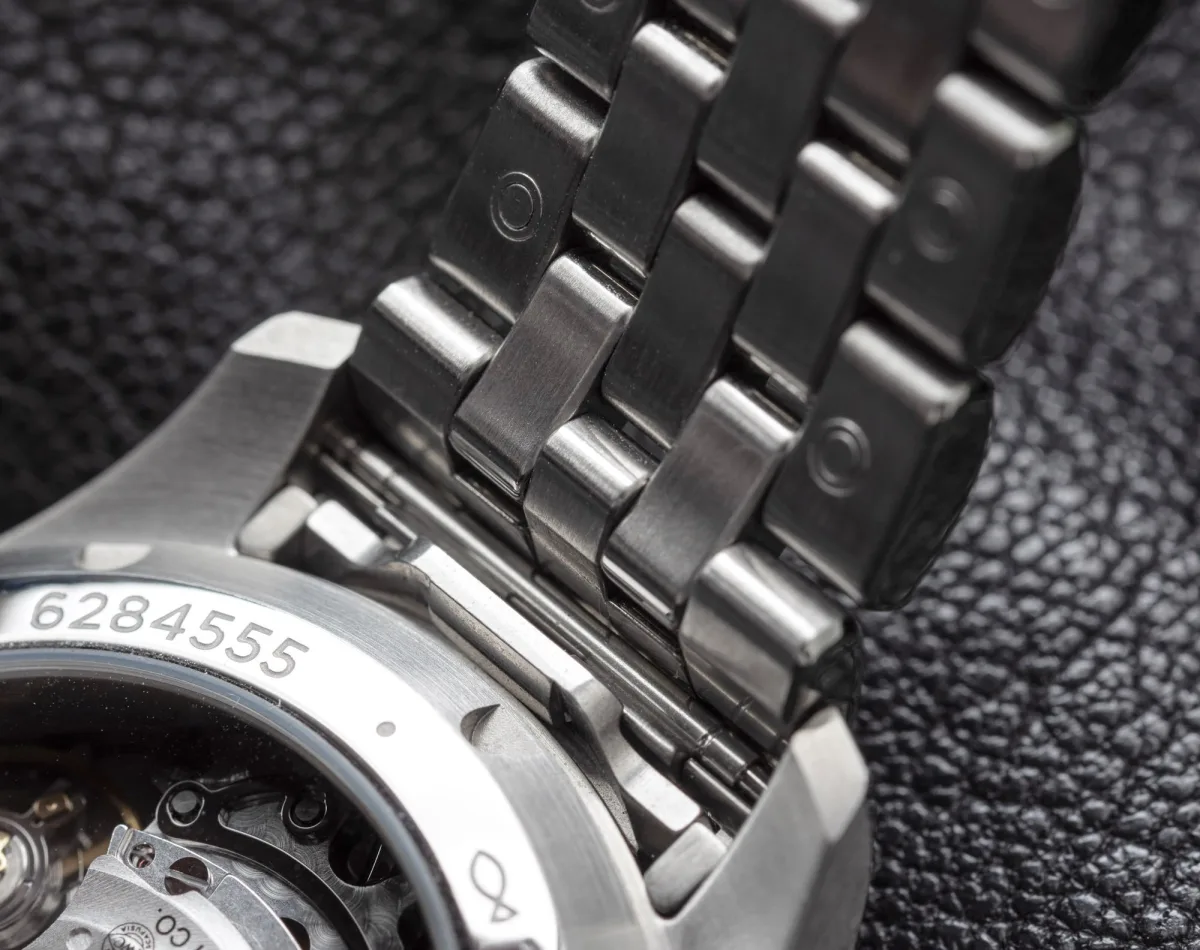
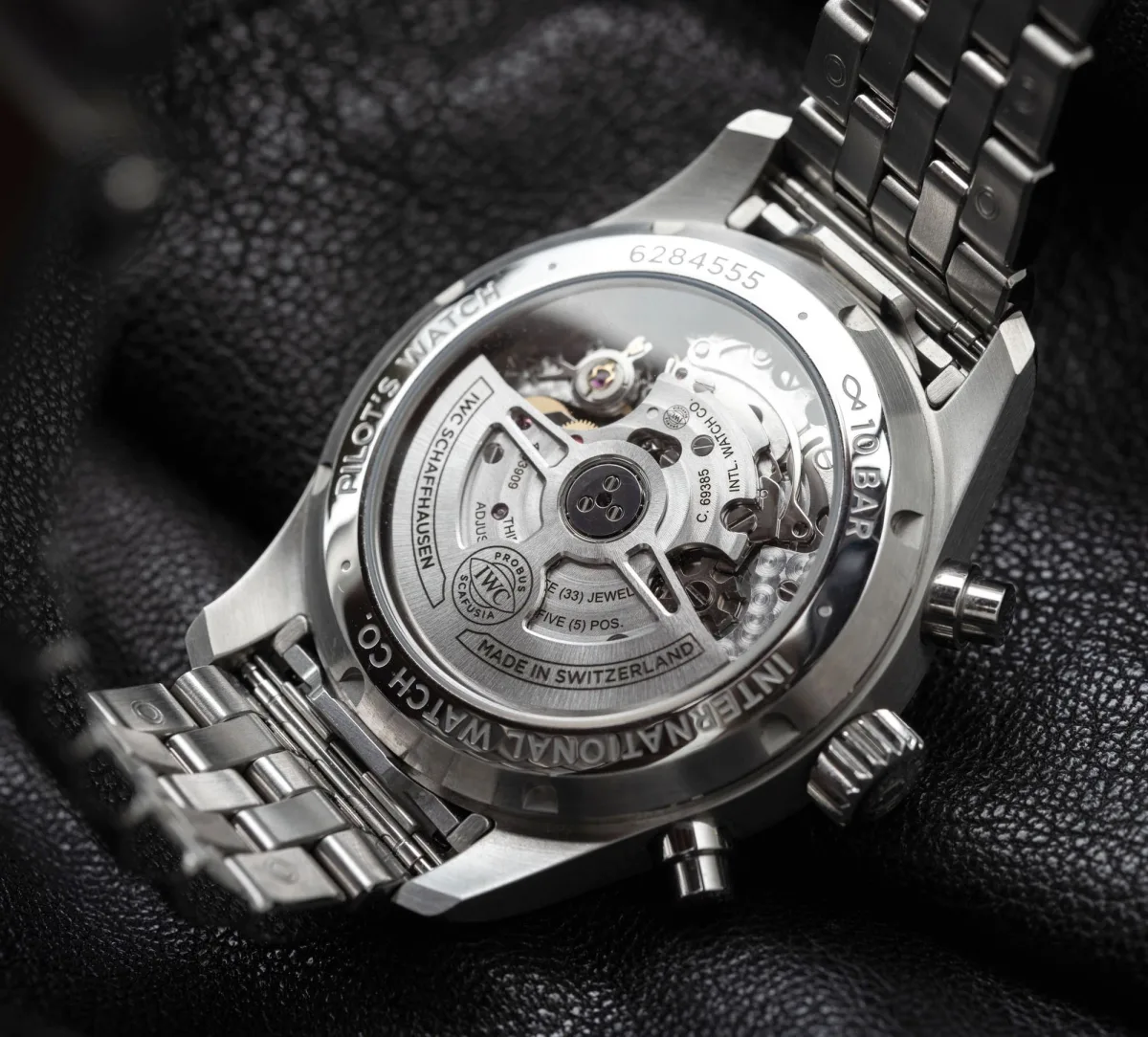
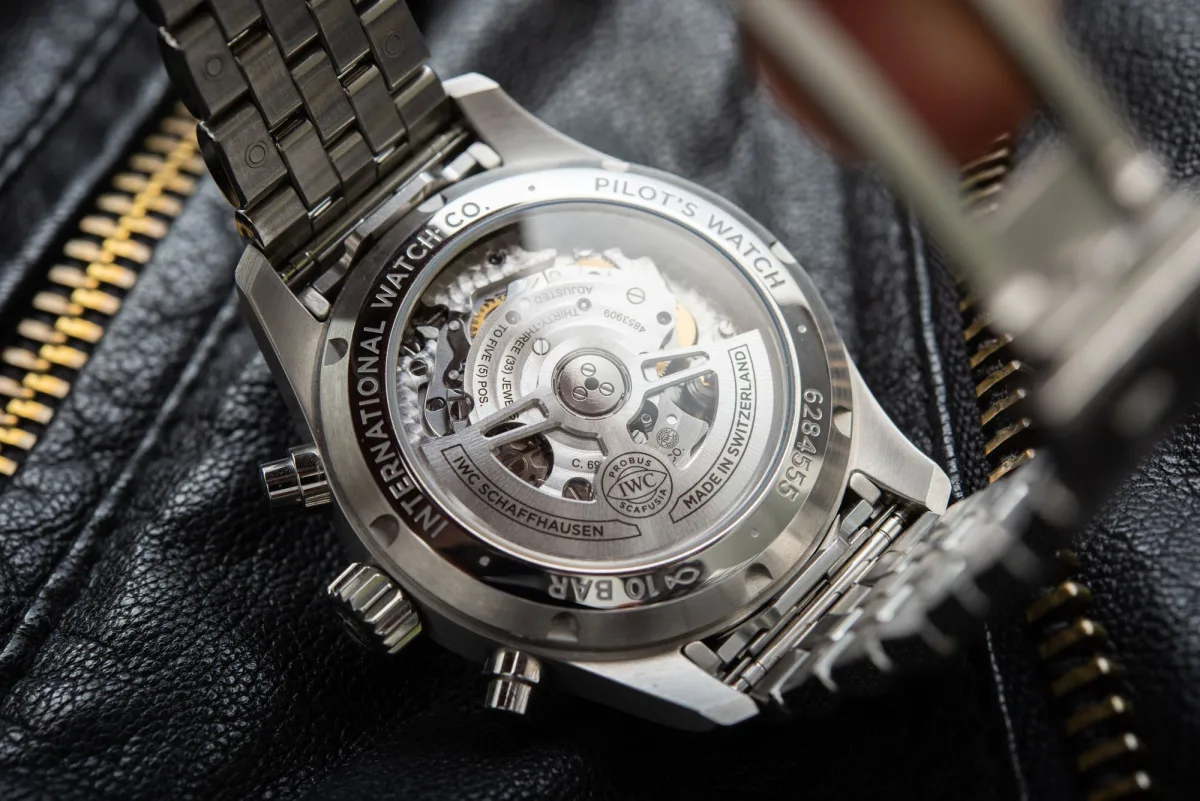
As we've already established, the case is beautifully finished. The case back features the 100m WR designation along with a fish symbol - returned after a trademark battle with Swiss federal authorities. Up front, the case ends with a thin but neat beveled bezel, completely polished. The legality of polished elements on pilot watches can be debated, as pilot watches typically have a matte finish to prevent dazzling their owner above the clouds where the sun always shines.
For us mortals, living our lives on the ground rather than in fighter jet cockpits, the not-too-showy light show put on by these polished elements is, frankly, often preferable to the dullness of matte steel. Thus, the IWC Pilot’s Watch Chronograph 41 looks expensive and stunning under direct sunlight - if only they didn't have that mismatched end link treatment. Do!
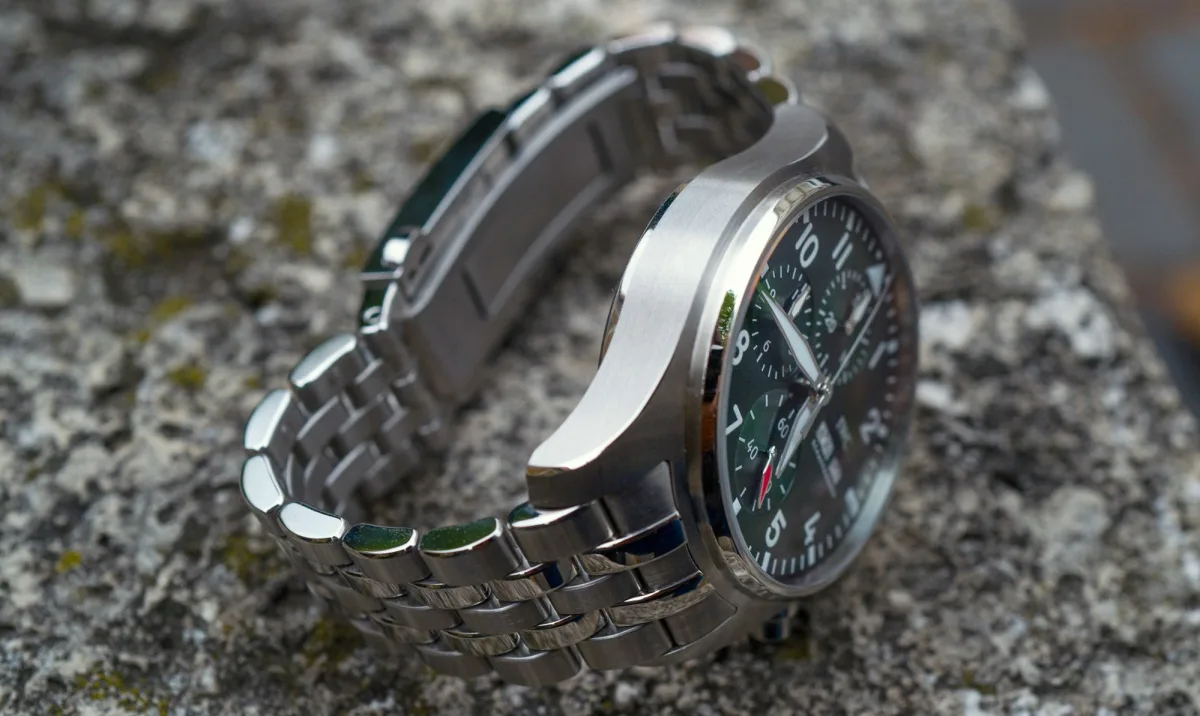
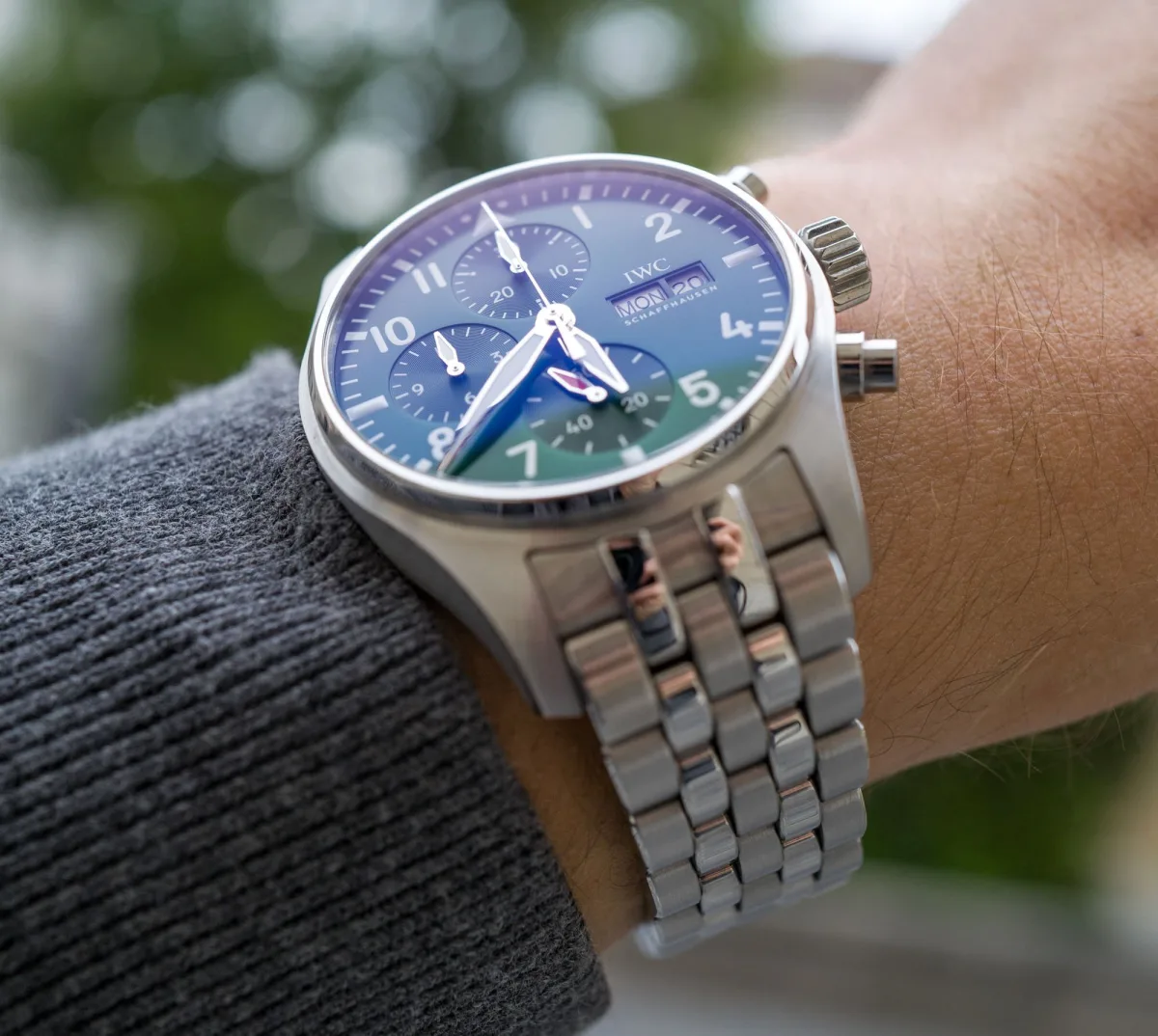
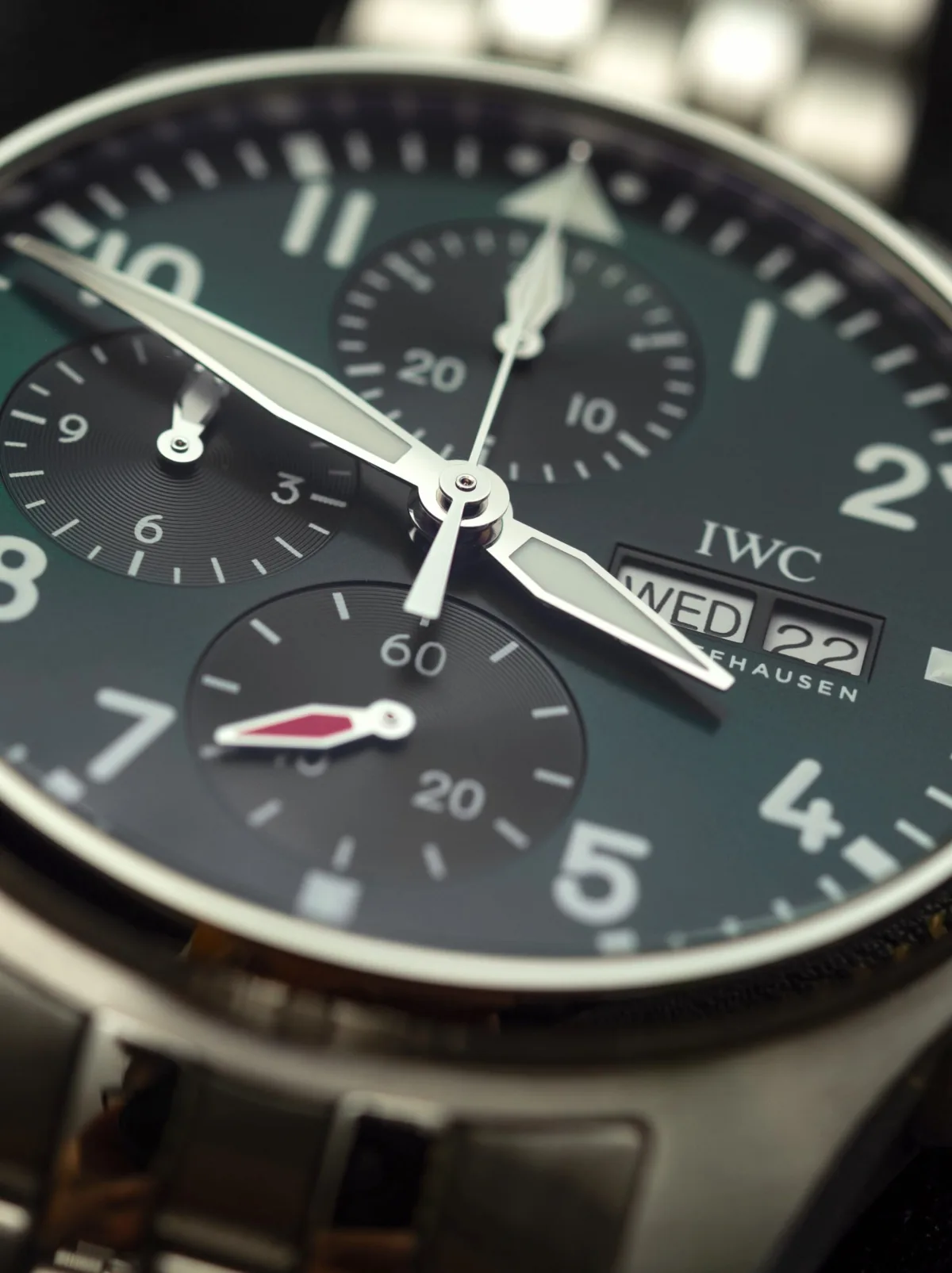
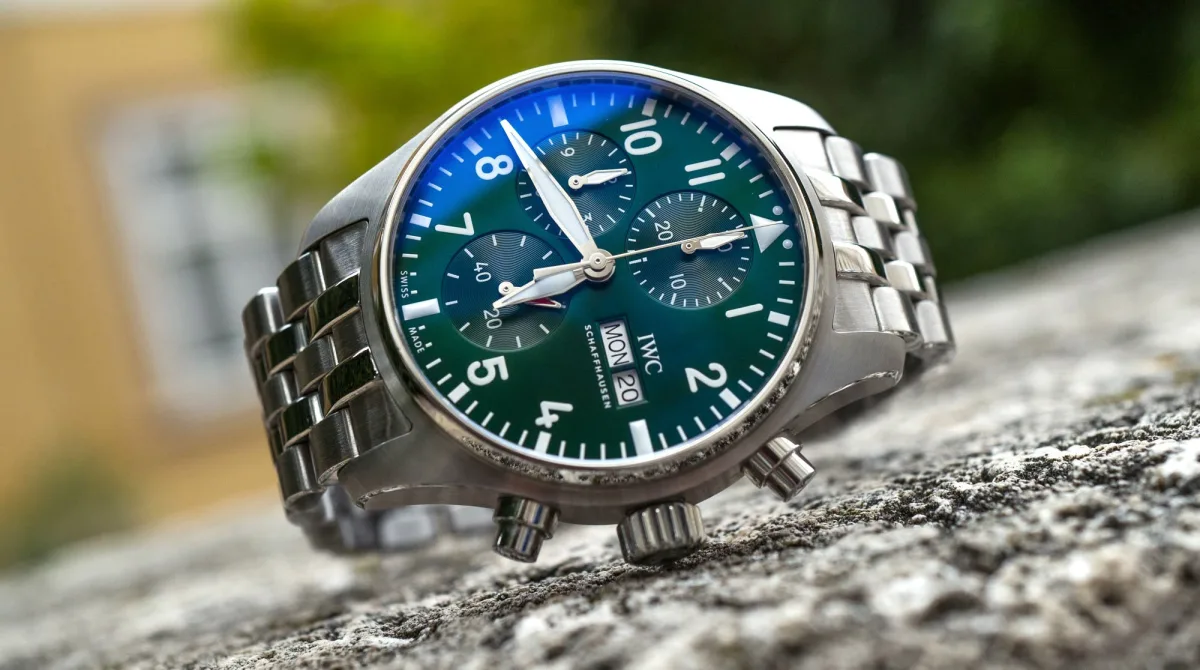
Blue is the new black, and green is the new blue. Yes, we all already know that green dials have become fashionable lately - and it's an irony of fate, as just a few years ago in some parts of the world, Rolex dealers couldn't give away gold Daytonas with green dials. But here we are, with black turned to blue, and blue turned to green. Nevertheless, the green on this IWC reference IW388104 just doesn't feel that special. It's simply green. It's intricately produced with a sunburst pattern on the large dial and radial grooves in the sub-dials - but the overall effect lacks the pizzazz that comes from matte green dials of Panerai or the outrageous beauty of Grand Seiko dials.
Another minute detail that will infuriate "form follows function" maniacs is the orange-red running seconds hand. This color simply doesn't go with the green background and is used to highlight perhaps the most useless and uninteresting function of this chronograph. It just looks odd, this orange ball (which looks red when the blue anti-reflective coating kicks in) at the "6 o'clock" position with no connection to other design elements or functions of the watch. The color scheme can be very fitting, but in this case, I would have preferred a white or black hand instead.
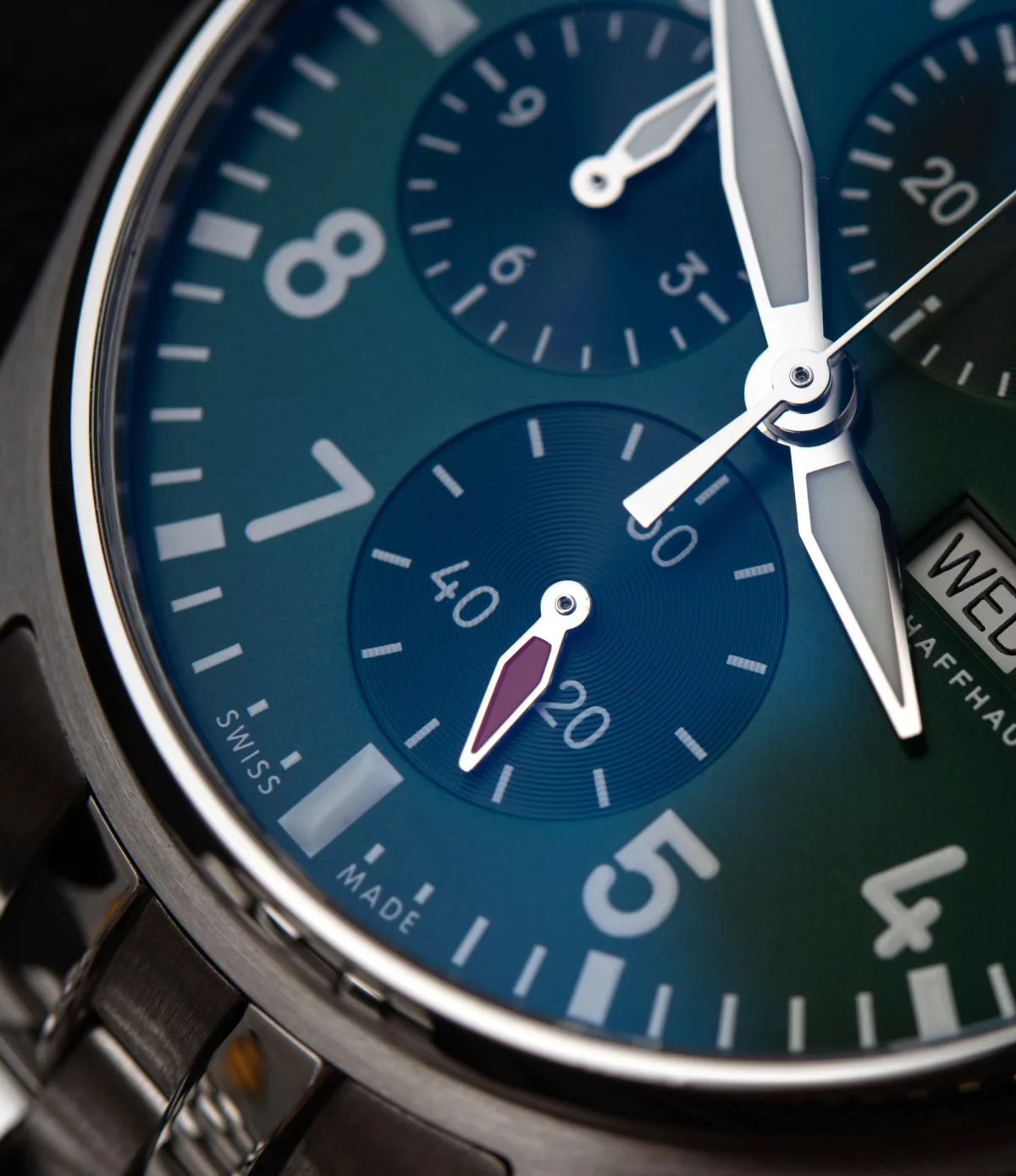
Speaking of anti-reflective coating (AR coating for short), it gives a blue tint to the sapphire crystal. It so happened that in one hand I had the IWC Pilot’s Watch Chronograph 41, and in the other, a Corum Admiral’s Cup. Full disclosure - the latter had a tourbillon, but this shouldn't matter for what I'm about to say. The Corum crystal had such a perfect AR coating that I actually pressed my finger against it to make sure it was there. Conversely, in exactly the same conditions, the Pilot’s Watch had a bluish tint. Seeing literally crystal-clear front glass and blue side by side convincingly demonstrated why the industry (and especially luxury brands) should be much more interested in upgrading these shortcomings. And the blue reflections on the green dial - at best it's a strange sight, but it's precisely what you'll see every time you find yourself in bright surroundings.
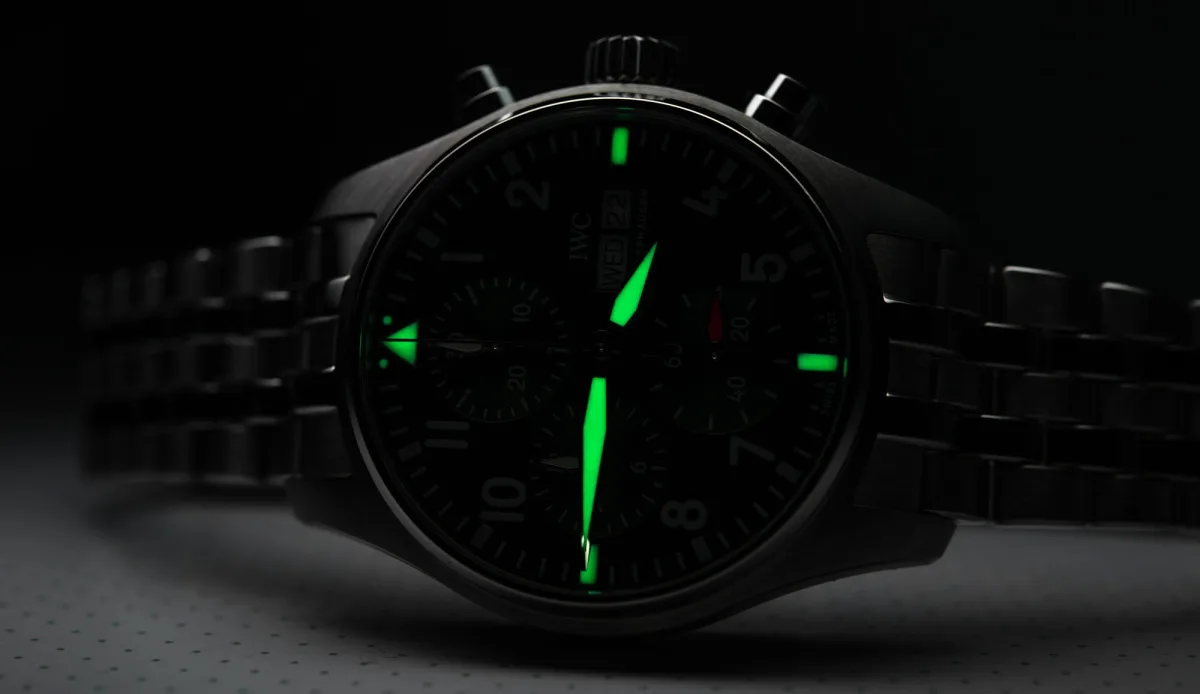
The last oddity, which again points to some departure from targeted design, is the application of luminescent paint - or lack thereof. The only luminescent elements are the main hands and markers at 12, 3, 6, and 9 o'clock, which causes much more puzzlement than the presence of polished elements on the case and bracelet. I know this isn't new to the collection, but still, it's worth mentioning. While we probably all like to dream about being pilots with negative G, we're ready to trade some functionality in battle for design and sheer beauty.
However, I don't see the point in trading readability in low light for a cool design, even for us wingless earthlings. It really makes it harder to tell the time, which is all the more annoying when there's no visible difference between the luminescent and non-luminescent indices when viewed during the day. During the day, they all look the same - but only some of them glow in the dark. Please don't tell me this is done to keep the watch unnoticed during night missions over the Persian Gulf in your General Dynamics F-16 Fighting Falcon, or I'll pull the ejection handle for you.
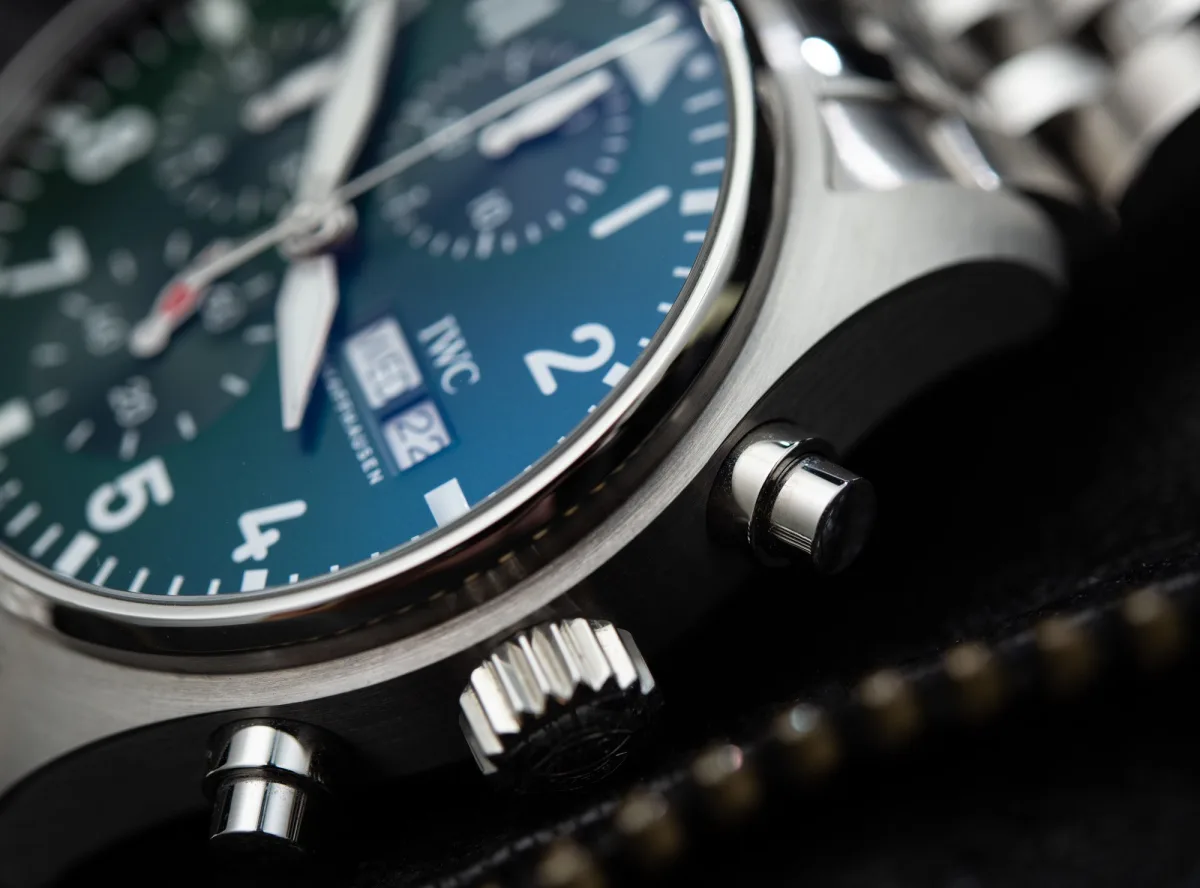
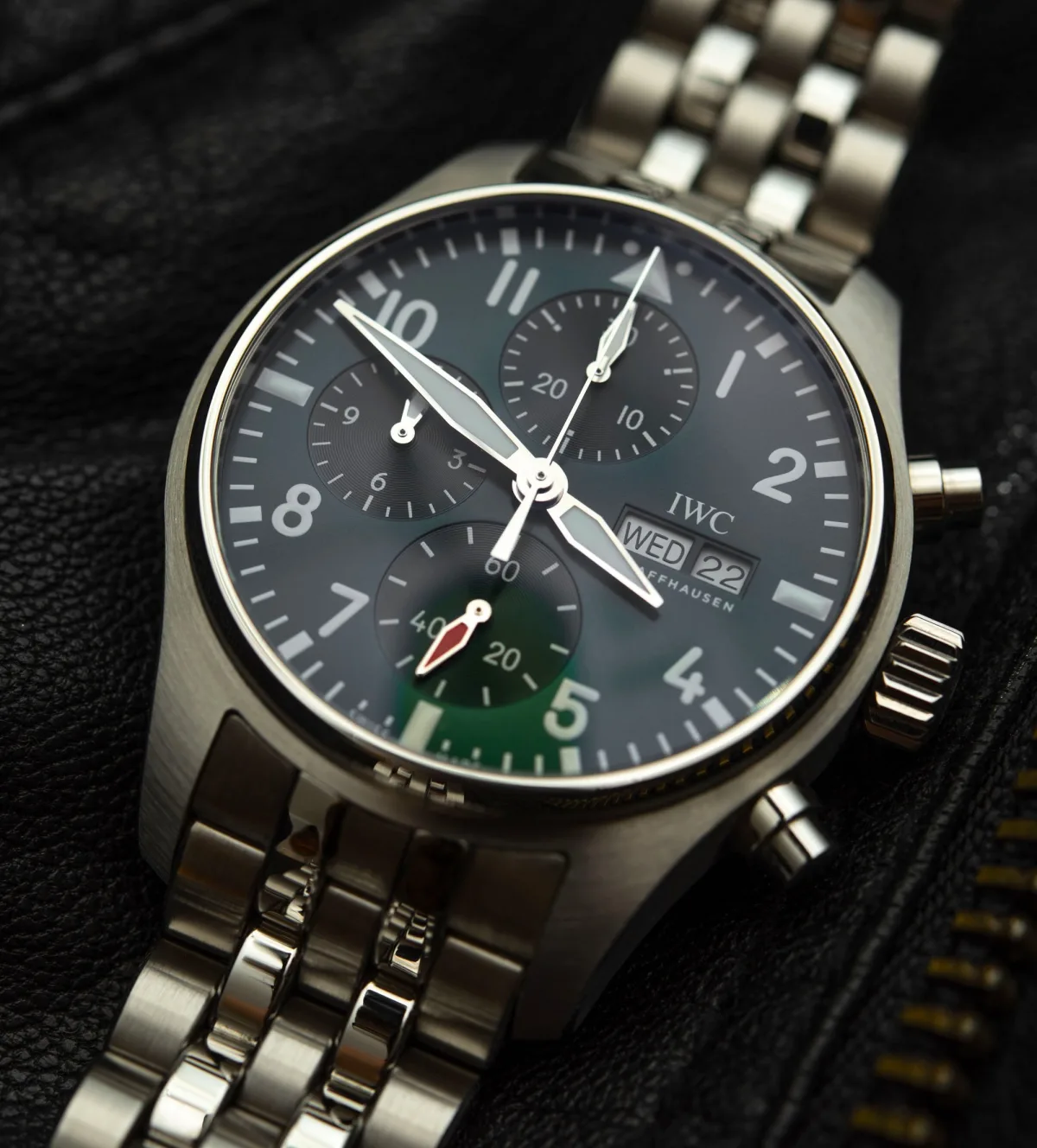
Daytime legibility is excellent, and these large hands look just chic both up close and from afar - by "afar" I mean from across a restaurant. The curved numerals are also an acquired taste, as they look rather primitive and unlike those likely more commonly associated with cockpit instruments and pilot watches in general. But they have been used in IWC Pilot’s Watches for some time, and they certainly help shed the pilot's penchant and bring this model closer to everyday wear in terms of aesthetics.
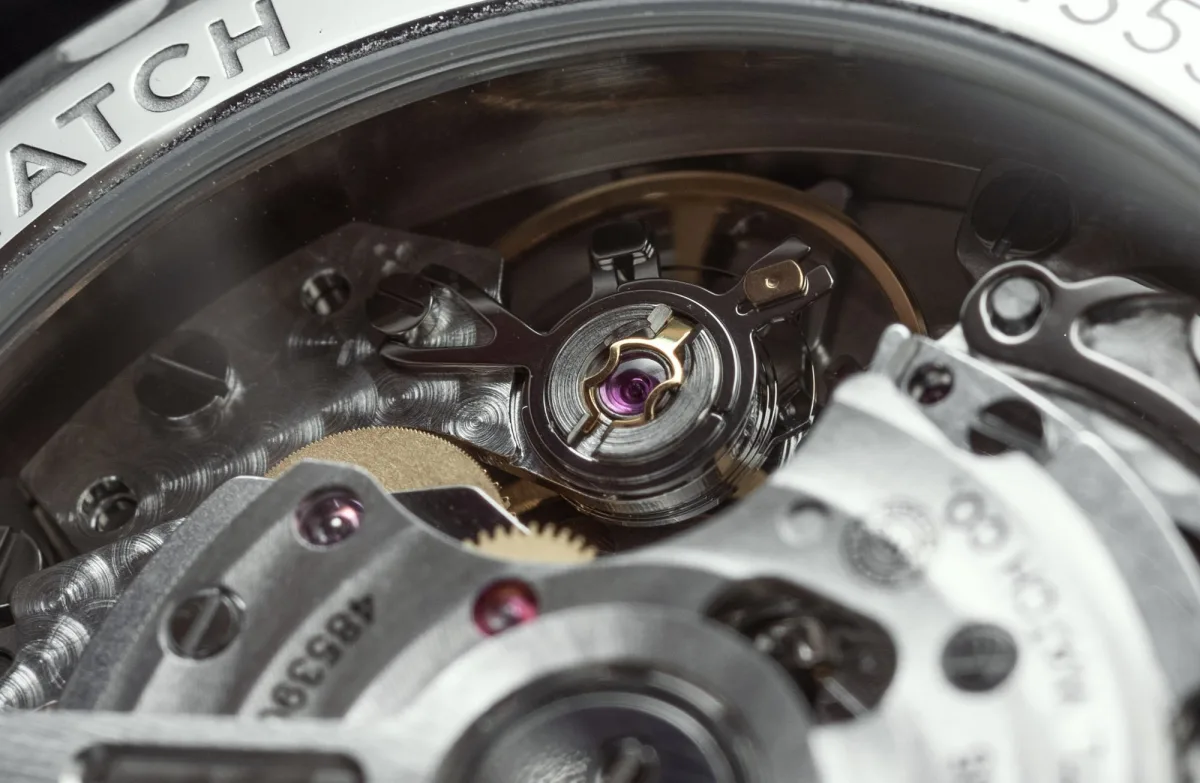
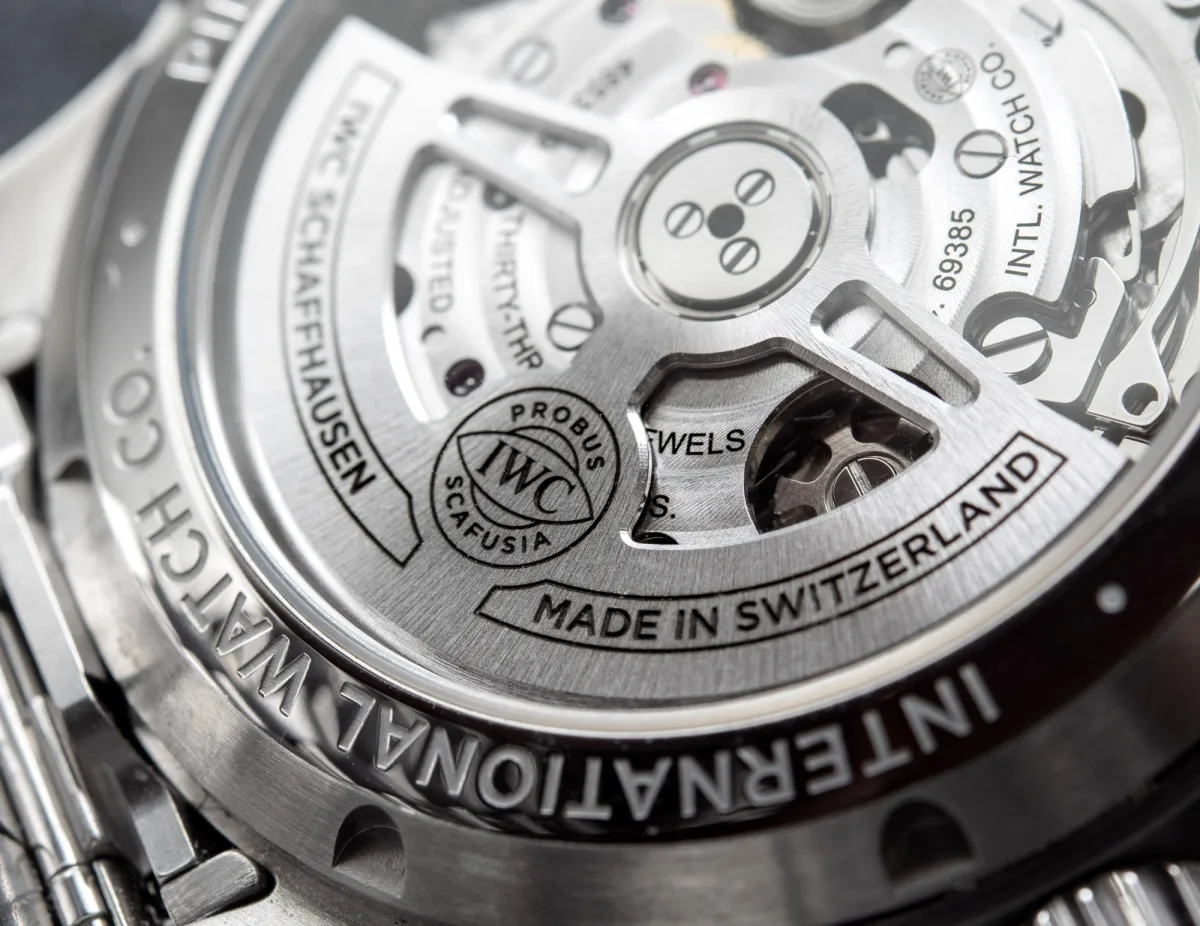
The movement is revealed through the transparent case back: this is the "IWC-manufactured" caliber 69385. In terms of its characteristics, it is very close to the chronograph 7750 it replaced - thanks to a number of developments and other calibers, IWC arrived at the 69385, which offers 46 hours of power reserve, a working frequency of 4 Hertz, 231 components, acceptable finishing, and a large, beautiful, massive rotor with automatic winding, connected with a pawl winding system. I suppose this system is different from the Pellaton system used in the 89 series movements, but nevertheless, it winds in both directions. There is a date and day of the week window at the "3 o'clock" position - a somewhat tangible additional functionality.
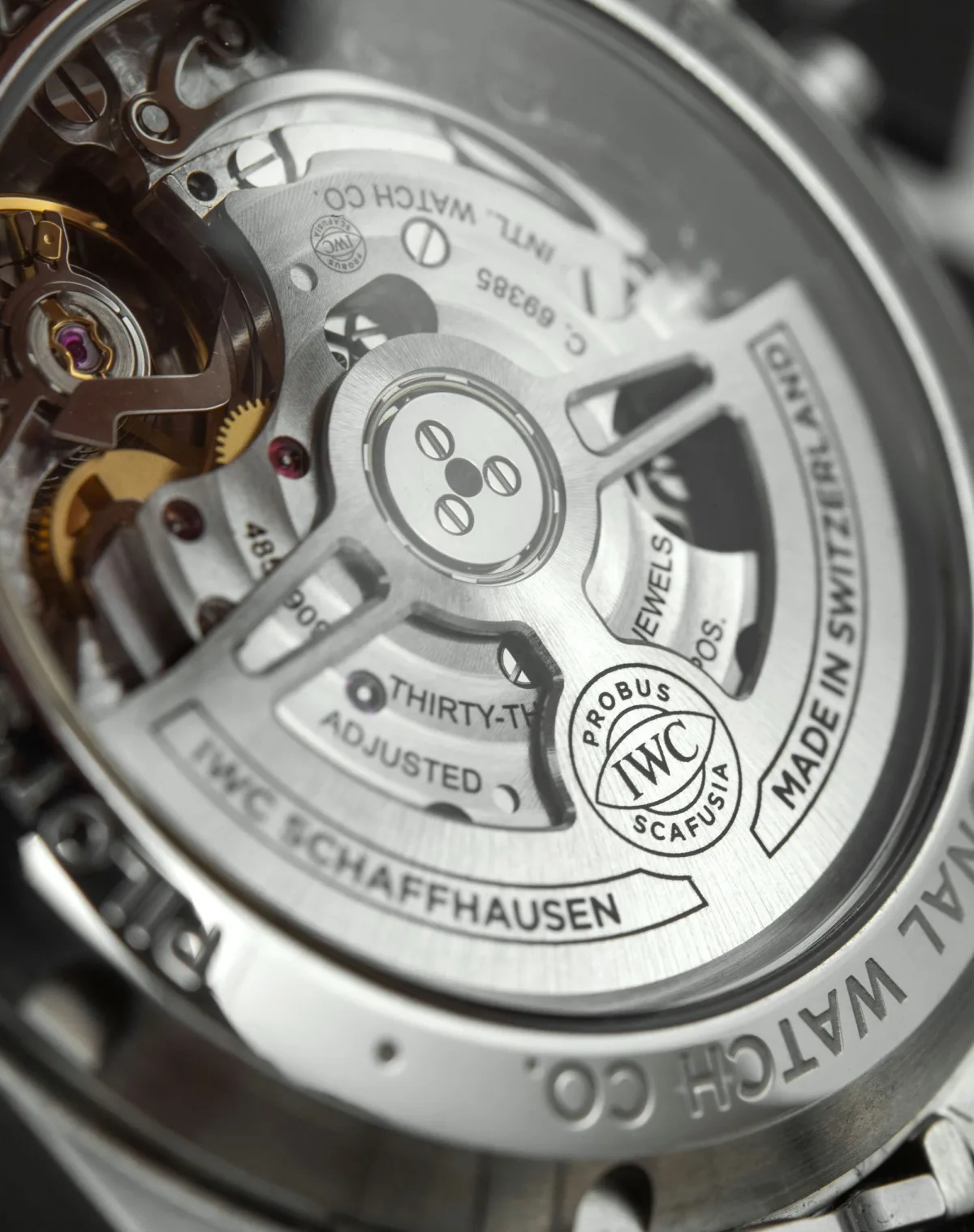
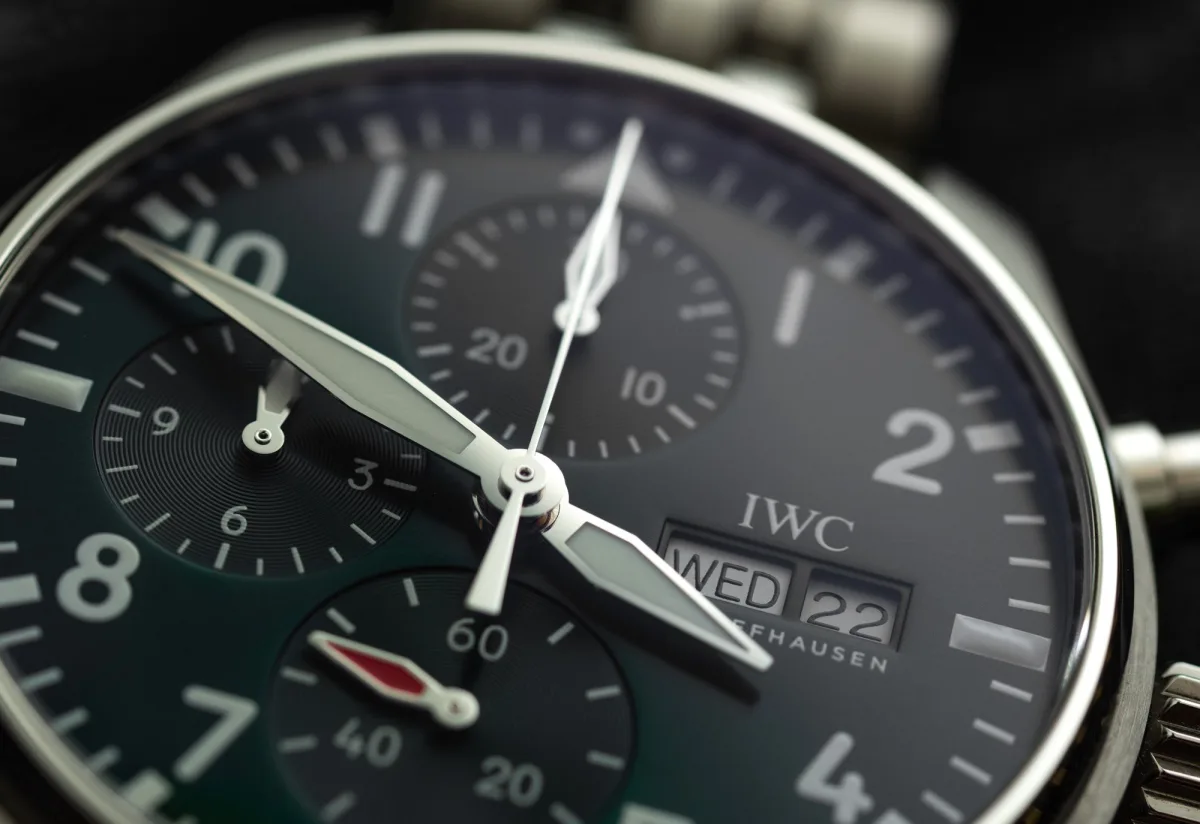
Despite all the flaws that we, die-hard geeks, can find inside and out, on the wrist or off it, the IWC Pilot’s Watch Chronograph 41 with a green dial is still one hell of an impressive watch. The movement looks reliable and cool, the green dial adds a touch of personality, and the case, bracelet, and clasp all look and feel very expensive, even to the untrained eye. For my part, I would like the Pilot’s Watch to abandon some overly caricatured elements, such as the ugly orange-red second hand, cross-shaped lume (great for $495, but not for eternal luxury watches), and somewhat childish font of the hour markers.
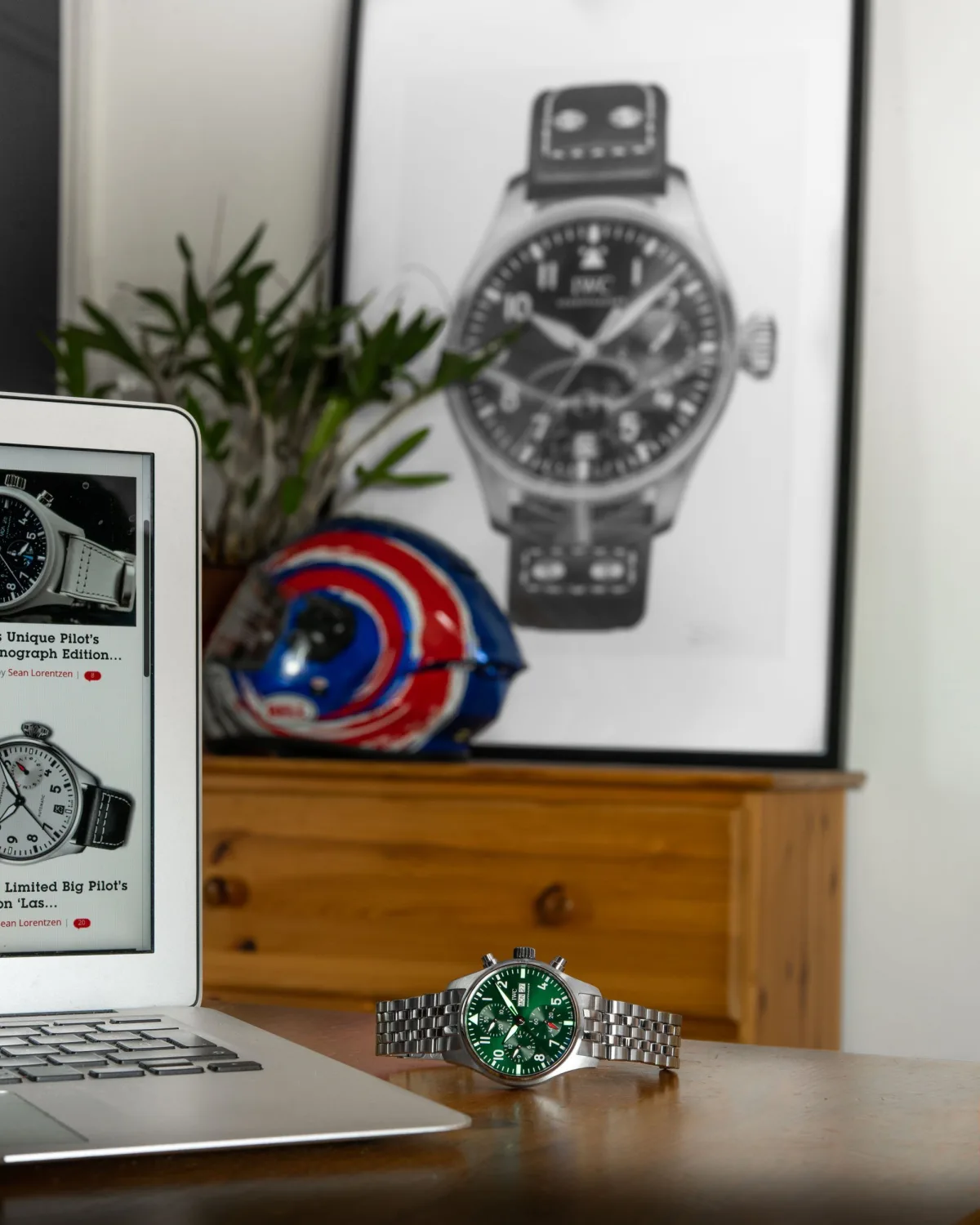
Nevertheless, none of these things will be a deal-breaker, and it's easy to see that many others will find these same elements fun and charming. Overall, the "Probus Scafusia" build quality is still at a high level - so much so that it overshadows a few apologetic design elements found in some places.
The IWC Pilot’s Watch Chronograph 41 with a green dial, reference IW388104, costs $7,200 on a bracelet, while reference IW388103 on a brown leather strap is $6,500. Both models offer solid value for the quality of appearance and internals.
Technical specifications of the watch: IWC Pilot’s Watch Chronograph 41
>Brand: IWC
>Model: Pilot’s Watch Chronograph 41 reference IW388104 / IW388103.
>Price: $7,200 USD
>Dimensions: 41mm wide, 14.5mm thick, and 50mm lug-to-lug.
>When the reviewer would personally wear it: Great everyday option, though I would probably choose the IW387907 model in bronze.
>Friend we would first recommend them to: An IWC fan looking to upgrade to the latest model with better proportions, a better bracelet, and an IWC movement.
>Best characteristic of the watch: Made more beautifully, both inside and out, and up close, than those typically offered in this segment. Feeling of solidity and durability.
>Worst characteristic of the watch: Strange deviations from the "form follows function" principle with the second hand and lume. Case and bracelet finishes could be better matched.