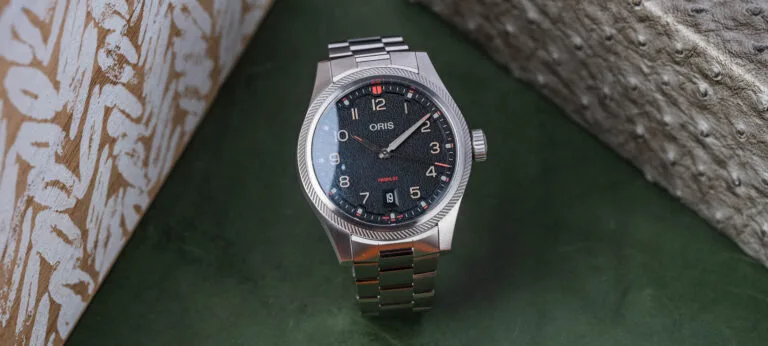
The last decade has been a time of transformation for Oris.
The brand, which previously offered either an excellent tool diver chronometer or complex classic watches, is now focusing on models catering to a broader range of consumers. Judging by the company's successes and development direction, this strategy is justified. Expanding the range obviously allows reaching a wider audience and increasing sales; however, achieving a balance between functionality and mass appeal is a challenging task. With the release of the new Oris ProPilot Date, the brand has once again created a watch that can interest a wide audience, continuing to expand beyond narrow groups interested exclusively in mechanical altimeters or large 43-millimeter classic models with multiple counters.
Evolution of the Oris ProPilot Collection: From Niche Models to the Mass Market
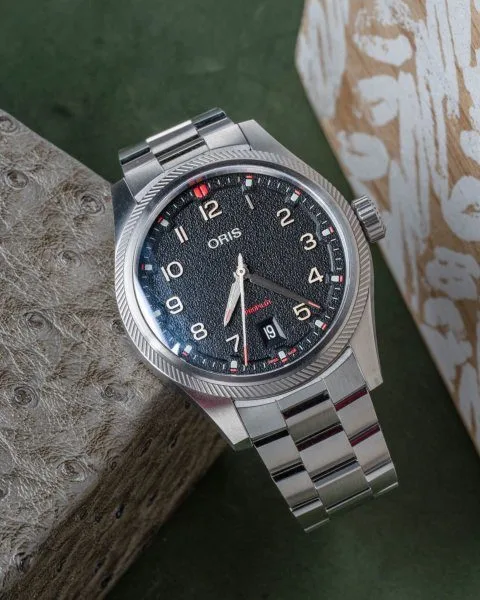
Oris's shift towards more mass-market models began with the release of the Divers SixtyFive over a decade ago. Then came the Big Crown Pointer Date and ProPilot X - three collections that can be considered the brand's foundation today. The Aquis collection remains an important part of the lineup, but it is too contentious to be the main sales driver. Meanwhile, the classic ProPilot line had long remained in the shadows - except for the darkened altimeter and the special edition Big Crown ProPilot.
Personally, I wasn't upset by this neglect, as I am a big fan of the Big Crown ProPilot Big Date (BCPPBD) and didn't want to see it changed or discontinued. Nevertheless, Oris has breathed new life into the collection with the ProPilot Date, featuring slight case modifications, a new movement, and a fully updated dial.
Design and Construction of the Oris ProPilot Date Case
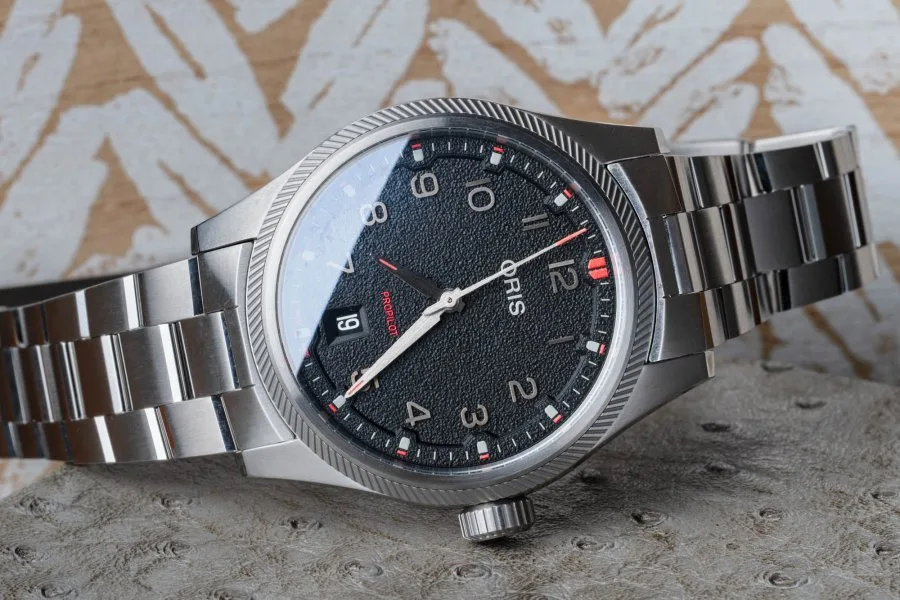
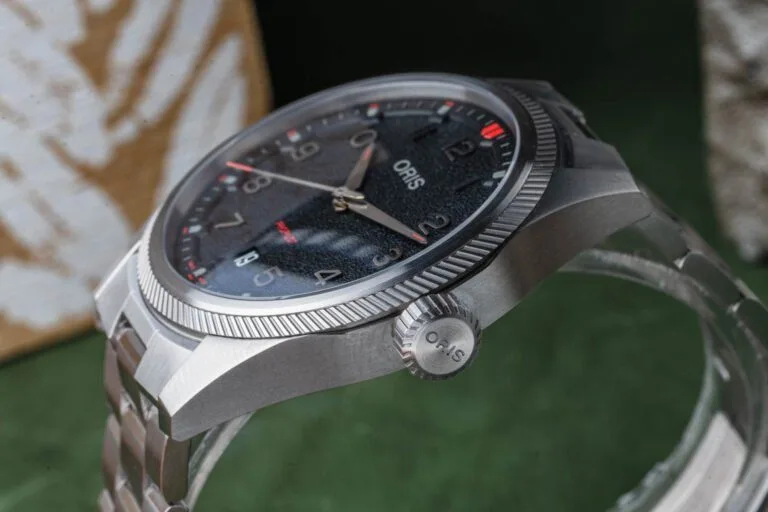
The stainless steel case of the new ProPilot Date largely resembles the BCPPBD, yet it is practically a new solution. The diameter remains at 41 mm, and the signature turbine-patterned bezel ring is a hallmark of the collection. However, most other elements have been changed. If you're familiar with the ProPilot and ProPilot X cases, the ProPilot Date can be seen as an intermediate variant, leaning slightly towards the classic ProPilot.
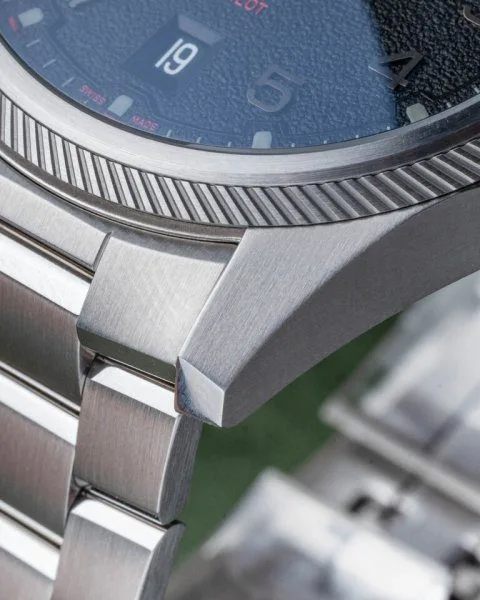
For example, the screw-in crown has received a new chamfer inside for easier winding and adjustment, while retaining the fluted texture that harmonizes with the bezel. The watch is almost entirely matte, except for the lug ends and some bracelet chamfers. There is also a Desert Edition version with a carbon fiber case, which looks truly impressive. Thanks to the more angular case, the model is perceived as slightly more sporty compared to other three-hand ProPilot models.
Ergonomics and Wearing Comfort
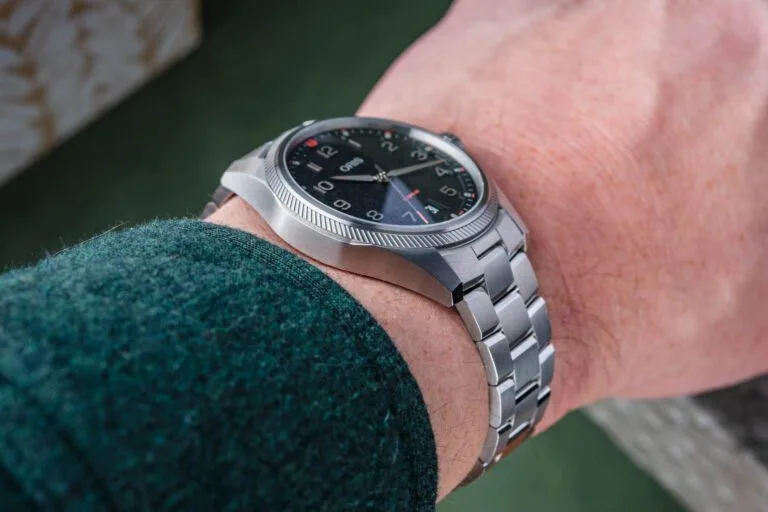
Despite the more robust design, the watch sits very comfortably on the wrist. The case thickness is 11.8 mm, and the lug-to-lug distance is 47.4 mm, which fit perfectly on my 7-inch wrist.
In my opinion, the ProPilot Date wears even better than the BCPPBD, confirming the effectiveness of Oris's subtle design refinements. Personally, I would have preferred a flat sapphire crystal, which would suit the case better, but the double-domed glass also poses no issues - it provides high strength and water resistance up to 100 meters, making the watch versatile for most situations.
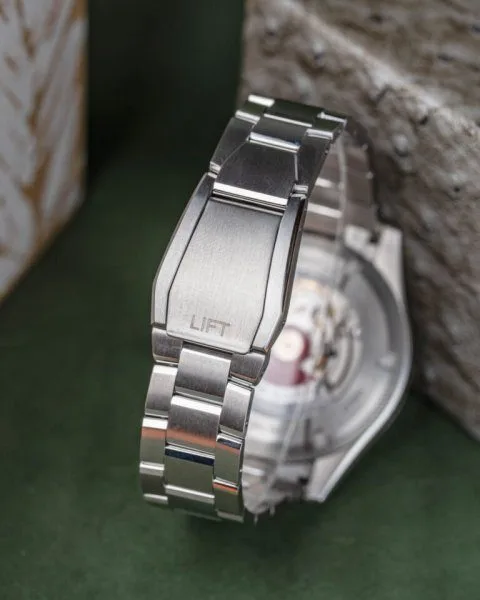
The only drawback remains the bracelet: it is comfortable and high-quality but lacks a quick-release mechanism and micro-adjustments. The half link allows size adjustment, but modern standards require more convenient solutions. I only liked the clasp, inspired by commercial airline buckles - reliable and easy to use. The watch is also available on a leather strap, but without quick-release elements, which raises questions, considering the sporty nature of the model.
New Dial: Color Options and Design
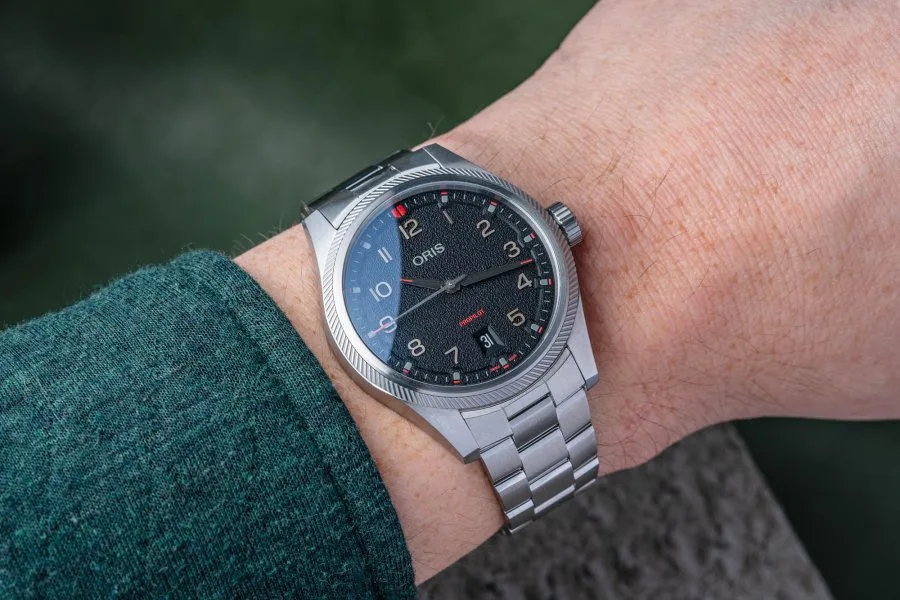
The ProPilot Date dial is offered in four colors: black, gray, green, and the 'sand' Desert Edition. The black version I reviewed seems the least expressive. I don't particularly like the black and red combination, whereas the other versions have black hands, which I prefer. All dials have a textured grainy surface, which looks better on the green and sand versions. I also liked the orange accents on the gray dial. These are the first Oris watches with a multi-level dial: the minute scale is made as an applied ring with divisions and small protrusions at each hour.
This design works well with the watch, although it looks less elegant compared to the case. The applied Arabic numerals are presented as matte steel on the site, but they take on a warm hue under certain lighting. The brand didn't provide a precise explanation for this effect, but I assume it's done to enhance contrast. Overall, the numerals are easily readable on the black dial, but on the gray, they can blend in. Each dial has accents: red on black, orange on the others. The green variant (or Desert Edition - I can't choose a favorite) features an orange accent at the 12 o'clock mark and white dots on the dial and hands.
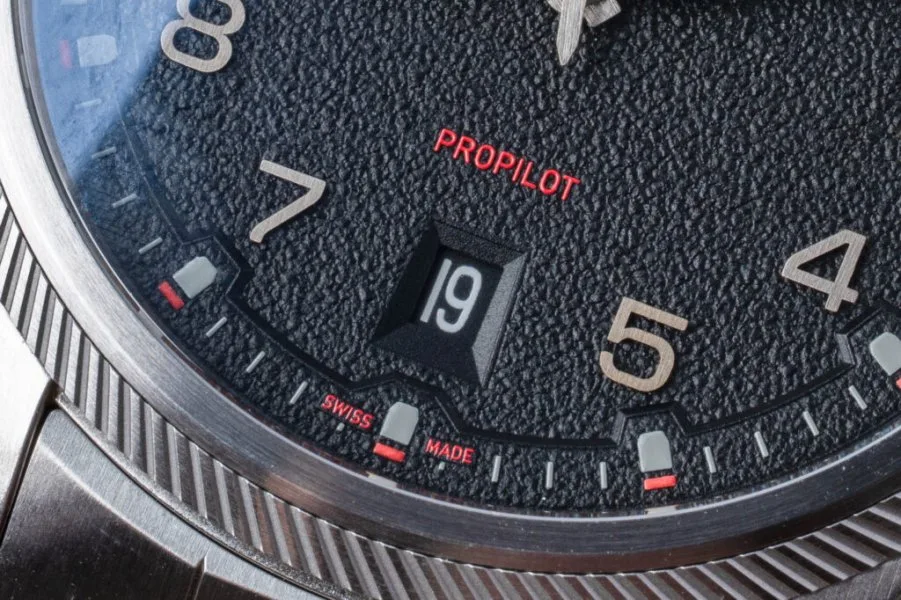
The date window deserves special attention - trapezoidal with a high chamfered lower edge, adding dynamism to the design. The date wheels are painted to match the dial, except for the Desert Edition.
Luminescence Quality and Readability in Darkness
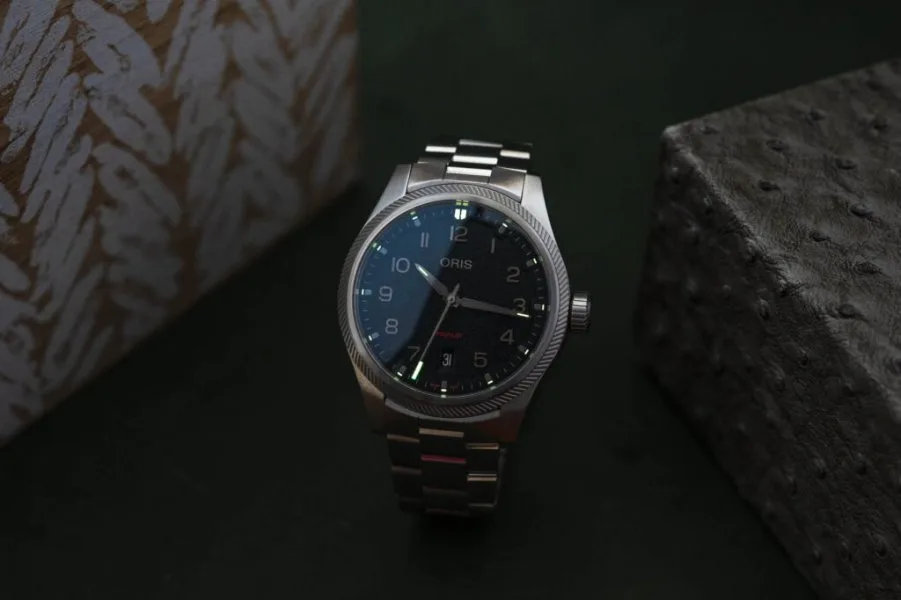
As for luminescence, Oris falls slightly short of the standards for pilot watches, which require maximum readability in any conditions. The red lume glows less brightly compared to white, and opportunities to enhance its application were missed. The hour markers and red and gray marks are only partially illuminated, reducing their effectiveness. Perhaps the green dial with white lume looks better. A compensating factor is the reflective surface of the hands and numerals - they catch light and provide sufficient readability in low light, which is rare among other models.
Oris 733-1 Movement: Choice and Features
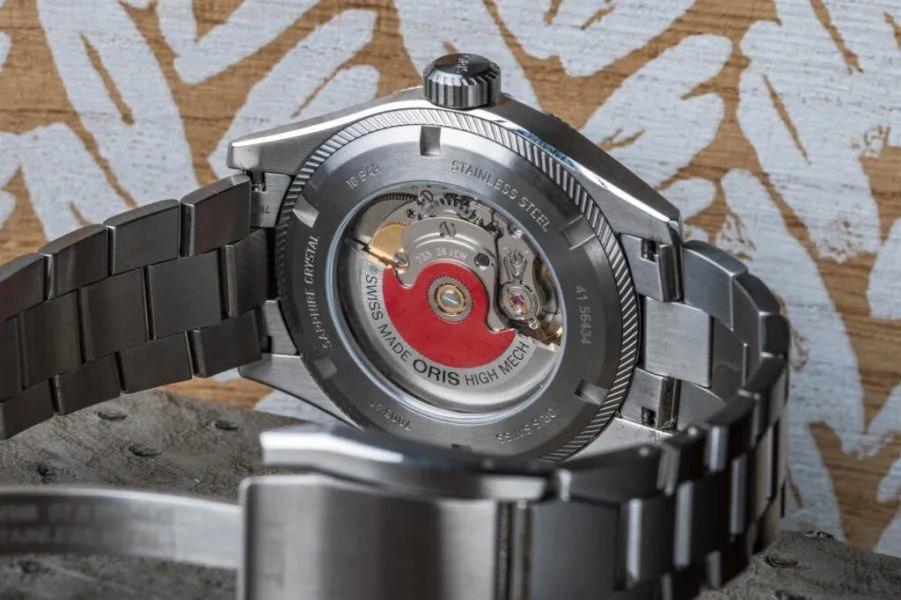
The new model is equipped with the Oris 733-1 caliber - a rebranded Sellita SW200-1 with a 41-hour power reserve and a frequency of 28,800 vibrations per hour. This movement is well-proven, yet Oris's strategy in using movements remains inconsistent. Different collections feature models with both proprietary calibers and 'standard' movements, sometimes without other distinctions. The ProPilot Date is a completely new model that could have received the modern Calibre 400, but the brand decided not to, likely to keep the price at an acceptable level, considering that the Calibre 400 typically increases the cost by about 1500 dollars.
Conclusion: Versatile Watches with Potential for a Wide Audience
Although the ProPilot Date is not a classic pilot watch in the strict sense, there are many models on the market that are positioned differently than they actually are. These watches are a stylish, well-made accessory with interesting color options. They will attract more attention than the basic ProPilot models, and while I personally remain a fan of the Big Crown ProPilot Big Date, the ProPilot Date has gradually won my favor. If I had more time with them, I'm sure my appreciation would only grow.
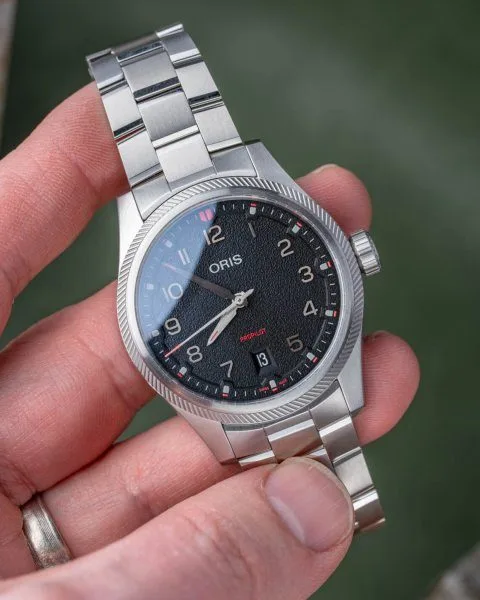
The price of the Oris ProPilot Date on a bracelet is 2550 USD. Thus, the Oris ProPilot Date represents a successful combination of classic elements with modern design and comfort requirements, making this model a worthy choice for a broad audience of watch enthusiasts.