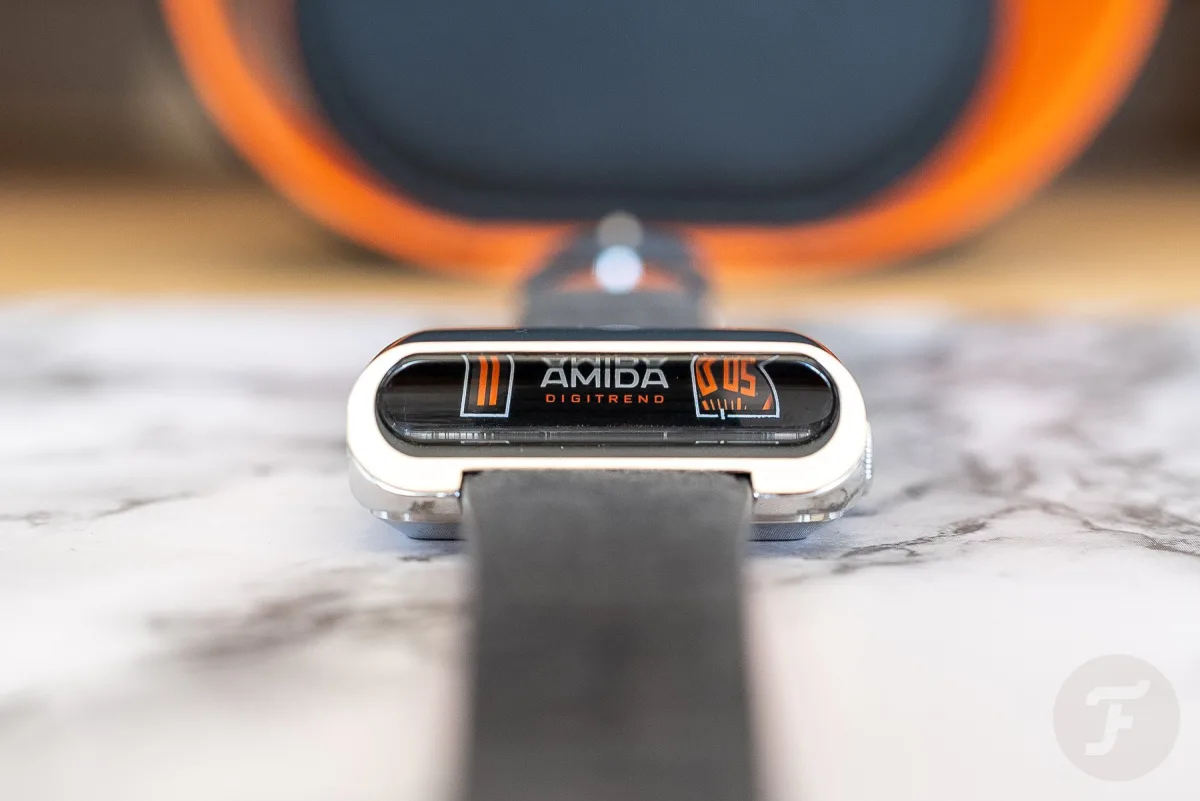
The 1970s were a remarkable era in the watch industry.
This decade gave us some of the most fantastic designs and watches that are still sought after by vintage collectors. Think of watches like the Omega Flightmaster, Zenith El Primero TV (ref. 01-200-415), or the subject of this article - the Amida Digitrend. While the Flightmaster or El Primero played in a different league than the Digitrend, Amida's design language was undeniably distinctive. After many years of inactivity, in 2024, the iconic Amida Digitrend model has finally returned.
As a fan of the original and owner of several pieces over the years, I received this news with pure excitement. Can the new Amida Digitrend be as good as the vintage model? Will it meet my expectations? Will I be able to wear it? These are just some of the questions that crossed my mind. I hope this article will give you answers to these and many more.
Amida
Before we dive into the new Amida Digitrend, let me tell you a little about the company's history. Amida was founded in Grenchen in 1925 by Mr. Josef Zwalen. In 1949, the company moved to Montreux. In the late 60s - early 70s, Amida transitioned to jump hour watches and in 1970 applied for a patent for jump hour watches. A fun fact: the number of the original patent (No. 3,685,283) can be seen on the casebacks of early vintage Amida Digitrend models. A few years later, in 1973, another patent was filed, this time for the LRD (Light Reflecting Display), which the Digitrend watches are famous for. The movement is positioned horizontally in the watch case, and through the LRD, acting as a prism, the time is displayed vertically on the dial. This same system is used in the modern Amida Digitrend watches.
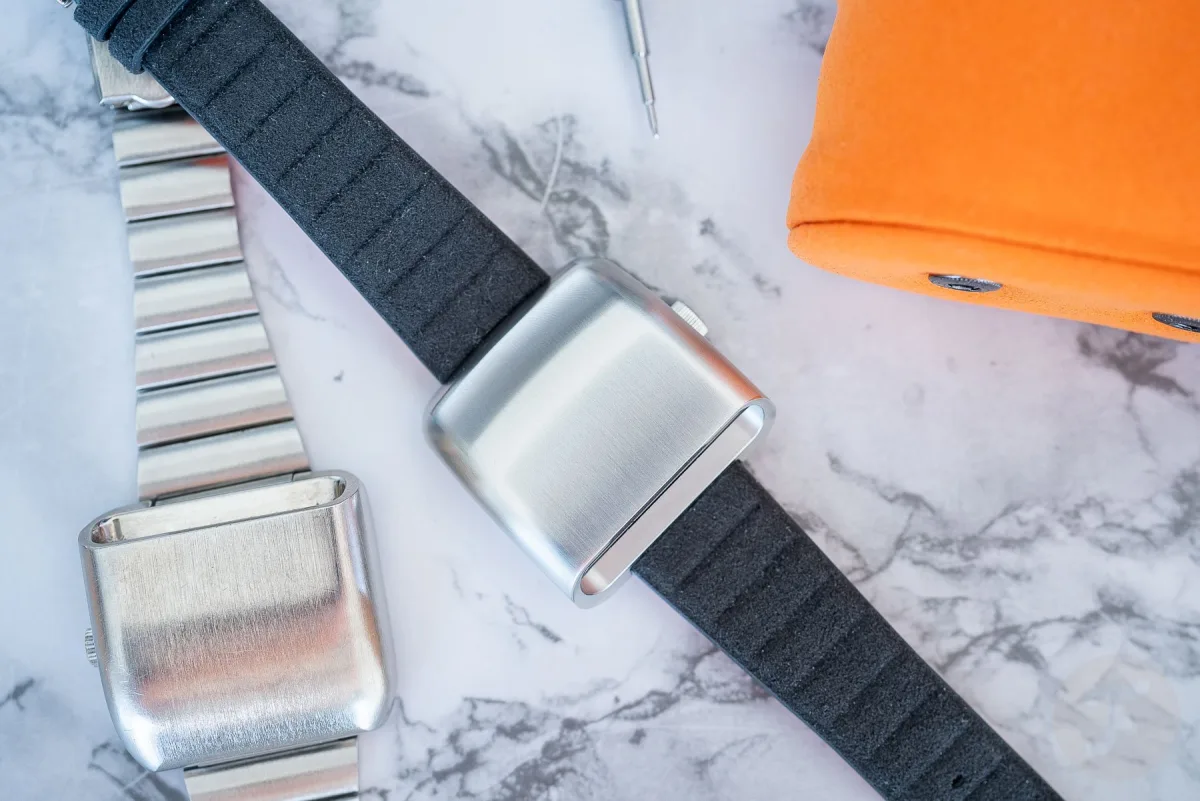
Consumers had to wait another three years before the final product hit the market. The Amida Digitrend debuted at the Basel Fair in 1976 as the first mechanical watch with a cassette. Other similar models were already on the market, such as the Girard-Perregaux Casquette and Bulova Computron. However, these watches used quartz movements with LED displays, not mechanical calibers with an LRD prism system. Unfortunately, like many other brands of that era, Amida succumbed to the "quartz crisis" and disappeared from the watch scene in the late 1970s. However, thanks to a group of enthusiasts, Amida has finally returned with its most popular Digitrend model.
Digitrend
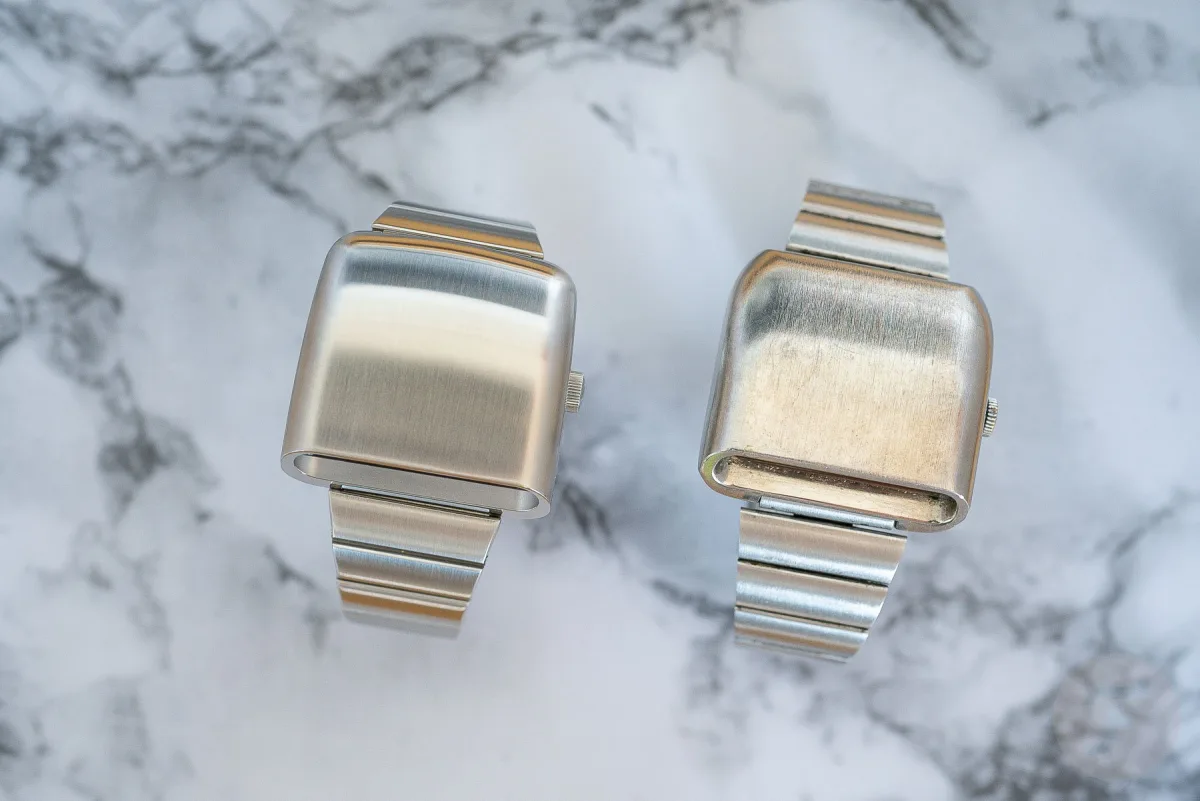
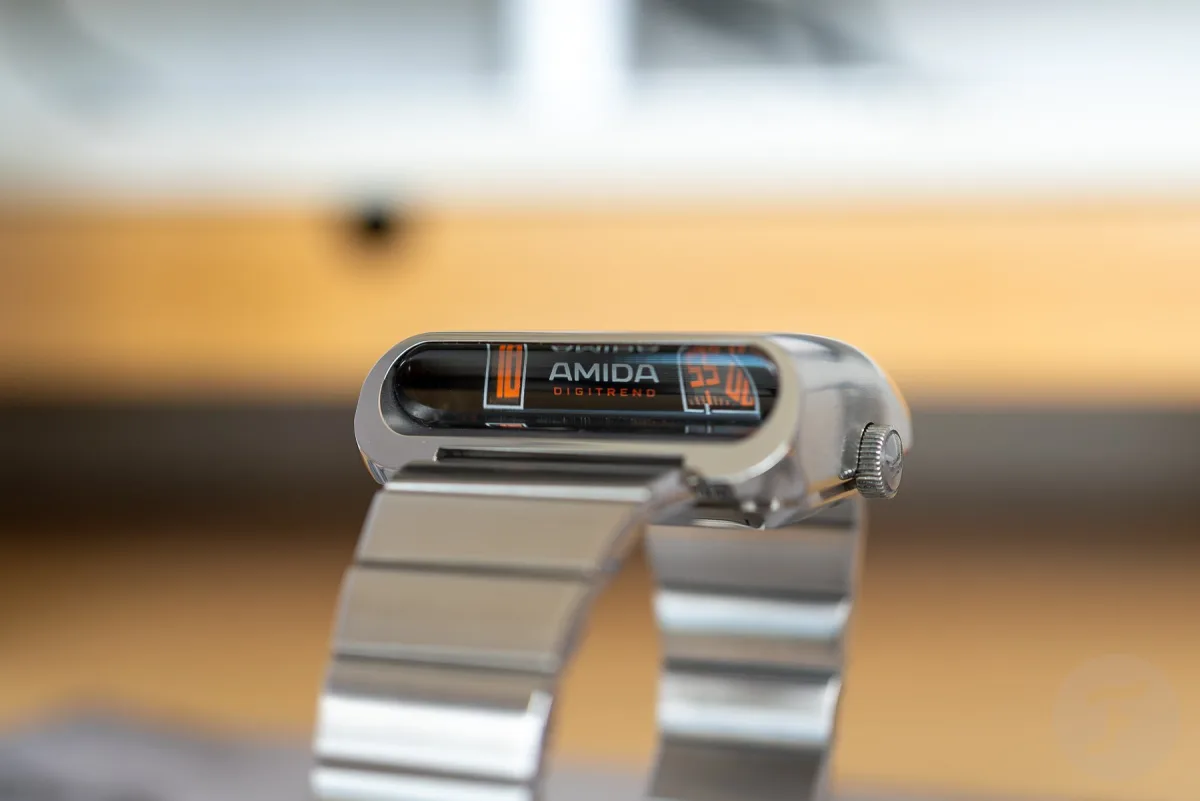
We are no strangers to reissues. A vast number of new watches today either have a vintage-inspired design or are aesthetic copies of their predecessors in a 1:1 ratio. The new Amida Digitrend model also belongs to the latter category. Although the size and shape of the case are slightly different from the vintage models, to the naked eye, the watches look identical. The most obvious difference is the weight.
If you hold vintage and new Digitrends, you can feel a significant weight difference - more than 70 grams. While the vintage model in a chrome case weighs only 91 grams, the new Amida is made from a solid block of 316L steel and weighs 164 grams. As for the dimensions, the watch case has a diameter of 39.6 mm, a length of 39 mm, and a thickness of 15.6 mm at the thickest point. Thus, the watch cannot be called miniature, but thanks to its overall design, it fits perfectly on the wrist.
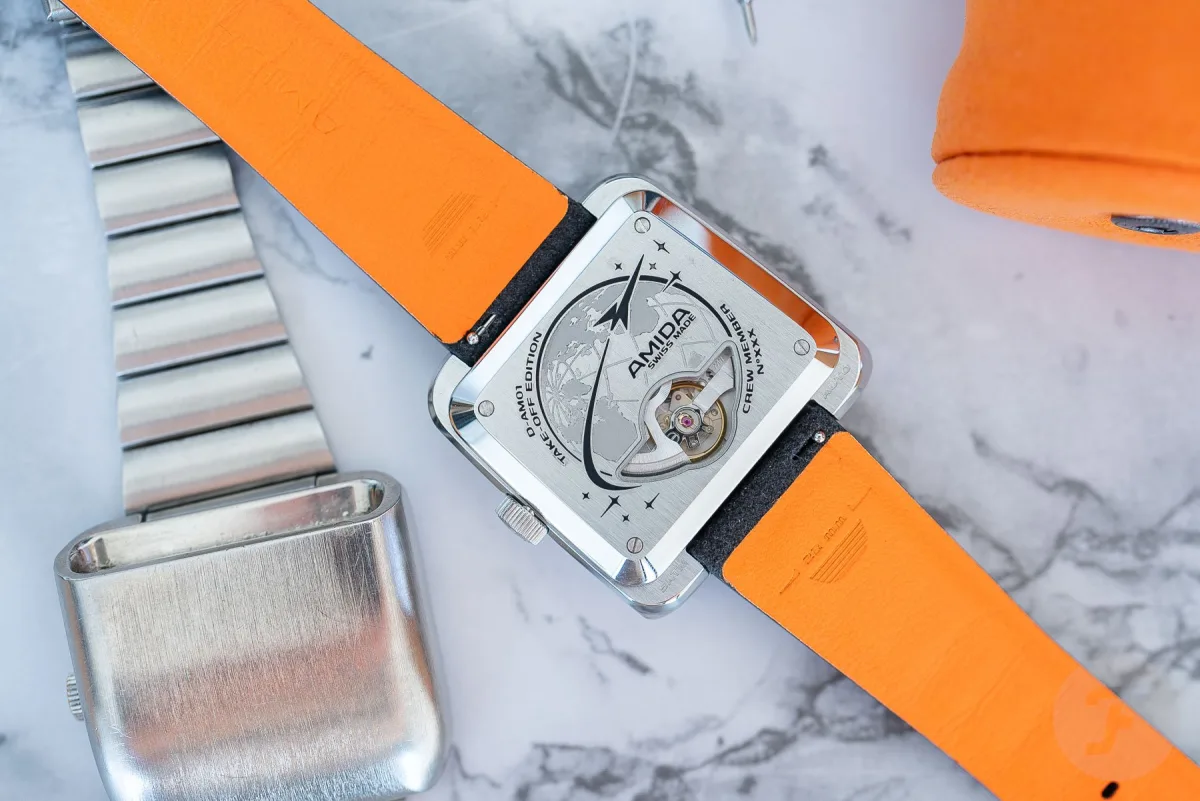
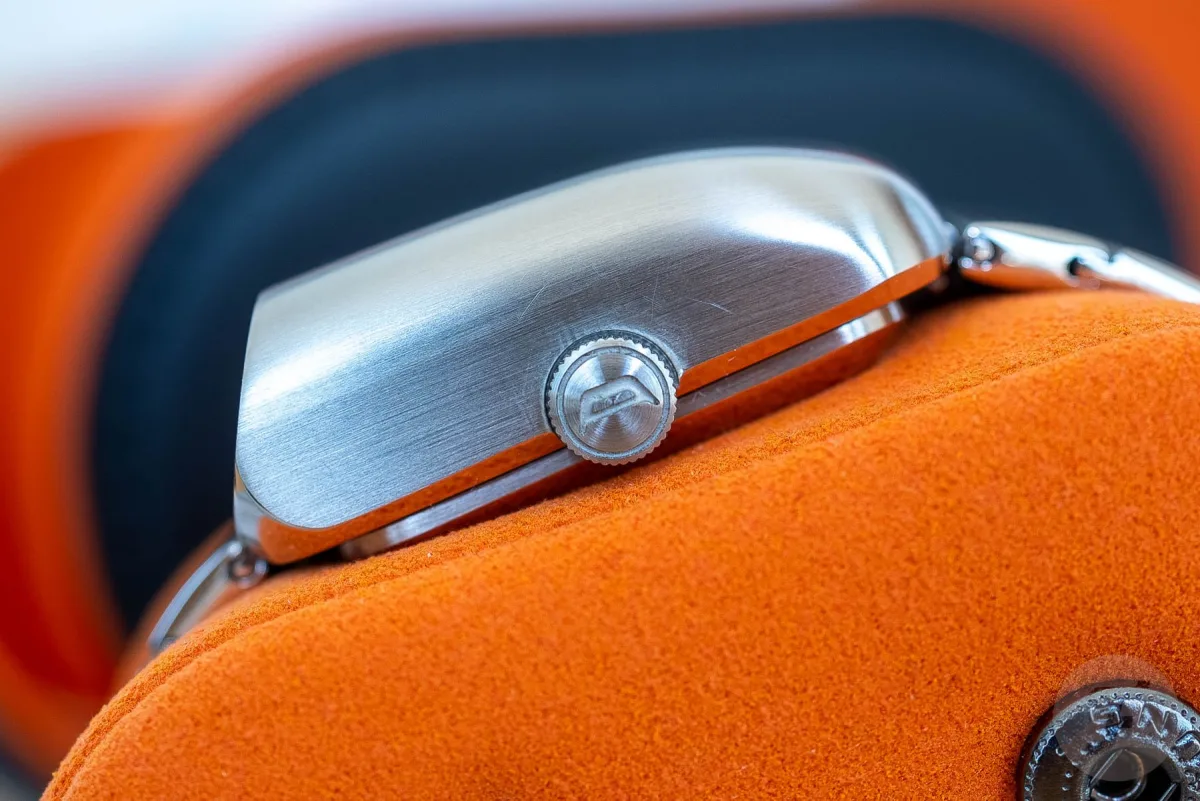
If the old Digitrend was released on a 20-mm strap/bracelet, the new version has a width of 22 mm. Nevertheless, like the vintage model, the new Digitrend will also be available on a strap and a very robust and comfortable bracelet that looks just like the original, minus the fragility. Moving to the case back, we see it is secured with four screws, providing water resistance up to 5 ATM (50 meters). However, the most interesting feature is not the case back, but the Take-off Edition display window, which allows you to see the automatic movement, the heart and soul of the Amida Digitrend.
Mechanics Inside
And since we're talking about the movement, let's discuss what's inside the new Amida Digitrend model. The vintage version had an extremely simple caliber with one jewel, which could be upgraded to a version with 17 jewels. To do this, you needed to find a donor watch, swap the hour and minute plates, and reassemble the watch. This time, there's no need for such "magic." Inside the new Amida Digitrend beats the Newton caliber from Soprod. It's a 23-franc automatic movement with a 44-hour power reserve and a frequency of 28,800 per hour. However, this is not an ordinary Soprod but a heavily modified one, equipped with a proprietary module. The module serves as a case ring, providing a perfect fit in the Amida case.
Driver on the Wrist
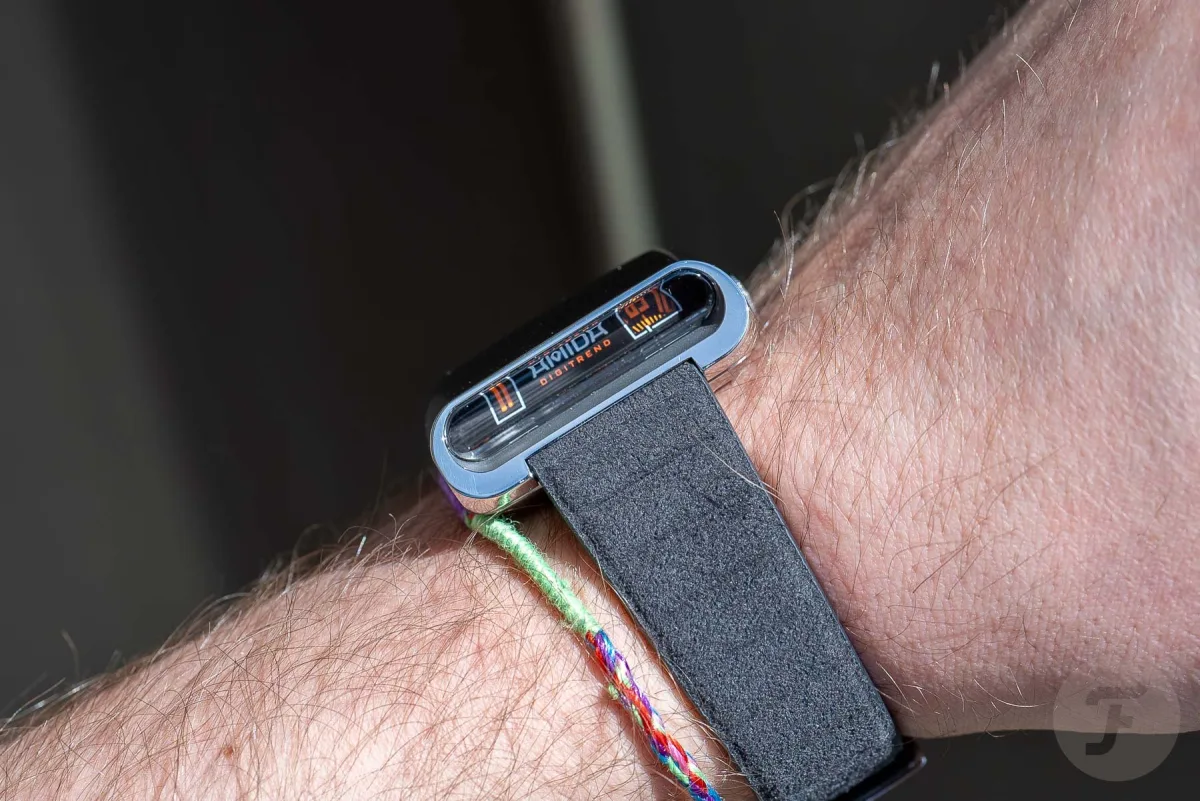
Amida Digitrend is a driver's watch, meaning it's best read while holding a car steering wheel. Accordingly, it takes some time to get used to not being able to tell the time at a glance. Instead, to see and read the time through the sapphire prism, you need to turn your wrist in the right direction. If such nuances bother you, then Amida Digitrend, vintage or modern, is not for you.
On the contrary, if you enjoy such horological quirks, you will gladly wear this fantastic beast on your wrist. The charcoal Alcantara strap with orange lining is very comfortable and highlights the watch. If you prefer a steel strap, the bracelet is very well made and adds solidity to the watch. Moreover, thanks to the quick-release spring bars, you can easily swap them.
Final Words
The first collector's series, Take-off Edition, will go on sale on May 28 for pre-order. The price is 2,900 Swiss Francs (excluding VAT), which will only increase after pre-order. You can order it on the Amida website. So if you want to get it at a great price, you have your chance. Yes, around 3,000 euros plus tax is a lot of money for a microbrand watch, believe me, I know. However, for the money you pay, you get very well-made, quality watches with a unique design and excellent usability. If you're looking for something in the style of Haute Horlogerie for a lower price, the Amida Digitrend is a watch worth considering.