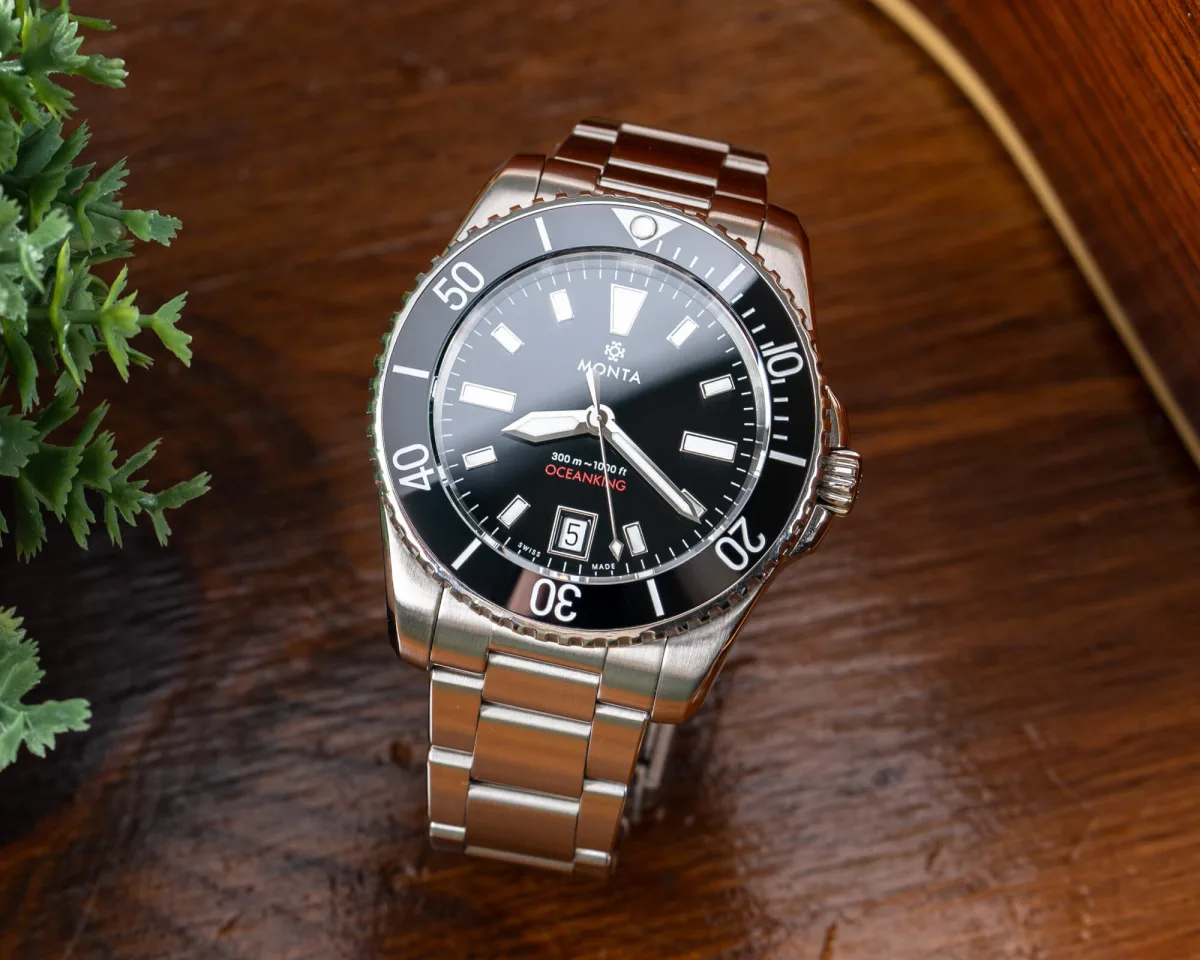
Two years ago, the American brand Monta unexpectedly announced the discontinuation of its flagship models, the Oceanking and Skyquest.
Rumors circulated, fans were anxious, while those unaware of Monta went about their business. A few months later, the two founders of the brand revealed the design of the new Skyquest GMT. No one was sure, but given the shared platform of the Skyquest and Oceanking, it was assumed the latter would look similar. We (and I) eagerly awaited confirmation, which Monta provided last June. Like the Skyquest, the new Monta Oceanking is unmistakably Monta, but it's now more robust, focusing on tools that previous versions arguably used less fully.
It's worth noting that I own the older Skyquest GMT Gilt, which I adore, as seen in our review of the new Skyquest. Given that Skyquest and Oceanking share the same platform, I am attached to the previous design. Therefore, when the new models appeared, I wasn't overwhelmed with excitement. My initial reaction was negative, but it softened after spending some time with the Skyquest and Oceanking last year.
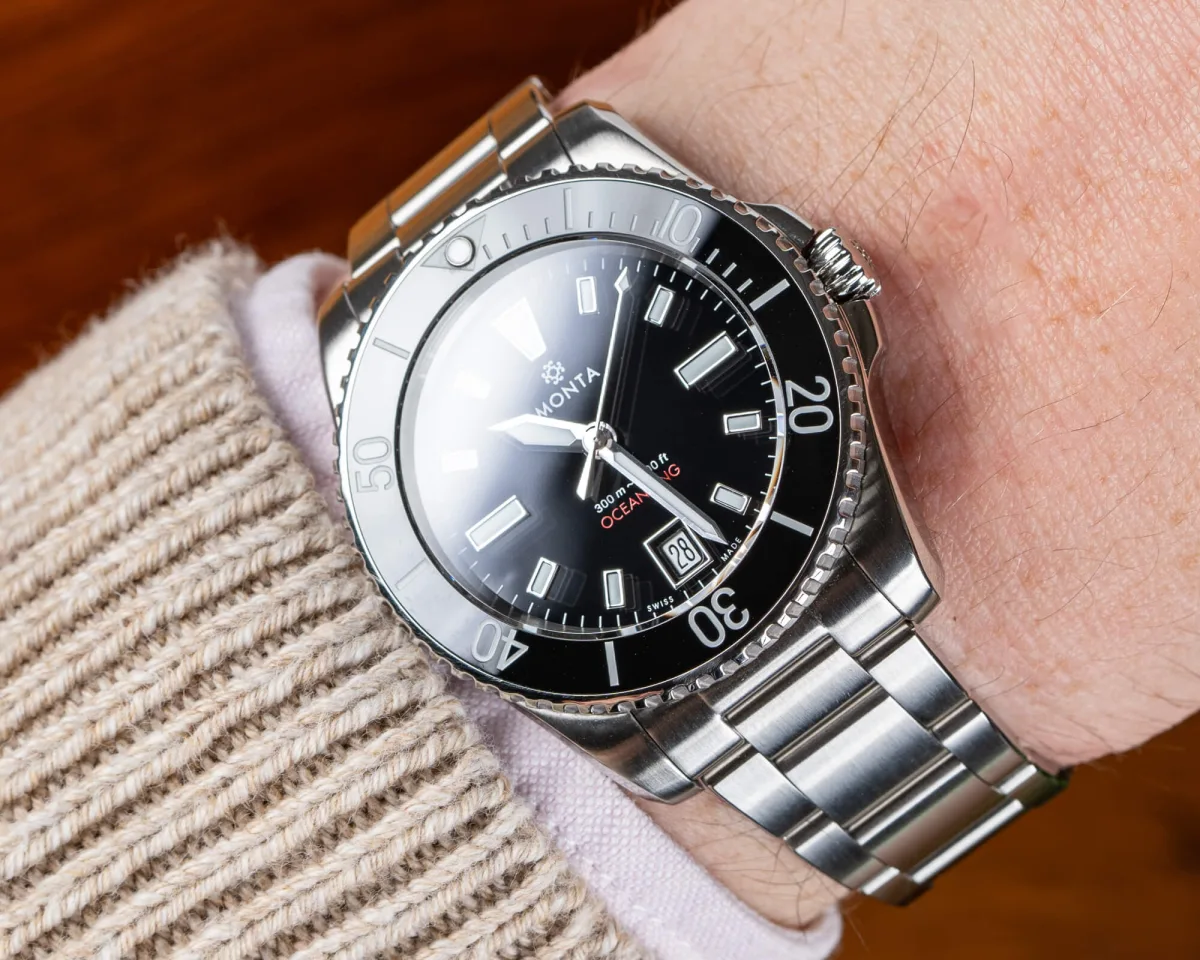
Each change on its own is minor, but together these updates create a watch that feels entirely different on the wrist. If the early versions of the Oceanking had a grace that bordered on elegance, the new models have a sportier, rougher look, positioning them differently in the consumer's eyes. Yes, both old and new models are bona fide dive watches, but the new design appeals to someone less focused on luxury and more on practicality.
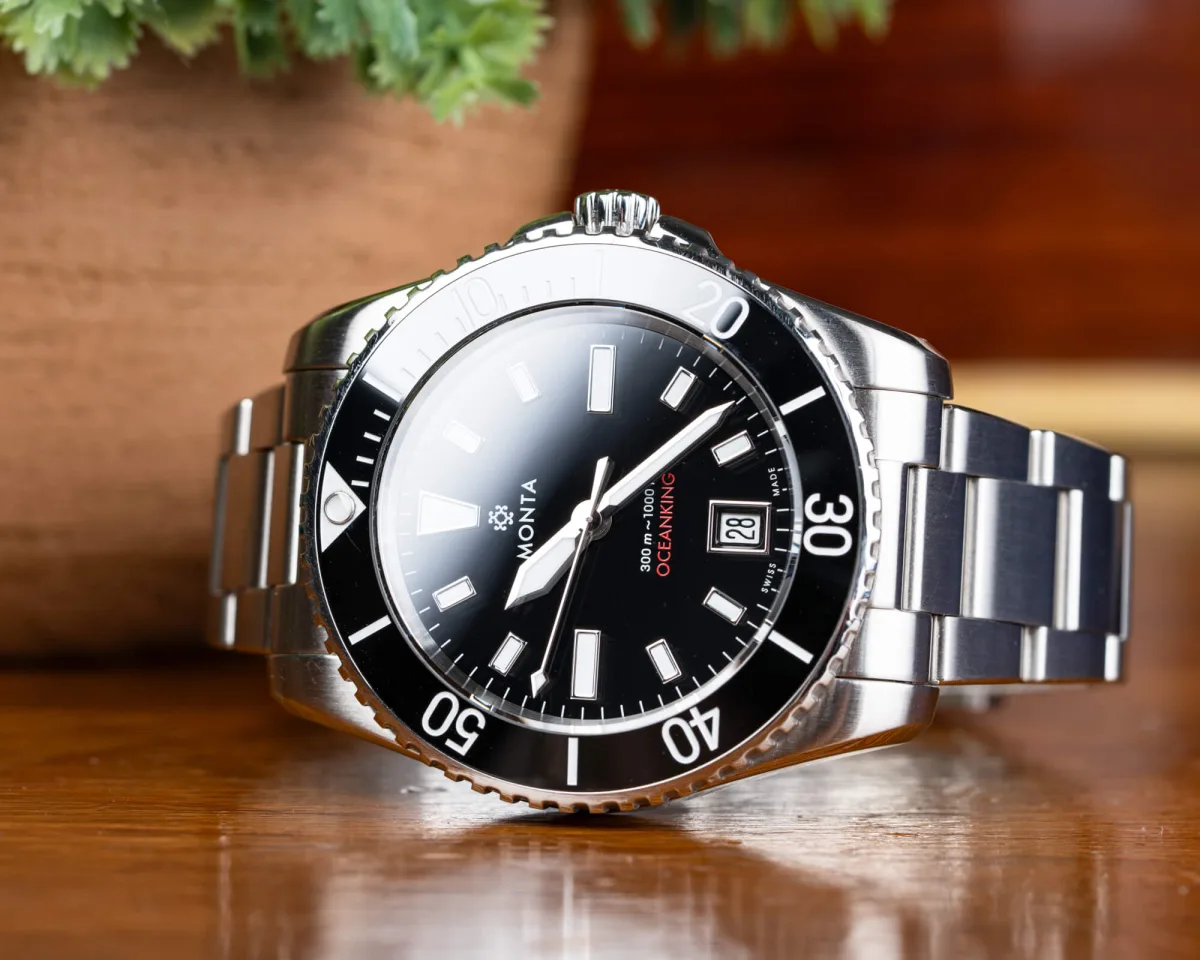
The diameter of the new Monta Oceanking is 40.5 mm, only 0.2 mm narrower, but a full millimeter shorter lug-to-lug at 48 mm (with the thickness remaining at 12 mm). These changes might seem minor, but their impact is real. They mark the transformation of the watch into a sturdy tool, completed by an expanded glossy ceramic bezel. With the wider bezel and shorter lug-to-lug, the watch looks slightly bulkier and feels more substantial on the wrist. But this doesn't mean it looks unpleasant when worn.
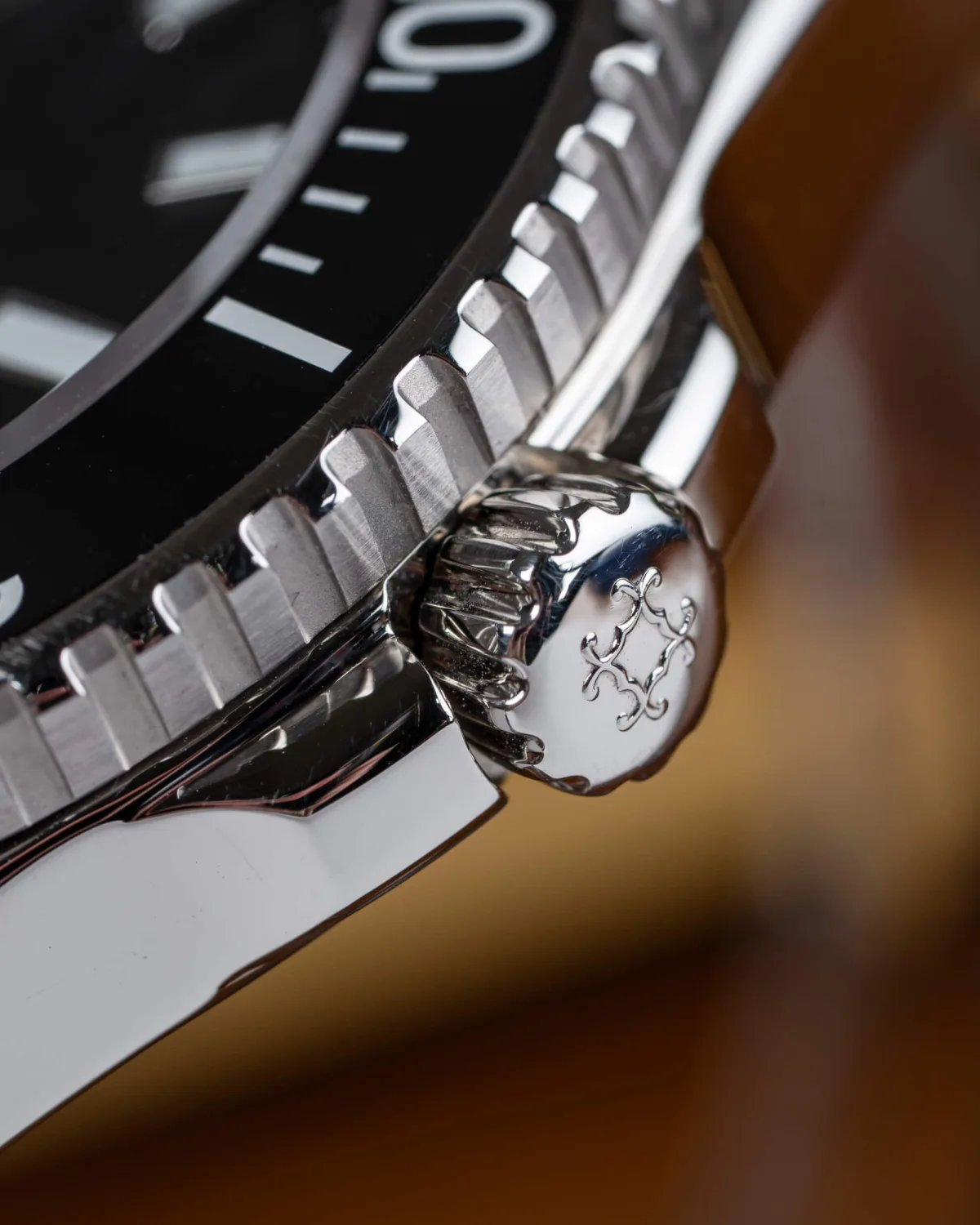
The redesigned lugs have an elegant curve and an appealing polished chamfer that softens the new tool orientation without diminishing it. The organic crown guards from the second generation Oceanking remain, though I still find the tapered crown a bit tricky to grip. The bezel had a slight play but rotated with a satisfying click, even in the presence of moisture. I found that a light press could move the bezel one or two steps in some cases, but I must add that I can't say what torture this sample endured before it came into my hands.
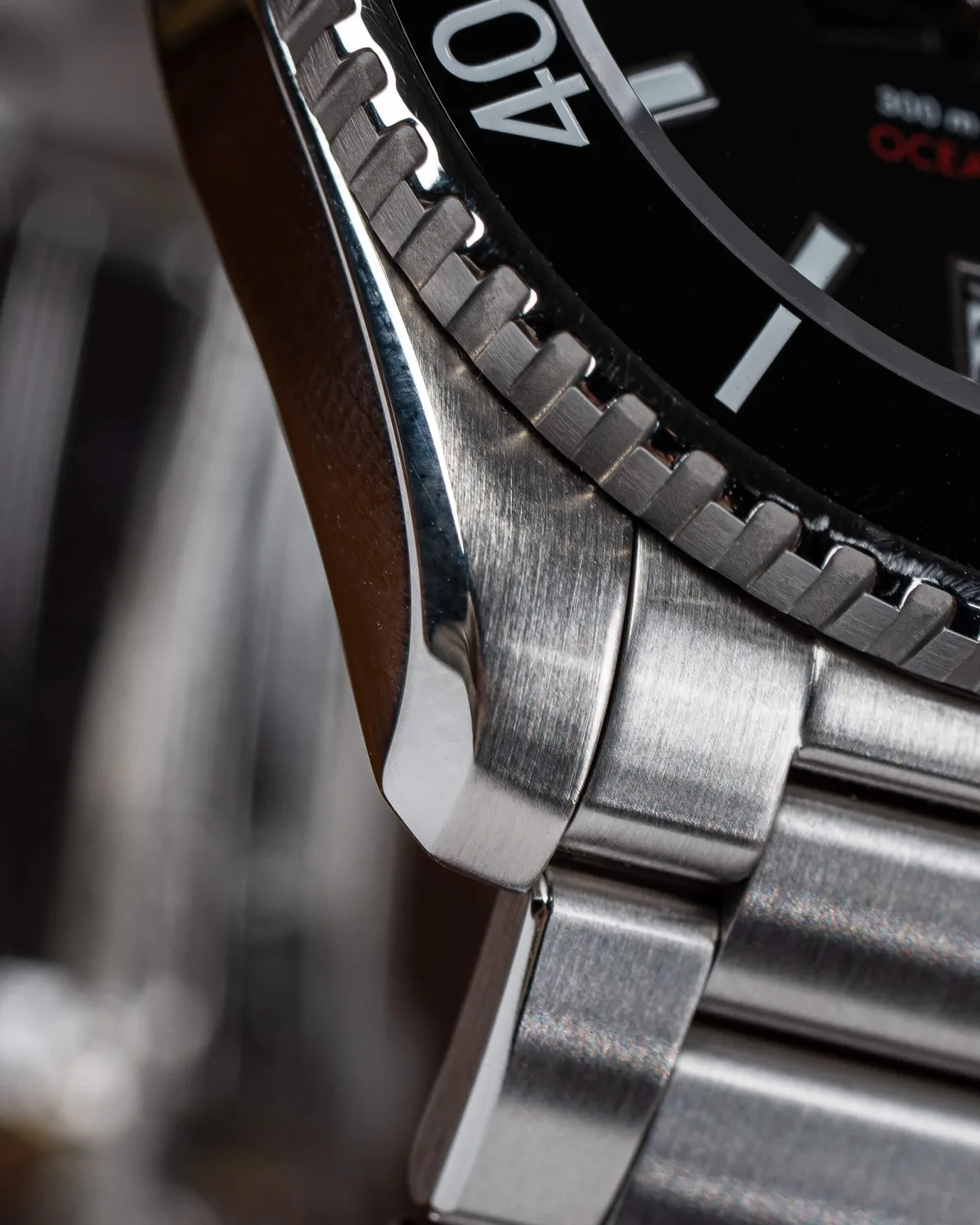
One of the most notable aspects of Monta watches is the bracelet and clasp. I officially declare that in its latest version, this is one of the best, if not the best, bracelet on the market. If you narrow the search to watches priced under $3,000, I would say there's no doubt. This bracelet is crafted at a level far exceeding the watch's price. The links fully articulate and have beveled edges, allowing them to hug the wrist perfectly. The clasp, equipped with a folding lock, was shortened compared to the original version.
Thanks to this, it doesn't feel bulky on the underside of the wrist. Also, the six-position quick adjustment mechanism built into the clasp allows for easy sizing. Even the spring bars are a Monta feature, with the brand manufacturing them specifically for their watches. The only thing missing is a quick-release mechanism. (For a more comprehensive view of the bracelet and its clasp, be sure to check out our Skyquest review).
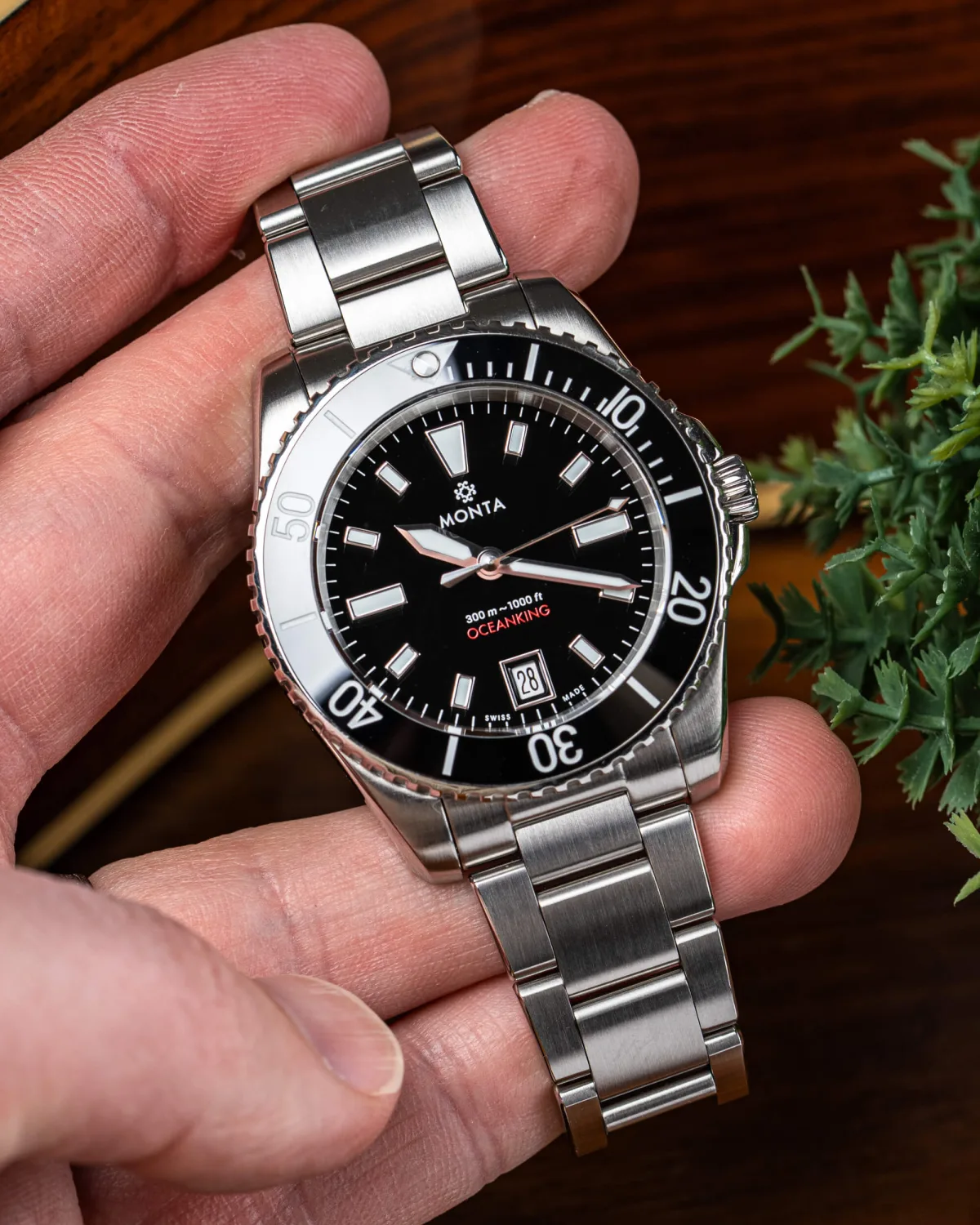
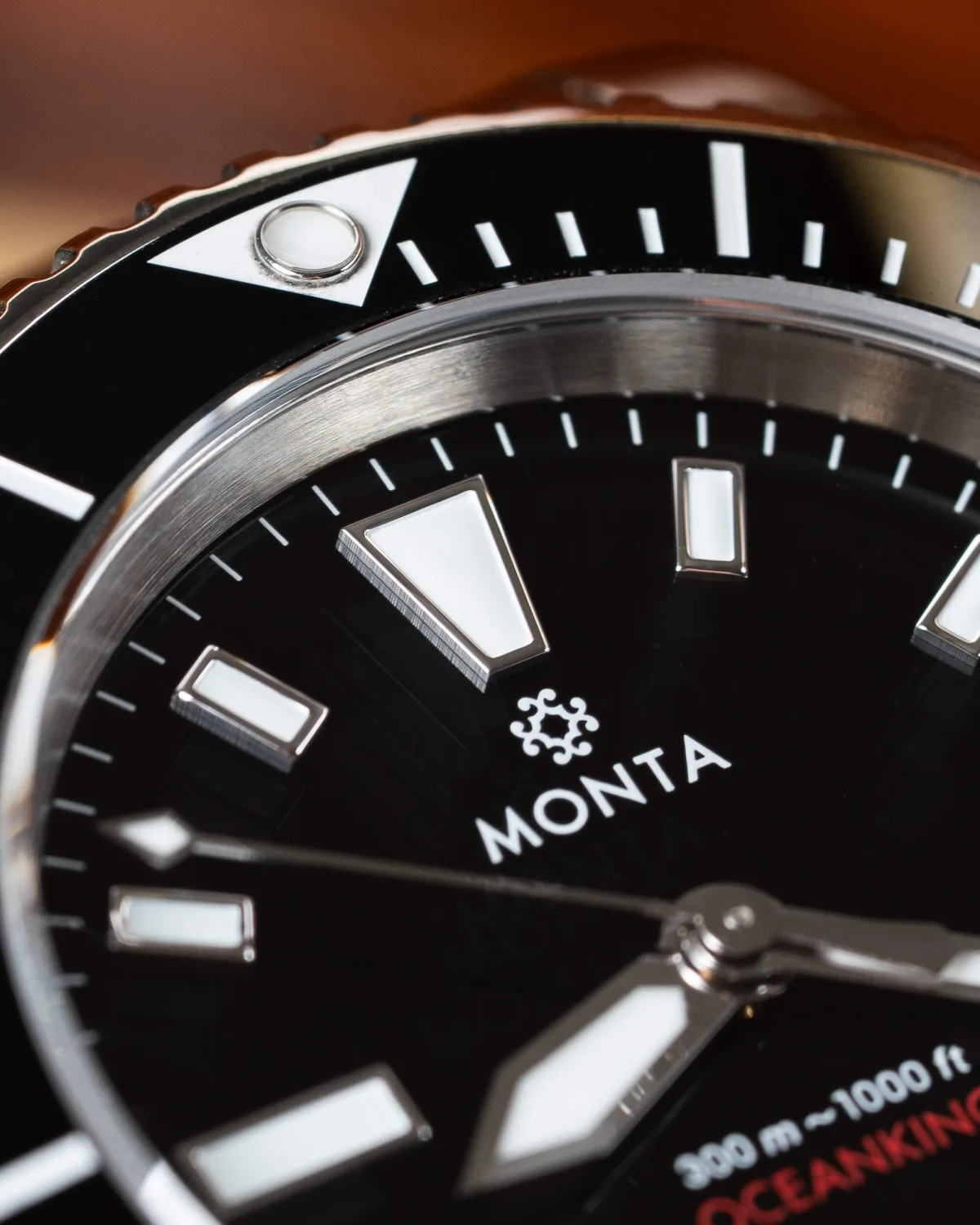
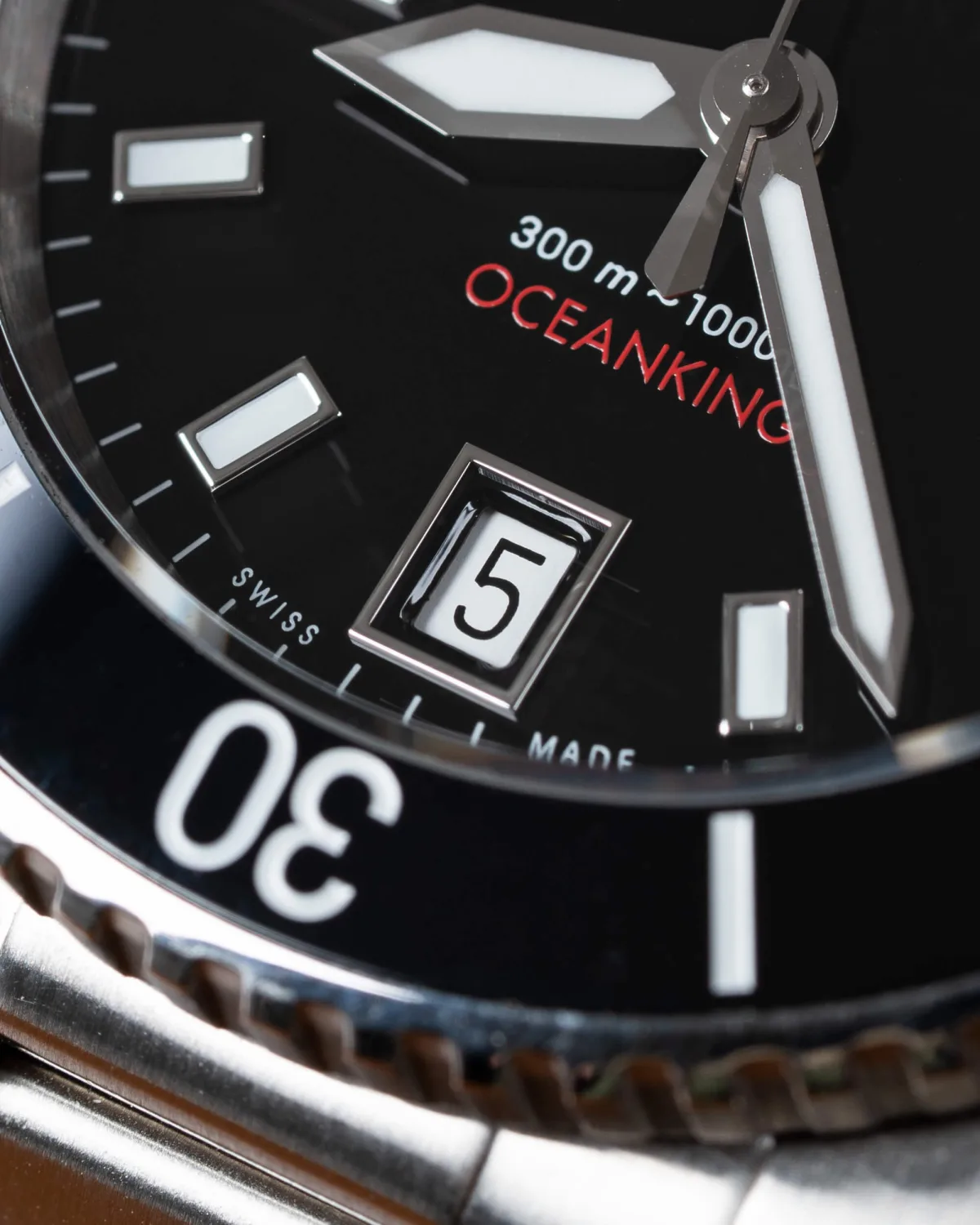
With the expansion of the bezel, the dial occupies less space. The most noticeable change is the absence of the sloped chapter ring into which the markers were partially set. This makes the dial easier to breathe, and I never felt cramped despite its reduced size. Meanwhile, the luminescent applied indices have been enlarged, as have the hands. All this is done so that they stand out well against the inky blackness of the dial. Up close, you can see the effect of the glossy coating reflecting off the indices on the dial. Another improvement is the date window.
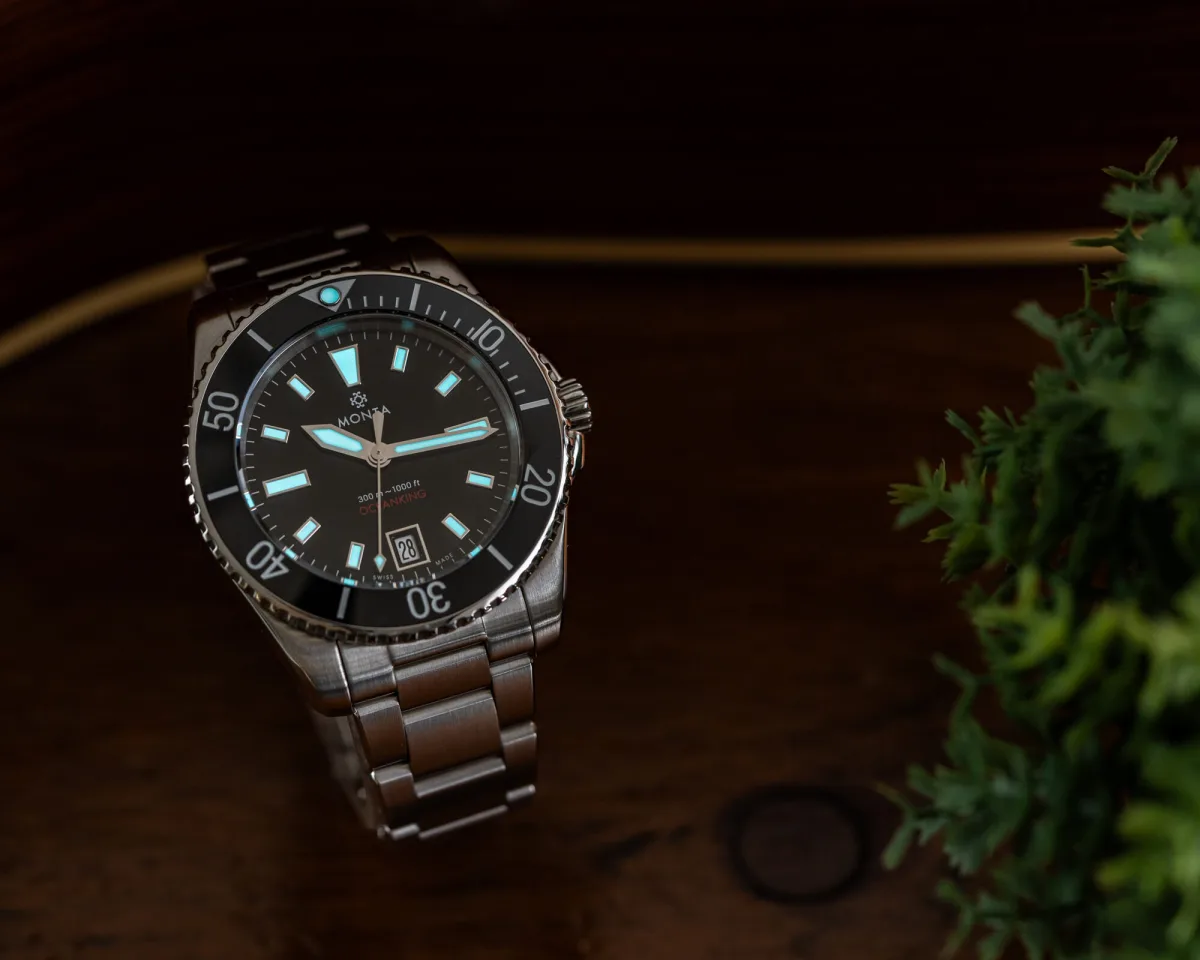
It appears larger in the dial's smaller space, but its placement has become much better. In earlier versions, it floated between the luminous pip at the 6 o'clock position and the lower text on the dial, whereas here, it is neatly placed between neighboring indices. To maintain proportions, the text on the dial has been reduced. In full light, the dial is very easy to read, but as I discovered with my old Skyquest, the Super-LumiNova in the new Oceanking is not as bright as I would like. It's even and bright enough, but I wish it were dazzling!
Monta uses the Sellita SW300 automatic movement, which it calls the Monta Caliber M-22. The description doesn't mention that this is a Sellita movement, nor does it claim to be in-house or even a manufacture. I would prefer a bit more transparency, but you can't exactly call this brand one of the worst. The use of Sellita provides a 56-hour power reserve at 28,800 vibrations per hour and allows peace of mind that the watch can be easily serviced if necessary.
Despite the Oceanking's more solid and sporty look (which likely appeals to as many buyers as the original), it remains an excellent dive watch. Part of me mourns the changes Monta made to the Oceanking and Skyquest, but another part understands the need for brand evolution (rather than a sudden change, as should be noted in light of recent events). In some ways, this evolution is a sign of the brand's maturity. Major brands update their models to refresh the lineup and maintain interest, as well as to respond to market conditions. After my initial reaction to the changes, this is where I landed.
The new models showcase the maturity of a brand that is here to stay and will likely continue to evolve. The price of the Monta Oceanking is $2,550 USD. For more information, visit Monta's website.