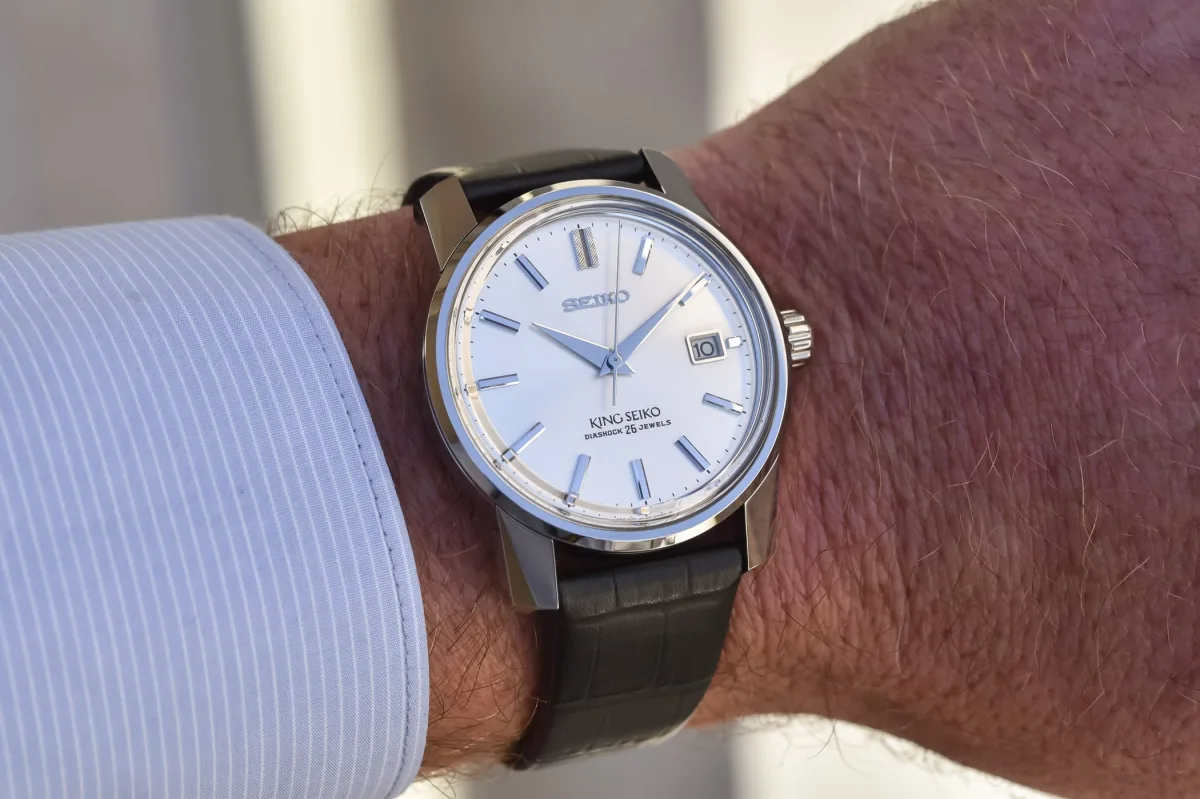
When you think of high-end watches produced by Seiko Watch Corporation, you naturally conclude that there is one alternative, and that is Grand Seiko. In today's context, you would be right to think so. But if you look back at the brand's history, you can find another name that was once synonymous with excellence in watchmaking and precision; King Seiko, an internal competitor to Grand Seiko. While the latter has existed for several decades, King Seiko somehow faded away until the end of last year, when, as part of its 140th anniversary, Seiko decided to recreate the iconic King Seiko KSK watch. It took us some time to get our hands on one of these SJE083 models, and I couldn't wait to find out if it lived up to its name. Let's dive in.
THE RESULT OF HEALTHY COMPETITION…
Say what you will, but competition can be an extremely beneficial challenge. There's nothing good about being stuck in your own bubble, ignoring what the rest of the world is doing. Competition drives the need to grow, evolve, question who you are, and consequently innovate and change. This holds true for all industries, and watchmaking is no stranger to this need for innovation and rivalry.
This situation has always been natural for European manufacturers, most of whom were located in a small part of Switzerland and were therefore aware of what their neighbors were doing… The Swiss watch industry, for most of its history, was built around an ecosystem of suppliers and watch brands, with horizontal integration and the purchasing of components from the same companies.
However, before becoming the global giant we know now, Seiko faced a challenge well-known to most islands, namely - isolation from the rest of the world. Soon Seiko developed the concept of vertical integration, where most components were produced in-house, as it could not take advantage of the same ecosystem that exists in Germany or Switzerland. And the Group's executives quickly saw the problem of the lack of this healthy competition as a driving force for innovation. And so, in 1960, Grand Seiko was created. The company, founded in 1881 by Kintaro Hattori, decided to up its game and create a sub-brand responsible for producing the most advanced, precise, and luxurious watches of the brand. But alone, you can only do so much. To achieve greatness, one must be challenged… And this challenge would be issued a year later under the name King Seiko. Surprisingly, this is the result of a Japanese mentality, entirely different from the Occidental one…
In the late 1950s and early 1960s, Seiko had two production sites: Suwa Seikosha and Daini Seikosha. As part of an internal competition aimed at accelerating innovation and pushing teams to even higher results, Suwa Seikosha became responsible for the production of Grand Seiko watches. By 1961, Daini Seikosha responded with its own vision of high-end, ultra-precise watches, which were named King Seiko. The internal rivalry between the two wholly-owned subsidiaries led to a race to become the flagship brand of the company. The pursuit of precision and meticulousness was their shared driving force to glory, so it was inevitable that both brands reached the culmination of their achievements by each creating Hi-Beat class watches.
As both companies paid great attention to precision, and the 1960s were an era when chronometry competitions were still a thing to promote watches, both Grand Seiko and King Seiko participated in several such trials, including competitions at the Neuchatel Observatory, both in 1964 and 1967 - and both returned home with quite good results!
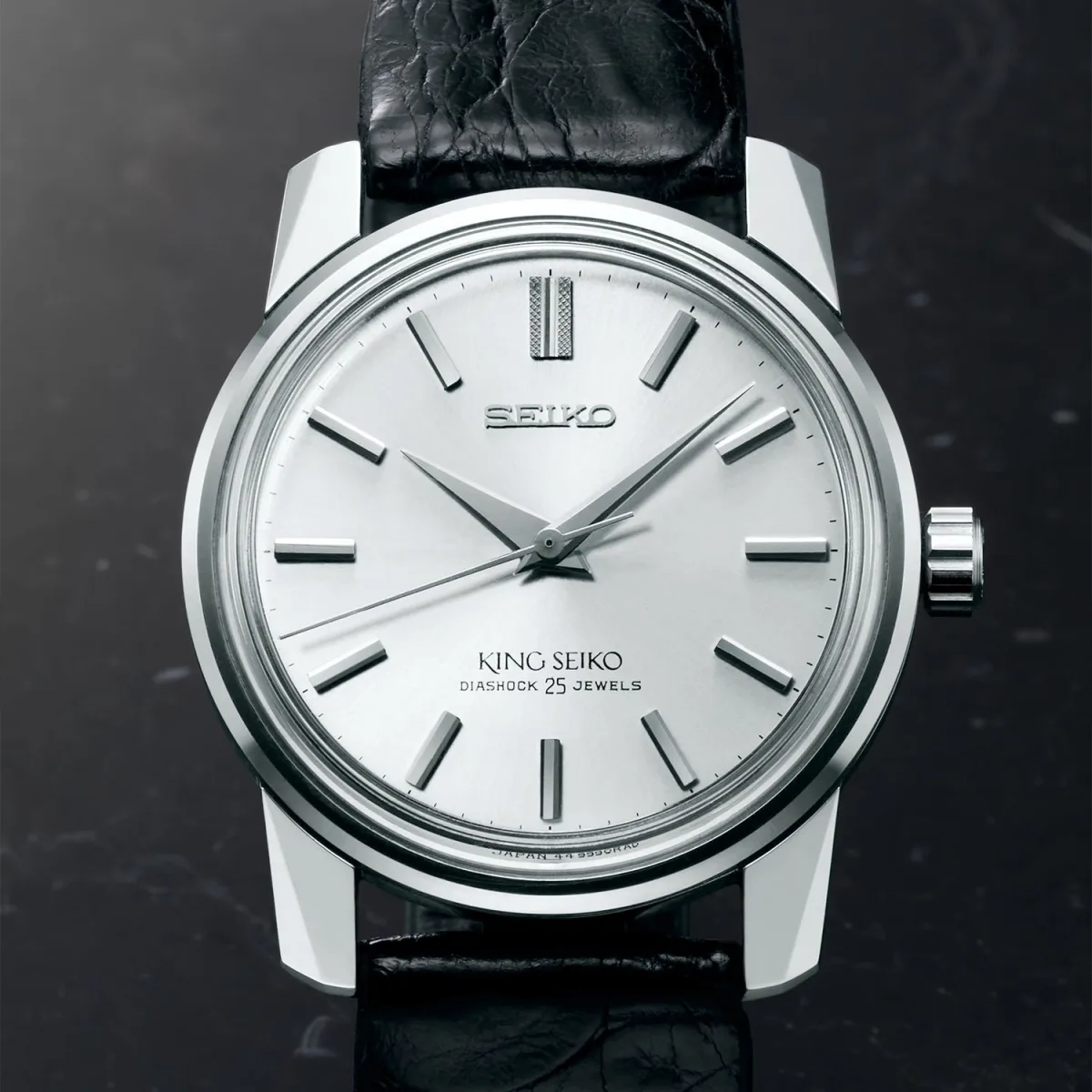
The most notable watch from the King Seiko catalog is undoubtedly the 1964 model, the second generation of KS watches. Equipped with the hand-wound caliber 44A under the reference 44-9990, these watches were known as KSK, where KS stood for King Seiko, and the K at the end was an abbreviation for Kisei-Tsuki, meaning stop-seconds in Japanese. However, 1969 would drastically change the course of things, as Seiko introduced quartz technology, ending the endeavors of both King Seiko and Grand Seiko - quartz was so precise that the watches produced by these two companies became obsolete. And while Grand Seiko continues to operate actively, KS remains dormant.
KING SEIKO KSK SJE083
Seiko waited for a celebratory year to bring back the iconic King Seiko name to the watch dial. Needless to say, the revival of this name brings great expectations, but also in today's context, the watch could not cannibalize the production of Grand Seiko. So the Seiko Re-Creation of King Seiko KSK is, in some ways, a high-end Seiko that is nevertheless somewhat below what Grand Seiko is today…
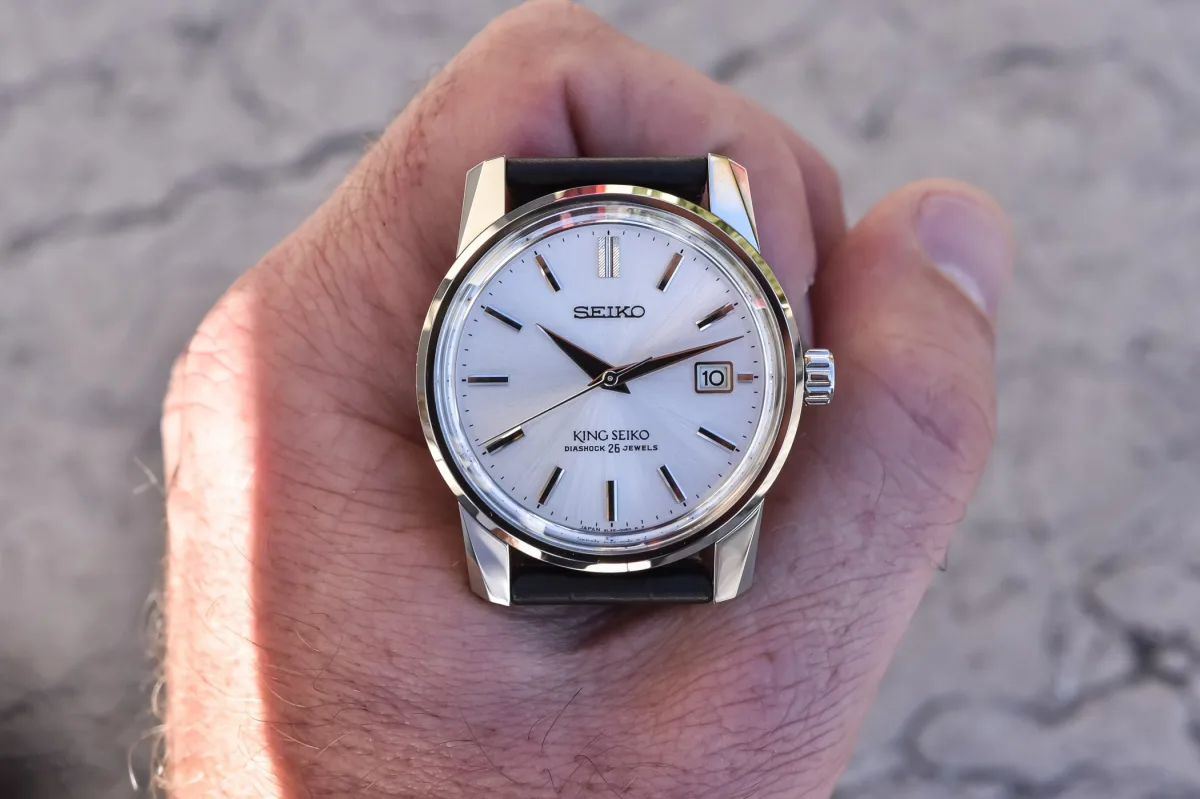
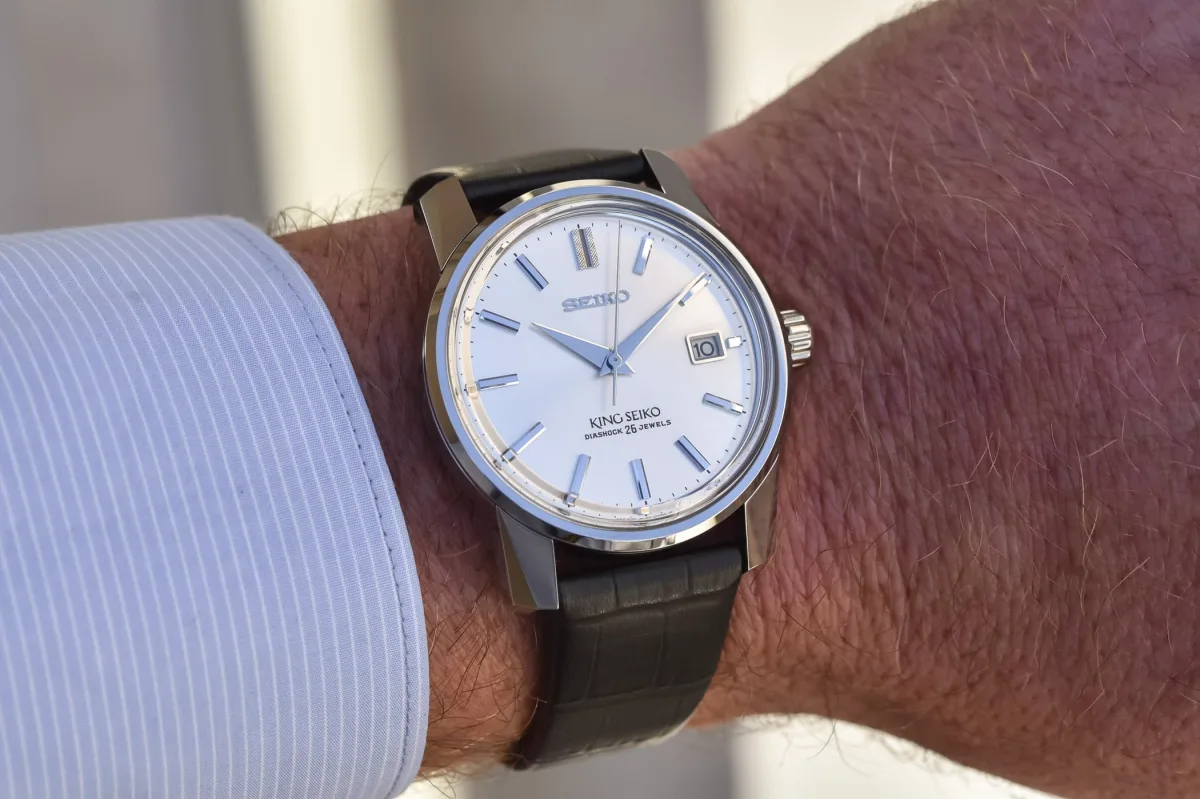
Starting with the case, we immediately see the connection between the new SJE083 and the second-generation King Seiko - and to clarify the situation from the outset, the entire watch is actually an exact reissue of this model 44-9990. The proportions are splendid, with a compact diameter of 38.1 mm and a height of 11.4 mm, which includes a raised, box-shaped sapphire crystal (itself accounting for at least 1.5 mm of height). The watch is worn on a very (too) classic crocodile strap, which seems appropriate, although I am sure future owners will easily find something more casual and cool to complement this watch…
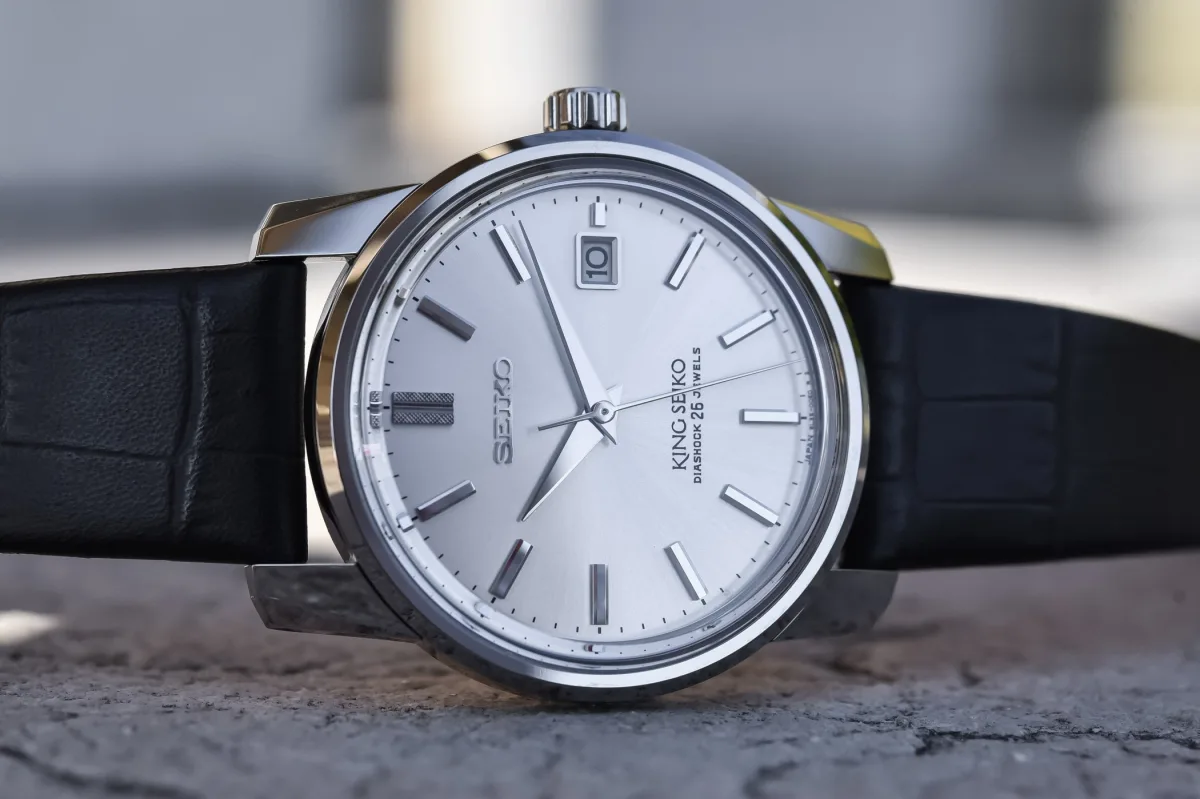
The design and shape of the case are typical of the early days of Grand Seiko and King Seiko, at a time when the Group decided to hire in-house watch designer Taro Tanaka - an important figure, as he simply defined the brand's identity for decades to come in what is known as the "Grammar of Design". What Tanaka did was radical and complex, as he decided to distinguish Seiko from other manufacturers (understandably Swiss), defining several rules for creating cases, especially in the Grand Seiko and King Seiko lines.
Using gemstone cutting as a guiding principle, in 1962, he developed four rules under the so-called "Grammar of Design" - in short, cases, hands, and dials should be sharp and have flat surfaces for reflecting light, bezels should be simple, cases should be finished with distortion-free polishing, cases should be of unique shape, and no more plain round cases.
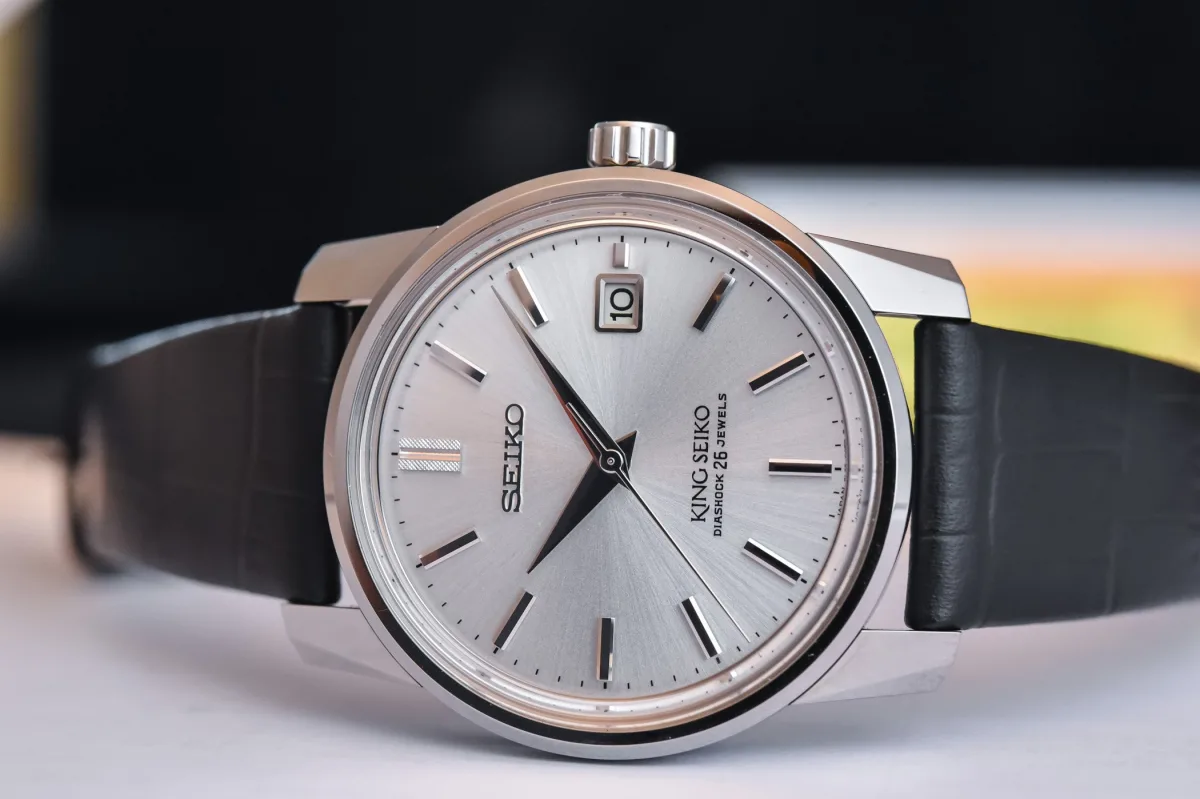
And looking at the KSK, you immediately notice these rules. Although the King Seiko KSK SJE083 is quite a simple watch, it is nevertheless very graphic and much sharper than all the Swiss watches of that time - this is especially noticeable on the lugs. The case, made of steel with a super-hard coating, has sharp angles and edges all around, reflecting light in all directions. Furthermore, like Grand Seiko watches, the case is entirely polished using the so-called Zaratsu technique, resulting in delightful distortion-free surfaces. This case is vintage not only in its execution but also in its specifications, with rather limited water resistance (50 meters, but in line with the overall style).
Despite being a Seiko-only watch, the dial of the King Seiko KSK SJE083 did not stay aside. Of course, the simple silver-white base with a sunray pattern is nothing extraordinary, but upon closer inspection, you can see attention to detail on the hands and markers. All are fully polished using Zaratsu, with the same level of craftsmanship as the case, and the ultra-sharp hands have a beautifully polished flat surface, as well as large bevels… Something very similar to GS (which is not a bad thing, on the contrary). The 12-hour marker is special, as it was in the 1964 watch, with a very fine pyramid pattern on the top surface.
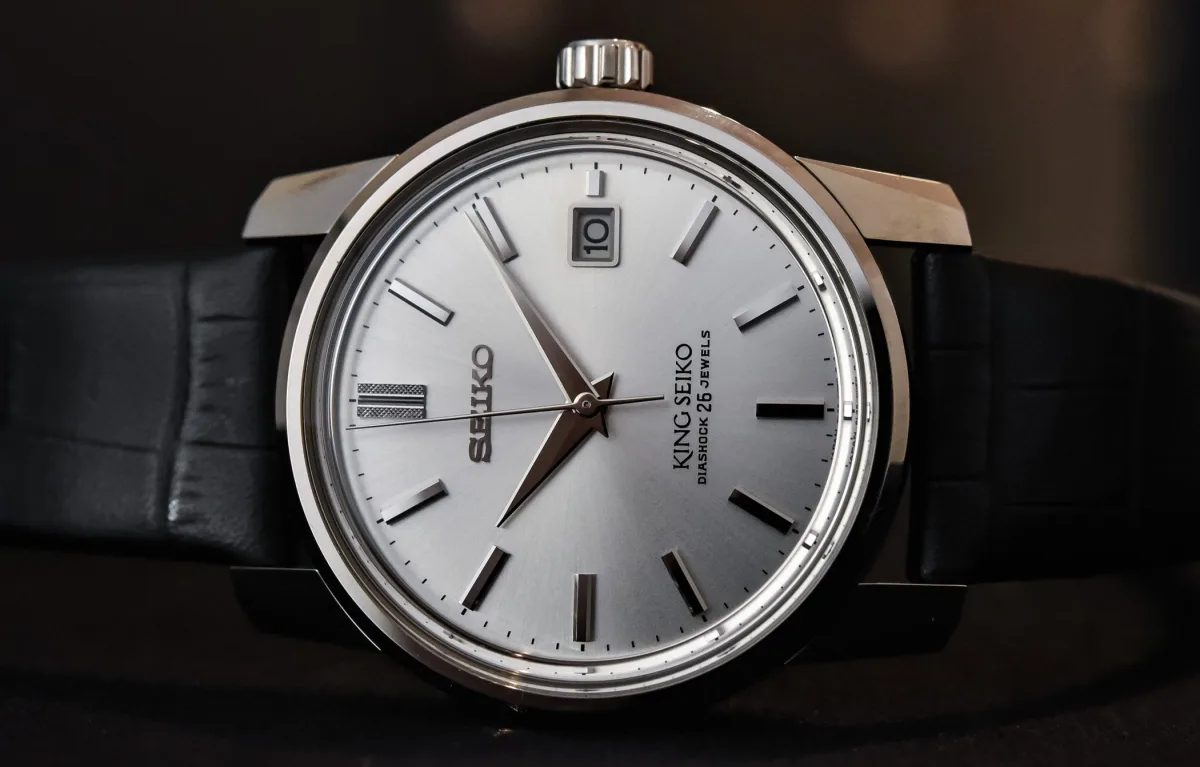
One cannot overlook the evolution at the 3 o'clock position, as these King Seiko KSK SJE083 watches now feature a date… While not historically accurate, at least its integration is well-executed, with the window framed by a beautifully crafted metal element. On the other hand, what truly brings joy is the return of the historic "King Seiko" logo on the watch dial, alongside the jewel count and Diashock indicators.
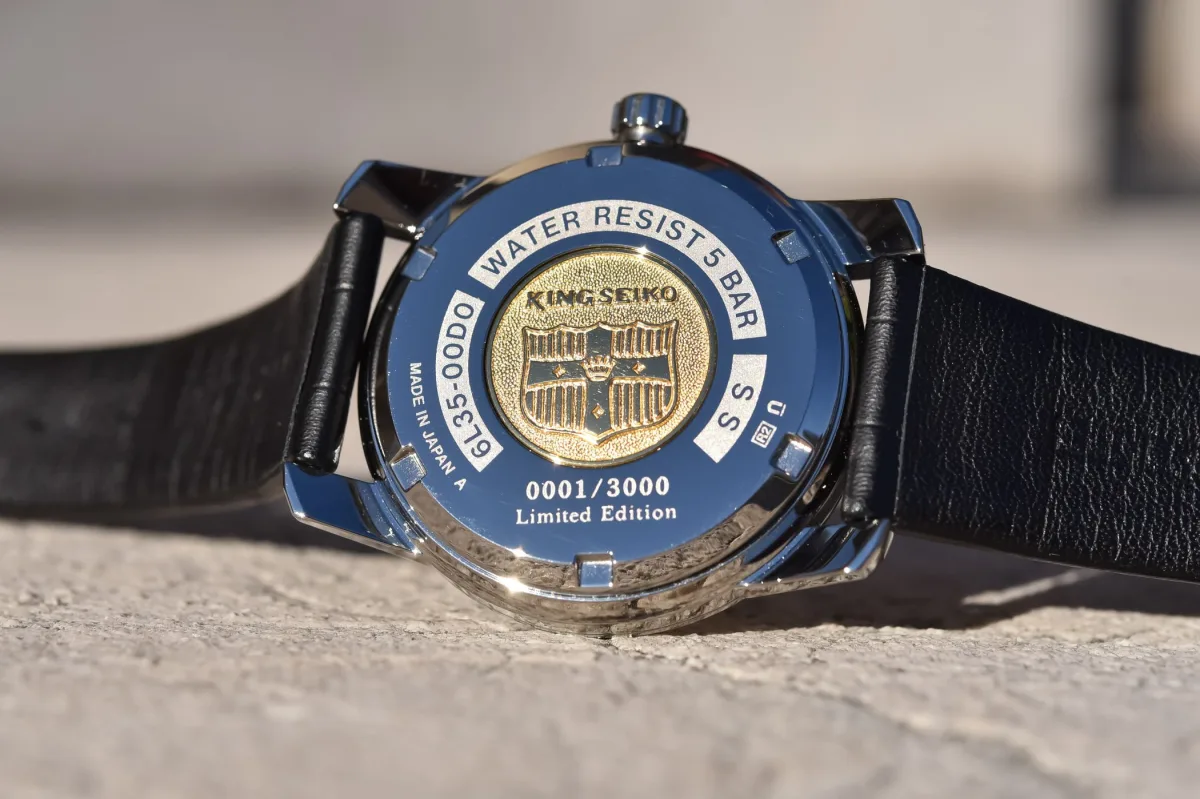
Flipping the watch over, you can see an exact replica of the gold emblem found on the original KSK watches. A nice touch, this medallion, however, obscures the view of the movement. Personally, I don't mind, as it makes sense in this historical context, and a transparent case back would be out of place. Under this screw-down case back lies the Seiko in-house caliber 6L35. While the original KSK used the hand-wound caliber 44A, in this recreation, everything has been modernized with an automatic movement - another reason why a closed case back is more fitting. A more refined and high-end movement, mainly intended for the limited Presage series, it was introduced in 2018 as a thinner alternative (only 3.7 mm in height) and as a movement with finer regulation. It operates at a frequency of 4 Hz and boasts a 45-hour power reserve, designed for -10/+15 seconds per day.
BRIEF SUMMARY
With this Re-Creation of King Seiko KSK SJE083 model, the brand pays tribute to one of the most glorious chapters in its history. Of course, one can easily point out a slight lack of movement precision (at least compared to what KS implied in the past), the presence of a date, or even the presence of an automatic movement, but overall, the craftsmanship not only precisely matches the original watch but is also excellently executed - at a level not far from what GS produces. From this perspective, undoubtedly, the King Seiko KSK lives up to its name, although the price (above 3,000) is not the most accessible of all. In any case, seeing the King Seiko name again on a watch dial is a joyous event!
AVAILABILITY AND PRICE
The Seiko Re-Creation of King Seiko KSK SJE083 watch is released in a limited edition of 3,000 pieces and is now available in Seiko boutiques (including online) and selected retail partners worldwide. The price of the watch is 3,400 euros. For more information, visit www.seikowatches.com.
TECHNICAL SPECIFICATIONS - SEIKO RE-CREATION OF KING SEIKO KSK
Case: Diameter 38.1 mm x height 11.4 mm - stainless steel case with super-hard coating, polished using Zaratsu technique - box-shaped sapphire crystal with anti-reflective coating - screw-down steel case back with gold emblem - water resistance 50 m
Dial: Silver dial with sunray matte finish, applied faceted indices - polished hands with polished bevels - date window with metal frame
Movement: Caliber 6L35, in-house developed - automatic - 26 jewels - 28,800 vibrations/hour - power reserve 45 h - hours, minutes, seconds, and date (-10/+15 sec/day)
Strap: Black crocodile leather strap, stainless steel clasp
Reference: SJE083J1
Availability: Limited to 3,000 pieces. Now available in Seiko boutiques and selected retail partners worldwide
Price: 3,400 EUROS