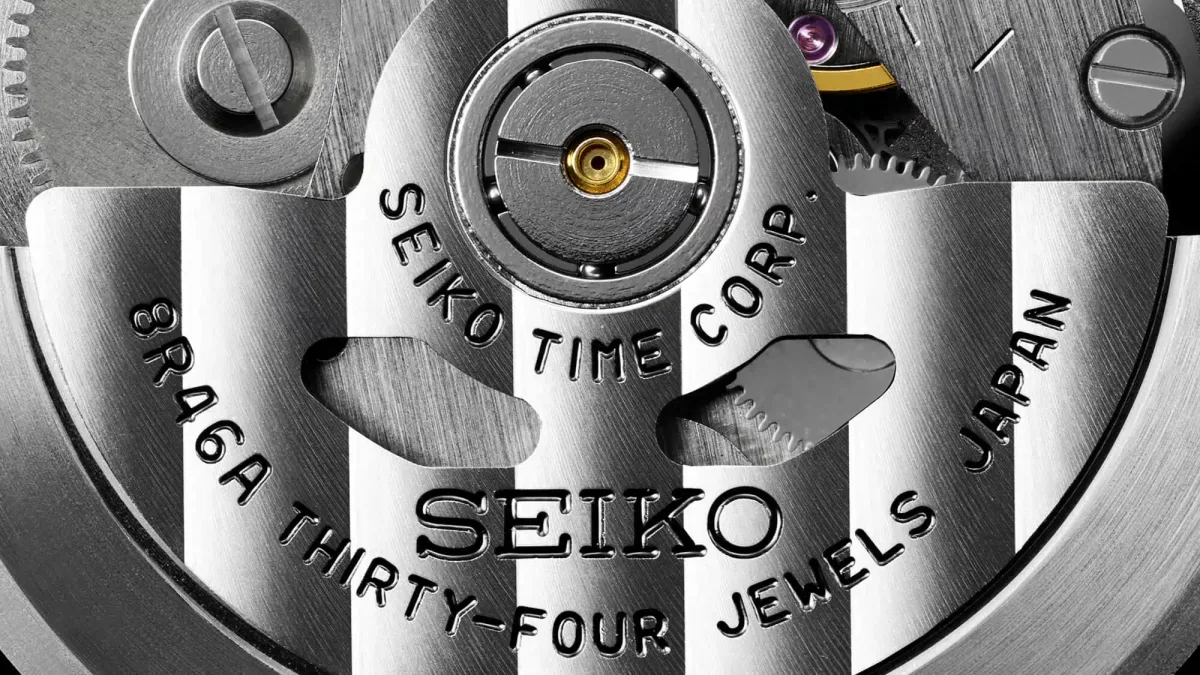
Studying Seiko movements is no easy task. As a brief lesson, we will look at the most popular movements.
The mechanism inside a watch is somewhat like a car engine. It keeps the watch running by moving the hands or controlling a digital display (in digital watches).
Today, there are many watch movements to choose from. However, Seiko has consistently produced good movements for over a hundred years!
Best Seiko Movements
Some of the best Seiko movements are much more affordable than traditional Swiss-made movements. After all, they were largely responsible for the early demise of many Swiss manufacturers during the quartz crisis.
Seiko was the first to release quartz watches in 1969. Their accuracy established the brand as one of the best movement manufacturers in the world.
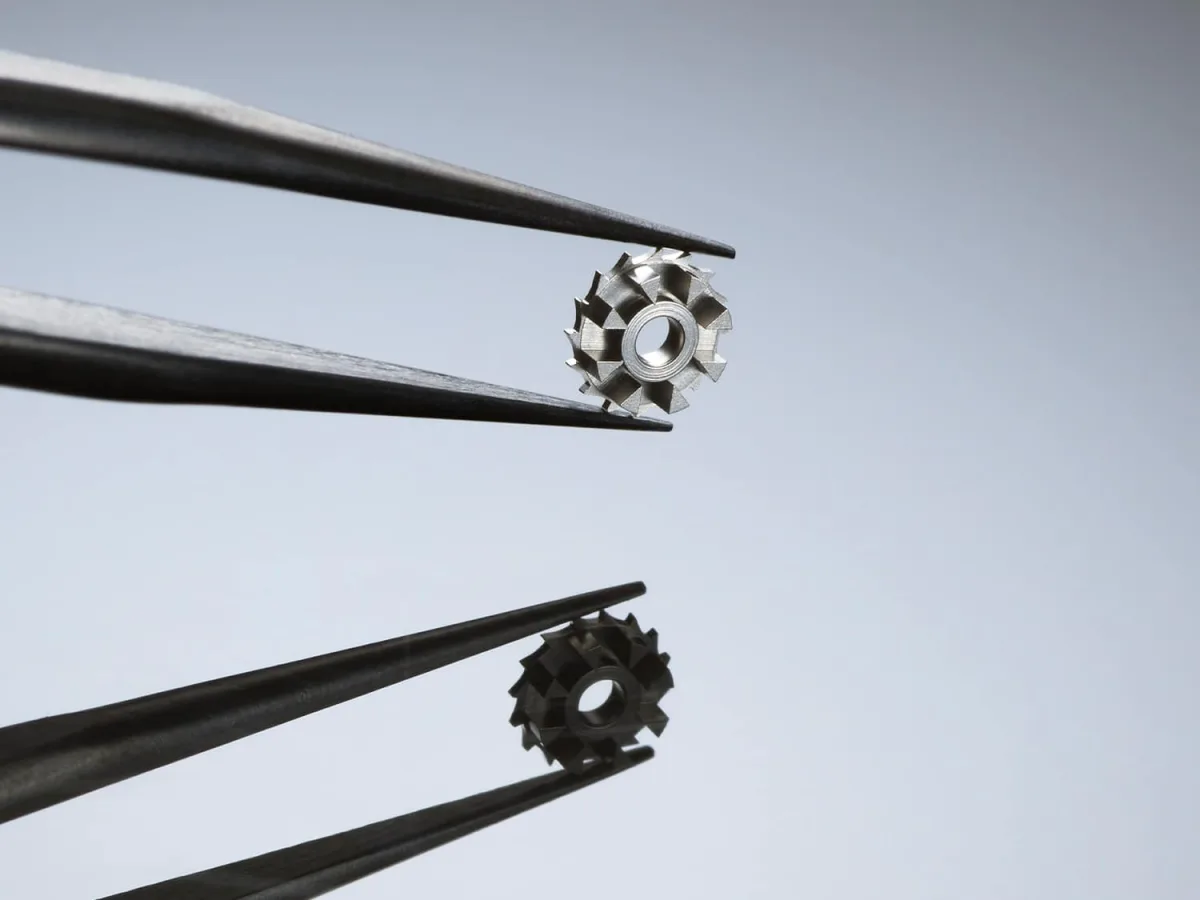
Seiko Column Wheel
However, mechanical movements appeared even earlier. The 1956 Seiko Marvel model featured the brand's first fully in-house movement.
Then, in the 1960s, the first chronograph watches appeared. They used the caliber 6139 - the world's first automatic chronograph movement.
Even more revolutionary was the use of vertical coupling and a column wheel, which contributed to smoother chronograph operation.
Automatic Seiko Movements
Automatic Seiko movements use the natural motion of your wrist to power the self-winding mechanism. This includes a small rotor that spins when you wear the watch.
As the rotor moves in response to wrist motion, it transfers energy to the mainspring.
Of course, the category of mechanical watches (also divided into automatics) includes hand-wound watches. This more complex mechanism is wound manually and gradually unwinds until the energy runs out.
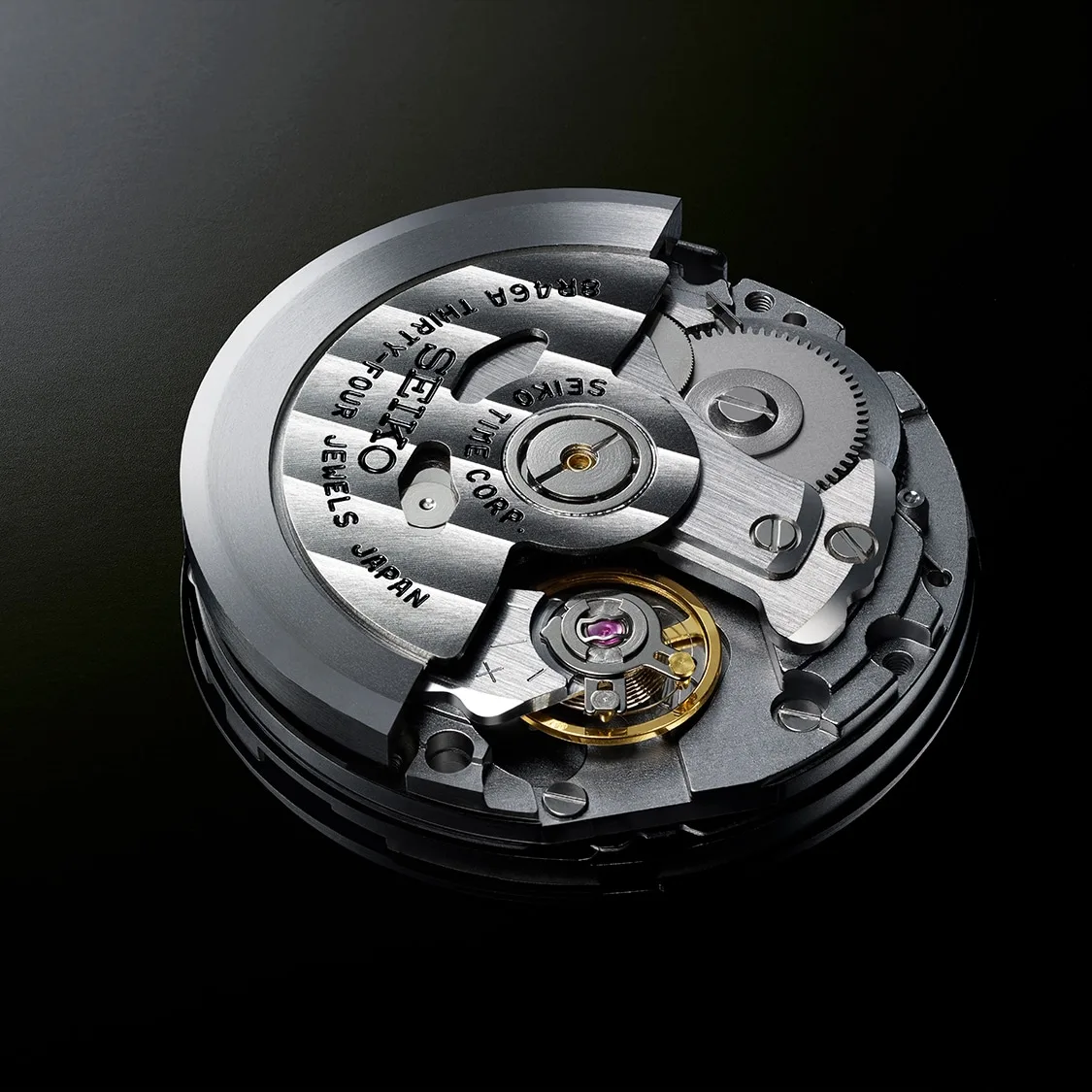
Other types of movements include Seiko Kinetic, which charges a quartz crystal and stores energy in a battery.
Additionally, the proprietary Spring Drive technology draws energy from the rotor without using a battery.
Quartz Seiko Movements
Quartz Seiko movements are a different matter altogether. They are battery-powered and oscillate at a frequency of 32,768 times per second. The resulting electric pulse powers an electric motor, which in turn activates the gears in the watch.
One of the main advantages of Seiko quartz watches is their accuracy. The fact that they are battery-powered also ensures cheaper repairs, maintenance, or replacement.
The first Seiko quartz movement was the Quartz Astron 35SQ, which played its part in the onset of the quartz crisis.
The signals generated by the quartz oscillator are incredibly precise. For this reason, such watches are more accurate than their mechanical counterparts.
5 Mechanical Seiko Movements - Technologies
The Japanese brand has an extensive catalog of movements that remain among the most accurate in the world. Several technological triumphs achieved through Seiko's innovations have helped maintain this reputation.
These include Diashock, Spron, Magic Lever, and others.
Let's look at some of the technologies that improve Seiko mechanical movements.
1. Diashock
Diashock is Seiko's proprietary shock-absorbing system that appeared in the mid-1950s. It was initially used in the company's first in-house movement and supported the balance wheel with a spring-loaded design.
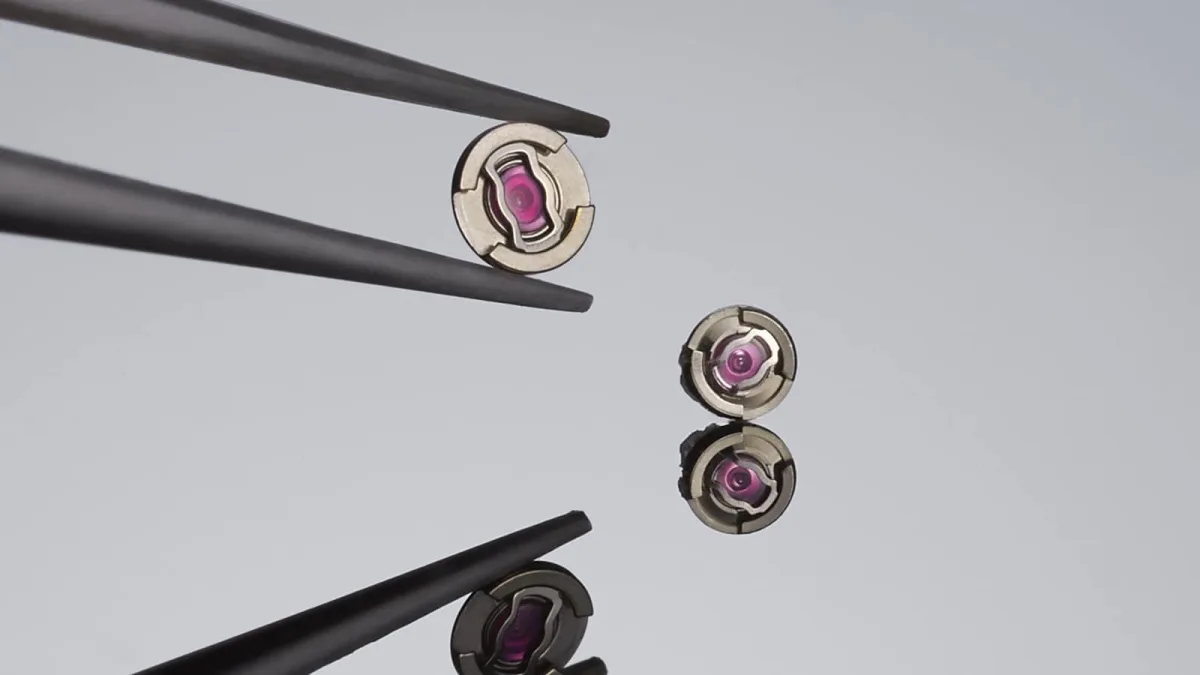
If you drop your watch, there is a high likelihood of damaging component parts of the movement - such as the balance wheel pivot. Diashock is Seiko's own version of the Incabloc technology, reducing the risk of impact on the movement.
2. Magic Lever
Appearing nine years after Diashock, Seiko's Magic Lever increases the efficiency of the winding system. It allows for a shorter winding mechanism and increased power reserve.
The Magic Lever winding system, created by Seiko, has many advantages. One of them is that it consists of far fewer parts than a traditional Swiss winding system.
3. Spron
Seiko's Spron technology is similar to the Nivarox technology. It is a special alloy developed by the company for mainsprings.
The advantages of this cobalt and nickel-based alloy are that it is resistant to tearing and corrosion.
The reason for the long lifespan of the movement lies in the durability of the mainspring. Strengthening its reputation, Seiko is one of the few brands in the world that can manufacture its own mainsprings.
4. Tri-Synchro Regulator
This Spring Drive technology, developed by Seiko specialists, allows for controlling the unwinding of the mainspring to optimize the power source.
It acts as a speed control mechanism. A brake in the rotor slows down the movement, allowing the passage of electrical signals from the quartz oscillator.
5. Spring Drive
Is Seiko's Spring Drive technology automatic or quartz? This is the most frequently asked question when discussing this type of movement.
Simply put, Spring Drive defies classification as it is neither. It uses a mainspring, providing a higher torque that allows for driving larger watches.
Moreover, it does without automatic release, taking advantage of the Tri-Synchro Regulator, which I already mentioned.
Seiko Movements in Order of Decreasing Popularity
Seiko has been developing consistently accurate, well-constructed movements for over a century. Now you can explore some of these Seiko movements ranked by popularity.
1. Seiko 4R35
Among all the incredible Seiko movements (and there are so many!), the 4R35 is the most prevalent. Its versatility and affordability allow for the convenient date feature, which wasn't present in its predecessor, the 7S26.
The movement was released around 2011 and suits models like Seiko Presage and Sumo.
For those who prefer traditional Seiko movements over Spron technology movements, the 4R35 model will be a clear winner.
2. Caliber 7S26
Seiko's 7S26 caliber fully deserves to be on this list of best Seiko movements. It inspired the 7S series and ticked six times per second. This meant that the automatic movement drove a much smoother second hand across the dial.
These watches, especially divers equipped with the 7S26 movement, were impressively durable. The most popular type is the SKX.
This movement is no longer produced, replaced by the 4R36. You may easily get lost among the options equipped with this legacy 7S26 caliber. There are a great many of them.
However, in subsequent years, its architecture has undergone significant changes.
3. Seiko 4R36
As mentioned above, the 4R36 is the movement that succeeded the former 4R35 caliber and before that, the 7S26 caliber. Despite the caliber having the same performance and a 40-hour power reserve, it was somewhat upgraded.
Seiko had already equipped watches with a hacking second hand function and manual winding capability, as was the case with the 4R35 model. However, the 4R36 model also features a day-date function, unlike the standard date aperture in the 4R35 model.
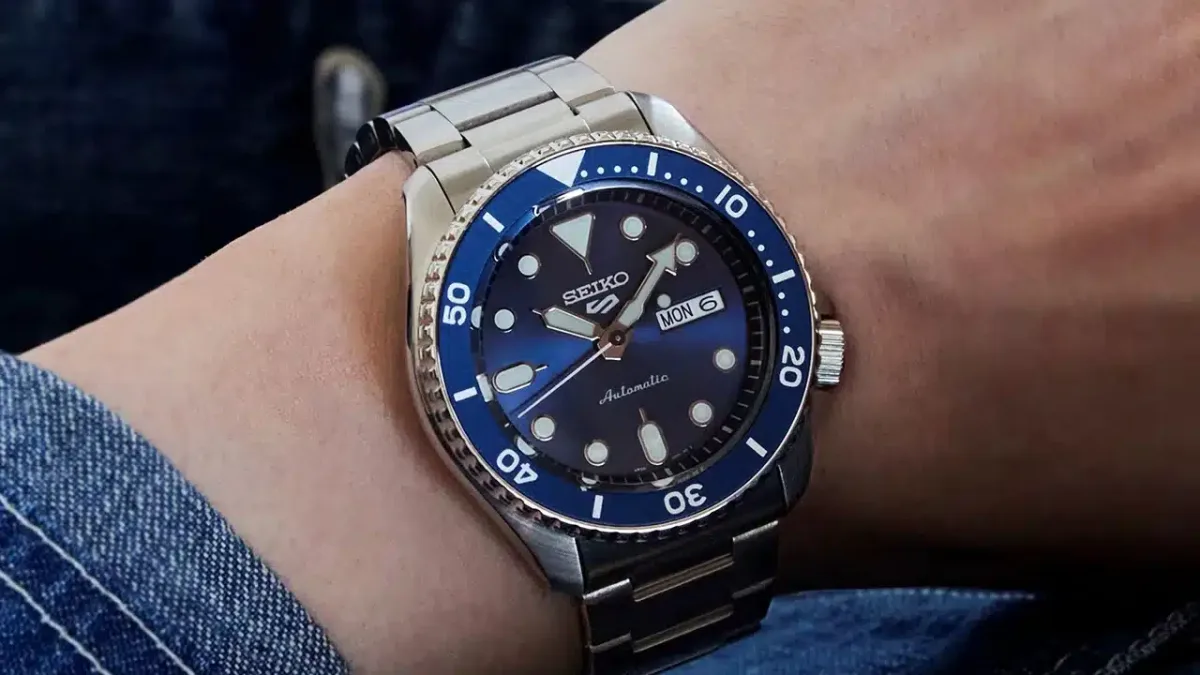
If you look at the Seiko 5 Sports collection today, you will see many models equipped with the 4R36 caliber.
4. Seiko 5R65
The Seiko 5R65 caliber is an impressive movement thanks to Spring Drive technology. It provides an accuracy of +/-1 second per day. This elite caliber, installed in watches like the Marinemaster Golden Tuna, offers a 70-hour power reserve.
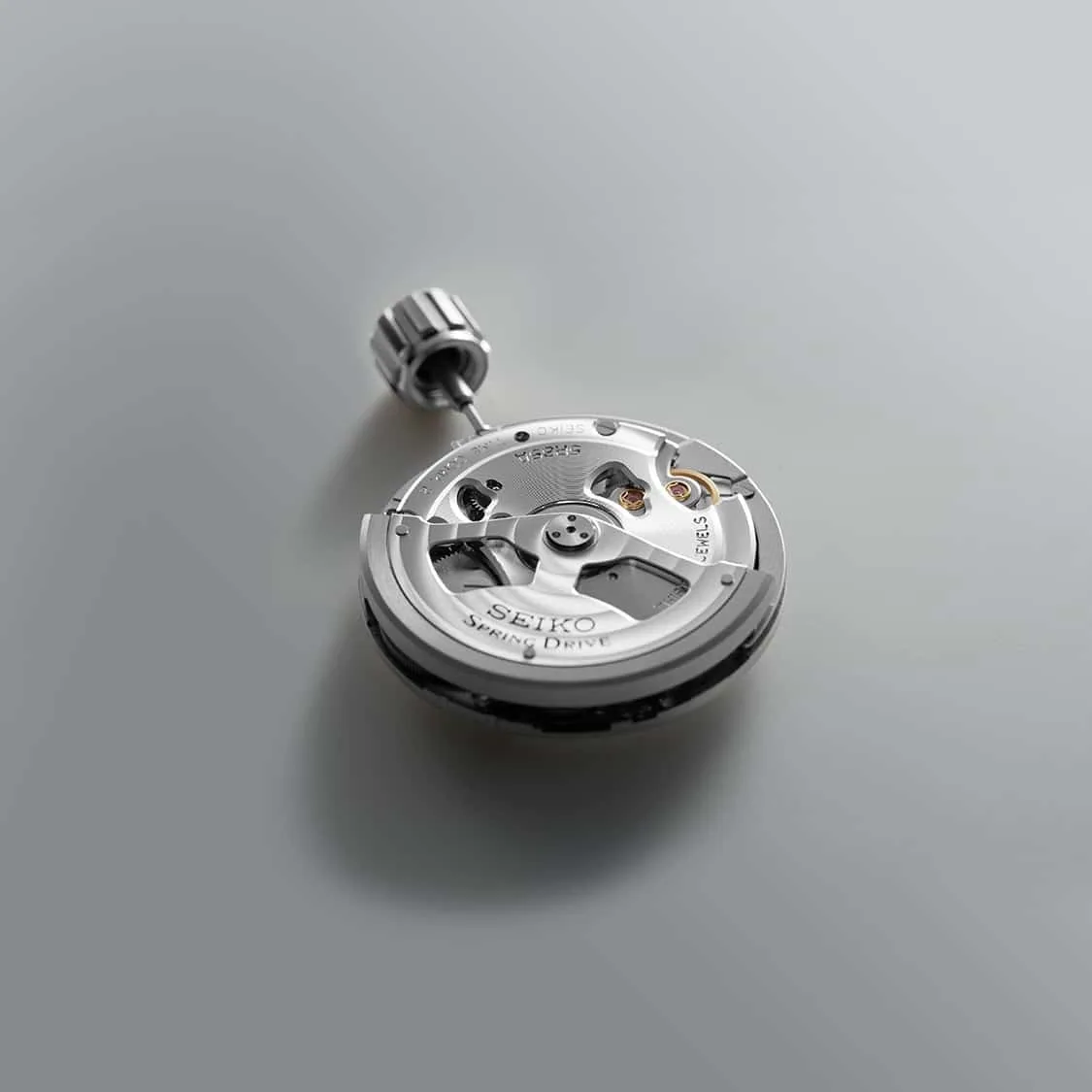
This movement is also capable of performing 28,800 semi-oscillations per hour. It consists of 292 parts, including a column wheel and vertical clutch.
5. Seiko 5X53
The history of the 5X53 model dates back to the appearance of Seiko's solar-powered watches in the 1970s. It also features some modern models from the brand's catalog.
It is a quartz movement with impressive accuracy - /+ 15 seconds per month! Unlike other quartz movements, it can set the time by GPS signal. This is one of the best horological achievements of the Japanese brand, radically altering its history.
The watch is equipped with several complications, such as solar time with a day-of-the-week indicator at the “3 o’clock” position and a “day/night” indication. Additionally, the watch features dual time and 39 time zones.
6. Seiko V175
Seiko's V175 caliber is another solar-charged movement. It is installed in the masculine and powerful Prospex Air Diver’s Chronograph. An additional complication in these watches is, of course, the chronograph.
The movement is equipped with central hours, minutes, and seconds of the chronograph, as well as a small running seconds hand at the “9 o’clock” position. There is also a 24-hour scale at the 3H position and a date at the 4:30 position.
Like all Seiko solar-powered movements, it converts light into electrical energy, storing it in a battery. It requires 5 to 150 hours of light exposure to charge the movement, depending on the light source.
Seiko Movements Quick Search List
Here is a quick list of Seiko movements and key facts about each of them.
1. Seiko 4R35
- Used in: Seiko Presage
- Year of Development: 2011
- Performance: 21,600 VPH
- Accuracy: – 35 / +45 seconds per day
- Power Reserve: 40 hours
2. Seiko 7S26
- Part of the Collection: Seiko Prospex
- Year of Development: 1996
- Performance: 21,600 VPH
- Accuracy: – 20 / +49 seconds per day
- Power Reserve: 40 hours
3. Seiko 4R36
- Included in: Seiko 5 Sport
- Year of Development: 2011
- Performance: 21,600 VPH
- Accuracy: -31 / + 45 seconds per day
- Power Reserve: 40 hours
4. Seiko 5R65
- Part of the Collection: Seiko Golden Tuna
- Year of Development: 2005
- Performance: 28,800 VPH
- Accuracy: -/+ 1 second per day
- Power Reserve: 70 hours
5. Seiko 5X53
- Part of the Collection: Seiko Astron GPS
- Year of Development: 2018
- Performance: 32,768 Hz
- Accuracy: -/+ 15 seconds per month
- Power Reserve: 6 months after full charge from light source
6. Seiko V175
- Featured in: Prospex Air Diver’s Chronograph
- Year of Development: 2018
- Specifications: 32,768 Hz
- Accuracy: -/+ 15 seconds per month
- Power Reserve: Requires 5 hours of light for full charge
Questions and Answers
If you're still weighing the various Seiko movements, these frequently asked questions might help.
Which Seiko movement is the best?
The 4R35 and 4R36 calibers are among the most popular today. While each Seiko movement has its advantages, personal preferences regarding features and budget vary from collector to collector.
Are Seiko movements reliable?
Yes, enthusiasts rate Seiko movements, both automatic and quartz, for their reliability. They are among the most accurate in the world.
How do Seiko movements work?
Some Seiko watch movements are solar-powered, while others are classified as automatic or manual. The former is based on the natural motion of your wrist. However, Seiko's Spring Drive technology arguably surpasses both options.
Conclusion
So, this was a brief course on the best Seiko watch movements. Of course, this list cannot be exhaustive for all the movements created by the Japanese manufacturer.
However, it gives you an idea of the breadth and scope of the brand's craftsmanship in this area.
Which Seiko watch movement do you find the most impressive of all time? Are you a fan of ultra-precise quartz? Or do you prefer cutting-edge solar-powered watch models? Leave your comments in our Telegram channel!