A series of four models dedicated to the ancient masterpieces of the Louvre.
This spring, Vacheron Constantin presented four novelties dedicated to great civilizations. The series was launched as part of a collaboration with the Louvre. The brand's artisans selected four works from the Louvre's Department of Antiquities to pay homage to Egypt in the era of the pharaohs, the Assyrian kingdom, Ancient Greece, and the Roman Empire.
The central image on the watches is created using glyptics - a stone carving technique representing engraving or relief carving on a material traditionally used for cameos. The stones were chosen identical to those used in the original works from the Louvre's exhibition. Along with glyptics, the watches' finish includes engraving, micromosaic, enamel, enamel painting, and gilding.
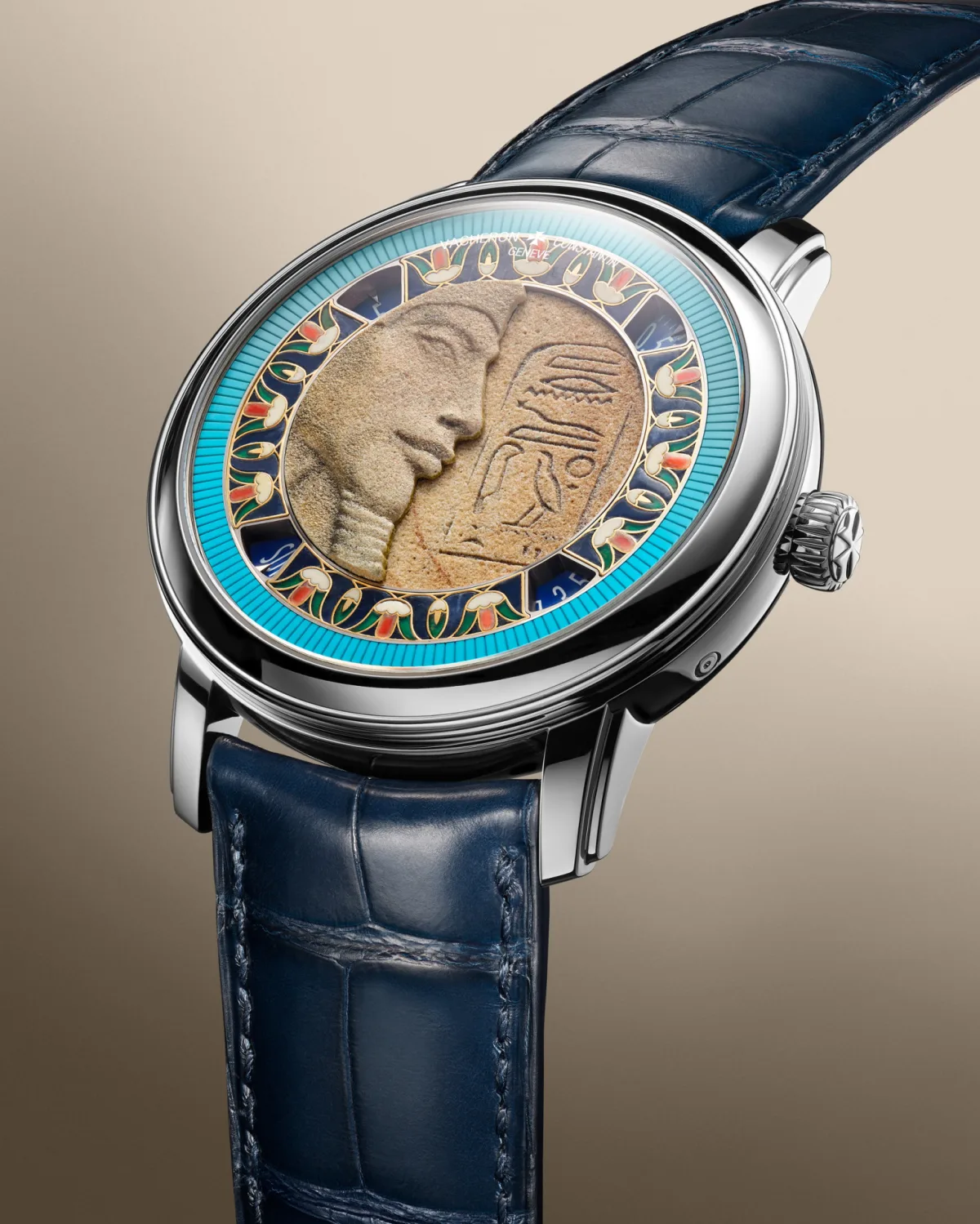
Vacheron Constantin Métiers d'Art Tribute to Great Civilisations – Buste d'Akhénaton
New Kingdom (Egypt, 1500–1000 BC)
The dial reproduces the bust of Pharaoh Akhenaten, who ruled Egypt from 1355 to 1337 BC. It was discovered in the 19th century in Amarna and is part of a group of columns erected in the first years of Akhenaten's reign in a building constructed east of the Karnak Temple. The Pharaoh is depicted with a ceremonial false beard and two royal scepters, of which only the handles remain. His face appears almost abstract and androgynous, reflecting the reforms Akhenaten attempted during his reign.
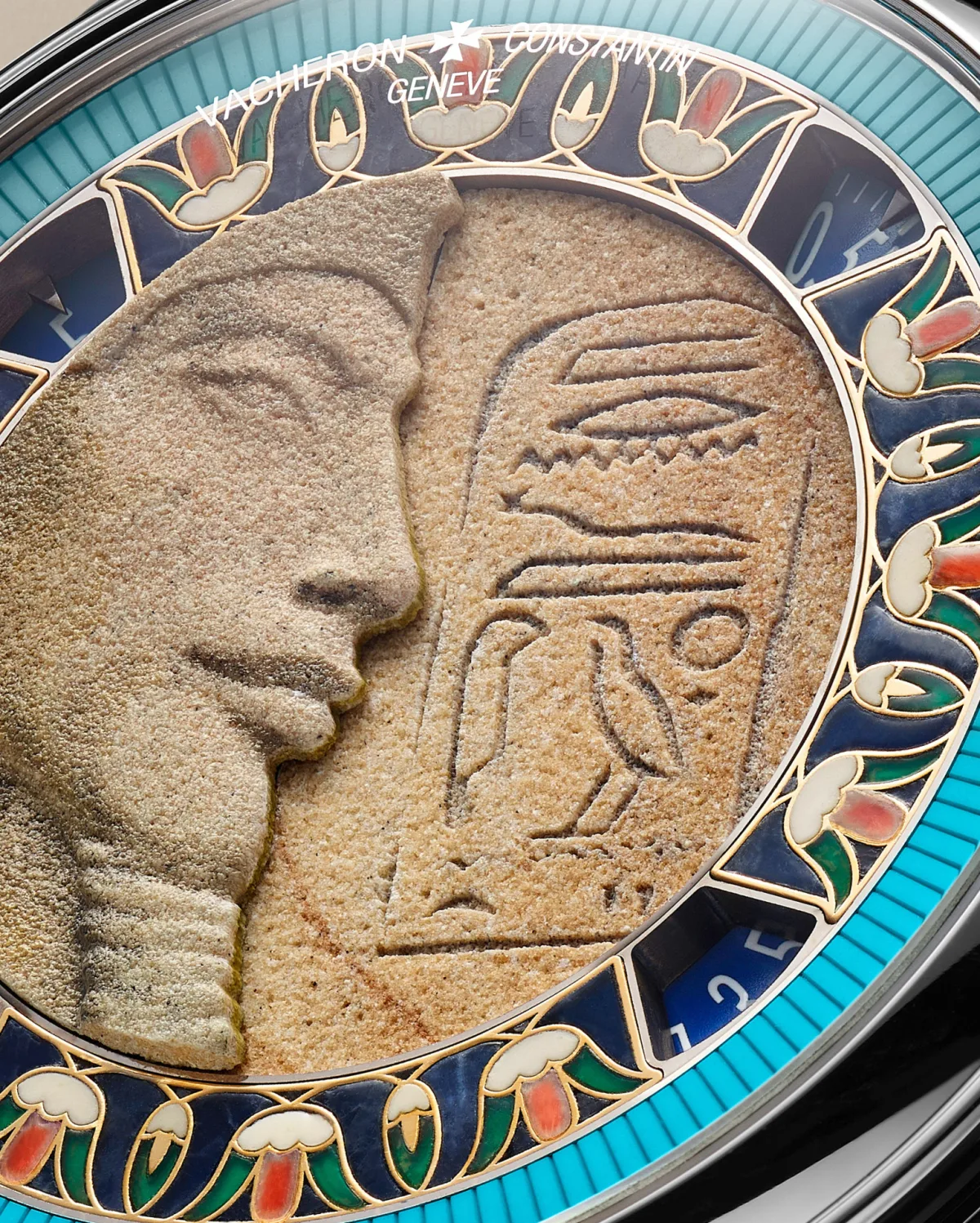
The reproduction of the bust is carved from sandstone mined from Mount Sinai in Egypt. The same material was used in the original work. To enhance realism, the glyptic is hand-patinated. Opposite the Pharaoh, a cartouche inspired by a wall relief from Karnak is engraved on the same sandstone.
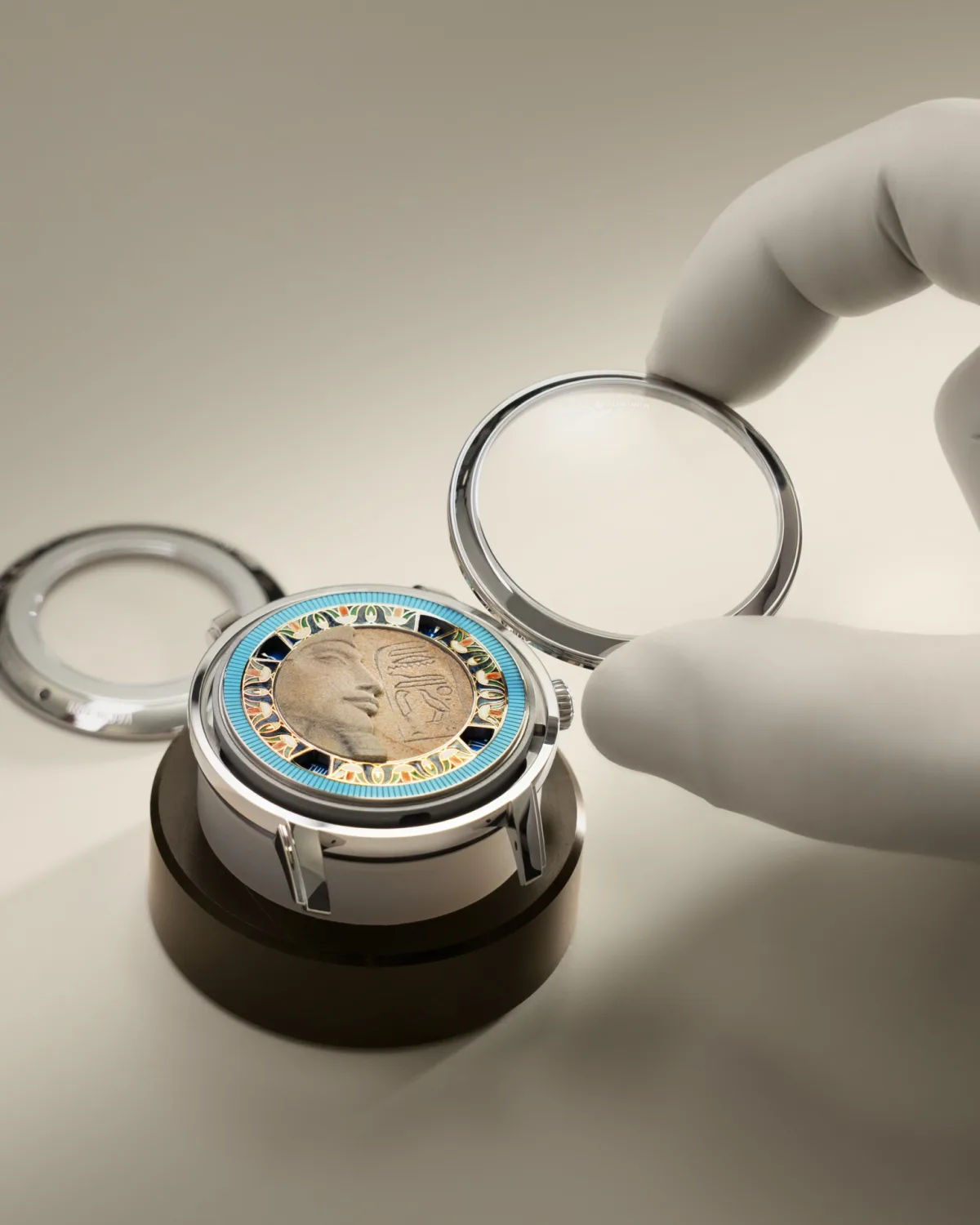
The Pharaoh is framed by two friezes. The outer frieze, inspired by the Nehkti necklace (an ornament of tubular beads) is created using drypoint technique on a turquoise ring. A gold border separates it from the inner frieze, crafted using champlevé enamel technique. The composition combines fragments of red mother-of-pearl, chrysoprase, opaline, and sodalite. It was inspired by a pectoral from the 7th century BC, housed in the Louvre's Department of Egyptian Antiquities. Creating these two friezes required approximately 150 hours of work.
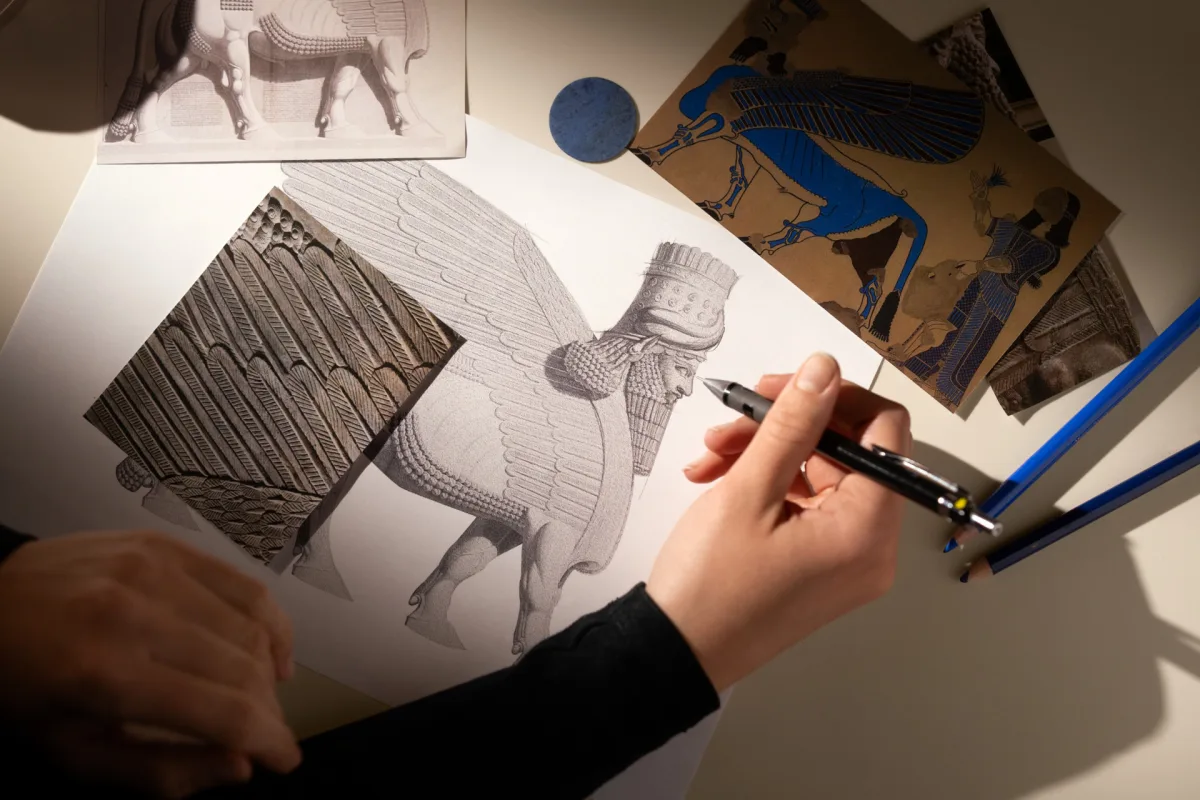
Vacheron Constantin Métiers d'Art Tribute to Great Civilisations – Lamassu de Sargon II
Neo-Assyrian Empire (934–609 BC)
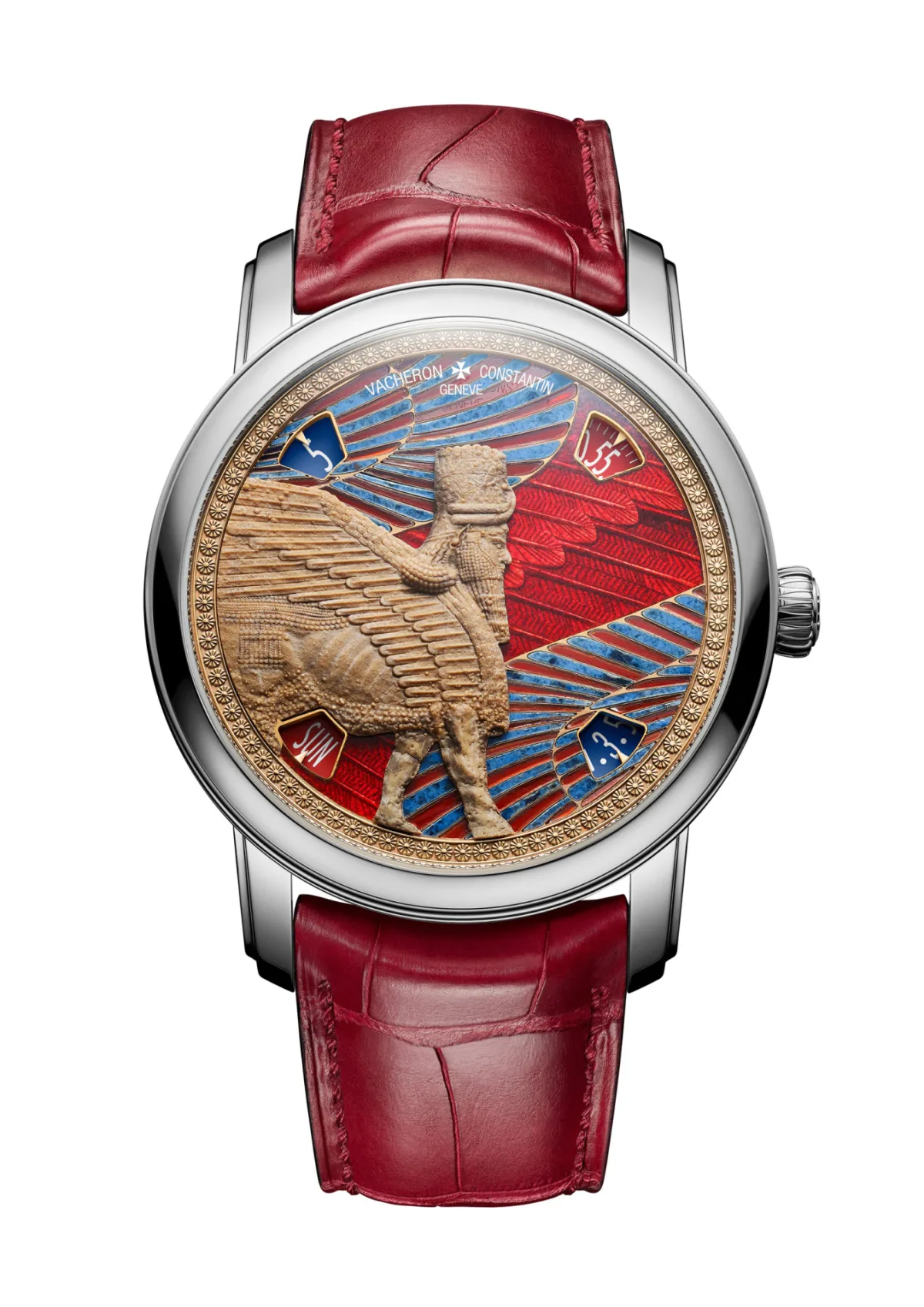
The watch dial features Lamassu - an Assyrian deity with a bull's body, also incorporating eagle wings and human features. These five-meter sculptures, carved from massive alabaster blocks, once guarded the gates of the palace of Sargon II, King of Assyria. The palace was located in the city of Khorsabad in modern northern Iraq.
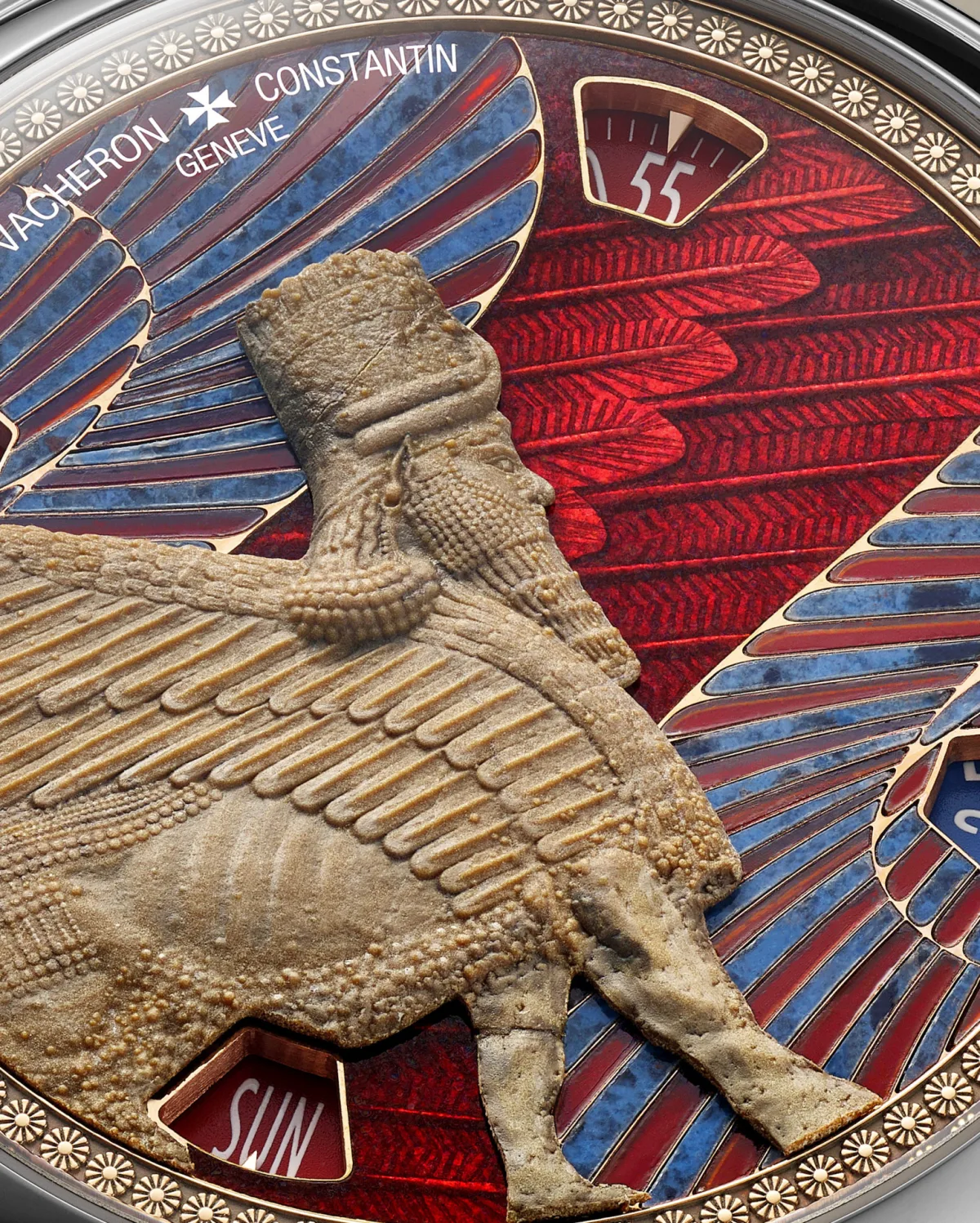
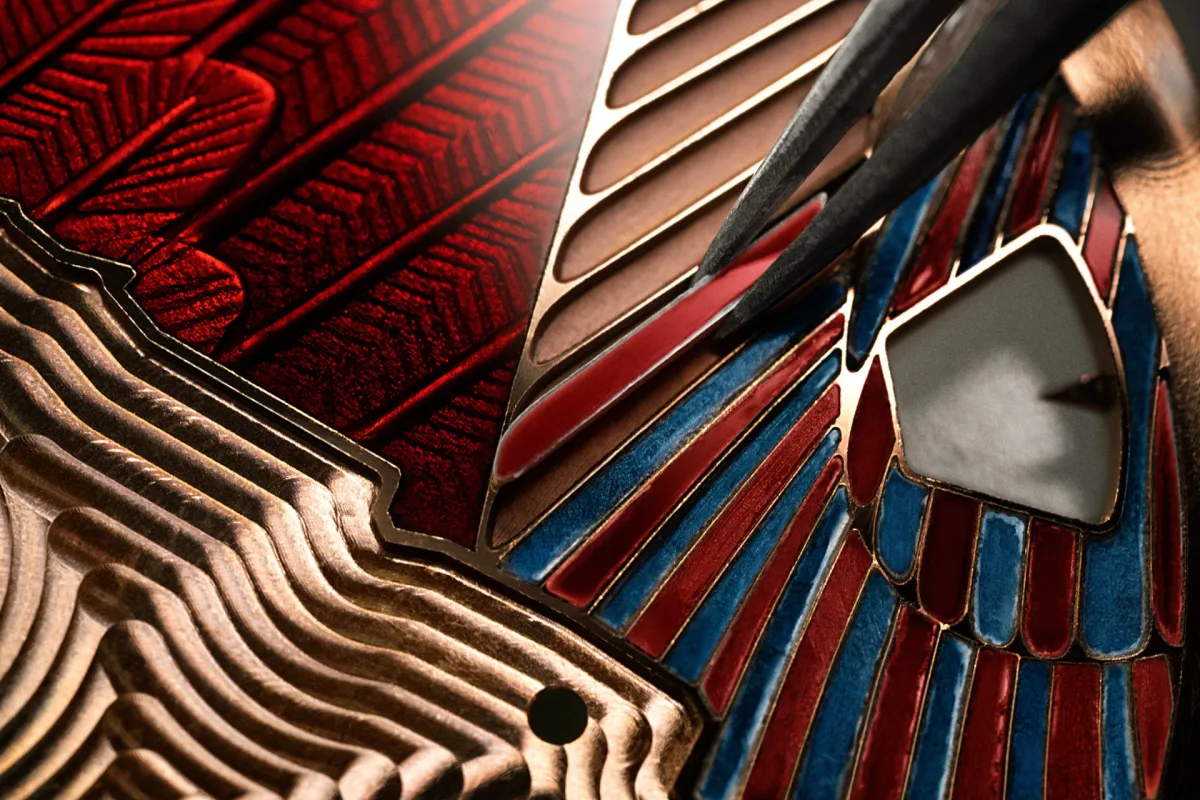
The golden base of the dial is adorned with a stone mosaic technique reminiscent of cloisonné enamel. Tiny mosaic pieces are placed in a canvas outlined by metal engraving. The dial composition, combining thin rods of red agate and blue dumortierite, is inspired by a fresco discovered in Til-Barsip (Syria) in the 8th century BC.
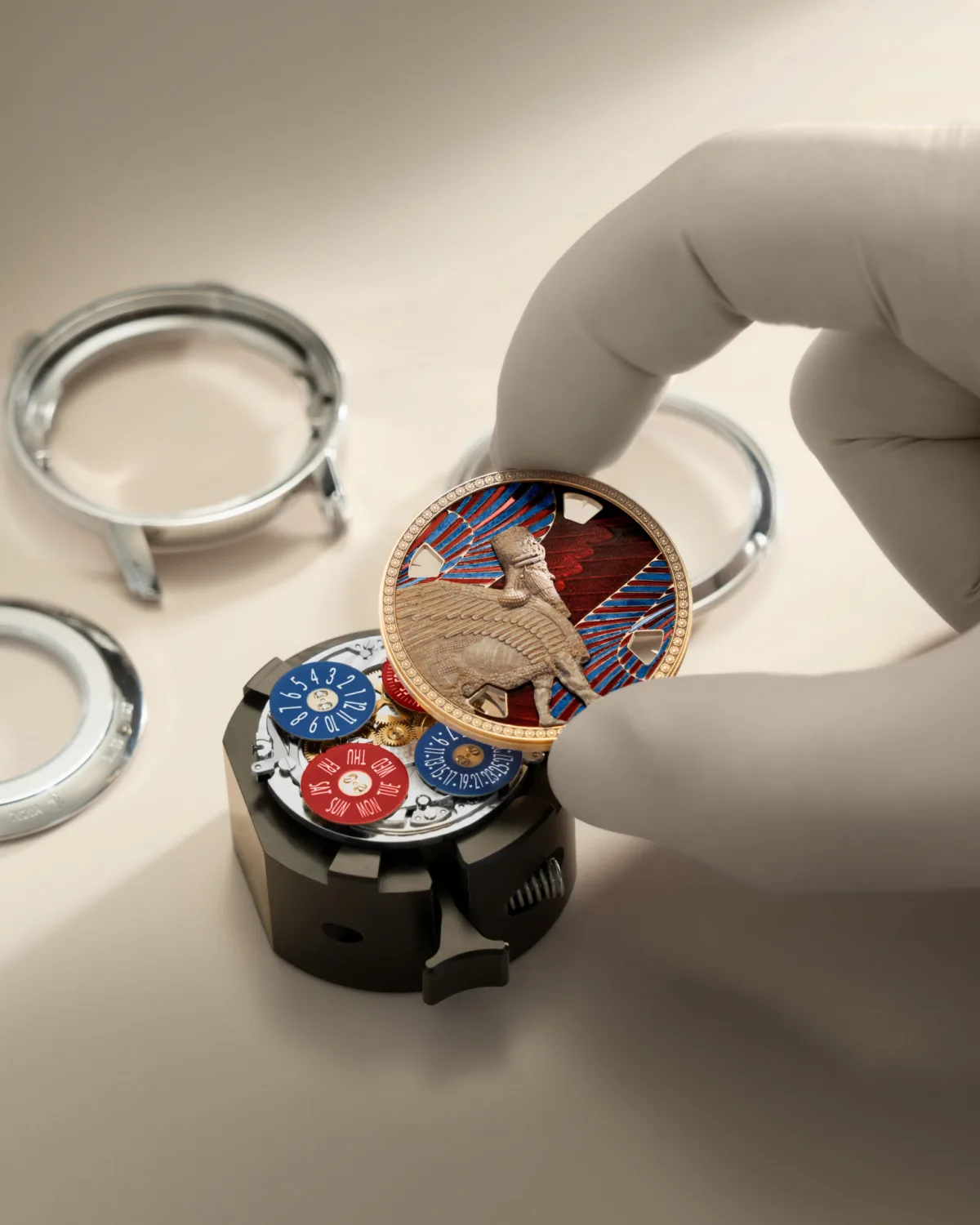
Depth is added to the composition through engraving and flinqué enamel. The Lamassu image is a glyptic of limestone sandstone sourced from Italy. The outer frieze is made of engraved gold, inspired by a design seen in the 1863 painting "The Visit of the Pasha of Mosul to the Excavations at Khorsabad".
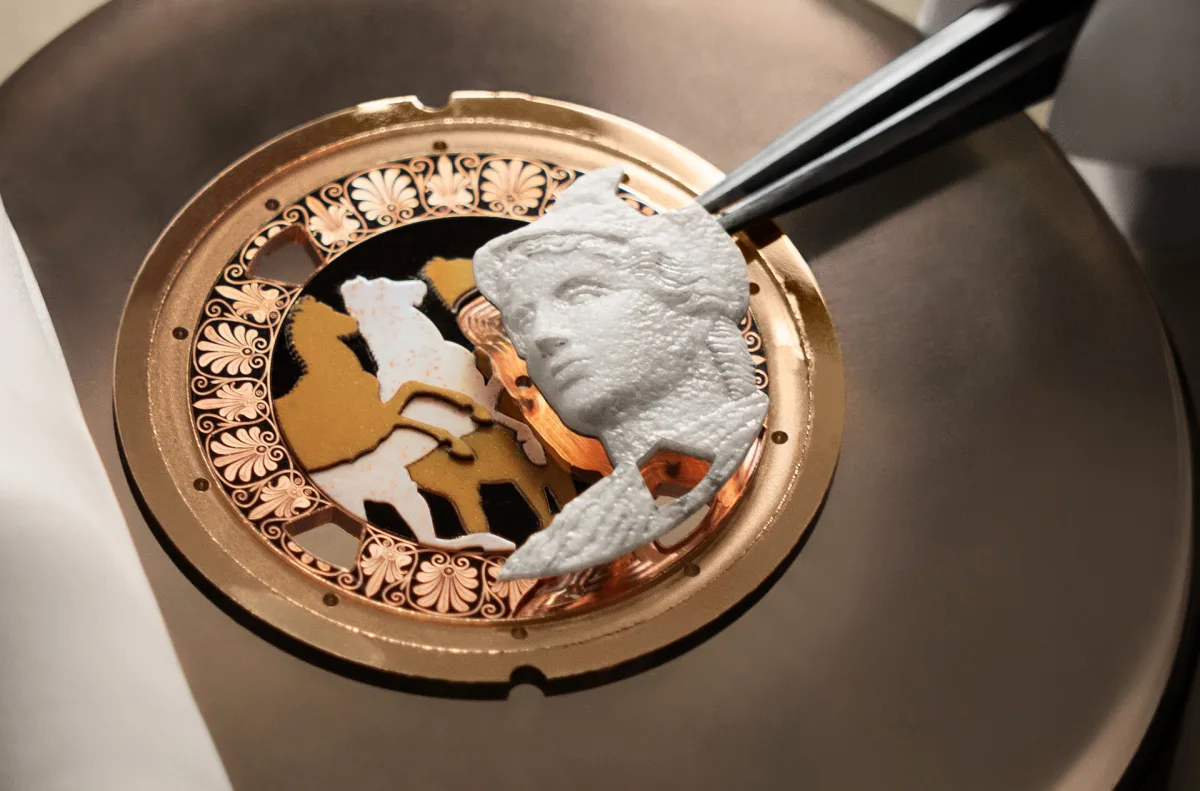
Vacheron Constantin Métiers d'Art Tribute to Great Civilisations – Athéna de Velletri
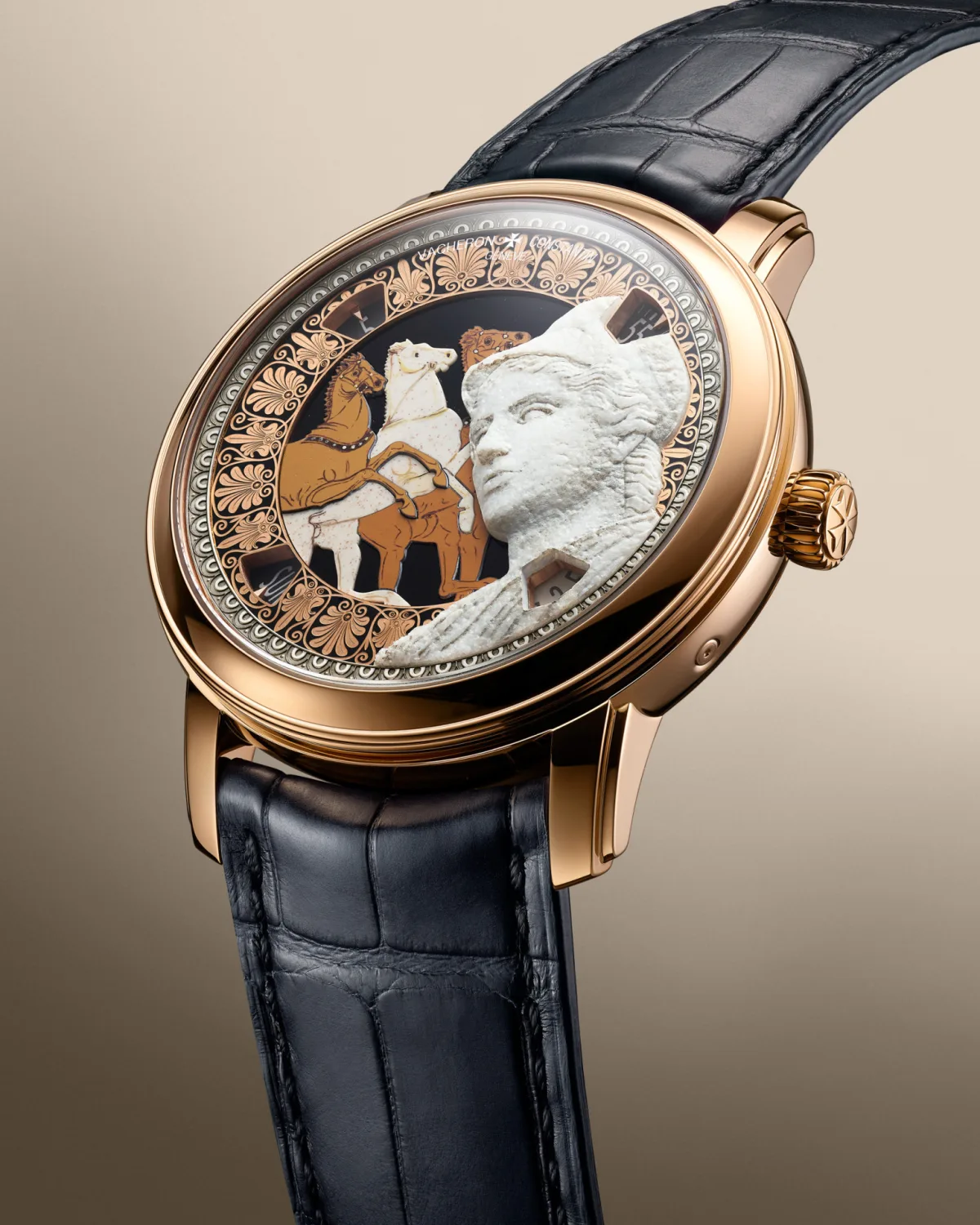
Ancient Greece (480–323 BC)
These watches replicate the marble statue of Pallas de Velletri, discovered in 1797 south of Rome. Standing over three meters tall, the statue is a Roman copy of a Greek original created around 430 BC by Cresilas, a contemporary of Phidias, who is also credited with the famous portrait of Pericles.
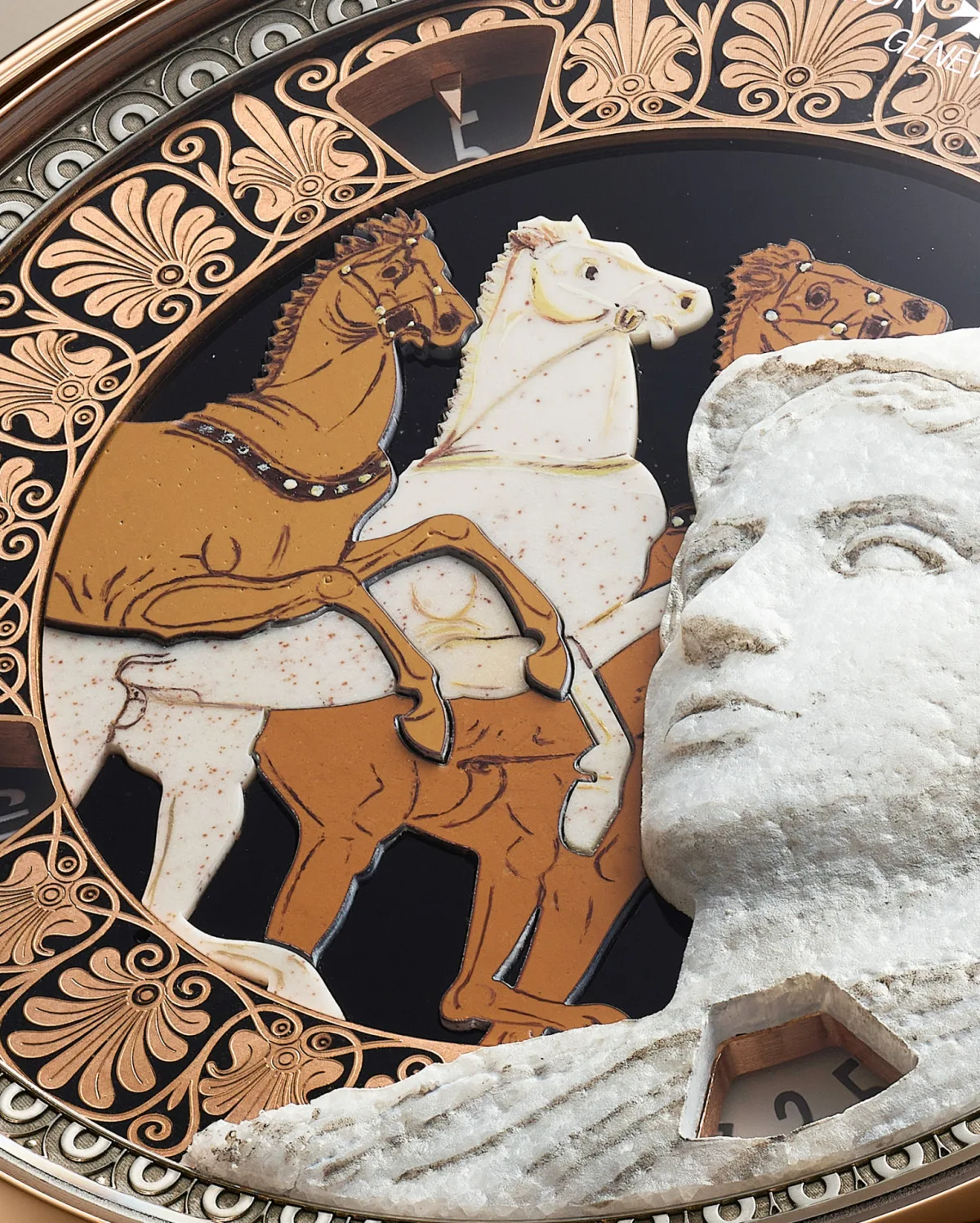
Athena is depicted on a yellow gold dial surrounded by a black cloisonné enamel frieze. The goddess's image is a hand-patinated glyptic executed on pure white marble from the island of Paros. The frieze was inspired by a painted crater by Aegisthos around 460 BC, depicting the murder of Tityus. The enamel-covered frieze is bordered by a second frieze of engraved and patinated white gold, inspired by a scene from the life of Dionysus.
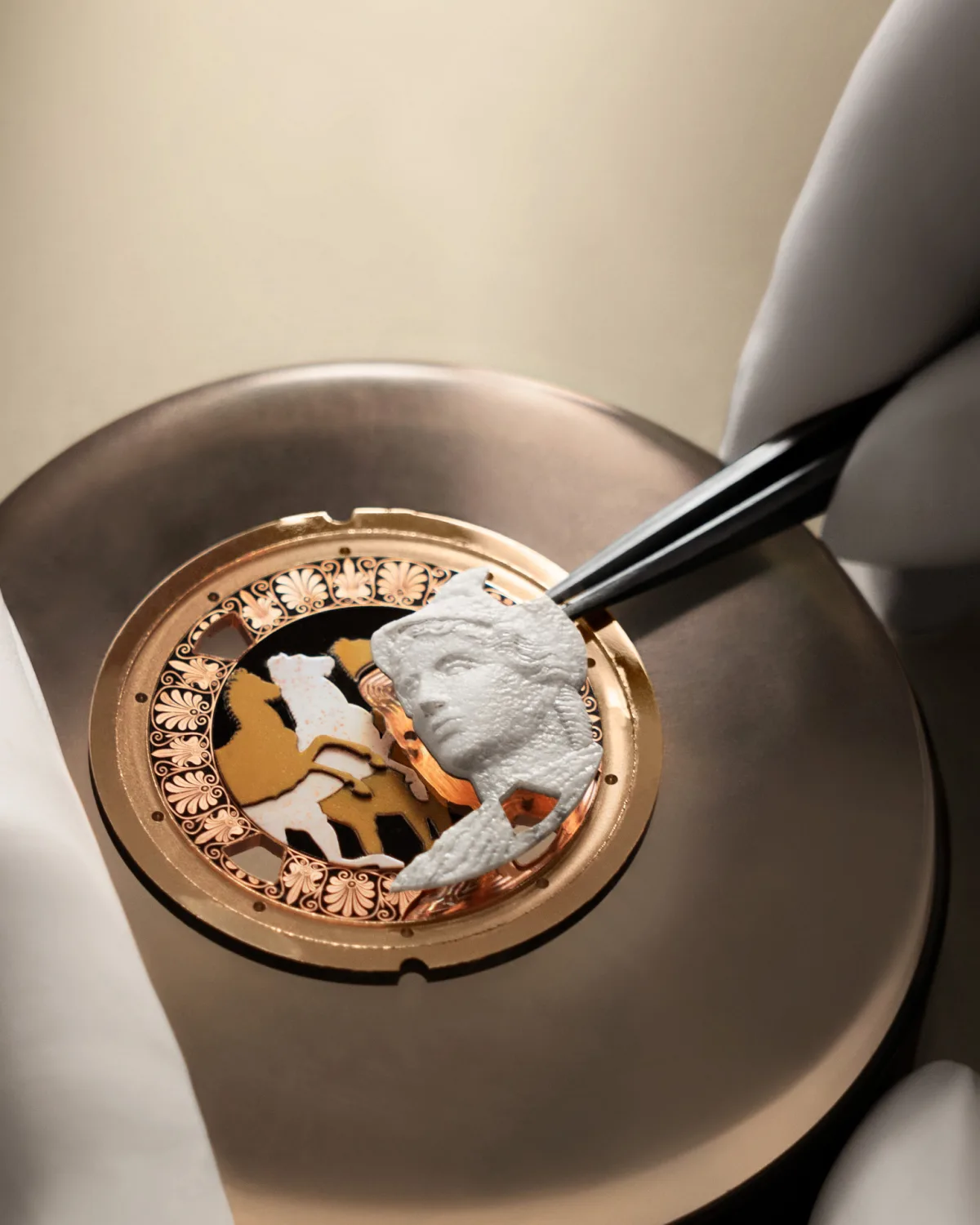
The center of the dial is adorned with stone inlay inspired by a Greek amphora from Milon, (late 5th century BC). The original depicts a battle of giants and gods fighting in chariots pulled by horses. These same horses are depicted in the inlay, made from onyx and cream-white and orange mookaite. About 60 hours of work were required to create this part of the dial.
Vacheron Constantin Métiers d'Art Tribute to Great Civilisations – Tibre de l'Iseum Campense
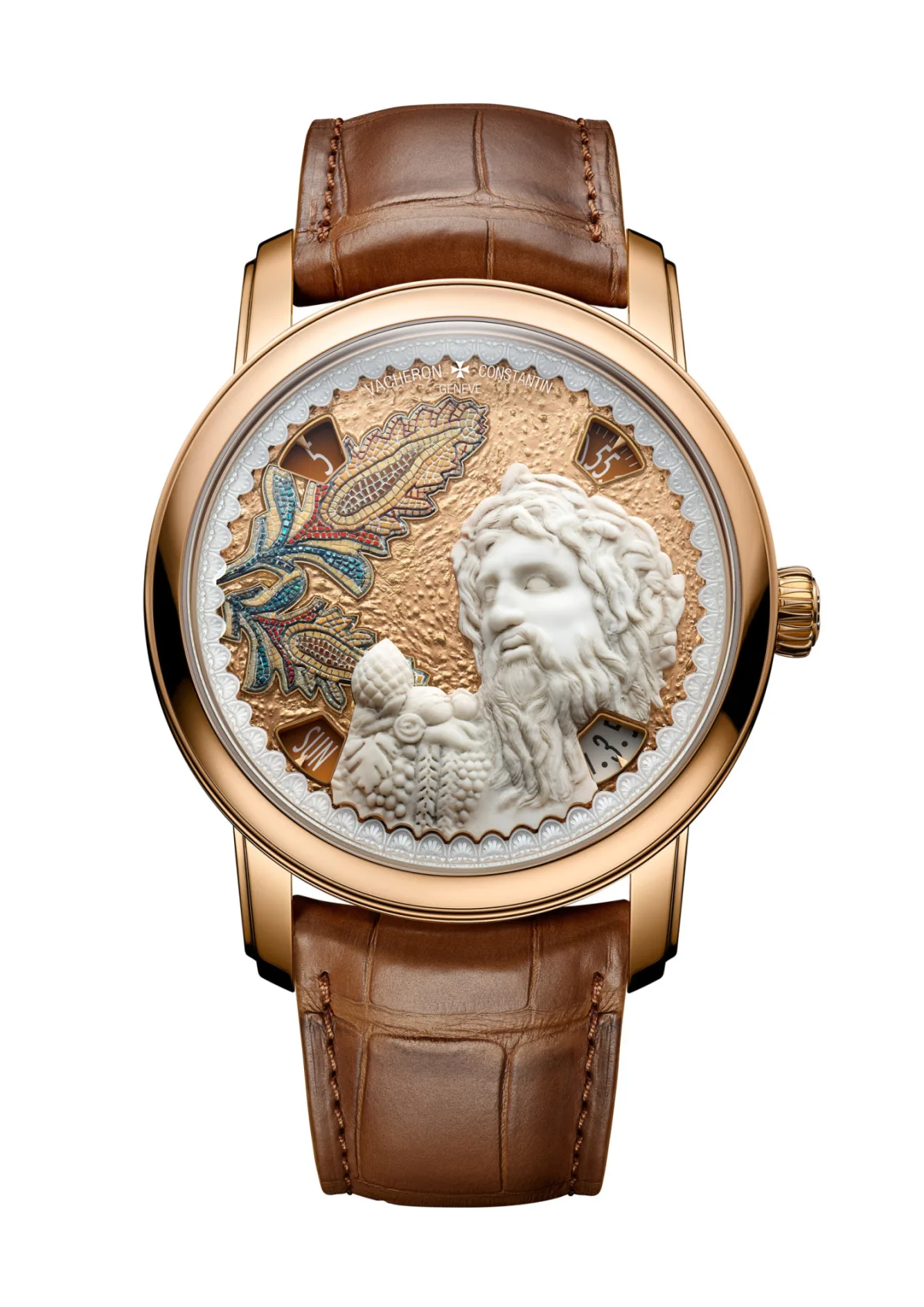
Roman Empire (27 BC – 476 AD)
The inspiration for these watches comes from the marble statue of the god Tiber. The statue, standing 1.76 meters tall, depicts an elderly bearded river god reclining on a stone couch, holding a cornucopia overflowing with fruits and ears of grain. Next to him, a she-wolf nurses Romulus and Remus, recalling the founding of Rome. It was discovered in 1512 in Rome at the site of a sanctuary dedicated to the Egyptian gods Isis and Serapis.
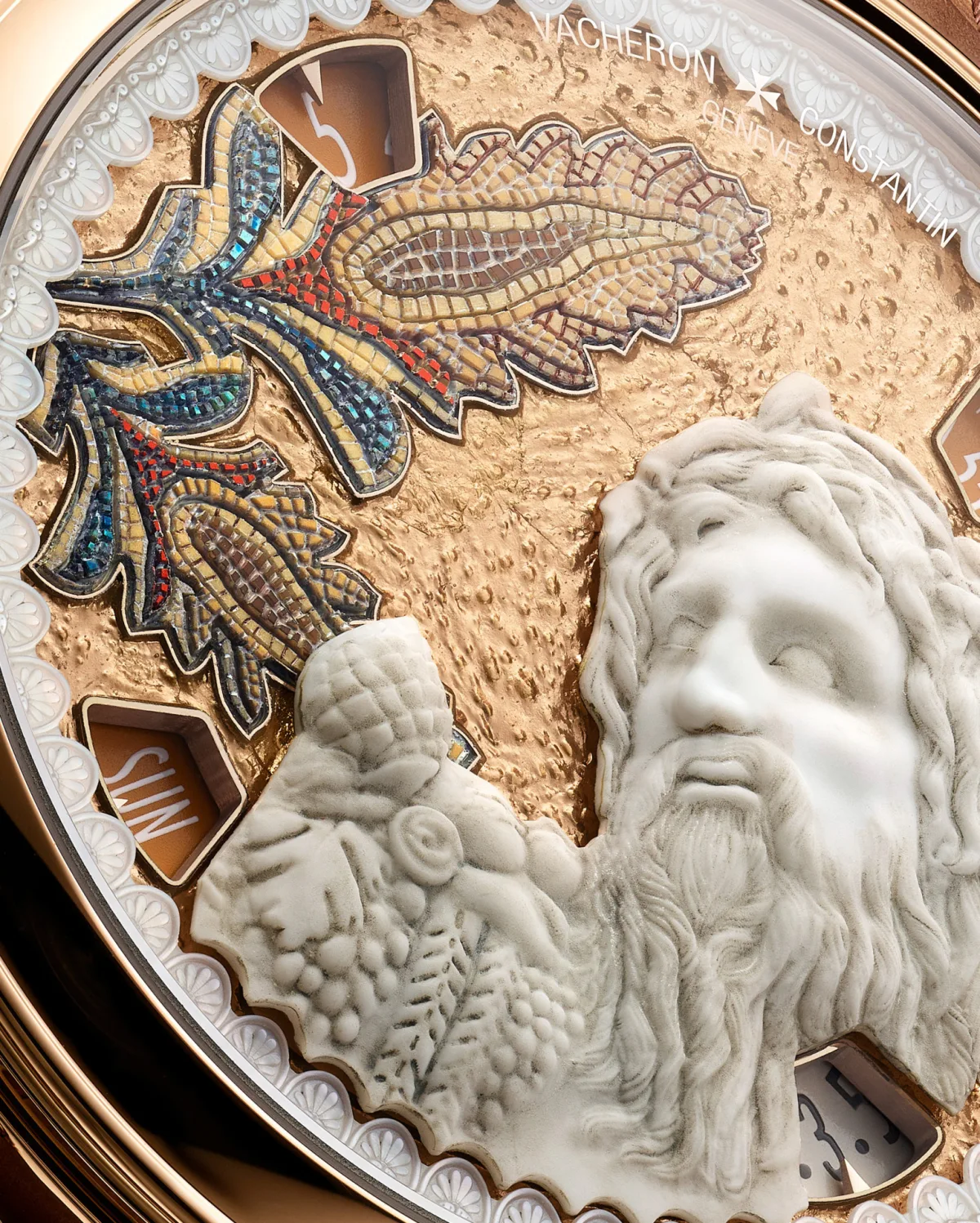
The head of Tiber and his cornucopia at the dial's center are executed in glyptic technique on Italian marble. Opposite Tiber is a micromosaic using fragments of jasper, chrysocolla, and opal. The gaps between the stones are decorated with a miniature painting technique, with colors matching those of the stones. The inspiration for this micromosaic came from a mosaic of the late 2nd century AD found in Tunisia.
The base of the dial is textured with gold leaf and covered with translucent enamel. The composition is surrounded by an engraved frieze of mother-of-pearl, executed in drypoint technique, inspired by a terracotta slab from the Louvre, dating to the 1st century BC, depicting a Dionysian dance scene.
Mechanism
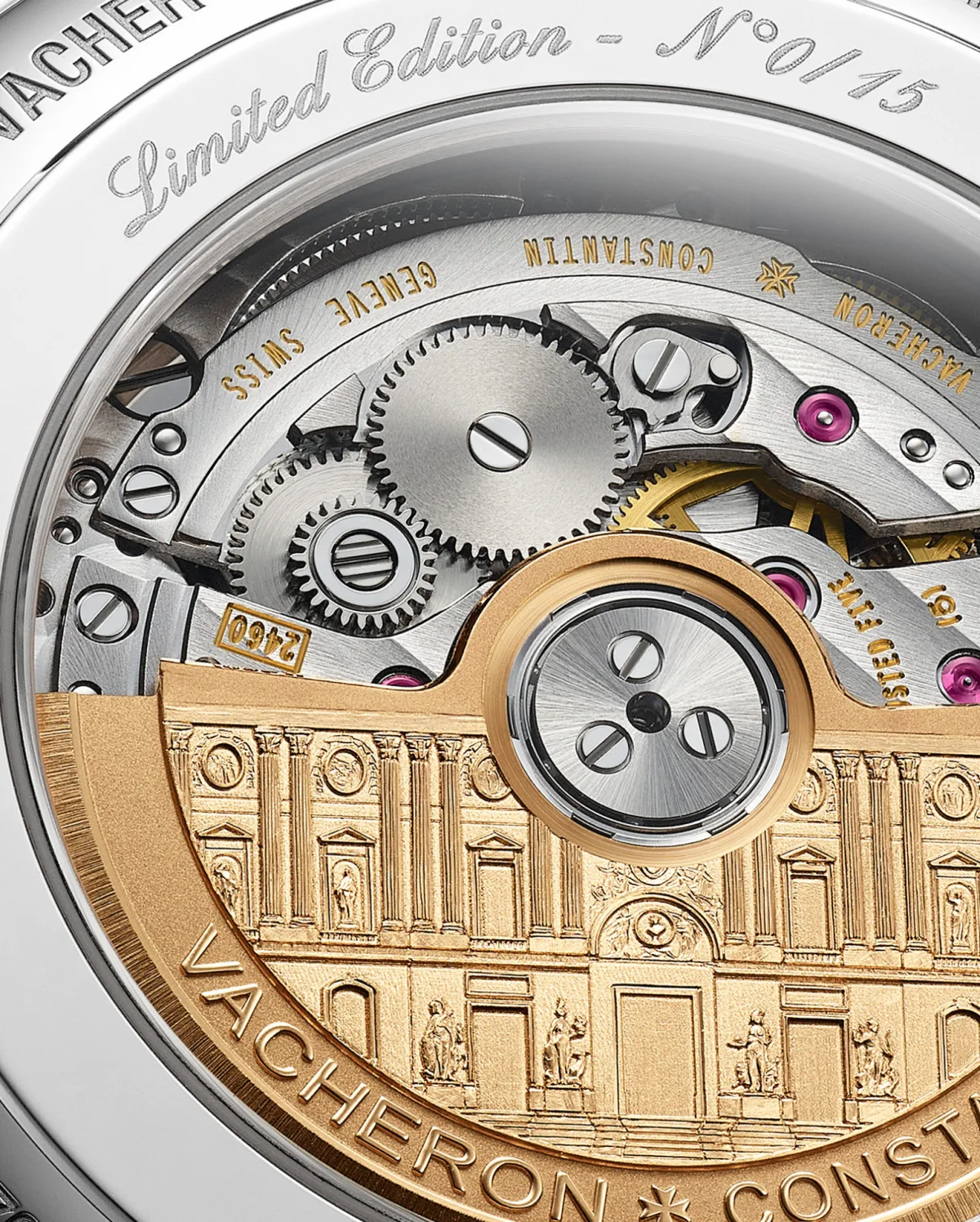
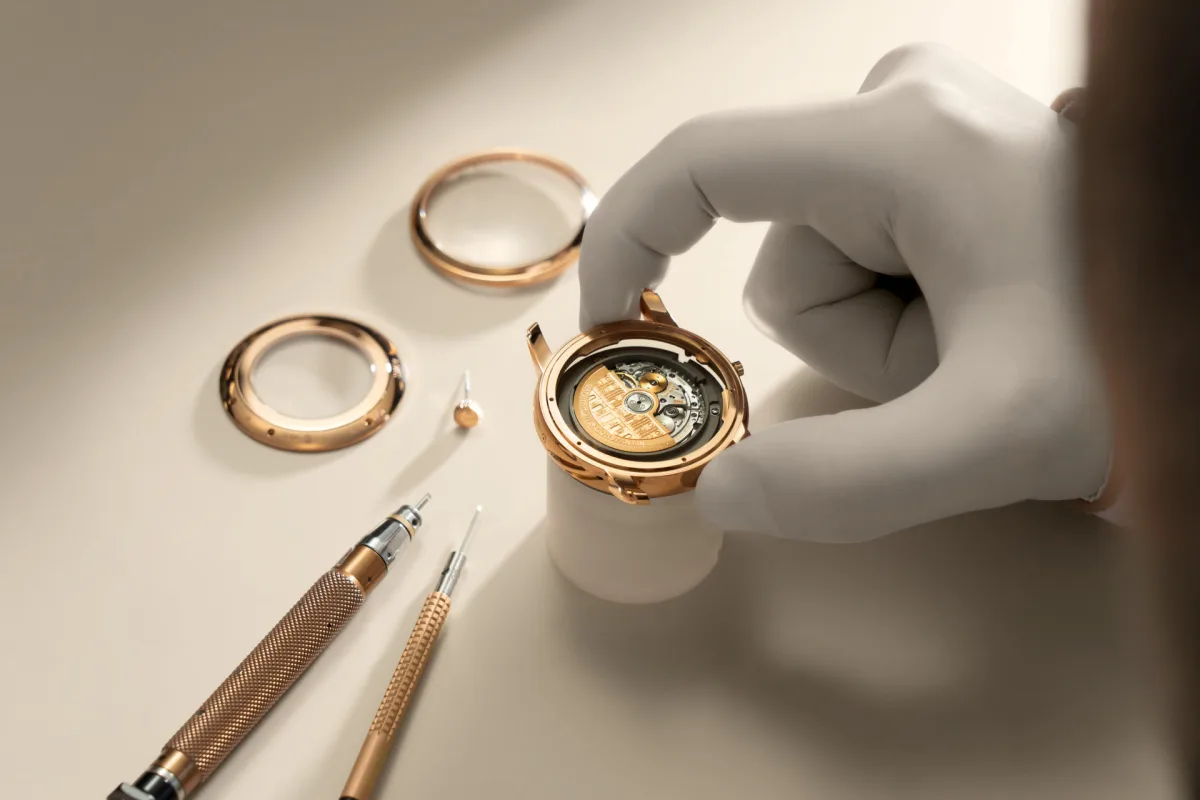
All models in the series are powered by the in-house caliber 2460 G4/2. The mechanism, assembled from 237 parts, features a bi-directional peripheral rotor and supports hour, minute, date, and day of the week indications. The indications are presented on discs located on the dial's periphery. The thickness of the mechanism is 6.05 mm, with a power reserve of 40 hours.
The rotor's finish pays tribute to the Louvre. It features an 18th-century engraving illustrating the museum's eastern facade and colonnade, inspired by the works of Louis Le Vau and Claude Perrault. The engraving matrix was hand-cut before being used to stamp the rotor.
The release is limited to 15 pieces for each model. The watches are available exclusively in Vacheron Constantin boutiques.