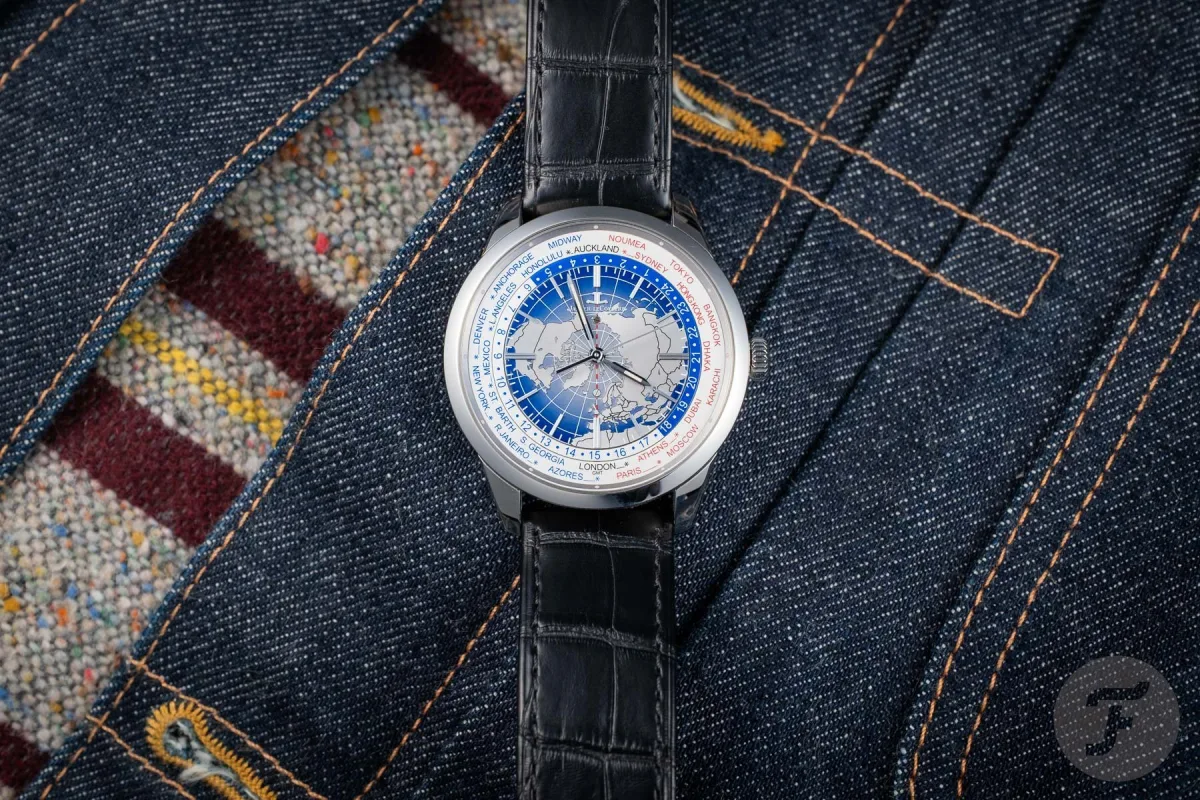
In 2015, I had to travel from Amsterdam to Brussels to see the new Jaeger-LeCoultre Geophysic Universal Time with the deadbeat seconds function in person.
It was worth it. I was greatly impressed by both the three-hand Geophysic True Second and the Universal Time, especially the latter - a travel watch with a world map dial and practical functions. Upon learning the price, my enthusiasm cooled. Nevertheless, the memory of the watch's complex yet powerful appearance, its intriguing mechanism with a Gyrolab balance and solid gold rotor stayed with me for a long time. Ten years after the model's release and six years after it was discontinued, I received an offer I couldn't refuse.
The History and Fate of the Geophysic Collection
Watches bearing the Geophysic name seem to be born under an unlucky star. The original Geophysic ref. E168 model was produced for a very short time in 1958, after which it was replaced by the Geomatic. In 2014, a limited reissue Tribute to Geophysic 1958 was released. A year later, four new Geophysic references appeared. The collection with the three-hand True Second (deadbeat seconds) and Universal Time certainly caught my attention. However, to call these elegant, sporty, and reliable watches with fascinating mechanisms in steel or rose gold cases a commercial success would be a mistake. Four years after the 'Geophysic Quartet' was launched, they were discontinued. You could say I found my steel Geophysic Universal Time behind the scenes.
Why I Bought the Jaeger-LeCoultre Geophysic Universal Time - True or Deadbeat Seconds?
Where do you start when you love every detail? For me, the watch made a huge first impression ten years ago. It had great proportions, a bright dial, practical travel functions, and an unusual touch - 'true seconds' that make this mechanical chronometer look like a quartz watch to the untrained eye. The deadbeat seconds function might be a 'connoisseur's trick', but it also serves a practical purpose: it allows for easy time setting to the exact second.
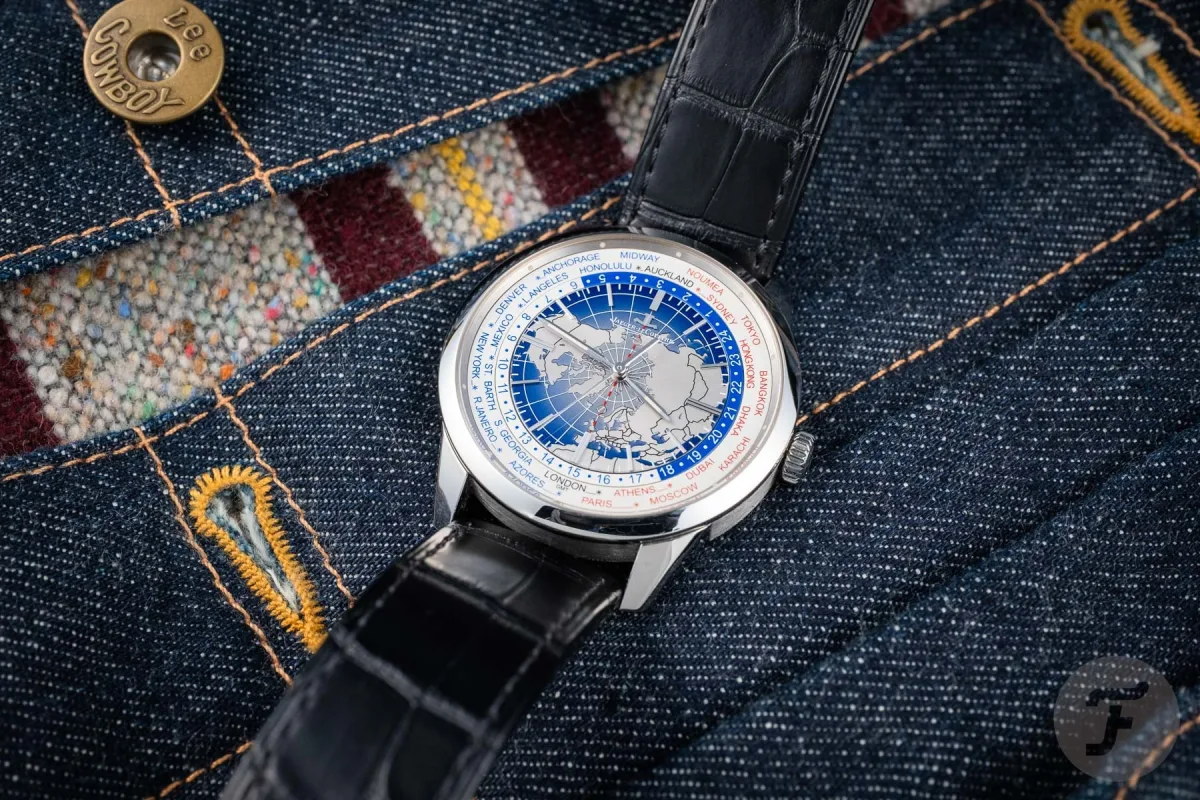
Why Jaeger-LeCoultre chose the term 'True Second' instead of 'Deadbeat Second' is likely the result of marketing discussion rather than watchmakers. The word 'Deadbeat' might sound grim or crude to those unfamiliar with watchmaking traditions and could deter buyers. However, a more positive name did not guarantee success.
The TIE Fighter Shaped Balance Wheel
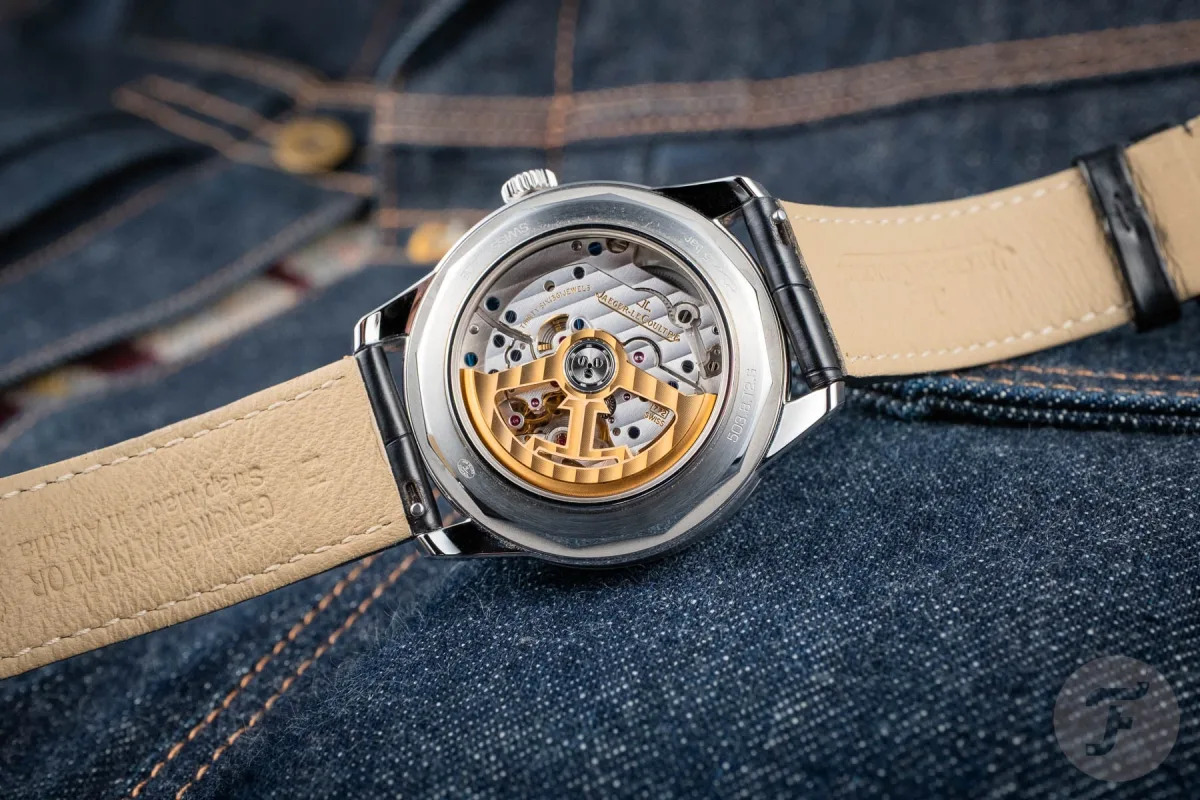
Since we're talking about ticking seconds, it's worth starting with the source of this ticking movement - the JLC 772 caliber. Its most interesting feature is the balance wheel. It's not a regular round wheel, but its shape resembles a TIE fighter from 'Star Wars'. The Gyrolab balance first appeared in experimental Extreme Lab watches and debuted in the Geophysic collection in serial models. The idea of a semi-circular balance is that the smaller size and aerodynamic shape improve energy management and increase accuracy.
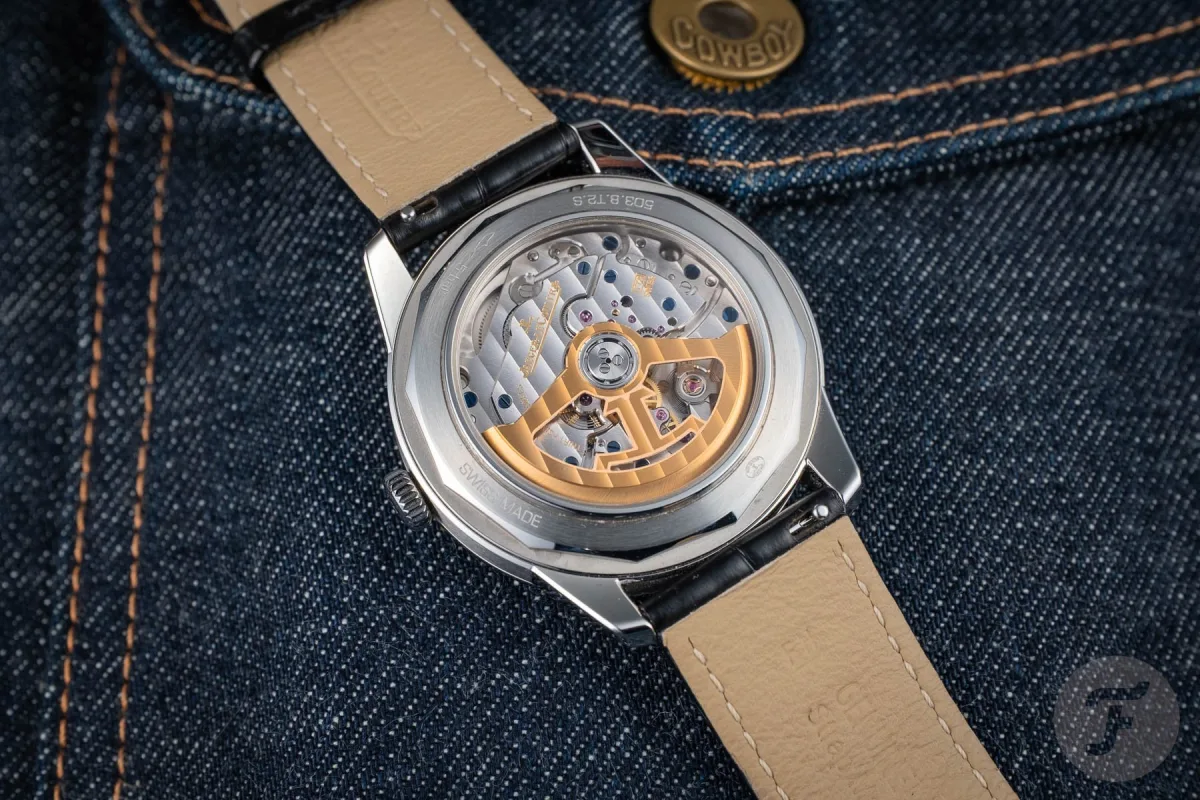
As is known, the Geophysic collection is no longer in production, but JLC continues to produce the Gyrolab balance. Today, this technology is available only in complex models like the Reverso Hybris Artistica Calibre 179 and some exotic versions of the Gyrotourbillon. The True Second function helps to read the time more accurately, and the Gyrolab ensures stability of operation.
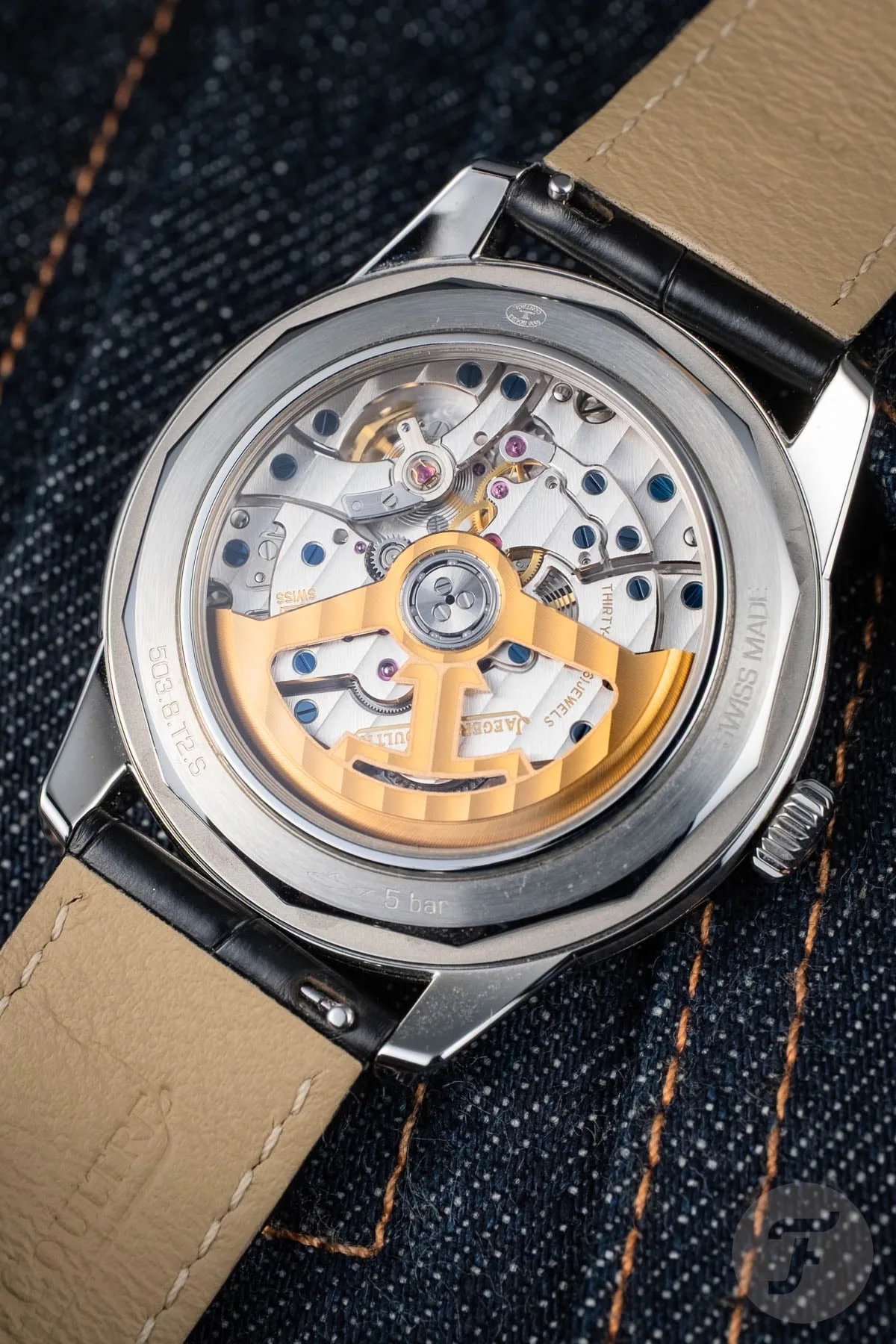
The mechanism's finish meets the high standards of haute horlogerie, and the solid gold rotor looks exclusive. Technically and aesthetically, the 772 caliber with a frequency of 4 Hz and a power reserve of 40 hours is very attractive. Operating the watch is simple. They display 24 time zones simultaneously. The 24-hour ring moves synchronously with the hour and minute hands when set together. At the same time, the hour hand can be independently adjusted forward or backward to display local time.
Sporty Elegance of the Case
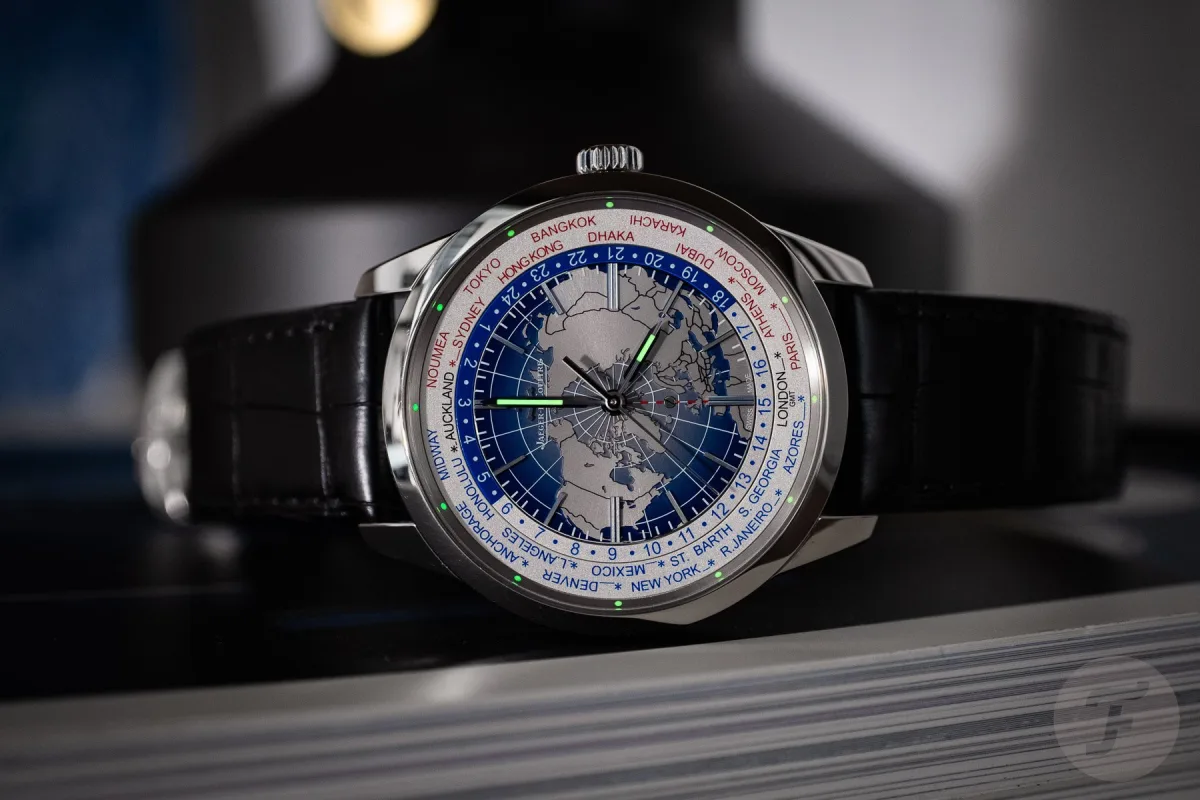
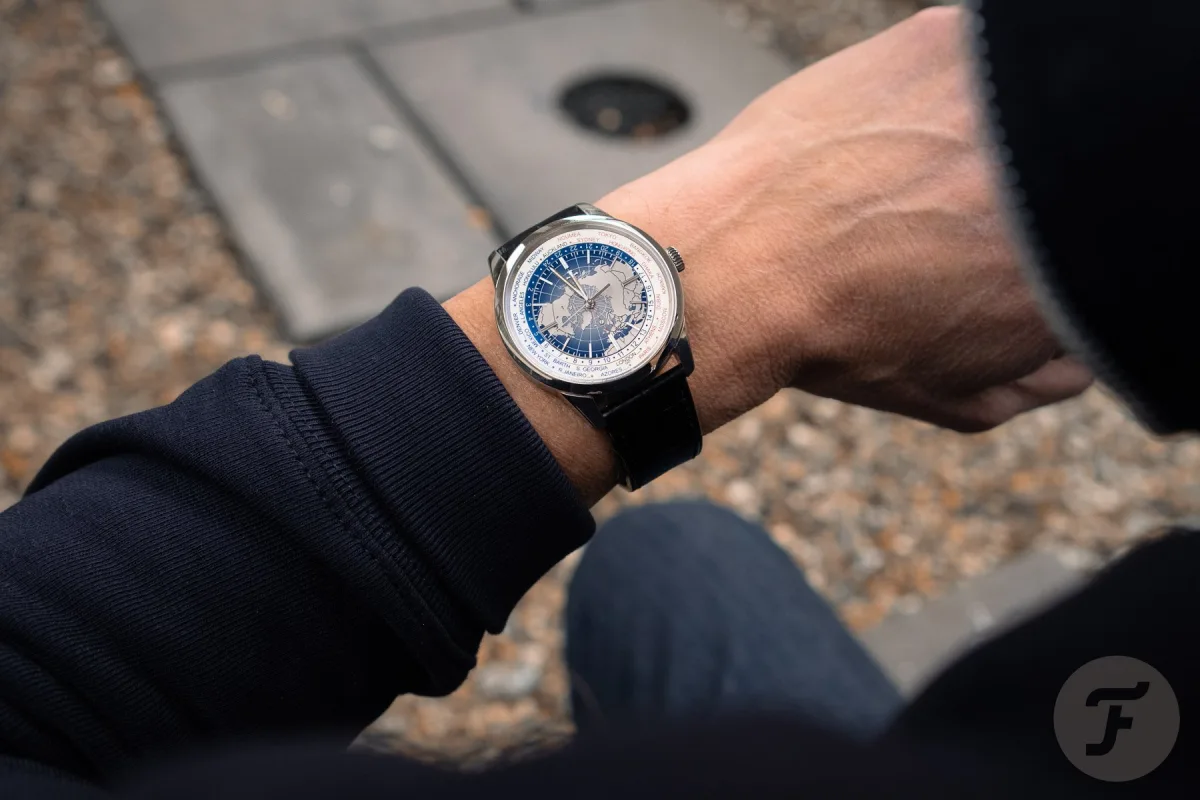
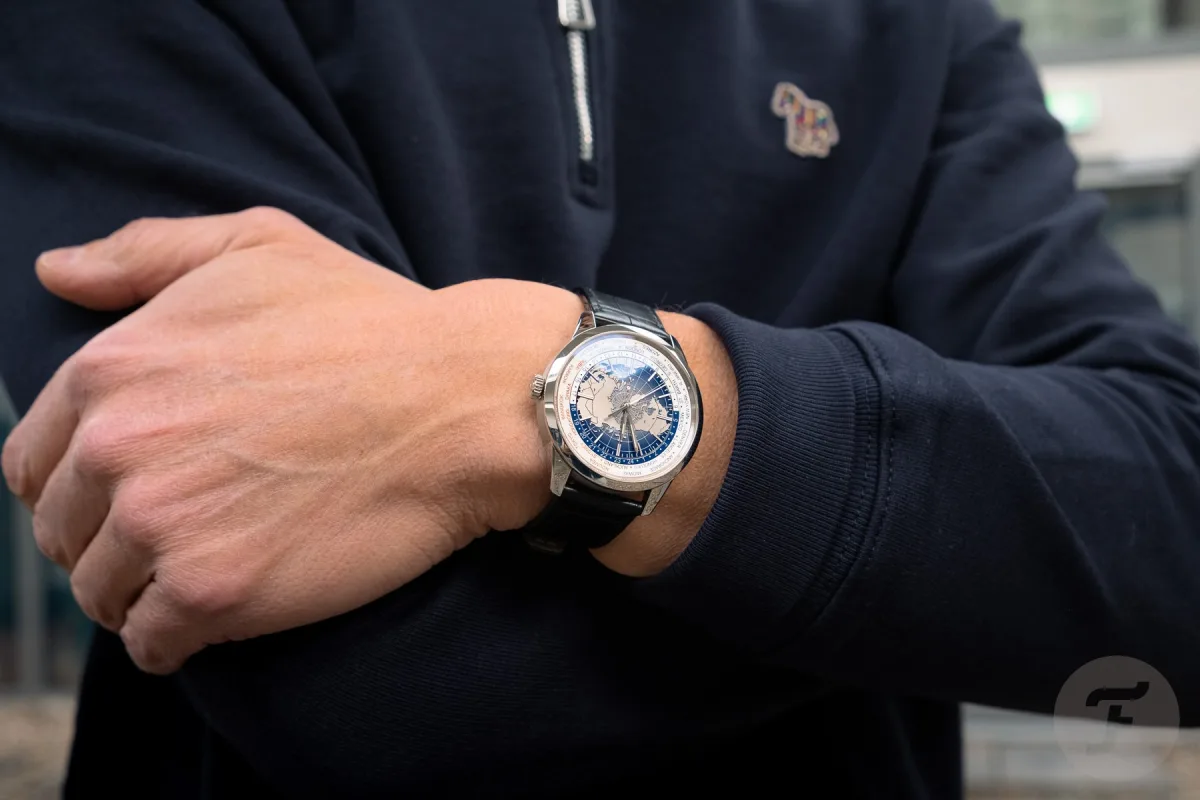
Another detail worth noting is the 41.6 mm steel case with a water resistance of 50 m. The case thickness is 11.84 mm, and the lug-to-lug distance is 49.5 mm, which provides good proportions and comfort on the wrist. The massive lugs hold a 21 mm wide strap. Despite its visibility on the wrist, the case does not appear ostentatious. The side surfaces are satin-finished, while the top of the lugs and bezel have a mirror polish, creating a dynamic play of light.
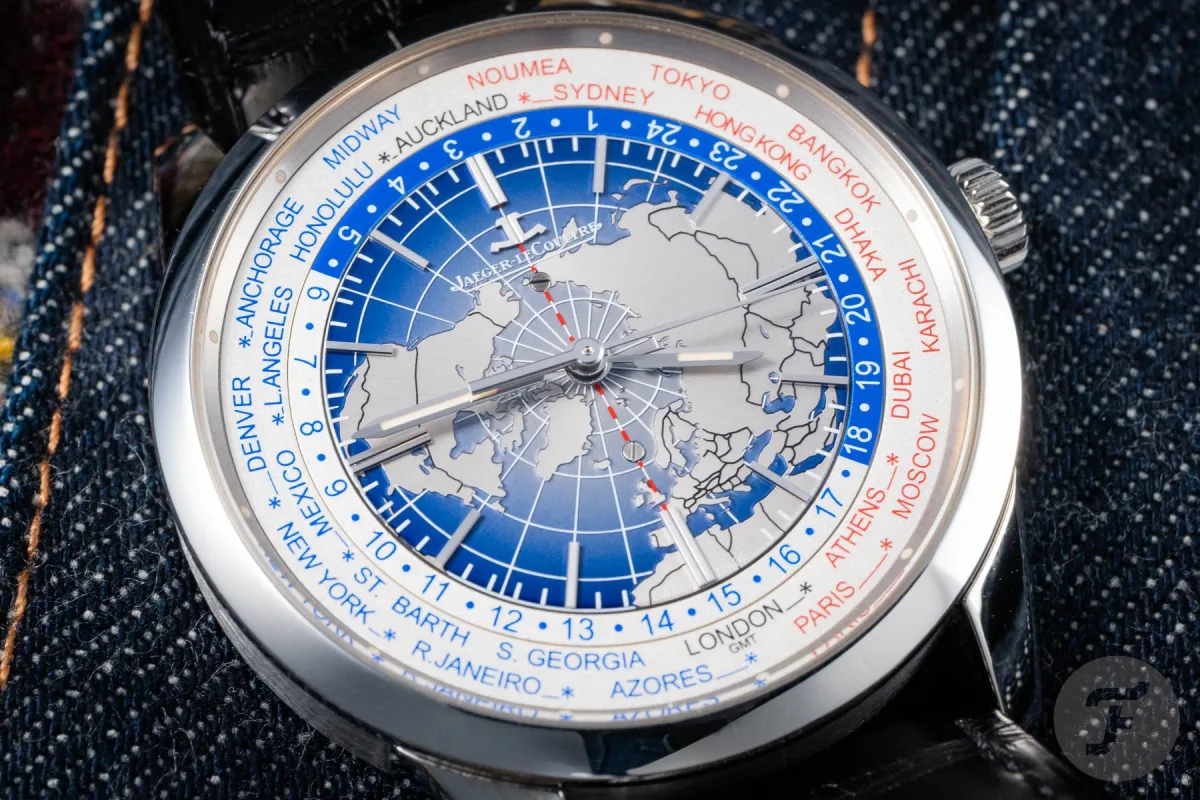
The thin bezel allows for a large dial - an important aspect for a world time watch where maximum readability is needed. The Geophysic Universal Time has several smart solutions. Luminous dots on the bezel are a nod to historic JLC travel watches and aid in reading time in the dark. In the steel version of the Geophysic Universal Time (JLQ8108420) that I acquired, the continents are depicted in a silver-gray color, and the Greenwich meridian is highlighted with a red dotted line. A small but pleasant detail is the two screws above and below the axis of the central hands.
Why I Bought the Jaeger-LeCoultre Geophysic Universal Time - Frankly About the Price
The main reason I did not buy the Geophysic Universal Time ten years ago was the price. At launch, it was 14,600 euros. This was a fair price for high-quality, beautifully finished world time watches with a complex mechanism, but I couldn't afford it then. I searched for these watches online for many years, and the search intensified when I felt the need to add a travel watch to my collection. The first and for a long time only candidate was the Grand Seiko Evolution 9 GMT SBGE285 'Mist Flake', but then I came across a new old-stock Geophysic Universal Time. It had once charmed me, I knew it would do so again, and the price was very attractive. I immediately decided to make the purchase.
Conclusion: Why the Jaeger-LeCoultre Geophysic Universal Time is a Timeless Classic
Since then, the watch has not let go of its hold on me. The proportions are perfect. The style - a modern blend of sportiness and classic elegance. The functionality is practical and impressively presented. The finish is magnificent, and the ticking second hand is an impressive and memorable detail. The thin black alligator strap may need replacing over time, but for now, I am satisfied with it. Unexpectedly, I have a good opinion of the folding clasp - it's thin, understated, and elegant.
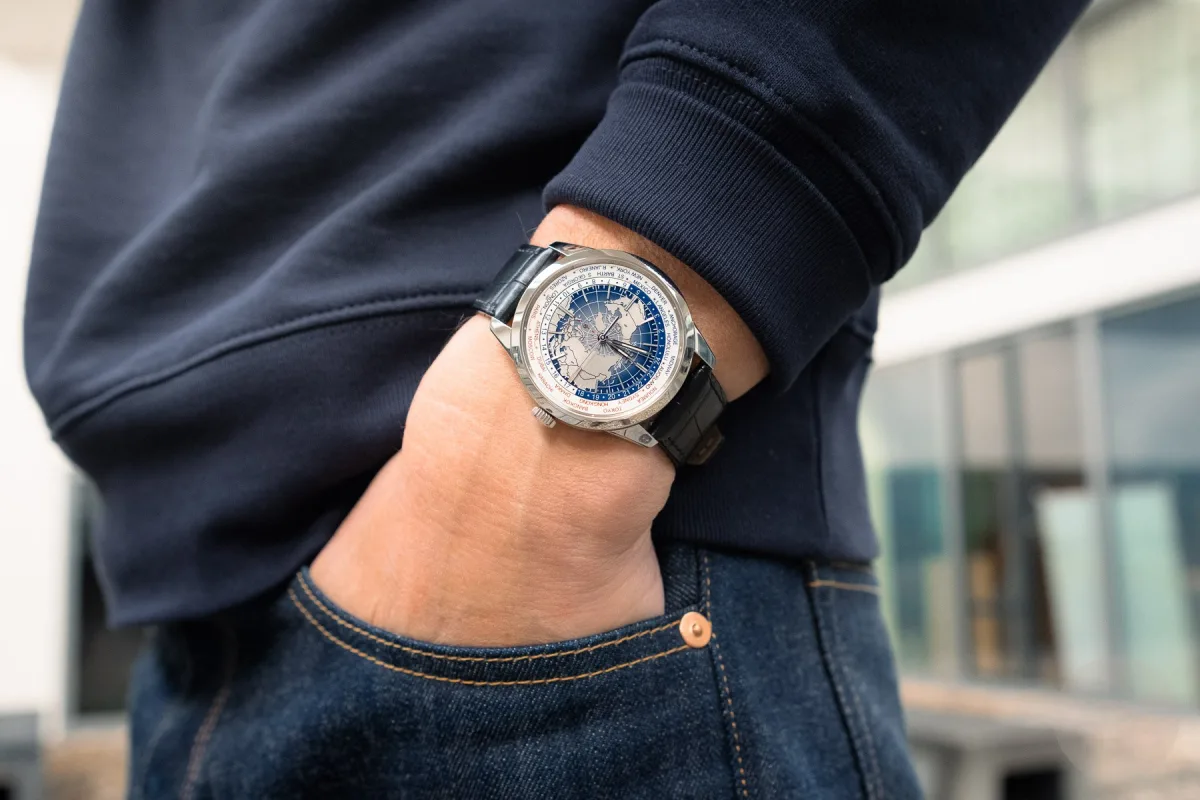
My watch and I are still in the honeymoon phase, and I am confident it will last a long time. The Geophysic Universal Time has not been produced for many years, but for me, it is a timeless classic. I look forward to traveling with it across different time zones to truly appreciate this beauty in action.