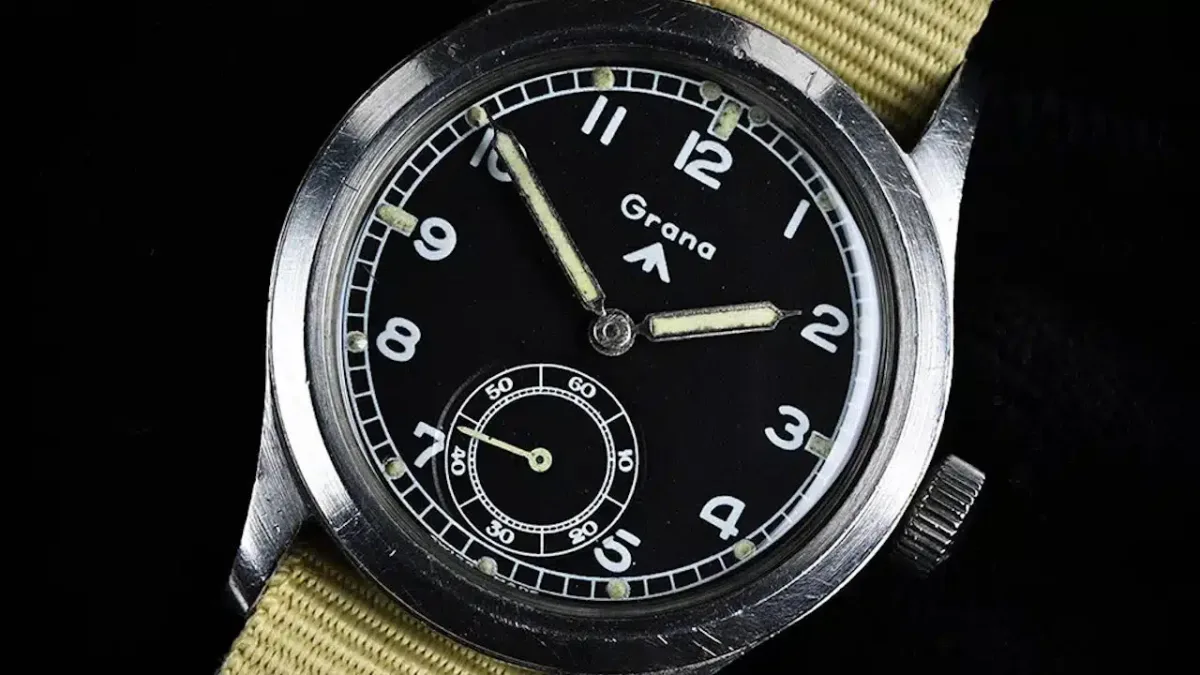
If you're interested in the history of utilitarian watches, take a look at the story of the 'Dirty Dozen' watches.
From marine chronometers to watches with shatterproof glass, the UK has always been at the forefront of military watches. However, precision and reliability became especially important when the country declared war on Germany in World War I. The 'Dirty Dozen' watches represented something fundamentally new. They were the 'perfect soldier's watches', meeting strict technical requirements that made them advanced for their time. Today, these watches are rare and coveted collectibles for a niche audience of enthusiasts.
Collectors are particularly interested in the 'Dirty Dozen' watches as a single lot. They are filled with nostalgia and tell a fascinating story of the evolution of military watches. If you've always wanted to learn more about them, now is the time - below is a detailed guide on these unique vintage field watches - all twelve models.
Overview of the 'Dirty Dozen'
Ask yourself: how could a World War I soldier simultaneously load a rifle and measure the distance to enemy artillery fire? The answer - with a wristwatch. But were wristwatches common in those days? Actually, yes.
Wristwatches became a revolutionary idea at the beginning of the 20th century. The concept proved groundbreaking for the military, changing the future of watchmaking. We are not talking about the gold bracelet with hair that Breguet gave to the Queen of Naples in 1810, but about modified pocket watches with soldered lugs for attaching a strap. This solution freed the soldier's hands, allowing them to load a weapon and track time simultaneously.
The first wristwatches appeared in the early 1900s. Suddenly, they ceased to be expensive female ornaments and became functional, intended for men. However, military watches required significant improvement. Over the next thirty years, watchmakers perfected the technology to create truly reliable military watches.
In the last two years of World War II, watchmakers came closest to the ideal of combat watches. The UK Ministry of Defense formulated the requirements and turned to twelve brands. These twelve companies created what is known today as the 'Dirty Dozen'. Interested? Read on.
Historical Context of the 'Dirty Dozen' Collection
The story of the 'Dirty Dozen' watches is one of the most interesting in watchmaking. The name sounds unusual, but it is not accidental. It is the name of a film about twelve World War II soldiers. Accordingly, the twelve 'Dirty Dozen' watch models also served in the war, becoming symbols of resilience and reflecting Britain's wartime efforts. Today, they are important memorabilia of the war era.
During World War II, the Ministry of Defense sought reliable military watches that surpassed the characteristics of the 1939 Army Trade Watches (ATP) already used at the front. Instead of addressing a single manufacturer, the department turned to twelve Swiss watch companies with an order for watches that met special requirements. Historical data indicates that the list of requirements was developed by Commander Alan Brooke - it included chronometer certification, water resistance, and a luminous dial. Ultimately, the Ministry of Defense ordered these elite field watches for British soldiers.
Order from the UK Ministry of Defense
Thanks to their historical significance and military heritage, the 'Dirty Dozen' watches are considered by collectors to be among the most valuable. They are rare and sought after worldwide. As is known, pocket watches were inconvenient on the front of the First World War, so soldiers began wearing watches on their wrists - this became a turning point.
Wristwatches quickly became an essential part of equipment but still needed adaptation for trench life. The 'Dirty Dozen' watches, developed in 1944-1945, marked a new milestone in standardizing military watches. Watchmakers set new standards of quality and functionality. This transition from wrist to instrumental watches went down in history.
But how did these watches appear at such a critical period? During World War II, British watch production sharply declined. Once a center of watchmaking, the country could not adapt to mass production (similar to the Swiss industry crisis in the 1970s). Britain could not cope with orders and lost many watchmakers who moved into the defense industry. While Britain focused on aviation and naval instruments, Switzerland, remaining neutral, continued to thrive.
Swiss companies increased the production of watches for the civilian market, while the Ministry of Defense sought watches with specific technical characteristics - a reliable tool for the army. Only twelve manufacturers were able to meet these requirements. Their watches were designated W.W.W - Watch, Wrist, Waterproof, distinguishing them among military equipment.
These twelve brands are Jaeger-LeCoultre, Eterna, IWC, Omega, Longines, Lemania, Record, Vertex, Buren, Cyma, Grana, and Timor. However, there is a hidden chapter in history - the Ministry of Defense sent orders to thirteen manufacturers. What distinguished these watches? The answer lies in the technical and design requirements for the W.W.W watches.
Technical Specifications and Design Requirements
The 'Dirty Dozen' watches share common traits that help identify them and ensure reliability on the front.
- Black dial with large Arabic numerals for better readability.
- Small seconds subdial at the '6 o'clock' position, freeing space for the main hands.
- Hands and numerals coated with a luminescent compound (radium), which is rare today and an interesting factor for collectors.
- Manual winding movement, 15 jewels, chronometric accuracy.
- Robust case, resistant to shocks and moisture, with a screw-down crown.
- Shatterproof plexiglass (Perspex).
- Case diameter within 36–37 mm, making the watch comfortable for small wrists.
- Watches were intended for 'general service' but were predominantly issued to engineers, communicators, and artillerymen.
Brands of the 'Dirty Dozen' Watches
Let's briefly examine the twelve brands involved in creating these watches.
Cyma
Known for its resistance to temperature fluctuations, magnetic and electrical influences. The Cyma model from the 'Dirty Dozen' is popular among collectors due to its compact 37 mm size. About 20,000 units were produced, making it easier to purchase on the secondary market.
Grana
In the 1940s, the brand became Certina, making watches labeled Grana particularly interesting. This is the rarest and most coveted 'Dirty Dozen' model, with a circulation of only 1-5 thousand units.
Jaeger-LeCoultre
A renowned manufacturer with an extensive catalog of in-house movements. Creator of the famous Reverso watch with a flipping dial. The 'Dirty Dozen' model had a 35 mm diameter, chrome-plated bezel, steel case, and catholic hands, equipped with caliber 479.
Buren
A Swiss manufacturer later incorporated into Hamilton. Known for developing the Chrono-Matic in the late 1960s. The Buren model featured a chrome-plated case just under 37 mm, its own movement, and sword-shaped hands.
Eterna
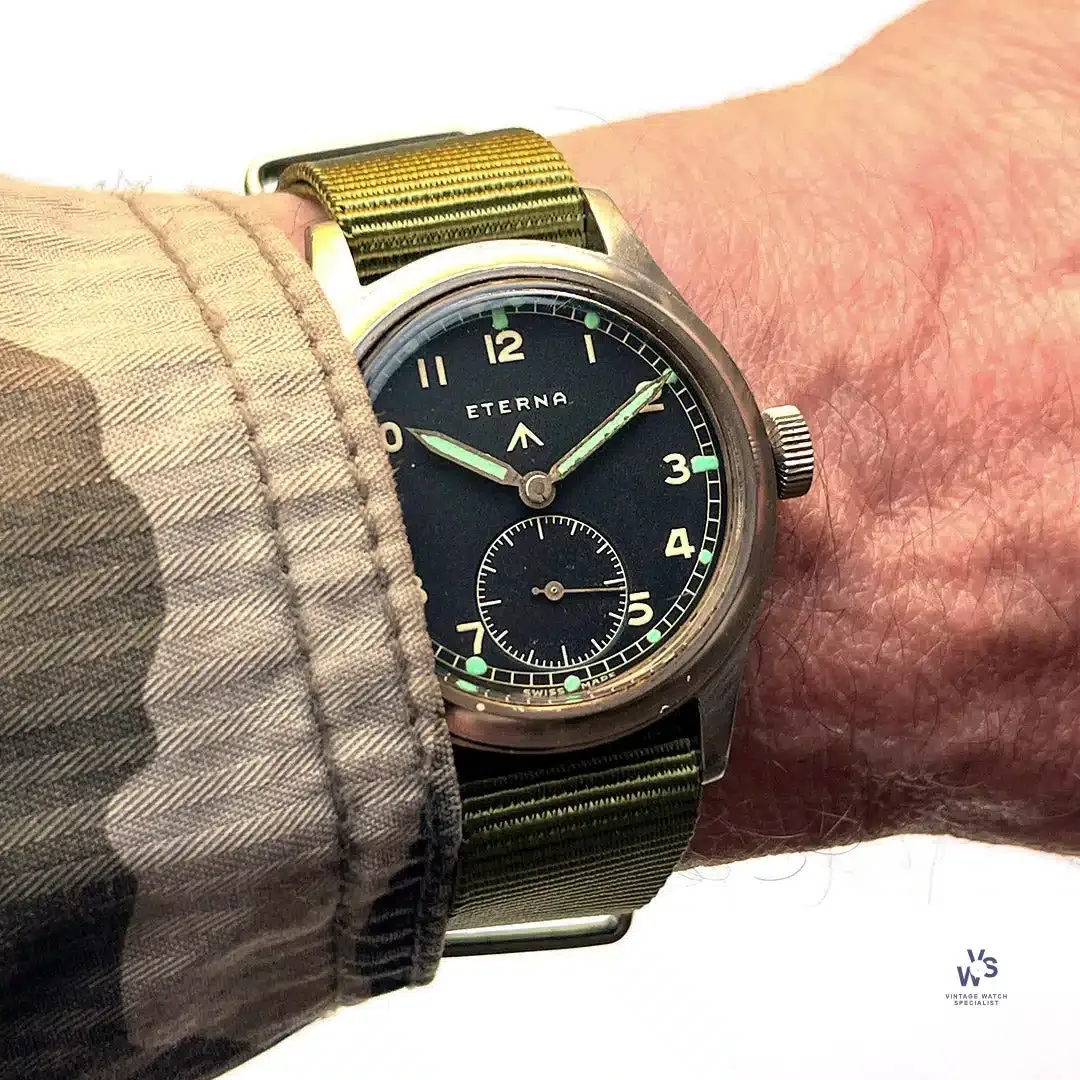
A brand from Grenchen, known for producing ETA movements. Creator of the Eterna-Matic with a ball bearing rotor and alarm. The 'Dirty Dozen' model is rare - only 5000 units.
Lemania
Merged with Tissot and Omega in the 1930s, known for complex movements, including the one that went to the Moon (Speedmaster). The W.W.W model had a 36.5 mm stainless steel chrome-plated case and manual winding, with 8000 units produced.
IWC
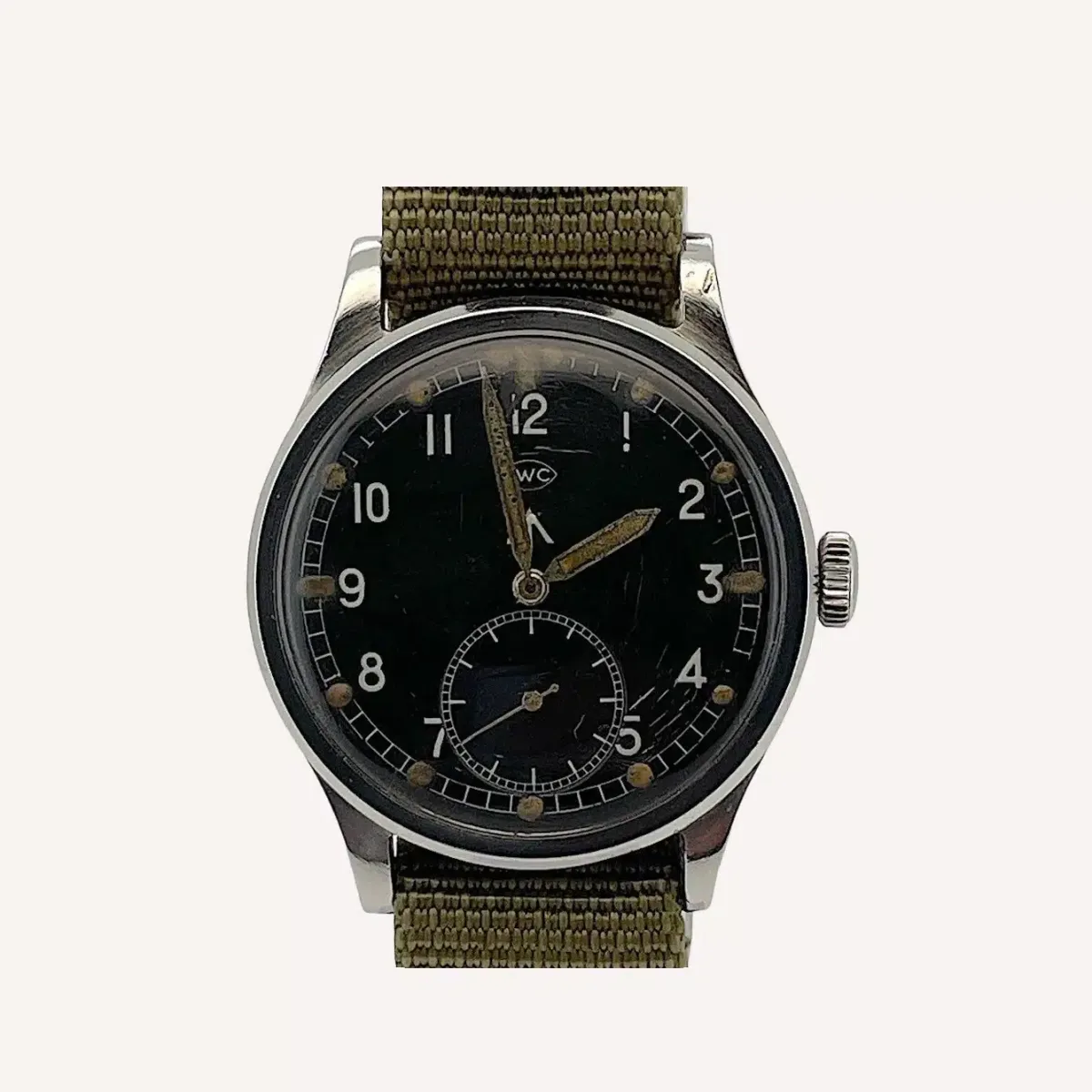
One of the most famous manufacturers. Before specializing in pilot's watches, they made elegant pocket watches. The 'Dirty Dozen' model - Mark X with caliber 83, snap-on case, diameter 36.5 mm, 5000 units.
Omega
Known for space programs and the Speedmaster, the first to use a coaxial escapement. The 'Dirty Dozen' watch - 36 mm with caliber 30T2, 25000 units.
Longines
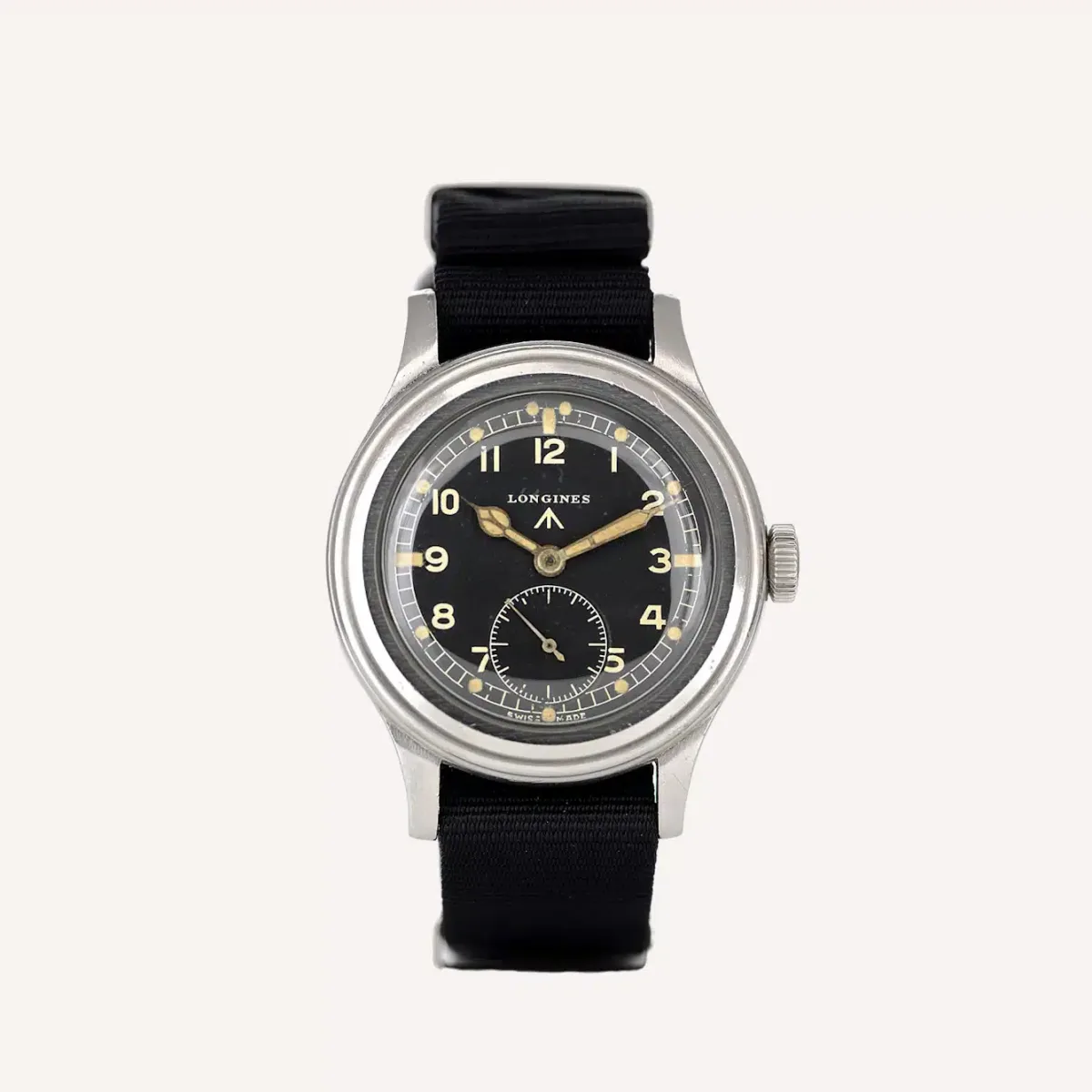
The official timekeeper of the Olympic Games, specialized in aviation instruments. The 'Greenlander' model - 38 mm, one of the largest in the series, with catholic hands and luminescent coating.
Record
Manufacturer of 'Sector' pocket watches and high-class chronographs. The 'Dirty Dozen' model had a chrome-plated 36.5 mm case and screw-down back with manual winding.
Timor
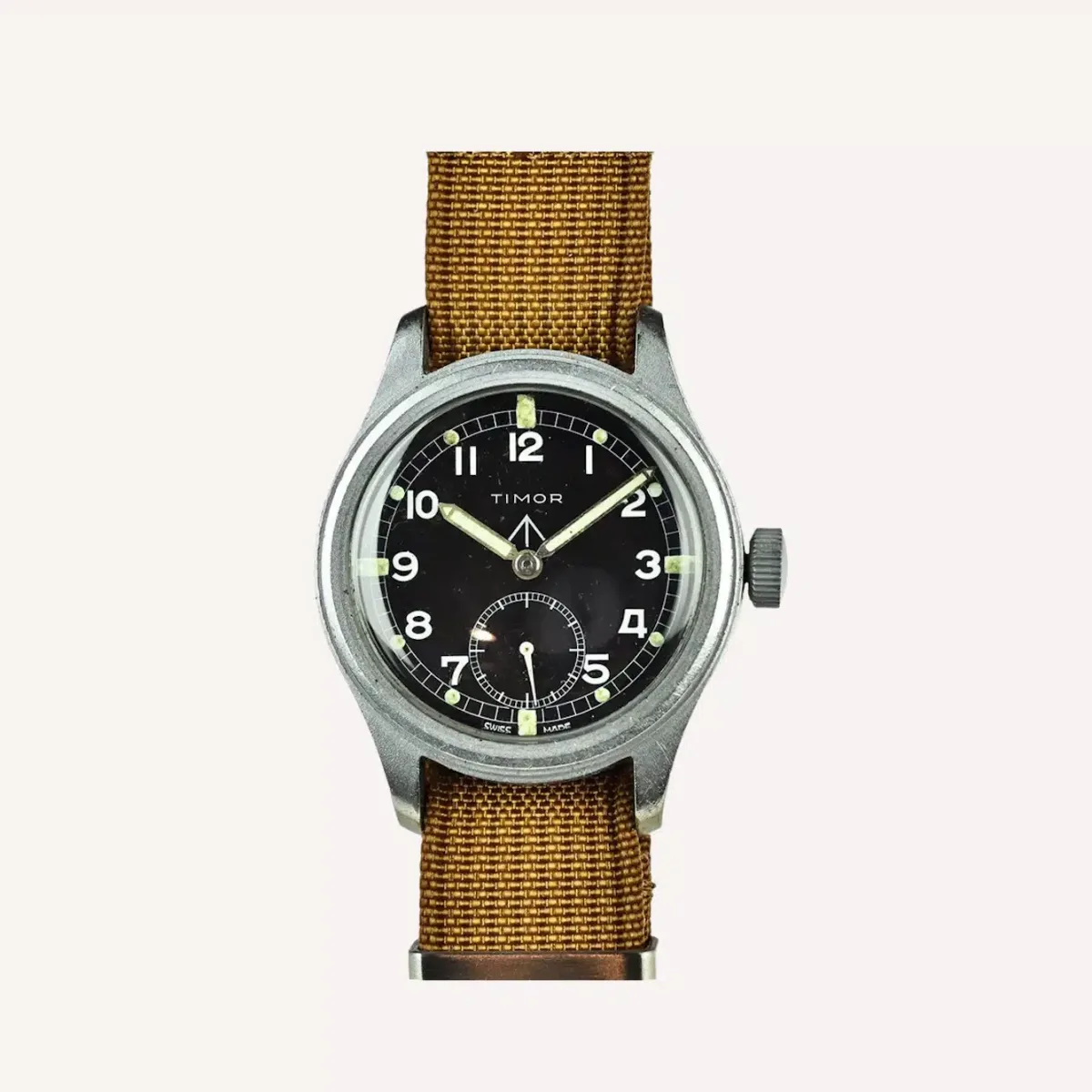
Known for watches with Braille for the visually impaired, first to develop watches for the British army. Model - chrome-plated 36.5 mm case, luminescent pencil-shaped hands. The modern version is equipped with a Sellita movement.
Vertex
The only British brand among the twelve. Inclusion was due to the influence of the founder's son-in-law, a British army captain. Released 1500 units in 1945. Some features were used in later M100 models.
Design and Features of Vintage Field Watches
The 'Dirty Dozen' watches set new standards for military watches - accuracy, readability, and reliability in combat conditions. Many manufacturers followed this example, creating field watches with similar characteristics.
Typically, such watches have a simple, concise design with a black dial and contrasting luminescent markings. Over time, lume and dials develop a unique patina, which is valued by collectors. Large Arabic numerals and sword-shaped hands are classics of the style. Some models are equipped with an inner 24-hour scale for travelers' convenience.
Legacy of the 'Dirty Dozen' Watches
Today, 'Dirty Dozen' watches are collectible items, a symbol of an era, and an important milestone in watchmaking history. Their limited release makes them very rare and sought after.
Influence on Military Watch Design
The history of these watches adds to their special appeal. Collectors appreciate watches with history and functional purpose. Many models were modified on the secondary market, so finding an original is a real adventure. These watches interest both historians and collectors, and their design continues to influence modern field watches.
Collectible Value
It is estimated that only about 20 people in the world own all twelve 'Dirty Dozen' watches. Achieving such a level is a rare accomplishment. The most valuable is considered the Grana model - its circulation is less than 1000 units, making it especially desirable. At auctions, it sells for seven times more than other models.
Assembling a complete set is difficult due to the various conditions of the watches and the degree of wear. Finding an original Grana without modifications is almost impossible. There is a story about a watch found at a flea market and sold for a small amount, later resold at an auction for tens of thousands of dollars.
Today, the prices of 'Dirty Dozen' watches range from $2000 to $30,000, with Grana reaching around $50,000. Models by IWC and Jaeger-LeCoultre are also highly valued due to their brand status and historical significance.
How to Identify the Best 'Dirty Dozen' Watches for Collectors
These watches were among the most complex and advanced of their time. To confirm reliability, they had to consistently show accuracy and stable performance. Over time, wear and aging oils lead to deterioration of mechanisms, so maintenance and restoration are vital. However, the number of specialists capable of repairing such watches is decreasing, and original models are becoming rare.
If you are serious about collecting, it is important to know how to identify the best specimens. It is important to work with a reliable seller who ensures transaction transparency.
Signs of Authenticity
When purchasing a 'Dirty Dozen', approach it like any collectible item: study the seller's reputation, reviews, compare prices. Genuine watches differ from common ATP models by the light WWW stamp on the back cover. The Broad Arrow emblem should be present on the case and dial. The back cover should have a five-digit serial number with a letter.
Key Features of W.W.W. Watches:
- Hands and markers with radium lume
- Black dial with railroad minute track
- Chronometer certification
- Shatterproof plexiglass
- Manual winding
- Convenient crown
Modern Interpretations of the 'Dirty Dozen' Watches
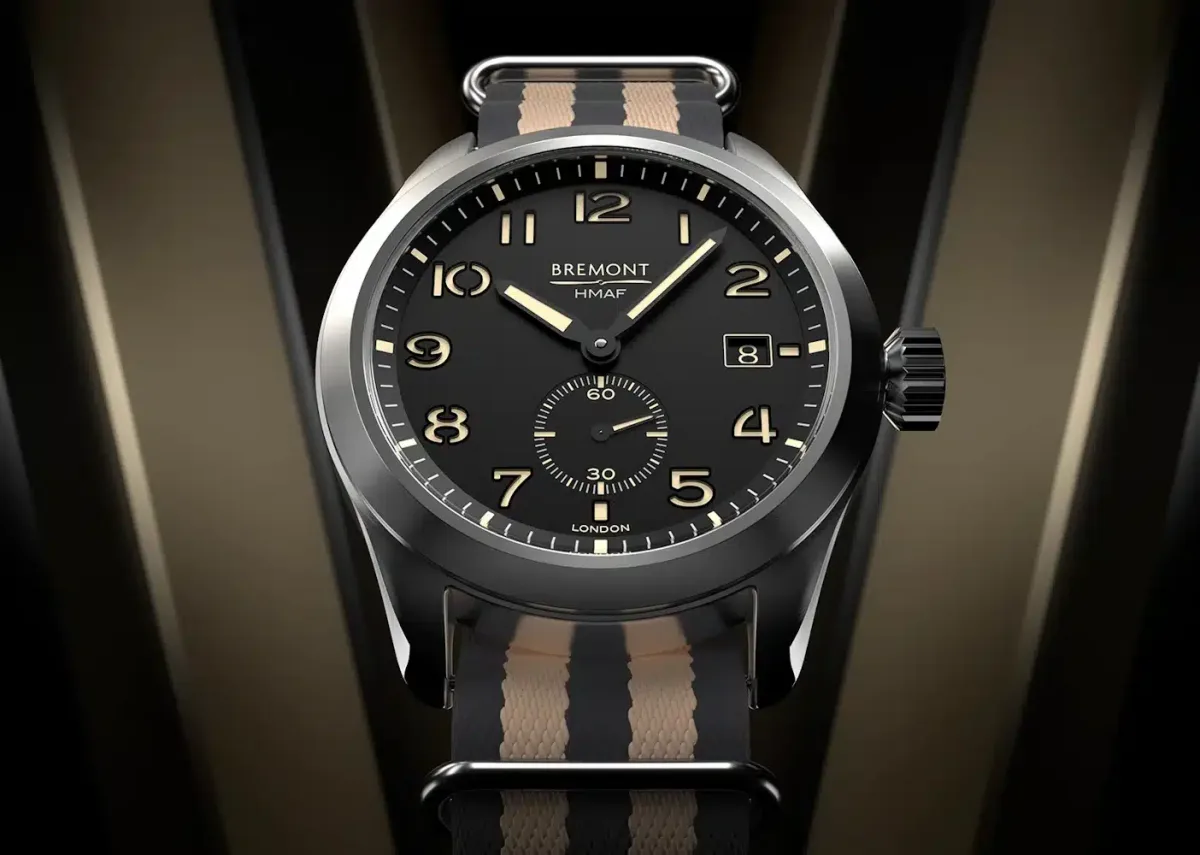
Today, the original style of the 'Dirty Dozen' continues to live in modern field watches. There is no single best model - preferences depend on personal taste. Many brands, preserving traditions, create new watches in the spirit of legendary models.
An example is the British company Bremont with a limited series Broadsword Recon, inspired by the design of the 1940s. Bremont is the only luxury manufacturer allowed to use the heraldic symbols of the British Armed Forces thanks to its partnership with the Ministry of Defense.
Conclusion: The Timeless Appeal of the 'Dirty Dozen' Watches
For some, these watches are a connection to the past and an important historical artifact, while for others - the thrill of finding a rare and valuable model. Their design is honest, functional, and relevant in the modern world. Despite their apparent simplicity, assembling a complete set is a challenging task, only adding to the interest.
The 'Dirty Dozen' watches will remain niche and become increasingly rare over time. If you own one or more specimens - contact us. We would be delighted to know which models you have and which you are looking for.