It doesn't give me pleasure to say this: Most vintage watches reissued in recent years leave me indifferent for a number of reasons - but that's for another article. So what is the recently announced Zenith El Primero Chronomaster Revival A385 with a Gay Frères bracelet doing here? Firstly, I simply adore all El Primero - including the terrifying monstrosities of the Zenith Defy Nataf era, which are so bad they're actually good. And this original 1969 design is as legitimate an El Primero as it gets. Secondly, if you remember, Zenith achieved exceptional success during the recent Dufour era, when vintage Zenith models debuted every other week, but few were as true to their origins as this aptly named “Revival A385.” Lastly, it is intriguing to see if the recipe for the perfect all-around watch of the late '60s holds up half a century later.
Cliché #1: It's dizzying to compare life in the late '60s and early '70s to how it is in the third decade of the new millennium. Cliché #2: Watches are time capsules, but few are as much a time capsule as the A385. It's just remarkably strange to have a brand-new watch that is so close to how it was conceived and intended half a century ago. The Zenith A385 was a remarkably modern watch in virtually all details, made by and for people who are probably no longer alive. If they are, what watch they plan to buy next is likely low on their list of priorities.
And yet, here we are with a retro-futuristic watch that has just been given a new lease on life, aptly named “Revival.” Let's now delve into the three main questions I mentioned above.
Is the “Revival A385” El Primero Worth Acquiring?
As I said, this Revival A385 is as true an El Primero as it can get in terms of pedigree. However, over the last 50 years, there has been a truly remarkable - and still deeply underrated - evolution of this caliber in terms of both technical sophistication and “packaging.” During this time, El Primero calibers have been refined to truly impressive new dimensions: perpetual calendar, alarm, tourbillon, minute repeater, and the Striking 10th complication have been added to a mechanism whose “base” version had already significantly expanded engineering capabilities. Furthermore, since its debut in 1969, El Primero has been packaged into all sorts of fascinating and interesting variations - unlike many other brands that are actively engaging in vintage watch restoration these days, you have a wealth of amazing opportunities to enjoy El Primero without resorting to a reissue. For example, the Stratos Striking 10ths is a superb modern incarnation of this chronograph with a new approach to utilizing its famous 5 Hertz/one-tenth second operating frequency.
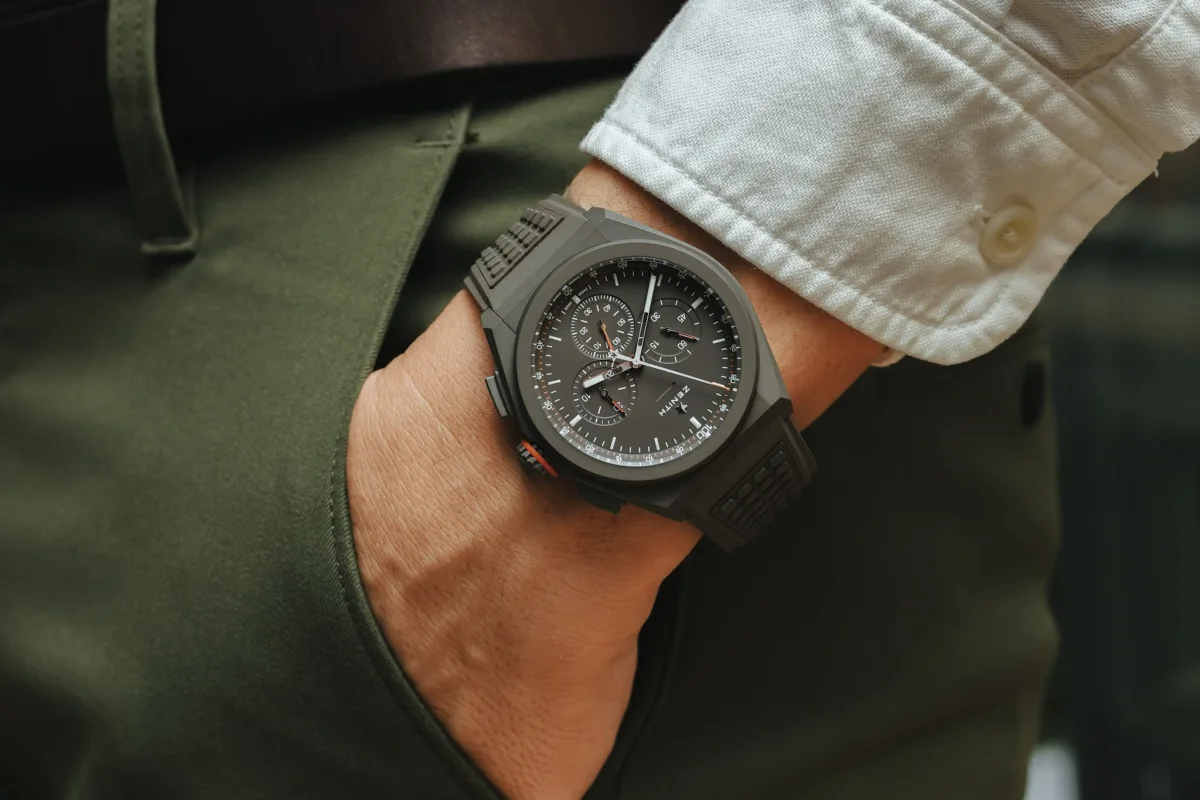
Nevertheless, the Zenith El Primero Chronomaster Revival A385 possesses a number of significant merits that most of its contemporary counterparts lack. Firstly, it is a so-called “time capsule.” Look at it, and you'll see an ultra-modern 1960s watch exactly as envisioned by Zenith's manufacture at the time. Simultaneously, it is one of the most technically and visually accomplished watches in the entire Swiss watch industry of that time - and possessing one of the most accomplished products of any era in any industry carries a coolness that “just good” modern products cannot replicate, even if they technically surpass their ancestors in every respect. In other words, many of us would prefer to have a death trap 1960s Ford GT40 than a safe and reliable 21st-century Ford Mustang, even if the latter outperforms it in many objective parameters. On the wrist, the Revival A385 indeed possesses a certain ultra-modern coolness that millions of vintage dive, field, or pilot watches debuting today lack. Because many of them are “just good” past products, while the A385, in my opinion, looks and feels as if it was at the forefront.
And this highlights the difference that exists between today's wide range of vintage watches released anew. A difference that is very rarely identified but is crucial to the ownership experience. The relaunch of vintage dive, field, pilot, or other watches that look like all other dive, field, or pilot watches of that era, only with a different name on the front, seems like a completely pointless (and lazy) endeavor to me, and this largely explains why I am not particularly excited about the vintage reissue trend of the past few years. There are a number of other issues, but again, they belong to another article. The Zenith El Primero Revival A385 does indeed have some design elements characteristic of that time - such as the round dial and crystal combined with a thin case with angular lugs - but overall, these watches still look like something of their own.
 So, back to the original question: Is the “Revival A385” the El Primero to acquire? That's for you to decide. From my perspective, I can only urge you to consider the many new and cool El Primero options over the past few decades and compare them to this model before pulling the trigger on a vintage revival.
How Close is the “Revival A385” to the Original 1960s Version?
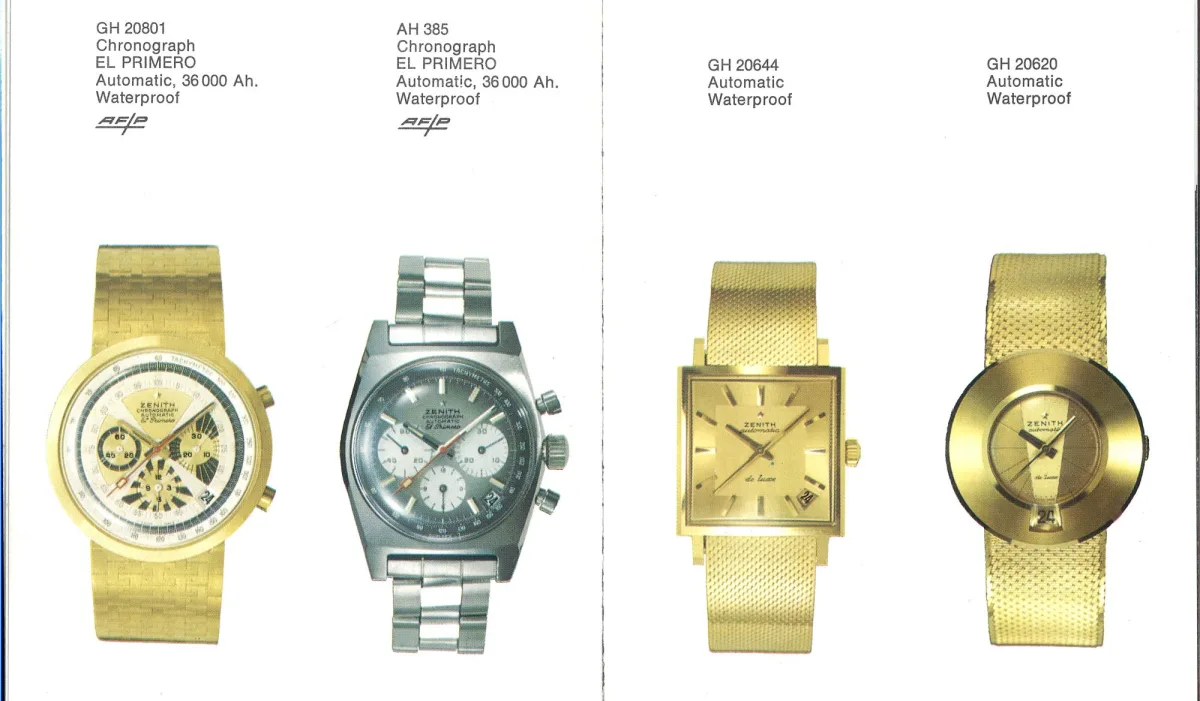
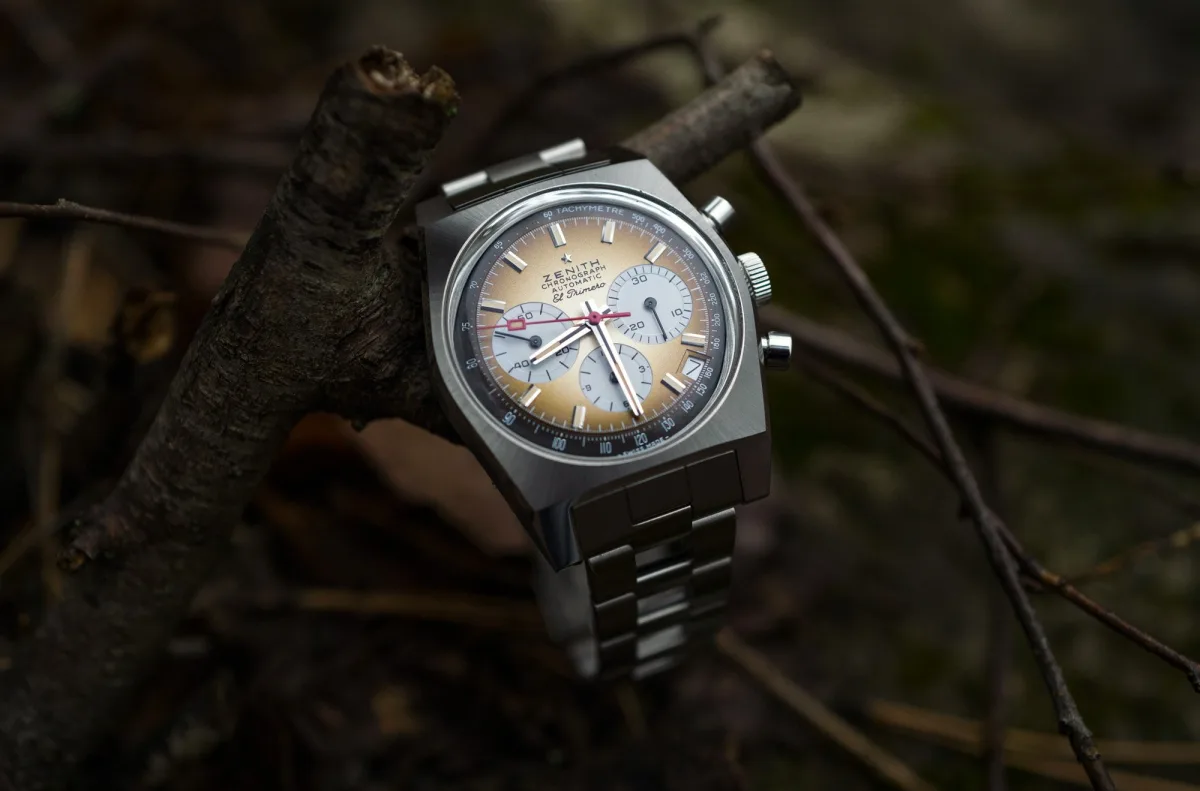
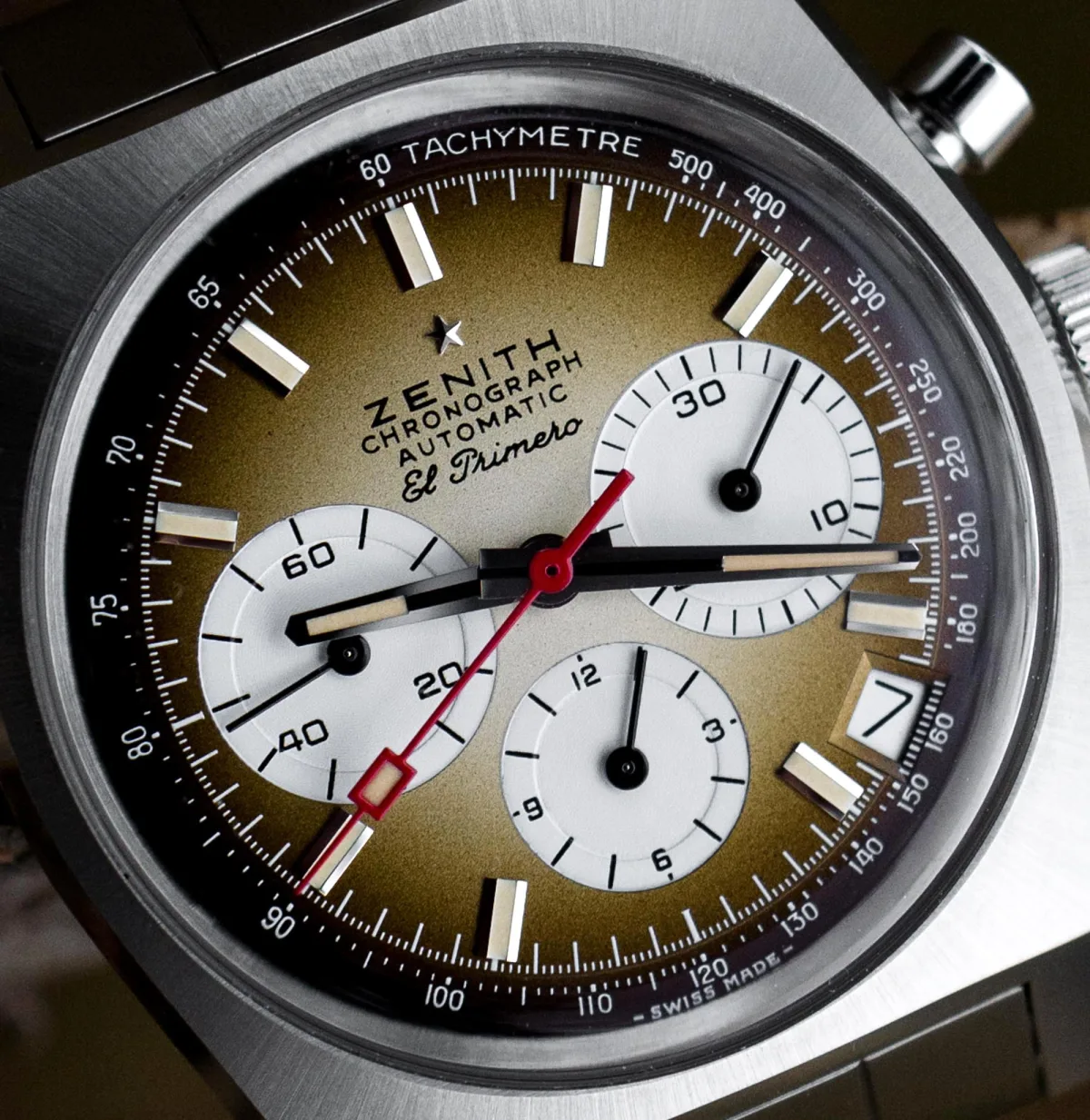
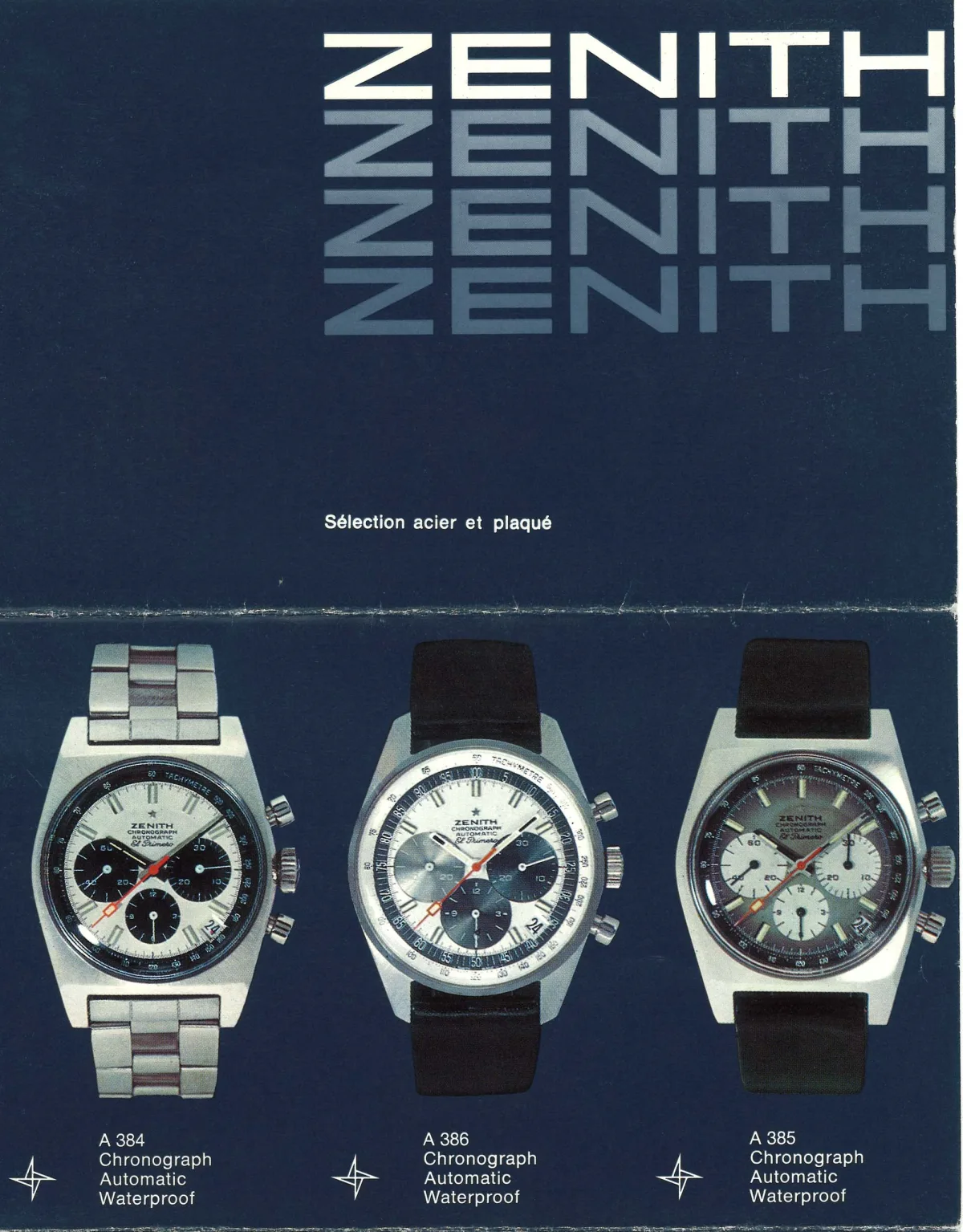
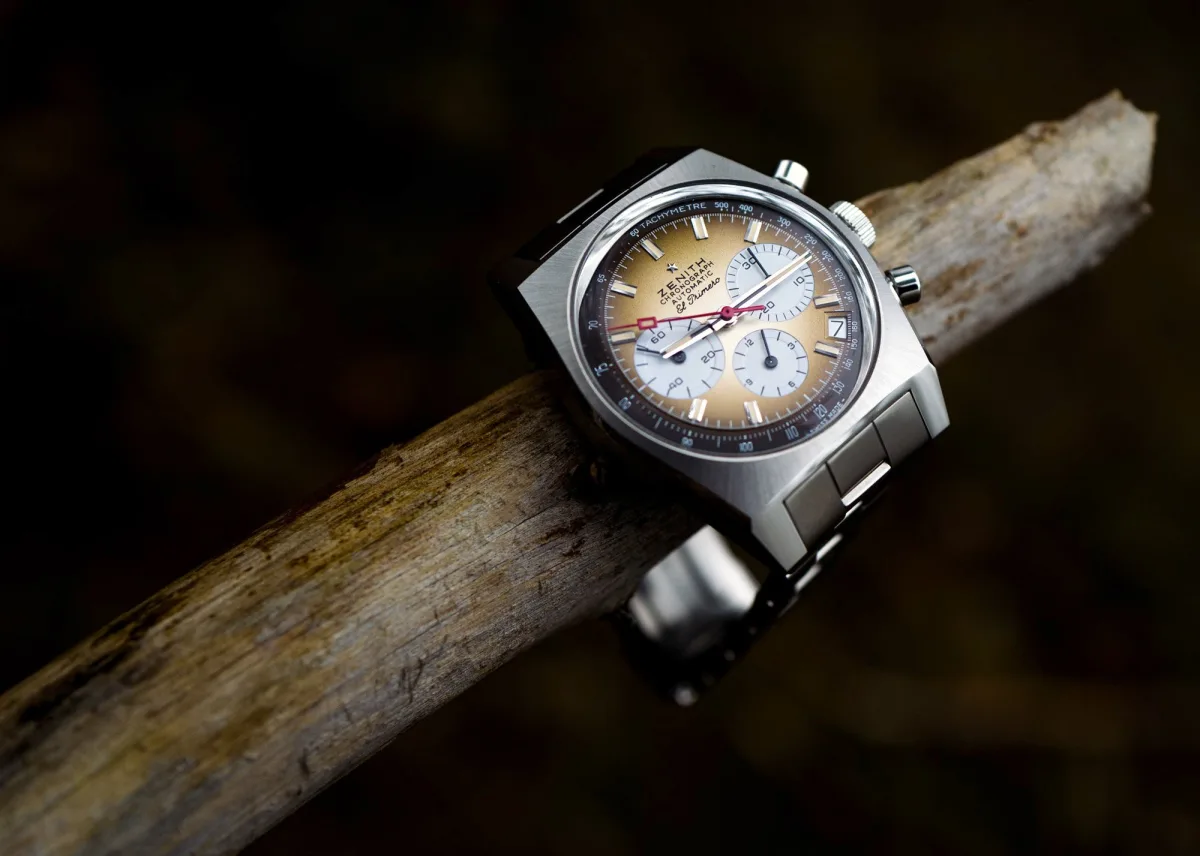
For better and worse, it is very close. As you can see above, the A385 model comes with a “degrade,” or “smoked,” or “vignette,” or “ombre” dial that was present on the original 1969 model - something I must say I did not expect to see. It is the kind of dial with a dark periphery that, although not completely gone, only became fashionable again in recent years when H. Moser & Cie. loudly announced its return to fashion. And here Zenith El Primero Revival A385 manages to stay true to its original while being very fashionable - even Rolex now makes “ombre” dials (as they call them). Zenith claims that the A385 model was the first gradient dial in the watch industry - a bold statement that is hard to make from half a century's distance and a quartz crisis, but I feel comfortable perpetuating the thought that it could very well have been one of the first.
Zenith claims that the watch case “is a faithful reproduction of the original 1969 model, created through 'reverse engineering.' Using original blueprints and production plans, every detail of the 37mm stainless steel A385 case is exactly like the original 1969 model.”
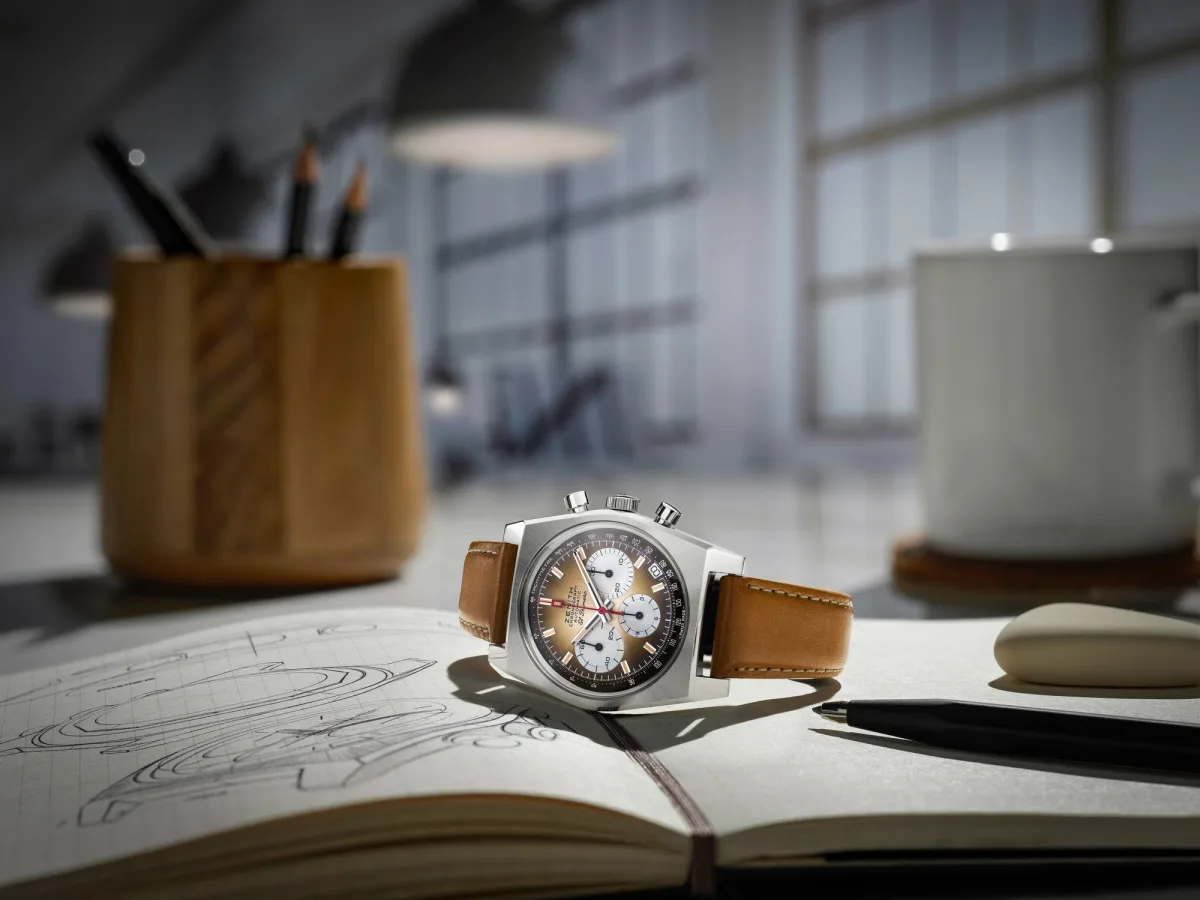
This is very cool. Zenith is kind enough to omit the fact that this modern case is 4000% more impressive in quality than anything that was possible in the late 1960s - not through any fault of watchmakers of that period. It's just that the base material (316L stainless steel) and modern machining and finishing technologies allow for a case that is more like a piece of jewelry and less like something made from a tin can. The polished bevel running along the upper edge of the case is so sharply defined and shines so brightly on the surface that it rightly humbles even more expensive watch cases of the '60s and early '70s. In other words: Yes, the shape and some surface finishing styles are faithful to the original, but the overall feel of the case is incomparably better. The same goes for the 2021 model's domed sapphire crystal, which replaced the acrylic glass of the 1969 Zenith El Primero A385 model. The massive case back has also been replaced with a display back, showcasing the El Primero 400 mechanism.
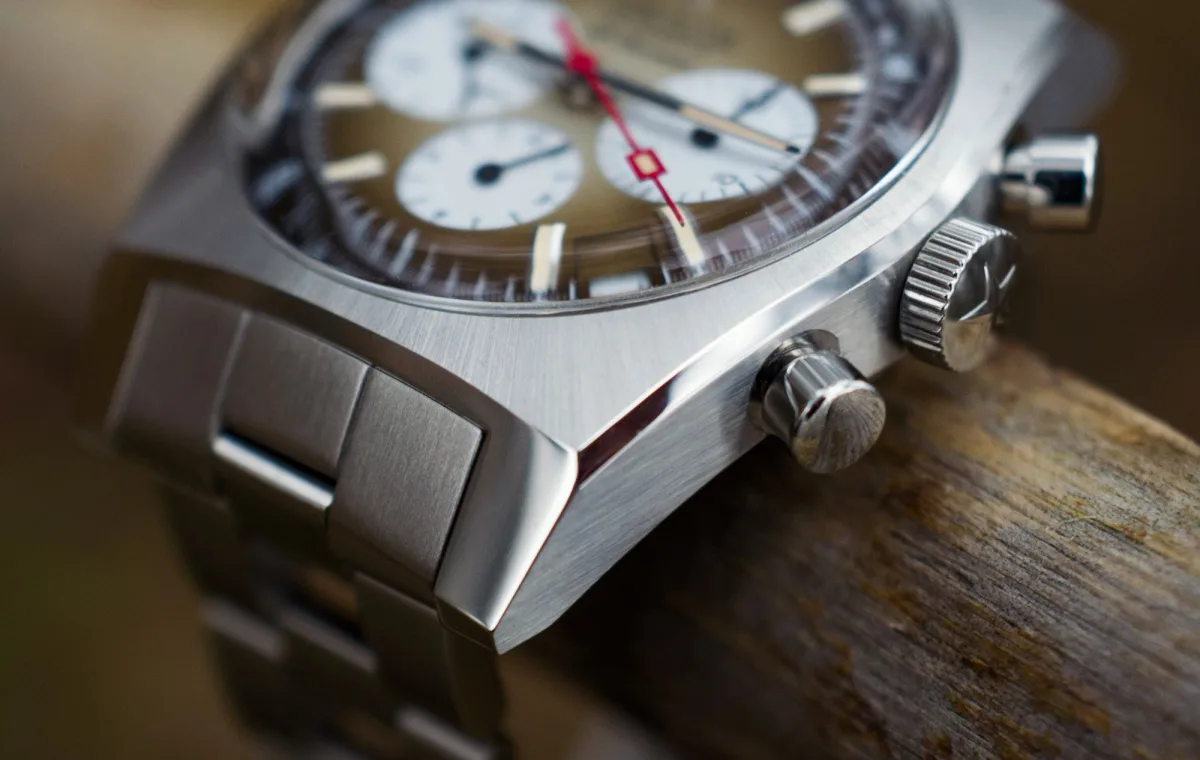
Another nice touch is the centralized sunburst brush on the upper register plane: It's like an explosion of infinitely small lines emanating from the dial or mechanism inside. It charges the overall aesthetics with much more energy than one would expect. Oddly, the large polished areas of the lugs seemed less impressive to me than the polished edges along the sides of the case. Not only do these large polished lugs serve as a magnet for scratches (no matter how careful you are, it's just a matter of time), they also have a somewhat uneven surface and less pronounced shine. If you want the watch case to be p*rn, you won't be satisfied unless you go full Zaratsu, but I think the lug area on the A385 case has at least a little room for improvement. Of course, this is not a deal-breaker, especially considering the quality achieved in other parts of the case.
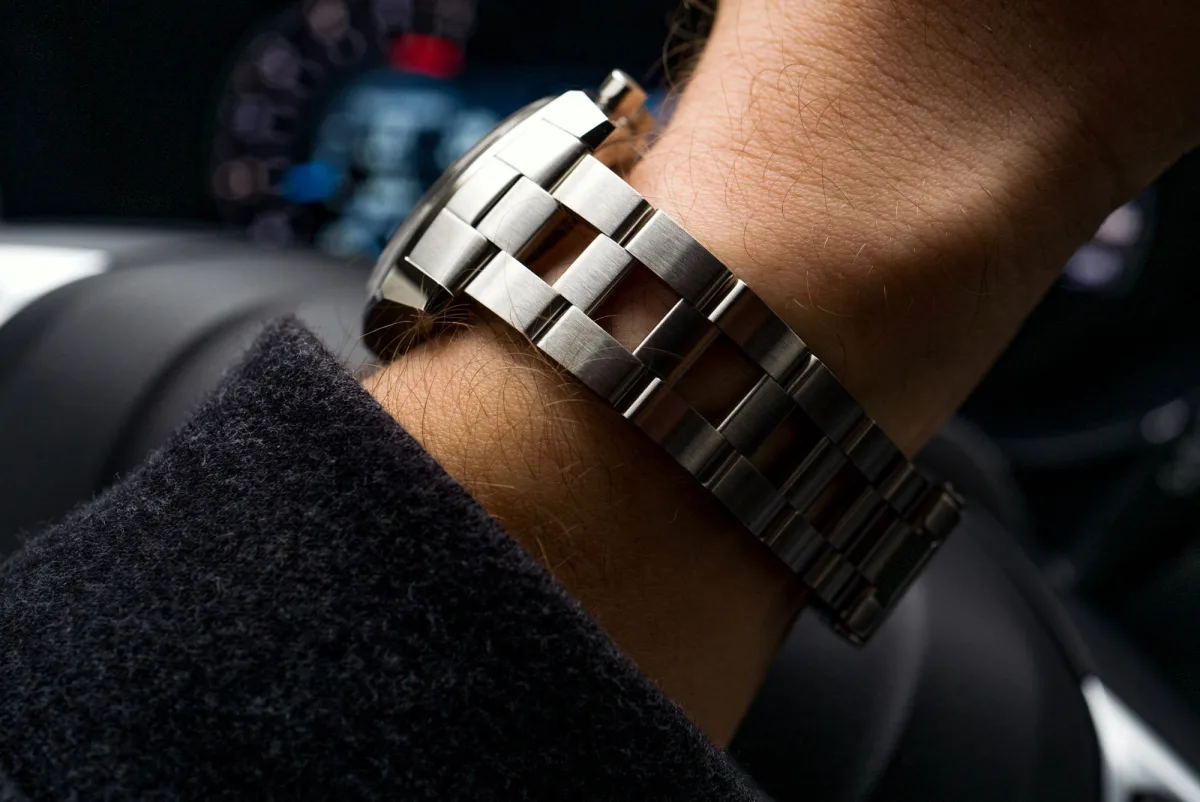
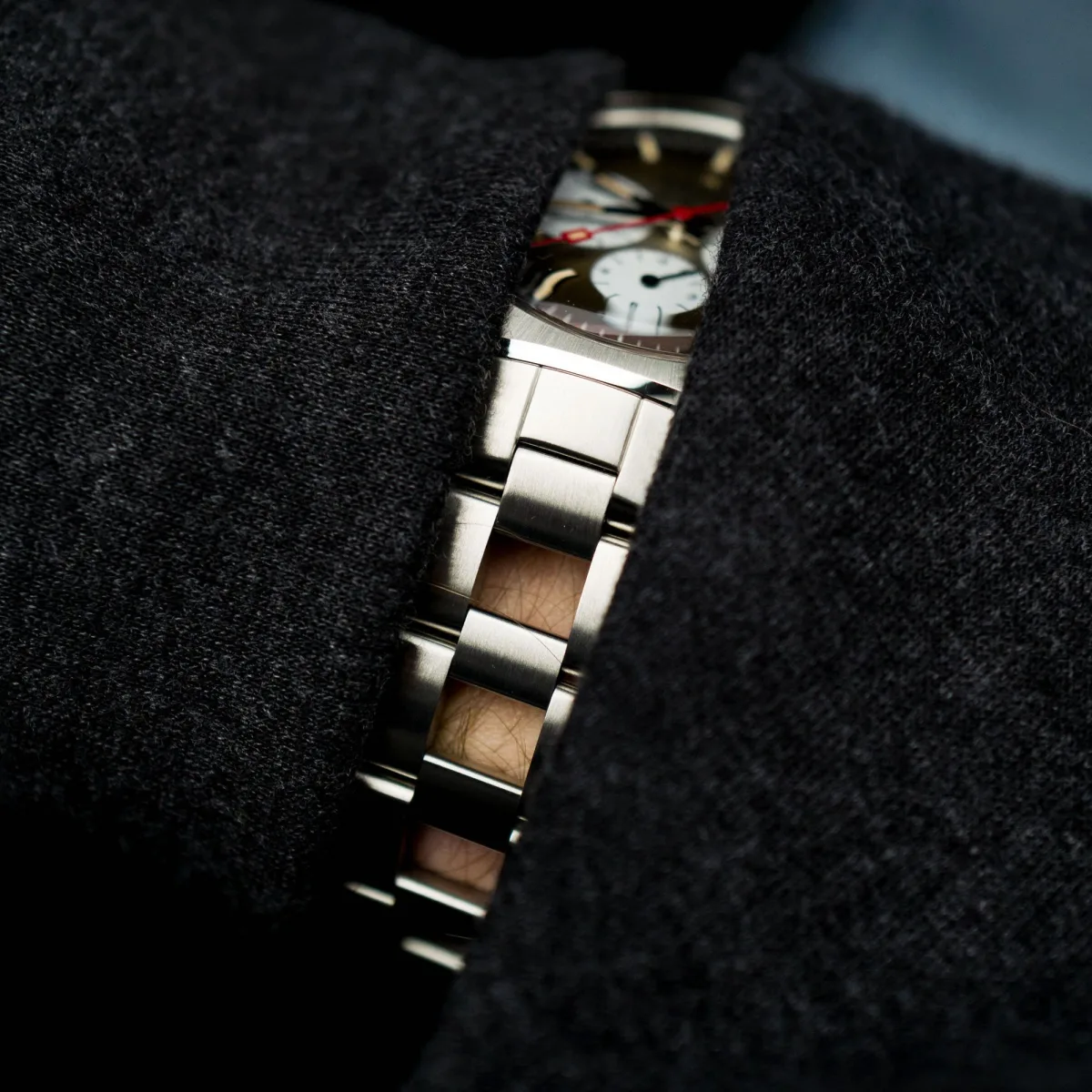
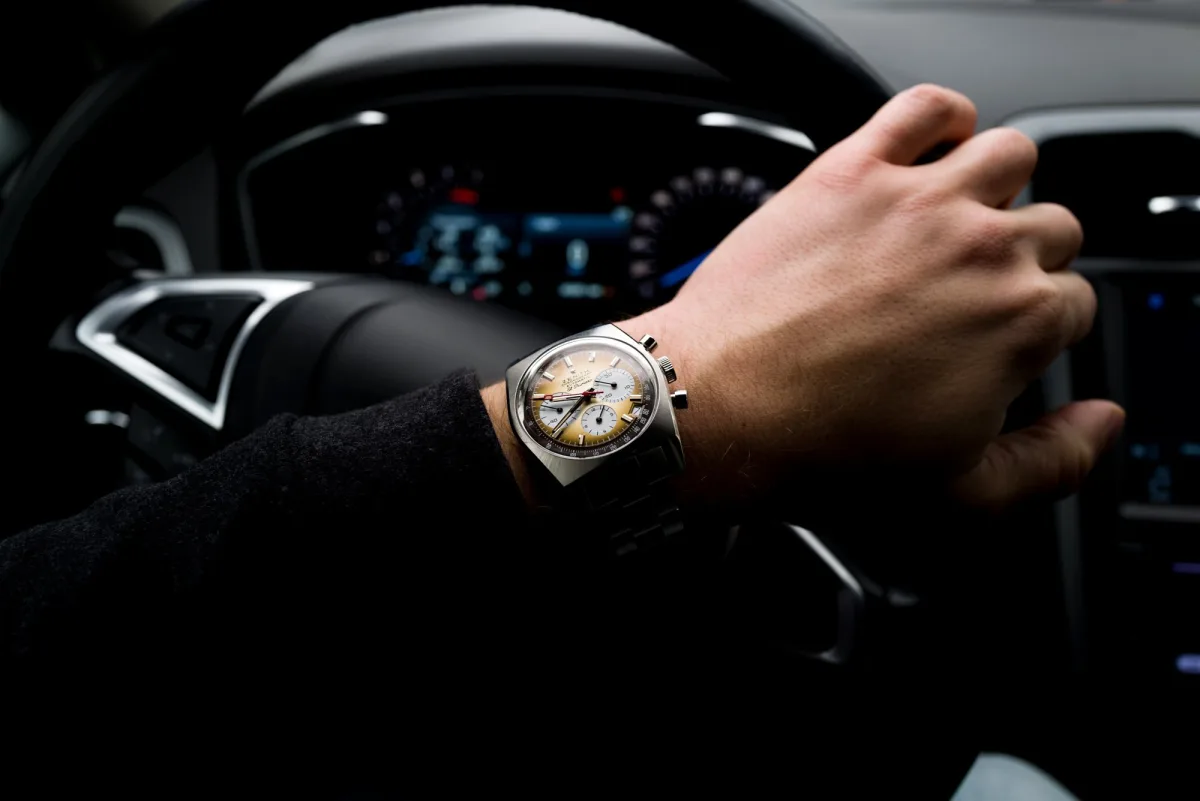
Another highlight of the Zenith El Primero Chronomaster Revival A385 is the Gay Frères ladder bracelet - a rather self-explanatory design if there ever was one, and very characteristic of the 1960s. While expensive watches of the '60s and '70s might fall short in terms of material quality, fit, and finish, the shocking recurring superiority of these watches is the comfort of wearing them compared to bulky modern luxury watches. The thin, lightweight metal alloy, loose links between the segments, and often loose end links together create a sense of lightness and adaptability on the wrist. Of course, what one considers comfortable is subjective, and your mileage may vary, but in my experience, vintage watches equipped with bracelets often prove better in terms of long-term wearing comfort.
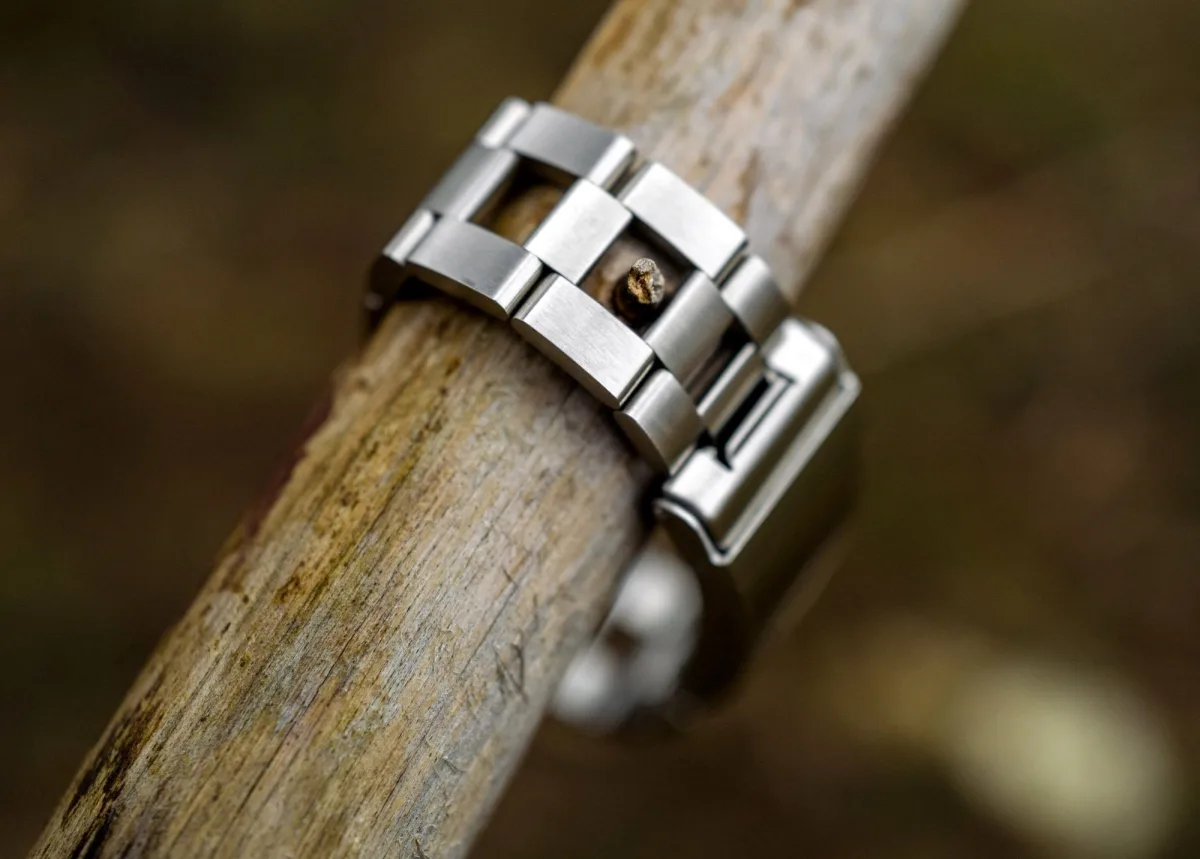
While the massive links of the Zenith El Primero Chronomaster Revival A385 Gay Frères bracelet (try saying that quickly three times in a row) certainly feel much more robust than half-century-old bracelet links, the ladder construction allows the bracelet to remain very light and, yes, very airy. I never sweat under the bracelet, and I also experienced no hair pulling. Once again, a '60s design that not only looks fresh and cool but is noticeably more comfortable than most modern bracelets.
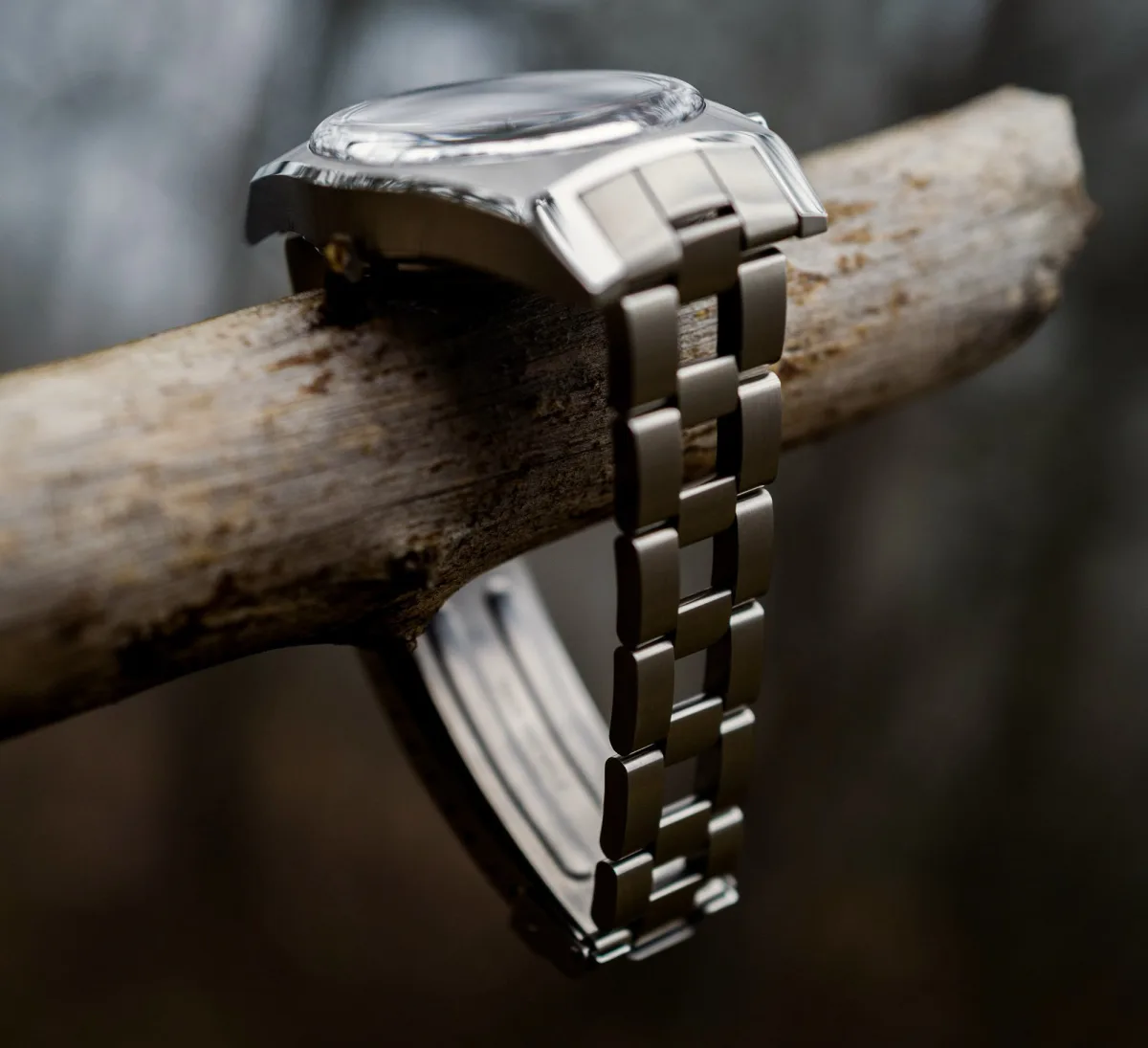
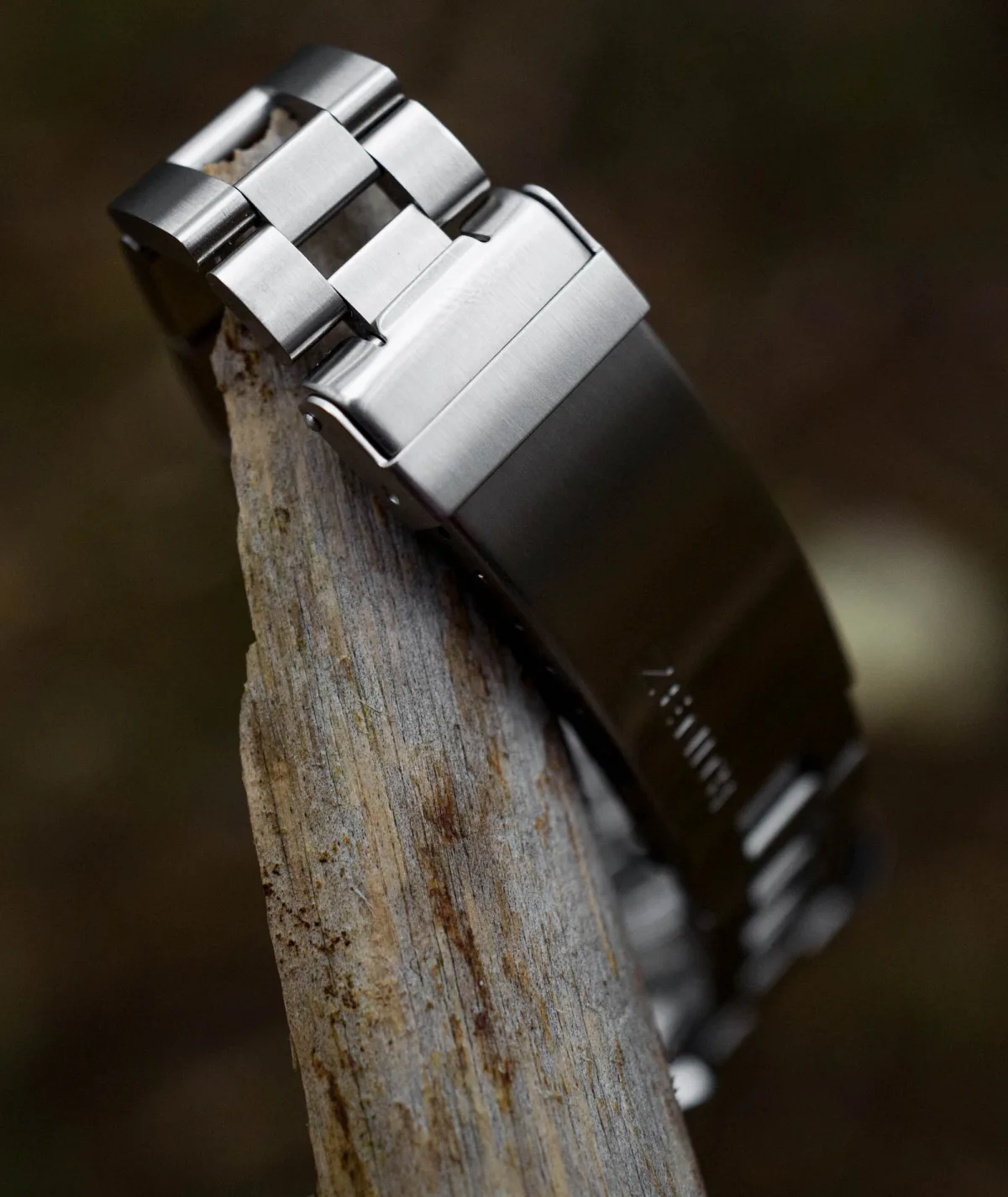
The only aspect I have yet to come to terms with (I don't think I'll ever find it in me to do so) is the thin, stamped execution of the entire “mechanism” of the folding clasp and the simply awful flip lock on the outside of the clasp. Worse than the cheap appearance and clanging sound of the clasp is its dreadful operation. It's such an unpleasant sensation that I can't imagine how watchmakers 50 years ago could sleep peacefully knowing such a clasp existed on their watches, let alone that these watches are being made fresh today. I genuinely believe Zenith had to make an effort to intentionally create these terrible clasps because the systems they use in literally all their other watches have progressed beyond these decades ago. I simply cannot bring myself to fall into a deep enough vintage trance to consider this clasp acceptable - not for $1000, let alone nearly eight times more. I am lenient with Zenith and acknowledge that they must have done this to please vintage enthusiasts. But honestly, there's a good reason why no luxury watch manufacturer makes such clasps anymore.
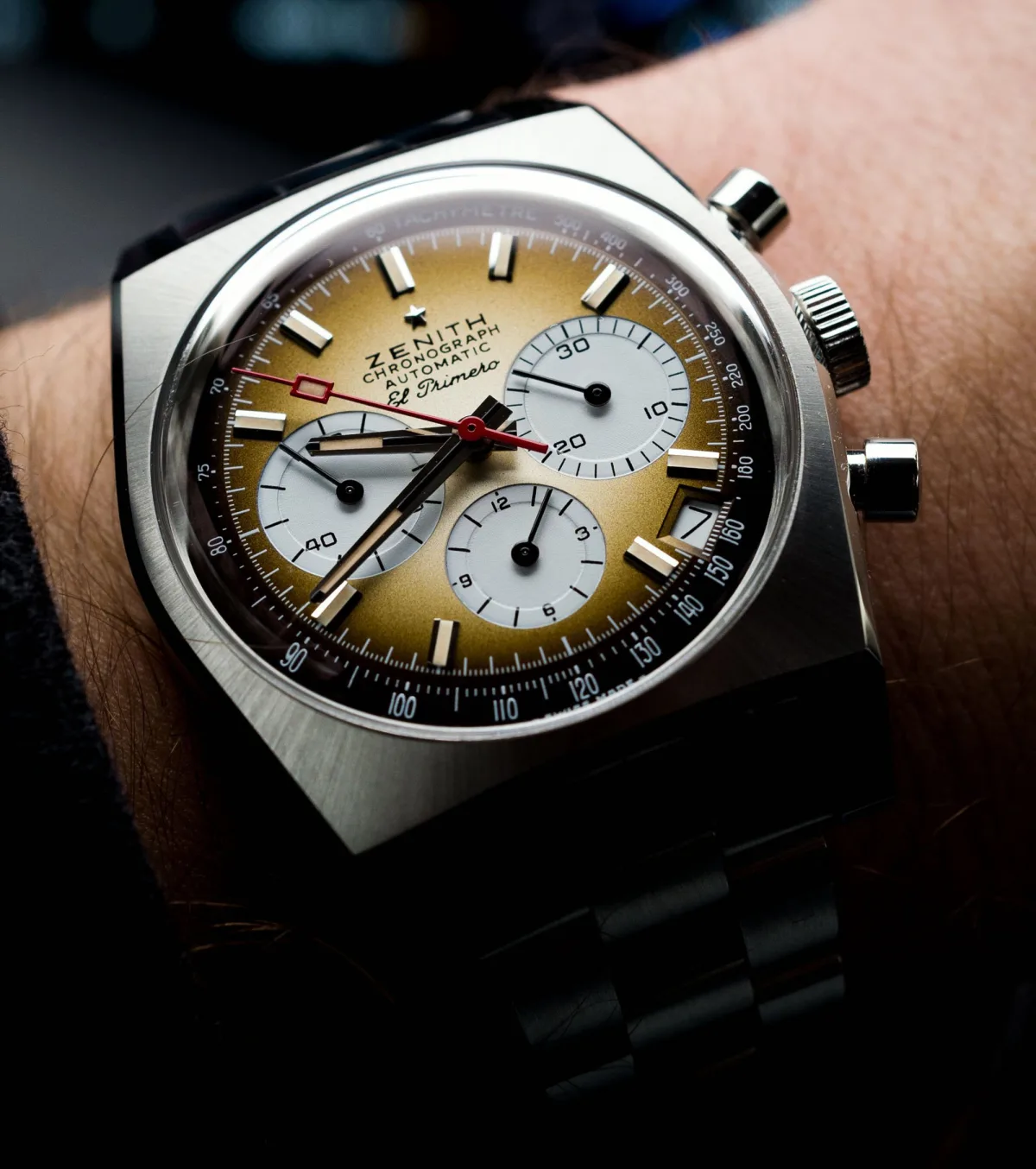
As I said at the beginning, “for better and worse,” the Zenith El Primero Chronomaster Revival A385 is very close to its original 1969 version. In fact, Zenith's efforts to precisely replicate the case finish, bracelet design, and probably this silly clasp deserve praise. As a result, the Revival A385 watches only cause discomfort when dealing with the clasp - at other times, they're very comfortable to wear and look at.
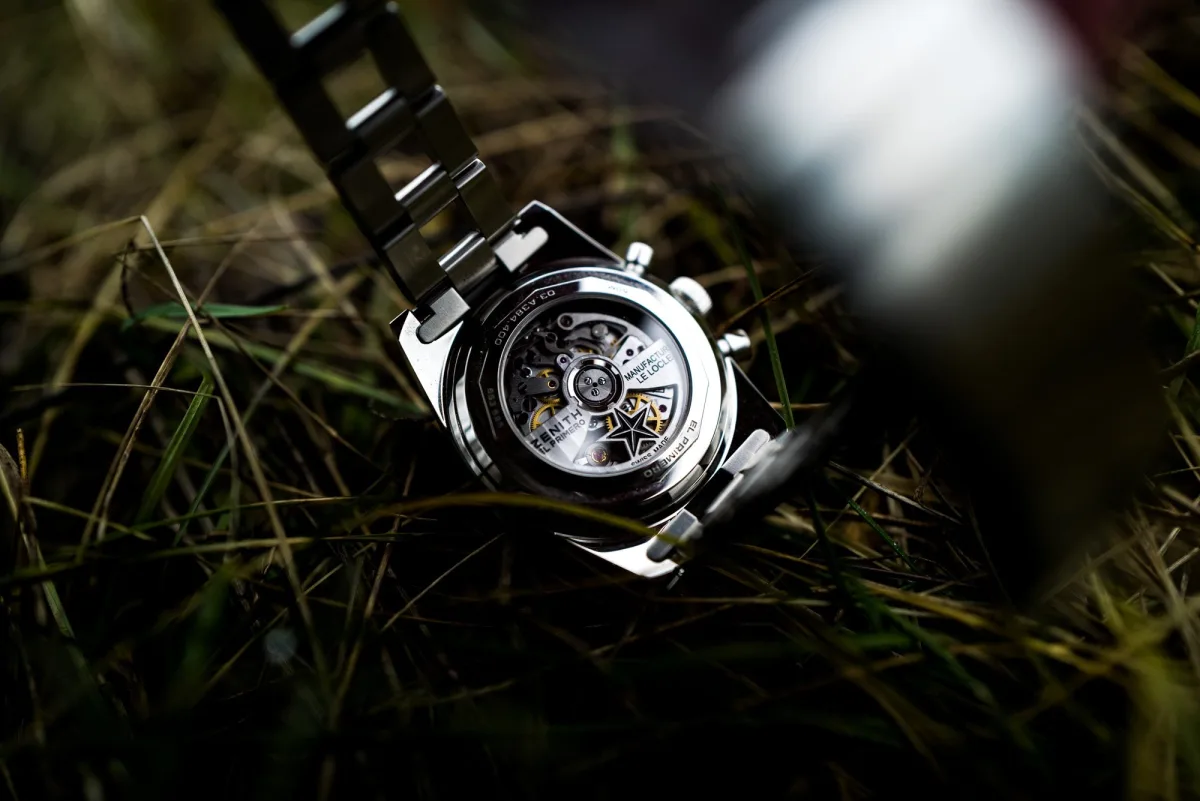
Designed with the average watch case diameter of the 1960s in mind, the El Primero continues to look its best in a smaller, sub-40mm case. The El Primero Revival A385 beautifully demonstrates this from both front and back. On the front, the dial is devoid of any signs of excessive “upscaling” - in large watches with small mechanisms inside, additional dials crowd the center of the dial, and acres of unnecessary extra space are added next to the dials to help the dial reach the periphery of the enlarged case. In contrast, the A385 boasts fabulous proportions: Look at these watches in metal, and you're sure to realize that there isn't a single detail that could be enlarged, reduced, or moved elsewhere without compromising the overall aesthetics. The arrangement of additional dials, of course, is determined by the mechanism located beneath them, and again, El Primero fits perfectly within this 37mm case.
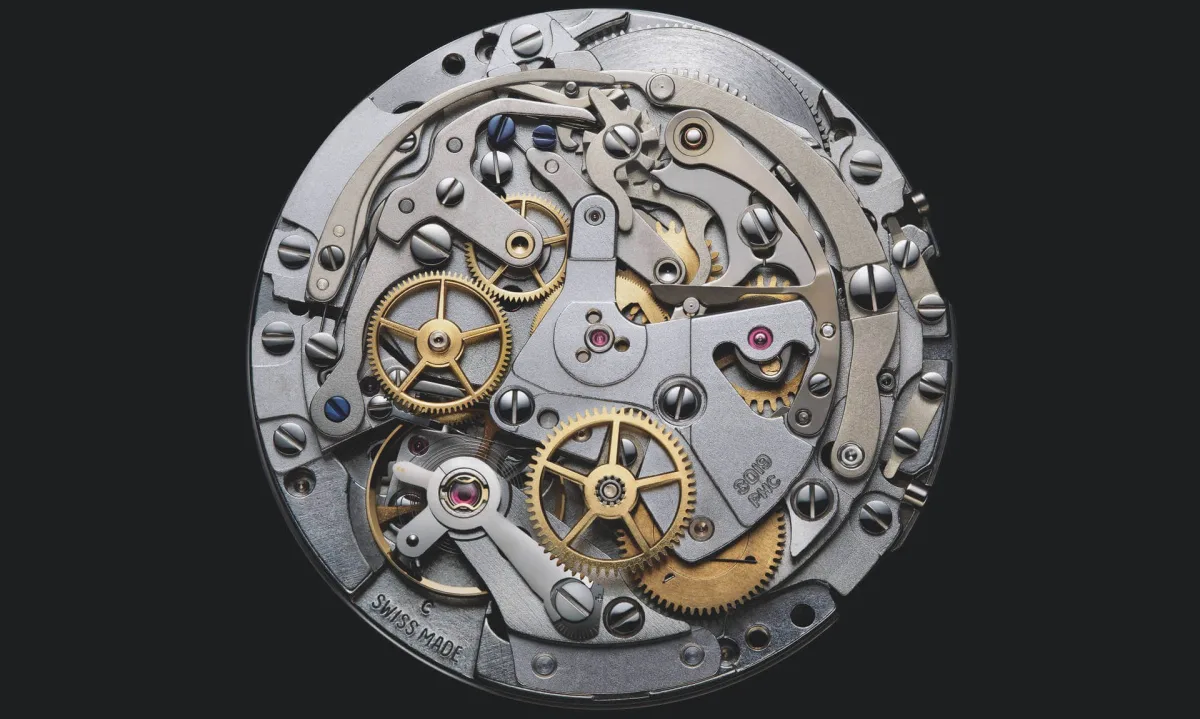
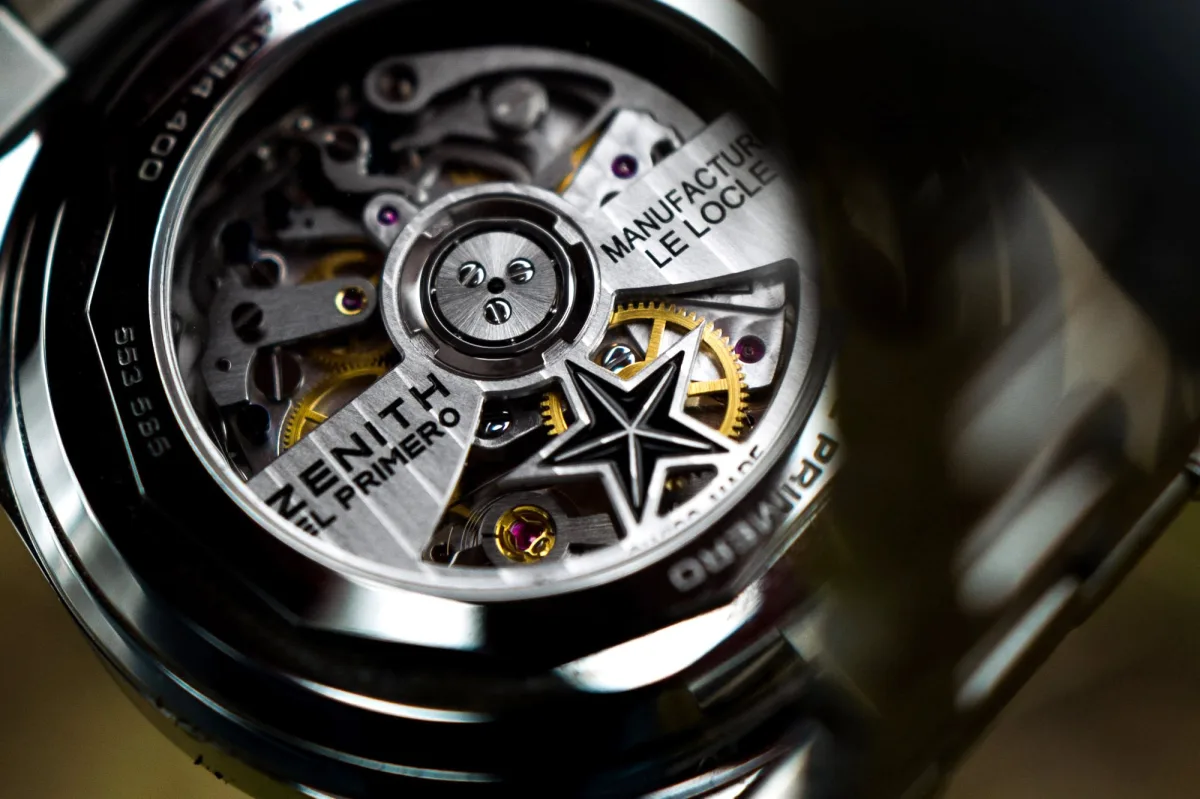
Compare the El Primero 3019 PHC caliber from the original 1969 to the El Primero 400 operating in the Revival A385 model, and you'll see that surface finishing and overall build quality have certainly come a long way in movement production. Unfortunately, the rotor was removed to image the original 1969 version, but the neatly lacquered and openworked modern version is certainly much more refined. The power reserve is 50 hours, which is quite impressive when combined with a 5 Hertz operating frequency, not to mention the small size of the mechanism. El Primero was the first automatic chronograph caliber operating at such a high frequency - still unrivaled and bordering on fantastic in 1969. A charming quirk of El Primero is that the first position of the crown adjusts the time, while the second sets the date, unlike how most other mechanical watch crowns work. This constantly reminds one of the pioneering engineering solutions that were required to create the first mechanism of its kind. The lack of a hacking second is a small sacrifice to make.
The chronograph operation is a pleasant tactile sensation - both pushers feel confident with a quality springy click. Modern fashionable chronograph mechanisms, such as the Breitling B01, Rolex 4130, or Grand Seiko Spring Drive, use the so-called vertical clutch, which eliminates the jump of the second hand still present in the El Primero when the chronograph is started. 1960s manufacturing technologies simply weren't advanced enough to create a vertical clutch, so each time the chronograph is started or stopped, the lateral clutch engages or disengages a set of wheels - one spins, the other remains stationary at the moment the chronograph is started. As the mechanism presses the teeth of the rotating wheel against the teeth of the stationary wheel, the chronograph second hand can experience a slight forward or backward jump upon “collision” of the teeth. However, there are also advantages to this: if the vertical clutch is hidden inside the mechanism and you never see it in action, the good old lateral clutch is right in view: press the start-stop button, and you'll see the column wheel rotate, and the chronograph wheels start to engage. Such is the kind of case back of the chronograph, and it's easy to understand that it can indeed be preferable to the perfect but invisible operation of its more modern alternative.
Summary
It's very good that the Zenith El Primero Chronomaster Revival A385 exists. It's like a living, air-cooled 911. It's a pleasure to wear and operate (except for that terrible clasp), and Zenith has every reason to celebrate this inspiring design they boldly created in 1969. In conclusion, let me say this: if Zenith did nothing but vintage reissues, I wouldn't have taken these watches for review. I don't want Zenith to abandon the cool modern watches they're making now in favor of vintage. But as long as the Le Locle manufacture celebrates its past without compromising its thriving creativity, I think let it be so.
Zenith El Primero Chronomaster Revival A385 costs $8,400 on a Gay Frères bracelet and $7,900 on a leather strap. Check out other El Primero watches on the brand's website.
Necessary Data
>Brand: Zenith
>Model: El Primero Chronomaster Revival A385 03.A384.400/385.M385
>Price: $8,400 on a Gay Frères bracelet and $7,900 on a leather strap.
>Size: 37 mm wide, 14.7 mm thick, and 50.9 mm lug-to-lug distance.
>When to wear them: Daily.
>Friend we’d recommend them to first: A vintage design enthusiast expecting modern build quality.
>Best feature of the watch: Bold and proud unique appearance, excellent mechanism, frankly stunning bracelet.
>Worst feature of the watch: The clasp with nails must disappear.