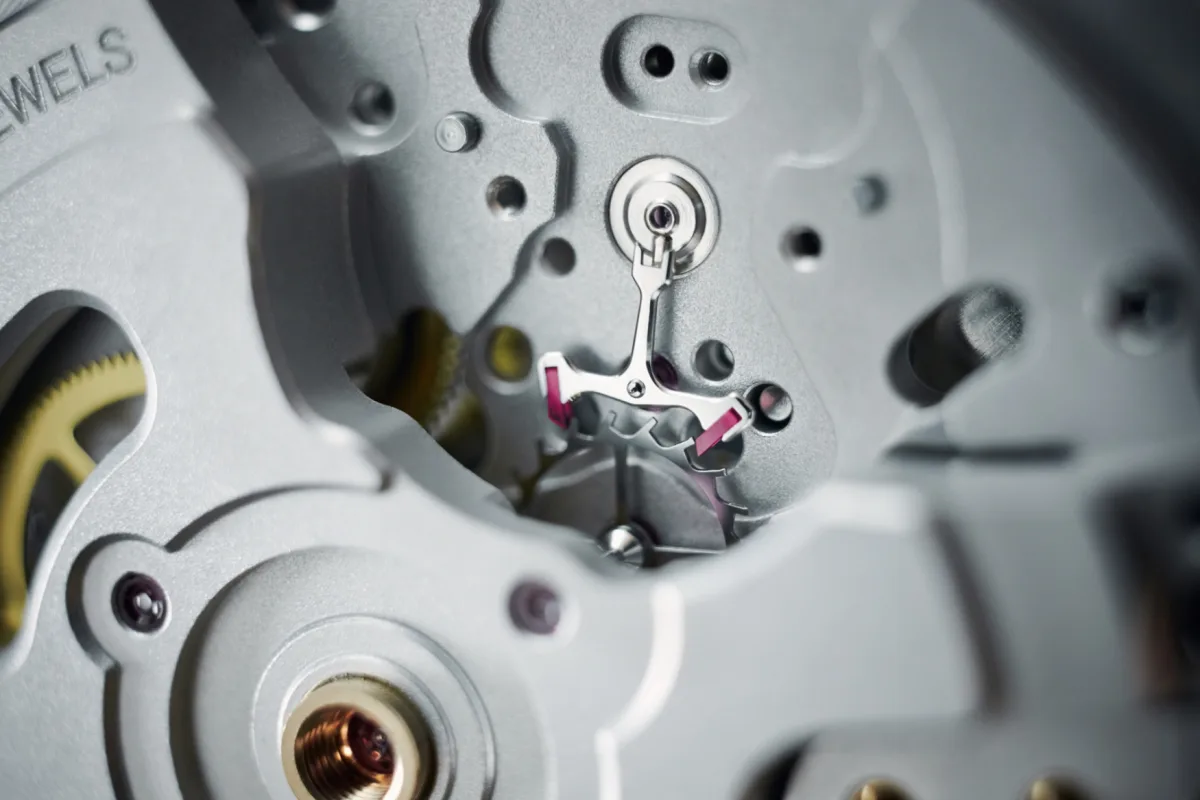
While major luxury conglomerates face losses, cut staff, and sell off brands, Chanel actively diversifies its portfolio in watchmaking.
The iconic Parisian House has long seen itself not only as a fashion brand but also as a watchmaker, not limited to just the haute fashion watch collection J12, which, however, did not generate the expected buzz among enthusiasts. Nonetheless, Chanel has chosen two development paths: the first is a focus on high-class complex watchmaking with impressive use of materials (for example, J12 X-Ray); the second is investment in manufacturing capabilities and support of respected independent watch brands.
Chanel's Investments in Independent Watch Brands
Chanel's involvement in Kenissi is well-known - the House owns 20% of the shares and also has partnerships with F.P. Journe, an undisclosed percentage in Romain Gauthier, and a significant 25% stake in MB&F, announced in 2024. However, the latest purchase by the Maison might seem atypical at first, considering the scale of the listed brands. Nevertheless, acquiring a 30% stake in Kross Manufacture could be Chanel's most significant investment to date. Let's explain why.
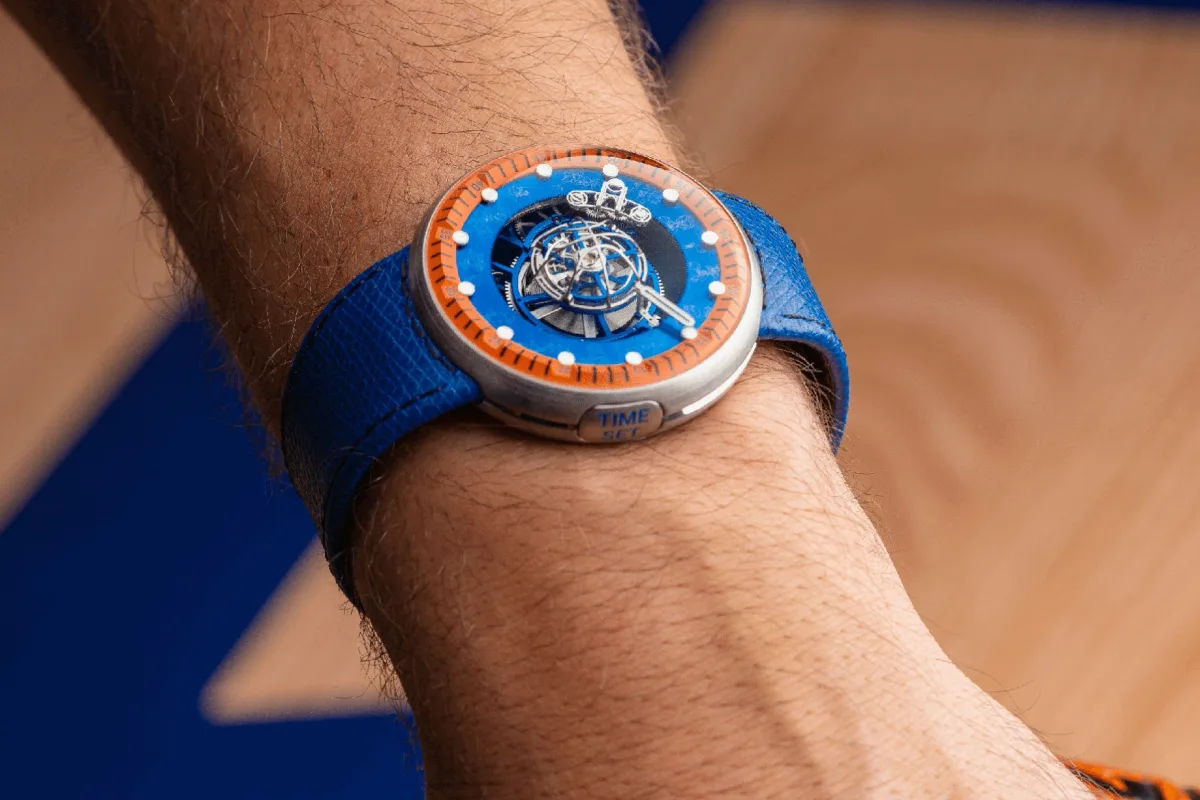
Kross Studio founder Marco Tedeschi builds his watch portfolio around concepts reminiscent of Ikepod - pebble-shaped cases with floating central tourbillons or bright color schemes inspired by pop culture. Thematic collections dedicated to Game of Thrones, Star Wars, Space Jam, or Batman often overshadow the technical aspect - high-quality watches, almost entirely produced in-house. With a relatively small production volume, Kross Studio maximizes its manufacturing capabilities, creating components for other brands - from movement development and CNC machining to fine finishing.
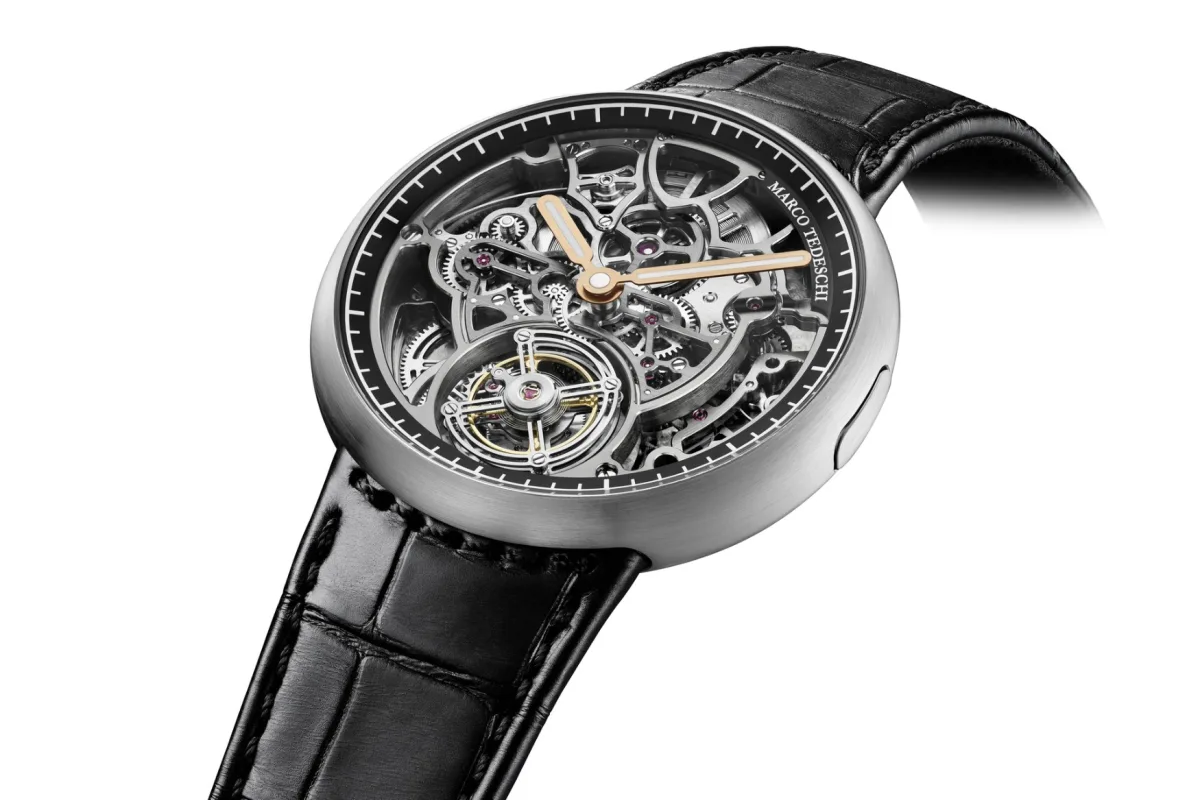
The watches that should change the brand's perception from a producer of expensive merch to a respected independent watchmaker are the first model to which Marco Tedeschi has put his name. The MT-1 can be compared to the Rexhep Rexhepi series in the wider Akrivia lineup. The case retains a futuristic design, integrating the winding crown and time setting into a crown located on the case back. This reduces the load that the powerful mainspring with a seven-day power reserve exerts on the traditional smaller diameter crown stem. Unlike the signature central tourbillon of Kross, in the MT-1, it is shifted to the '6 o'clock' position, while maintaining the flying construction with open bridges of the KS 7010 movement surrounding the tourbillon.
Expansion of Portfolio and Technological Capabilities
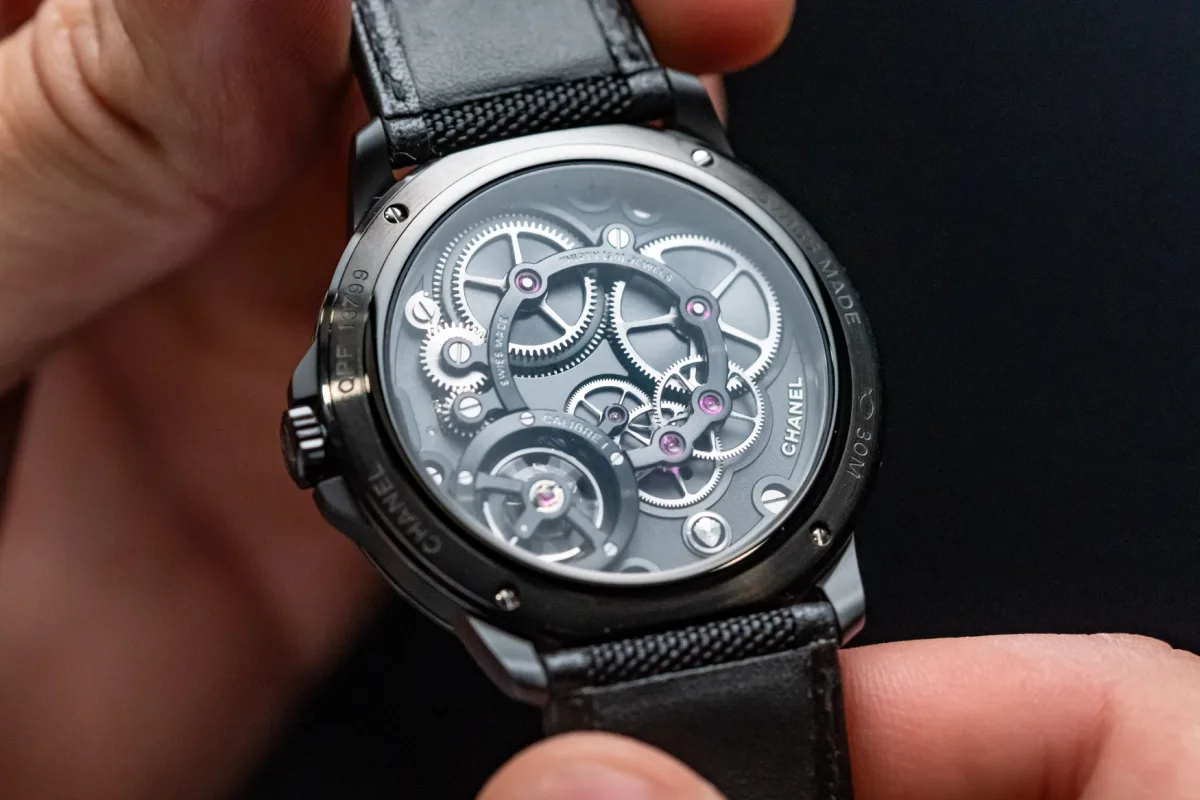
It is particularly interesting that Chanel invested specifically in Kross Manufacture, providing the company with capital to develop manufacturing capabilities while simultaneously gaining access to these resources for its own needs. While we are unlikely to soon see a miniature Coco Chanel piloting an X-Wing fighter and destroying the Death Star, this is a promising direction for the development of the brand's own watches.
Context of Chanel's Independent Investments
It is important to consider this in the context of Chanel's overall strategy of acquiring independent manufacturers. One of the key investments is involvement in Kenissi, which allowed the brand to stop relying on major movement suppliers such as Sellita and ETA, which power the initial collections. However, this means that we are unlikely to see unusual versions of the J12 with Audemars Piguet movements in the near future.

Moving away from this dependency, Chanel also sought opportunities for the development of haute horlogerie. The G&F Châtelain Manufacture in La Chaux-de-Fonds, acquired by the House in 1993, remains the main supplier of high-class movements. However, it seems that it does not have the resources to develop and produce movements that fully meet Chanel's high standards. This is logical, given that G&F Châtelain specialized more in cases and bracelets - an area in which Chanel has achieved mastery. The first proprietary movement of the Maison, Calibre 1, was developed and produced with the participation of Romain Gauthier - another business in Chanel's portfolio.
Significance of Collaboration with Kross Manufacture
Recognizing the craftsmanship of Kross Manufacture, Chanel found it reasonable to expand its presence by investing in a brand with experience in specialized work for external clients. This distinguishes their collaboration from partnerships with F.P. Journe and MB&F. In the latter two cases, Chanel's support is more aimed at financing important independent players with the goal of future profit, without sharing technology or influencing strategy - Journe and MB&F continue to work autonomously. Investments in Kross have a different nature: although Chanel is unlikely aiming for a takeover, the House is clearly interested in an integrated production process, which apparently will be actively used in the future.