One of the most popular yet overused words in the modern watch industry is 'independent'.
The term 'independent' carries many positive associations, and many watch companies strive to position themselves as an 'independent brand'. But what does it truly mean? In fact, there is no clear and definitive definition of an 'independent brand', and the question of how to correctly apply this term remains open. As in many commercial fields, marketers in the watch industry use terms not so much in their literal sense as in the emotions and impressions they evoke in the audience. As a result, the meaning of words becomes diluted, losing their clear content. An example of a similar phenomenon in the food industry is the term 'natural', which today means almost nothing.
The watch industry has historically tended to use terms so loosely that the original meaning of these words is completely lost. I hope that this does not happen with the term 'independent'. The purpose of this article is to explain how the term 'independent' is currently used, what was originally meant by applying it to a watch brand, and to propose a new, more precise definition of this concept in relation to the watch market.
Let's consider the example of the term 'in-house' (own production) or 'manufacture' in relation to watch movements. The industry has treated these concepts in the same way as it is now happening with the term 'independent'. In 2014, on WatchTested, I attempted to clarify what precisely 'in-house' means in relation to watch movements.
I even proposed specific definitions and ways to understand various terms related to movement manufacturing. Despite this, the industry did not take these standards seriously: without control over the use of terms, companies continued to call any mechanisms 'manufacture' or 'in-house', even if they were not produced by them partially or fully. In 2021, a colleague once again raised the issue of inconsistencies in the use of the term 'in-house movement'. The conclusion is the same - little has changed since my first article. Today, the expression 'in-house movement' means approximately the same as it did then, and if consumers are truly interested in movements produced by the company whose name is on the dial, the term 'in-house' is of little help to them.
There are many other terms that the watch industry overuses to the point where their meaning almost completely disappears. These include 'new', 'vintage', 'on sale', 'pre-order', 'heritage', and others. Marketers apply them in senses far removed from the original. Is it important for us to prevent this with the term 'independent'?
Independent: From Innovative and Clearly Defined to Vague and Universal
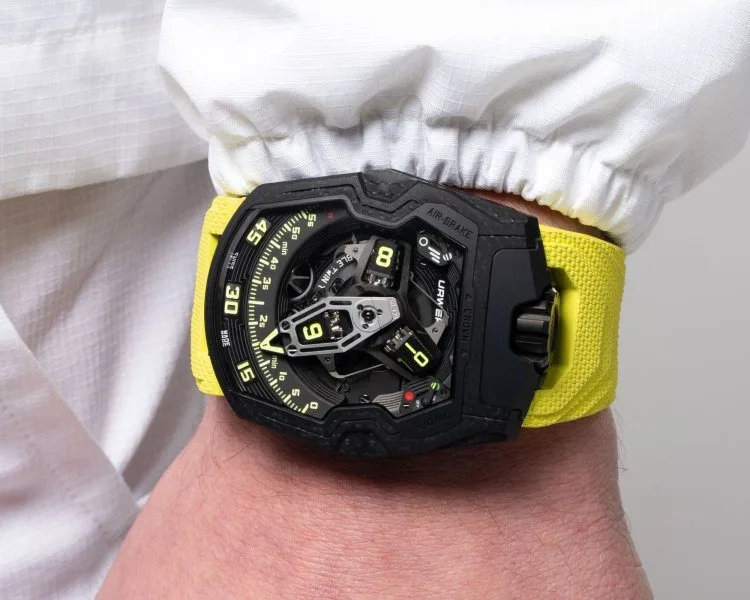
The term 'independent brand' has been familiar to me since the beginning of my career in watch journalism. Small elite startups like MB&F and URWERK helped popularize this term. Initially, it implied separation from large companies, often part of conglomerates. The idea was to emphasize: 'we are on our own, not part of a big holding, we do everything ourselves'. As these brands became successful (primarily due to the product, not marketing efforts), interest in independent brands grew. They created impressive products - since they did not have large marketing budgets, they had to attract attention with quality and innovation. Furthermore, it was easier to meet independent brands in person - often you could chat with the owner, designer, or watchmaker, rather than a faceless company representative. Independence became associated with open management and direct access to creators.
Over time, debates began about what exactly can be considered an 'independent' brand. Does a company need to be fully self-financing? Can it have external investors? Must the watchmaker or lead designer run the company? Is it necessary to produce one's own parts or assemble watches independently? Can a brand owned by a public company be considered independent? What happens to a brand that was independent but was bought or merged with another? As you can see, there are many questions, and few try to provide definitive answers.
How Luxury Consumers Perceive Brand Independence
Why is being an independent brand considered desirable? What makes the concept of independence attractive for luxury watch manufacturers? To answer, one must understand what consumers usually seek in a luxury product and how they perceive themselves. A typical luxury item implies a departure from mass efficiency criteria and focuses on meaning, quality, and uniqueness, not just functionality. Luxury brands strive to stand out, be special, with an emphasis on details and self-expression, not just profit or demand. They position themselves as independent creative units, which aligns well with the term 'independent'.
At the same time, most luxury goods consumers consider themselves independent individuals. They buy expensive watches to highlight their individuality and stand out from the rest. Watch enthusiasts want a personal approach and value the ability to express their tastes and values. Regardless of how independent they truly think, for them, 'independence' is part of a lifestyle and personality. Money and choice are also forms of independence.
If you ask collectors why they prefer independent brands, the answers will vary. Some will say because of the price, although some independent brands are more expensive than large ones. Others will mention original designs and fresh ideas, which are more often associated with small independent companies. In fact, innovative ideas can appear in any brands. But most watch enthusiasts will agree that the key is the ability to personally communicate with the creators: designers, watchmakers, founders. For many, this is an important aspect that makes the purchase more emotional and meaningful. Unlike large brands with numerous sales departments, with independent brands, you can often meet the owner or founder and discuss the product directly. This creates a feeling of buying art from the artist himself and strengthens the emotional connection with the item.
Rethinking Independence of a Watch Brand: Autonomy Matters More Than Ownership
Returning to the question: what is an independent brand? Is it a matter of ownership, size, age, or production volume? The latter criterion indeed helps assess how much a brand can maintain authentic craftsmanship. Most brands cannot produce more than a few thousand watches a year without shifting to mass production, which reduces the level of manual work and finishing. However, small production does not guarantee independence in spirit or management.
Based on the history of the term 'independent' in watchmaking, I believe the key meaning lies in decision-making autonomy. True independence is the degree to which a brand's management has the final say in matters of production, assortment, and manufacturing methods. Independence is the freedom not to depend on the whims of third parties, be it owners, investors, suppliers, or market forces. Independence means the ability to create what you want, how you want, and in the necessary quantities. It is the freedom to realize a unique vision. People with good ideas can bring them to life without needing to ask for permission.
The more resources and reputation an independent brand has, the more ambitious projects it can undertake. Profits remain within the company and are invested in development and innovation, rather than going to shareholders and investors who do not directly benefit the brand.
Consumers are the main judge of independence and its authenticity. Independence is not a binary characteristic, but a scale with different degrees. Many brands position themselves as 'independent' because the term itself has blurred boundaries. It is rare to find an absolutely independent or completely dependent brand. Most are somewhere in the middle: some are fully owned by corporations, others have shareholders, and some are owned and managed by one person. At the same time, almost all use suppliers and third-party services.
Independence should be evaluated by the degree of management's influence on key decisions. The more power watchmakers and designers have, the more likely the brand is independent. The ability to create a new product from scratch without permission is a true sign of independence. The ability to invest in new ideas without prior approval is also important. These qualities matter because no good watch mechanism was created by committee, and great achievements in watchmaking do not arise from cost-cutting.
Degrees of Freedom Measuring Independence
Consumers and watch enthusiasts will have to independently assess how independent a brand is, based on subjective observations. In practice, understanding who owns the brand and how many watches it produces annually can be difficult or impossible - this information is often unavailable or inaccurate. Therefore, connoisseurs of independent brands should monitor the company's activities before drawing conclusions about its independence. Thus, a brand's independence is rarely subject to precise measurement and is more often an emotional category on which reasonable people may have different opinions.
This state of affairs does not inspire optimism about the future significance of the word 'independent' in the watch world. In attempting to define it, I merely confirmed that there is no agreement on this issue and there will not be, and the free use of the term 'independent' will continue as long as it is positively perceived by consumers. Those who value true independence will have to evaluate brands by degrees of autonomy rather than seeking black-and-white definitions.
However, it can be confidently said that all independent brands are run by creative people who make key decisions. Working with them feels like collaborating with the owner. When communicating with them, you feel how and why the watches were created and what standards they had to meet. Although the concept of independence in watchmaking remains vague, its value in the modern luxury industry is undeniable.