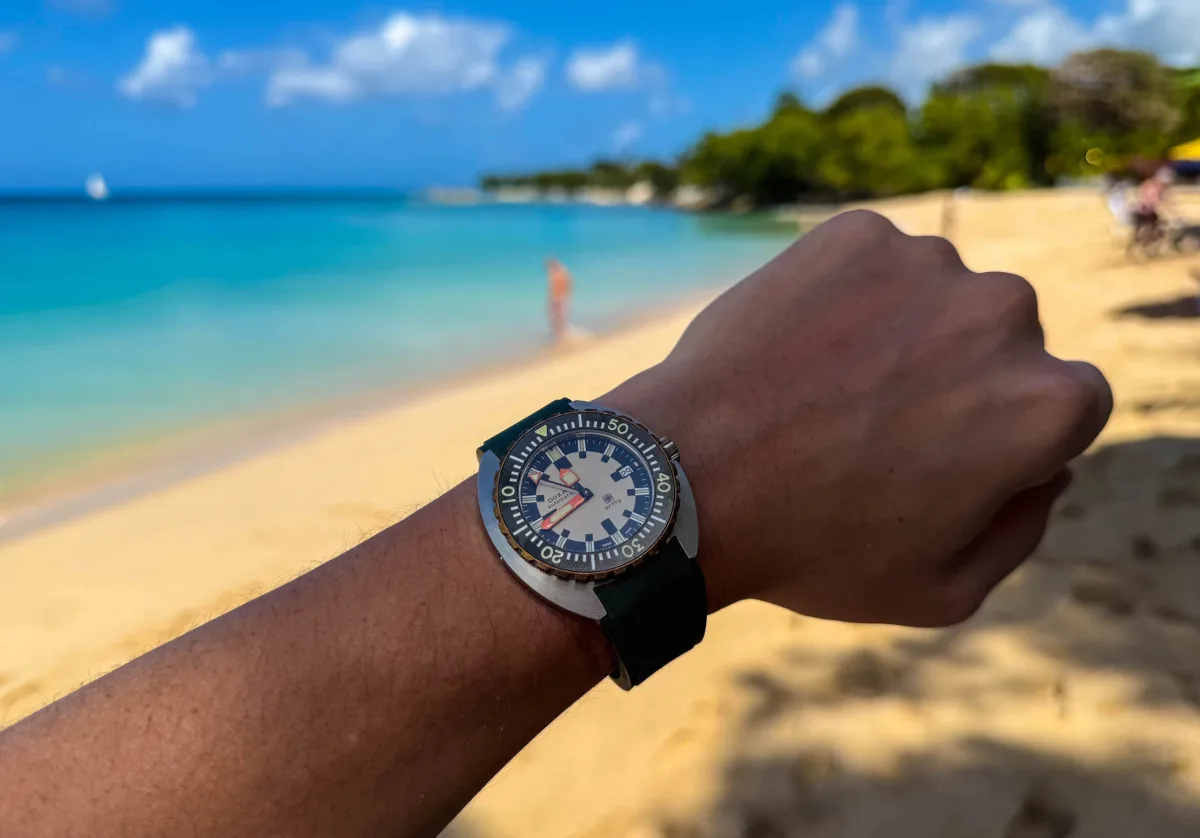
It's no surprise that after several months of winter, many residents of northern regions dream of a tropical escape.
With this goal in mind, a trip to the Caribbean island of Barbados was planned. Doxa kindly provided me with their stylish, military-themed Doxa Army watch - a reissue of one of the rare 1960s dive watch models. I thoroughly tested it both on land, exploring the island's wildlife reserves, and underwater during long snorkeling sessions in the famous Carlisle Bay, as well as in more secluded and picturesque spots like Reeds Bay.
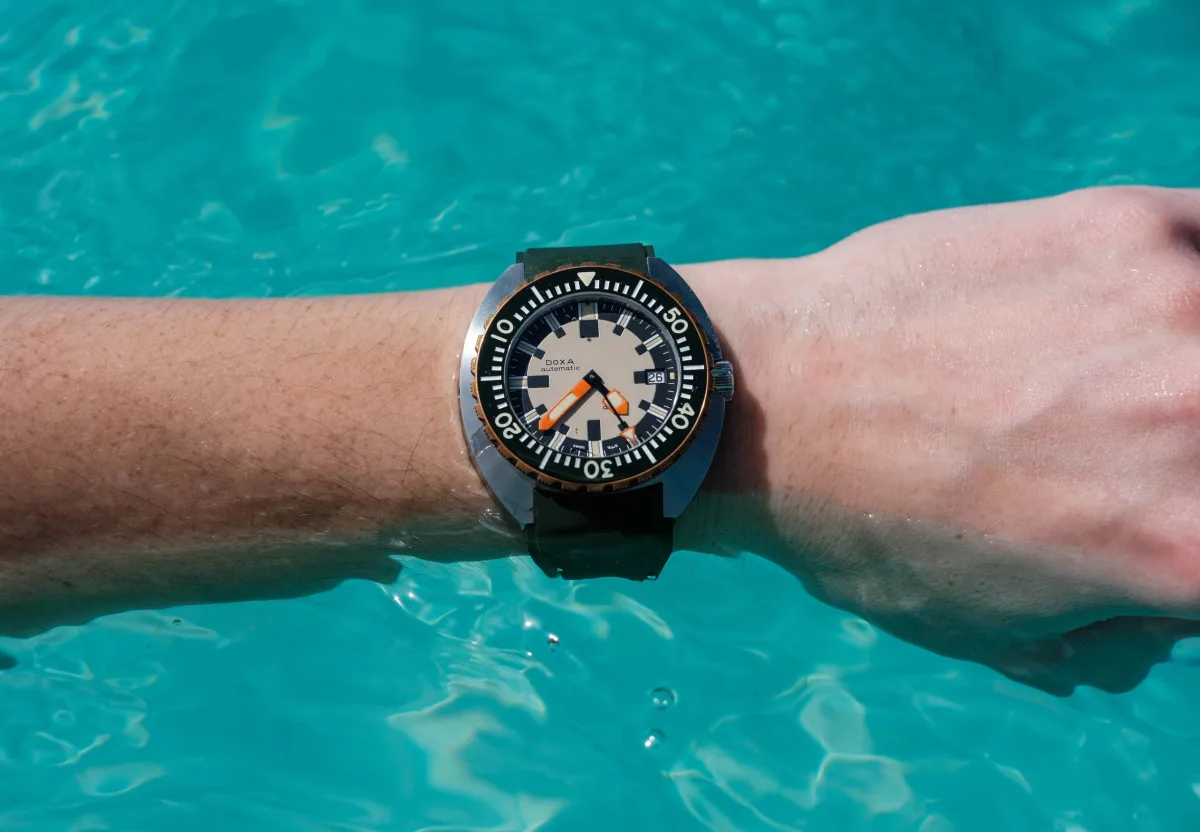
To document the moments, I brought along a Fujifilm XM5 camera with a 27mm pancake lens for compactness, but in the heat of the moment, I ended up taking most of the photos and videos with the iPhone 17 Pro due to its convenience and speed.
First Impressions and Arrival
Previously, I have reviewed Doxa watches on WRB, including models like the Sub 300T, 200T, and even the Sub 250 Ahmed Seddiqi Edition. I firmly believe that these are among the best Swiss dive watches in terms of price-quality ratio - they are slightly above the level of the Longines Legend Diver but fall short of icons like the Submariner. Reliability and tool-like robustness are characteristic of the entire lineup, including the Doxa Army, which inspires confidence when used in extreme conditions - sand, saltwater, and contact with a backpack during travels do not affect its performance.
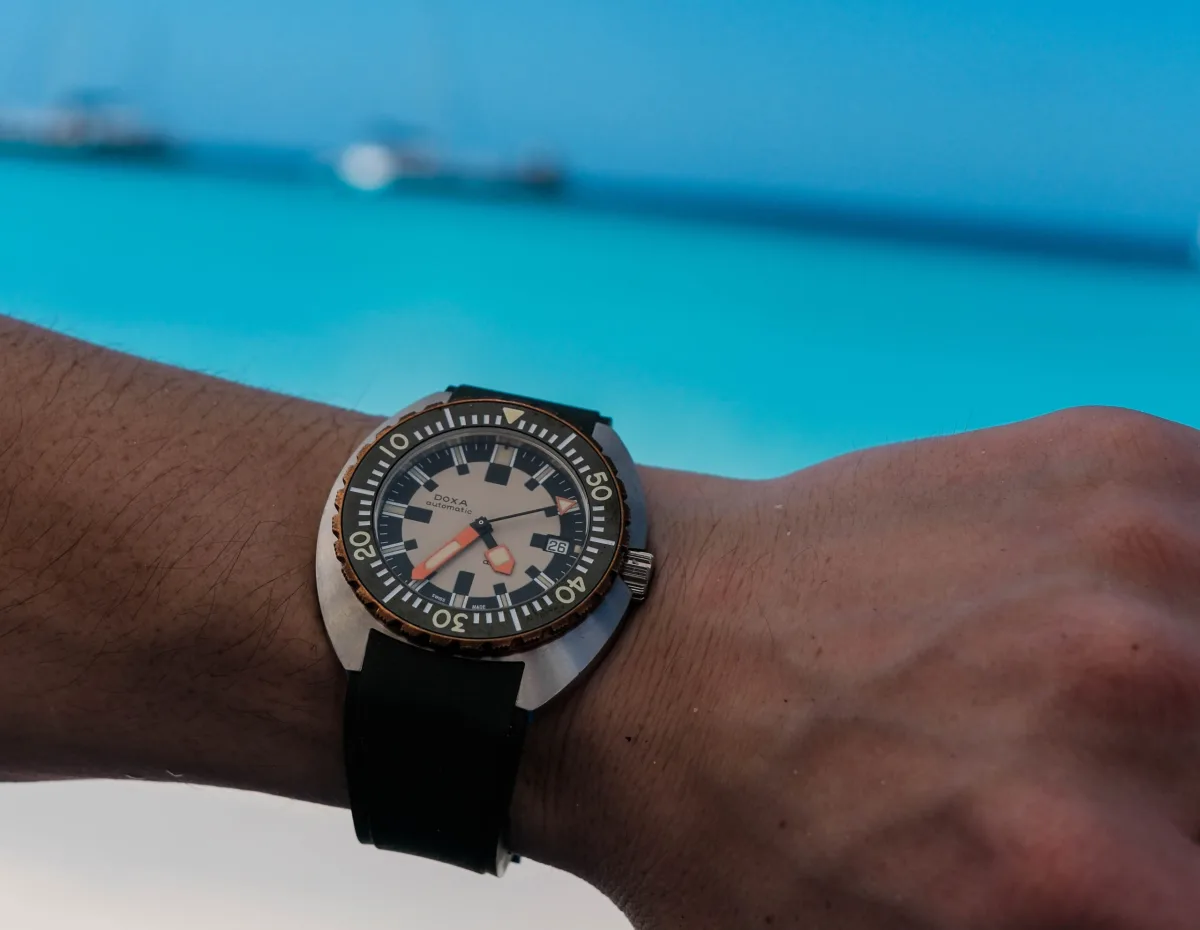
At first, I thought the Doxa Army would be too large for my 6.5-inch wrist, but upon unboxing it a day before departure, I was pleasantly surprised. While the 200T model is probably more suitable for everyday wear, the Doxa Army's 42.5mm case diameter turned out to be ideal for active recreation with ocean dives. The case size creates a noticeable but not bulky presence on the wrist, and the dial is slightly easier to read. Smaller Doxa models appear more classic, whereas the 42.5mm leans towards a sporty style.
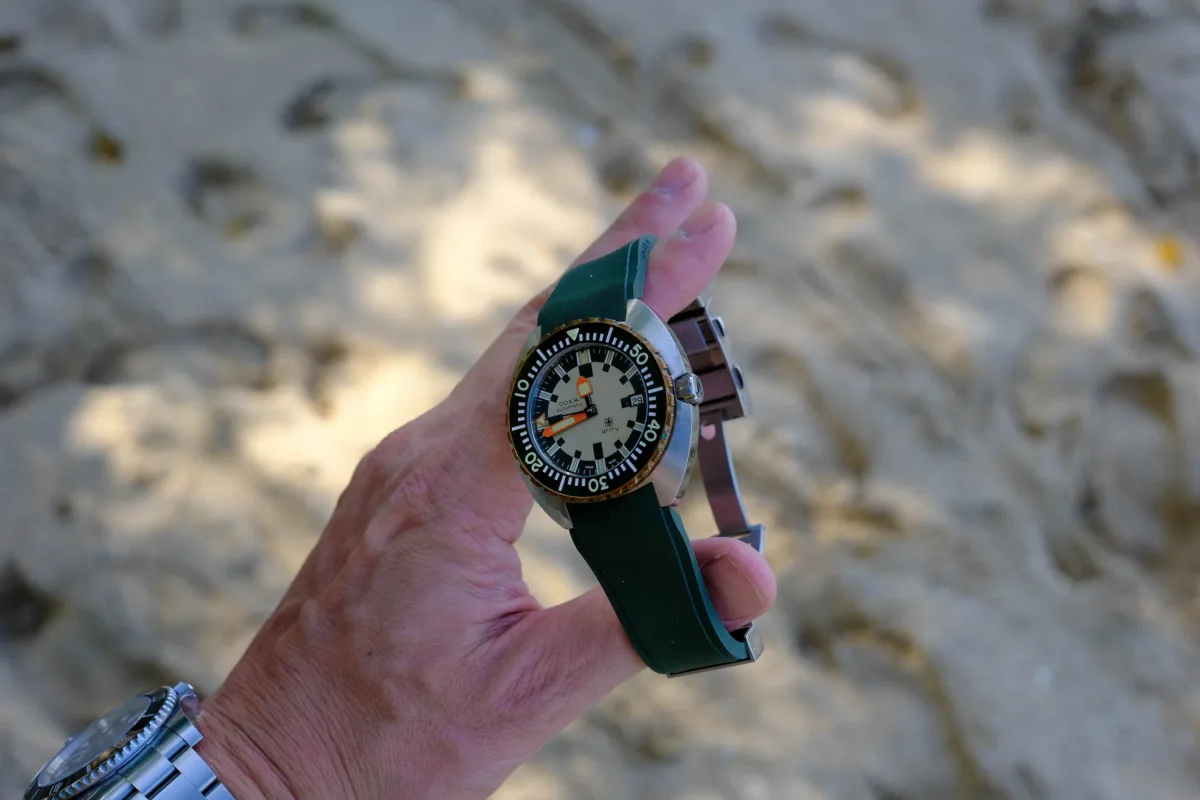
I also brought along the Submariner 114060, which was unusual for me since I typically wear only one watch. This allowed me to compare both models - and I can say the Doxa Army on a rubber strap proved to be more comfortable. It's lighter, and the rubber strap hugs the wrist perfectly, allowing for an ideal fit thanks to the quick adjustment clasp system, similar to the Submariner's Glidelock.
Dial Design and Bronze Accents
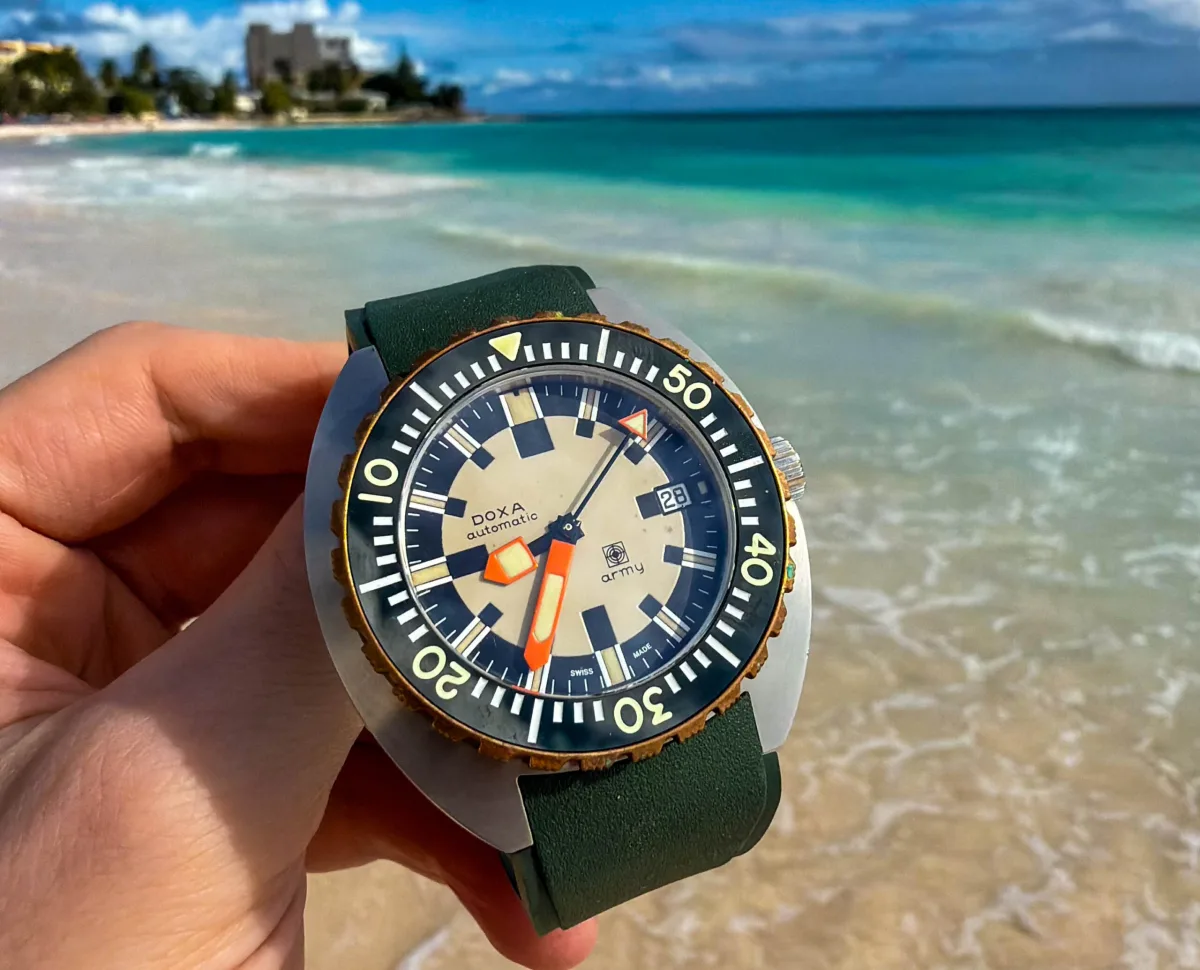
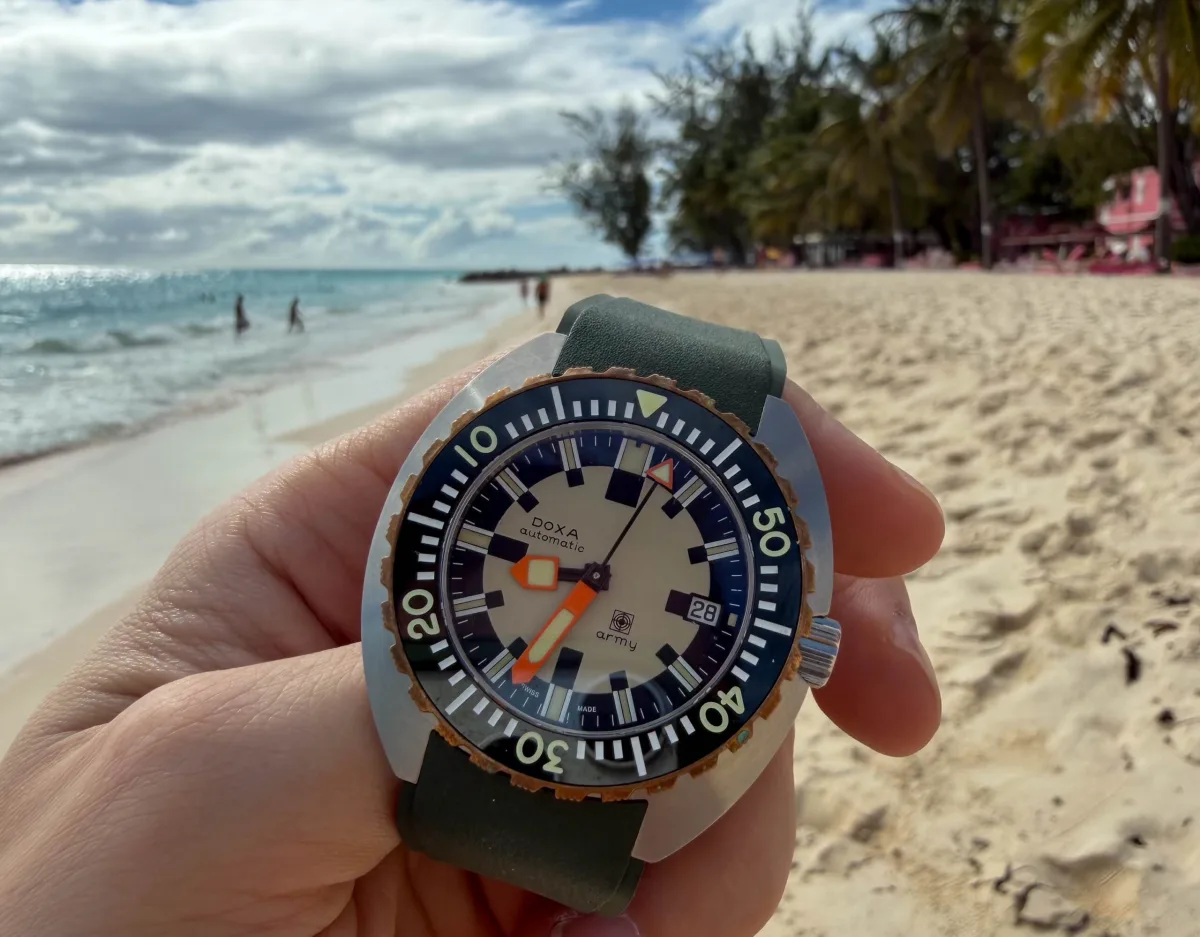
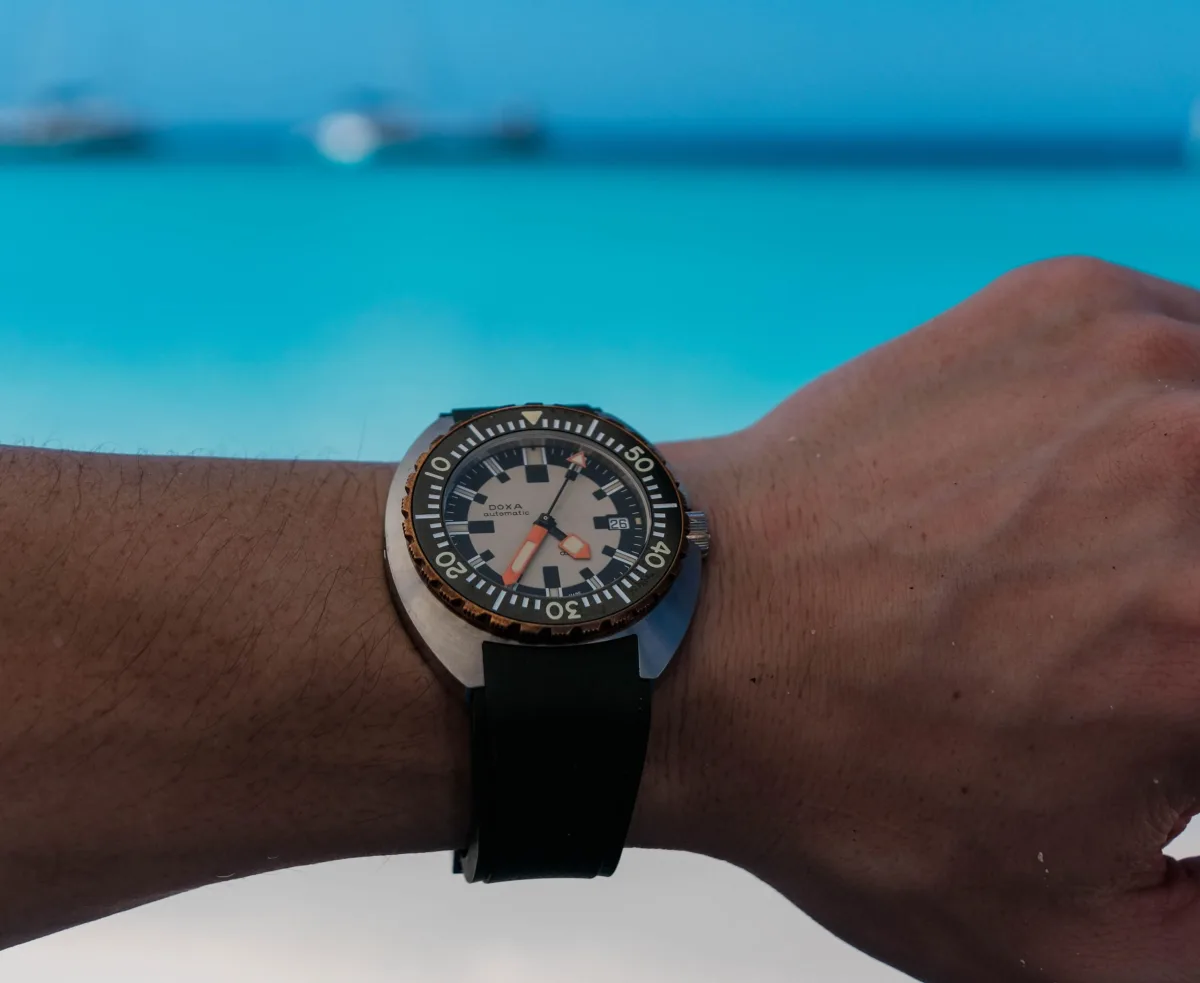
The choice of the Doxa Army for the trip to Barbados initially sparked doubts - I leaned towards a brighter model with a Caribbean blue dial. However, I am now glad I settled on this version with its unique dial design and two-metal case combination. The dial from a distance resembles a "checkerboard", and upon closer inspection, large markers with alternating black and cream shades become visible.
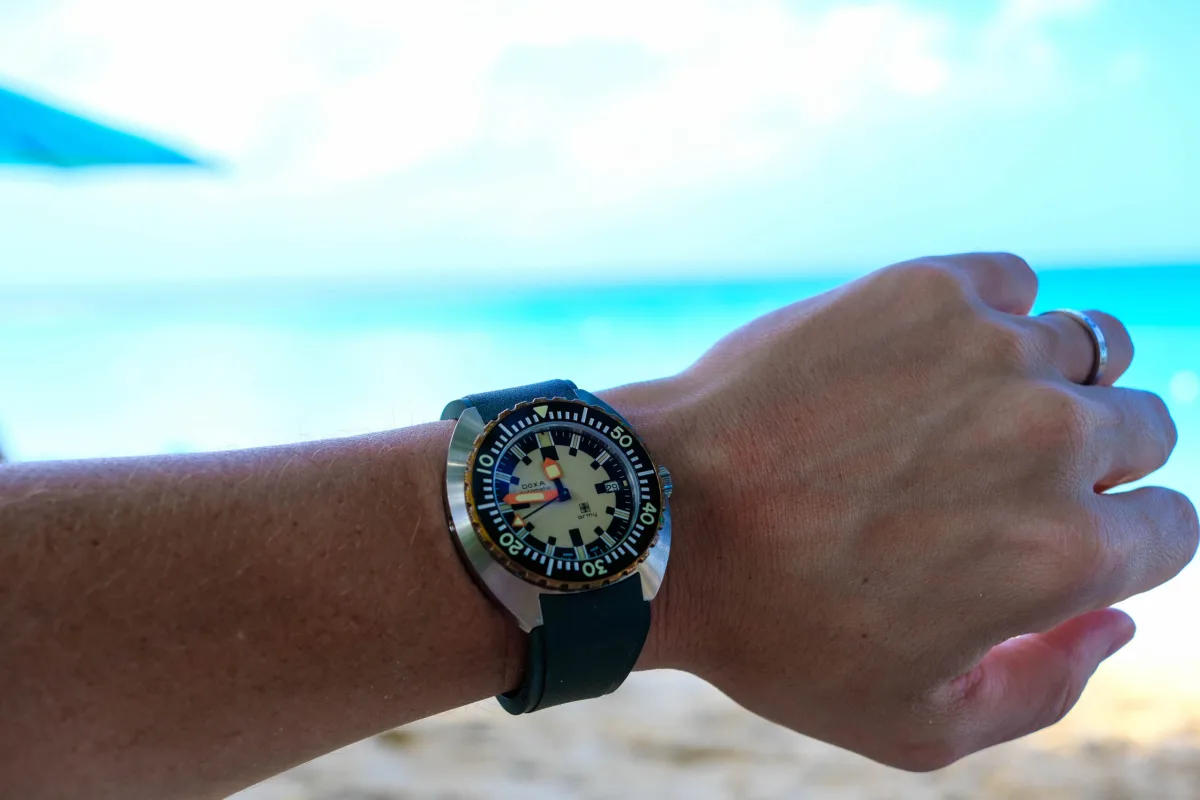
The cream color of the dial's interior harmonizes with the bronze exterior of the bezel, creating an interesting khaki/brown hue. Under a palm tree or during an evening rest with a Banks beer on the balcony, these earthy tones blend smoothly, while during the day, they stand out brightly in the sun. In any conditions, even underwater, the brightly orange hour, minute, and second hands are highly visible and pair excellently with the bronze case hue. I especially like the second hand with a large orange triangular tip, which moves smoothly without a counterweight.
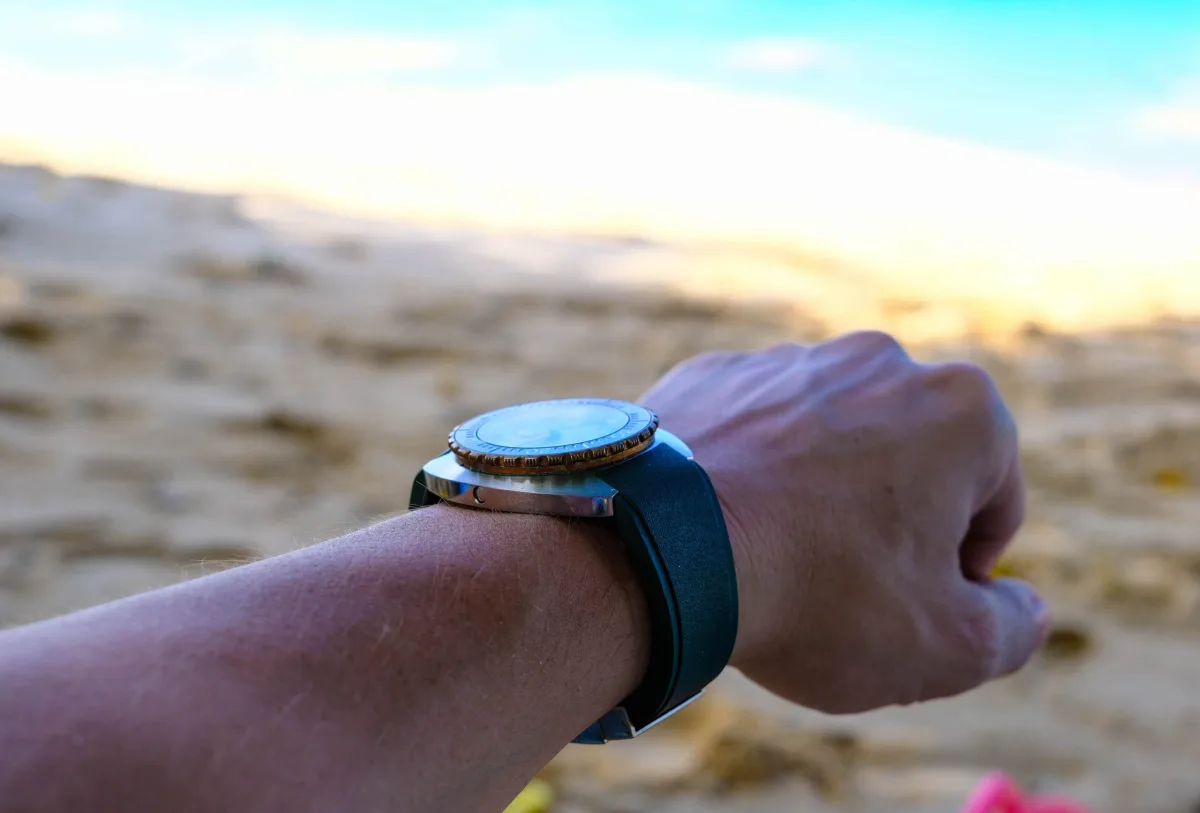
The date window at the "3 o'clock" position is small and may be useful to some, but I personally did not use it during the trip. Perhaps in the future, I would prefer a version of the Doxa Army without a date. The classic retro cushion-shaped case is very comfortable due to the short lugs repeating the oval shape of the case - no wonder Doxa made this design their calling card. The case is not only functional but also aesthetically pleasing, creating a sense of adventure and light risk - especially in the airport and before diving into Barbados waters.
Daily Wear During the Trip
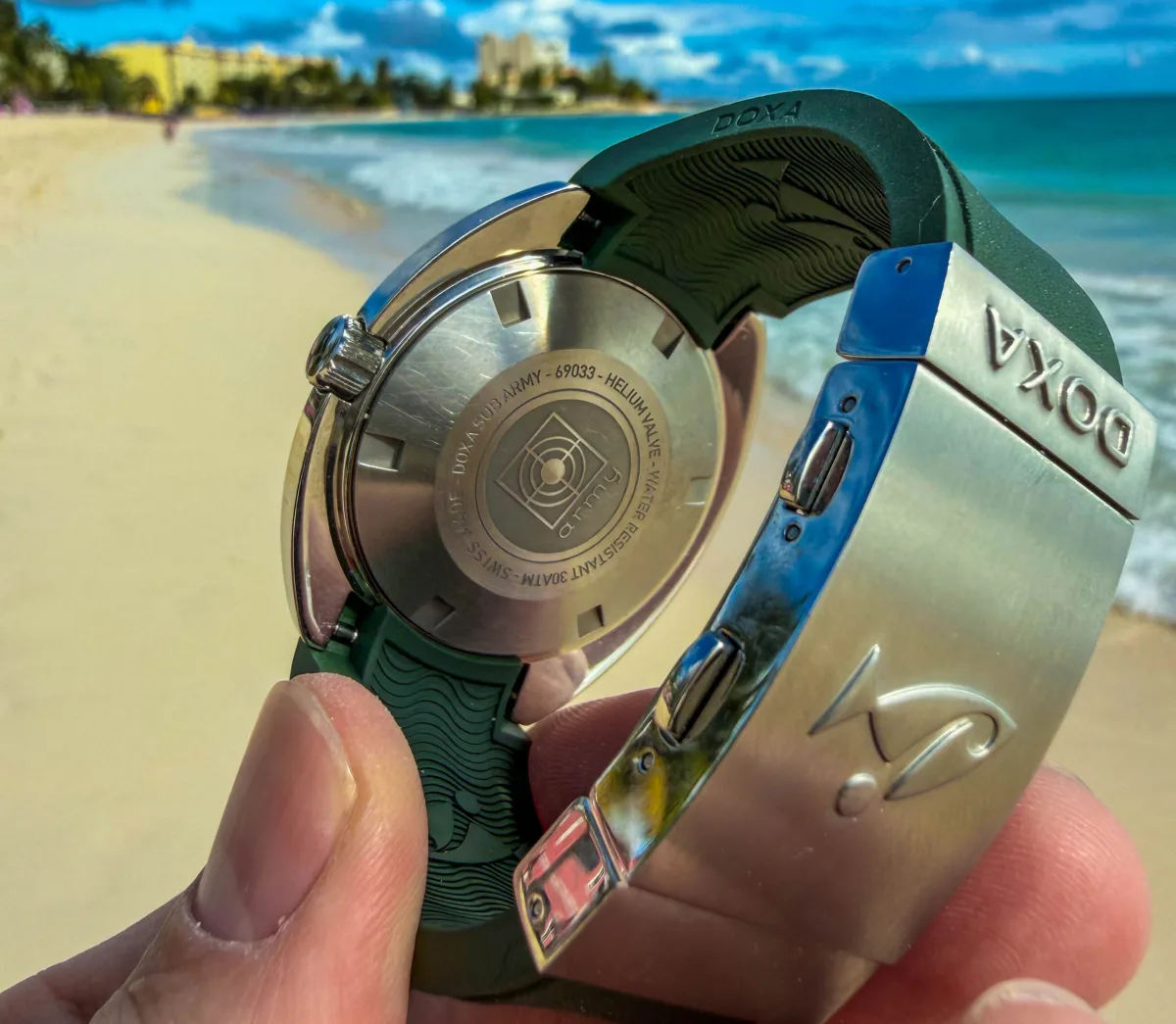
For me, the most important criterion for dive watches is comfort and practicality for everyday use, which should surpass regular "home" watches. For example, I believe chronographs are not suitable for travel - hence my Daytona stays home unless there are special events. Dive watches are usually worn constantly during a trip, so they need to be comfortable, reliable, and at least provide legible time. Field watches are also good for travel - simple, sturdy, and optimally sized. In all respects, the Doxa Army proved to be ideal - nothing interfered or irritated during the trip.
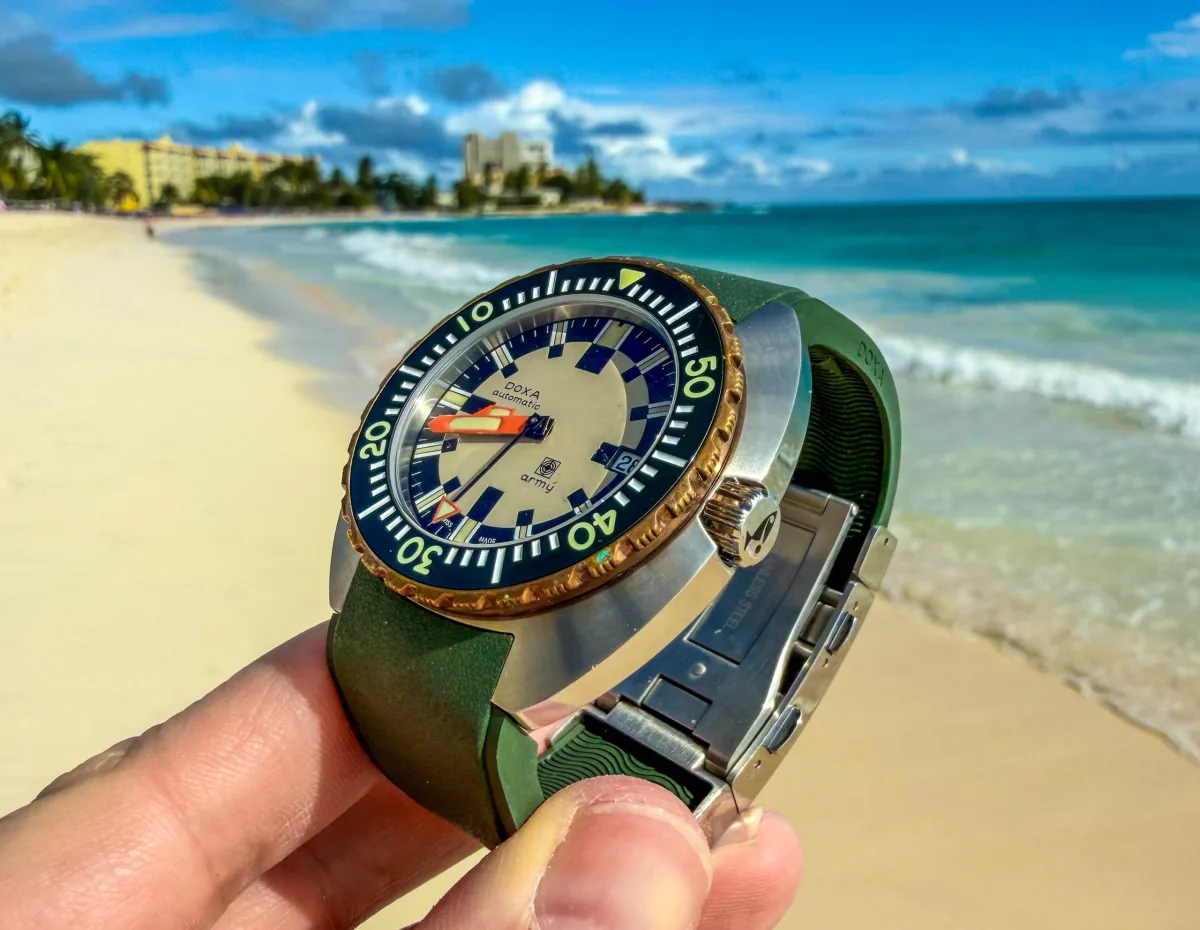
It was especially interesting to observe the almost instantaneous appearance of patination on the bronze bezel. After the first day of snorkeling near the shipwrecks in Carlisle Bay, I noticed green oxidation on the edge of the bezel, mainly between the notches. Usually, I rinse dive watches with fresh water after contact with the sea, but this time I forgot - and the patina appeared within just 24 hours! Now I wonder how suitable bronze is for dive watches that are constantly in contact with saltwater. The 316L stainless steel case used by Doxa performed flawlessly.
The watch is equipped with the automatic Sellita SW200-2 movement (sometimes ETA 2824) with a power reserve of only 38 hours. This is not an issue since the watch was often on my wrist and never stopped, but for those traveling with multiple watches, it's worth considering the need for periodic manual winding.
The watch's appearance fit perfectly into the beach atmosphere of Barbados, but for a more formal dinner by the sea, the Submariner would have been more appropriate, looking more versatile and elegant. Notably, the Submariner was ubiquitous here, while the Doxa created an interesting and unique contrast to this "stereotype".
Snorkeling with the Watch
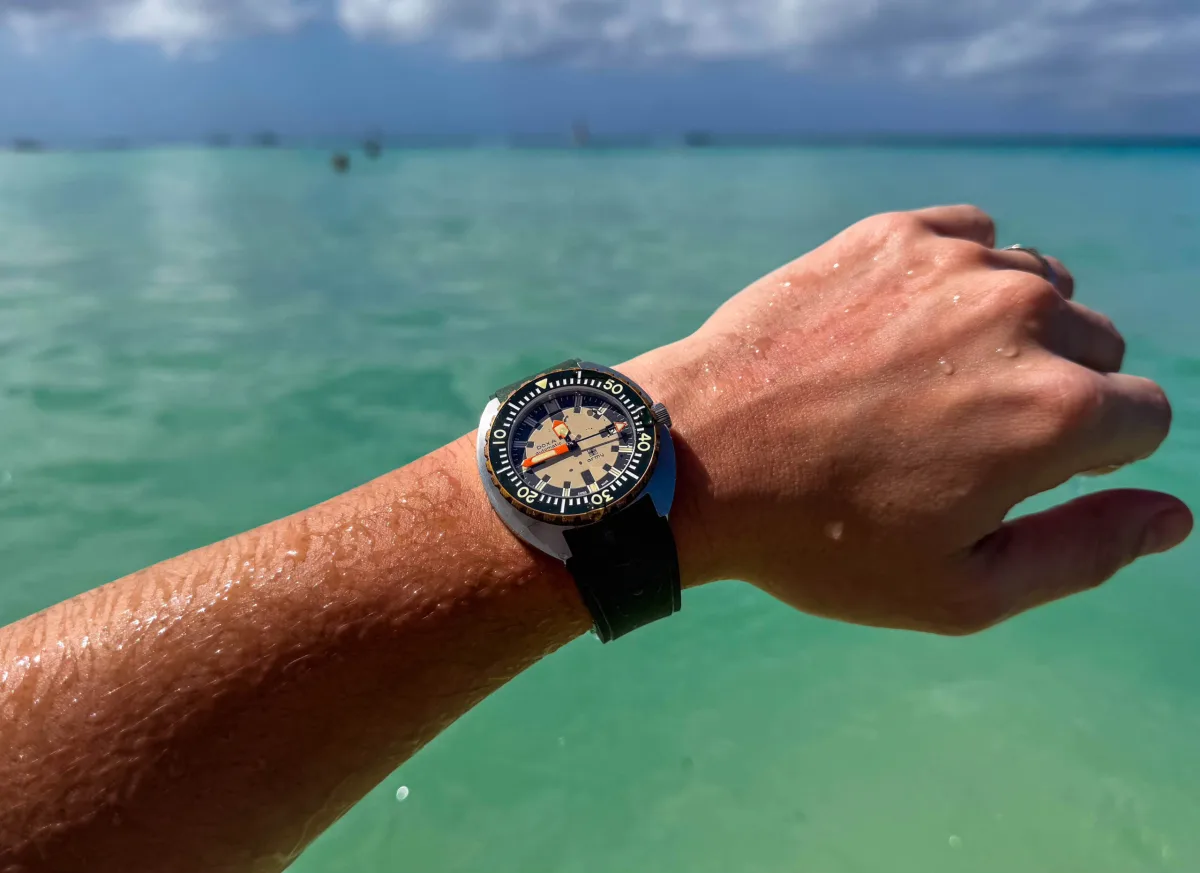
It's worth noting that I am not a professional diver, but rather a journalist and watch collector. Nevertheless, snorkeling with the Doxa Army went smoothly: I carefully checked the clasp attachment and screwed down the crown before diving with Italian Cressi gear. With 300-meter water resistance and a helium escape valve, I had no fear of damage.
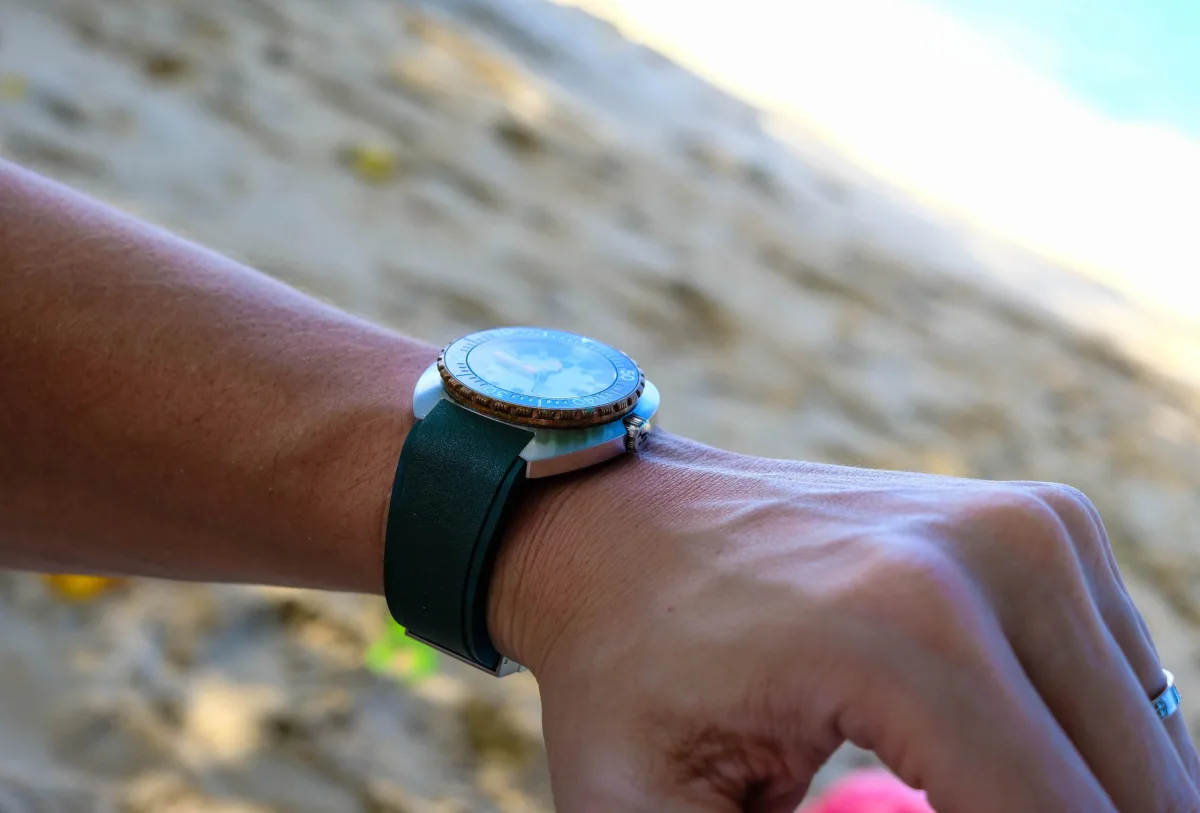
Underwater with a mask, the dial appeared magnified and very clear, and the clear turquoise water helped with this. The bezel was used to control dive times and return to shore. I swam about 200 meters from the shore near shipwrecks and coral reefs, diving no deeper than 2 meters for shells. Throughout, I experienced no discomfort, and the ease of use remained high.
Final Impressions
I was very pleased with the Doxa Army and over the course of the trip to Barbados, I inadvertently formed an emotional connection with these watches - a rare occurrence for watches I did not purchase. The Doxa Army performed excellently as an everyday watch - whether exploring the island in a Suzuki Jimny, visiting local rum factories, or freediving in the ocean. They were with me constantly, providing comfort, reliability, and enjoyment in use.
This expert review demonstrates that the Doxa Army is a reliable choice for active travelers, combining durability, functionality, and unique design, capable of holding a worthy place among the best Swiss dive watches.