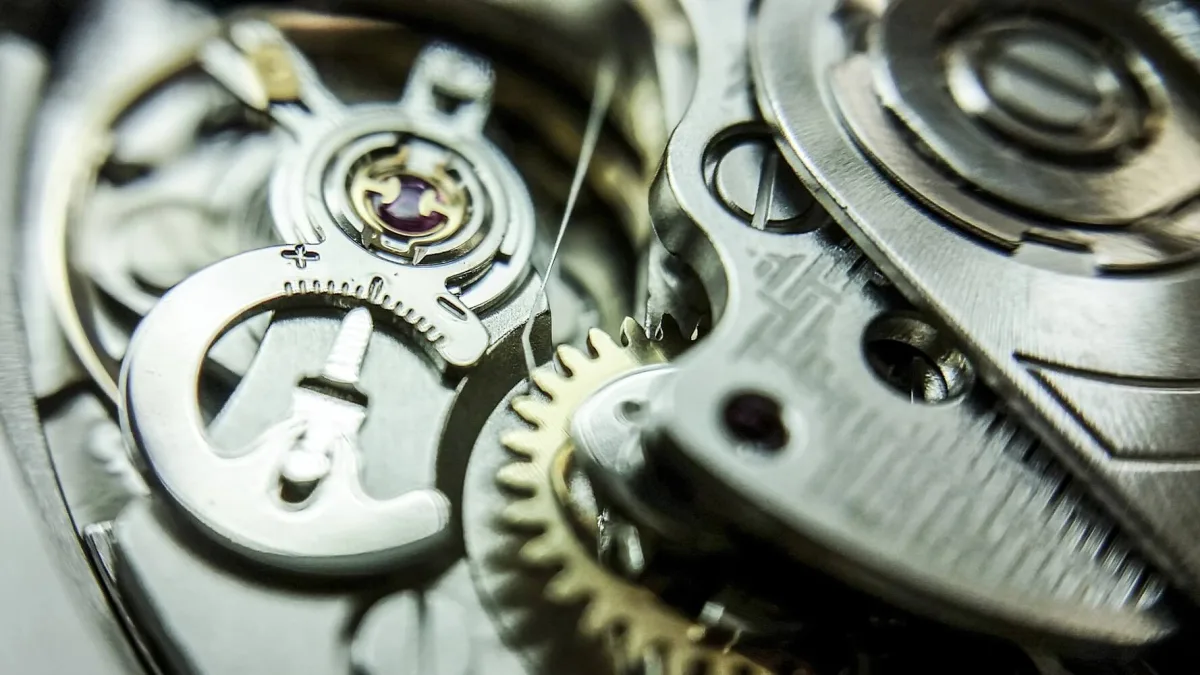
What lies beneath the dial of your favorite watch? Here’s the correct answer to the common question, “How are watches made?”
Don’t be a hypocrite. Don’t be that guy with a collection of luxury watches who has no idea how they actually work.
If you're going to spend serious money on a grail watch, you should know how it functions. Even if you need an affordable everyday watch, learn how it works.
You won’t believe how many watch collectors can’t answer the simple question: “How do wristwatches work?”
You have all the necessary equipment, but you need an idea? Don’t worry. In this material, we’ll tell you everything you need to know about how watches work.
To start, let’s get acquainted with watch jargon.
Understanding Watch Jargon
Understanding the mechanisms of watches is quite a complex topic. To answer the question “How do wristwatches work?”, familiarize yourself with useful watch terminology.
This not only helps you piece together knowledge of how these intricate mechanisms work. I guarantee it will also increase your appreciation for mechanical (or quartz) watches!
Mechanical Movement
The term “mechanical movement” refers to both manual and automatic winding watches. Manual watches need to be wound regularly by hand to function. Automatic movements do not require winding, which is very convenient for those worried about overwinding their watch.
Automatic watches can keep accurate time if you wear them regularly. Automatic watches get energy from the movement of your wrist. However, both types have a power reserve.
Quartz Movement
A quartz movement is powered by a simple battery. It uses a quartz crystal cut in the shape of a fork. Quartz vibrates at a high frequency, creating electricity that drives the hands on the dial.
Movement
The movement of a watch refers to the mechanism itself, or in other words, the caliber.
COSC Movements
COSC-certified watches are equipped with movements that have been tested by the “Official Swiss Chronometer Testing Institute” (Contrôle Officiel Suisse des Chronomètres). This Swiss chronometry institute receives the in-house movement from the watch company and subjects it to a series of quality tests to check its accuracy and performance.
Mainspring
The mainspring in a watch is wound either by manually turning the crown or by wearing the watch. It also determines the watch's power reserve. The mainspring is located inside a barrel, which unwinds, creating energy.
Gear Train
The gear train transfers motion from the mainspring to the escapement through a series of miniature gears. Meanwhile, individual wheels drive the hands on the dial.
Escapement
The escapement prevents the mainspring from unwinding completely. The escape wheel and pallet fork are components that help control the release of energy from the mainspring.
Balance Wheel
The balance wheel forms a ring around the hairspring and oscillates back and forth using inertia. Thus, it controls the slow release of energy in the watch.
Hairspring
The delicate hairspring inside the mechanism creates torsion, causing the balance wheel to return to the center.
How Do Watches Work?
So, how are watches made? This is quite a broad topic, as there are many different types of watches. A mechanical movement, for example, works differently from a quartz one. First of all, you need to determine whether you have a mechanical or an automatic watch.
Do you need to wind your watch manually every day? If so, you have a manual winding watch, which works the same way as an automatic one. Automatic watches get energy from the natural movement of your wrist. Quartz watches operate with a battery and a vibrating quartz crystal, and can also come as solar watches.
How Do Mechanical Watches Work?
Mechanical watches are a true marvel. The intricate series of components that make up the workings of manual and mechanical watches often intrigue collectors.
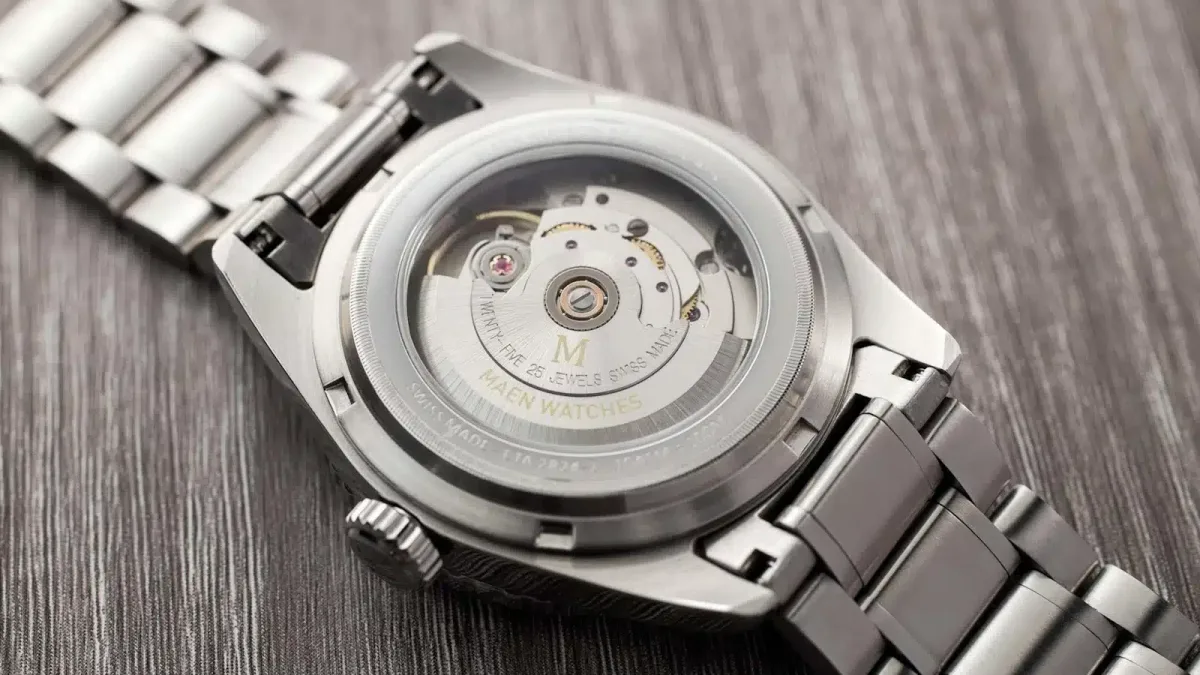
Many luxury watches feature an exhibition case back, often made of sapphire glass. This feature allows a glimpse into the working parts of the movement and to observe them in action.
If you’re wondering: “How do mechanical watches work?” Don’t let the jargon put you off. The terminology sounds complex, but there’s a simple way to explain the process.
How Manual Winding Watches Work
When winding the crown in a manual winding watch, the so-called mainspring is tightened. The release of the mainspring through the barrel provides energy for the escapement. This is possible with a series of wheels and gears known as the escapement mechanism.
The escapement inside the watch controls the slow release of energy. It prevents the mainspring from unwinding instantly. The escape wheel and pallet fork are necessary to control this process.
The escape wheel moves in steps, engaging the pallet, which notches back and forth thanks to the fork lever. At the top, the fork lever engages an impulse pin, which is attached to the balance wheel.
The balance wheel is the component you see swinging back and forth. It is controlled by the hairspring, which regulates the operation of the balance wheel.
How Automatic Watches Work
Automatic watches operate on a unidirectional (one) or bidirectional (both) winding principle. Watches don’t necessarily need to be bidirectional. However, its advantage is that it uses energy that would otherwise be wasted by a unidirectional mechanism.
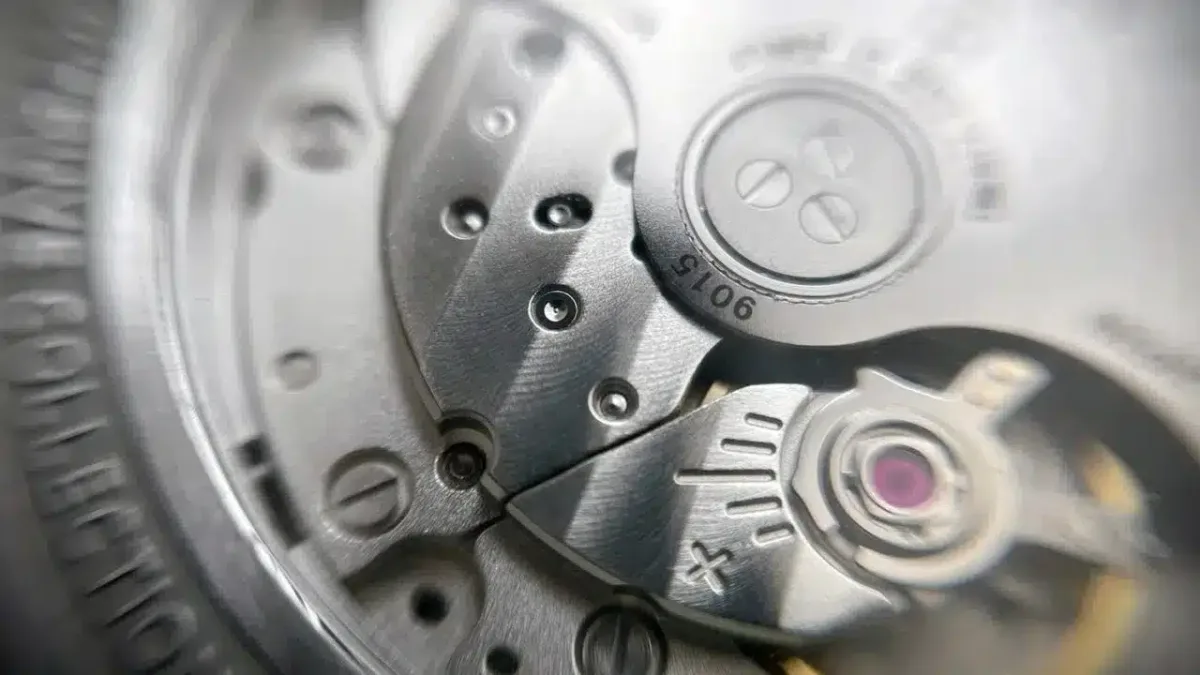
In automatic watches, a freely rotating weight called a rotor spins as your wrist moves (unidirectionally or bidirectionally). This automatically winds the mainspring (otherwise, you would do this manually with the crown). The rest of the mechanism works just like the manual one.
How Does the Quartz Movement Work?
The quartz movement is the most accurate of all. This is due to the frequency of quartz crystal oscillations. Additionally, such watches are cheaper to produce and cheaper to purchase. Why do you think some of the most prestigious names in traditional watchmaking collapsed with the advent of the quartz movement?!
Quartz watches are powered by a battery, which starts the entire process. The battery sends a current to a microchip. It causes a piece of crystal to vibrate at an exceptional frequency - 32,768 times per second!
Another microchip captures these crystal oscillations, converting them into electrical pulses.
The pulses drive an electric stepping motor, which rotates a set of tiny gears. These gears move the hands on the watch dial. The movement requires no maintenance and no recharging, just a battery change every few years.
So, how do quartz watches work? It’s simple. Quartz watches use piezoelectricity, vibrating when electricity is applied and generating it. This makes them an incredibly efficient means of timekeeping.
Nonetheless, many enthusiasts enjoy watching the operation of mechanical watches and love the intrigue and appeal. It really is a matter of personal preference!
Conclusion
Part of the joy of owning a luxury watch is understanding the complexity of the mechanism working inside it. So now you know the answer to the question: “How are watches made?”. You can confidently look your fellow watch nerds in the eye and say you know why you love watches so much!
Next time you admire your watch, take a few seconds to appreciate everything happening beneath the dial. It’s all part of the watch-collecting process.
Want to learn more about watches? Subscribe to our Telegram channel to receive more articles like this one.