Another Friday - another list. Last week we picked five of our favorite iconic watches from the 1980s.
This week, we move on to the 1990s. If the '80s were a decade of extravagant and sometimes controversial taste, the '90s considerably softened the style. However, the 1990s introduced numerous outstanding watch models. Some still surprise us today, but the decade undoubtedly gave us some true classics. We have selected five watches that became icons of the era. As it turned out, they rightfully became classics.
Born in the late 1970s, I grew up in the 1980s, but it was in the 1990s that my adult taste - musical and design - was formed. However, I only became seriously interested in watches in the early 2000s, so I had to catch up and study the key releases of the '90s. It's amusing that some of our favorites reflect the typical '90s style, while others look much more classic. This proves that design is not always defined by the era. Overall, choosing just five watches that defined the 1990s was not easy, but we managed it.
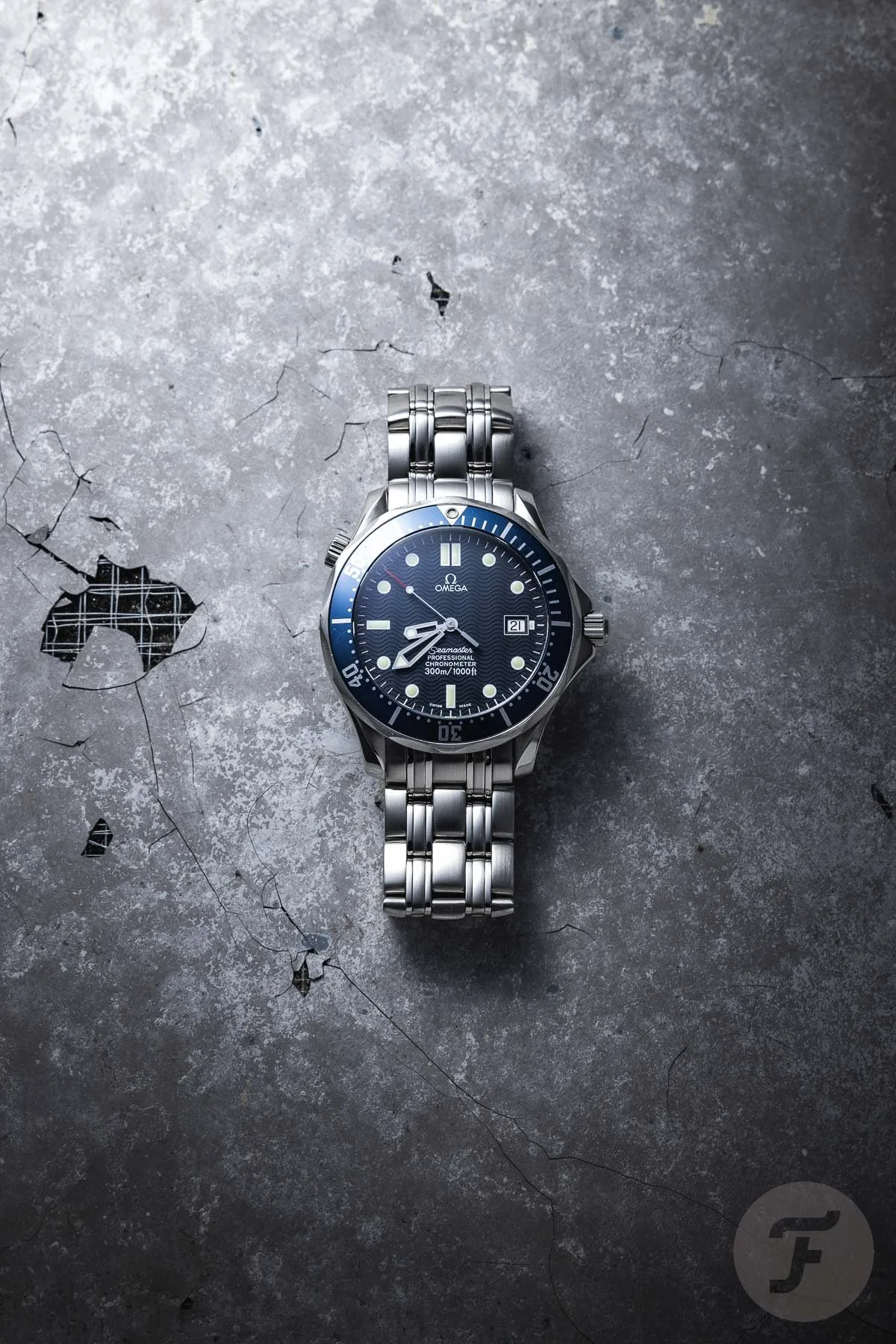
Omega Seamaster Professional 300M ref. 2531.80
The first choice is an undeniable hit. The Omega Seamaster Professional 300M debuted in 1993 and became Bond's watch two years later, appearing on Pierce Brosnan's wrist in the film "GoldenEye." As is known, Brosnan wore the quartz version ref. 2541.80, which was the first available.
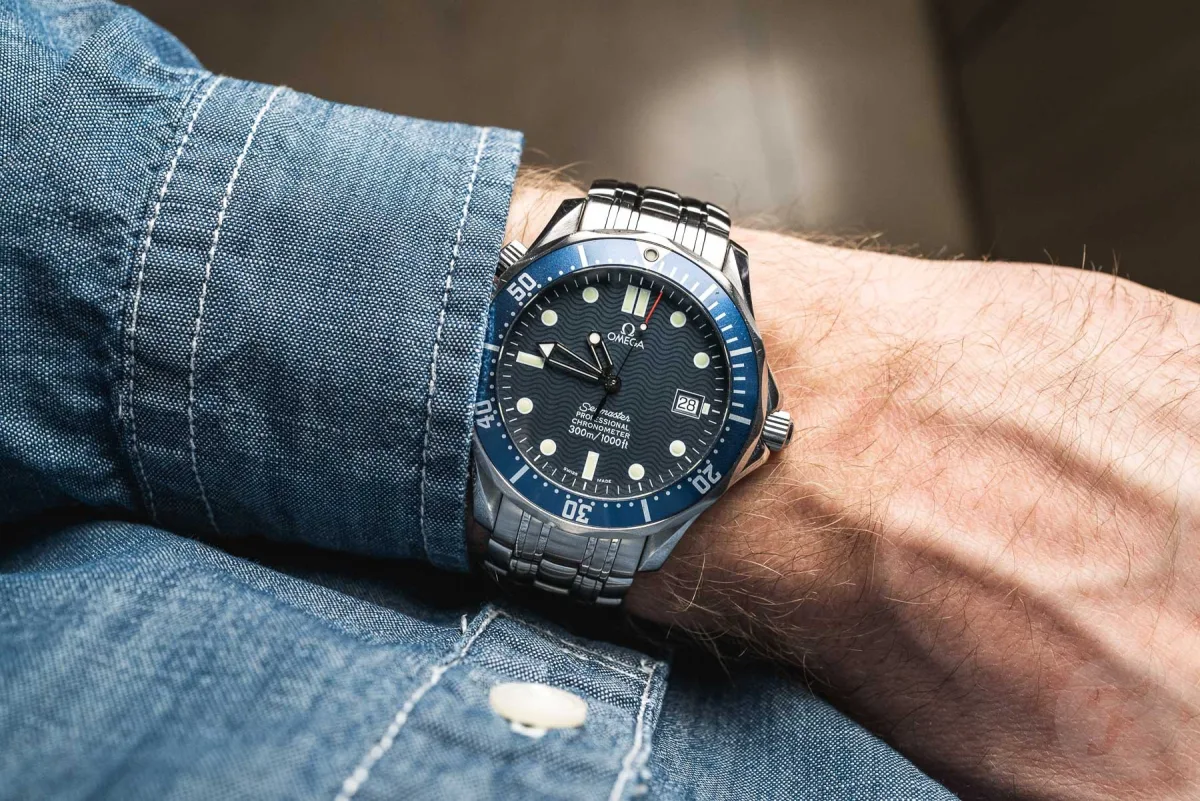
However, Omega soon released a mechanical version ref. 2531.80, which we included in this list. By design, the Seamaster 300M is the most '90s of all the models presented here. The watches have characteristic features of the era, giving them a special flair. As I noted in one of the episodes of the Sunday Morning Showdown series, Bond's blue Seamaster became a classic not despite its features but precisely because of them.
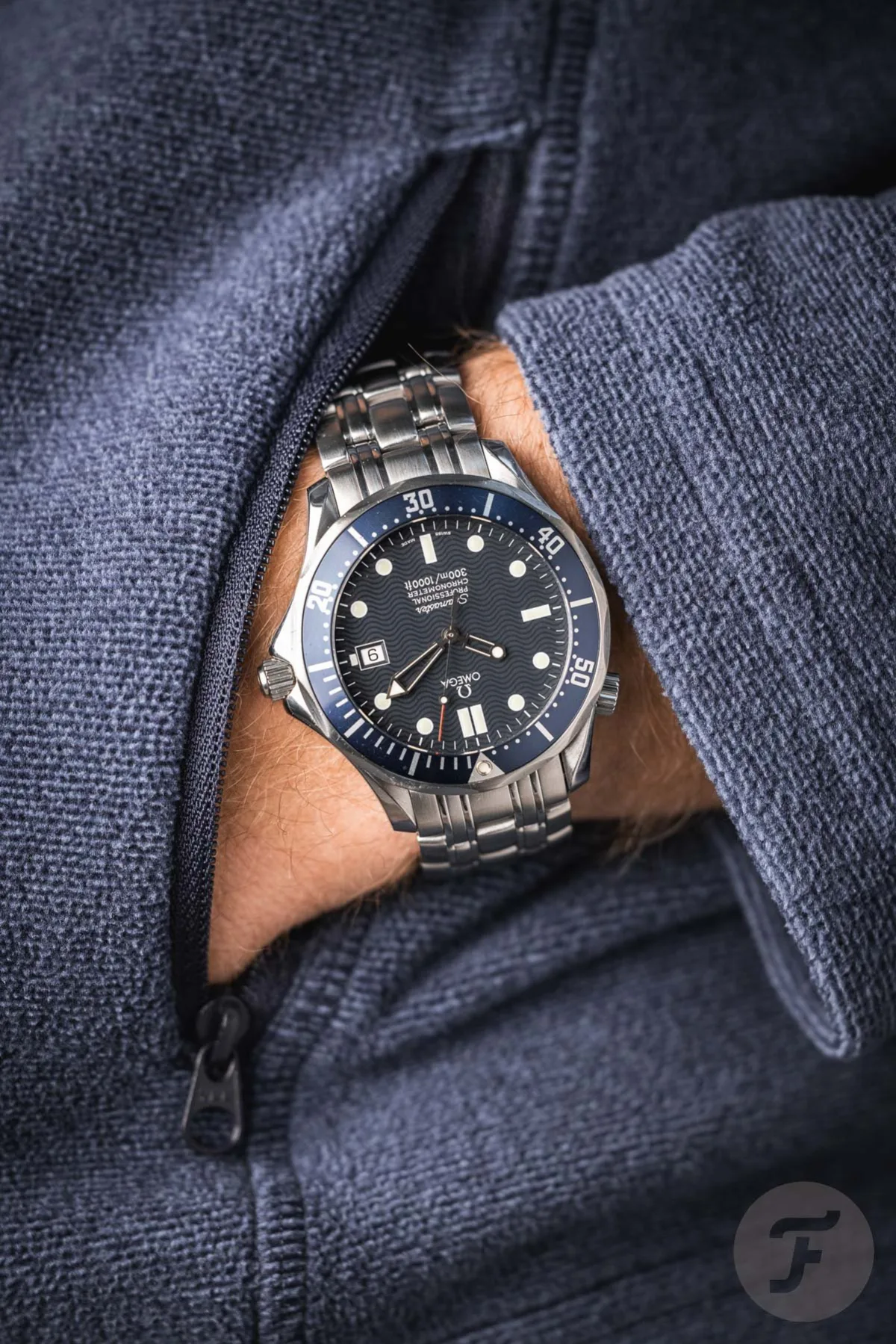
The stainless steel case has a diameter of 41 mm, a thickness of 11.5 mm, and a length from lug to lug of 47 mm. If you've ever worn this Seamaster, you know that its thin profile makes it comfortable on the wrist. The distinctive case design with "lyre" lugs and a faceted bezel sets the watch apart instantly. Combined with the signature bracelet, the design is recognizable at first glance. The case is complemented by a blue dial with the famous wave pattern, adding elegance. It's one of those signature elements that stand out especially when they disappear. Therefore, I was pleased to see its return in the modern version of the Seamaster 300M without a date.
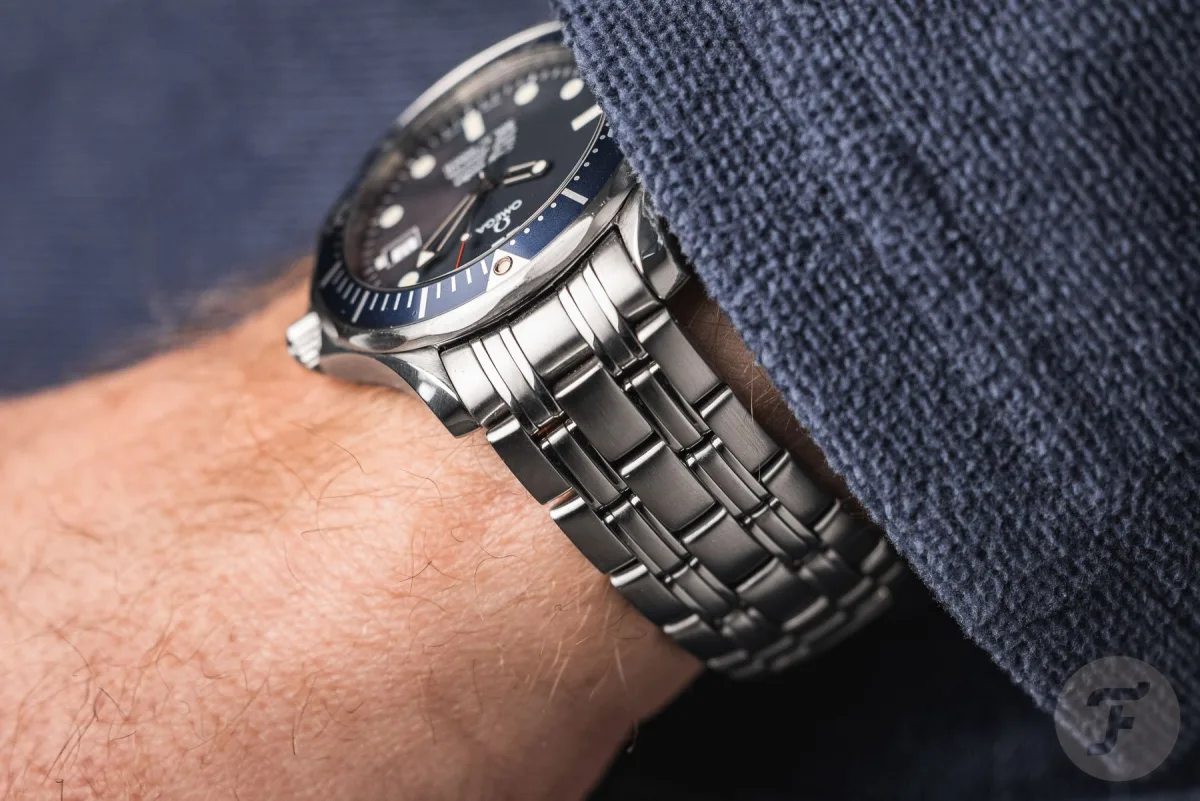
A true classic of the 1990s, even without the Bond connection
Inside the case initially stood the caliber 1109, later replaced by the 1120. The latter received an improved winding mechanism and increased the number of jewels from 21 to 23. Both mechanisms are based on the ETA 2892-A2, operate at a frequency of 28,800 vibrations per hour, and provide a 44-hour power reserve. The calibers are COSC certified as chronometers.
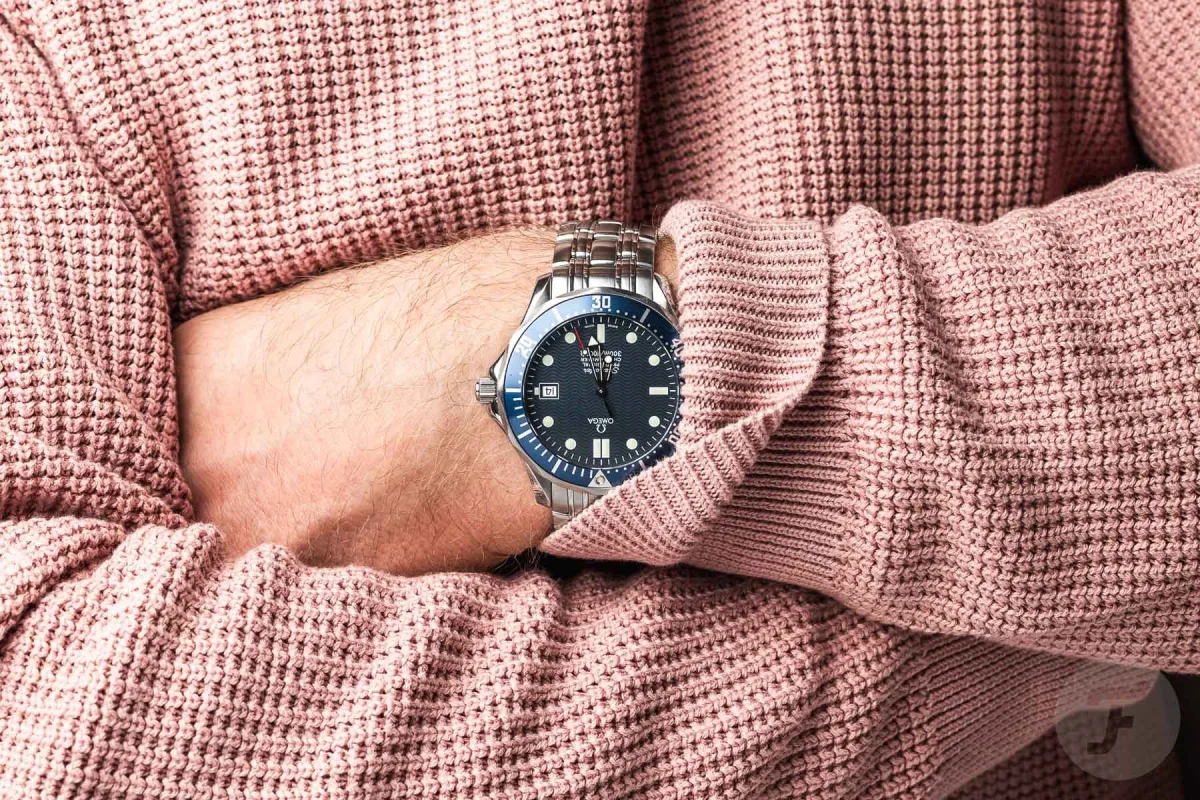
Interesting fact: in 1993, Omega released a small batch of ref. 2531.80 with caliber 1108 without chronometer certification. The dials of these rare models do not contain the "Chronometer" inscription at the bottom, essentially matching the quartz versions, making them visually difficult to distinguish.
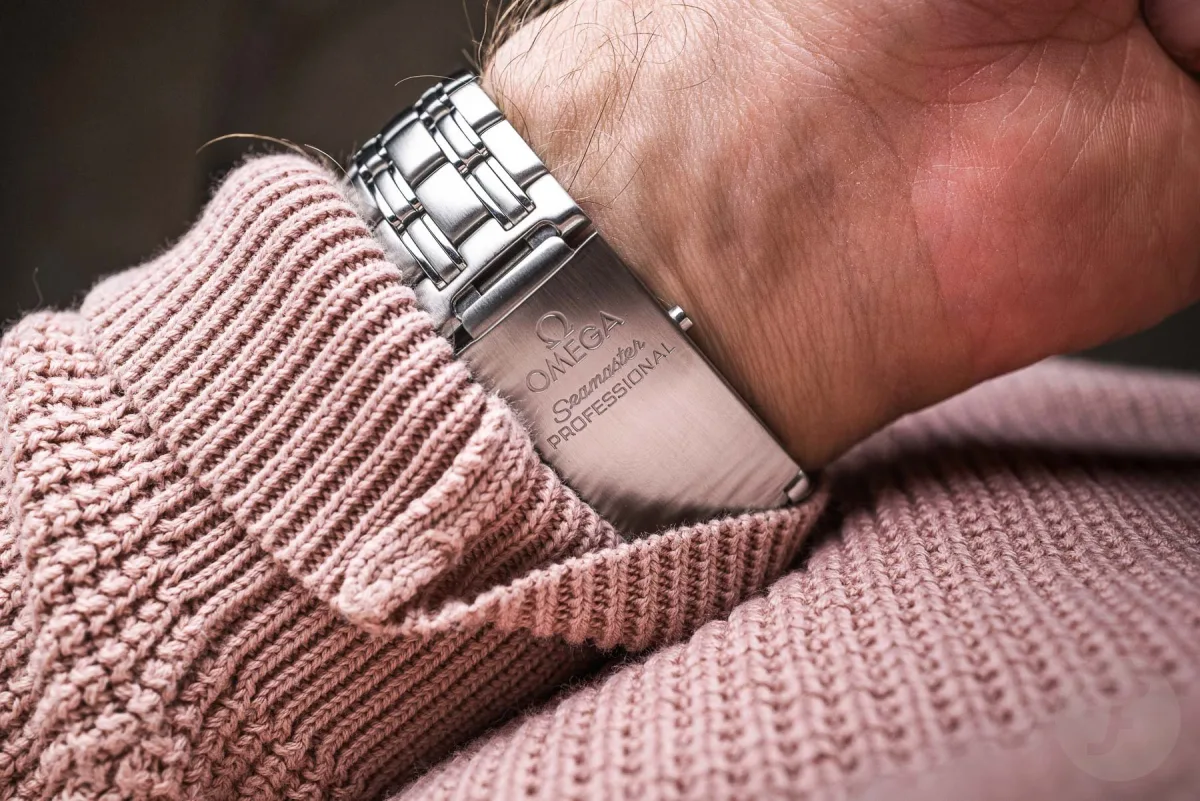
Overall, the Omega Seamaster Professional 300M became one of the most recognizable models in the industry. It all started with this '90s classic. Of course, the Bond connection helped its success, but the watch also stands out on its own. It's nice that Bond wore a regular Seamaster, not a specially designed model for the films. Today, such watches can be purchased for about €2,500–3,500.
IWC Flieger Doppelchronograph ref. 3713
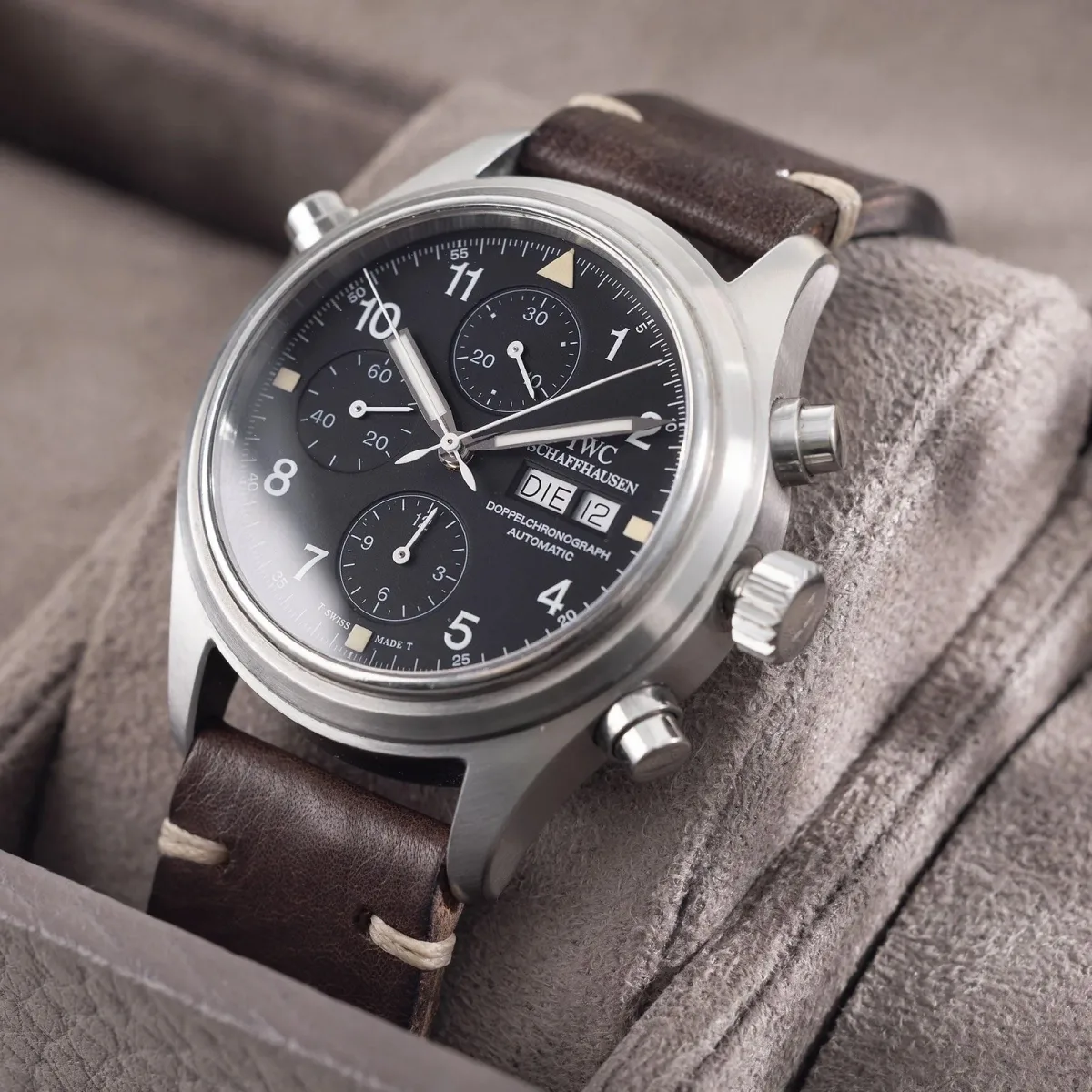
For the second choice, we could name several IWC models. The Portugieser line also appeared in the 1990s and could have made the list. But since we're talking about our favorite icons of the decade, we chose the Flieger Doppelchronograph. The first version of the legendary pilot's chronograph, ref. 3711, was released in 1992.
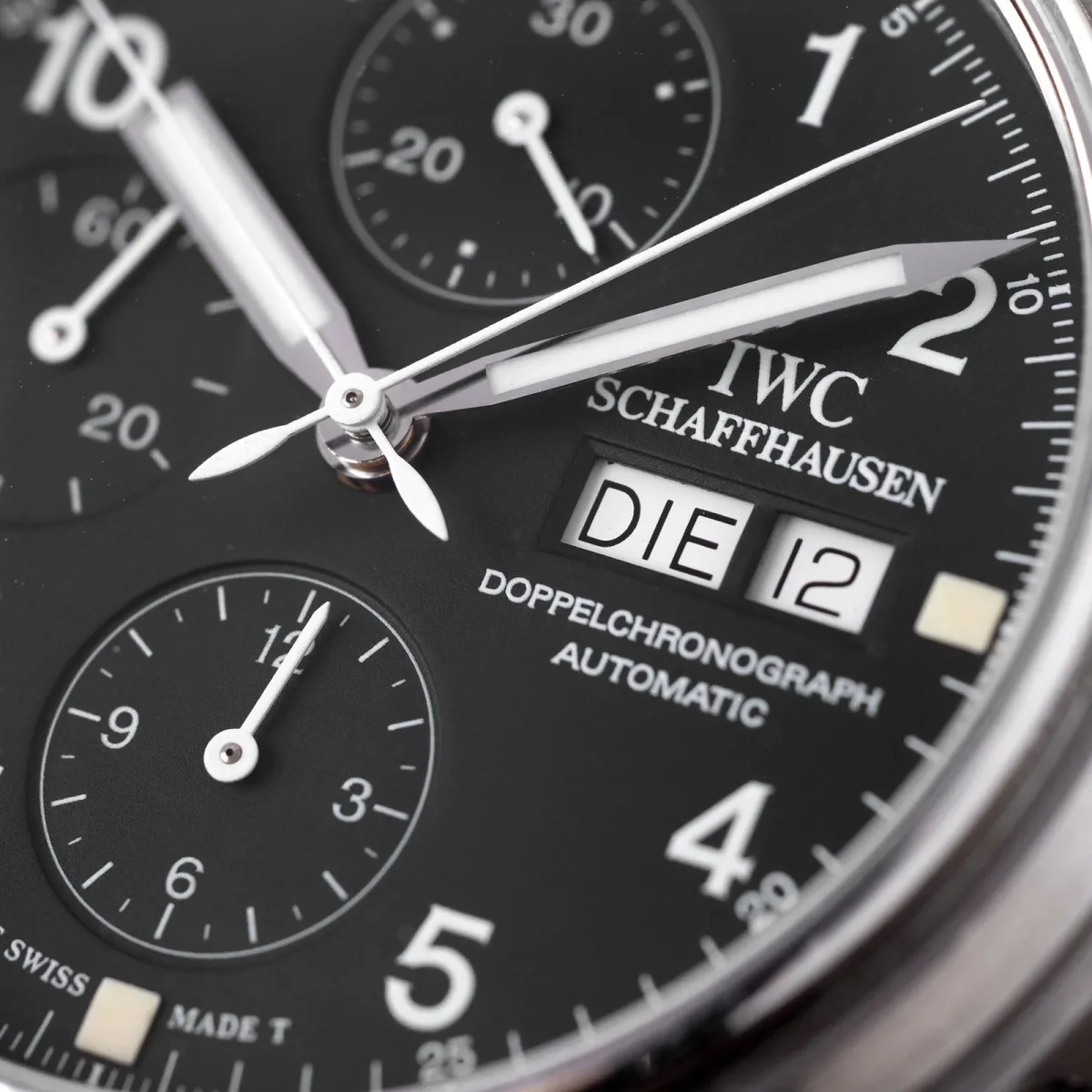
The model ref. 3713 followed with a flat crystal instead of a domed one and replaced tritium with Super-LumiNova. Otherwise, the watches are similar.
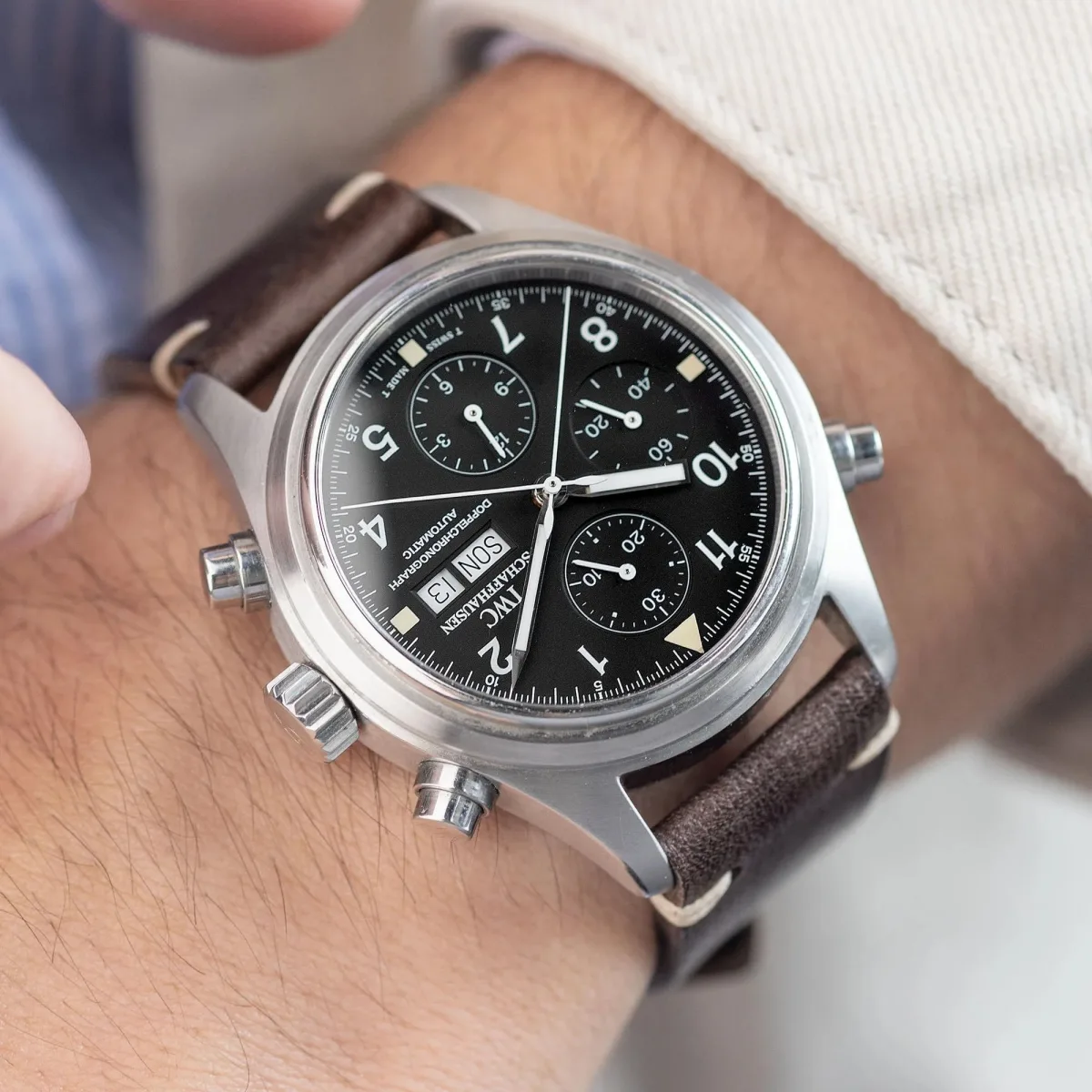
The stainless steel case has a diameter of 42 mm, a thickness of 16.2 mm, and a length from lug to lug of 51.8 mm. As you can see, the watch is hard to miss on the wrist. The massive case hides a black dial with the characteristic Valjoux 7750 layout.
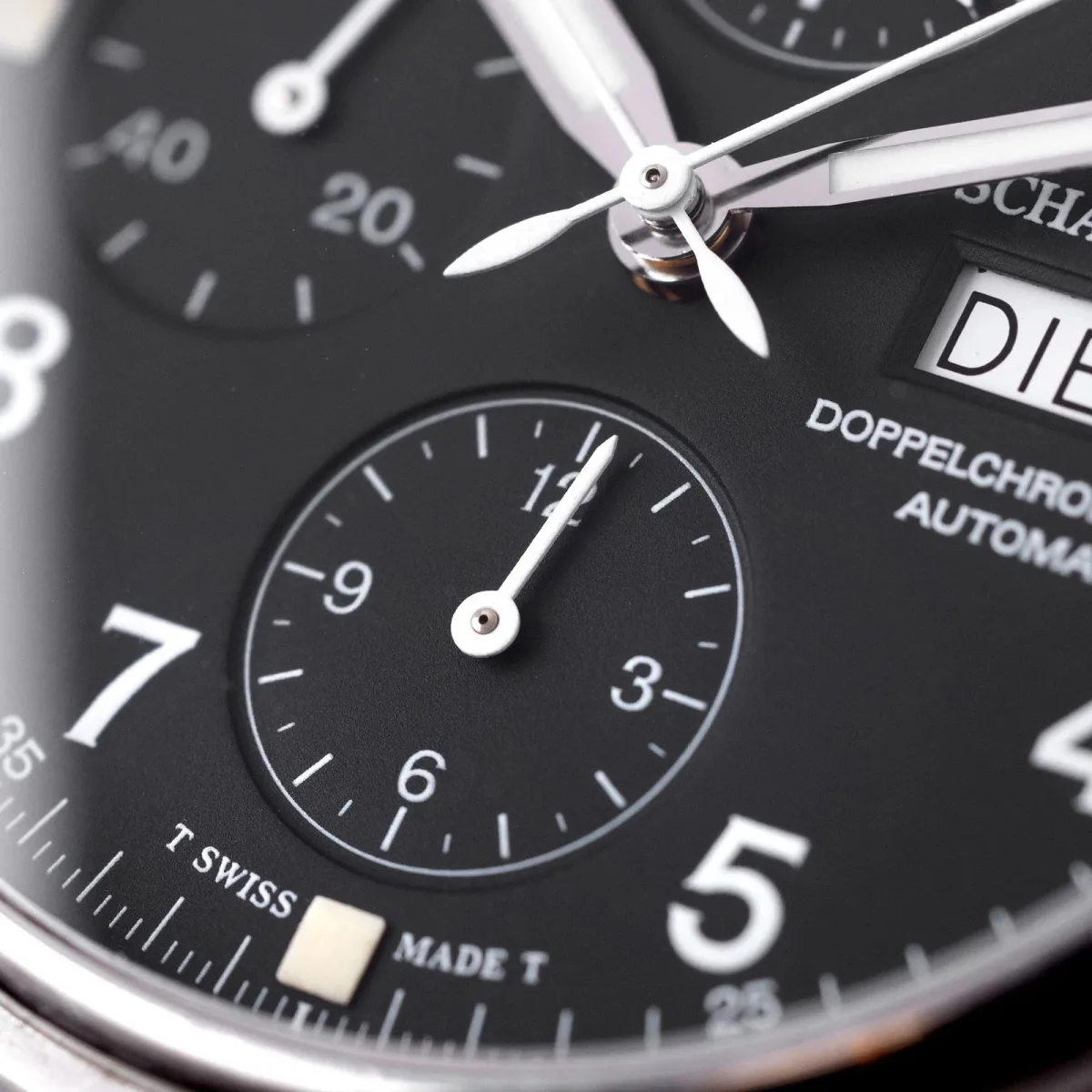
On the dial, there are sub-dials at 6, 9, and 12 o'clock, as well as day and date indicators at the 3 o'clock position. I like how IWC designers created a dial that, despite the abundance of information, remains spacious and easy to read. This is an example of the dial design from the IWC Pilot’s Watch series.
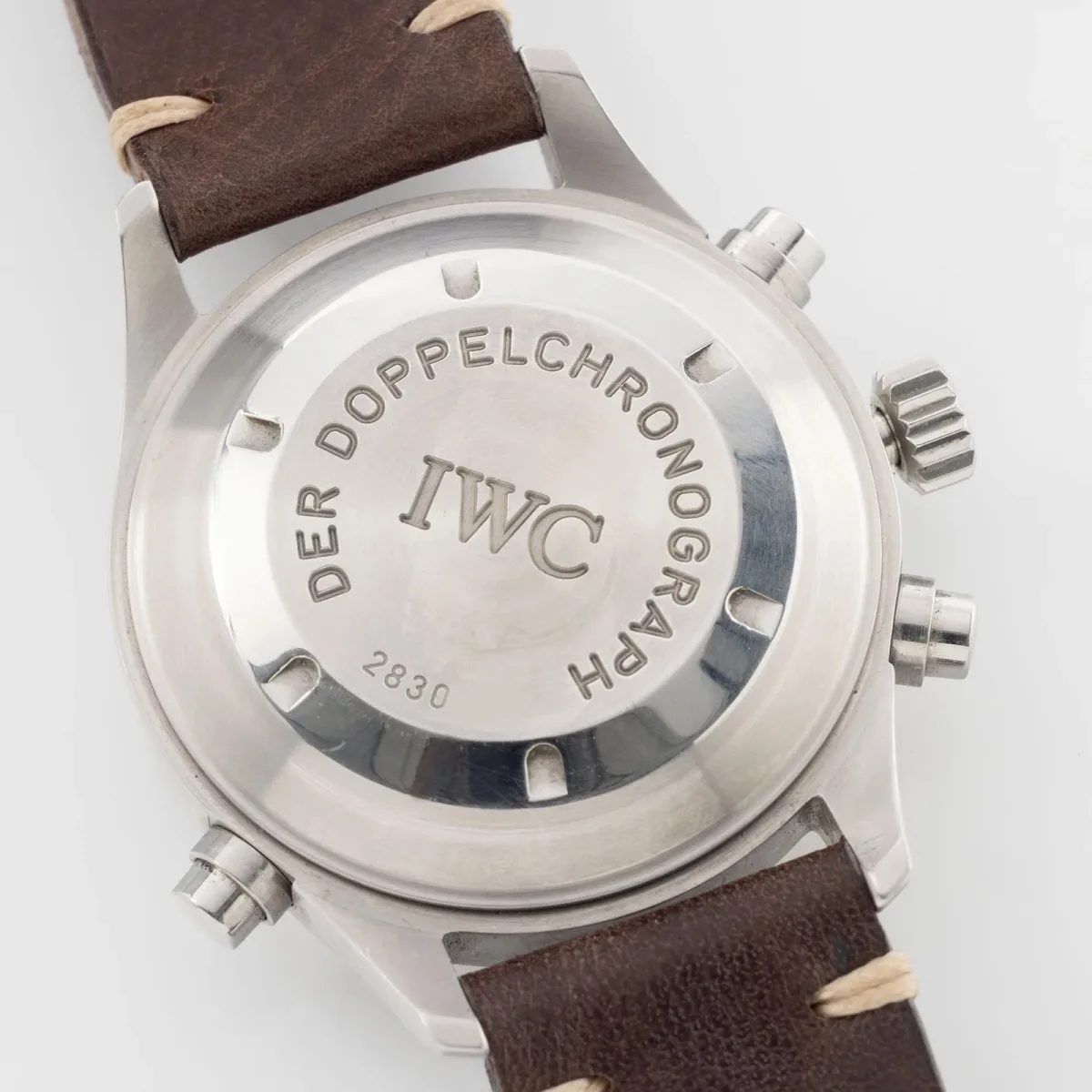
Valjoux 7750 with split-seconds mechanism
Inside is the IWC caliber 79230 based on the Valjoux 7750 chronograph with an innovative split-seconds mechanism developed by Richard Habring. Thanks to this, the Doppelchronograph ref. 3713 is reliable and suitable for daily wear. Finding such watches on the secondary market is not difficult: prices start at approximately €4,500 and go up to €6,500 for pieces in excellent condition. This is a '90s classic, part of a broader IWC series that could have made this list, but we like this model the most.
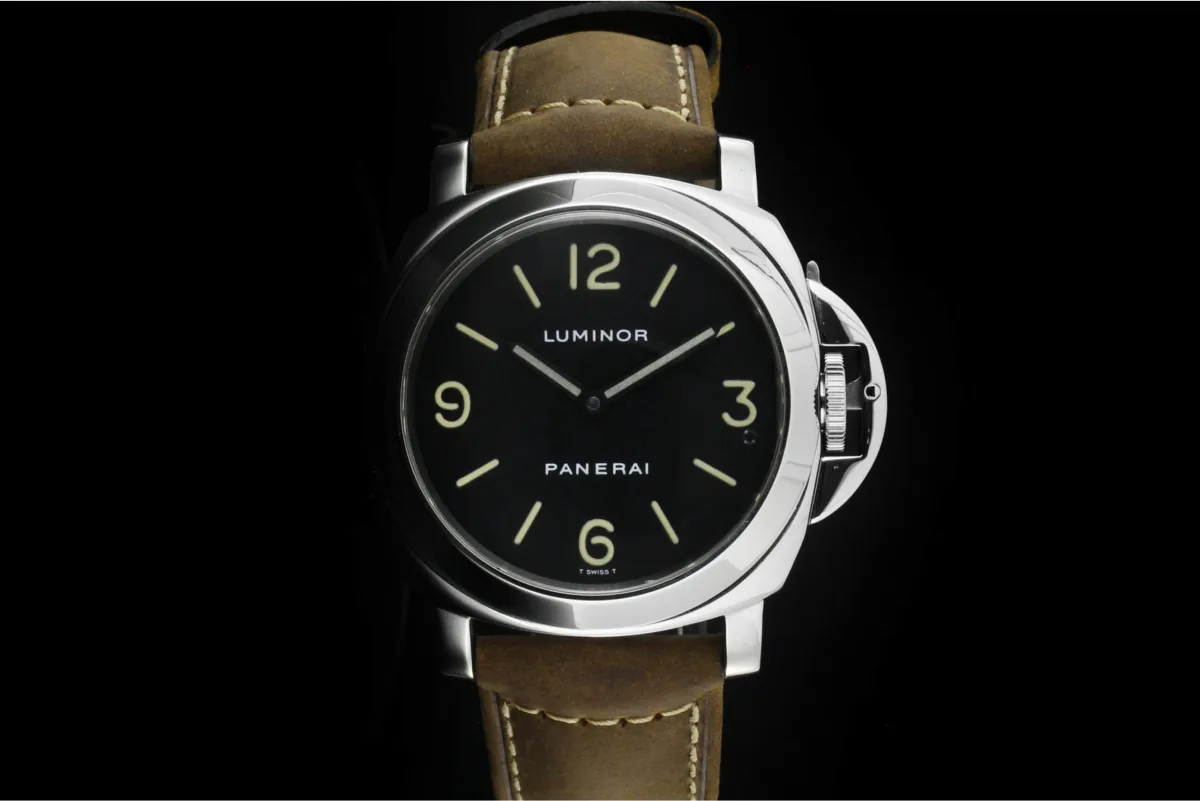
Panerai Luminor Base PAM00002
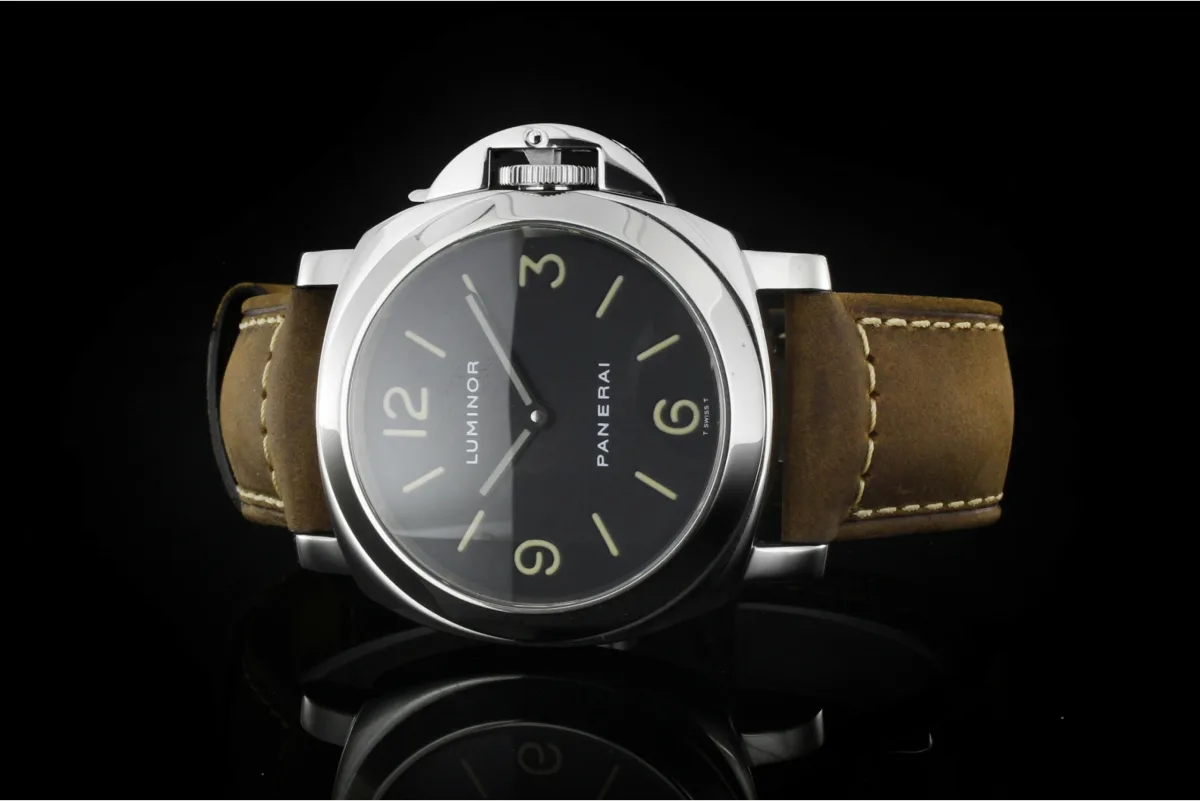
One of the brands that gained popularity in the late 1990s was Panerai. After Panerai was introduced to the public in 1993, the brand gained momentum and was eventually acquired by the Vendôme Group (now Richemont). For this list, we chose the first Luminor Base released under Vendôme in 1997 - PAM0002. The stainless steel case has a diameter of 44 mm, a thickness of 15 mm, and a length of 52.5 mm.
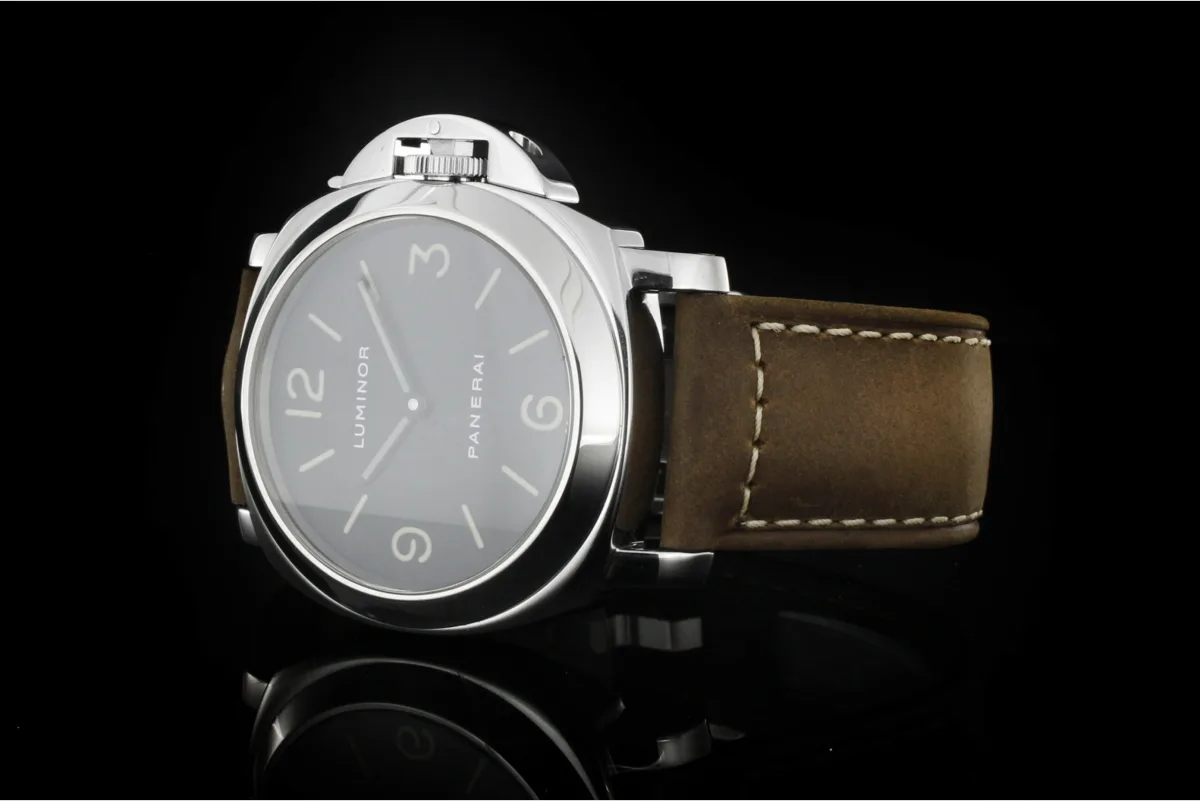
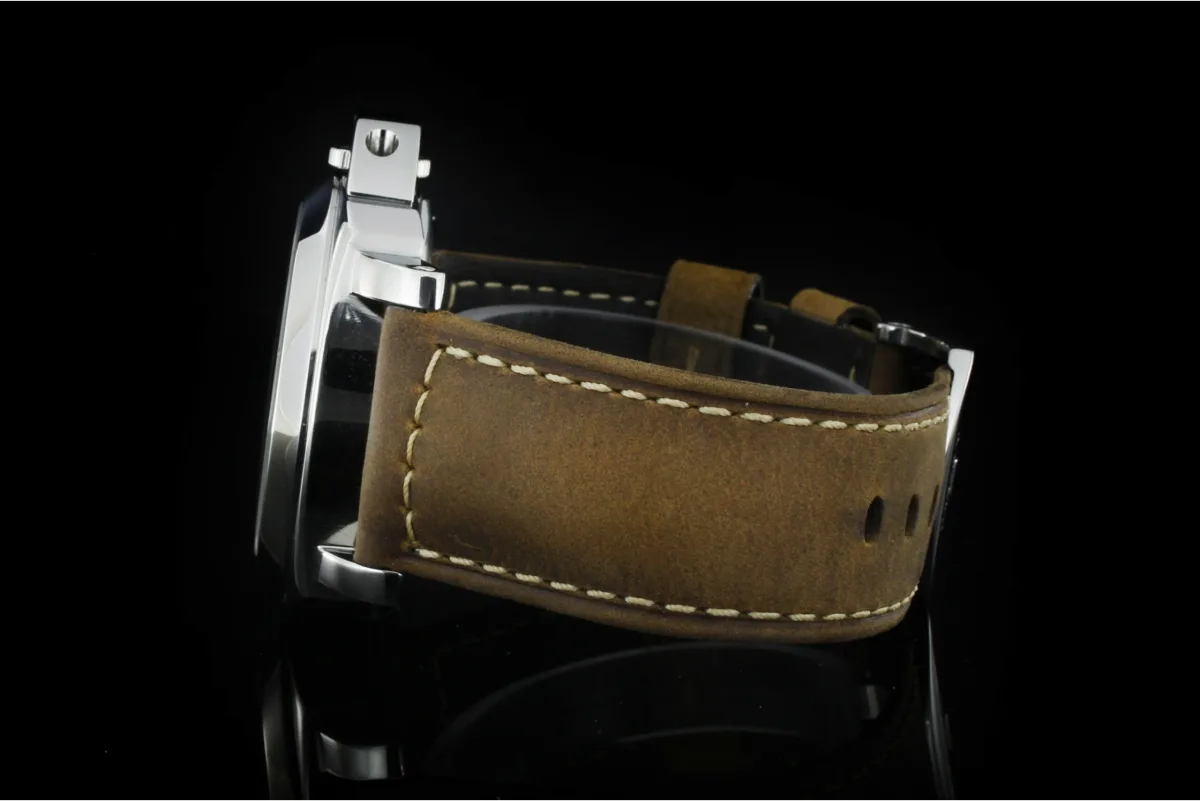
The case features the characteristic crown-locking mechanism and a black dial with large luminescent hour markers and Arabic numerals at the 3, 6, 9, and 12 o'clock positions. The hour and minute hands are in pencil style, giving the design simplicity and restraint. I like such minimalism - without unnecessary logos and additional indicators, highlighting the recognizable design.
Classic Luminor look with black dial
The look is completed by a sturdy leather strap that perfectly suits the watch. No other brand pays such attention to straps in forming the image as Panerai. Besides the black dial, Panerai released a white version PAM0003, but for me, the true classic remains the black Luminor on a massive 24mm leather strap.
Inside is the Panerai OP I manual-winding caliber based on ETA 6497. It operates at a frequency of 21,600 vibrations per hour, has 17 jewels, and a 41-hour power reserve. Equipped with Incabloc shock protection and Glucydur balance. This caliber was used from 1997 to 2001 until it was replaced by the OP X. Finding the Luminor Base PAM0002 is not difficult, and prices have decreased over the years. Depending on the condition and production series, the cost ranges from €4,000 to €10,000. As expected, early series specimens are more expensive. Considering its iconic status, this is a relatively accessible '90s classic.
Rolex Yacht-Master ref. 16622
Many iconic Rolex models date back to the 1950s and 1960s. However, in 1992, the brand introduced a new model - the yellow gold Yacht-Master ref. 16228. These watches marked the beginning of the Rolex series dedicated to yachting. The Yacht-Master name appeared much earlier: in the late 1960s, Rolex developed several prototypes under this name. They had nothing in common with the '90s models and resembled Daytona more. At that time, the project did not develop further.
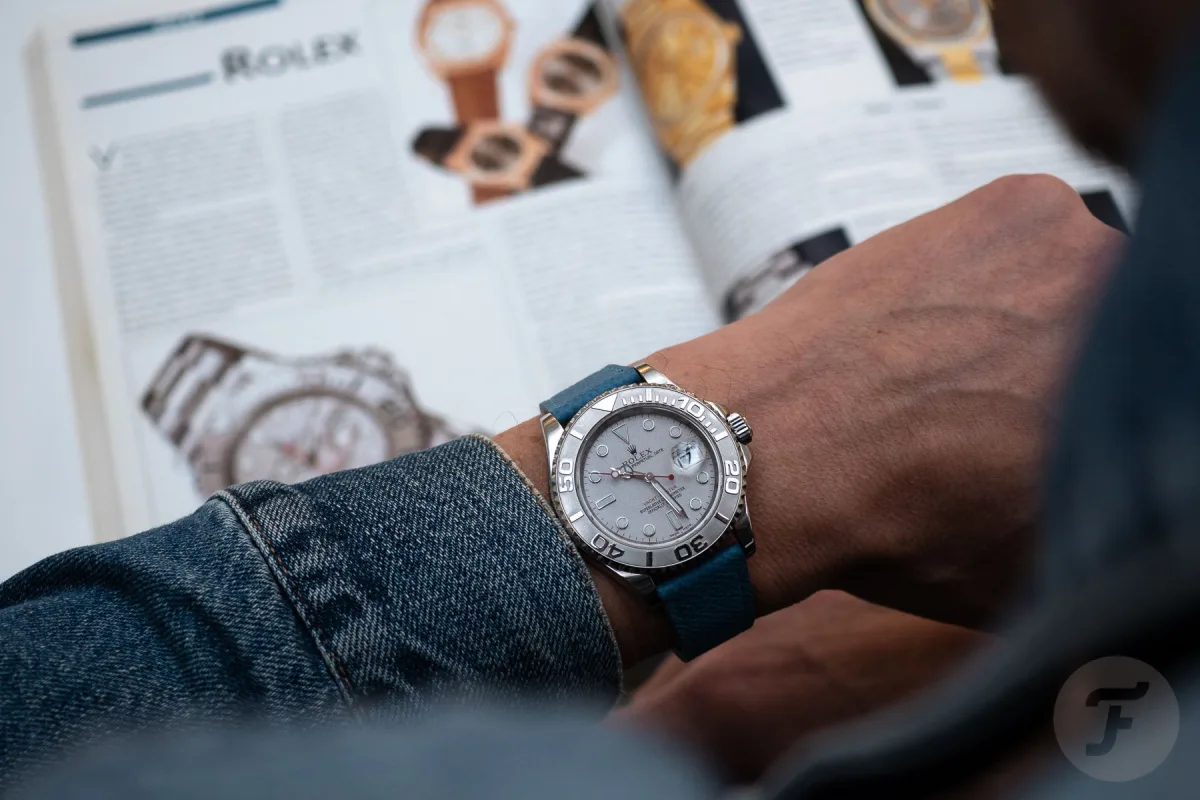
The history of the modern Yacht-Master began in the late 1980s. According to unconfirmed reports, Rolex wanted to update the classic Submariner design. After numerous iterations, the design that we now know as the Yacht-Master prevailed. However, to avoid harming the Submariner's legacy, the Yacht-Master was introduced as luxury yachting watches. To emphasize the differences, the first model ref. 16628 was made entirely of yellow gold.
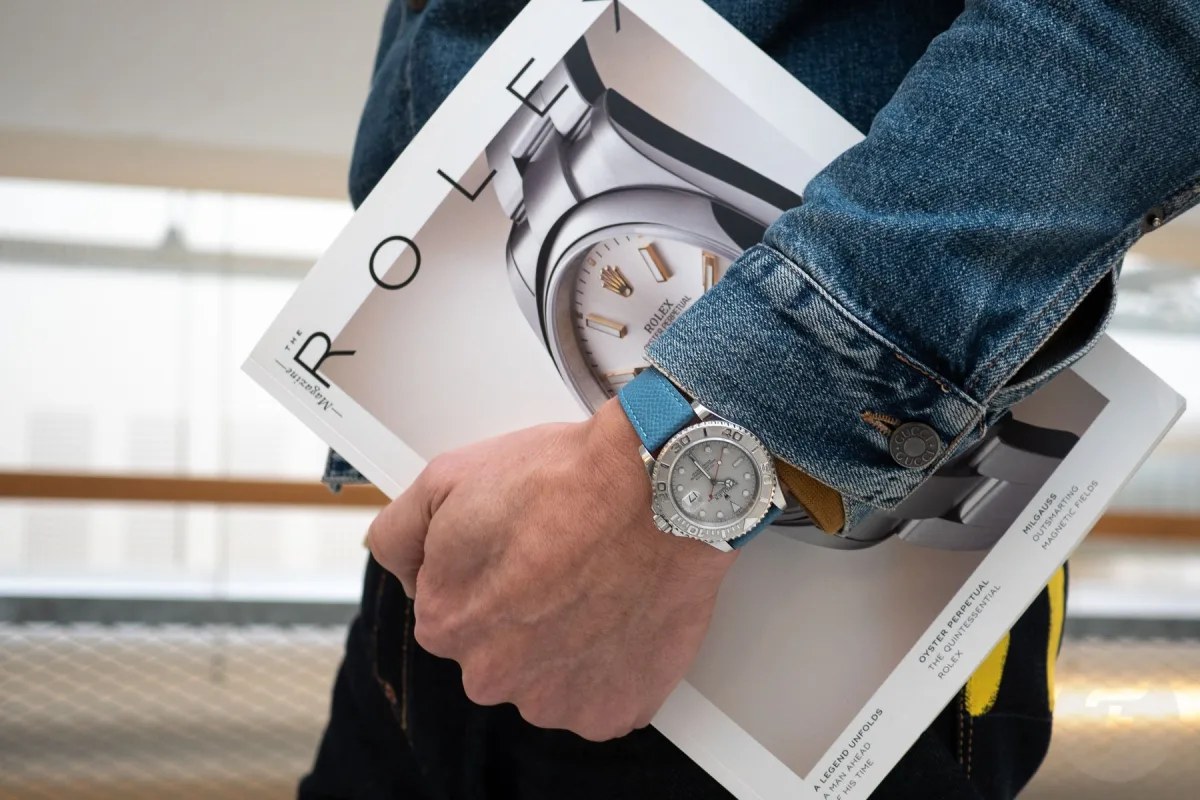
Yacht-Master with a new aesthetic look
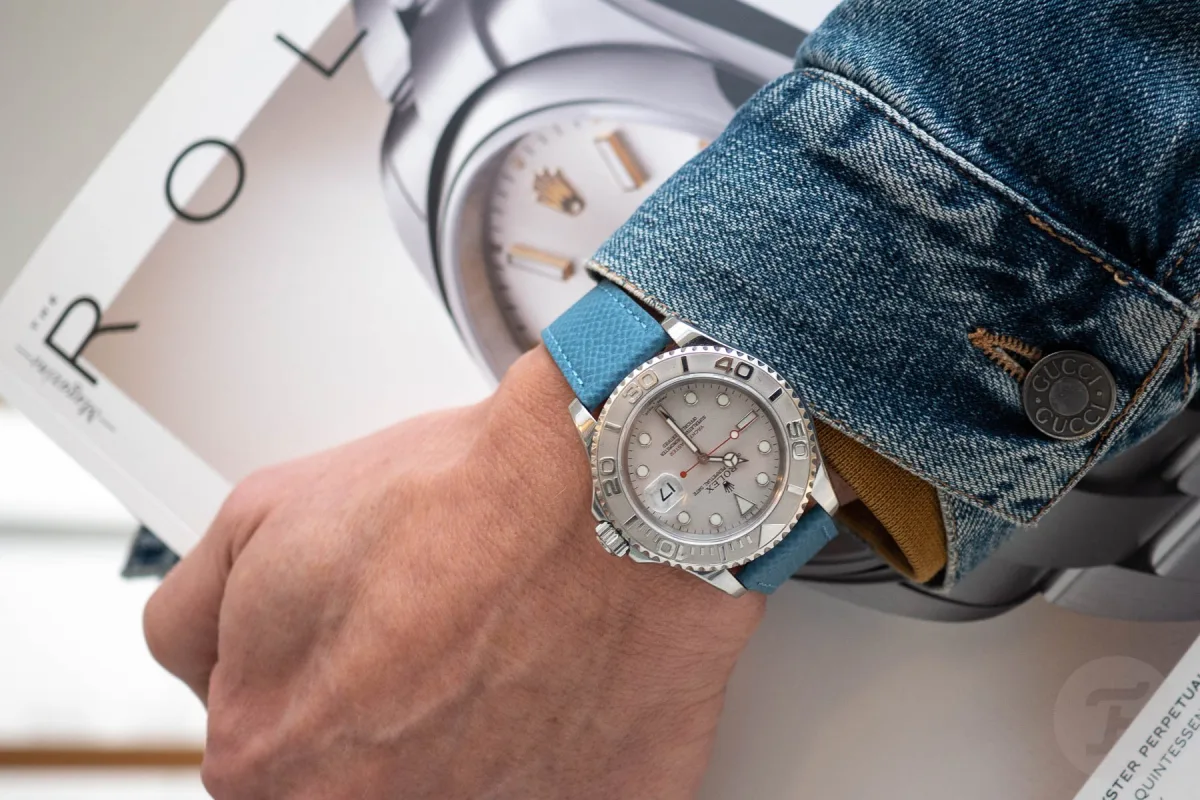
In 1999, Rolex released the stainless steel and platinum ref. 16622, which we included in the list. This Rolesium Yacht-Master had a stainless steel case and bracelet, while the bezel and dial were made of platinum. The raised markers on the bezel created a unique look unlike any other Rolex model at the time. Some consider the monochrome design dull, but the dial comes alive in the sunlight.
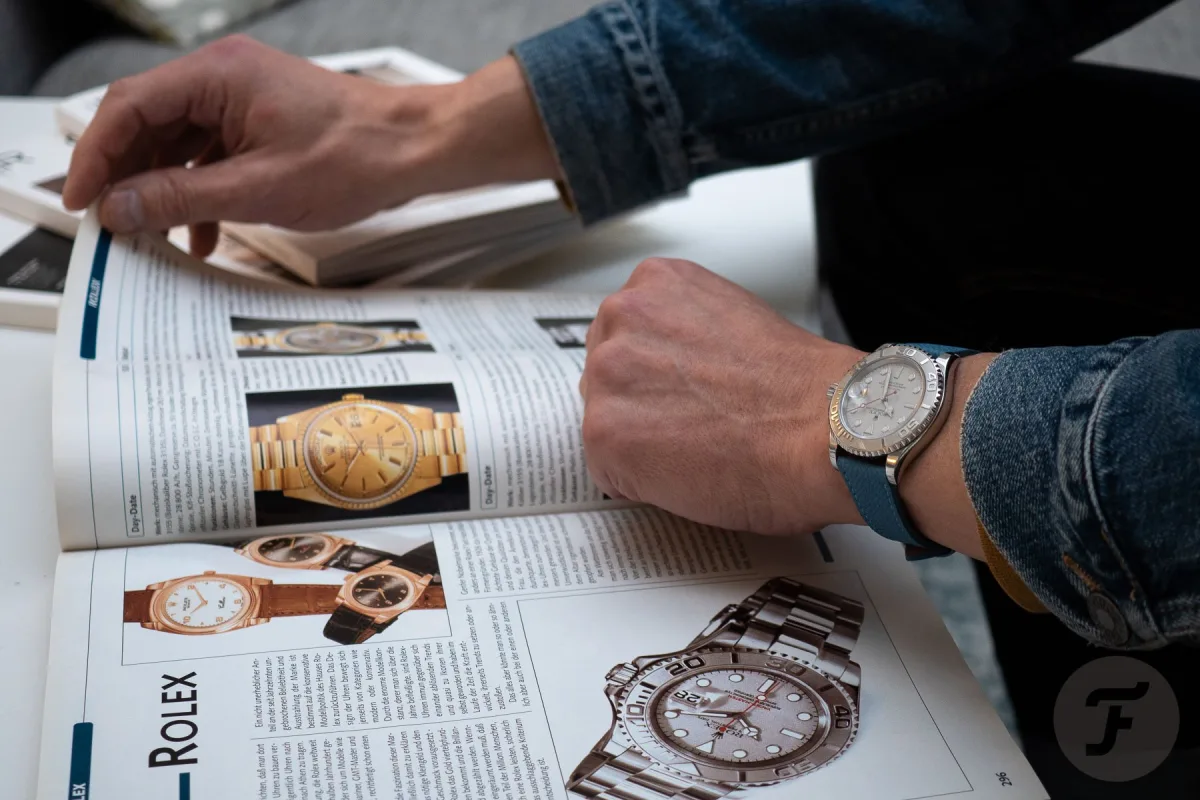
Inside is the legendary automatic caliber Rolex 3135, also used in the Submariner. It operates at 28,800 vibrations per hour, has 31 jewels, and a 48-hour power reserve. The mechanism is reliable and well-suited for this model. The Yacht-Master is not for everyone, but the ref. 16622 version in steel and platinum is what most envision when talking about the Yacht-Master. Historically it would make sense to choose the yellow gold model, where it all began, but we preferred the ref. 16622 for its appearance and more accessible price - from €7,000 to €10,000.
A. Lange & Söhne Lange 1 ref. 101.001
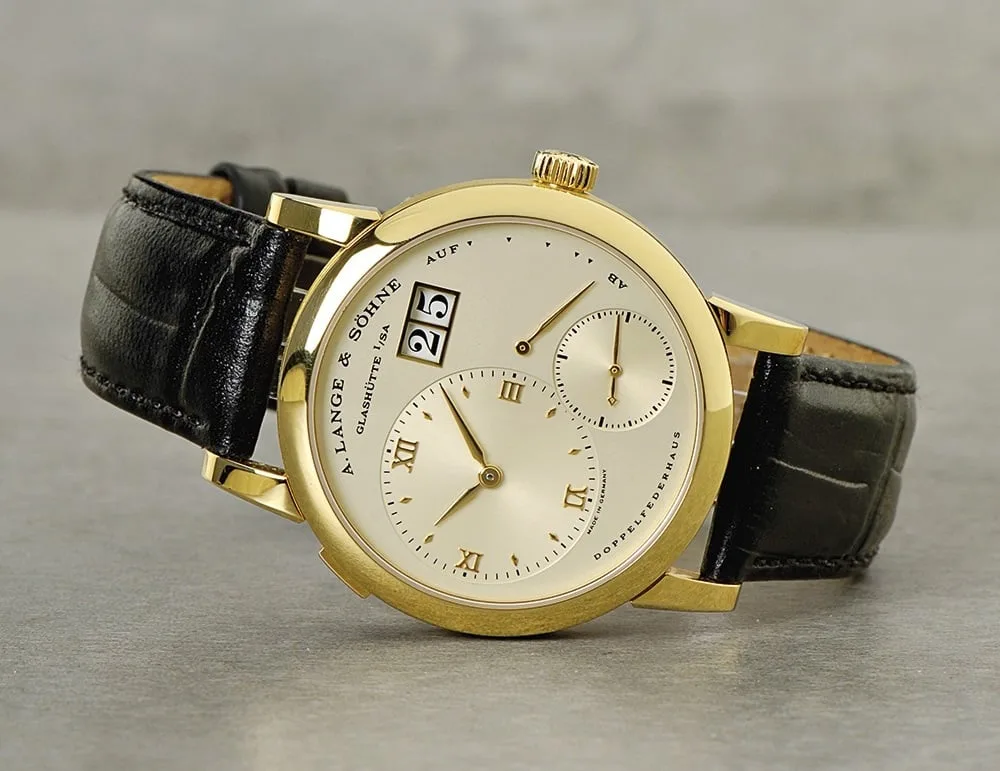
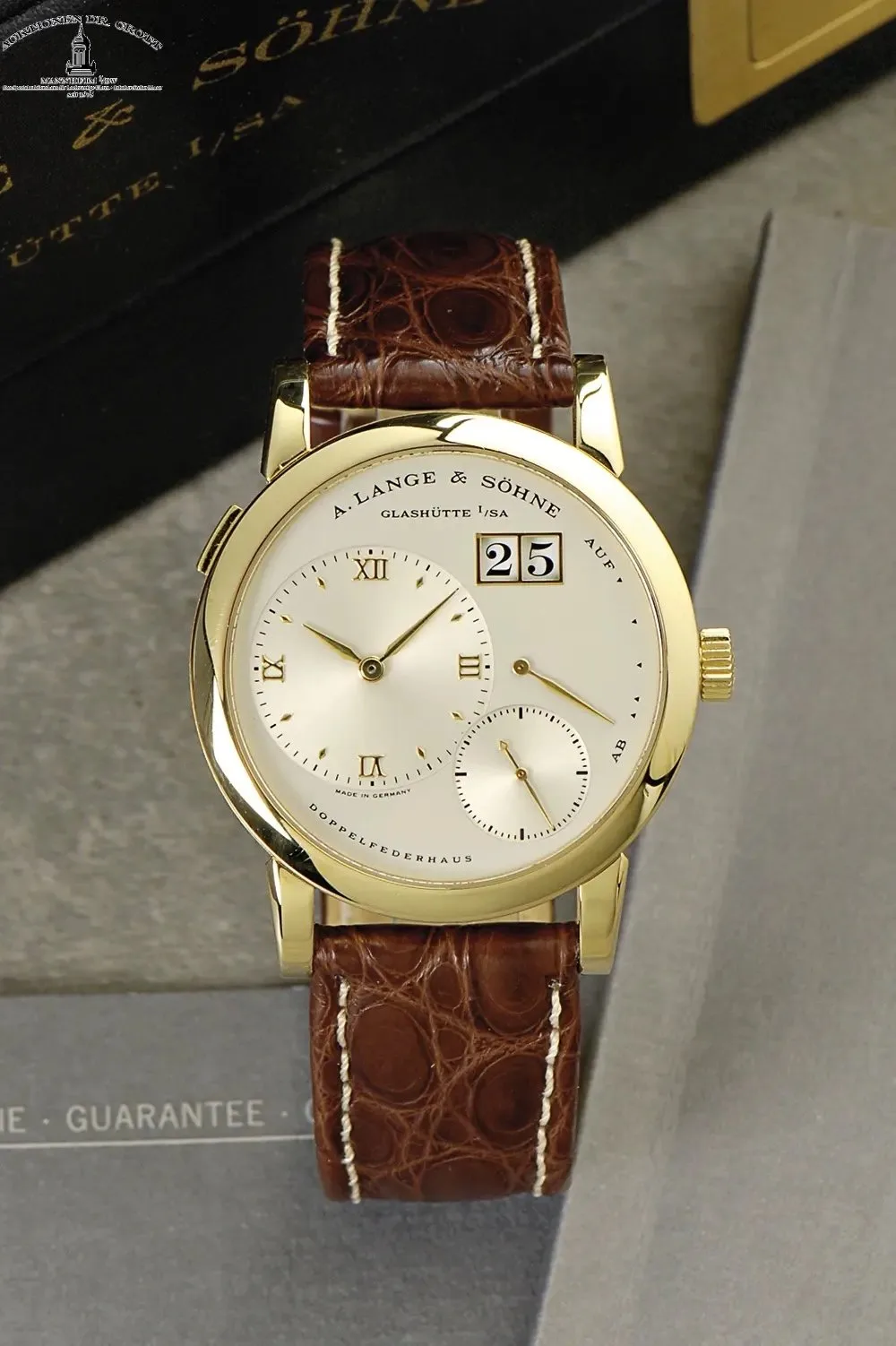
Our final choice is the outstanding A. Lange & Söhne Lange 1, specifically ref. 101.001, which heralded the beginning of this classic in 1994. The watches were part of the first collection of the revived brand, presented on October 24, 1994, in Dresden by Walter Lange and Günter Blümlein. The collection included Tourbillon "Pour le Mérite", Saxonia, Arkade, and the flagship model Lange 1. Ref. 101.001 had a yellow gold case with a diameter of 38.5 mm and gold hands on a champagne dial.
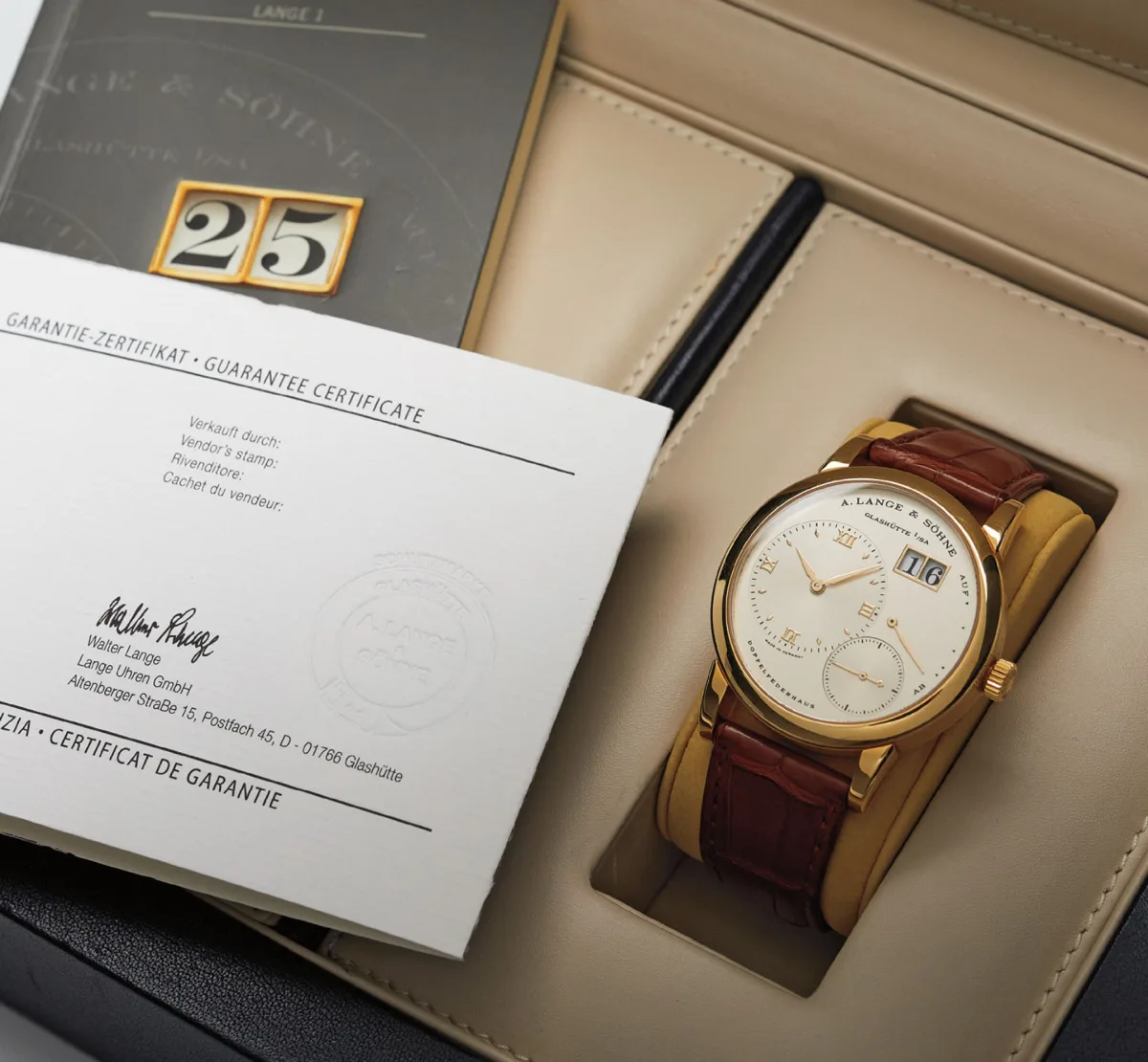
The watches introduced a new aesthetic, unlike Swiss counterparts of Lange. This was a deliberate choice by Blümlein, who wanted to emphasize a more technical and engineering German approach to watchmaking. The design was developed by Reinhard Meis and the legendary Kurt Klaus, creating the characteristic off-center dial layout based on the "rule of thirds." Despite the unusual time placement and enlarged date, the design looks very balanced.
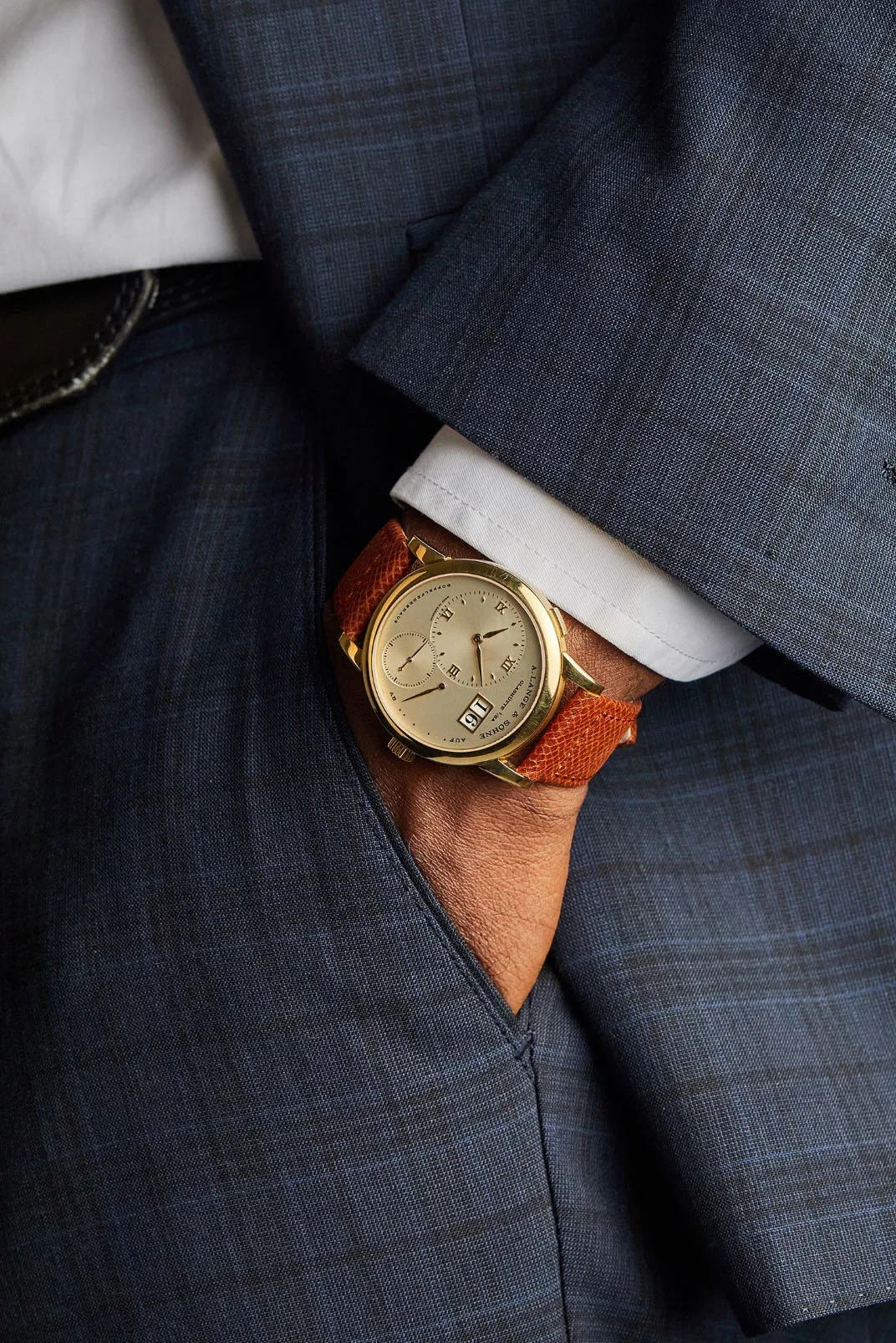
Models with solid gold case backs are especially prized
The first Lange 1 was driven by the manually wound caliber L901.0, operating at 21,600 vibrations per hour, with 53 jewels and a 72-hour power reserve thanks to a twin barrel (doppelfederhaus). The mechanism uses a gear train from the classic Jaeger-LeCoultre 822 but was significantly modified for the dial layout.
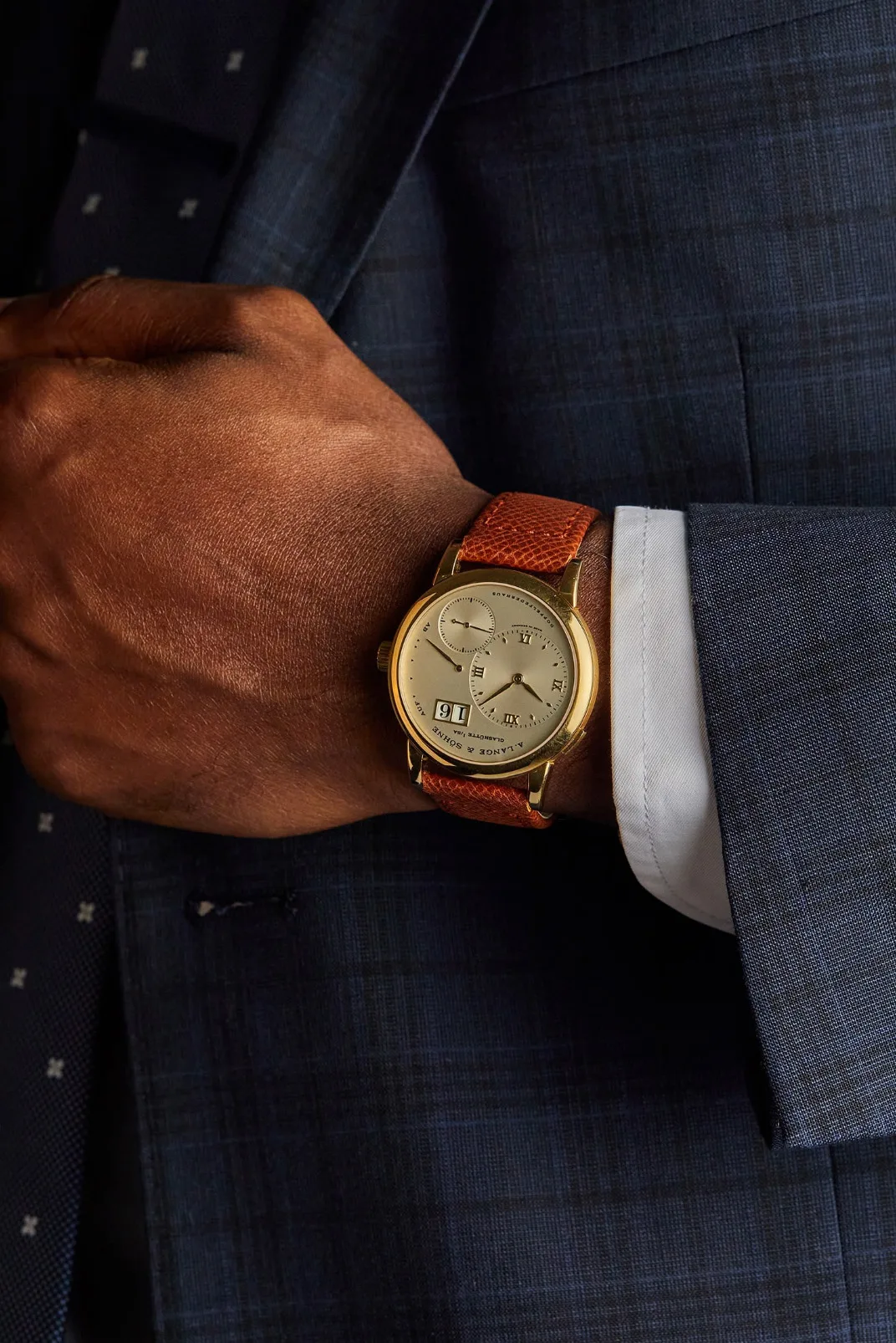
For the first Lange 1 models, a solid gold case back was used. A year later, a version with a sapphire transparent back appeared. By 1997, A. Lange & Söhne abandoned opaque backs, so models with them are considered the most desirable. Prices for the first Lange 1 start at approximately €30,000–35,000 and quickly rise to €50,000 for early specimens with solid gold backs. Most of these watches are sold at auctions, so you will have to make an effort to acquire this '90s classic.
Conclusion: our five favorite iconic watches of the 1990s
So here are five classic models from the 1990s. These watches helped define the style and status of the watch industry in an era when mechanical watches were becoming the luxury items we know today. As mentioned, there are many other worthy models, so we pass the question to you: which of our five favorites do you like the most? What other watches from the 1990s do you think deserve attention? Leave comments, and we'll return next week with a new list!