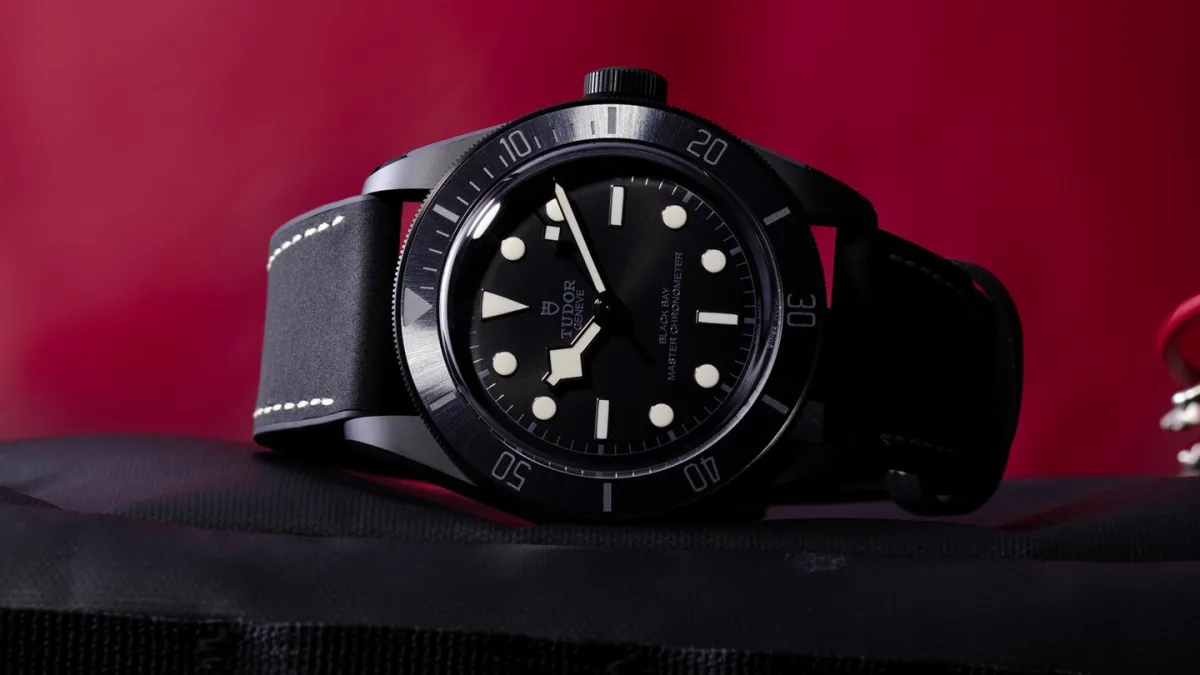
The Swiss watch company Tudor has joined the growing list of modern watchmakers releasing watches mid-year, contrary to the traditional practice of unveiling all models at once during the year. Just last month at the Watches & Wonders 2021 exhibition, Tudor presented most of its 2021 novelties, but the new Tudor Black Bay Ceramic reference M79210CNU-0001 emerged roughly a month later as an additional fresh product for this year - with more than just a story.
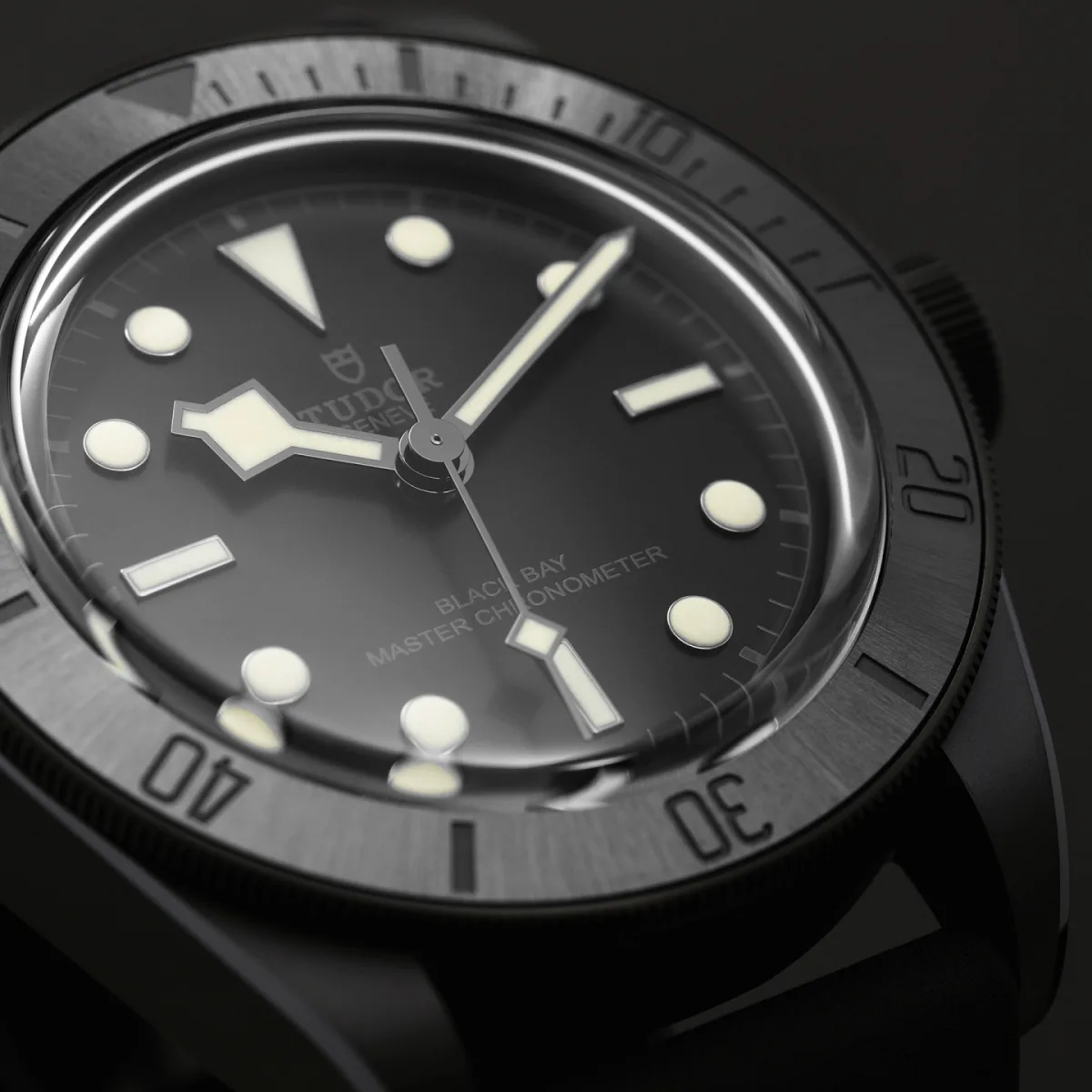
The main news for watch enthusiasts is not that Tudor released yet another ceramic (or black) watch. Indeed, this is the first time the popular Black Bay collection has received a ceramic case (as opposed to metal), but Tudor has previously released other matte black ceramic watches (such as the Tudor Fastrider Black Shield). Instead, the headline today is that this is the first Tudor watch with a movement certified as a Master Chronometer... and it bears the corresponding marking on the dial.

Until now, only Swiss Omega watches had movements certified by METAS with the designation “Master Chronometer.” METAS is a standard for wristwatch movements and cases developed by Omega and the Swiss Federal Institute of Metrology. METAS even has an office at the Omega manufacture, and it coined the term Master Chronometer. However, the standard was never intended exclusively for Omega, and any Swiss watch manufacturer could apply for the “Master Chronometer” certification (the term belongs to METAS, not Omega). Now, Tudor has joined Omega in offering Master Chronometer-certified movements, and the 2021 Black Bay Ceramic is the first watch with such a movement. According to Tudor representatives, the certification process is carried out in a laboratory established by Tudor in its Geneva office.
This connection to the Omega world might prompt some watch lovers to call the Black Bay Ceramic “Dark Side Of The Bay,” a play on the Omega Speedmaster “Dark Side Of The Moon” watches, also made from fully black ceramic. Let's see how the watch collector community reacts on social media. Certainly, there is little in the Black Bay Ceramic's design that seems unique. Nevertheless, Tudor (like Omega) has been highly successful in releasing new versions of its most popular products. Since the Black Bay remains Tudor's most popular watch collection, it makes sense to introduce a new mechanical movement in the Black Bay, sufficiently different from existing models to capture consumer attention.

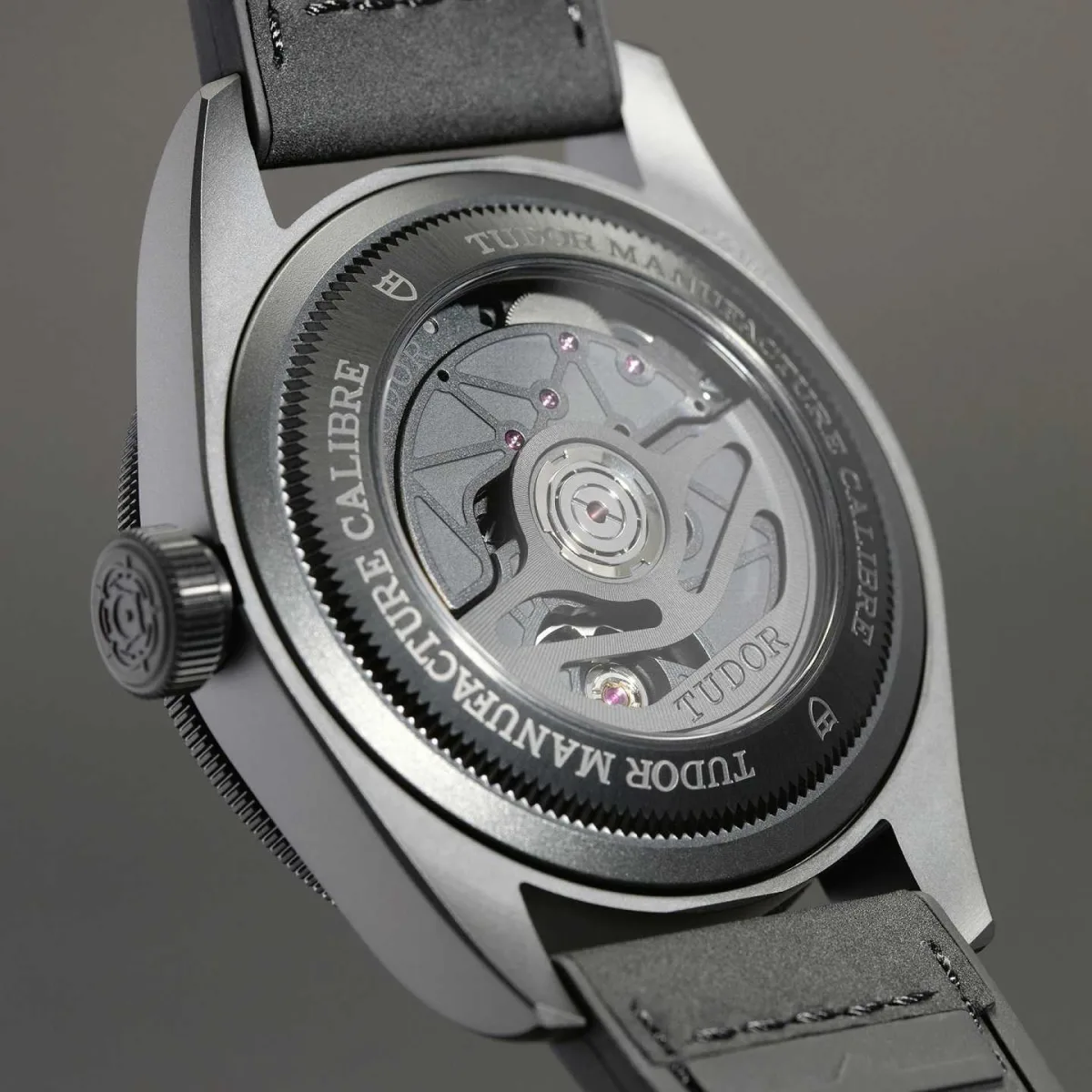
The Tudor Black Bay Ceramic itself is crafted in a matte black ceramic case 41 mm wide (14.4 mm thick) with a black steel bezel with PVD coating and a black ceramic insert. The fully symmetrical dial has no date, just a clean, classic Black Bay dial with cream/tan luminescent coating on the hands and hour markers. The case is water-resistant up to 200 meters and finally has a sapphire exhibition window on the back, revealing the movement.
The watch comes with a “hybrid” black strap made of leather and rubber (with stitching matching the dial), leather on the outside and rubber on the inside, as well as a matching NATO-style nylon fabric strap (I think most people will prefer wearing the Black Bay Ceramic on this). In shape and function, the Black Bay Ceramic watches have the same dimensions as other 41 mm Black Bay watches, with case material, color, case back window, and movement certification.
Inside the Black Bay Ceramic is the automatic Tudor Manufacture Caliber MT5602-1U. The movement is finished in black to match the overall black theme of the watch, and it is certainly pleasing to view through the case back. The movement features a silicon escapement, operates at 4 Hz, and has a power reserve of approximately 70 hours. Additionally, the movement is METAS-certified, also known as “master chronometer.”
Unlike COSC Chronometer certification, METAS requires the movement to be tested inside the watch (as opposed to outside the watch), as well as several other criteria, including water resistance and anti-magnetism. METAS was significant when it was first introduced a few years ago because it required watches certified under it to withstand a magnetic field strength of 15,000 gauss. In the MT5602-1U model, magnetic resistance is provided not through magnetic shielding but through natural anti-magnetism (i.e., it does not use ferrous metal parts susceptible to magnetic attraction) - for example, a silicon hairspring. Tudor has stated that while the movement's architecture is similar to non-METAS MT5602 movements, the MT5602 caliber features a number of “technical changes” that are currently considered a trade secret.

Anti-magnetism is a hot topic among major watch companies that are rallying around this durability/performance feature as a new way to engage consumers in modern watch movements. In fact, just a few days ago on the WatchTested site, we discussed why watch companies are now very interested in anti-magnetic movements. While magnets are cool, the concept of watch anti-magnetism is not as sexy as it could be with wider public coverage.
The reality is that during our daily lives (and not just for people who spend time near MRI machines), our mechanical wristwatches can be exposed to various magnetic fields. Weak magnetic fields may simply negatively affect the timekeeping of wristwatches. Stronger magnetic fields can actually magnetize parts of traditional wristwatch movements that contain potentially magnetized components. This can either completely break the mechanical movement or severely degrade its performance. While demagnetizing a wristwatch movement is not difficult, it is something that a watchmaker must do.
Thus, having a wristwatch that is more or less immune to magnetic effects is a legitimate functional advantage for buyers and indeed a fresh reason to become fascinated with old technology again.
METAS-certified movements are actually also COSC chronometer-certified, after which they undergo more rigorous testing. There are many questions about the Tudor Black Bay Ceramic watch certification process, and it is unknown how soon other Tudor watches will receive the Master Chronometer certification.
It is also unknown what Omega's stance is on all this (Tudor responded to some questions on this topic and made it clear that there are no relations with the Swatch Group or Omega, and that METAS testing occurs internally where Tudor watches are made). On one hand, Omega may be favorable, as now Tudor (the same family as Rolex) confirms the technology it has heavily invested in, or it may feel threatened, as an important part of its “brand vocabulary” is now being used by a close competitor.

You will also notice that the MT5602-1U movement installed in the Tudor Black Bay Ceramic is very close to the MT5602 that Tudor uses in most other Black Bay watches. To me, this means that Tudor did not need to develop completely new movements for the watches to pass METAS certification. Going forward, I expect to see more and more new Tudor watches with “Master Chronometer” on the dial. Tudor has not disclosed any specific details about the future concerning new Master Chronometer watches, but it has stated that it has the capability to convert any in-house movement into one that can achieve METAS certification.
In terms of price, the Tudor Black Bay Ceramic is more advantageous than the steel version of the Black Bay 41 watches. The retail price of the latter model (on a strap) is $3,475, while the Black Bay Ceramic is $1,000 more expensive. The retail price of the Tudor Black Bay Ceramic M79210CNU-0001 is $4,725.