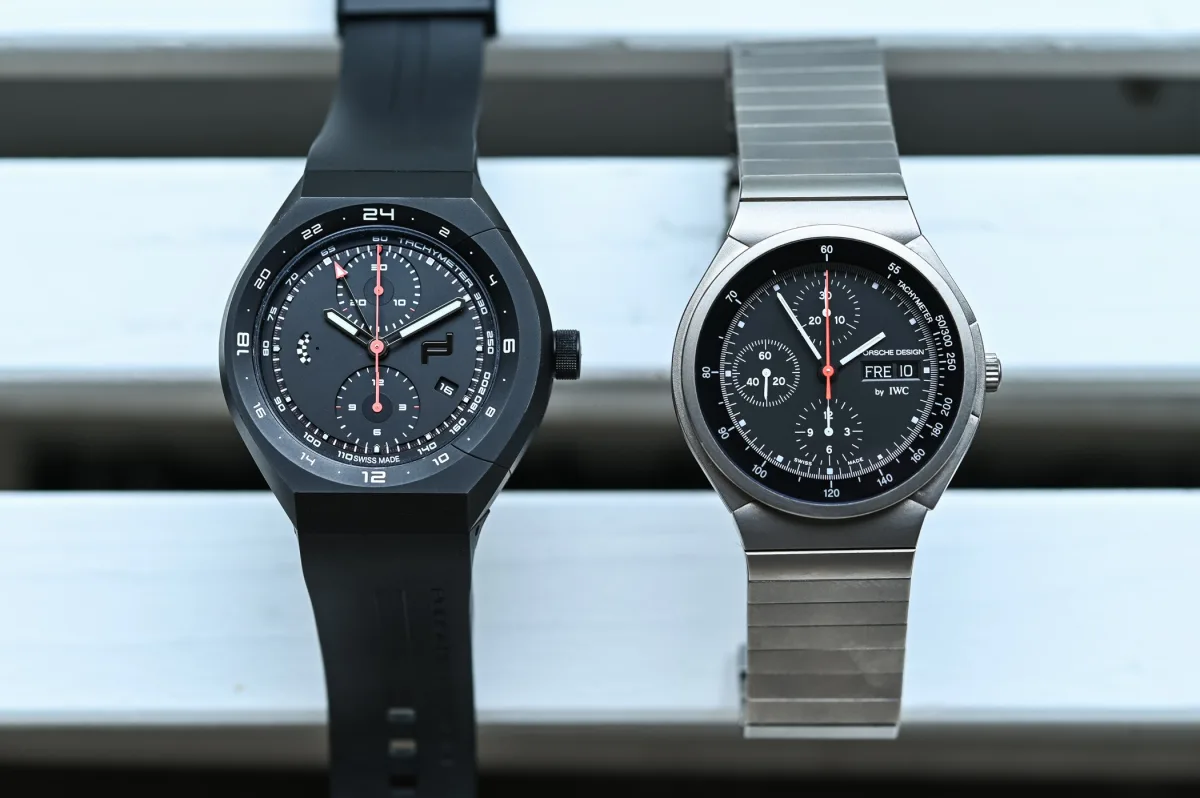
Ferdinand Alexander Porsche was a genius, a dreamer. A man who relentlessly challenged difficulties and ventured into the unknown. He is not only the driving force behind the legendary Porsche 911 sports car but also brought us many, many other things. Under the Porsche Design umbrella hides a world of luxury items: from travel bags, writing instruments, and fashion items to high-tech sports-oriented wristwatches. There is a clear connection to Porsche road and race cars, but that's not all. The brand has a very innovative focus, and today we will look at a vintage first-world model by Porsche Design. We compare the once-futuristic Titan Chronograph by IWC and its modern derivative, the Monobloc Actuator 24h-Chronotimer.
A few years ago, we already detailed Porsche Design and the brand's history with titanium. The long-standing relationship between the design house and this unique material led to the creation of several very interesting watches, but the story doesn't end there. By presenting two of the most iconic watch models side by side, we will talk about the origins and modern interpretation of Porsche Design.
A Brief History Lesson
The first product released by Porsche Design was a wristwatch. Led by Ferdinand Alexander Porsche as a separate company alongside Porsche as a sports car manufacturer, it opened its doors in 1972. With a clear and constant connection to motorsport, everything done carries the unmistakable DNA of Porsche. Porsche was one of the first companies to fully utilize the newly founded design studio's capabilities. Watches were ordered in batches of 20 per year to be awarded as tokens of appreciation to long-serving employees.
In 1972, the Porsche Design Orfina Chronograph model was released, becoming the first commercial watch with a black-coated case. The design was developed in-house, but at the time, Porsche Design turned to the best partners available and settled on Orfina. This chronograph was the perfect interpretation of F.A. Porsche's philosophy - to simplify the product to what it should be. Remove everything unnecessary and perfect what is needed for the job it should perform. The result was a highly legible dial in a then-unseen black case.
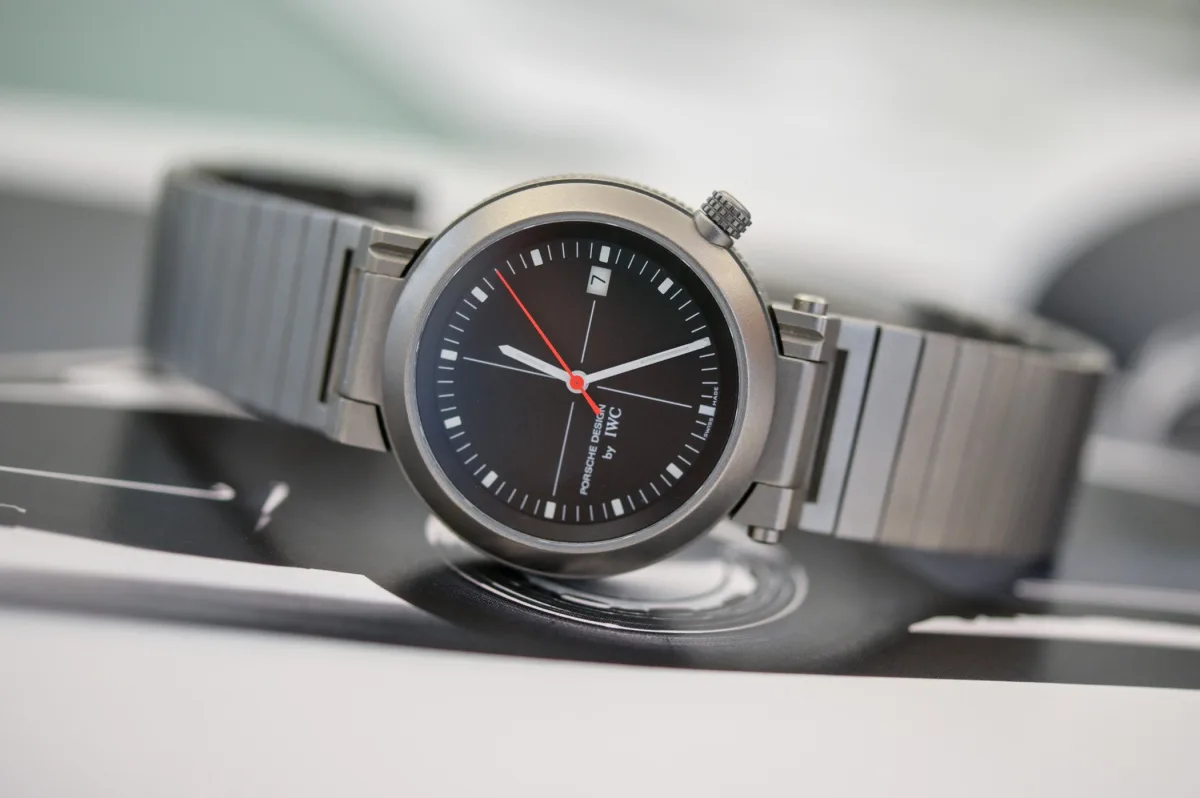
After parting ways with Orfina following the initial success, in 1977, Porsche Design reached out to IWC Schaffhausen as the next watchmaking partner. This marked the beginning of a collaboration that lasted 20 years and again led to the creation of several interesting watches. A year after the new partnership began, Porsche Design released the Porsche Design IWC ref. 3150 model with a reversible two-component case made of anodized aluminum. The upper part housed the time module, and the lower part housed a compass.
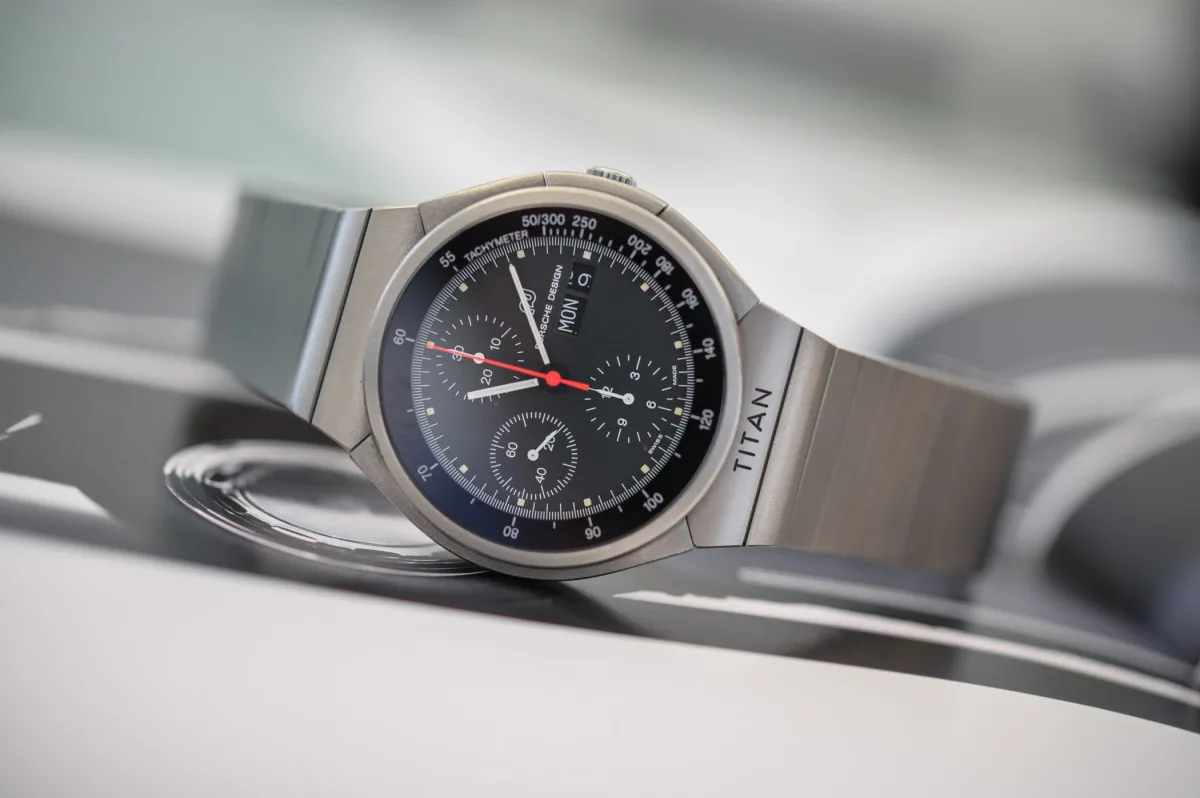
The next step in innovation came three years later when, in 1980, Porsche Design first applied titanium for both the case and bracelet of a watch. The origin of titanium in watchmaking remains somewhat obscure, but according to sources, including the brand itself, Citizen was the first to make a case from this space-age material in 1970. If we disregard prototypes and one-offs that never made it to market, then Porsche Design can rightfully be considered the author of the first fully titanium watch.
Unique Metallurgical Properties
The properties attributed to titanium have many advantages. This chemical element was first discovered in the 18th century in Great Britain. This material is corrosion-resistant and has high strength at low density, meaning its specific gravity is about 40% lower than steel. It is often mixed with other metals to create a super-strong corrosion-resistant lightweight alloy, typically having a matte gray color.
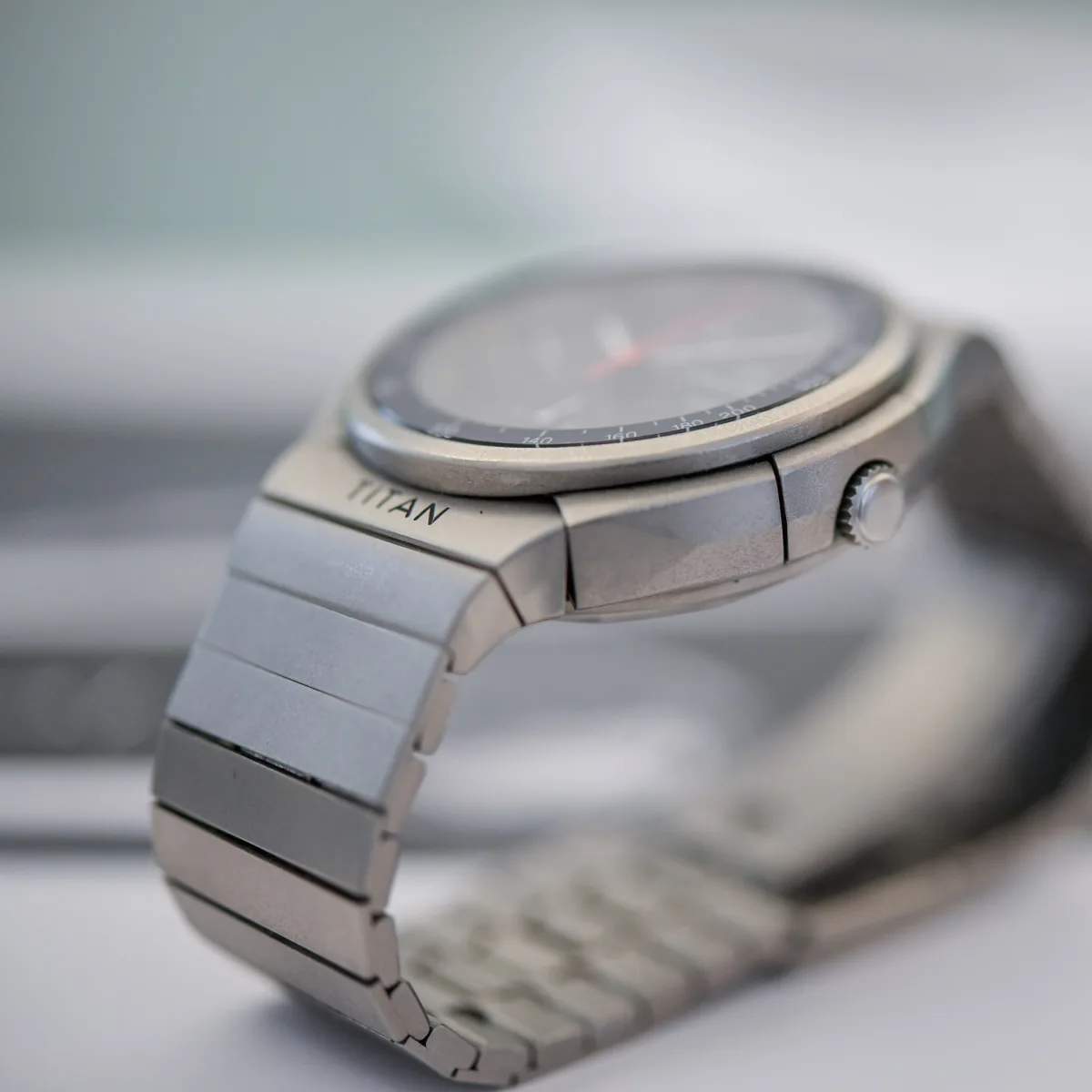
It was only in the 1950s that the Soviet Union began experimenting with various applications of titanium for military purposes. Since then, things have progressed quickly. Since then, this notoriously hard-to-work-with material has played a crucial role in the development of aerospace and aviation technologies and many other industrial processes. One of the most iconic aircraft ever created, the Lockheed SR-71 Blackbird, used titanium for about 85% of its structure due to its properties.

It was only a matter of time before it found its application in watchmaking. Today it is one of the most common materials for making cases and bracelets, alongside steel and gold. Citizen is considered the first to produce a titanium case and release it to the market as a commercial product, limited to 2,000 pieces, in 1970. And although there were titanium prototypes like the Omega Speedmaster Alaska Project before this, none were available to the general public. By 1980, everything was about to change with the introduction of the next epochal watch from Porsche Design.
PORSCHE DESIGN TITAN CHRONOGRAPH BY IWC
In 1980, Porsche Design began what was to be the next chapter not only for the brand but also for the partners involved in the project and the industry itself. As mentioned, Porsche Design was not a manufacture and used third-party movements and other components. Moving from Orfina to IWC, Ferdinand Alexander Porsche asked the Schaffhausen brand to do something unprecedented: to create a fully titanium watch.
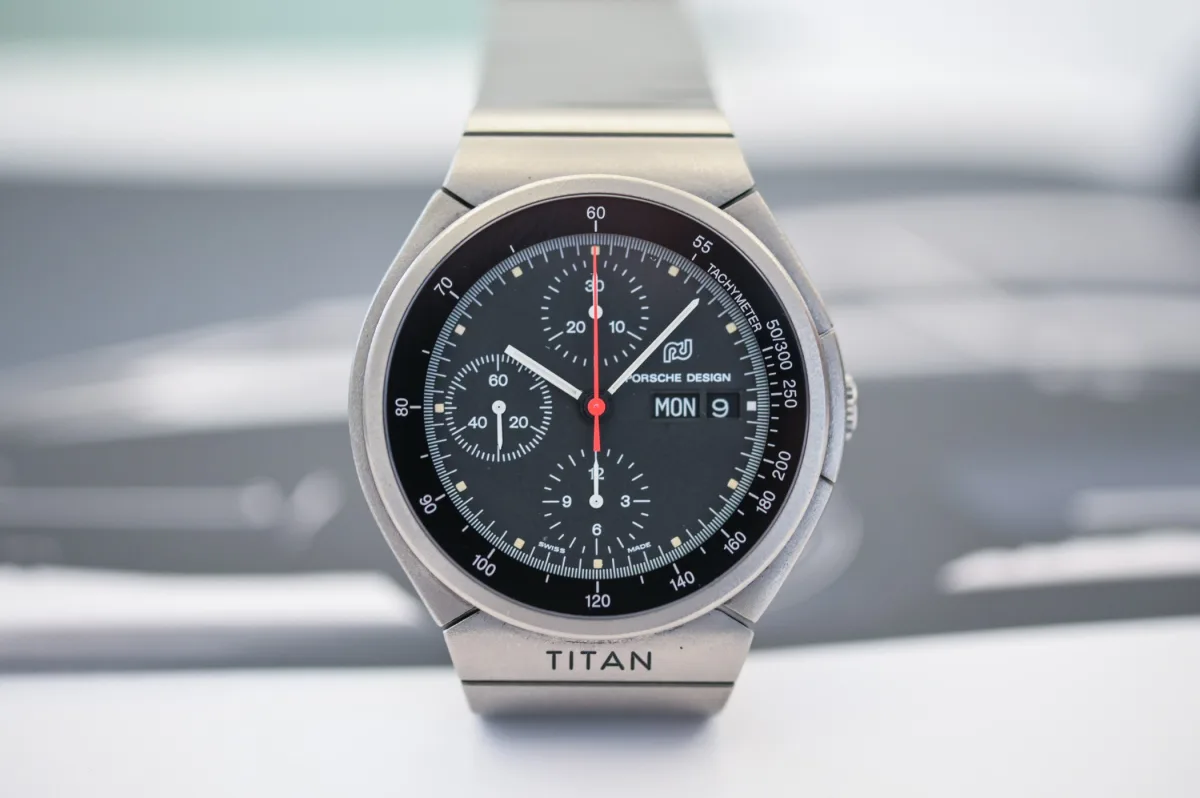
Such is the Porsche Design Titan Chronograph by IWC ref. Series 3700, whose case and integrated bracelet are entirely made of titanium. Not content with simply producing "just" a titanium watch, F.A. Porsche focused on creating a motorsport-inspired chronograph. These were to be superbly legible and easy-to-use watches. The final design includes innovative integrated chronograph pushers that perfectly match the case's shape. At first glance, they might even go unnoticed as they flow into the contours of the case.
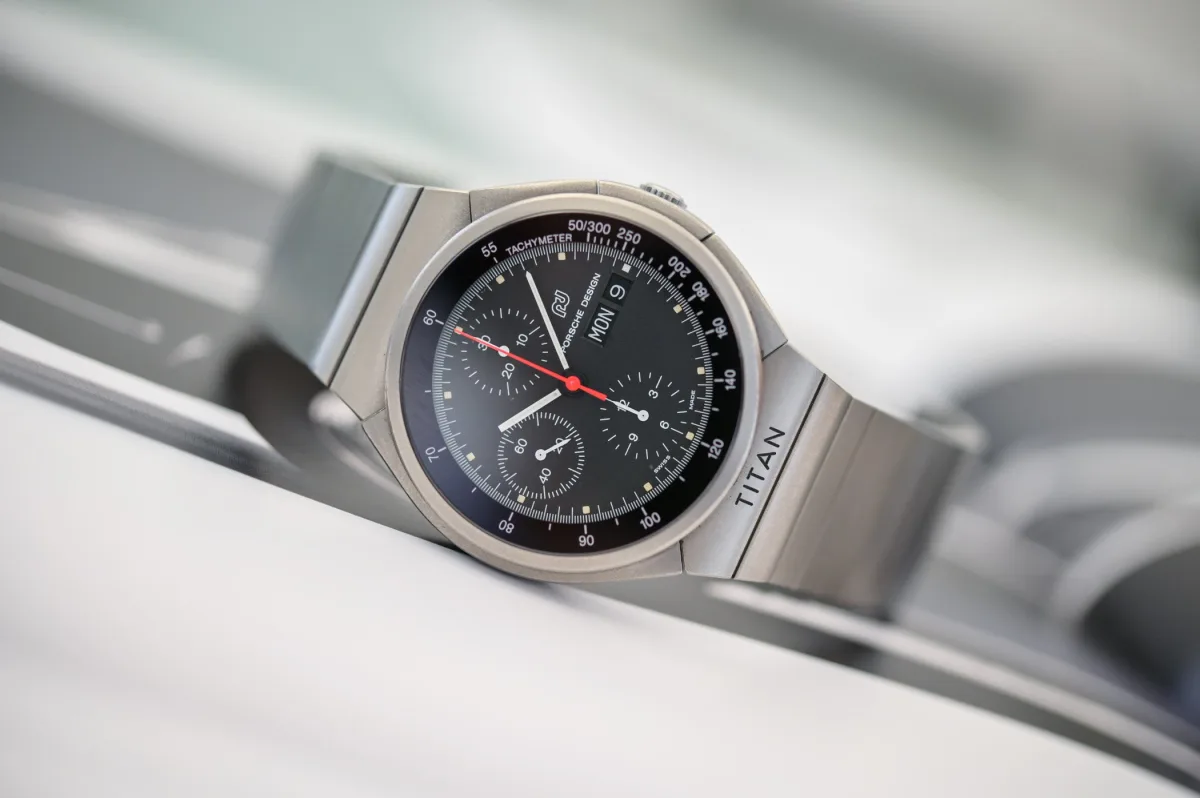
The Porsche Design Titan Chronograph by IWC features a case that seamlessly transitions into an integrated bracelet. The dial is a deep black with white time, date, and chronograph markers. The only other color used in the watch is the orange or red chronograph seconds hand, again tying the watch to motorsport.
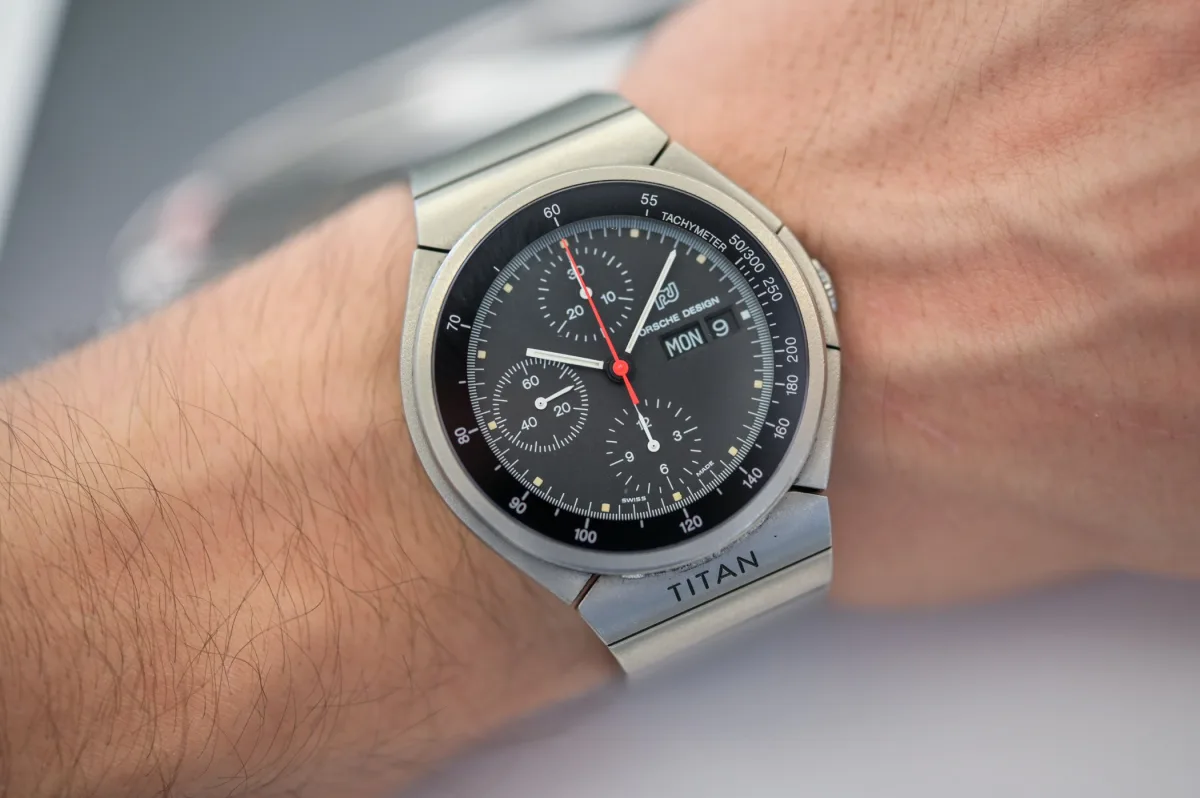
In terms of size, you have a choice between 36 and 42 mm, but this affects the type of movement. The smaller of the two was equipped with a mecha-quartz hybrid movement sourced from Jaeger-LeCoultre. IWC also used the JLC 361 caliber in the Ingenieur. Its larger sibling came with a Valjoux 7750 automatic chronograph movement.
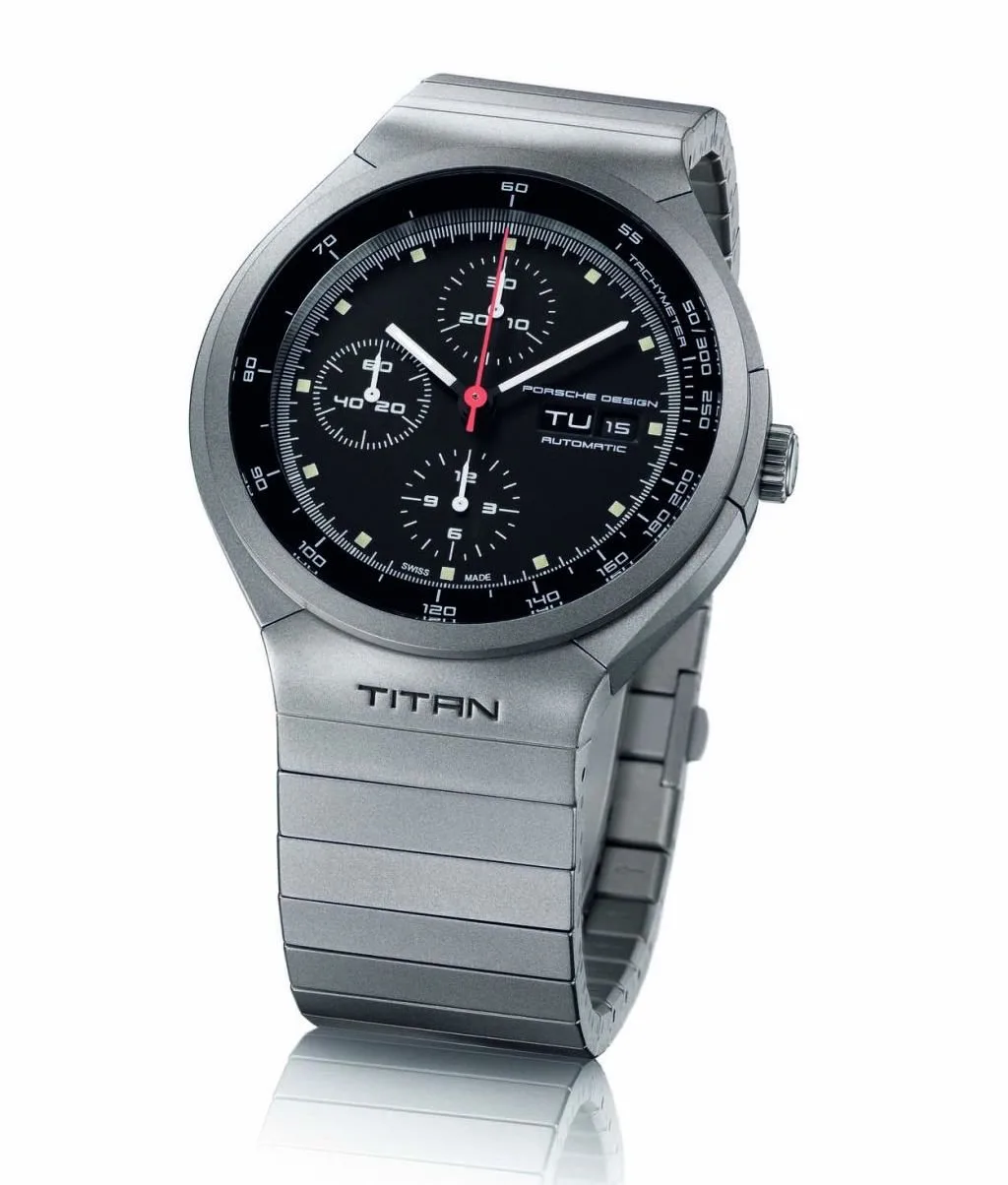
Thirty years after the release of the first Porsche Design Titan Chronograph by IWC, Porsche Design paid tribute to the first fully titanium watch by releasing the ref. P’6530 model. This near one-to-one recreation was made not in partnership with IWC, as the two companies parted ways in 1997, but with Eterna. Side by side, the watches are almost indistinguishable, except for the slightly larger 44 mm case. The watch was presented in a limited series of 911 pieces.
Monobloc Actuator Porsche Design 24H-Chronotimer
The direct heir to the Porsche Design Titan Chronograph is undoubtedly the Porsche Design Monobloc Actuator collection. Titanium has always been an important part of Porsche Design, and it is no surprise that the Monobloc Actuator follows the same principles. This is not only about the material but also about other remarkable features.
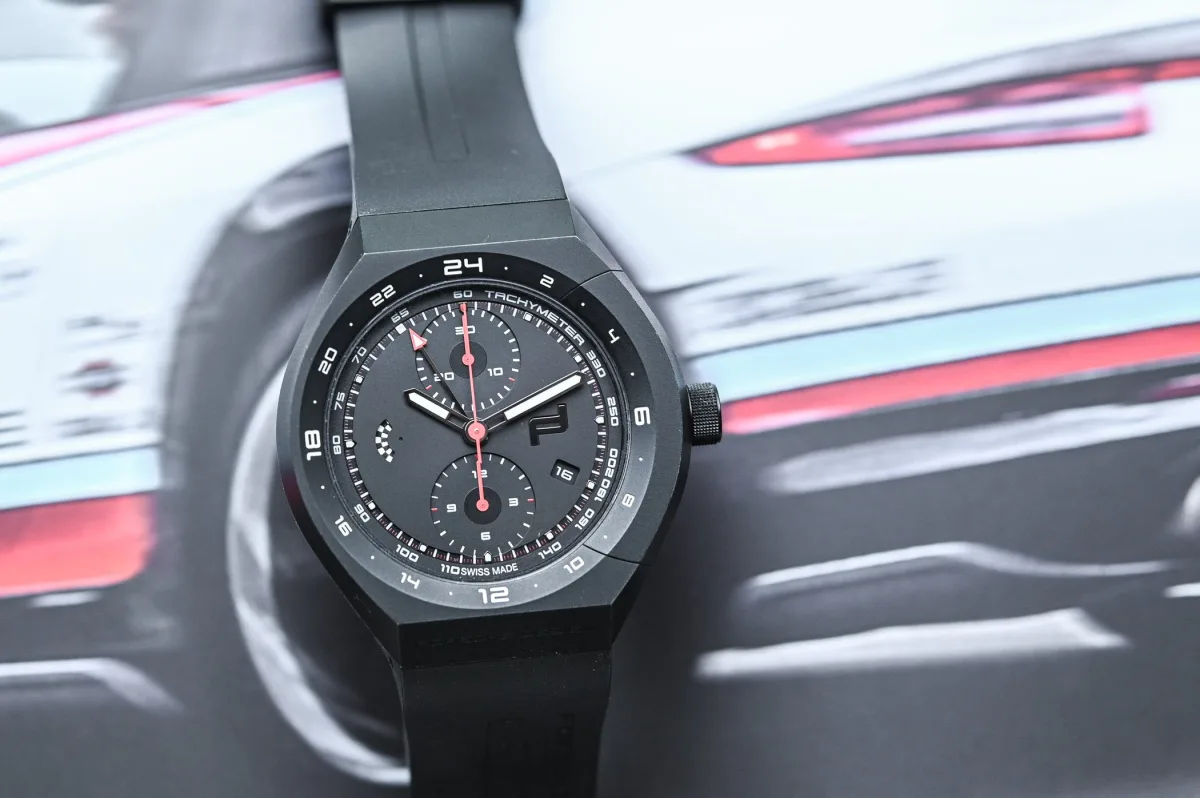
The Porsche Design Monobloc Actuator 24H-Chronotimer was first introduced at Baselworld 2017 in several combinations, but all were focused on one thing - titanium. The watch was presented either with an integrated rubber strap or a more historically relevant integrated titanium bracelet. At least in terms of heritage, this is the more significant combination. As mentioned, the watch has not only a titanium case in common with its predecessor. The Monobloc Actuator again features a fully titanium case with the option of an integrated titanium bracelet, integrated chronograph pushers within the case, and a Valjoux 7750-based movement.
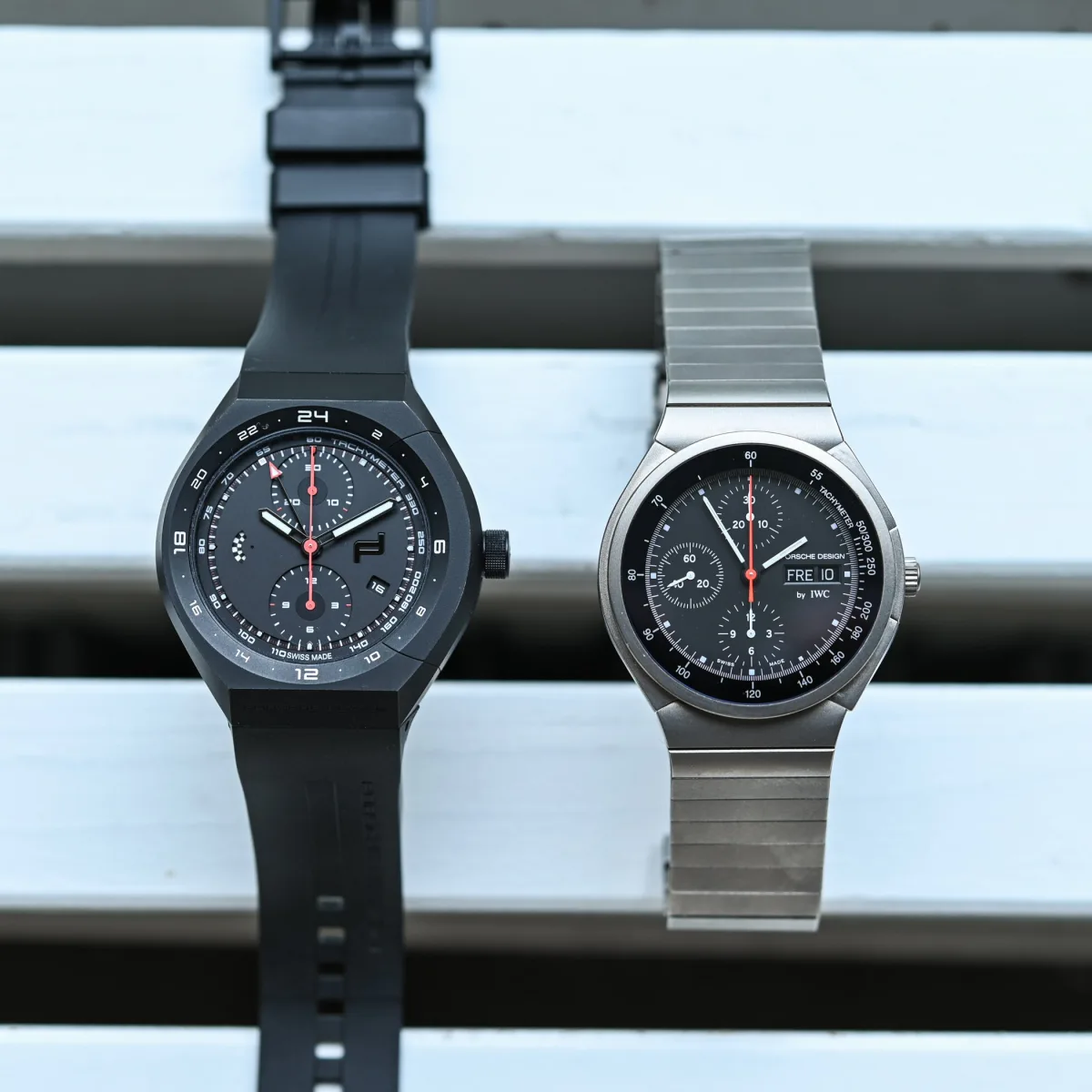
The most important element of the new interpretation of the titanium sports chronograph is, of course, the monobloc construction with an integrated chronograph actuator. Now it is not two separate buttons but a single piece that rotates when starting, stopping, or resetting the chronograph. Thanks to the smooth integration into the case, part of the actuator slides over the sapphire glass. The tolerances are so minimal that neither dust nor water can penetrate under it and into the case. The 24-hour scale on the bezel continues over the actuator.
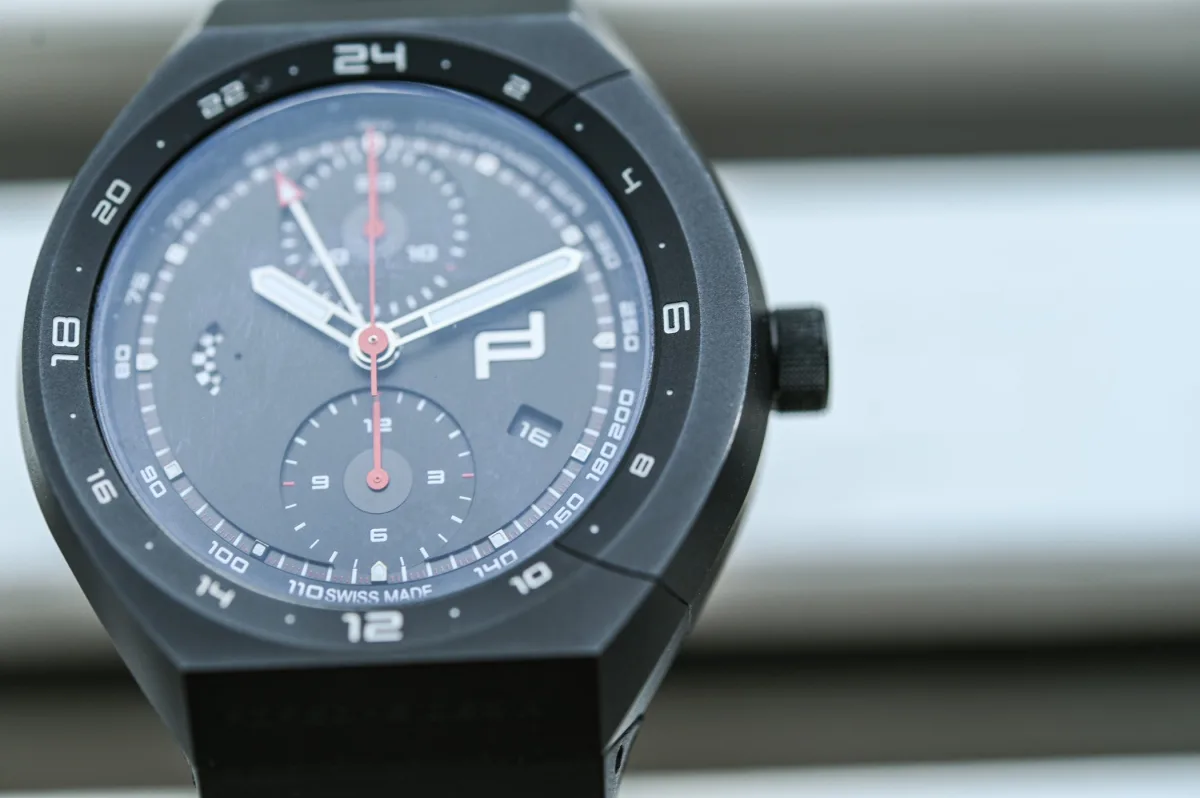
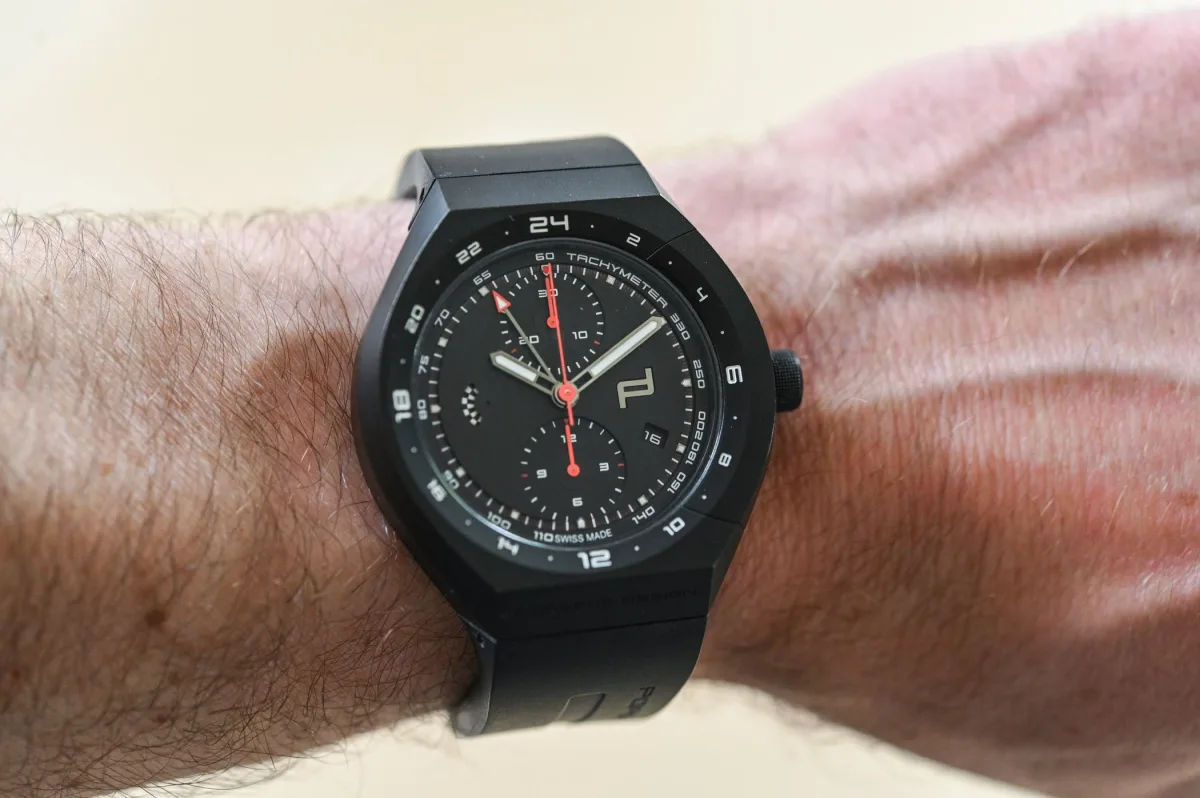
As for the design, it also adheres to F.A. Porsche's philosophy. The dials are as readable as possible: an anthracite base with a matte sunray finish and contrasting white and red markers and hands. There is also a more modern variant with a blue matte-finished dial. The case design is remarkably similar to the original from the 1980s, yet it stands on its own. The case, with an integrated bezel, is made from a solid piece of titanium with a matte finish.
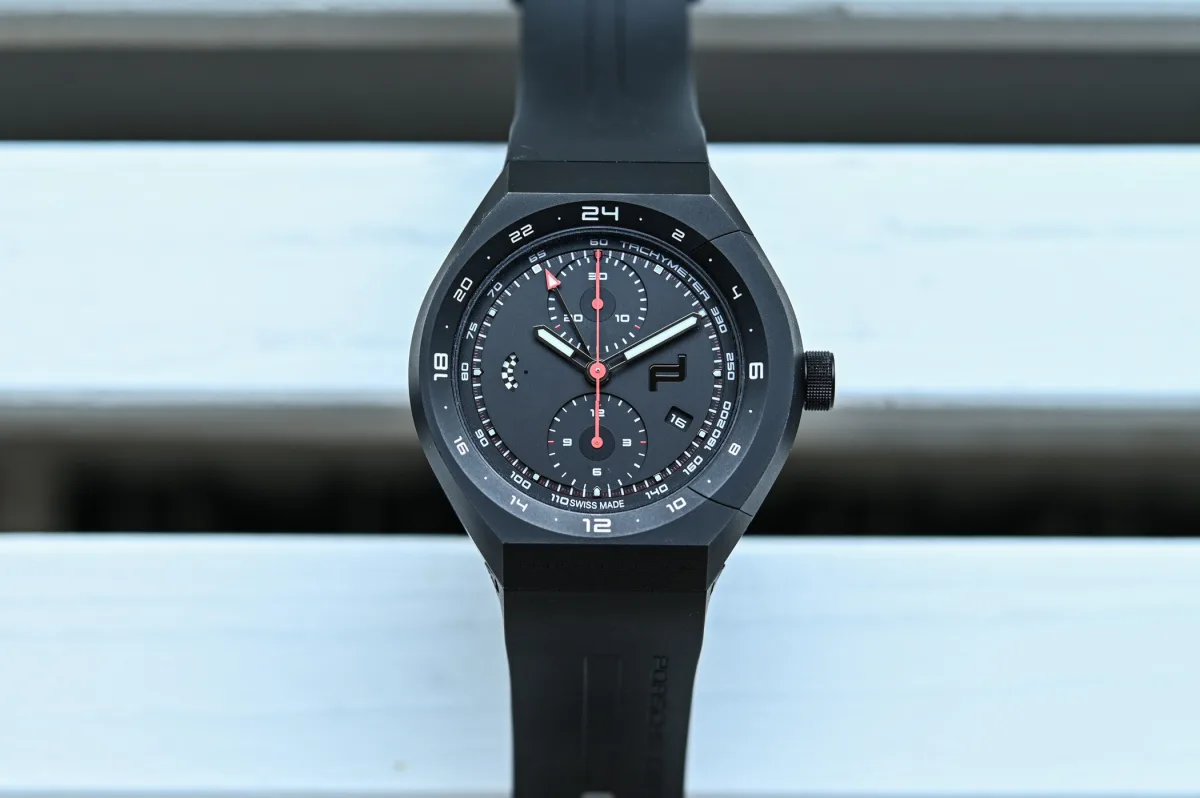
The dimensions of the Porsche Design Monobloc Actuator 24H-Chronotimer are quite impressive at 45.5 mm in diameter and a height ranging from 15.2 mm to 15.6 mm, depending on the specific piece. Despite these rather substantial dimensions, the watch sits well on the wrist thanks to its ergonomic shape and lightweight material. It is very reminiscent of the Porsche Design Titan Chronograph by IWC series, which it was inspired by.
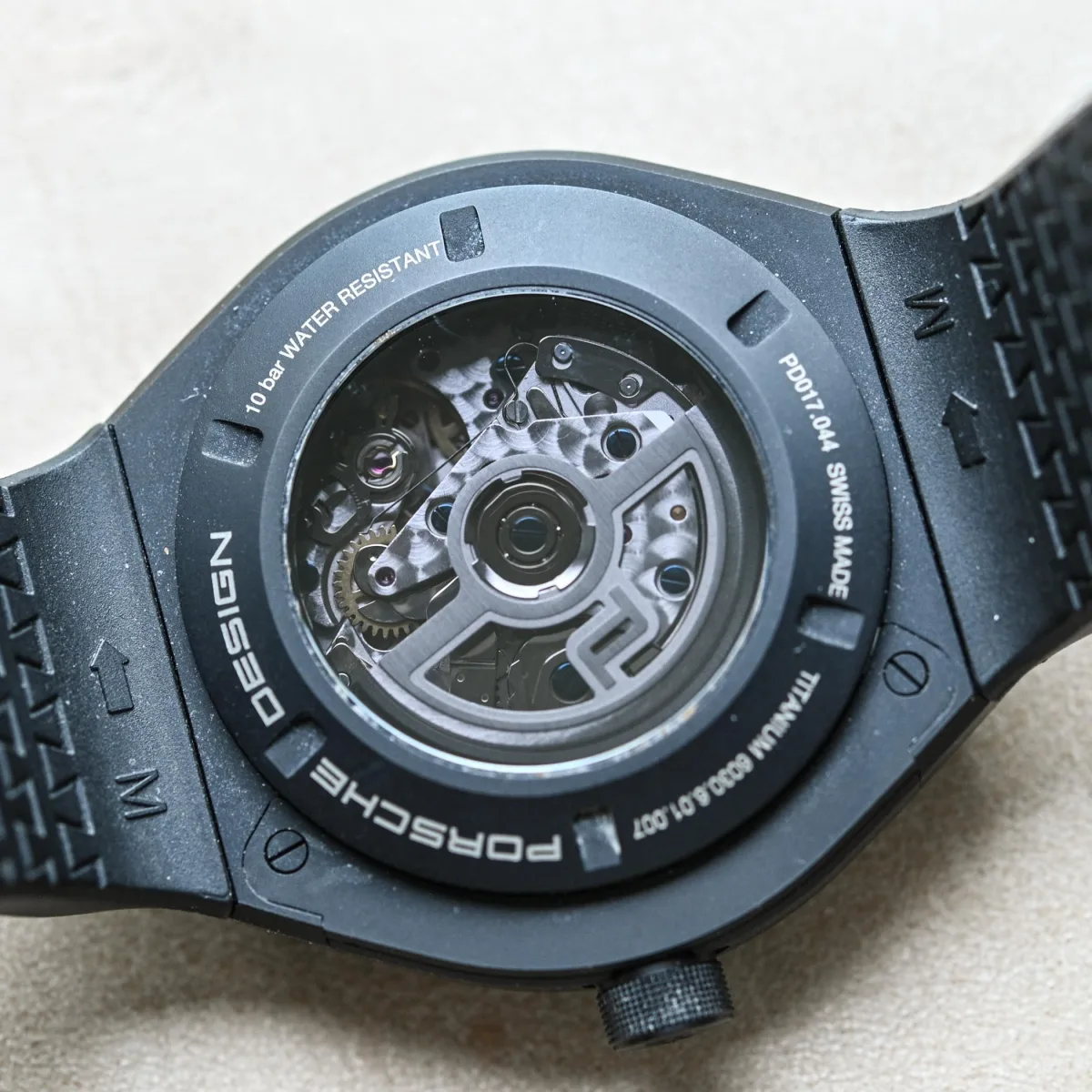
Among other updates is a power indicator instead of a running seconds indicator and a smoky sapphire glass case back instead of a solid titanium one. Since its first appearance, the Monobloc Actuator concept has been reworked into several different versions, including models with fully black PVD coating on rubber straps or titanium bracelets in the spirit of the earliest Porsche Design watches.
Credit Where It's Due
Overall, we must give credit where credit is due. Porsche Design has been and always will be an innovative design house and, as a result, an innovative watch manufacturer. True to its form, it continues a long-standing dedication to motorsport-inspired watches.
Of course, in recent years, the collection has seen more casual, less sporty watches, but at its core, there is always a connection to the car. The watches reviewed here deserve praise, especially the early ones like the Porsche Design Orfina Chronograph and the Titan Chronograph by IWC. We believe they should be viewed as milestone watches and, as such, can be considered truly collectible.