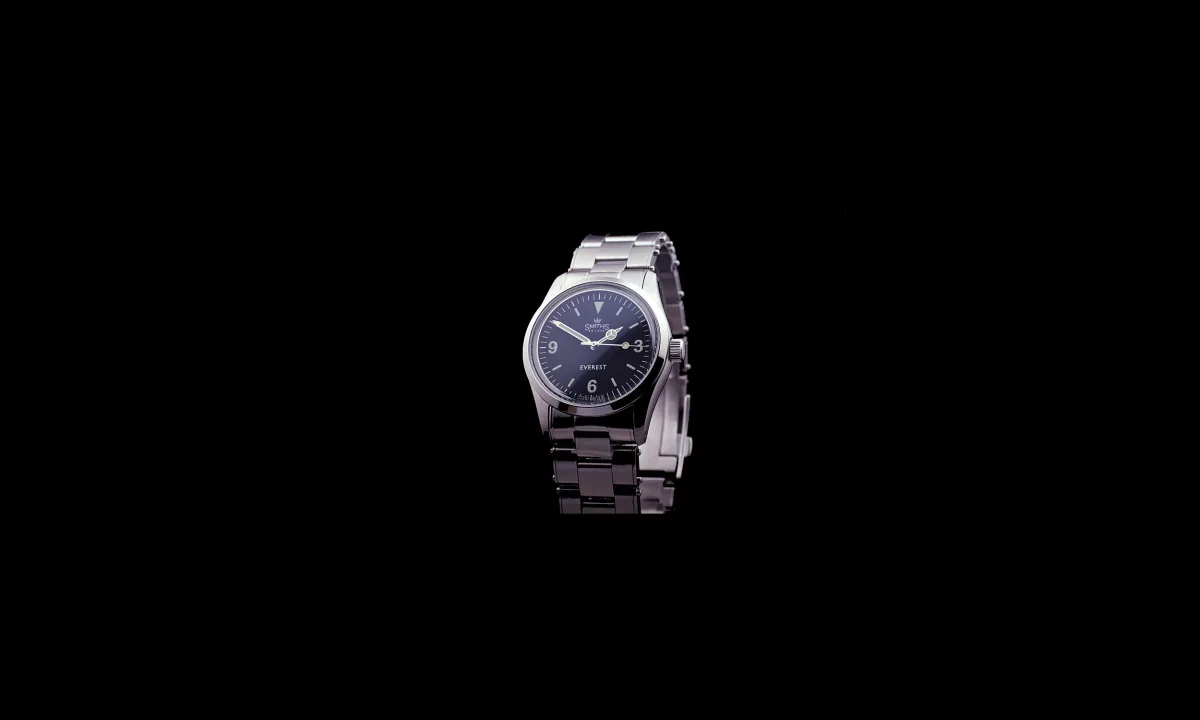
The origin of the Smiths Everest watch is a long and intricate story. Most homage watches are content with paying tribute to one watch, but the Smiths Everest pays homage twice. Many watch collectors are already familiar with the Rolex Explorer 1 model, which became famous when Sir Edmund Hillary wore it during his conquest of Mount Everest in 1953. However, Hillary was also wearing a second watch: a Smiths.
Today, few remember Smiths watches, and it's easy to see why. The Smiths company was one of the few English watch manufacturers of the 20th century, operating only from 1945 until the mid-70s. Therefore, while Rolex could continuously advertise the Explorer 1 as the watch for conquering Everest, Smiths was not around to capitalize on the nostalgia. But now everything has changed, as the company Timefactors has revived the Smiths brand.
This brings us back to the Smiths Everest; a watch released by Timefactors under the Smiths brand, but one that looks and feels reminiscent of the Rolex Explorer 1. However, there are several important differences that I will highlight. By the way, I have already talked about the Explorer 1 and 2 of this year if you want to learn more about the watches that inspire the Smiths Everest. Let's get started!
Case and Crystal
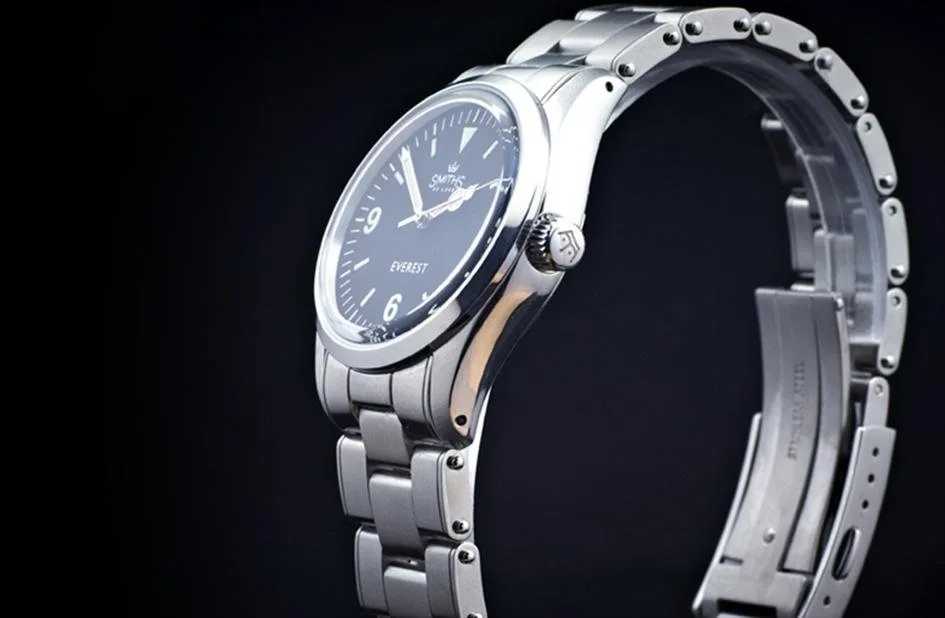
The first significant difference between the Everest and the Explorer 1 is the size. The Explorer's case diameter is 36mm, which corresponds to the standard Oyster case design. In contrast, the Smiths Everest is relatively large, with a diameter of 40mm and 22mm lugs. The case material is stainless steel, providing the durability and weather resistance you expect from a mountaineer's watch. The bezel is wide and polished, with curved, slightly matte lugs. One thing Smiths does very well is copying the Oyster-style case profile. If you were to enlarge a Rolex to the same size, the profile would be identical.
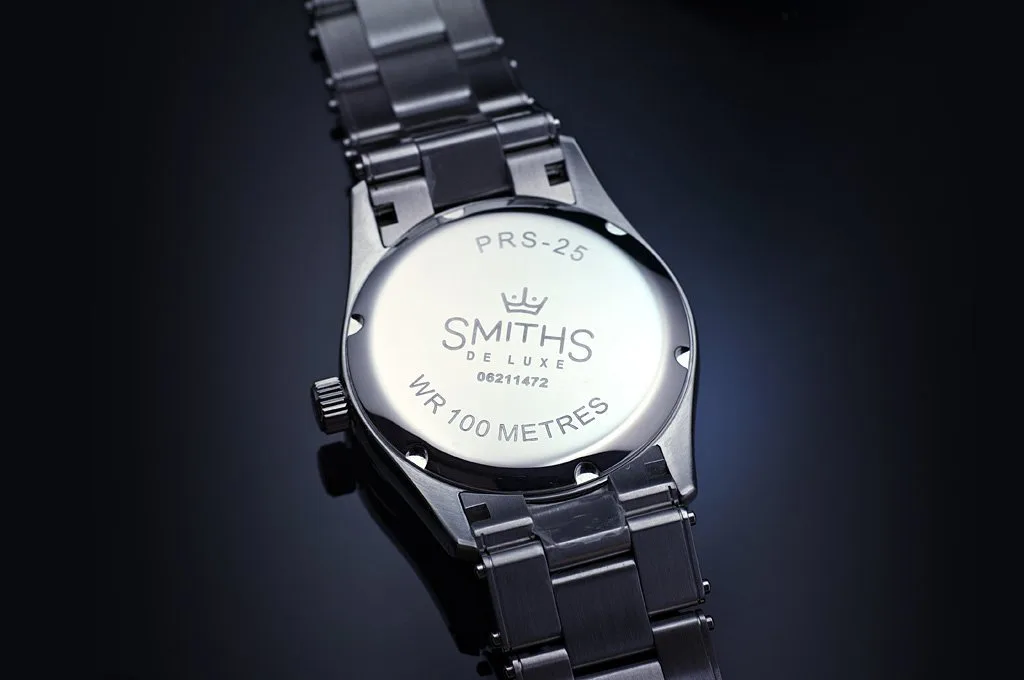
The screw-down crown is located at the 3 o'clock position and features a fluted design, making it easy to operate. The case back is made of stainless steel, without a display, and has a relatively bare appearance. All you will see is the basic information, such as water resistance, reference number, and the Smiths logo. But, again, this is exactly how the Rolex Explorer's back looks, only without the text, so this detail is accurate. Not only that, but the case back has a screw-down design for easy servicing. The water resistance is 100 meters, so you can take this watch swimming without any serious concerns.
The second significant difference between the Everest and the Explorer 1 is the glass. The Explorer has a scratch-resistant sapphire glass. In contrast, the Everest uses a domed acrylic glass. This is an interesting design choice, as it slightly distorts the dial at the edges or when viewed at an angle. While this detail differs from others, it's a quite explainable choice, as it gives the watch a retro appeal.
Miyota 9015 Movement
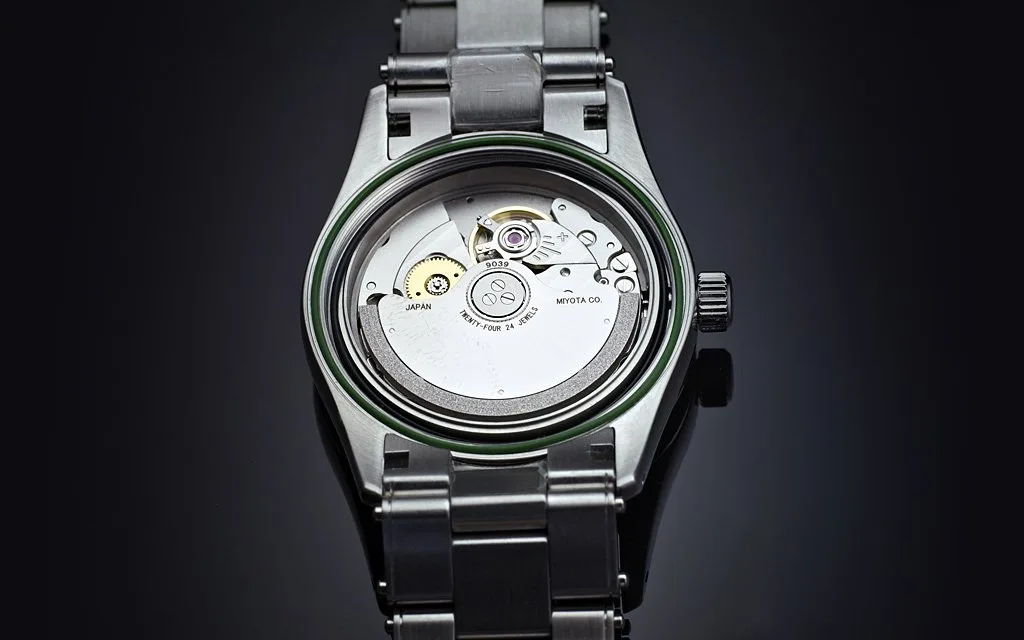
The Smiths Everest watch is not only distinguished by its exterior design. It is also well constructed inside, featuring an automatic Miyota 9015 movement. This movement has a frequency of 28,800 Hz, 24 jewels, and an accuracy of -10 to +30 seconds per day. It also features manual winding, a hacking second hand, and even a date function, although the Everest model does not have a date window. The Explorer 1 uses a Rolex movement, as expected.
Iconic Dial
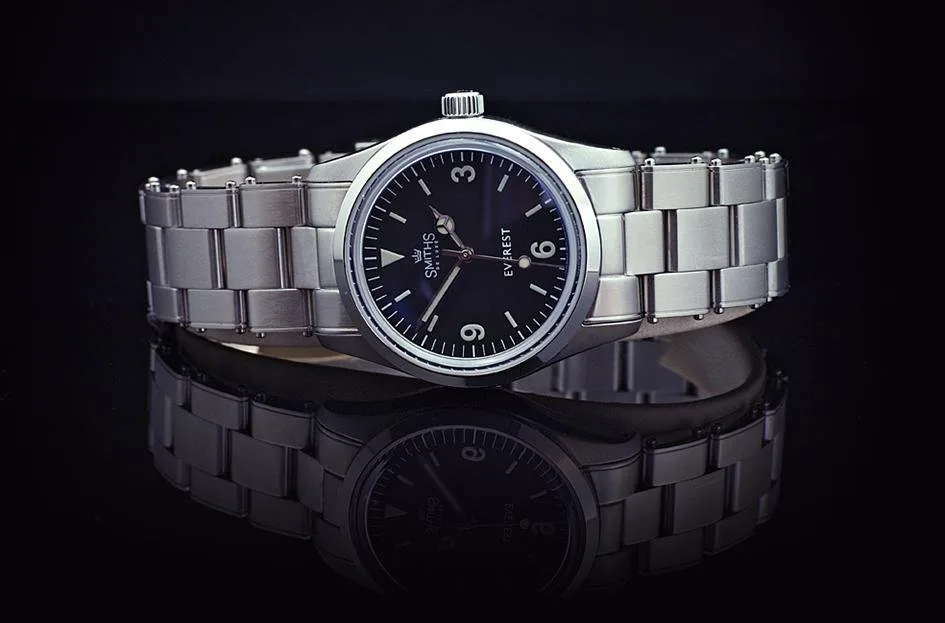
When viewed at a 90-degree angle, the dial of the Smith Everest watch is almost identical to the Rolex Explorer 1. It is designed in a minimalist style, intended to make time reading easy at a glance. The background is a flat black, without any additional sub-dials, windows, or other complications. There are also few decorations; the only non-functional detail is the Smiths logo at the 12 o'clock position, which is also the only distinction of these watches from Rolex.
There is a small outer index, with thin hashes to indicate individual minutes. Inside this, larger luminescent indexes mark the 5-minute positions. At the 12 o'clock position, there is a large triangle, and at the 3, 6, and 9 o'clock positions, there are Arabic numerals. The remaining positions are marked with bold bars.
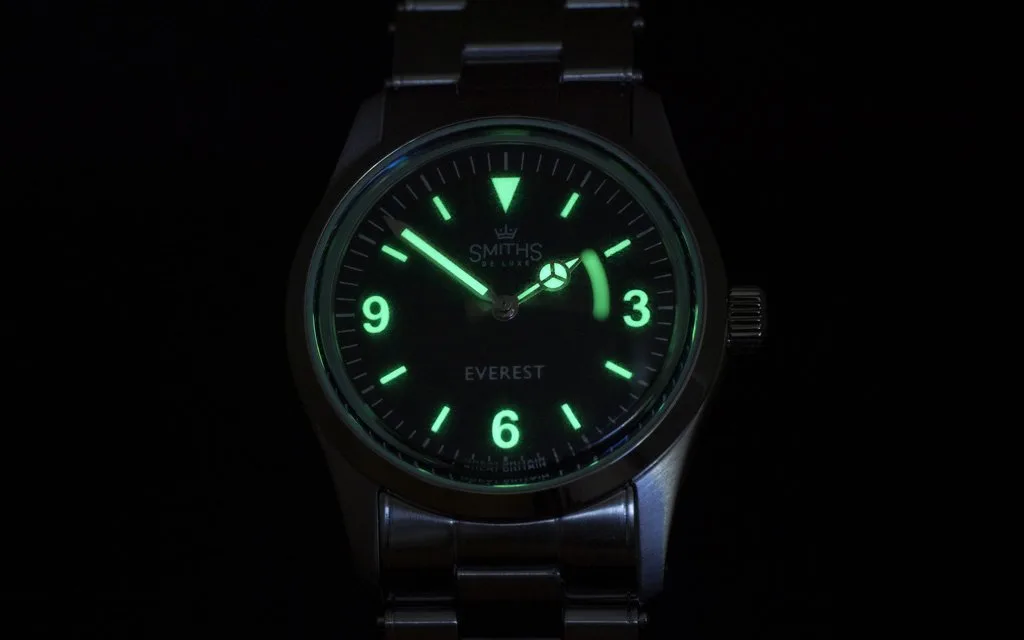
The hour hand is wide and short, with a pointed tip and a circular area in the center with the characteristic "peace sign" pattern. It is identical to the hour hand on the Explorer 1, which is a nice touch. The minute and second hands are also made the same way: a thin minute hand and a thin second hand. The hour and minute hands have luminescent coating along their entire length, while the second hand is more modest. The only lume on this hand is on a small circle in the middle of its length.
Conclusion
Of course, the Smiths Everest is nowhere near the build quality of the Rolex Explorer 1, but they have done a fantastic job of creating a watch that mimics what we all love about the Explorer 1, on a more affordable scale. It's not only an affordable version of the Explorer 1, but it also has some unique quirks, like the domed retro crystal.