If you are new to the vintage watch game, you will likely start by exploring Swiss and Japanese watches. This is quite logical: we are constantly reminded that these two horological giants have played a significant role in shaping the world of watches. From subtle reminders of historical brand achievements (did you know the Omega Speedmaster was the first watch on the Moon?) to the seemingly endless flow of vintage reissues - the Swiss and Japanese have done a tremendous job of celebrating their history as a core part of their brand identity. So, it is no surprise that many watch enthusiasts looking to dive into the sea of vintage watches immediately gravitate toward brands with a rich and well-documented heritage, such as Rolex, Omega, and Seiko.... and then, realizing how high the prices are for these vintage pieces, quickly retreat, understanding that the vintage watch market is fraught with dangers (fakes, reissues, Frankenwatches, etc.).
For those brave souls willing to venture out a bit, the next stop in the search for vintage watches may be small Swiss brands or one of the many now-defunct brands wiped out by the quartz crisis, which produced wonderful watches with parts and movements often supplied from the same factories as the big companies. Delve a little further, and you'll find the eddies and whirlpools where collector subcultures gather. Of course, there are German and British watch collectors, but there are also subcultures dedicated to particular eras in watchmaking history, such as the 'Dirty Dozen' watches worn by British troops, Vietnam War era Seikos, or East German watches before Glashütte was wiped off the map.
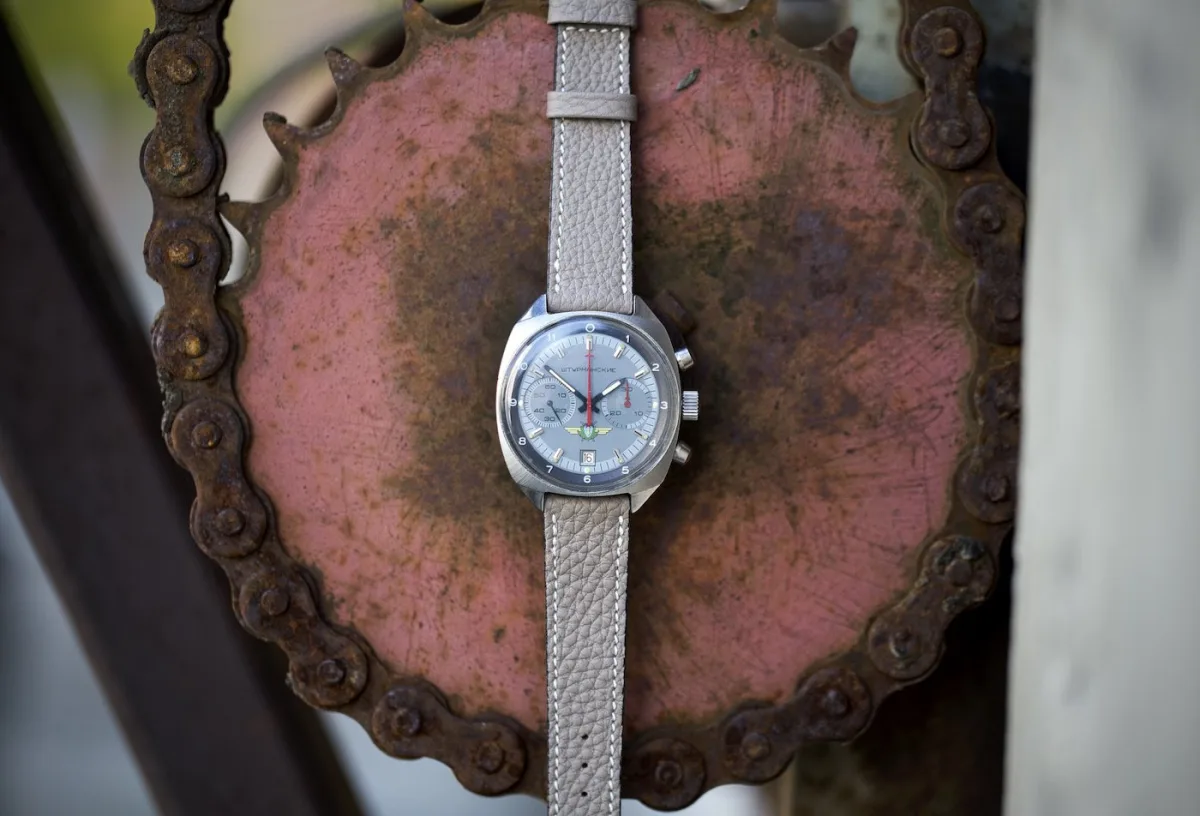
A Shturmanskie chronograph with caliber 3133 movement. These watches were made for professional aviation use in the 1980s.
It may take some time, but eventually, you will inevitably arrive at the wild and wonderful world of Soviet watches. But be prepared, the history of Soviet watchmaking and the watches produced during this period (from the early 1930s and up until the collapse of the Soviet Union) are so entirely different and unfamiliar that you should not enter them unprepared. Fortunately, we have three of the best minds in the Soviet watch collector community to accompany us on our journey:
Blaz Slamic - a Slovenian self-taught watchmaker and electromechanical engineer who has been obsessed with Soviet watches for the last decade. This obsession quickly turned into madness, and Blaz focused on finding and collecting rare Soviet watches, with a particular emphasis on rare and unique movements.
Yuri Kravtsov blames Blaz for his addiction to Soviet watches after years of collecting a vast array of vintage watches from Rolex to GUB and Grand Seiko. Yuri lives in the heart of vintage Soviet watch collecting (Moscow), and he is passionately interested in both watches and the history of Soviet watchmaking.
Andrey Babanin - a renowned Russian watchmaker working in Moscow. His collection of Soviet and non-Soviet watches is extensive (to say the least) and ranges from intricate early pocket watches to Soviet LED 'Elektronika' watches. Andrey writes extensively about Soviet watches, and you can find his articles here.
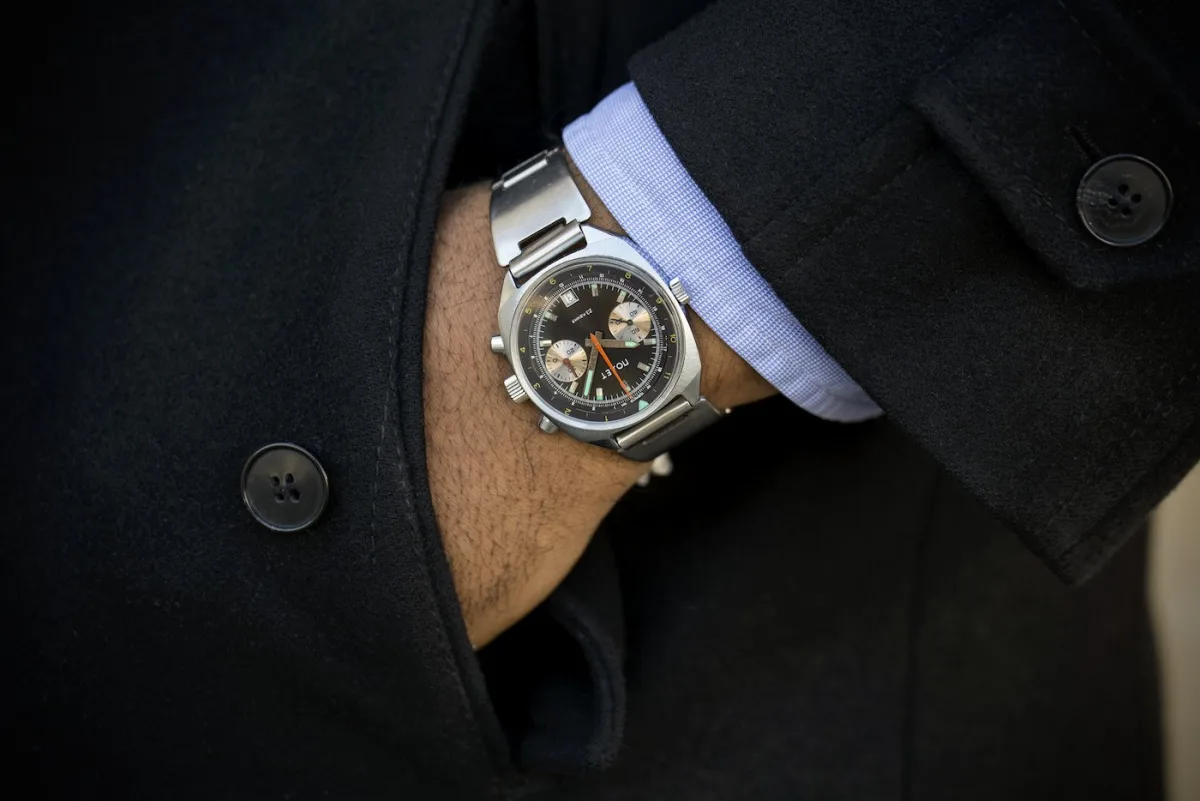
Poljot chronograph with a black dial and manual winding 3133 movement.
If you imagine the early period of Swiss watchmaking, and an image comes to mind of fair-haired craftsmen working at aged oak tables, making watch parts with special hand tools passed from master to apprentice, you’re not wrong. Early Soviet watchmaking? Not so much. Of course, the history of Soviet watchmaking is not as romantic, but it is no less intriguing.
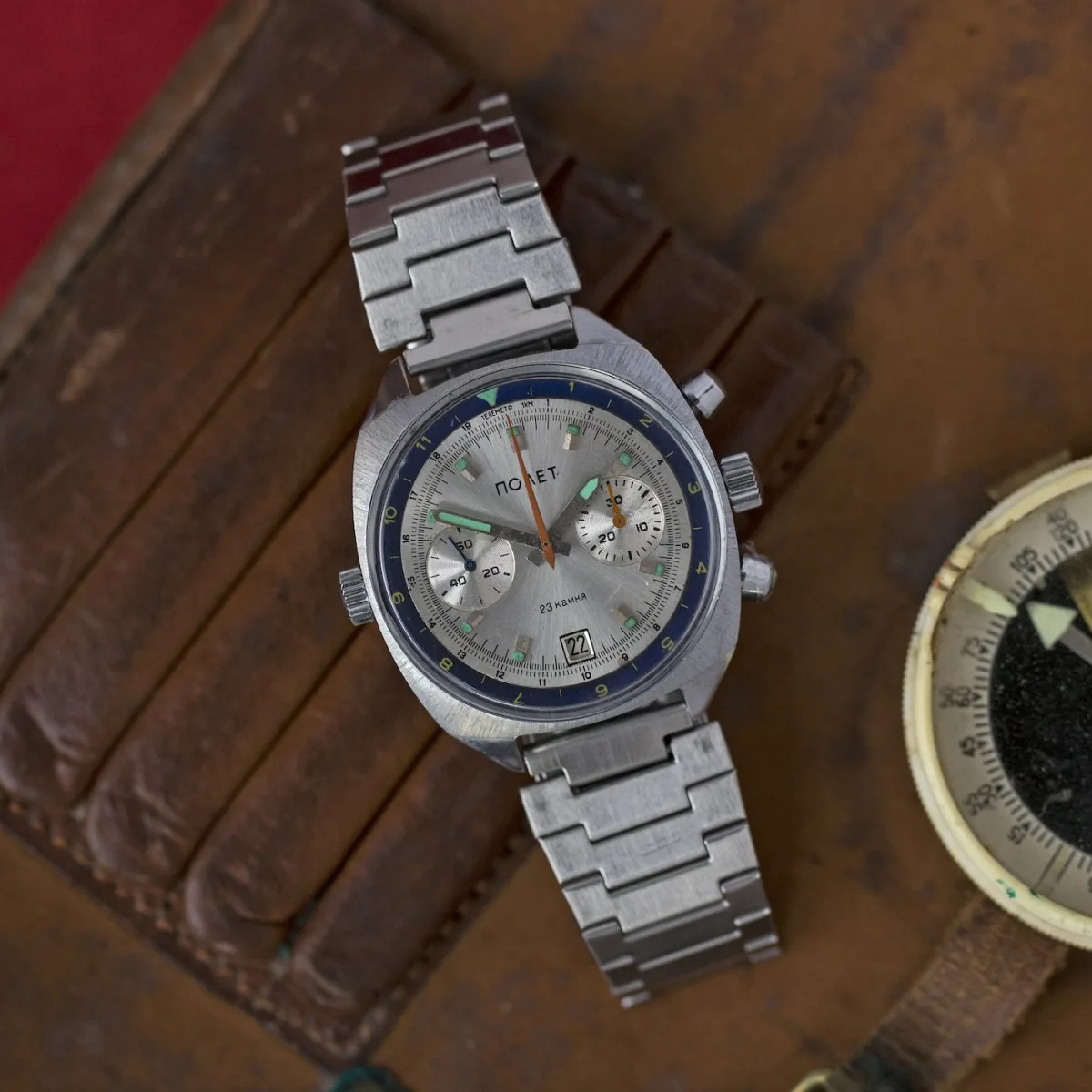
A beautiful early 3133 chronograph with a Cyrillic dial.
As we learn while examining the Kirova Type 1 model, Soviet watchmaking only emerged in the 1930s - with the help of America. The following decades were an astonishing combination of innovation, perseverance, and outright plundering of everything from movement designs to entire factories. If you’re looking for intrigue and thrilling stories, you’ll find them in the history of Soviet watches.
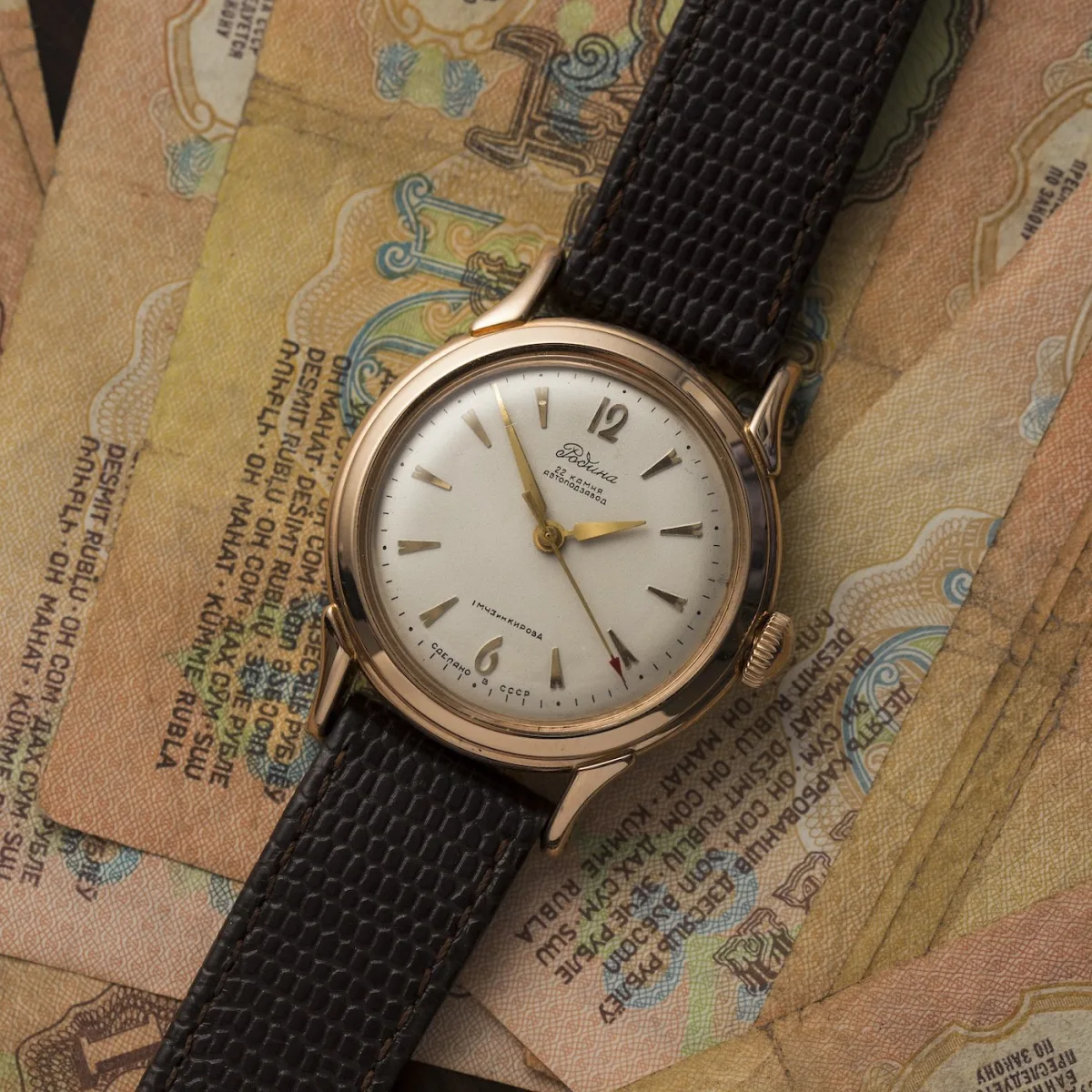
'Rodina' - the first Soviet automatic watch. This is a rare version with a gold case.
It's important to remember that, like all production in the Soviet Union, watchmaking was state-owned and centralized. Watches were made specifically for civilians, professionals, or the military. This is a fundamental difference from watchmaking in countries like Switzerland. Of course, many watches were made as instruments, often under contracts with militaries and governments worldwide, but watches were mainly produced for sale in the open market, which allowed significantly more freedom in design, complications, and, ultimately, innovation. However, don't be misled - Soviet watches were not devoid of creativity and uniqueness - just take a look at some of our models featured below!
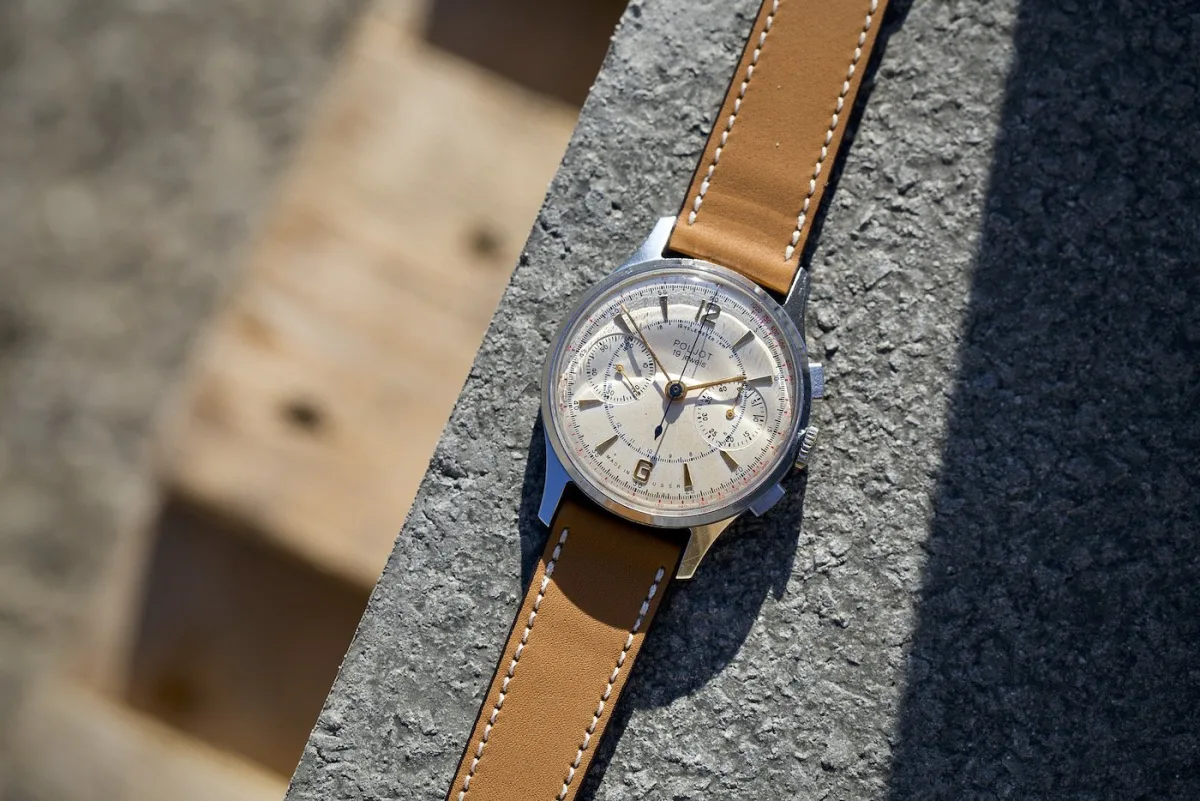
The 'Telemeter' chronograph with a Poljot caliber 3017 movement of the second generation.
We cannot hope to convey the full depth and breadth of Soviet watchmaking in one article (or book), but we hope to introduce you to a few interesting vintage Soviet watches to start you on the right path. This is merely an overview of the wide range of watches you can find when venturing into the world of vintage Soviet watches, and one thing you will undoubtedly notice is the reasonable prices compared to their Swiss and Japanese counterparts. So, without further ado, let's get to the watches themselves.
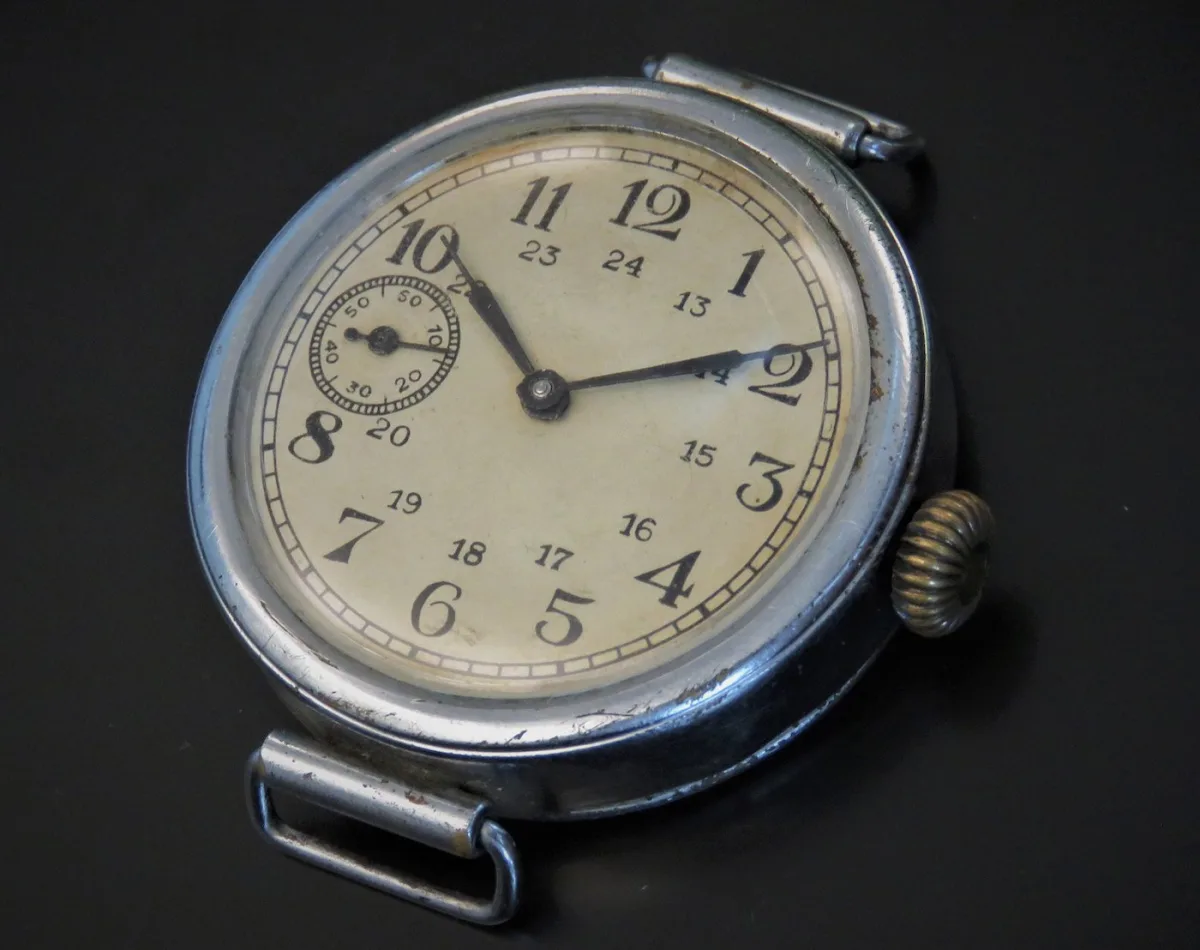
Kirova Type 1
If you have decided to get into Soviet watches, why not start at the very beginning of Soviet watchmaking? The Kirova Type 1 was the first watch entirely made in the Soviet Union, with early models coming off the factory floors in the 1930s. In the 1920s, Soviet watch production was practically nonexistent, so instead of starting from scratch, the Soviet Union acquired the entire Hampden factory and moved it from Canton, Ohio, to Moscow. The Soviet Union acquired not only the machines but everything else - from spare parts to expertise - along with the machines, Hampden workers were sent to Moscow to train Soviet workers in watchmaking for a year.
The Kirova Type 1 watches (the Type 1 name was given to the watches because they represented the first true Soviet caliber) were produced in both pocket and wristwatch versions, in various styles depending on the application. However, what unites the 'Type 1' watches is their movement - a Soviet reproduction of the 16-size 'McKinley' caliber by Hampden. In fact, in the first few years of production, many of these watches still contained spare parts that arrived by ship along with the factory (note the American markings on these early movements). However, as with many other cases involving Soviet watches, tracking down the provenance of particular Kirova Type 1 watches can be tricky.
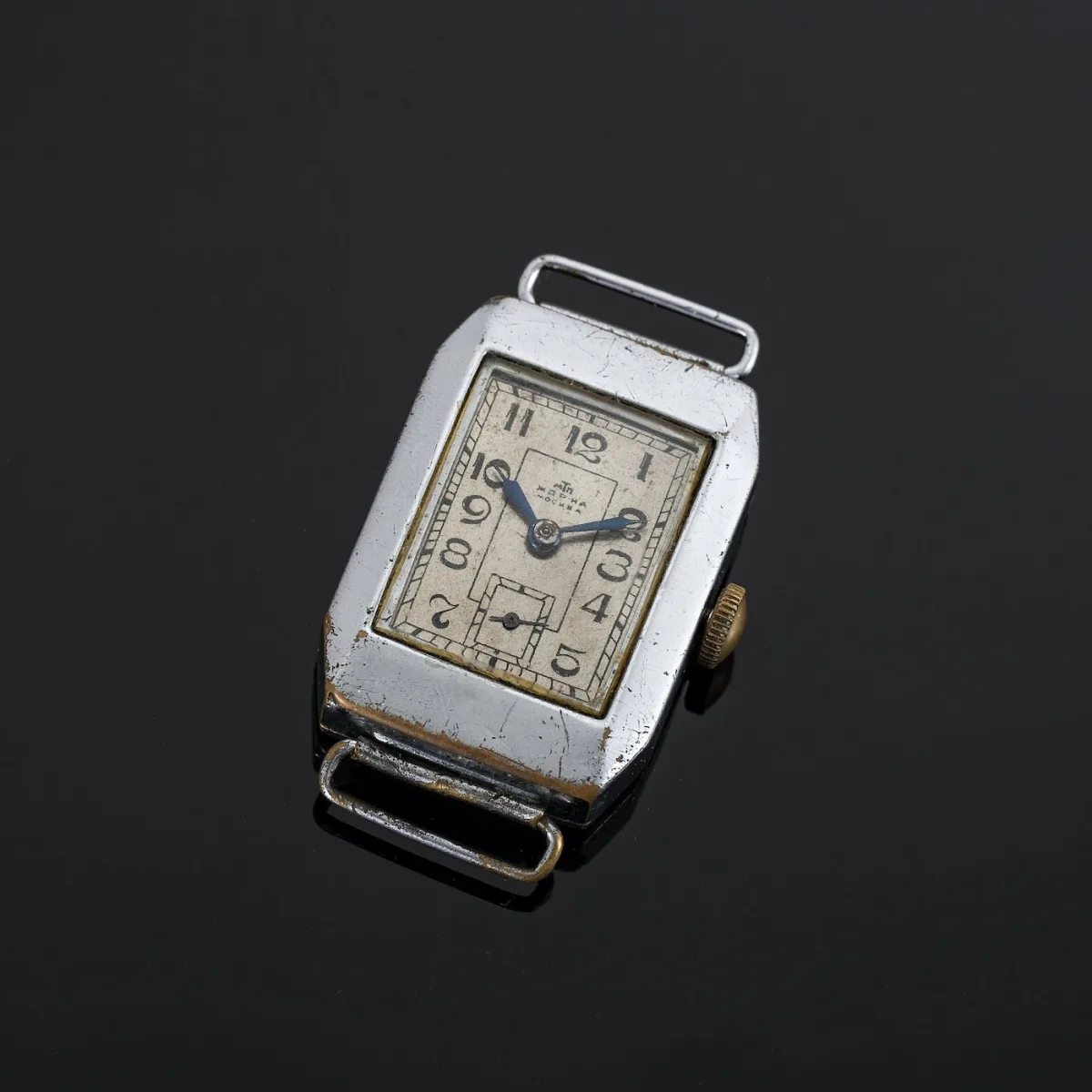
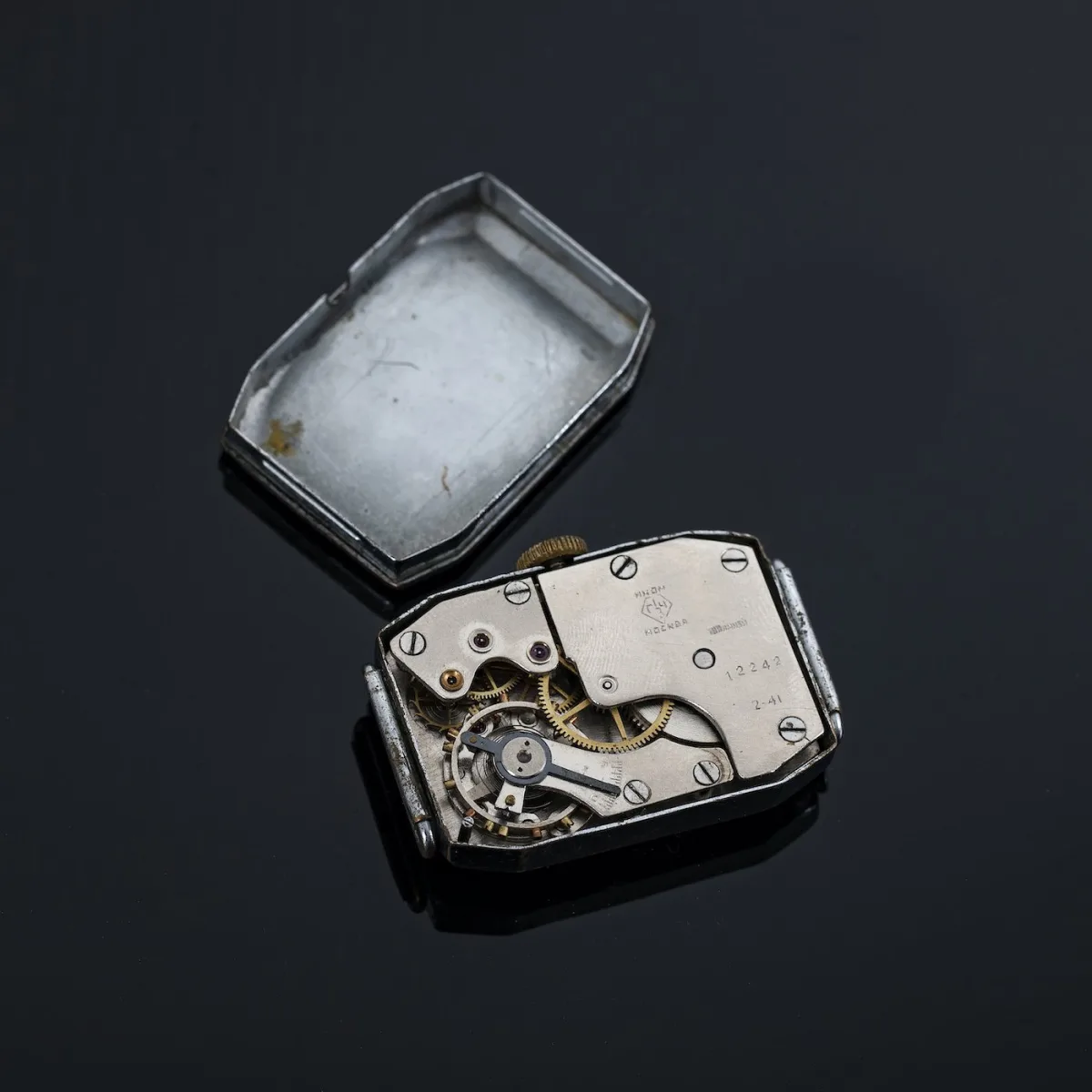
The Kirova Type-17 watches were the first truly Soviet watches with an entirely Soviet movement designed and manufactured in the USSR. Very few were produced, and unfortunately, finding examples in good condition today is almost impossible.
While the first 'Type 1' watches rolled off the assembly line at the initial facility in Moscow, or the First Moscow Watch Factory (also known as 1GChZ, 1MChZ, Kirova, and eventually Poljot), the demand proved too great for one factory, and in the late 1930s, the Second Moscow Watch Factory (2MChZ, now known as Slava) began producing wrist and pocket watches. However, the Moscow factory did not last long, as the bombing of Moscow during World War II forced the relocation of both factories... then the story gets complicated, with production moving to different cities and locations in the Soviet Union, and two more factories began producing Type 1 watches - ChChZ (Chistopol Factory, now known as Vostok) and ZChZ (Zlatoust Factory).
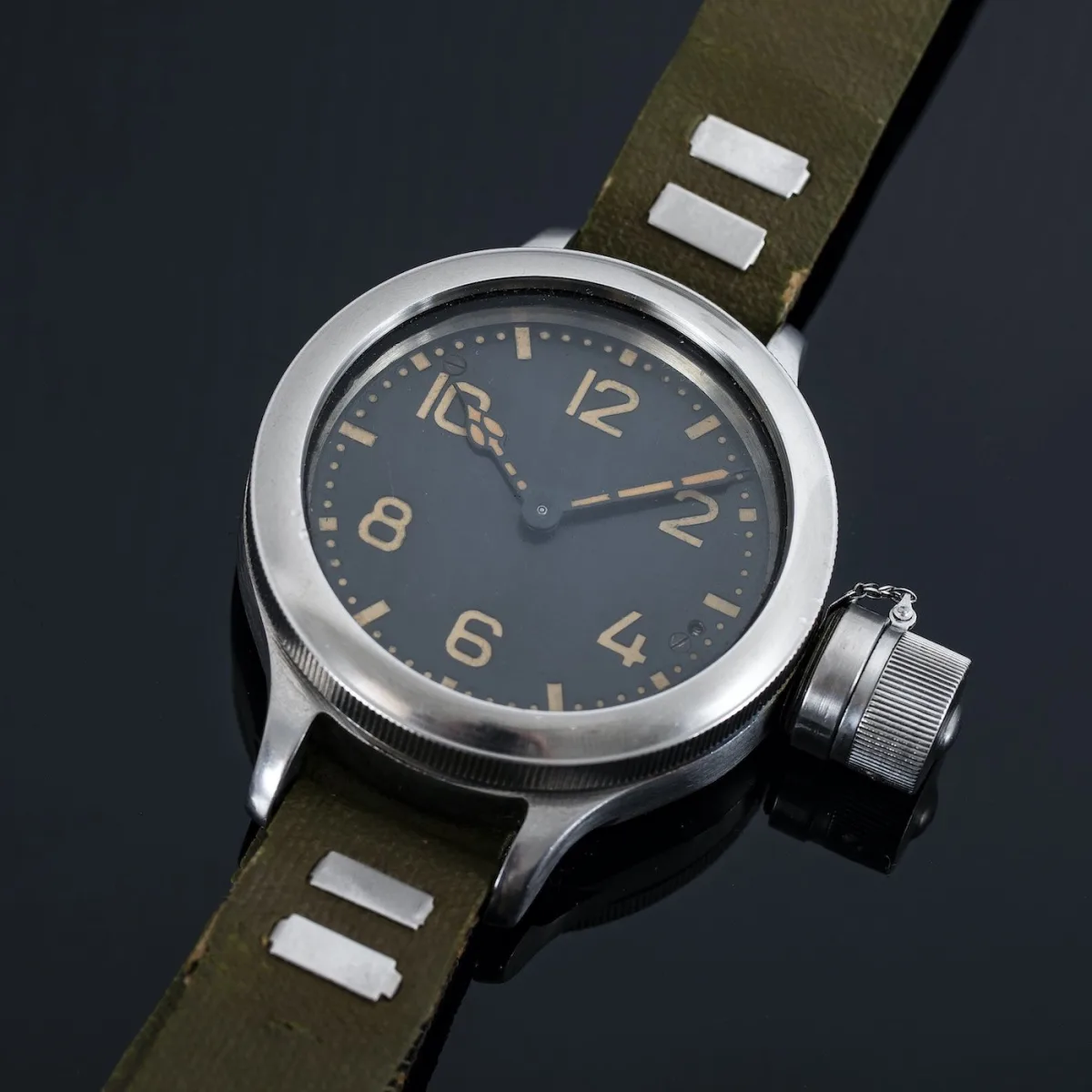
The Zlatoust diver 'Diver' Type 1 was made for divers and can withstand extreme water pressure. Its large size (diameter ~60 mm) may not suit everyone.
Despite such a turbulent history, Type 1 watches were continuously produced until the 1960s, with Zlatoust being the last of the factories to continue producing Type 1 watches for the military. With a vast variety of styles and types - from field to diver watches - Type 1 watches remain unified by their history and movement. If you are looking for a place to start your search and are interested in military watches, be sure to check out the Paratrooper model with a black dial. Paratroopers are housed in a characteristic two-piece 'pan' case (the bottom resembles a cheap frying pan), massive numbers and hands are coated with radium lume, and on the dial, you will find a stamped or simply painted military inventory number (though some examples have none at all).
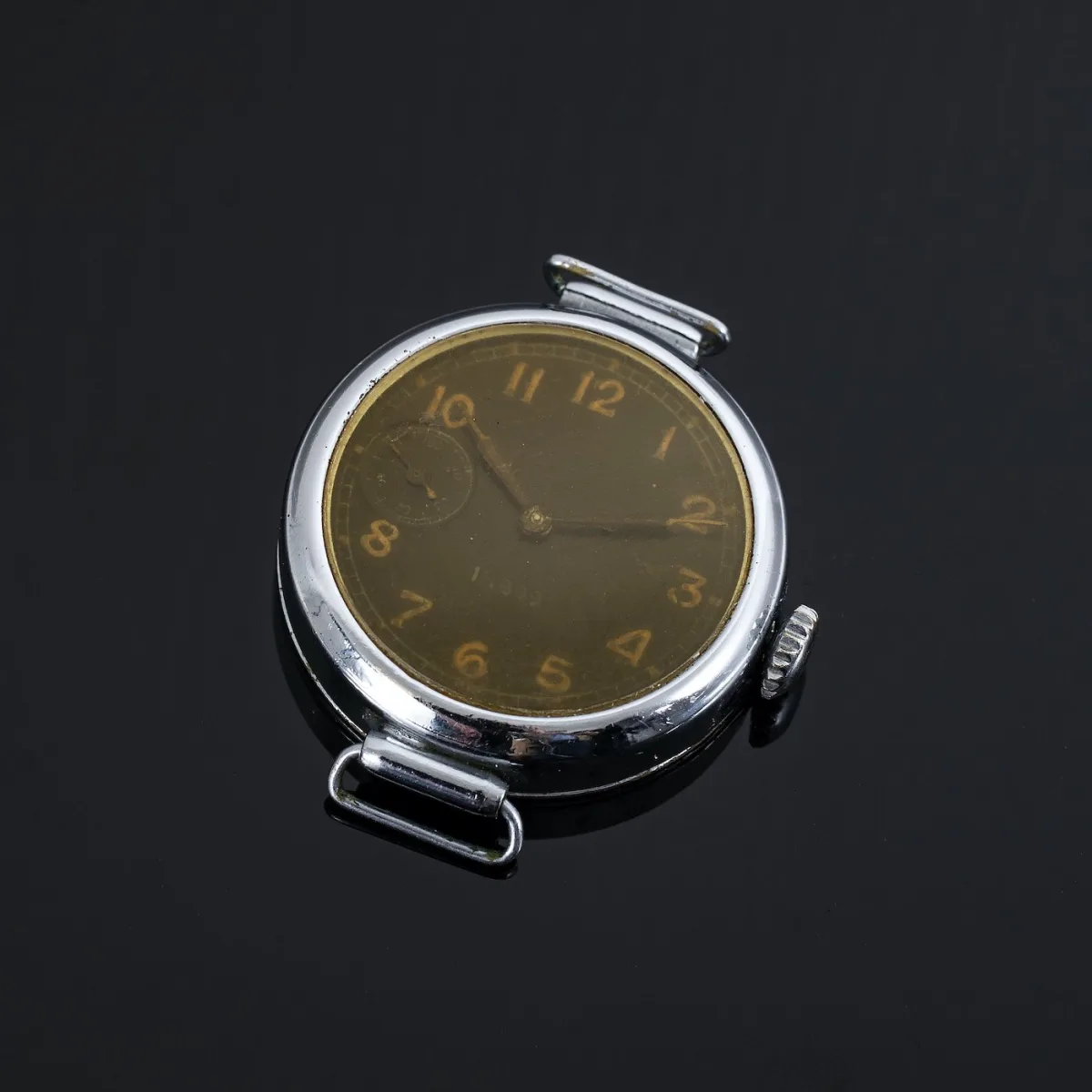
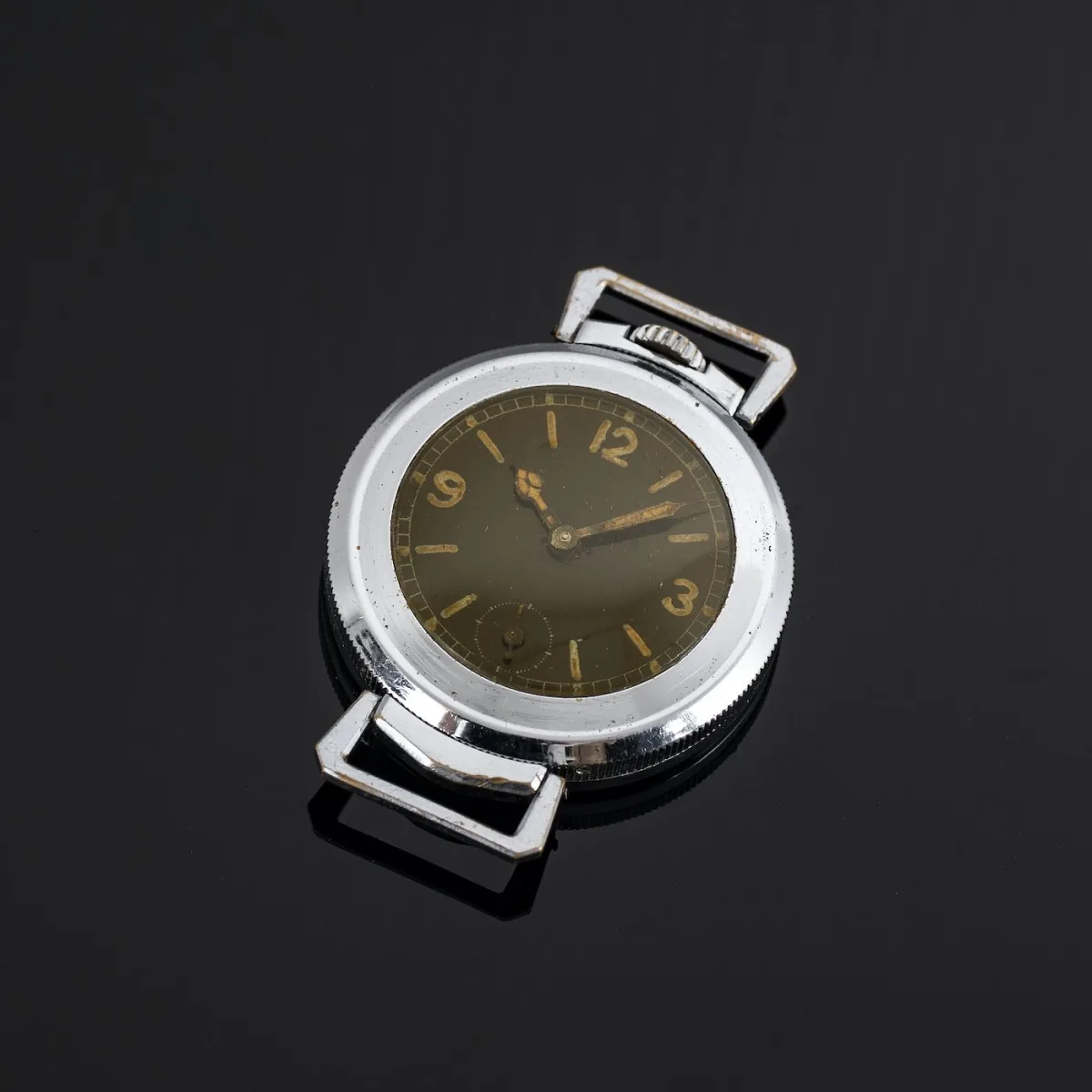
A super rare Type 1 watch with a black luminous dial in a special case. Only a few examples of these watches are known.
The movements of 'Paratrooper' watches typically have no inscriptions or engravings, but be sure to look for the brass color of the upper balance bridge, indicating that they were made at the 2MChZ or ChChZ factory. Watch out for redials - an original 'Paratrooper' dial will be in rough shape, and it will definitely not have any logos, death heads, red stars, only a faded white military inventory number, handwritten. Depending on the quality, Paratroopers can be found for around USD 300.
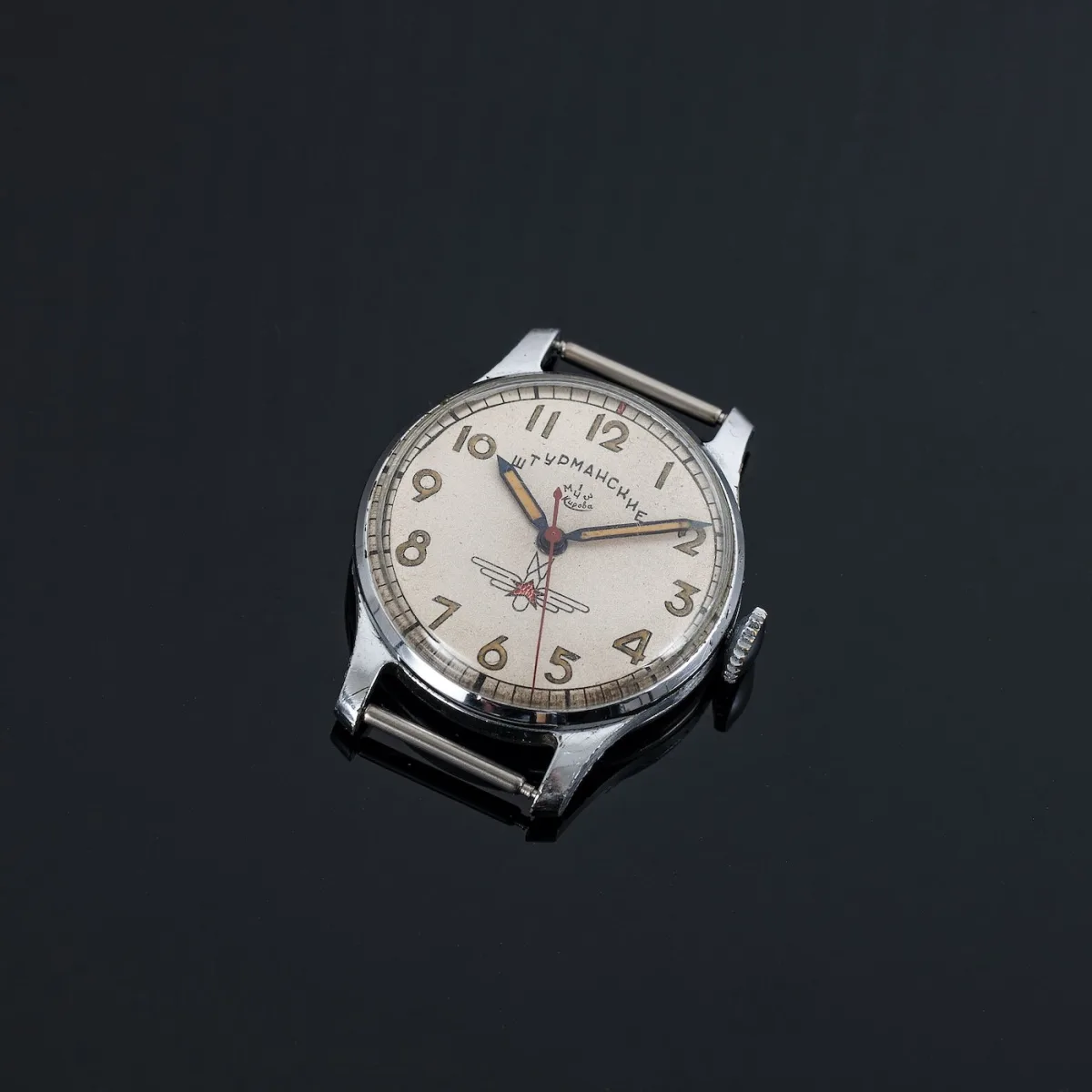
First and Second Generation Shturmanskie
The Kirova Type 1 watches began the Soviet watch industry, but post-World War II, it was time for innovation. After all, the Kirova Type 1 watches were based on a movement originally designed in the 1800s. By that time, Europeans and Japanese had developed movements that surpassed the 'Type 1' in accuracy and durability. Fortunately, the Soviet Union was prepared - before the war, the Soviet Union, in partnership with the French watchmaking giant LIP, built a new watch factory in the city of Penza. After successfully completing work on the T-18 caliber ('Zvezda', translation: 'Star'), the Soviet LIP team set to work creating a new modern movement codenamed 'Pobeda'. The result of the collaboration was a sub-second manual winding movement with 15 jewels, perfectly suited for wristwatches of the era.
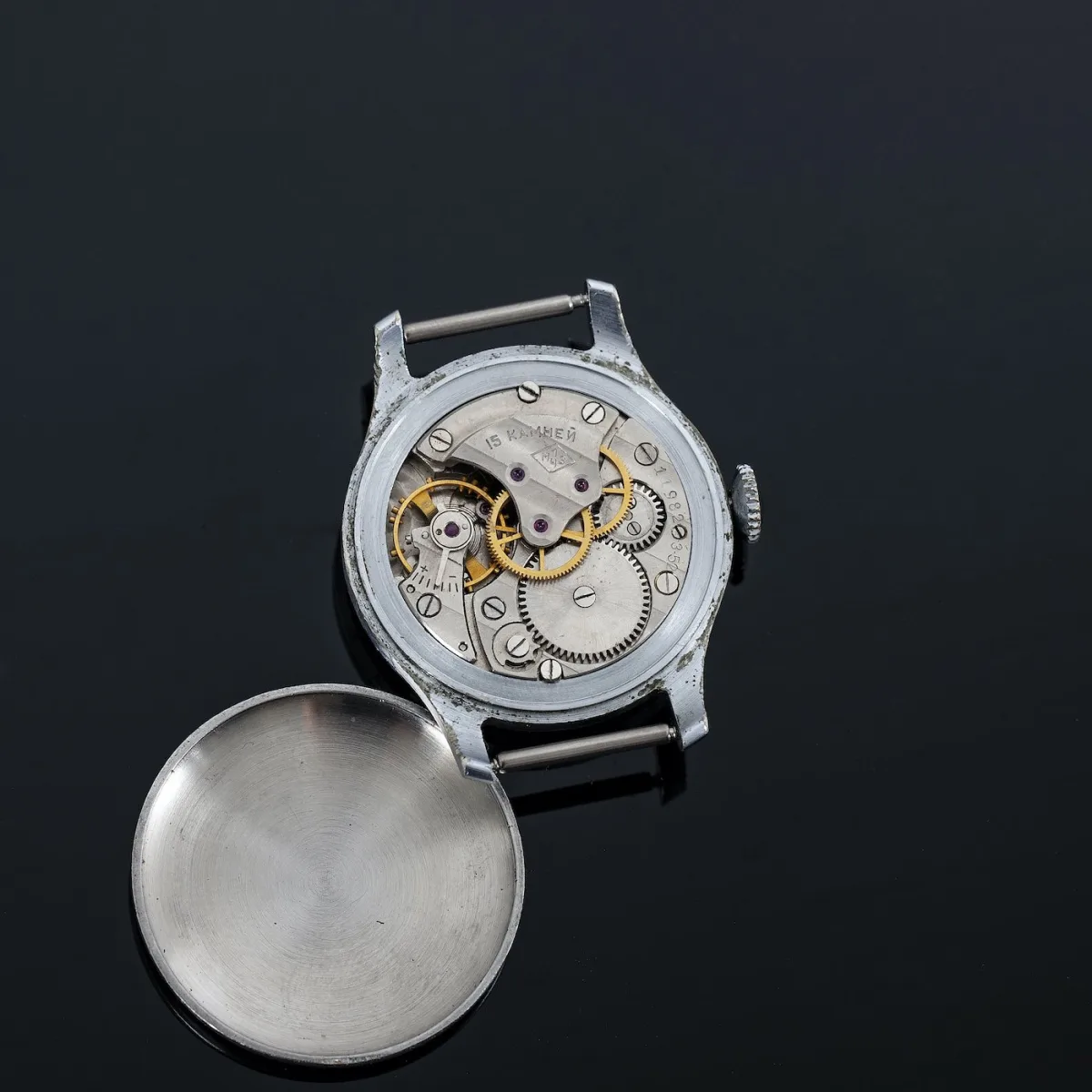
First generation Shturmanskie with a characteristic 'pillow' crown and non-water-resistant case. These watches, with a rich history and great design, are among the most beautiful Soviet watches that can still be acquired at a reasonable price (though you'll have to search hard).
Production of the 'Pobeda' caliber began in Penza in 1945, but due to demand, production was transferred to the First Moscow Factory (1MChZ) in 1946 (and later to other factories) to improve the caliber for the needs of service personnel, especially pilots. Until this point, the USSR lacked sufficiently accurate and reliable watches for pilots - hence the name 'Shturmanskie' (translation: navigator or pilot). A few years later, in 1949, the first 'Shturmanskie' watches rolled off the assembly line, equipped with a direct-drive center seconds hand, hacking function, and accuracy meeting military standards. Nevertheless, the Soviet Union was already asserting itself and was making constant strides in horological improvements.
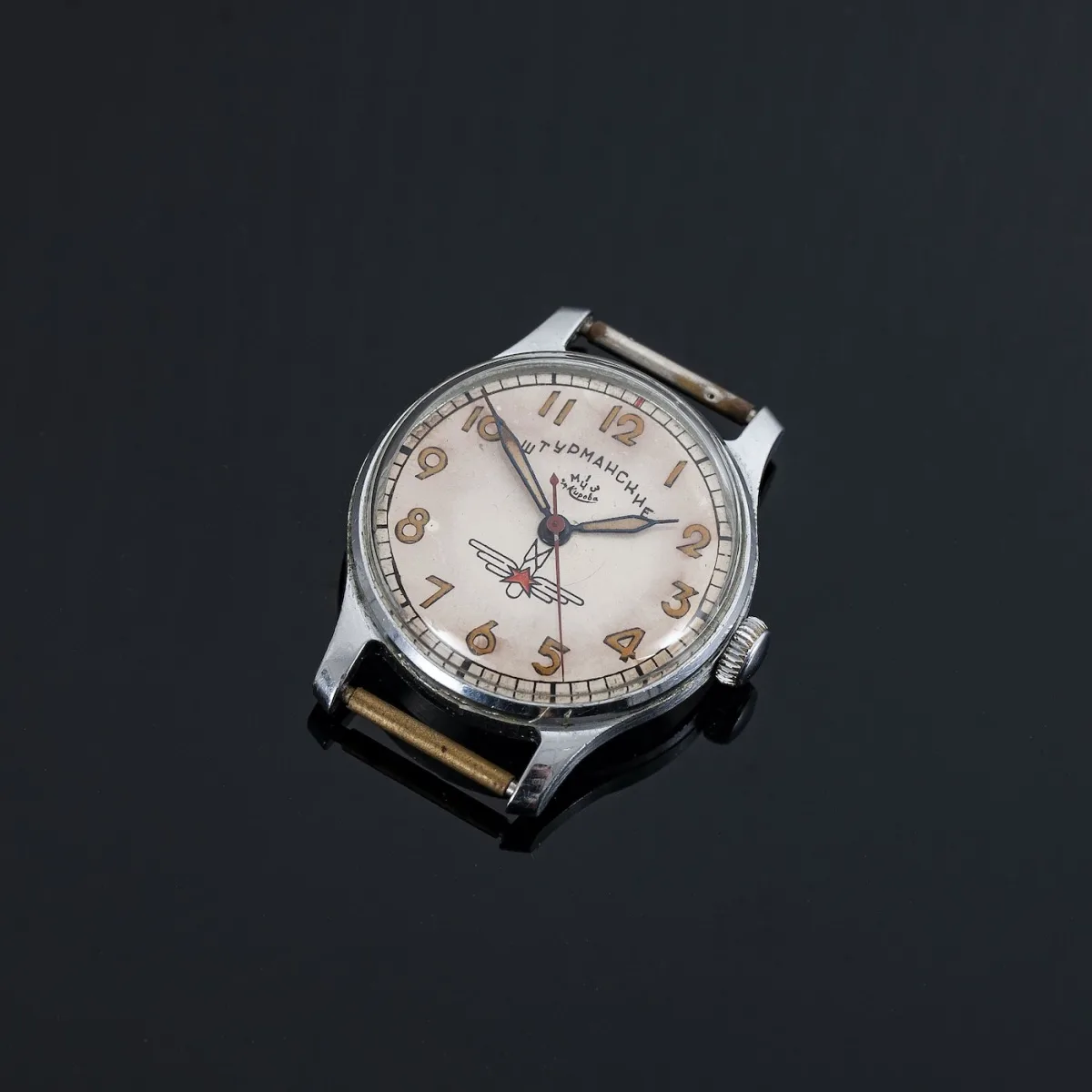
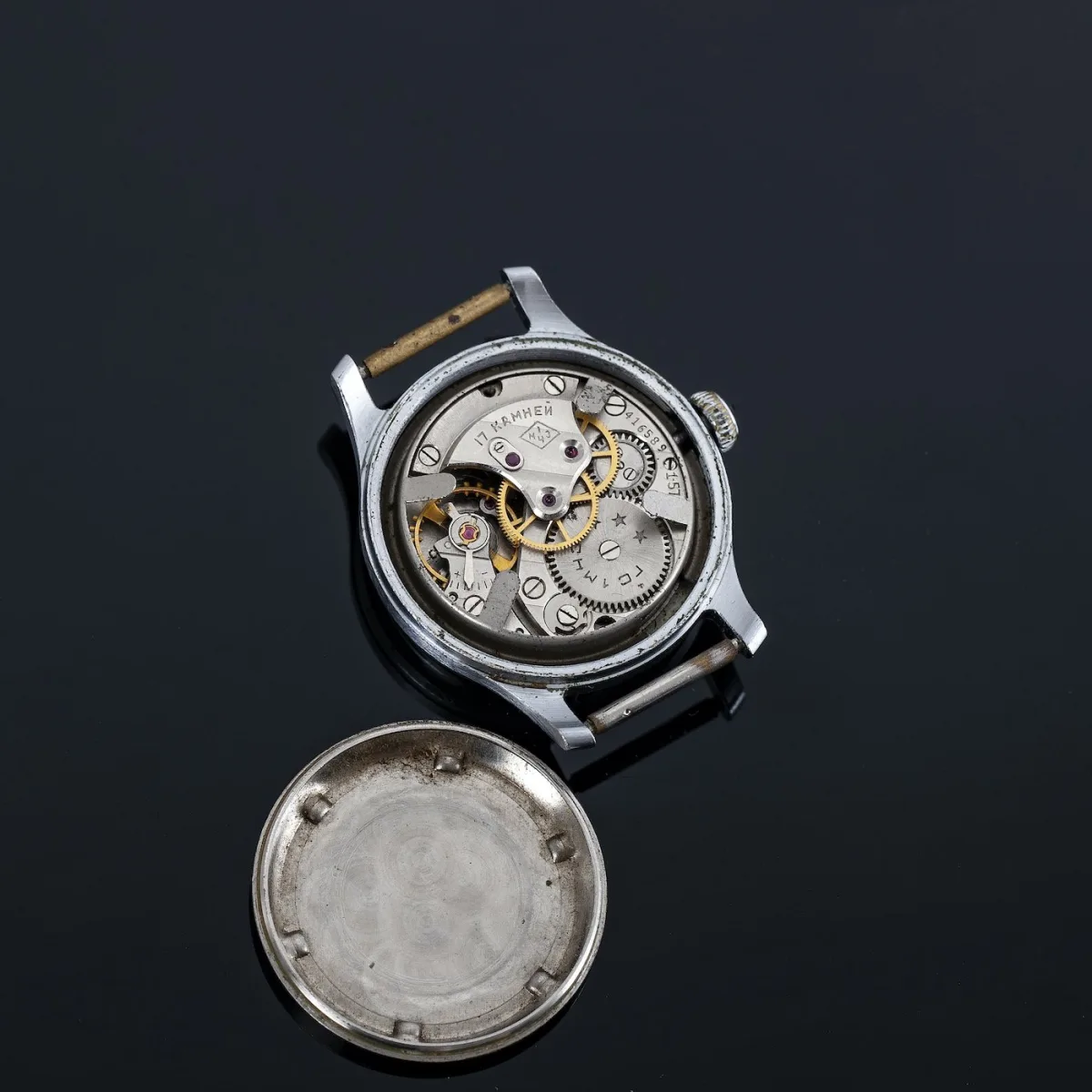
The second generation 'Shturmanskie' - the rarer of the two versions and the true Gagarin watch.
Over the years, the 'Shturmanskie' underwent several different improvements, the most significant of which occurred in 1954 when a new line of 'Shturmanskie' watches was launched. In collector circles, this year is considered the birth year of the second generation 'Shturmanskie' - they included 17 jewels, a shock protection system, a new water- and dust-resistant case (including a screw-down case back), and lost the crown pillow of the first generation. Despite being small by today's standards, the watches were typical of the era with 33mm cases and 16mm lug width.
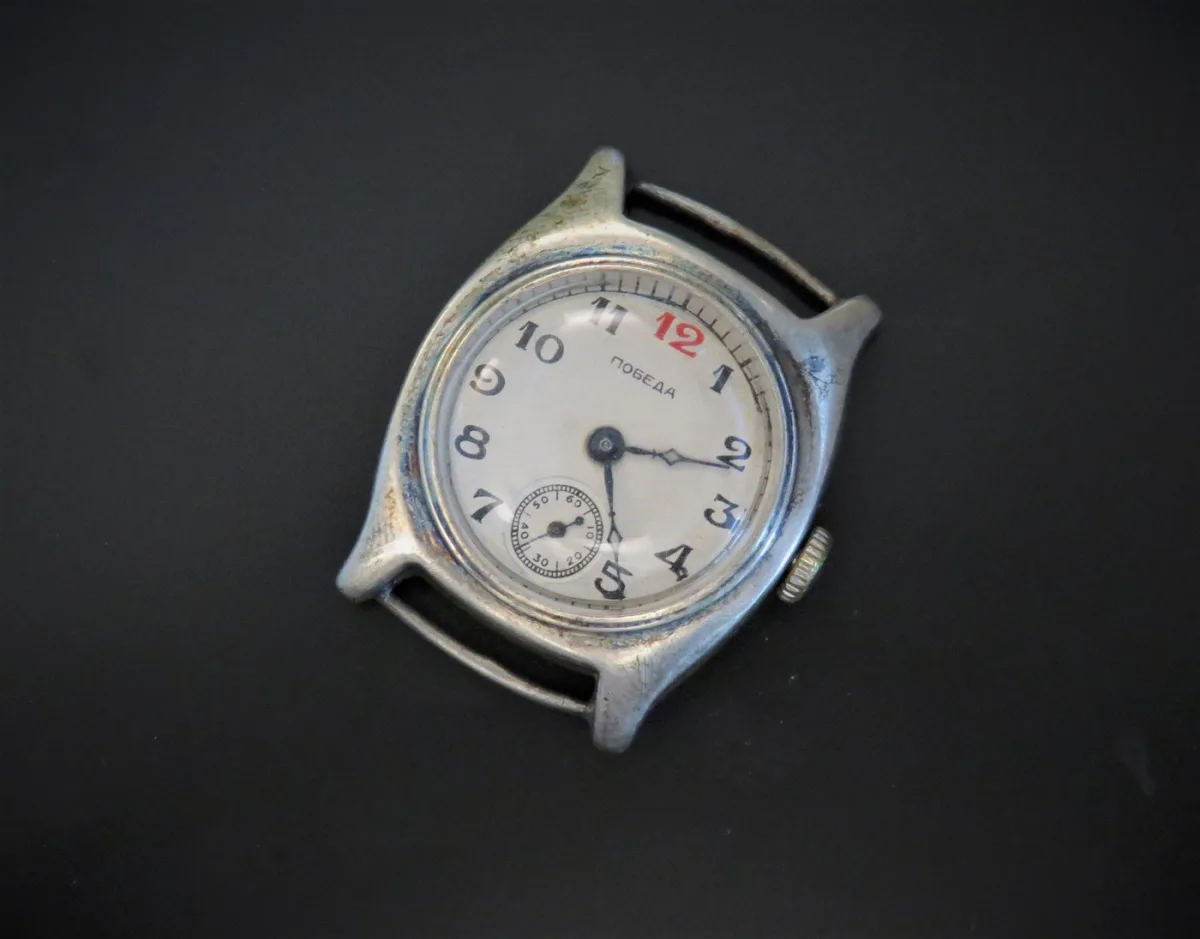
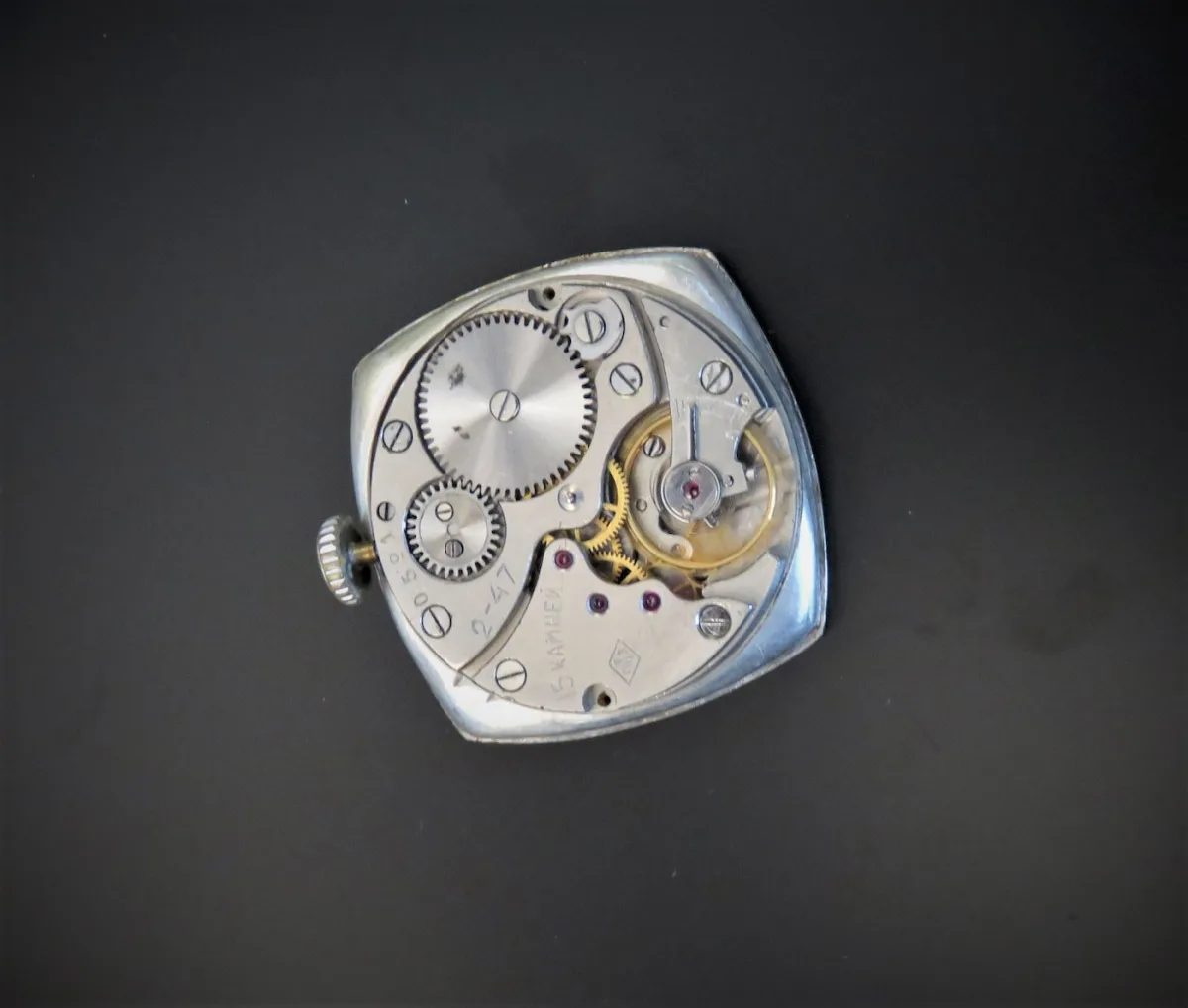
A movement from an early Pobeda model. In the early stages, these movements were of high quality, but quality gradually declined. Pobeda movements from the ZiM factory were produced almost until the collapse of the Soviet Union.
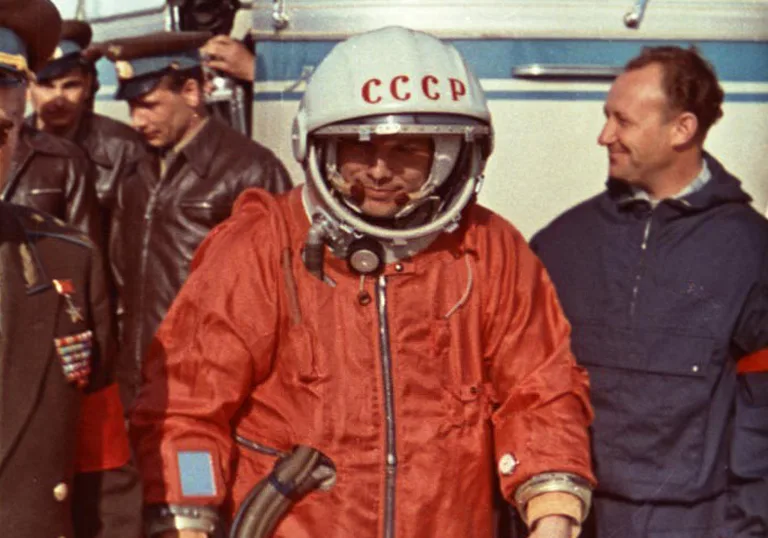
Of all the watches featured in this list, the 'Shturmanskie' are almost certainly the most famous, thanks to their association with the one and only Yuri Gagarin, the first man to fly into space. It remains a mystery whether Gagarin wore a Shturmanskie watch when he broke the bonds of Earth's gravity, but it is certain that Gagarin (a general and military pilot in addition to being a cosmonaut) wore a second-generation model when he was grounded. Therefore, 'Shturmanskie' are also called 'Gagarin watches'.
Unfortunately, acquiring a second-generation watch is much more challenging than finding a first-generation watch for sale. If you're hunting for 'Shturmanskie', you can certainly find examples, but finding them in decent condition is an almost impossible feat. Partly because 'Shturmanskie' watches were only issued to professionals and were never available to the general public (mostly, of course... 'Shturmanskie' did end up on the wrists of some high-ranking party members and other VIPs), meaning they often faced harsh usage. Additionally, the quality of the dial was quite low, leading to heavy patina. Considering that radium was used for dial luminescence, if you have a dosimeter, it will help you determine if it's an original dial. The biggest problem is that most of the watches you find for sale have been redialed or 'Frankensteined' to some degree. Some tips and recommendations for finding a worthy example can be found here, but depending on the condition, expect to spend USD 300 or more.
Vostok Precision
By the 1950s, 'Shturmanskie' watches were widely used in the military and reliably beat on the wrists of Soviet pilots. However, the main innovations in watchmaking were happening west of the Iron Curtain: companies from all over Europe (and later Japan) participated in the Neuchâtel Chronometer Trials - a famous 30-50-day event testing the limits of accuracy (far exceeding modern COSC certifications). While the Soviet Union was not going to participate directly in these trials, it did not want to be left behind in the race for chronometer accuracy. This required a new movement.
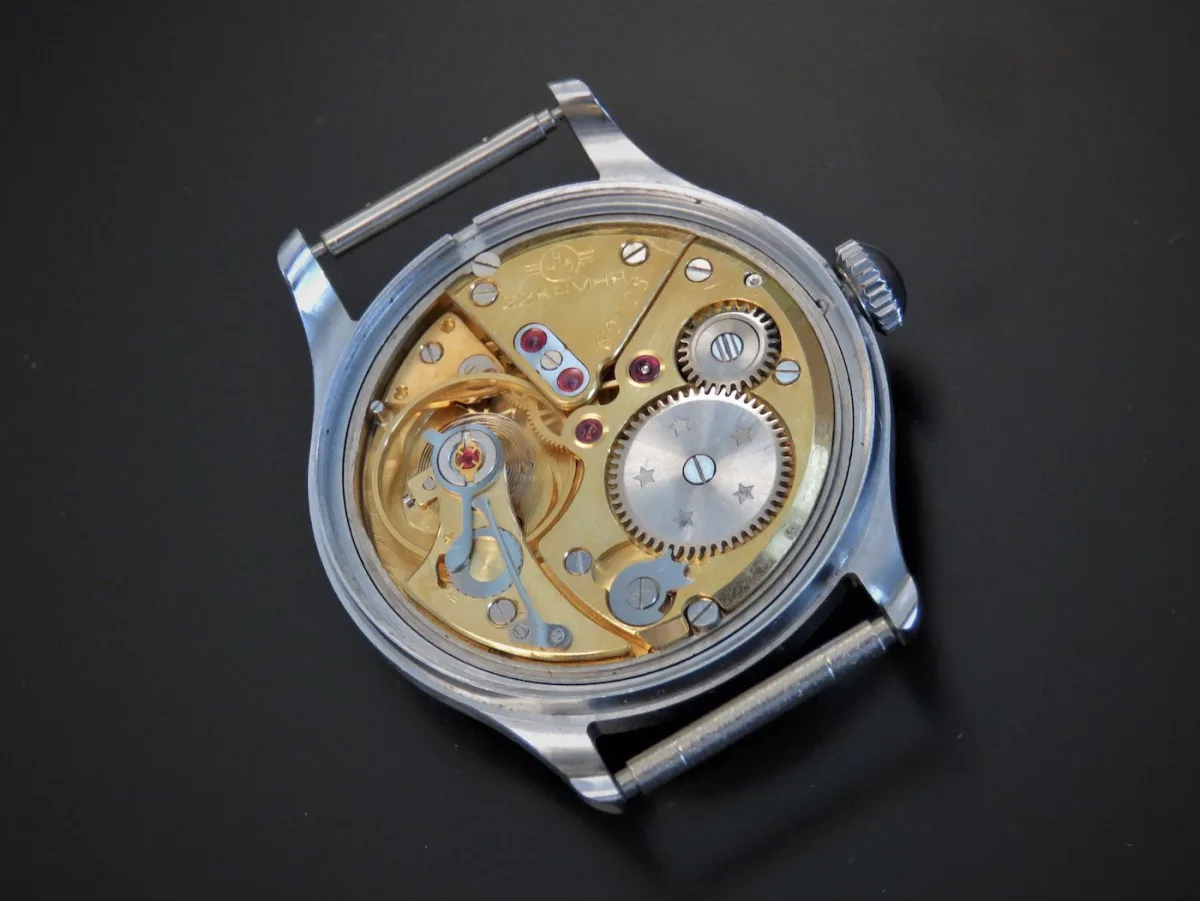
You can easily see how well-made the precision movement is: 22 jewels, micro-regulation, and chronometer standard - these are the main characteristics of this gem.
Instead of starting from scratch (and pushing the boundaries of intellectual property and patent law), Soviet specialists decided to redesign the Zenith caliber 135. A good choice, considering that Ephrem Jobin's caliber was one of the most highly regarded movements ever created. Among other innovations, in the Zenith 135 caliber, the center wheel was offset to create a larger mainspring barrel and balance wheel for increased timing accuracy. To be fair, the Soviet versions of this caliber (2809 and 2802) were not complete copies. Of course, there are similarities in design, as both movements aimed to have the largest balance wheel with the escapement located under the balance, and the Soviets certainly borrowed a few design cues, but the Soviet Union significantly modified the movement, and the calibers are certainly different (look at the layered photo of the two movements below).
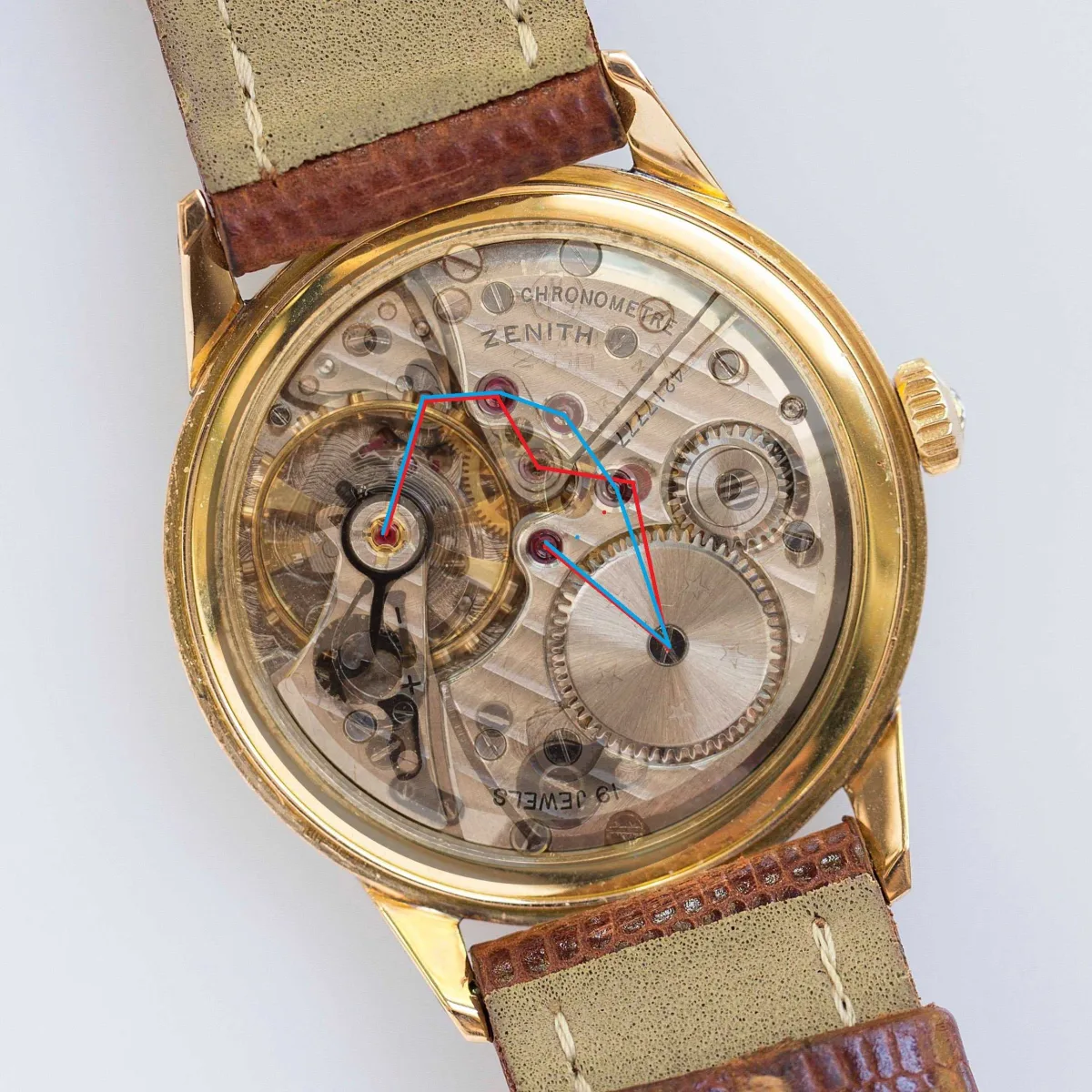
The comparison above shows that even if the watch layout concept is the same, the Soviet 2809 movement is far from a copy of the Zenith 135. The dimensions of the movements were altered for this image due to the difference in movement diameters.
Note on Soviet caliber designations: All Soviet watches have a four-digit numerical designation; the first two digits indicate the movement's diameter, and the second two describe the movement's features. The 2809 caliber had a diameter of 28mm, a central seconds hand, manual winding, and balance shock protection (09), while the 2802 caliber had the same diameter, sub-seconds, and no shock protection.
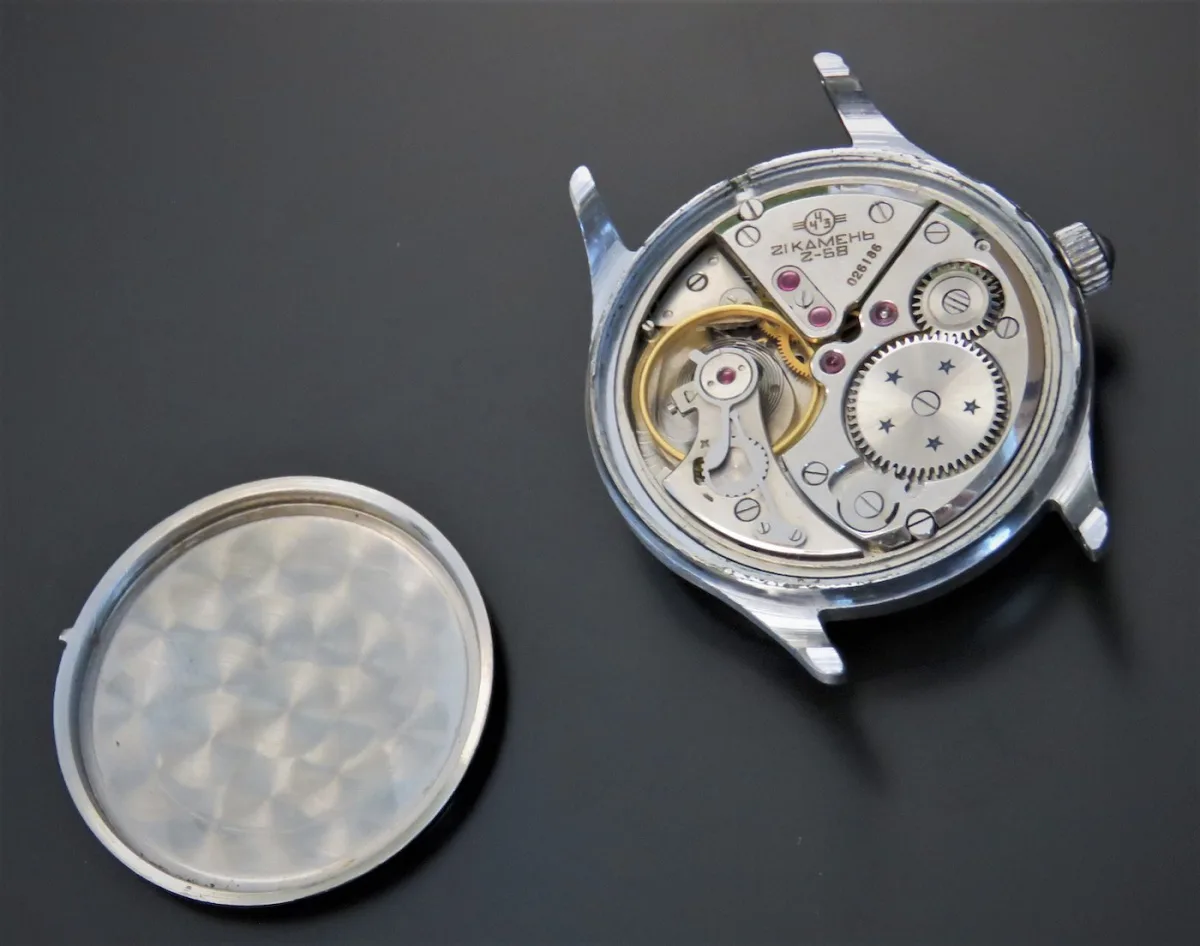
Vostok 2802 movement with microregulator and, unlike caliber 2809, no shock protection.
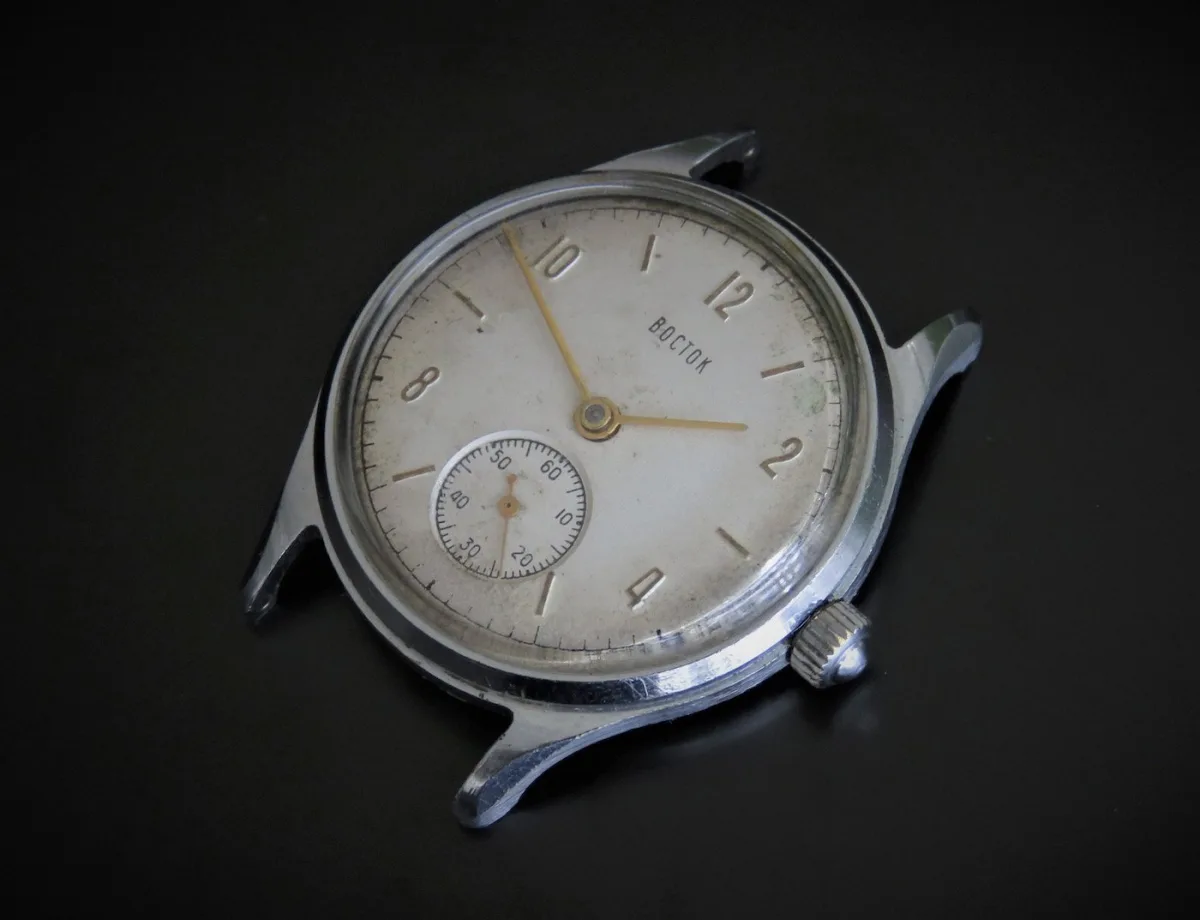
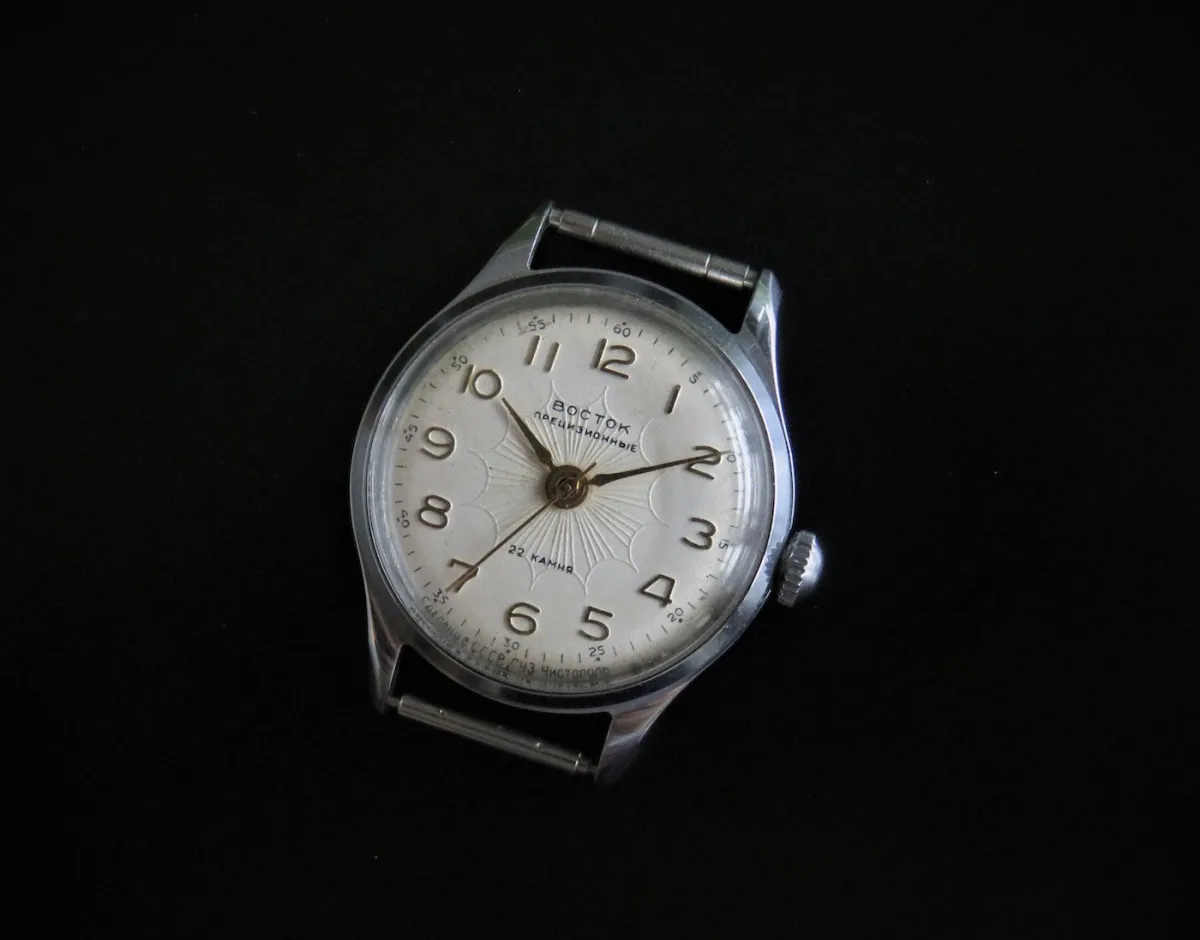
The first movements (2802 and 2809) rolled off the Chistopol Plant (ChChZ, now known as Vostok) assembly line in 1956, although the lifespan of the 2802 was relatively short (good luck finding one, it's a grail of Soviet watch collecting). The short lifespan of the 2802 model is likely due to the fact that by this point, the 2802 model was outdated, lacked sufficient shock resistance, and still contained a subsidiary dial. Transitioning to the 2809 model (which was based on the 2802 and required little change in production) with its additional shock resistance and central seconds hand (useful if you want to know the exact time) was simply a matter of time. Despite this, the 2809 model was a great success and was produced until 1970 with three dial names: Vostok, Volna, and Almaz. The diameter of each of these watches is 34-35mm with 16mm lugs for the first generation watches and 18mm for later generations. Thanks to the high precision of these watches, many were used in industry and even placed on car dashboards in special holders, not just on wrists. There are three main types (details below) and a variety of dial variants - there's much to discover in the Precision watch family. Prices for watches in decent condition start at USD 100, rising for rare, older, or early versions.
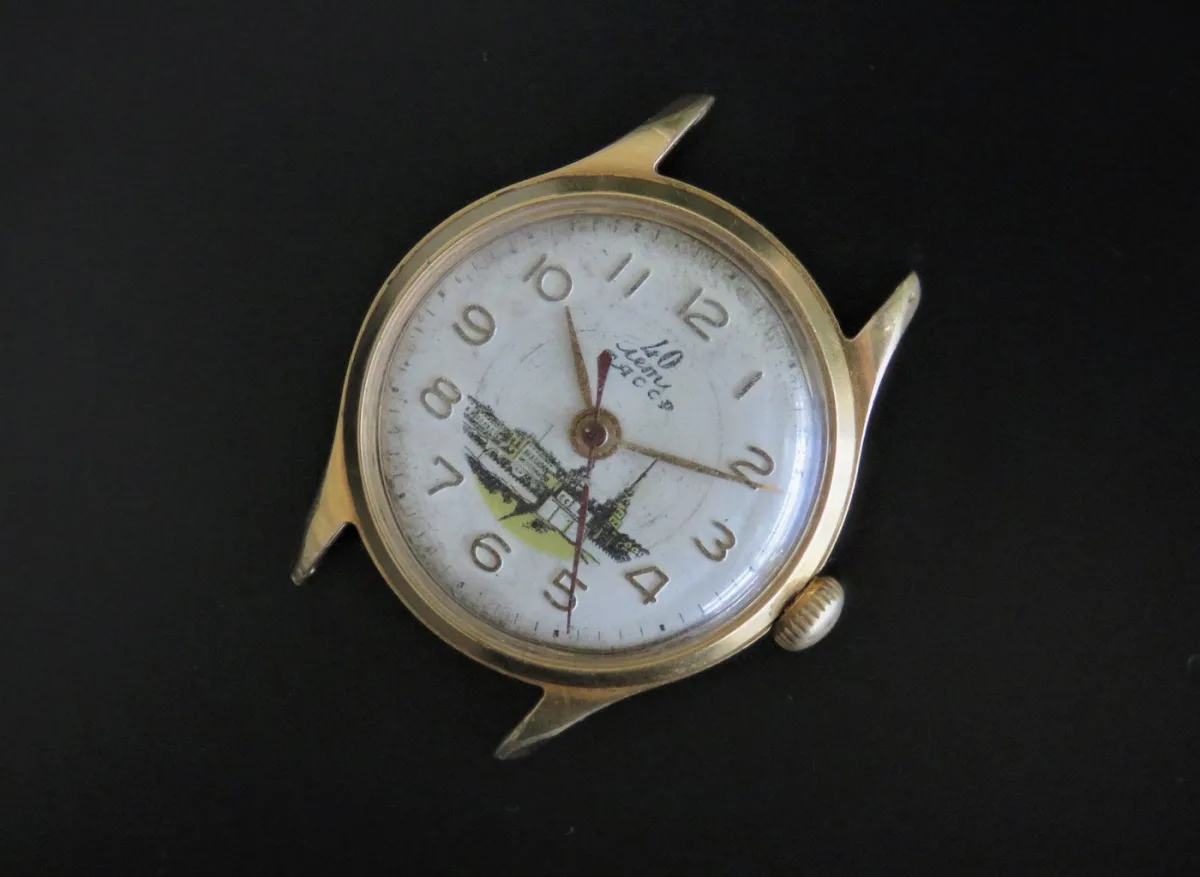
Special edition Volna watch, manufactured to celebrate the 40th anniversary of the Republic of Tatarstan. The dial features the Kazan Kremlin.
Vostok Precision - these watches are the most accurate and finely tuned of the group; although they never received chronometer certification, the official specifications state a rate of -10 to +5 seconds per day. These watches had swan neck regulators, 22 jewels, and a central seconds hand. The Soviet testing system differed from COSC certification, but all watches underwent a series of timing tests over ten days, in four positions, and at three temperatures (0ºC, 20ºC, 40ºC).
Volna - Similar to the Precision model in most respects but less finely tuned (+/- 30 seconds per day), there are minor differences in the mechanism (different font on the mechanism inscription, different jewel recesses), allowing these two models to be distinguished. The Volna model also had 22 jewels and a swan neck regulator, but the Volna was produced in much larger numbers and different styles - look for the Jubileinie versions, which were created for the 40th anniversaries of the Republics of Tatarstan and Kazakhstan.
'Almaz' - This is a lower-quality version of 'Precision', containing only 18 jewels and lacking microregulation.
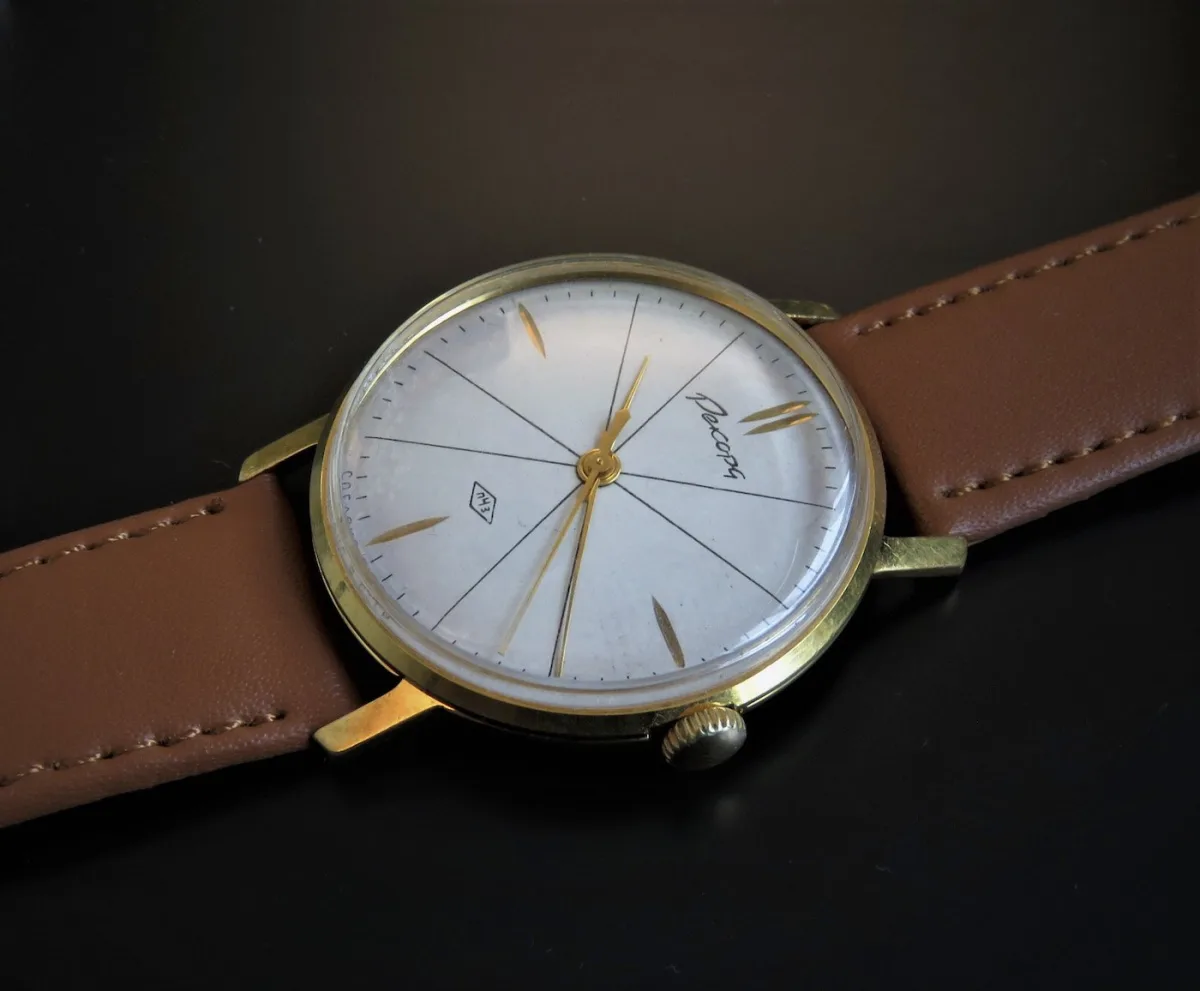
Thin Watches (Vympel 2209 and Ultra-thin 2200)
By the end of the 1950s and throughout most of the 1960s, Soviet watch production reached its zenith. The days of outsourcing (or outright copying) movement designs were gone - now Soviet watch companies were producing truly original calibers, starting with the initial planning, mechanism development, and ending with final production. Everything was done in the Soviet Union. Despite all factories being state-owned and centralized, there was still competition and bragging rights for producing the best watches.
Up to this point, most Soviet watches had been utilitarian in nature: military watches, chronographs, and precision chronometers for industrial use. The missing piece was a compact caliber for thin, elegant watches that could compete with the Swiss. Three factories (ChChZ, PChZ, and 1MChZ) set to work and soon produced the 2209 movement (with a diameter of 22mm, the '09' indicating shock protection, central seconds hand, and manual winding). Although the specifications were the same, each factory's solution for producing this thin caliber was entirely different.
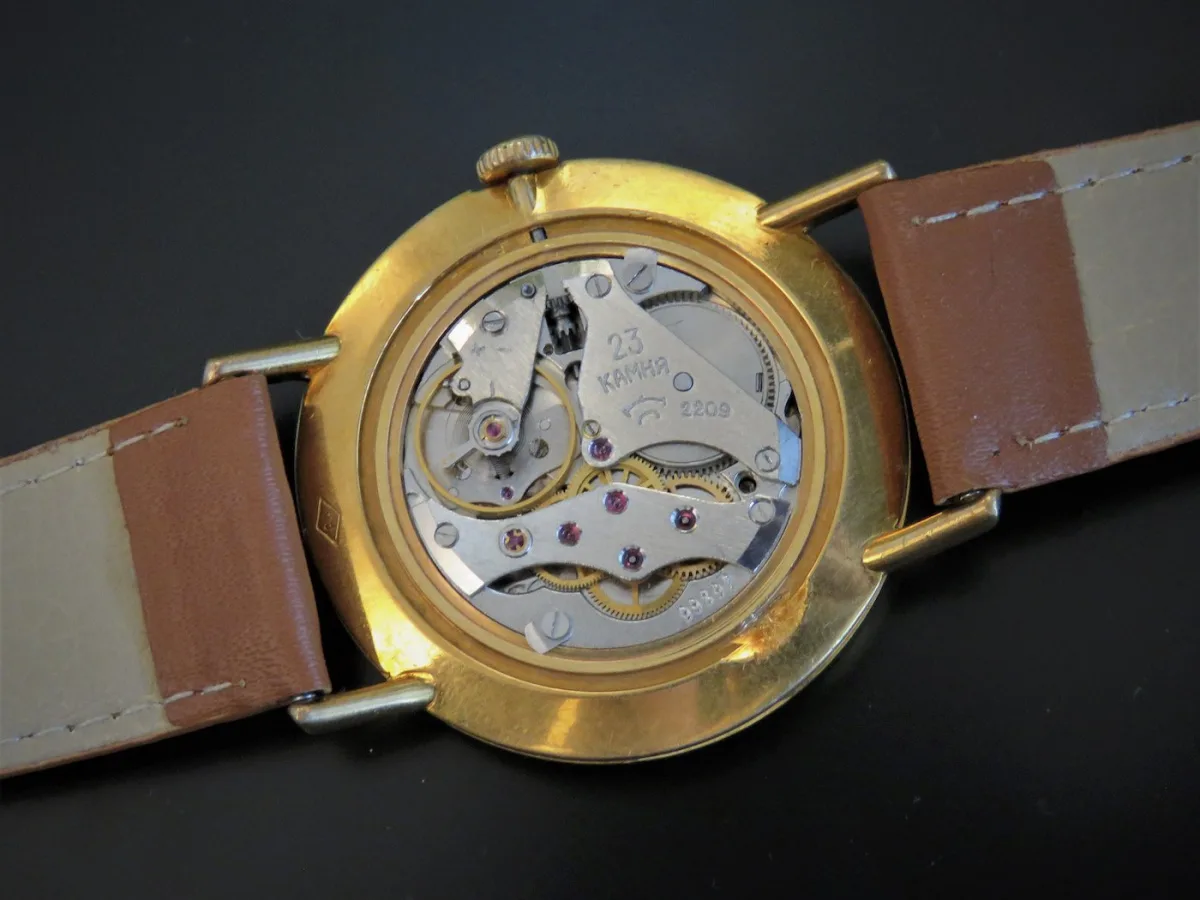
2209 movement from a Raketa 'Record'.
ChChZ (Vostok) 2209: The Vostok factory took the route of refining the high-precision 2809 caliber or the 'Almaz' caliber. Nicknamed 'Mir', this movement, released in 1960, retained the basic architecture of the 2809 caliber but was reduced by 60%. The movement, featuring 18 jewels and having a height of 3.3mm, was a huge success and ultimately became the basis for the famous line of Soviet dive watches, Amphibia.
Two Raketa 2209 watches; the watch on the right was made for the 50th anniversary of the October Revolution.
PChZ (Raketa): The Raketa factory took a radically different approach than the other two, creating perhaps one of the most unusual movements in watchmaking history. The entire winding mechanism is located on the dial side above the stem mechanism, with the train wheels offset from the center to have the mainspring barrel located next to the balance wheel - both of which are quite large for the movement's diameter. Initially released in the early 1960s under the Rekord brand (these watches are unicorns, almost impossible to find today), this caliber was later used in other Raketa watches. As interesting as this thin 2.7mm movement with 23 jewels was, it unfortunately was not as reliable as the thin calibers from other factories and was not as successful.
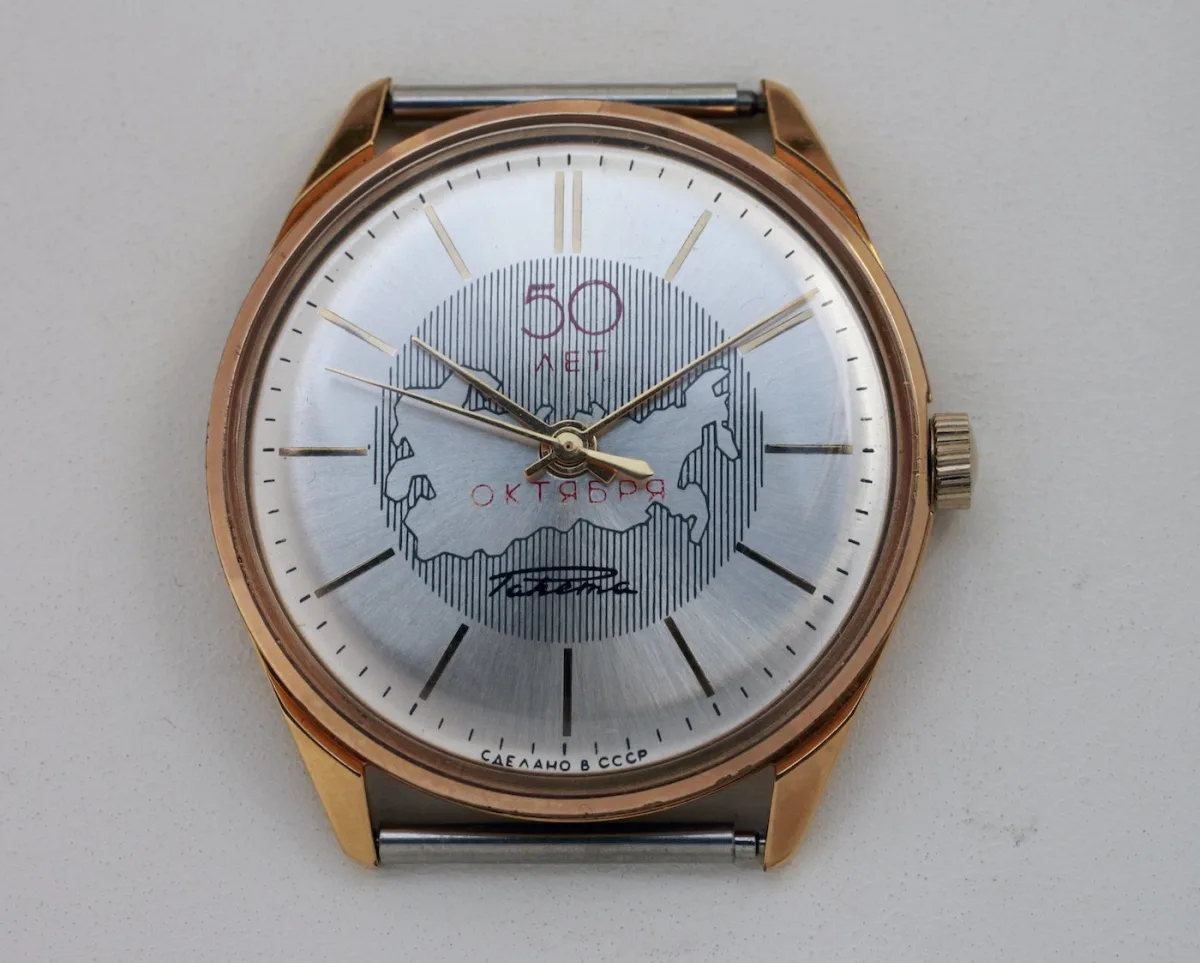
Thin Raketa watch with 2209 movement and October Revolution commemorative dial.
'Pilot': First released in 1961 under the 'Vympel' brand ('Pennant', in honor of the small flags awarded to factories for achievement), the Poljot caliber featured a four-wheel winding mechanism (instead of the standard two belonging to the winding crown and ratchet wheel). This never-before-seen mechanism received first prize at the Leipzig Fair in 1963 and became the basis for numerous Poljot dress watches. Later, the Minsk Luch factory established production of this 2.9mm high 23-jewel caliber and continued to produce it until the 1980s.
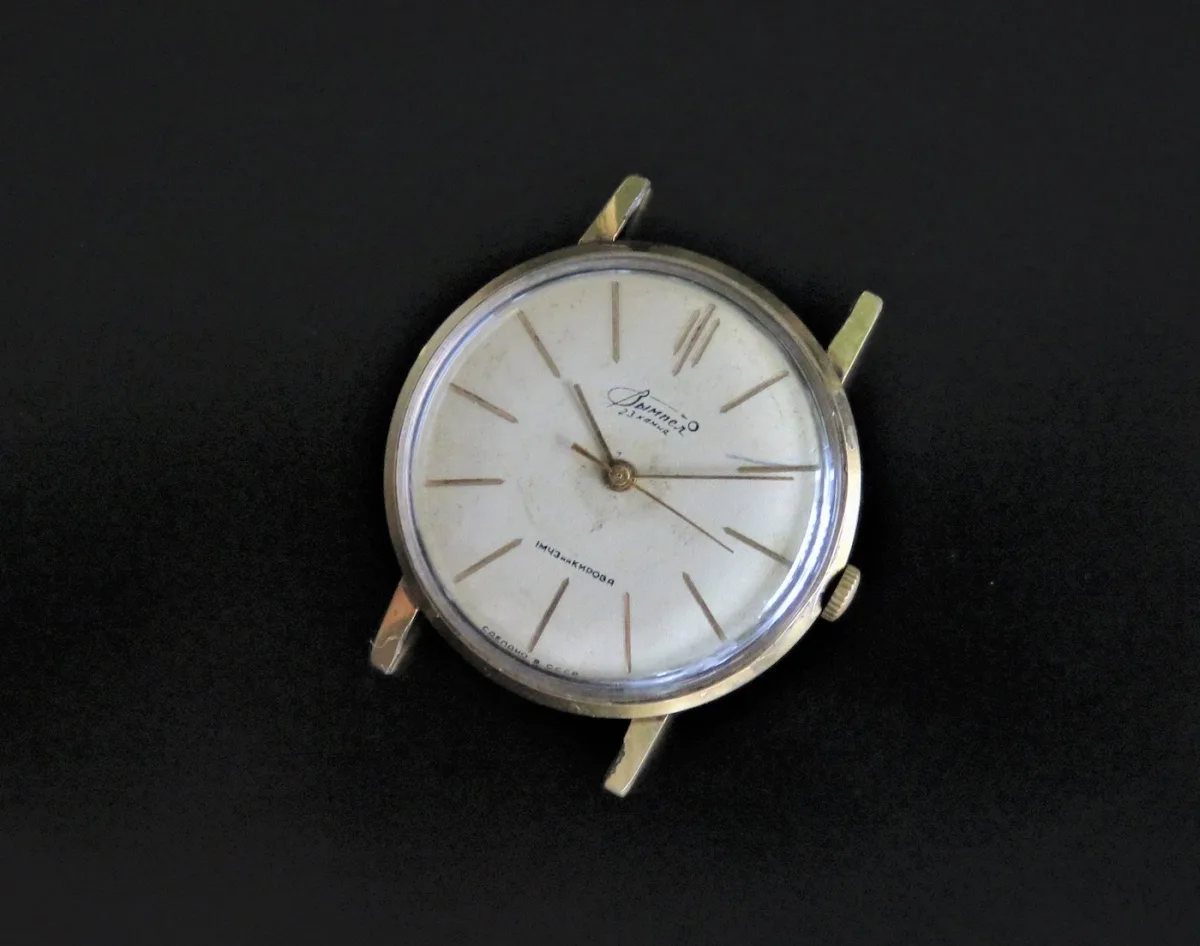
A typical example of a 'Vympel 1MChZ' watch - thin and elegant watches that can easily be worn as dress watches today.
If you are interested in vintage dress watches, the 2209 watches are what you need. This was the heyday of Soviet watch production, and in terms of quality, the 2209 watches easily rivaled the Swiss. These watches were released under the 'Vympel', as well as 'Orbita', Poljot De Luxe, Poljot, and even Sekonda and Cornavin brands. Most watches have gold plating, but they were also produced in steel, and the case diameter is usually 33-35mm with 18mm lugs. You can easily find a good 'Vympel' example for around USD 100 - or about half for a similar Luch variant.
The famous Poljot 2200 watch - if you ask a Soviet collector to name a grail watch, they will likely name these watches first. At less than 3mm thick, these watches are astonishingly thin even by today's standards.
We cannot talk about the 2209 model without mentioning the 2200 model. Given the success of the 2209 watches, 1MChZ watchmakers felt on top of the world and decided to release a high-class watch for the first time that was not intended for ordinary people. These watches were to be the pinnacle of prestige and luxury and be as thin as possible. Watchmakers settled on a 22mm diameter but shortened the movement to an incredible (even by today's standards) height of 1.85mm. All watches were housed in a 14-carat gold case with a diameter of 33mm and 18mm lugs. Since these watches were only for time (without shock protection and even without a seconds hand), they received the '00' designation.
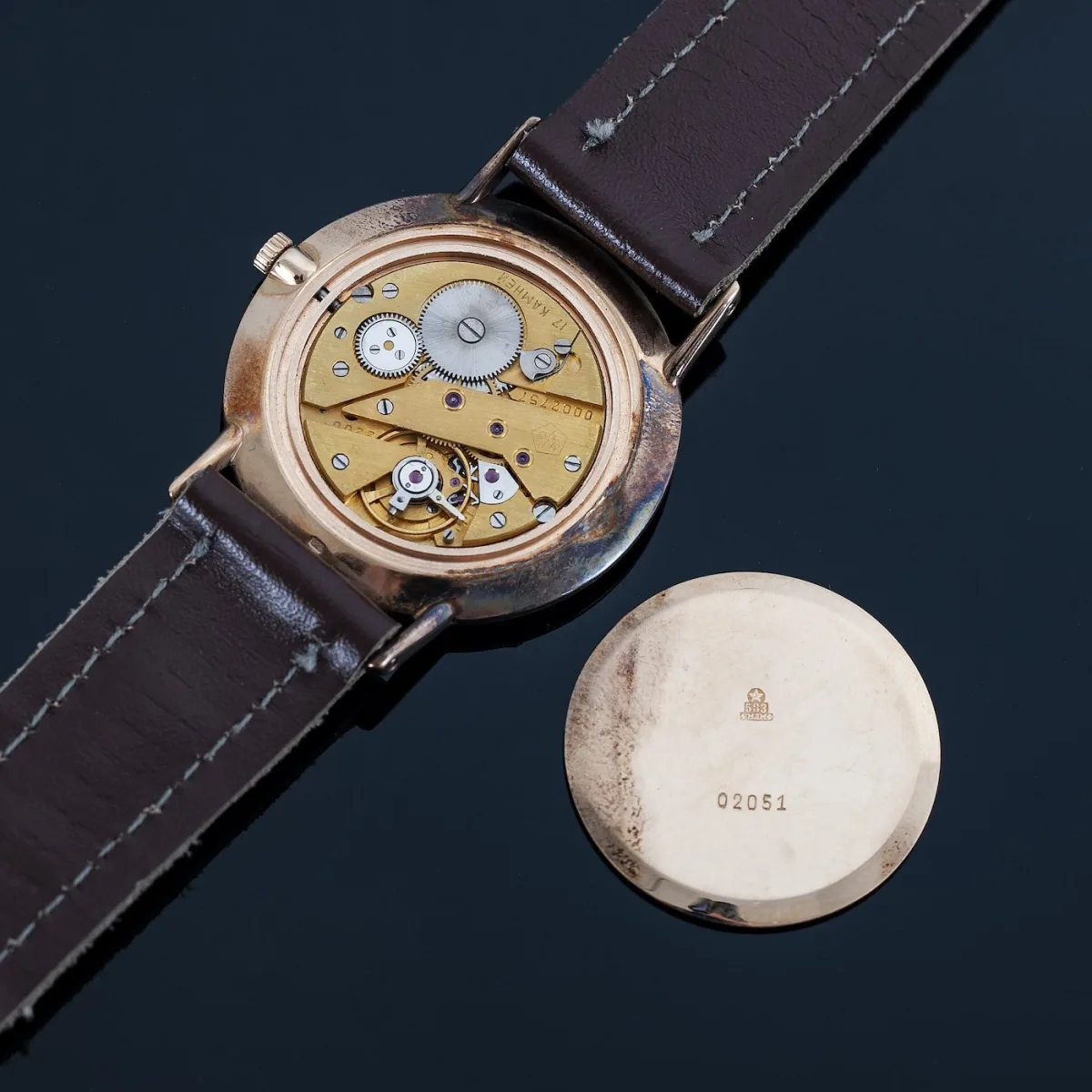
2200, which was inspired by the VC 1003 caliber. The movement is only 1.85mm thick and is quite fragile. The movement has no shock protection and no seconds hand.
So how did the 1MChZ watchmakers come up with this movement? Since he serviced both movements entirely, Blaz can say that the 2200 caliber has a striking resemblance to the Vacheron 1003 caliber. In any case, the production life of the 2200 was short, beginning in 1965 but lasting only two years. The problem with such thin watches was their extreme sensitivity - you could literally bend the watch with your fingers. Additionally, they were difficult to repair. The number of watches produced is debatable (probably only a couple of thousand or so), but likely only a few hundred remain worldwide. In Soviet watch collector circles, this is the Holy Grail. They appear occasionally, and if you find yourself in the right place at the right time, you will still be dealing with a hefty price of USD 6,000-10,000. Not bad, compared to trying to acquire a vintage Rolex Daytona Paul Newman.
Amphibia
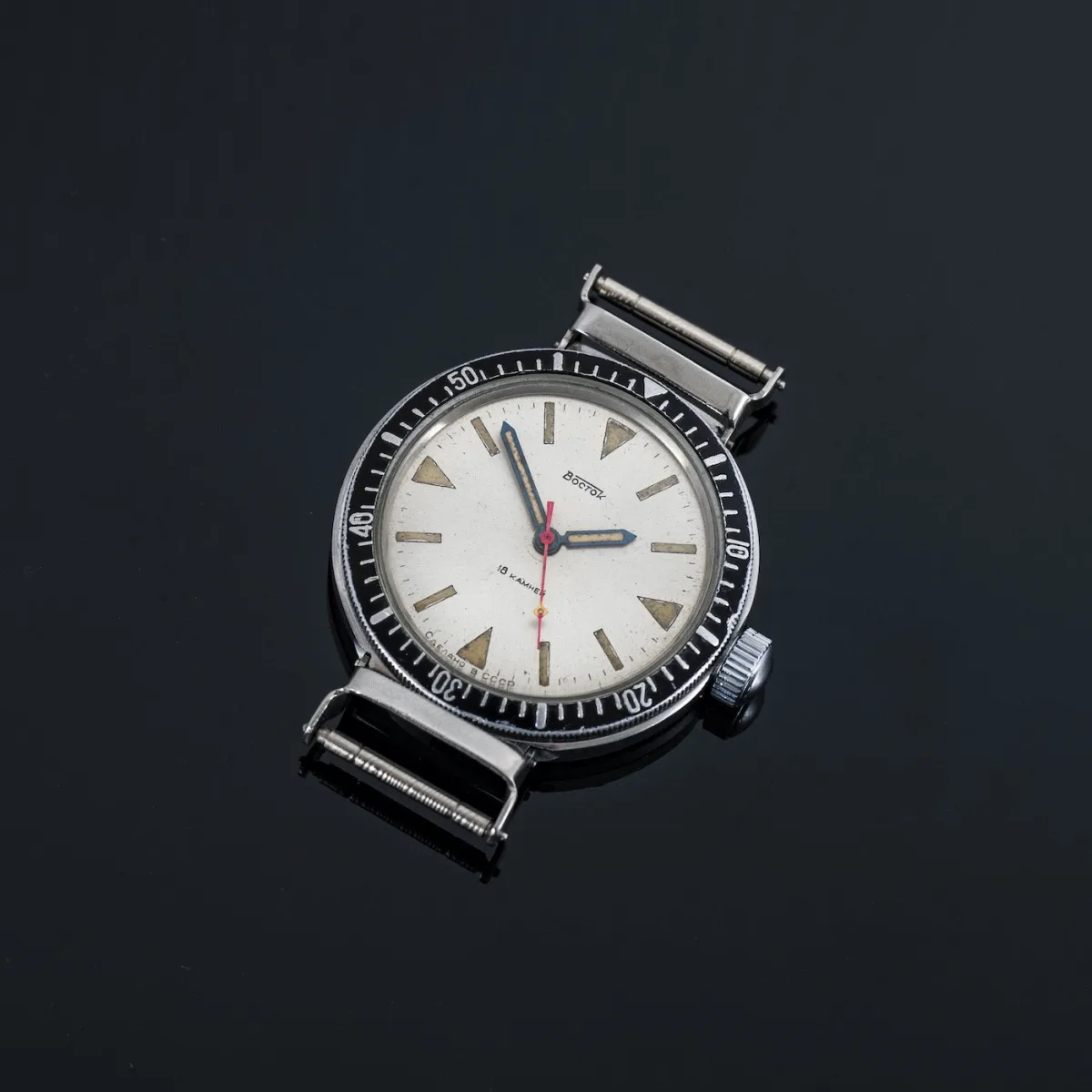
No list of Soviet watches would be complete without including the 'Amphibia'. Although today this term refers to a wide variety of Soviet (and later Russian) watch brands, executed in a staggering variety of styles, these diver watches generally adhere to several key characteristics: 200m water resistance, a compressor case, screw-down crown, rotating bezel, lume (at least for the hands), and a stainless steel case.
The first production 'Amphibias' were released by the Chistopol Vostok factory in 1967, although other factories later created their own versions of the 'Amphibia'. Nevertheless, there are examples suggesting that early 'Amphibias' were released before 1967 in very small numbers; however, we could not find supporting documents. For purists, true 'Amphibias' are 'Vostok Amphibias'. The first watches produced in Chistopol contained the manual winding 2209 caliber (Mir), which was used in precision watches. By the end of the seventies, the 2209 caliber was replaced by the manual winding 'Vostok 2409' caliber - a caliber that underwent only minor changes over decades and is still produced today. Interestingly, this movement was first developed by the Petrodvorets factory (Raketa), which later transferred production to Chistopol.
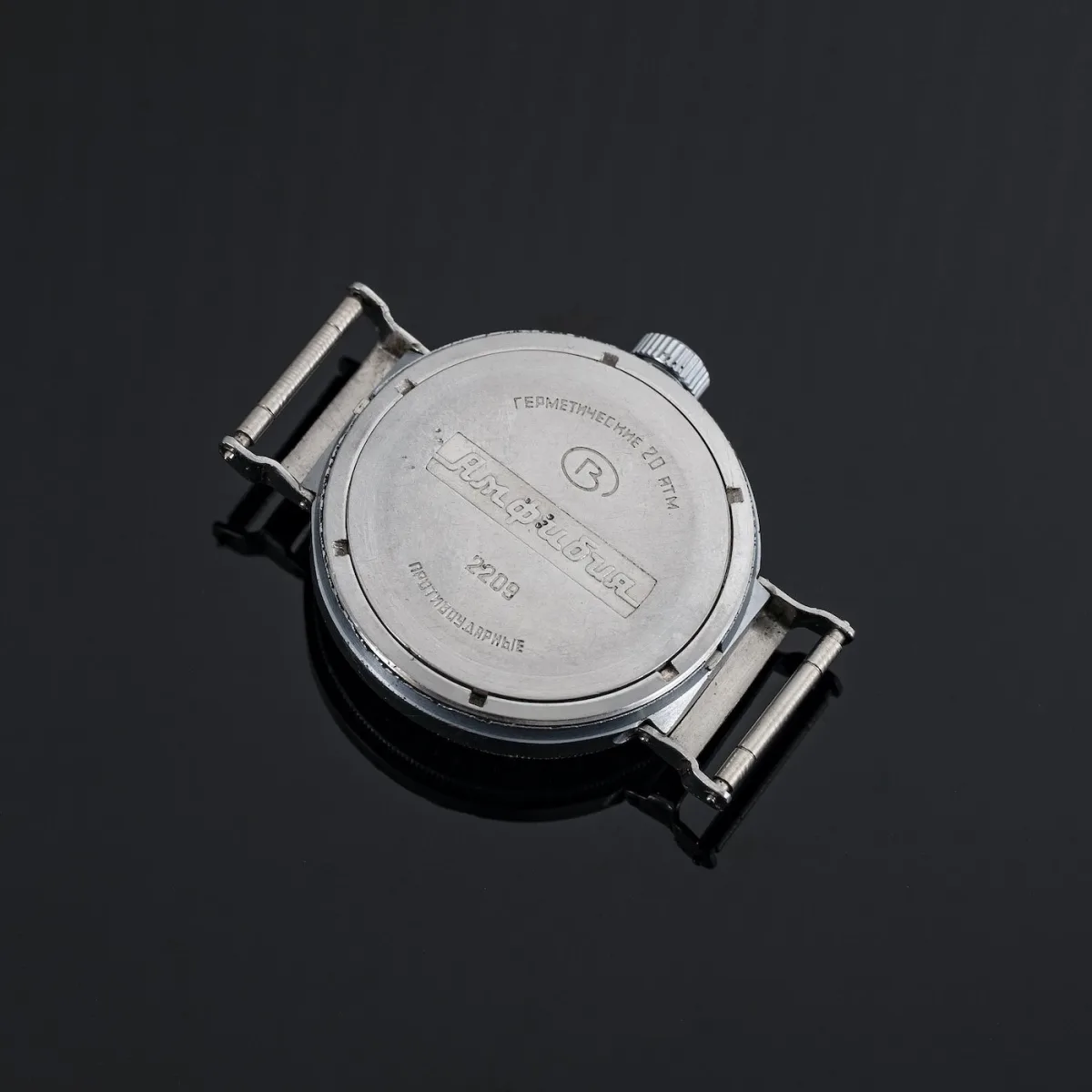
The back of the first release Amphibia. The style of these engravings is unique to these watches; be sure to check the engravings to avoid fakes.
Technically, the 2409 model was a step back from the 2209 model - it is larger, but more importantly, it has an indirect seconds drive (rather than direct). If this sounds like a bad idea, it is. It is notoriously poorly designed, often leading to uneven movement and wobbly seconds hand behavior. Unfortunately, the quality issues with Amphibias do not end with the movements; the build quality of all watches noticeably decreased over the years, despite the enormous popularity and number of units produced. In many ways, the history of the 'Amphibia' can be seen as an allegory for the decline of the entire Soviet watch industry after the 1960s. However, despite all the objective quality issues, these watches remain almost absurdly reliable. Did the watch stop running? Pour some machine oil into the movement, give it a good whack, and it will be as good as new. Joking, of course, but the point is that these watches keep running despite all odds against them.
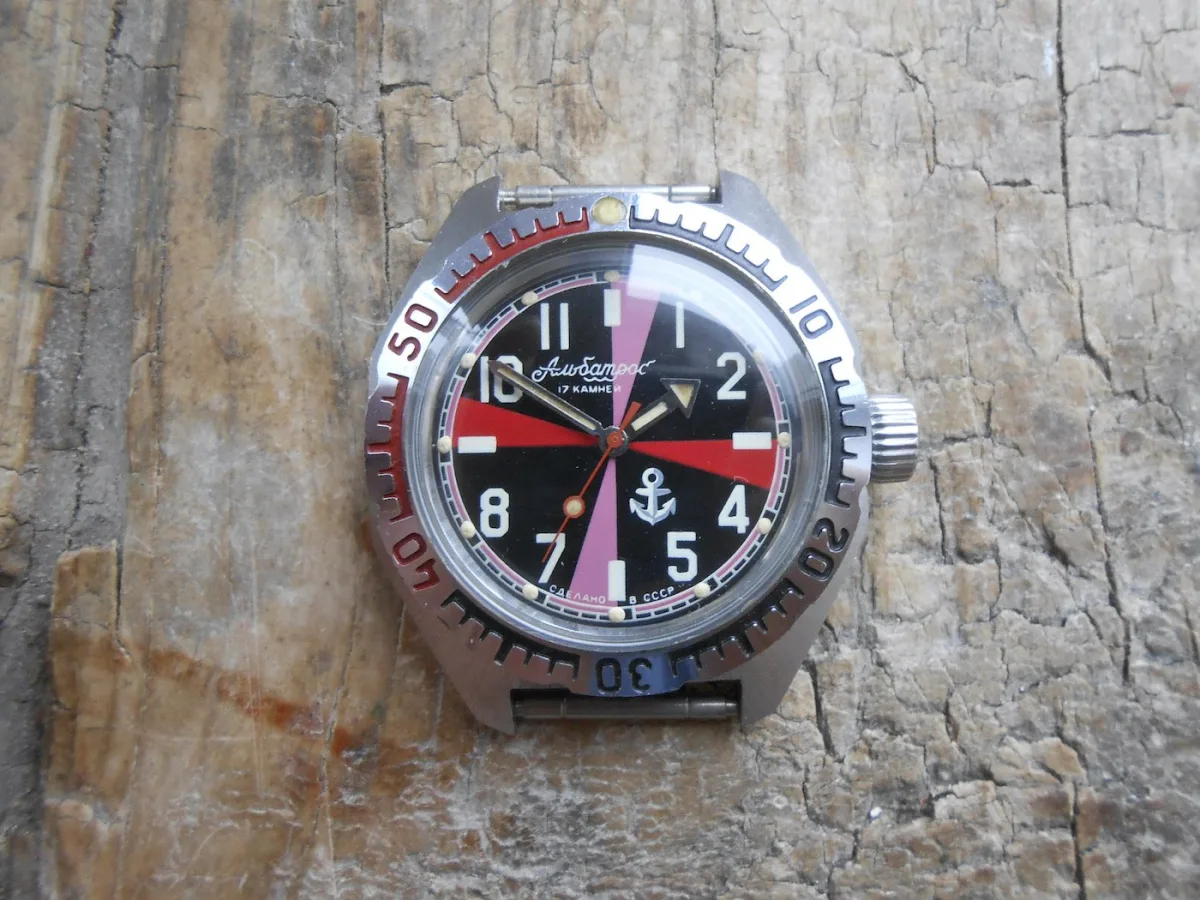
Amphibia Albatross with a 'Radio Room' dial, named for the red indicators on the dial showing periods in each hour when maritime radio frequency use is prohibited without notification.
Although the Soviet Union had already created the professional 'Diver' Type 1 watches for military divers, they were massive and not suitable for everyday use. The Soviets needed more compact, waterproof watches. By this point, the Swiss had already created various designs to achieve high waterproofing, but most required a level of manufacturing precision that the Soviet Union at the time simply could not produce... not to mention that most case designs were protected by patents. To solve this, the Soviet Union went the tried-and-true route of finding a simple and effective solution - in the form of a compressor case. This was not a new idea, but it was simple, cost-effective, and avoided pesky patent issues. In a compressor case, the case back and crystal are not fixed but can move towards a rubber gasket. As you dive deeper, the increased pressure pushes the case parts together, increasing seal strength.
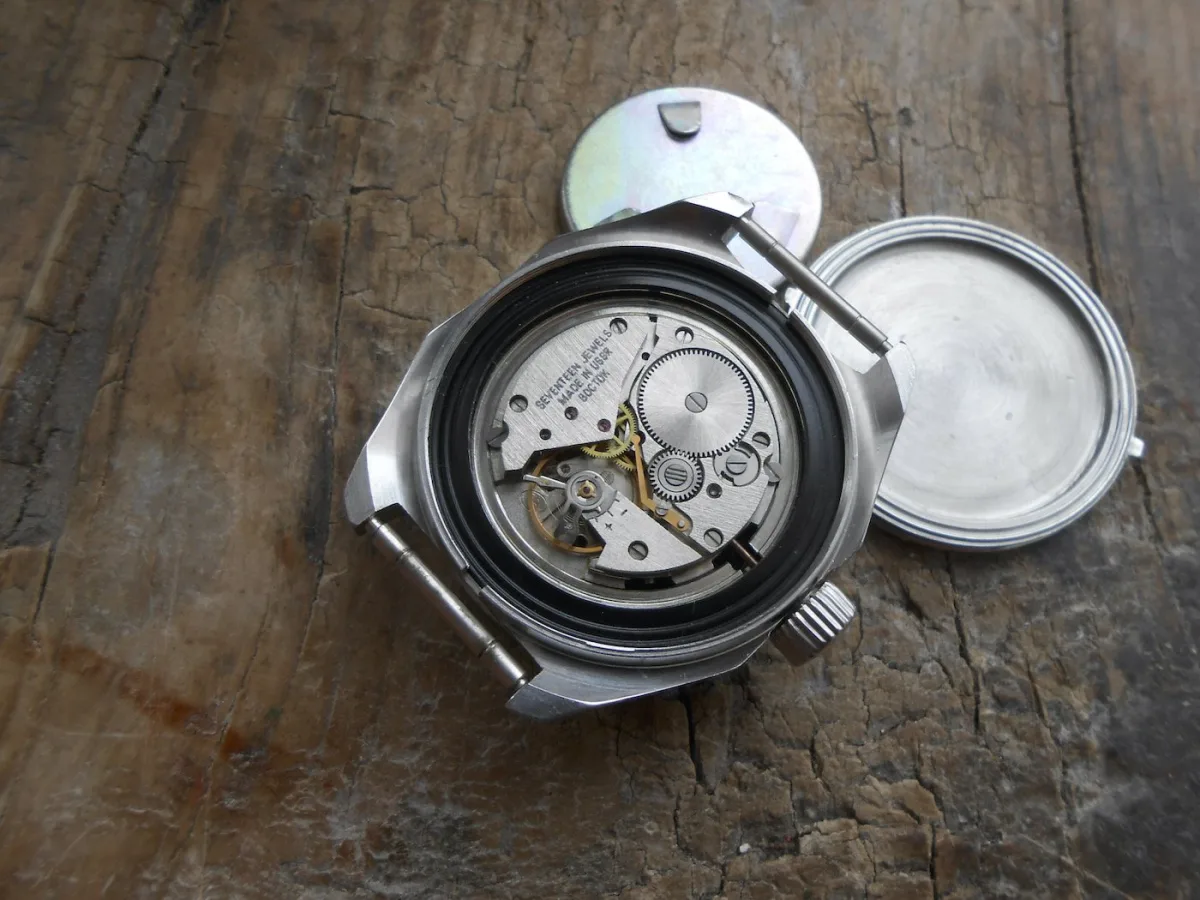
The Albatross model belongs to the later Amphibia era and is equipped with the newer Vostok 2409 movement.
One of the many quirks of Amphibia watches is the screw-down crown. If you are used to precision Swiss or German screw-down crowns, you are in for a surprise. The crowns on Amphibias wobble, and you might think the crown is broken. Keep in mind that most Amphibia watches are manual winding, so even though the crown seems wobbly and broken, they have withstood decades of regular use. As they say, if it's stupid but it works, it's not stupid.
The 'Wire Lugs' version of the first-generation NVCh-30 Amphibia.
Amphibias are dive watches, and as such, they all come with a rotating bezel. Typically, these are bidirectional friction bezels, which is a departure from typical unidirectional bezels with 60 or 120 clicks. Bezels often feature various markings, numbers, and patterns. Replacing bezels is not difficult, making them popular among modders, but also posing a danger to collectors looking for Amphibias in original condition. While the Vostok factory was undoubtedly the first and most prolific of the factories producing Amphibias, other factories soon followed suit, the main one being Poljot. Poljot Amphibias usually have two-tone plastic bezels and automatic movements, but they are relatively rare and hard to find. You'll also find Amphibias from Raketa (including a quartz version), Slava (nice looking, terrible to service), Chaika (quite small by today's standards), and Zaria (also small).
The case back of the 'Wire Lugs' model NVCh-30 Amphibia first generation.
If you're on the hunt for an 'Amphibia', early models released by the Chistopol factory only have dials stamped with 'Amphibia' or 'Vostok' and are equipped with manual winding movements. In later years, you can find a multitude of dials under the 'Komandirskie', 'General'skie', 'Admiral'skie', 'Minister'skie', 'Albatross', and 'Neptune' brands, some of which also feature the manual winding 2409 movement. As an affordable, fun, and historically interesting option, check out the Albatross 'Radio Room' model - a distinctive black, red, and pink dial with four 3-minute periods highlighted to replicate the ship's radio room watches used to monitor maritime distress signals.
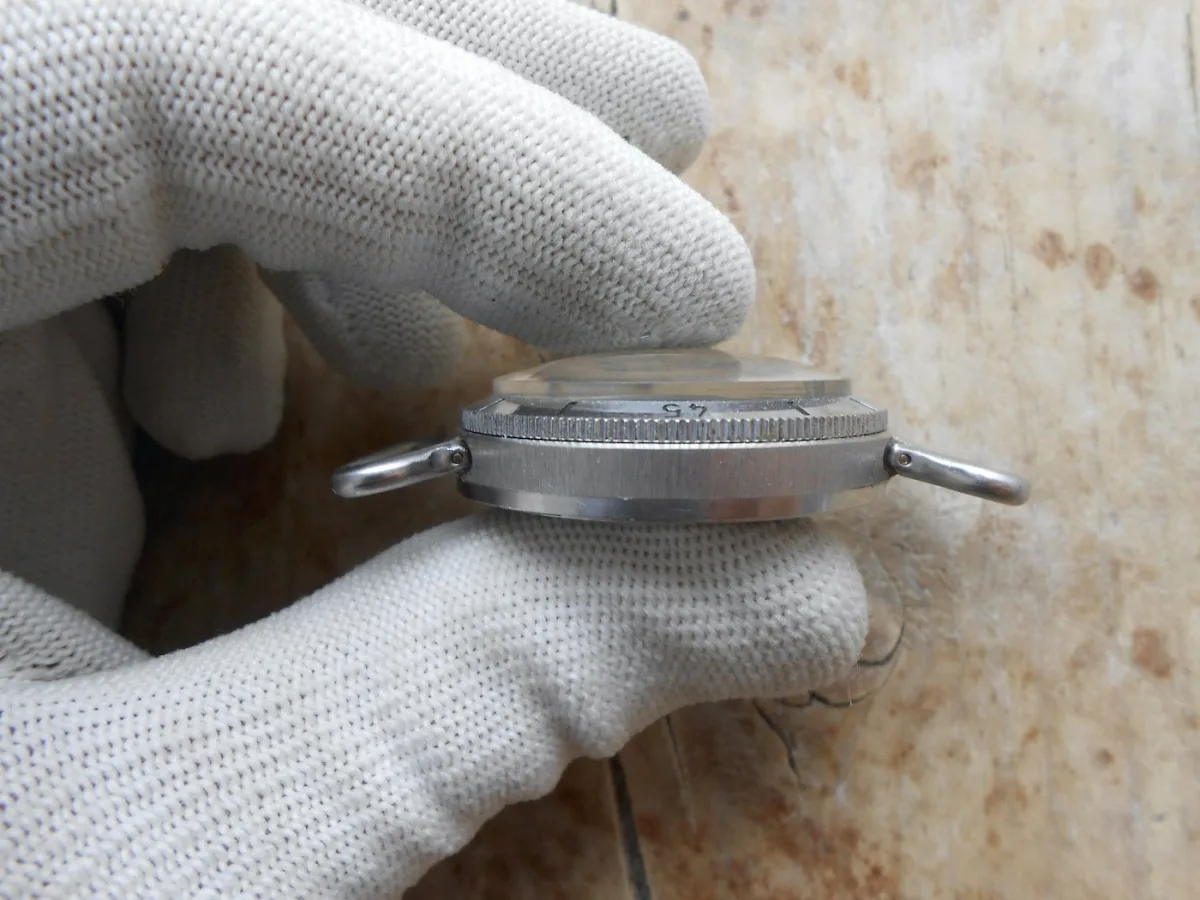
Amphibia 'Wire Lug' side view.
There are plenty of Amphibias to interest practically any collector. Just search on eBay, and you'll be able to find a specimen in decent condition for USD 50. However, we advise caution, especially if you want to acquire a rarer model, as there are many fakes and Frankens among them. Tip: if the watch dial has anything other than letters, numbers, and lines (e.g., images of tanks, submarines, stars, logos, faces, etc.) - stay away! The exception to the rule is the Scuba Dude dial. If you are looking for something truly special and are more interested in military history, look for the NVCh-30 watches - this was the first generation of military Amphibias first released in the late 1960s, and production continued until the fall of the Berlin Wall. Externally, they are not much different from standard 'Amphibias', but the thicker case back and crystal enabled them to achieve a 300m water resistance. They will cost at least USD 1000.
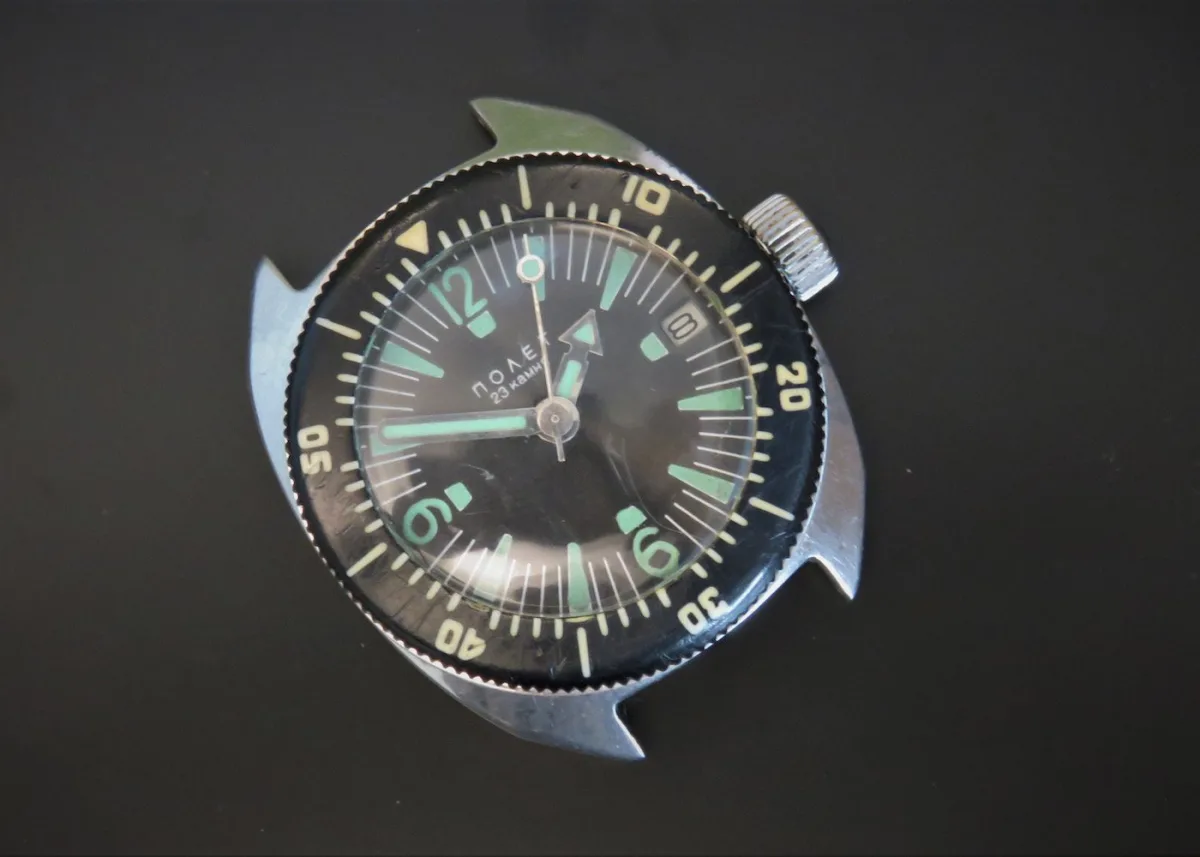
A typical Poljot Amphibia from the 1970s with an automatic Poljot movement inside. A good balance of price, features, and rarity for a new collector.
Finally, if you like 'Amphibias' but do not want to deal with the minefield of fakes and Frankens on the vintage market, keep in mind that 'Vostok' continues to produce many different versions of 'Amphibias' for around USD 100. To enjoy the history of Soviet watchmaking, you do not have to buy vintage watches.
Strela Chronograph
If there is one watch that stands out among all others on this list, it is undoubtedly the 'Strela' chronograph. Of course, 'Shturmanskie' is often called Soviet space watches due to their association with cosmonaut Yuri Gagarin, but the 'Strela' chronograph was the real space watch, created specifically for cosmonauts of the Soviet space program, as well as for representatives of several branches of the military. Released in 1959 and equipped with the new 3017 caliber, the 'Strela' chronograph was born at the peak of Soviet watchmaking development and shows a maturity of design and craftsmanship that truly sets it apart from the rest.
The stories behind watches are one of the most fascinating aspects of collecting vintage watches, and frankly, it is hard to find a more romantic story that captures our collective imagination more than space exploration. It is this indelible connection with history that created the monolithic success of the Omega Speedmaster Professional (or Moonwatch). But in Soviet collector circles, it is the 'Strela' chronograph that is considered the real space watch. In 1965, Soviet cosmonaut Alexei Leonov became the first person to perform an extravehicular activity from the Voskhod-2 spacecraft, which lasted more than 12 minutes. On his wrist was a 'Strela' chronograph, equipped with a 3017 caliber... possibly. There is some debate and speculation that Leonov may have worn an early Omega Speedmaster Professional, but mission documentation shows that Leonov and other cosmonauts were issued 'Strela' watches for the Voskhod-2 mission, making it much more likely that Leonov indeed wore the 'Strela' under his space suit during the first human spacewalk. And Leonov was certainly not the only famous cosmonaut to wear the 'Strela' watch - others, such as Vladimir Komarov (the first person to go into space more than once) proudly wore the 'Strela' chronograph until his untimely demise in 1967.

To return to the origins of the 'Strela' chronograph, it is necessary to consider the period in which it was developed. In the late 1950s, the space race was in full swing; the Soviet Union was building its technological development capabilities, and there was an urgent need for a chronograph that could meet the requirements of military aviation and space flights. The stakes were high, and national pride was at stake. Cosmonauts and Soviet pilots needed watches they could rely on; watches capable of withstanding everything from flights on experimental aircraft to spacewalks in microgravity conditions. In other words, it was time for a new watch and a new movement. It was time to welcome the 3017 caliber.
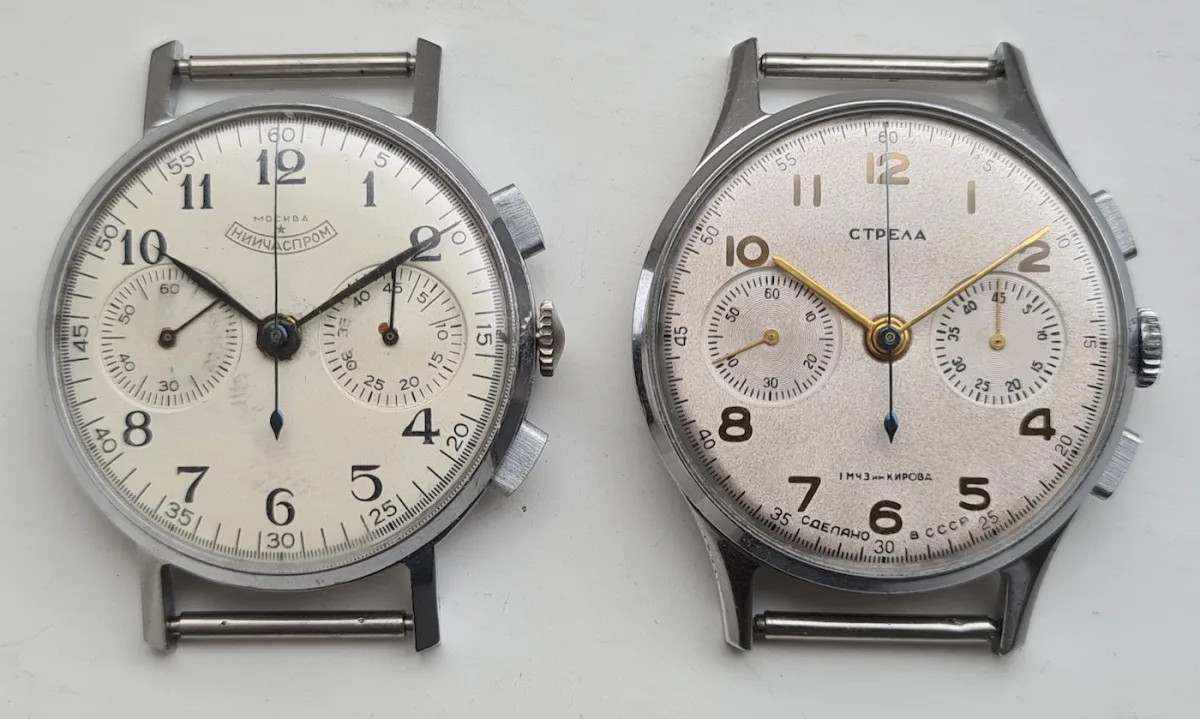
Left: a prototype 3017 watch made at the NII Chasprom. Right: the first official mass-produced series was made at the 1MChZ factory.
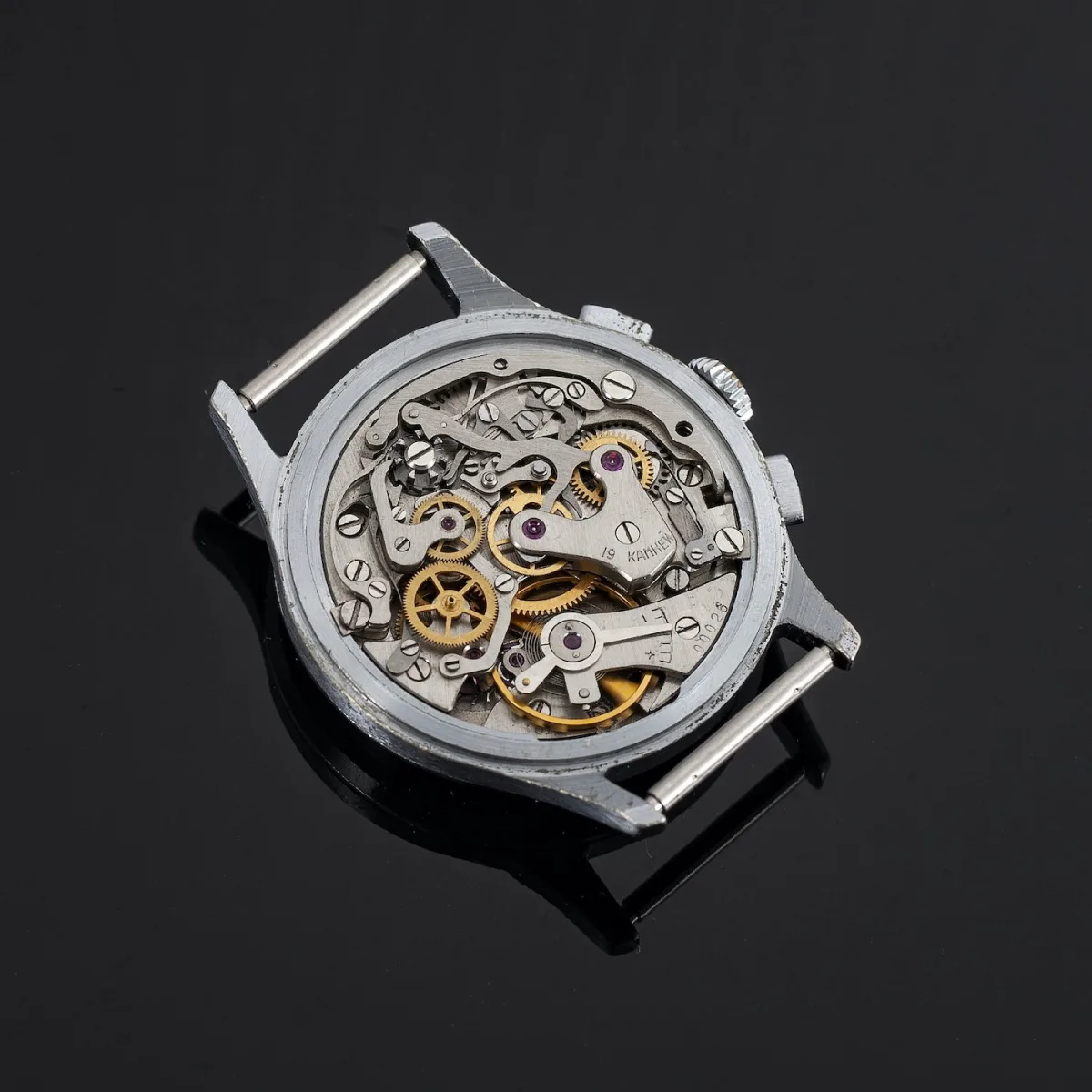
In accordance with the traditional four-digit Soviet watch nomenclature, the 3017 movement had a diameter of 30mm (the first two digits), and the number 17 designated a manual winding chronograph movement without a date and shock protection. Regardless of whether the Soviets licensed the design or 'borrowed' it, there is no doubt that the 3017 movement was based on the Swiss Venus 150 caliber. At that time, the Soviets had enough practice in reworking Swiss movements, so the latter option is quite likely. Regardless of origin, the 3017 caliber was most likely developed at the NII Chasprom (the main scientific research institute of Soviet horology) by 1958 and released in a very small trial batch. Production was then transferred to 2MChZ, where it was also released in a small batch, and finally, transferred to the First Moscow Watch Factory (1MChZ) for mass production. The 3017 caliber was an absolute workhorse and was produced with almost no changes for two decades until it was eventually replaced by the even more enduring 3133 caliber. The 3017 model had a slow running speed (18,000 vph), the chronograph was driven by a standard clutch and column wheel. The small running seconds hand is located at the '9 o'clock' position, and the 45-minute register at the '3 o'clock' position. The only real changes to the 3017 model that can be found over time are the logo stamped on the plate and a change in the intermediate wheel of the minute chronograph.
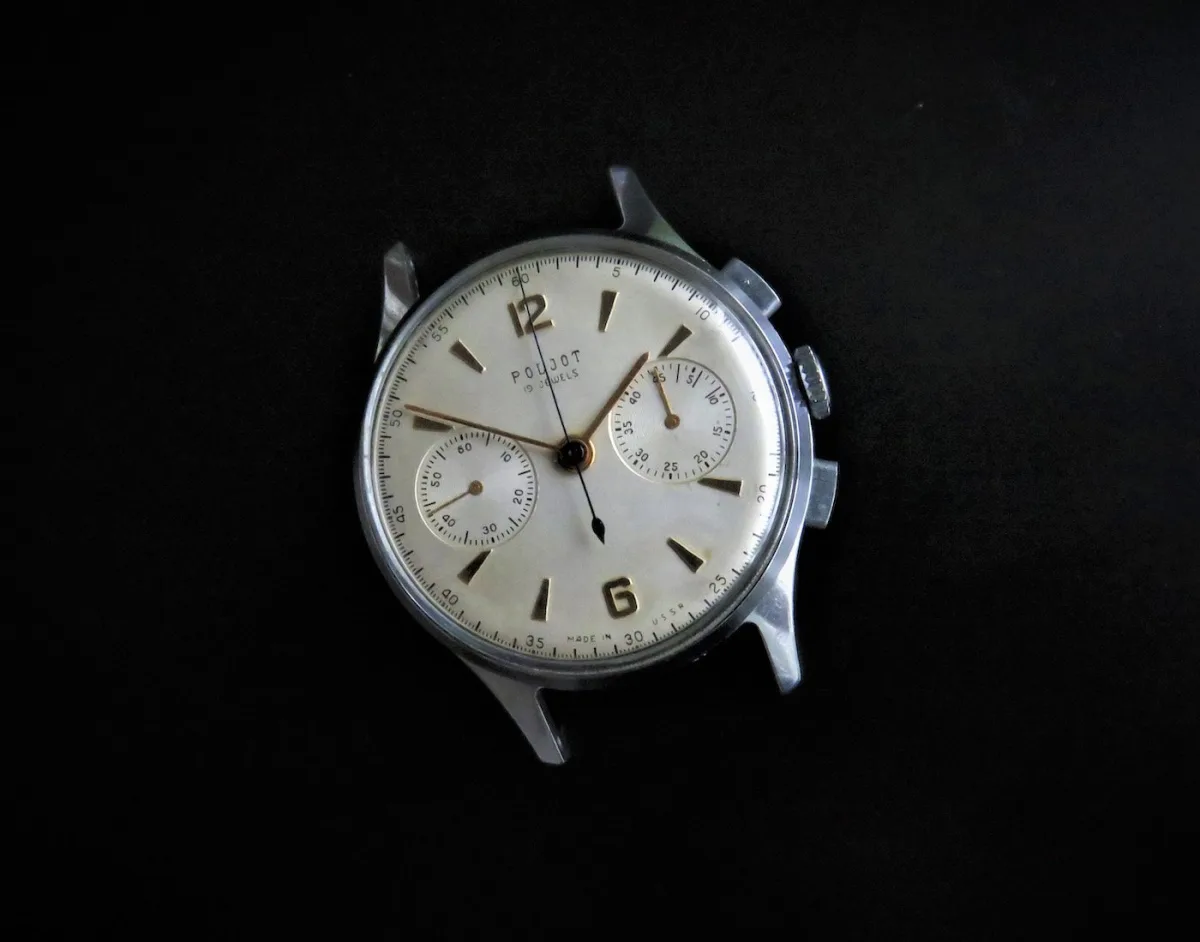
Another first-generation 3017 chronograph, known as '12-6 Strela'. Great watch, but hard to find.
Aesthetically, what truly sets the 'Strela' chronograph apart is the maturity of its design. With the advent of 'Strela', Soviet specialists moved away from bold colors and wild designs and shifted to an aesthetic more akin to their Swiss counterparts. The watch cases were simple and elegant, with a diameter of 36mm, and today they will look right at home on most wrists. Almost without exception, the cases were chrome-plated, although a few limited series with gold-plated cases and possibly solid gold were released (if you're looking for a Strela chronograph, we strongly recommend you stick with chrome examples, as very few gold ones were released, and the risk of getting a fake at an inflated price is too high). To quickly determine when the watch was made, take a look at the case back. First (and early second) generation chronographs have a linear brushing, while later generations have a circular brushing on the case back. Along with circular brushing on the case back, later generations also changed the shape of the lugs - from faceted to straight. Speaking of different generations of watches, let's break them down a bit:
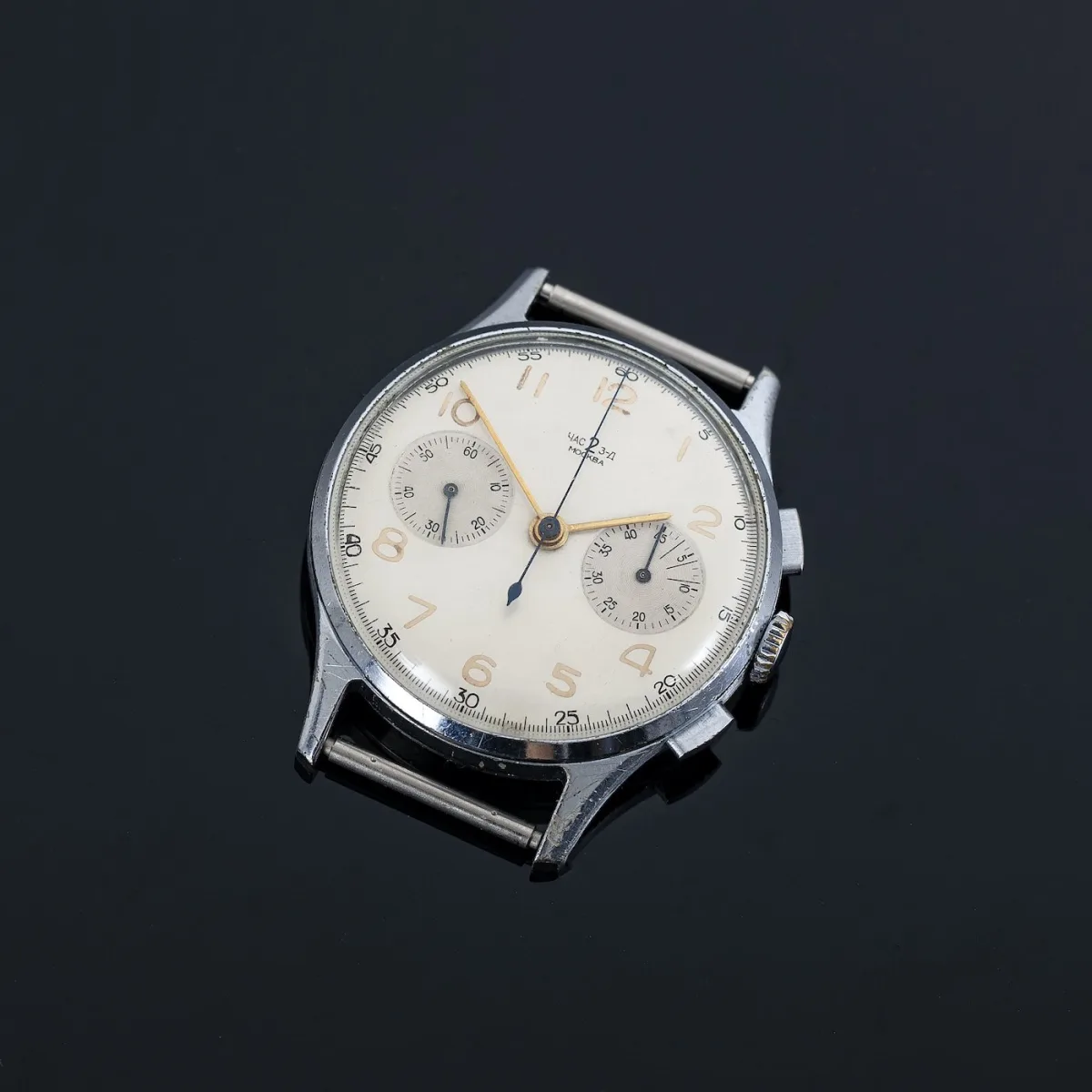
2MChZ 3017 chronograph - some of the rarest Soviet watches.
1st Generation: The first prototypes of the 'Strela' chronograph came off the production line in 1958, but the watch went into mass production in 1959 and continued to be produced into the second half of the 1960s. Early in production, these watches were intended exclusively for professional use and were issued to pilots, special forces personnel (and, of course, some high-ranking officials). The dial of these early 'Strela' watches was inscribed in Cyrillic (СТРЕЛА), with hour counters marked with Arabic numerals. However, if you're lucky, you may come across a few 'unicorn' versions, including one with a brass-colored movement with NII Chasprom inscribed on the dial and plate, another with 2MChZ inscribed on the dial and plate (although it was produced at the 1MChZ factory), a split-second chronograph with the designation K-30, and a super-duper-maybe-not-real version with the 1MChZ logo on the dial.
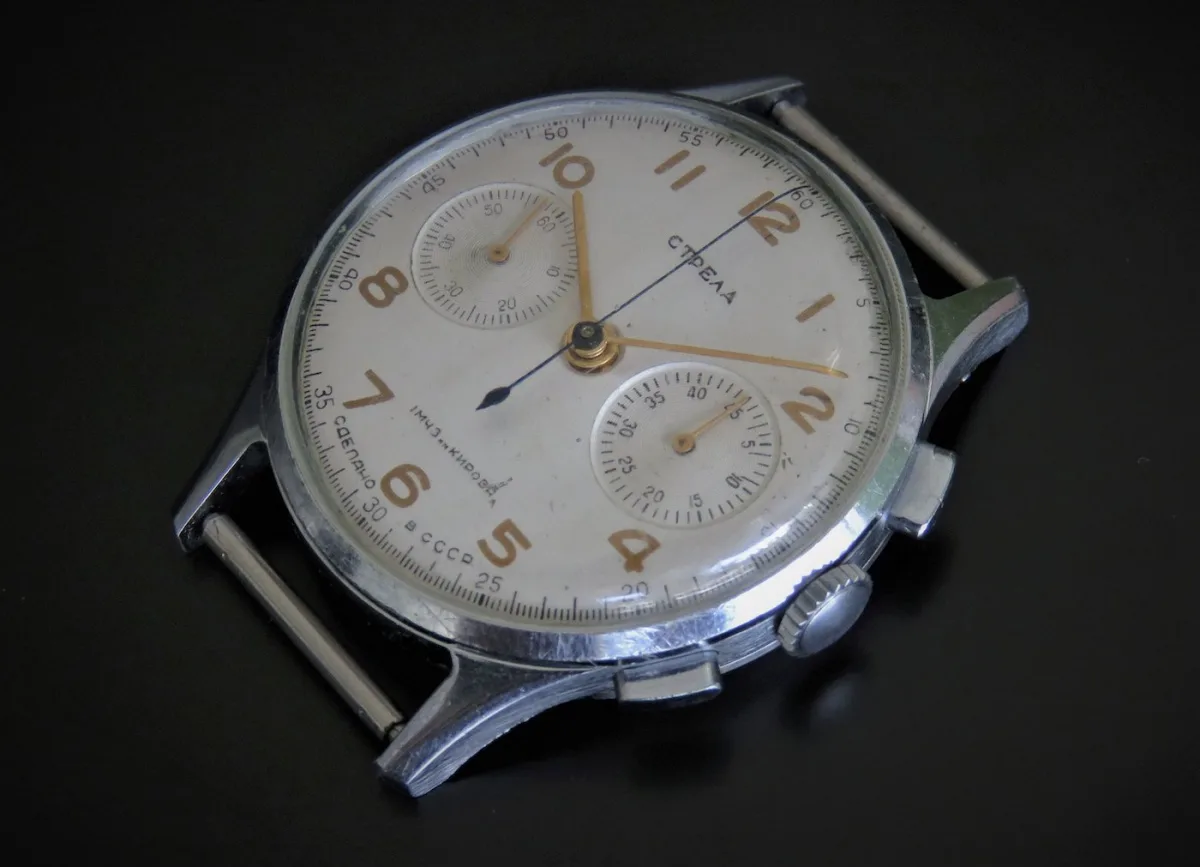
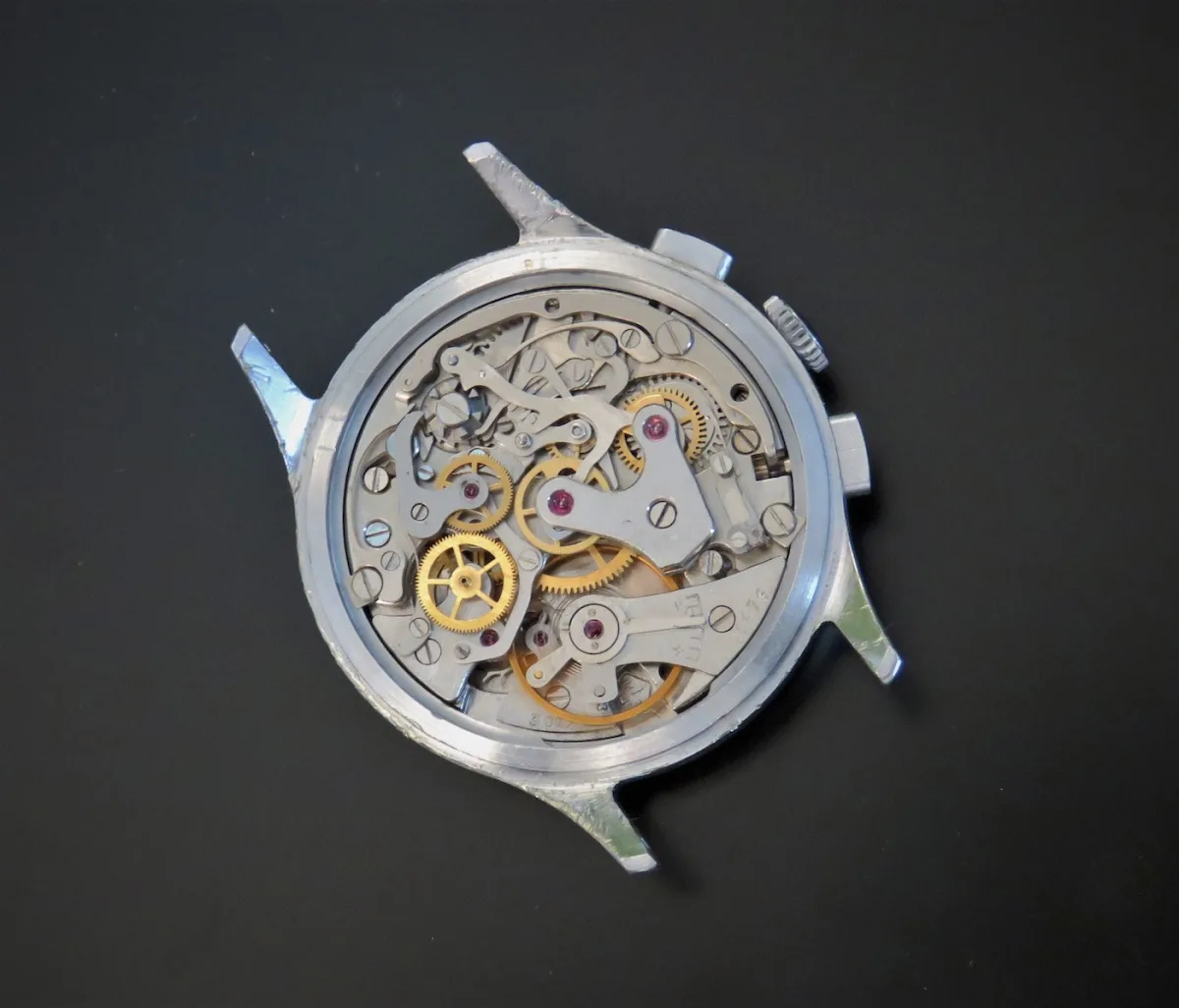
1MChZ first-generation 'Strela' chronograph. After the NII Chasprom prototype and the 2MChZ experimental batch, this was the first line of 3017 watches. This series was released in relatively small numbers, so finding a quality example is quite difficult.
As production ramped up, 'Strela' chronographs quickly gained a reputation for being of higher quality than any previous chronographs and, frankly, damn beautiful watches. The Soviet Union quickly saw an opportunity and began promoting new developments, making the chronographs available to the public. When these watches were released for sale, the Arabic numerals were removed from all markers except 12 and 6 o'clock. This new version, also called 'baton', had three dial names:
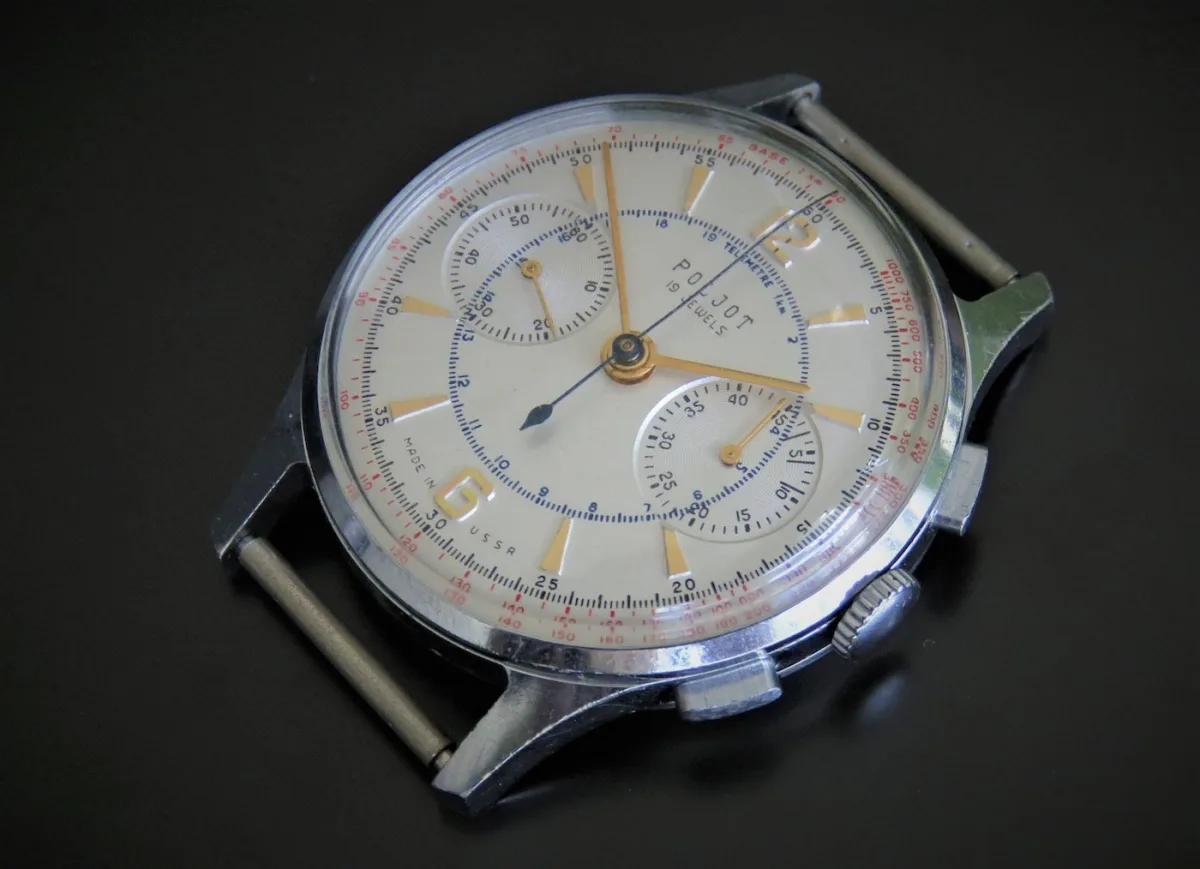
Second-generation 3017 chronograph, called 'Telemeter', with one of the most distinctive designs in the 3017 series.
Strela (in Cyrillic) - these watches were produced for professionals but were available for the domestic market and were released for only a few years in the mid-1960s. Some of these watches also bore the inscription KL 1, which stood for 'first class' and indicated that they were the best examples, subjected to additional precision testing (similar to COSC chronometer testing). Unsurprisingly, these KL 1 versions were intended for professionals' wrists.
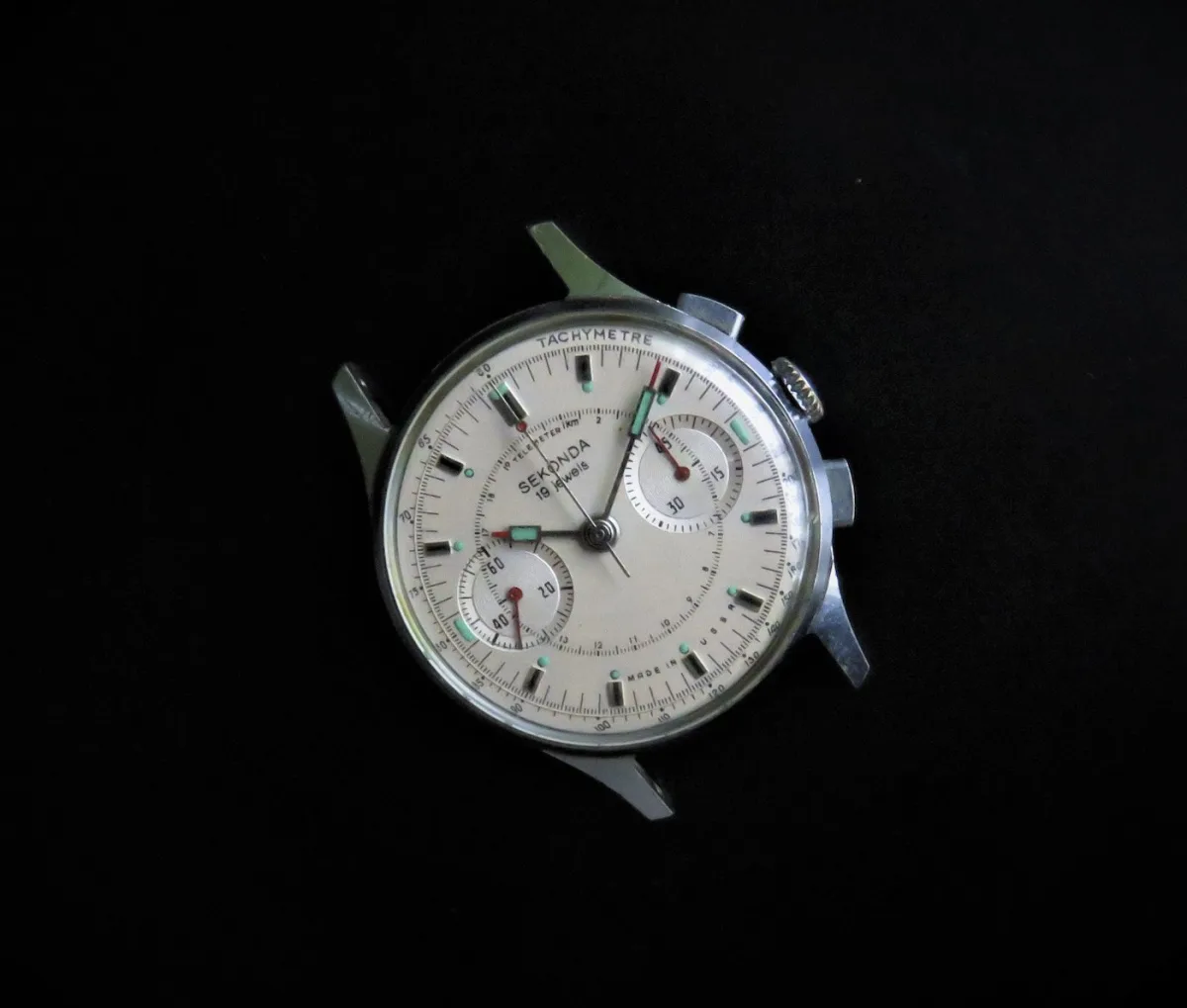
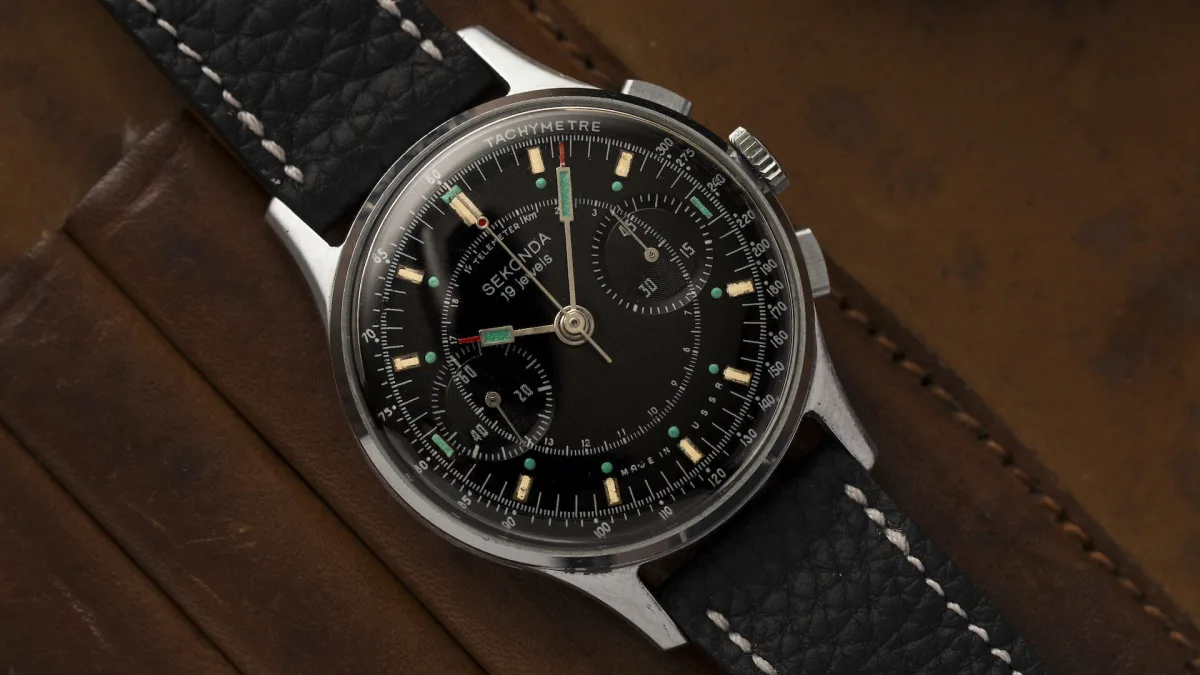
Third-generation 3017 with luminous dial and hands. Watches under the Sekonda brand were made for the foreign market.
Poljot and Sekonda (both names written in Latin script) - these models were introduced in the mid-1960s and were primarily produced for the export market. However, these watches were still available domestically - primarily because there was a high demand for export items, fueled by the false belief that factories applied higher standards to exported goods. Watches under the Sekonda brand were mainly intended for sale in the UK.
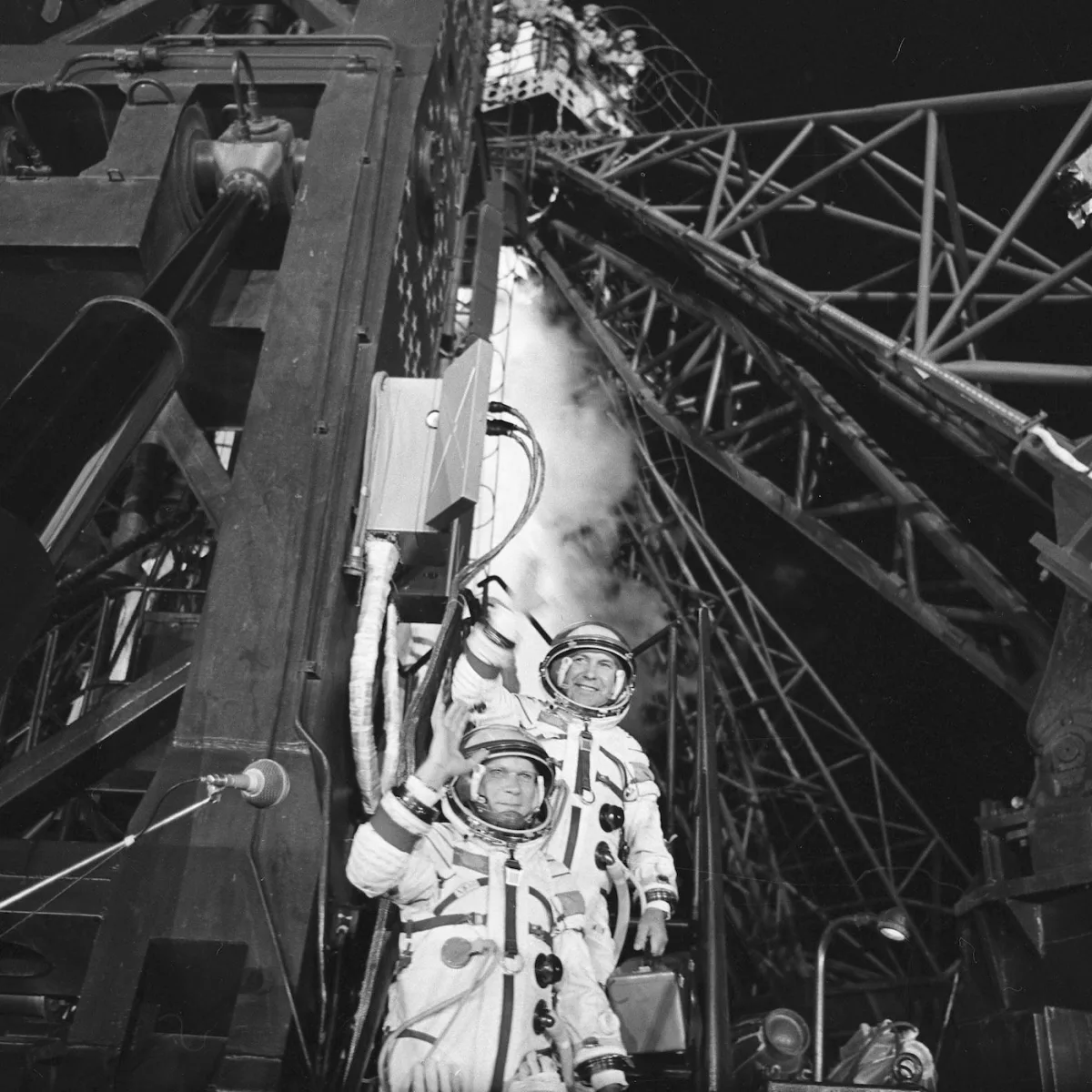
Pavel Popovich and Yuri Artyukhin at the landing of the Soyuz-14 spacecraft on July 3, 1974, wearing 3rd generation black dial 3017 caliber chronographs.
Each first-generation model has linear brushing on the case back and a pentagonal or rhomboid logo on the movement. The lugs are not as useful an indicator, as they can be either faceted or straight. Among collectors, there is a popular theory that arrows on the dial are always associated with faceted lugs, but we have seen early examples with straight lugs. Although the case differed slightly from the straight-lugged case of later 2nd and 3rd generation 3017 watches. Simply put, don't immediately dismiss 1st generation Strela watches with straight lugs!

Cosmonauts Vyacheslav Zudov and Valery Rozhdestvensky prepare for the Soyuz-23 spacecraft flight on October 14, 1976. Both wear 3rd generation black dial 3017 caliber chronographs strapped to their left wrists.
2nd Generation: Starting in the late 1960s and lasting about a decade, the second generation brought some new features (besides simple brushing on the case back and straight lugs), most noticeably on the dial. In the second generation, all watch dials featured a tachymeter scale, and the watches continued to be produced under the Strela, Poljot, or Sekonda brands.
3rd Generation: The last generation of 3017 chronographs, these watches were produced throughout the 1970s, with production finally ceasing in 1979. The 3rd generation saw a significant aesthetic shift. With luminescent markers and hands, as well as futuristic details, these watches were on-trend in the 1970s. Nicknamed '3017 paddle hands', these watches have straight lugs, a round matte case back, the Poljot logo on the crown under the balance, and a full intermediate chronograph wheel. At this point, the Strela brand was completely abandoned, as was the KL 1 designation (presumably because all watches now met these standards). Another significant difference in this generation was that these watches were produced with both black and white dials. During this period, Pojot also added a new brand variant, Exacta, intended for the German market and other Central European regions. Exacta versions were available only in black and are much rarer than the rest.
If you are looking for a Strela chronograph, keep in mind that there are many fakes and counterfeit watches that can lead you astray. Follow the common saying 'buy the seller' and be prepared to pay a little more for a quality example from a reputable seller.